The first post on this blog was on 4 July 2015 – just over 2 years ago.
Now this will be my 100th post!
Although courgette fritters are not from an old Polish recipe they do have some similarity to Polish potato pancakes and to carrot pancakes.
Courgette in Polish is cukini – so another vegetable that owes its name to Italian – zucchini.
Courgettes belong to cucurbitaceae family as do cucumbers which are very well loved in Poland – so I am sure this recipe would be very popular there too.
I have read that courgettes did not become popular in Poland until the 1970s although the larger marrow and pumpkins were often cooked and many recipes for these can be used for courgettes.
The amounts in the ingredients are all approximate.
Ingredients
2 to 3 courgettes
1 egg
2 tablespoons of soured cream, double cream, crème fraise or yoghurt cheese
2 tablespoons of plain flour
Grated rind of 1 lemon
Salt
Sunflower oil for frying.
Method
Grate the courgettes using a coarse grater.
Sprinkle the courgettes with salt.
Place the salted courgettes onto a clean tea towel and place this in a colander for around 30 minutes.
Wrap the tea towel up and squeeze out the liquid from the courgettes.
Note
The green stains on the tea towel will come out in a hot wash but do not use fabric softener for tea towels used for this and similar purposes.
Place the dried grated courgettes in a bowl and add the grated lemon rind.
Add the beaten egg and the soured cream (double cream, crème fraise or yoghurt cheese) and mix together.
Add the flour and mix thoroughly.
Heat the oil in a frying pan and use large tablespoonfuls of the mixture to make the fritters.
Fry them on both sides until they are golden brown.
Keep them on a heat proof plate in a low heat oven whilst you make the rest.
You can place a sheet of kitchen roll on top of the first layer to stop them sticking.
Serve them with grilled meats and salad.
Option
A chopped red chilli or two and also a chopped garlic clove can be added to the mixture.
If served on top of a large, breakfast plate sized potato pancake this is known as a
węgierski placek – Hungarian pancake.
Tip
Make this a day ahead of when you need it, cook the dish for at least 3 hours and leave it to cool.
The next day cook it again for at least 1 hour, you might have to add a little water or stock but not too much, the sauce should be thick not watery.
Using a slow cooker
Nowadays I often make gulasz using a slow cooker instead of the oven.
I made a gulasz using pork shoulder and cooked it in the slow cooker for 8 hours.
Pork gulasz served in a dish by J & G Meakin Studio Pottery
Unknown Design Name
Luxury Style Gulasz
All houses in Poland have cellars and even people living in block of flats have a cellar area of their own; if you ever get the chance to look in these you will find that they are filled with: jams, preserves, bottled fruit and vegetables, sauerkraut and salted gherkins.
Bottled sweet red peppers in brine are often found amongst these jars. The addition of the peppers from one of these jars to the gulasz makes it even better.
Of course if like me you do not have the home-made variety you can buy these from most delicatessens or supermarkets now.
One Of My Two Cellars
You can use fresh red peppers and I use these when they are plentiful, either will make a delicious gulasz but I think I like ones with the bottled peppers best.
The recipe is a variation on the classic gulasz but you have to use less stock or you will end up with it being too watery due the water content of the peppers – especially the fresh ones.
Ingredients
500g stewing beef or shoulder or spare rib pork
2 onions
2 cloves of garlic
3 tablespoons of tomato purée
150ml chicken stock – can be made from stock cubes
2 teaspoons of (sweet) paprika (not smoked)
1 bay leaf
Jar of bottled red peppers or 3 to 4 fresh red peppers
2 -3 tablespoons of soured cream
2 tablespoons of plain flour
Salt & ground black pepper
Oil for frying
Paprika to dust on the top
Method
Pre heat the oven to Gas Mark 3 – 1600C
Roughly chop the onions and crush the garlic
Mix the tomato purée and the paprika in the stock
If using the bottled peppers cut them into long strips and then cut these into halves
If using the fresh peppers, cut them into long strips, de-seed them and cut these into halves
Cut the meat into cubes and coat the pieces in a mixture of flour, salt and ground pepper
In a frying pan heat the oil until it is hot and fry the meat until all the sides are sealed
Place the meat into a casserole dish
Fry the garlic and onions in the frying pan, adding some oil if necessary but trying not to use too much or the dish will be greasy
Add the onions to the meat then add the bay leaf and some more ground pepper
Add the peppers to the dish and mix the contents together
Pour the stock mixture into the casserole dish and put on the lid
Cook in the oven until the meat is tender, this could be about 3 ½ to 4 hours but often I find it needs longer.
When you are ready to serve the gulasz, mix in one to two tablespoons of soured cream and then put the other tablespoon of soured cream on top in the centre and dust some extra paprika on this.
Serve as for the classic style gulasz.
Here served in a dish by J & G Meakin – Topic from 1967
Beetroot is a very popular vegetable in Poland and is served both hot and cold and is the main ingredients of barszcz (The classic Polish beetroot soup).
Now this may just my imagination but the beetroot in Poland just tastes so much better than the ones I have had in England, maybe it is the variety that is grown there or the soil. I think you have to use home-grown or organic beetroot to get as good a taste.
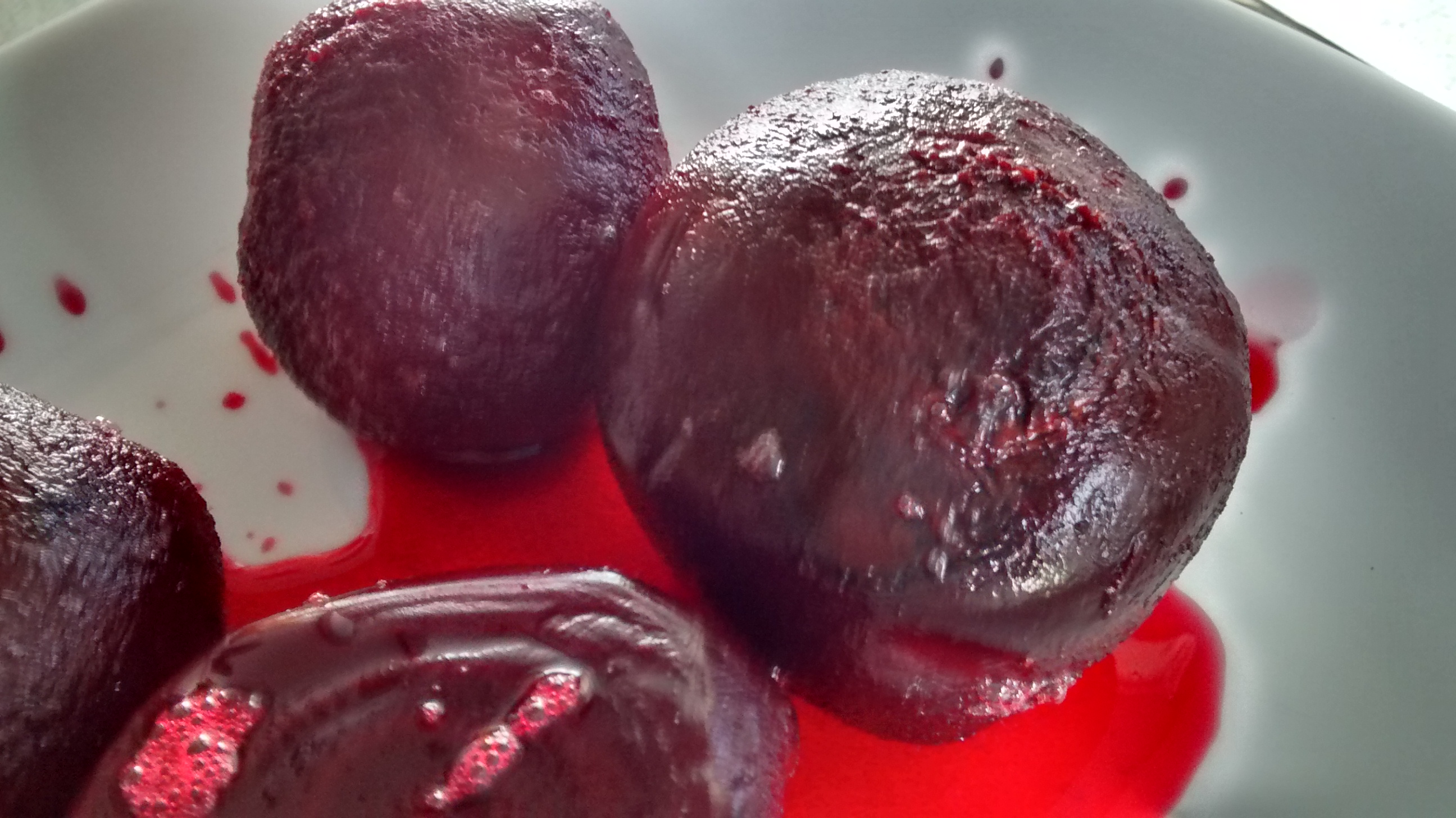
In the following recipes I have used vacuum packed boiled beetroots – boiling or roasting raw beetroot should give a better flavour but when you only want to make a small amount or you have little time this will work as well especially if you adjust the flavour with lemon juice or a little sugar.
A popular variant is something called botwinka – this is very young beetroot – sold in bunches (rather like radishes) and consists of the small “bulb” and the young green leaves, which are all used. As I have not seen this for sale in England I will not be including any recipes – but if you are ever in a position to try this (often in the form of a soup) you will taste something very delicious.
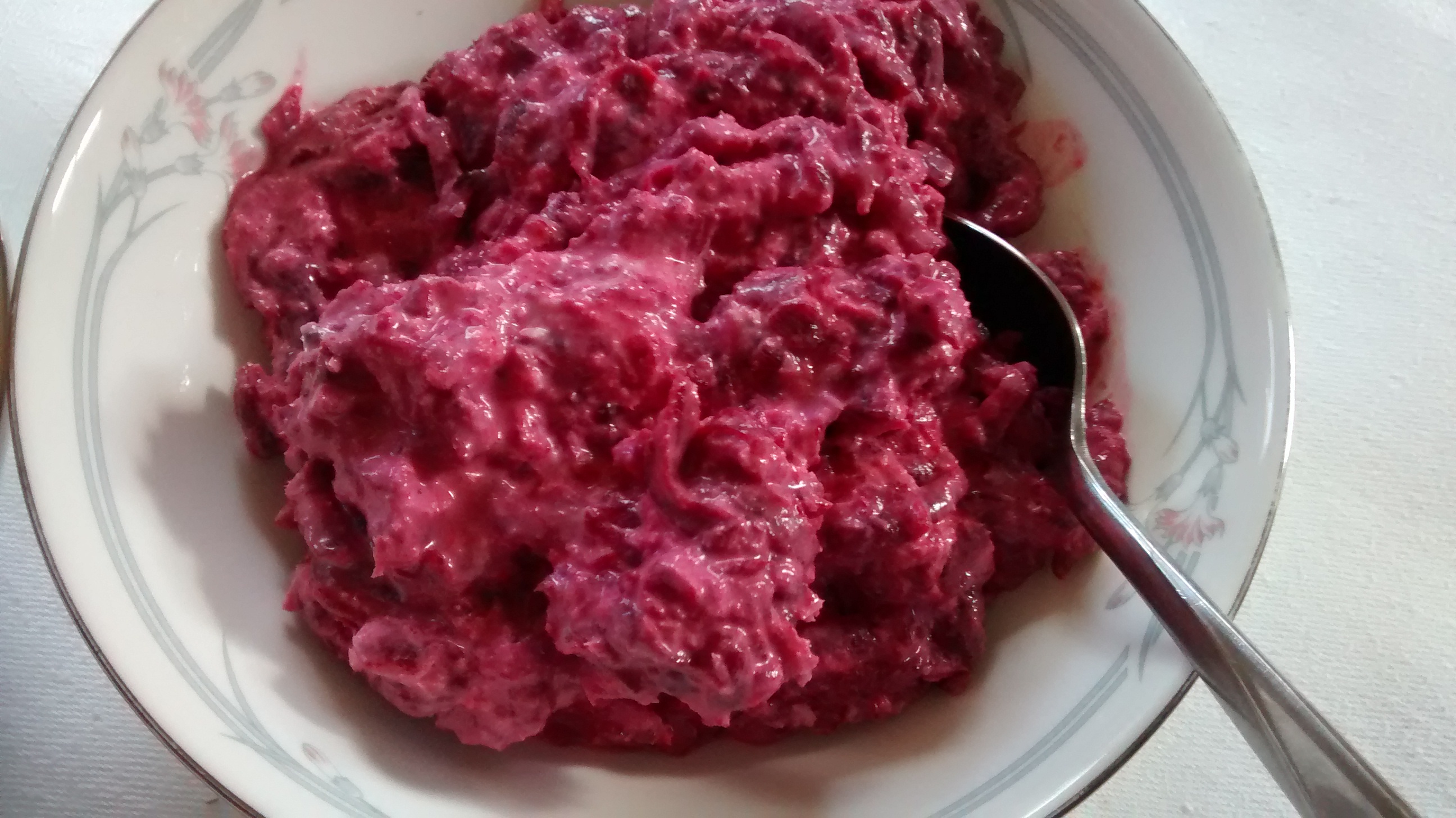
Ćwikła is the most typical Polish accompaniment to roasted and smoked meats and sausage. This salad or relish is made from grated cooked beetroot which is mixed with grated horseradish – chrzan.
The first recorded recipe for ćwikła comes from the writings of Mikołaj Rej (1505 – 1569) who is known as the “Father of Polish Literature”. He was the first person to write exclusively in Polish.
He was born 59 years before Shakespeare (1564 – 1616).
Ćwikła
Ingredients
2 or 3 boiled beetroots
Horseradish sauce
Soured Cream
Extra lemon juice – optional
Method
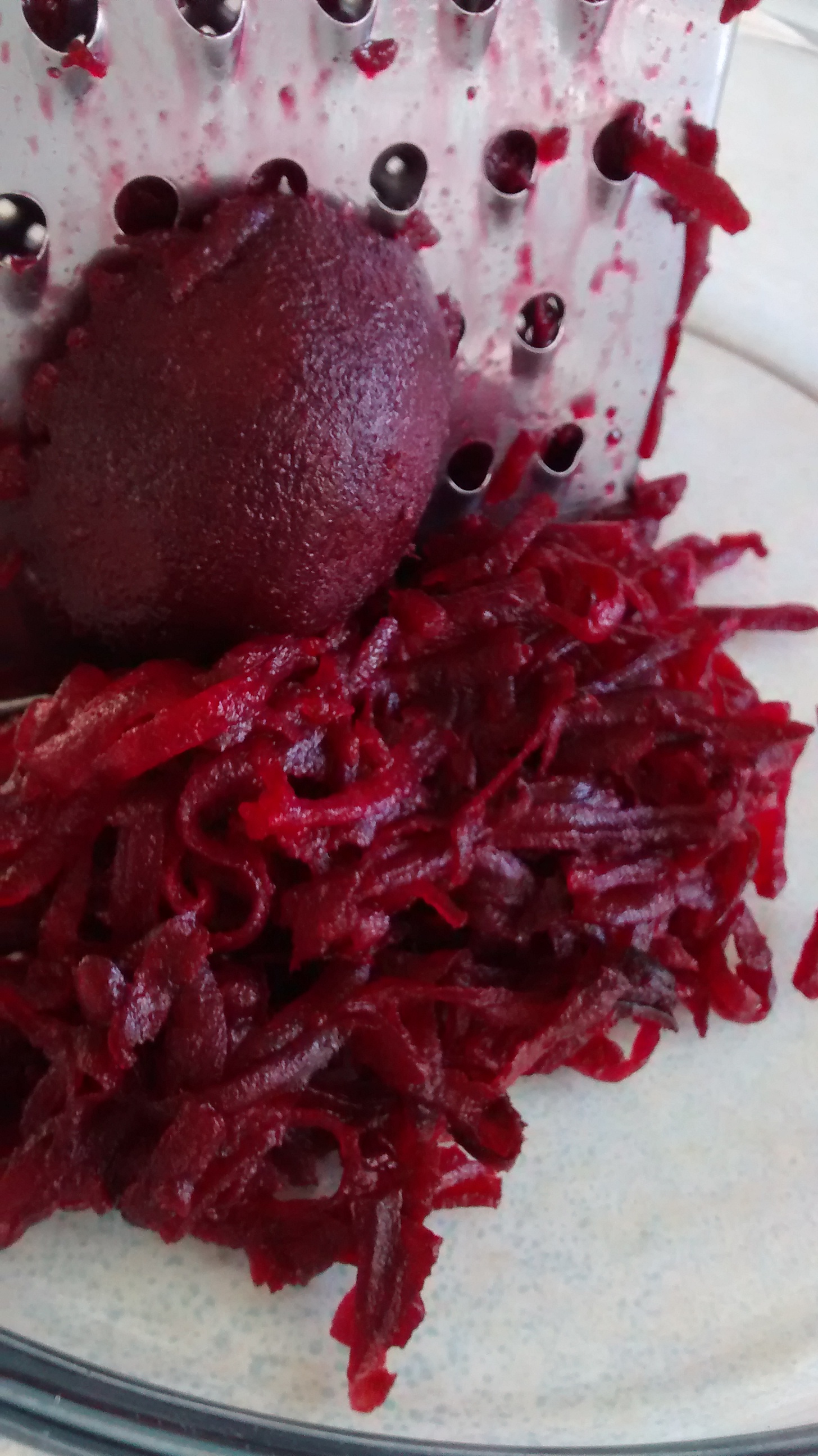
Grate the beetroots using a fine or medium grater and put this into a bowl.
In the past I always used a fine grater but now I prefer to use my medium grater.
Medium Grated
Fine Grated
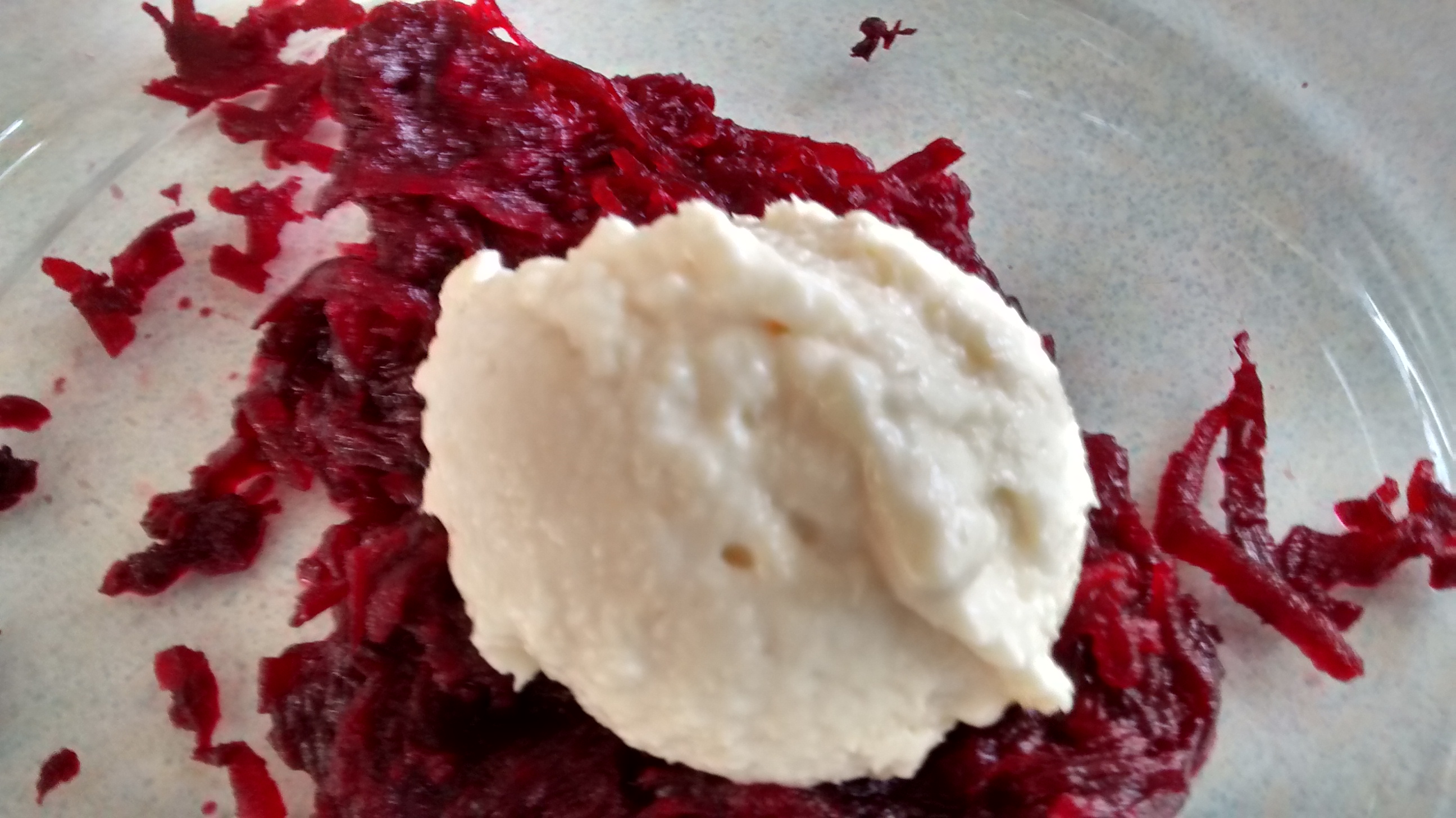
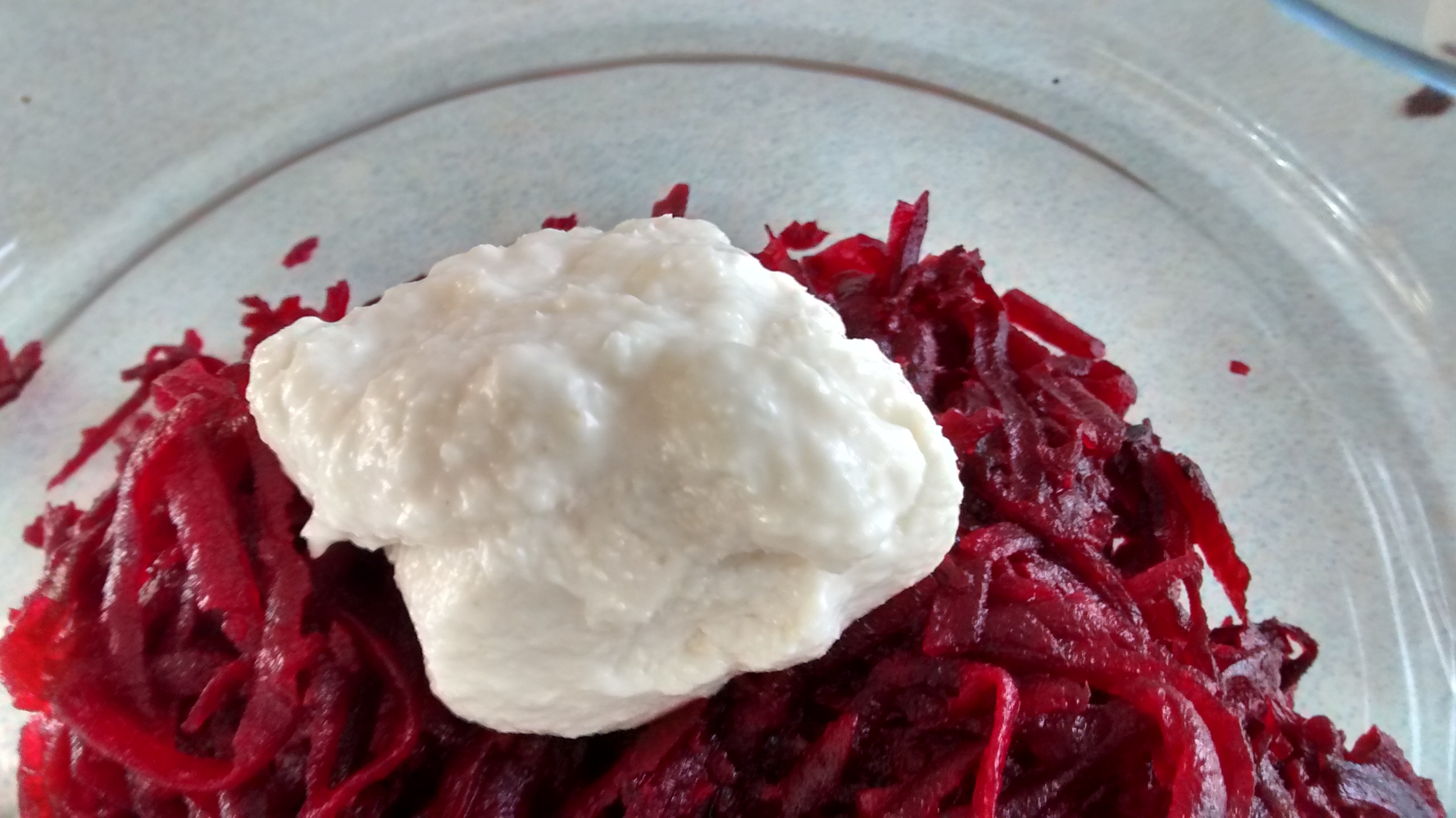
Add a large dollop or two of horseradish sauce.
Below are two kinds, one with soured cream and one without.
I like the one with soured cream more.
A few years ago I thought it would be a good idea to grow my own horseradish – that was a mistake! It starts to take over with the roots spreading underground. However the dark leaves are very attractive and the air does smell of horseradish when you walk up to it. You just need to be able to contain it.
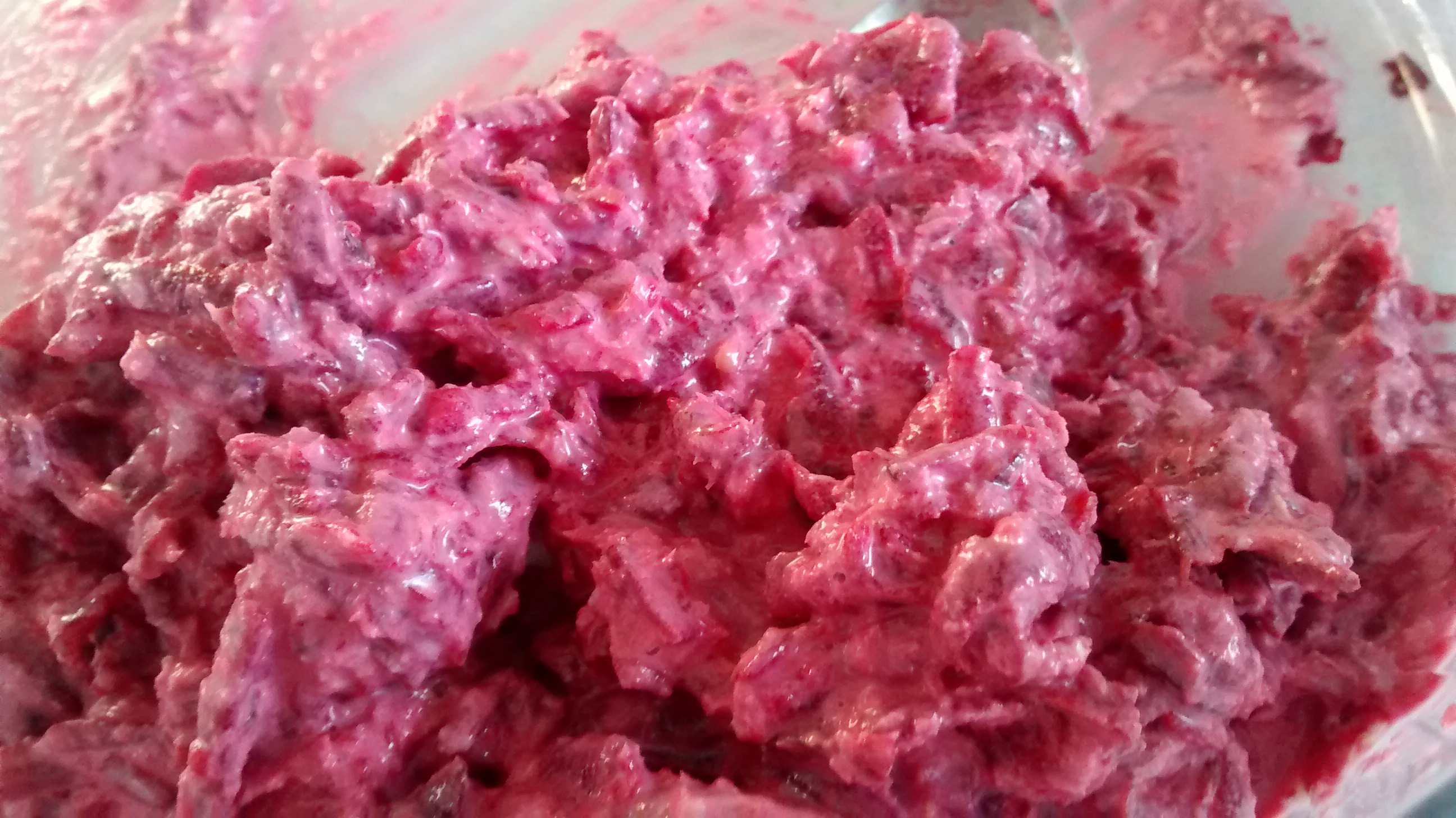
Mix the grated beetroot and horseradish sauce together.
Add soured cream – if using the sauce with this in already you might not need as much.
You can add lemon juice as well.
Carnation Serving Dish by Royal Doulton
Beetroot & Apple Salad
Ingredients
2 or 3 boiled beetroots
1 eating apple with a good flavour such as Jazz, Braeburn or Pink Lady.
Juice of half or a whole lemon
Sugar – optional
Method
Grate the beetroots using a medium grater.
Peel and core the apple and grate this using a medium grater.
Mix the two together.
Add lemon juice to taste.
You can add some extra sugar to taste.
NOTE
This tastes much better if it is left so all the ingredients mingle together for a few hours.
I make this in the morning if I want it for the evening or I make it the night before for lunch time the next day.
Creamed Beetroot
This is a delicious way of serving beetroot warm with a roast dinner.
Ingredients
3 or 4 boiled beetroots
Large tablespoon of butter
1 or 2 tablespoons of flour
Juice of a lemon & some extra water
3- 4 tablespoons of soured cream
Salt & pepper to taste
A little sugar to taste – optional
Method
Grate the beetroots using a medium grater and put them into a saucepan with the lemon juice and a little water.
Put a lid on the saucepan and gently simmer the beetroot – taking care not to let it dry out or burn.
Melt the butter in a small frying pan and add the flour – let it colour slightly.
Add 2 tablespoons of soured cream and a little water and combine this well.
Add this mixture to the simmering beetroots, once again combining well.
Let this simmer for 5 to 10 minutes – keep checking, and stirring and adding more soured cream, lemon juice or water if it looks like it is going to dry out.
Add salt & pepper and a little sugar to taste.
Serving dish is Topic designed by Alan Rogers in 1967 for J & G Meakin.
Cabbage Rolls in the style of Dom Polonii in Kraków.
KrakówKrakówKrakówKrakówKraków
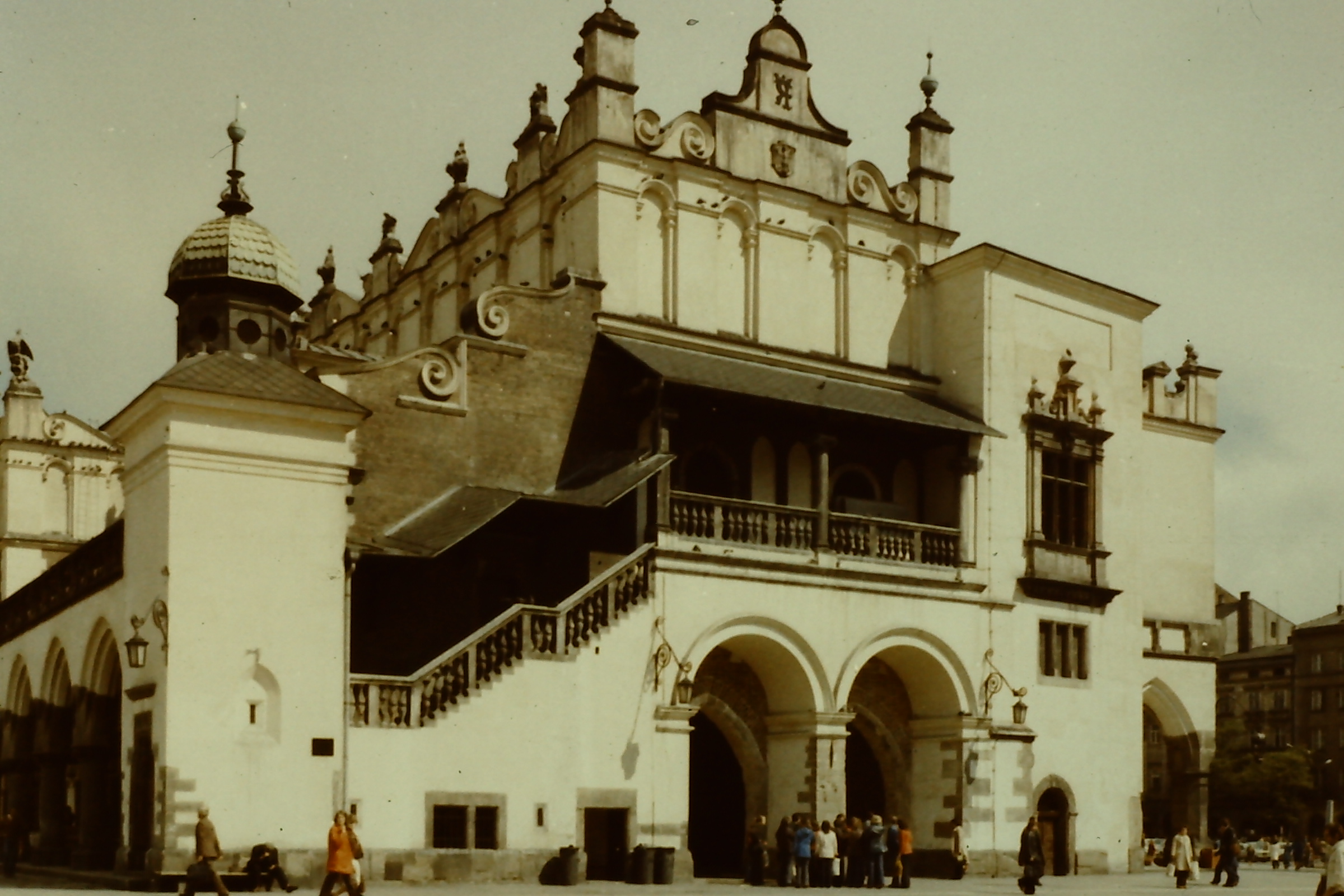
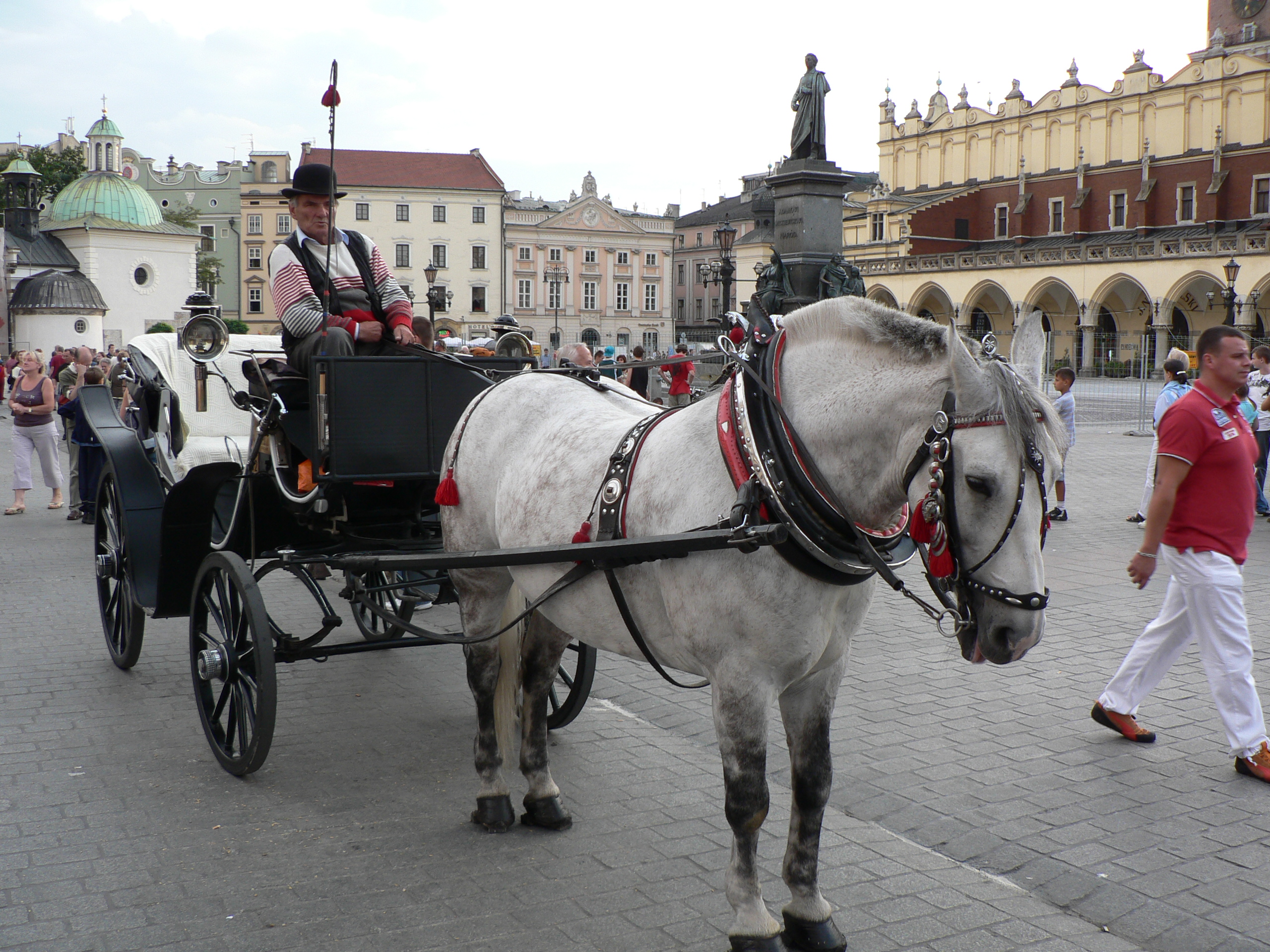
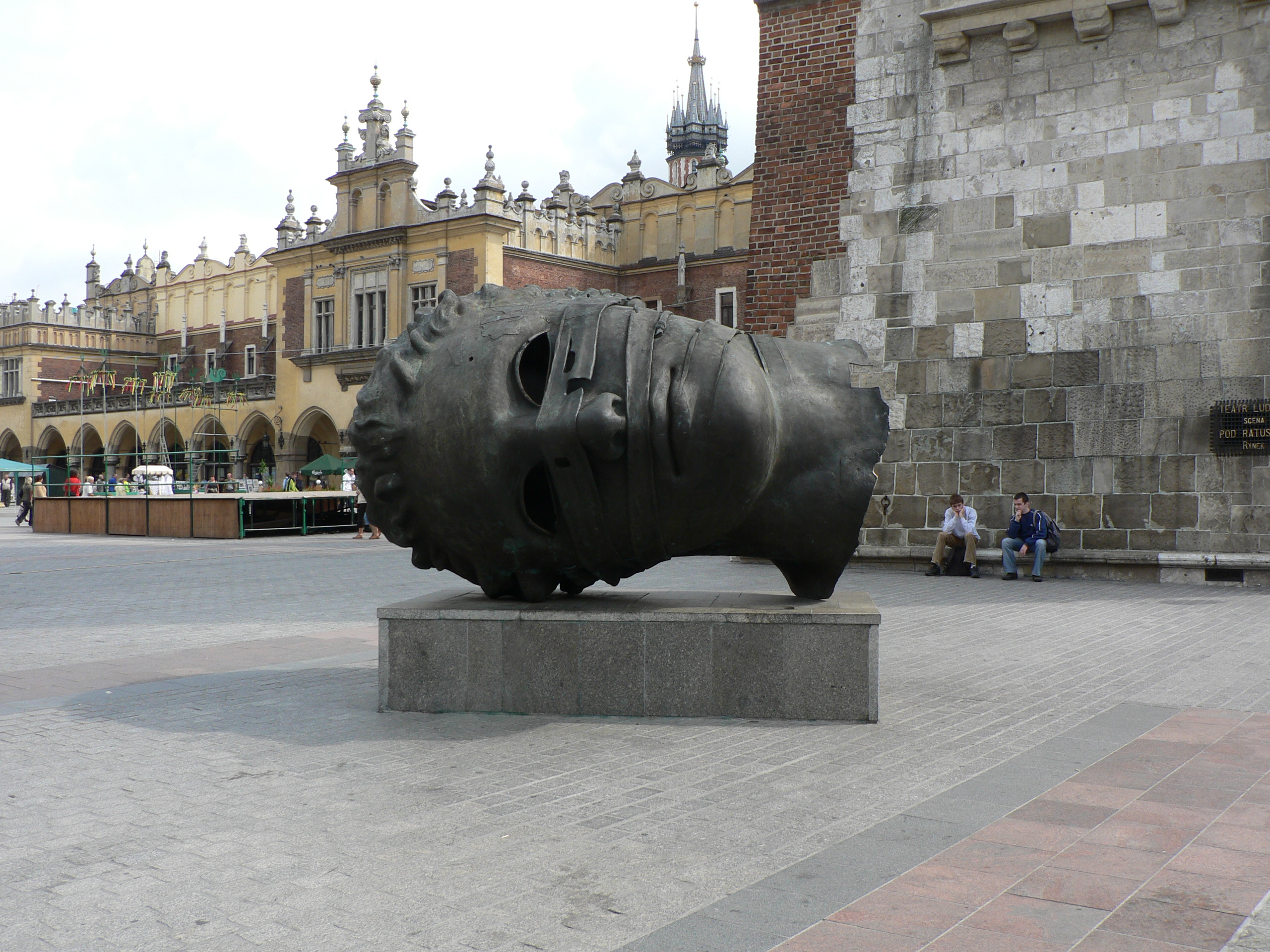
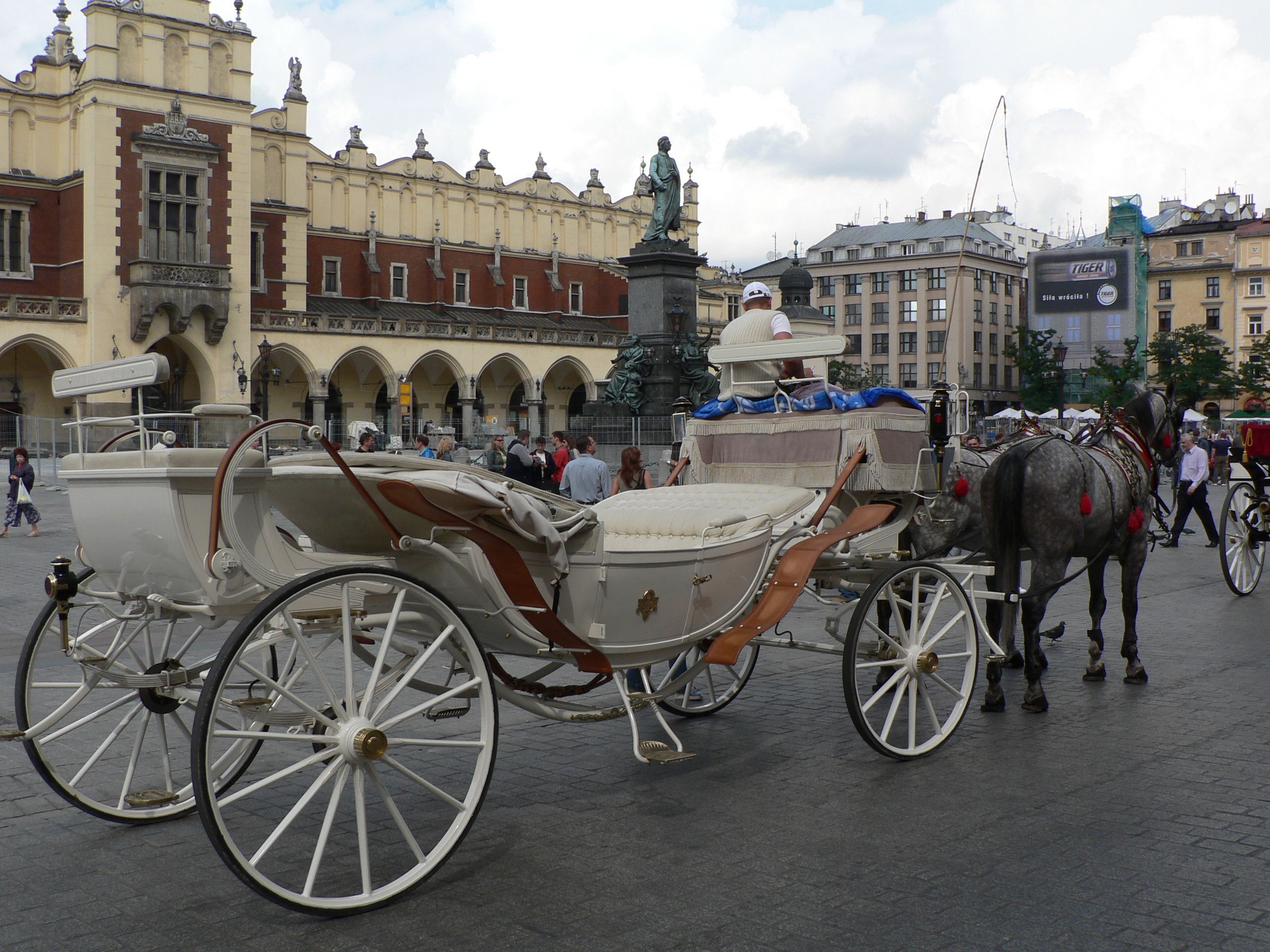
In Kraków, just off the main square (Rynek Główny), there is a building called Dom Polonii (The House of the Poles). It is a medieval tenement building and hosts Chopin concerts in a lovely room with a grand piano on the first floor. I have enjoyed listening to many concerts there. On the ground floor there is a small restaurant. On my trips to Kraków I have found that I eat there the most as it is very reasonably priced and the food is very much like home cooking.
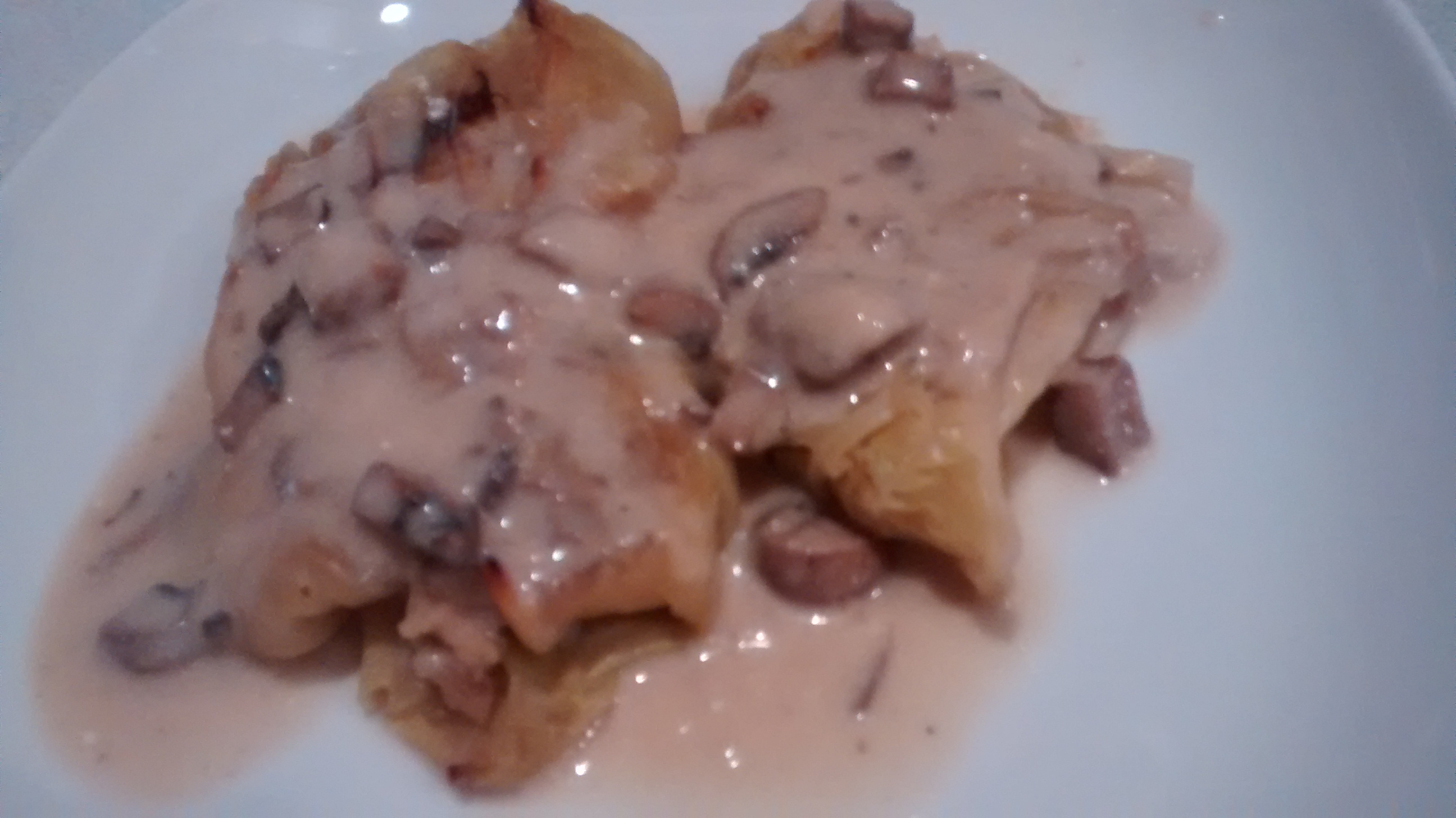
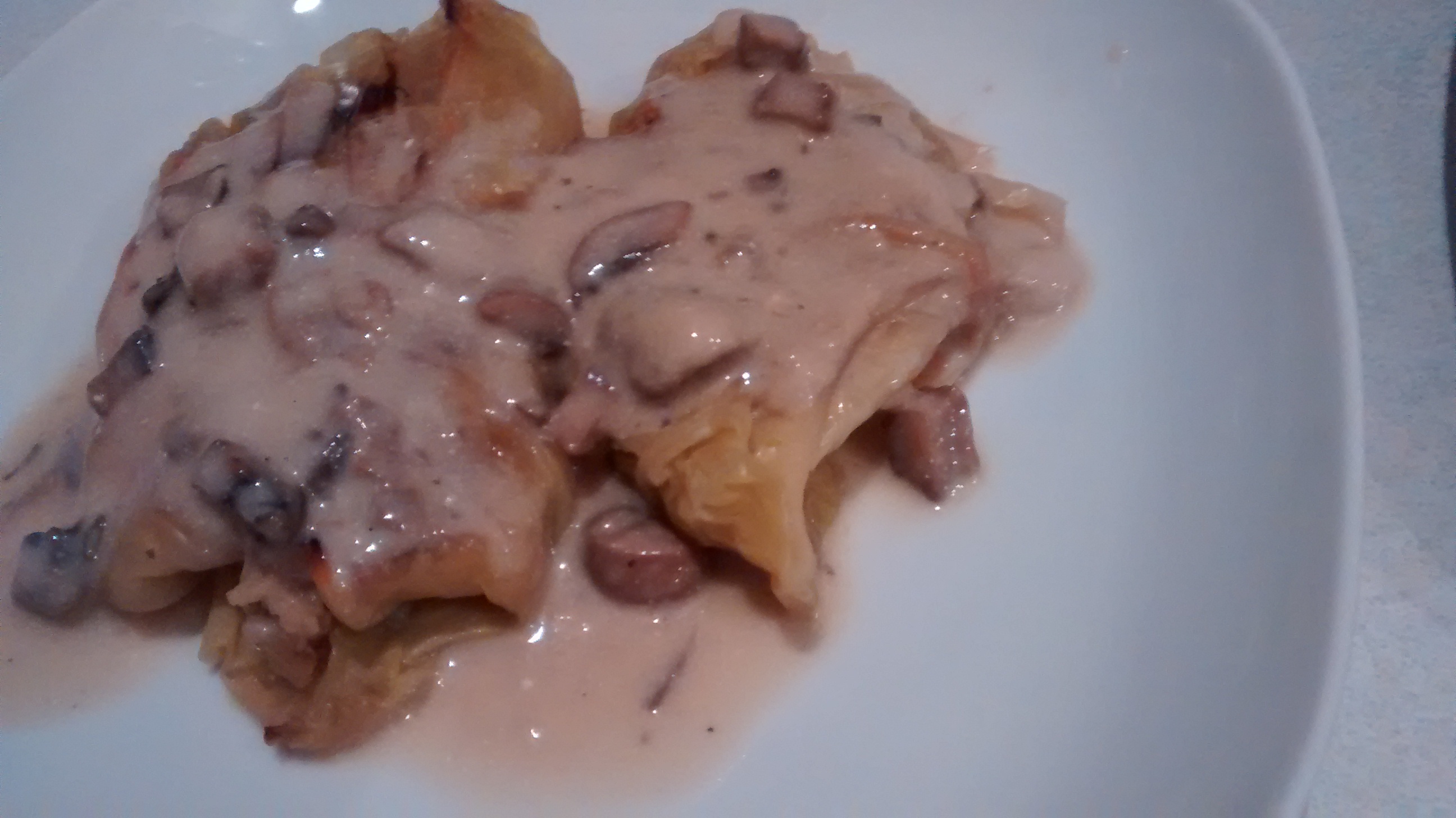
They serve gołąbki there which are cooked without tomatoes and then served with a creamy mushroom sauce.
The following is my recreation of this recipe.
First I made the gołąbki as in my previous post but without tomato purée in the cooking stock but adding some lemon juice as this prevents the leaves from falling apart too quickly.
I will give a quick re-cap of this recipe at the end of this post.
Then I made a mushroom sauce and served the gołąbki with this poured on the top.
Mushroom Sauce
I looked through my Polish cookbooks and many of the mushroom sauces are made with just dried mushrooms. These are delicious and have a strong flavour however it works out very expensive and are not available everywhere.
I am going to give instructions for a sauce using fresh mushroom and just a small amount of dried mushroom.
I will give 2 versions of this mushroom sauce, the first using dried mushrooms, the second a mushroom stock cube.
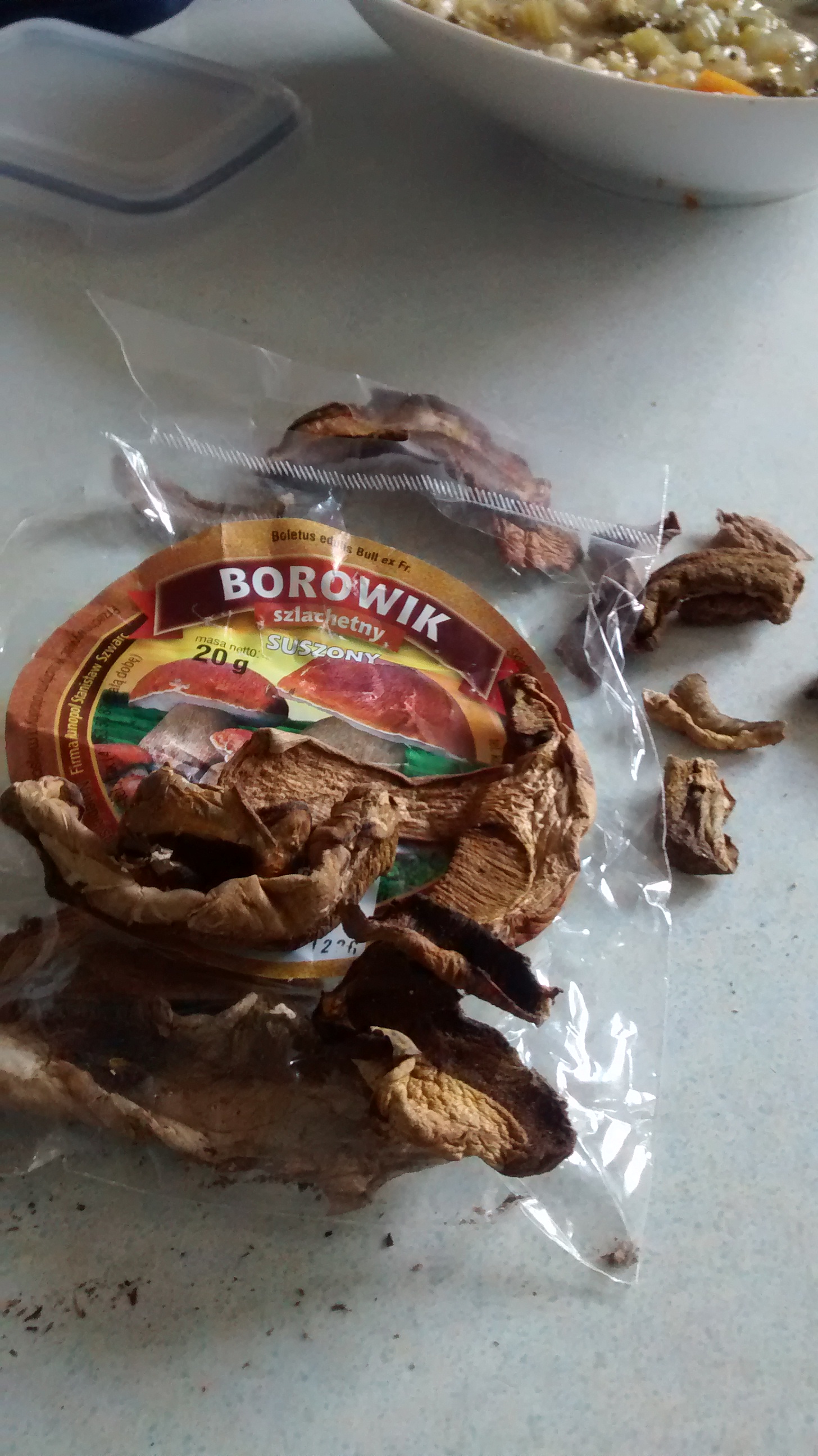
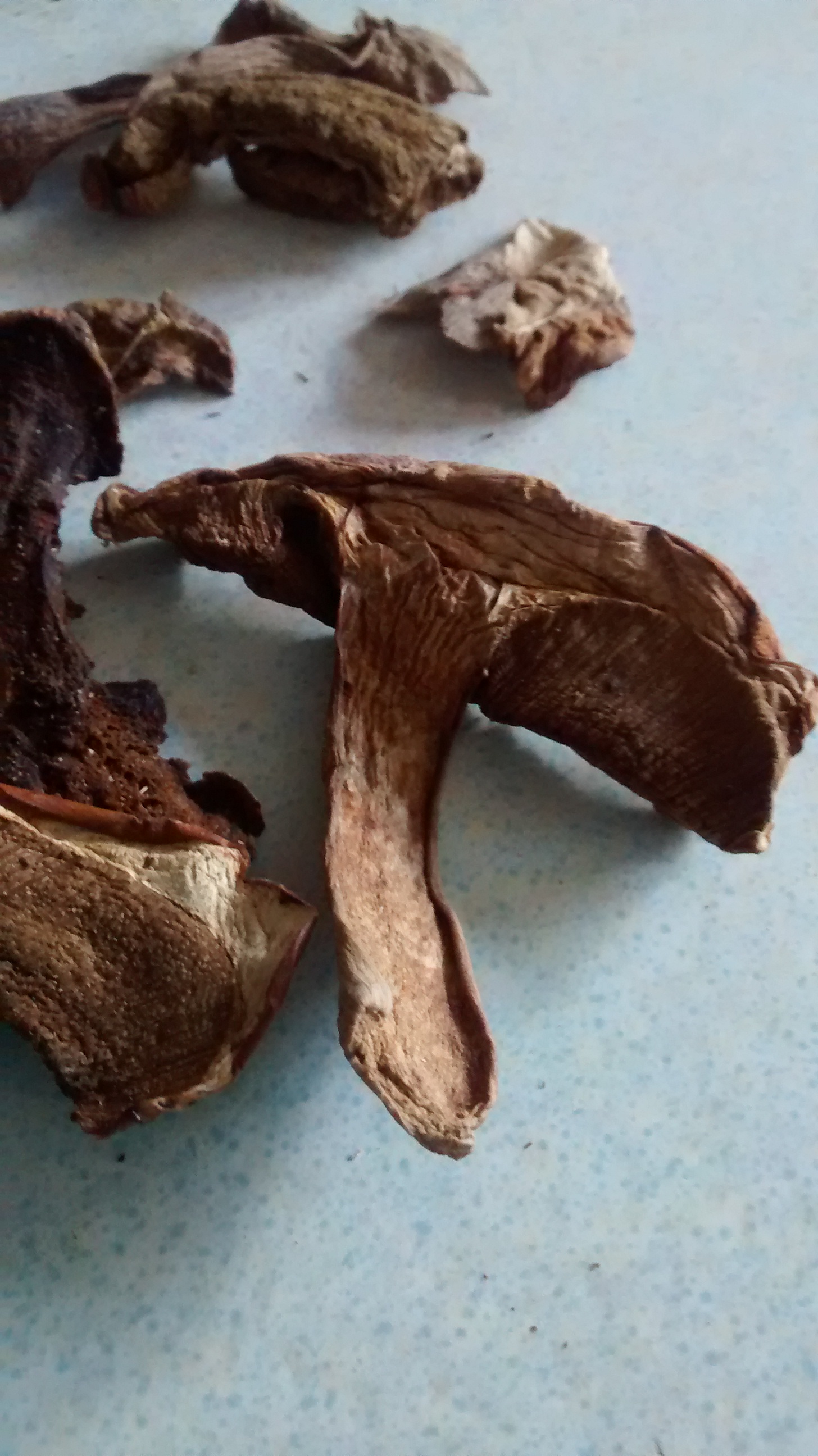
The best dried mushrooms are Boletus edulis, in Poland they are called borowik or prawdzik, in Italy porcini.
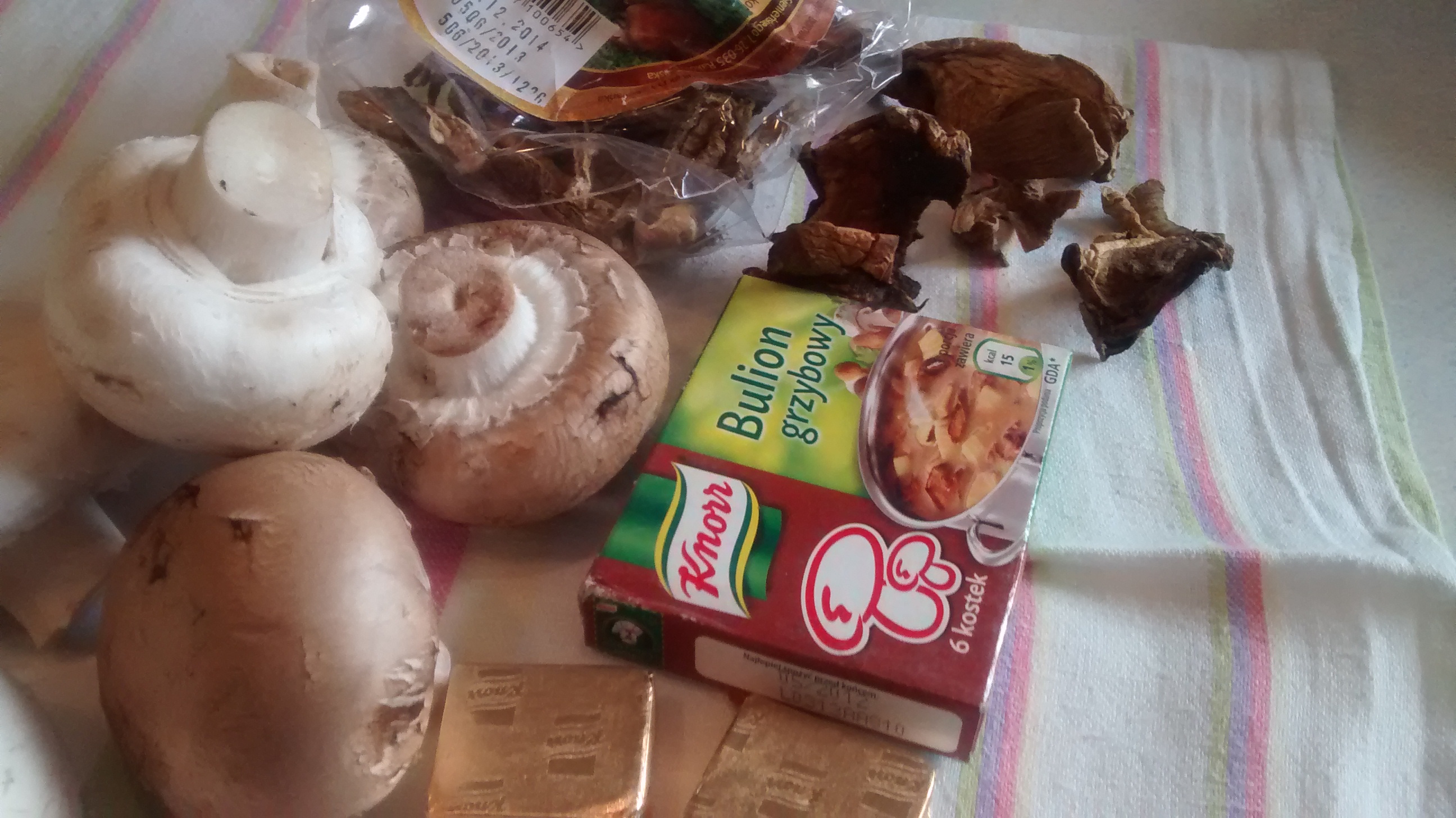
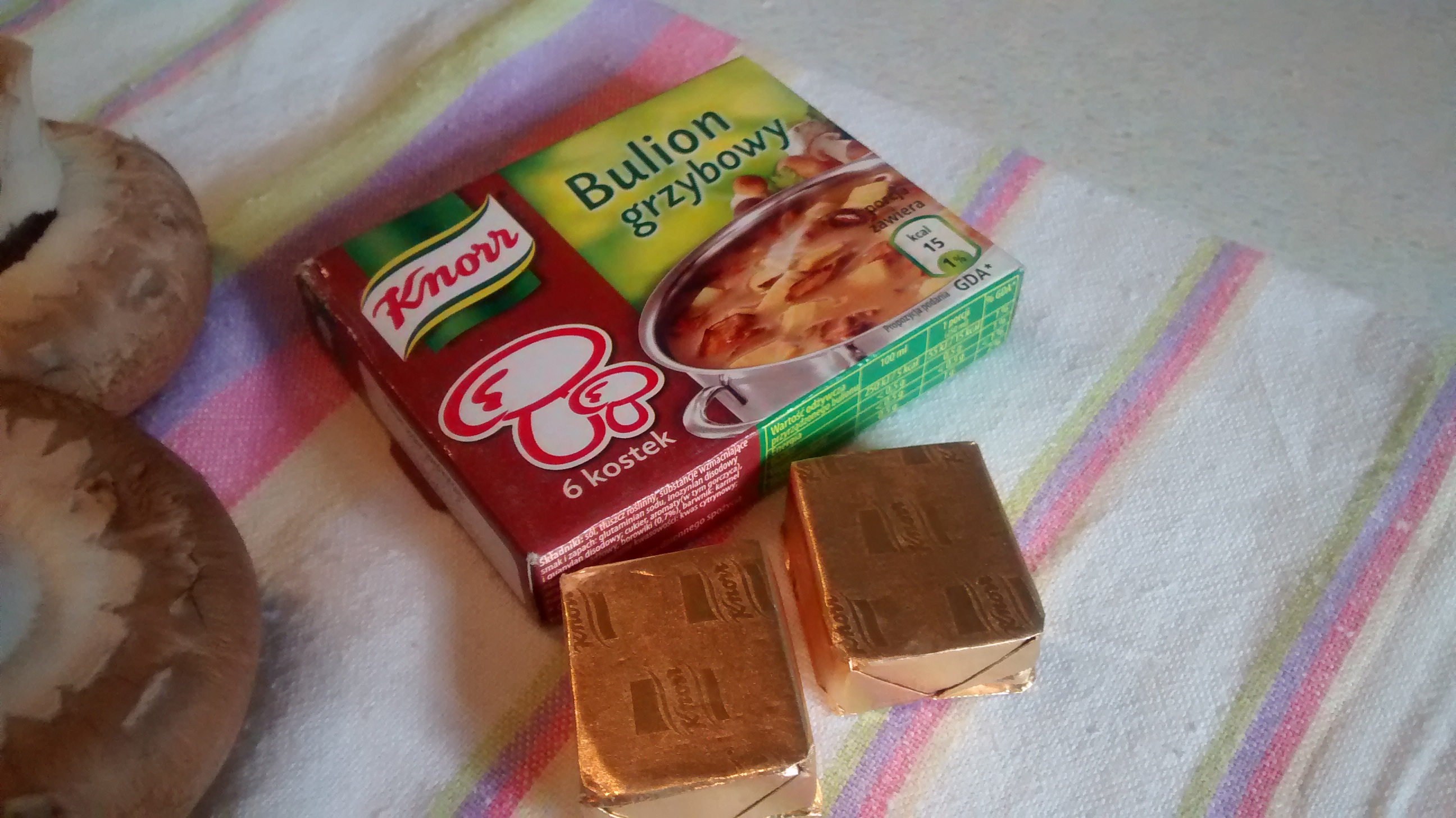
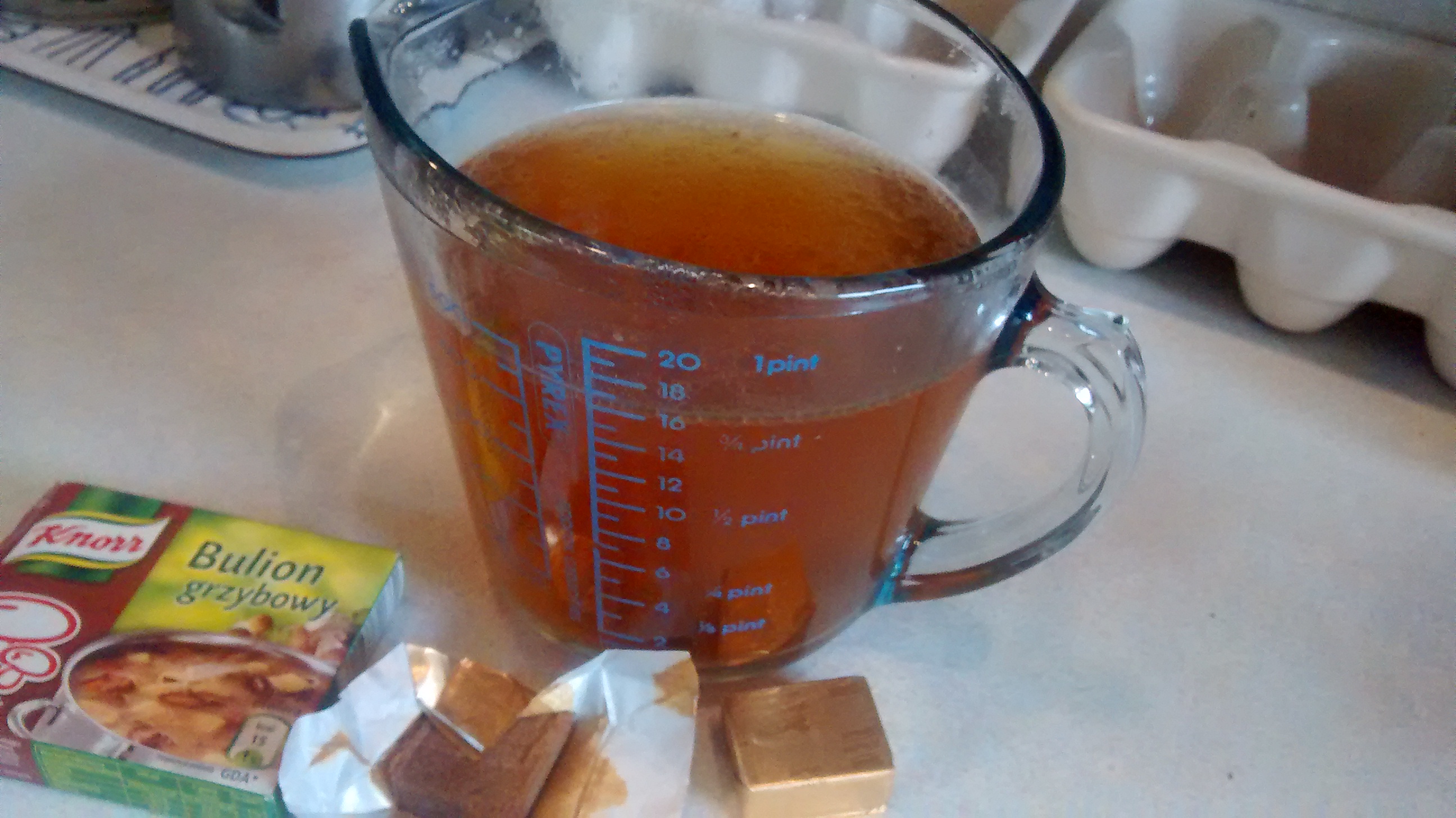
Knorr – mushroom stock cubes
In Poland there are now mushroom stock cubes which are very useful especially for making sauces. Years ago I brought loads back to England, now you can find these in the many Polish food shops. The ones I use are made by Knorr and are shown on the photographs in this post. These stock cubes contain a small amount of dried mushroom extract.
The 2 sauces have the same starting points it is the addition of reconstituted mushrooms or stock cubes for the extra taste which is the difference.
Mushroom sauce 1 – using dried mushrooms
Ingredients
150g fresh button mushroom caps – white and/or chestnut
5g of dried mushroom (around 3 slices)
500ml hot boiling water
1 heaped tablespoon of cornflour
3 tablespoons of milk
2 large tablespoons of soured cream.
butter to cook the mushrooms in
salt & pepper to taste
Method
You have to start this sauce the night before or in the morning for use in the evening.
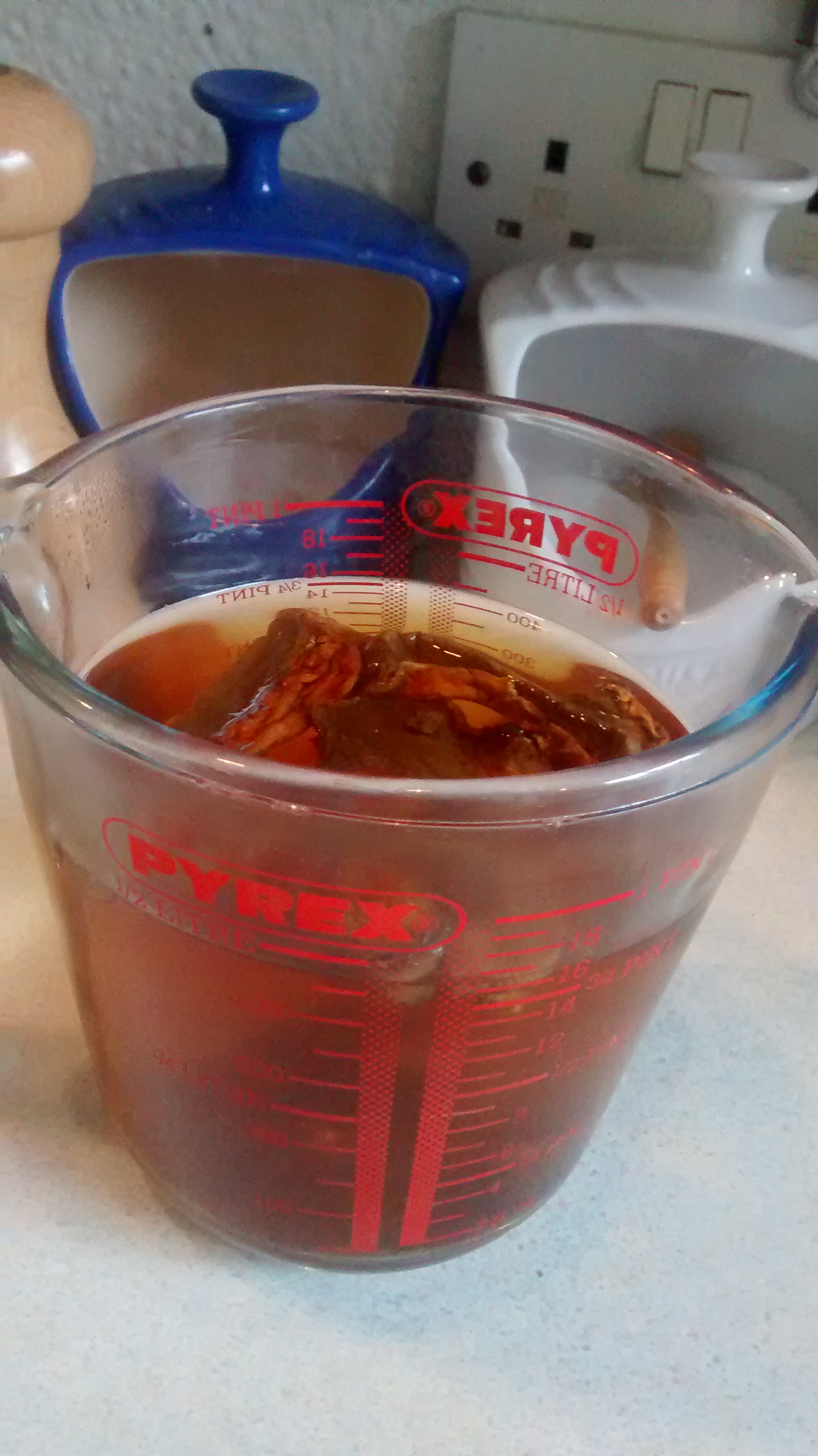
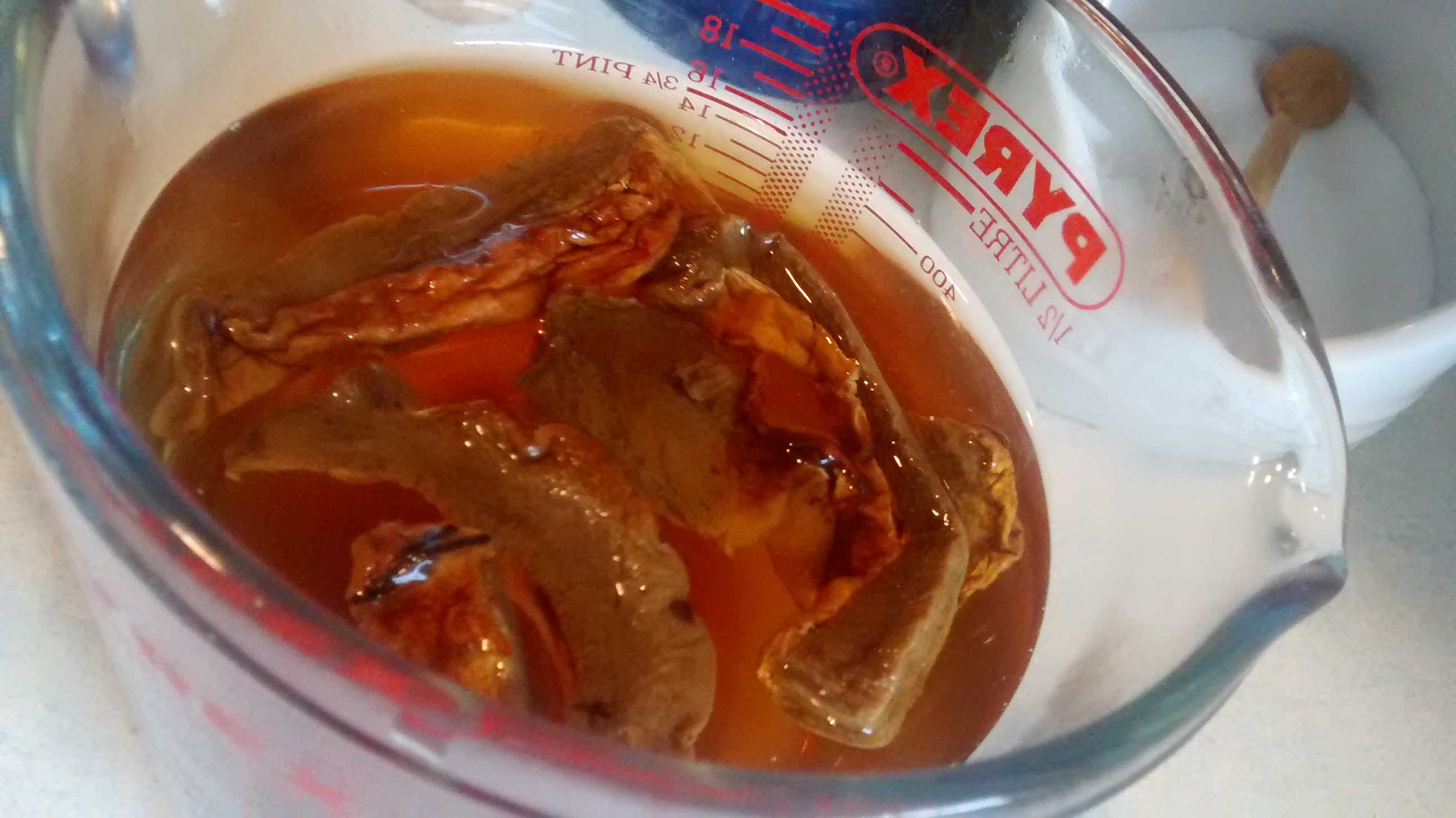
Cover the dried mushrooms with 500ml of boiling water and leave to soak.
Preparing Dried MushroomsDried Mushroom in Hot Water
The following day take out the reconstituted mushrooms and using a knife you can chop then up into tiny pieces or if the are soft enough you can spread out the pulp on a chopping board.
Reconstituted MushroomsMaking a Pulp of Mushrooms
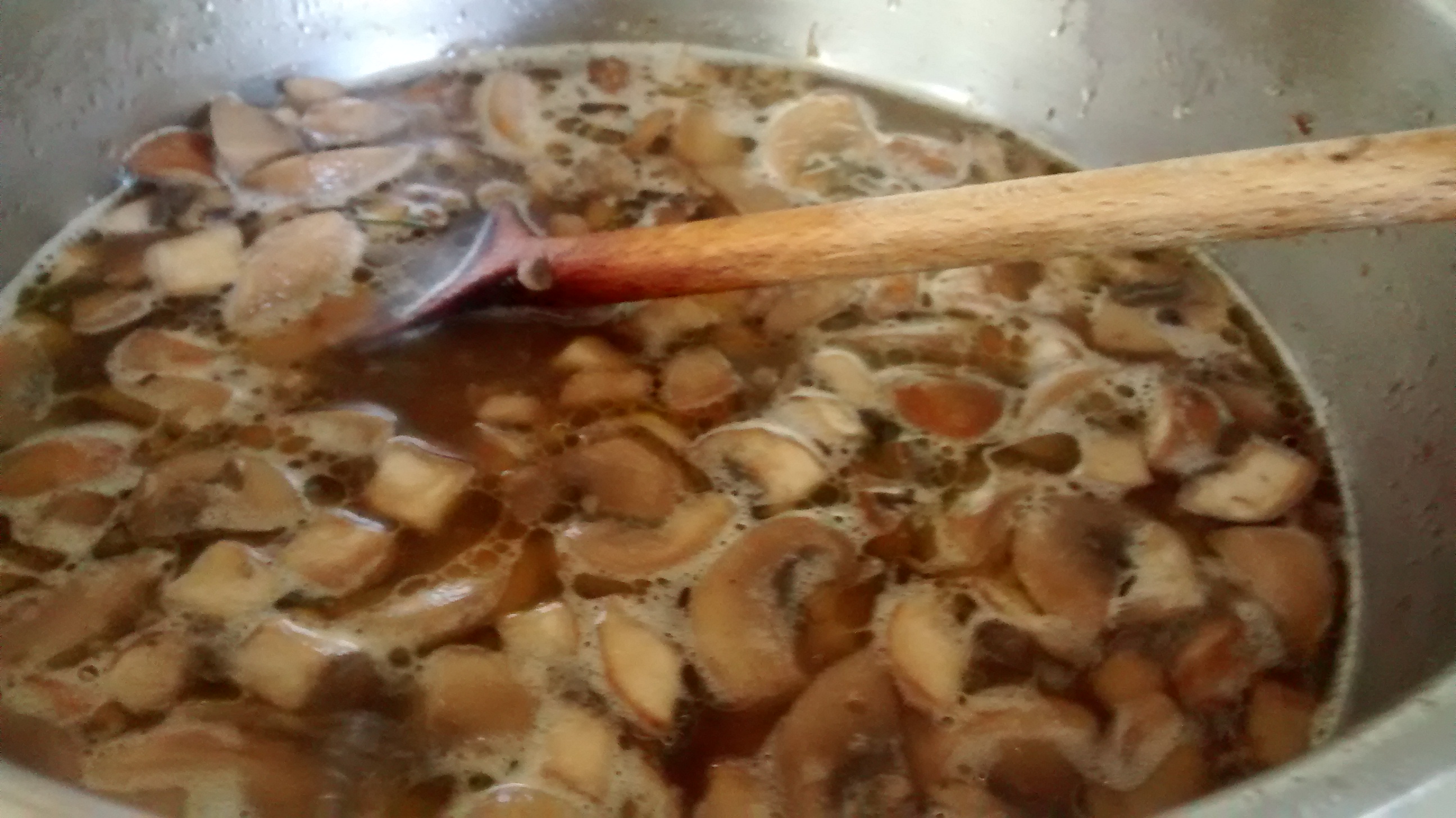
Slice the mushroom caps into fine slices and fry them gently in some butter till they are soft.
Add the dried mushroom pulp and the liquor in which they were seeped.
Simmer gently for about 5 to 10 minutes.
In a little dish mix the cornflour with the milk.
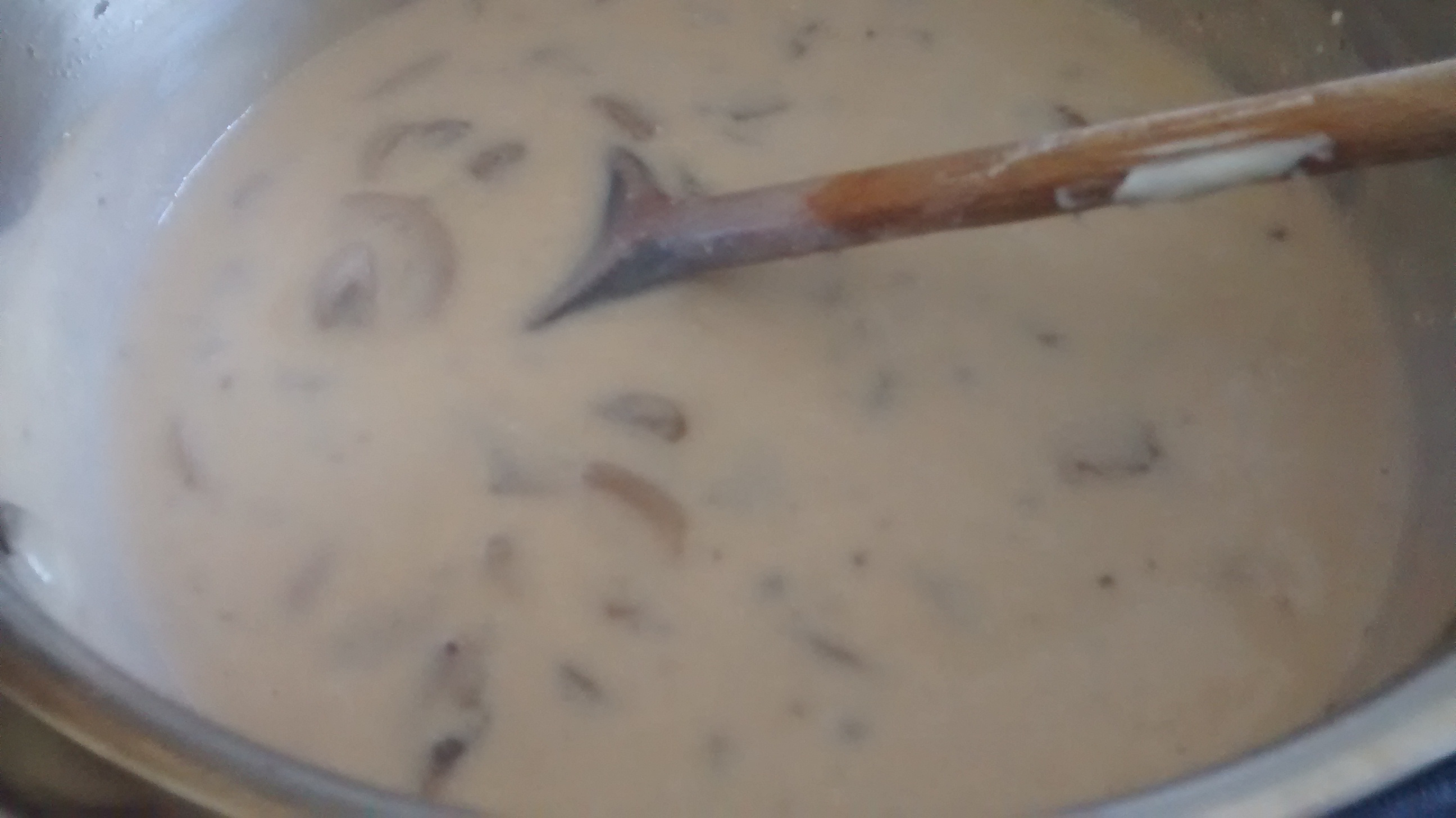
Add the cornflour mixture to the cooked mushrooms and stir gently over the heat until the sauce thickens.
Add salt & pepper to taste.
Remove from the heat and add the 2 large spoonfuls of soured cream and mix well in.
Note
None of these amounts are exact – they are a rough guide depending on what you have – you can use more water, milk or soured cream and so on.
Mushroom sauce 2 – using a mushroom stock cube
Ingredients
150g fresh button mushroom caps – white and/or chestnut
500ml hot boiling water
1 heaped tablespoon of cornflour
3 tablespoons of milk
2 large tablespoons of soured cream.
butter to cook the mushrooms in.
note
I rarely have to add any more salt or pepper as the stock cube has enough seasoning in it.
Method
Dissolve the stock cube in the hot water.
Preparing a Mushroom Stock Cube
Slice the mushroom caps into fine slices and fry them gently in some butter till they are soft.
Simmer gently for about 5 to 10 minutes.
In a little dish mix the cornflour with the milk.
Add the cornflour mixture to the cooked mushrooms and stir gently over the heat until the sauce thickens.
Remove from the heat and add the 2 large spoonfuls of soured cream and mix well in.
If you can get the stock cubes then version 2 is the quickest.
Basic gołąbki recipe without tomatoes
Ingredients
1 large head of white cabbage or Savoy cabbage*
400g rice
500g of minced beef or pork
Chicken stock – a cube or concentrate will do
salt & pepper
2 bay leaves
3 or 4 peppercorns or allspice or both
juice of 1 or 2 lemons.
*As you need whole largish cabbage leaves I sometimes use 2 cabbages to get the bigger leaves. Recently I have started to use Sweetheart cabbage which has large leaves on the outside but you will most likely need 2 of these.
Instructions from my Polish cookbook “bible”
You need to parboil the rice in salted water so that it is about half way to being cooked and then strain the rice and let it go cold, but if you have some plain boiled rice left from another day you could use this, as this is not critical.
In a large bowl mix the rice and minced meat and add salt and pepper. The exact amounts do not matter. I like it to look about 50/50 white and pink but these can be made with much more rice to eke out the meat available.
Next comes the hardest part and patience is called for here to avoid getting scalded fingers. You have to heat or steam the cabbage to make the leaves pliable so you can remove them one by one and use them to encase the filling.
You need the largest pan you have into which you place the cabbage head. I boil some water in a kettle and pour this over the cabbage in the pan with some heat under the pan I let the cabbage cook a little. The temptation is to boil to quickly so making some of the leave too soft and runs the risk of getting scalded as you try to remove the leaves.
Another method is to place the cabbage into a metal colander and set this over the pan of water so that it is steamed rather than boiled.
As the leaves become soft, you have to cut them off from the stalk and stack them up for to use later, you can cut out the thickest part of the stalk from the first few larger leaves.
Pre heat the oven to GM3 – 160oC
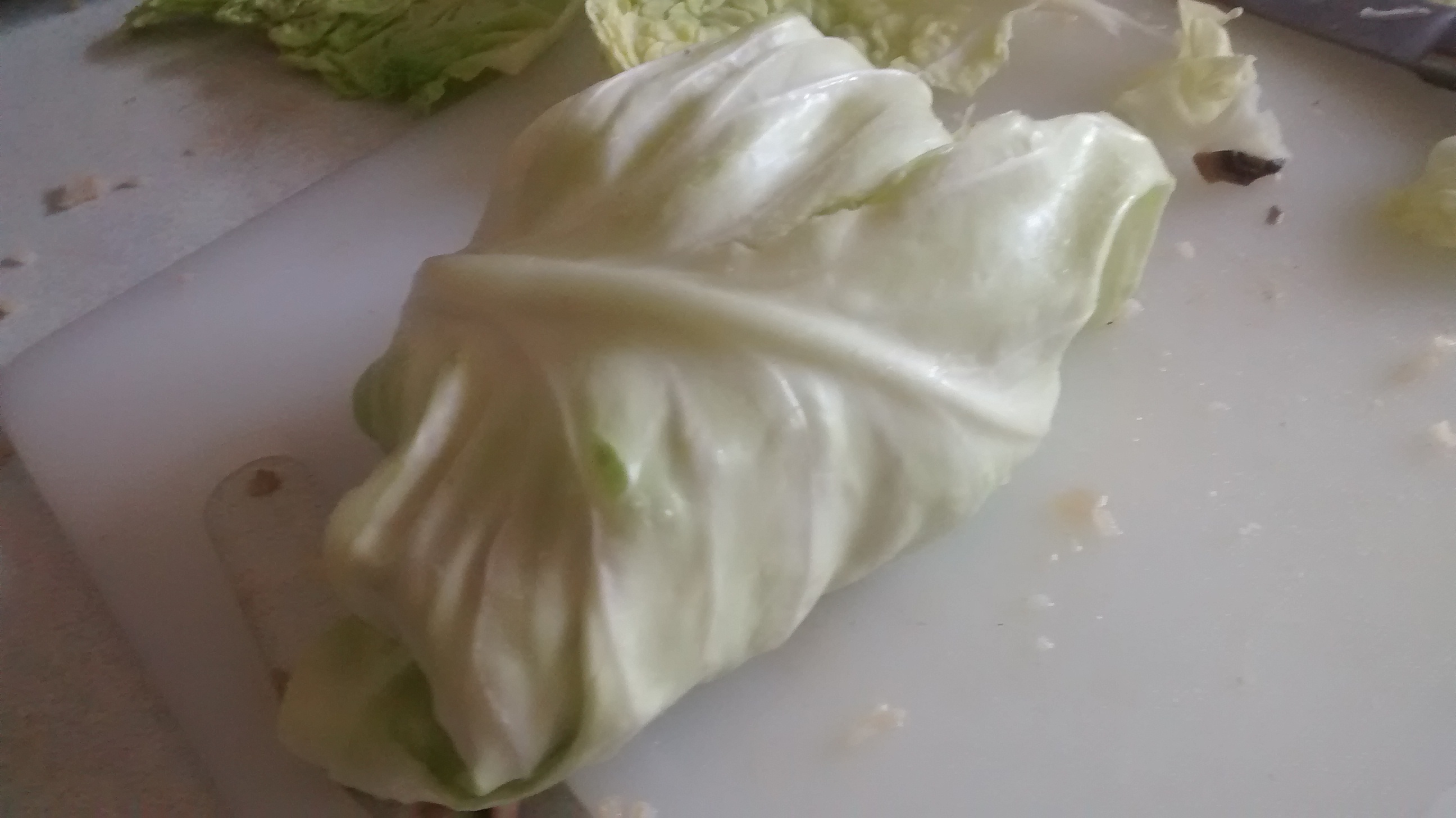
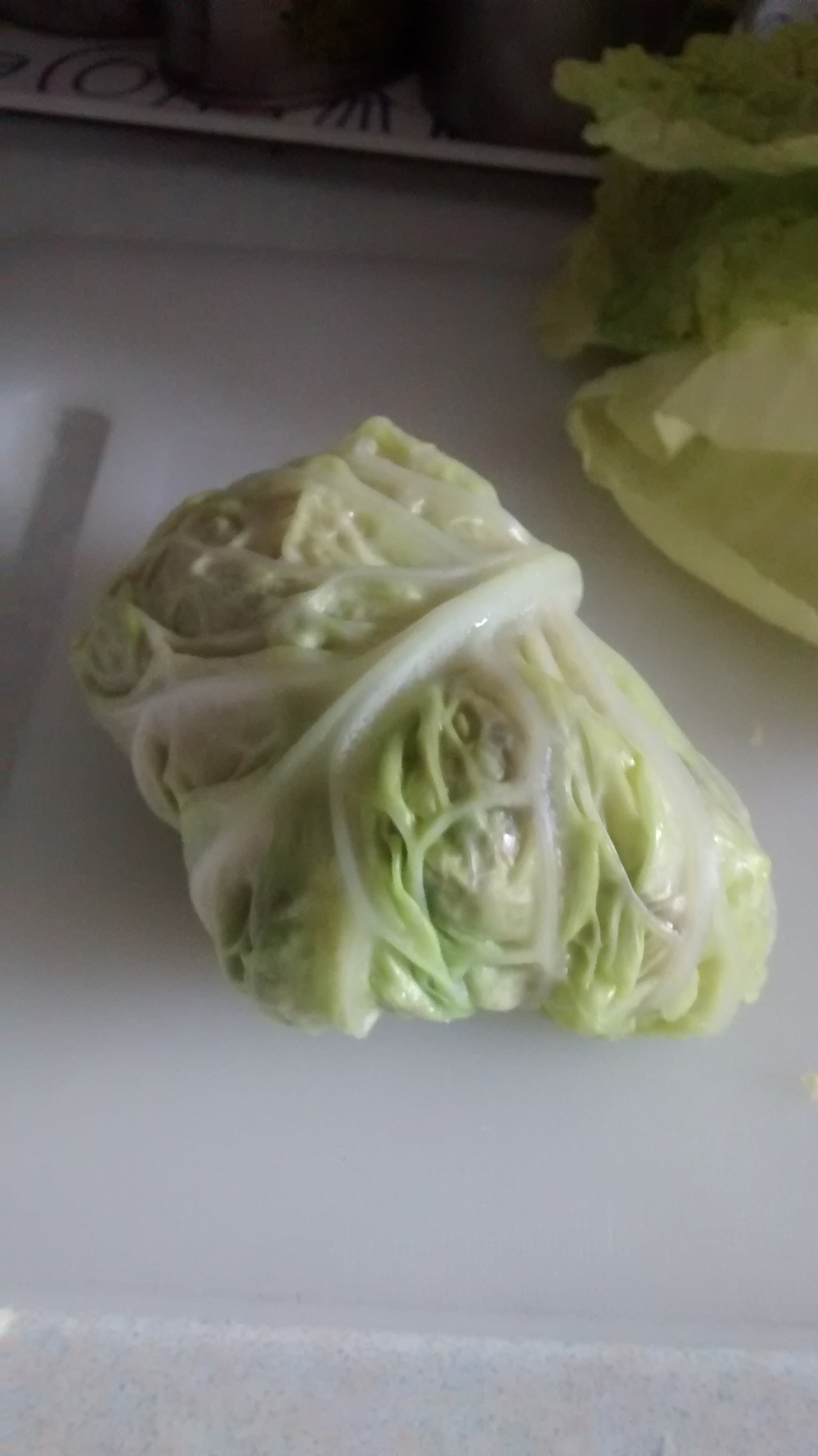
Place a small handful of the rice & meat mixture onto a cabbage leaf and roll up from the stalk end, tuck in the sides and secure with the outer edge of the leaf to make a small parcel.
Place the rolls into a large casserole dish, packing as many rolls as possible in rows in the dish. Depending on the depth of the dish repeat this for another layer.
A tip I got from my late cousin, Krystyna, is to use extra cabbage leaves on the base of the dish and then to put extra leaves on the top of the rolls.
The rolls sometimes have a habit of getting slightly burnt on the top as they come out of the liquid and sometimes at the base if they have been in the oven a long time, these extra layers protect the rolls and can be discarded at the end.
Make a large amount of stock with hot water and lemon juice and add bay leaves, peppercorns and allspice.
Cover the rolls with this liquid. It is a good idea to have extra which you can use to top up as they are cooking.
Cover with the lid and place in the oven and cook for several hours. Check them occasionally and keep them covered with liquid as much as possible.
I always think these taste better when made a day before hand and left for the liquid to seep in more and then reheated in the oven as required.
In the style of Dom Polonii
Sprinkling some chopped dill or flat leaf parsley on the top will be even better (Sadly I did not have any on the day of this photograph).














 Journey From A Polish Kitchen