Skubaniec

  • Skubaniec comes from the word skubać – to pinch or to pluck.
  • This is because the cake dough is pinched into little pieces and then assembled.
  • It could be said this cake is related to pleśniak – a very recent discovery of mine.
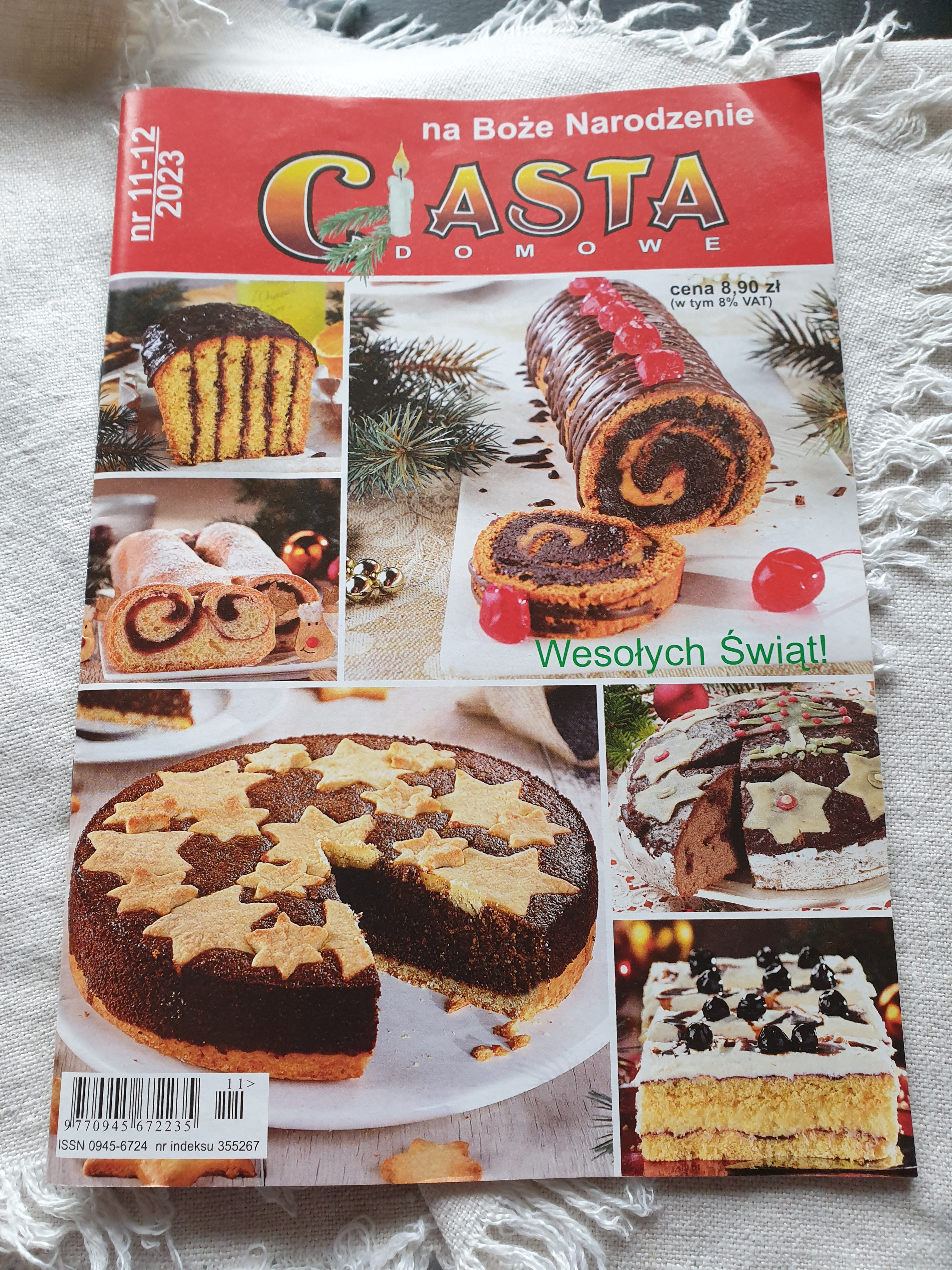
  • There is a recipe in the Christmas pamphlet, which I bought but I have adapted it after looking at other recipes. 
  • As in pleśniak there is plain and cocoa cake dough, sour fruits and meringue.
  • Baking powder is used in this dough.
  • Some recipes pinch all the dough including the base, others roll out the base.
  • The next is a meringue layer, then the fruits, followed by a pinched dough topping of plain and cocoa dough.
  • Sour cherries, blackcurrants, gooseberries are the most used fruits but I have seen recipes for apples and for rhubarb.
  • You can use 2 or more fruits – I used fresh blackberries in 1 third and bottled sour cherries in the rest.
  • Bottled fruit, drained, can be used as was here.
  • Frozen fruits can be used and the cake made out of season.
  • Defrost frozen fruit and dry the water away.
  • Egg yolks are used in the dough and then the whites in the meringue.

Ingredients – Dough

  • 420g plain flour
  • 120g icing sugar
  • 120g butter
  • 1¼ teaspoons of baking powder
  • 1 tablespoon of cocoa
  • 4 yolks
  • Cold water to bind the dough

Ingredients – Meringue 

  • 4 egg whites
  • 1 tablespoon of icing sugar

Ingredients – Fruit

  • 200g bottled cherries

Putting the cake together

  • Line 3 sides of a 26 x 23cm rectangular tin.
  • Pre-heat the oven to GM4 – 180°C.
  • Rub the butter into the flour until it is like breadcrumbs.
  • Mix in the icing sugar and the baking powder.
  • Divide the dough into three parts.
  • Take 2 parts, add 3 yolks and water to make a soft dough.
  • Add the cocoa to the other dry mixture.
  • Add 1 egg yolk and water to make a cocoa dough.
  • Take 1 half of the plain dough and roll it into a rectangle to fit the base of the tin.
  • *
  • Drain the fruit from the liquid in the jar (keep the liquid for other things).
  • *
  • Whisk the egg white till stiff.
  • Add the icing sugar, whisk again till stiff.
  • *
  • Spread the egg white mixture over the dough base.
  • *
  • Put the fruit evenly over the egg white.
  • *
  • Pinch small pieces of each colour of dough.
  • Place them on top of the fruit alternating between plain and cocoa.
  •  Bake for around 40 minutes.
  • Leave to cool in the tin.
  • NOTE
  • I did find that the cake went stale quite quickly.
  • Next time I will try using 210g of butter.

Pleśniak

  • I first tasted pleśniak on my recent trip to Gdańsk.
  • I had never heard of it before although some of my cakes are similar.
  • It does not appear in any of my older Polish cookery books.
  • Having done a little more research I found it was in some people’s list of their top 10 favourite Polish cakes.
  • *
  • The name is intriguing in that the word means  – mildew or mouldy!
  • It consists of 3 or 4 layers, usually baked in a square or rectangle:
  • Shortcrust/chocolate shortcrust 
  • Sour fruits
  • Meringue
  • *
  • Maybe the mildew reference is to the look of the meringue layer?
  • *
  • The sour fruits are usually sour cherries, blackcurrants or gooseberries.
  • Jam or a mixture of jam and fresh or frozen fruits can be used.
  • The fruit layer should be on the sour side – so if you jam is sweet – heat it up with the addition of the juice of a lemon or two.
  • Sometimes rhubarb, cooked first, is used.
  • My placek with rhubarb & meringue could be adapted with the addition of cocoa to the pastry or the fruit.
  • *
  • I tried this out in a 26 x 21 rectangular tin.
  • I have seen several versions – sometimes with the egg whites/meringue under a layer of pastry – I think the meringue on top is easier.

Shortcrust layers

  • Start to make a rich buttery shortcrust using 250g of plain flour.
  • Do not add any sugar to the pastry.
  • Divide the crumbs part into two.
  • Use the first half to make pastry with 2 egg yolks.
  • To the second half add 3 tablespoons of cocoa powder and continue with 2 egg yolks as normal.
  • Wrap each dough separately. 
  • Leave to chill for around 30 minutes.
  • Egg whites will be used in the meringue.
  • Pre-heat the oven to GM6 – 200°C.
  • Grease and line the baking tin with one long piece of baking paper.
  • Roll out the plain shortcrust to fit into the tin.
  • Roll out the chocolate shortcrust and place this on top.
  • Prick with a fork all over.
  • Bake for around 20 – 25 minutes.
  • Leave to cool completely.

Sour Fruit Layer

  • Spread jam (sour cherry, blackcurrant or gooseberry) over the pastry.
  • If you jam is sweet – heat it up with the addition of the juice of a lemon or two first.
  • Leave to cool.
  • Add some fresh or frozen fruits if you have them.

Meringue Layer

  • Pre-heat oven to GM3 – 160°C.
  • Use 3-4 egg whites & 50g icing sugar per white.
  • Place the whites into a grease free bowl.
  • Whisk till stiff.
  • Add icing sugar and whisk again till stiff.
  • *
  • Spread meringue over the top of the fruits.
  • Bake for 30 – 35  minutes.
  • Can be longer or shorter depending on if you want the meringue crisp or soft.
  • *
  • Leave to cool.
  • Cut into squares when serving.

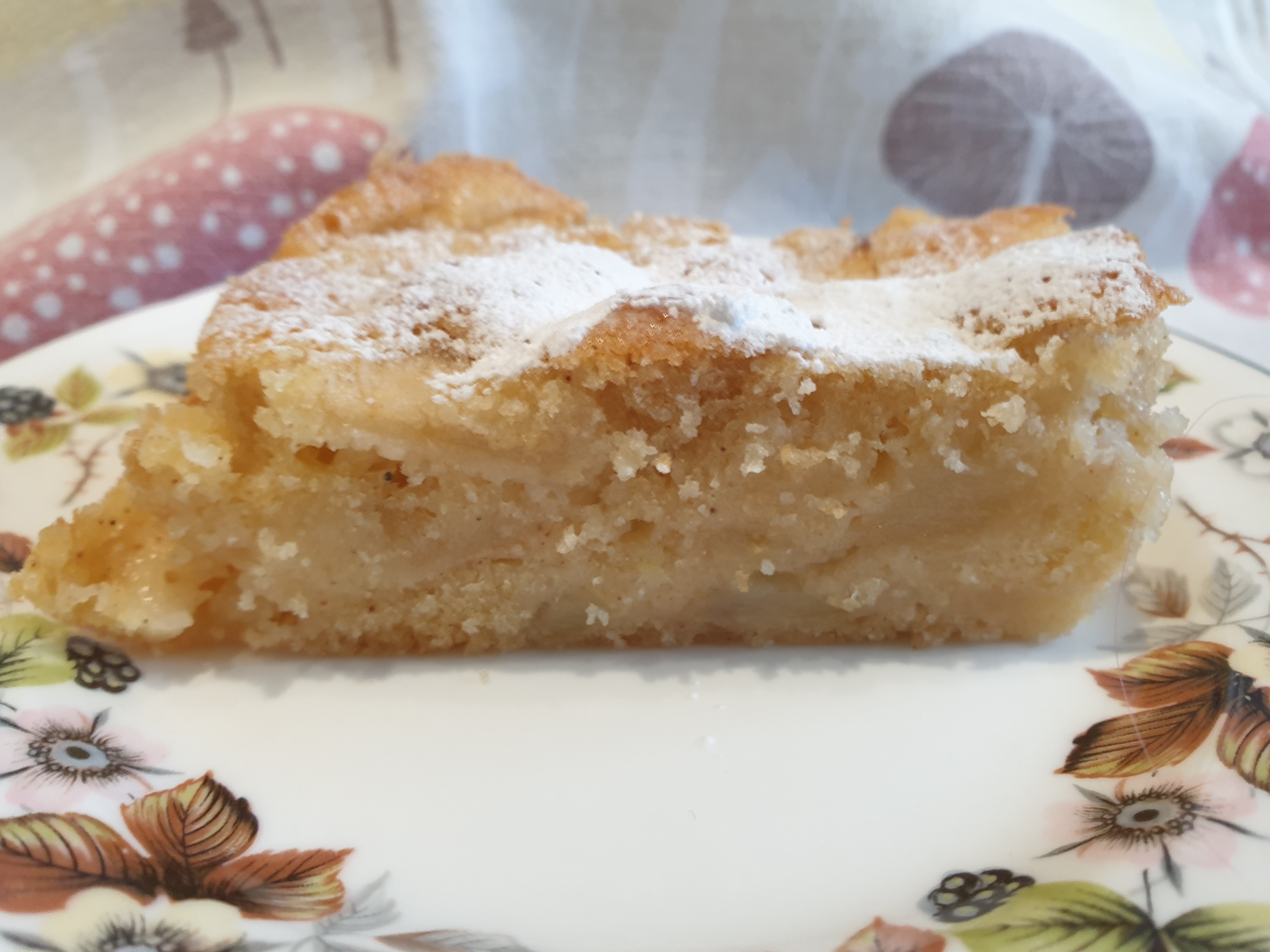
Royal Standard – Lyndale tea plate.

Cake with “Sour” Fruits 2

  • This is the second fruit recipe I have been given from my Polish friend in Leeds.
  • It is quite unusual and contains a large proportion of fruit to cake.
  • It works best with sour fruits such as –
  • Bilberries (Whinberries)
  • Cooking apples
  • Plums – not too ripe
  • Rhubarb
  • Sour cherries
  • *
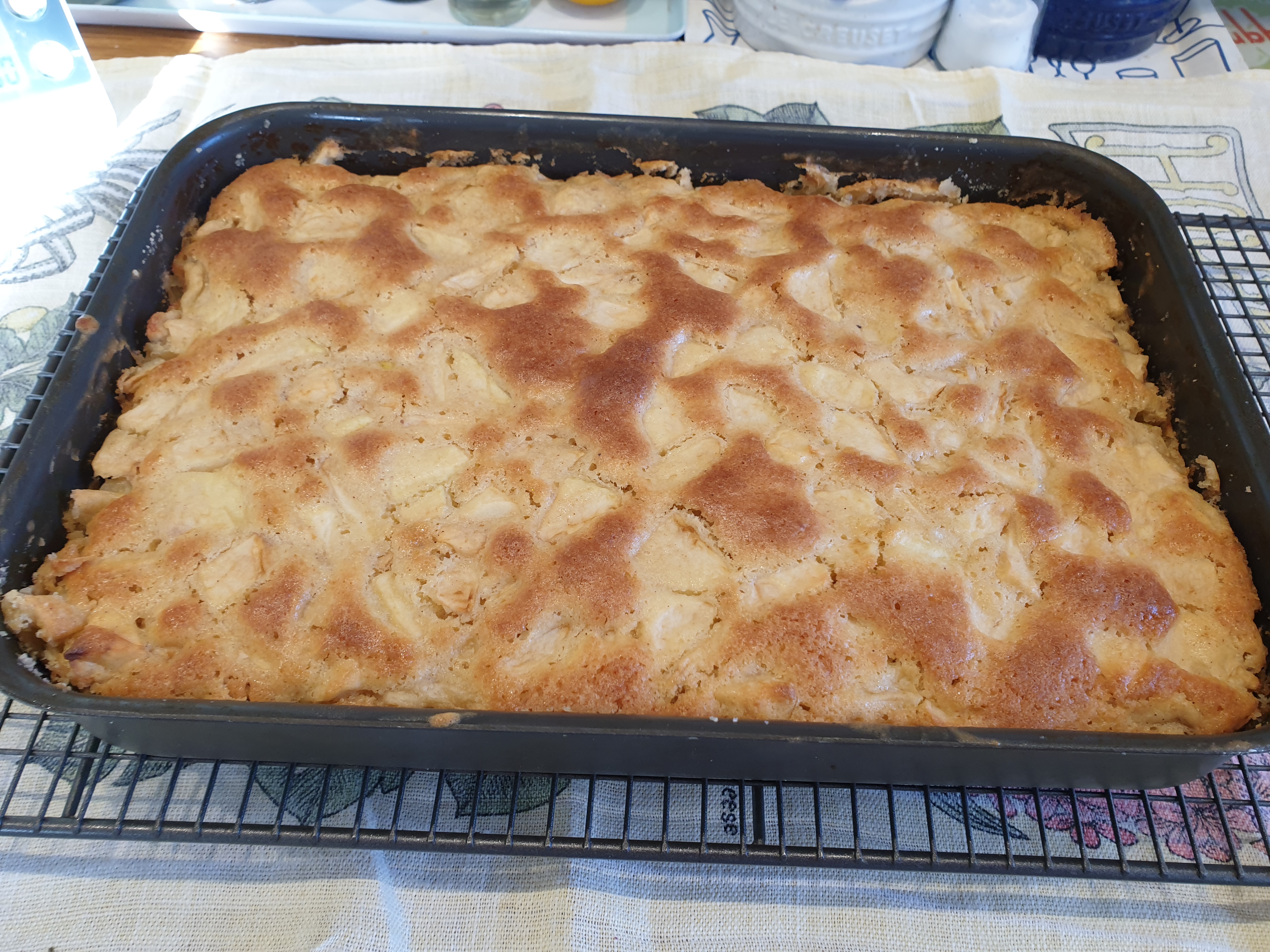
  • I have tried it out with Bramley apples from the garden as rhubarb is not yet in season. (This will be my next trial).
  • Some potato flour is used and the recipe says you can use budyń –– Polish custard powder.
  • The second time I tried it out using English custard powder.
  • I used 180g of granulated sugar, which was enough for the apples.

INGREDIENTS

  • 1kg of fruit
  • *
  • 180g – 220g granulated sugar – depends on how sour the fruit is.
  • 3 eggs
  • 170g plain flour
  • 1½ teaspoons baking powder
  • 90g potato flour 
  • 125g butter
  • 2 tablespoons of sunflower oil
  • *
  • 1 – 2 teaspoons of mixed spice or cinnamon or 5-6 drops of vanilla essence
  • *
  • Butter or oil &  bułka tarta – dried breadcrumbs
  • *
  • Icing sugar to dust

METHOD

  • Grease a 32 x 22 baking tin and cover thinly with breadcrumbs.
  • Pre-heat the oven to GM 4 – 180°C.
  • Melt the butter in a small saucepan and leave to cool.
  • *
  • Prepare the fruit – for apples these were peeled and cored and chopped into small pieces.
  • Mix the spices with the fruit.
  • *
  • Mix the plain flour, baking powder and potato flour together .
  • In a large bowl whisk the eggs with the sugar (180g for apples).
  • Mix in the flour mixture
  • Add the cooled butter and mix well.
  • Add the sunflower oil and mix well.
  • *
  • Add the fruit and mix so that the fruit is coated with the batter.
  • Put the cake mixture into the prepared tin and smooth it down and into the sides.
  • *
  • Bake for 45 -50 minutes.
  • Leave to cool in the tin.
  • Dust with icing sugar.
  • *
  • It is hard to take out whole from the tin – easier to cut squares or rectangles in the tin and take these out individually to serve. 
  • Royal Grafton – Woodside tea plate
  • *
  • Option 

  • The recipe says you can use budyń– Polish custard powder  instead of  potato flour.
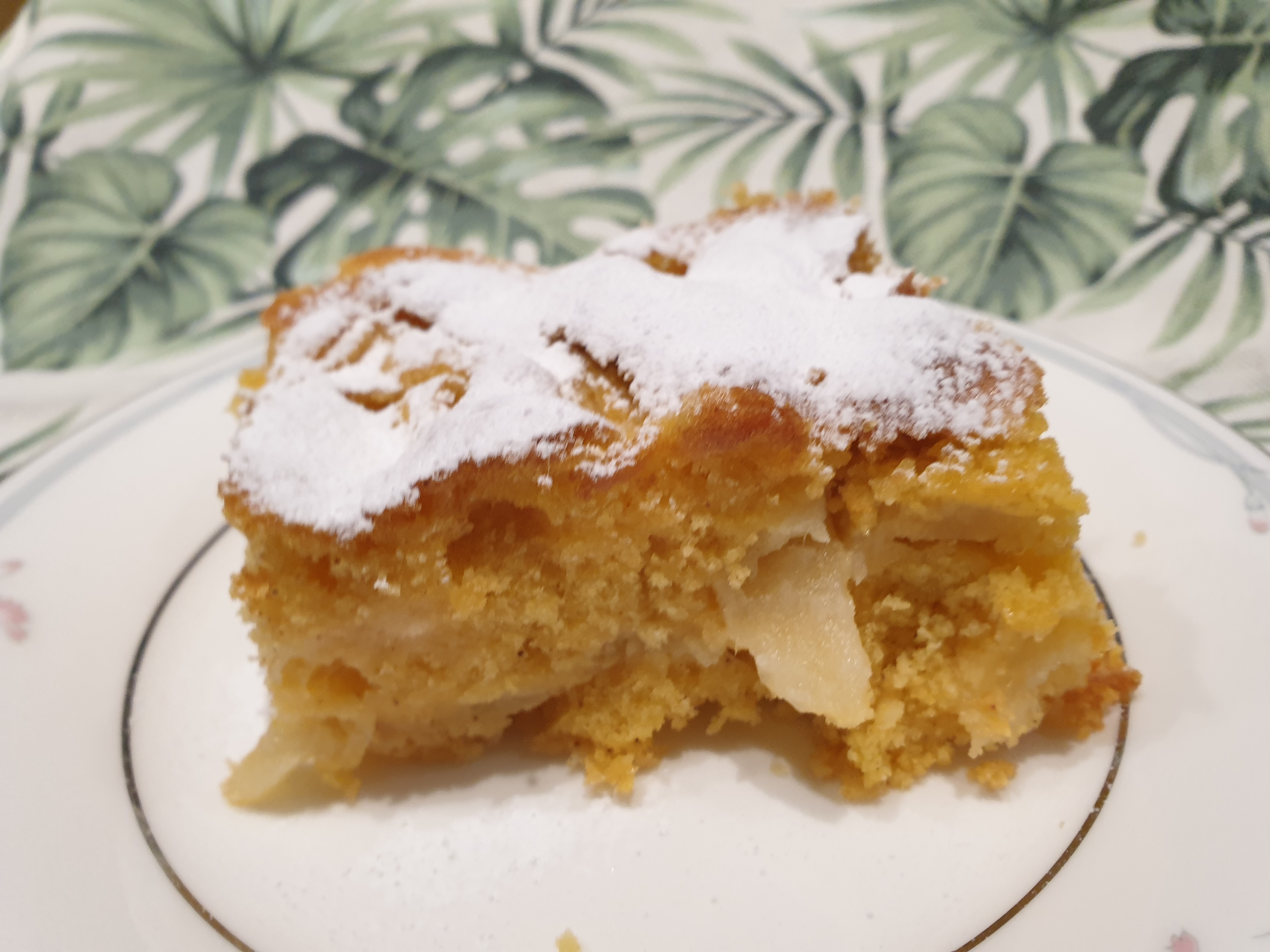
  •  I did not have any budyń but  tried it out the second time using English custard powder it worked well.
  • See photo below served on Royal Doulton – Carnation.

withcustard

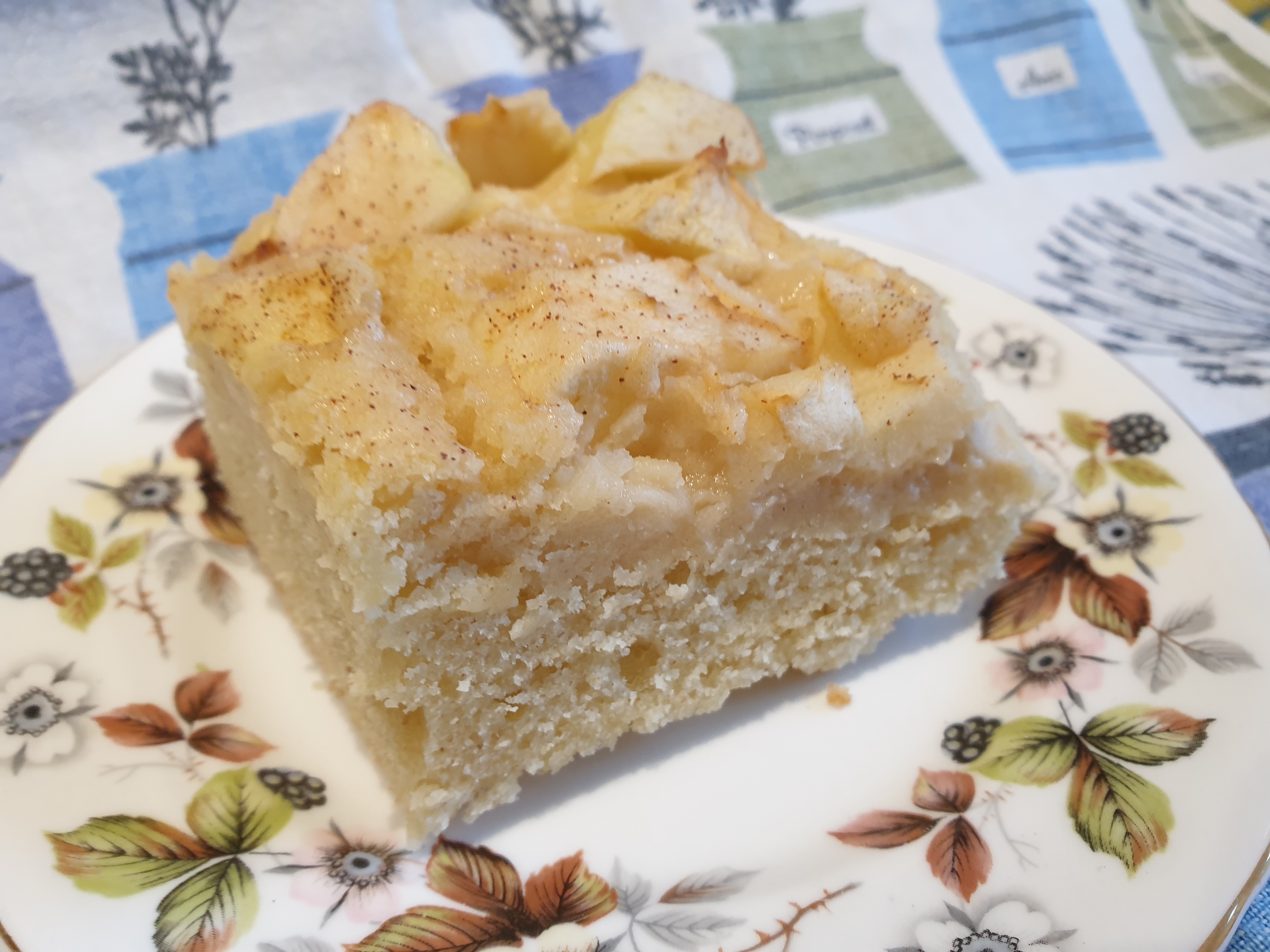
Cake with “Sour” Fruits 1

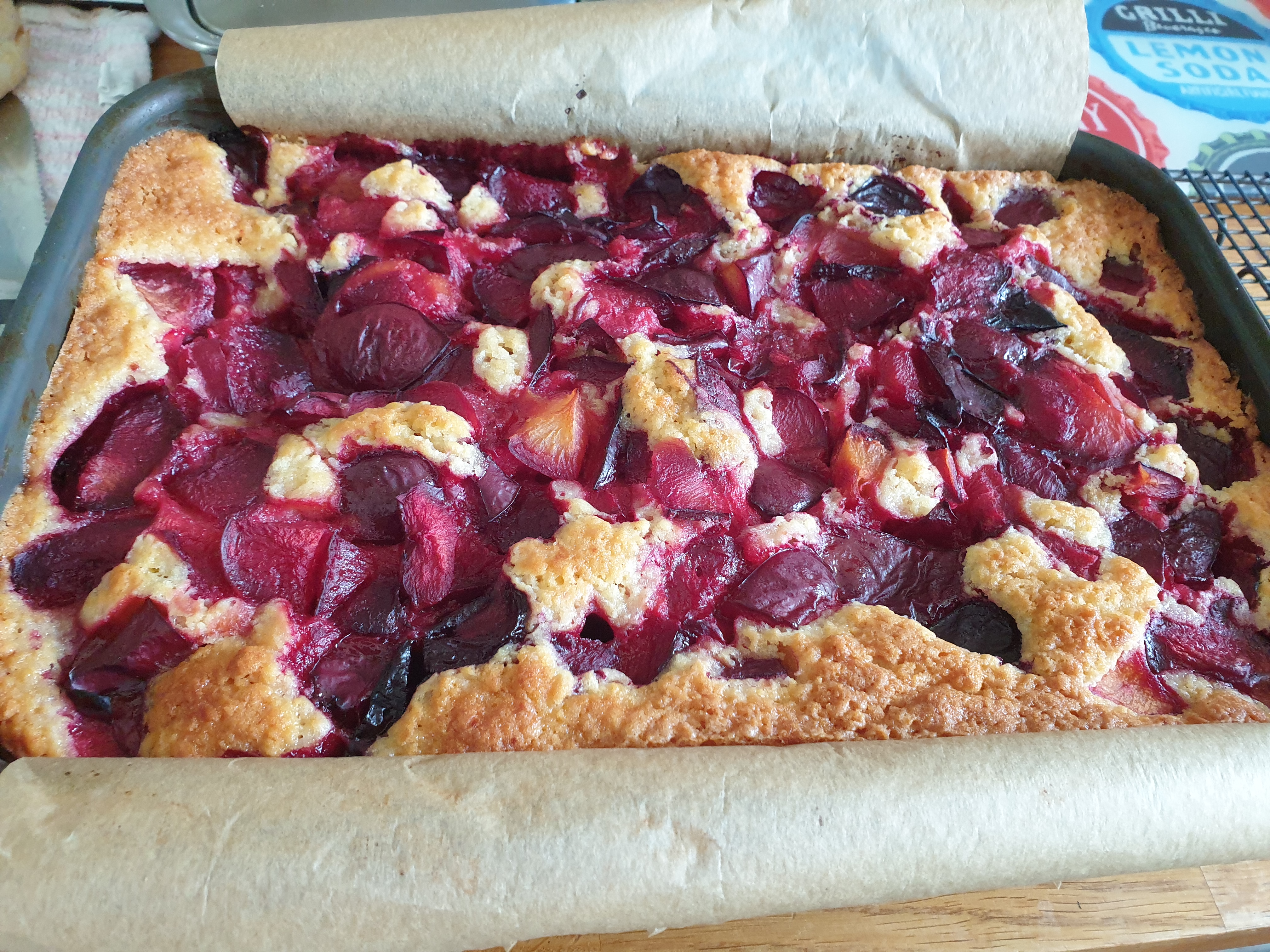
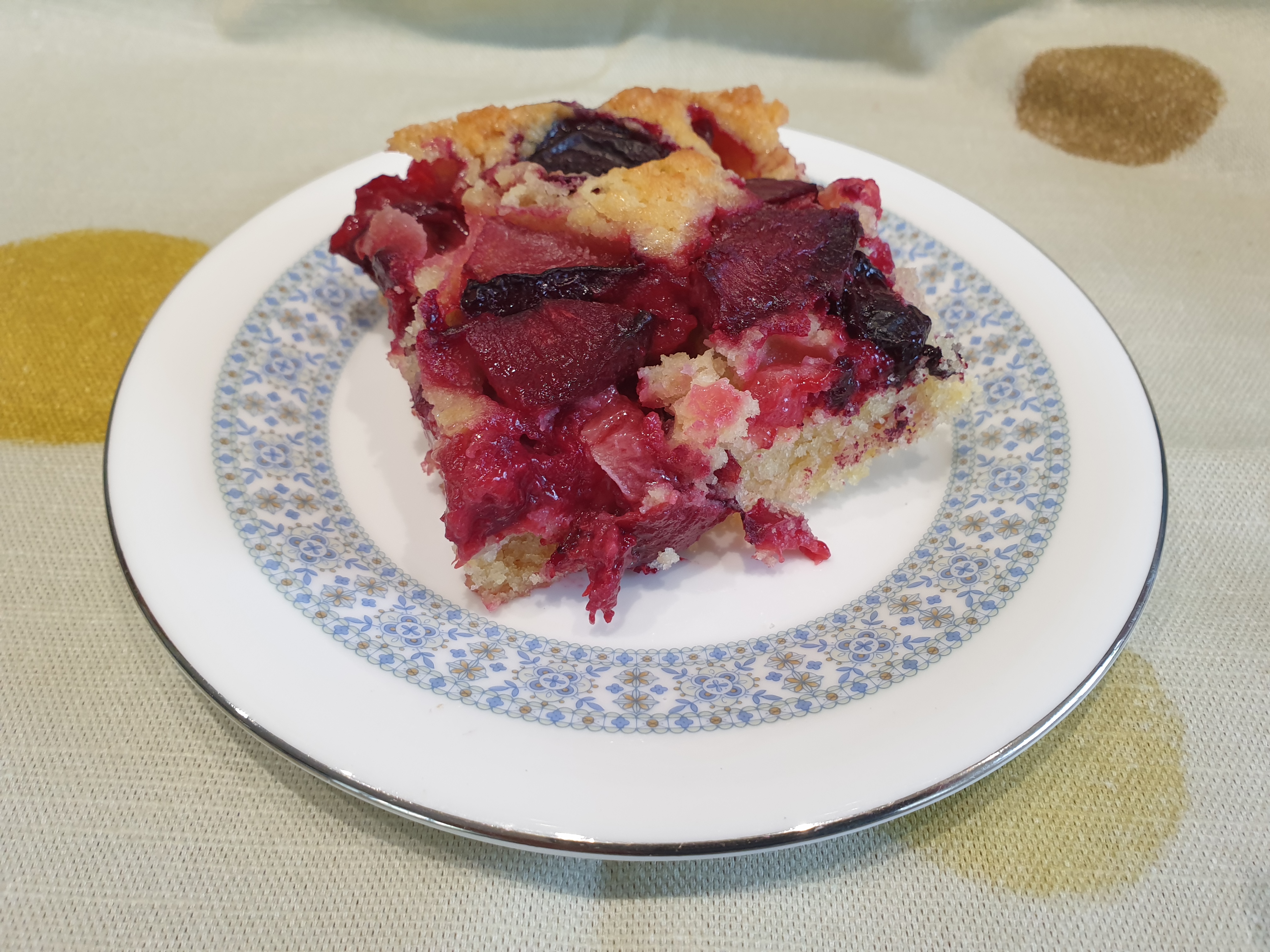
  • Updated on 4 August 2023 using Sour Plums
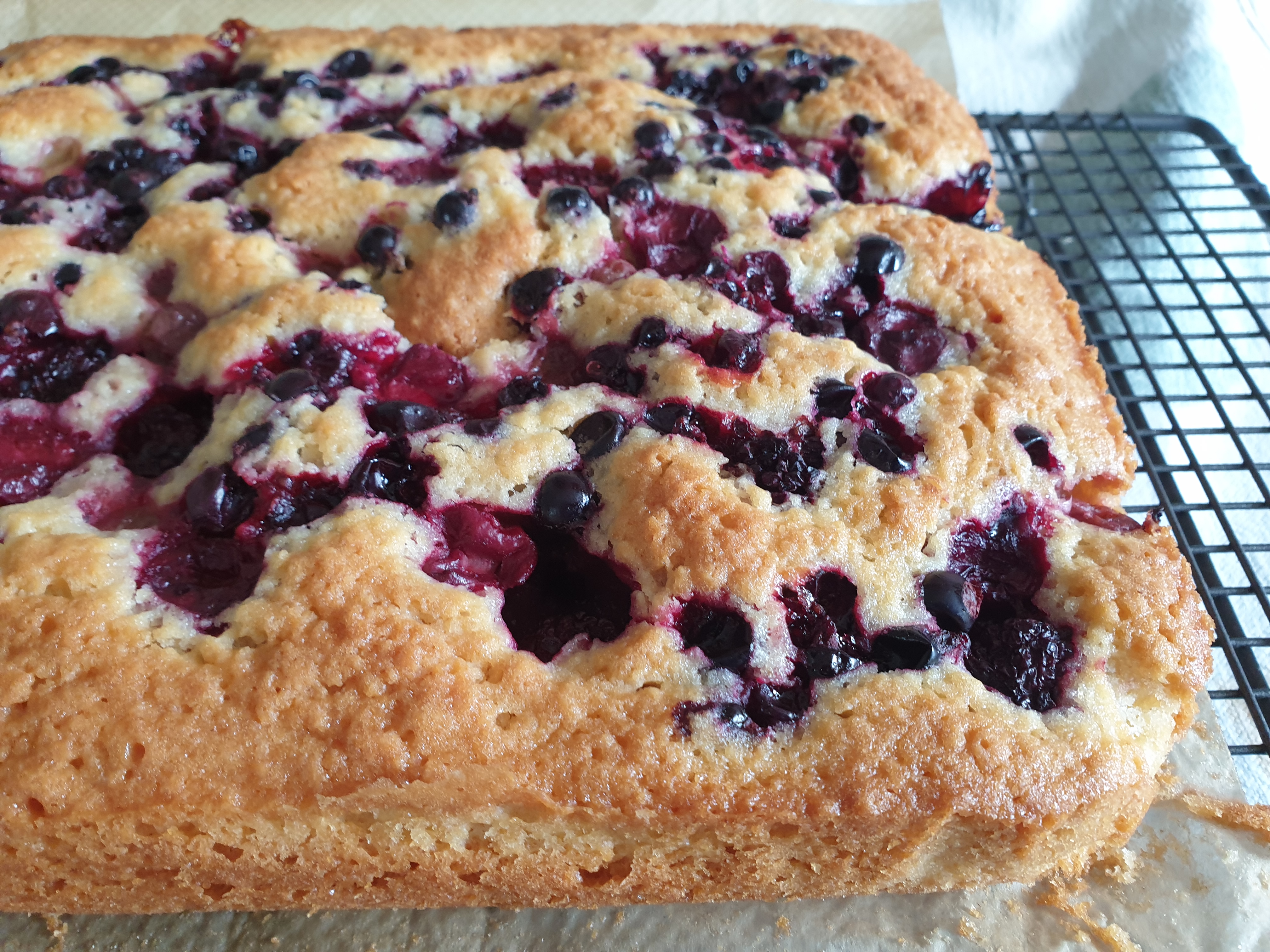
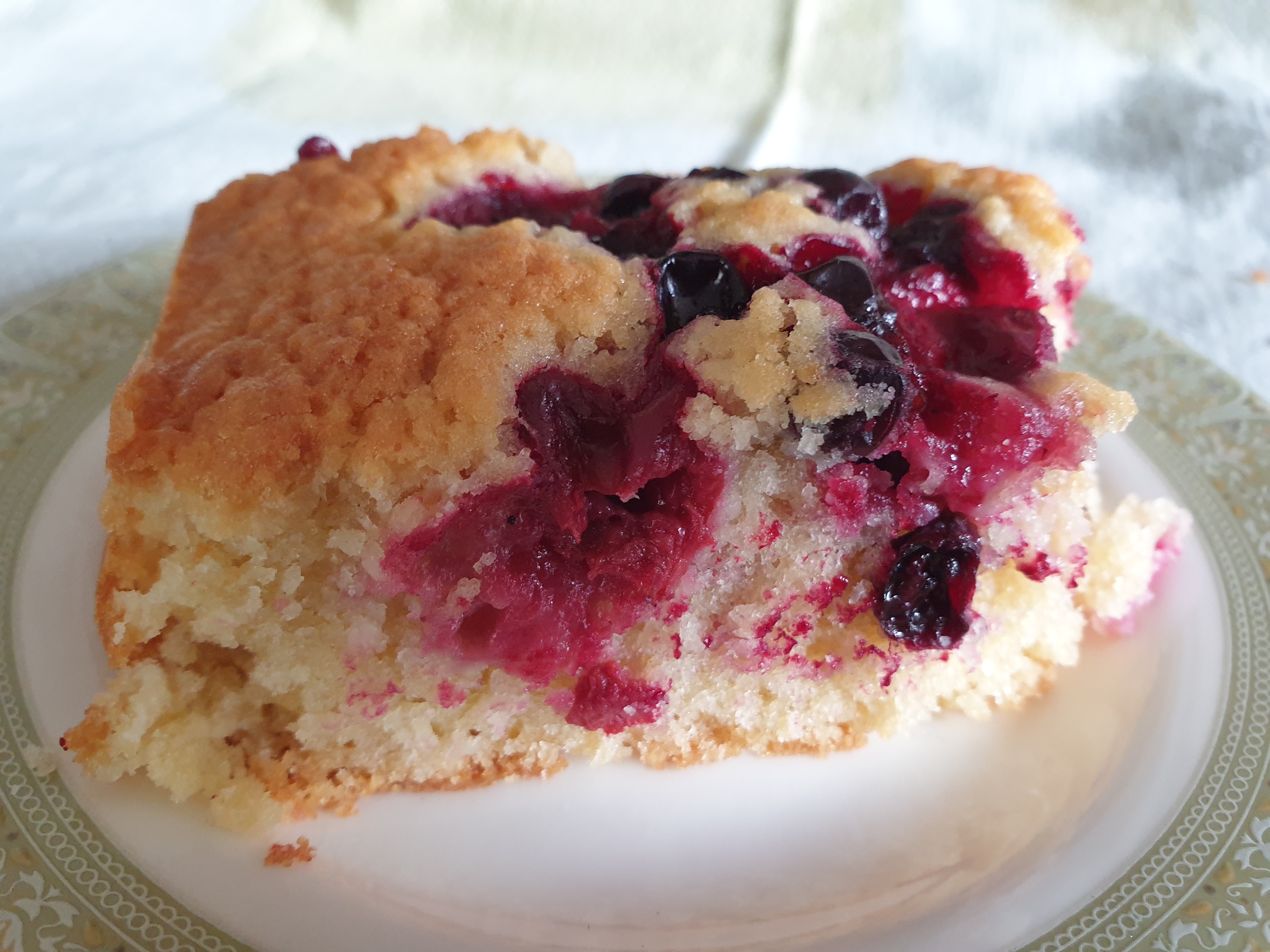
  • Updated on 6 September 2024 with frozen fruits of the forest.
  • *
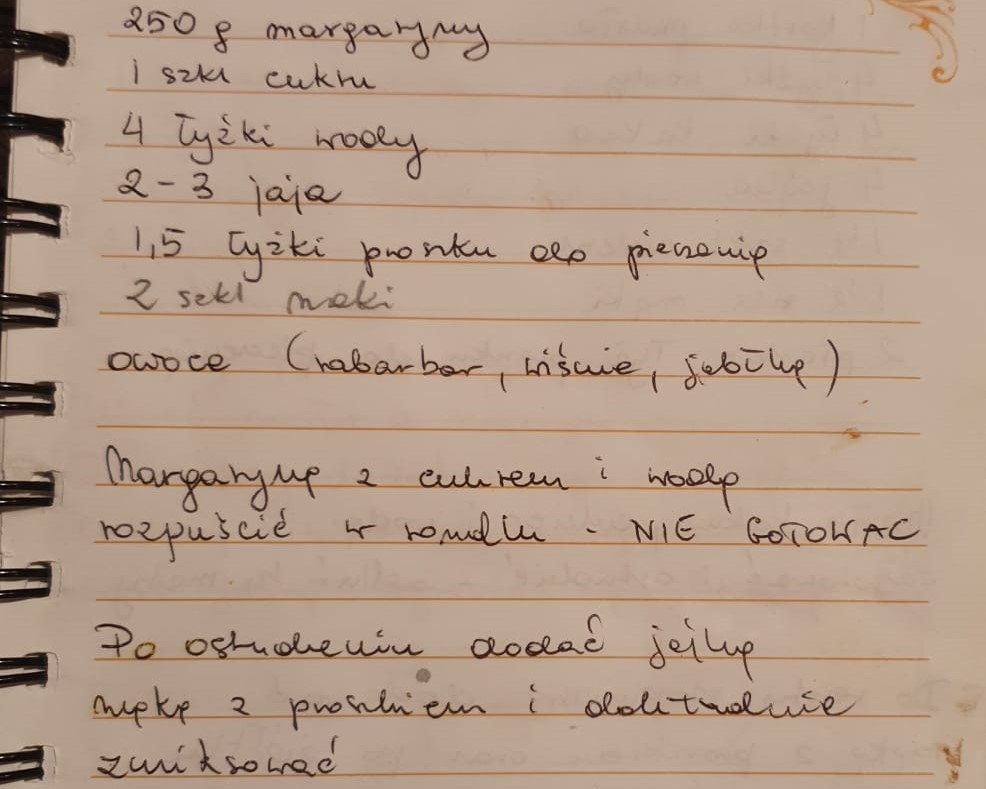
  • I got this recipe from my Polish friend in Leeds.
  • She was going to make this for a coffee morning event for a good cause.
  • It is a batter style cake but made with melted butter rather than oil, which I have used before in cakes such as
  • Victorian Apple Cake  or 
  • Cake with Peaches  
  • The original recipe was for rhubarb –   rabarbar  – in Polish.
  • The recipe suggested you could use other fruit such as sour cherries or apples.
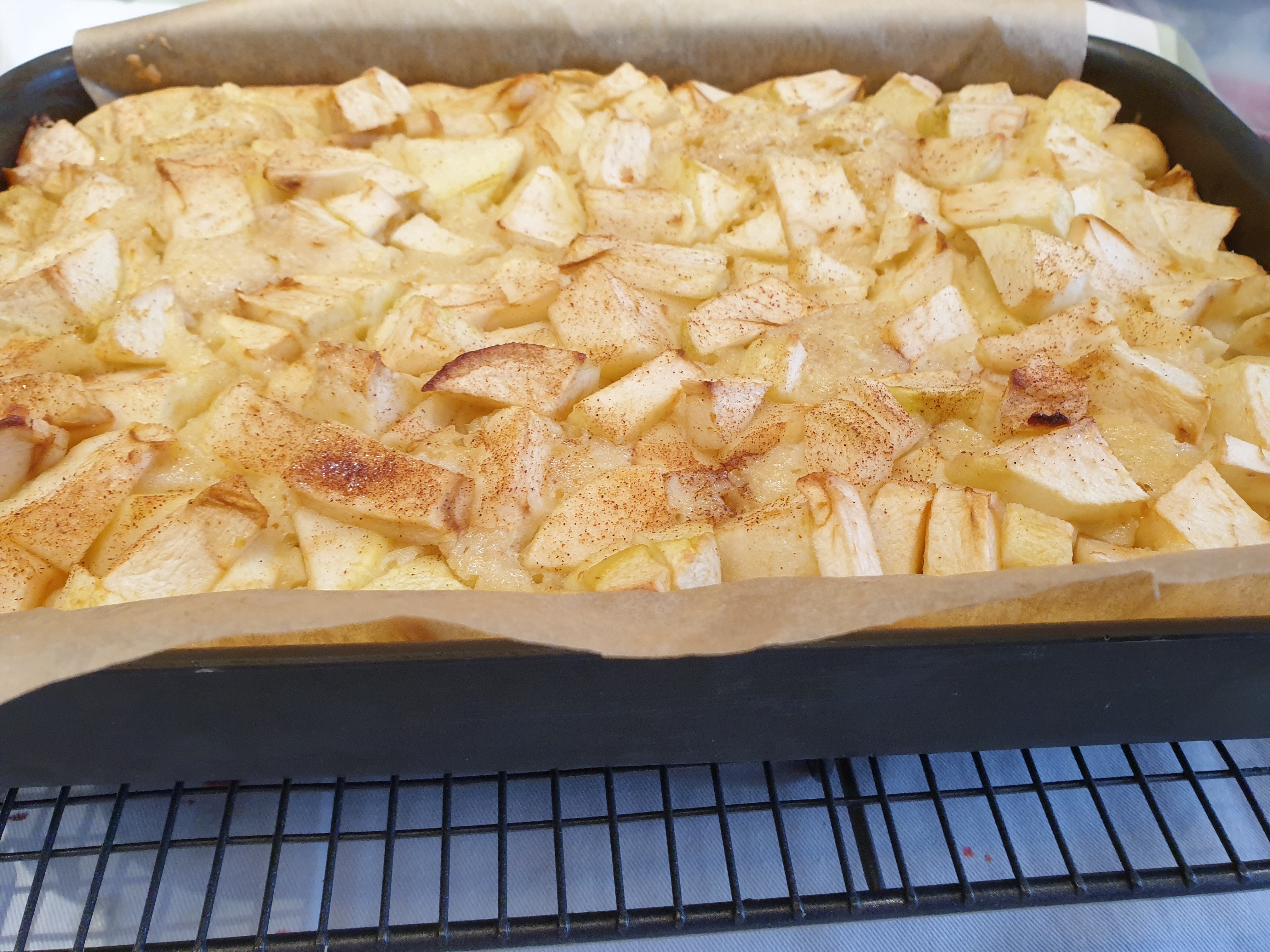
  • As rhubarb is not yet in season I decided to try this with my Bramley apples.
  • My friend made hers with fresh plums.
  • You can use quite a lot of fruit as the cake rises and the fruit moves apart.
  • *
  • If your fruit is too sour you can dust the cake with icing sugar before serving.

INGREDIENTS

  • 250g butter
  • 200g granulated sugar
  • 60ml cold water
  • 3 eggs
  • 340g plain flour
  • 2 teaspoons of baking powder 
  • *
  • 3-4 medium Bramley cooking apples – peeled & cored and chopped into small cubes.

METHOD

  • Grease and line 3 sides of a 32x22cm baking tin.
  • Pre-heat the oven toGM4 – 180°C
  • *
  • Mix the baking powder with the flour.
  • Melt the butter & sugar in a saucepan – do not boil.
  • Add the water and leave to cool.
  • Beat the eggs into the flour.
  • Add the butter mixture and mix well until you have a thick batter.
  • Pour into the tin and level out the batter to all sides.
  • Cover the top with the apple pieces.
  • Baked for 50-55 minutes.
  • Check the cake part is ready with a tester.
  • Leave to cool in the tin.
  • *
  • Optional – dust with icing sugar before serving.

  • Royal Grafton – Woodside – 1940s – 1959
  • *

Version with sour plums

  • Use around 500g of under ripe plums.
  • Remove the stones and cut the flesh into small pieces.
  • *
  • Method as above.
  • *
  • You can dust with icing sugar before serving but I like the contrast of the tart plums against the sweet cake.

Served on Royal Doulton – Counterpoint tea plate.

Version with frozen fruits of the forest

  • I used a bag of frozen fruits of the forest which was 500g
  • I let them defrost on kitchen roll.
  • I think another ½ bag would not have gone amiss.
  • The fruits included red grapes! – I found that rather odd – more blackberries or similar would have been better.
  • Having said this – it went down very well.
  •