This sweet fresh curd cheese mixture is one that is used as a filling for pancakes in Poland.
You can make this mixture with twaróg – curd cheese, cream cheese or yoghurt cheese.
Use 1 packet of cheese, usually 200g – 300g , to this add 2 to 3 tablespoons of soured cream and 2 to 3 tablespoons of icing sugar and mix this together till you get a smooth mixture. You can add 2 to 3 drops of vanilla essence. Do not add too much sugar – you want the contrast of sweetness & sour.
Sweet Curd Cheese MixturePancake Spread With Sweet Curd Cheese MixturePancakes Folded Polish Style with Sweet Curd Mixture Dusted with Icing Sugar
Twaróg – Polish Curd Cheese is used extensively in cooking and finds its way in many guises onto the Polish menu, especially at home, both in sweet and savoury dishes.
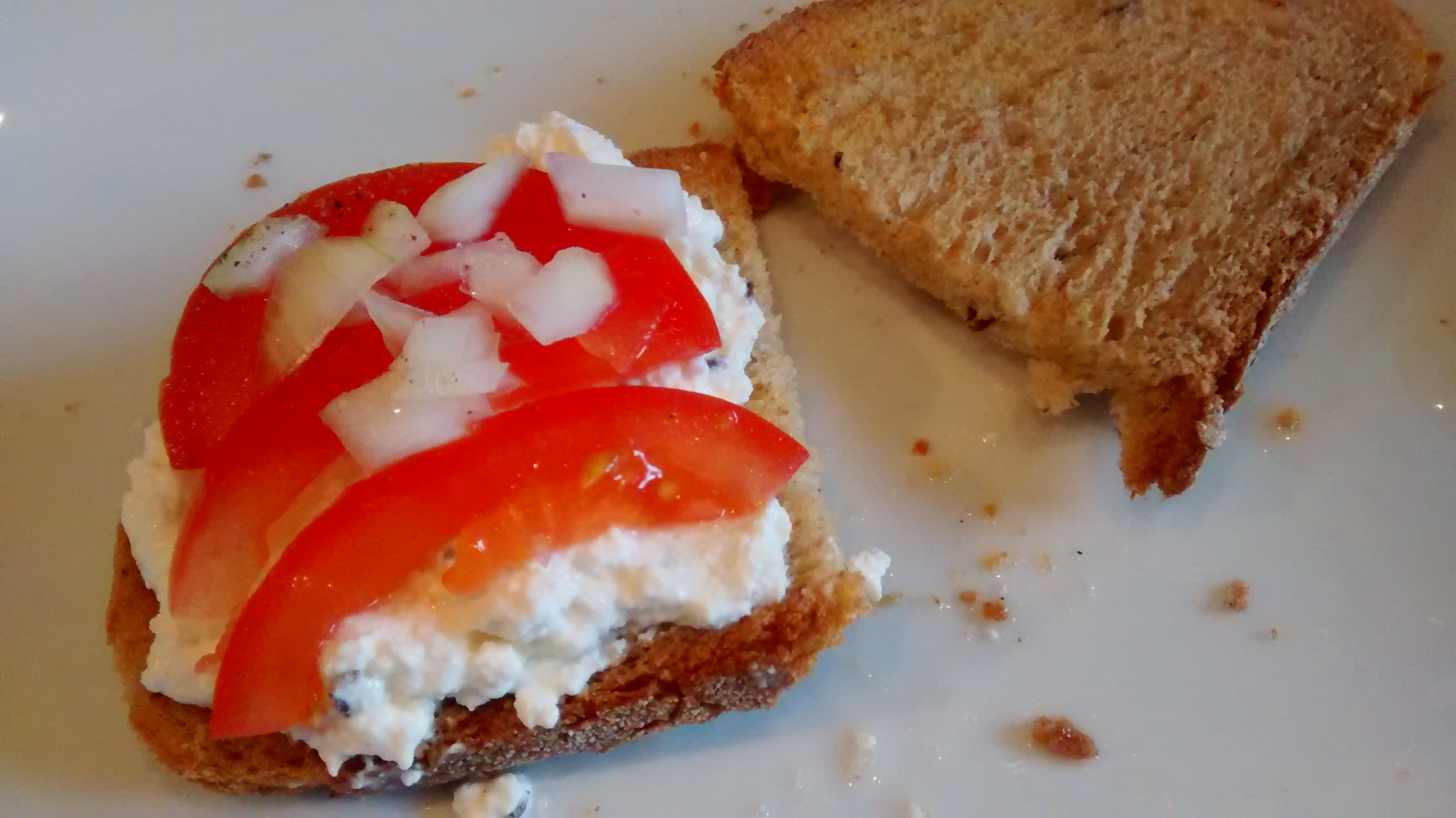
The following are what I consider to be popular classic savoury fresh cheese mixtures and are often served for breakfast with bread and salad.
Here in England I think they could be served at lunchtime. As well as with bread and rolls they can be served with crisp-breads, oatcakes or crackers.
3 Classic Curd Cheese Mixtures
You can make these with Twaróg – Curd Cheese or with Cream Cheese.
You can also use yoghurt cheese – (Look out for a post on how to make this later).
The amounts used are just approximate, using one packet of cheese, which is normally around 200g – 300g, for each mixture and can be varied to taste.
If using curd cheese, add a pinch or two of salt and a couple of spoonfuls of soured cream, mix together until smooth.
If using cream cheese just take it out of the packet and mix it in a bowl – you can add a spoonful or two of soured cream to make it a softer consistency if you wish.
Mixture 1
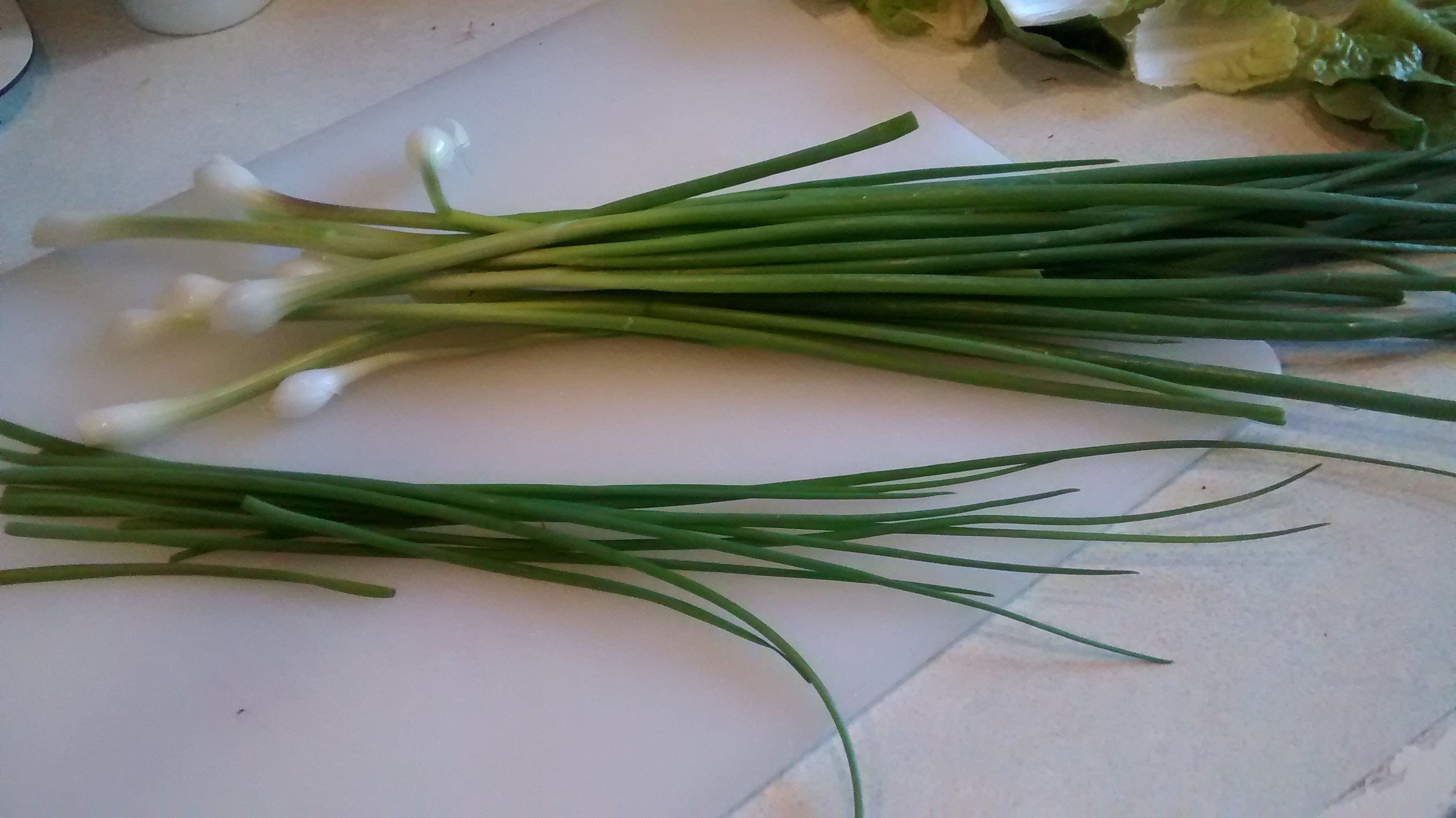
To the cheese add a few tablespoons of finely chopped chives or the green parts of spring onions.
In Poland szczypiorek (which in dictionaries is given as chives) would be used – however I think it is slightly different and is much larger than the chives I grow here in England.
Chives Growing in a Pot
Spring Onions and ChivesCurd Cheese and Chives
Mixture 2
To the cheese add a couple of teaspoons of caraway seeds
Curd Cheese and Caraway Seeds
Mixture 3
To the cheese add some chopped gherkins
I find these are the best gherkins to use as they are not vinegary.
Chopped GherkinsCurd Cheese and Gherkins
Typical Polish Breakfast Fare
These cheese mixtures can also be served with bliny -little buckwheat pancakes. (Look out for a a post on how to make these later).
The origins of cheese pre-dates recorded history but one of the earliest archaeological evidence of cheese production in 5,500 BC is from Kujawy in Poland.
Seris the Polish word for cheese.
Unlike in France, Poland does not have dozens of varieties of cheese.
There are basically three types of cheese in Poland – white, yellow and smoked.
White cheese is made from curd cheese.
Twaróg is the name for curd cheese and is the most important cheese for cooking in Poland both for savoury and sweet dishes.
It is often known as ser wiejski – village cheese.
This is the cheese that both sets of my grandparents would make on a very regular basis.
Twaróg
Twaróg is made from soured milk and can be classified as a fresh acid-set cheese or as a fermented milk product. The soured milk is poured into muslin clothes and then hung up to separate the solid curds from the whey. This results in the traditional wedge shape.
Rennet is not used in its production.
In German it is called Qwark, in Dutch it is called Kwark and is similar to the French Fromage frais.
It is similar to yoghurt cheese which is made from strained yoghurt.
Science note
Soured milk and yoghurt are both produced by the action of bacteria in milk.
However it is mesophile (moderate temperature loving) bacteria which produce soured milk and thermophile(higher temperature loving) bacteria which produce yoghurt. What that means is that soured milk is naturally prevalent in cooler climates than yoghurt.
Historical note
There is evidence of soured milk production in 10,000BC and yoghurt production in 6,000BC.
Twaróg is used extensively in Polish cookery both savoury & sweet.
Recipes using Twaróg will feature in many of my future posts.
Yellow cheese is hard cheese and although there are several varieties they are very much like the Dutch cheeses such as Edam and Gouda.
Smoked cheese – the most famous is from the Tatra Mountains and it is made from sheep’s milk – it is called Oscypek.
This cheese has been made from the 15th Century.
The curds are pressed into wooden decorative shapes.
It has a protected trade name under the EU’s Protected Designation of Origin.
Some scenes of the Tatra Mountains
Zakopane is a much visited town in the Tatra mountains. Its name means dug in and it is in at the bottom of a valley surrounded by mountains.
Wooden houses typical of Zakopane
Oscypek – smoked cheese – from the Tatra Mountains – is often served grilled with cranberry or lingonberry jam.
Oscypek for sale in the streets of Zakopane
Lady selling Smoked CheeseSmoked Cheese made with Sheep’s MilkSome cheeses are made with Goat’s Milk
Górale – Highlanders – Shepherds from the Tatra Mountains
Folk DancingFolk Dancing
World Cheese Production
Some Very surprising Statistics
If anyone had asked me about world cheese production before I started this post, I would have guessed that the biggest producer in Europe was France or maybe The Netherlands. I would have been very wrong!
Looking at the figures for 2011 & 2013 for World Cheese Production in metric tonnes I found that –
The top 6 in both these years are as follows:
United States of America
Germany
France
Italy
Netherlands
Poland.
Also the United Kingdom does not feature in the top 10 at all.
Thinking about this, I of course realised that here in The United Kingdom many of the cheeses for sale are imported many from France and The Netherlands.
In recent years Polish cheeses are appearing not only in the many Polish shops in the United Kingdom but also in some of the regular supermarkets.






 Journey From A Polish Kitchen