Twaróg – Polish Curd Cheese is used extensively in cooking and finds its way in many guises onto the Polish menu, especially at home, both in sweet and savoury dishes.
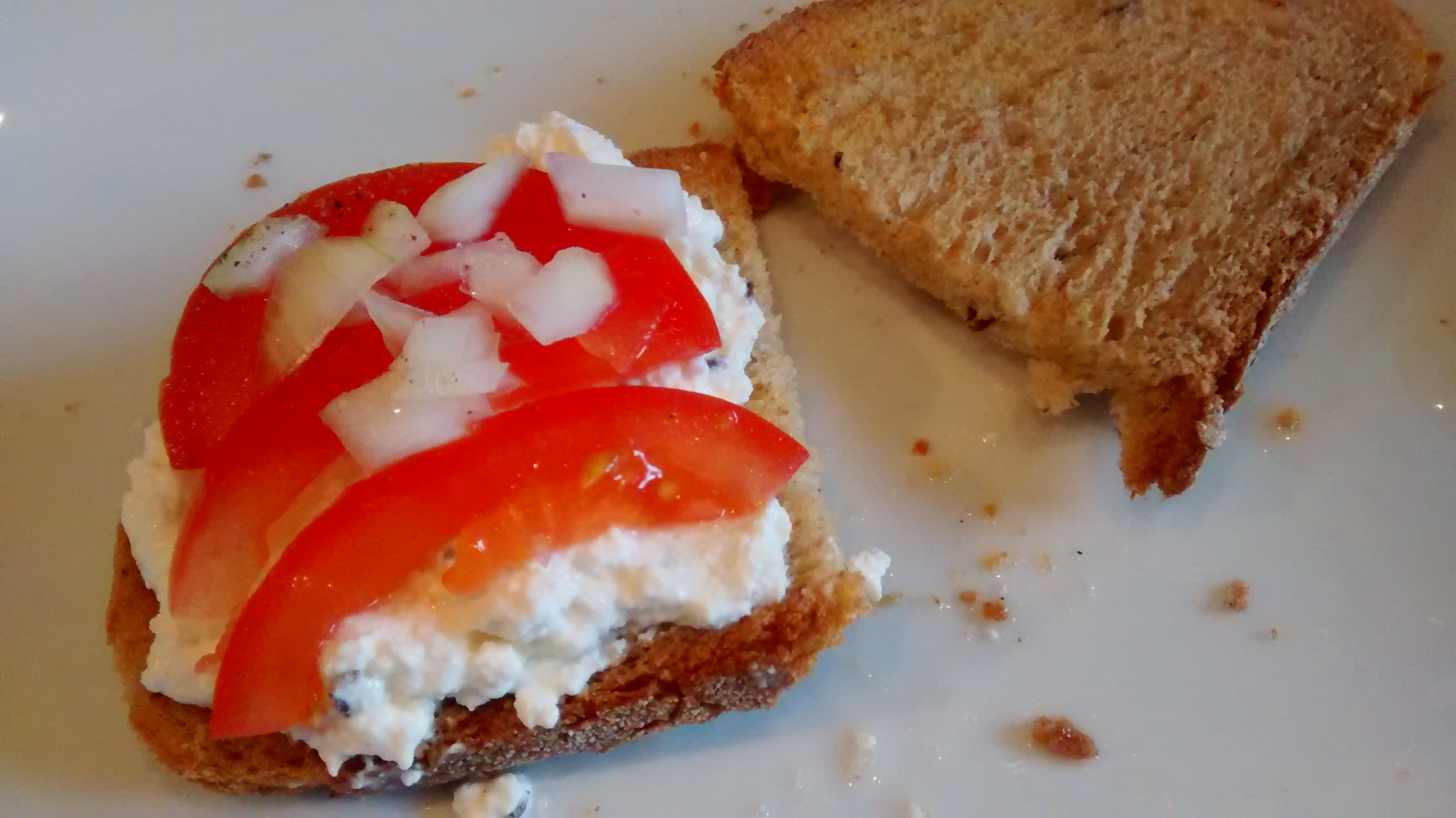
The following are what I consider to be popular classic savoury fresh cheese mixtures and are often served for breakfast with bread and salad.
Here in England I think they could be served at lunchtime. As well as with bread and rolls they can be served with crisp-breads, oatcakes or crackers.
3 Classic Curd Cheese Mixtures
You can make these with Twaróg – Curd Cheese or with Cream Cheese.
You can also use yoghurt cheese – (Look out for a post on how to make this later).
The amounts used are just approximate, using one packet of cheese, which is normally around 200g – 300g, for each mixture and can be varied to taste.
If using curd cheese, add a pinch or two of salt and a couple of spoonfuls of soured cream, mix together until smooth.
If using cream cheese just take it out of the packet and mix it in a bowl – you can add a spoonful or two of soured cream to make it a softer consistency if you wish.
Mixture 1
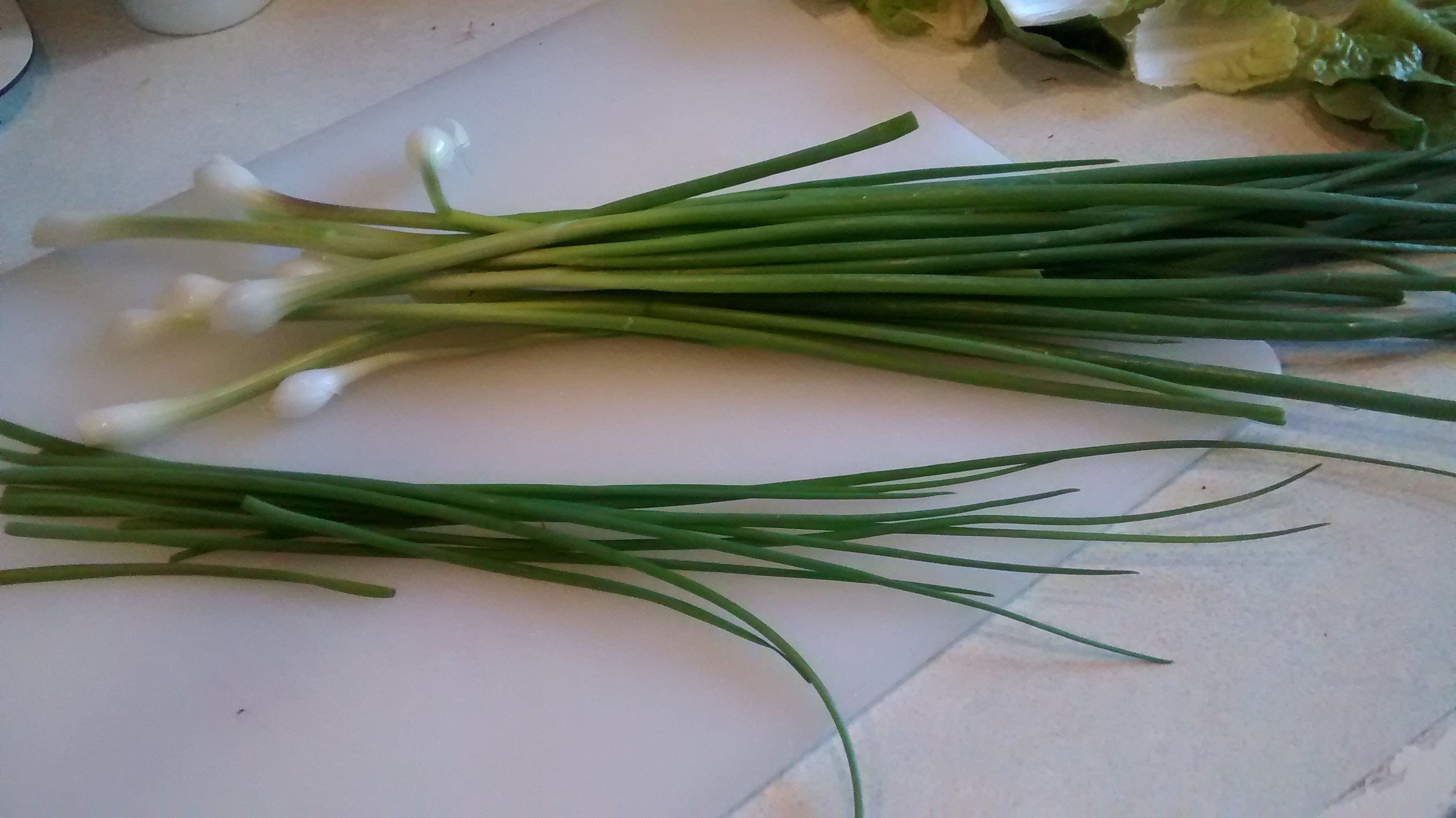
To the cheese add a few tablespoons of finely chopped chives or the green parts of spring onions.
In Poland szczypiorek (which in dictionaries is given as chives) would be used – however I think it is slightly different and is much larger than the chives I grow here in England.
Chives Growing in a Pot
Spring Onions and ChivesCurd Cheese and Chives
Mixture 2
To the cheese add a couple of teaspoons of caraway seeds
Curd Cheese and Caraway Seeds
Mixture 3
To the cheese add some chopped gherkins
I find these are the best gherkins to use as they are not vinegary.
Chopped GherkinsCurd Cheese and Gherkins
Typical Polish Breakfast Fare
These cheese mixtures can also be served with bliny -little buckwheat pancakes. (Look out for a a post on how to make these later).
Baked cheesecakes have a very long history with the Ancient Greeks baking them with cheese and then the Romans adding eggs to the recipes.
Varieties of cheesecakes were made in the Middle East and mentioned in the Old Testament. Maybe a land flowing with milk and honey is so good as these are ingredients needed to make a cheesecake!
The traditional cheesecake in Poland is a baked cheesecake and it is found in Christian and Jewish Traditions.
One story is that King Jan III Sobieski brought the recipe back with him after his victory against the Turks at the Battle of Vienna (1683).
This could tie up with the fact that one version of the cheesecake in Poland is called Viennese – Style.
When immigrants to the United States of America from Poland, Russia and Germany took their recipes with them in the 19 Century we eventually got the New York Cheesecake.
As ser is the Polish word for cheese – we get sernik as the Polish word for cheesecake.
Cheesecakes are made from twaróg – curd cheese, eggs and sugar and how they turn out depends not only on the proportions of each but also the cheese that is used. Butter and soured cream may also be used.
My mother used to make her own curd cheese from fresh farm milk that was allowed to sour and then the solid curds were separated from the whey by pouring the soured milk into a muslin cloth and leaving this to drain.
Unfortunately you cannot make soured milk from pasteurised milk.
Recently I have been making my own yoghurt and yoghurt cheese. You have to use a live yoghurt starter with pasteurised milk. This is very similar to twaróg, not identical but very near. The result tastes wonderful but it takes a lot of time and effort to get enough cheese at home and so the following recipes use bought cheese.
You can find twaróg now in Polish shops and some supermarkets and sometimes under its German name qwark.
Twaróg – Curd Cheese
Previously as the curd cheese was not available my recipes have been adapted to use a Philadelphia ™ style cream cheese.
Philadelphia ™ is a cream cheese invented in 1872 in New York State.
Full fat makes the best cheesecake. You can use a mixture of full fat and medium fat but never use low fat cheese.
You cannot make a good baked cheesecake from low fat cheese.
Curd cheese is slightlygrainyand to get the best results you either need to put it through a mincer or use a blender.
A traditional baked cheesecake has 2 layers – a cake base and then the curd cheese layer on top.
In my mother’s original cake the cheese mixture was poured over a baked cake base but for ease I often use a crushed biscuit base.
Mama’s Cheesecake
Biscuit Base Ingredients
75g melted butter
150g digestive, rich tea or morning coffee biscuits
You need a round tin with a loose base or a spring form tin or you will not be able to get the cake out. I always use an anodised aluminium tin, 23cm in diameter and 7 cm deep, which does not rust.
Selection of my anodised cake tins
Grease the tin well with butter.
Crush the biscuits to make fine crumbs and use some of these to coat the sides of the greased tin.
Crushed biscuits
Add the melted butter to the rest of the biscuits and mix together. Put this mixture onto the base of the tin pressing it down firmly.
Biscuit crumb mix – pressed into the tin
Leave the tin in a cold place whilst you make the cheese mixture.
Cheese Mixture Ingredients
700g of curd cheese or cream cheese (at room temperature)
6 egg yolks
2 egg whites
4 tablespoons of caster sugar
50 to 75g of melted butter
3 drops of vanilla essence
1 to 2 tablespoons of semolina (optional)
Pre heat the oven to GM4 – 180oC.
In a large bowl beat the yolks and sugar until they are thick and creamy – the mixture should be lighter in colour than the original yolks and be creamy. (This may take around 5 minutes). Then add the cooled melted butter, cheese and vanilla essence.
If using the semolina, add this now – it makes the cake a bit denser. (I rarely add this with cream cheese, more often with curd cheese).
Beat the whites with a whisk until you have soft peaks and fold these into the mixture.
Pour the mixture on top of the biscuit base and bake for 1 to 1 ¼ hours. Check after an hour, if the top starts to get too brown before the cake is cooked place a piece of foil over the top.
Once the cake is cooked switch off the oven, you can leave the door open slightly and let it cool down in the oven, this prevents it sagging and cracking too much as it cools. (It will sag and often does crack – this is not unusual).
Once the cake is cool you can take it out of the tin. I use a tin can and put the cake tin on this and slide the side of the cake tin down.
Dust the top of the cake with icing sugar before serving.
This cake tastes best if allowed to get cold, so make it the day before it is needed.
Variations
You can make endless variations on this basic recipe by adding raisins, mixed peel, fresh raspberries and so on or adding a drizzle of melted dark chocolate on the top when it has cooled.
In Poland one type of cheesecake is described as Vienneseand another as fromKraków. The Viennese one has sultanas or raisins and orange peel in the cheese mixture and sometimes some chocolate on top, whilst the one from Kraków is traditionally baked in a square or rectangular shape and has a lattice of pastry over the top and will also have sultanas or raisins in the cheese mixture.
Cheesecake Version 2
I cannot quite remember the origin of this version, I think my mother got it either from one of her friends or from the Polish newspaper. It has soured cream as one of the ingredients but no butter. It uses all the egg whites which are stiffly beaten causing this cake to have a lighter texture and it rises more but does sink down again as it cools.
The instructions are the same as the one above for the biscuit base. It is the cheese mixture which is different
Cheese Mixture Ingredients
600g curd cheese or cream cheese (at room temperature)
100g caster sugar
6 eggs separated
120 mls soured cream
grated rind of 2 lemons or 3 drops of vanilla essence
Pre heat the oven to GM4 – 180oC.
In a large bowl beat the yolks and sugar until they are thick and creamy, add the lemon rind (or vanilla essence), soured cream and cheese.
In another large bowl whisk the whites till they are stiff and fold these into the cheese mixture using a metal spoon.
Pour the mixture on top of the biscuit base and bake for 50 minutes to 1 hour. Check after 50 minutes if the top starts to get too brown before the cake is cooked place a piece of foil over the top.
Once the cake is cooked switch of the oven, you can leave the door open slightly and let it cool down in the oven, this prevents it sagging and cracking too much as it cools.
Once the cake is cool you can take it out of the tin. I use a tin can and put the cake tin on this and slide the side of the cake tin down.
Dust the top of the cake with icing sugar before serving.
This cake tastes best if allowed to get cold, so make it the day before it is needed.





 Journey From A Polish Kitchen