Buckwheat (Fagopyrum tataricum) is gryka in Polish – and I have written already about the use of its flour to make bliny & pancakes.
Buckwheat is not a grain but a seed – however it is classed under grains for culinary purposes.
The small triangular seeds have a strong scent which is quite distinctive.
In the United States – they are called groats.
Kasza – porridge – is very popular in Poland and refers to grains or seeds boiled in water or milk – usually served salted – rather than sweet.
Kasza gryczanna is cooked buckwheat and was eaten in Poland long before the introduction of the potato in the 18th century
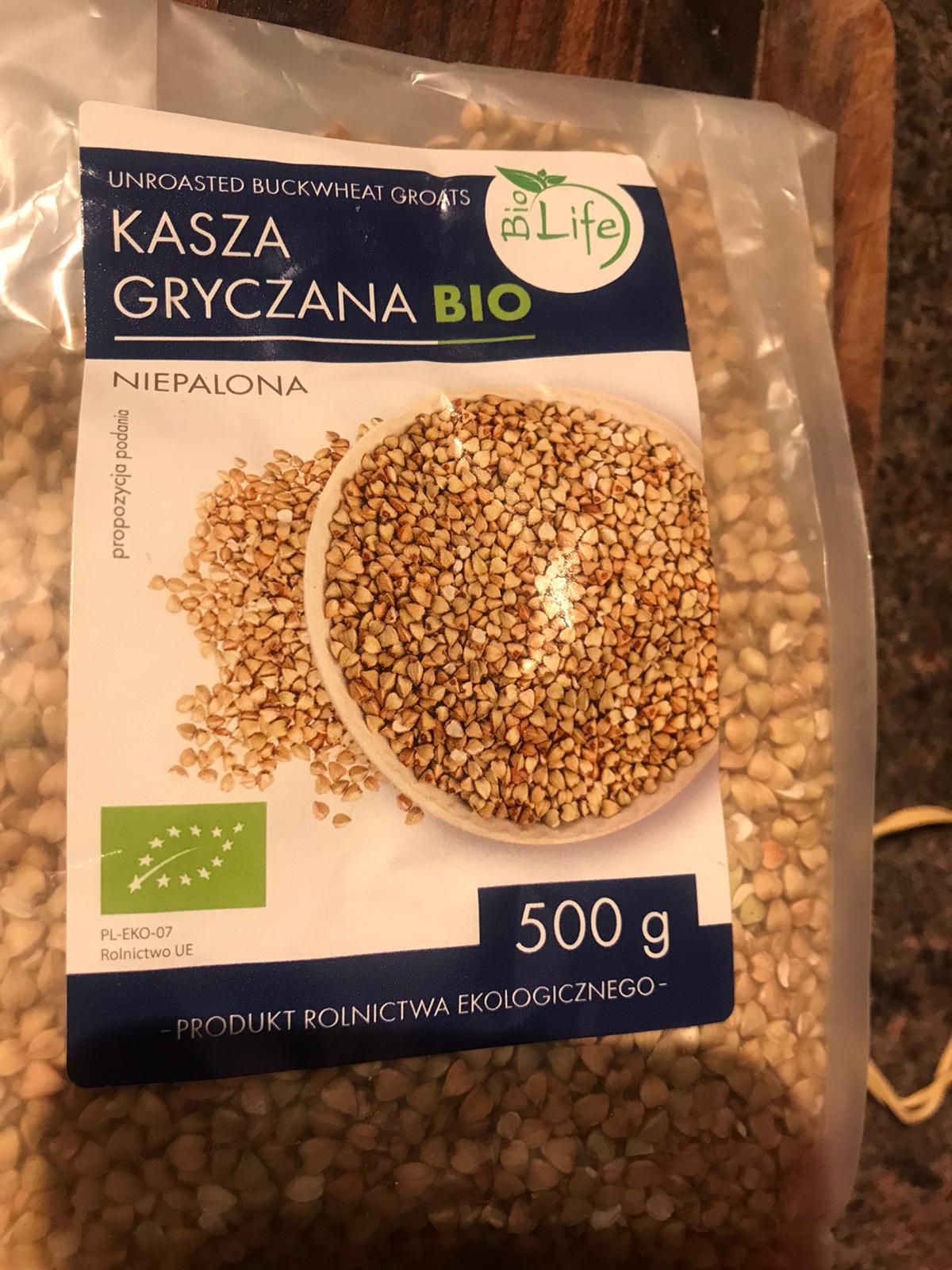
You can get buckwheat grains which are roasted or not roasted.
You can get loose grains & if you are cooking these you need twice as much water by volume as the buckwheat and you simmer this gently with a lid on the pan, until all the water is absorbed.
Then add a large knob of butter (or bacon fat) and place this in an oven-proof dish with a lid or covered in foil and placed in a low oven for at least 20 minutes.
Note
In olden times the dish could be covered with a pillow or small duvet to keep it warm for hours – so it could be prepared early on for eating later.
This is similar to using a hay box which was much used in England in earlier times.
An easy way of cooking the buckwheat is to use the boil in the bag method.
You can buy packets of buckwheat which come in 4 x 100g perforated bags.
Place the bag in 1 litre of salted boiling water and simmer with the lid on for 15 minutes.
Then empty the grains out of the bag and add a large knob of butter and place this in an oven-proof dish with a lid or covered in foil and place in a low oven for at least 20 minutes.
Because of the distinctive strong taste of the buckwheat it is best served with food with “robust” flavours such as beef or pork gulasz.
You can reheat the boiled buckwheat by frying it gently in butter, with fried onion or with skwarki*.
*Skwarki
Skwarki are crisp smoked bacon bits. My mother would use streaky bacon and cut this into little squares and heat them in a frying pan so all the fat would come out.
Other people might use a more fatty, smoked belly pork to make skwarki.
This smoked streaky bacon was quite lean!
Are lardons the same as skwarki?
I have been trying to get a definitive answer to this for ages!
Well – Yes & No or They can be!
As I understand it lardons are cubes of pork belly which may or may not be smoked.
Swarki for me will always be smoked and the pieces are small flat pieces rather than cubed.


 Journey From A Polish Kitchen