Makowiec – Poppy Seed Cake 4

A Very Easy Method

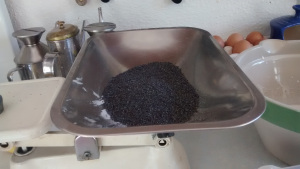
Weighing the poppy seeds

This cake is a more modern version as soft tub margarine is used and it is an all-in-one method which is so easy to do with an electric hand whisk.

I use either Flora original or Stork for baking – both of these have given good results.

Cake Ingredients

175g soft tub margarine for baking

225g self-raising flower

1 ½ teaspoons baking powder

175g caster sugar

Grated rind of 2 lemons

3 eggs

3 tablespoon milk (full fat or semi-skimmed)

100g poppy seeds

Lemon Glaze Ingredients

Juice of 2 lemons

175g caster sugar

Pre heat the oven to Gas mark 4 – 1800C.

Make this as a tray bake in a tin about 31×22 cm.

I have a selection of Mermaid Hard Anodised rectangular baking tins and they are superb.

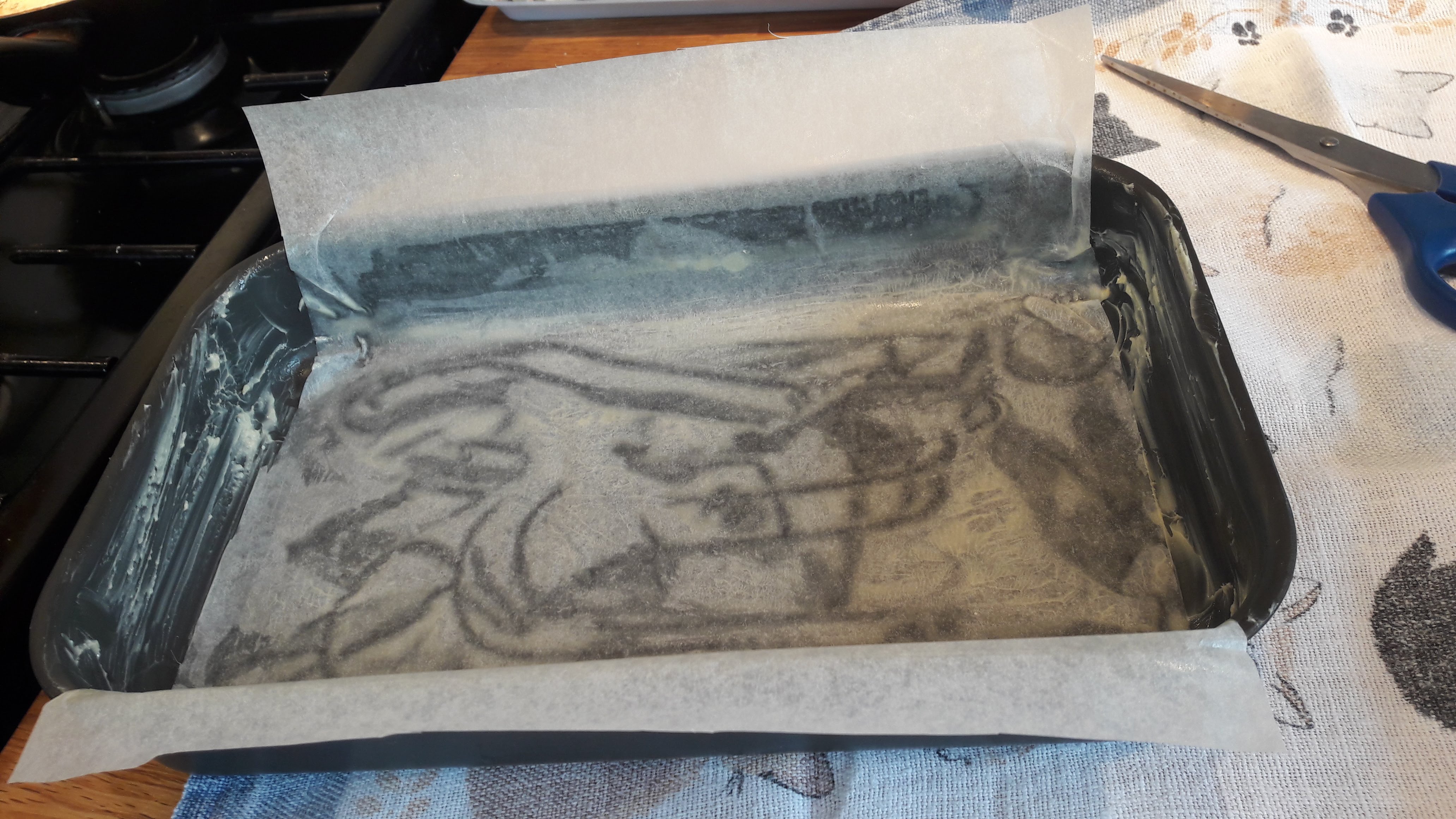
Grease the tin and use one piece of greaseproof paper to line the base and the two long sides of the tin.

Place all the ingredients except the poppy seeds into a large bowl and beat well for about 2 minutes until they are well blended.

Add the poppy seeds and beat till they are well mixed in.

Put the mixture into the tin and bake for about 30-35 minutes.

Leave to cool for about 5 minutes and release the cake from the tin and put on a cooling rack.

Mix the lemon juice and caster sugar to dissolve the sugar.

Prick the top in several places with a thin cake testing skewer.

Dribble the lemon glaze over the cake so the top in covered.

You can dust with icing sugar before serving.


Poppy Seed Cake 2

Makowiec – Poppy Seed Cake 2


There are many versions of Polish poppy seed cakes and many of them use yeast pastry.

This one does not have a yeast based pastry and is much easier to make as it does not take as much time as the more traditional roll.

I often make this one now for Wigilia – Christmas Eve.

The original recipe used twice this amount but I often found it would sink in the middle which did not look as nice so now I always make this smaller one.

This version has a lemon glaze followed by lemon icing – this is my favourite but you could just dust the cooled cake with icing sugar or use the glaze then dust with icing sugar before serving.

Ingredients

125g caster sugar

1 egg

5ml vanilla extract

100g poppy seeds

Grated rind of 1 lemon

65g self-raising flour

½ tsp baking powder

Pinch of salt

60ml milk

65g melted butter

15 ml sunflower oil

Lemon Glaze & Icing 

Glaze – Juice of 1 lemon & 50g caster sugar

Icing – Juice of 1 lemon & 200g icing sugar

Method

Pre heat the oven to Gas mark 4 – 1800C

I find this easer to remove using either a loose bottom or spring form tin –  Grease a 20cm diameter tin.

or

grease and line with one piece of greasproof  for the 2 long sides and base -so you can remove the cake from the tin easily – a 16 x 27 cm tin.


Whisk the egg, sugar and vanilla extract until they are thick and creamy.

Stir in the poppy seeds and lemon rind.

Sift the flour and add the baking powder and salt.

Fold this into the egg and poppy seed mixture alternating with the milk – do this in about three batches.

Fold in the melted butter and the oil.

Pour the mixture into the tin and bake for around 30 to 35 minutes.


Leave to cool for about 5 minutes and release the cake from the tin and put on a cooling rack or remove using the 2 ends of the greaseproof.

Prick the top in several places with a thin cake testing skewer.

Lemon Glaze

Mix the lemon juice and caster sugar to dissolve the sugar, dribble this over the cake so the top in covered. Leave till nearly cool then put the cake on a plate or stand.

Lemon Icing

The amount of icing sugar you need will vary depending on the size of the lemon and the dampness of the sugar. (If you want less icing use a small lemon or half a large one and 100g of icing sugar)

Place the lemon juice in a bowl and slowly add the sugar mixing it with a wooden spoon is best, use more or less sugar to make a soft runny icing which will coat the back of the spoon.

Pour this over the cake.

You can aim for just the top covered or to have drips down the sides.

My Polish Background

My parents met in England after the Second World War. They had come from different parts of North East Poland through many countries and many hard times; they met in Hereford and married there.

I was born in Penley (Polish Hospital) in the then County of Flint in North Wales.

I grew up in Lancashire with a large Polish community around us and my mother cooked very traditional Polish food.

I now live in West Yorkshire  and continue to cook traditional Polish food although often with a modern twist.

The winters are long and hard in Poland and the traditional dishes use ingredients which will survive through these winter months: smoked meats, picked herrings, potatoes, cabbage, pickled cabbage and gherkins, dried mushrooms, buckwheat, rye, dried fruits, poppy and caraway seeds and honey.

The summers are usually warm and there are lots of red berries, apples, fresh dill, flat leaved parsley, tomatoes, carrots and spring onions. Soured milk, soured cream and curd cheese feature in many dishes as this was the way to extend the life of dairy products before refrigeration. Much of the summer produce that was not eaten would be preserved for the winter by drying, bottling, pickling or made into jams.

Both my parents had grown up in the country side on small farms and their families had grown crops, kept animals and knew how to cure meats and preserve fruit and vegetables.

My father’s family’s land had some woodland and bordered onto a small river, and he used to say that with this they were very rich as they could hunt for small animals and birds, catch fish and find mushrooms, nuts and berries.

The Poles are very hospitable and passionate about good food, no guest invited or unexpected is ever sent away hungry. My childhood memories are filled with every occasion possible celebrated with tables filled with delicious food and people of all ages together.

The Polish kitchen seems to rely on one cook who spends a great deal of time preparing food for the extended family and “fast food” is not a description one would use of many of the dishes. However although many take a while to prepare they can then be left to cook slowly and are ideal to be reheated so there is no last minute panic and what is made can serve for several meals.

I would help my mother in the kitchen and when we went to visit my father’s family in London I would always be interested in what was the same and what was different and looked for new ideas.

I visited Poland for the first time in 1979; a time of shortages and queues however I have never tasted food with so much flavour as then. I tried old favourites and found new ideas. When I visited family and friends in the United States of America a few years later I once again tried lots of my old favourites to eat.

I have now visited Poland many times, sometimes to aunts and cousins on both my mother’s and father’s side and also to places in which I do not have family and have then eaten in hotels, restaurants, cafes and found teashops with such a variety of cakes that I have never been able to sample everything in the time I was there.

I am always pleased to have such wonderful food and take the opportunity to have my favourite dishes but in the last few trips I have been doing some research into regional variations and new versions of older recipes.

In my blog I will feature a selection of my favourite recipes from family and friends and some new discoveries, as well as some dishes that have evolved from older recipes.

So as you follow my blog and try the recipes may I wish you, as they do in Poland before eating, smacznego! (may it taste delicious).