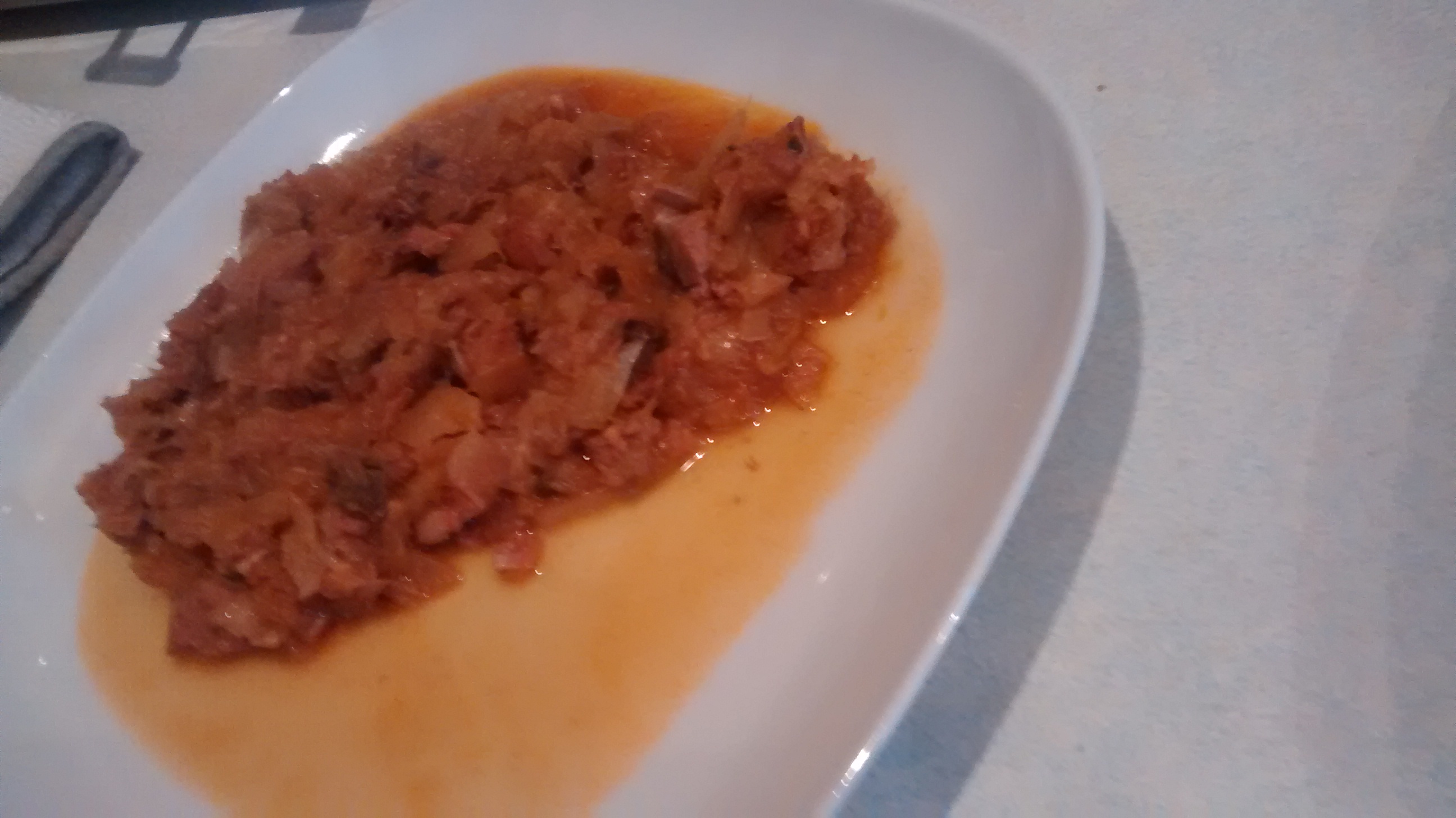
Klops – Mama’s Meatloaf

IMG_20151124_195836030

This recipe has evolved from two of my mother’s recipes. One was for  klops –  Polish meatloaf and the other was for the meat stuffing that she used in her roast chicken.

The meatloaf would have been made in Poland with minced pork but often in England my mother used minced beef as it was more available. To this was added grated onion, bread moistened with milk, a beaten egg, salt & pepper; this was shaped into an oval shape and covered with dried breadcrumbs and baked in the oven.

In many of the Polish recipes the meatloaf is baked in a loaf tin or a shallow roasting tray.  I however like the open baked version as I love the crunchy breadcrumbs on the outside.

The meat stuffing for chicken was originally made with minced pork, (if this was not available my mother used English style sausage meat) grated onion, bread moistened with milk, a beaten egg and salt & pepper and dried breadcrumbs were added to firm it up and this was used to stuff the chicken.
IMG_20151124_182832411
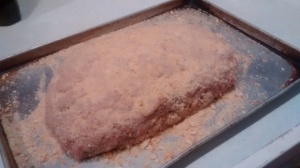
Meatloaf – Waiting to go into the oven

As there was usually some left my mother would shape this, put dried breadcrumbs on top and bake this in the oven with the chicken. We always wanted to eat some of this and even liked the extra bit better that the actual stuffing because of its crispy coat.   She started to make more of it so that we could all have some at dinner. My nephew and nieces called this Grandma’s meat.

This extra stuffing has also evolved, the grated raw onion has been replaced by chopped fried onion ( though you can use both )  and now I use a mixture of  minced pork and English style sausage meat.

IMG_20151124_131405992_HDR

Frying a Chopped Onion

Luxury or Premium sausage meat is the best to use but often shops only have this available at Christmas, when it is in stock I buy quite a lot and freeze it for several occasions. Sometimes it is sold in 1kilogramme packs, I usually cut these into two or four and re-wrap.

When I cannot get the luxury sausage meat I buy good quality pork sausages and remove the skins.

Now when I have visitors for a roast chicken they always want to make certain that I will be doing a meatloaf as well, some say this is what they most look forward to eating on Christmas Day!

Ingredients

None of the amounts given are exact; they are only for a guide.

500g of luxury sausage meat

500g of lean minced pork

2 medium onions finely chopped and fried till golden brown

1 large egg beaten with salt & pepper

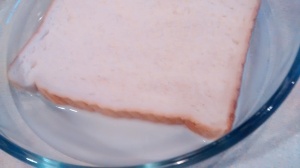
1 slice of white bread – left for half an hour in a bowl with a little milk – do not use the excess milk.

2 teaspoons of Italian herbs or similar

Dried breadcrumbs

Method

Pre heat the oven to GM  5 – 190oC
IMG_20151124_154314740
Bread Soaking up some Milk

Lightly grease a thick baking sheet.

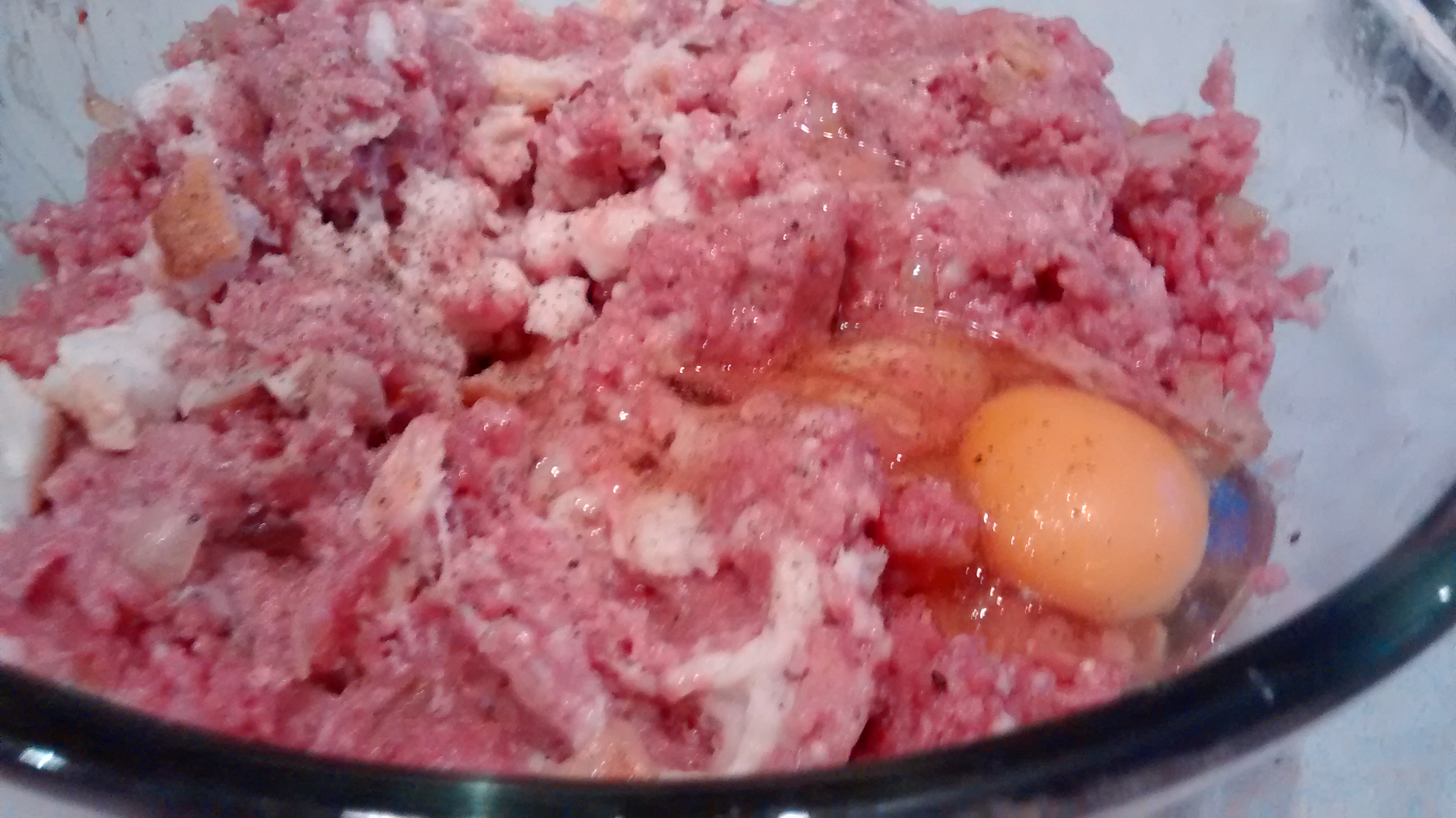
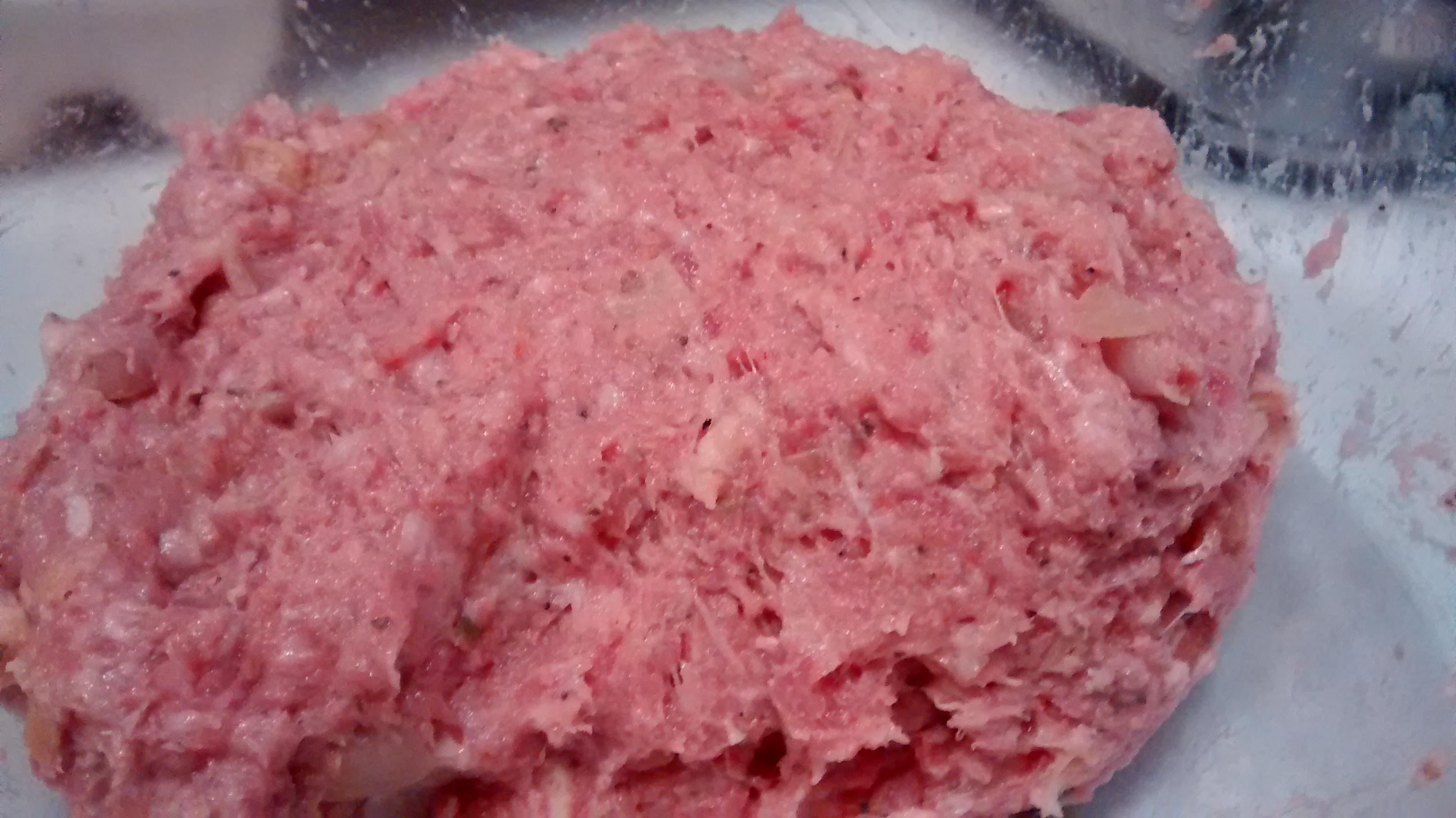
In a large mixing bowl mix everything together except the dried breadcrumbs. Use your hands to get everything thoroughly mixed in.
IMG_20151124_161427662
Waiting To Be Mixed
IMG_20151124_162248613
Well Mixed Ingredients

Add some dried breadcrumbs to firm up the mix as necessary.
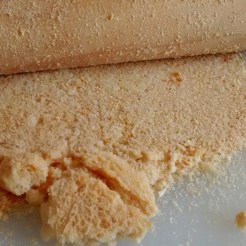
Dried Breadcrumbs

IMG_20151124_182832411


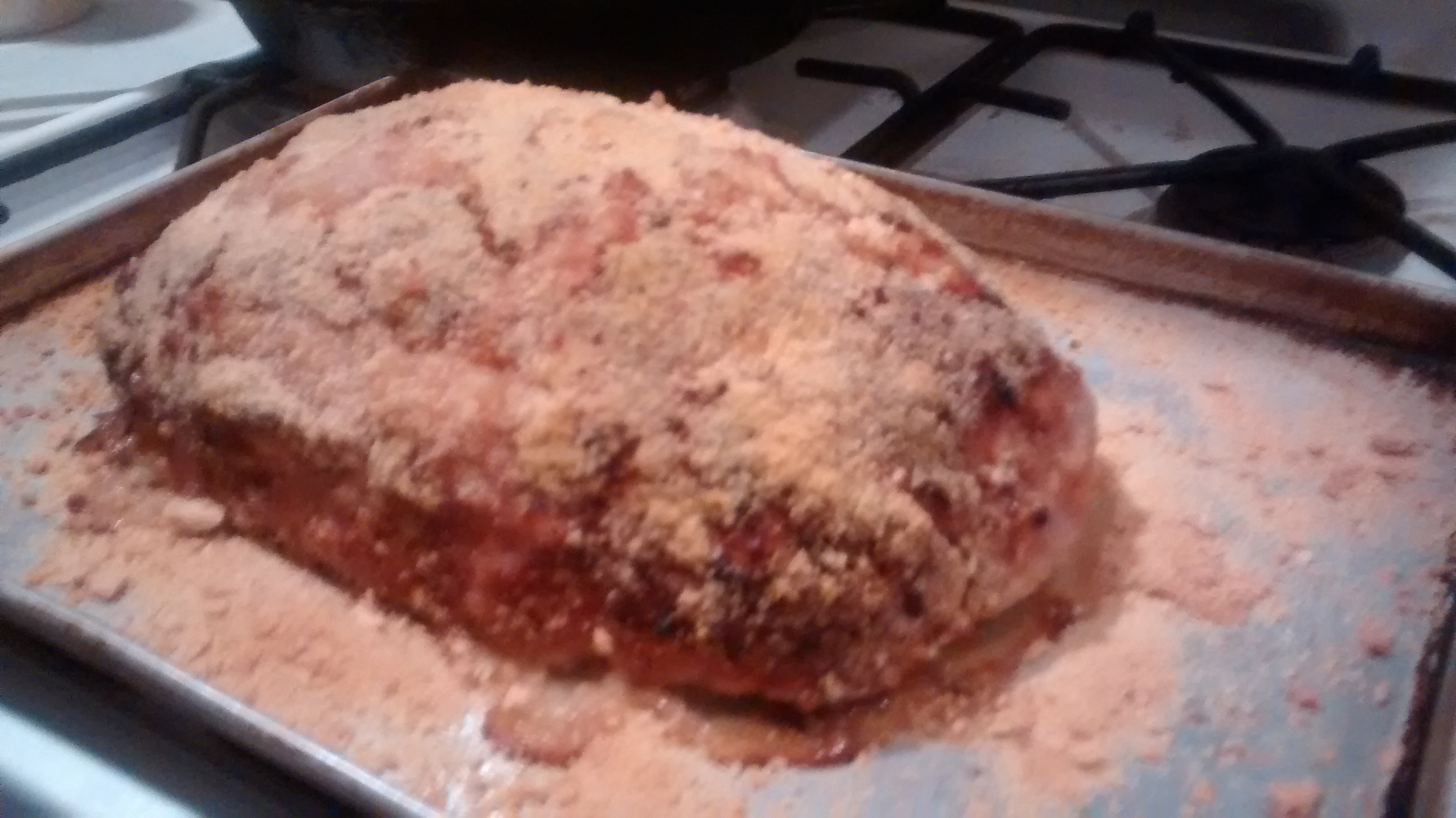
Shape your mixture on to the baking sheet making it into an oval shape rather like a bloomer loaf of bread – make it as high as you can.

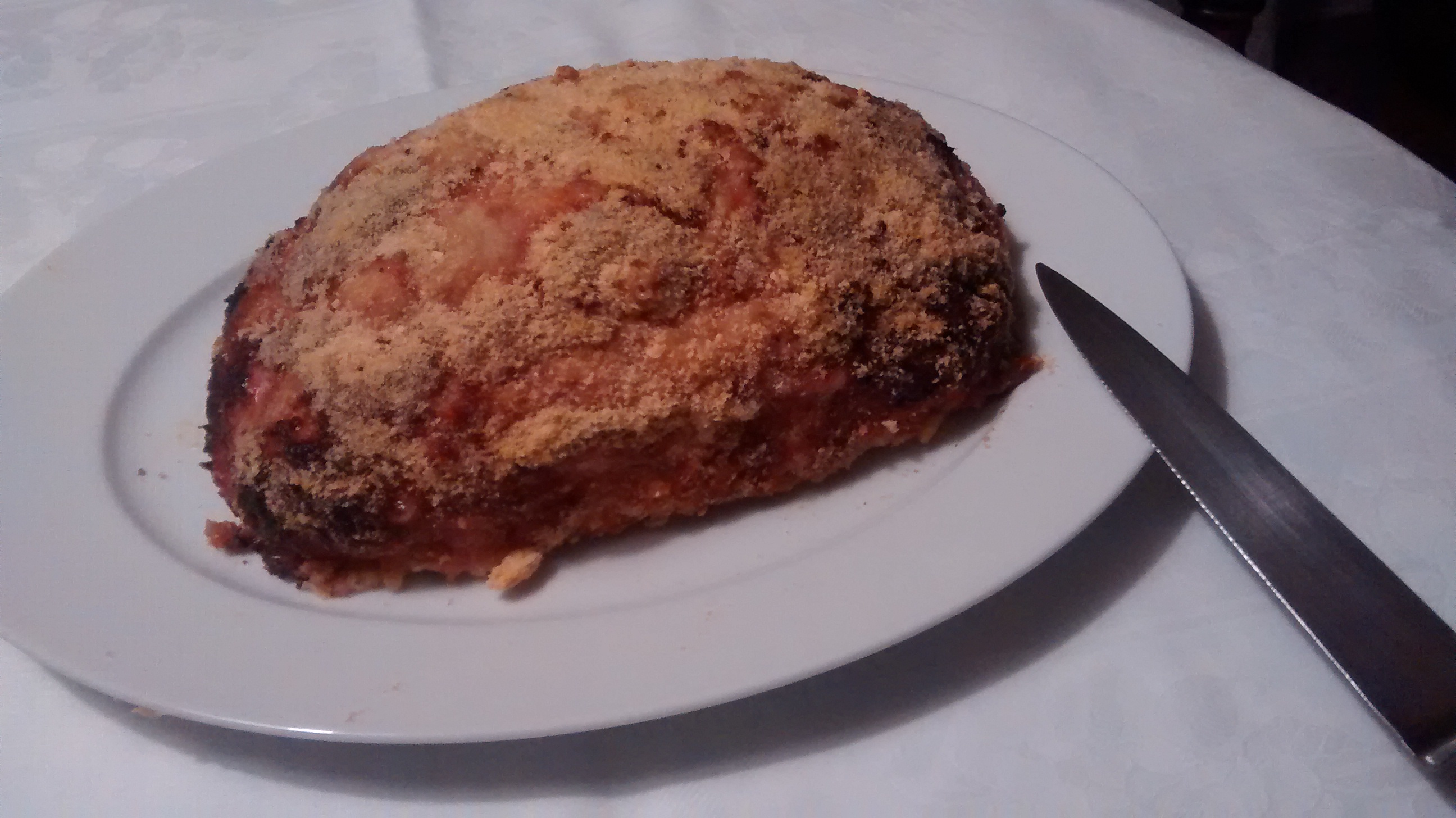
Cover the loaf with lots of dried breadcrumbs and place into the oven. It will take about 1hour 30minutes maybe longer – it needs to be done to a golden to very golden colour and the breadcrumbs will be crispy.
IMG_20151124_195144357
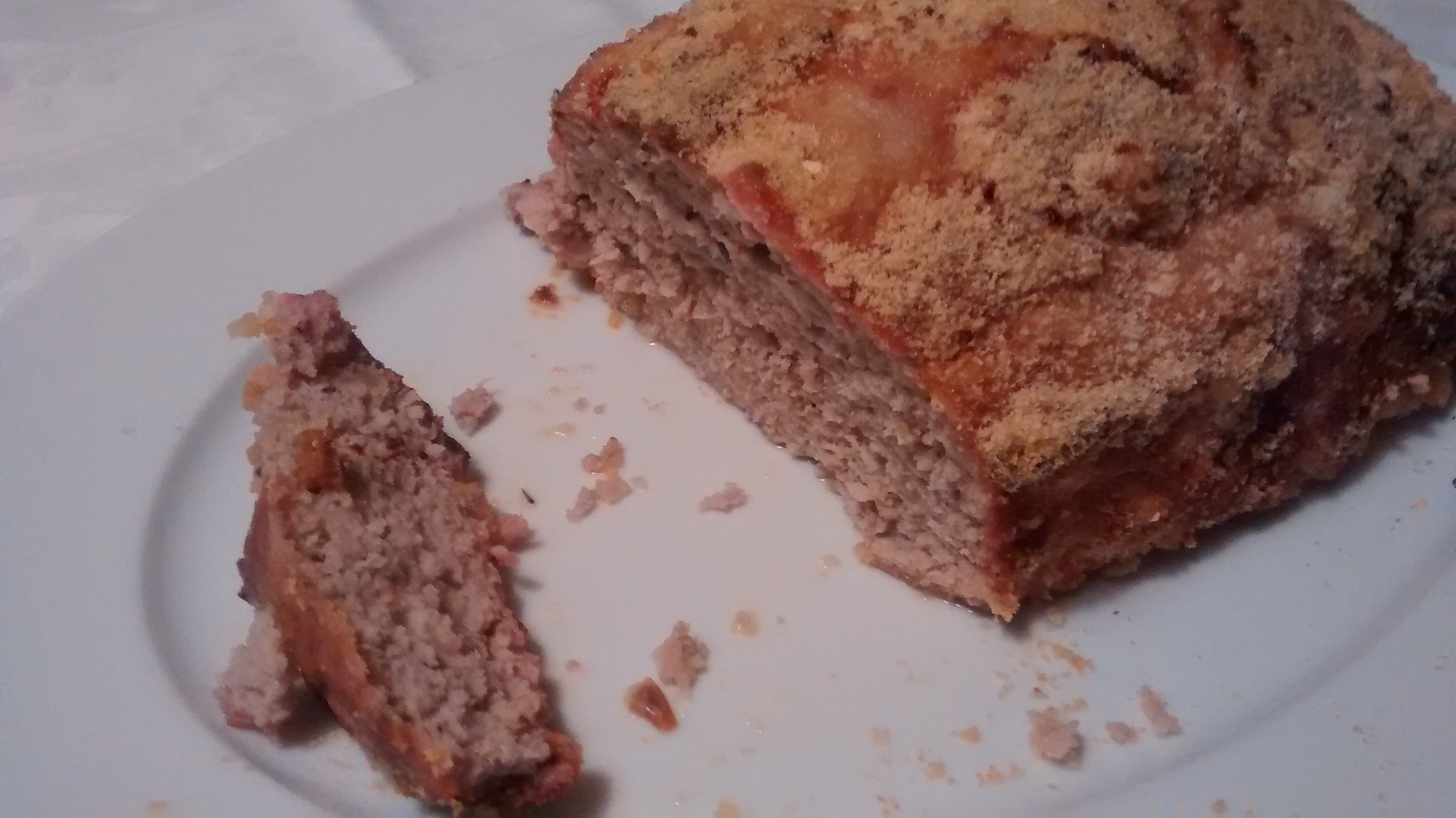
Cooked Meatloaf
IMG_20151124_195836030
Waiting to be sliced


IMG_20151124_200023379

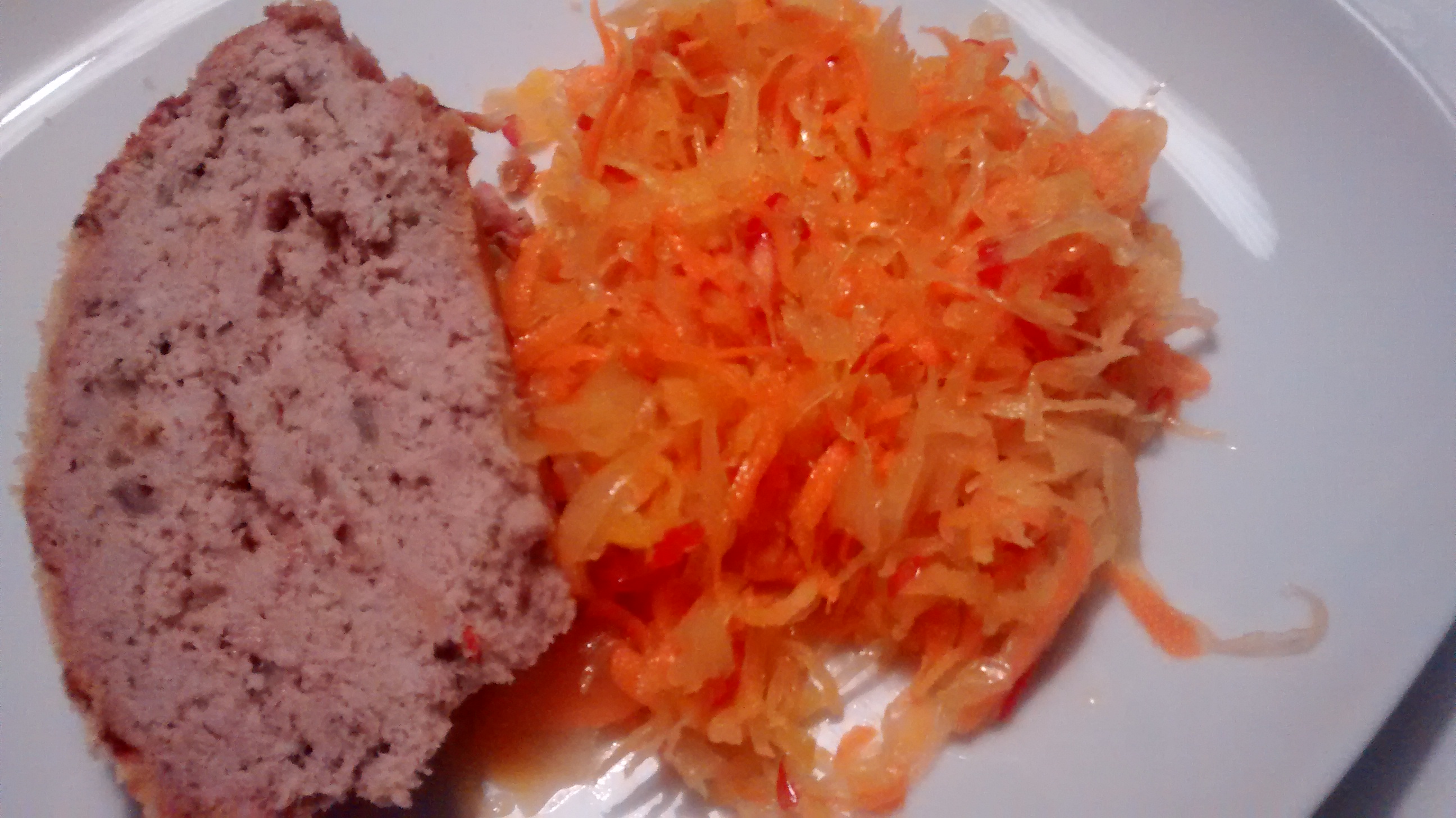
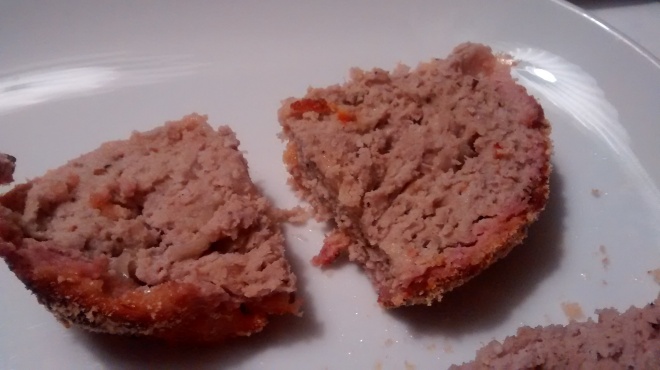
Cut into thick slices to serve, any left can be eaten cold with a salad.
IMG_20151124_200114737
Sliced Meatloaf

IMG_20151124_200107632

IMG_20151125_183717288
Cold Meatloaf with Carrot & Sauerkraut Salad

Note

If you have any left over and cannot eat it the next day or so – then it freezes very well – I wrap slices first in aluminium foil and then in a plastic freezer bag.


Gołąbki – Cabbage Rolls

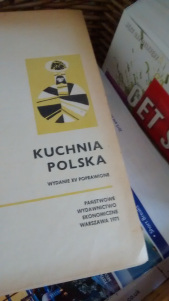
Kuchnia Polska - Polish Kitchen or Polish Cookery

My Polish Cookbook “bible”

A Selection of Polish Cookbooks

grz4

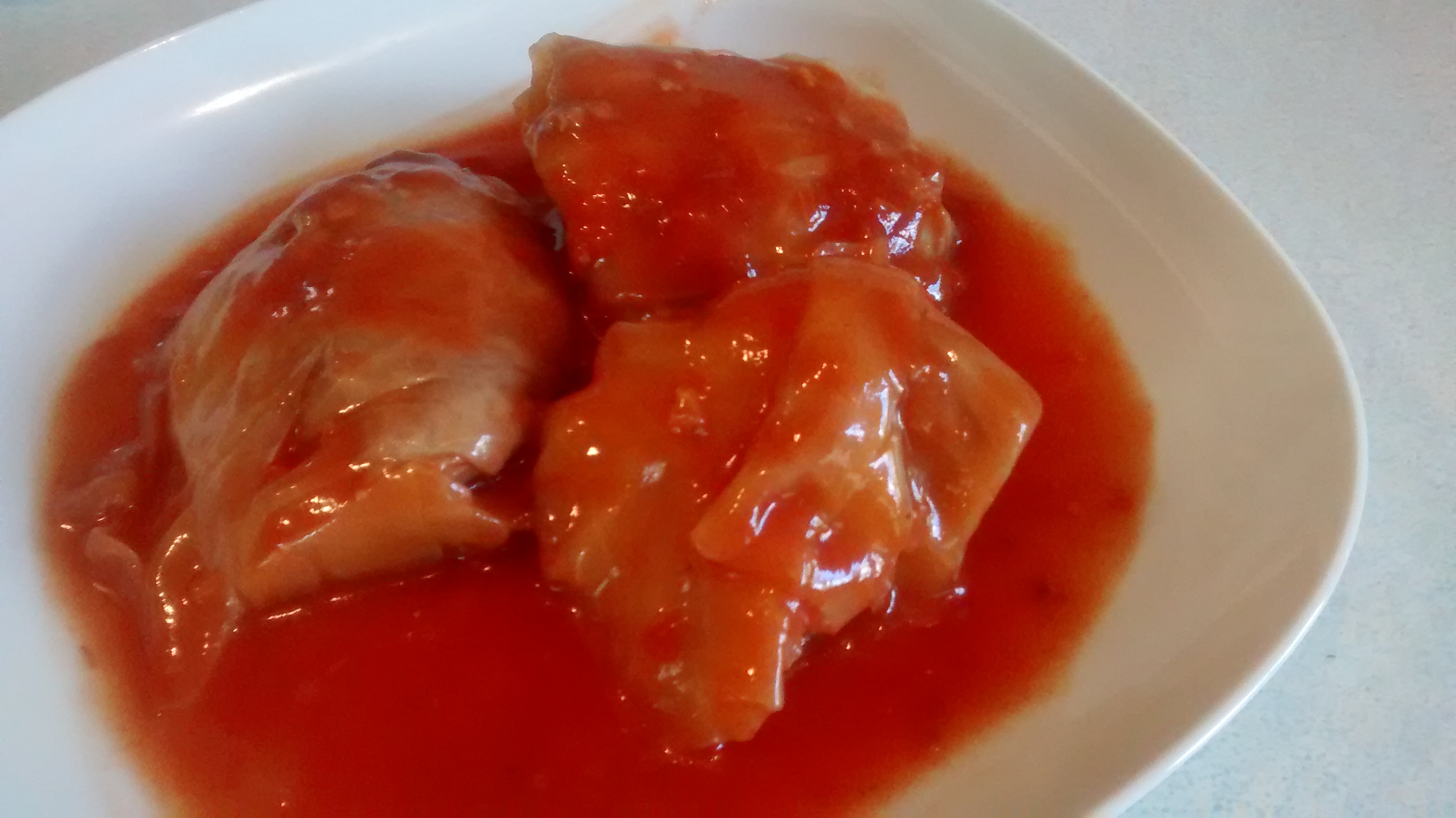
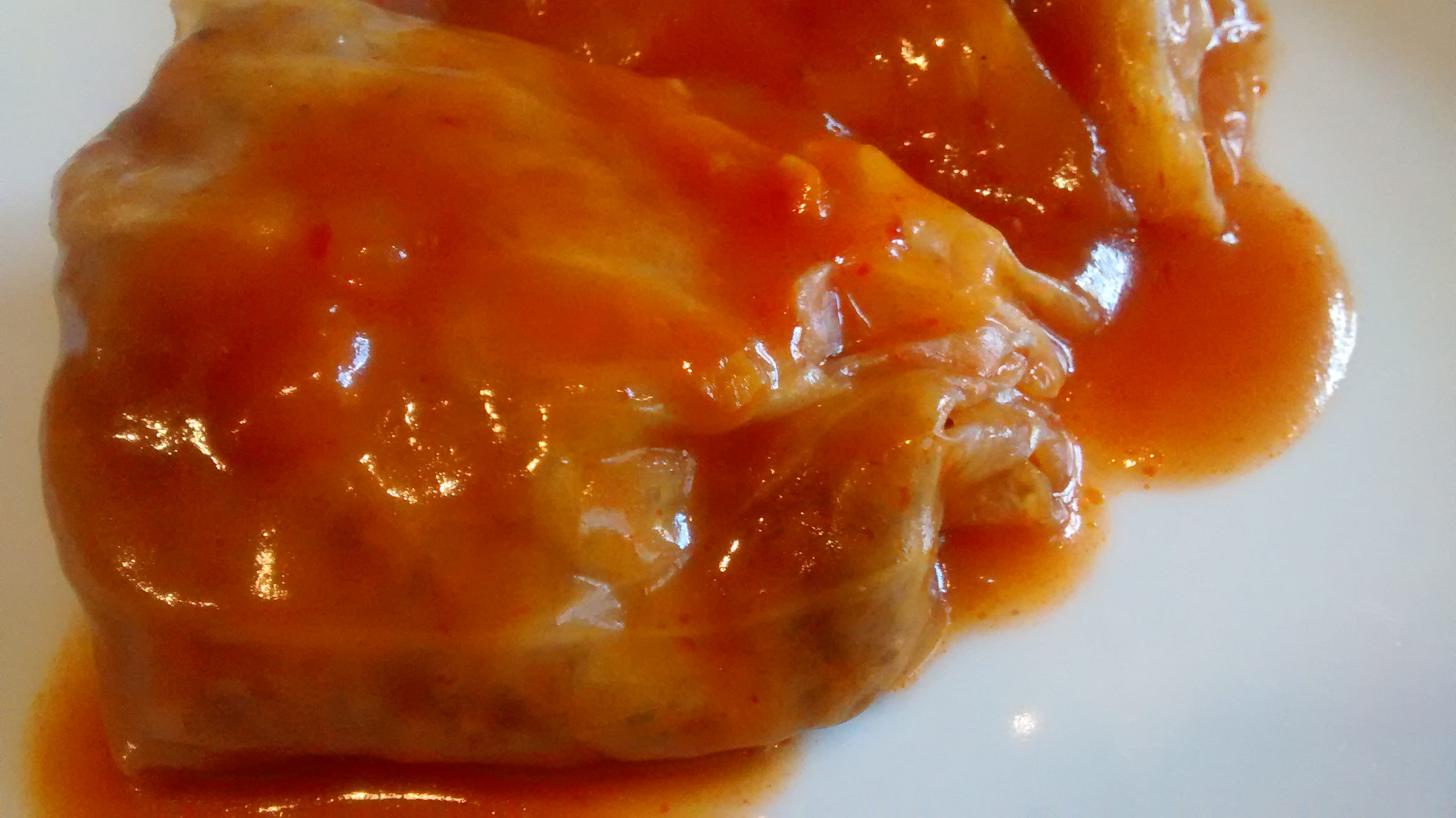
IMG_20150715_181051975IMG_20150715_182325856Gołąbki are made using  fresh cabbage and the name means little pigeon or dove. This name comes about from its size and shape and also from to the idea of this being a little delicacy.

The cabbage leaves are used to make a little parcel with a meat and rice filling and these are then cooked in a liquid stock or sauce.

I have read that this is a very old dish which originally came from the Byzantine Empire and was made with vine leaves, as it came north; cabbage leaves replaced the vine leaves.

The main 3 ingredients are: cabbage, rice and minced meat, and you also need a liquid to cook them in, which in my mother’s case was always a stock with tomatoes.

You can use white or Savoy cabbage. White cabbage has softer more pliable leaves and I think make the best  gołąbki . Savoy cabbage has firmer leaves that are easier to work with but take longer to cook; these can be easier for a novice to use.

You need a large head of cabbage to get large leaves.

You can use any type of rice but the stickier types are the best.

The traditional Polish version uses pork.  My mother used beef as this was more readily available in England.  Now that minced pork is more  available and you do not have to hand mince it, I use either or even mix the two.

gol 3

There are many variations using, fresh or dried mushrooms, buckwheat instead of rice, and a stock without tomatoes.  In fact buckwheat is a more older version as it grows in Poland and rice would have to be imported.

This recipe is my mother’s and for me this is just right!

Mama’s Classic Recipe

Ingredients

1 large head of white cabbage or Savoy cabbage

400g rice

500g of minced beef or pork

chicken stock – a cube or concentrate will do

1 tube of tomato purée

salt & pepper

2 bay leaves

3 or 4 peppercorns or allspice or both

Although the gołąbki take a while to put together, you then leave them to cook in a slow oven for hours which is easy.

You can reheat them on the next day and in fact I think they taste better the longer they have been steeped in the cooking liquid and I always make them a day in advance.

They also freeze very well, so I pack any left in portions of 2 or 4 for a later date. Because of  this I like to make as big a batch as I can in one go.

I use a very large enamelled oval dish with a lid which is ideal for this.

As you need whole largish cabbage leaves I sometimes use 2 cabbages to get the bigger leaves.

You need to parboil the rice in salted water so that it is about half way to being cooked and then strain the rice and let it go cold, but if you have some plain boiled rice left from another day you could use this as this is not critical.

In a large bowl mix the rice and minced meat and add salt and pepper. The exact amounts do not matter. I like it to look about 50/50 white and pink but these can be made with much more rice to eke out the meat available.

Next comes the hardest part and patience is called for here to avoid getting scalded fingers. You have to heat or steam the cabbage to make the leaves pliable so you can remove them one by one and use them to encase the filling.

You need the largest pan you have into which you place the cabbage head. I boil some water in a kettle and pour this over the cabbage in the pan with some heat under the pan I let the cabbage cook a little. The temptation is to boil to quickly so making some of the leave too soft and runs the risk of getting scalded as you try to remove the leaves. Another method is to place the cabbage into a metal colander and set this over the pan of water so that it is steamed rather than boiled.

As the leaves become soft, you have to cut them off from the stalk and stack them up for to use later, you can cut out the thickest part of the stalk from the first few larger leaves.

Instructions from my Polish cookbook “bible”

Pre heat the oven to GM2 – 150oC

Place a small handful of the rice & meat mixture onto a cabbage leaf and roll up from the stalk end, tuck in the sides and secure with the outer edge of the leaf to make a small parcel.

Place the rolls into a large casserole dish, packing as many rolls as possible in rows in the dish. Depending on the depth of the dish repeat this for another layer.

A tip I got from my late cousin, Krystyna, is to use extra cabbage leaves on the base of the dish and then to put extra leaves on the top of the rolls.

The rolls sometimes have a habit of getting slightly burnt on the top as they come out of the liquid and sometimes at the base if they have been in the oven a long time, these extra layers protect the rolls and can be discarded at the end.

Make a large amount of liquid stock with hot water and tomato purée and add bay leaves, peppercorns and allspice.

Cover the rolls with this liquid. It is a good idea to have extra which you can use to top up as they are cooking.

Cover with the lid and place in the oven and cook for several hours. Check them occasionally and keep them covered with liquid as much as possible.

As mentioned earlier I make these a day beforehand and then put them back in the oven for an hour or so before serving.

They are a complete meal in themselves but you can give serve them with some bread to mop up all the liquid sauce.

IMG_20150715_182332084

Bigos

Bigos is often called Poland’s national dish. It is served at every large gathering: christenings, weddings, funerals and every other excuse for getting together for food and drink. It is best made in advance by at least a day and then reheated. My father used to talk about using a horse and cart to take large wooden barrels of bigos to where there was going to be a celebration.

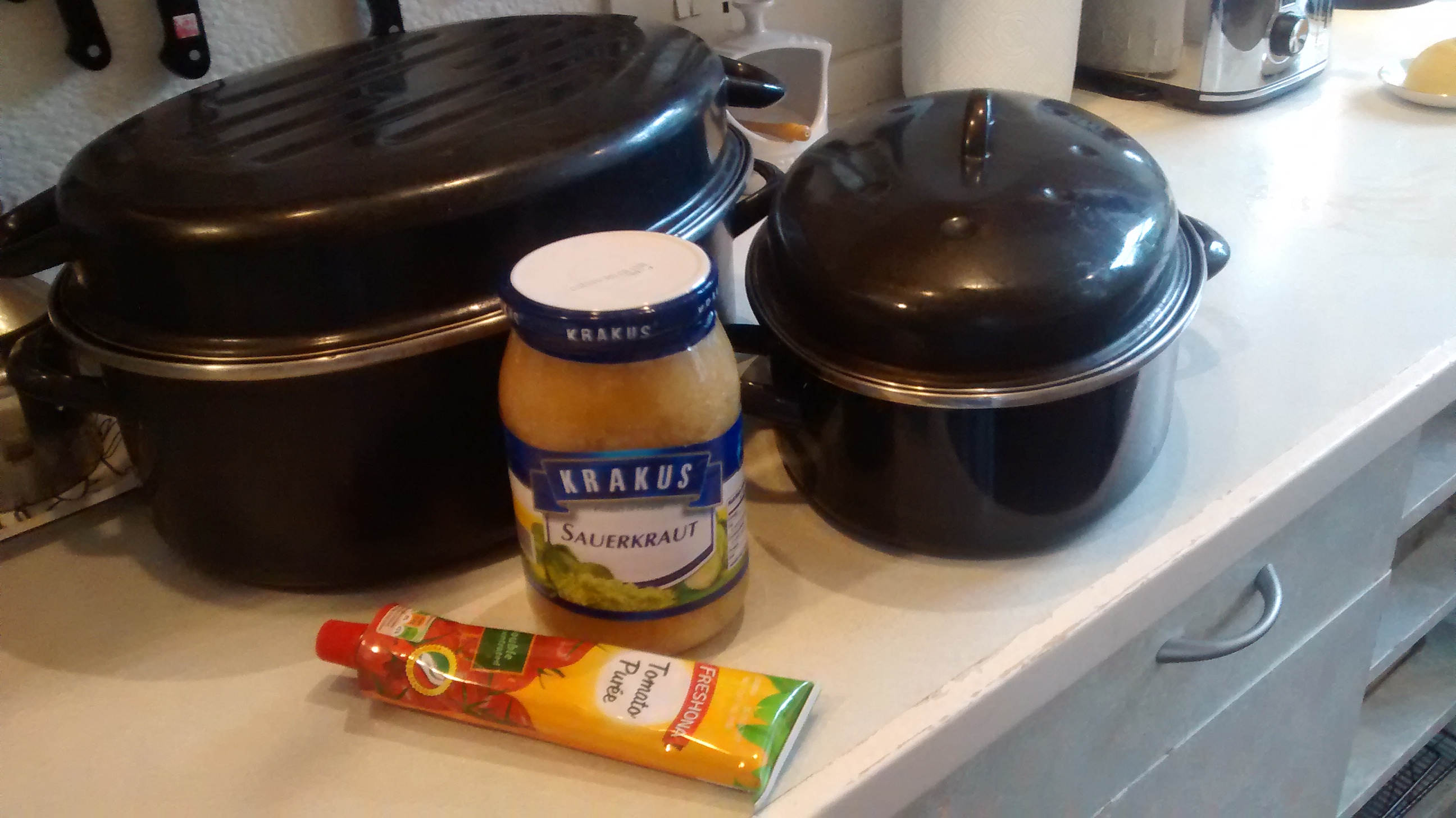
It is Poland’s sweet and sour dish using sweet (fresh) cabbage and sour (sauerkraut) cabbage. How sweet and sour you make it depends on taste, I always use roughly equal amounts of fresh and sour cabbage – a large white cabbage to a large tin or jar of sauerkraut. You can add sugar or some lemon juice to alter the sweet/sour balance.

This was a Hunter’s stew with all the meat and game that was available in the long hard winters going into the pot with the cabbage. A variety of mixed fresh and smoked meats and sausages are used, the amount can vary with how much meat you have.

Served with rye bread with or without butter and a glass of beer or vodka, it is delicious.

The mixture of cabbage and tomato in bigos is very Polish, as a little girl I thought that cooked cabbage was always orange to red rather that pale to dark green as my mother always used the two together in all her cabbage recipes.

Tomatoes were brought to Poland in the 16th century by the Italian chefs who came with the Italian Princess Bona Sforza who married the Polish King, Zygmunt the Old. The Polish word for tomato – pomidor, shows its Italian origin.

Getting Ready to Cook Bigos
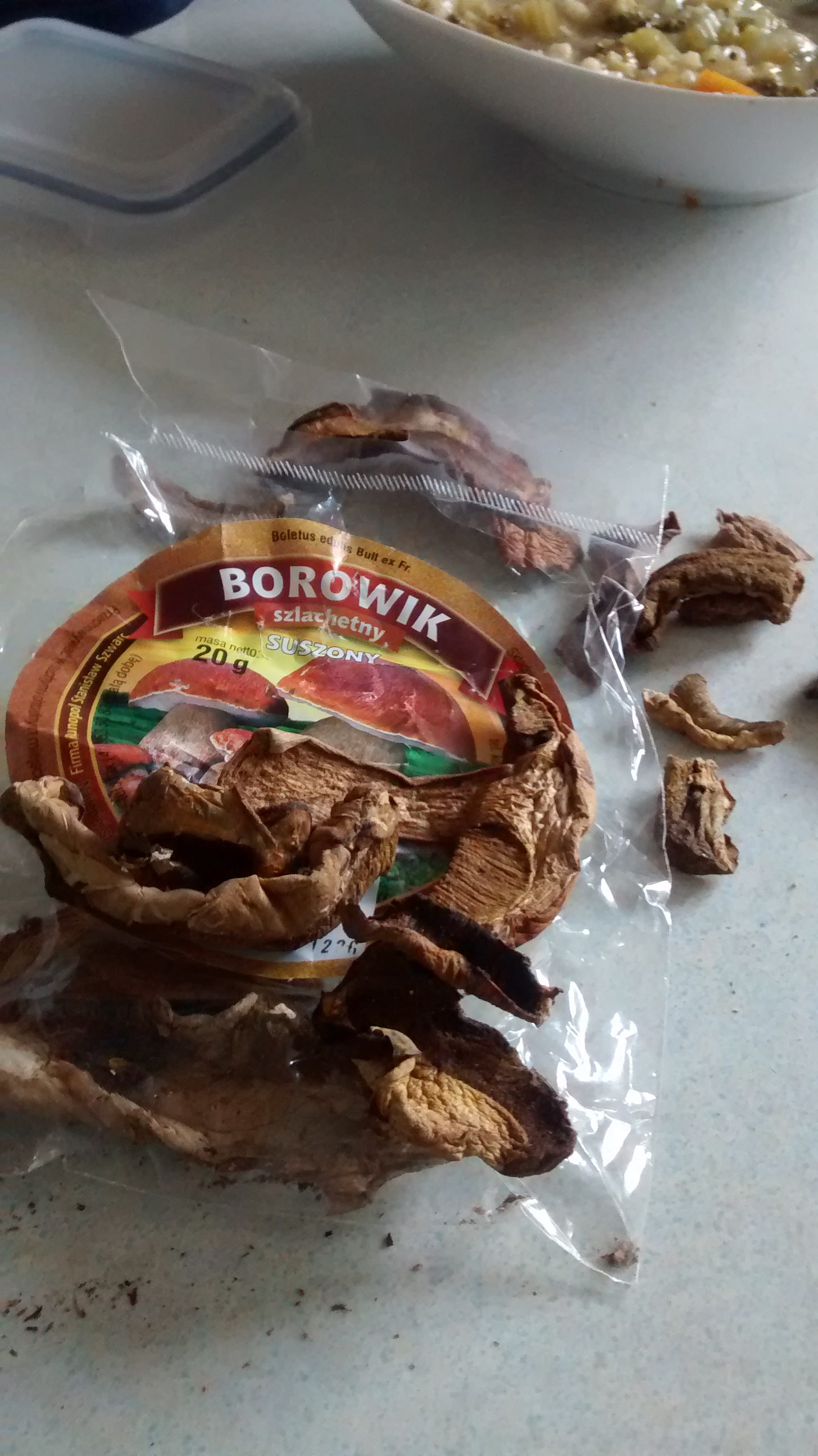
Dried Mushrooms
Dried Mushrooms

IMG_20150704_125955216

Enamel Pans
Enamel Pans
Enamel Pans
Enamel Pans

I have many of these enamel pans they are good for slow cooking in the oven.

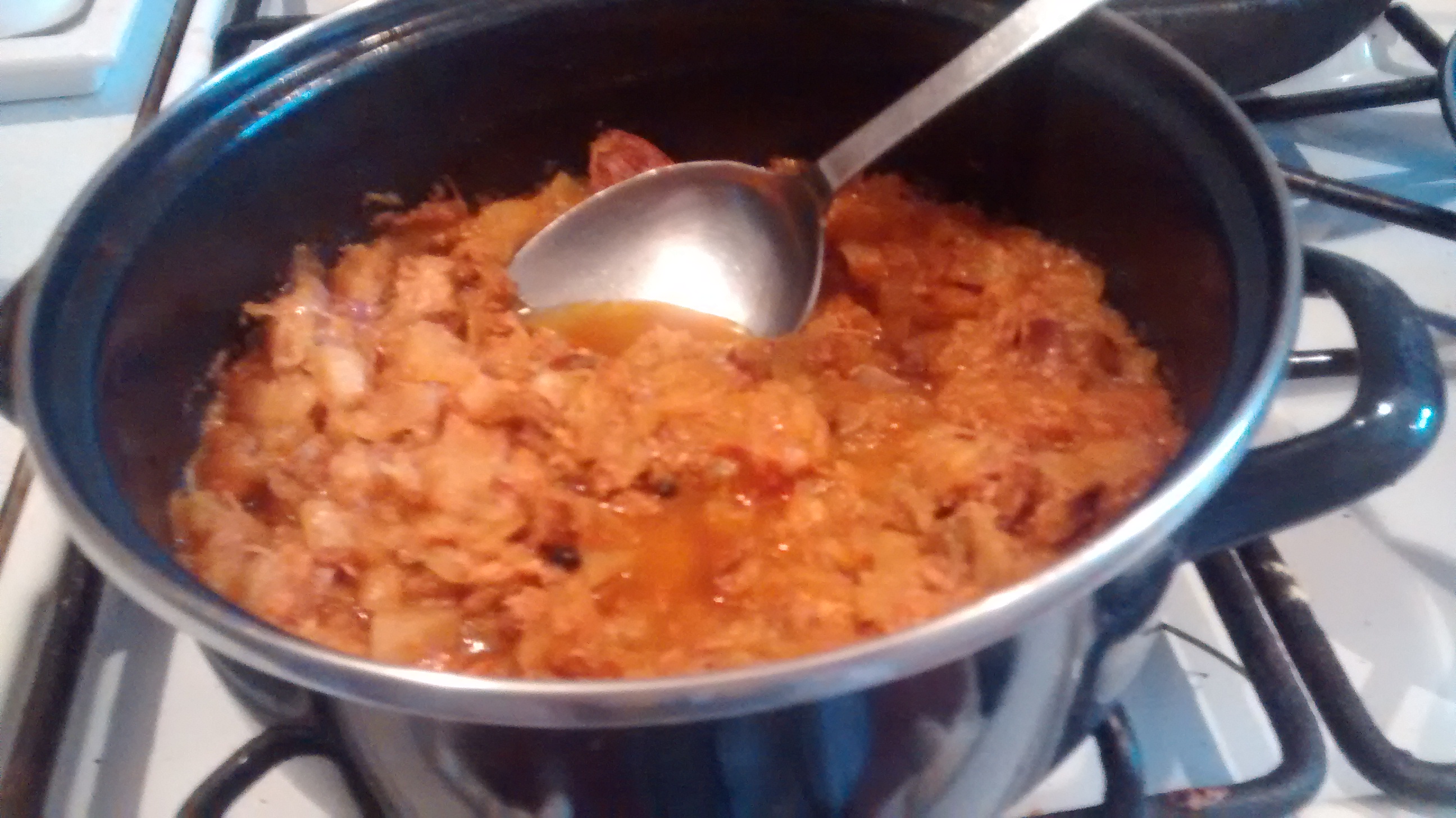
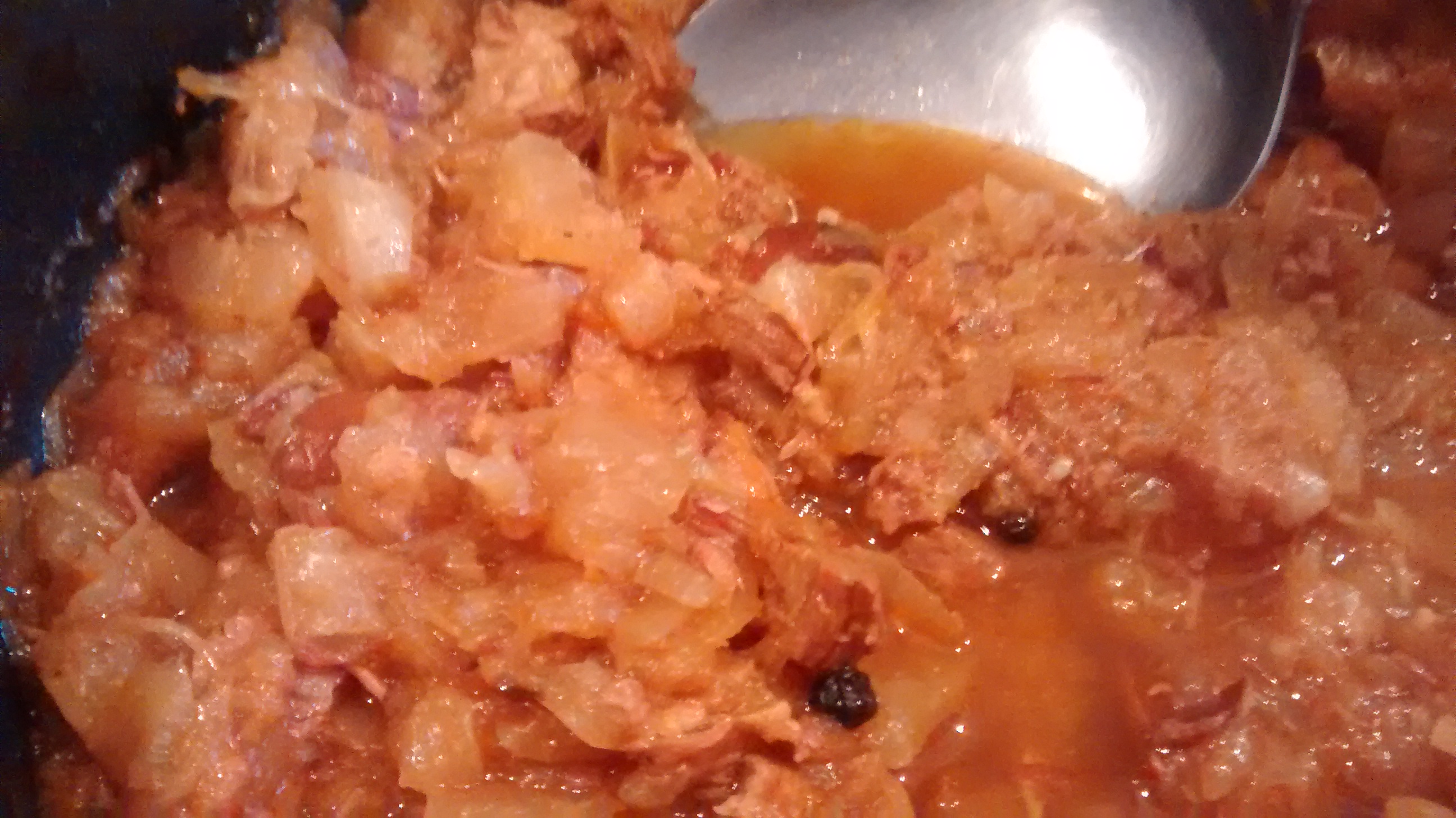
Bigos
Bigos
Bigos
Bigos
Serving up Bigos
Serving up Bigos

Traditional Bigos

There are lots of variations you can make to the following recipe and everyone seems to have their own version. I find the following proportions work out very well every time and the bigos is moist but not like a soup.

This makes a large amount which is good for a family gathering.

Often I make this in advance and then portion it up into 4 parts and then pack these into large plastic bags or tubs and freeze them – so I always have some on hand.  Note – the tomato stains the plastic tubs so I often put a bag inside a tub. I also then wrap the tub in another bag as the aroma is strong even when frozen and this stops it affecting other food in the freezer.

Ingredients

900g sauerkraut (1large tin or jar)

500g fresh white cabbage (1 large head)

200g to 400g Pork (shoulder or spare rib)

150 to 300g mixed smoked sausage such as kabanos, Polish ring or Frankfurters

150g smoked bacon

1 large onion

10g dried mushrooms

100g tomato purée (1/2 tube)

20g plain flour

2 bay leaves

3 to 4 peppercorns

sugar or lemon juice to taste –optional

fat/oil to fry in.

note – salt should not be needed as the sausage and bacon contain salt.

Put the sauerkraut in a large pan and add boiling water until it is covered and boil gently for 1 hour till it is soft. Take care not to let it boil dry and push the sauerkraut down occasionally so it stays under the water.

Finely chop the fresh cabbage into long strands and place in another large pan with the dried mushrooms, add water to cover the cabbage and boil till soft and as with the sauerkraut take care it does not boil dry.

Pre heat the oven to GM3– 150o C

Chop the pork into small cubes and fry till brown on all sides.

Chop the bacon into small squares.

Add 100g of the bacon and all the pork to the sauerkraut and boil gently till everything is soft.

Make crisp skwarki* with the rest of the bacon and add to the sauerkraut.

Chop the onion into small pieces and fry till golden, add the flour and fry till the mixture is just about to burn.

Add the cooked fresh cabbage with all the liquid and the fried onion mixture to the sauerkraut.

Slice up the various smoked sausage and add to the bigos.

Add the tomato purée, bay leaves and peppercorns.

You can add some sugar or lemon juice at this stage; this depends on how sour you like the bigos and often depends on the sauerkraut used. I rarely do either of these.

Now you can heat it all together gently over a low heat with a lid on the pan or put the mixture into a large oven proof dish; I use a large oval enamelled dish, and put it in the oven for about 3 hours.

Bigos tastes better if made one day, left overnight, and then reheated in the pan or in the dish in the oven.

*skwarki – small squares of bacon fried till the fat comes out and you are left with little crisp bits.