Biszkopt is a fat free sponge cake which means it does not have any butter, margarine or oil in it – just eggs, sugar & flour.
The word originates from the old Italian biscotto & Medieval Latin bis coctus – which means twice baked – though why I do not understand as this sponge is only baked once!
The English word biscuit also has this origin.
This sponge is used to make tort – layer cake 0r gateaux – however as these are usually such large cakes – I have used it for another popular cake in Poland – rolada – which is a roulade – often called a Swiss roll – though I have not been able to find the reason for this Swiss connection.
Rolada
Ingredients
4 eggs – separated
4 tablespoons of granulated sugar
4 tablespoons of plain flour
Icing sugar to dust
You will need 3 sheets of greaseproof paper
Fillings
Jam
Butter Cream Icing
Lemon Curd – this is very English – but would be loved in Poland – Marks & Spencer’s Sicilian lemon curd is superb!
Method
Pre-heat the oven to GM 4 – 180°C.
Grease and line a 23 x 32cms baking tin – you can also grease the paper on the upper side – I have found this does make it easier to remove the cake.
Whisk the egg whites until they are stiff.
Whisk together the egg yolks & sugar until they are pale and fluffy.
Fold in the flour.
Fold in the egg whites.
Pour the mixture into the baking pan & bake for around 15 minutes or until golden brown.
Remove from the oven and lightly dust with icing sugar then turn this out onto a sheet of greaseproof paper also dusted with icing sugar.
Place another piece of greaseproof on top of this and roll up the cake (starting with a short side) with the paper.
Leave this to cool.
Unroll the cake and spread with jam, lemon curd or a butter cream filling of your choice & then roll up the cake again.
To understand a Polish Christmas one has to know about its historical and cultural background as these have shaped what we have today.
Poles love festivals and traditions and there seem to me to be more celebrations in Poland than in England with every possible Saint’s day or other opportunity for a gathering, with eating and drinking, taken.
Polish Recipe Books For Christmas
History & Background
In the first centuries AD, around the river Warta, between the river Odra (Oder) and the river Wisła (Vistula) was the cradle of Poland. (The Wisła runs from the Carpathian Mountains to the Baltic Sea.) This region was immense forest land but many areas along the rivers had been cleared. In the east of Poland there are still the remains of the primeval forest at Białowierza (White Tower), this is a National Park were bison and wild boar roam.
By the 5th century the “Amber Road” was the trade route from the Baltic in the North to the Mediterranean in the South.
In the 6th & 7th centuries, many different Slav tribes arrived there, and as by now more of the land had been cleared, they settled.
The People of the Fields
By the mid 10th centurythe Polanie tribe became dominant – these were the people of the fields – pole means fields in Polish.
Agriculture in General
Compared to England the summers are warmer and the winters much colder, a drier cold than in England, often up to -300 C, with lots of snow.
The fertile plains of Poland have made it an agricultural country and the people are close to the land and understand about the seasons and food production. Even now in towns people have vegetable gardens & allotments.
Main crops are wheat, rye, buckwheat, potatoes and cabbage.
Dill is a favourite herb, also flat leaf parsley and caraway.
Pork is the most popular meat.
Poultry and eggs are used extensively
Butter, milk, soured milk, smetana (soured cream), twaróg (curd cheese) feature in many recipes.
In the south in the Tatra Mountains they make smoked cheeses from sheep’s milk.
In the 16th century southern Poland was 40C warmer than it is today and grapes for wine were grown.
Food from the Forest
Mushrooms, fruits and berries are even today collected from forests, eaten, preserved or even sold at the roadside.
Fish are caught in rivers and lakes, fish farms are becoming popular.
Dried mushrooms provide a lot of flavour in the winter diet.
Food Preservation for the Winter
Drying
Fermentation with Brine
Bottling
Smoking
Marinating
Jams – using sugar
Christianity in Poland
In 966 Duke Mieszko the First, Poland’s first recorded leader converted to Christianity.
By the 13th & 14th centuries Roman Catholicism was the main religion in Poland.
In the late 14th century the marriage of the Polish Queen Jadwiga to the Duke of Lithuania was on the promise of his and his people’s conversion to Christianity and the formation of a new enlarged Poland.
In the 16th century the Reformation did come to Poland and did have followers but it mostly died out following arguments between different factions & the Catholic counter reformation.
After the middle of the 17th century the main religion was again Roman Catholicism and is still so today.
Poland was more tolerant of different religions than many of its neighbours and by the early 20th century it had more Jewish people that any other country in Europe.
Advent
St Andrew’s Day – 30 November is celebrated in Poland, and the eve on 29November has many superstitions and traditions to do with foretelling the future especially with regards to future husbands.
The nearest Sunday to 30 November is the start of Advent, this can be from 27 November to 3 December so there are always 4 Sundays before Christmas day.
Advent is a time of reflection, prayer and preparation.
In the past Advent was like Lent; a time of doing without.
In Poland Christmas is celebrated from the evening of 24 December – Wigilia (the vigil) and parties and visiting relatives and family happens from then on.
It seems very strange to the Poles to have all the Christmas parties before Christmas when is still Advent.
The Christmas days are called Gody – days of Harmony and Goodwill
6 December – St Nicholas Day
Older pictures show Swięty Mikołaj (St Nicholas) in his bishop’s robes, newer ones tend to be more like the English Santa.
Presents were to be found on the doorstep or hidden in the house or under the pillow.
Pierniki – spiced honey cakes are given to children, often in the shape of the bishop.
He returns again on Christmas Eve after the evening meal.
It used to be that presents were given on just one of these days, usually 6 December and Christmas Eve was more about the meal and carols and Church.
Nowadays you are likely to get presents on both days.
Before the Second World War the presents were small tokens such as mandarin oranges (a luxury – as they were imported), chocolates, and an item of new clothes or a small toy.
Christmas Tree
The old Polish Tradition was to hang from the ceiling just the tip of a spruce/fir tree (tip side down) decorated with apples and nuts which were either wrapped in silver or gold paper or painted and ribbons. Old Polish Village houses are made of wood – so it was easy to attach the tree tip.
Doorways and walls were often decorated with separate boughs of the remainder of the tree.
This custom originated in pre-Christian times and texts dating back to the 15th & 16th centuries referred to this use of the tree as a pagan rite. Unable to halt the growing trend, the church then reinterpreted the tree to be the Tree of Knowledge – the tree of good and evil.
The tradition of using the whole tree came from Germany in the late 18th century and early 19th century first into the towns and then into richer villages and by the 1920s this had taken over.
In small flats and in towns, and with small funds, people often still just decorate a branch of a fir tree.
Decorations for the tree
Apples symbolise health & beauty, strength & vitality and paradise
Nuts wrapped in Silver or Gold guarantee prosperity & vitality.
When I was young we tied wrapped sweets & chocolates on the tree.
The Tree is put up on Christmas Eve (though nowadays maybe a day or 2 before) the whole family helps.
Decorated with glass baubles – in the past these were often blown eggs decorated with glitter. There are also many straw decorations – angels and stars.
Many of the old ornaments look like the apples and nuts of before.
Some of my mother’s old nut baubles with a few newer ones
Recent Magazine Feature
Nowadays Polish Glass Factories make 2,500 glass baubles a day, some of them very elaborate and expensive.
Paper chains guarantee love within the family.
Candles and baubles guard the house from malevolent deeds.
The star on the top of the tree helps guide back absent family and friend
Bells symbolise good news
Angels are the guardians of the house.
Clip on candles holders with real candles though nowadays artificial lights are more likely to be used.
Photograph’s of my mother’s clip in candle holders.
Pierniki – spiced honey cakes with white icing were used in some areas.
Polish Cribs – szopka
Cribs are varied in Poland, mostly wooden and carved, often with the shepherds dressed in traditional Polish highland costume.
Every year In Krakow in the Grand Square (Rynek Glówny) there is a competition held on the morning of the first Thursday of December, of Christmas cribs.
Model makers come carrying their cribs and they are judged. The winners are kept in the Museum of Ethnography – the rest are sold.
I saw an exhibition of past winners when they were on tour in England in 2011 at The Lowry in Salford.
This competition began in 1937. It was intended to bring back to life a tradition which had died shortly after the First World War, that of the Crib Theatre and these cribs are portable theatres for traditional puppet Nativity plays.
These ornate cribs are very colourful and richly decorated. They are covered in coloured foils, and are inspired by the architecture of Krakow eg Wawel Cathedral and the unequal spires of The Church of the Virgin Mary – Mariatski
They can be from 15 cm high up to 2 metres high and some have clockwork mechanisms or lights.
In the past the Christmas cribs were mostly the works of Krakow masons in their idle weeks of the Polish rainy late autumn.
Nowadays it is a pastime of many Krakow dwellers of all walks of life. And the city boasts several dynasties of Christmas crib makers where two or three generations construct brand-new cribs every year.
Christmas cards
In the past these were always postcards but now folded cards are coming in to vogue.
Copies of old cards from Zakopane from the 1930s – bought in the Folk Museum there.
From an Old Christmas Card from the 1930s
Cards are only sent to family and friends that will not been seen over Christmas.
In Communist times cards depicted, branches of fir trees and baubles, nowadays many religious cards are sent.
A Polish Christmas Card
Often when Poles send cards to family abroad they include a piece opłatek. This was originally bread but now a paper thin wafer with an impression of the Nativity scene is used and is a symbol of forgiveness, unity and love.
The opłatek usually has the corner nipped off to show that this is being shared. My aunty in America always does this.
This is a very Important Meal – Poles want to be with their family on this evening.
This Christmas Eve supper became a fixed tradition in Poland in the 18th century.
It is a completely unique experience with an ordinary evening meal transformed into a celebration of family love and solidarity and it is also so strange that in a country of meat lovers this meatless meal is so important and loved.
The days before the meal were a time to thoroughly clean the house.
The day used to be a day Fasting & Abstinence as the last day of Advent – no meat on that day (abstinence) and only 1 main/large meal (fasting)
There are usually 12 dishes for the 12 apostles though some areas have an odd number of dishes either 7, 9 or 11.
I only make dishes which would have been available through food preservation in the winter or are seasonal.
Presents
If there are presents they are placed under the tree and opened at the end of the meal.
In some areas of the West of Poland– presents today come from Gwiazdor – Starman
In the South West of Poland from an angel or baby Jesus.
In Communist times to try and remove the religious idea – many tried to favour Gwiazdor often portrayed in red robes with gold star or even to introduce the Russian Grandfather Frost on January 1st – unsuccessfully.
However Gwiazdor had links with St Nicholas (Swięty Mikołaj) as he often carries a star in front of St Nicholas.
Carols
The oldest hymn/carol in the Polish Language is Bogurodzica (Mother of God) and is known from the beginning of the 13th Century.
Carols are rich and varied with examples from many different centuries with ones originating from:
church music
to many with music from the Royal Court such as the Polonaise
to lively folk & dance music &
quiet lullabies.
Many carols feature shepherds as the Poles from the countryside felt an empathy with them.
Bóg się Rodzi – a Polonaise( Polonez )– words from the 18th Century.
Przebieżeli do Betlejem – music from the 16th Century.
Carols are sung from midnight mass till 2nd February in Church.
Carollers went from the second day of the Holiday – 26 December until 6 January – carrying:
a star,
a crib,
a stork – the New Year – new life
a baby goat – fertility
a bear – hostile forces of Nature
In some areas Carollers went from Christmas Eve – after their own meal.
They are welcome visitors however if your house is left out then this is seen as a sign of bad luck.
Food for Christmas Day
Many would say that this meal is just like a very special Sunday Dinner.
There are not as many must have dishes on Christmas Day
As with all Polish dinners there is soup to start and this would be most likely rosol – clear chicken consommé with small pasta pieces (the original chicken noodle soup)
There will be lots of MEAT with Pork Dishes mainly such as:
Tort – rich layer cake often made from hazel nuts.
Nowadays there will also there will be chocolates & these Polish dried plums with chocolate continue the tradition of dried fruits at Christmas time – I love them!
My China & Tableware – A New Tradition
Classic white china would be the norm for Christmas but over the last couple of years I have started to use china with poppies* and other red flowers at Christmas time as well as china with autumn and winter foliage from my collection of china.
*Although not a Christmas flower – these poppies are a remembrance to the Battle at Monte Cassino in May 1944 & the military song – Czerwone maki na Monte Cassino – Red poppies on Monte Cassino. As my father fought there, these are very special for me.
New Year’s Eve – Sylwestra
31 December is the feast of Saint Sylwester (Sylvester) and this is the name of the festival in Polish.
In the towns & cities the evening is often celebrated with a dance – no special traditional dishes – more of the Christmas Day type food.
Sleigh rides from house to house, with food at each, were popular in times gone by on the eve and on New Year’s Day.
The 3 Kings – 6 January – Epiphany
During the Christmas period the priest would visit all the homes of his parishioners and say prayers, bless the house and get an offering. He would also bless some chalk or blessed chalk would be obtained at the Mass on 6 January. This chalk is used on 6 January to write over the door frame in the house –
For example for next year – 2017
20+ K + M + B + 17
For the year and Kasper, Melchior and Baltazar – the traditional names of the kings.
To bless all who enter or leave in the coming year.
The end of the Christmas period
In the church – 2 February – Candlemas day – 40 days after Christmas – is the official end of Christmas and then karnawał starts – the festive time before Lent.
In Polish the word for a fat free sponge cake which is made with just eggs, sugar and flour is biszkopt.
A sponge cake which uses butter or margarine which is creamed with the sugar is described as piaskowy – this adjective means sandy – hence the title of this post!
I have not managed to find an explanation as to why it is so described but have found this term in all my Polish cookery books.
Pani Stasia’s Sponge Cake
This is a recipe which I learnt from my mother’s friend who we knew as pani Stasia*.
Pani Stasia made wonderful cakes but unfortunately I did not write many of them down – however I did for this one and it is the basis for many of my other cakes and buns.
This recipe is equivalent to the British cake – Victoria Sponge – named after Queen Victoria in whose reign this became popular & who is said to have liked this cake very much.
Having been looking at recipes in my Polish cookery cooks I realise that pani Stasia adapted this recipe for England as self raising flour and caster sugar are not found in Polish shops.
(*Pani translates as Madam, Lady or Mrs and is a polite form of address – it is like donna in Italian or for example saying Miss Mary in the Southern States of America.
Stasia is the shortened form of the Polish name Stanisława. (The feminine form of Stanisław)
St Stanisław is the patron saint of Kraków & Poland, he was a martyr, murdered by the Polish king Bolesław II the Bold in 1079 – a story which has much in common with St Thomas à Beckett and the English king Henry II in 1170).
Ingredients
Eggs
Butter or Block Baking Margarine
Caster Sugar
Self Raising Flour
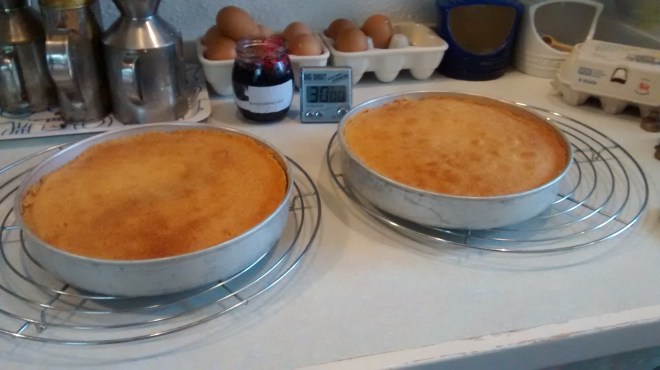
I usually use 3 or 4 eggs for this recipe – in the photographs below I have used 4 eggs to make 2 cakes which were then sandwiched together with jam and white chocolate butter cream.
Method
Grease and line the base of 2 x 21.5cm sandwich tins. – I find anodised aluminium tins are the best. (my old tins say 8 1/2 inch on the base – 21cm or 22cm would be OK)
Pre-heat the oven to GM 4 – 180°c
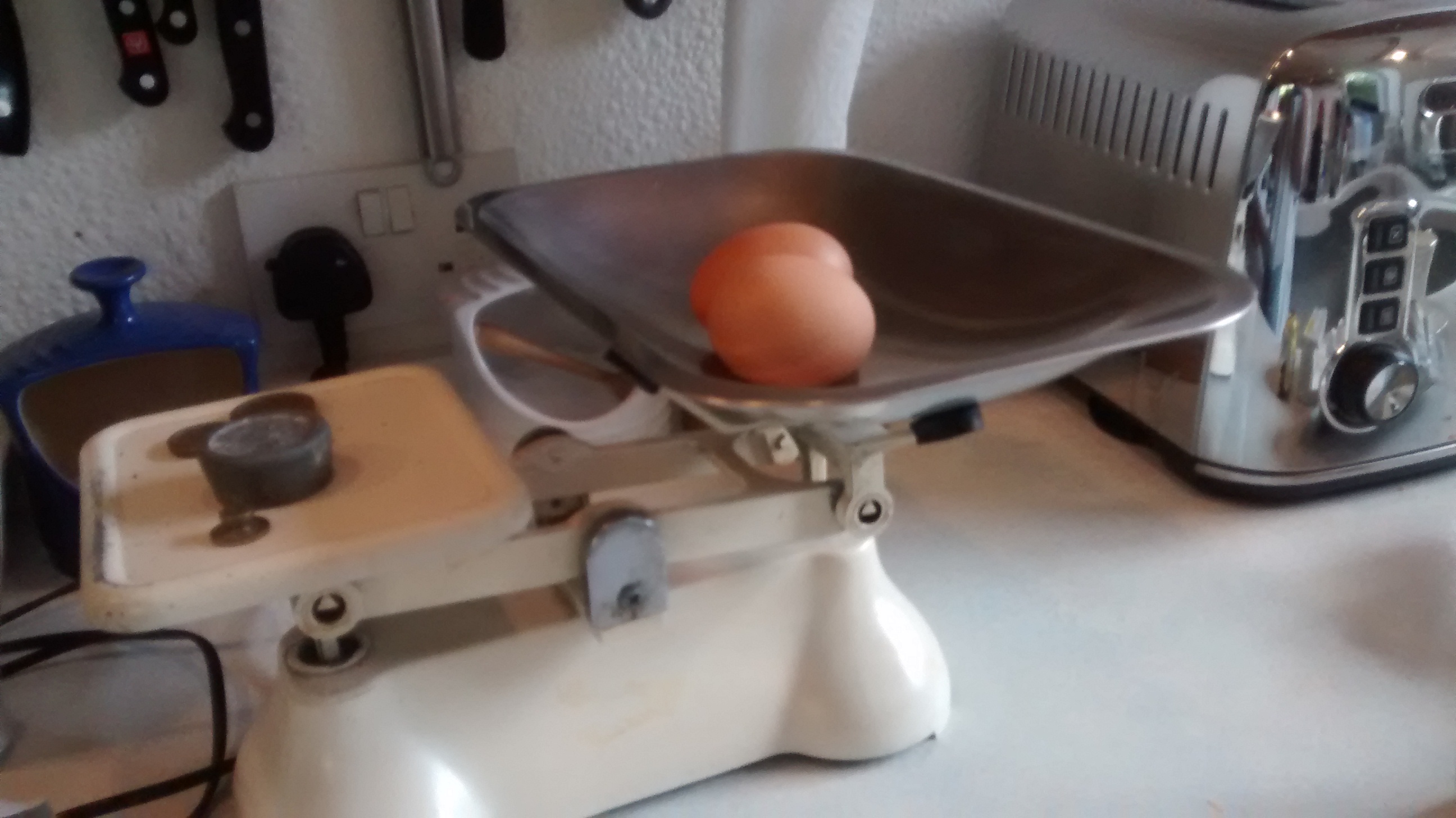
The first thing you have to do is weigh your eggs – complete with their shells.
Weighing Eggs
You then weigh out the same amount of butter or block margarine, caster sugar and self raising flour.
At first I thought this was very strange but now find that it gives a very good way of getting the right proportions no matter what size the eggs are.
I heard the late Marguerite Patten in an earlier recorded programme on the radio a few weeks ago saying that Victorian cooks often used this method.
Cream together the butter and sugar until it is light and fluffy.
Add the eggs, one by one whisking again until the the mixture is light and fluffy again.
Fold in the flour with a metal spoon taking not to over mix the mixture and knock out all the air.
Divide the mixture evenly between the 2 prepared tins.
Bake in the centre of the oven for around 25 to 30 minutes – the cake should be golden brown and be clean when a cake tester is used.
Cakes cooling awaiting being sandwiched together
This cake is very versatile and here I have sandwiched it together with blackcurrantjam (given to me by my friend who had made it with fruit from her allotment) and white chocolate butter cream.
Sweet whipped cream is not found in Polish cookery – butter creams and similar are the standard fillings for layer cakes.
On the bottom cake first spread on the jam and then top this with the butter cream.
This butter cream is sweet and needs the contrast of a tart jam, damson jam would be another alternative.
White Chocolate Butter Cream
Ingredients
60g White chocolate
40g Butter – unsalted is best
80g Sieved icing sugar
Method
Melt the white chocolate in a glass bowl over a pan of hot water and allow to cool.
Cream the butter and the icing sugar.
Beat in the cooled, melted chocolate.
Note
Take care – if the melted chocolate is too hot then you will end up having to add more icing sugar and the butter cream will be very sweet.
Dust the finished cake with icing sugar.
Plates are Burleigh Ware – Burges & Leigh Ltd —– Blue Mist around 1930s
When cooking was much more seasonal this salad was extremely popular in winter when many other vegetables were unavailable.
Using bottled sauerkraut you can make this salad all year around. You can also buy vacuum packed sauerkraut in many Polish shops.
Preparing the sauerkraut
There are two ways of preparing the sauerkraut. It all depends on the actual sauerkraut which varies with the home-made or vacuum packed being milder usually than the bottled & how sour you like it to be.
Sour is indeed a well loved taste in Poland and sour is a description you can apply to many Polish dishes. There will be more posts on this on the future.
These salads could be considered sweet & sour.
For all the following salads I have used roughly 200g of sauerkraut which is easily enough as a side-dish for two people.
I think all the following salads benefit from being made a few hours ahead and left to allow the flavours to interact and mellow.
Preparation Method 1
Just take some of the sauerkraut and sieve of some of the liquor.
Sieve off some of the liquor
Preparation Method 2
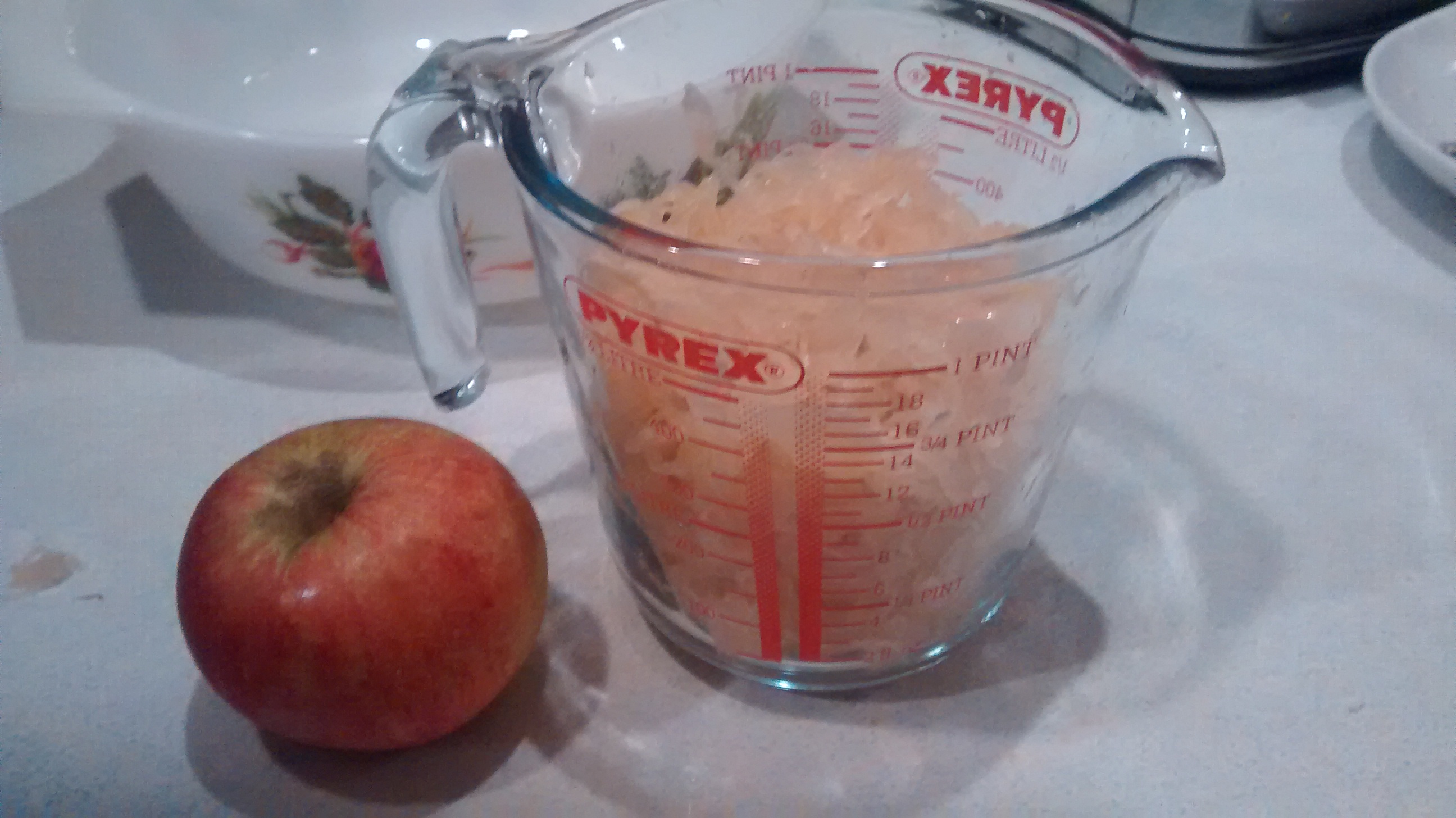
Put the sauerkraut into a jug or bowl and add some water to rinse off the liquor.
Use Water to Rinse the Sauerkraut
Rinse off the Water
My personal preference is to use method 1 with the sauerkraut just drained and not rinsed.
Sauerkraut & Apple Salad
Ingredients
Around 200g of Sauerkraut
1 tasty eating apple such as Jazz or Braeburn
2 to 3 tablespoons of sunflower oil
1 to 2 tablespoons of granulated sugar.
Method
Prepare the sauerkraut and put it in a dish.
Grate the apple, skin and flesh using a coarse grater and add this to the sauerkraut. Mix the two together.
Add the sunflower oil and sugar and mix well.
Leave in a cool place for a couple of hours before serving.
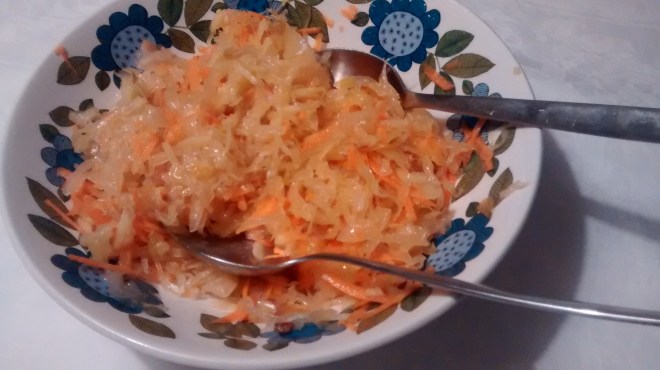
Serving Dish by J & G Meakin – Topic – designed by Alan Rogers in 1967
In the restaurant in the Polish Centre in Leeds they serve a wonderful sauerkraut and carrot salad – secret recipe of course! – the following is the nearest I can get to it.
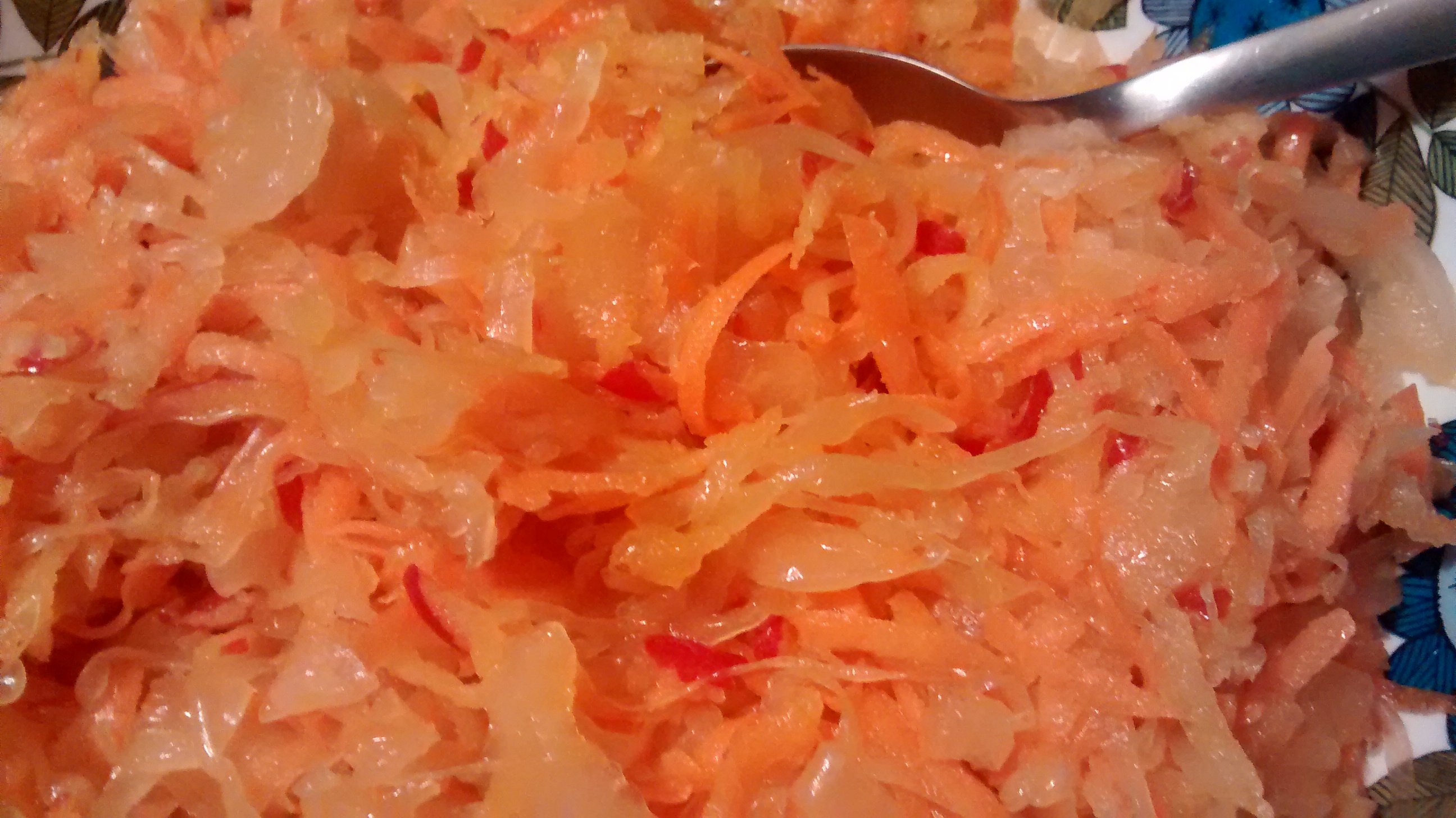
Sauerkraut & Carrot Salad 1
Ingredients
Around 200g of Sauerkraut
1 carrot
1 tasty eating apple such as Jazz or Braeburn
2 to 3 tablespoons of sunflower oil
1 to 2 tablespoons of granulated sugar.
Method
Prepare the sauerkraut and put it in a dish.
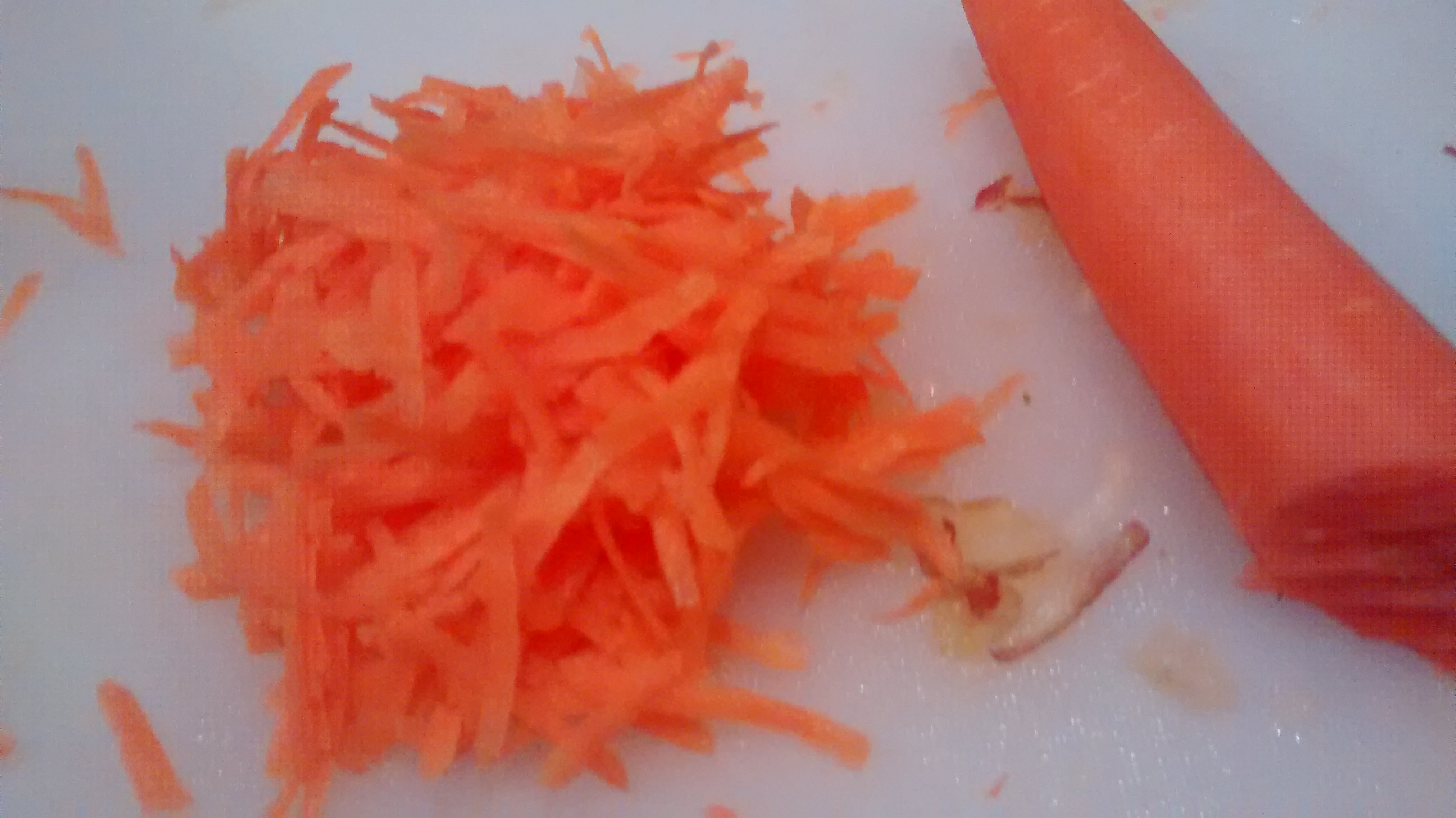
Peel and grate the carrot using a coarse grater.
Grate the apple, skin and flesh, using a coarse grate.
Add the grated carrot and the apple to the sauerkraut.
Mix them all together.
Add the sunflower oil and sugar and mix well.
Leave in a cool place for a couple of hours before serving.
Mid 20th Century Pyrex Dish
Serving Dish is Carnation by Royal Doulton 1982 to 1998
Meat Loaf and Sauerkraut & Carrot Salad
Sauerkraut & Carrot Salad 2
Ingredients (as salad 1 but less carrot)
Around 200g of Sauerkraut
Half a carrot
1 tasty eating apple such as Jazz or Braeburn
2 to 3 tablespoons of sunflower oil
1 to 2 tablespoons of granulated sugar.
Method
Prepare the sauerkraut and put it in a dish.
Peel and grate the carrot using a coarse grater.
Grate the apple, skin and flesh, using a coarse grate.
Add the grated carrot and the apple to the sauerkraut.
Mix them all together.
Add the sunflower oil and sugar and mix well.
Leave in a cool place for a couple of hours before serving.
Tip
Once you have opened a jar of sauerkraut if you are not going to make something else with it in the next day or so you can portion it up and freeze it for later use.
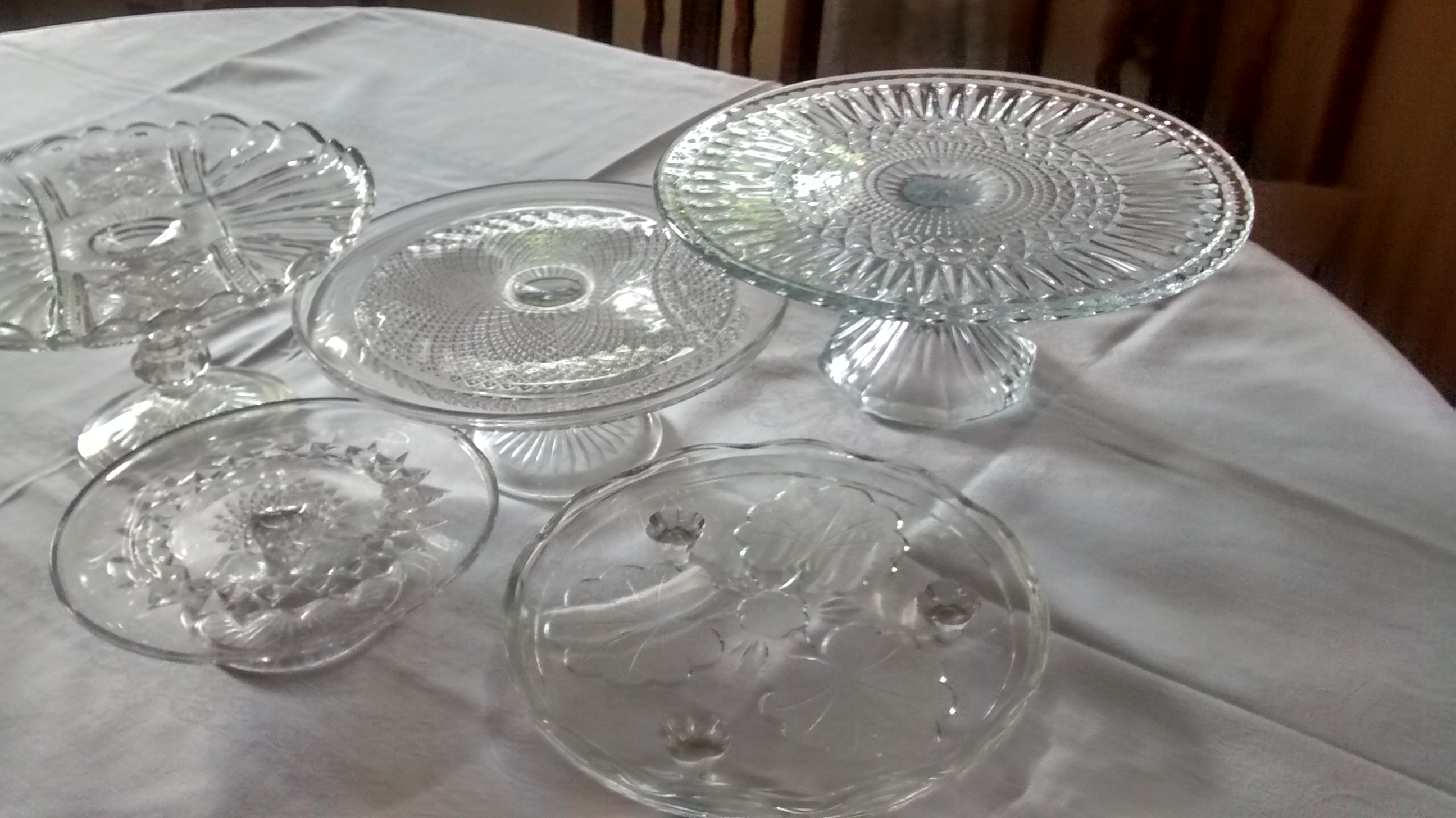
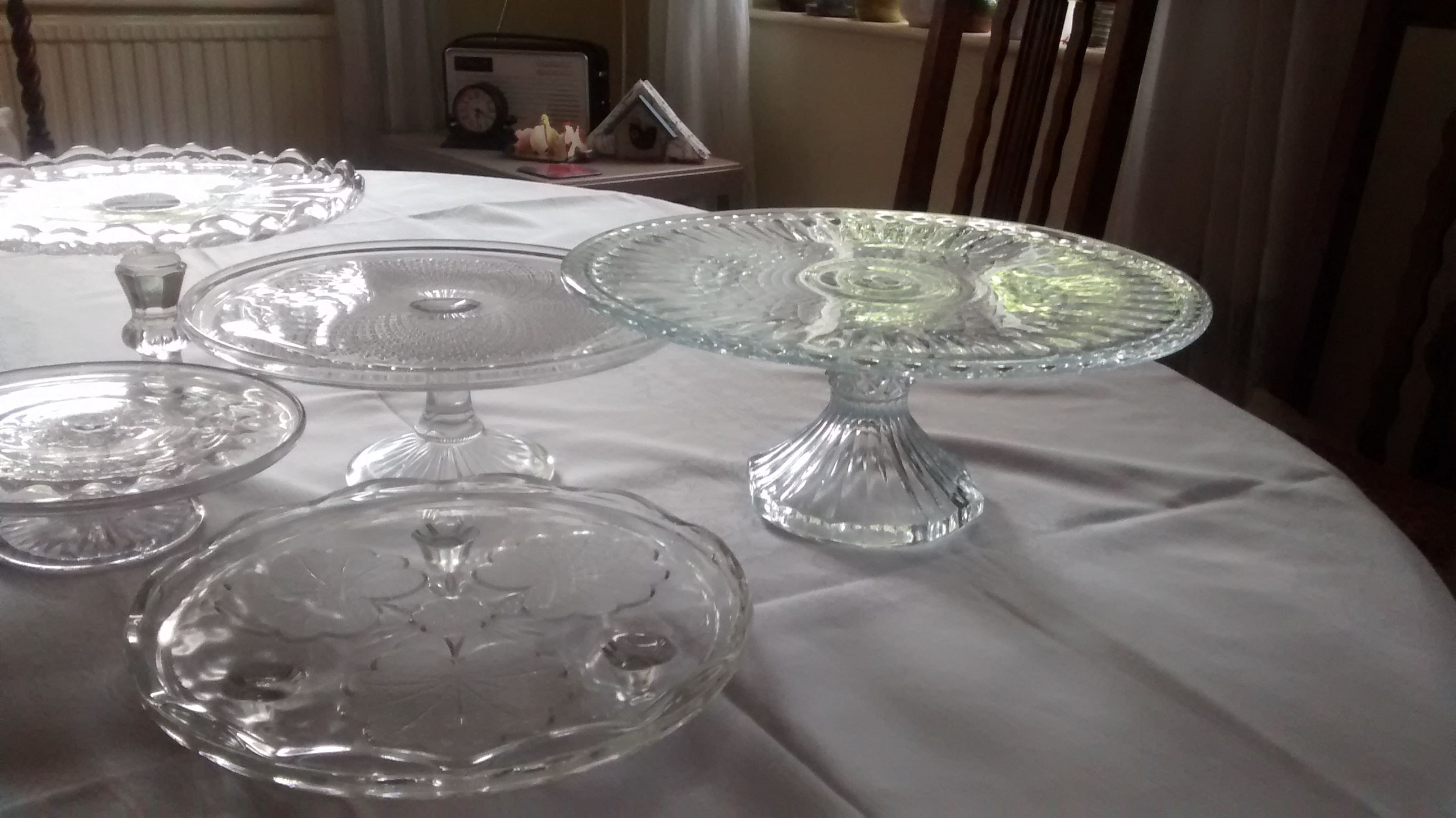
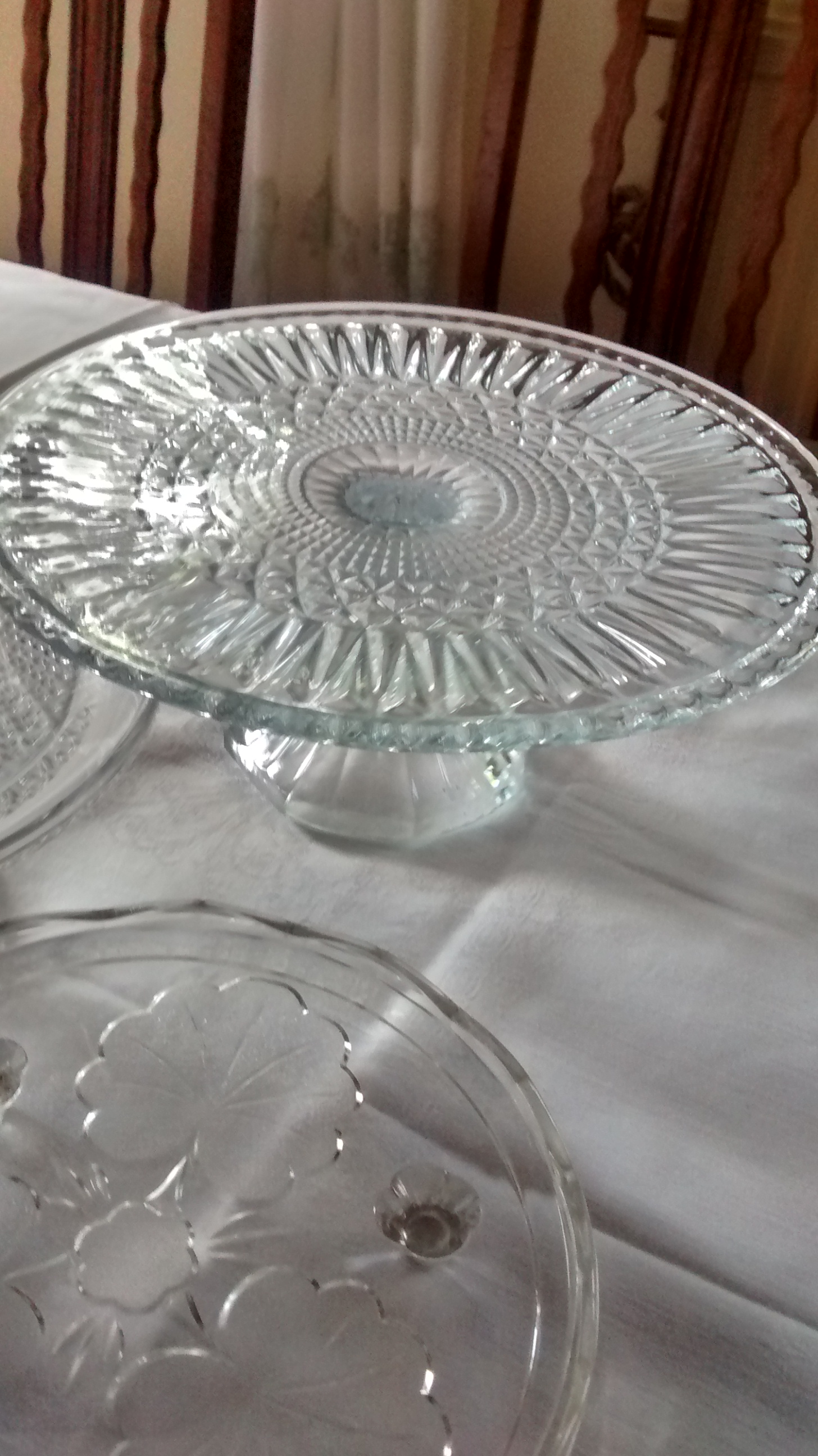
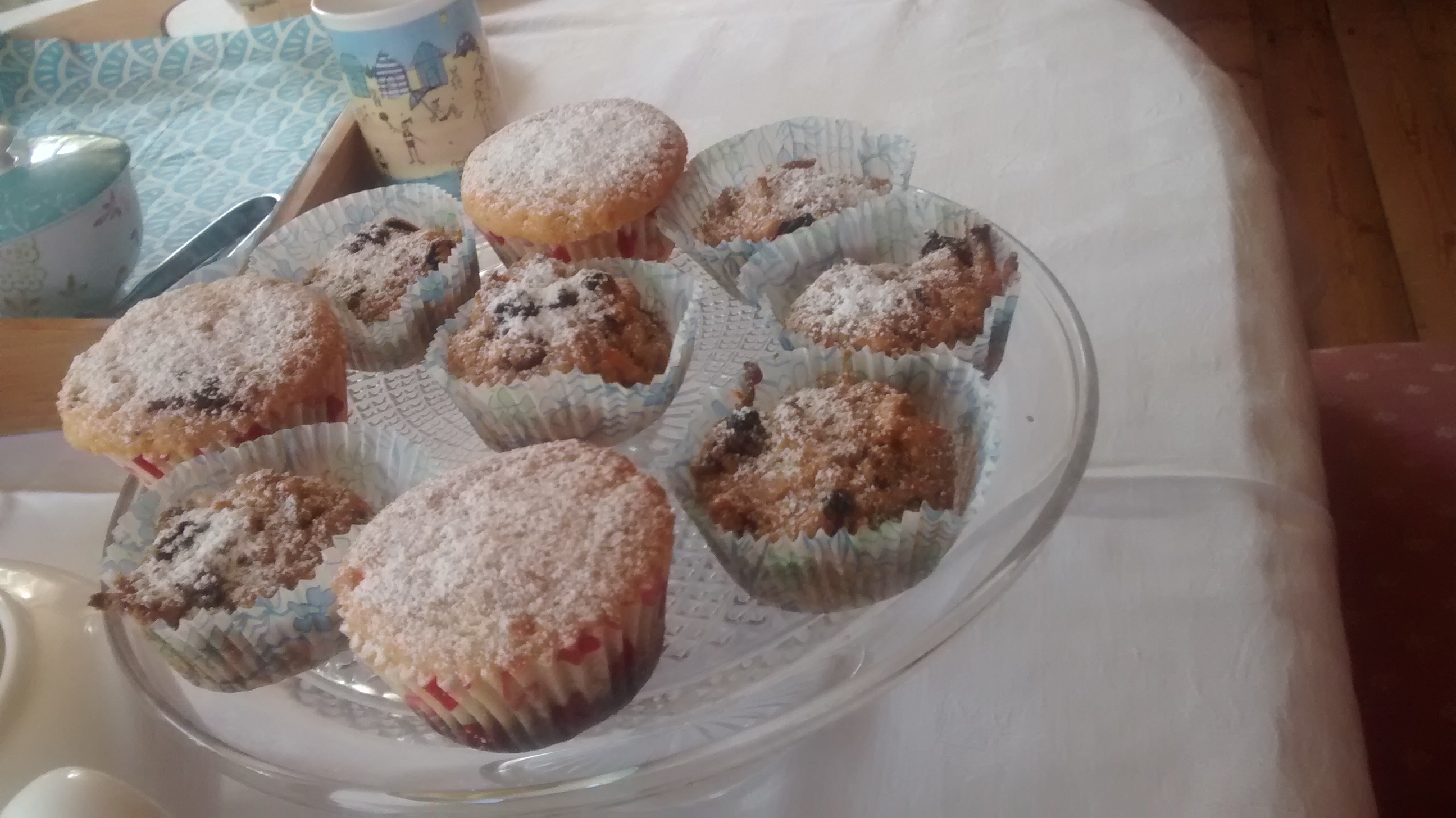
I just love cake stands. They make the cakes look really special.
I started of with a few glass ones I got from my mother and now have at least seventeen.
Most are old, bought from charity shops and car boot sales.
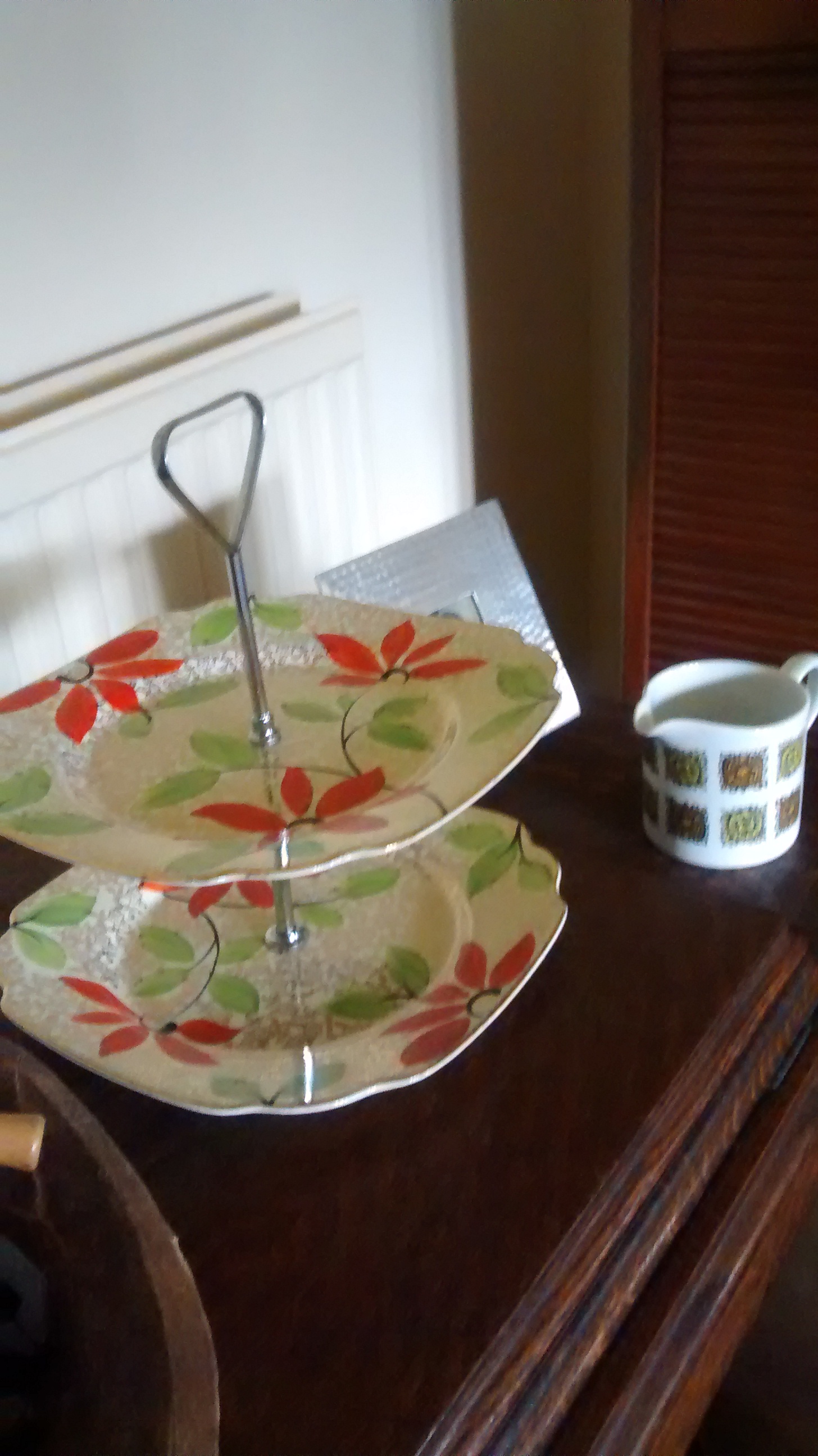
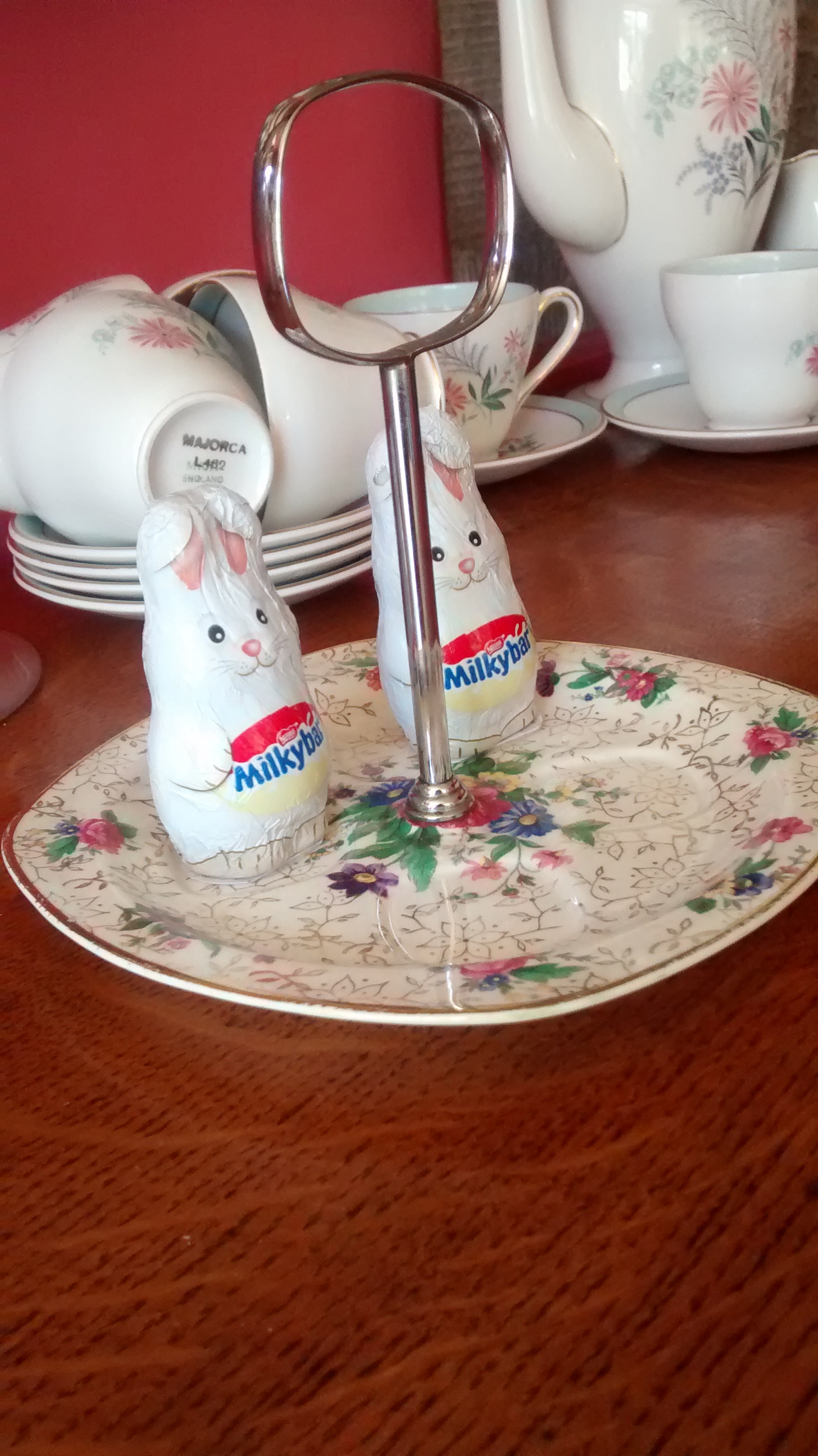
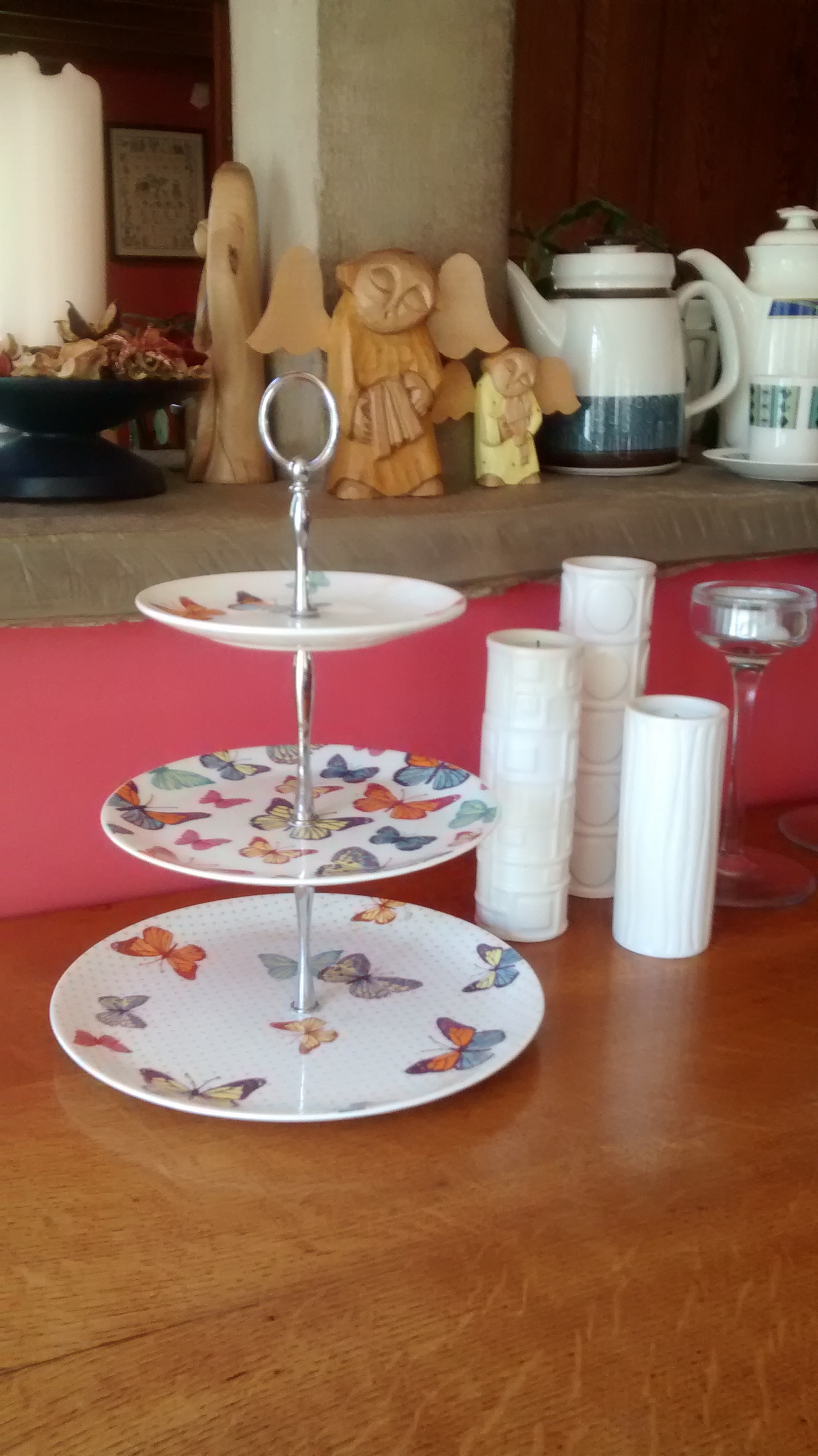
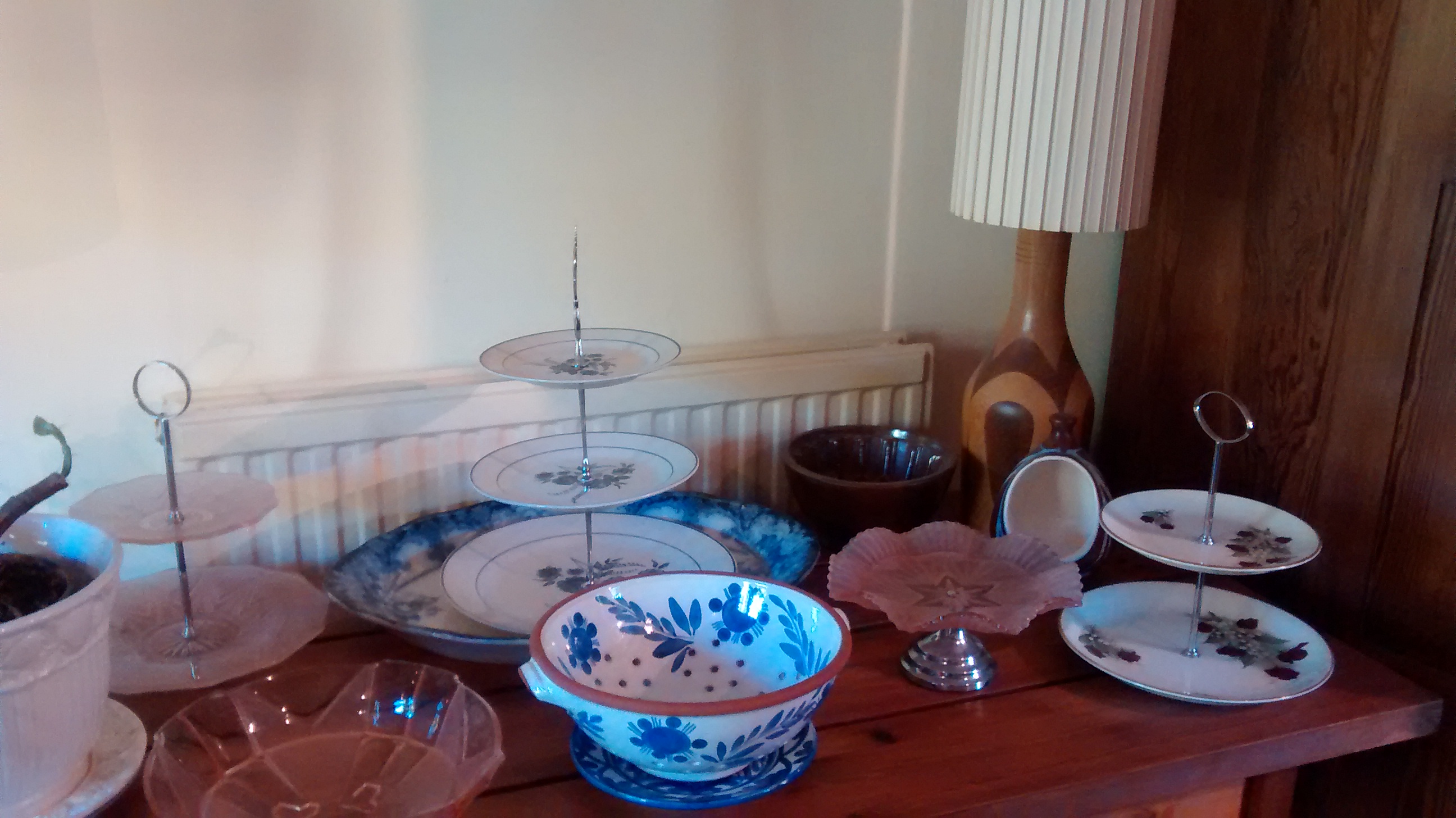
I have also started buying china tiered ones. These look better just placed around the dining room but I sometimes use them for small cakes, chocolates or fruit.
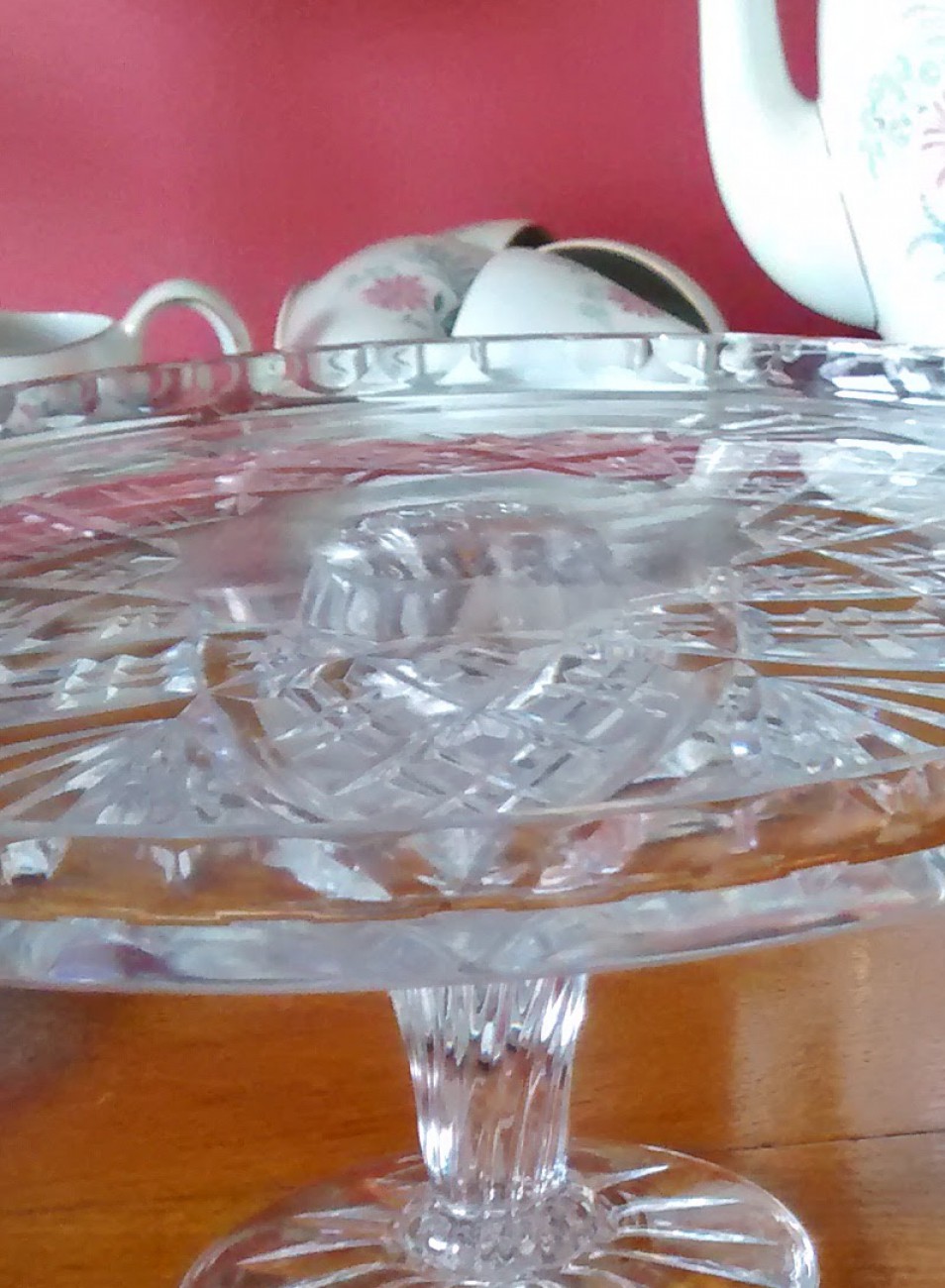
A Selection of my Cake Stands
This Cake Stand was one of my mother’s
This Large Stand I bought in an antique shop in Poland. I managed to get it back in my Hand Luggage. It is very HEAVY.My most recent china purchase. Maybe a bit bright for cakes but lovely coloursAnother Bright Cake Stand
An Egg Cup Holder. The egg cups were missing when I bought this.
Lead Crystal Cake Stand
Etched Glass Cake StandA Laura Ashley Cake StandPink Glass & China Cake Stands
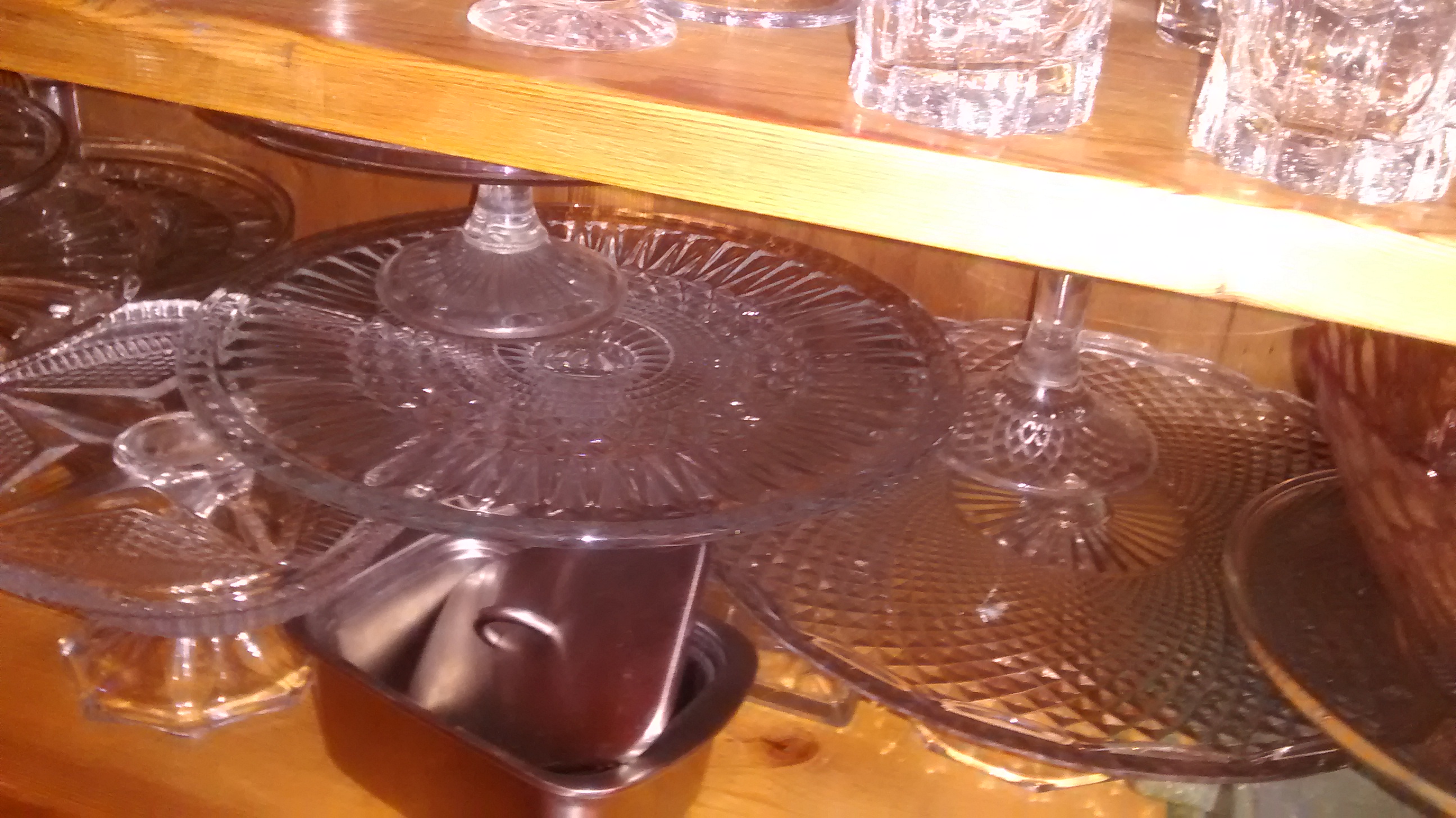
Cake Stands in my Cupboard
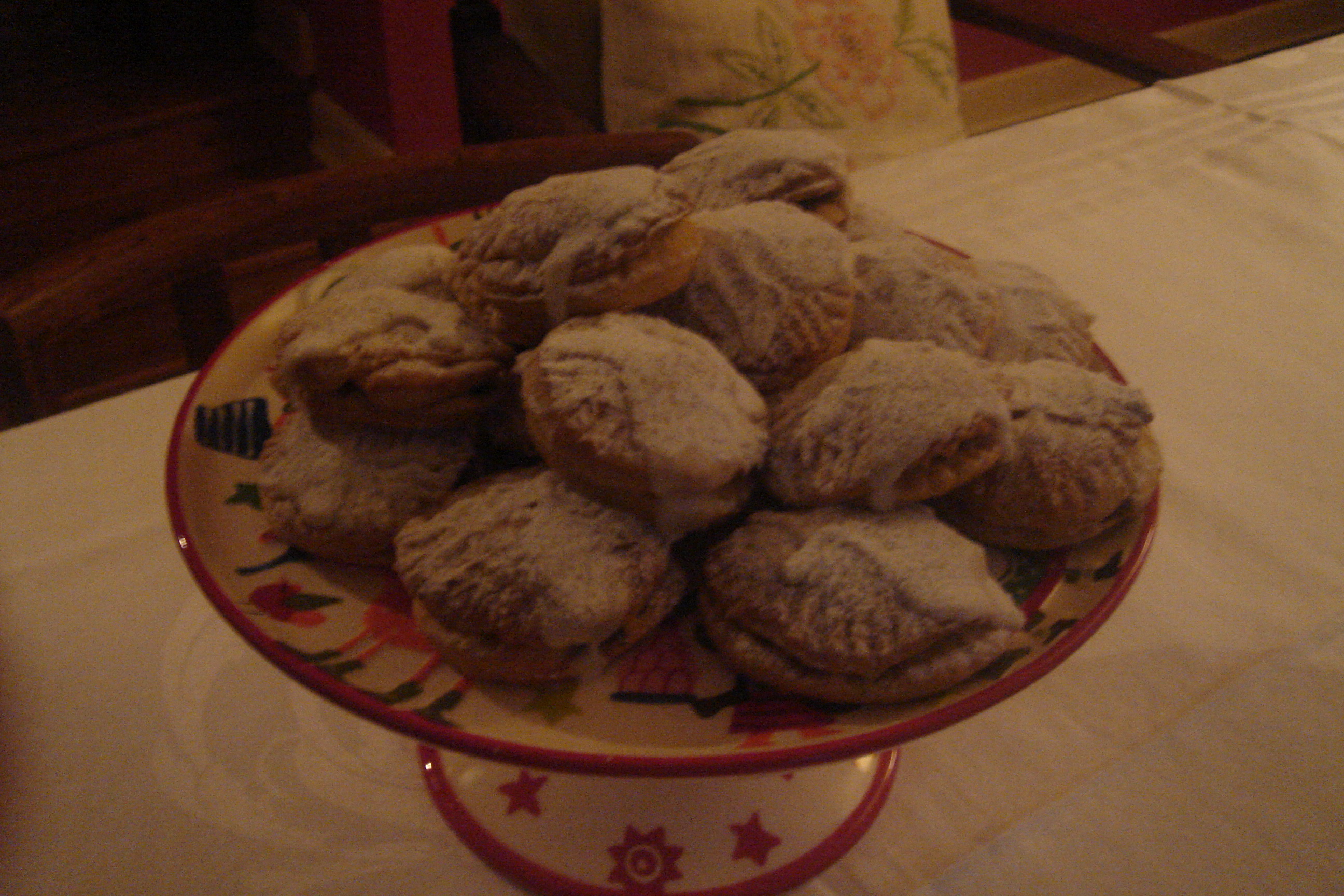
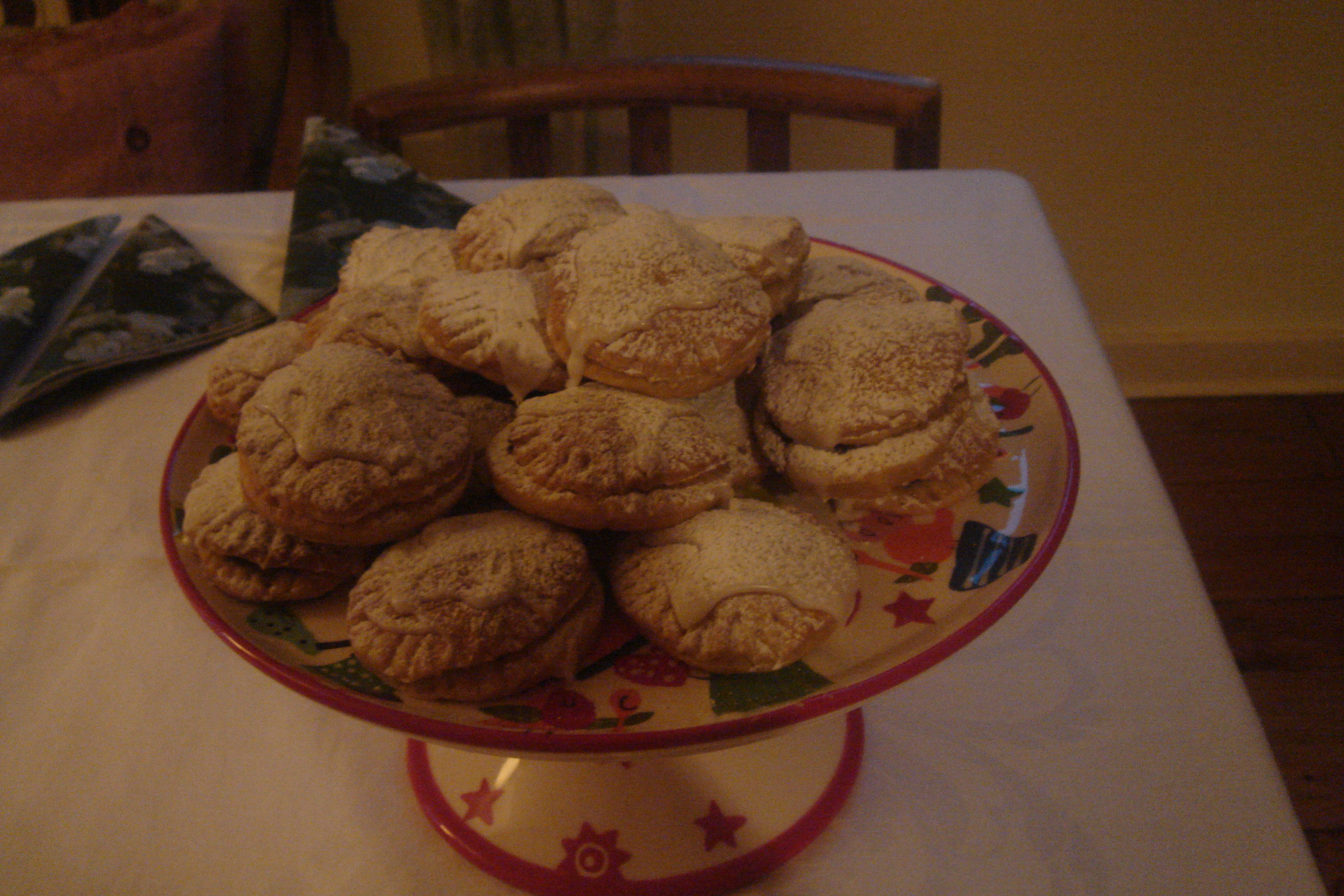
Babeczki for Wigilia – Christmas Eve – with Poppy Seed filling on a Christmas Stand















 Journey From A Polish Kitchen