Marcypan Budyń – chilled

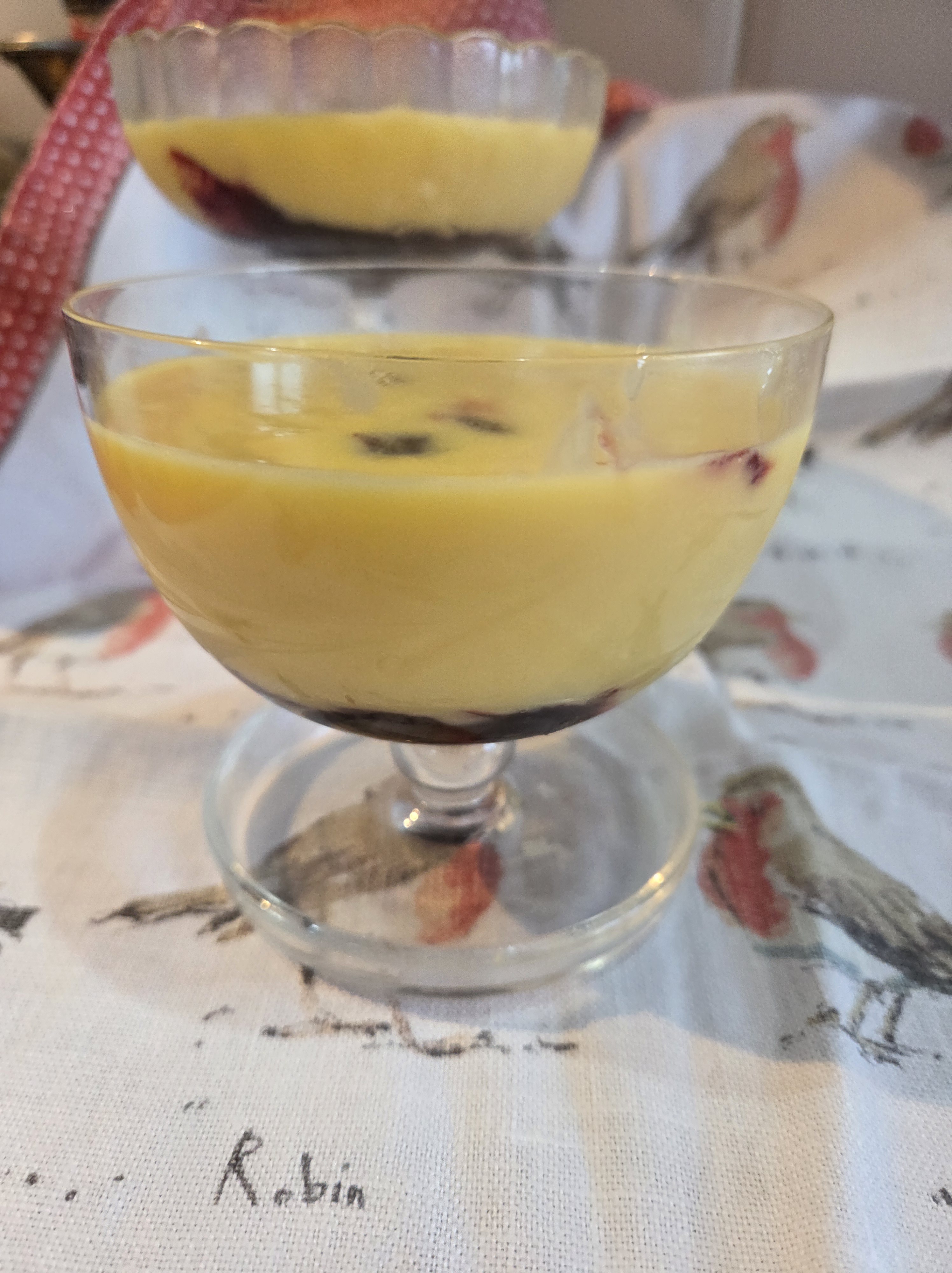
  • I came across a recipe for budyń which had marcypan – marzipan melted into it.
  • I used bought golden marzipan from Marks & Spencer’s to test it out.
  • There is enough to make this three times.
  • It was delicious.
  • I used it in two diferent ways.
  • This is the first one in which the budyń is chilled.
  • The original recipe used apples with the budyń, but although I have lots of apples left in the garden; I think it is better with dark red fruits such as sour cherries.

Ingredients

  • 250ml milk
  • 1½ tablespoons of potato flour
  • 1 tablespoon of granulated sugar
  • 150g of made marzipan
  • 2 egg yolks

Method

  • Mix a little of  the milk with the potato flour and the sugar.
  • Heat the rest of the milk in a saucepan.
  • Add the rest of the milk mixture to this and heat till it is thick.
  • Chop the mazipan into little pieces.
  • Add the mazipan to the milk mixture and stir till it is melted and you have a thick sauce.
  • Leave till slightly cool.
  • Add the egg yolks and mix till it is thick.
  • Leave till cool.
  • *
  • Use this over thickened fruit dark fruits such as soured cherries.
  • Leave to chill.


New Magazines

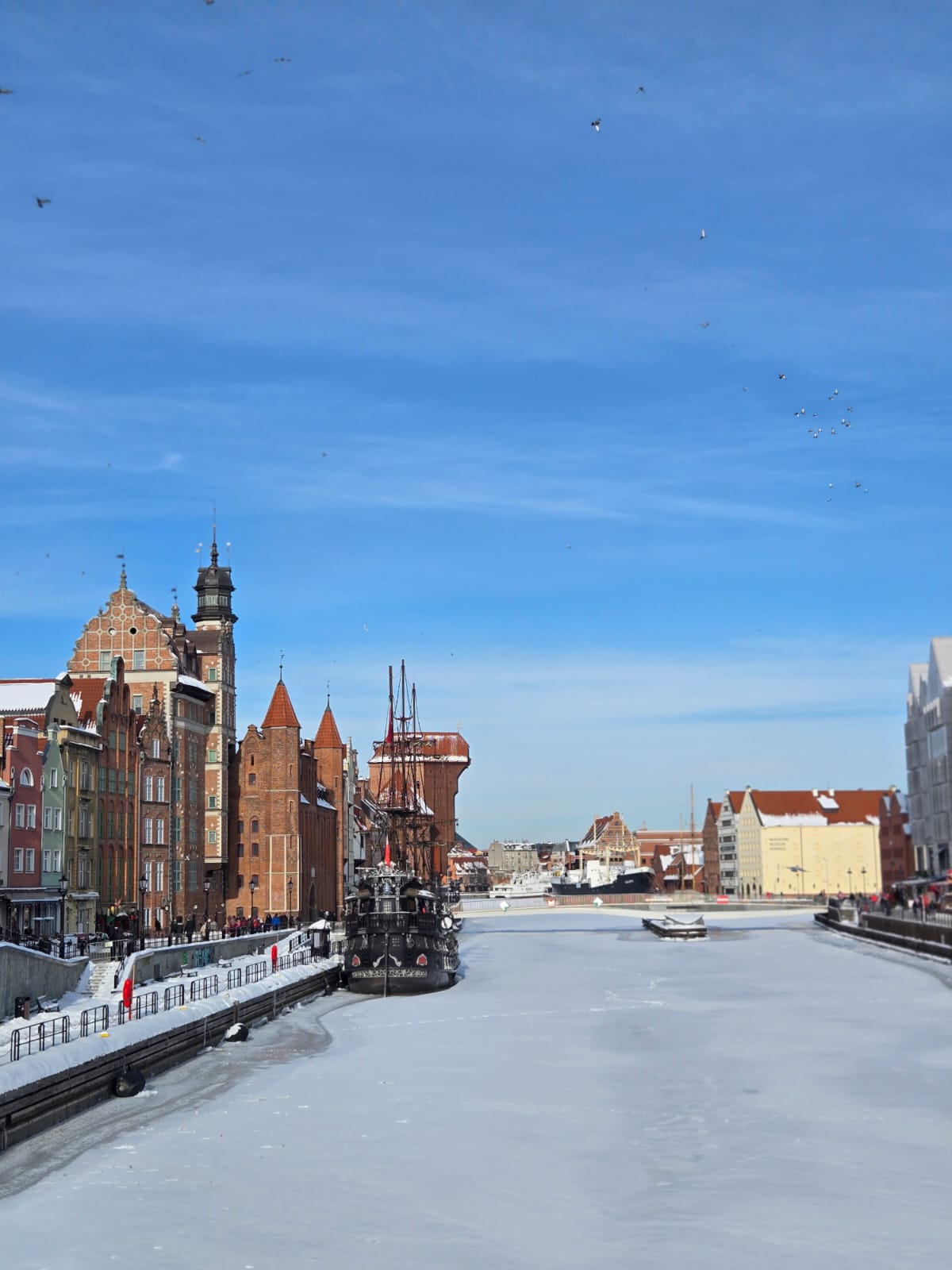
  • I am back from a trip to Poland.
  • I stayed in Głogȯw & Wrocław with one of my friends.
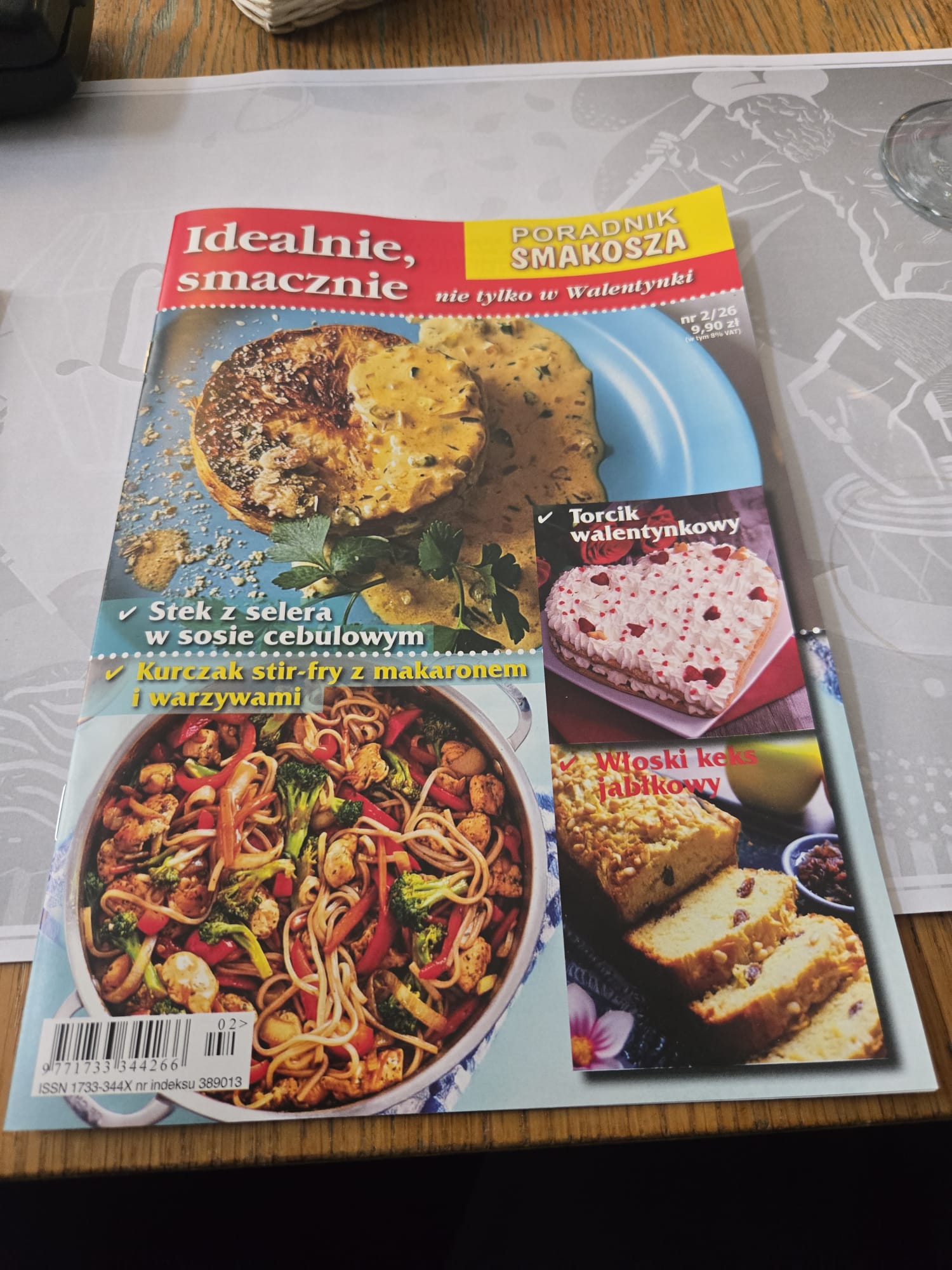
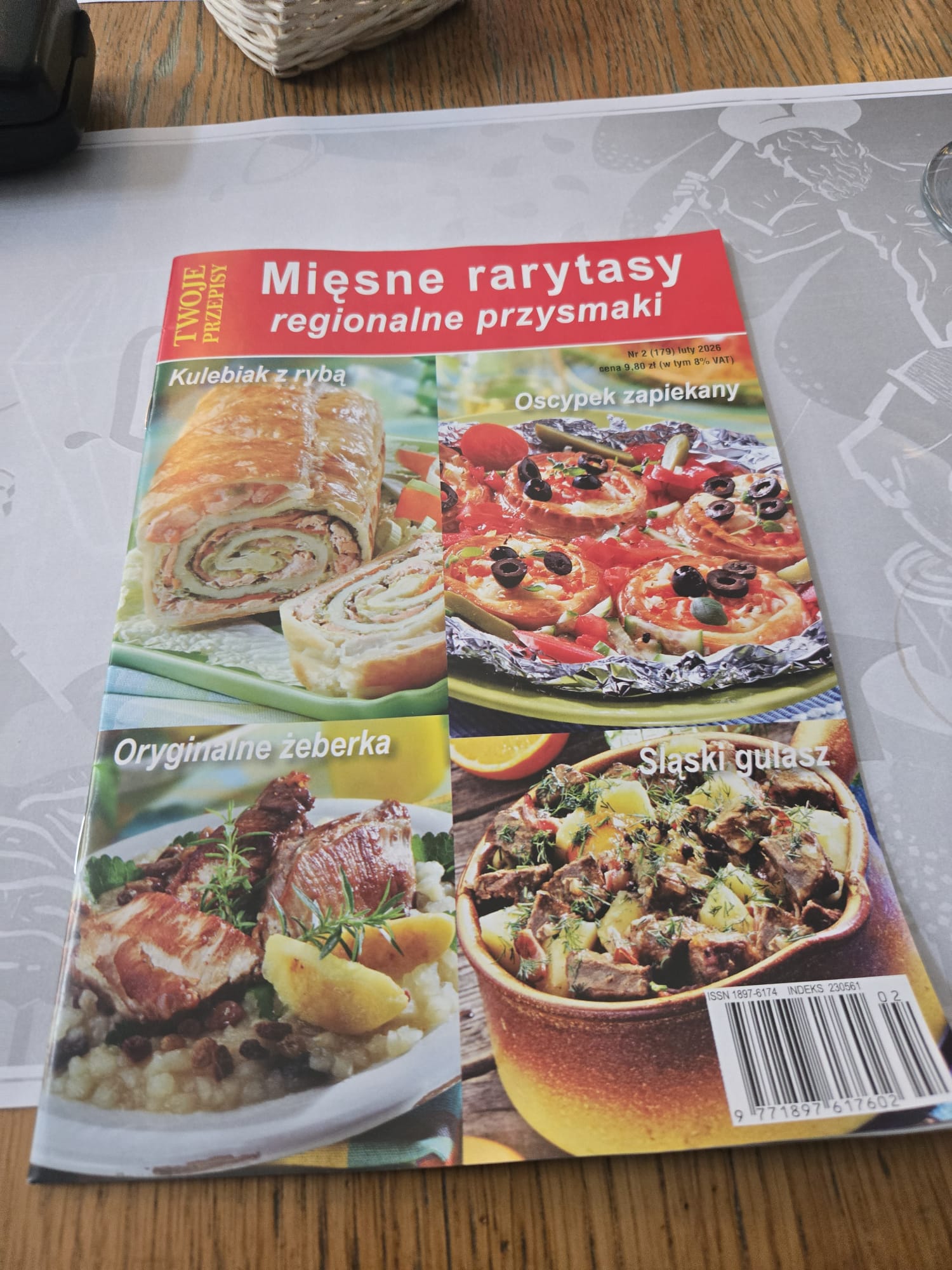
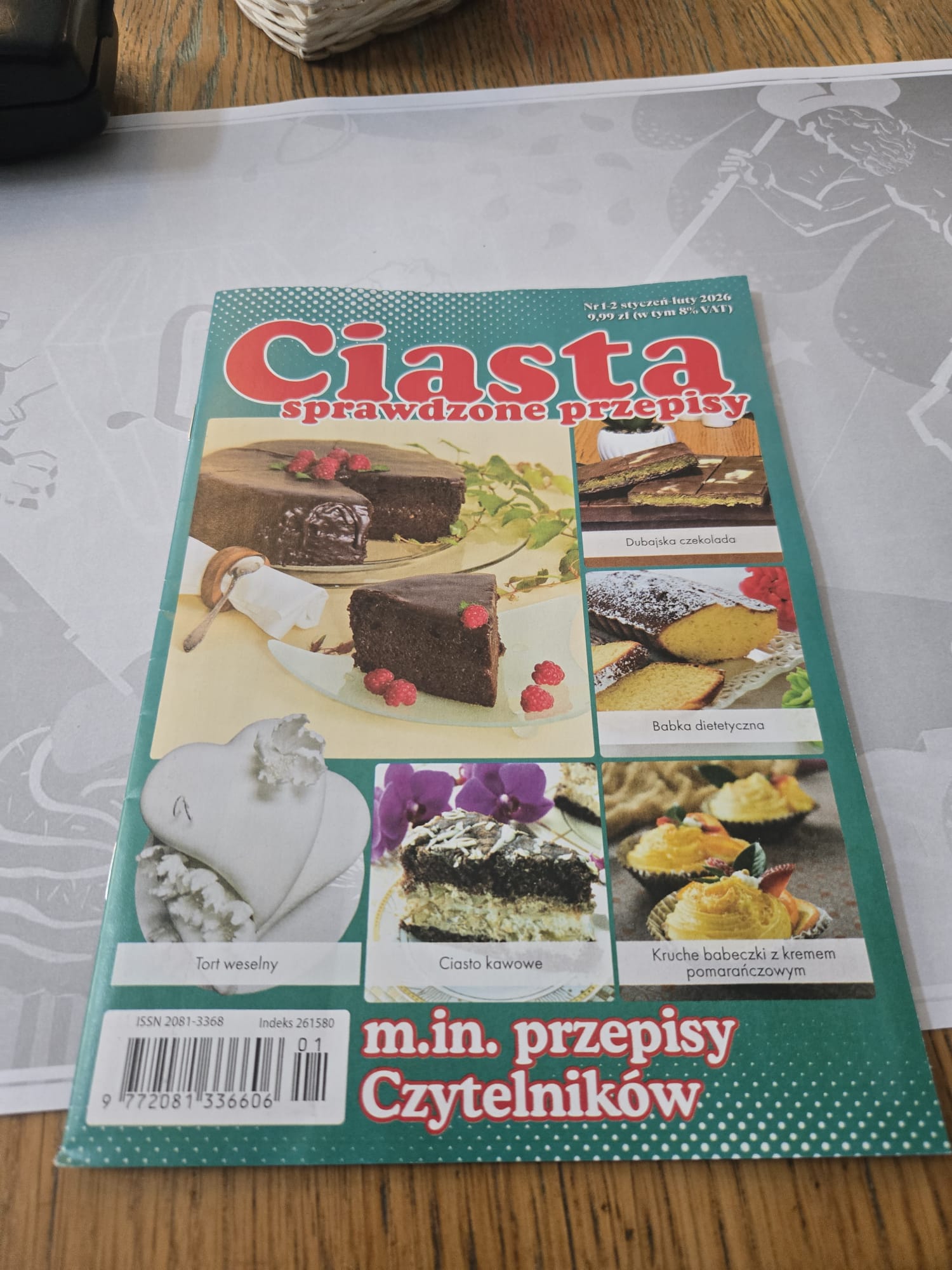
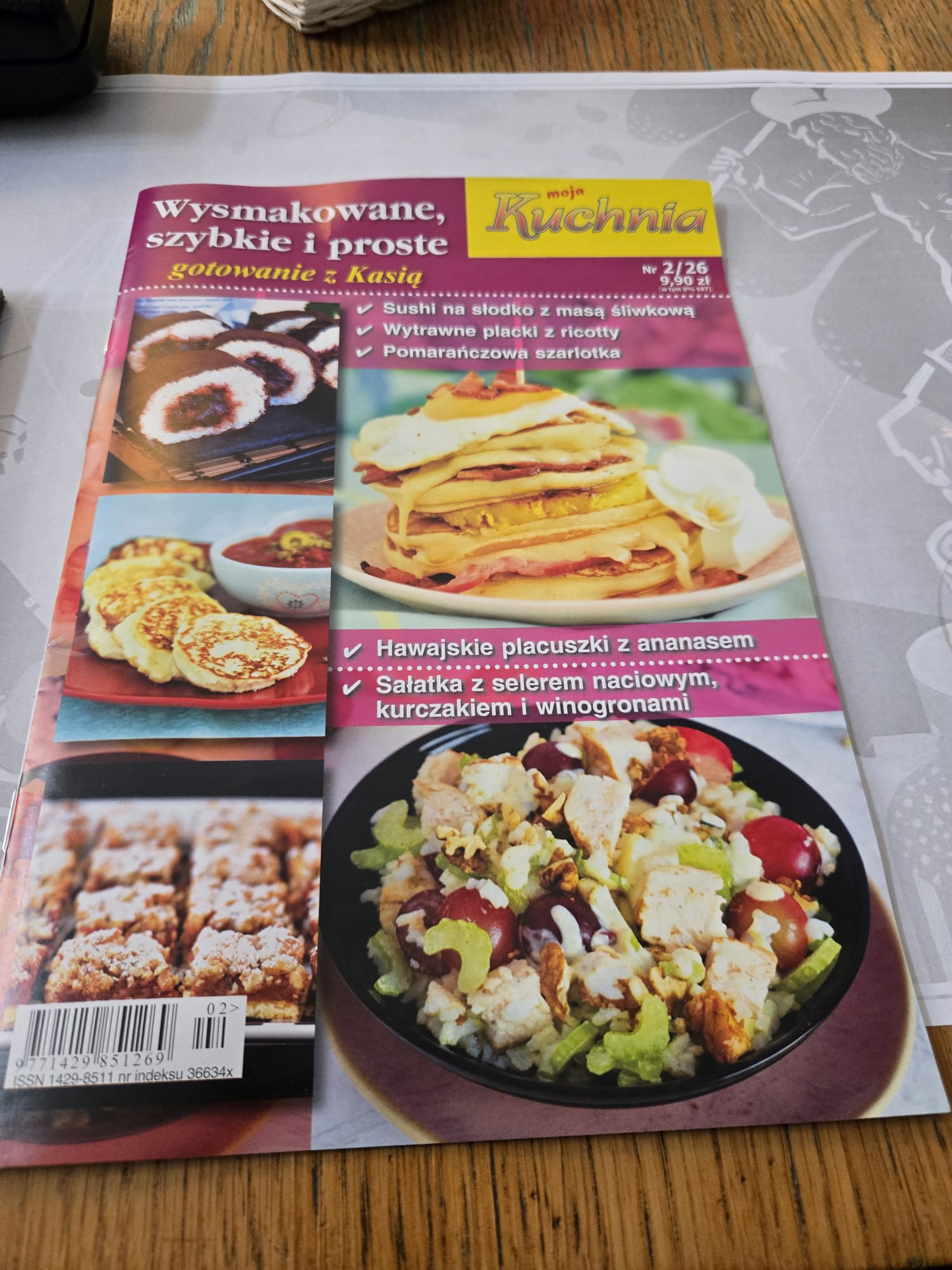
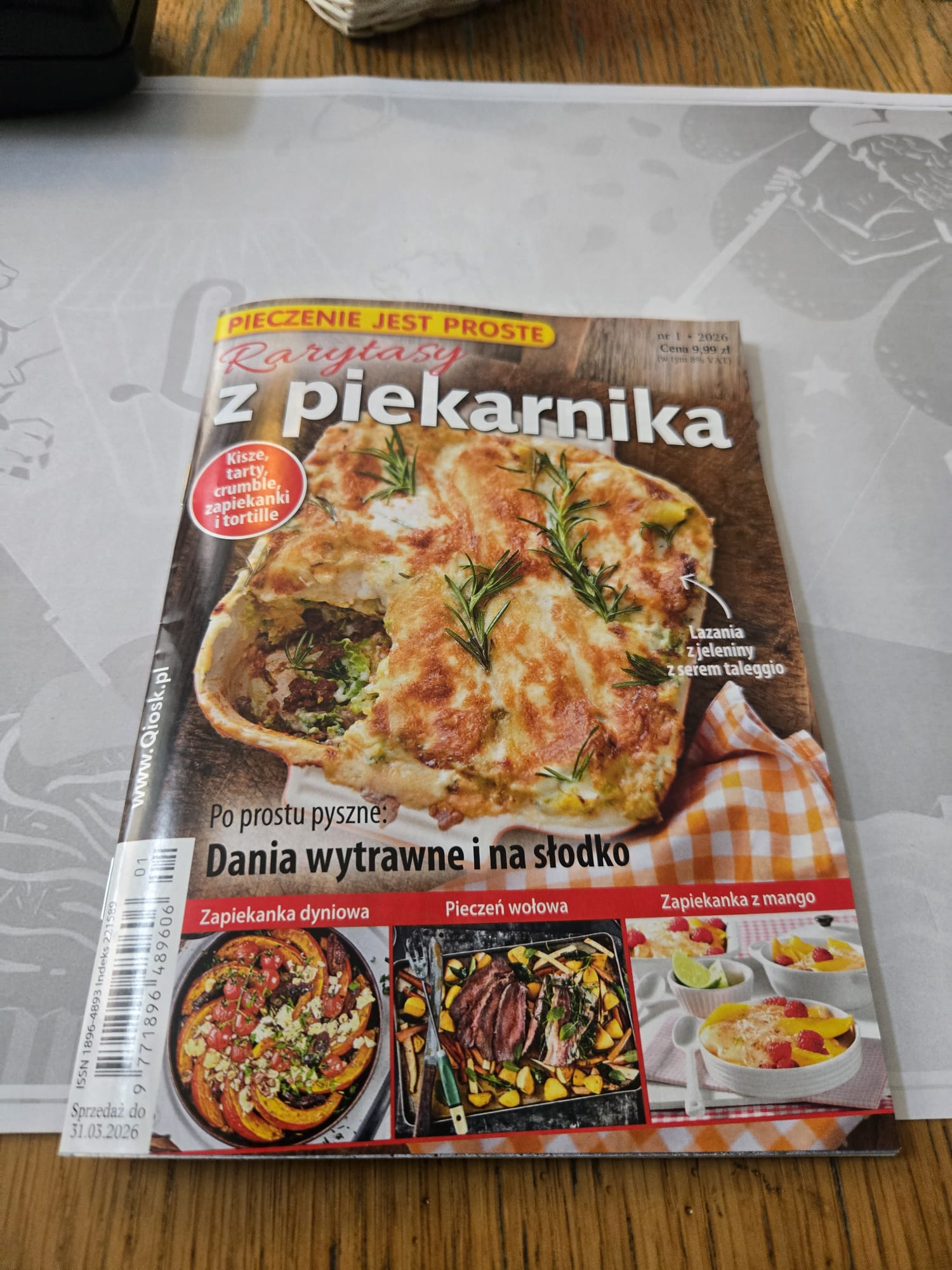
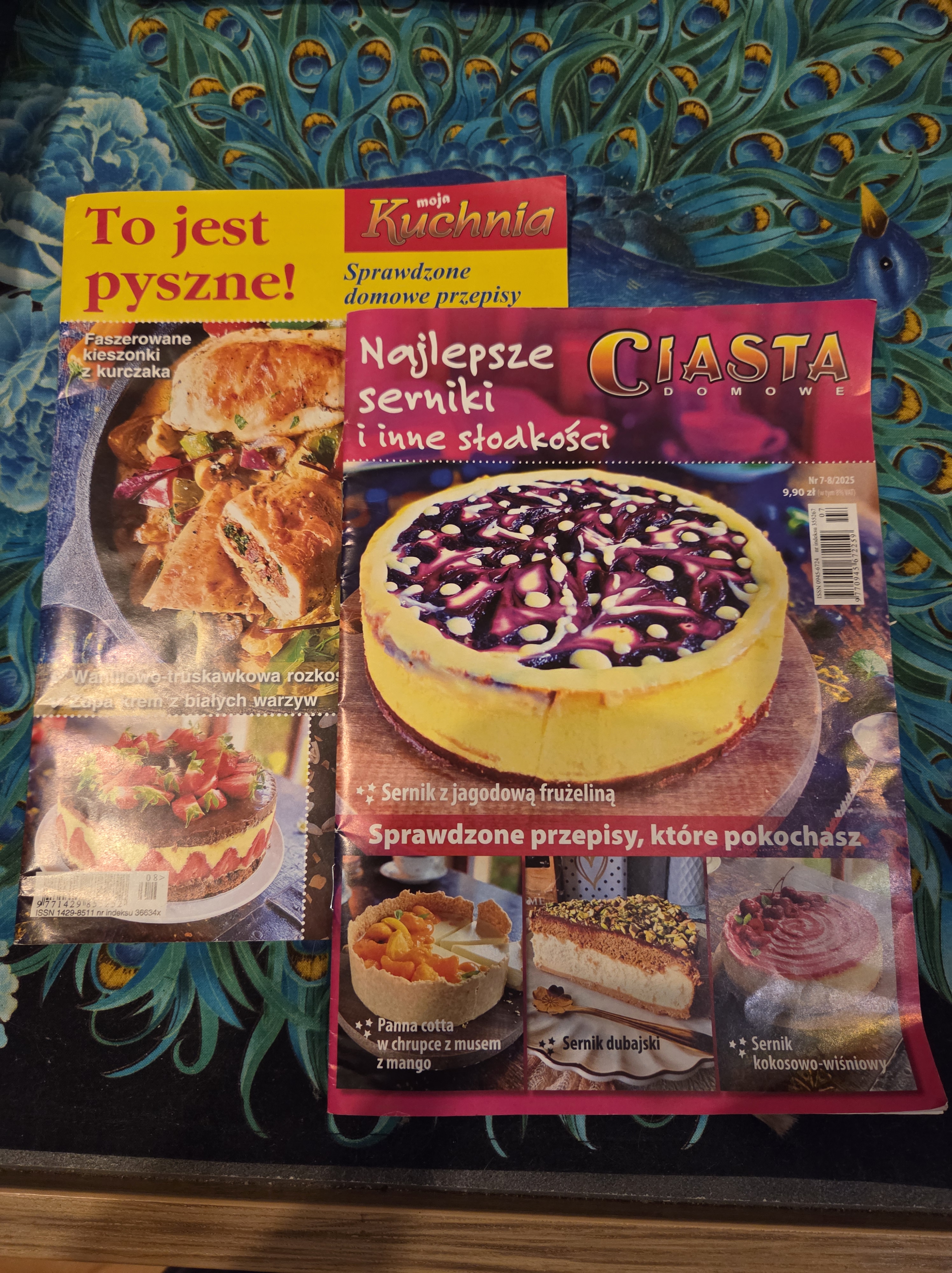
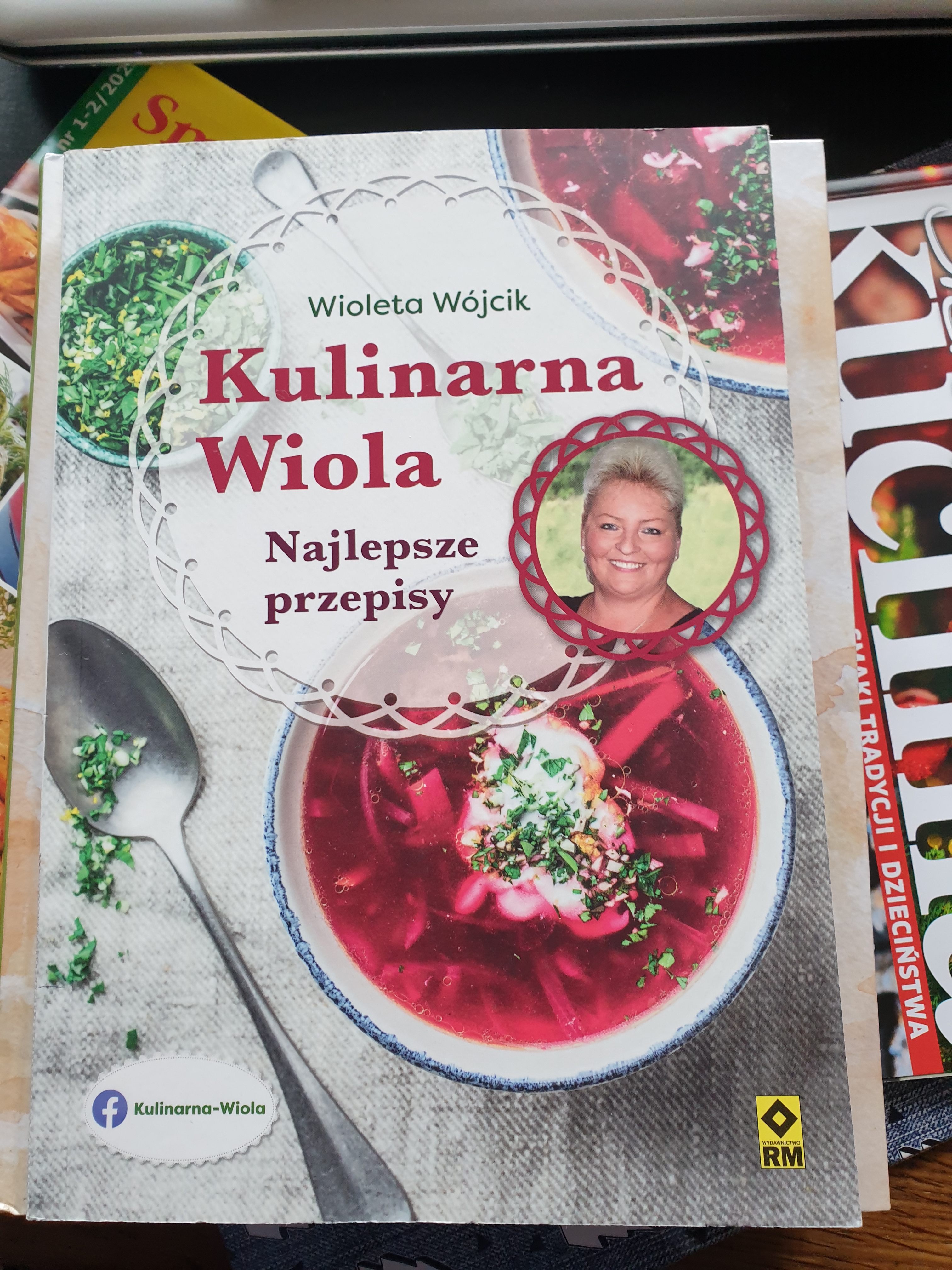
  • I bought a couple of food magazines to add to my collection.
  • There are several recipes I am going to try soon both savoury and sweet.
  • These include soups and serniki cheesecakes.
  • Look out for these in the near future.
  • I need to go out and buy some of the ingredients to get started …. 

“Our Food is Our Identity”

  • Claudia Roden was born in Cairo, Egypt in 1936.
  • She moved to Paris in 1951.
  • Then to London in 1954.
  • Her family was Jewish.
  • She collected recipes from family, friends and anyone else who would contribute.
  • She has written many cookery books.
  •  I recently bought a second hand copy of ‘Jewish Cookery from Samarkand to Vilna’- mainly because of the Polish connections, especially Vilna (Wilno), the nearest large town my father identified with.
  • A few years ago I heard a programme on the radio in which Claudia said
  • “Our Food is Our Identity”.
  • I so agree with this statement.
  • *
  • Polish Cookery is influenced by food from other countries  – in the past from France, Italy & Germany as well as – Lithuania, Finland & Sweden.
  • Jewish cookery has also influenced some of the dishes served in Poland.
  • Many people say  that when they made a recipe they always remember the person that gave then this recipe.
  • Do you have such recipes?
  • Here are just a few of my Mama’s recipes, which will always remind me of her.
  • *
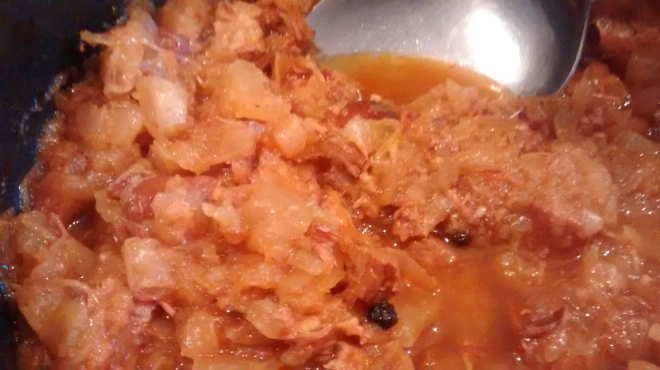
  • Bigos
  • Pierogi
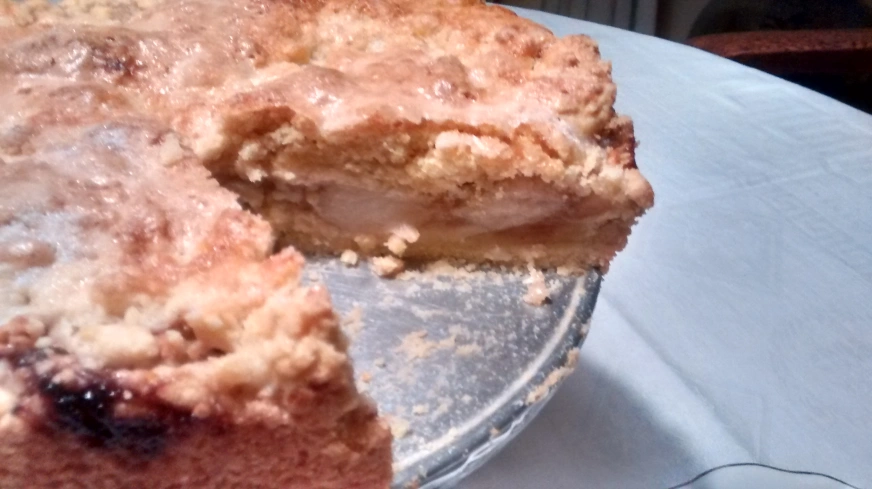
  • Polish Apple Cake
  • Polish Potato Pancakes

Lithuanian Book

  • I have been buying lots of Polish cookery books lately, some new and some second hand.
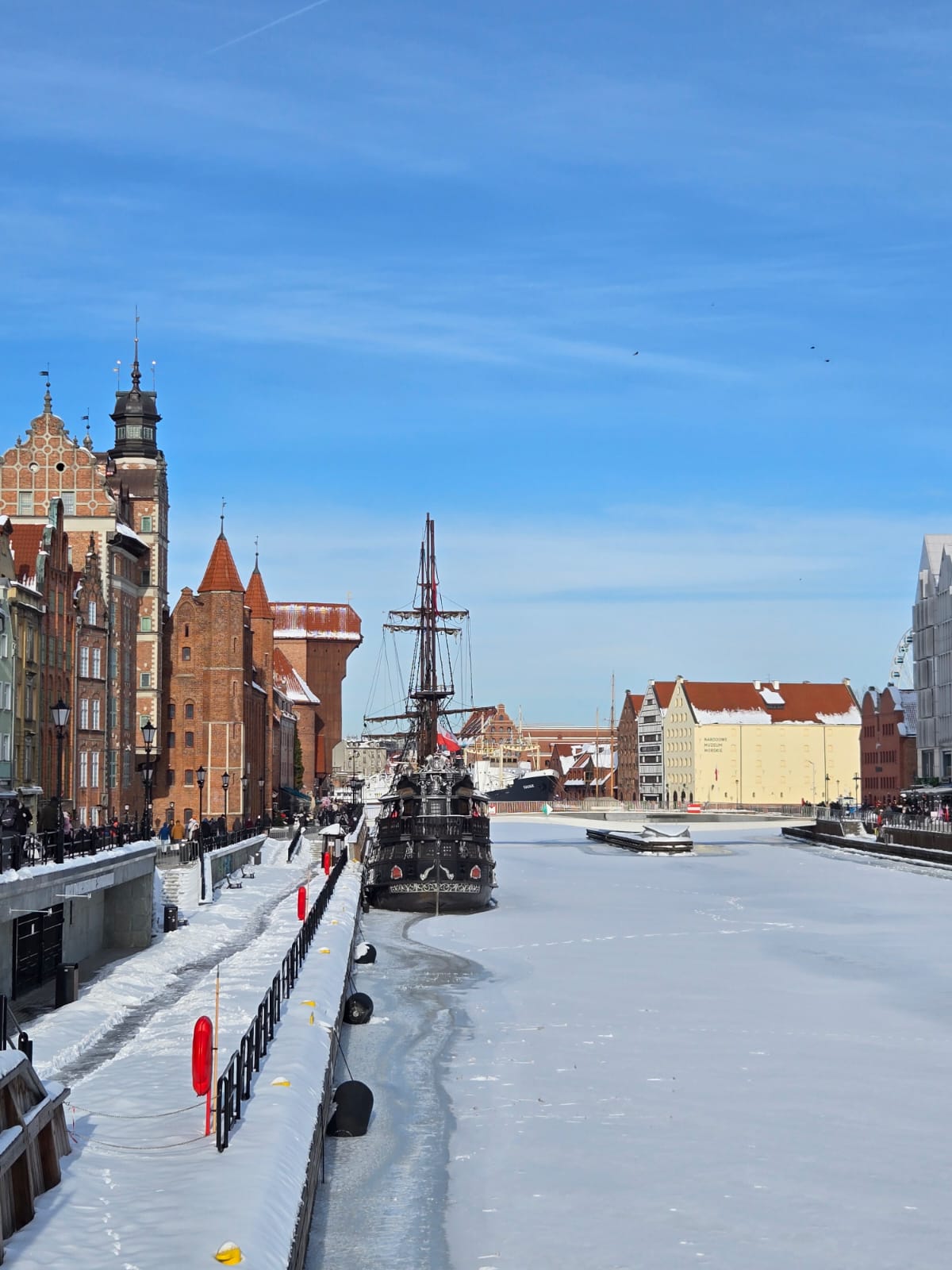
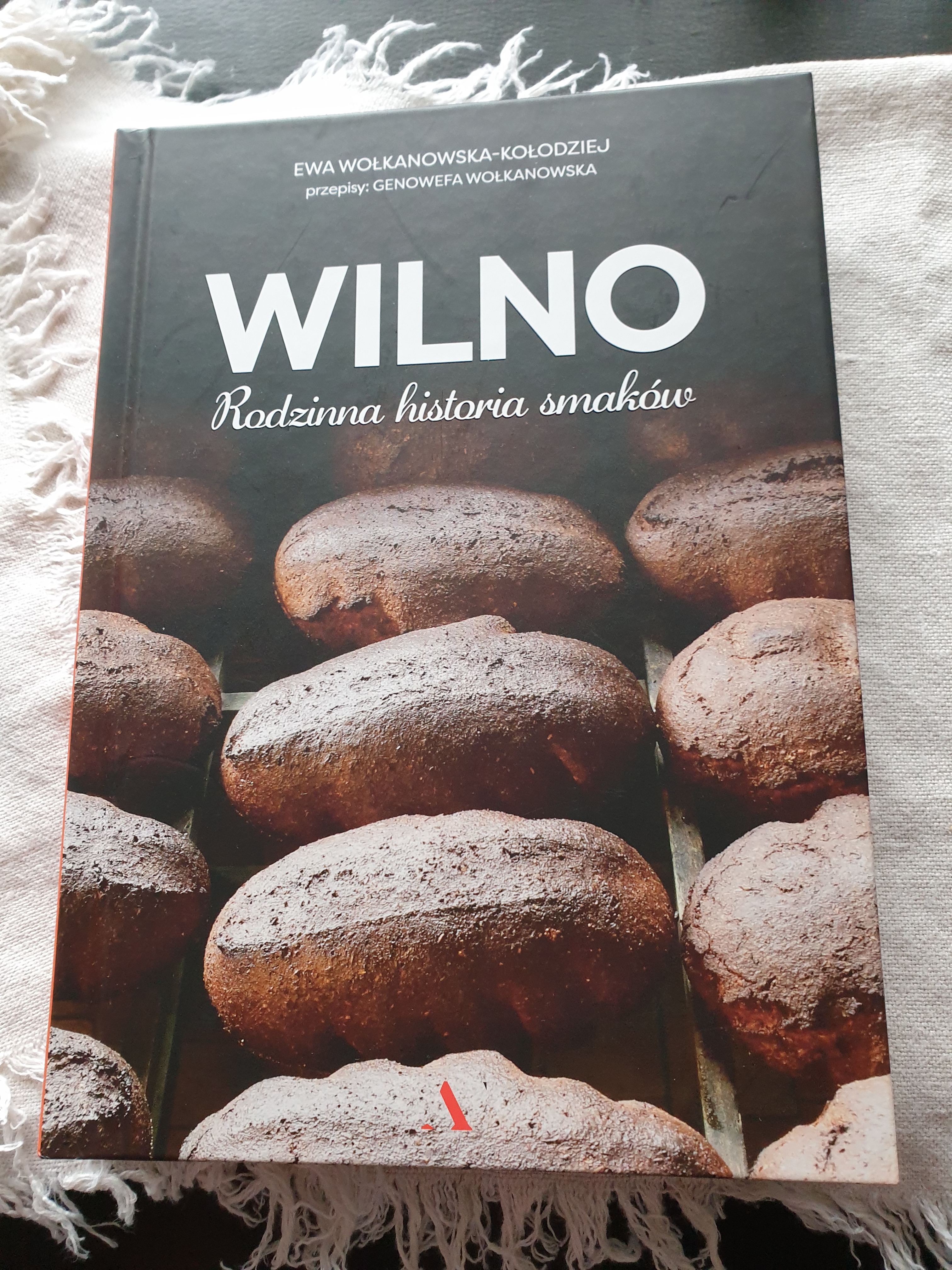
  • In Gdańsk, I bought “Wilno”, which is written in Polish.
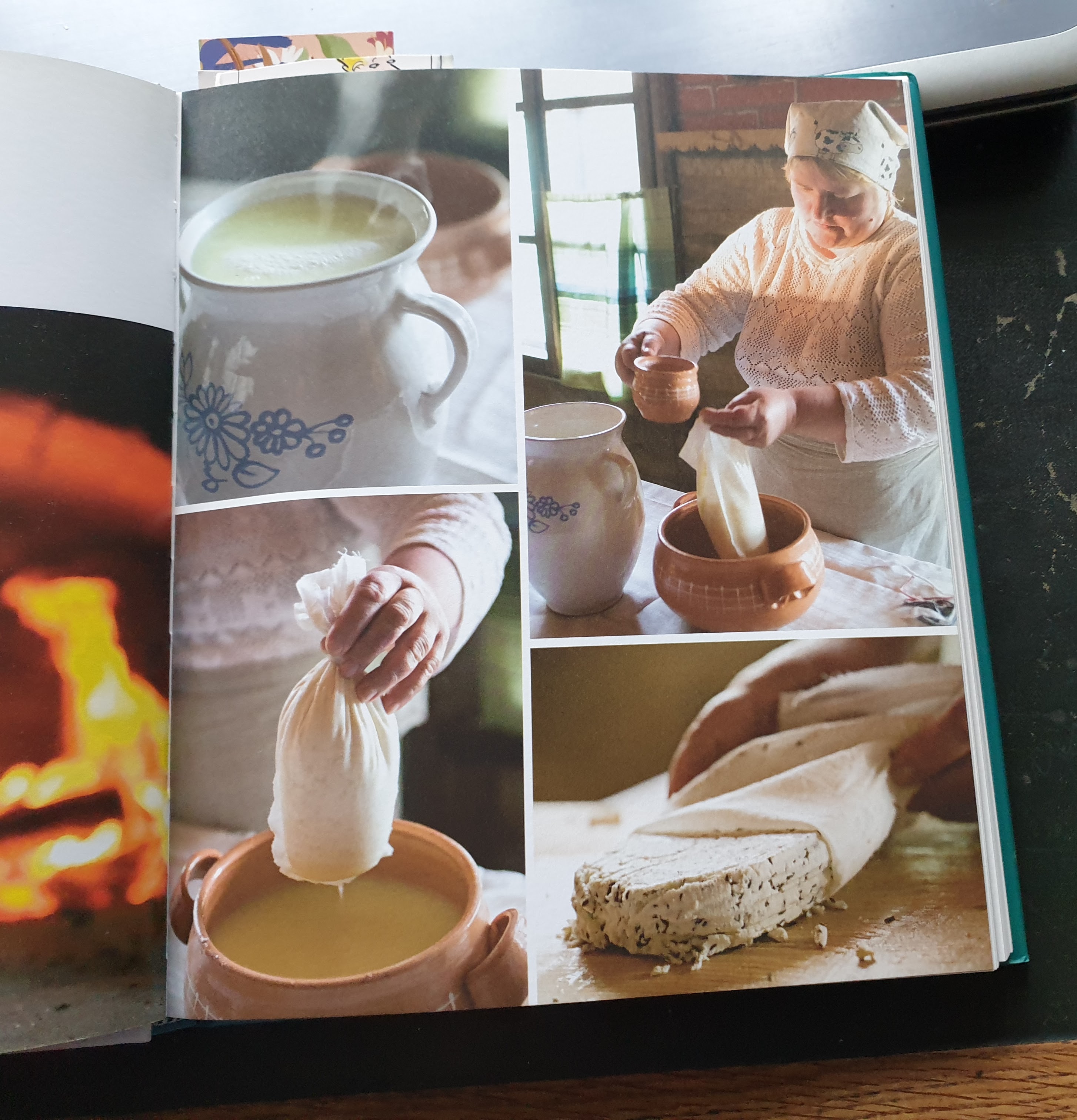
  • In England, I then came across “Lithuanian Tradition Food”
  • The original was written in Lithuanian.
  • This version has been translated into English.
  • As Poland & Lithuania were joined together for centuries it is not surprising that there are many similar recipes to Polish ones.
  • As ingredients do not have borders, there is a long list of them that you will find in both traditions.
  • Rye, curd cheese (twaróg), poppy seeds, caraway, dill, mushrooms, dried fruits and fruits of the forest to name just a few.
  • In the next few months I will be trying out some of the recipes especially those that are a bit different.

Finnish Cookbook

I am always amazed at what gems you can find in Charity shops.

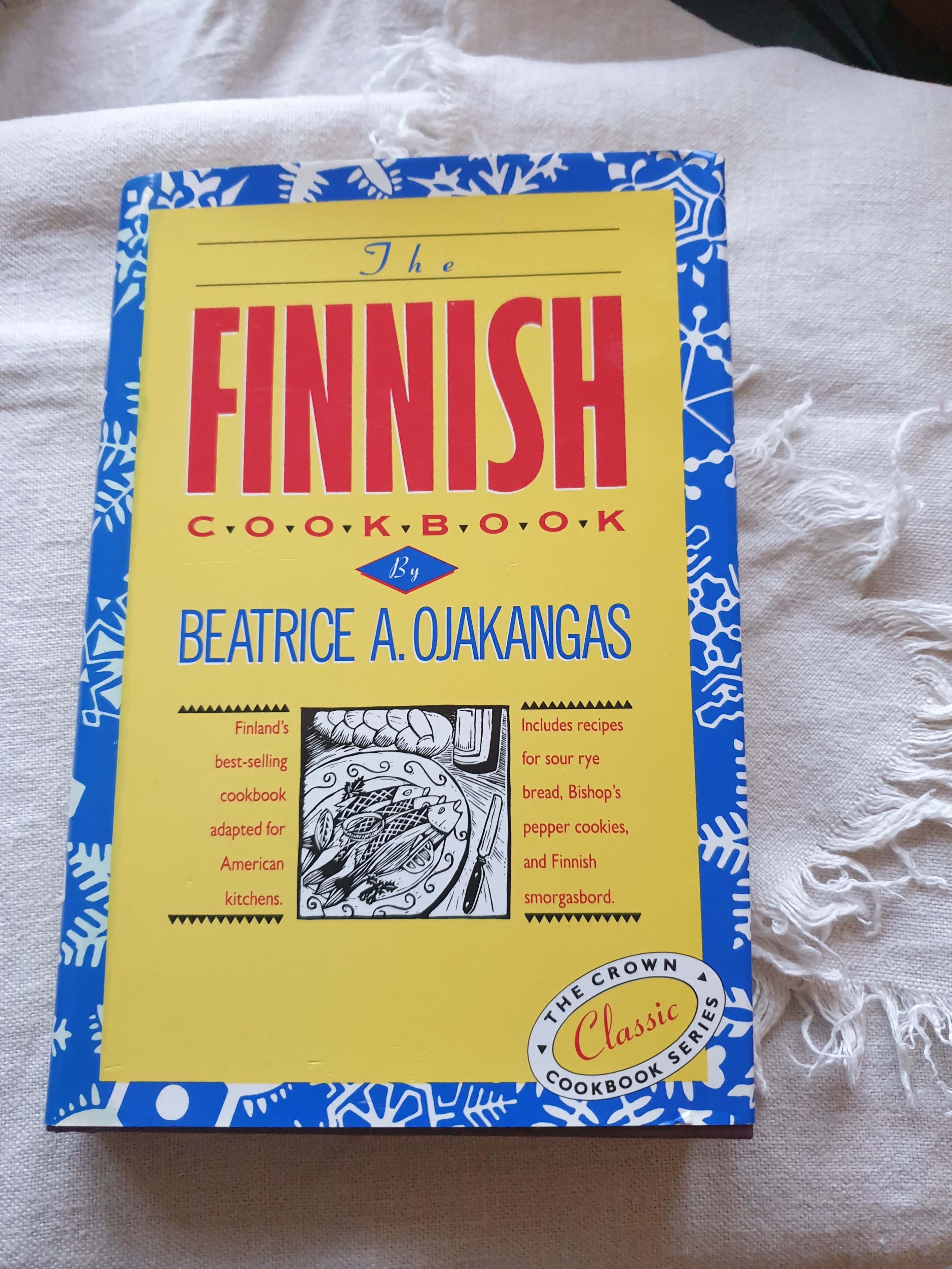
  • This book on Finnish Cookery is my latest find.
  • The ‘Finnish Cookbook’ by Beatrice A. Ojakangas.
  • First published in 1964 and this edition in 1989.
  • It is aimed at the American market so the recipes are in cups etc.
  • I will go with cups and tablespoons for liquids but for ingredients such as flour, sugar and butter I will convert these to grams when I try them.
  • I have learnt a lot about Finland from this book.
  • Because of its closeness to Russia it is not surprising that some of these recipes are similar to ones found in Russia.
  • It then follows that some of the recipes are also similar to ones found in Eastern Poland and to ones which I have posted.
  • Lingonberries, Rye, Cabbage  & Herrings are just some of the similar ingredients.
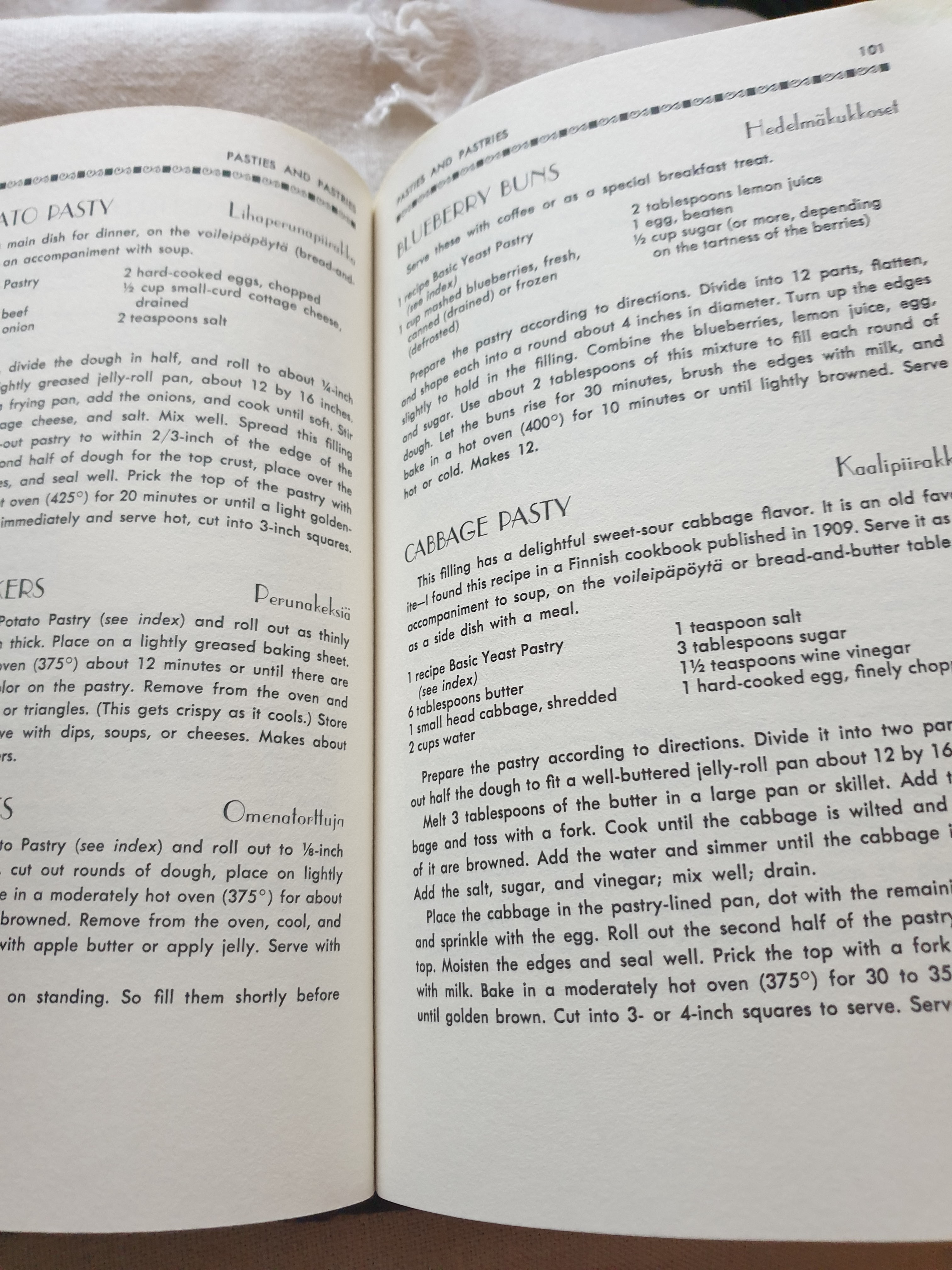
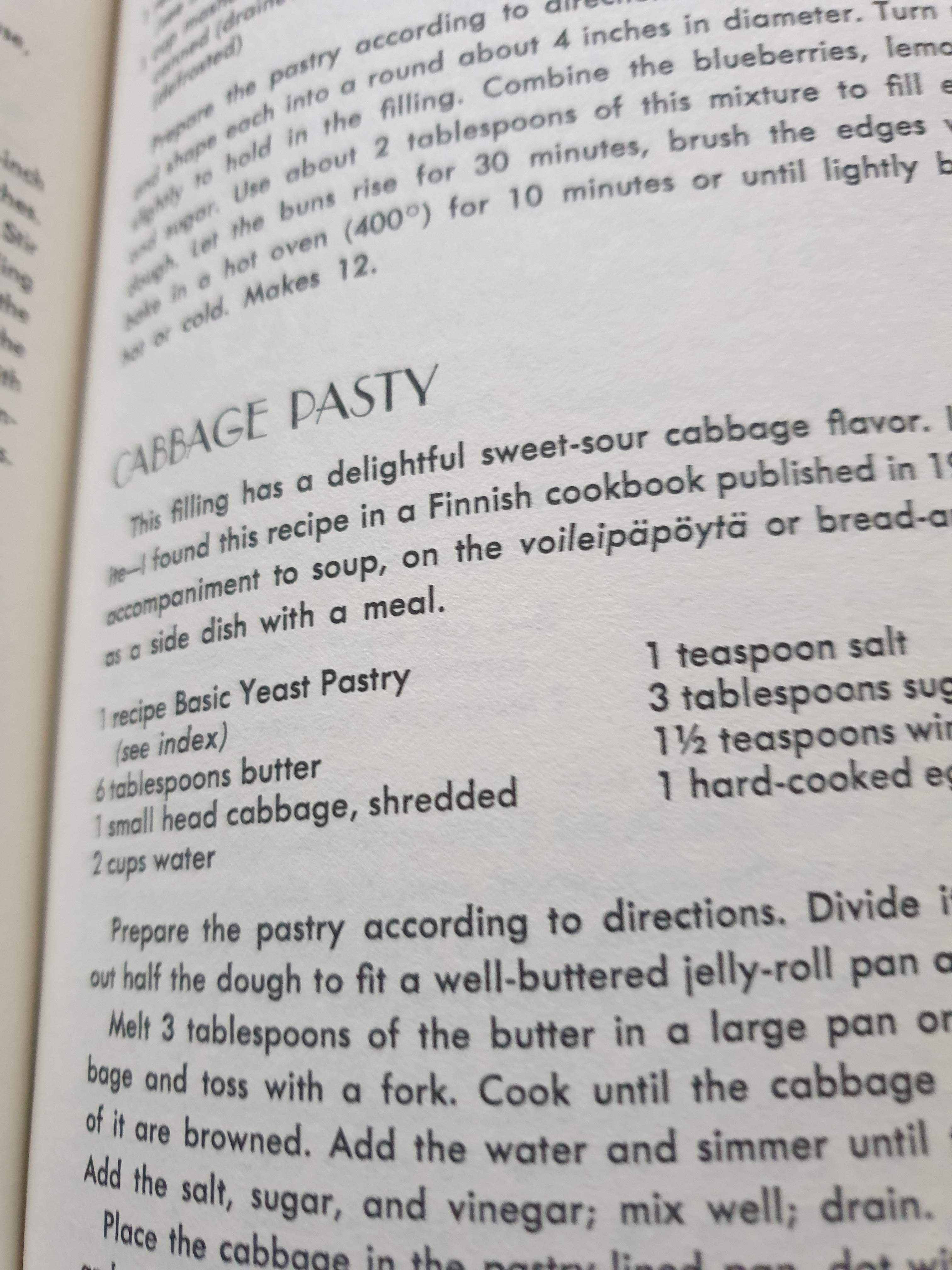
  • The ‘Cabbage Pasty’, which is served as a’ ‘Soup Accompaniment’  is one example, which is very similar.
  • Look out for recipes from this book as the New Year (2024) goes on.

Do you know any Finnish Recipes?
Kartoflane Placki – 2

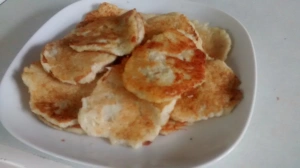
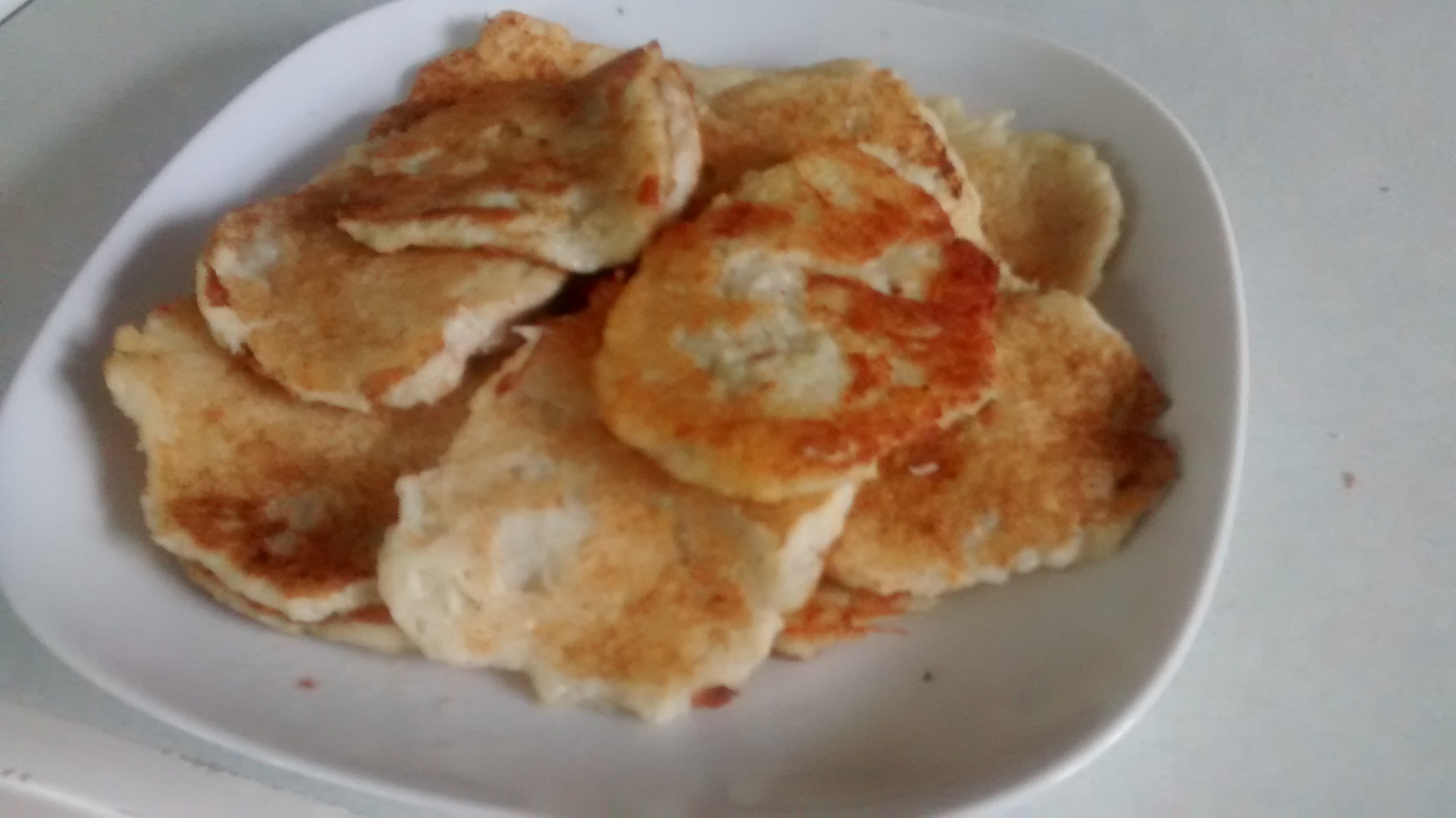
  • Kartoflane placki are super Polish potato pancakes.
  • I wrote a post about them many years ago.
  • We always had them with savoury items such as fried eggs.
  • Mama never served them with sweet options.
  • Having seen these in various blogs and Instagram – 
  • I decided to give them a go.
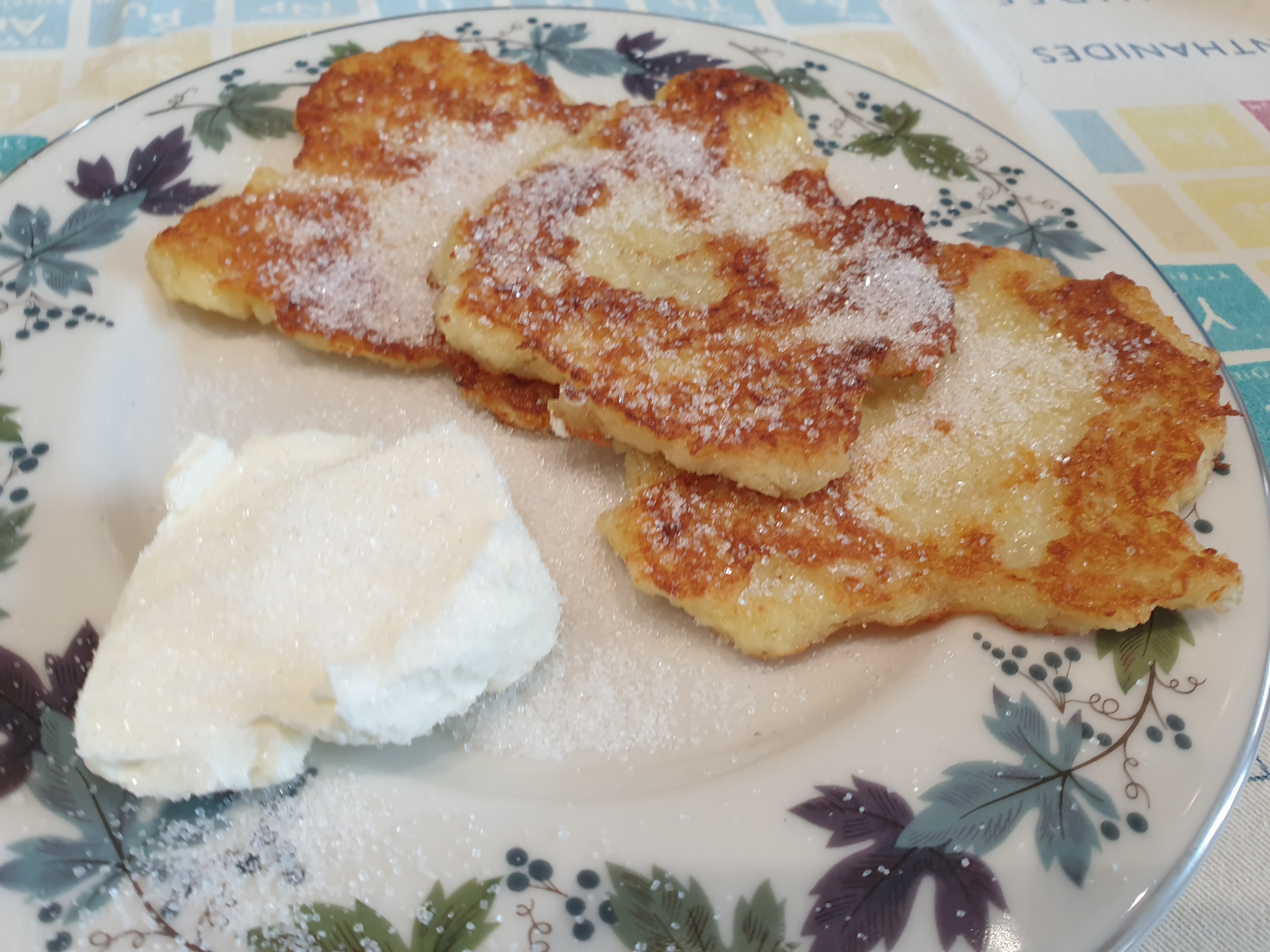
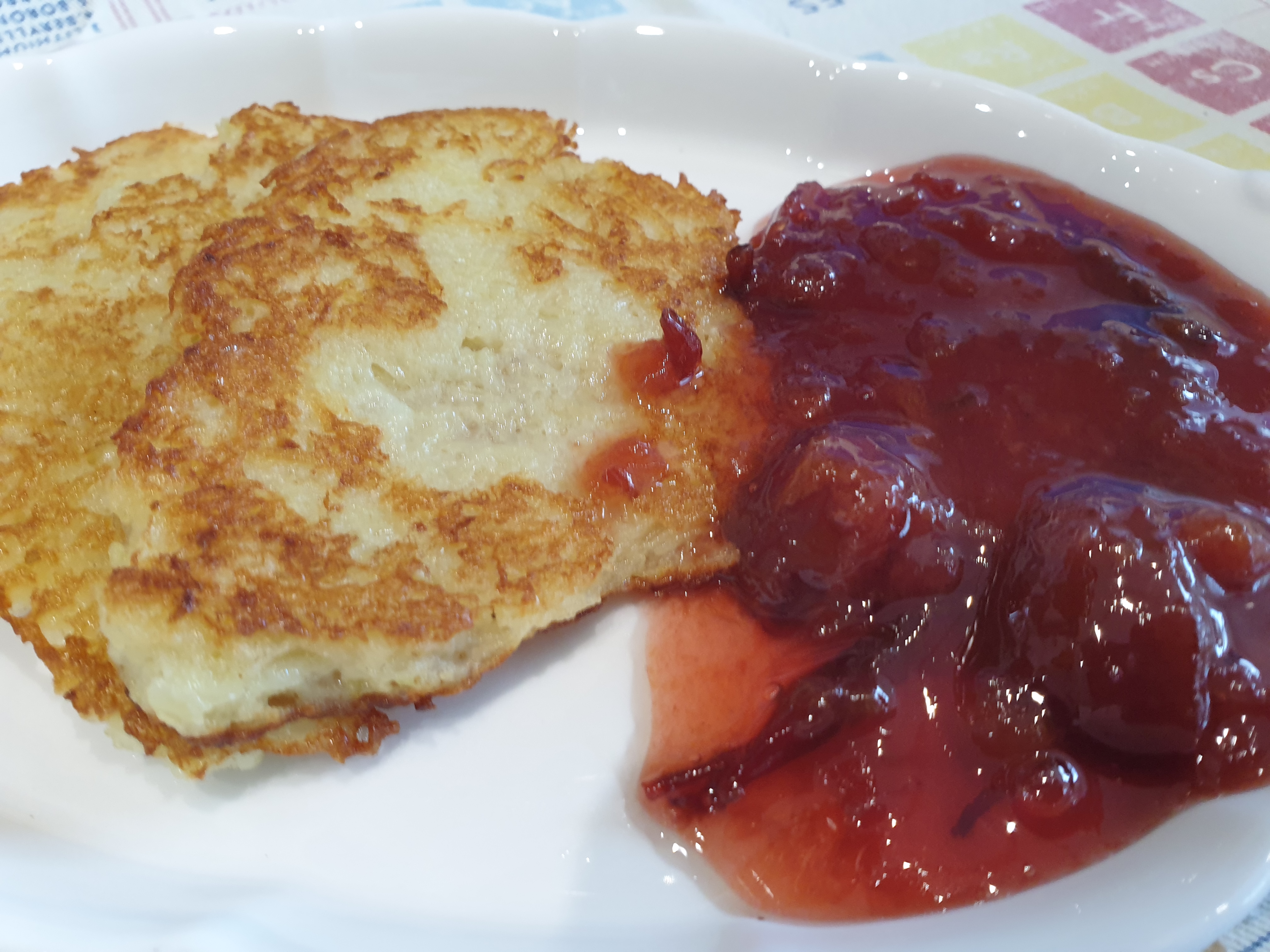
  • I  tried two options –
  • – With plum jam and
  • – With yoghurt cheese and granulated sugar.
  • They were delicious.
  • *
  • I have given the instructions again. 

Ingredients

  • 4 large starchy potatoes such as King Edward or Maris Piper
  • 1 medium or large onion
  • 1 egg or just the egg yolk
  • Plain flour
  • Salt & pepper
  • *
  • Oil for frying

Method

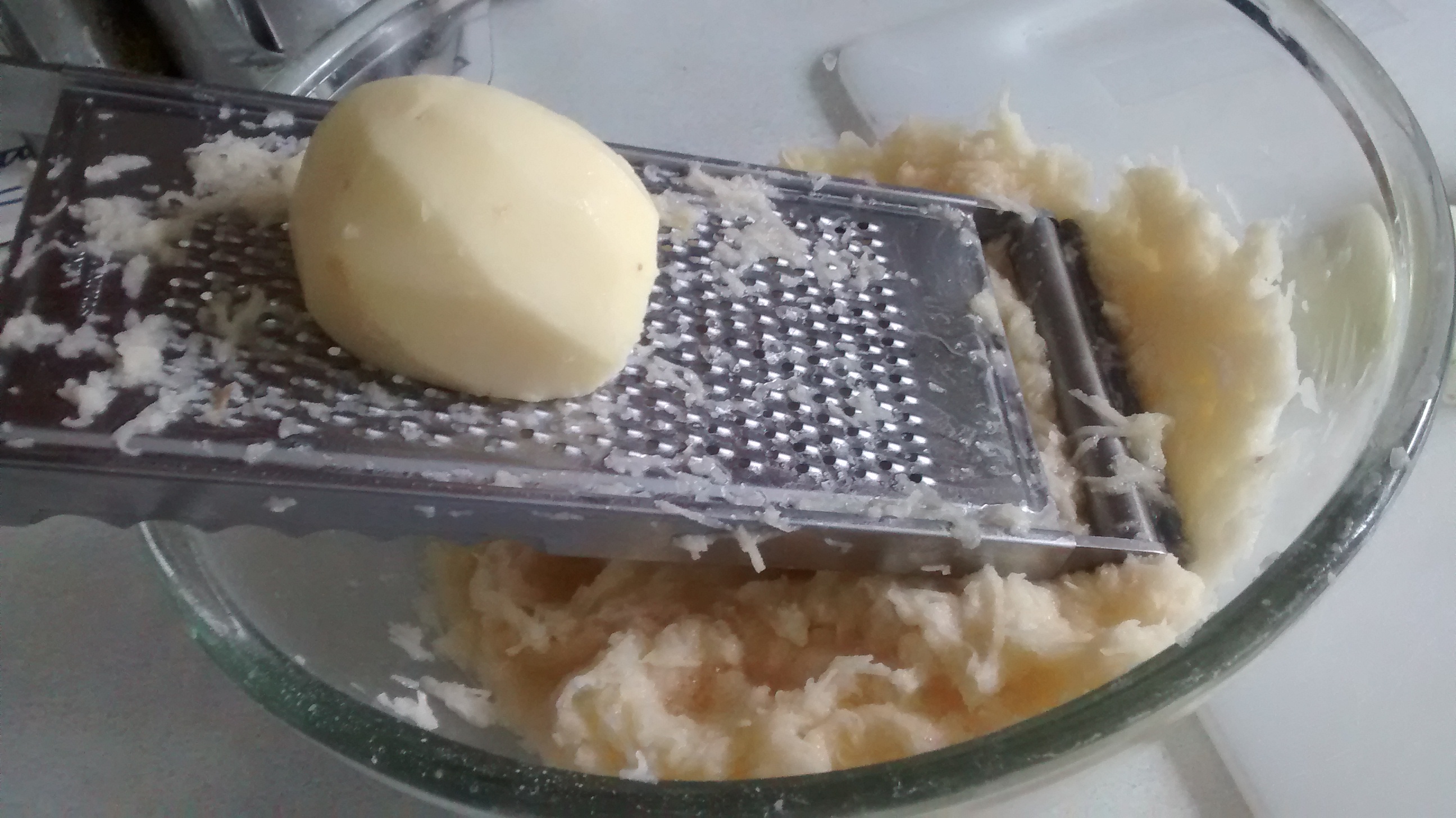
    • Peel the potatoes then grate them using the fine size of the grater into a large bowl, this is the part that takes time – I have tried using the coarse grate but they are not as good.
    • Leave to stand for a few minutes and the water from the potatoes will rise to the surface.
    • If the potatoes are very watery pour of some of the water. The easiest way is to tip up the bowl slightly over the sink and hold down the potatoes with the palm of your hand.
    IMG_20150811_165238337
    Grating the potatoes


    • Peel the onion and also fine grate it and add to the potatoes.
    • This is the part that would often result in the grating of my knuckles  as I tried to use every last bit of onion.
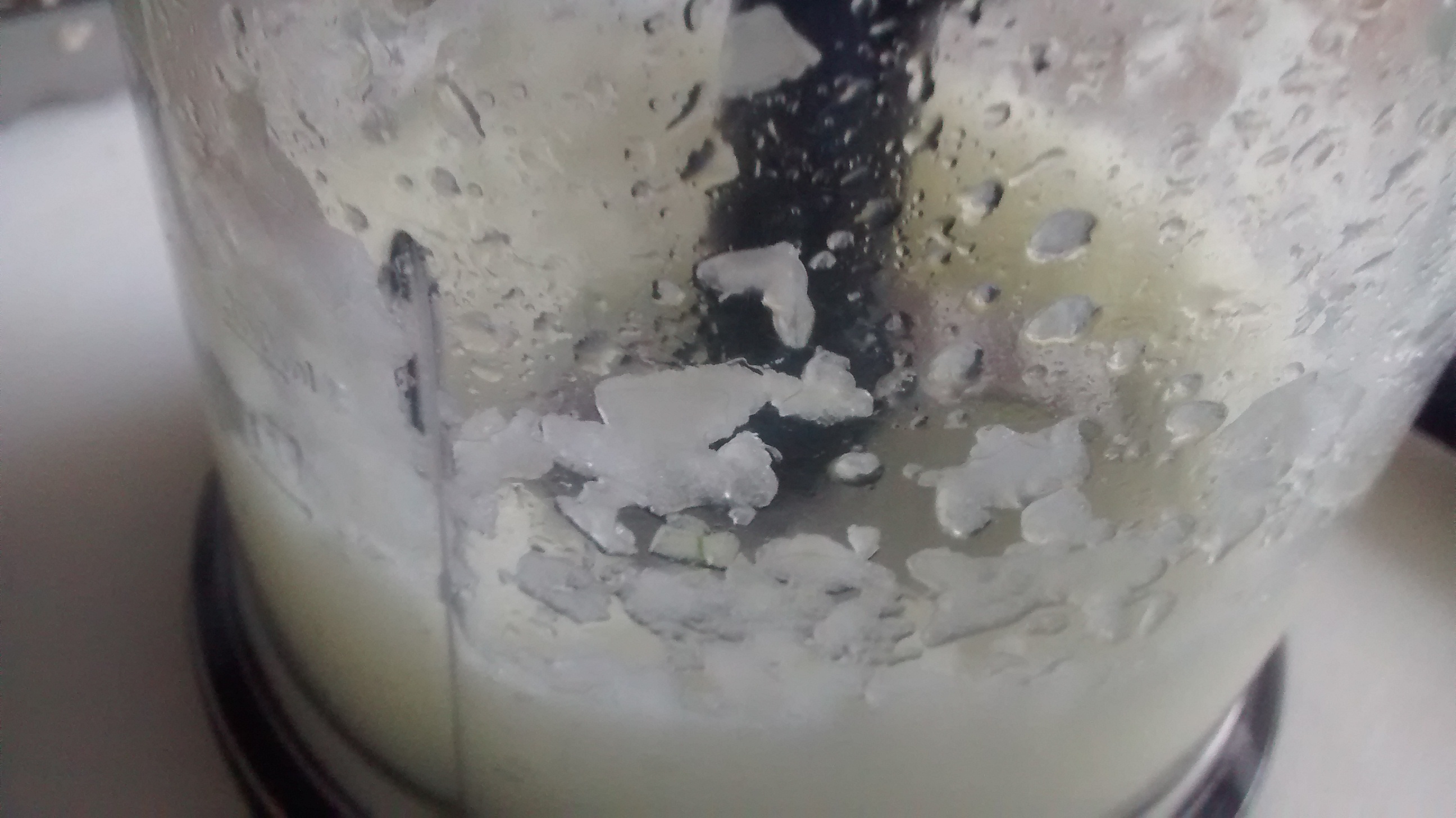
    • I now often use some form of electrical mini-chopper to get a pulp of onion.
    IMG_20150811_165955962
    Onion Pulp
    • Add the egg, salt & pepper.
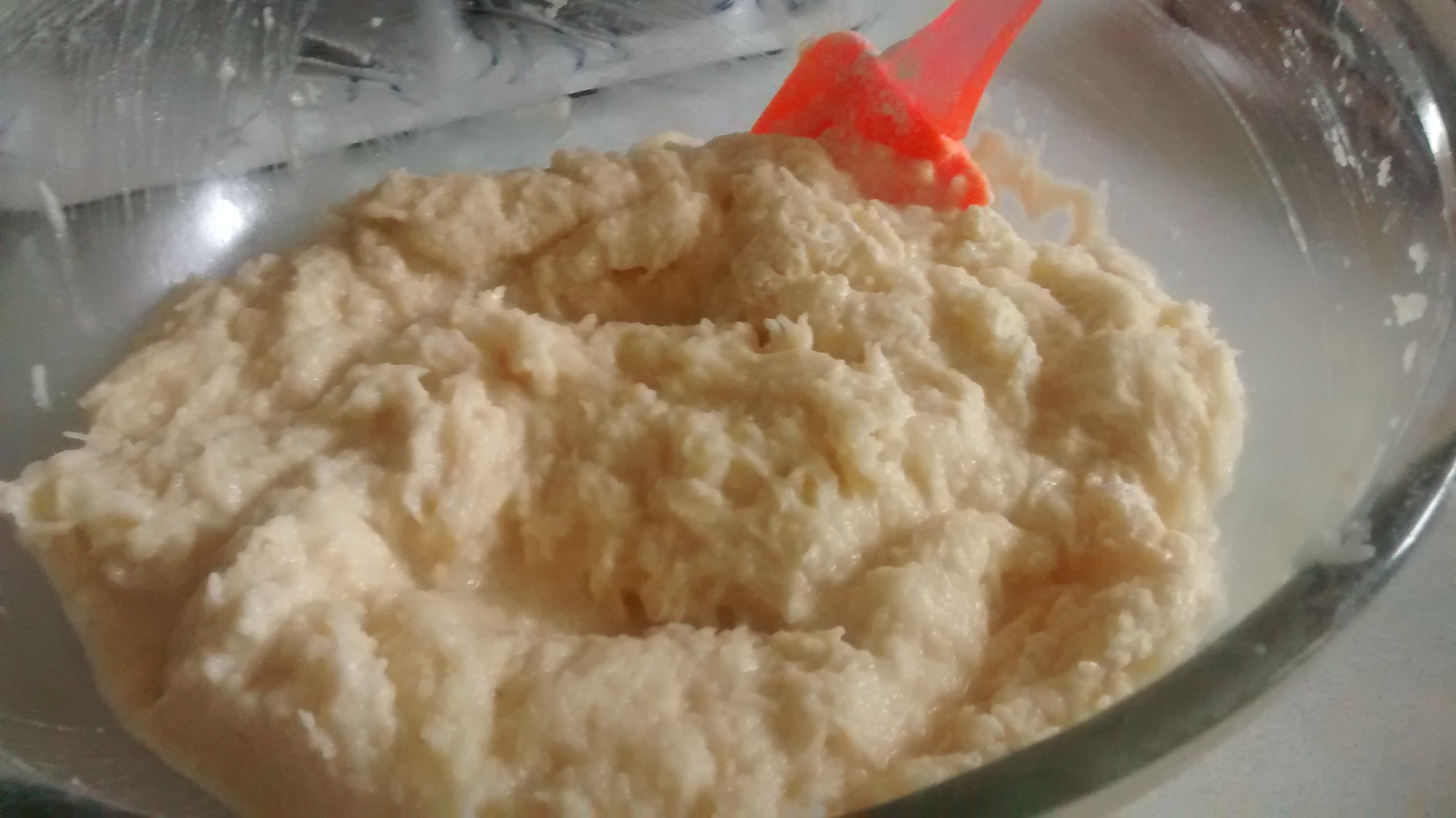
    • Add enough plain flour so that the mixture is thick.

    IMG_20150811_170357625

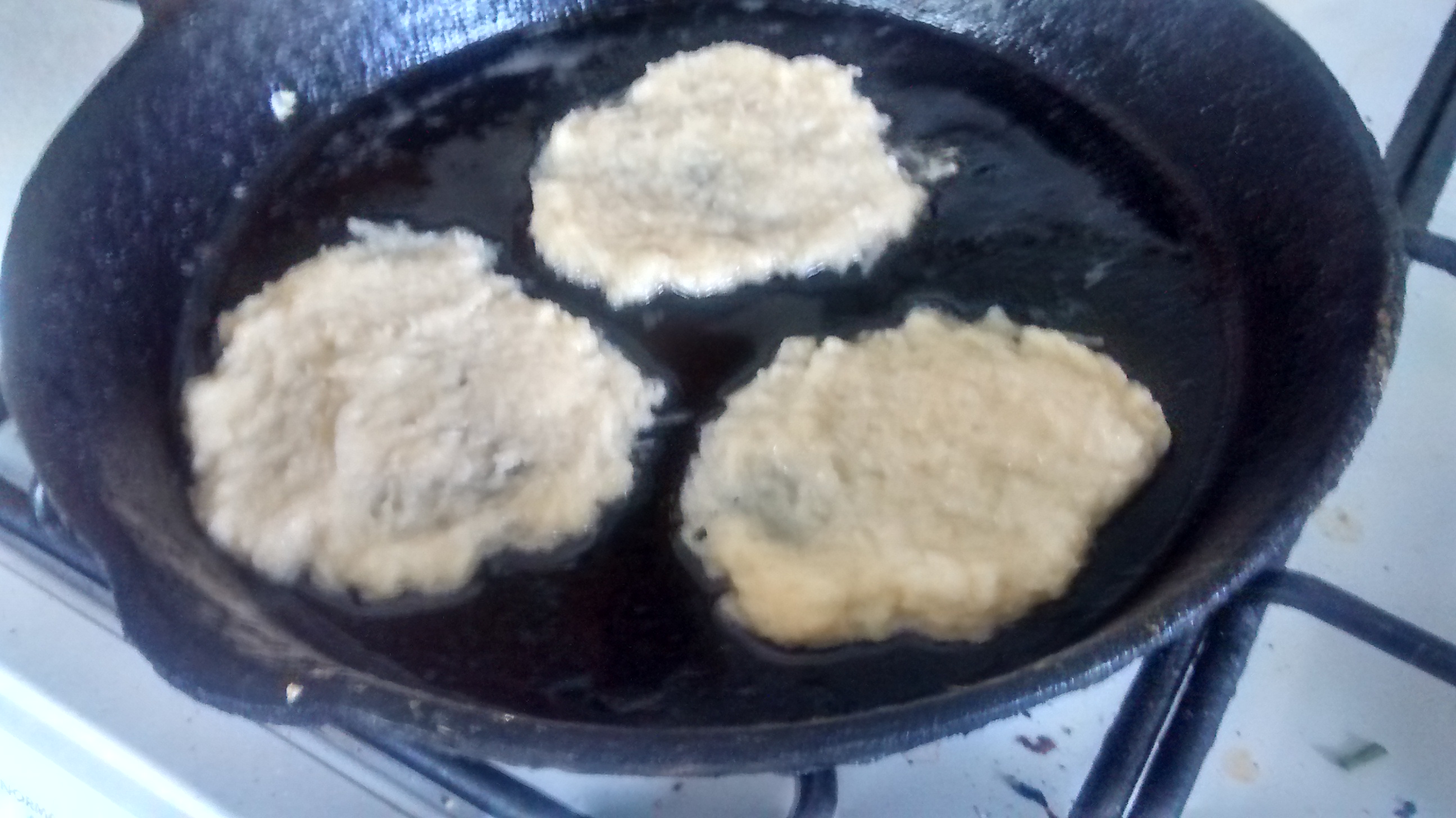
    • Heat some oil in a frying pan, a thick cast iron one is ideal, place large spoonfuls of the mixture onto the hot oil and flatten them out with the spoon or spatula.
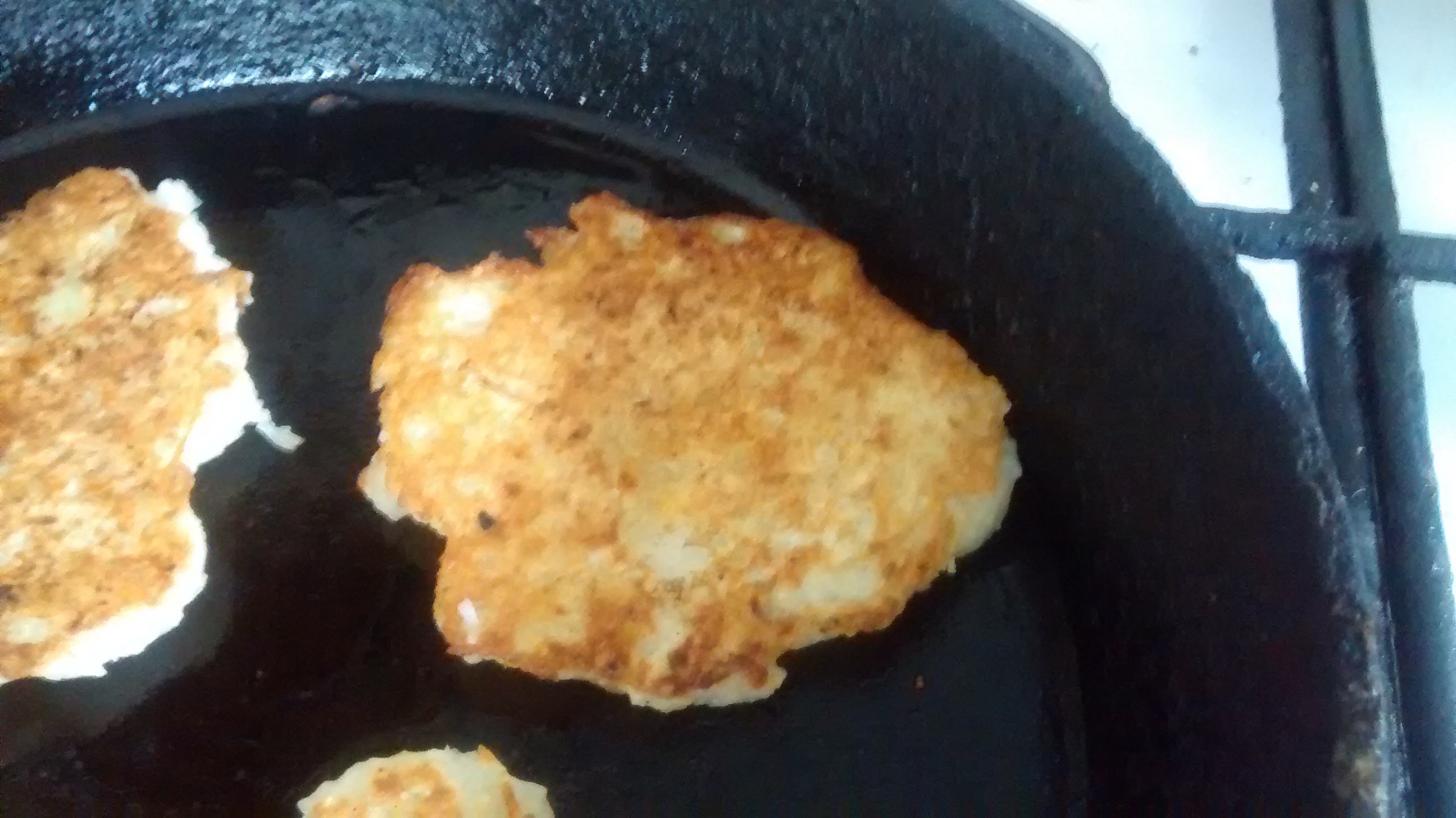
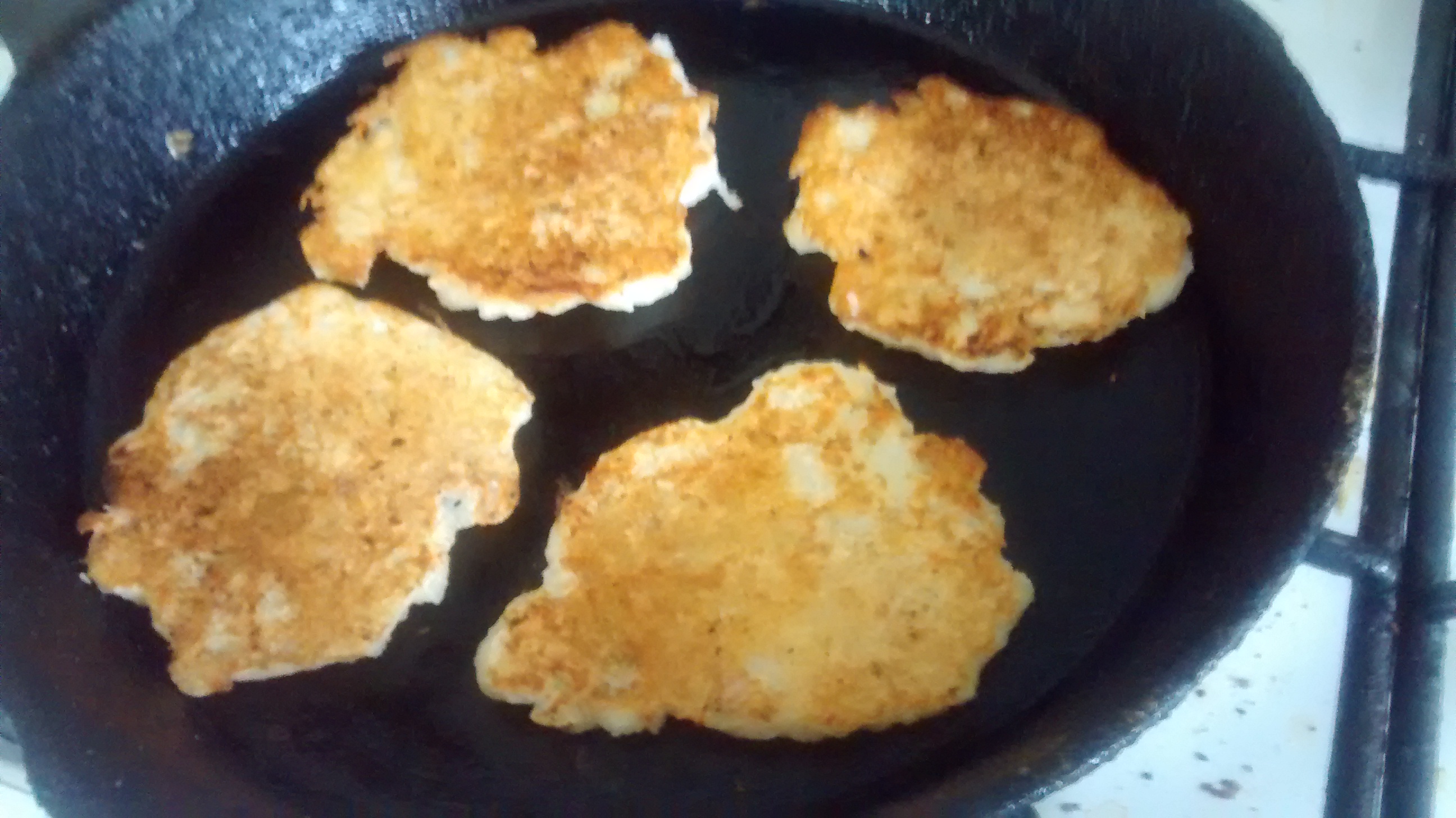
    • A pan should be able to hold 3 or 4. Fry till golden on both sides.
    • They should be thin and  slightly crispy at the edges.

    IMG_20150811_170538654_HDR

    • Do not have the pan too hot or they will burn on the outside and be raw in the centre.
    • Do not have the pan too cool or they will end up too greasy and not crispy.

    IMG_20150811_171517471

    • Serve immediately or keep them warm in the oven on a low heat whilst you make more.

    IMG_20150811_171511857

    IMG_20150811_173653863

  • With yoghurt cheese and granulated sugar.
  • With plum jam made by my friend in Leeds.

Silesian Heaven

  • Just back from a short holiday in Wroclaw which is in Silesia, Poland.
  • In a restaurant in the Old Town  I had Silesian Heaven  – Śląskie niebo – which was delicious.
  • Dried fruits such as apples, apricots, pears and  prunes are cooked with pork.
  • I have several recipes for pork with prunes – this has even more fruitiness.
  • This would have been a recipe for the winter months using all these dried fruits.

IMG-20230217-WA0003 (2)

  • I looked up several recipes for this.
  • I decided that shoulder pork would be the best option.
  • I used dried apples, apricots and prunes – I did not find any dried pears.
  • The recipe has to be started the evening before by soaking the dried fruits.
  • Some recipes cooked the pork and fruits for the same time BUT this makes the fruits like a thick sauce – this way I think is better.
  • NOTE
  • The prunes and apricots I used were the soft kind now more available –
  • If using the traditional very dried fruits you could adapt the timing of the fruit addition to earlier in the cooking.

Ingredients

  • 1kg of shoulder pork – steaks
  • 250g of prunes, dried apricots and dried apples
  • 750ml of vegetable or chicken stock
  • Sunflower oil for frying
  • Salt & pepper
  • Juice of 1 lemon

Method

  • Cover the dried fruits with boiling water.
  • Leave overnight.
  • *
  • Preheat the oven to GM4 – 180°C
  •  
  • Fry the pork on both sides.
  • Place the pork in an ovenproof dish.
  • Pour the stock over this and stir.
  • Place a lid over the dish.
  • Cook for around 2 hours.
  • Season with salt and pepper.
  • *
  • Add the dried fruits and the liquid.
  • Add more liquid if a lot has evaporated.
  • Stir and put back in the oven for another hour.
  • *
  • Pour the lemon juice over top before serving.
  • *
  • Here served with pearl barley – but buckwheat or rice would be good or  boiled or mashed potatoes or potato dumplings.

Royal Doulton – Burgundy plate

OPTION – To be tried later

  • Use a joint of pork and roast over the dried fruits.
  • Similar to the recipe for Pork & Prunes.

New Polish Cookery Books

  • I have returned recently from a short trip to Wrocław.
  • A lovely city and I stayed in the old town, which was super.
  • I ate in several restaurants and picked up some ideas for recipes.
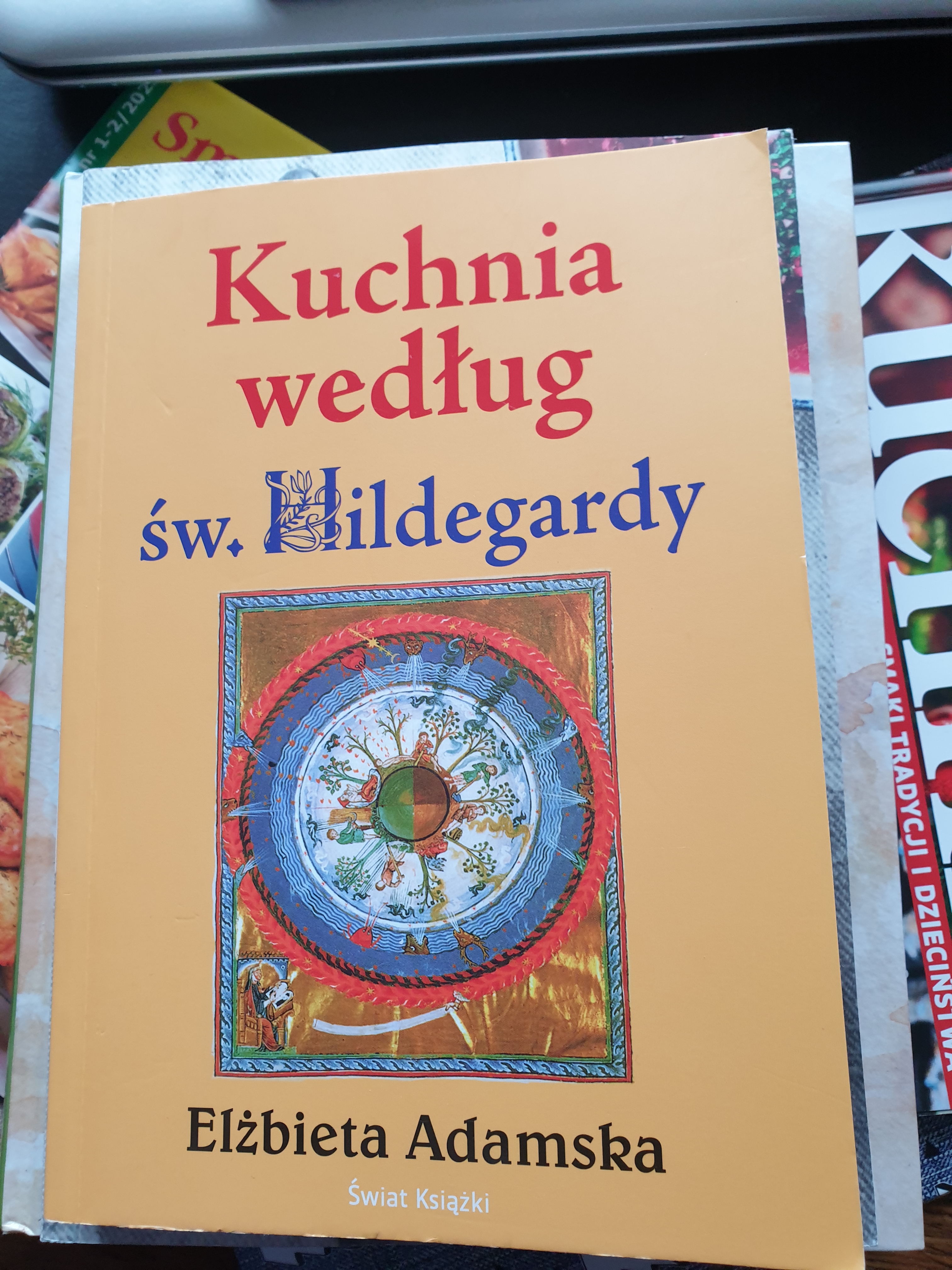
  • I also bought 3 Polish recipe books which are very interesting and you will be seeing ideas coming through from these in the next few months.
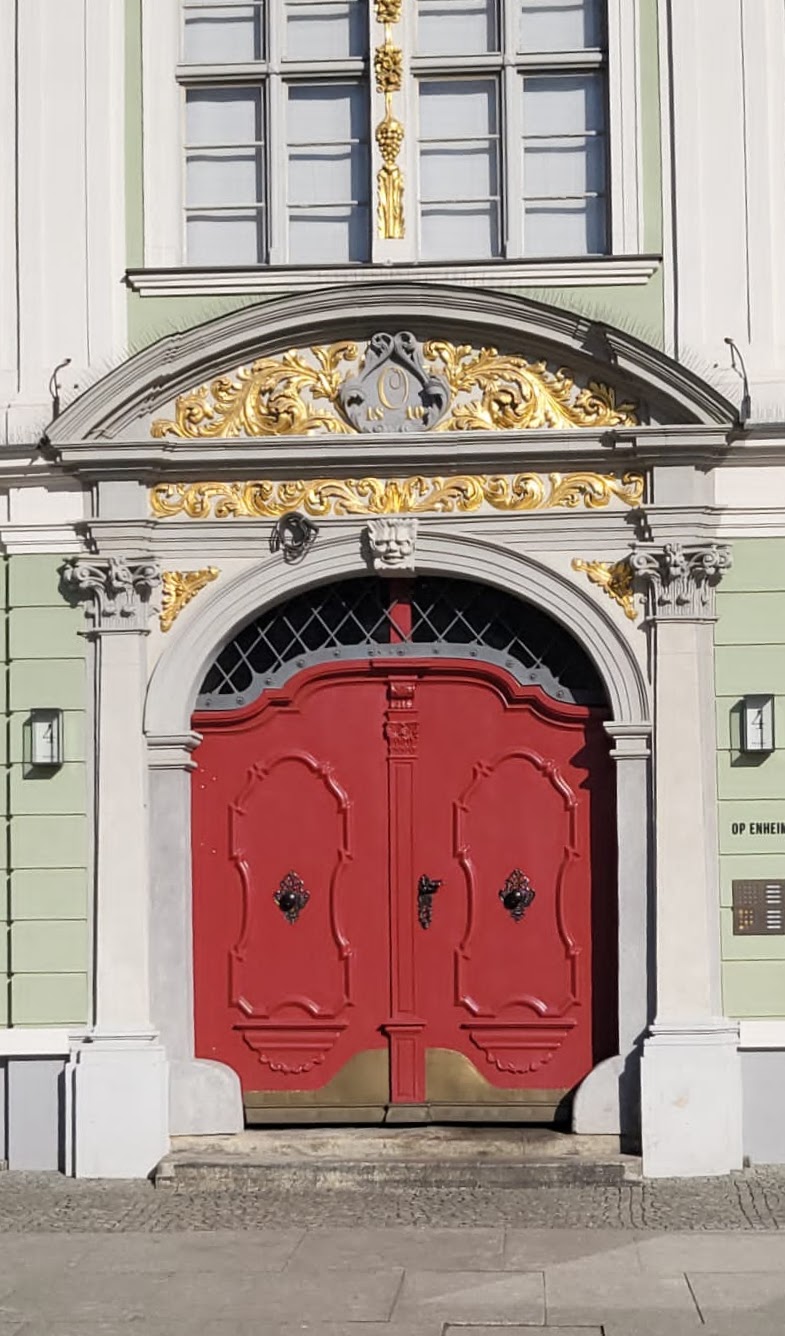
  • One of the many lovely doors in Wrocław.
  •  
  • IMG-20230216-WA0018 (1)
  •  
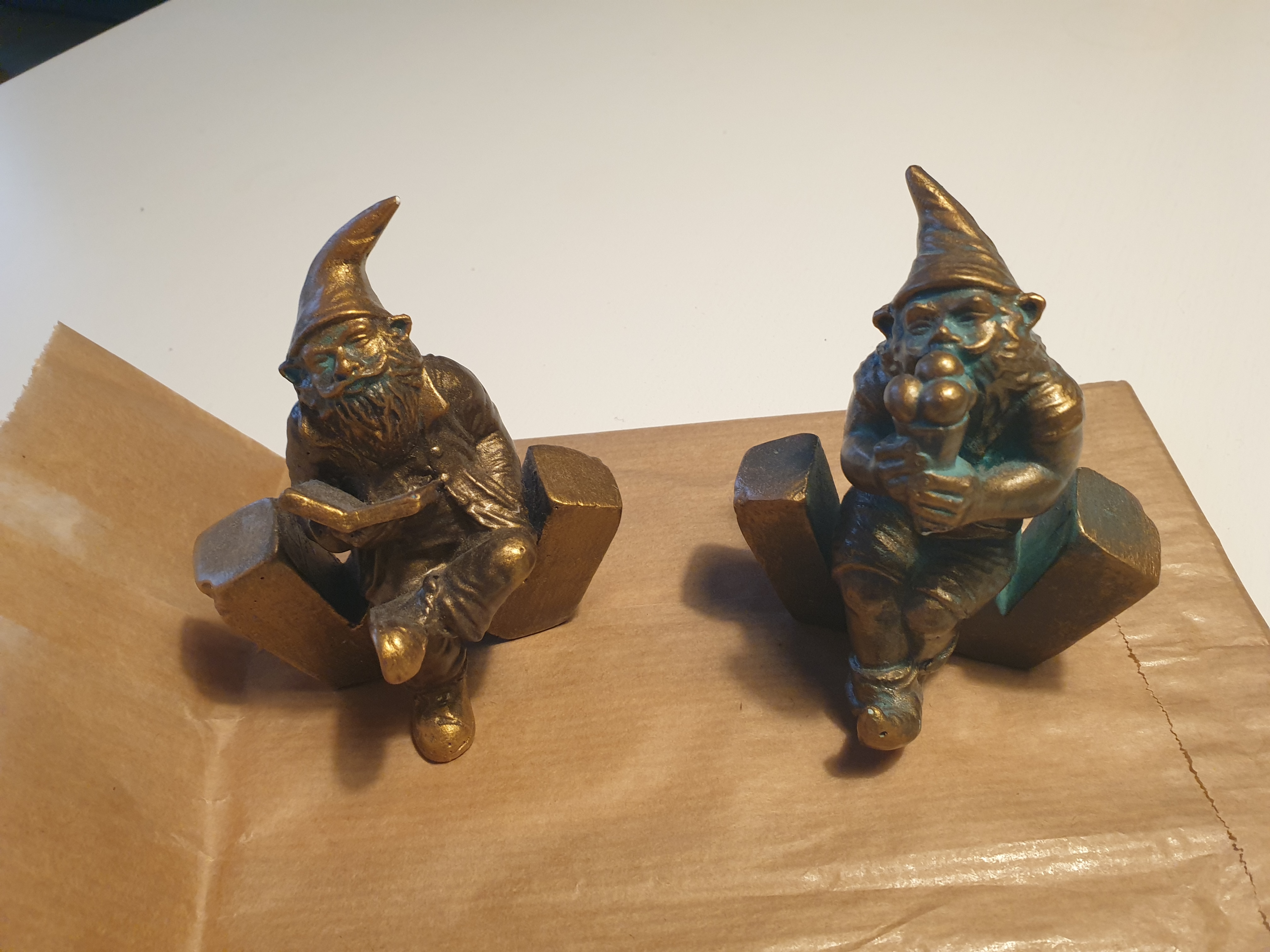
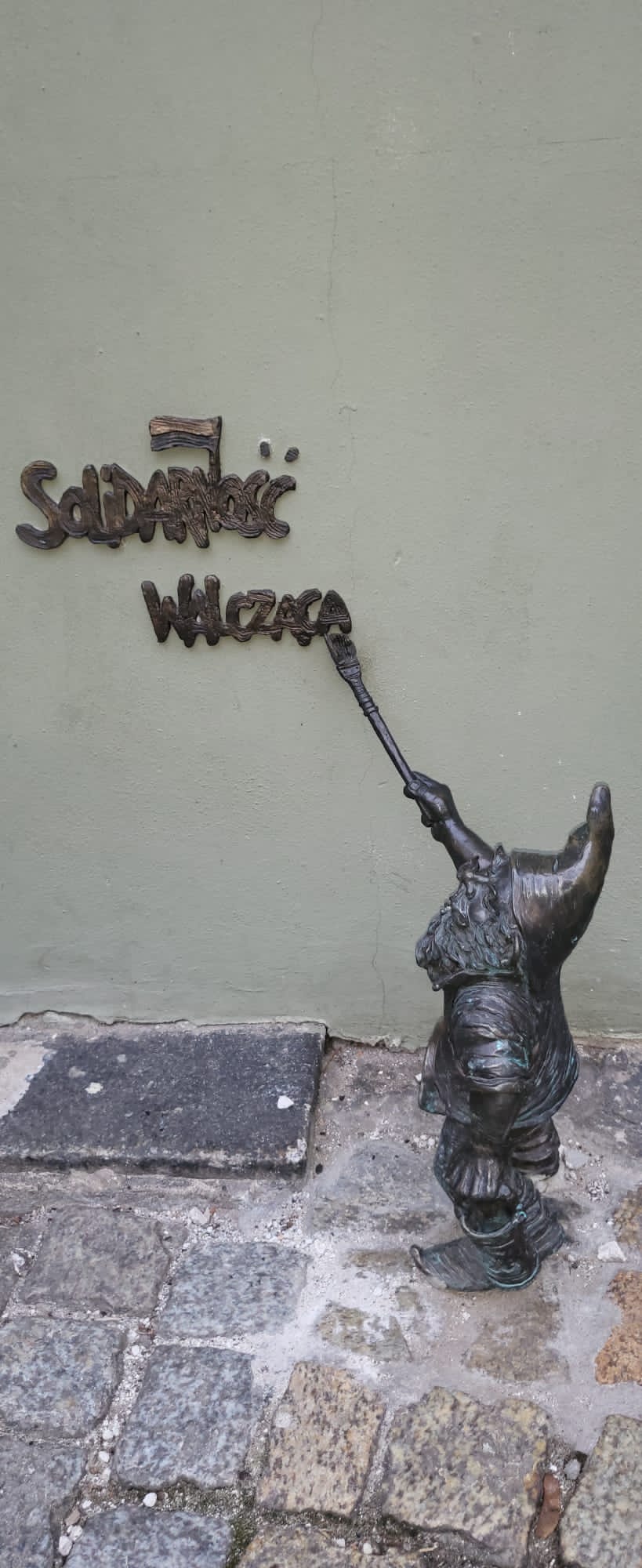
  • Souvenir Krasnoludki (gnomes) – reading and eating ices  – 2 of my favourite pleasures!

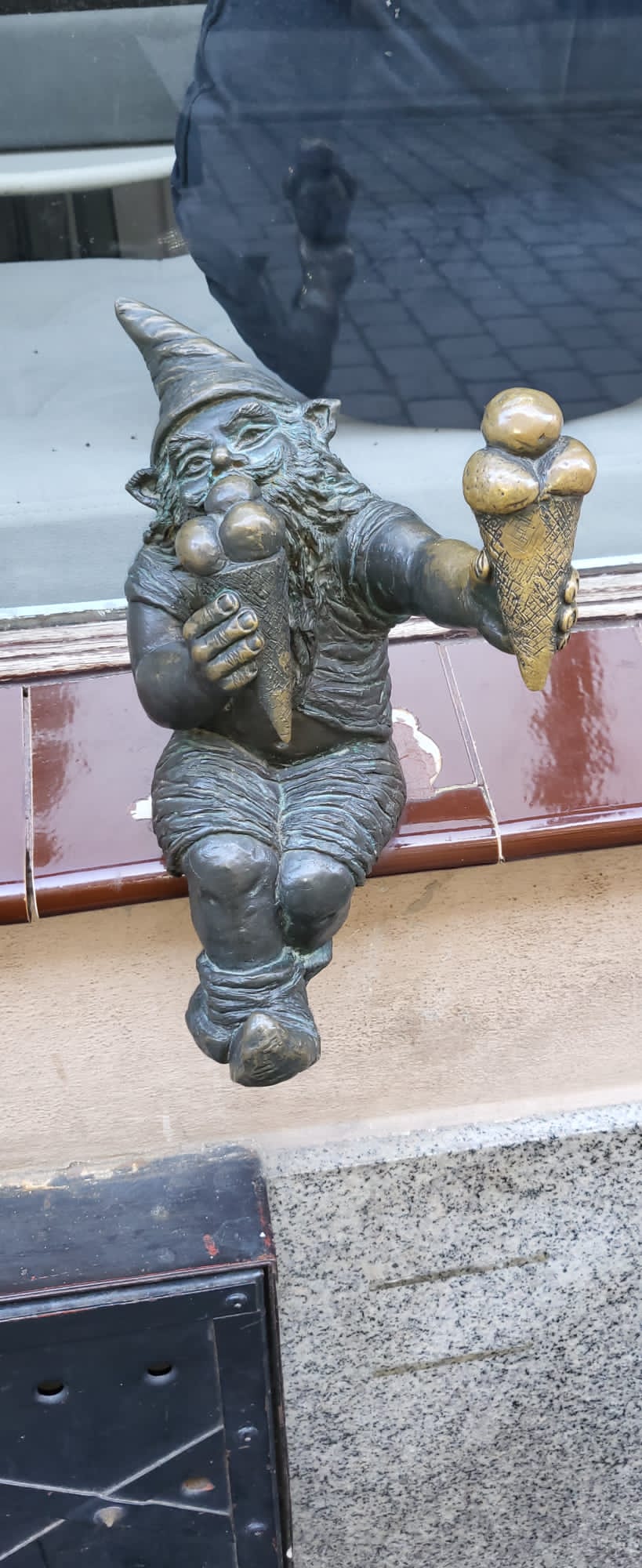
  • Krasnoludki are all around the town – from the 1980s as anti Soviet protests.

Gogiel Mogiel

  • Gogiel mogiel was for me a luxury dessert that my mother used to make.
  • She would whisk raw egg yolks with sugar for around 10 minutes until the sugar is all absorbed and the liquid is thick, pale and creamy.
  • Sometimes honey was used instead of sugar.
  • Nowadays it can be made much quicker using an electric whisk.
  • Mama would flavour this with a drop or two of vanilla essence.
  • Other flavouring can be cinnamon or rum.
  • It is served at room temperature or slightly chilled.
  • Whilst looking up recipes for this I have found that the name in some places has changed to gogel mogel or even the more Russian sounding kogol mogol.
  • *
  • Zabaglione (Italian) or sabayon (French) sound similar, where sweet wine is added and it is cooked slightly over a bain-marie.

Ingredients

  • 4 egg yolks
  • 1 tablespoon of caster or granulated sugar.
  • 2 – 3 drops of vanilla essence.

Method

  • Whisk the yolks and sugar together until you have a pale, thick, creamy liquid.
  • Around 5 minutes with an electric whisk.
  • Add the vanilla essence and mix together.
  • Serve at room temperature or chill slightly.
  • *
  • Options 
  • Add a few drops of rum or a sprinkle of cinnamon.
  • *
  • Sprinkle grated chocolate on top when serving.

Kanapki

  • Kanapka (singular) and kanapki (plural) are the Polish for sandwich and sandwiches.
  • Kanapka comes from the French canapé (singular).
  • These are always open sandwiches.
  • In both languages the word comes from the word for sofa – with the idea of something sitting on a sofa.
  • They date from the mid 1800s.
  • They can be large sandwiches, which are the mainstay of a Polish breakfast – śniadanie or second breakfast  – drugie śniadanie (Lunch in England).
  • They can be cut into small squares or rectangles to become “finger food”  – hors d’oeuvres – starters.
  • In Polish these are called przekąski or zakąski.
  • *
  • The list of toppings is endless with: meat, fish, eggs and cheese as well as gherkins, chives, tomatoes and many other vegetables on top.
  • The bread can be buttered or not if the topping is soft such as pâté or egg mayonnaise  

Toppings Suggestions – the list is endless

  • Cream cheese
  • Yoghurt cheese
  • Cured meats 
  • Roast meats
  • Smoked sausages
  • Fish spread
  • Meat spread
  • Pâté
  • Gherkins
  • Tomatoes
  • Chives
  • Onions
  • Salad leaves
  • Yoghurt Cheese with Chives on Rye – served on Greenway plates
  • Egg Mayonnaise with slices of  kotlety –  Polish burgers and tomato – served on a vintage Pyrex plate.