Pierogi – Meat Filling

  • Pierogi with meat filling is one of the most usual ways my Mama made pierogi.
  • The meat was usually cooked pork, which had been left from a roast or gulasz the day before.
  • Below are instructions for cooking the pork from scratch in case you do not have any cooked pork.
  • At Christmas time the meat could have been chicken, should any have been left.

Ingredients

  • 300g shoulder or spare rib pork
  • 1 onion
  • 1 egg yolk
  • 1 tablespoon of dried breadcrumbs
  • Approx 250 ml of chicken stock – can be from stock cubes
  • Butter & oil to fry the onion
  • Salt & ground black pepper to taste

Method

  • Pre heat the oven to GM 3 – 1600C
  • Put the pork into a small casserole dish and cover it with the stock and put on the lid.
  • Put the dish in the oven for at least 1 hour, depending on the meat you might need longer.
  • Cook the meat until it is tender and can be broken up with a fork and most of the liquid has been absorbed.
  • Allow the meat to cool.
  • You can mince the meat but I find that if you cook it long enough you do not need to, you can just chop it with a sharp knife .
  • Chop the onion finely and fry it till it is soft and golden, allow it to cool.
  • Mix thoroughly together: the meat, onion, yolk and breadcrumbs and then add salt and pepper to taste.
  • *
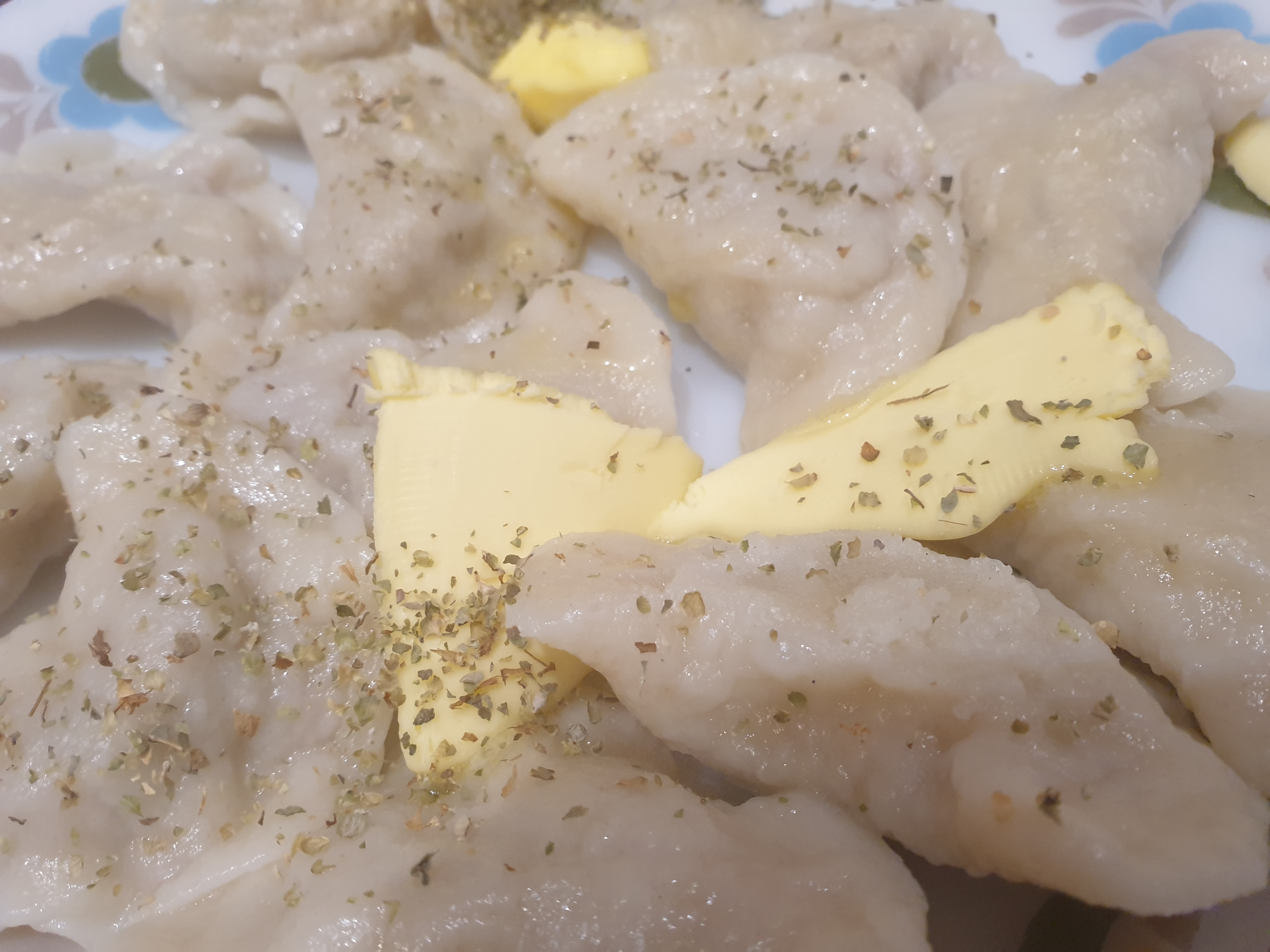
  • Serve with melted butter or
  • Onions fried in butter or
  • Fried bacon bits – skwarki.
  • Make the pierogi in the usual way – instructions are given below.

    • Ingredients – Dough

    • 500g pasta flour or strong flour or plain flour & 2 tablespoons of fine semolina
    • 300ml water
    • 1 – 2 tablespoons oil – sunflower or light olive
    • ½ teaspoon salt
    • 2 egg yolks
    • *
    • Melted butter for serving or chopped onions cooked in butter.

    Method – Dough

    • In a jug or bowl mix together the water, oil and the yolks.
    • Put the flour and salt into a large bowl and make a well in the centre.
    • Pour in the liquid from the jug and initially use a knife to mix this into the flour and then use your hands to mix the liquid and flour to get a ball of dough.
    • Turn this out onto a floured board and knead the dough for a few minutes until you have a smooth ball.
    • Cut the dough into quarters.
    • On a floured board roll out a quarter at a time until you have a sheet of thinly rolled dough.
    • Now prepare a large tray and cover it with a clean tea towel and sprinkle this with flour.
    • Have a large surface such as a tray covered with a cotton or linen cloth which has been lightly floured ready  and place the sealed pierogi on this until they are all made, do not let then touch each other.
    • I cut them out using a 7 cm diameter cutter.
    • I have noticed some people make them larger – I will try this out soon.
    • The excess dough can be re-mixed and rolled out again.
    • Around a half tablespoon of filling is put on  each circle and then they are folded over and the edges pinched together to make a good seal.
    • You learn from experience how much filling to put in as too much will make it hard to seal them and if not properly sealed they will burst on boiling. 
    • Do not worry if you have a few mishaps – it still happens to me even with experience – it is hard to salvage one that has gone wrong – just accept that there will be a few that you do not cook.
    • *
    • To cook the pierogi, use a large pan of boiling water to which you have added some salt and a drizzle of oil.
    • Drop the pierogi in one by one and allow them to boil.  I usually do about 6 to 8 at a time (I only do 6 at a time if using frozen ones).
    • As they cook they will float to the surface, let them boil for 2 to 3 minutes, (a bit more if they were frozen*), and
    • Then remove them with a slotted or perforated spoon and put into a colander above a pan for a few seconds to drain and serve.
    • Continue boiling batches in the same water.
    • If you want to make all the pierogi to serve together then you need to get a large shallow dish.*
    • Put in the pierogi and add melted butter.
    • Keep the dish warm in a low oven.
    •  
      • *I often open freeze them for later.

Kołduny

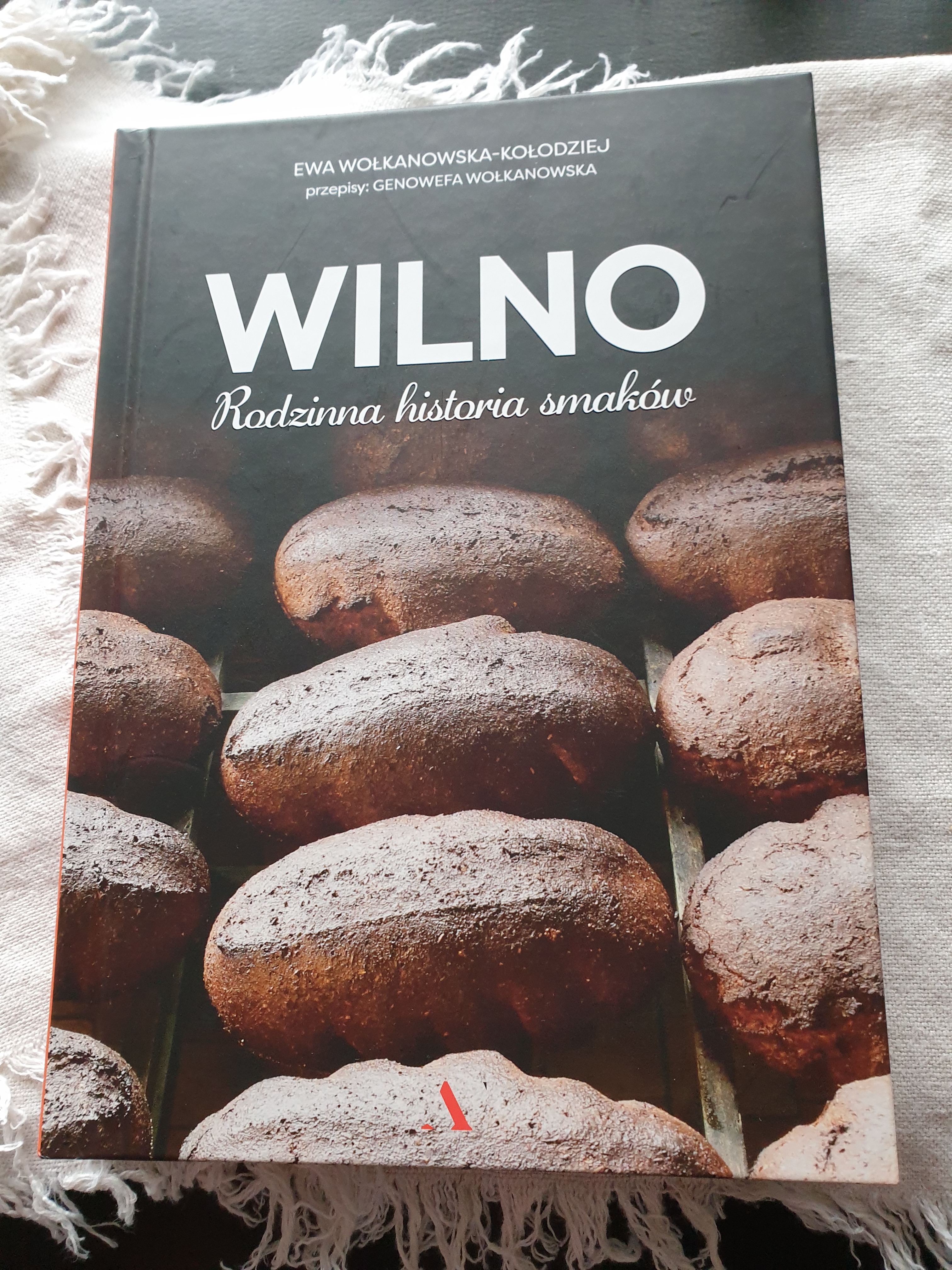
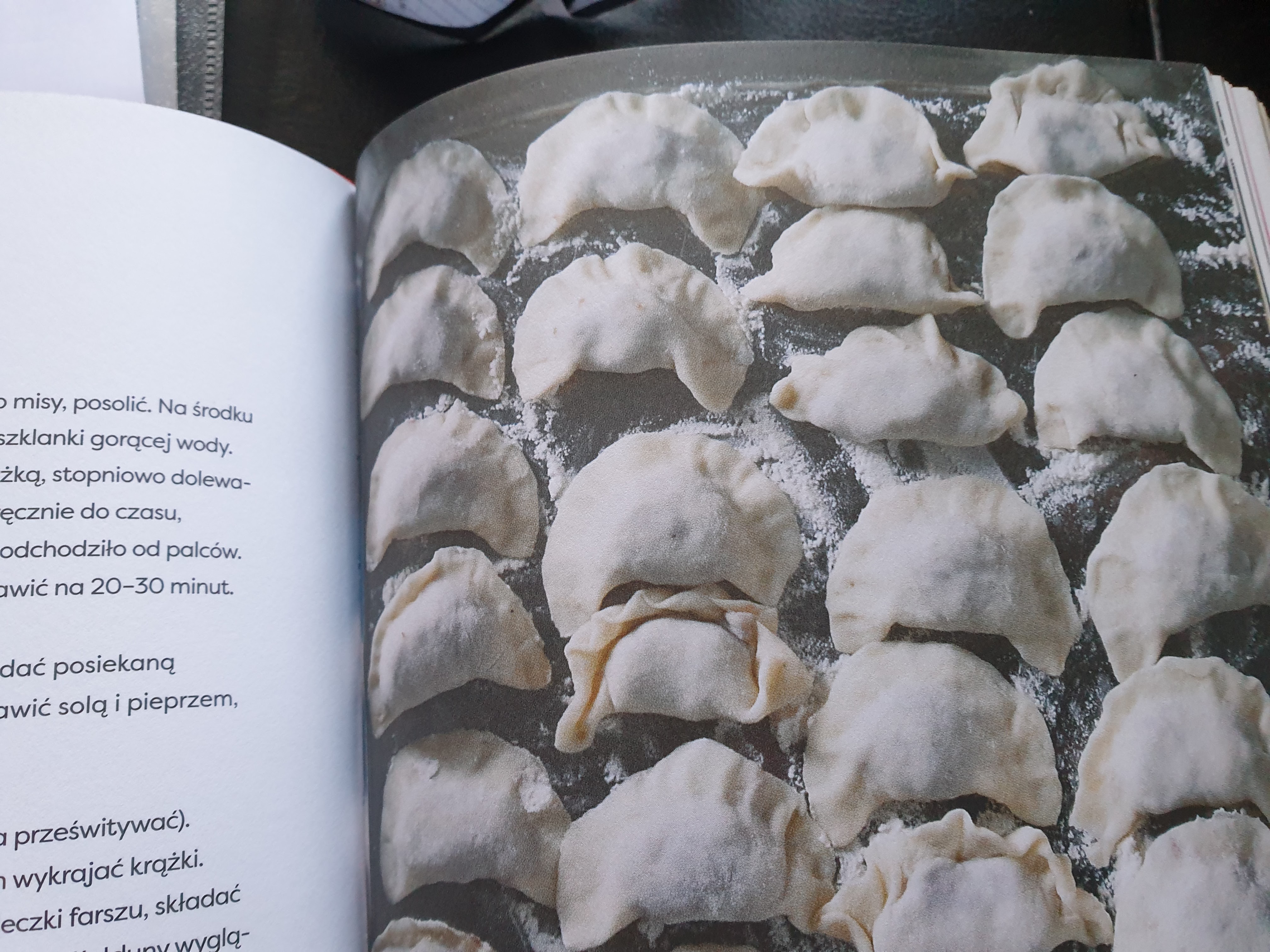
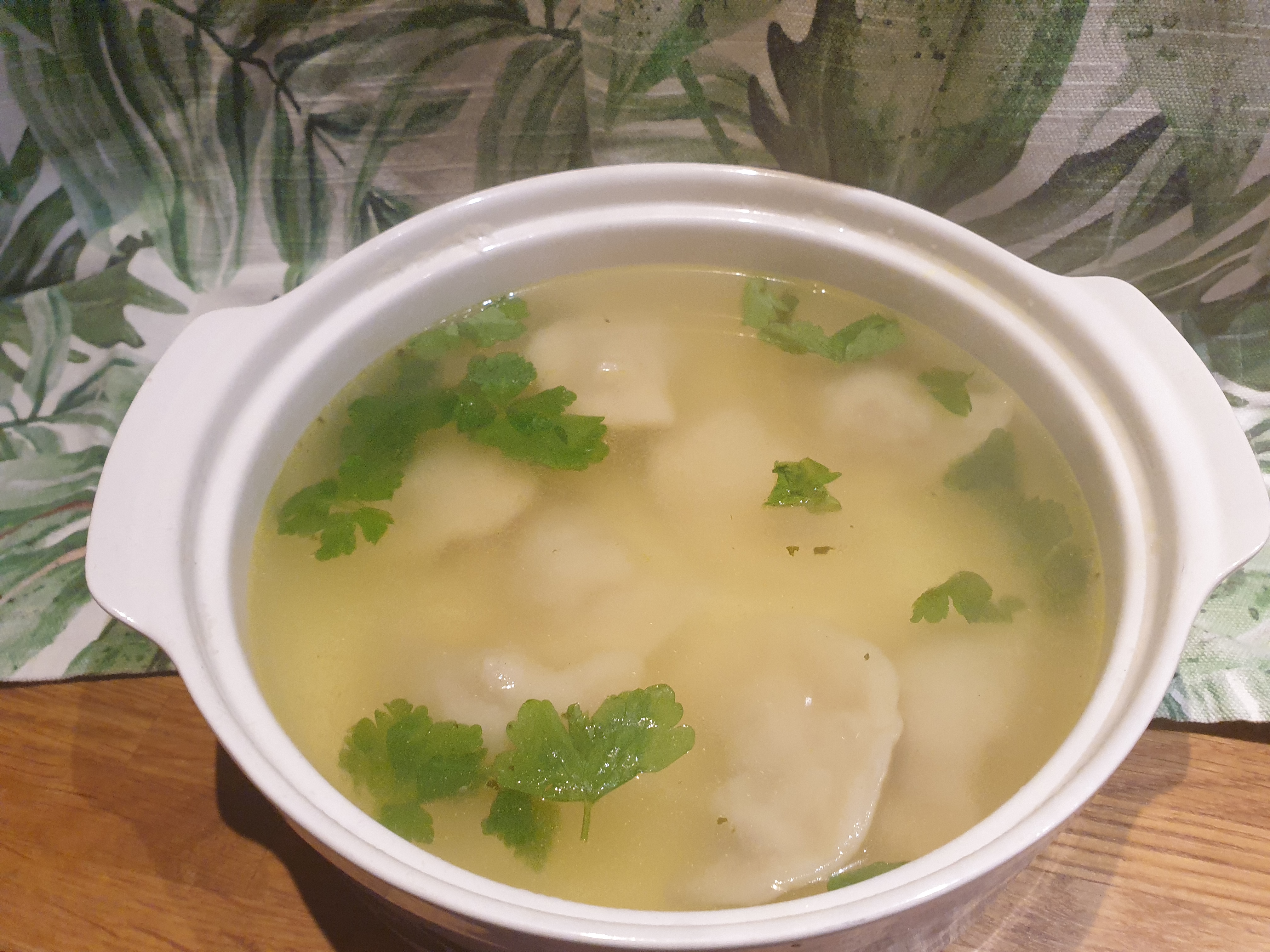
  • Looking in my new recipe book “Wilno” I came across a recipe for kołduny.
  • They looked very much like pierogi and did I some research to find out how they were similar and how different.
  • Firstly the dough is made with just flour and hot (not boiling) water! – I was very curious as to how this would work out.
  • The filling is meat, usually pork or beef or a mixture.
  • The filling is raw minced meat – not cooked meat as in pierogi.
  • Most recipes used “fatty” meat or added lard (I did not).
  • The chopped onion is also raw.
  • Garlic is added – I have not come across this used in pierogi.
  • Kołduny are described as smaller than pierogi – I now realise that my pierogi are small so these did not seem much smaller.
  • In order to cook the kołduny they are simmered for 20 minutes – much longer than pierogi are boiled.
  • The kołduny are served with marjoram (fresh or dried) and butter or soured cream or
  • They are often served in soup usually rosoł clear chicken soup.
  • In the book it states that the kołduny are not eaten with a knife and fork but with a soup!
  • I found it hard to eat the ones in the soup as they were very hot to bite through!
  • VERDICT
  •  The dough was good and I would make that again. 
  • However I suppose it is what one is used – but we all preferred the Polish cooked meat fillings of pierogi.

INGREDIENTS – DOUGH

  • 480g plain flour
  • ¼ teaspoon salt
  • Around 500ml of water at about 70°C (you might not need it all)

METHOD – DOUGH

  • In a bowl mix the flour with the salt.
  • Make a well in the centre and add 250ml of the water.
  • At first using a knife or spoon – later with your hands –
  • Keep adding water slowly and mix this in with the flour until you have a smooth ball of dough.
  • Leave this to rest for 30 minutes.

INGREDIENTS – FILLING

  • 500g of  minced pork or beef or a mixture.
  • 1 egg
  • 1 onion – chopped fine
  • 2 cloves of garlic – chopped fine
  • Marjoram – fresh or dried
  • Salt & pepper

METHOD – FILLING

  • Mix the ingredients together.
  • Season with the salt & pepper.

Making the kołduny

  • Prepare trays with floured tea towels to put the kołduny on.
  • Cut the dough into quarters.
  • Roll out the dough until it is thin.
  • Cut out circles around a tumbler or cutter around 7cm in diameter. 
  • Place a ball of filling in the centre.
  • Seal up the edges with your fingers to get a semi circle.
  • Place on the floured trays.
  • Repeat with the rest of the dough and with re-rollings from the cutting.
  • *
  • Use a wide saucepan or deep frying pan.
  • Add boiling water, salt and a little oil.
  • Add about 8 kołduny and simmer them for 15 minutes.
  • Remove with a slotted spoon.
  • Repeat with the rest of them.
  • *
  • Serve with butter and marjoram or
  • In rosoł – clear chicken soup.
  • Take care when biting in as the filling will be very hot.
  • *
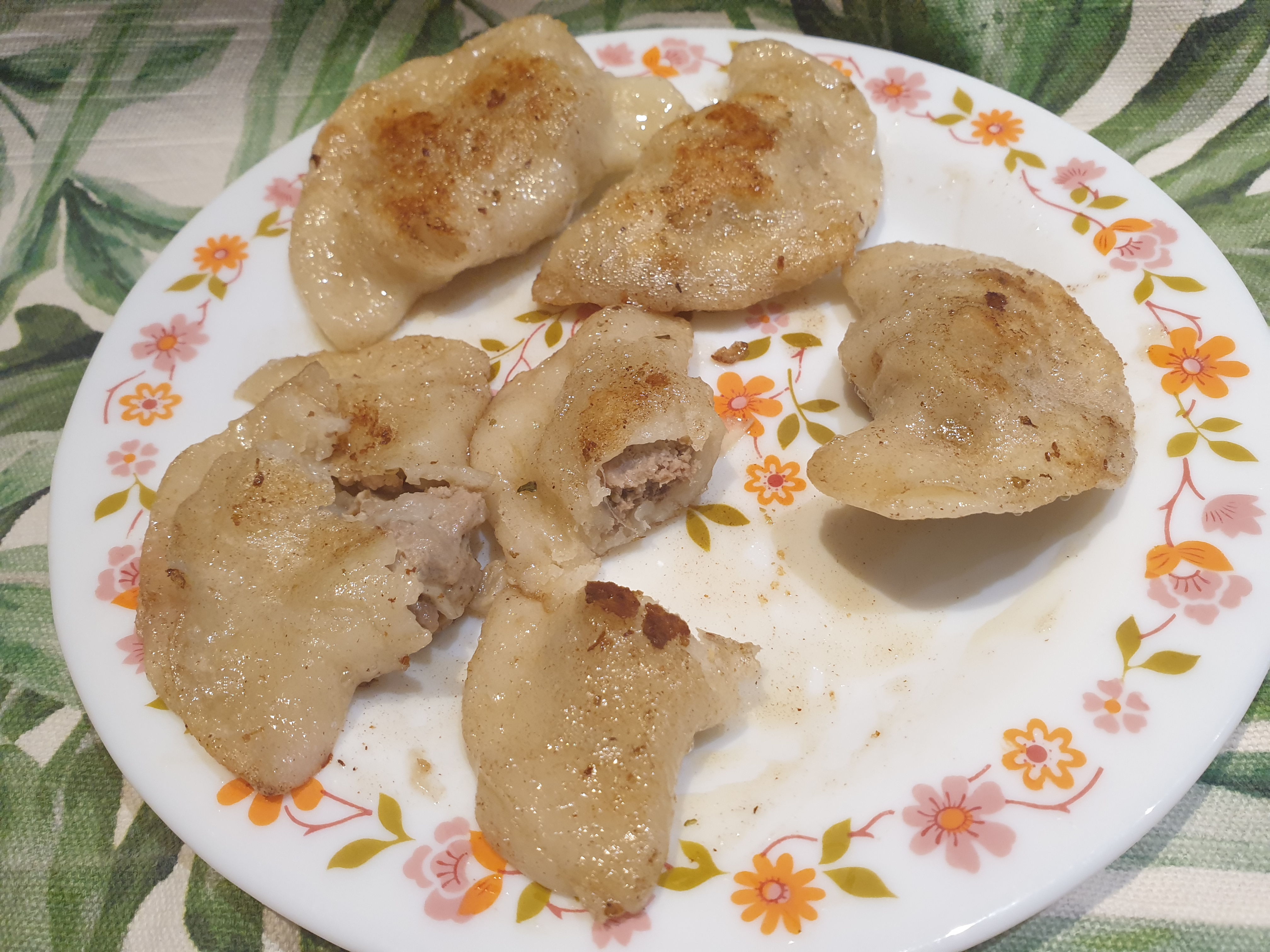
  • Although not traditional we fried up left over kołduny the next day.

Silesian Heaven

  • Just back from a short holiday in Wroclaw which is in Silesia, Poland.
  • In a restaurant in the Old Town  I had Silesian Heaven  – Śląskie niebo – which was delicious.
  • Dried fruits such as apples, apricots, pears and  prunes are cooked with pork.
  • I have several recipes for pork with prunes – this has even more fruitiness.
  • This would have been a recipe for the winter months using all these dried fruits.

IMG-20230217-WA0003 (2)

  • I looked up several recipes for this.
  • I decided that shoulder pork would be the best option.
  • I used dried apples, apricots and prunes – I did not find any dried pears.
  • The recipe has to be started the evening before by soaking the dried fruits.
  • Some recipes cooked the pork and fruits for the same time BUT this makes the fruits like a thick sauce – this way I think is better.
  • NOTE
  • The prunes and apricots I used were the soft kind now more available –
  • If using the traditional very dried fruits you could adapt the timing of the fruit addition to earlier in the cooking.

Ingredients

  • 1kg of shoulder pork – steaks
  • 250g of prunes, dried apricots and dried apples
  • 750ml of vegetable or chicken stock
  • Sunflower oil for frying
  • Salt & pepper
  • Juice of 1 lemon

Method

  • Cover the dried fruits with boiling water.
  • Leave overnight.
  • *
  • Preheat the oven to GM4 – 180°C
  •  
  • Fry the pork on both sides.
  • Place the pork in an ovenproof dish.
  • Pour the stock over this and stir.
  • Place a lid over the dish.
  • Cook for around 2 hours.
  • Season with salt and pepper.
  • *
  • Add the dried fruits and the liquid.
  • Add more liquid if a lot has evaporated.
  • Stir and put back in the oven for another hour.
  • *
  • Pour the lemon juice over top before serving.
  • *
  • Here served with pearl barley – but buckwheat or rice would be good or  boiled or mashed potatoes or potato dumplings.

Royal Doulton – Burgundy plate

OPTION – To be tried later

  • Use a joint of pork and roast over the dried fruits.
  • Similar to the recipe for Pork & Prunes.

Kotlety with Courgettes – 2

  • I got this idea from one of my new Polish cookery books.
  • It is similar to my Kotlety mielone   large meatballs with the addition of coarse grated courgette.
  • Instead of the usual way I do my onions – the chopped green parts of spring onions were used.

Ingredients

  • 400-500g minced pork
  • Green parts of a bunch of spring onions
  • 1 bread roll or 1 slice white bread
  • Milk to soak the bread
  • 1 large courgette – coarsely grated
  • 1 egg
  • 1 teaspoon of mixed herbs
  • Salt & pepper
  • *
  • Dried breadcrumbs – Bułka tarta
  • *
  • Sunflower oil to fry the kotlety.

Method

  • Soak the bread in the milk for around 20 minutes.
  • Squeeze out the excess milk.
  • Chop the green parts of the spring onions into small circles.
  •  
  • In a large bowl mix all the ingredients together except for the dried breadcrumbs, it is best to do this using both hands, making sure that all the ingredients are thoroughly combined.
  • If the mixture seems too wet then add a tablespoon full of dried breadcrumbs and mix this in.

  • Pour some dried breadcrumbs onto a large plate or board.

  • Try to make each one the same size, take a handful of the mixture and press it between your hands to make a flattened circle and then place this in the dried breadcrumbs and turn it over to cover both sides and edges.

  • Once coated place them on a tray dusted with breadcrumbs until you have used all the mixture up.

  • Shallow fry the kotlety in hot oil, depending on the frying pan size,  you can do 3 to 4 at a time, turning them over so that both sides are done.

  • Place them on kitchen roll on a plate or metal tray till they are all cooked –  you can keep them warm in a low oven.

UPDATE – 3 April 2023

  • The original recipe used minced chicken.
  • I tried this out yesterday.
  • We all thought PORK was much tastier!

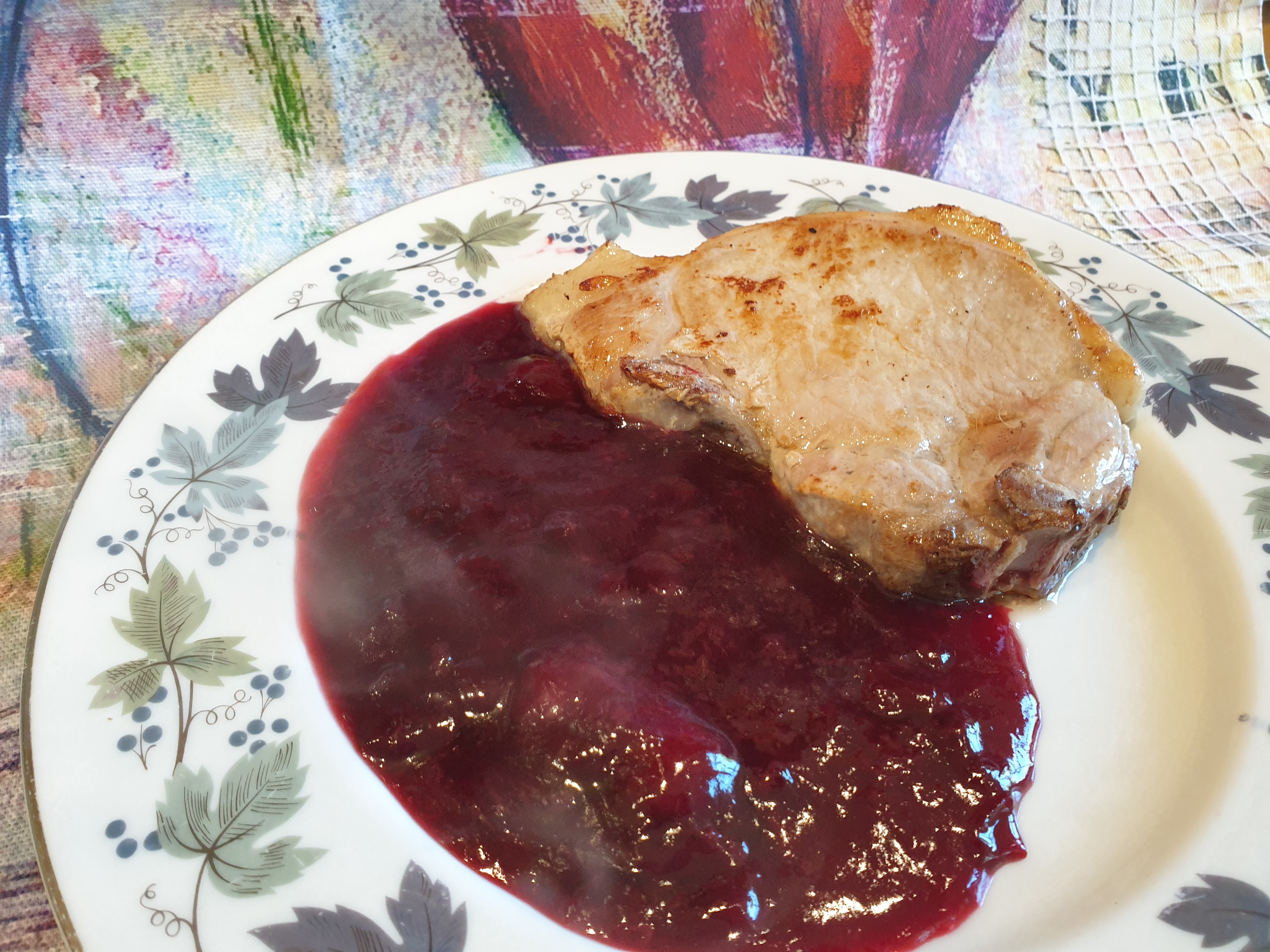
Pork with Honeyed Plums

  • I previously wrote about pork with soured plums.
  • This time the recipe uses honey to sweeten the plums.
  • I have previously posted the recipe for honeyed plum sauce.
  • The pork is cooked separately from the plums.
  • Grilled pork chops or roast loin of pork works well. 

Ingredients

  • 10 plums
  • 250ml water (maybe a little extra)
  • 4-6 tablespoons of runny honey

Method

  • Simmer the plums gently in the water.
  • Stir until the plums fall apart.
  • Add extra water if needed.
  • Add as much honey as required to taste.
  • Remove the stones – optional.
  • Serve hot with the cooked pork.

  • Served on a Royal Doulton – Burgundy plate

Liver Pulpety Served in Green Soup

I wrote about pulpety over three years ago. They are small meatballs which are simmered, often in stock, not fried.

They are often used as an accompaniment for soup,

In this recipe the liver pulpety are cooked directly in the soup and served with it.

Ingredients – Pulpety

  • 150g of pork liver or chicken liver
  • 1 beaten egg
  • 1 tablespoon of chopped flat-leaved parsley.
  • 60g-80g of dried breadcrumbs – see Breadcrumbs – Bułka tarta
  • Salt & pepper
  • *
  • Some plain flour for your hands for shaping.

Method -Pulpety

  • Mince the liver or wizz in a mini-chopper.
  • In a large bowl mix all the liver, egg and parsley together.
  • Add salt & pepper.
  • Add enough dried breadcrumbs so that it is a firm mixture – best to do this using both hands, making sure that all the ingredients are thoroughly combined.
  • Put some flour in a dish for your hands to make it easier to shape the pulpety.
  • Pinch off small bits of the mixture and roll the piece between your hands to make small round balls and place these onto a floured board or tray whilst you make them all.
  • *
  • Leave these to chill in a cool place or in the fridge.

Ingredients – Soup

  • 1 litre of vegetable stock – can be from a cube or powder
  • 100g frozen peas
  • 100g frozen whole green peas
  • Bunch of spring onions
  • 2-3 tablespoons of butter
  • Salt and pepper to taste

Method – Soup

  • Chop the green beans  into small pieces similar in size to the peas.
  • Chop the green and white parts of the spring onions in to small pieces.
  • In a large pan melt the butter.
  • Add the chopped spring onions and fry gently till golden.
  • Add the peas and beans.
  • Add the vegetable stock and bring to the boil.
  • Reduce the heat and simmer gently until the peas and peas are cooked.
  • Season to taste.
  • Bring the soup up to the boil.
  • Drop the pulpety into the boiling liquid and then let them simmer for around 5 -7 minutes.

To serve

Polish style would be to have 3-5 pulpety in a bowl of soup –  but for a light lunch  have a large bowl of soup with lots of pulpety per serving.


Pork with Rhubarb

Having made pork with sour plums, I thought, why not do something similar with the rhubarb that is growing in the garden?

I was cooking the rhubarb for a cake as well and chopped up the rhubarb and placed it in a large roasting dish with some sugar – not too much –  it does not want to be too sweet – keep it tart.

I placed this into a low oven GM2 -150°C for around 45 – 60 minutes – you want it soft but not totally disintegrated.


After roasting a loin of pork, I placed some of the rhubarb and juices into a saucepan and heated it through – adjusting the sugar if necessary.

You could just grill or pan fry pork chops rather than do a roast.

Serve the rhubarb hot with the pork.


Served here with new potatoes and carrots on Royal Doulton – Carnation – 1981 -1998.

Pork with Sour Plums

My holiday in Poland earlier this year has inspired many new recipes and posts.

This one was from a meal of slow cooked belly pork with caramelised sour plums and roast potatoes, which I had at the Gvara Restaurant.


I tried doing caramelised plums but did not have any success, as it was the sourness I liked, I did the plums a different way.

This works well with plums that are not quite ripe, I used small ones from the supermarket, the sort they say will ripen at home (I find they never do!).

Sour Plums

  • 4-5 per person depending on size.
  • Simmer whole with some water and a little sugar in a shallow wide pan with a lid till soft.
  • Keep taking off the lid and stirring and adjusting the heat etc.
  • You do not want a lot of liquid .
  • Aiming for cooked but still sour – add a little sugar at end if needed.


Roast Pork with Sour Plums

I roasted a joint of pork loin – I think that is much nicer than leg of pork.  You could just grill pork chops for this.

Serve the pork with the plums.

Served on Royal Doulton Tapestry 1966 – 1988.


Slightly Chinese Style Slow Cooked Belly Pork


Ingredients

  • Large piece of belly pork
  • 1 can of Jamaican fiery ginger beer – regular with sugar (NOT sweetener)
  • Sliced piece of peeled root ginger – around 8cm long (finger length)
  • 3- 4 crushed garlic cloves
  • Several long chilies, fresh or dried.
  • 3-4 grains allspice or cloves.
  • 3-4 bay leaves
  • 8 black peppercorns

Method

  • Place everything in a slow cooker and cook for at least 4 hours (often more)– till flesh is soft.
  • Remove from juices and cut into thick slices to serve. 


Served on Royal Doulton Tapestry 1966 – 1988.

Pasztet – Pâté

Most Polish households have their own recipe for  pasztet.

Pasztet translates as pâté and is made with liver and other meats,  both cooked and uncooked, often with smoked bacon.  Left over cooked meats can be used.

Pasztet is a baked pâté – more a terrine & usually the sort of pâté you slice rather than spread. (A sort of liver based meat loaf).

Many recipes use rabbit but I have not included this as it is not as readily available but  I hope try this in the future.

Pork shoulder is good to use and this can be casseroled first in a chicken or vegetable stock or left over from a roast.

Cooked chicken can be roasted or poached once again in a chicken or vegetable stock.

It is good if you have a mincer to mince the meat, however I do not have one and have used a stick blender to blend the liver and a sharp knife to finely chop the cooked meat and bacon.

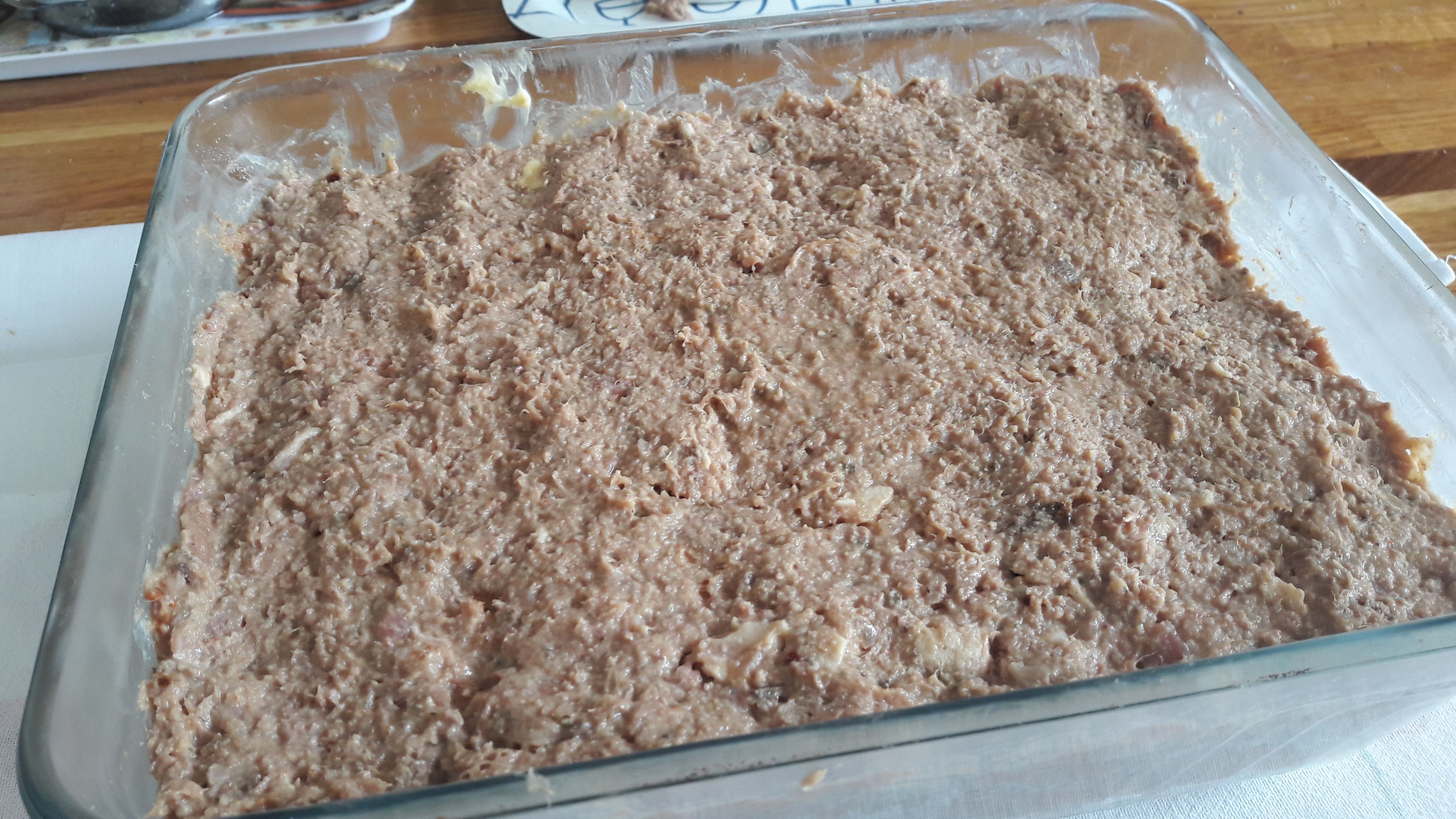
Pasztet is often cooked in a  loaf tin – but I thought my quantities looked too large for my tin and have used a rectangular Pyrex dish – 19 x 24 x 8cm.

The cooking times quoted are approximate  – it will depend on the amount of mixture and the depth in the dish.

Recipe 1

Country Style Pasztet

The original recipe used finely chopped shoulder pork – I used minced outdoor breed pork.

I used smoked streaky bacon as Polish bacon tends to be fatter than English bacon and this is the nearest.

The amounts of meats does not have to be exact.

Ingredients

  • 500g minced pork
  • 350 streaky bacon (rind removed)
  • 350 – 450g of chicken livers
  • 3 eggs
  • 3 tablespoons of dried breadcrumbs
  • 2 cloves of garlic  – chopped fine
  • 1 teaspoon of Italian herbs or marjoram
  • Salt – maybe a little but often the bacon is salty enough
  • Pepper
  • Butter for greasing the dish.

Method

  • Pre-heat the oven to GM4 – 180°C.
  • Chop the bacon into small squares.
  • Blend the chicken livers using a small blender or stick blender.

Mix all the ingredients together in a large bowl.

  • Butter the dish well.
  • Place the mixture into the dish and smooth down the top.
  • Cover the dish with foil.
  • Place the dish in a roasting tin with added water.

Cook for around 70 minutes.

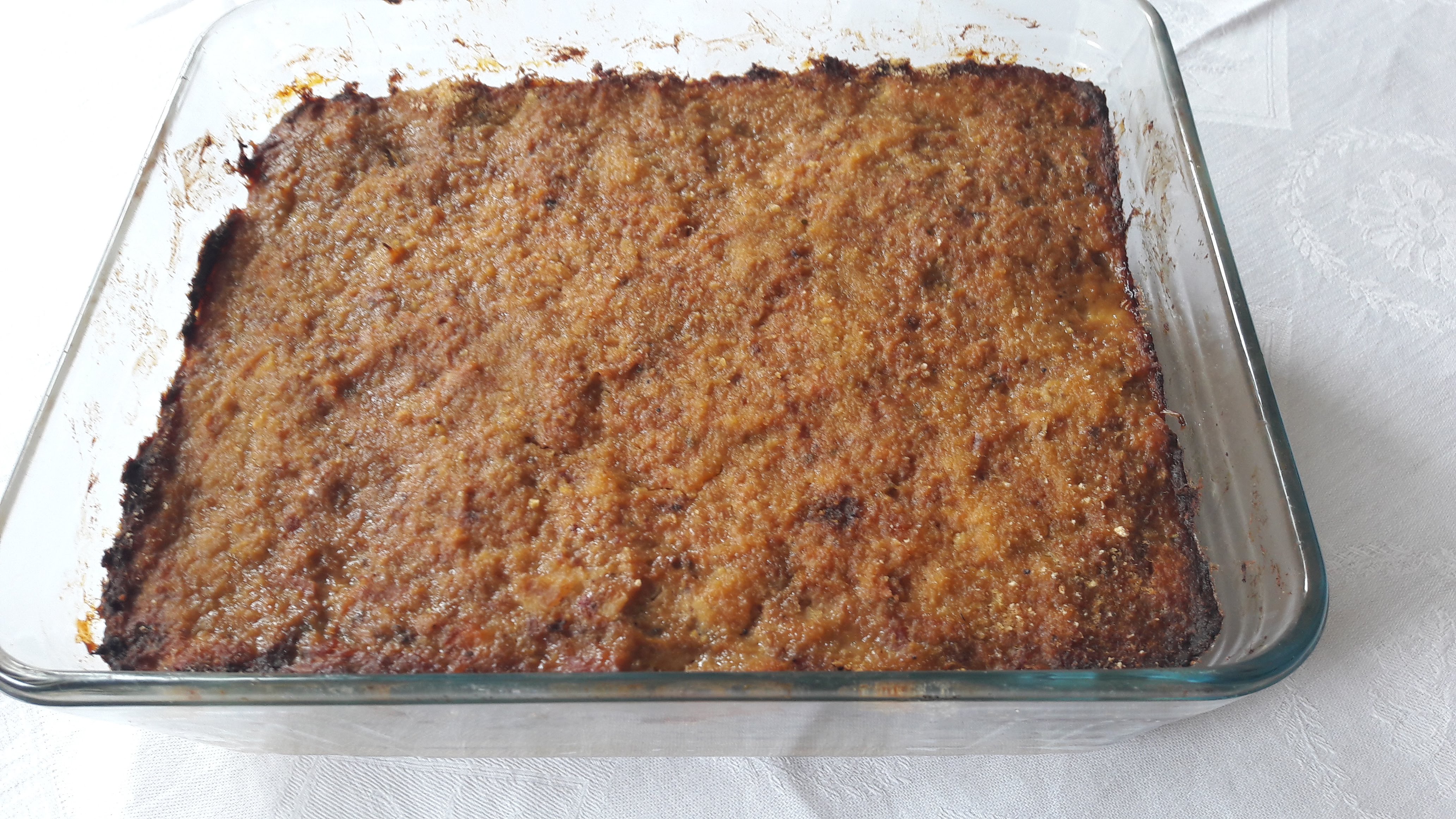
Remove the foil and cook for a further hour without the foil (more if necessary).

Leave to cool completely and then refrigerate for several hours.

Slice to serve.

Decorated here with fresh bay leaves – you can use parsley or similar.

Recipe 2

Chicken Pasztet

Any poultry can be used here – this is good way to use up roast turkey – you can even freeze the cooked turkey meat for a pasztet in the future.

Ingredients

450g chicken livers

3 onions

6 tablespoons of butter

600 – 700g of cooked chicken meat (I used breast meat as that is what I had – but thigh meat  would or a mixture is also good)

Dilute vegetable stock (can be from a cube or powder)

2 eggs

1 teaspoon of Italian herbs or marjoram

1 teaspoon of sweet paprika

Salt and pepper

Method

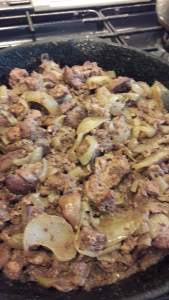
Slice the onions and fry them till soften in the butter.

Add the chicken livers and cook them through.
20180602_081248

Leave to cool completely.

Blend the liver and onions – I used a stick blender.

Place the cooked chicken in a pan and cover with dilute vegetable stock and simmer gently , stirring often.

You want the meat to be soft and falling apart and the liquid to have been absorbed.

Leave to cool completely.

Pre-heat the oven to GM4 – 180°C.

Chop the meat as finely as possible.

Mix the meat and liver together.

Add the eggs, Italian herbs & sweet paprika.

Add salt and pepper.

Butter the dish well.

Place the mixture into the dish and smooth down the top.

Cover the dish with foil.

Place the dish in a roasting tin with added water.

Cook for around 1 hour.

Remove the foil and cook for a further hour without the foil (more if necessary).

Leave to cool completely and then refrigerate for several hours.

Slice to serve.

Served on a dish – Made in England by H & K Tunstall

Recipe 3

Pork Pasztet

600 – 700g cooked pork (from a casserole or roast)

Dilute vegetable stock (can be from a cube or powder)

250g smoked bacon (rind removed)

250g pork, veal or chicken livers

1 large onion

4 tablespoons of butter & extra for greasing the dish.

3 eggs

6 tablespoons of dried breadcrumbs & extra for the baking dish and top

250ml of milk

2 teaspoons of Italian herbs or marjoram

1 teaspoon of sweet paprika

Salt & Pepper

Method

Place the cooked pork in a pan and cover with dilute vegetable stock and simmer gently, stirring often.

Chop the bacon into small squares and add to the pork and simmer for another 20 minutes.

You want the meat to be soft and falling apart and the liquid to have been absorbed.

Leave to cool completely.

Chop the meat as finely as possible.

Slice the onion and fry it till softened in the butter.

Add the liver and cook it through.

Sprinkle with salt.

Leave to cool completely.

Blend the liver and onion –  I used a stick blender.

Pre-heat the oven to GM4 – 180°C.

In a large bowl throughly mix all the ingredients together.

Butter the dish and sprinkle with dried breadcrumbs.

Place the mixture into the dish and smooth the top with a spoon.

Sprinkle the top with breadcrumbs.
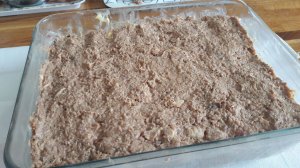
Cover the dish with foil.

Place the dish in a roasting tin with added water.

Cook for around 80 minutes.

Remove the foil and cook for a further hour without the foil (more if necessary).
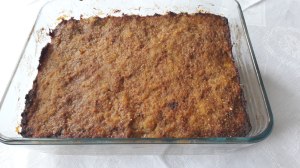
Leave to cool completely and then refrigerate for several hours.

Slice to serve.

Served on a dish by Portmeirion – Dawn Chorus – designed by Sophie Conran in the 21st century.
Ribs with Sauerkraut

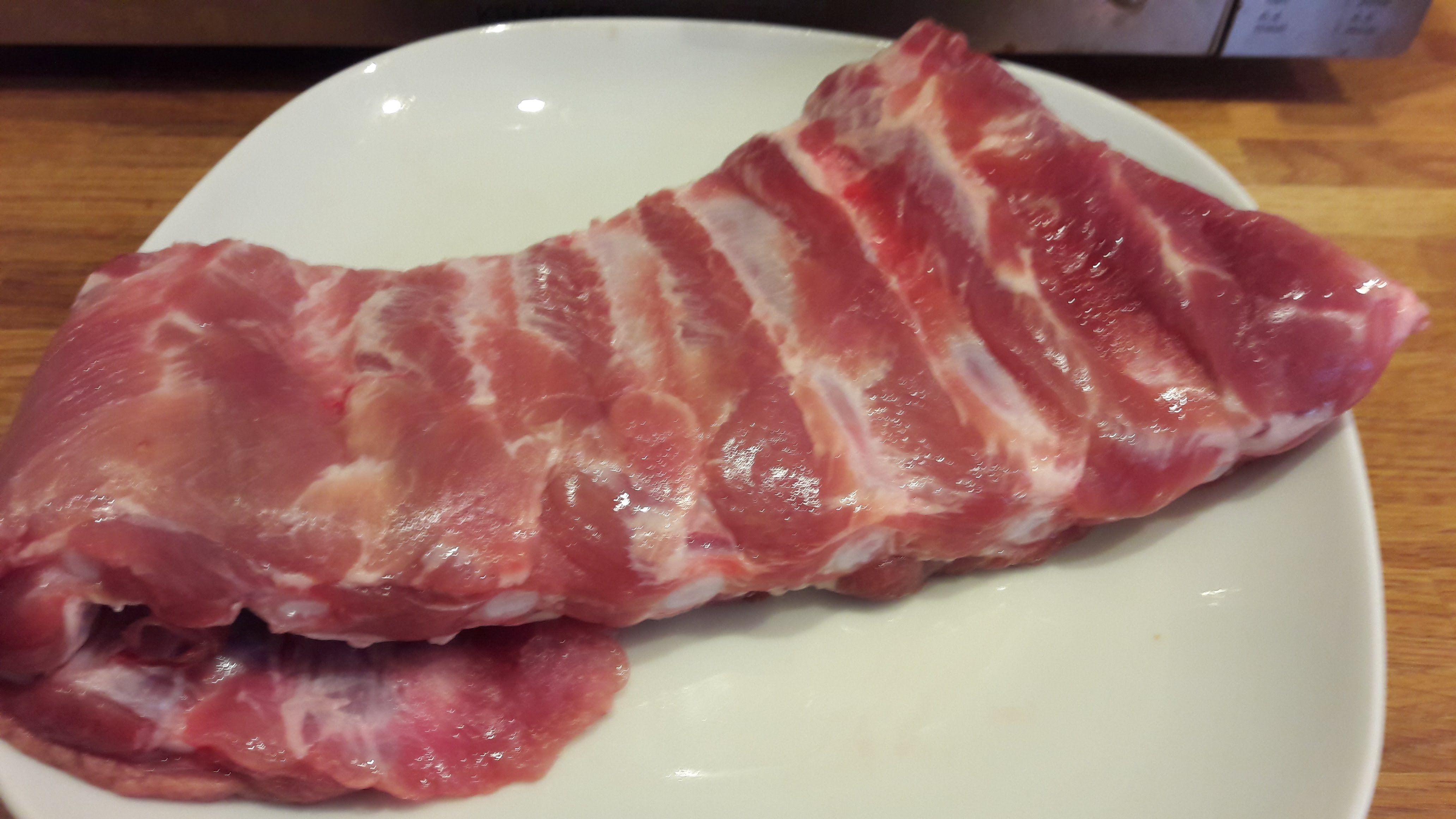
For this dish use the best pork you can buy – I used some locally reared Yorkshire pork.

Ingredients

1 -2  racks of pork ribs

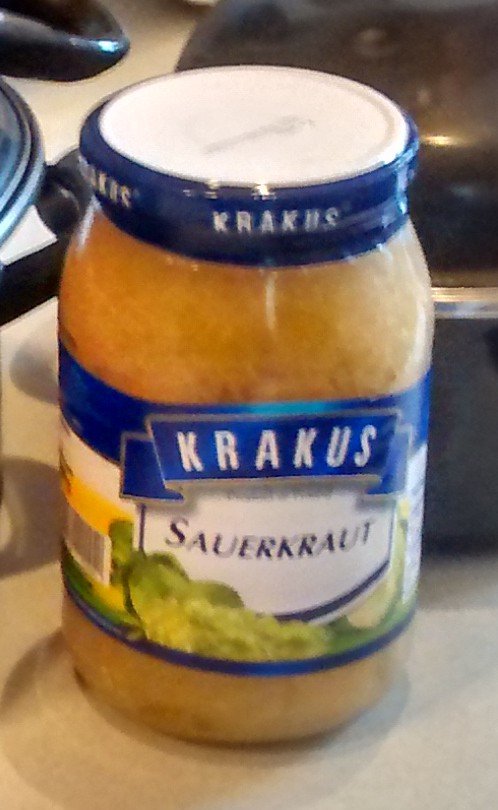
900ml – large jar of sauerkraut

2 onions – thinly sliced – fried.

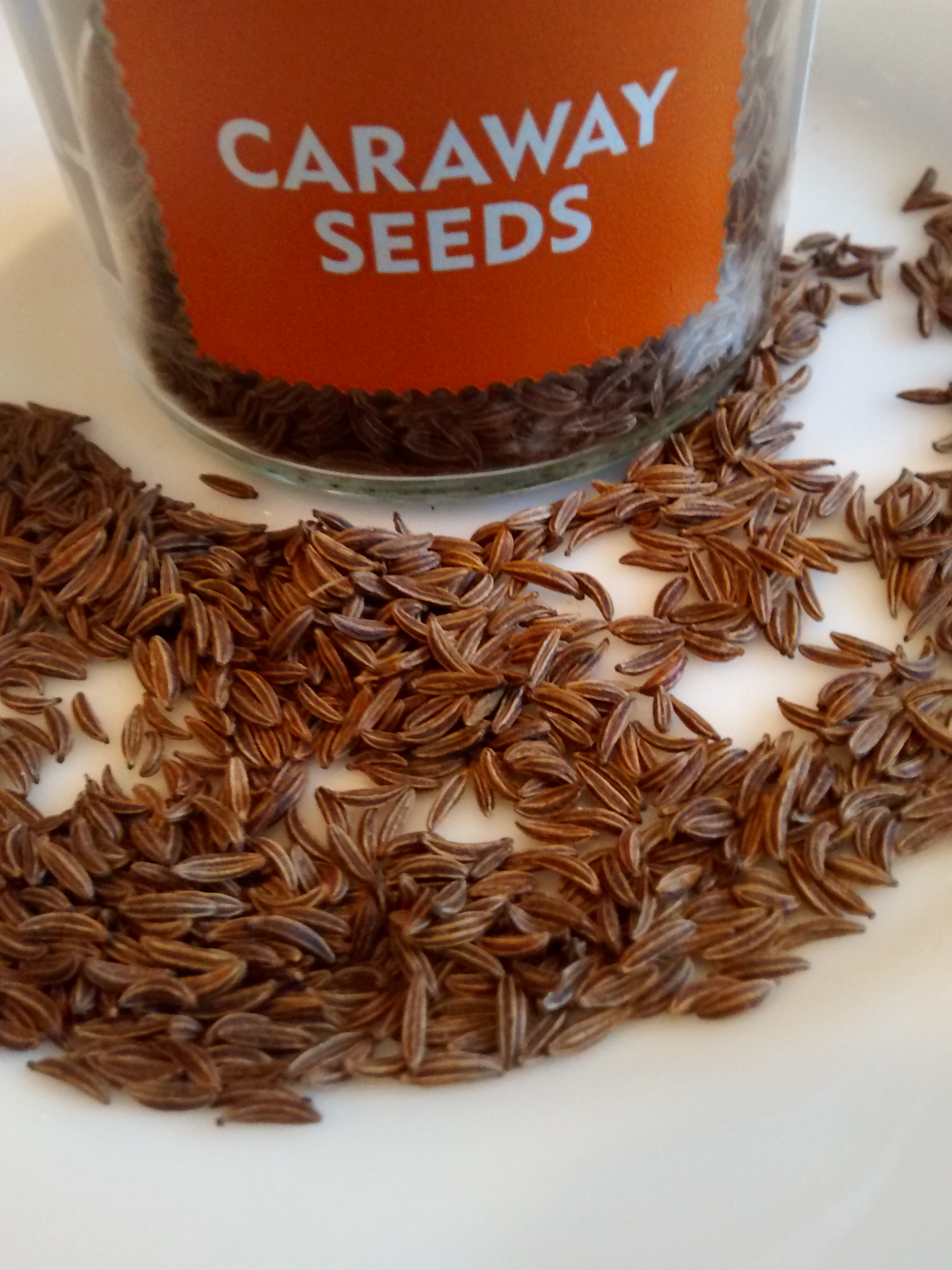
1 teaspoon caraway seeds

2 cloves of garlic – chopped

1 tablespoon of sugar (more or less depends on the sourness of the sauerkraut)

4-5 peppercorns

350ml- of chicken stock (can be from a cube or concentrate) – extra might be needed for topping up.

Caraway Seeds

Method

Take the sauerkraut out of the jar and put into a saucepan with any liquid from the jar.

Cover the sauerkraut with water and simmer gently for 20 minutes.

Pre-heat the oven to GM3- 160°C

You need a large oven proof dish with a lid  – I use an enameled dish.

Put the sauerkraut, and any liquid, and onions in the dish and mix well.

Add, caraway, garlic, sugar & peppercorns.

Pour most of the stock over the sauerkraut mixture.

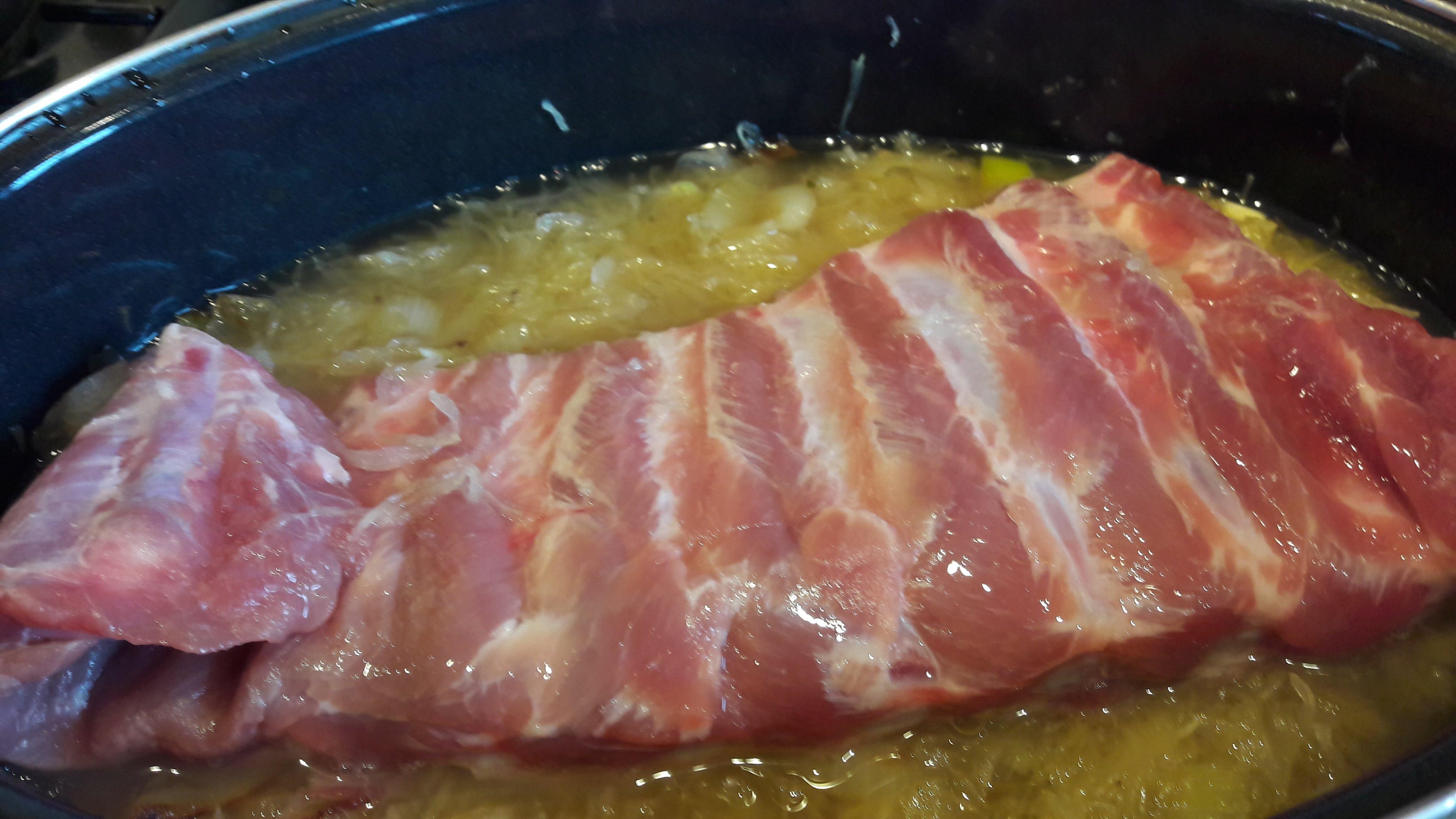
Place the ribs on top of the sauerkraut and pour the rest of the stock over them.


Put the lid on the dish and place in the oven.

Check on the liquid level during the cooking time and add any extra needed so it does not dry out.

Move some of the sauerkraut  mixture over the ribs.

Cook for 3-4 hours.

This would usually be served with either rye bread or boiled potatoes.