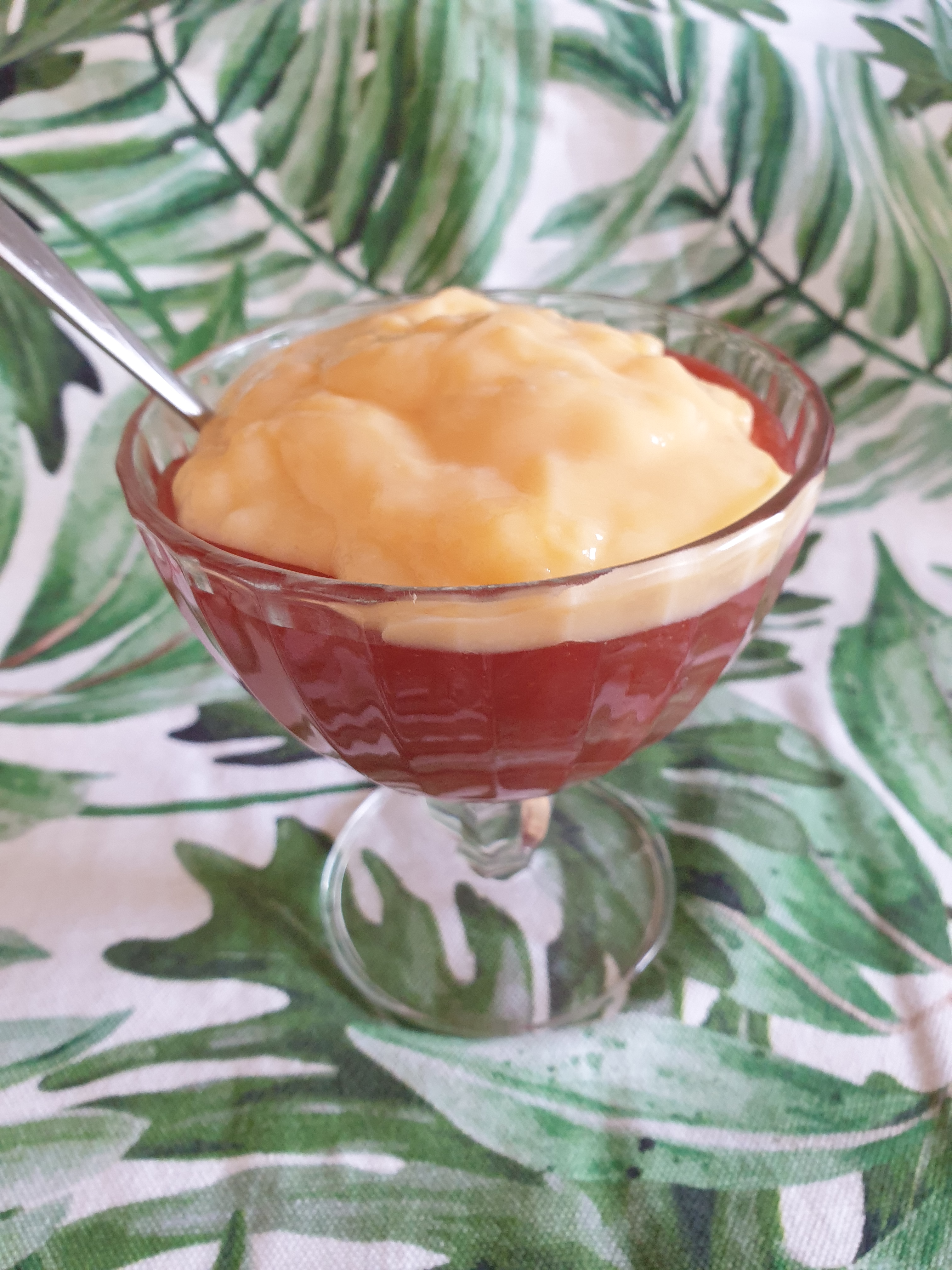
Apple & Budyń Cake

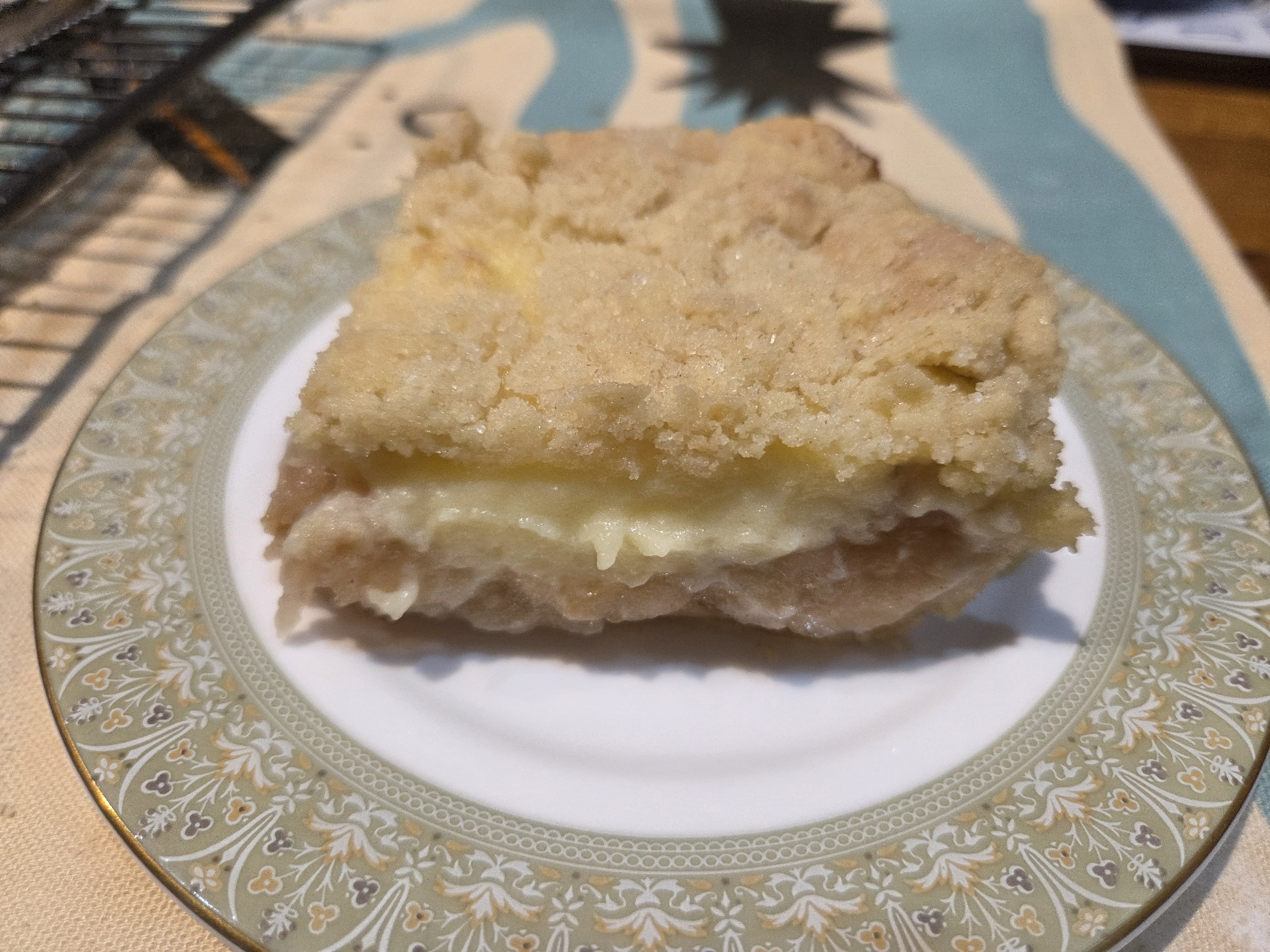
  • I have tried out several versions of cake that has apples and budyń Polish custard in the middle.
  • After many attemps, this is the best for baking and for cutting up afterwards.
  • It consists of 4 parts: – 
  • A shortcrust base and sides
  • Cooking apples – half cooked
  • 500ml of  budyń
  • Kruszonka topping – rich crumble mix
  • I made this in a rectangular baking tin – 26 x 21cm.

INGREDIENTS

  • Shortcrust pastry – enough to cover the base & sides of the tin.
  • 3-4 large cooking apples – peeled and cored – half cooked with sugar and a little cinnamon added.
  • Budyń made with 500ml of milk & 3 egg yolks.
  • Kruszonka – crumble mixture – made with 125g of plain flour, 100g butter and 80 – 100g of granulated sugar. (Will be doing a post on this later)

Royal Doulton, sonnet, tea plate.

METHOD

  • Chop the apples and cook them with the sugar (to taste – not too sweet).
  • Add a little cinnamon.
  • Leave to cool.
  • Make the budyń with 500ml milk, 1 tablespoon of butter, 1 tablespoon of sugar, 3 tablespoons of potato starch & 3 egg yolks.
  • Leave to cool.
  • Make the kruszonka – crumble mixture –  with 125g of plain flour, 100g butter and 80 – 100g of granulated sugar –
  • Rubbing the butter into the flour to resemble bread crumbs and stir in the sugar.
  • *
  • Pre-heat the oven to GM7 – 220°C.
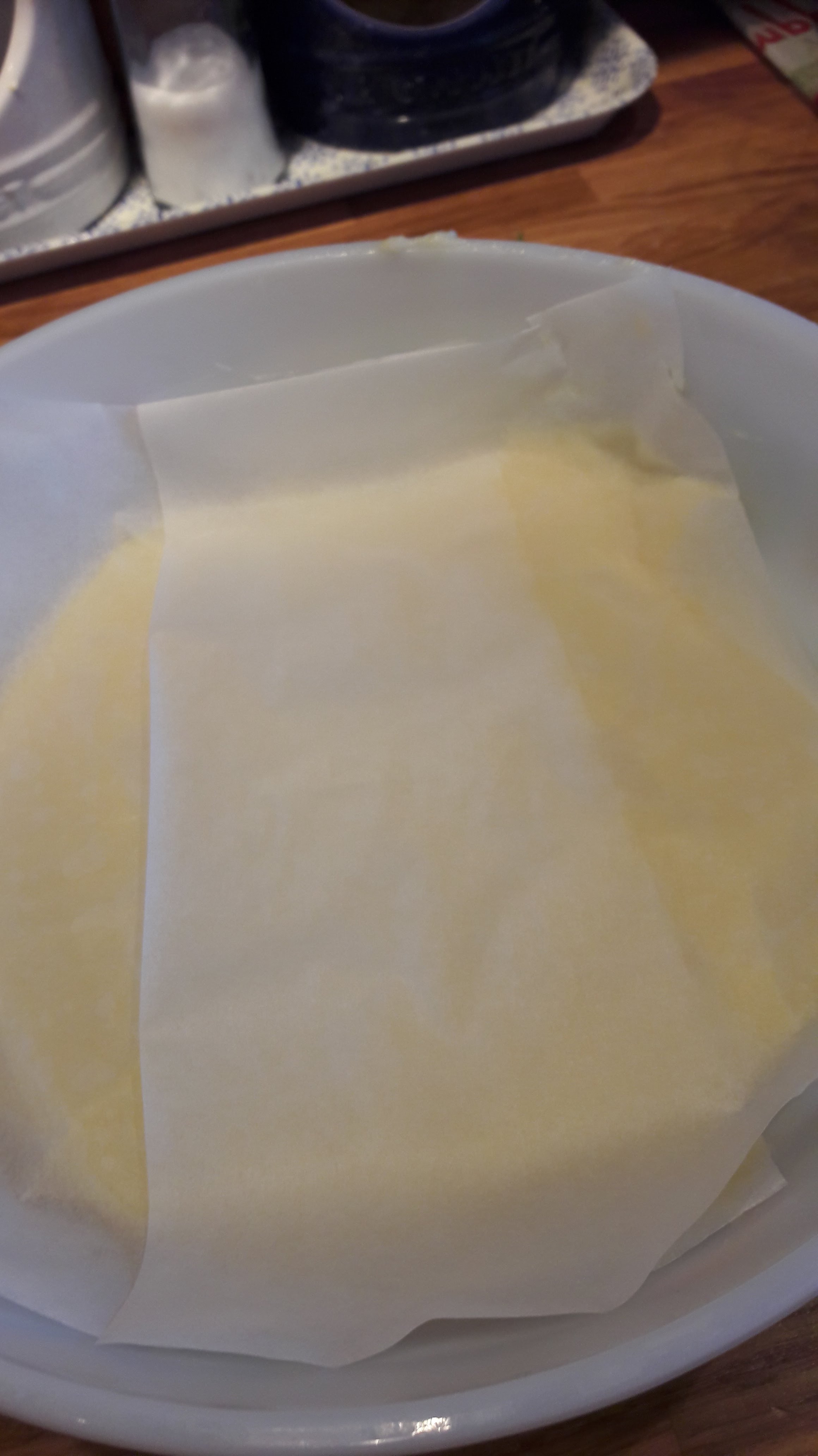
  • Grease and line with one sheet of baking paper – 2 sides and the base of  the 26 x 21cm tin.
  • Roll out the shortcrust pastry to cover the base and all sides of the tin.
  • Piece carefully when needed.
  • Prick carefully with a fork the base.
  • Using baking beans – bake the pastry blind for 15 minutes.
  • Remove the baking beans and flaten the pastry gently if need be and bake for another minute.
  • Remove the tin from the oven and leave to cool a little.
  • *
  • Turn the oven down to GM5 – 190°C.
  • Cover the pastry with the apples – spreading out to cover the base.
  • Cover the apples with the budyń – spreading it out to cover the apples.
  • Sprinkle the crumble mixture over all the budyń.
  • Put back in the oven and bake for around 50 – 60 minutes until the top is golden.
  • Leave to go cold completely before serving.

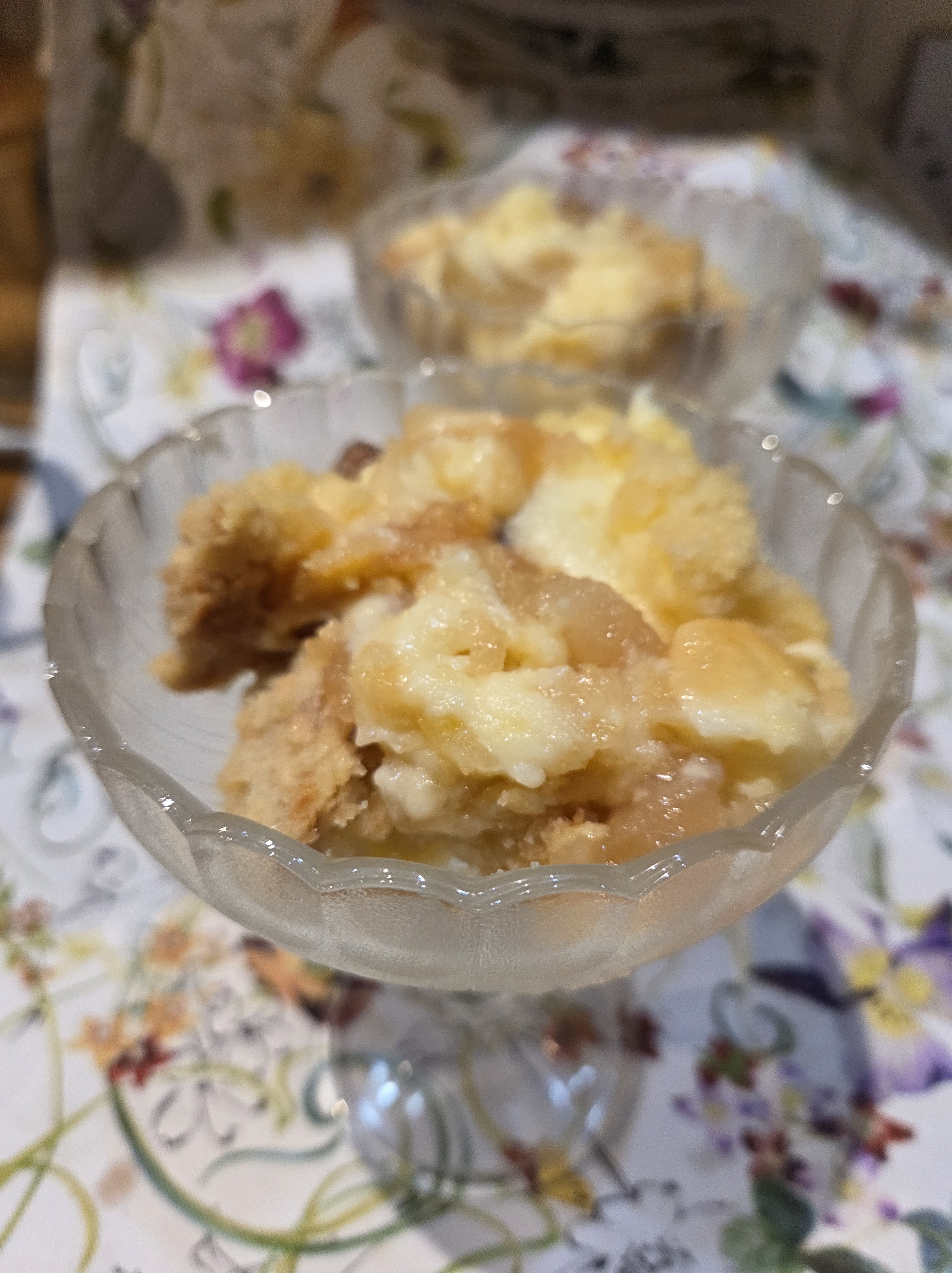
Testers said they loved the different textures of the crumble against soft custard.

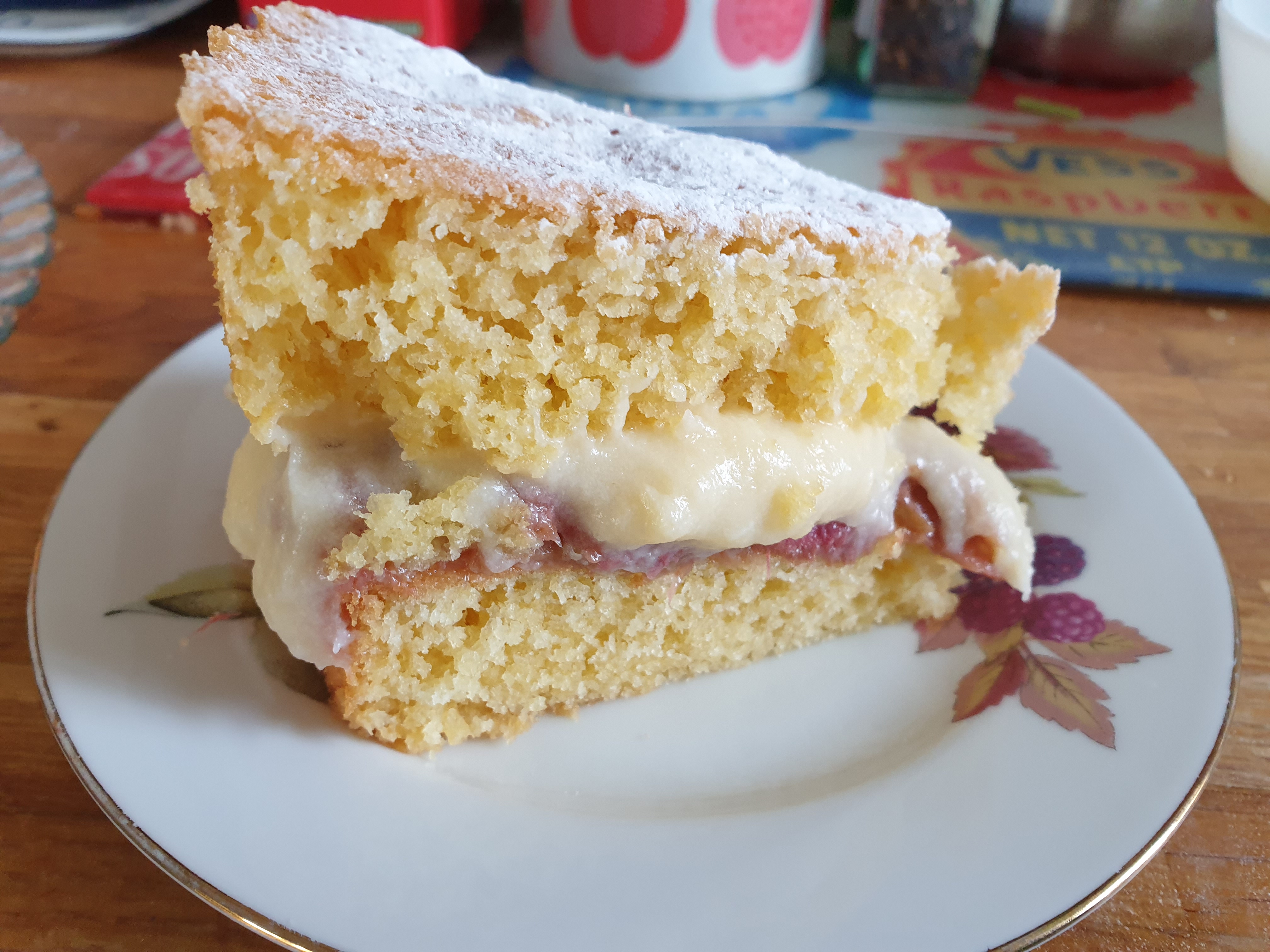
Rhubarb & Custard Cake

  • Today is my Blog Anniversity – I started in 2015 – Can you believe it is 10 years of Blogging?
  • Today is post 676!
  • Still lots of recipes to come in the future – lots of books to look at and lots of recipes from friends and family.
  • Today’s post is inspired by an English combination.
  • Stewed rhubarb and warm custard is often served as a pudding in England.
  • Yesterday I had coffee and cake in a local department store.
  • I tried a piece of Rhubarb & Custard cake thinking I could use this idea.
  • Sadly this cake was not as nice I imagined as I could not taste any custard and the cream was much too sweet; although the rhubarb – rather like a tart jam was good.
  • However I thought I would use this idea to make a cake using  budyń  – thick Polish custard and some cooked rhubarb as fillings.
  • The rhubarb filling has to be made in advance and needs to be cold.
  • Cook the rhubarb until it has lost all its structure – into a pulp – but without any liquid left.
  • It needs to be still a little tart to balance the sweetness of the other ingredients.
  • You need :
  • 2 Sponge cakes – ones using butter
  • Rhubarb filling 
  • Budyń 
  • Icing Sugar to dust

Ingredients

  • 8- 10 stalks of rhubarb
  • 3-4 tablespoons of granulated sugar
  • 4 tablespoons of water (more might be needed)

Method

  • Pre-heat the oven to GM2 – 150°C.
  • Chop the rhubarb into small pieces and place into a roasting tin.
  • Sprinkle with the sugar.
  • Cook for around 40 minutes.
  • Keep checking and add water if necessary.
  • Do not allow the sugar to burn.
  • Cook until the rhubarb is very soft.
  • Mix to a pulp with a fork. 
  • Leave to cool completely.

INGREDIENTS for budyń

  • 500ml milk
  • 1 tablespoon of butter
  • 2-3 tablespoons of granulated sugar
  • 3 egg yolks
  • 3 tablespoons of potato flour (or cornflour)

METHOD for budyń

  • Put 300ml of the milk, the butter and sugar into a saucepan.
  • Heat gently till the butter has melted and the sugar dissolved, stirring all the time.
  • Bring this to the boil for a few seconds and then take off the heat.
  • Blend the potato flour with the rest of the milk (200ml) and with the egg yolks.
  • Add some of the boiled mixture to this and stir well.
  • Add this mixture to the rest of  the boiled mixture and stir well.
  • Put the pan back on the heat and bring back to boiling point, stirring gently.
  • Keep at boiling for 1 minute, stirring all the time.
  • Leave to cool completely.

Ingredients for Cake

  • 4 Eggs
  • Butter
  • Caster Sugar
  • Plain flour
  • 2½ teaspoons of baking powder
  • 2-3 drops of vanilla essence

Method for Cake

  • Grease and line the base of 2 x 21.5cm  sandwich tins. – I find anodised aluminium tins are the best. (my old tins say 8 1/2 inch on the base – 21cm or 22cm would be OK)
  • Pre-heat the oven to GM 4 – 180°c
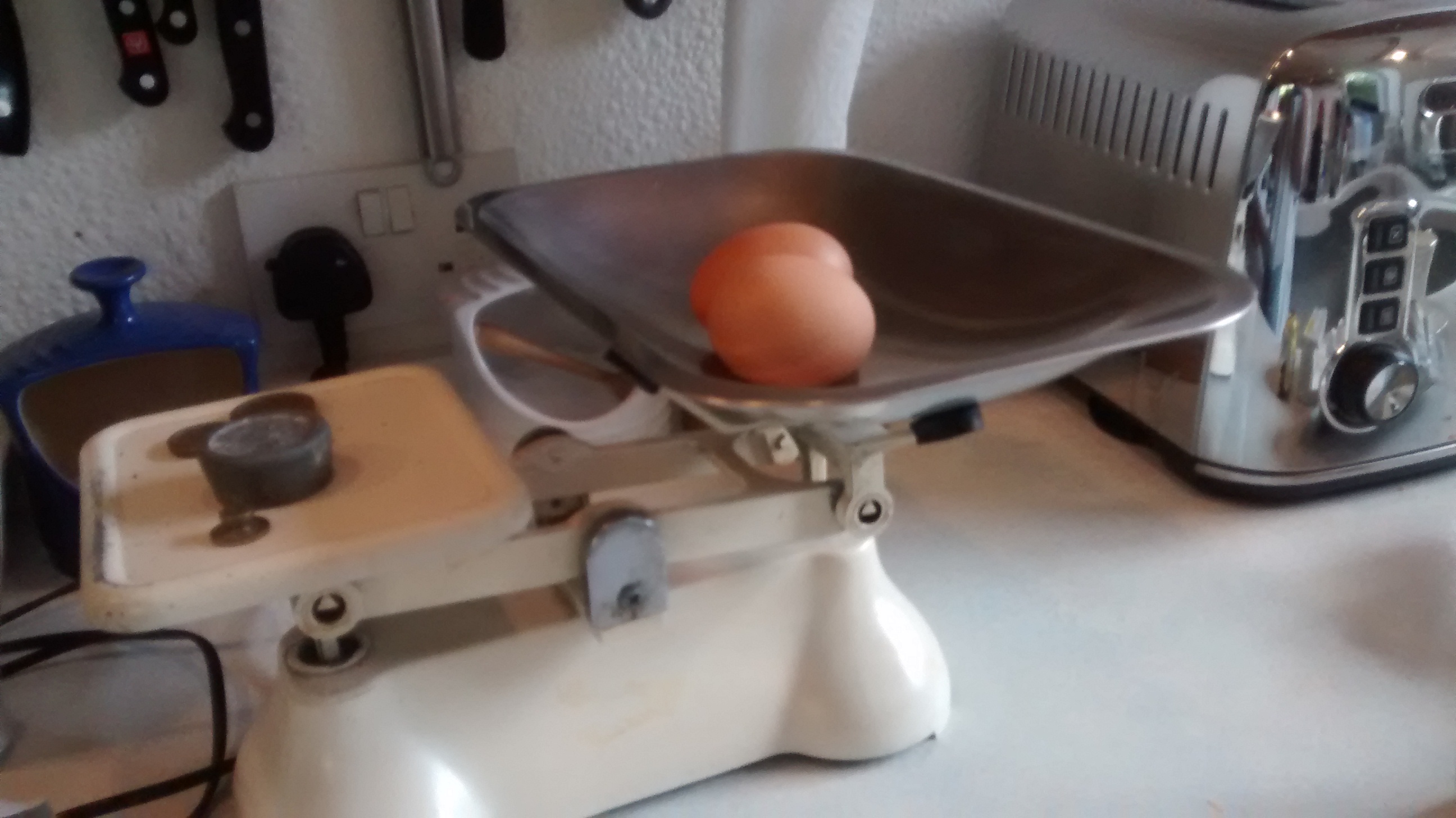
  • The first thing you have to do is weigh your eggs – complete with their shells.
  • You then weigh out the same amount of  butter, caster sugar and flour.
  • At first I thought this was very strange but now find that it gives a very good way of getting the right proportions no matter what size the eggs are.
  • I heard the late Marguerite Patten in an earlier recorded programme on the radio a few weeks ago saying that Victorian cooks often  used this method. 
  • Cream together the butter and sugar until it is light and fluffy.
  • Add the eggs, one by one whisking again until the the mixture is light and fluffy again.
  • Seive the flour and mix in the baking powder.
  • Fold in the flour with a metal spoon taking not to over mix the mixture and knock out all the air.
  • Divide the mixture evenly between the 2 prepared tins.
  • Bake in the centre of the oven for around 25 to 30 minutes  – the cake should  be golden brown and be clean when a cake tester is used.

Layer up the Cake

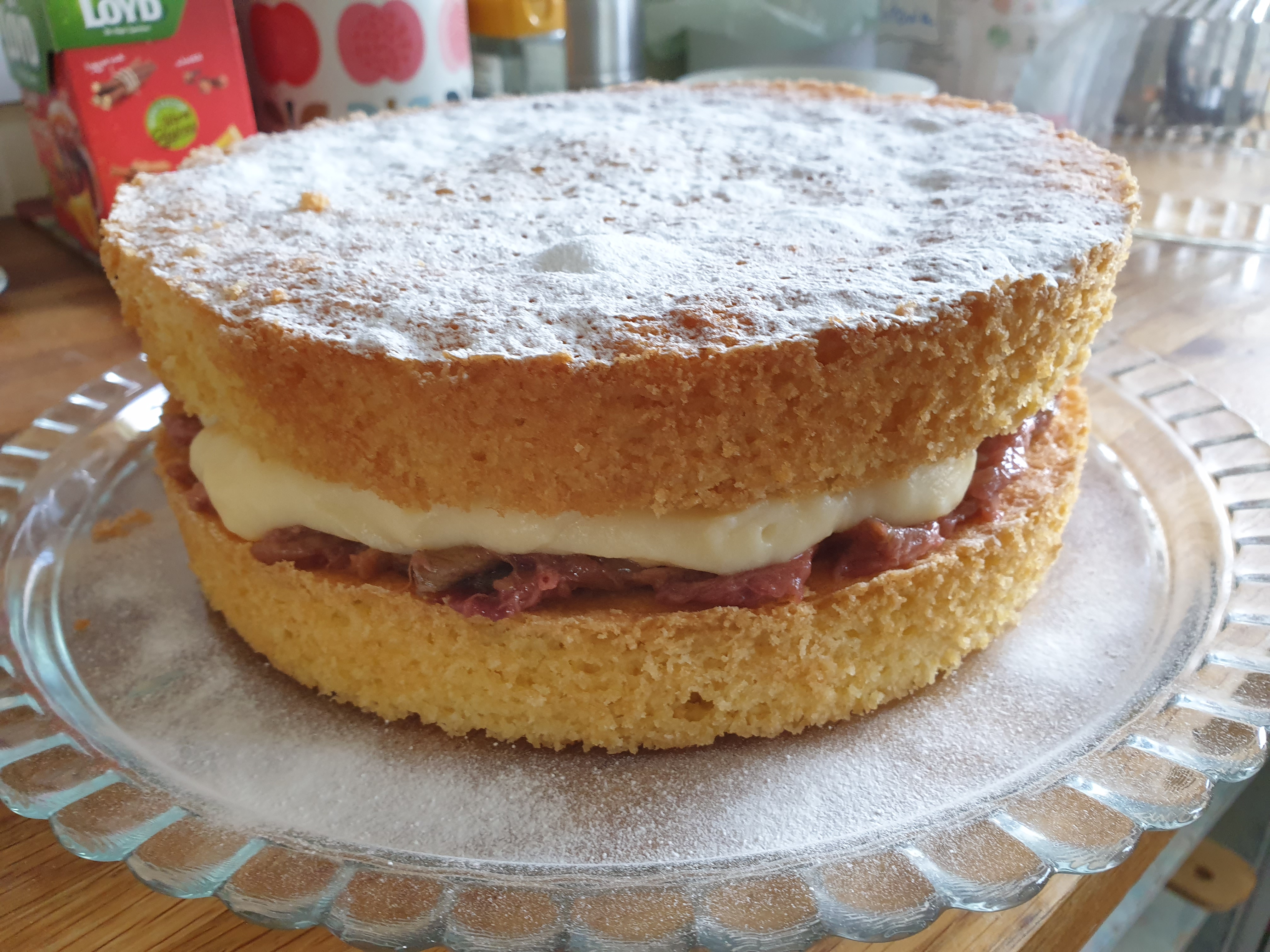
  • Place one of the sponge cakes on a glass plate or stand.
  • Spread the rhubarb over the cake up to the edge.
  • Spread all the budyń over the rhubarb up to the edge.
  • Gentle place the second cake on top.
  • Dust lightly with icing sugar.

Yeast Buns with Polish Custard & Dark Fruit

This is a variation on my post Kołaczyki which means little wheels from the word koła which means wheels.

This uses my favourite Basic sweet yeast dough. 

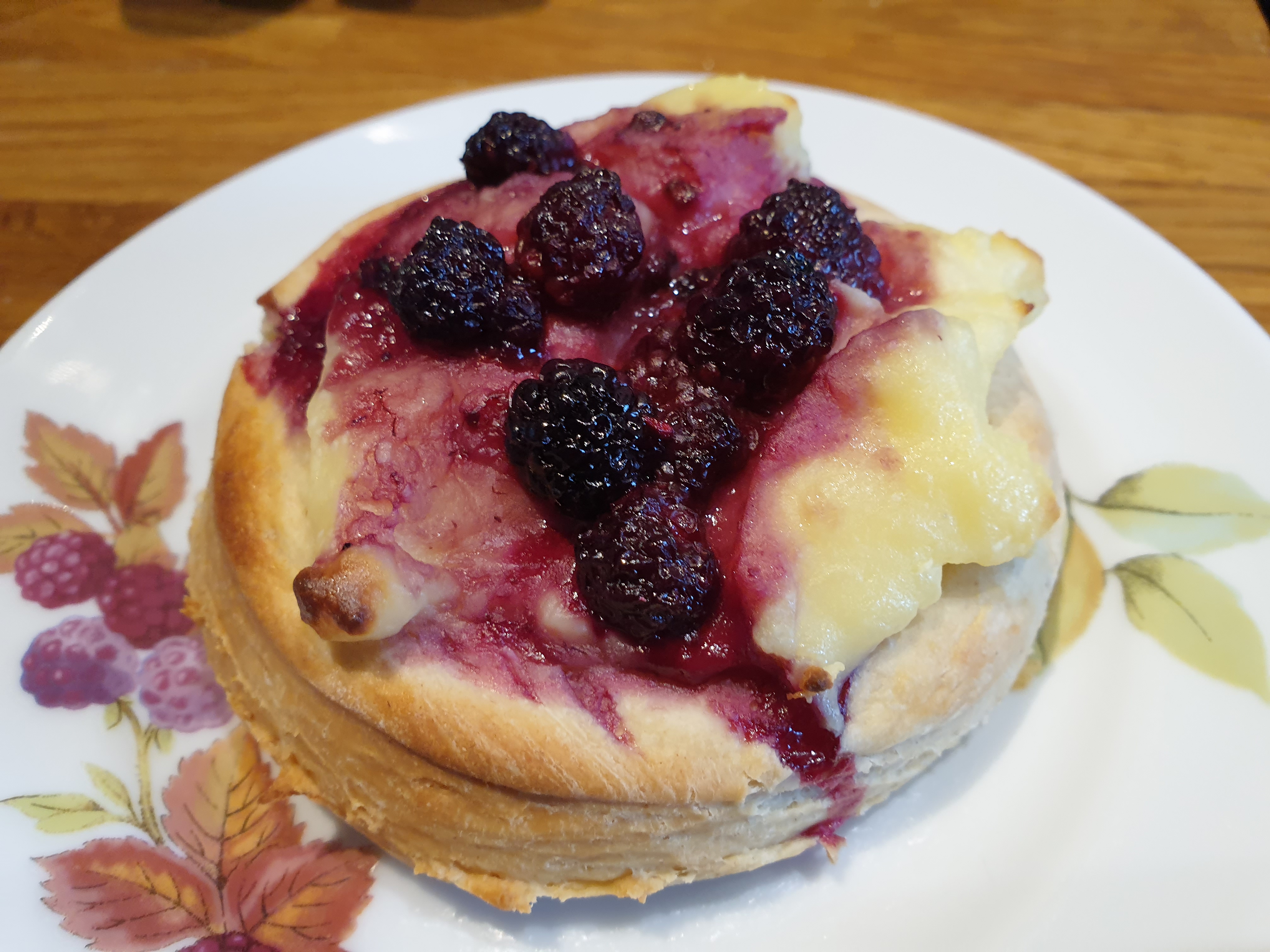
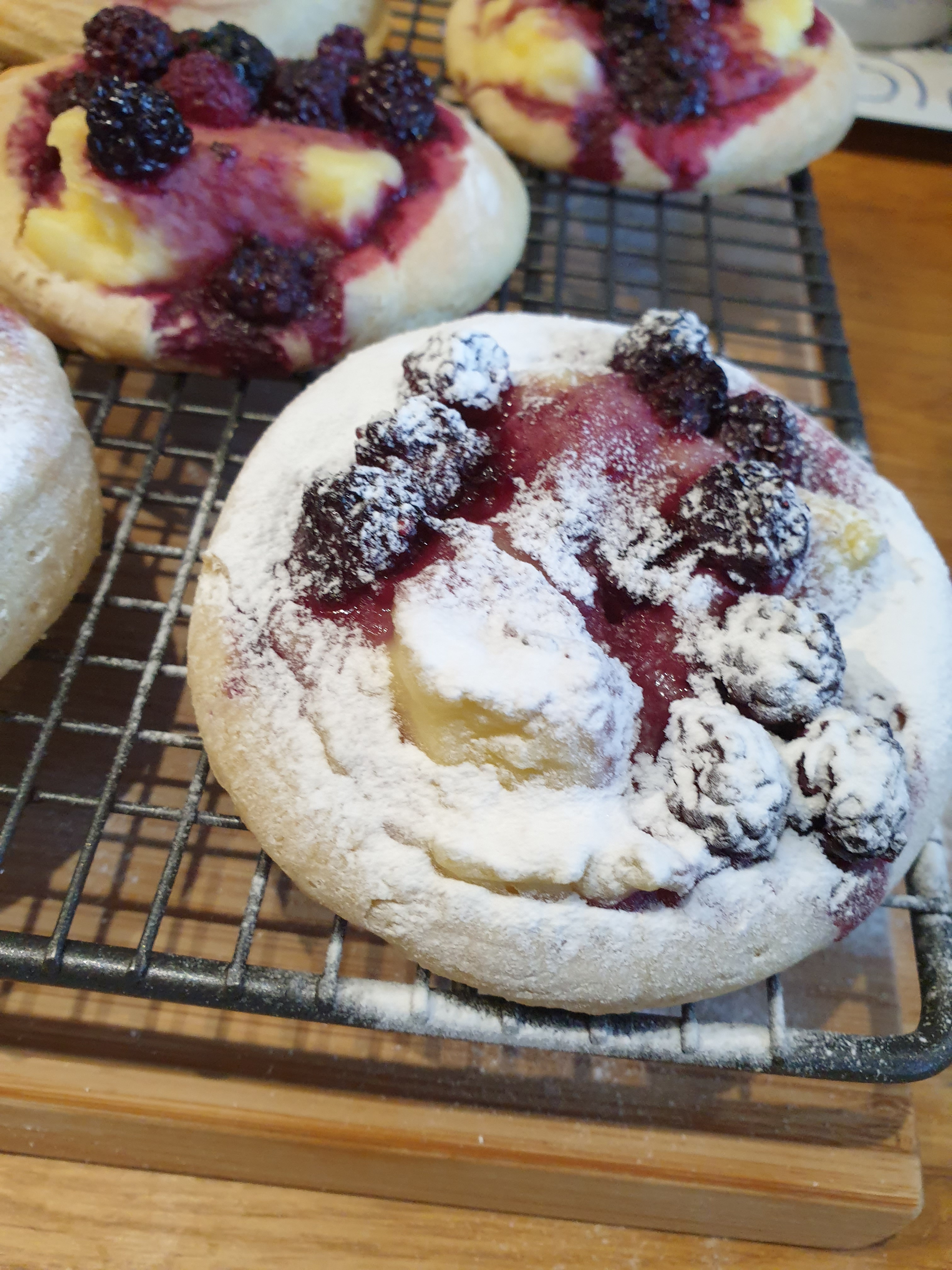
The buns are filled with budyń – Polish custard and dark forest fruits.

I used frozen blackberries.

A few reminders when using yeast in baking

  • Learn to be patient – you cannot control the timings exactly with yeast, it depends on the temperature of the room and the flour used and other variables.
  • Do yeast baking on a day you are planning to be in & have other things to do, but ones you can break off from when needed.
  • Heat the milk so it is at body temperature – use the finger test – too hot and you will kill the yeast – too cold is okay – it will just take longer.
  • Older Polish recipes use fresh yeast.
  • I have used dried yeast and have had very good results. 

Ingredients – for the dough

Leaven – Starter

  • 100g plain flour
  • 15g dried yeast
  • 125ml  milk

Rest of ingredients

  • 3 egg yolks
  • 60g sugar
  • 50g melted butter or block margarine
  • 400g plain flour
  • 1/4 tsp salt
  • Zest of 1 lemon
  • 2-3 drops of vanilla essence
  • 125ml milk

Method

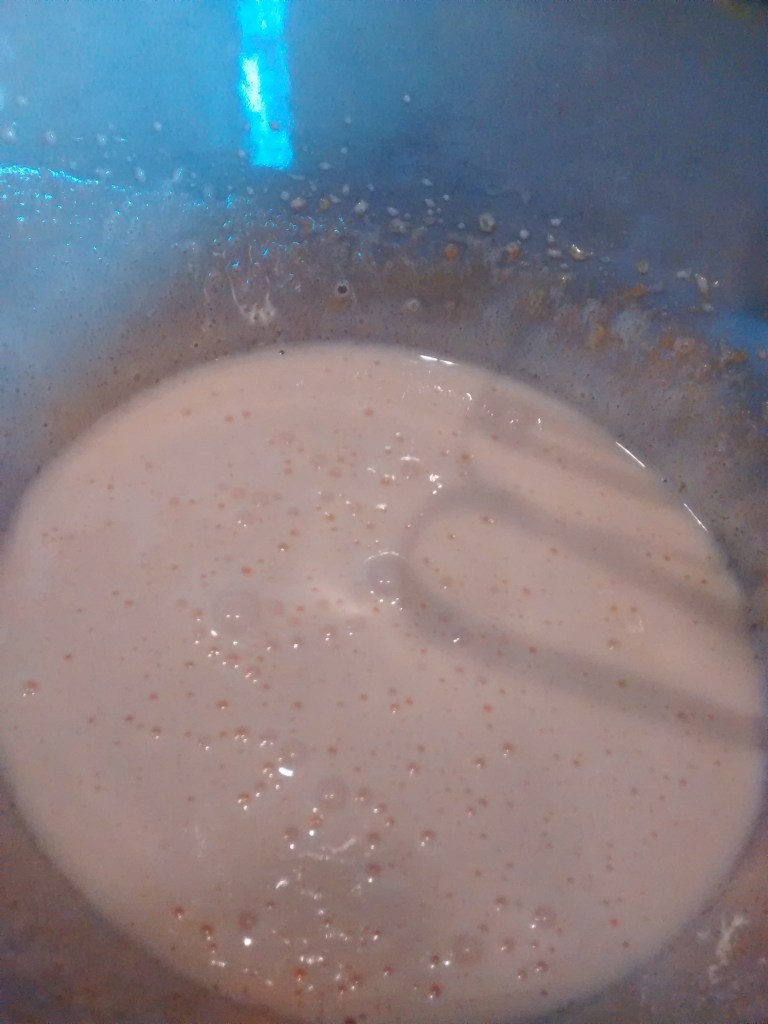
  • Warm the milk slightly – so it is just warm to the touch – and add the yeast and mix together.
  • Put the flour in to a bowl and add the milk and yeast  mix it all together and leave it covered until it is double in size.
  • *
  • Melt the butter and leave it to cool.
  • *
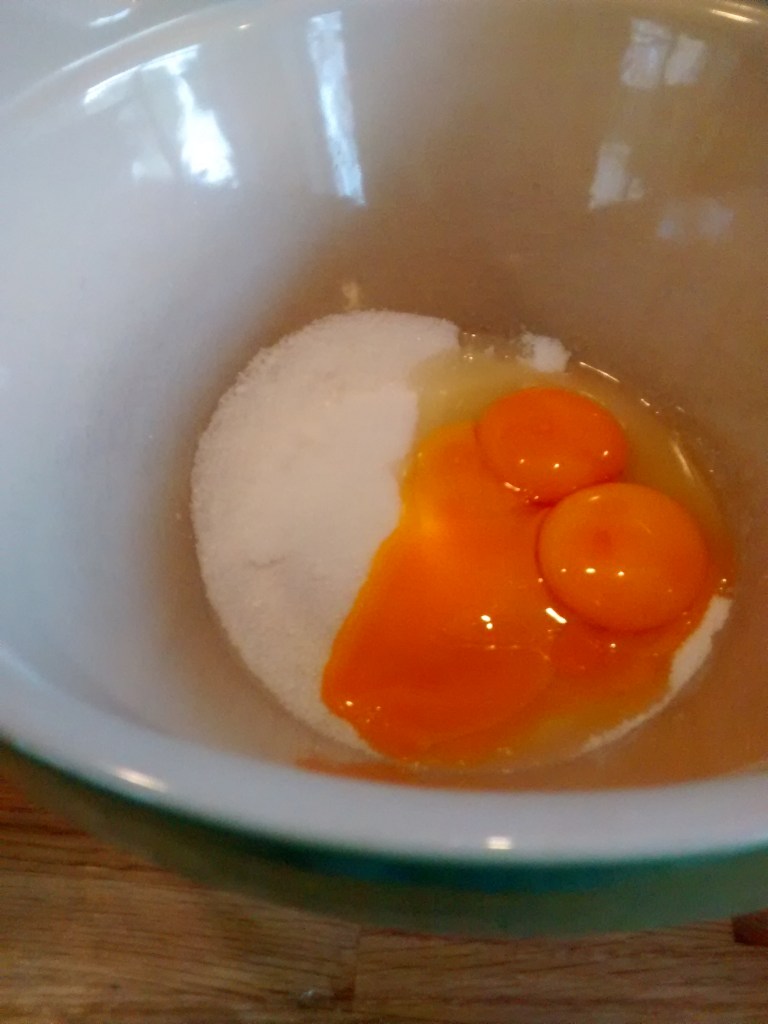
  • Whisk the yolks and sugar until they are pale and fluffy.
  • *
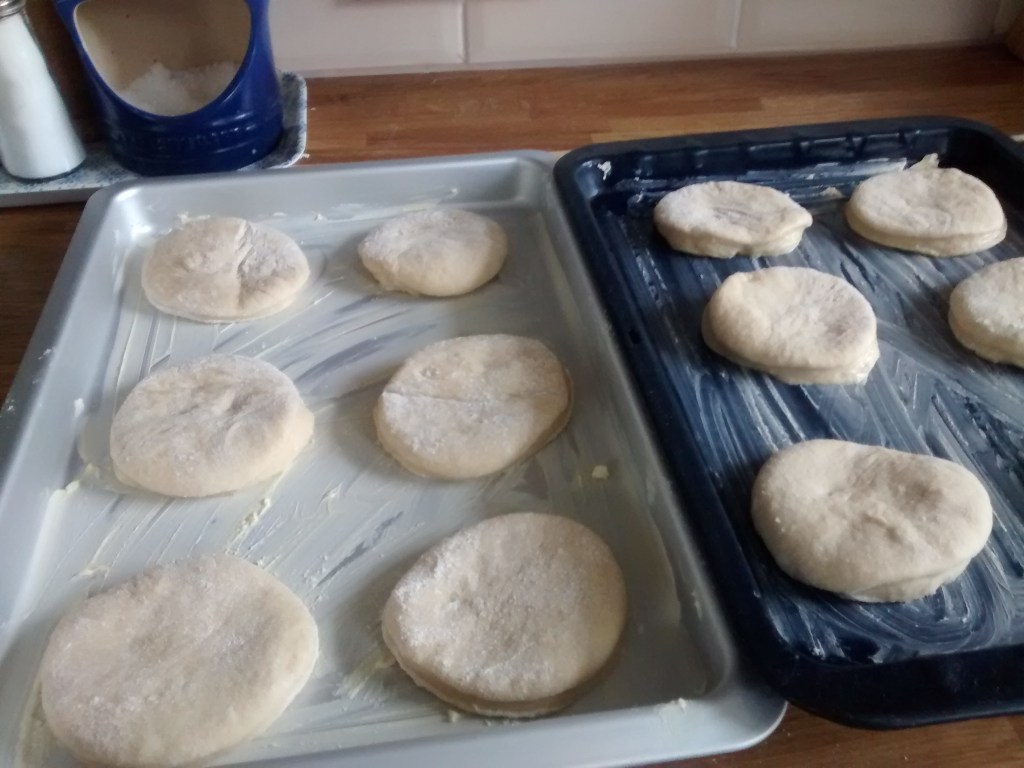
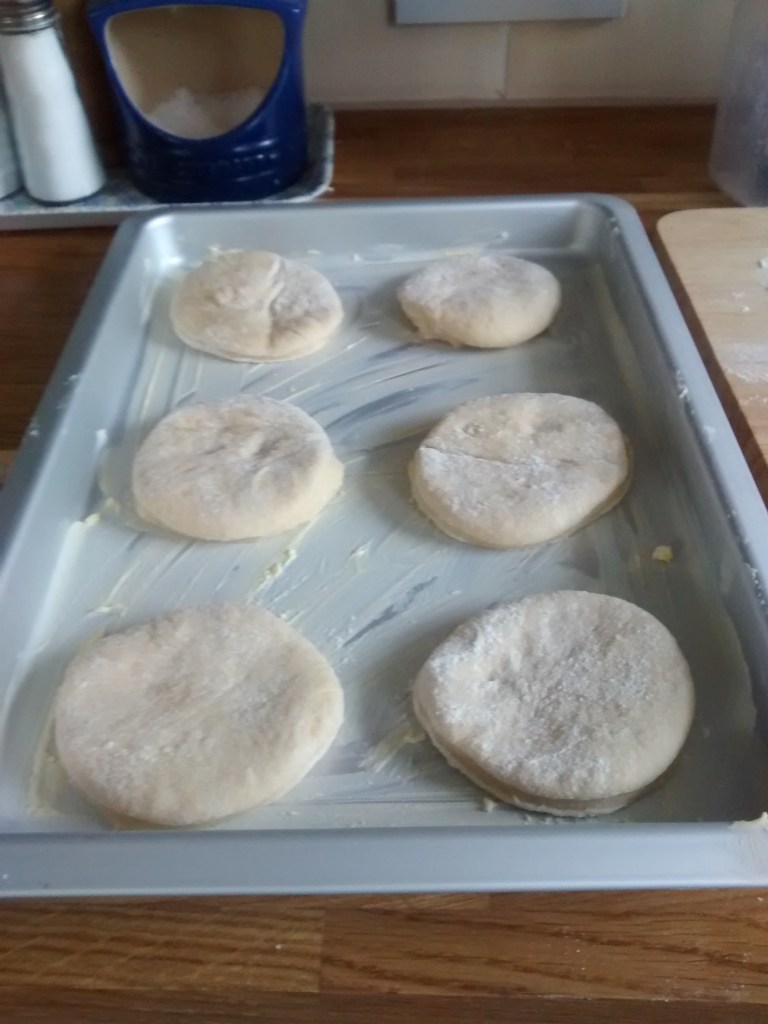
  • Grease 2 baking sheets – You should get around 14 buns. – invite people round!
  • I think these are best on the day they are made – start early in the morning.
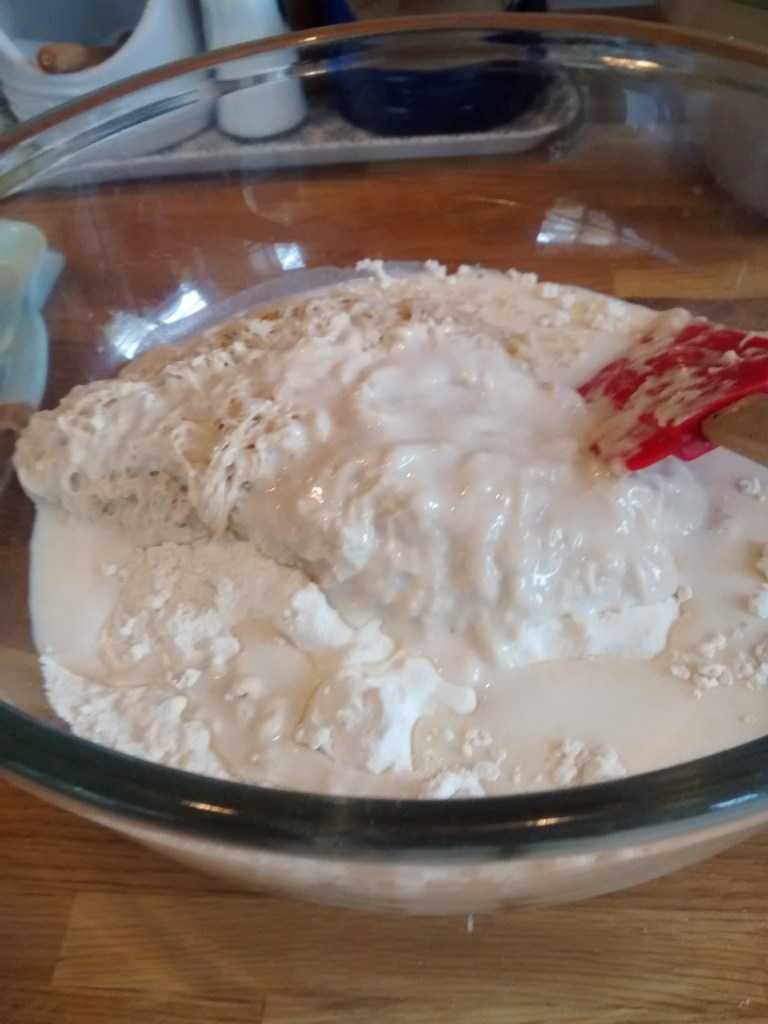
  • Into a large bowl put: the flour and the salt, the yeast starter, the yolk mixture, the zest of a lemon, the vanilla essence and the milk.
  • Mix it all together so that you get a soft dough that comes away from the side of the bowl – you do not have to knead it.
  • *
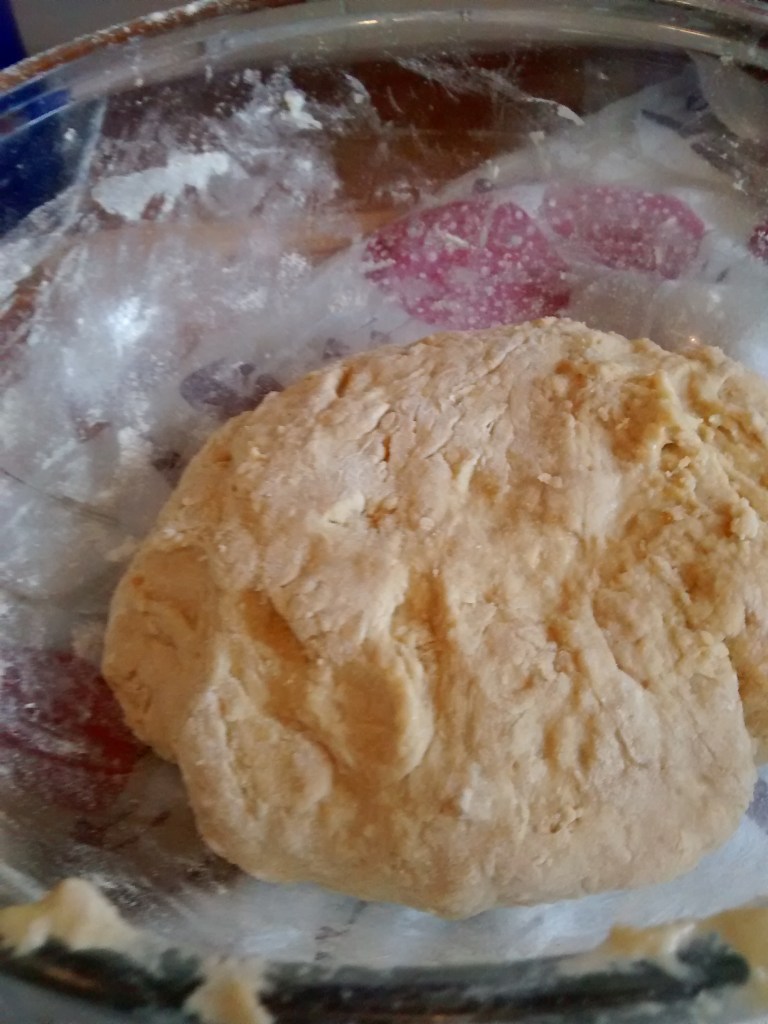
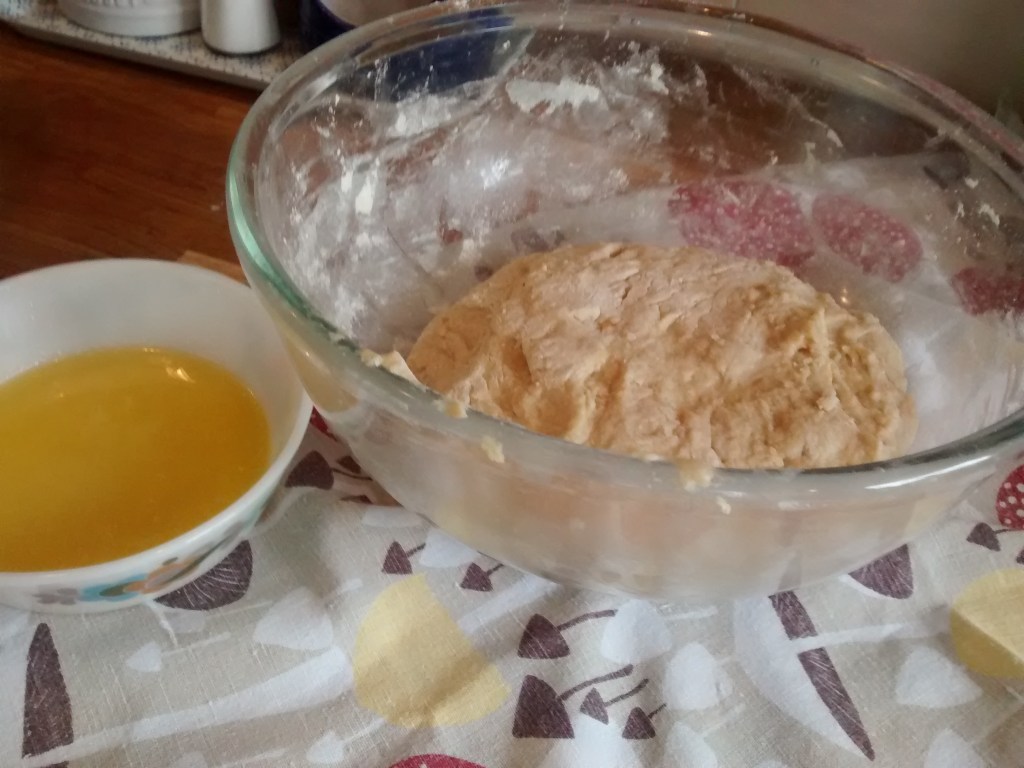
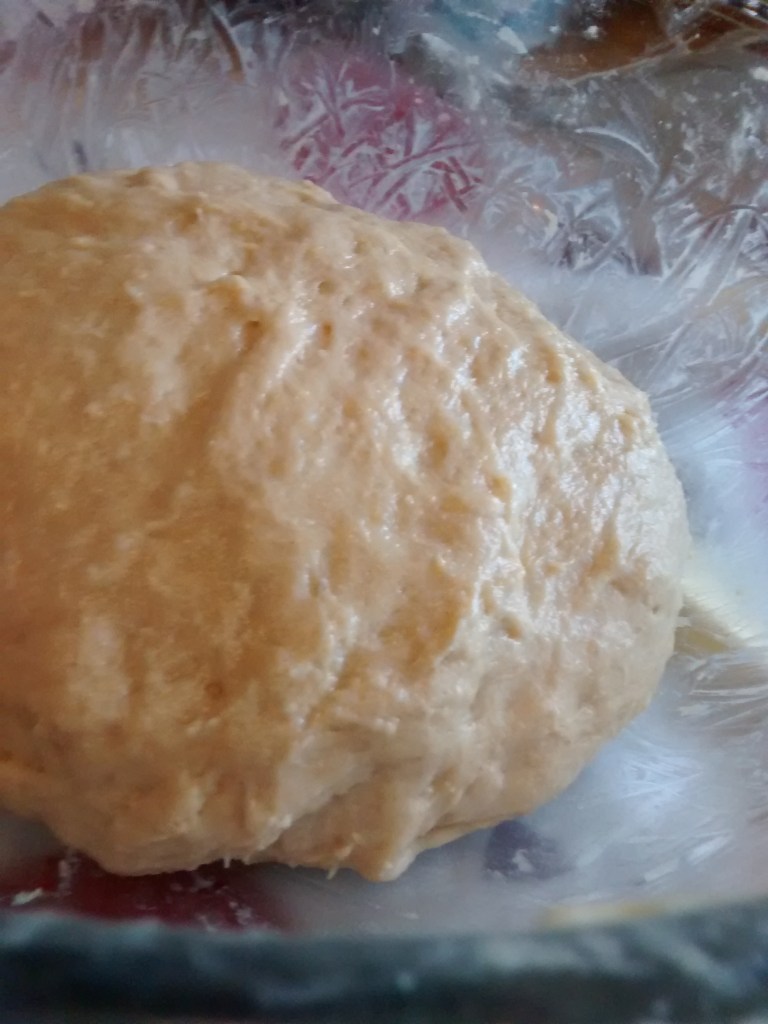
  • Then work in the melted butter (this is the hardest part) until it is all incorporated and you have a uniform shiny dough.
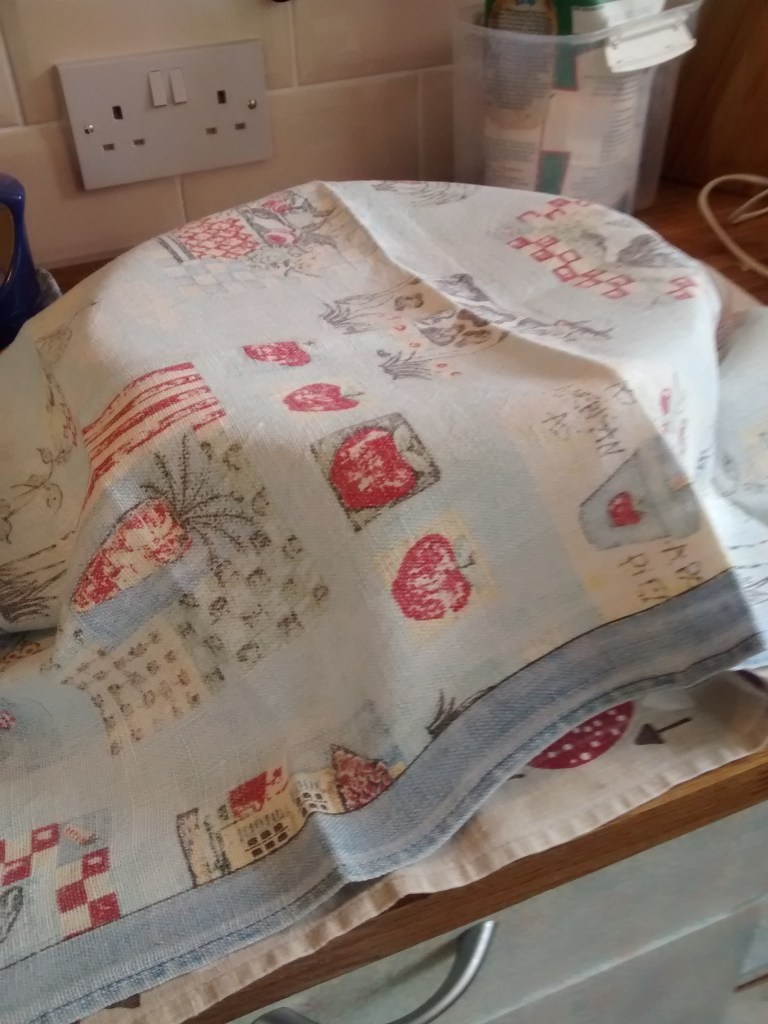
  • Cover the dough with a cloth and leave this to rise until it is double in size.
  • *
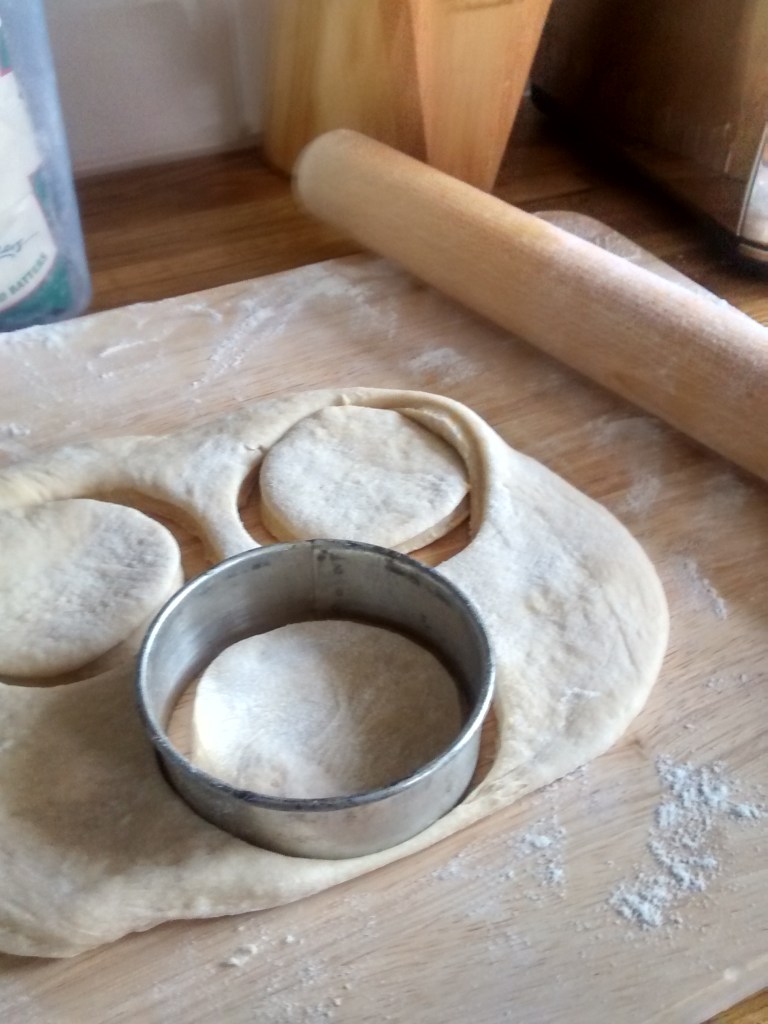
  • Onto a floured surface place the dough and form it into a rectangle and then roll this out until it is around  2cm thick.
  • Using a 8cm diameter cutter cut out circles of dough and place them on the greased baking sheets, leaving room for the dough to rise.
  • Gather together the left over dough and repeat the process.
  • *
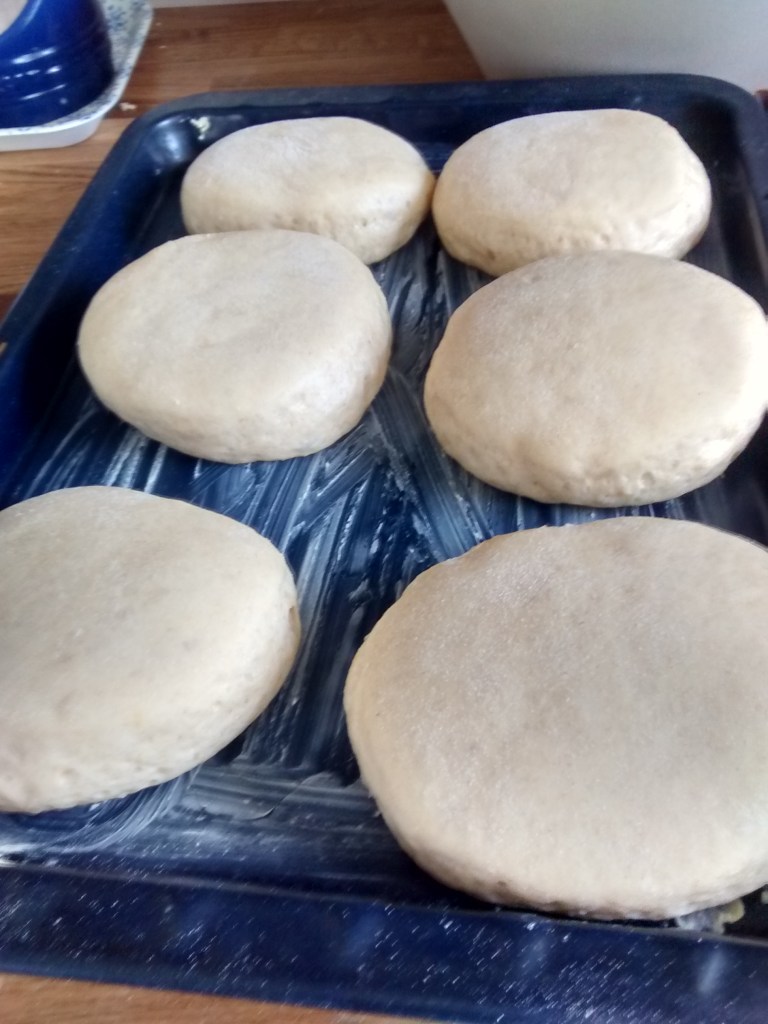
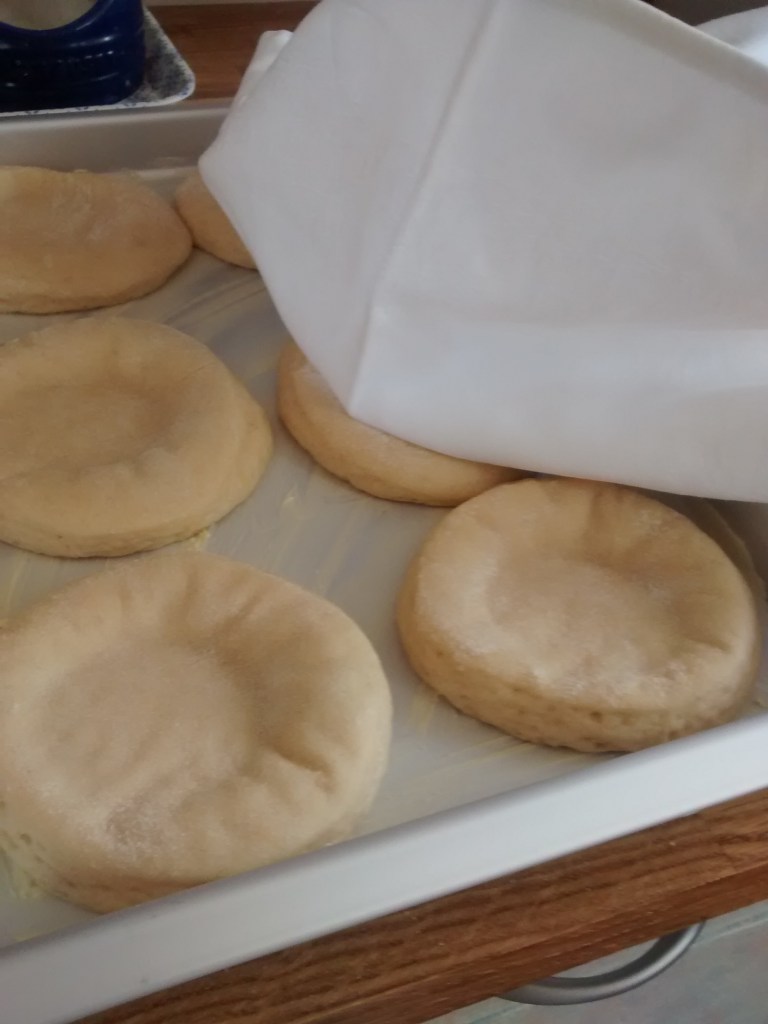
  • Cover the trays and leave the circles to rise and double in size.
  • Pre heat the oven to GM5 – 190ºC
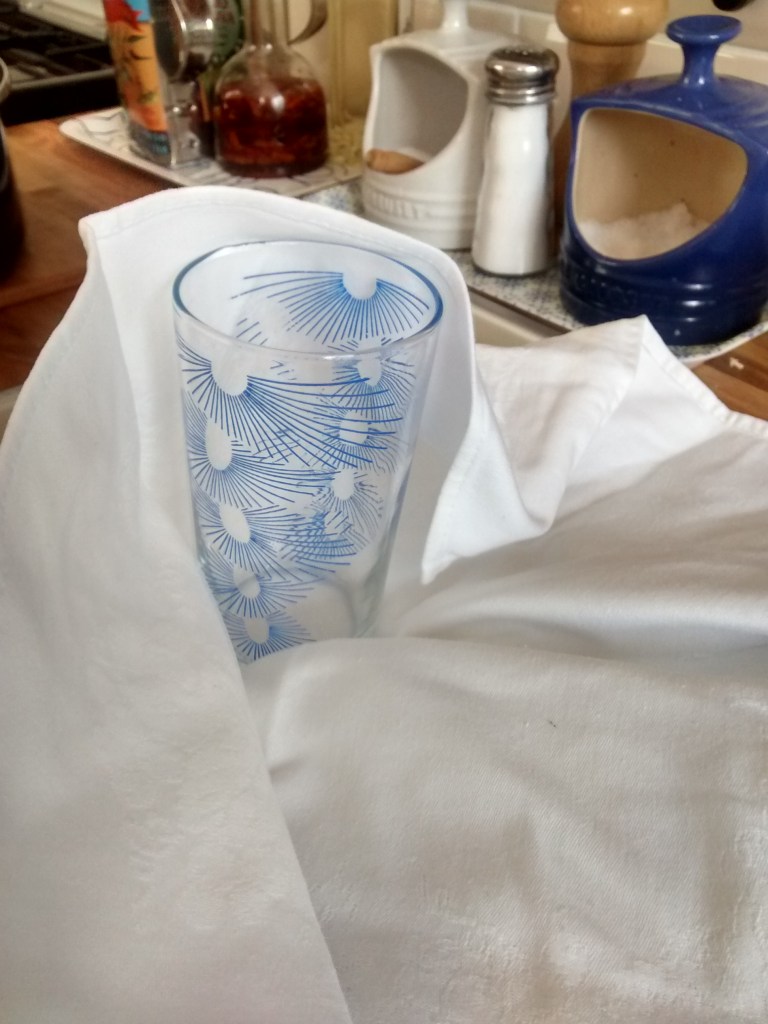
  • Use a clean napkin or tea towel and cover the base of a tumbler.
  • Use the covered tumbler and press down on the centre of each circle to form an indentation into which you will put the filling.
  • *
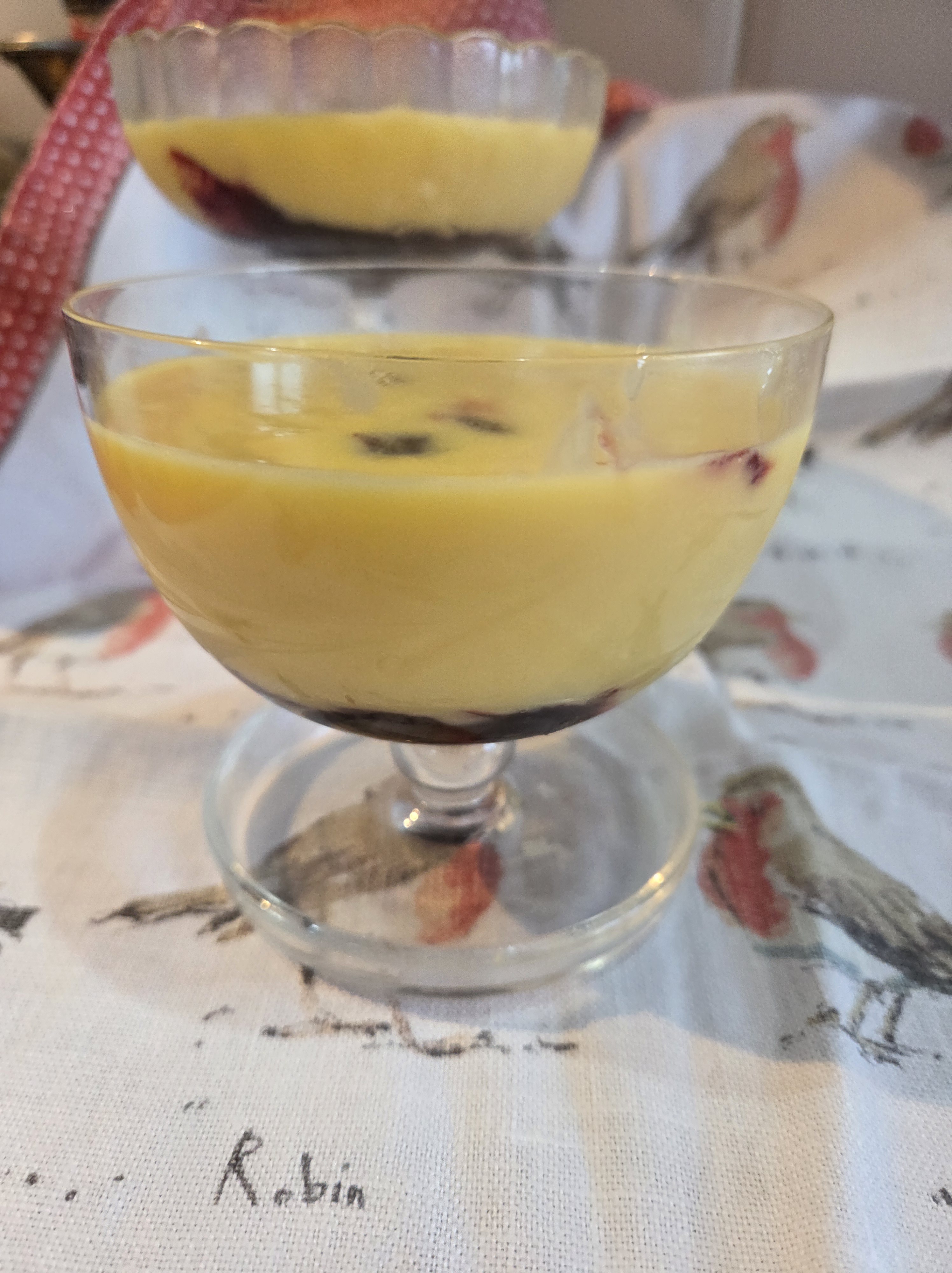
  • Add the budyń to each bun.
  • Top with the fruit.
  • Bake for 20-25 minutes
  • Can dust with icing sugar
  • INGREDIENTS for  budyń 
  • 500ml of milk (full fat is best)
  • 1 tablespoon of butter
  • 3 tablespoons of granulated sugar
  • 2-3 drops of vanilla essence or 2 bay leaves (fresh are nice if you have then)
  • 3 tablespoons of potato starch(or you can use cornflour)
  • 3 egg yolks
  •  
  • METHOD
  • Put 300ml of the milk into a saucepan.
  • Add the butter, sugar and the vanilla or the bay leaves.
  • Heat gently till the butter has melted and the sugar dissolved.
  • Stirring all the time.
  • Bring this to the boil for a few seconds then take of the heat.
  • *
  • Blend the rest of the milk with the egg yolks and potato flour.
  • Add some of the boiled milk mixture and stir well.
  • Add this to the rest of the boiled milk mixture and stir well.
  • Heat gently, stirring all the time until the mixture thickens.
  • Leave to cool completely before using.

INGREDIENT for fruit

  • Around 250g of forest fruits – they can be frozen and left to defrost.
  • 1 – 2 tablespoon of granulated sugar – to taste.
  • 1 tablespoonful of water.

Best on day of baking!

Rafaelo Dessert

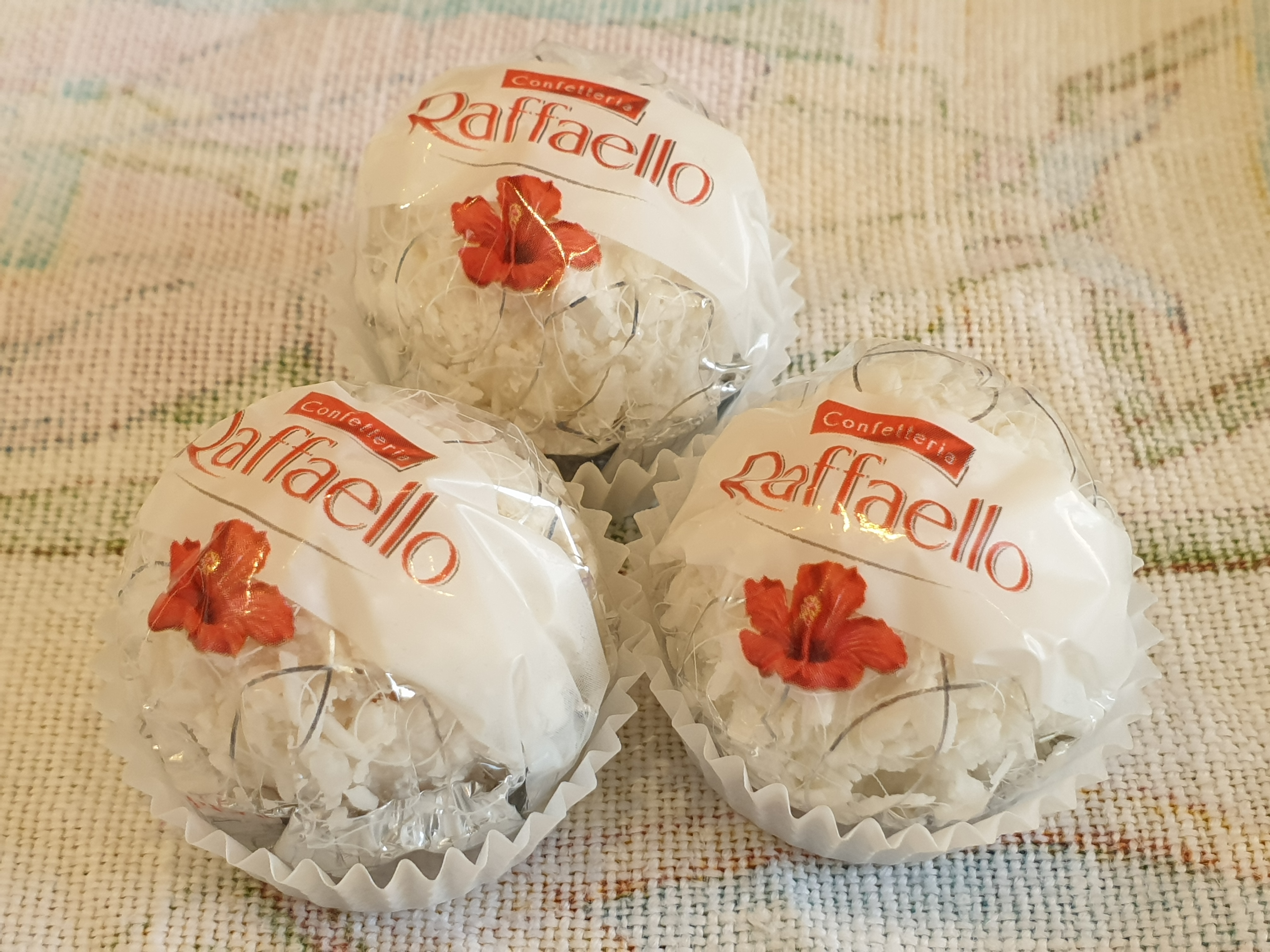
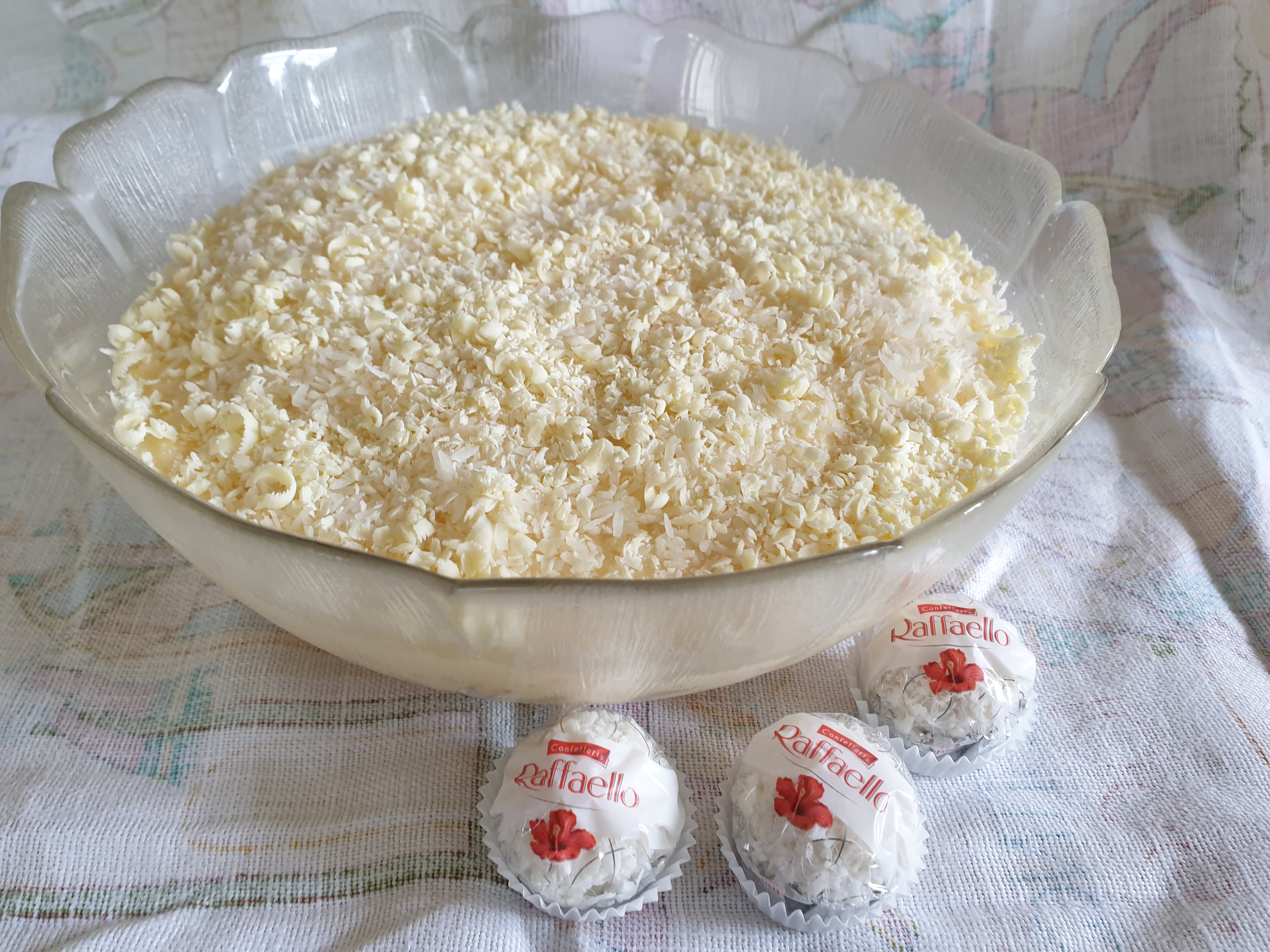
  • Raffaello chocolates were first made in 1990 by the Italian firm Ferrero. 
  • I have noticed that they are very popular in Poland and nearly always on sale in Polish shops in England.
  • They contain: almonds, wafer, white chocolate and coconut.
  • I have been looking for a definitive recipe for a Raffeallo or Rafealo tort based on this confectionary.
  • There are just so many different ideas on how to make this.
  • I have found a vast number of variations including no-bake versions using biscuits or sponge fingers.
  • I then looked at the more baked ones.
  • The cake most used is a fat free sponge – sometimes this includes ground almonds.
  • The filling is a creamy budyń (Polish custard) with large amounts of added butter,
  • Some versions use white chocolate in their ingredients.
  • The tort is topped with desiccated coconut.
  • The tort is often baked in a square or rectangular tin and each served piece is usually square.
  • However a circular one might be easier if using homemade biszkopt – sponge cake.
  • *
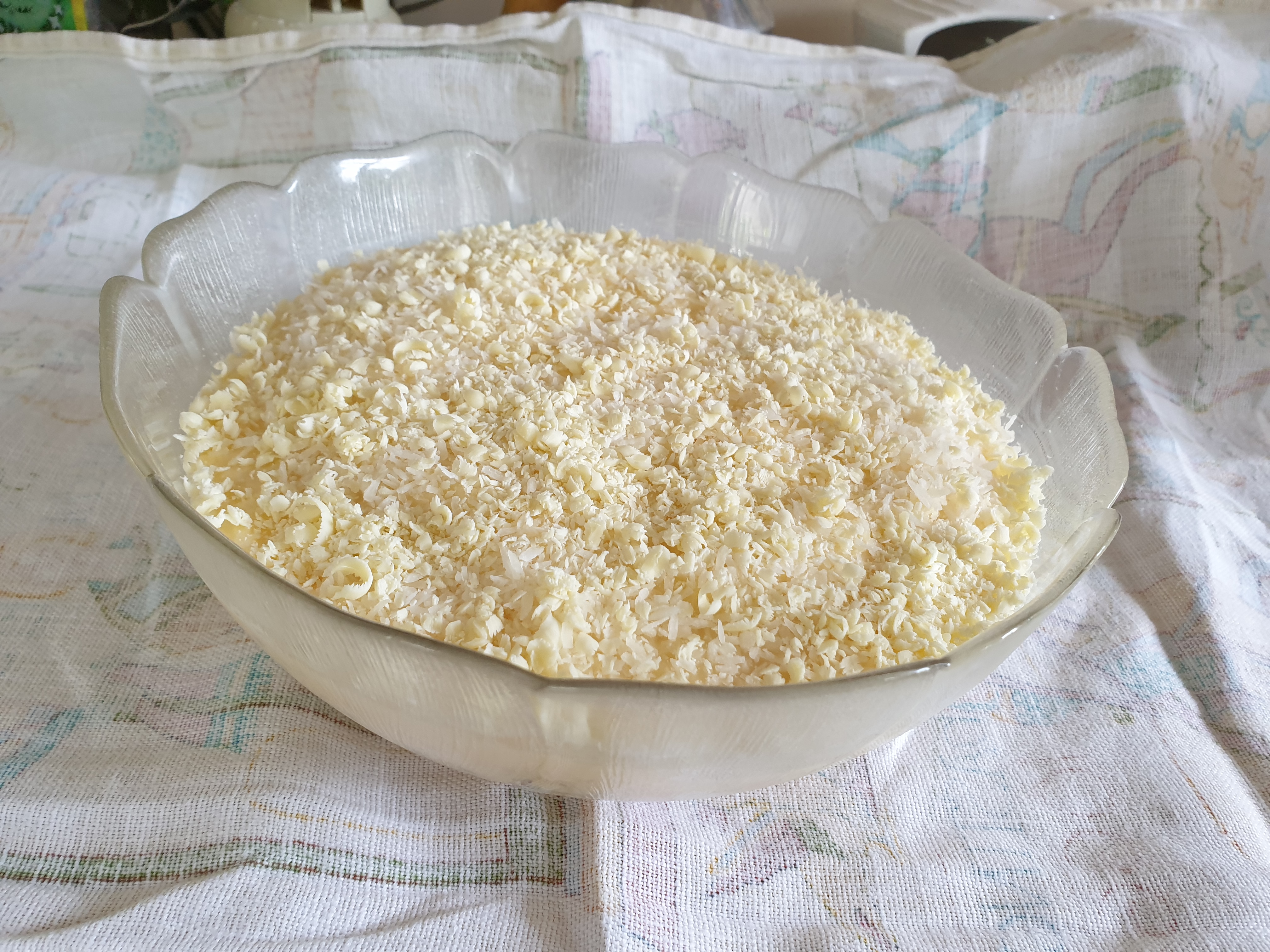
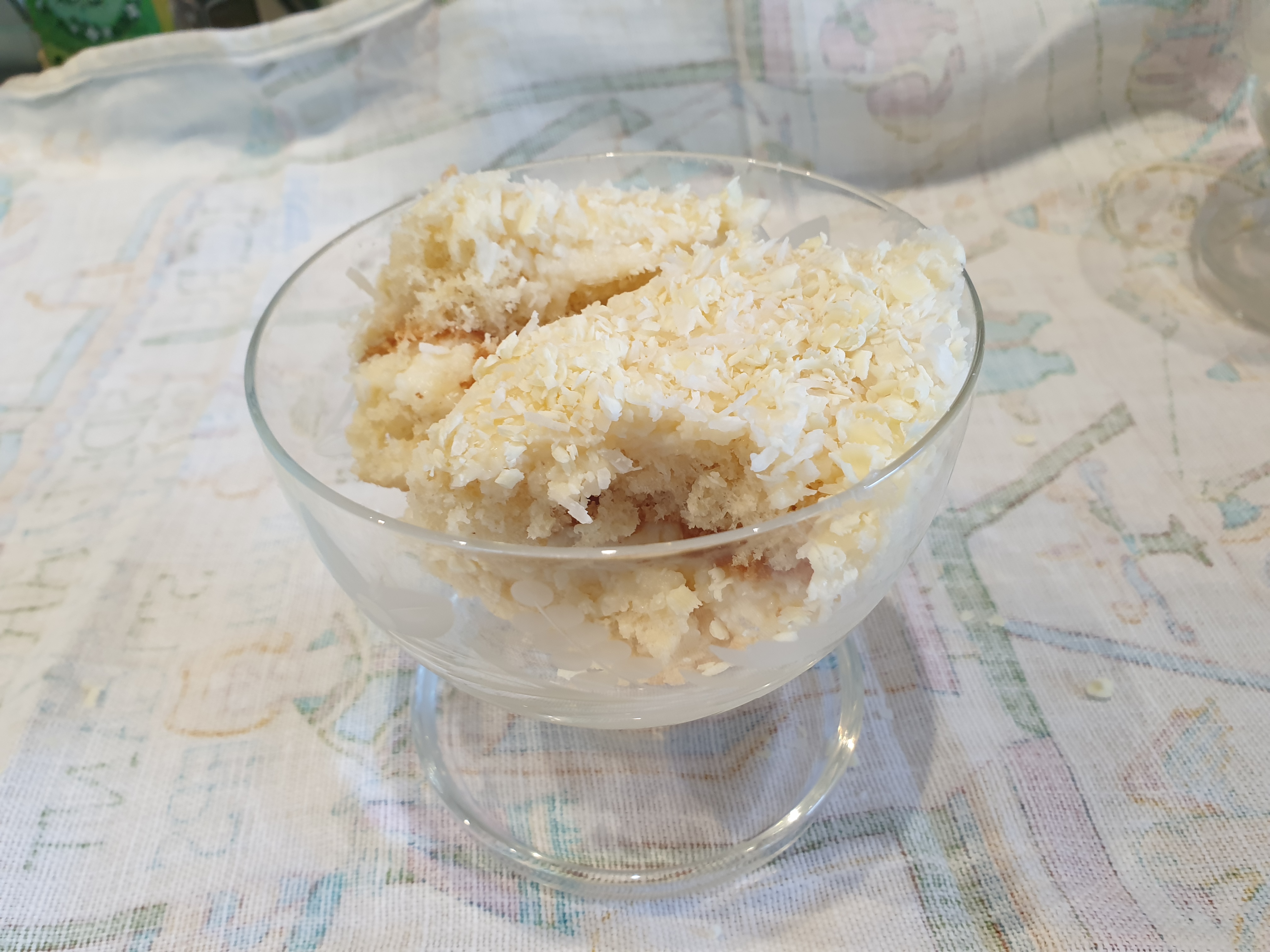
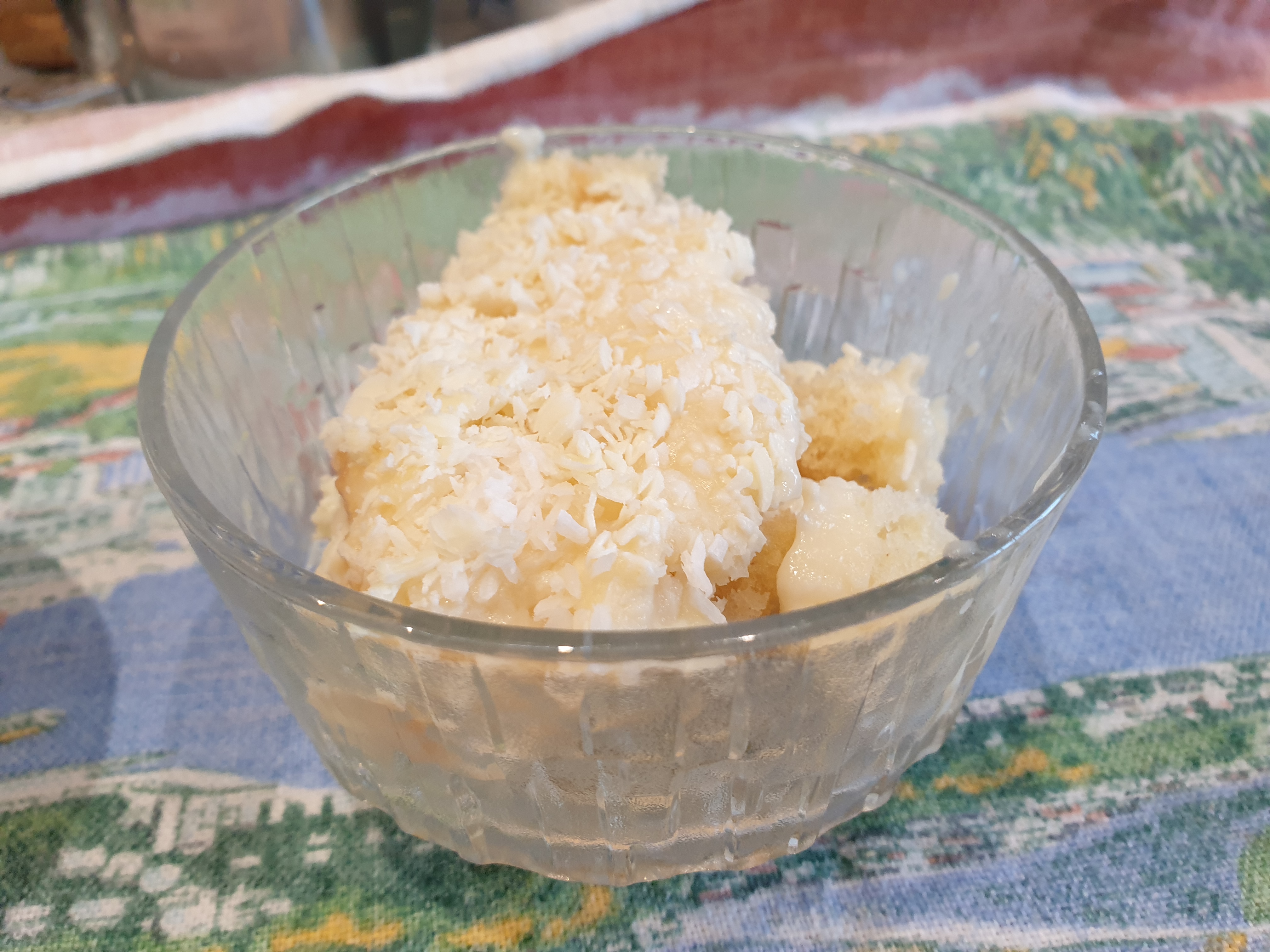
  • I decided to make a lighter dessert, instead with a coconut budyń and sponge cake and a lot less butter.
  • I used a 18cm fat free sponge made with two eggs – cut into two layers.
  • My first attempt was getting the budyń right.

    INGREDIENTS for budyń

  • 500ml milk
  • 1 tablespoon of butter
  • 2-3 tablespoons of granulated sugar
  • 3 egg yolks
  • 3 tablespoons of potato flour (or cornflour)
  • 50 – 80g desiccated coconut & 2 tablespoons
  • 50g white chocolate – coarse grated

Method for budyń

    • Put 300ml of the milk, the butter and sugar into a saucepan.
    • Heat gently till the butter has melted and the sugar dissolved, stirring all the time.
    • Bring this to the boil for a few seconds and then take off the heat.
    • Blend the potato flour with the rest of the milk (200ml) and with the egg yolks.
    • Add some of the boiled mixture to this and stir well.
    • Add this mixture to the rest of  the boiled mixture and stir well.
    • Put the pan back on the heat and bring back to boiling point, stirring gently.
    • Keep at boiling for 1 minute, stirring all the time.
    • Add in the 80g of coconut.
    • Leave to cool.
    • *
    • Use a glass dish and layer up cake, budyń, cake and budyń for the top.
    • Sprinkle the 2 tablespoons of coconut and grated chocolate on the top.
    • Chill in the fridge before serving
OPTION
  • Make the budyń with 750ml of milk and 4 egg yolks.
  • Layer up with some budyń first, then cake, budyń, cake, budyń as before.

Thoughts

  • I liked the version with more budyń. (750ml milk)
  • This was more like a dessert.
  • The version using 500ml of milk was more like a cake with filling.
  • However – they were both voted delicious.

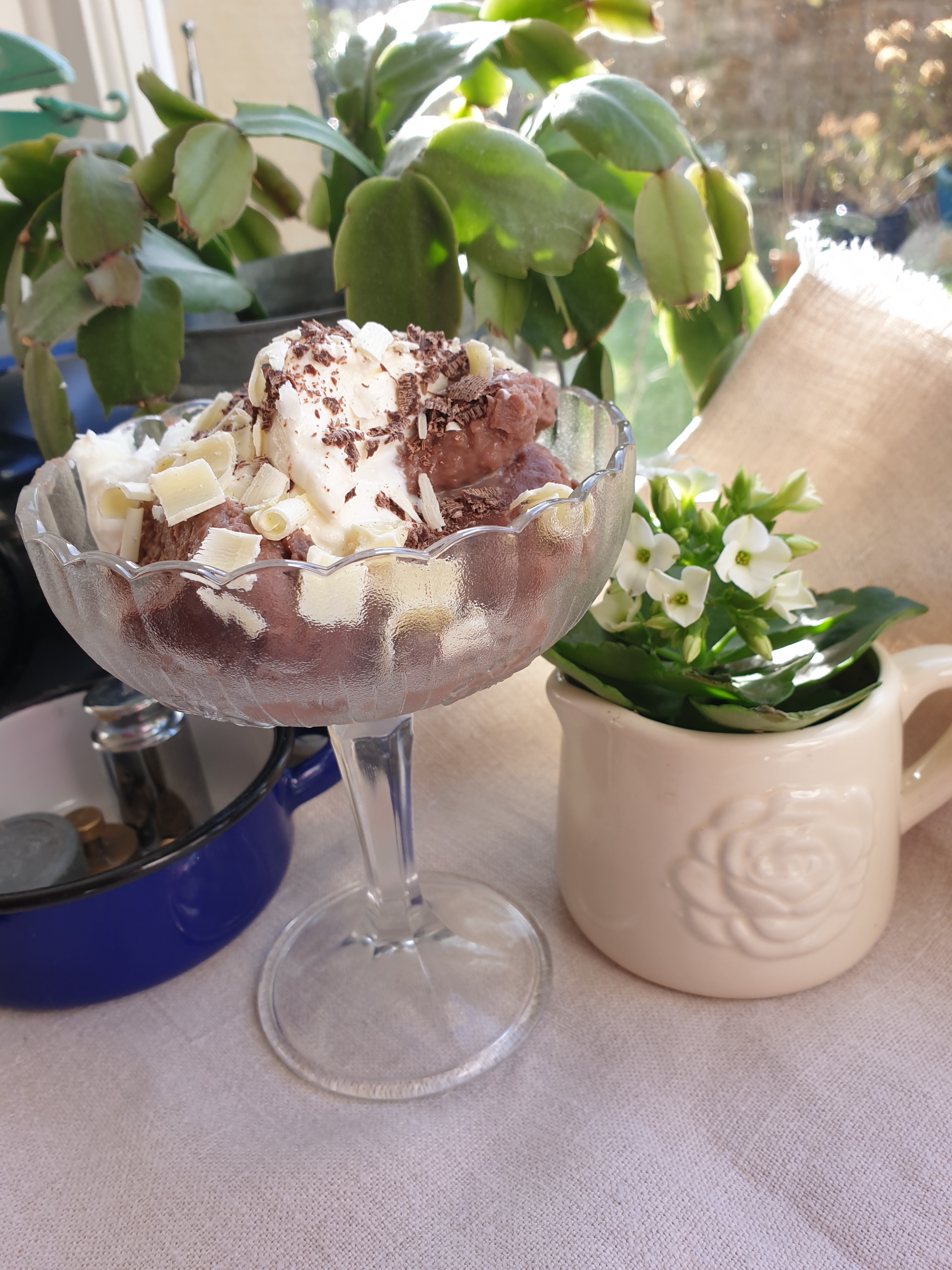
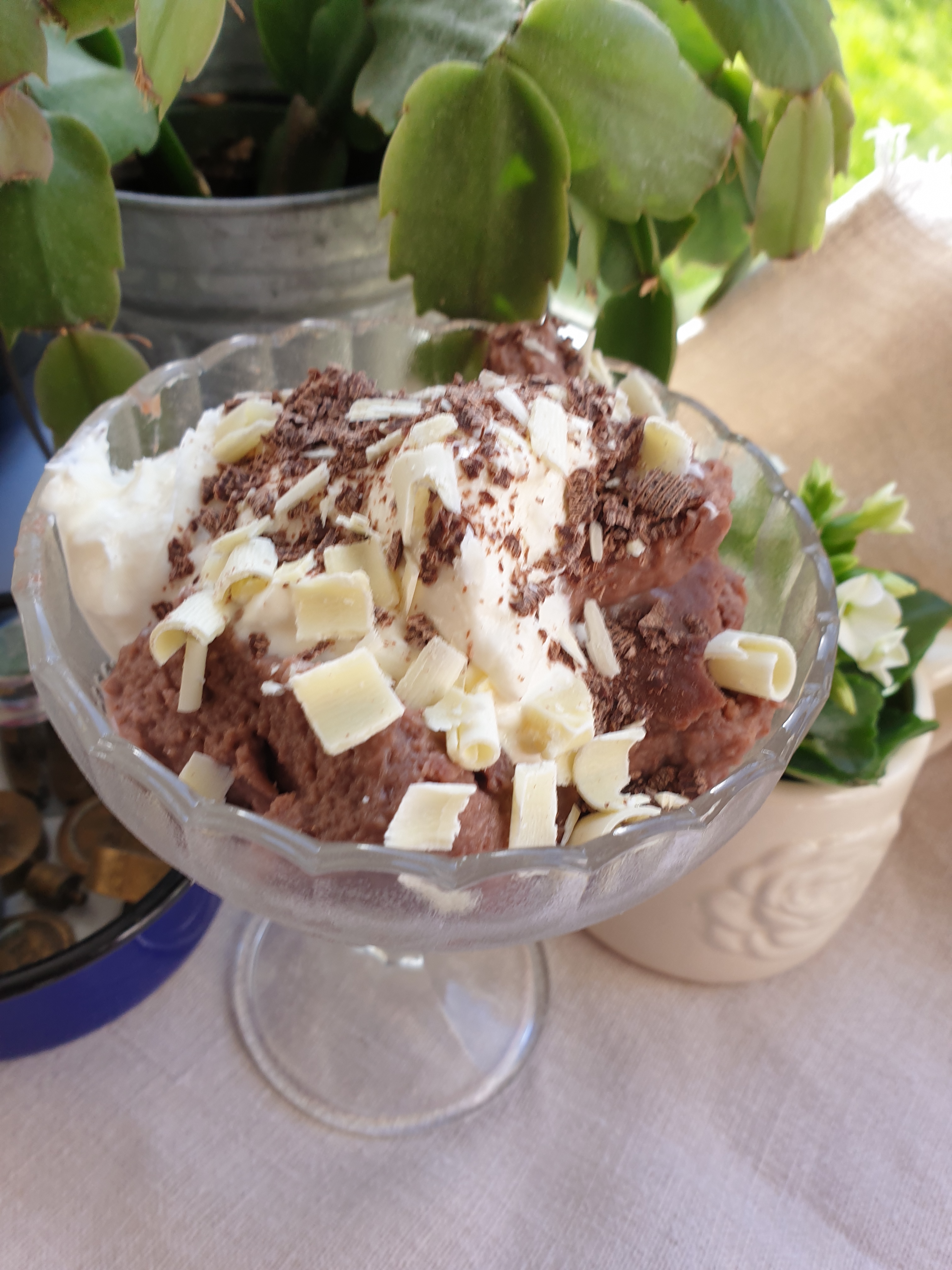
Chocolate Budyń

  • Budyń is similar to a thick English custard.
  • The word comes from the French  –  boudin, as does the English word pudding.
  • It is made from milk, egg yolks, sugar  and potato flour.
  • Here it has added cocoa powder to make it chocolate flavoured.

INGREDIENTS

  • 500ml milk (full or semi-skimmed)
  • 1 tablespoon of butter
  • 3 tablespoons of granulated sugar
  • 2-3 tablespoons of potato flour ( or cornflour if potato is not available)
  • 1 tablespoon of cocoa
  • 3 egg yolks

METHOD

  • Put 300ml of the milk, the butter and sugar into a saucepan.
  • Heat gently till the butter has melted and the sugar dissolved, stirring all the time.
  • Bring this to the boil for a few seconds and then take of the heat.
  • Mix together the potato flour and the cocoa.
  • Blend this together the rest of the milk (200ml) and with the egg yolks.
  • Add some of the boiled mixture to this and stir well.
  • Add the mixture to the rest of  the boiled mixture and stir well.
  • *
  • Put the pan back on the heat and bring back to boiling point, stirring gently.
  • Keep at boiling for 1 minute, stirring all the time.
  • Pour into a glass dish (or several small dishes) – leave to cool.
  • *
  • Refrigerate for at least 2 hours before serving.
  • Best chilled overnight
  • Add grated chocolate or shavings to serve and
  • Thick yoghurt or soured cream.

Vanilla Sauce

    • Sos waniliowy – vanilla sauce and budyń are very similar.
    • They are both also similar to English custards.
    • In Poland these are both served chilled.
    • Vanilla sauce is more a pouring sauce and budyń is thicker and set.

    Ingredients

    • 250ml of milk (full fat is best)
    • 50g of granulated sugar
    • 2-3 drops of vanilla  essence
    • 1-1½ tablespoonfuls of potato starch (you can use cornflour – if potato flour is not available)
    • 2 egg yolks

    Method

    • Put 150ml of the milk, sugar and the vanilla essence into a saucepan.
    • Heat gently till the sugar dissolved, stirring all the time.
    • Take it of the heat.
    • Blend together the rest of the milk (150ml) with the egg yolks and potato flour.
    • Add some of the boiled mixture to this and stir well.
    • Add this to the rest of  the mixture and stir well.
    • Put the pan back on the heat and stir gently till thickened .
    • Pour into a glass dish (or several small dishes) – leave to cool.
    • Chill in the fridge for at least 2 hours.

    This sauce is served with, bottled fruit, fruit salad, fruit sauces. or kisiel


Custard Tart

  • Whilst trying out some old English recipes I made this custard tart.
  • It is made with a shortcrust pastry case, which is filled with an egg custard.
  • Ground nutmeg is a popular spice in England.

I think that this would be liked in Poland as it is similar to Budyń – Polish custard which is also made from milk, egg yolks and sugar.

  • Shortcrust pastry or a richer pastry such as  kruche ciasto is used.
  • The pastry case is baked blind first in a loose bottomed tart tin.
  • This can be made the day before.

Ingredients

  • Shortcrust pastry to line the base and sides of a 20cm diameter loose bottomed tin
  • 300ml of milk
  • 3 tablespoons of sugar
  • 4 eggs – beaten
  • Freshly grated nutmeg

Method

  • Pre-heat the oven to GM6 – 200°C.
  • Roll out the pastry thinly and line the base and sides of the tin.
  • Bake blind for 15 minutes.
  • Take out the “beans” and bake for another 5 minutes.
  • Leave the pastry to become completely cold.
  • Lower the oven to GM4 – 180°C.
  • Put the tart tin on a baking sheet (makes it easier to handle).
  • Have the beaten eggs in a large bowl.
  • In a deep saucepan, add the sugar to the milk and gently bring to the boil, stirring a few times.
  • Pour the hot milk mixture onto the beaten eggs and whisk together quickly.
  • Allow the mixture to cool completely.
  • Pour the egg mixture into the baked pastry case.
  • Grate the nutmeg liberally over the surface of the custard.
  • Bake for 30 – 35 minutes until the custard is nearly set.
  • Turn of the oven and open the door slightly.
  • Leave the custard in the oven for around 15 minutes.
  • Take it out and leave to cool on a wire cake rack.
  • Leave it to cool before taking it out of the tin.
  • Serve at room temperature.


Tea plates:

  • Burleigh Ware – Burges and Leigh Ltd – Blue Mist from the 1930s
  • Aynsley – Las Palmas from the 1960s.


Meringue Cake with Rhubarb

Tort Bezowy is a meringue cake.

Meringues are popular in Poland and often made because lots of other dishes contain many egg yolks so there are egg whites needed to be used rather than wasted.

A little tip – freeze two egg whites at a time in a little container – then you have them ready for use later – bring them back to room temperature first.

The meringue that is used here has the addition of potato or cornflour and a little vinegar which gives a soft marshmallow centre to the meringue.

This style of meringue dish was named in honour of the Russian ballerina Anna Pawlowa (Pavlova) after her tour of Australia in 1926.

It is made up of 3 parts

  • 1 Pavlova style meringue
  • 2 Budyń (Custard)
  • 3 Rhubarb compote

Pavlova style meringue

Ingredients

  • 4 egg whites
  • 225g caster sugar
  • 1 teaspoon of potato flour or cornflour
  • 1 teaspoon of white wine vinegar
  • 2-3 drops of vanilla essence

Method

  • Use the loose base of a baking tin 25cm in diameter.
  • Lightly grease the circle.
  • Cut a 25cm circle of greaseproof and stick it on the metal circle.
  • Place the circle on a large baking tray – one without sides is best.
  • Pre-heat the oven to GM1 – 140°C.
  • Whisk the egg whites until stiff.
  • Add the sugar and whisk again till stiff.
  • Fold in the potato or corn flour, the vinegar and vanilla essence.
  • Using up to ½ of the mixture cover the circle on the tin.
  • Using the rest of the meringue put spoonfuls around the edge.
  • Bake for 50 minutes.
  • Turn off the oven and leave the meringue inside for 20 minutes.
  • Take out and leave to cool completely before filling.
Budyń  (Custard) 

Ingredients

  • 4 egg yolks
  • 400ml of milk
  • 1 tablespoon of butter
  • 2 tablespoons of granulated sugar
  • 2½ tablespoons of potato flour or cornflour
  • 2-3 drops of vanilla essence

Method

  • Put 250ml of the milk, the butter, sugar and vanilla essence into a saucepan.
  • Heat gently until the butter has melted and the sugar dissolved, stirring all the time.
  • Bring to the boil and then take off the heat.
  • Blend together the rest of the milk (150ml), the egg yolks and the potato or corn starch.
  • Add some of the boiled mixture and stir well.
  • Add this to the rest of the boiled mixture and stir well.
  • Put the pan back on the heat and gently bring back to boiling point and keep stirring.
  • Keep on the heat  – stirring for 1 minute.
  • Pour into a glass or china dish and cover with a circle of grease-proof paper.
  • Leave to go completely cold before using.

Rhubarb Compote

Ingredients

  • 250g fresh rhubarb*
  • 75g granulated sugar

Method

  • Pre-heat the oven to GM3 160°C
  • Cut the rhubarb into 4cm chunks.
  • Put the cut rhubarb into a small roasting dish.
  • Sprinkle the sugar over the top.
  • Cover with a piece of foil.
  • Place in the oven for around 30 minutes.
  • Leave to go cold before using.

*You might want to roast more rhubarb for other uses and just use some for this dish.

Assembling the Pavlova

All three parts must be cold.

  • Place the meringue nest on a large serving plate or stand.
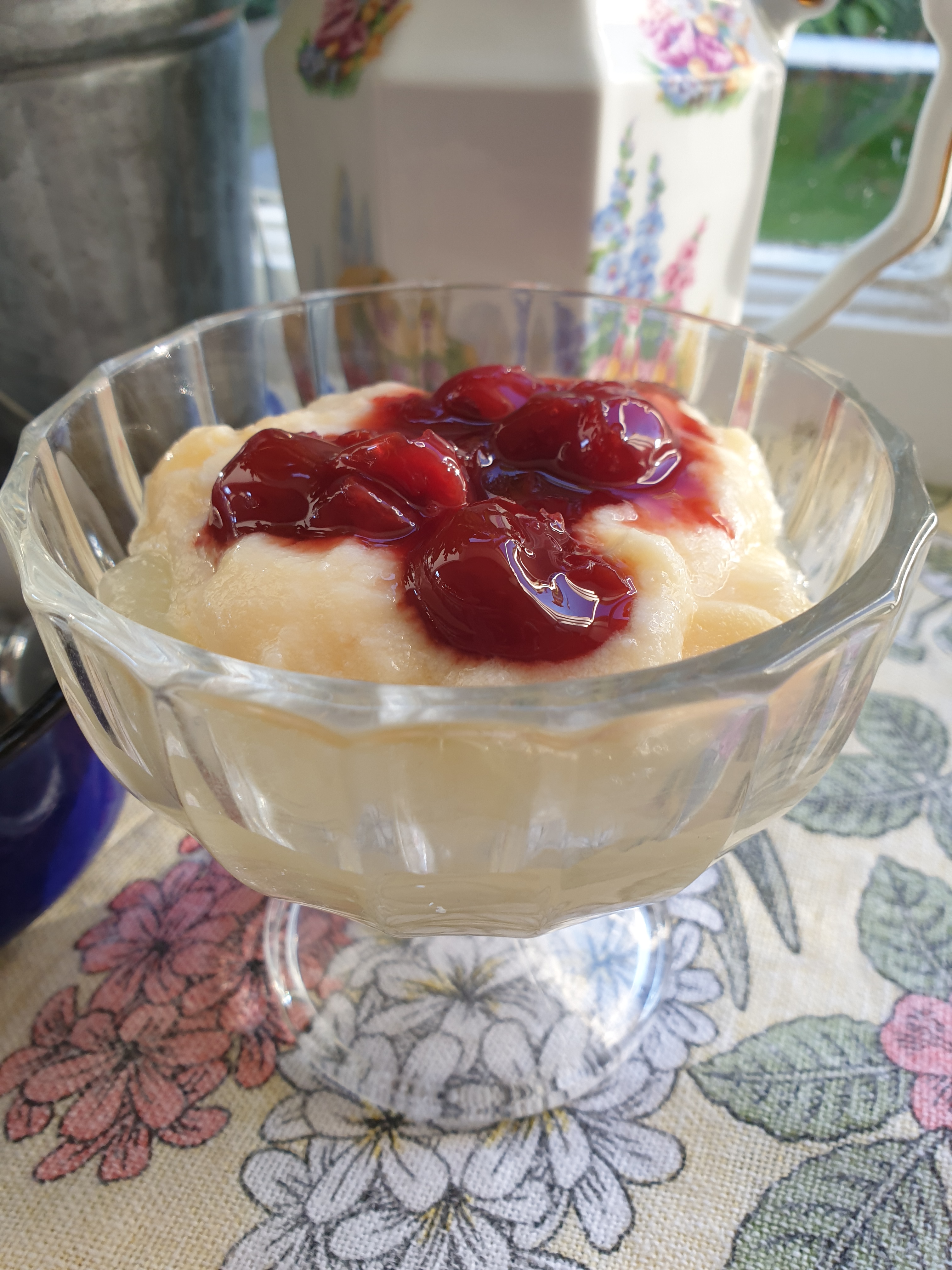
  • Using a tablespoon – pile the budyń (custard) into the centre.
  • Arrange the rhubarb chunks and some of the syrup over the custard.

Lead Crystal cake stand  – Tortenplatte – Venus  by Nachtmann(Germany).

Plates – Lavender by Jet for Ter Steege in The Netherlands.

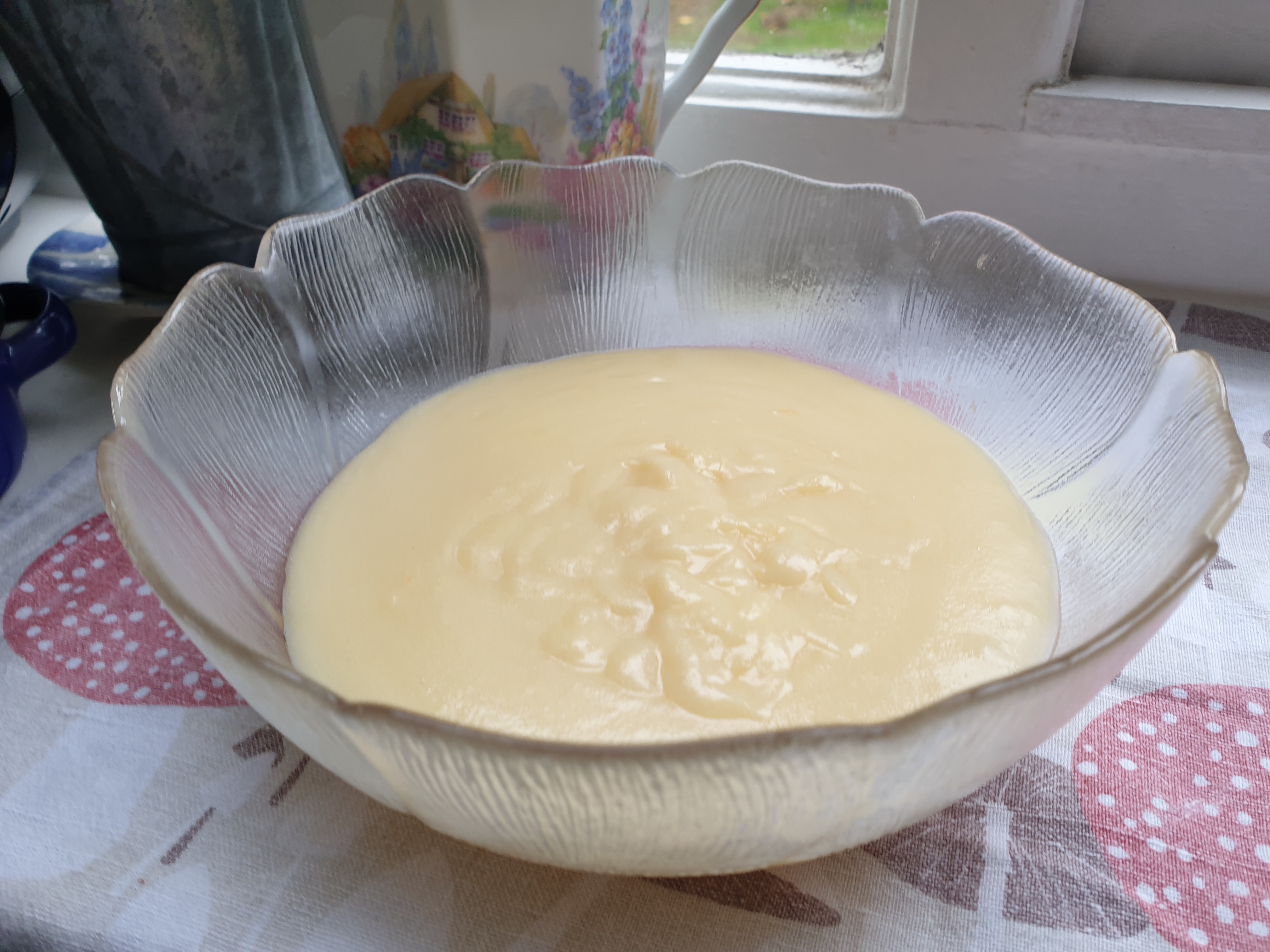
Budyń – Polish Custard

Budyń is similar to the thick English custard that is used on trifles, rather than the pouring type.

The word comes from the French  –  boudin, as does the English word pudding.
It is made from milk, egg yolks, sugar  and potato flour & flavoured most often with vanilla.

I have found numerous recipes – this one is my favourite.

I think this is best eaten after it has been very well chilled.

Ingredients

  • 500ml of milk (full or semi-skimmed)
  • 1 tablespoonful of butter
  • 3 tablespoons of granulated sugar
  • 3 drops of vanilla  essence
  • 2- 3 tablespoonfuls of potato starch (you can use cornflour – if potato flour is not available)
  • 3 egg yolks

Method

  • Put 300ml of the milk, the butter, sugar and the vanilla essence into a saucepan.
  • Heat gently till the butter has melted and the sugar dissolved, stirring all the time.
  • Bring this to the boil for a few seconds and then take of the heat.
  • Blend together the rest of the milk (200ml) with the egg yolks and potato flour.
  • Add some of the boiled mixture to this and stir well.
  • Add this to the rest of  the boiled mixture and stir well.

  • Put the pan back on the heat and bring back to boiling point, stirring gently.
  • Keep at boiling for 1 minute, stirring all the time.
  • Pour into a glass dish (or several small dishes) – leave to cool.
  • You can cover the budyń with greaseproof paper to stop a skin forming.


  • Refrigerate for at least 2 hours before serving.
  • Serve with grated chocolate, fruit or fruit syrup.


Served  here in Art Deco sundae/trifle glass dishes from the 1930s.

Packet Budyń

Budyń can be made from packet ingredients with fresh milk.

The ingredients are cornflour & potato flour with flavouring.


This is similar to  British Birds custard which is made from cornflour and flavouring and added to fresh milk.

The budyń comes out thicker – not a pouring sauce,

Using Budyń

Budyń is used in cakes and pastries as a filling and to make  vanilla pastry cream used in several recipes including Karpatka (recipes to follow in future posts) Carpathian Mountain Cake.

Vla

When I visit my friend in The Netherlands we often have vla for dessert – this is very similar to budyń.

Vla used to be sold in bottles but more often now comes in cartons.  Originally it was also made from milk, sugar and eggs  but now the thickening is more usually cornflour.

With yoghurt

In the Netherlands,  vla is often mixed with yoghurt.

I mix roughly equal parts of budyń with chilled Greek yoghurt and whisk it together to get a well combined mixture.

This can be served with grated chocolate, fruit or fruit syrup.


1930s Art Deco glass dish