Cakes from Poland

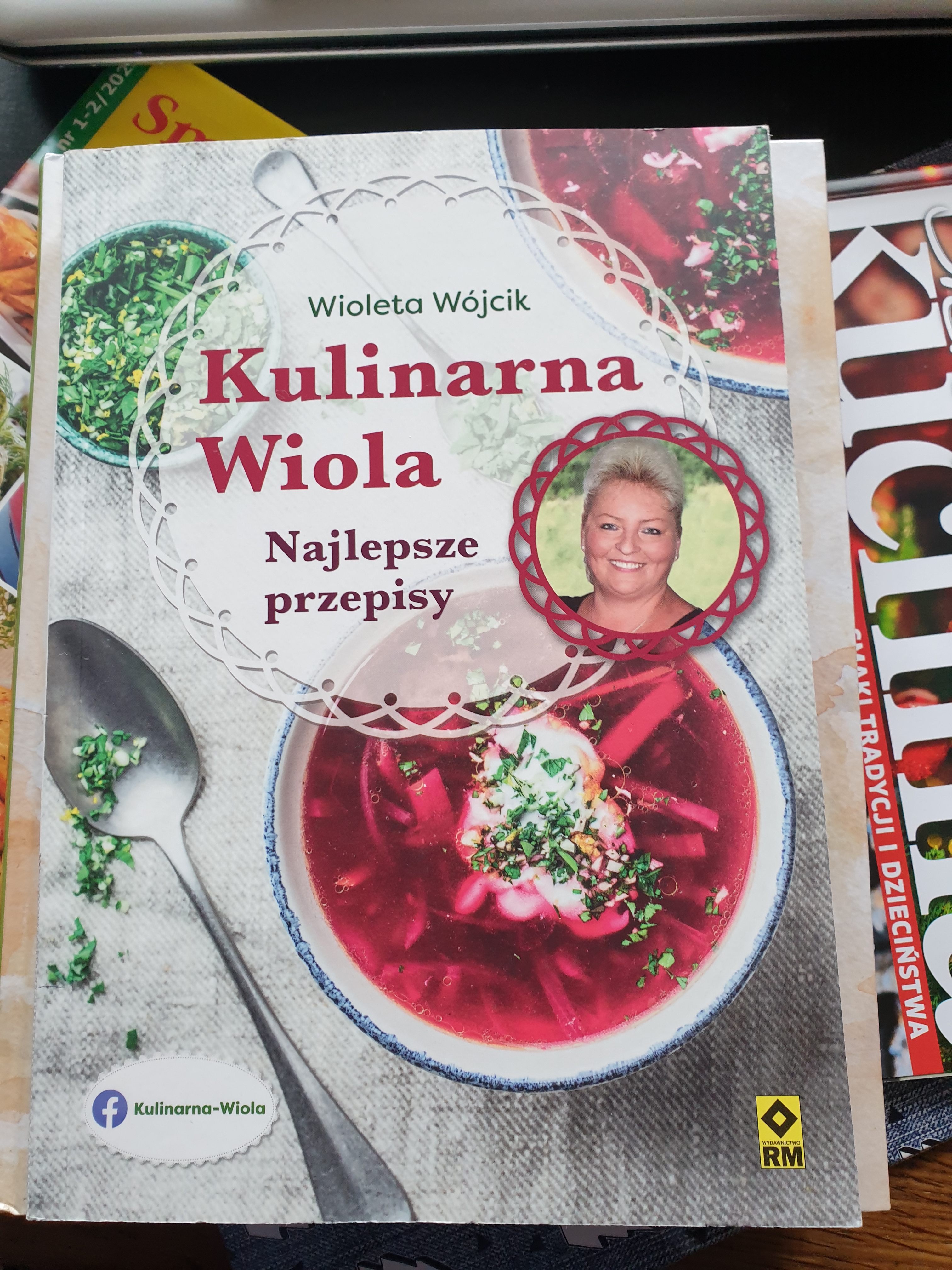
  • I am back from a short trip to Gdańsk on which I bought a couple of Recipe books.
  • One of these was was a book about cakes – ciasta – and small cakes – ciasteczka -(or buns or biscuits).
  • I got a book by the same author on my last trip, which was to Wrocław in February, – Wioleta Wójcik.
  • I am really looking forward to trying some of these out.
  • Whilst in Gdańsk I had a piece of cake called pleśniak – which was super – the name means mildew or mouldy! – there is a recipe for this and I will be trying it out soon.

Gdańskie brukowce

  • Gdańskie brukowce – means cobblestones from Gdańsk.
  • These are a form or pierniki  – honey spice cakes – that I have not come across before.
  • There are soft bits and crunchy bits.
  • They have been baked by the Pellowski bakery, established in 1922, to a secret recipe but the ingredients are stated on the packaging – including:
  • rye flour
  • sugar
  • golden syrup
  • vegetable fats
  • Polish plum jam
  • cocoa
  • spices – (inc – cinnamon and cloves) 
  • lemon juice.

They are rather like piernik – chopped up, mixed with cocoa or chocolate and Polish plum jam – powidło – and coated with a sugar glaze.

If you get the chance to try them do so – they are delicious.

I do not think I can recreate this recipe but  here below are links to my previous piernik recipes.

They were originally baked for the St Dominic’s fair – Jarmark Dominika – which takes place at the end of July and the beginning of August.

Coconut Cake

  • This is a simple recipe inspired by a large cake recipe in ‘All About Cookery New Edition’, by Mrs Beeton published in 1911.
  • Mrs Beeton writes “ … dessicated cocoanut is now sold at a moderate price, and its use saves much trouble and labour.”

  • Coconuts are the edible fruit of Cocos nucifera, – kokos in Polish, and probably originated in the area of Indonesia and Malaya and then spread to India.

  • Marco Polo came across coconuts and they were then called Pharaoh’s nuts as they were found in Egypt.
  • Venetians were trading in coconuts by the 13th Century.
  • William Dampier (1651-1715), a buccaneer and explorer brought coconuts to England though they did not become popular until the early 19th century.
  • *
  • My father was not keen on coconut so this was not a recipe my mother made.
  • I originally made this cake in a round tin but have now also also tried it out in a rectangular tin, which makes it easier to slice and portion out.

INGREDIENTS

150g butter

150g caster sugar

200g plain flour

1½ teaspoons baking powder

75g dessicated coconut

2 eggs

4 to 5 tablespoons of milk

*

2 tablespoons of apricot or strawberry jam

3 tablespoons of dessicated coconut

METHOD

Pre-heat the over to GM4 – 180°C.

Grease and line or use a cake liner in a 20cm high sided cake tin.

Cream the butter and sugar till fluffy.

Add the eggs one at a time and beat again.

Mix the flour, baking powder and coconut together.

Fold this into the mixture.

Add enough milk to make a soft mixture.

Put into the cake tin – flatten the top.

Bake for 40 – 45 minutes.

*

Leave the cake to cool completely on a wire rack.

Take the cake out of the tin.

Mix the jam with ½ a tablespoon of water and heat gently.

Brush the top of the cake with the jam.

Sprinkle the coconut on top of the jam.

*

Alternative size

26 x 20 cm rectangular cake tin.

Line 3 sides with one piece of greaseproof paper.

Bake for 35-40 minutes.

Colclough Stardust & Duchess Bramble Rose tea plates

Chocolate Orange Cake – 2

      • This is a variation on my iced orange yoghurt cake.
      • Yoghurt is used in the cake and the texture is great.
      • The cake is the same but a chocolate icing is used on the top.
      • I learnt a tip, which was to add the orange rind to the sugar for about 30 minutes beforehand- this adds to the flavour.
      • I used a chocolate bar that had some orange flavouring in it already.

      Ingredients

      • 200g plain flour
      • 2 teaspoons of baking powder
      • 200g granulated sugar
      • Zest of 1 large orange
      • 185ml of Greek style yoghurt
      • 3 eggs
      • 120ml sunflower oil
      • Large pinch of salt

      Method

      • Add the zest to the sugar and leave for about 30 minutes.
      • Pre-heat the oven to GM4 – 180ºC.
      • Use a loaf liner to line a 2 lb loaf tin.
      • Mix the flour, baking powder and salt together.
      • Add the yoghurt and eggs to the sugar mixture.
      • Gradually add the flour mixture and mix well.
      • Add the oil and mix well again.
      • Pour the batter into the loaf tin and smooth the top.
      • Bake for around 40 to 45 minutes.
      • Check a little earlier and cover with greaseproof  paper if it is starting to burn.
      • Leave to cool in the tin.

    Chocolate Orange Icing – Ingredients

  • 50g dark chocolate or dark chocolate with orange flavouring
  • Grated rind of 1 orange
  • 25g butter
  • 2 tablespoons of icing sugar

Method

  • Put the chocolate into a bowl over a pan of hot water.
  • Add the orange rind and butter.
  • Stir whilst the chocolate melts.
  • Add the icing sugar until you have a thick icing.
  • Use this to cover the top of the cake and let it dripple down the sides
  • Served on Royal Doulton  Counterpoint Tea Plates

Brazilian “Tea” Bread

  • I got this recipe recently from one of my friends who I have known for many years.
  • It is a recipe her mother made often.
  • Unlike most teas breads this is made with coffee!
  • It tastes good on its own or buttered.
  • It keeps moist for several days – that is if you have any left.
  • *
  • See if anyone can guess the unusual ingredient!

Ingredients

  • 500g mixed fruit (good to have peel in the mix)
  • 350ml strong black coffee
  • *
  • 250g plain flour
  • 2 teaspoons baking powder
  • 125g soft brown sugar
  • ½ teaspoon mixed spice
  • 1 beaten egg.

Method

  • Soak the mixed fruit in the coffee overnight.
  • *
  • Pre-heat the oven to GM3 – 160°C.
  • Mix all the dry ingredients together.
  • Add the beaten egg.
  • Stir in the soaked fruit.
  • Mix well together.
  • Bake for around 1½ hours

Royal Doulton Tapestry Tea Plate

Yorkshire Cake

  • Nearly every Yorkshire cookery book has a version of this light fruit cake.
  • It is usually called ‘cut & come again cake’.
  • It originated as a cake using yeast but by the mid 1800s with the invention of baking powder the recipes became more like this one.
  • In Poland it would be called a keks.
  • Rather than bake it in a loaf tin or a square tin I have found that a lower rectangular tin is good – rather like a placek.
  • It is very easy to make as there is just rubbing in of butter into flour and then the other ingredients are stirred in.
  • The recipe uses brown sugar – not readily available in Poland – but granulated sugar should work as well.

INGREDIENTS

  • 275g plain flour
  • 2 ½ teaspoons baking powder
  • ¼ teaspoon of ground cinnamon
  • 175g butter
  • 175g soft brown sugar
  • 120g currants
  • 175g sultanas
  • 50g raisins
  • 50g chopped mixed peel
  • 4 beaten eggs
  • 3 tablespoons of brandy (or milk – not tested)

METHOD

  • Preheat the oven to GM4 – 180°.
  • Grease and line three sides of a 32×22 cm baking tin using 1 long piece of baking paper.
  • Mix the flour with the baking powder.
  • Rub in the butter until it is like breadcrumbs.
  • Stir in the cinnamon.
  • In another bowl mix together the dried fruits and sugar.
  • Mix the flour mixture together with with fruit and sugar mixture.
  • Stir in the beaten eggs.
  • Mix in the brandy to make a soft consistency.
  • Spoon the cake mixture into the tin and flatten the top.
  • Bake for around 45 minutes – cover the top if it starts to burn.
  • Leave to cool in the tin and then on a wire rack.


Cake with Rhubarb

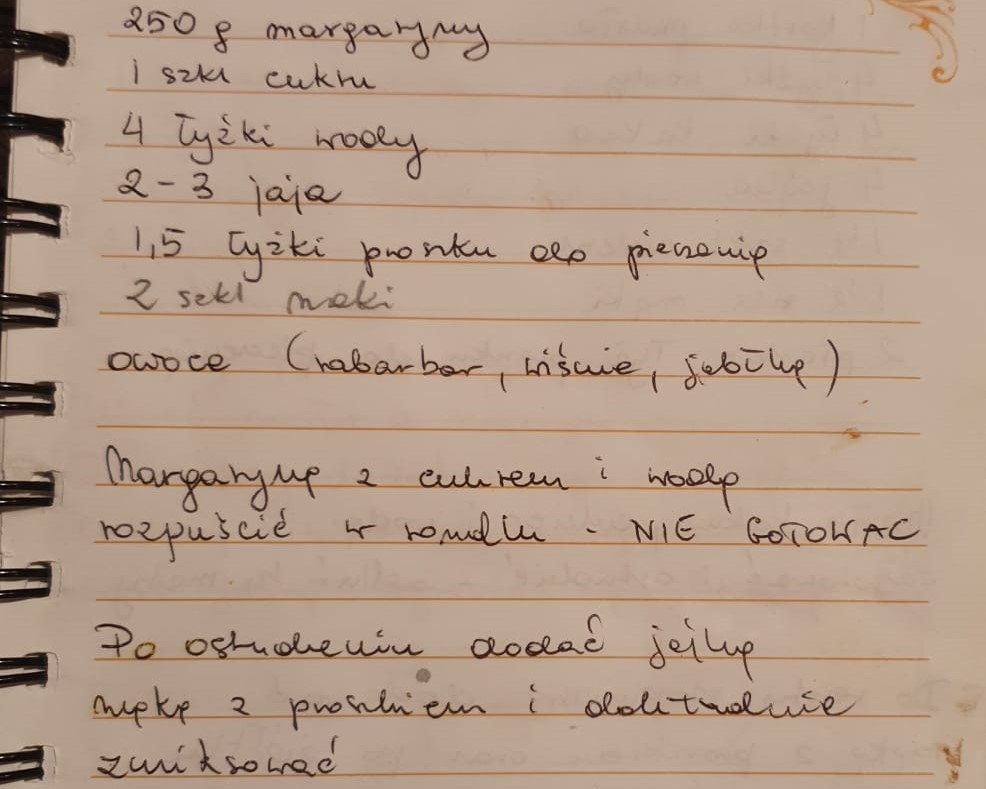
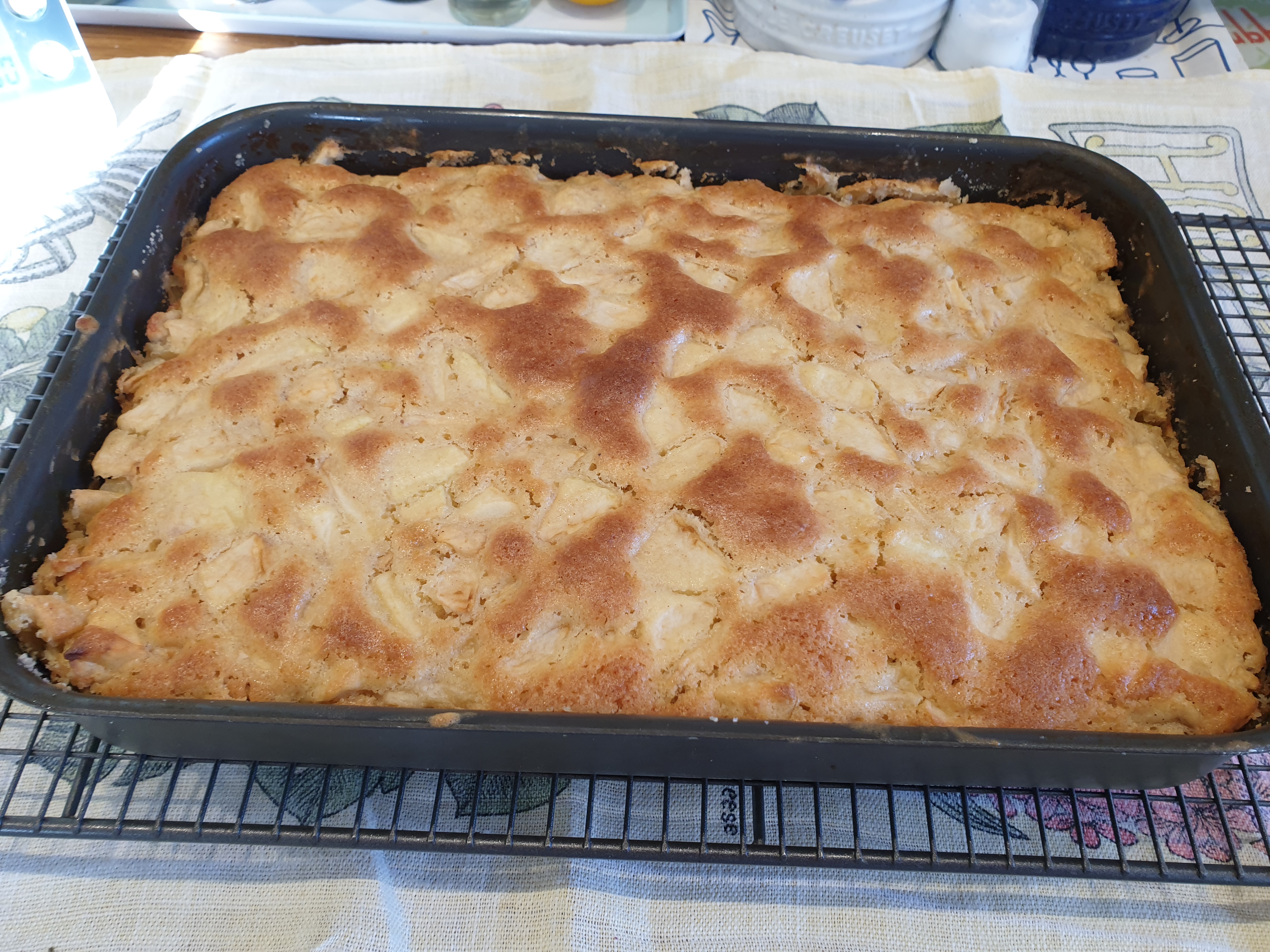
  • This is the same recipe as Cake with Sour Fruits – 1.
  • I got this recipe from my Polish friend in Leeds.
  • It is a batter style cake but made with melted butter rather than oil, which I have used before in cakes such as
  • Victorian Apple Cake  or 
  • Cake with Peaches  
  • The original recipe was for rhubarb –   rabarbar  – in Polish and this is what I used now it is in season.
  • You need to use quite a lot of rhubarb as the cake rises and the fruit moves apart.
  • *
  • If the rhubarb is too sour you can dust the cake with icing sugar before serving.

INGREDIENTS

  • 250g butter
  • 200g granulated sugar
  • 60ml cold water
  • 3 eggs
  • 340g plain flour
  • 2 teaspoons of baking powder 
  • *
  • 450 – 500g rhubarb – cut into small pieces.

METHOD

  • Grease and line 3 sides of a 32x22cm baking tin.
  • Pre-heat the oven toGM4 – 180°C
  • *
  • Mix the baking powder with the flour.
  • Melt the butter & sugar in a saucepan – do not boil.
  • Add the water and leave to cool.
  • Beat the eggs into the flour.
  • Add the butter mixture and mix well until you have a thick batter.
  • Pour into the tin and level out the batter to all sides.
  • Cover the top with the rhubarb pieces.
  • Bake for 50-55 minutes.
  • Check the cake part is ready with a tester.
  • Leave to cool in the tin.
  • *
  • Optional – dust with icing sugar before serving.

Duchess – Silver Rose Tea Plate

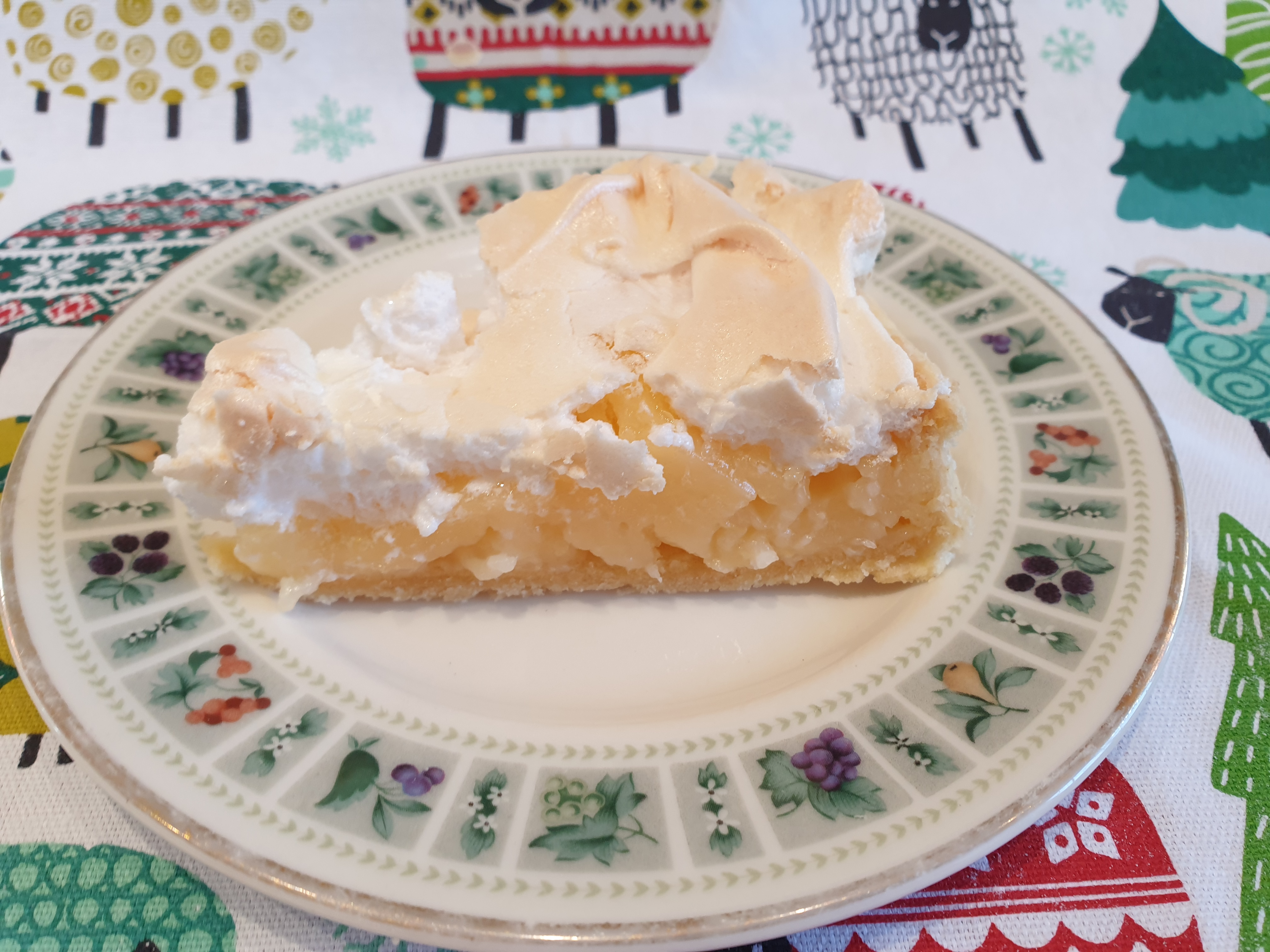
Lemon Meringue Pie

  • I am sure this would be a popular dessert in Poland and would be a bezowa (meringue) tarta (tart)
  • This is said to have originated in the United States of America.
  • Custard pies of various kinds using egg yolks had been made in Britain and then America for years but the first mention of Lemon Meringue Pie is in a cookery book of 1869.

  • Mrs Elizabeth Goodfellow, who ran a pastry shop in Philadelphia, decided to use the leftover egg whites as a topping over a lemon custard.

  • Mrs Elizabeth Goodfellow also started America’s first cookery school.


    INGREDIENTS

    Shortcrust pastry

    *

    40g cornflour

    25g butter

    300ml water

    2 lemons rind & juice

    2 egg yolks

    50g caster sugar

    *

    2 egg whites

    50g & 50g caster sugar

    METHOD

    It is best to use a metal dish especially one with a loose base.

    Any diameter from 18cm to 22cm.

    Grease the dish well.

    Roll out the shortcrust pastry and line the dish.

    Place a circle of baking paper over the base and add “baking beans”.

    Bake blind at GM 7 – 220°C for around 15 minutes.

    Remove the beans and paper and bake for another 5 minutes.

    Leave to cool.

    *

    In a saucepan blend a little of the water with the cornflour.

    Add the rest of the water and the butter.

    Bring to the boil and then lower the heat

    Stir and cook for 3 minutes.

    Remove from the heat.

    Add the lemon rind and juice.

    Add the yolks and 50g of caster sugar.

    Mix well and leave to cool.

    *

    Pre-heat the oven to GM3 – 160°C.

    *

    Fill the pastry with the lemon mixture.

    *

    Whisk the egg whites till stiff.

    Whisk in 50g of caster sugar till stiff.

    Fold in 50g of caster sugar.

    Cover the pie with the egg white mixture.

    Make random peaks over the surface.

    Bake for 25 minutes.

    *

    Leave to cool before serving.

    OPTION

    If you have an extra egg white, say from making the pastry, use this with extra sugar for the topping.

  • Served here on Royal Doulton Tapestry.

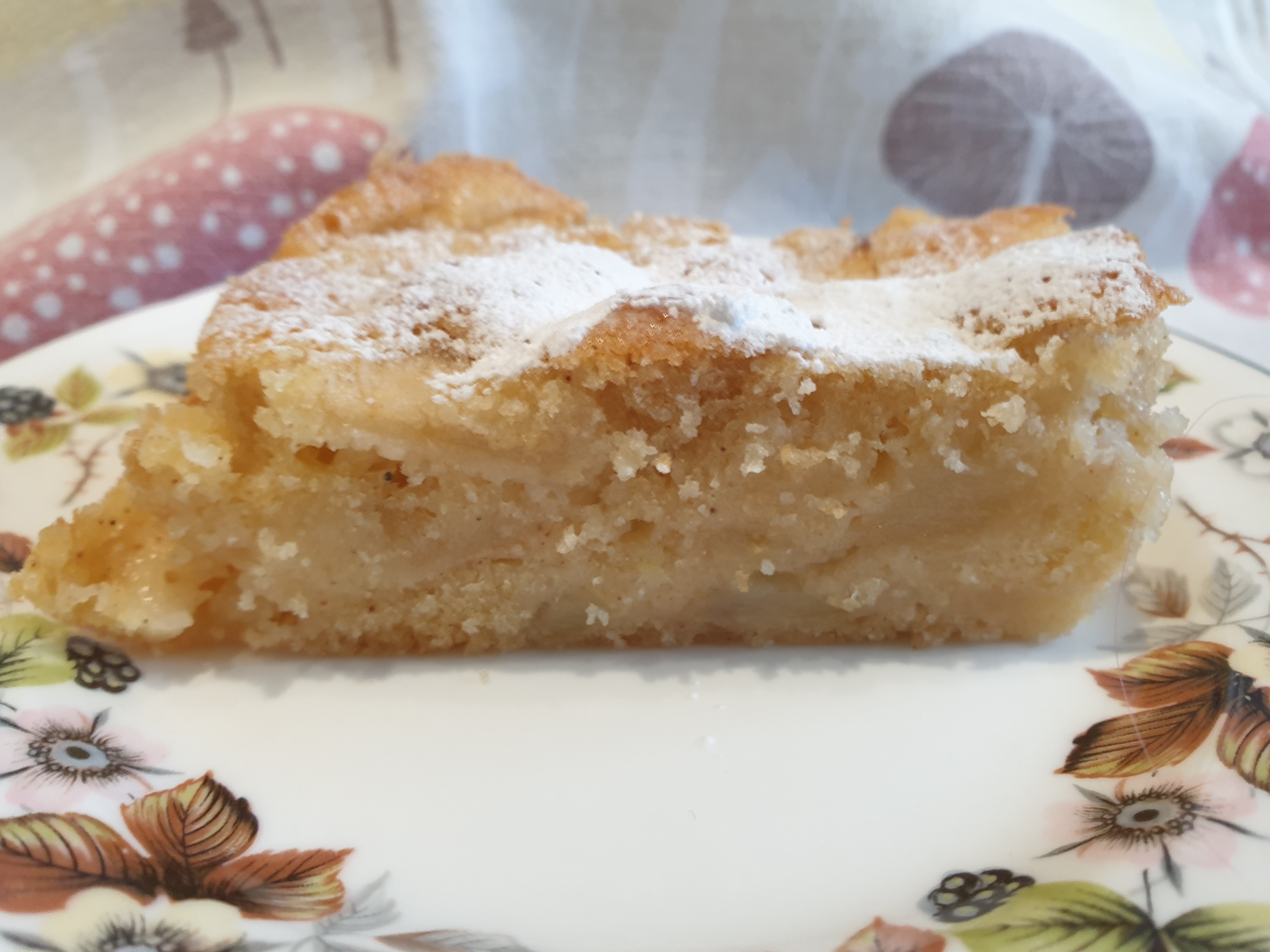
Cake with “Sour” Fruits 2

  • This is the second fruit recipe I have been given from my Polish friend in Leeds.
  • It is quite unusual and contains a large proportion of fruit to cake.
  • It works best with sour fruits such as –
  • Bilberries (Whinberries)
  • Cooking apples
  • Plums – not too ripe
  • Rhubarb
  • Sour cherries
  • *
  • I have tried it out with Bramley apples from the garden as rhubarb is not yet in season. (This will be my next trial).
  • Some potato flour is used and the recipe says you can use budyń –– Polish custard powder.
  • The second time I tried it out using English custard powder.
  • I used 180g of granulated sugar, which was enough for the apples.

INGREDIENTS

  • 1kg of fruit
  • *
  • 180g – 220g granulated sugar – depends on how sour the fruit is.
  • 3 eggs
  • 170g plain flour
  • 1½ teaspoons baking powder
  • 90g potato flour 
  • 125g butter
  • 2 tablespoons of sunflower oil
  • *
  • 1 – 2 teaspoons of mixed spice or cinnamon or 5-6 drops of vanilla essence
  • *
  • Butter or oil &  bułka tarta – dried breadcrumbs
  • *
  • Icing sugar to dust

METHOD

  • Grease a 32 x 22 baking tin and cover thinly with breadcrumbs.
  • Pre-heat the oven to GM 4 – 180°C.
  • Melt the butter in a small saucepan and leave to cool.
  • *
  • Prepare the fruit – for apples these were peeled and cored and chopped into small pieces.
  • Mix the spices with the fruit.
  • *
  • Mix the plain flour, baking powder and potato flour together .
  • In a large bowl whisk the eggs with the sugar (180g for apples).
  • Mix in the flour mixture
  • Add the cooled butter and mix well.
  • Add the sunflower oil and mix well.
  • *
  • Add the fruit and mix so that the fruit is coated with the batter.
  • Put the cake mixture into the prepared tin and smooth it down and into the sides.
  • *
  • Bake for 45 -50 minutes.
  • Leave to cool in the tin.
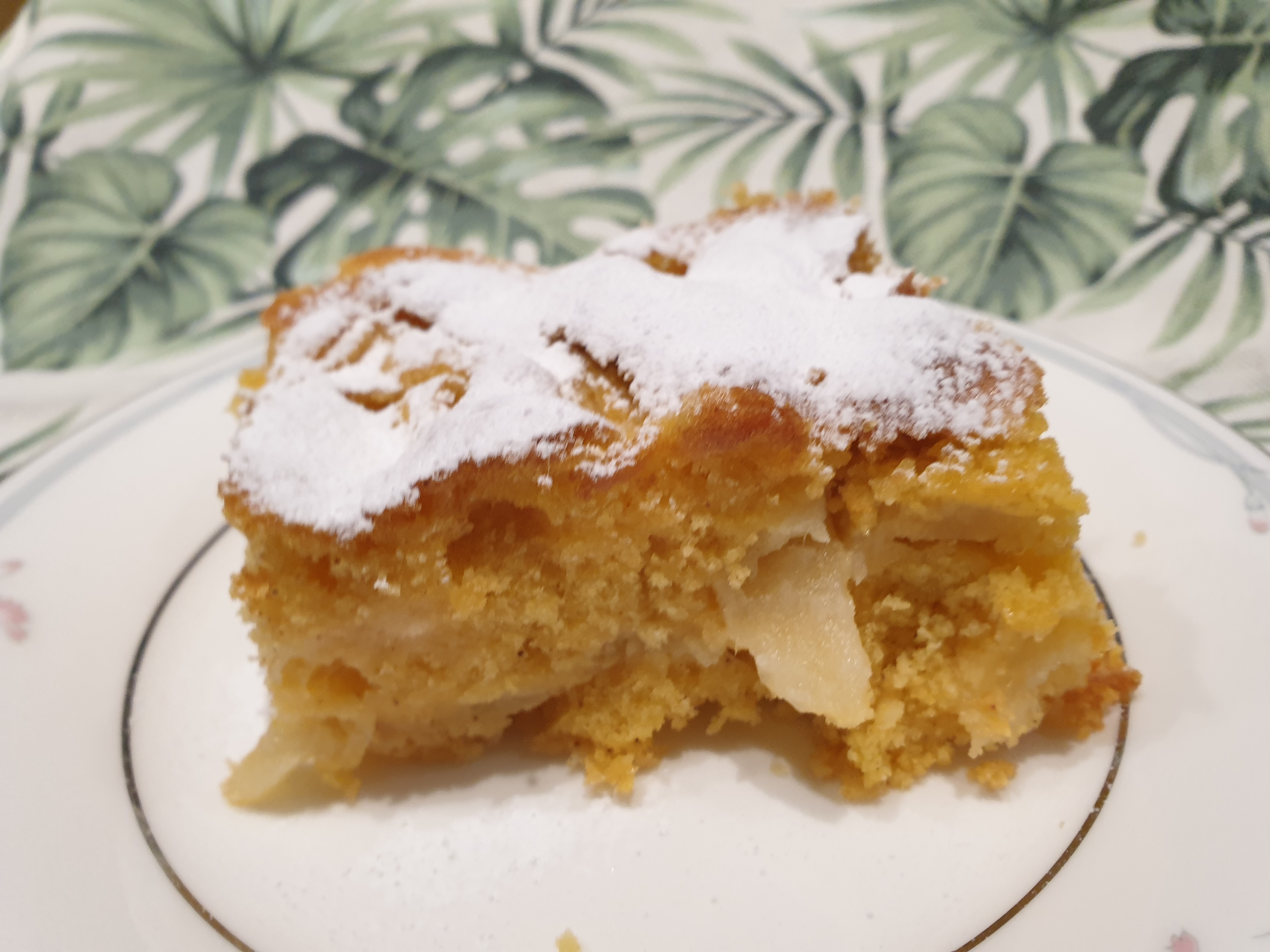
  • Dust with icing sugar.
  • *
  • It is hard to take out whole from the tin – easier to cut squares or rectangles in the tin and take these out individually to serve. 
  • Royal Grafton – Woodside tea plate
  • *
  • Option 

  • The recipe says you can use budyń –– Polish custard powder  instead of  potato flour.
  •  I did not have any budyń but  tried it out the second time using English custard powder it worked well.
  • See photo below served on Royal Doulton – Carnation.

withcustard

Semi-Steamed Fruit Cake

  • I came across this recipe the other day in a Christmas magazine.
  • It is different in many ways from other fruit cakes (keks) that I have made in several ways.
  • The dried fruits included apricots and dates.
  • All the dried fruits were left overnight in apple juice.
  • Butter and Sunflower oil were used.
  • When baking the tin was covered for some off the time – which resulted in the cake being more steamed than baked.
  • Then the lid or foil was removed and the cake was baked for the rest of the time.
  • *
  • I adjusted a few of the ingredients so that this fruit cake – could be more easily made.
  • I halved the original quantities.
  • A large circular dish was originally used – I tried a 26x20cm tin.
  • Rectangular or square cakes are much easier to slice up than circular ones.
  • *
  • The result was a very lovely moist fruit cake, which I will be making often.

Note – you start this cake the evening before

INGREDIENTS

  • 150g raisins
  • 75g dried apricots – chopped
  • 40g mixed peel
  • 75g glacé cherries – chopped
  • 90g dates – chopped
  • 125ml apple juice
  • *
  • 55g butter – softened
  • 90g granulated sugar
  • 60ml sunflower oil
  • 1½ tablespoons of runny honey
  • *
  • pinch of salt
  • ¼ teaspoon baking powder
  • ¼ teaspoon ground ginger
  • ¼ teaspoon freshly ground nutmeg
  • ½ teaspoon ground cinnamon
  •  *
  • 2 eggs
  • 100g plain flour
  • *
  • 45g chopped walnuts – optional

METHOD

  • The evening before baking put all the fruits into a saucepan and add the apple juice.
  • Mix well over a low heat until all the fruits are covered.
  • Cover the pan and leave this until the next day.
  • *
  • Pre-heat oven to GM3 – 160°C
  • Grease and line base and 2 sides of a 26×20 cm baking tin.
  • Cream the butter and sugar together.
  • Add the sunflower oil and mix well.
  • Add the salt and spices and mix well.
  • Add the eggs one at a time and mix well.
  • Add the fruit mixture.
  • Add the walnuts and stir until everything is evenly mixed.
  • *
  • Pour the mixture into the tin and smooth the top.
  • Cover the tin with aluminium foil.
  • Bake for 65 -75 minutes until the top is set.
  • Remove the foil and bake for 25 – 30 minutes.
  • *
  • Leave to cool on a wire rack.
  • Cut into squares or rectangles to serve.

Royal Standard – Lynsdale tea plate

Option – not tested

  • Use a round pyrex dish with a lid for the first part of the baking.
  • Then remove the lid for the final part.