Madeleine Cakes

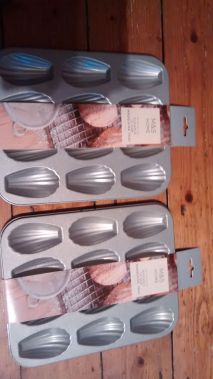
I was in Marks & Spencer’s and saw these lovely tins and thought   “I must try these“.

I bought 2 tins and then the following week I got another and after trying out some recipes I bought a 4th.
IMG-20160319-WA0000


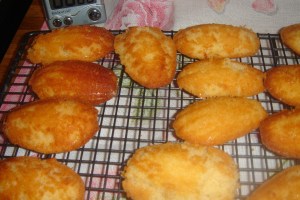
Madeleines are very small sponge cakes baked in tins with shell-shaped depressions.

Of course you can make then in small bun tins if you want to see if you like them before investing in the tins.

IMG_20160321_160447468


They originated from the Lorraine region in France.

When looking for recipes I thought that these did not have a Polish connection but in fact they do!

The exiled king of Poland, Stanisław  Leszczyński (1677 – 1766), was the Duke of Lorraine from 1737 -1766  and his daughter Maria was married to Louis XV of France.

Madeleine Paulmier was the cook for the exiled king and the story goes that these little cakes were named after her.

Marcel Proust  (1871 – 1922) the French author described them as “a little shell of a cake, so generously sensual beneath the piety of its stern pleating…” in his book  À la recherche du temps perdu  – In Search of Lost Time.

I have tried out many different recipes all with varying  quantities – my head was spinning trying to sort them all out.

The following three are I ones I liked best.

They are all based on variations of the Genoise Sponge in which you use melted butter.

For ALL the recipes you must grease the tins well – I have found that using melted butter & a pastry brush is very effective.

DSC03194 DSC03193

Madeleines 1

This mixture made over 30 Madeleines.

Ingredients

65g Butter (plus extra for greasing the pans)

65g Icing sugar

2 eggs

65g Self-raising flour

2-3 drops of vanilla essence

Method

Grease the tins.

Pre-heat the oven to GM4 – 180ºC

In a small pan melt the butter and leave it to cool.

Whisk the icing sugar, eggs and vanilla essence together until the mixture is thick and creamy.

Gently fold in the self-raising flour using a metal spoon.

Gently fold in the melted butter using a metal spoon.

Divide the mixture between the tins.

IMG_20160321_153004258


Bake for around 10minutes till golden.

IMG_20160321_154448312_HDR


Leave them to cool slightly in the tins and then remove them onto a wire rack.

Dredge them liberally with icing sugar.

IMG_20160321_154710042 IMG_20160321_155046064


Madeleines  2 – With Ground Almonds

This mixture made around 30 Madeleines

Ingredients

65g Butter (plus extra for greasing the pans)

65g Icing sugar

2 eggs

65g Self-raising flour

65g Ground almonds

2-3 drops of vanilla or almond essence.

Method

Grease the tins.

Pre-heat the oven to GM4 – 180ºC

In a small pan melt the butter and leave it to cool.

Whisk the icing sugar, eggs and vanilla or almond essence together until the mixture is thick and creamy.

Mix the self-raising flour and ground almonds together.

Gently  fold in the flour and almond mixture using a metal spoon.

Gently fold in the melted butter using a metal spoon.

Divide the mixture between the pans.

Bake for around 10 minutes till golden

Leave them to cool slightly in the tins and then remove them onto a wire rack.

Dredge them liberally with icing sugar.

Madeleines  3 – With Ground Almonds & Honey

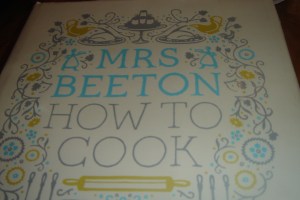
This recipe is based on a updated recipe from Mrs Beeton  in  How To Cook – 220 Classic Recipes For The Modern Kitchen – 2011.

DSC03211


This mixture made 36 Madeleines.

Ingredients

120g butter (plus extra for greasing the pans)

50g runny honey

3 eggs

100g caster sugar

100g self raising flour

25g ground almonds.

Method

Place the butter in a small pan to melt over a medium-high heat and allow it to cook until it starts to brown lightly.

Remove then pan from from the heat and add the honey and stir it in well.

Leave the mixture to cool slightly.

Whisk the icing sugar and eggs together until the mixture is thick and creamy.

Mix the self-raising flour and ground almonds together.

Gently  fold in the flour and almond mixture using a metal spoon.


Gently fold in the cooled  butter and honey mixture using a metal spoon until fully incorporated.

DSC03203


Cover and place in the fridge for 30 minutes.

Grease the tins.

Divide the mixture between the tins.

DSC03205


Let them rest for 10 minutes.

Pre-heat the oven to GM3- 160ºC

Bake for around 10 minutes till golden.

Keep an eye on them as the honey in them tends to brown quickly.

DSC03207


Leave them to cool slightly in the tins and then remove them onto a wire rack.

Dredge them liberally with icing sugar.

Babka and Babeczki

A babka is a large cake and babeczki are small cakes.

For a general description on what a babka is  –  read my post – Babka.

The following cakes have been made using a creamed sponge mixture –using my mother’s friend’s basic recipe for a creamed sponge.

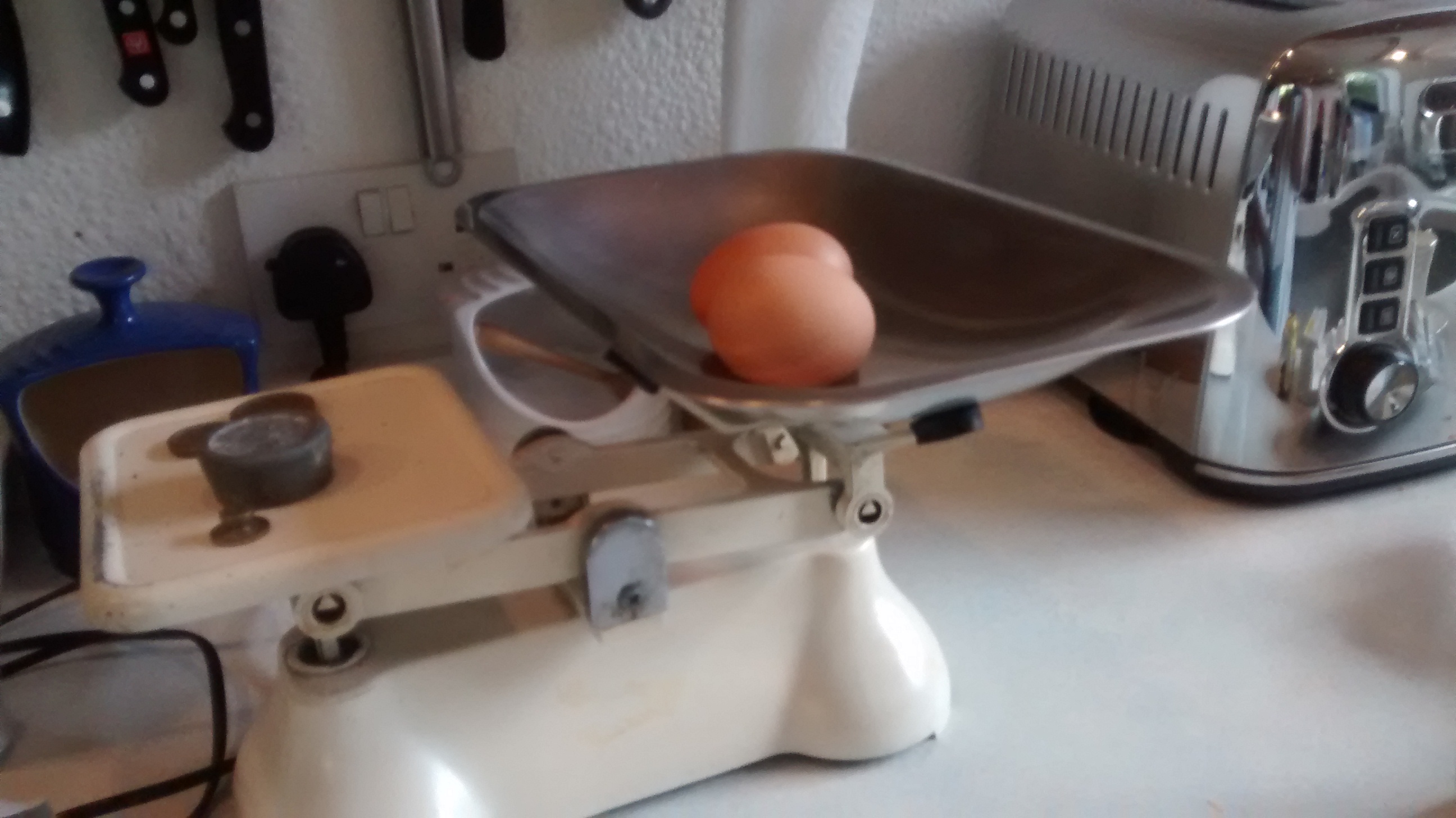
In this recipe you weigh the eggs in their shells and then use the same weights of butter (or block margarine), caster sugar and self raising flour.

IMG_20150709_061756195
Weighing eggs


IMG_20151209_072508772_HDR
Silver Tin at the front was used.

Marbled Babka

Pre-heat the over to GM4 – 180°C

Grease and flour the tin.

For this babka, 4 eggs were used.

After making the cake mixture, half the mixture was placed in the tin and to the rest 3 tablespoons of cocoa powder was added and lightly folded in. This cocoa mixture was then placed on top of the plain mixture and with a metal spoon lightly mix the two to give a marbling effect.

Bake the cake for 35 to 40minutes.

When the cake is ready, leave it to cool completely before turning it out of the tin.


The babka can be dusted with icing sugar or  you can use a chocolate glaze and allow this to dribble down the grooves.

Medium babeczki

I bought these tins a few years ago in Lidl.

You might be able to find find smaller babka tins like those in the photograph below. (I bought these many years ago in France – sold there as brioche tins).

IMG_20150824_150418237_HDR

Grease and flour the tins.

I used 3 eggs to make these 6 babeczki with the addition of 75g of currants (25g per egg)

Bake these in a pre-heated oven a GM4 – 180°C for around 25 minutes.

Wait till the cakes are cool before turning them out.

You can dust them with icing sugar or drizzle a thin lemon icing over them.

I think the size of these makes them ideal for sharing!

Small babeczki

I bought these small mini bundt tins from Marks & Spencer in January 2016.

They are a good size for an individual small cake (of course you can always have two!)

Grease and flour the tins.

Bake these in a pre-heated oven at GM4 – 180°C for around 20 minutes.

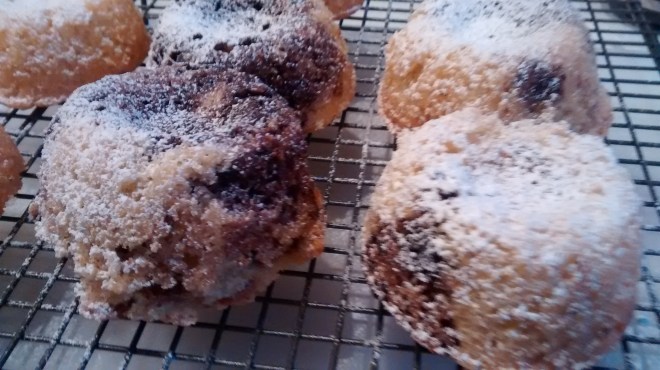
I used a 2 egg mixture with the addition of one and a half tablespoons of cocoa powder for the marbling.

This mixture made  9 cakes. (If you use a 3 egg mixture and 2 tablespoons of cocoa and fill the moulds a little more you should get 12 cakes – I have yet to try this amount.)

Wait till the cakes are cool before turning them out.

Then dust them with icing sugar before serving.


IMG_20160117_162535255


Babeczka – Small Cake – Little Bun

  • Babka is the name of a cake in Polish – or rather it refers to its shape – the name means grandma or little old lady – the shape is round and dumpy.
  • It can be a yeast cake or a sponge type cake. I will go into detail about these later in the year.
  • A small  bun or fairy cake can be called a babeczka (babeczki is the plural).
  • I have also seen the word mufinka now in Poland!
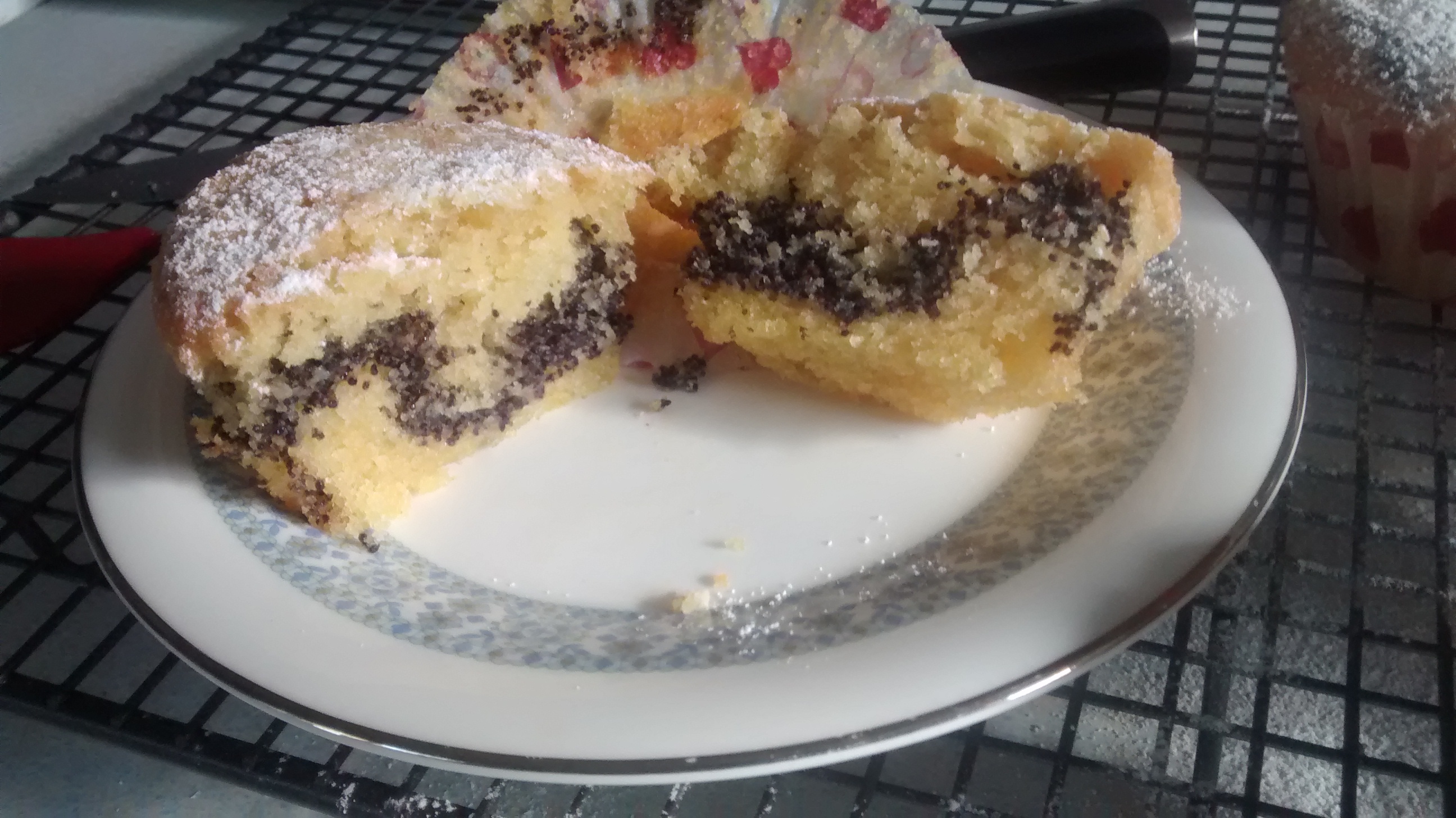
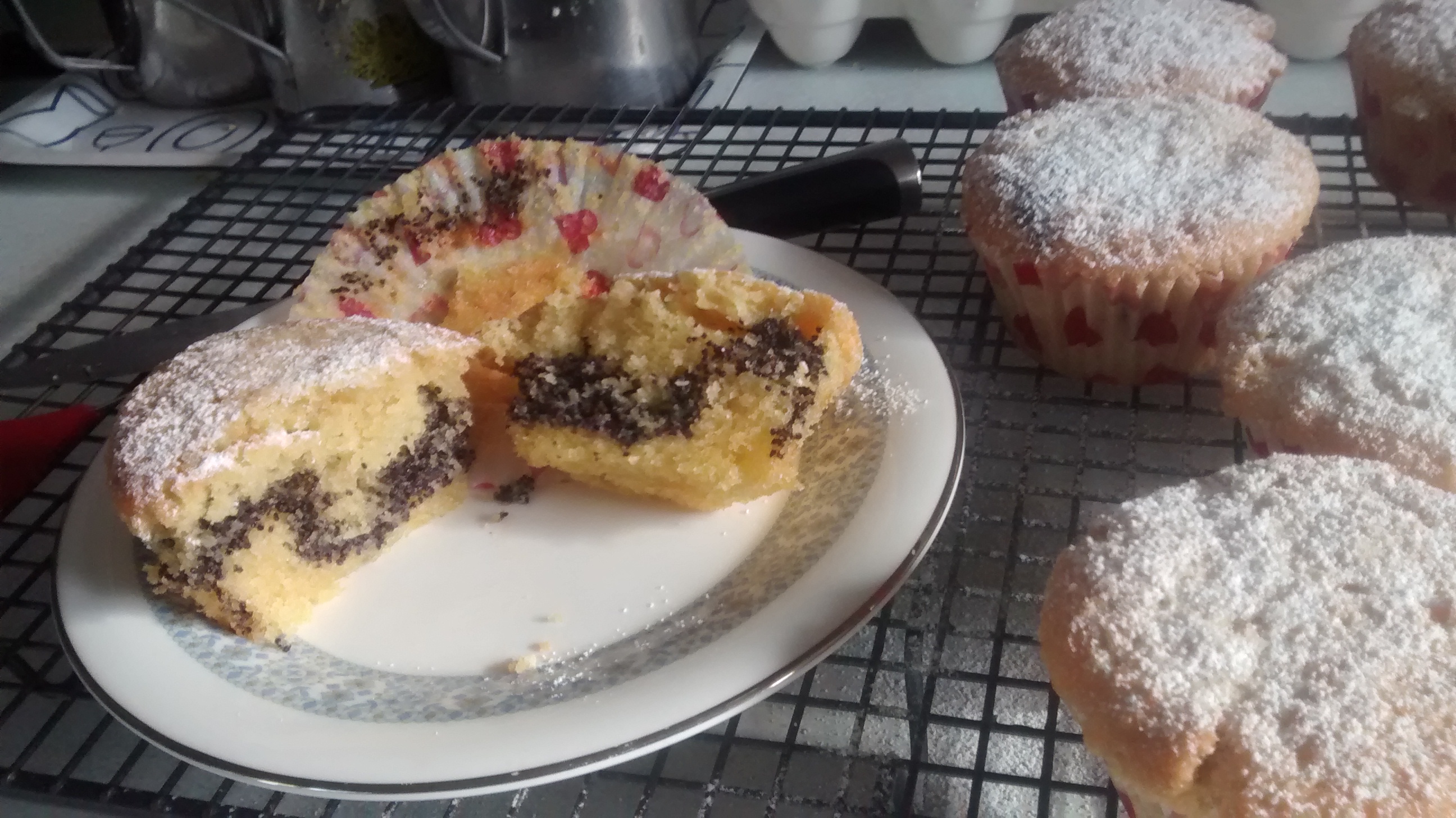
  • Using my various poppy seed recipes I have tried out some variations to make some babeczki.
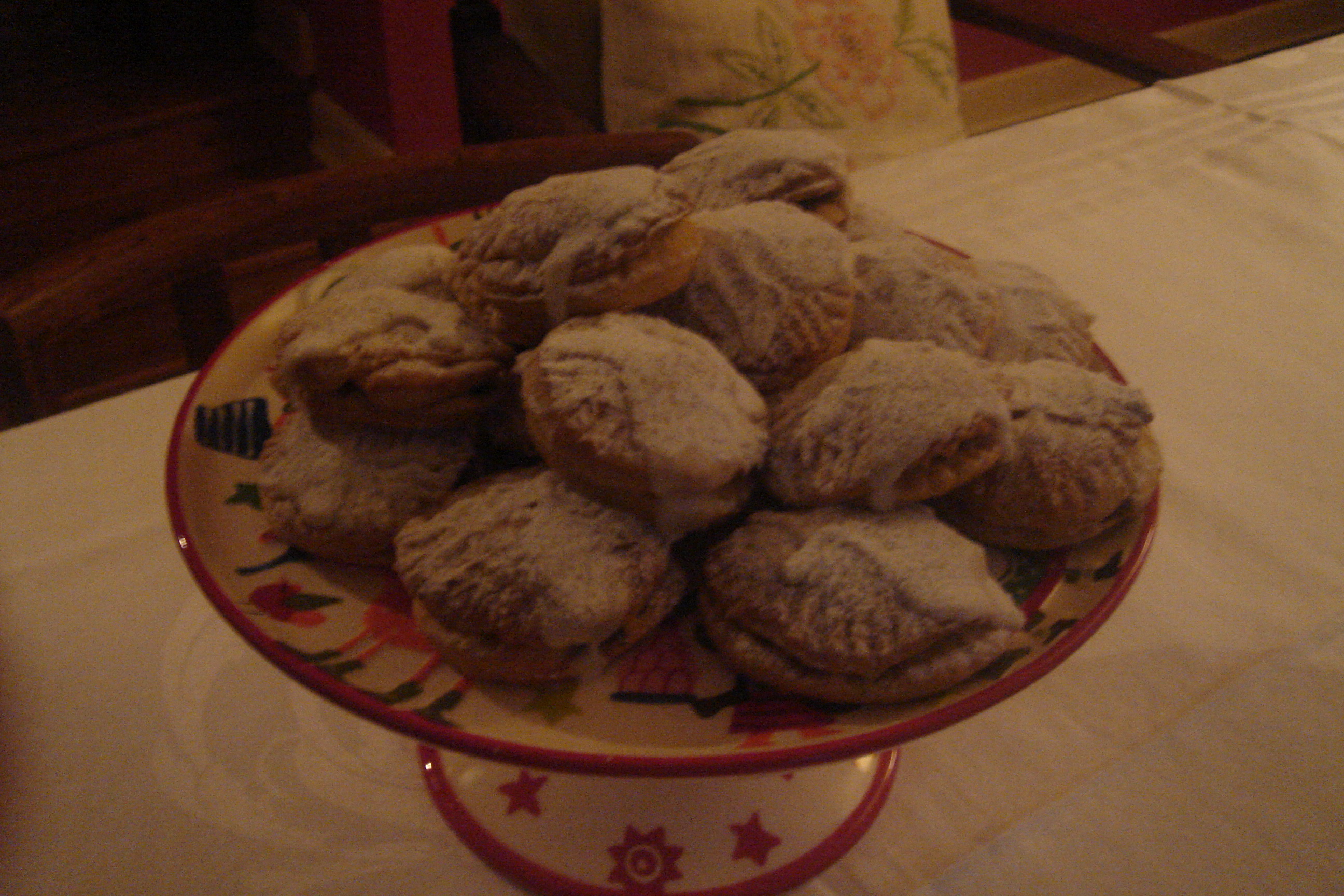
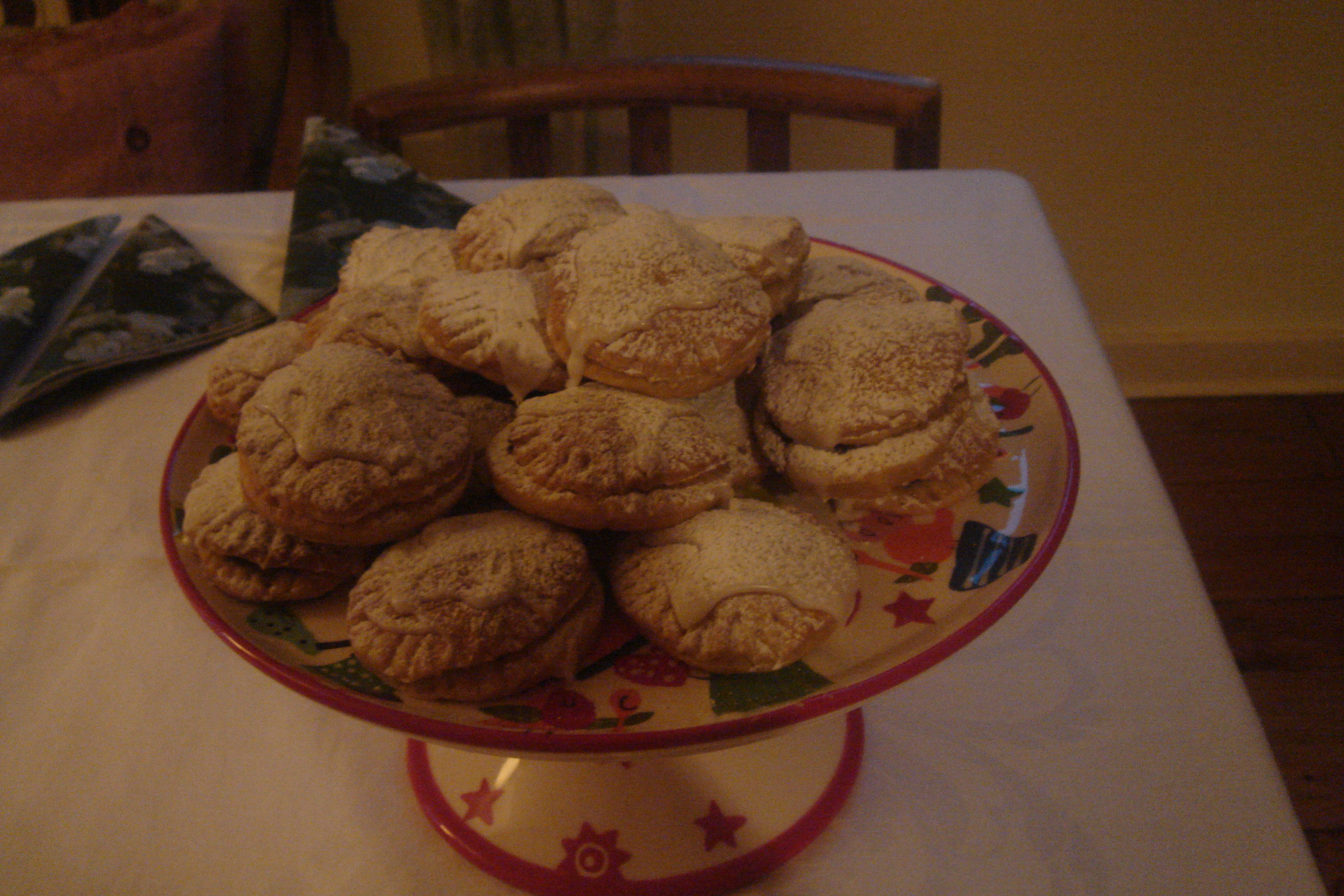
  • These I made with a yeast pastry & poppy seed filling for Wigilia – Christmas Eve – a couple of years ago – using a different yeast pastry to the one in the traditional poppy seed roll.
Babeczki with Poppy Seed filling. The photo is dark as it was taken in the evening whilst getting ready for the special meal.
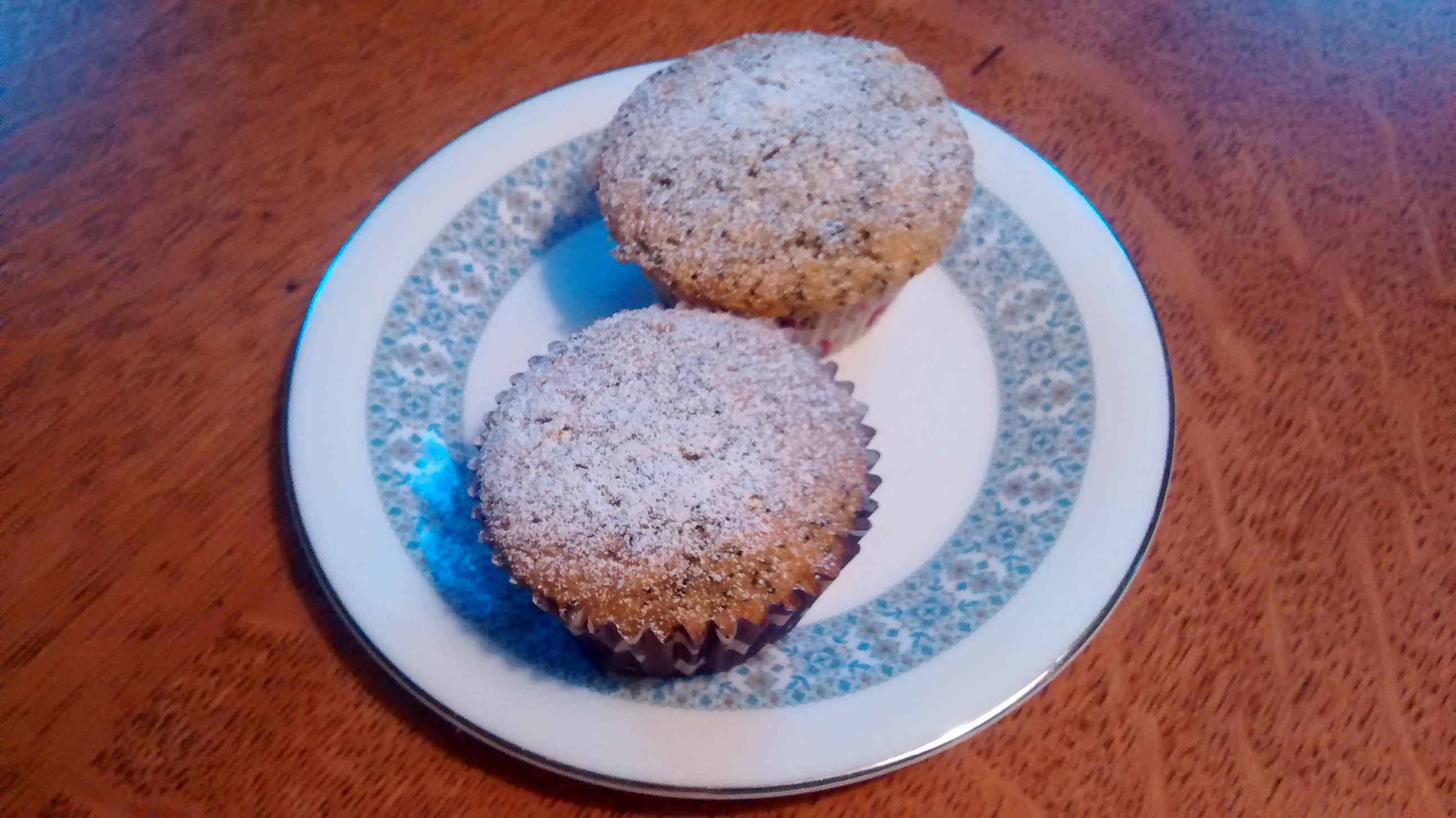
  • I used a simple sponge mixture to make 2 other types of poppy seed buns.
  • I have used paper cases – I am not sure if these are available or used in Poland but they are so useful and make the buns very portable and easy to eat.
  • You can use a basic Victoria sponge mixture made using 2 eggs, butter or margarine, caster sugar and self-raising – the recipe method and amounts such as in the Be-Ro  recipe book will work well.
  • This mixture should make about 12 buns.
  • I use a method  which I will write about in more detail later in the year, in this  the eggs are weighed in their shells and each of the other ingredients is then that same weight.
Weighing eggs

Buns – 1 – Using dry roasted poppy seeds To the sponge mixture you add dry roasted poppy seeds. The dry roasting  gives them a more nutty flavour. Note – Lemon zest  is not used in this recipe.
Buns made with Dry Roasted Poppy Seeds
  • To dry roast poppy seeds It is best to make this first before mixing up the sponge cake.  Weigh out the required amount of poppy seeds  – in this case 40 – 50g for a 2 egg cake mixture.
  • In a small dry  frying pan (ie without any oil or butter) fry the seeds for 5 minutes – stirring them with a wooden spoon or spatula – being careful not to burn them.
  • Tip the hot seeds into a bowl containing some cold milk. Once cool, pour the mixture into a fine sieve to separate the seeds from the milk.
  • Leave the sieve over an empty bowl, press down on the seed a few times to  remove as much milk as possible.

Buns -2  – Using the traditional poppy seed filling

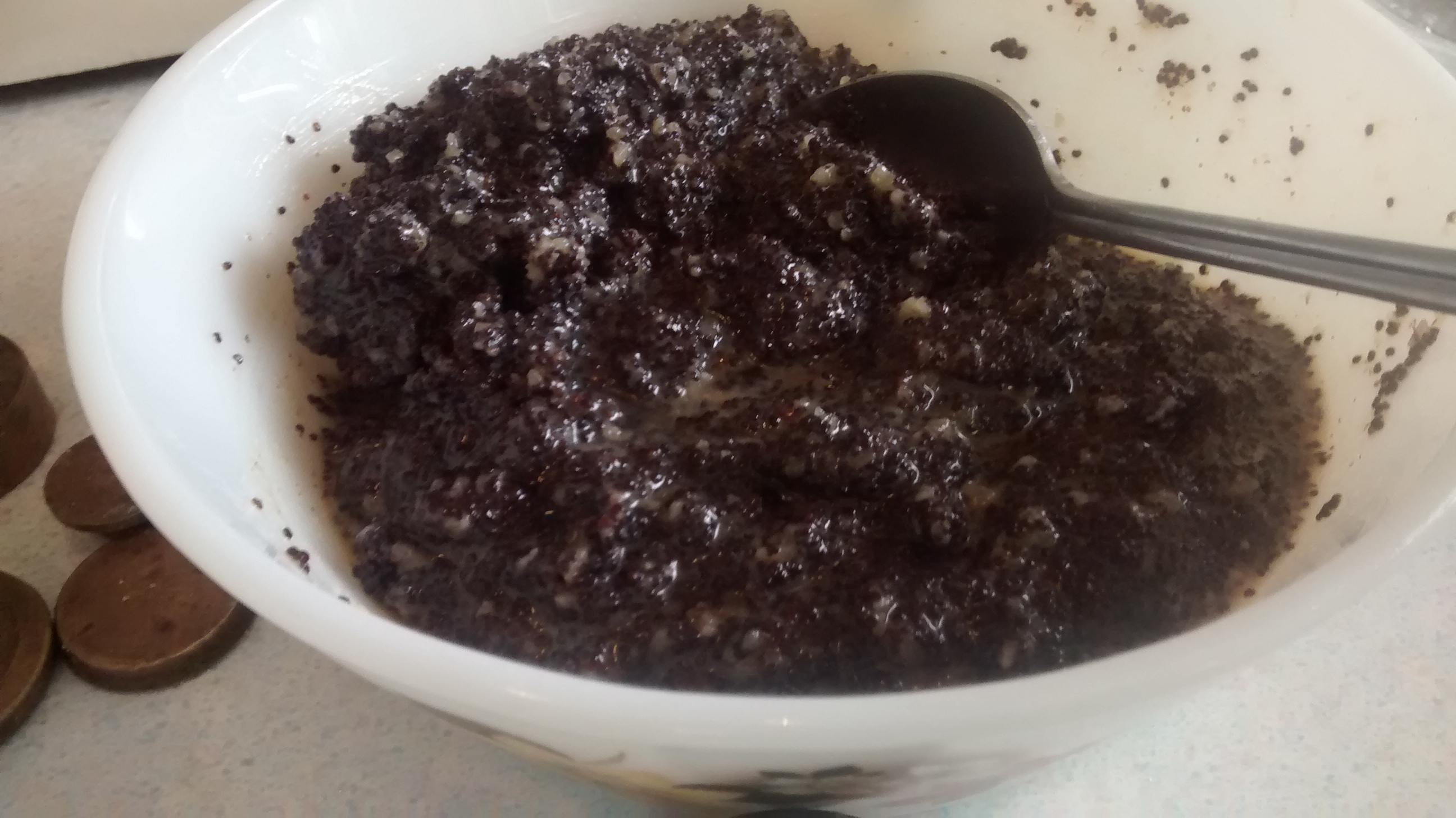
Making the filling  is time consuming but only a small amount is needed to make 12 buns. So what I do is to make in the full amount with 200g of poppy seeds as in an earlier post Poppy Seed Cakes and Yeast Cakes  in advance and then portion this up into 2 or 3 portions and freeze them.

IMG_20150709_070455176
Poppy Seed Mixture


Put the bun cases into the bun tray.

Now the next it is a bit fiddly and you have to judge the quantities by eye.

The idea is to:

  • put a spoonful of cake mixture into each bun case
  • followed by a spoonful of poppy seed mixture
  • followed by a covering amount of cake mixture.

I have found it easier to do each step for all 12 buns at a time – that is :

  • cake mixture into all the cases
  • then the poppy seed filling
  • then final cake mixture.

Bake the buns in the usual way  – GM5 – 190°C  – for around 15 to 20 minutes.

IMG_20150709_073837421
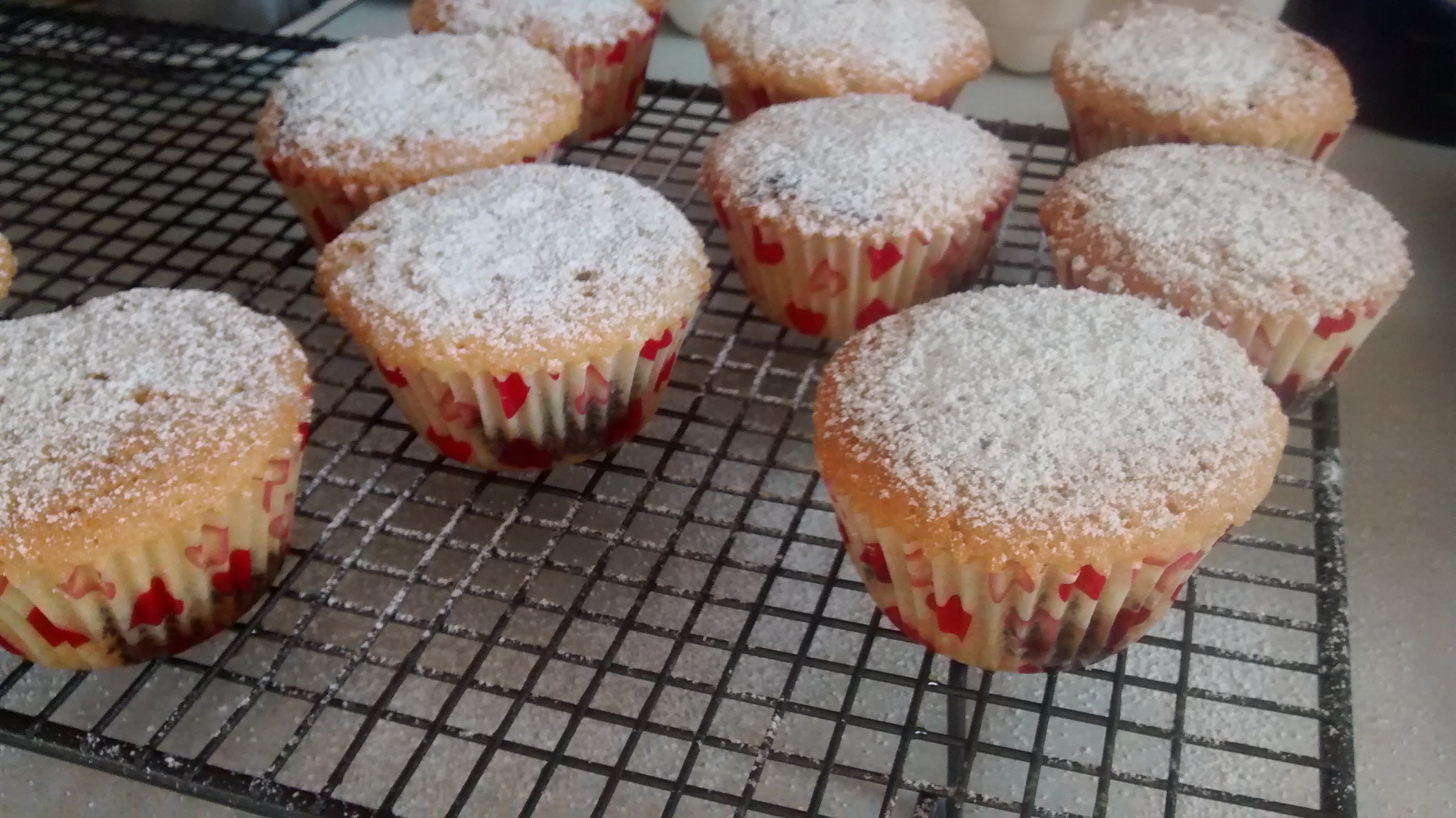
Dust with Icing Sugar once they have cooled and before serving

IMG_20150709_073855224 IMG_20150709_075018278 IMG_20150709_082101258 IMG_20150709_082114326

These have proved very popular!

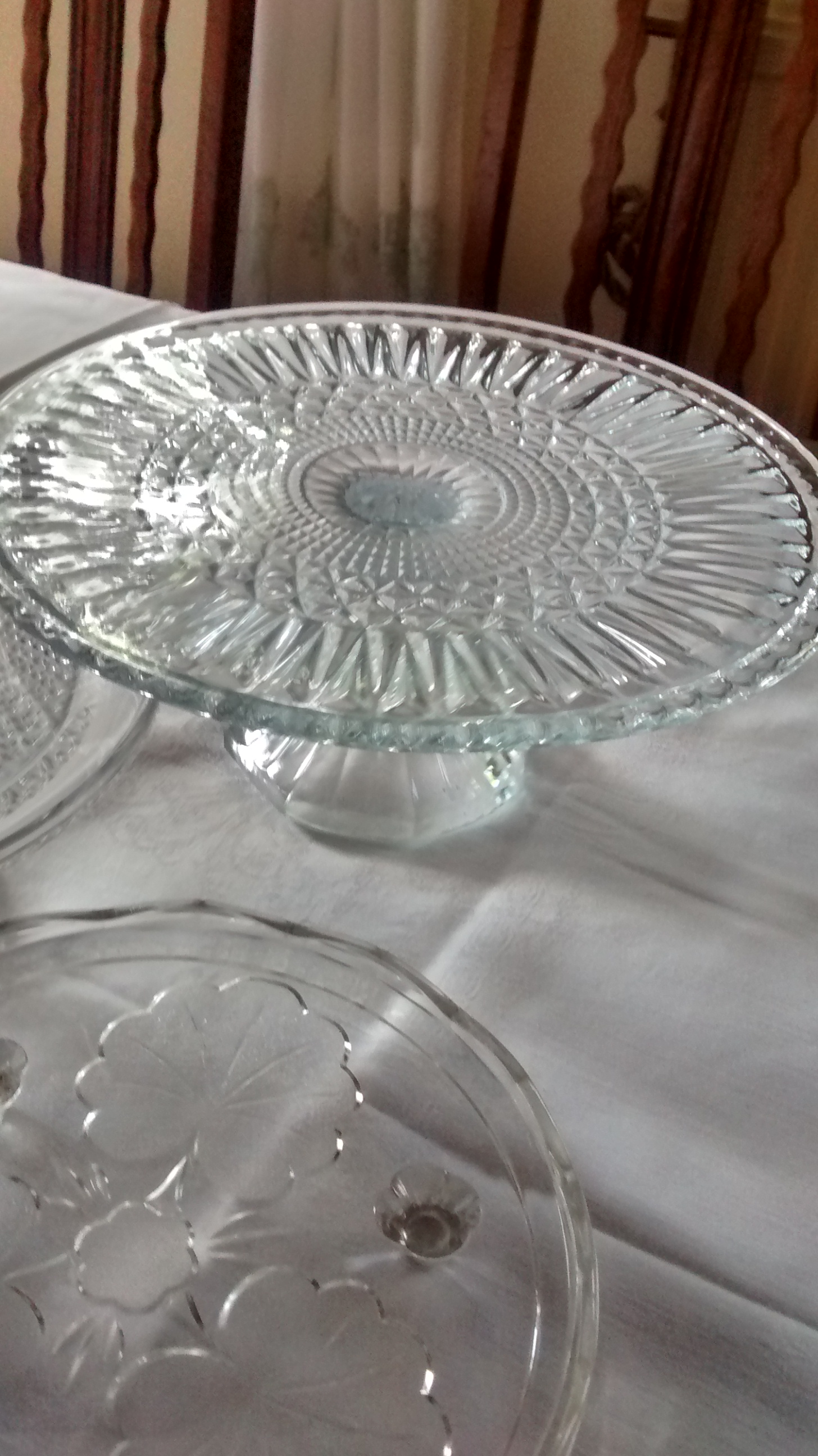
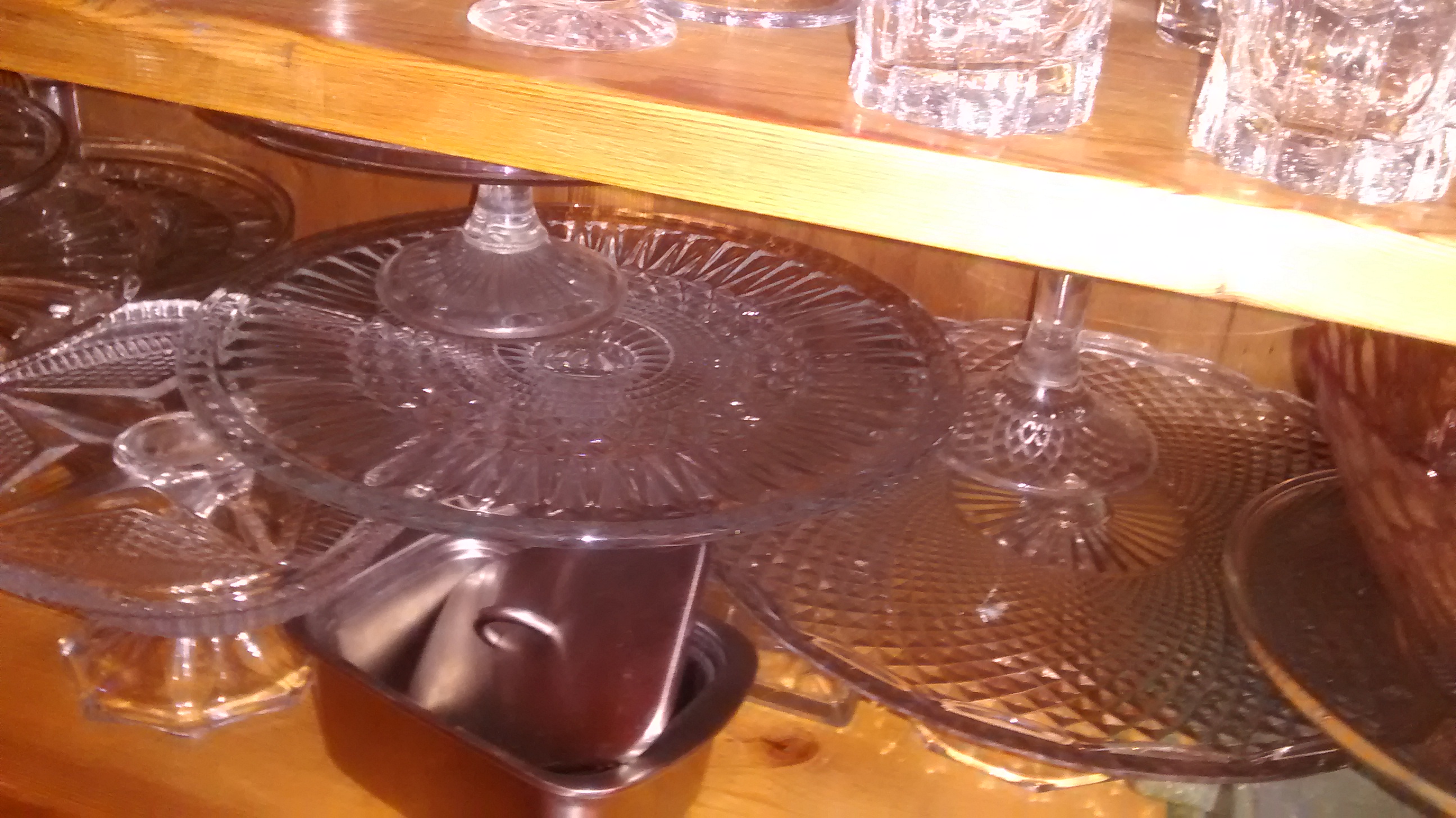
Cake Stands in Glass and China

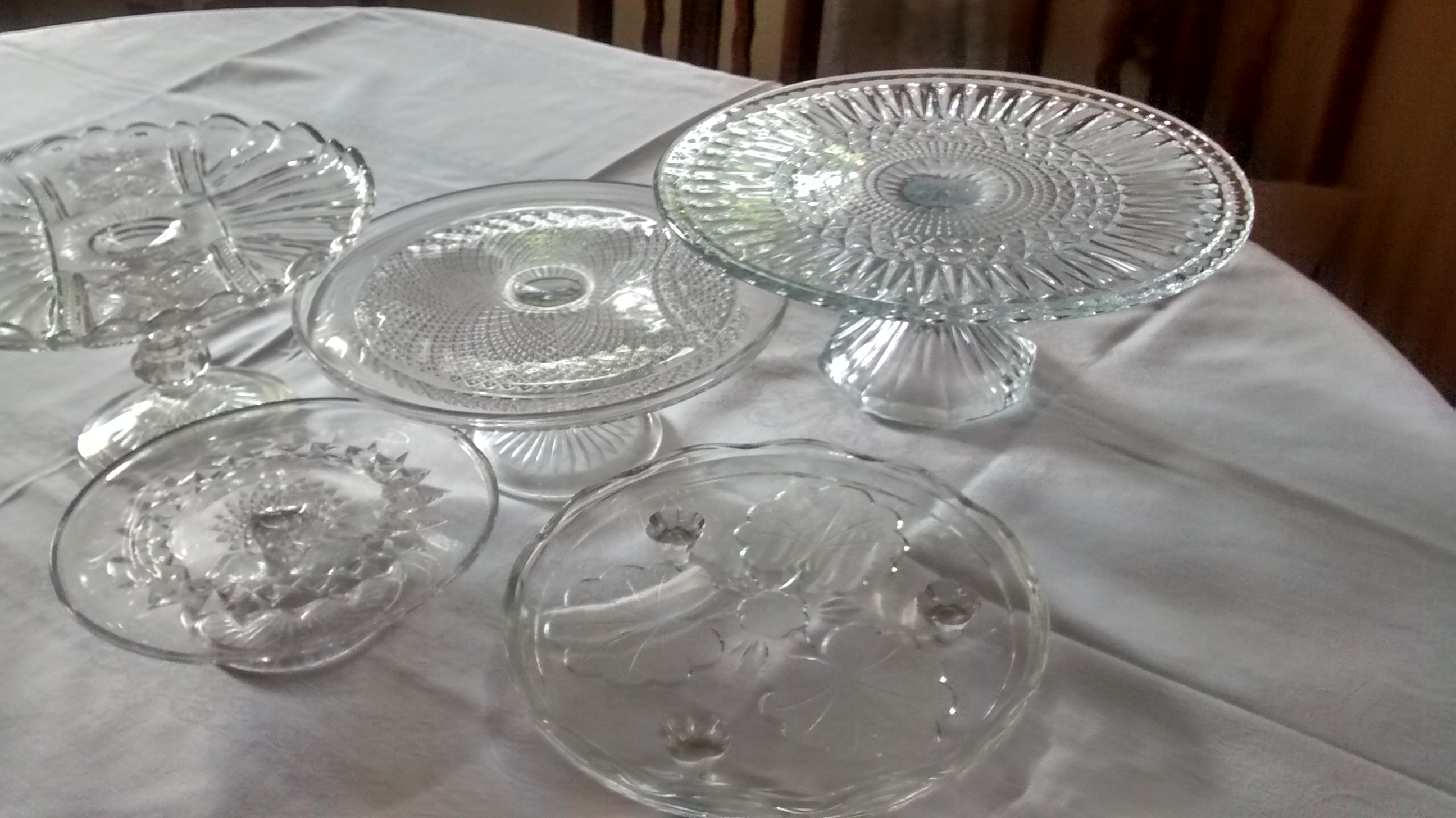
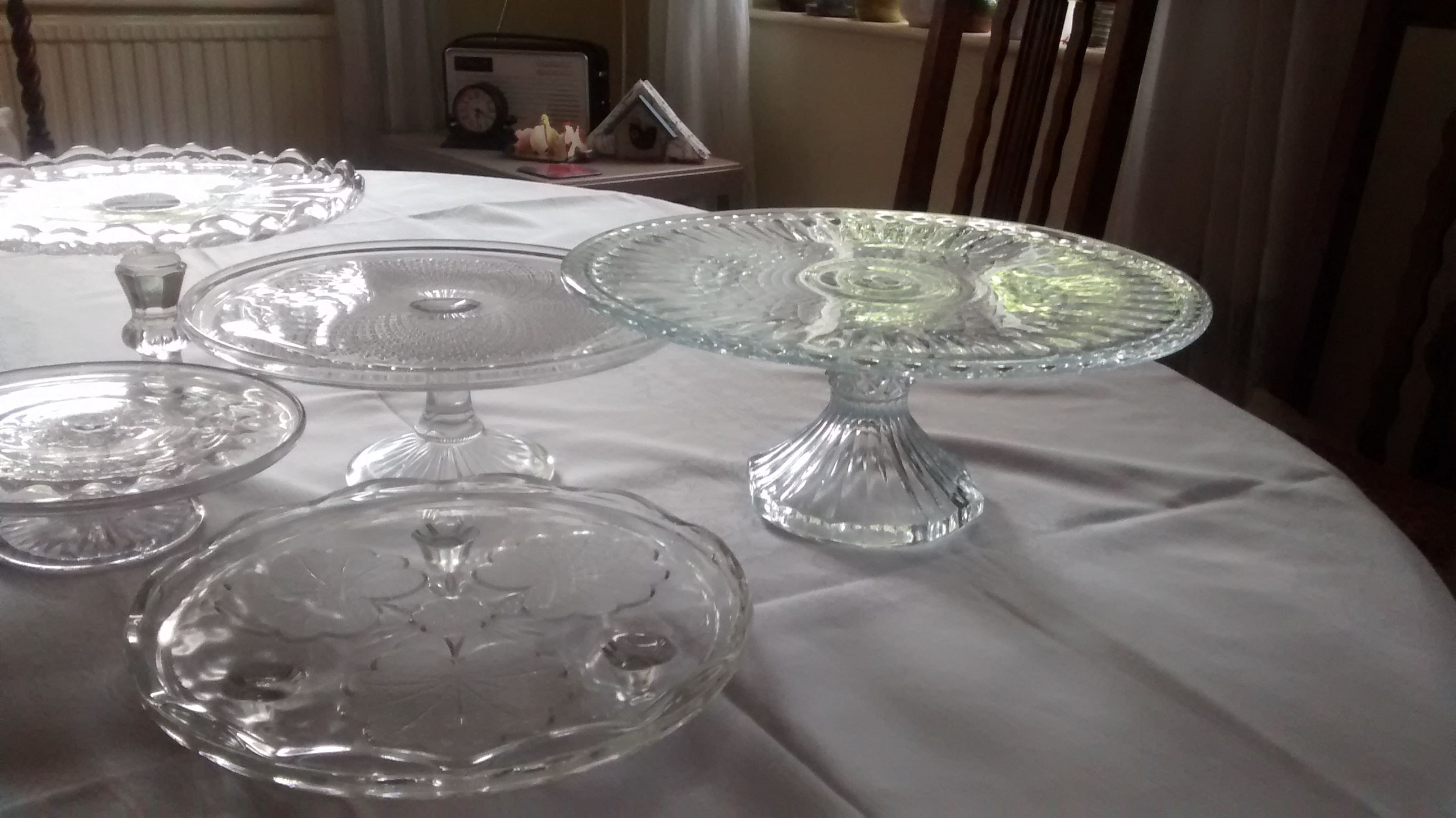
I just love cake stands.   They make the cakes look really special.

I started of with a few glass ones I got from my mother and now have at least seventeen.

Most are old, bought from charity shops and car boot sales.

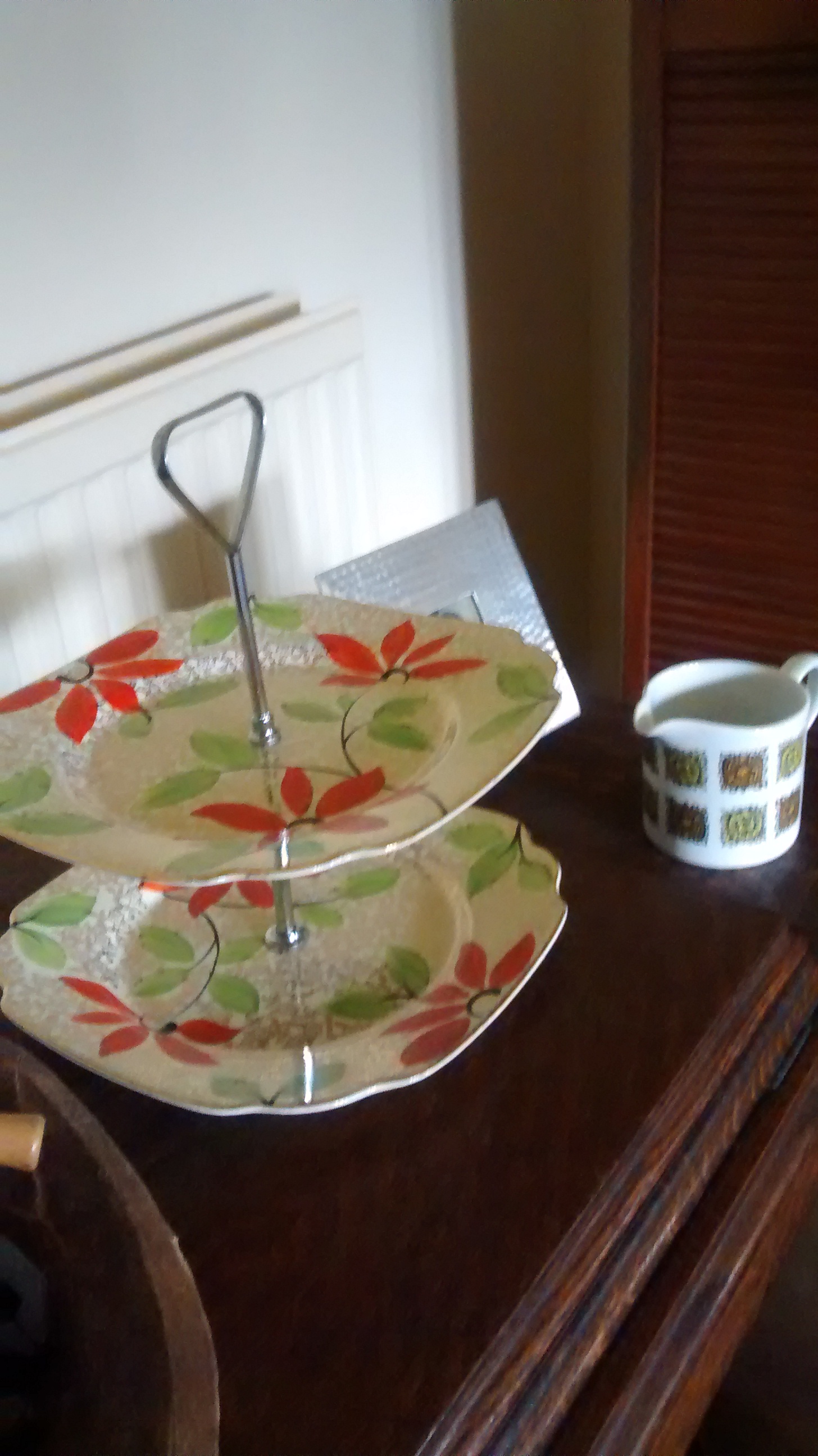
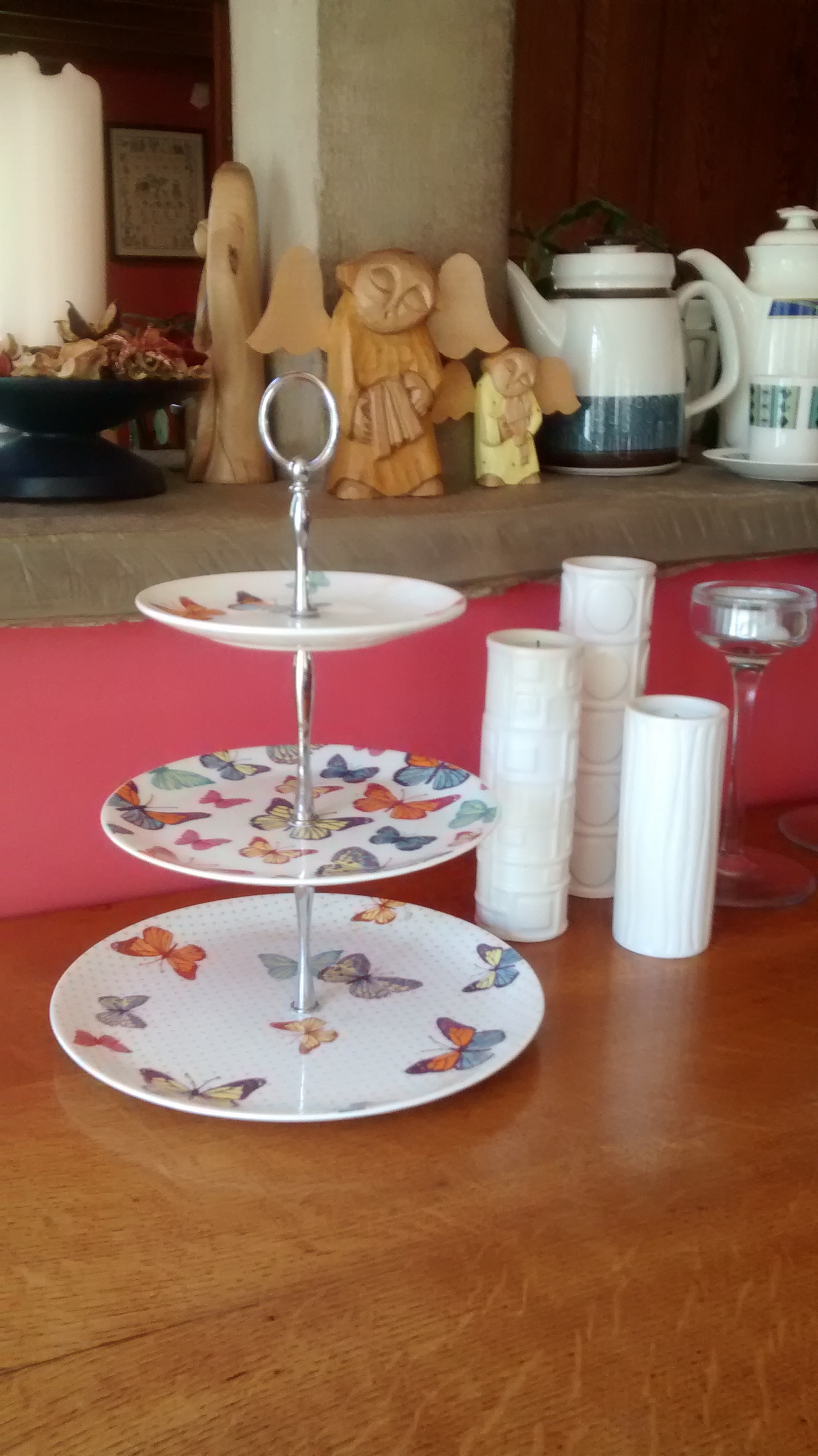
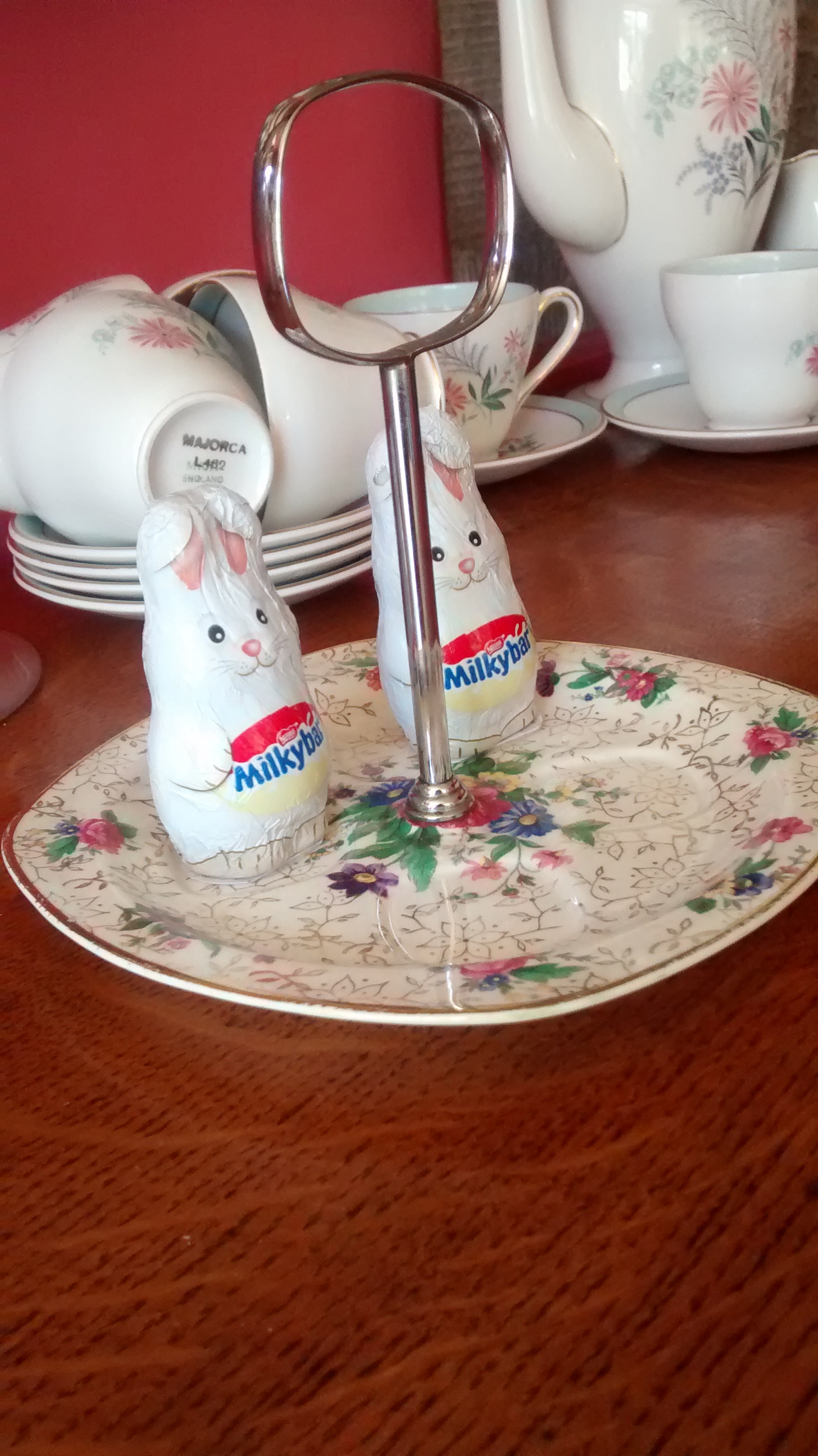
I have also started buying china tiered ones.  These look better just placed around the dining room but I sometimes use them for small cakes, chocolates or fruit.

IMG_20150708_062024348_HDR

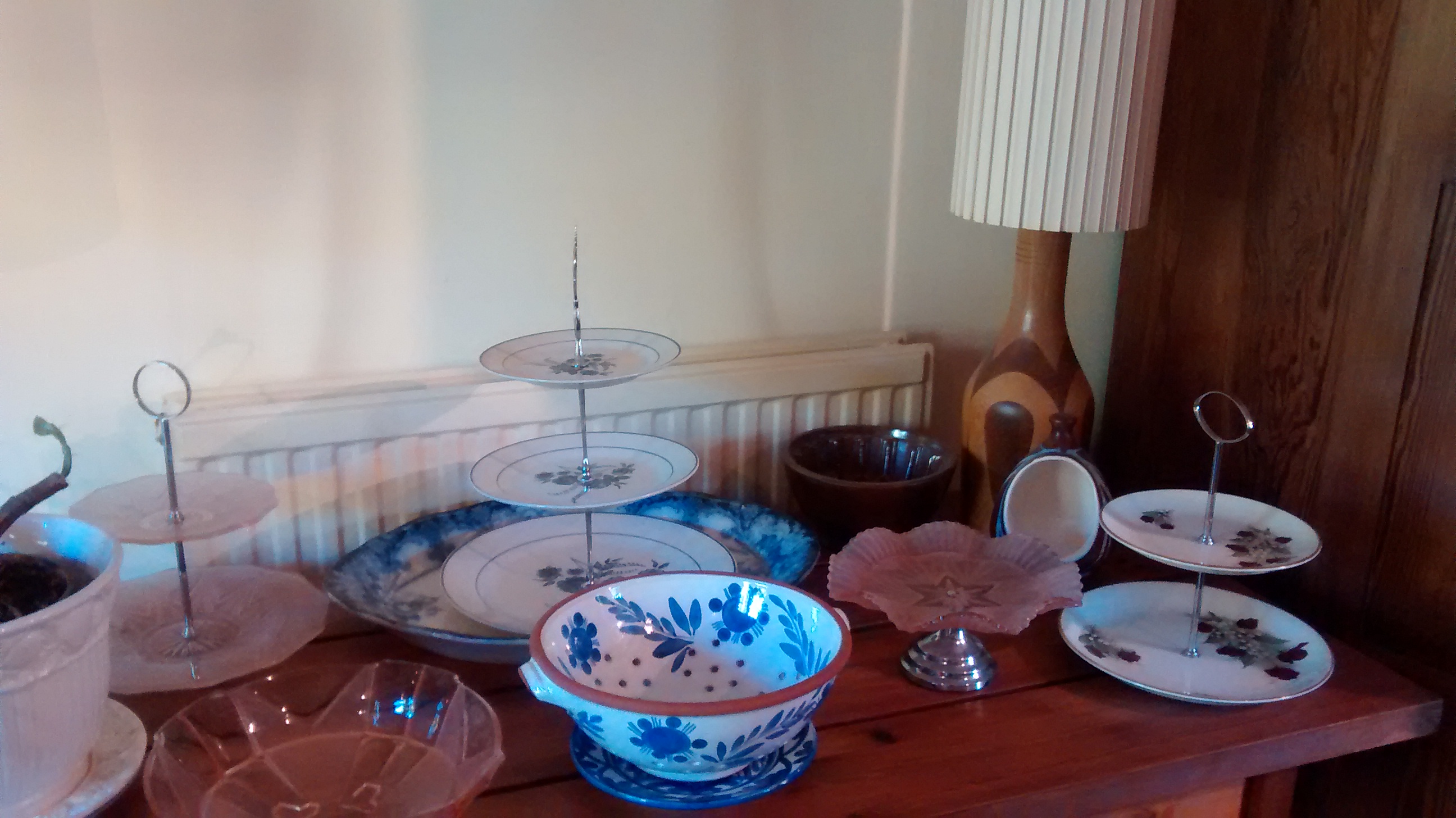
A Selection of my Cake Stands

IMG_20150708_062107725
This Cake Stand was one of my mother’s

IMG_20150708_062004606_HDR(1)

IMG_20150708_062009865_HDR
This Large Stand I bought in an antique shop in Poland. I managed to get it back in my Hand Luggage. It is very HEAVY.
IMG_20150708_063057383
My most recent china purchase. Maybe a bit bright for cakes but lovely colours
IMG_20150708_063154403
Another Bright Cake Stand

IMG_20150630_120235589

An Egg Cup Holder. The egg cups were missing when I bought this.

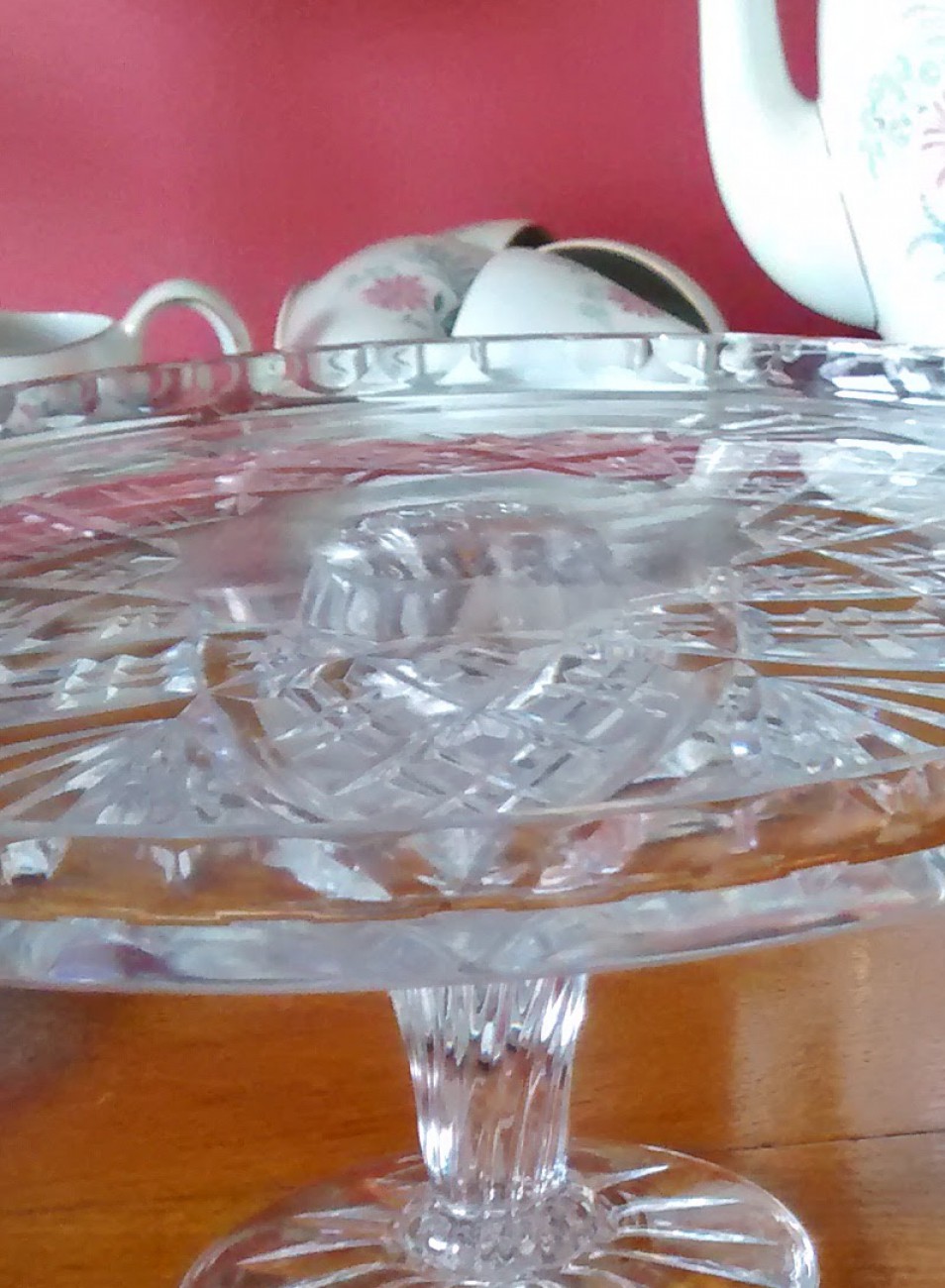
Lead Crystal Cake Stand

IMG_20150630_120140203
Etched Glass Cake Stand
IMG_20150630_120220275
A Laura Ashley Cake Stand
IMG_20150630_120107866
Pink Glass & China Cake Stands

IMG_20150630_120122503

IMG_20150630_120029273
Cake Stands in my Cupboard

Babeczki for Wigilia - with Poppy Seed filling

Babeczki for Wigilia –  Christmas Eve –  with Poppy Seed filling on a Christmas Stand

018

IMG_20150709_161026127

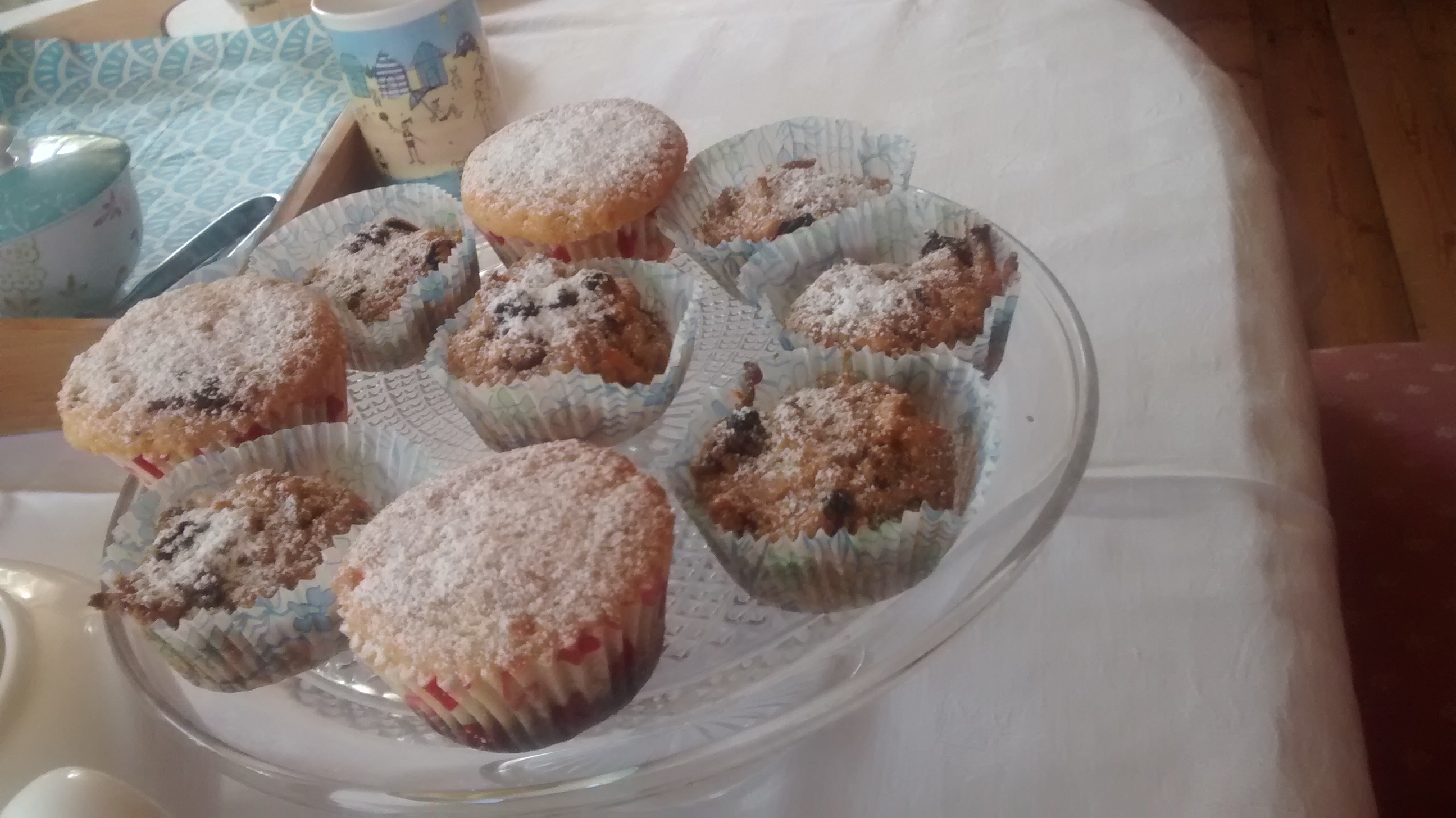
Two types of buns on a stand