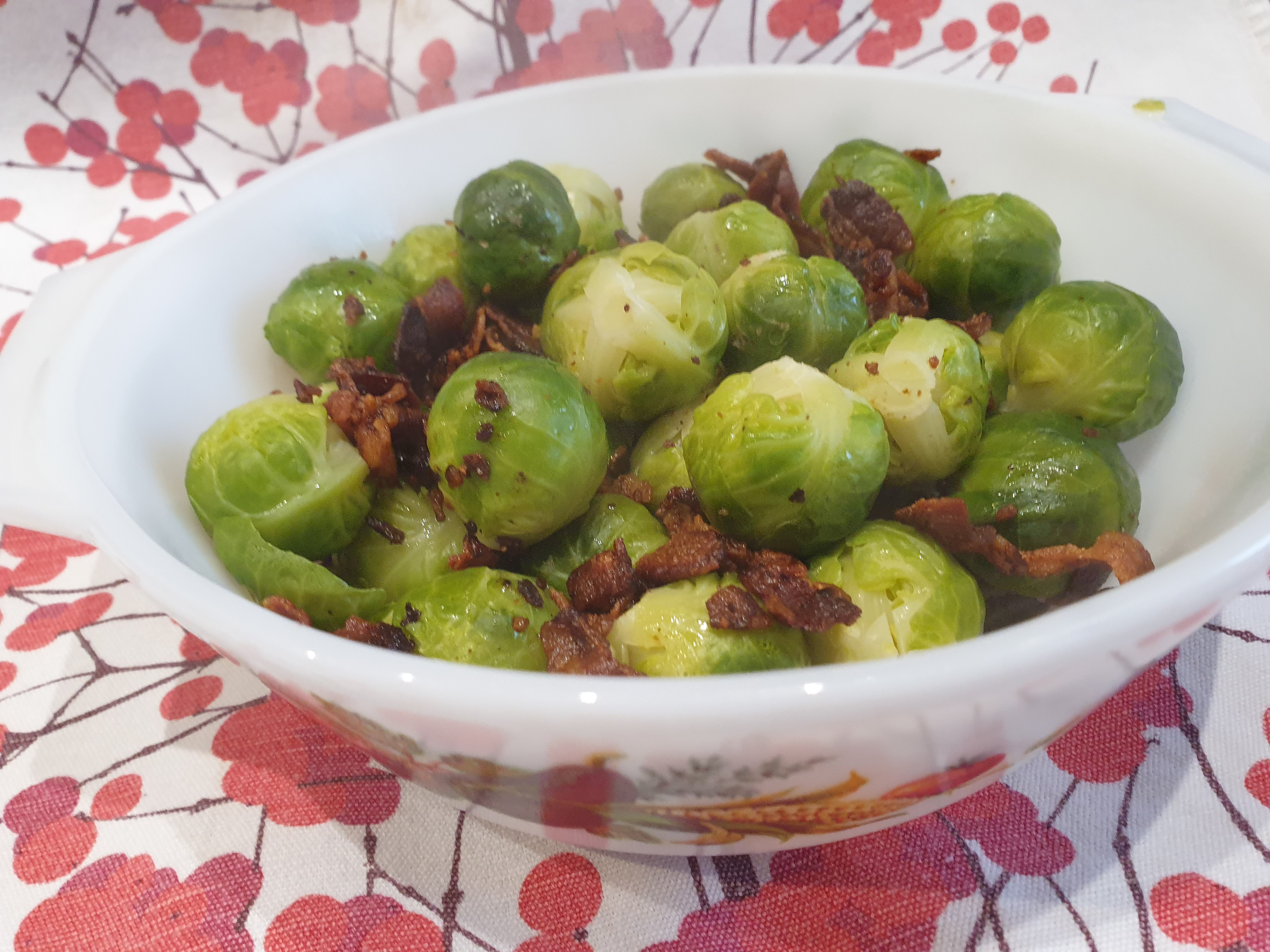
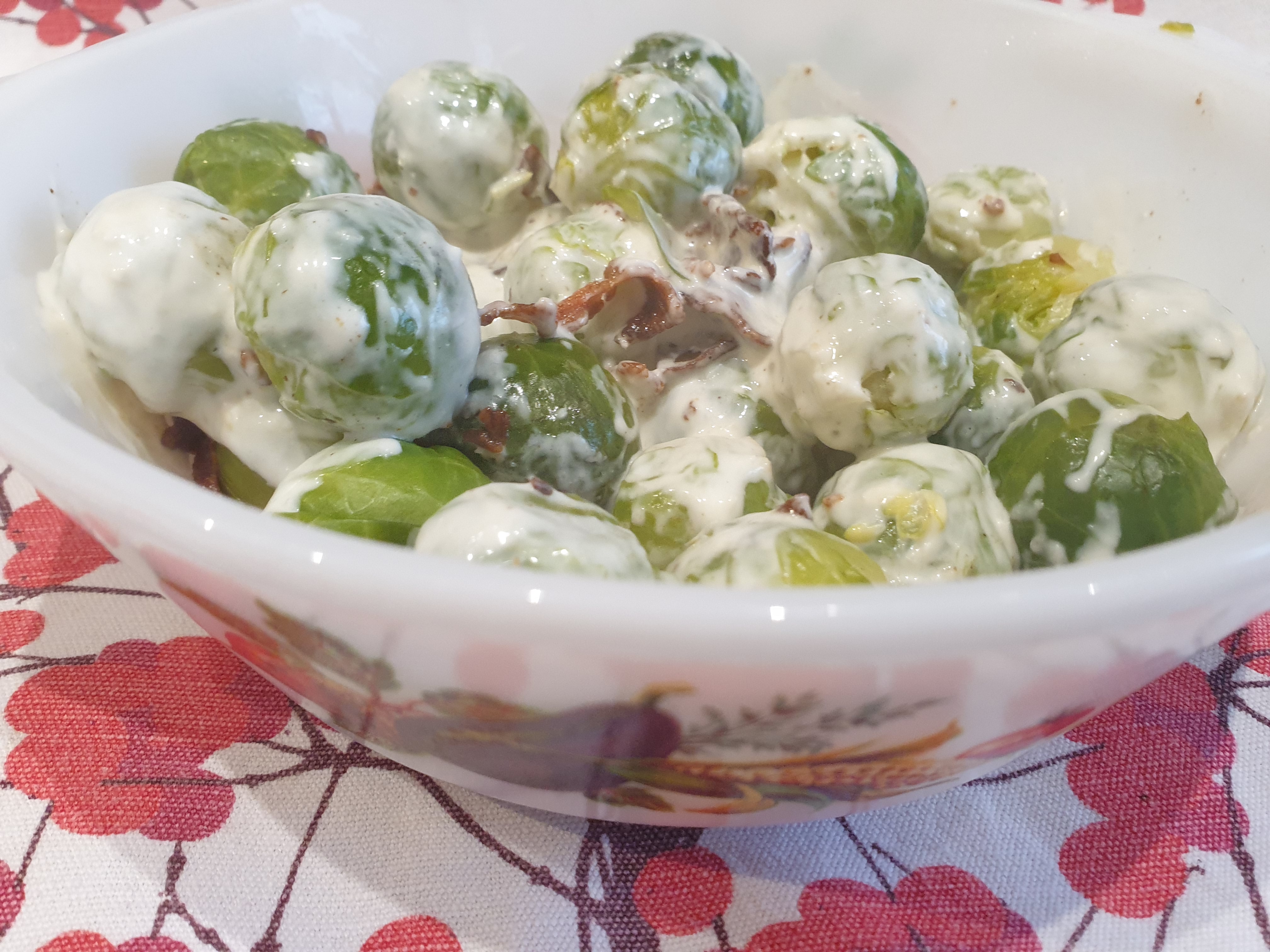
Brussel Sprouts with Horseradish

  • Although I usually serve Brussel Sprouts with buttered breadcrumbs (à la Polonaise), I am always looking for other ways to serve them.
  • This recipe uses two often used in Polish ingredients – crispy smoked bacon pieces – skwarki and soured cream.

INGREDIENTS

  • 500g of Brussel sprouts
  • 6 slices of smoked bacon
  • 3 tablespoons of horseradish sauce
  • 6 tablespoons of soured cream
  • Salt and pepper to taste.

METHOD

  • Steam the Brussel sprouts in the usual way.
  • Chop the bacon into small squares and cook in a frying pan to release all the fat and give you crispy bits – skwarki 
  • Mix the horseradish sauce with the soured cream.
  • Mix the cooked Brussel sprouts, first with the bacon – season to taste –
  • Then add the horseradish soured cream mix.
  • Serve straight away.

Horseradish Soup

  • Zupa chrzanowa – horseradish soup  – this is one I came across recently when I found it on a list on favourite Polish soups.
  • It is often made at Easter* time however it is NOT one my mother ever made!
  • It is a “white” soup due to its use of white vegetables and soured cream.
  • You could call it a “cousin” of zurek – sour rye soup.
  • The original recipes use fresh grated horseradish but this is not so easy to come by in England so I used 2 small jars of creamed horseradish sauce instead.
  • Parsley root is also not to easy to find but the amount of celeriac can be increased slightly.
  • White turnip can be used if you cannot find any celeriac in the shops.
  • The soup is served with halves of hard boiled eggs and sometimes skwarki – crispy bacon bits.

INGREDIENTS

  • 3 or 4 slices of streaky smoked bacon – optional
  • 4 -5 Frankfurter style sausages – chopped into small lengths.
  • 2 -3 medium onions
  • Butter to fry 
  • (1 parsley root – if available – chopped)
  • ½ of a celeriac – chopped into small cubes
  • 2-3 medium sized potatoes – chopped into small cubes**
  • 2  litres of chicken stock
  • ½ teaspoon of dried marjoram
  • 2 bay leaves
  • 4 grains of allspice
  • 4 peppercorns
  • 2 small jars of creamy horseradish sauce
  • 4 hard boiled eggs – halved – 1 egg per serving
  • Salt & pepper to taste – if needed
  • ** You can use already boiled potatoes – cubed and added at a later stage of the soup making.

METHOD

  • Chop the bacon into small pieces and fry gently to remove the fat and make skwarki. These will be used to garnish the soup.
  • Chop the onions into small pieces.
  • Fry these gently in the butter till soft – do not brown.
  • Put the stock into a large pan and add the onions, the parsley and celeriac.
  • Also add the marjoram, bay leaves, allspice and peppercorns.
  • Heat gently until the vegetables are becoming soft.
  • Add the sausages and horseradish sauce and heat for another 5 minutes or so.
  • Season to taste.
  • *
  • Served with the bacon pieces and the halved hard boiled eggs.

Served in Royal Doulton Carnation soup plates.

*Horseradish is in the Easter basket that is blessed. It is a symbol of the bitter sacrifice of Christ.

Salad Dressing

  • This is a variation on a traditional salad dressing.
  • Mayonnaise is often used especially on cabbage salads (coleslaw).
  • I often mix in some Greek style yoghurt.
  • *
  • I was given this variation last week and it does add a nice little kick.
  • *
  • Equal Amounts of Mayonnaise: Greek Yoghurt: Cream of Horseradish Sauce.
  • *
  • 2  tablespoons of each should be more than enough for a whole shredded cabbage.
  • *
  • Full fat for both the mayonnaise and yoghurt is the best.
  • *
  • Not tested  – but I am sure this will go well with boiled potato salad.

Salads in Bavarian China

NOTE

  • The horseradish does become milder and losses it kick if left for a longer time eg overnight.
  • Best to add this dressing about an hour before the salads are needed so any fruits and nuts soften but the horseradish still has the kick. 

Horseradish Sauce

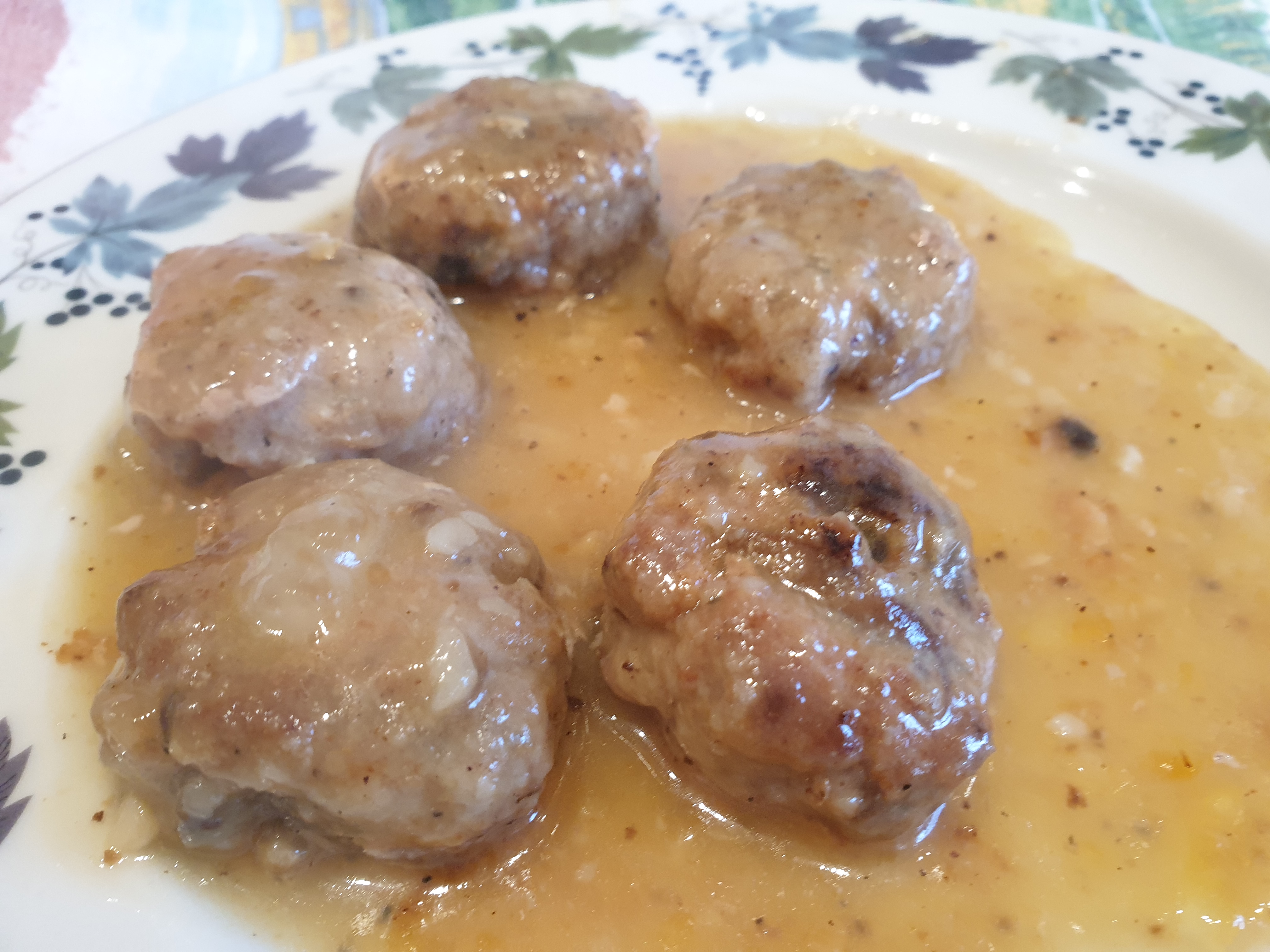
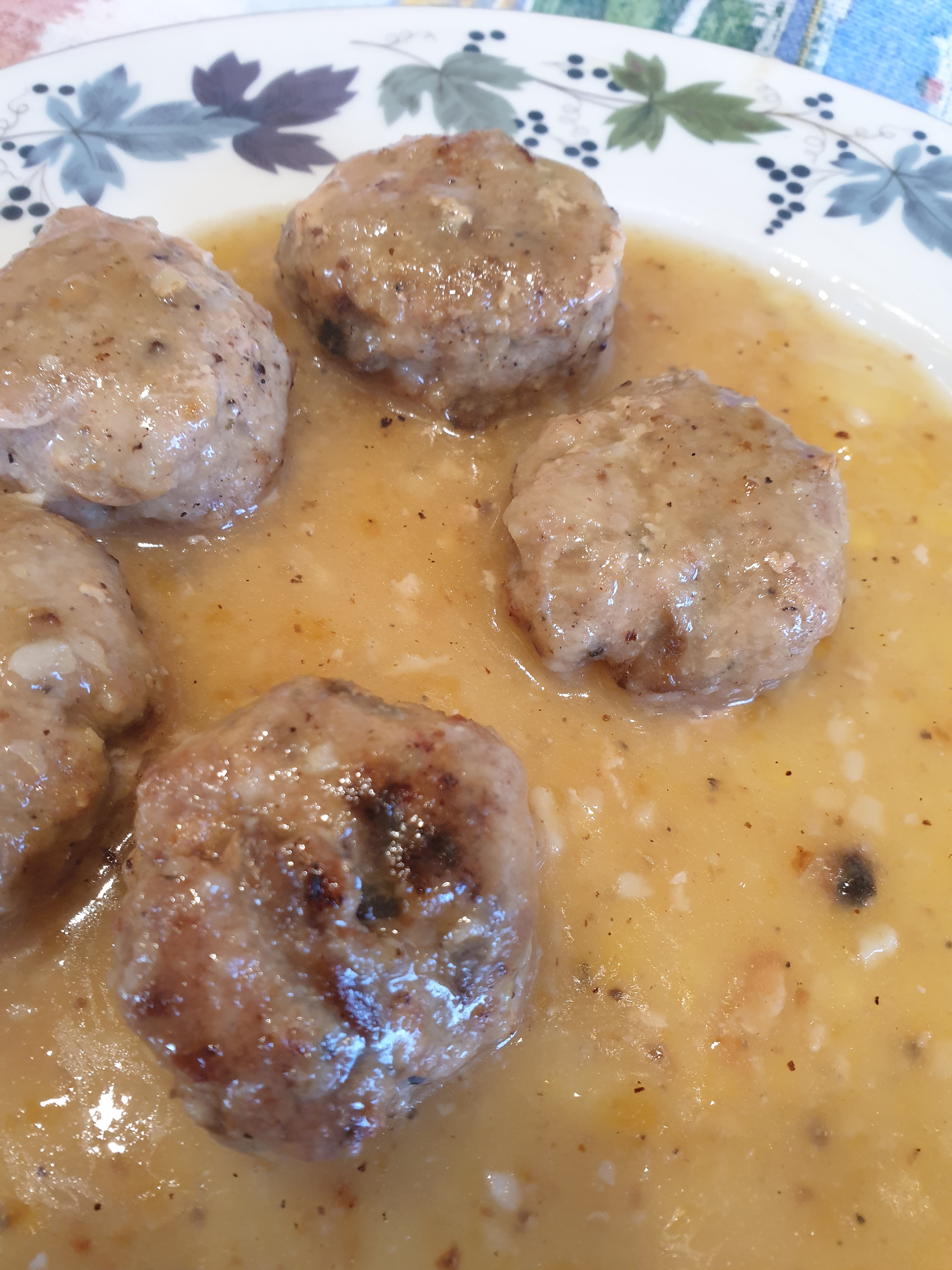
  • Recently I posted kotlety mielone – meatballs with a mustard sauce.
  • I was then inspired to make a similar dish but this time with horseradish sauce.
  • Make your favourite meatballs – making them a bit smaller than usual.
  • I used a beef and pork mixture for mine.
  • You could also make pulpety – very small meatballs.

METHOD

  • Make your smaller style meatballs 
  • Keep warm – whilst you make the sauce.
  • *
  • Pre-warm the oven to GM 4 – 180°C.

INGREDIENTS – for sauce

  • 500ml of chicken or vegetable stock
  • 1 tablespoon of potato or corn flour
  • 1-2 tablespoons of made horseradish sauce

METHOD – for sauce

  • In a saucepan bring the stock to simmer.
  • Mix the potato flour with a little cold water.
  • Add this to the stock – stirring with a wooden spoon until it thickens.
  • Stir in the made horseradish sauce.
  • Heat together gently until it thickens.
  • Adjust the thickness with water or stock  if necessary.

METHOD – Overall

  • Put  a layer of meatballs in an oven proof dish.
  • Pour the sauce over the meatballs.
  • Cover with a lid or foil.
  • Put the dish in the pre-heated oven for at least 30 minutes.
  • *
  • Serve with mashed potatoes, boiled rice, pearl barley or buckwheat.
  •  
  • Served on Royal Doulton – Burgundy plate

Beetroots & Apples

This is a delicious way of serving beetroot warm with a roast dinner.

Ingredients

  • 500g boiled or roast beetroots
  • 2-3 cooking apples
  • 60g of butter
  • Juice and grated rind of a lemon
  • 2-3 tablespoons of creamed horseradish sauce
  • 125ml of soured cream
  • Salt & pepper to taste

Method

  • Grate the beetroots using a medium grater.
  • Peel and core the apples and grate using a medium grater.
  • Mix the beetroot and apple together.
  • Mix in the lemon rind and juice.

  • Melt the butter in a large shallow frying pan.
  • Gently cook the mixture in the butter stirring often.
  • Cook for around 5-10 minutes.
  • Take of the heat.
  • Add the horseradish sauce and the soured cream.
  • Mix well together.
  • Season to taste and serve immediately.

Serve in Royal Doulton – Carnation – 1982 – 1998.

Note

Should you have any left you can serve it cold with cold meats.

Beetroot Fritters

These beetroot fritters are not from an old Polish recipe.  I got the idea from making Polish potato pancakes and  carrot pancakes and seeing all the new season beetroot.

Ingredients

  • 250g cooked beetroots
  • 1 egg – beaten
  • 2 tablespoons of soured cream or creamed horseradish sauce*
  • 2 tablespoons of plain flour
  • Salt
  • Sunflower oil for frying

* If you have a little fresh grated horseradish that would be super.

Method

  • Grate the beetroots using a coarse grater.
  • Add the beaten egg and the soured cream or horseradish sauce and mix together.
  • Add the flour and mix thoroughly.
  • Heat the oil in a frying pan and use large tablespoonfuls of the mixture to make the fritters.
  • Fry them on both sides.
  • *
  • Keep them on a heat proof plate  in a low heat oven whilst you make the rest.

They can be served with many hot roast dinners or separately with a dollop of soured cream or creamed horseradish sauce.


Plates

  • Arc – Arcopal  – from the 1970s
  • Royal Bone China – The Poets’ Garden – Columbine & Sweet Amber


More Hot Beets!

Beetroot must be one of Poland’s favourite vegetables and I have written recipes about them previously  – many of these are for salads.

Here is another recipes which I came across recently – raisins, apple, horseradish and a little soured cream is added to make a hot dish to serve with roast meats.

The original recipe used grated fresh horseradish – I have adapted it by using prepared horseradish sauce which I have in all the time.

Cooked beetroots are needed and these can be prepared in your favourite way – boiling, steaming or roasting.


Ingredients

700g of cooked beetroots

2 Bramley cooking apples

50g of raisins

1 tablespoon of butter

80mls of soured cream

2 – 3 tablespoons of horseradish sauce

Juice of 1 – 2 lemons

Salt & pepper

Method

Put the raisins in a small bowl and pour boiling water over them and leave them to stand for about 30 minutes.

Coarse grate the cooked beetroots or use a blender.

Peel and core the apples and coarse grate them and pour some lemon juice on them.

In a deep frying pan gently melt the butter.

Add the grated apples and heat gently until they start to soften.

Add the grated beetroot, the raisins and water and continue to heat them together, stirring occasionally.

Add the horseradish sauce and the soured cream and mix well in, continue to heat for a couple of minutes.

Add more lemon juice, salt & pepper to taste.

Serve hot.


Note

You can put them in an oven proof dish in a low oven whilst you wait for other items to cook.

20190208_185106

Served here with kotlety – breaded pork and boiled new potatoes.

Note

If you have any left – they taste good cold as well!


Celeriac with Prune Sauce

I have just tried another recipe  from my new Polish cookbook. It is for cooked celeriac – I adapted it slightly to make it – it is truly delicious.

Ingredients

1 large (or 2 small ) celeriac

150g pitted prunes

75g raisins or sultanas

125ml soured cream

2 -3 tablespoons of prepared horseradish sauce

Juice of 1 or 2 lemons

Salt & pepper to taste

Method

Cook the celeriac – I find steaming the best option – leave it to cool and then peel away the outer layer and cut the flesh into cubes. ( You can do this some time beforehand.)

Pre-heat the oven to GM 4 – 180°C.

Cover the raisins with boiling water and leave to soak.

Cover the prunes with boiling water and simmer them gently for around 10 minutes.


Add the soured cream, horseradish sauce, raisins and lemon juice to the prunes and mix together.


Add salt & pepper to taste.


Mix the cubed celeriac with the prune sauce place the mixture in an oven proof dish and cook for at least 30 minutes.


This goes well with hot roast meats such as chicken and especially pork.  (I have used the prune & pork combination in other recipes.)

Variations

I think this sauce would go well with other vegetables such as kohlrabi or white turnip.

Seler – Celeriac – Celery

Today,  4 July 2016, is the first Anniversary of my blog!

What an interesting year it has been for me with all the reading & research, cooking & photographing  and the writing.

I do hope you are all enjoying reading my posts & God willing this is the start of another interesting year.

This will be my 58th post &  I am going to  write about  a  very popular vegetable in Poland.

Seler – Celeriac – Celery

  • The word seler in Polish is used for both celeriac and celery and in fact celeriac is a just a variety of celery (Apium graveolens).
  • Celeriac is mentioned in Homer’s Odyssey where it is called selinon.
  • Now for a little plant biology – in English the stems of the plant are known as celery and they  are long with leaves at the top.
  • Whereas in the variety known as celeriac – it is the hypocotyl – the swollen enlarged stem above the root and below the leaves  – which is eaten. The leaves come off the top of this swollen stem. (Celeriac is often classed as a root vegetable but it is not the root.)
  • Celeriac has not been around in the shops in England for that long and last week I bought one in Marks & Spencer’s and it had a label on it saying “NEW“.
  • Years ago when I looked at my Polish cookery book and it talked about grating seler – celery I used to think oh, how very odd – I wonder how that comes out – I now realise  that they  were referring to grating celeriac.
  • In Poland you are much more likely to be served celeriac than celery  and it is a very popular vegetable which can be eaten both raw and cooked and is used in a variety of salads.
  • I have been trying out some salads both with raw & cooked celeriac including some old favourites.  Celeriac has a delicate flavour and easily picks up the flavours of the other ingredients.
  • Dressings for the salads include mayonnaise, soured cream, natural thick yoghurt & my favourite grated horseradish (I use a bought sauce.)

I have given details of the dressing I have used in the following recipes but they are easily interchangeable.

Salads Using Raw Celeriac

  • For the following recipes you will need to peel the celeriac – use a peeler if you can as using a knife can take too much off. You then need to grate the celeriac.
  • Lemon juice is needed to prevent the grated celeriac discolouring.

Simple Celeriac Salad

Ingredients

  • Grated celeriac – around half of one
  • Juice of 1 lemon
  • 2 small tart apples such as Granny Smith – grated
  • Mayonnaise
  • Soured cream

Method

  • Make the dressing by mixing mayonnaise and soured cream together, I tend to use equal amounts.
  • Mix the grated celeriac & grated apple together.
  • Pour the lemon juice over them.

Add the dressing bit by bit – you want to coat the ingredients but not have lots of excess dressing.

Celeriac with Raisins & Walnuts Salad

  • Grated celeriac – around half of one
  • Juice of 1 lemon
  • 2 small tart apples such as Granny Smith – grated
  • Raisins – approx 1/2 a cup
  • Chopped walnuts – approx 1/2 a cup
  • Mayonnaise
  • Soured cream
  • Horseradish sauce

Method

  • Make the dressing by mixing mayonnaise and soured cream together – equal amounts – and then add 1 to 2 large tablespoonfuls of horseradish sauce.
  • Mix the grated celeriac & grated apple together.
  • Pour the lemon juice over them.
  • Add the raisins & the chopped walnuts
  • Add the dressing bit by bit – you want to coat the ingredients but not have lots of excess dressing.

Celeriac & Orange Salad

Ingredients

  • Grated celeriac – around half of one
  • Juice of 1 lemon
  • 2 small tart apples such as Granny Smith – grated
  • Raisins – approx  1/3 of  a cup
  • 2 oranges
  • Thick yoghurt
  • Soured cream
  • Horseradish sauce

Method

  • Squeeze the juice from 1 orange & pour this over the raisins.
  • Leave this for a couple of hours so that the raisins plump up.

Make the dressing by mixing equal amounts of yoghurt and soured cream together and then add 1 or 2 large tablespoons of horseradish sauce.

IMG_20160619_081142248

  • Mix the grated celeriac & grated apple together.
  • Pour the lemon juice over them.
  • Peel & then chop the other orange and mix this with the soaked raisins.


Add the dressing bit by bit – you want to coat the ingredients but not have lots of excess dressing.

Salads Using Cooked Celeriac

  • You can cook the celeriac by boiling it in water but I have found that it is much easier to steam it.
  • If there is still any soil on the celeriac then wash this away with water first.
  • If your celeriac is large you might want to cut it in half and just use half & use the other half for something else.
  • Steam the celeriac – it will need at least 20 minutes.
  • You can use a cake tester to see if it is cooked.
  • Leave it to cool – I leave mine in the steaming pan with the lid on.
  • When it is cold peel away the outer “skin”

Chop the celeriac into rough cubes or chunks.

These cooked cubes are then the basis of many different salads.

You can use the cooked celeriac in many salads instead of boiled potatoes as in the classic  Polish Potato Salad with peas & carrots in mayonnaise.

The potatoes in the above salad can be replaced with celeriac.

Celeriac & Gherkin Salad

Ingredients

  • Chopped cooked celeriac  –  around half of one
  • 1  tart apple such as Granny Smith – grated
  • Lemon juice
  • 1 chopped gherkin
  • 1 chopped onion – red looks good.
  • Mayonnaise

Method

  • Mix the chopped cooked celeriac and the grated apple together and some lemon juice.
  • Add the chopped gherkin and onion.

IMG_20150807_110645717

DSC03153


Add a couple of large tablespoons of mayonnaise and mix it all together.

Celeriac Salad with Hard Boiled Eggs

Ingredients

  • Chopped cooked celeriac  –  around half of one
  • 1  tart apple such as Granny Smith – grated
  • Lemon juice
  • 2 or 3 hard-boiled eggs chopped
  • Large handful of raisins or sultanas
  • 1 chopped onion – red looks good
  • Thick yoghurt
  • Horseradish sauce.

Method

  • Mix the chopped cooked celeriac and the grated apple together and some lemon juice.
  • Add the chopped onion.
  • Add the raisins (or sultanas)
  • Add  the chopped hard boiled eggs.
  • Mix a dressing using 2 to 3 tablespoons of thick plain yoghurt  and 1 or 2 tablespoons of horseradish sauces and mix the other ingredients.
  • Leave this for around half and hour so that the flavours can mingle.


NOTE

If you hard boil very fresh eggs they are very difficult to peel -it is easier to use older eggs.


Celery, Peanut & Sultana Salad

This recipe is one I got for one of my sisters many years ago and although this is not a traditional Polish salad it has become one of my trusty recipes as it is so easy and as it is best  to make it sometime ahead there is no last minute stress when making it.

Ingredients

  • 4 long celery stalks
  • Around 1/3 cup of salted peanuts
  • Around 1/3 cup of sultanas
  • Mayonnaise

Method

  • Chop the celery into fine slices.
  • Mix with the peanut and sultanas.
  • Add 2 or 3 tablespoons of mayonnaise.
  • peanuts
  • Leave for at least  half an hour before serving – I usually make this several hours beforehand.

Now for a little science to explain why the dressing taste so sweet  and is more runny than when it started.

  • Osmosis is the movement of water across a semi-permeable membrane from an area of high water concentration to an area of low water concentration to try to equalise the concentrations on both sides.
  • Cells in the plant ingredients have semi-permeable membrane.
  • The salt on the peanuts causes water to leave the celery and go into the mayonnaise, this water then enters the sultanas causing them to plump up.
  • The above is true when you mix many salads but especially here with the salt on the peanuts and the dried fruit.
Buraki – Buraczki – Beetroots – Beets

Beetroot is a very popular vegetable in Poland and is served both hot and cold and is the main ingredients of barszcz (The classic Polish beetroot soup).

Now this may just my imagination but the beetroot in Poland just tastes so much better than the ones I have had in England, maybe it is the variety that is grown there or the soil.   I think you have to use home-grown or organic beetroot to get as good a taste.

In the following recipes I have used vacuum packed boiled beetroots – boiling or roasting raw beetroot should give a better flavour but when you only want to make a small amount or you have little time this will work as well especially if you adjust the flavour with lemon juice or a little sugar.

A popular variant is something called botwinka  – this is very young beetroot – sold in bunches (rather like radishes) and consists of the small “bulb” and the  young  green leaves, which are all used.  As I have not seen this for sale in England I will not be including any recipes – but if you are ever in a position to try this (often in the form of a soup) you will taste something very delicious.

Ćwikła is the most typical Polish accompaniment to roasted and smoked meats and sausage. This salad or relish is made from grated cooked beetroot which is mixed with grated horseradish – chrzan.

The first recorded recipe for ćwikła comes from the writings of Mikołaj Rej  (1505 – 1569)  who is known as the “Father of Polish Literature”.  He was the first person to write exclusively in Polish.

He was born 59 years before Shakespeare (1564 – 1616).

Ćwikła

Ingredients

  • 2 or 3 boiled beetroots
  • Horseradish sauce
  • Soured Cream
  • Extra lemon juice – optional
  • Method

IMG_20160209_132906197_HDR

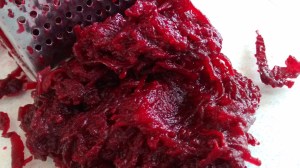
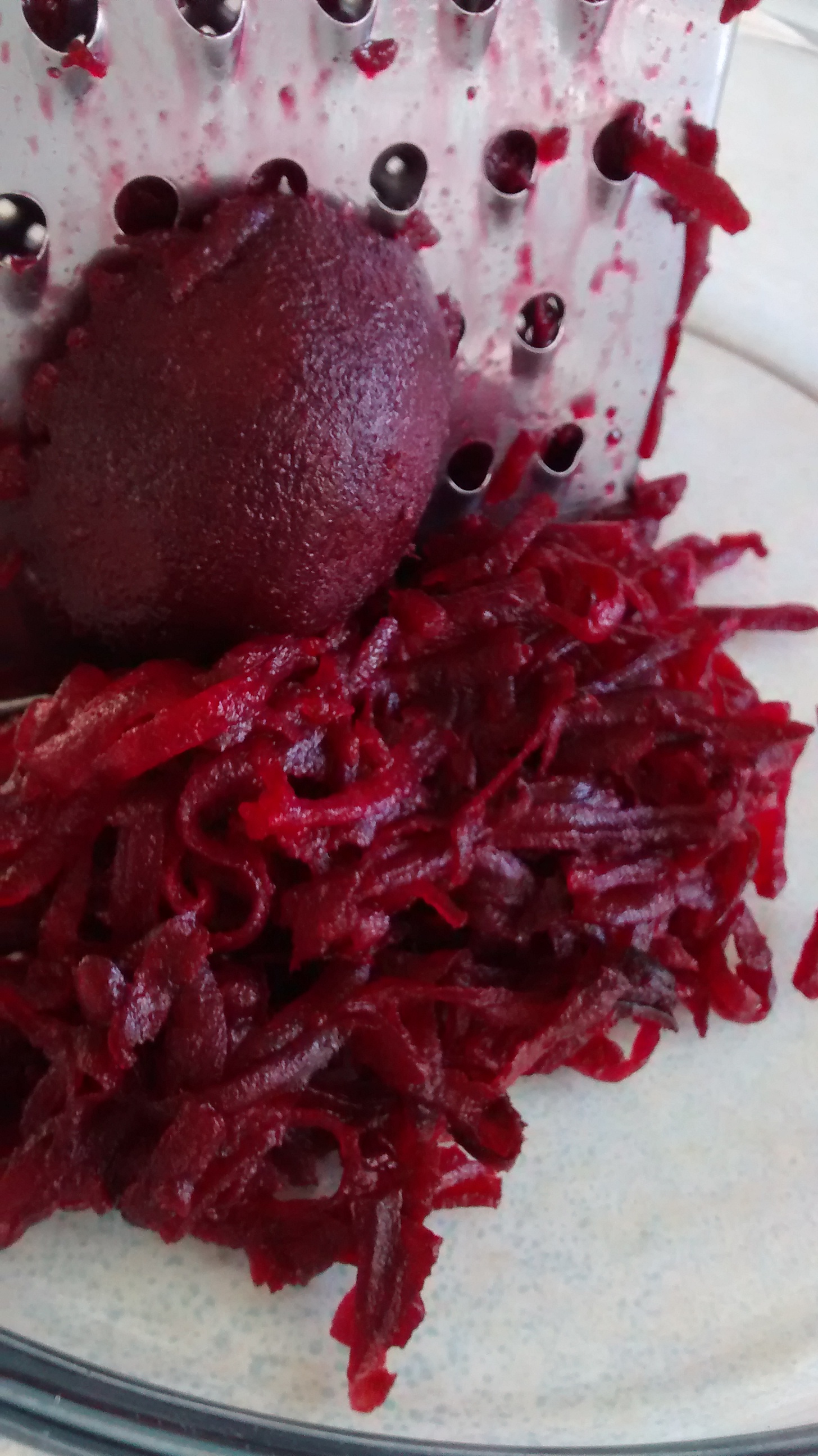
  • Grate the beetroots using a fine or medium grater and put this into a bowl.
  • In the past I always used a fine grater but now I prefer to use my medium grater.


IMG_20160209_133049454
Medium Grated


IMG_20160209_133242132
Fine Grated


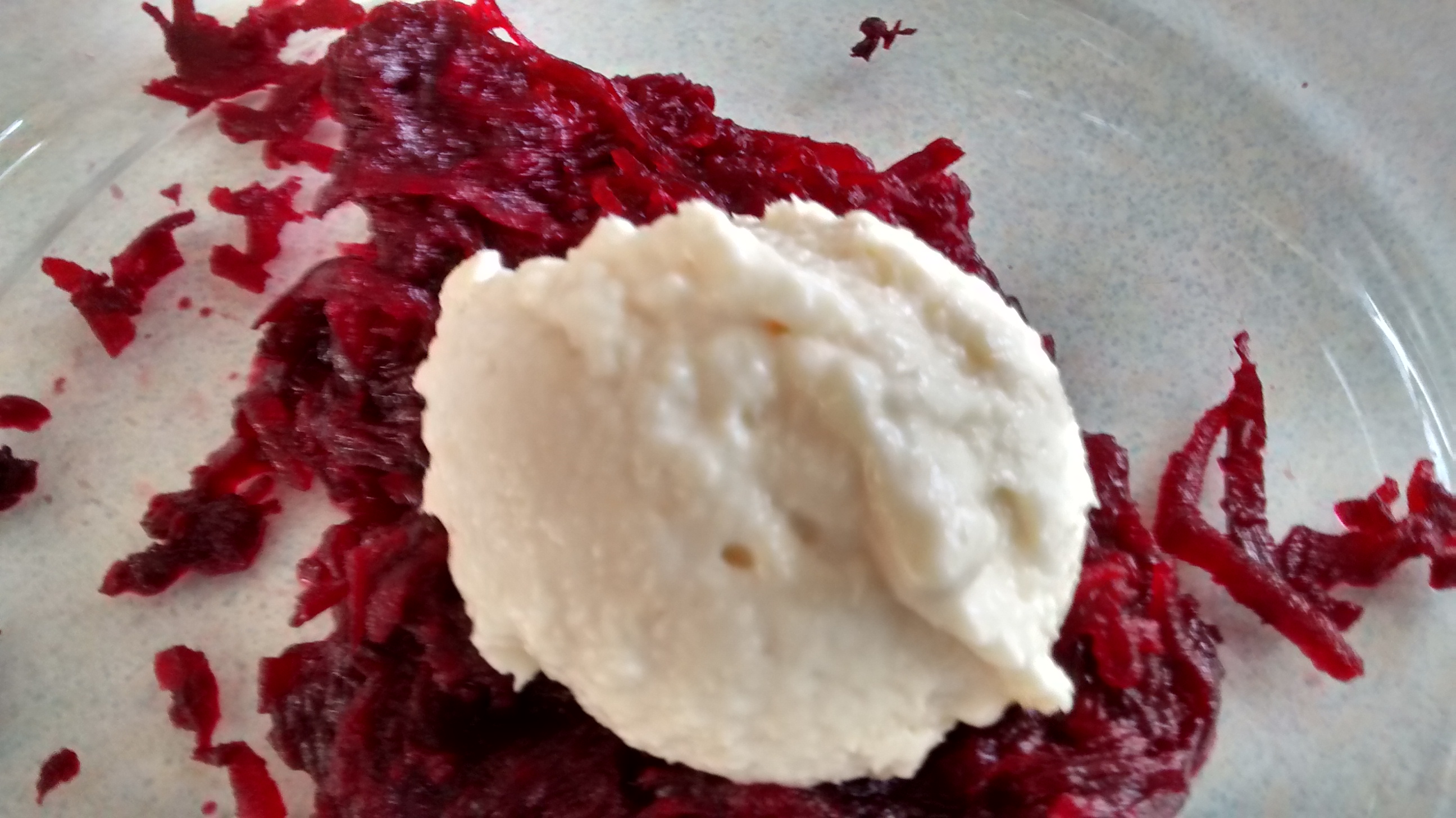
  • Add a large dollop or two of horseradish sauce.
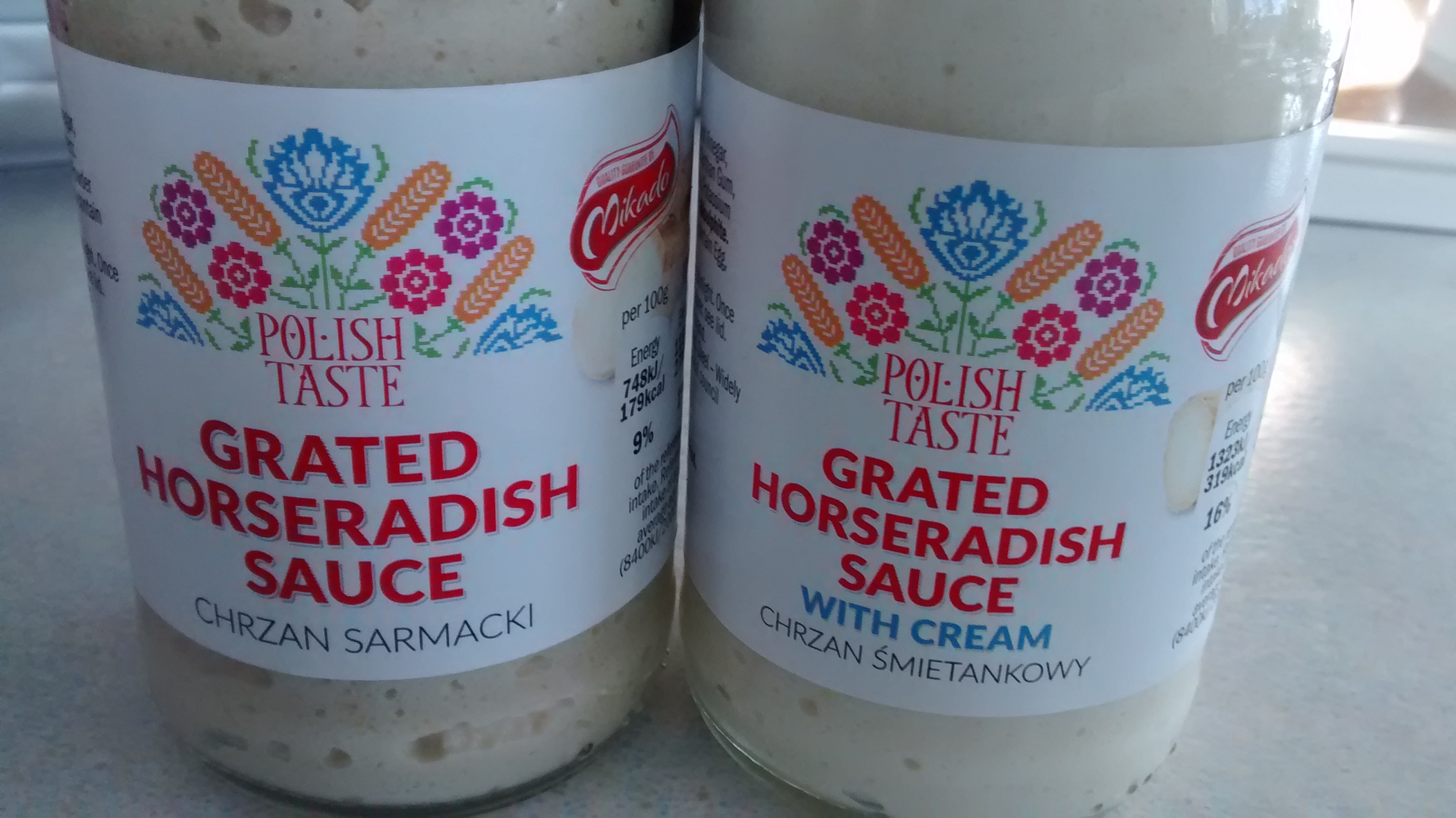
  • Below are two kinds, one with soured cream and one without.
  • I like the one with soured cream more.

IMG_20160209_132054534

A few years ago I thought it would be a good idea to grow my own horseradish – that was a mistake! It starts to take over with the roots spreading underground. However the dark leaves are very attractive and the air does smell of horseradish when you walk up to it.  You just need to be able to contain it.

IMG_20160209_133334050_HDR

IMG_20160209_133328206_HDR

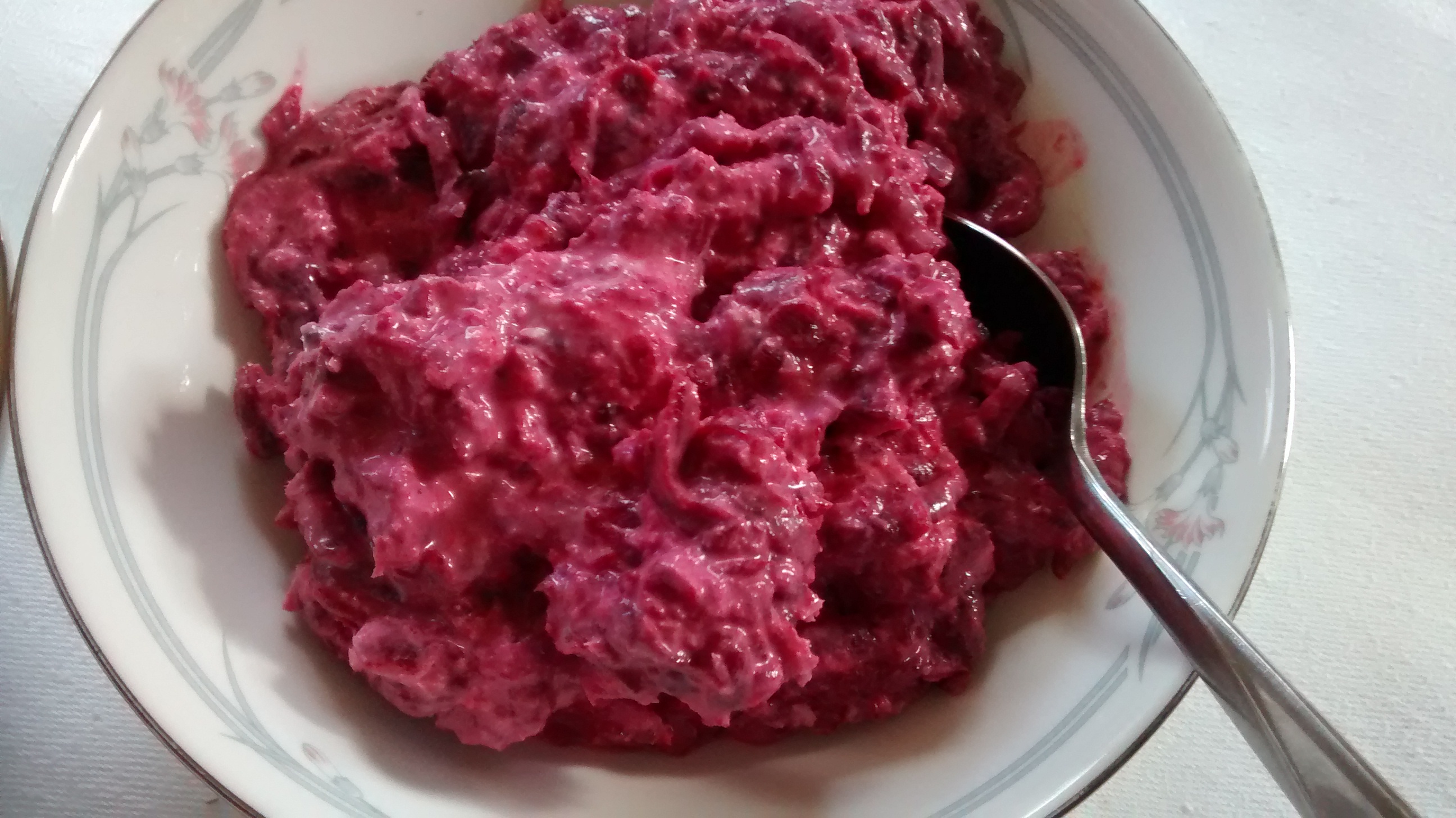
  • Mix the grated beetroot and horseradish sauce together.
  • Add soured cream – if using the sauce with this in already you might not need as much.
  • You can add lemon juice as well.

IMG_20160209_133711319


IMG_20160209_133936995


Carnation  Serving Dish by Royal Doulton

IMG_20160209_133936995


Beetroot & Apple Salad

Ingredients

  • 2 or 3 boiled beetroots
  • 1 eating apple  with a good flavour such as Jazz, Braeburn or Pink Lady.
  • Juice of  half  or a whole lemon
  • Sugar – optional

Method

  • Grate the beetroots using a medium grater.


IMG_20160209_133049454


  • Peel and core the apple and grate this using a medium grater.
  • Mix the two together.

  • Add lemon juice to taste.
  • You can add some extra sugar to taste.

IMG_20160210_174100401


NOTE

  • This tastes much better if it is left so all the ingredients mingle together for a few hours.
  • I make this in the morning if I want it for the evening or I make it the night before for lunch time the next day.

Creamed Beetroot

This is a delicious way of serving beetroot warm with a roast dinner.

Ingredients

  • 3 or 4 boiled beetroots
  • Large tablespoon of butter
  • 1 or 2 tablespoons of flour
  • Juice of a lemon & some extra water
  • 3- 4  tablespoons of soured cream
  • Salt & pepper to taste
  • A little sugar to taste – optional

Method

IMG_20160209_133049454


  • Grate the beetroots using a medium grater and put them into a saucepan with the lemon juice and a little water.
  • Put a lid on the saucepan and gently simmer the beetroot – taking care not to let it dry out or burn.
  • Melt the butter in a small frying pan and add the flour – let it colour slightly.
  • Add 2 tablespoons of soured cream and a little water and combine this well.

  • Add this mixture to the simmering beetroots, once again combining well.
  • Let this simmer for 5 to 10 minutes – keep checking, and stirring and adding  more soured cream, lemon juice or water if it looks like it is going to dry out.
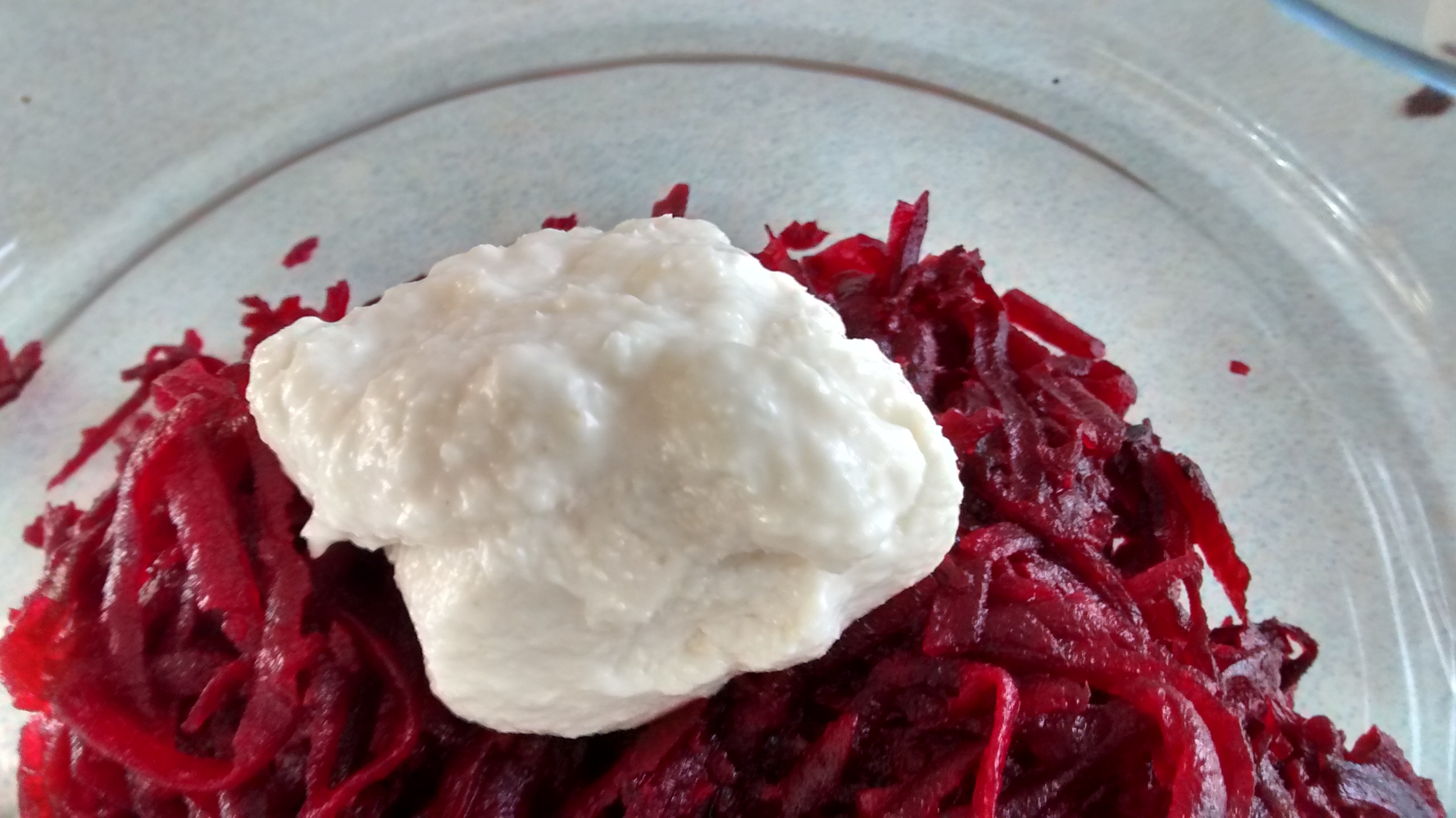
  • Add salt & pepper and a little sugar to taste.
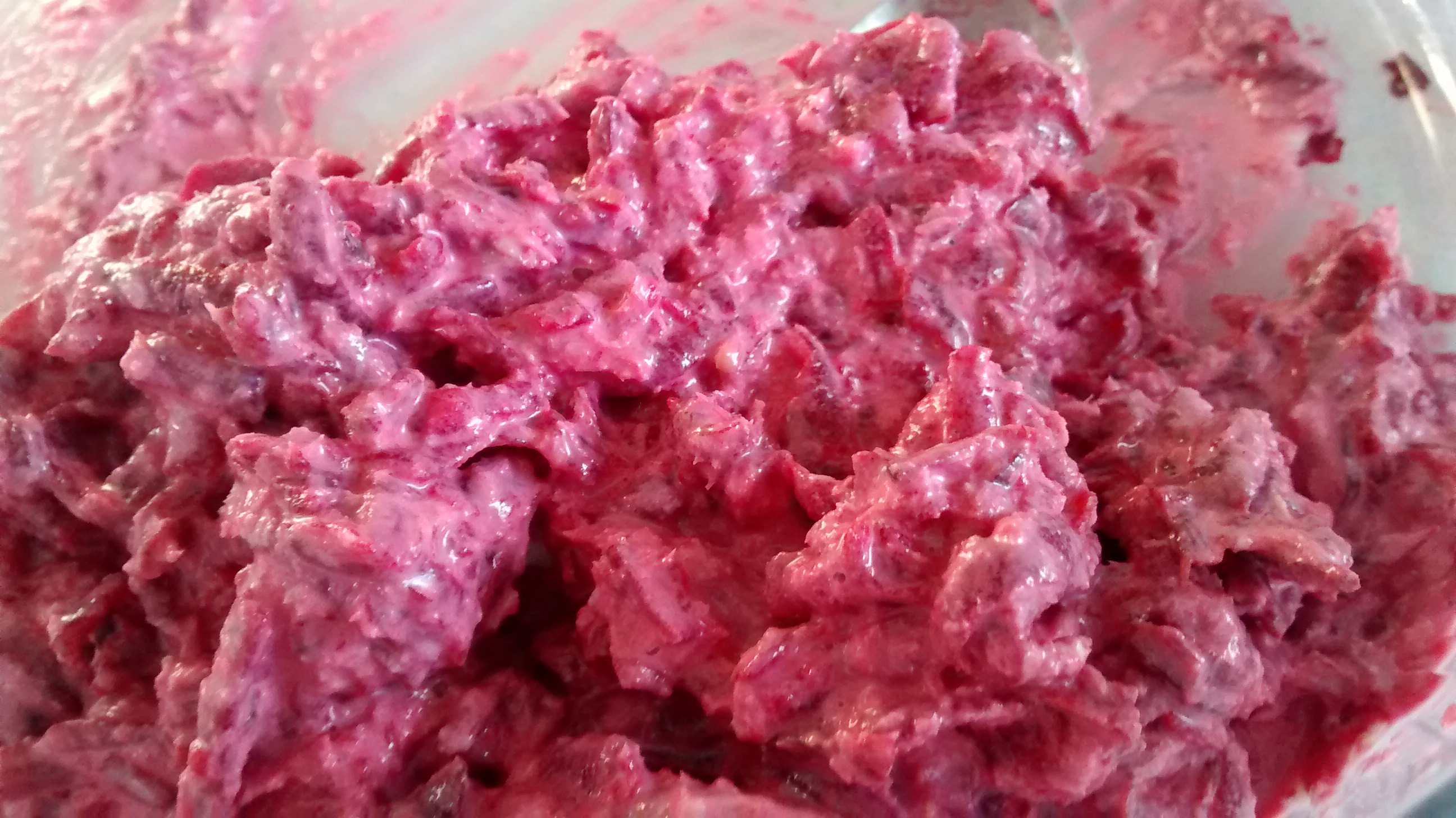
 

Serving dish is Topic designed by  Alan Rogers in 1967 for J & G Meakin.