Klops – Mama’s Meatloaf

IMG_20151124_195836030

This recipe has evolved from two of my mother’s recipes. One was for  klops –  Polish meatloaf and the other was for the meat stuffing that she used in her roast chicken.

The meatloaf would have been made in Poland with minced pork but often in England my mother used minced beef as it was more available. To this was added grated onion, bread moistened with milk, a beaten egg, salt & pepper; this was shaped into an oval shape and covered with dried breadcrumbs and baked in the oven.

In many of the Polish recipes the meatloaf is baked in a loaf tin or a shallow roasting tray.  I however like the open baked version as I love the crunchy breadcrumbs on the outside.

The meat stuffing for chicken was originally made with minced pork, (if this was not available my mother used English style sausage meat) grated onion, bread moistened with milk, a beaten egg and salt & pepper and dried breadcrumbs were added to firm it up and this was used to stuff the chicken.

IMG_20151124_182832411
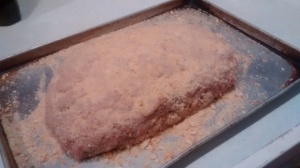
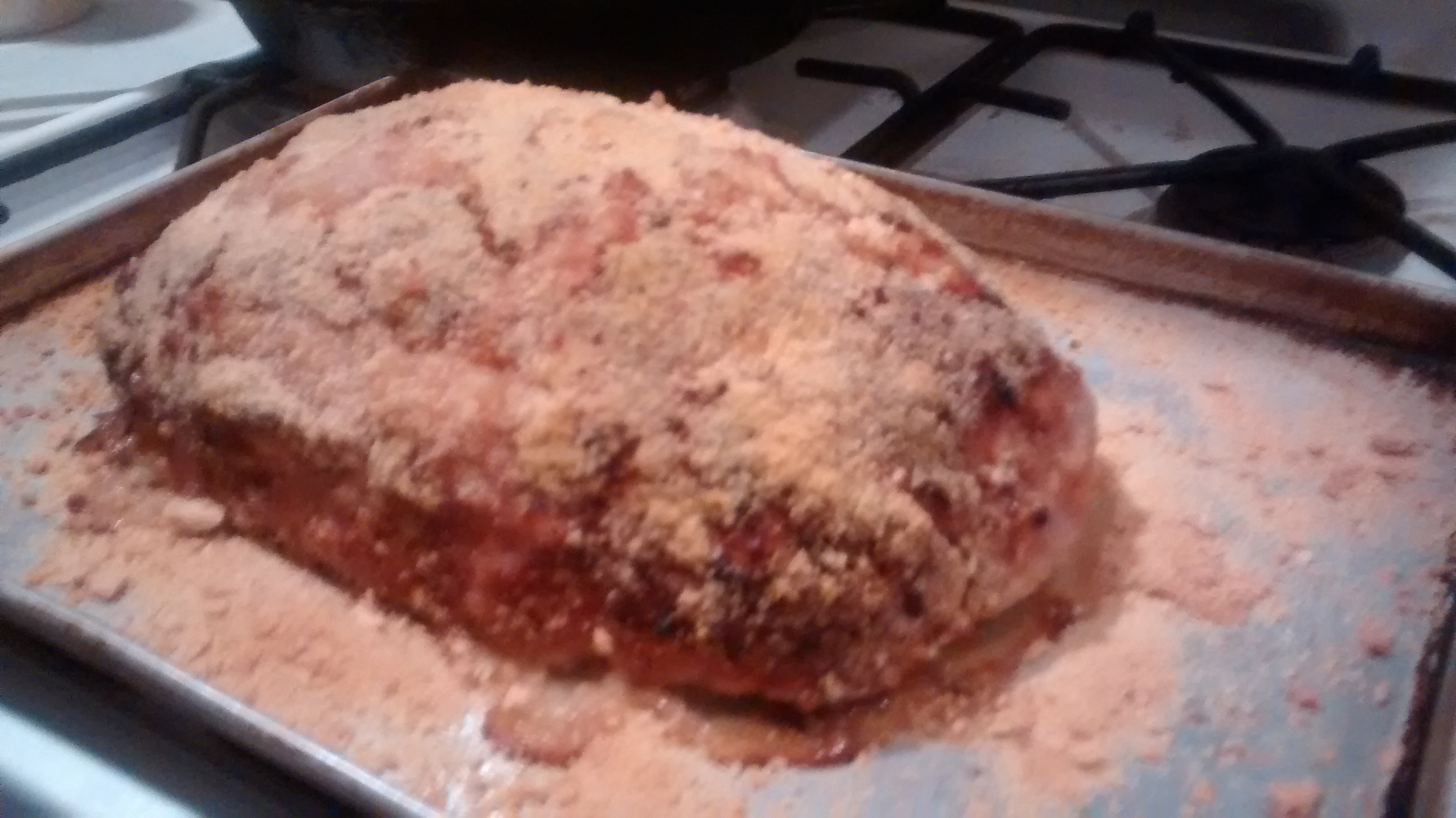
Meatloaf – Waiting to go into the oven

As there was usually some left my mother would shape this, put dried breadcrumbs on top and bake this in the oven with the chicken. We always wanted to eat some of this and even liked the extra bit better that the actual stuffing because of its crispy coat.   She started to make more of it so that we could all have some at dinner. My nephew and nieces called this Grandma’s meat.

This extra stuffing has also evolved, the grated raw onion has been replaced by chopped fried onion ( though you can use both )  and now I use a mixture of  minced pork and English style sausage meat.

IMG_20151124_131405992_HDR

Frying a Chopped Onion

Luxury or Premium sausage meat is the best to use but often shops only have this available at Christmas, when it is in stock I buy quite a lot and freeze it for several occasions. Sometimes it is sold in 1kilogramme packs, I usually cut these into two or four and re-wrap.

When I cannot get the luxury sausage meat I buy good quality pork sausages and remove the skins.

Now when I have visitors for a roast chicken they always want to make certain that I will be doing a meatloaf as well, some say this is what they most look forward to eating on Christmas Day!

Ingredients

None of the amounts given are exact; they are only for a guide.

500g of luxury sausage meat

500g of lean minced pork

2 medium onions finely chopped and fried till golden brown

1 large egg beaten with salt & pepper

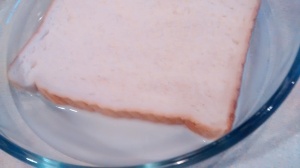
1 slice of white bread – left for half an hour in a bowl with a little milk – do not use the excess milk.

2 teaspoons of Italian herbs or similar

Dried breadcrumbs

Method

Pre heat the oven to GM  5 – 190oC

IMG_20151124_154314740
Bread Soaking up some Milk

Lightly grease a thick baking sheet.

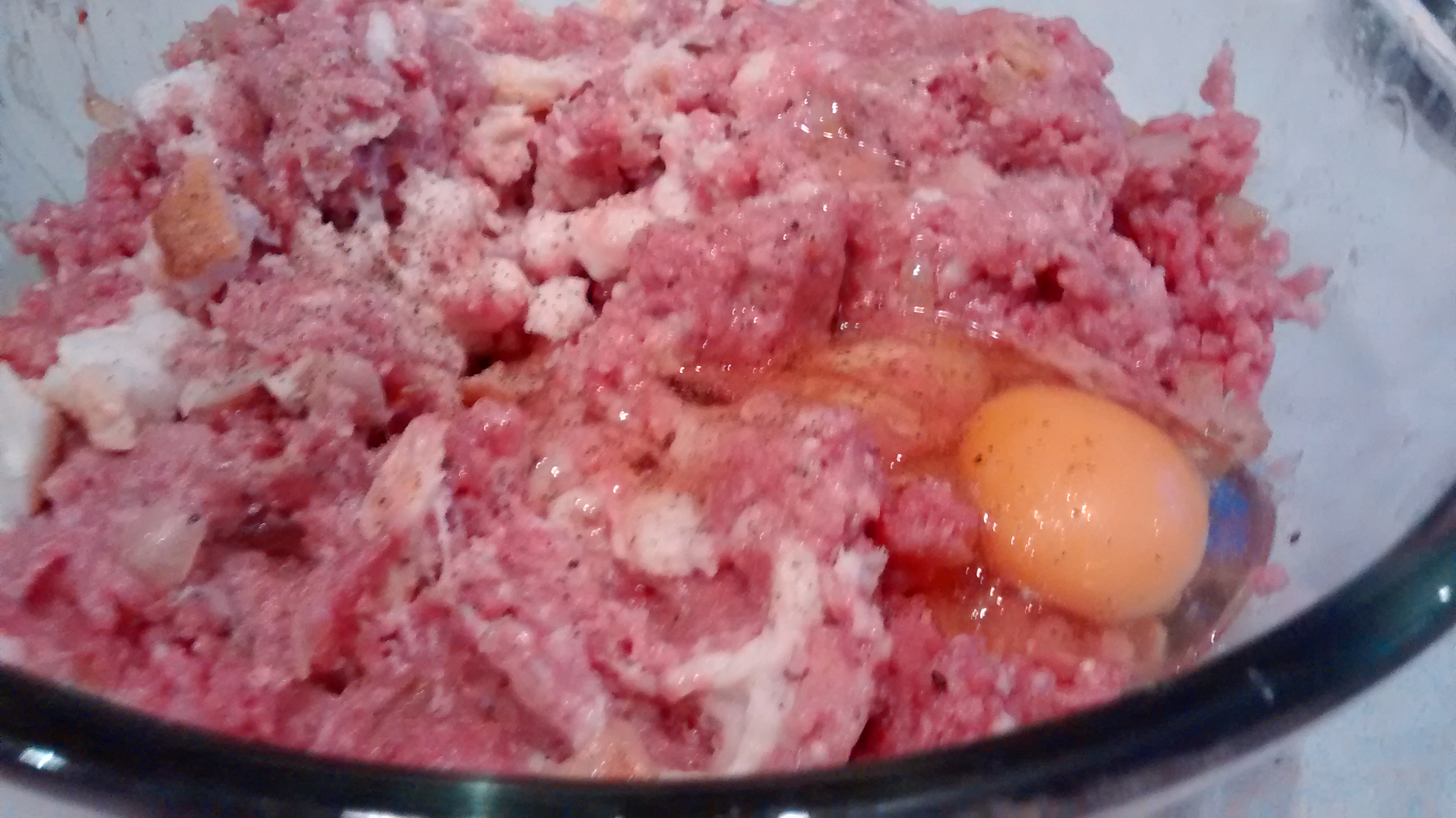
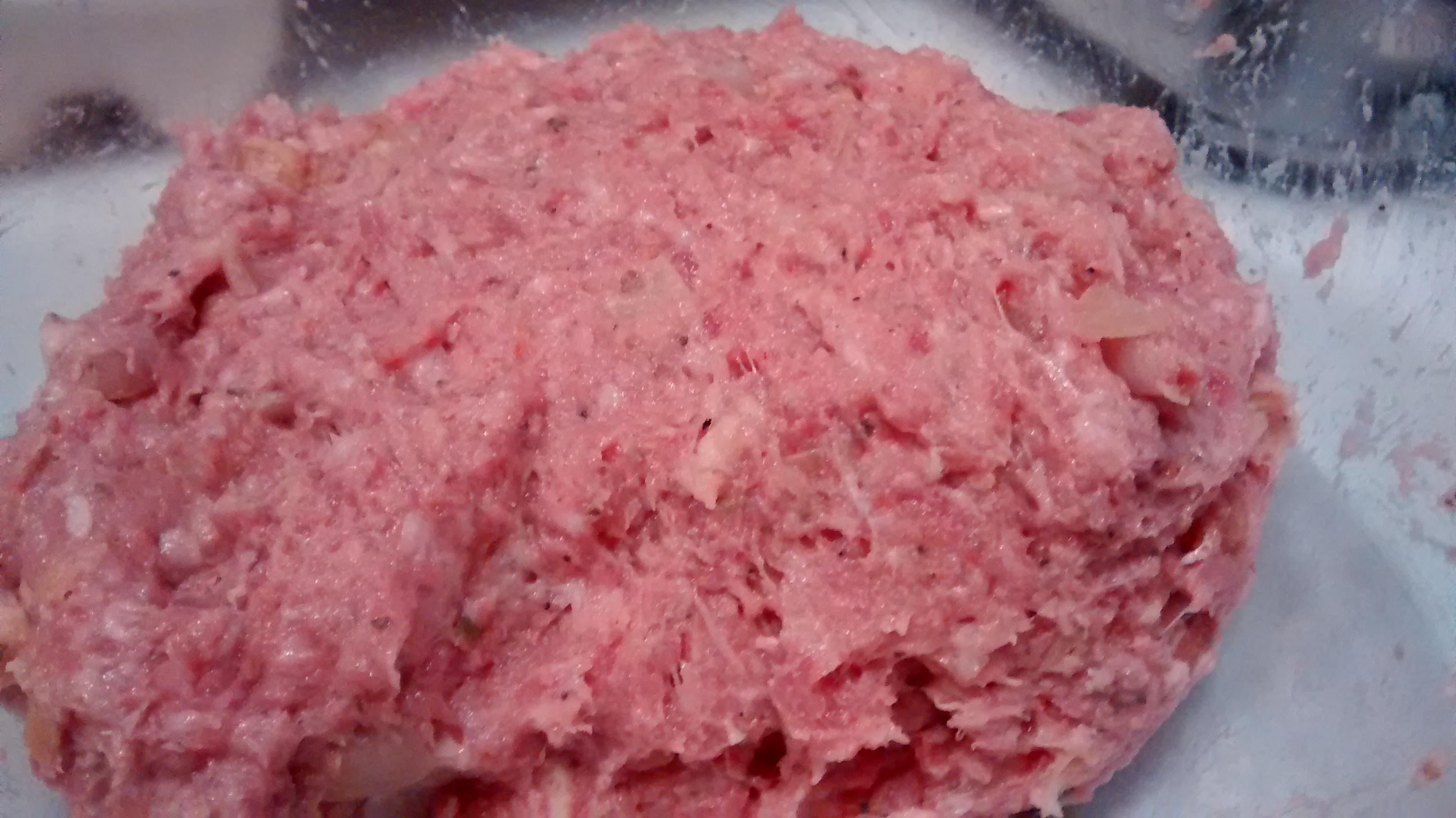
In a large mixing bowl mix everything together except the dried breadcrumbs. Use your hands to get everything thoroughly mixed in.

IMG_20151124_161427662
Waiting To Be Mixed
IMG_20151124_162248613
Well Mixed Ingredients

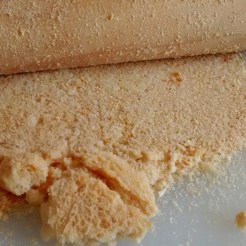
Add some dried breadcrumbs to firm up the mix as necessary.

Dried Breadcrumbs

IMG_20151124_182832411


Shape your mixture on to the baking sheet making it into an oval shape rather like a bloomer loaf of bread – make it as high as you can.

Cover the loaf with lots of dried breadcrumbs and place into the oven. It will take about 1hour 30minutes maybe longer – it needs to be done to a golden to very golden colour and the breadcrumbs will be crispy.

IMG_20151124_195144357
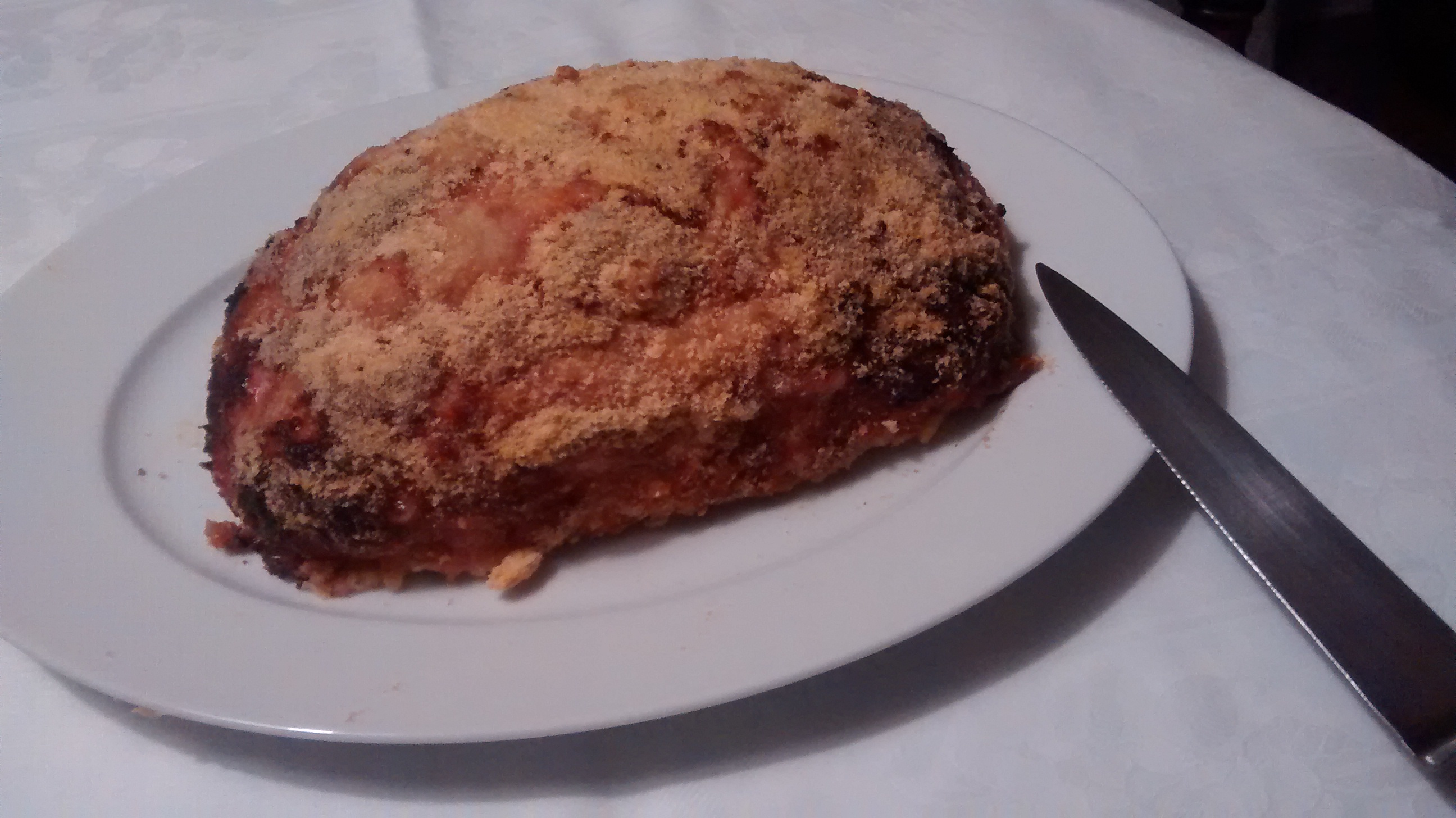
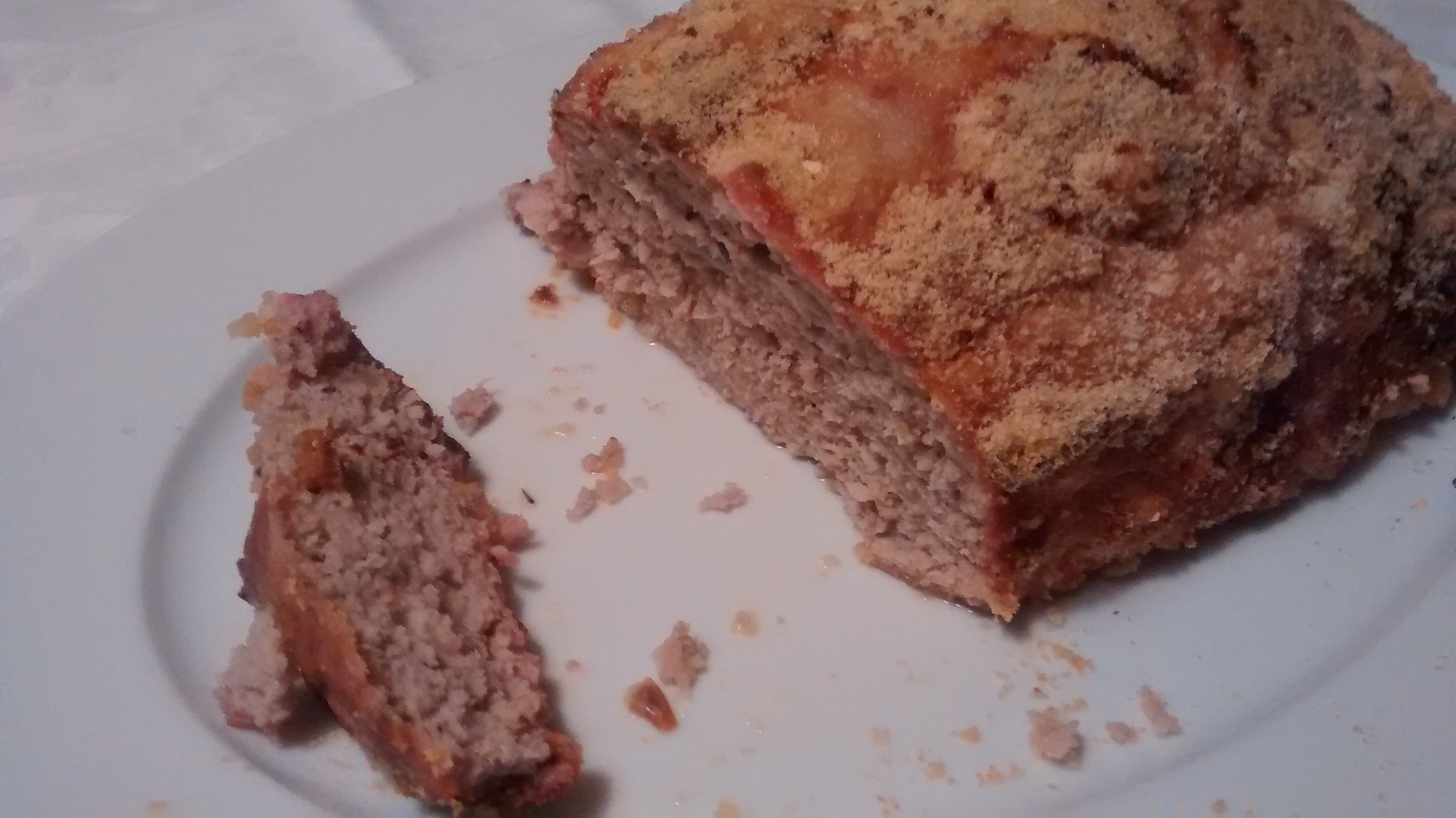
Cooked Meatloaf
IMG_20151124_195836030
Waiting to be sliced


IMG_20151124_200023379

Cut into thick slices to serve, any left can be eaten cold with a salad.

IMG_20151124_200114737
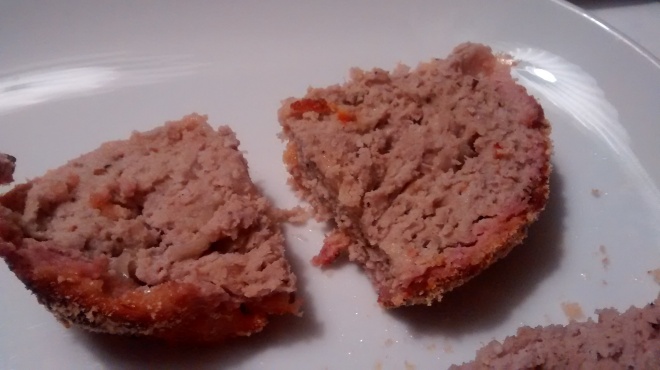
Sliced Meatloaf

IMG_20151124_200107632

IMG_20151125_183717288
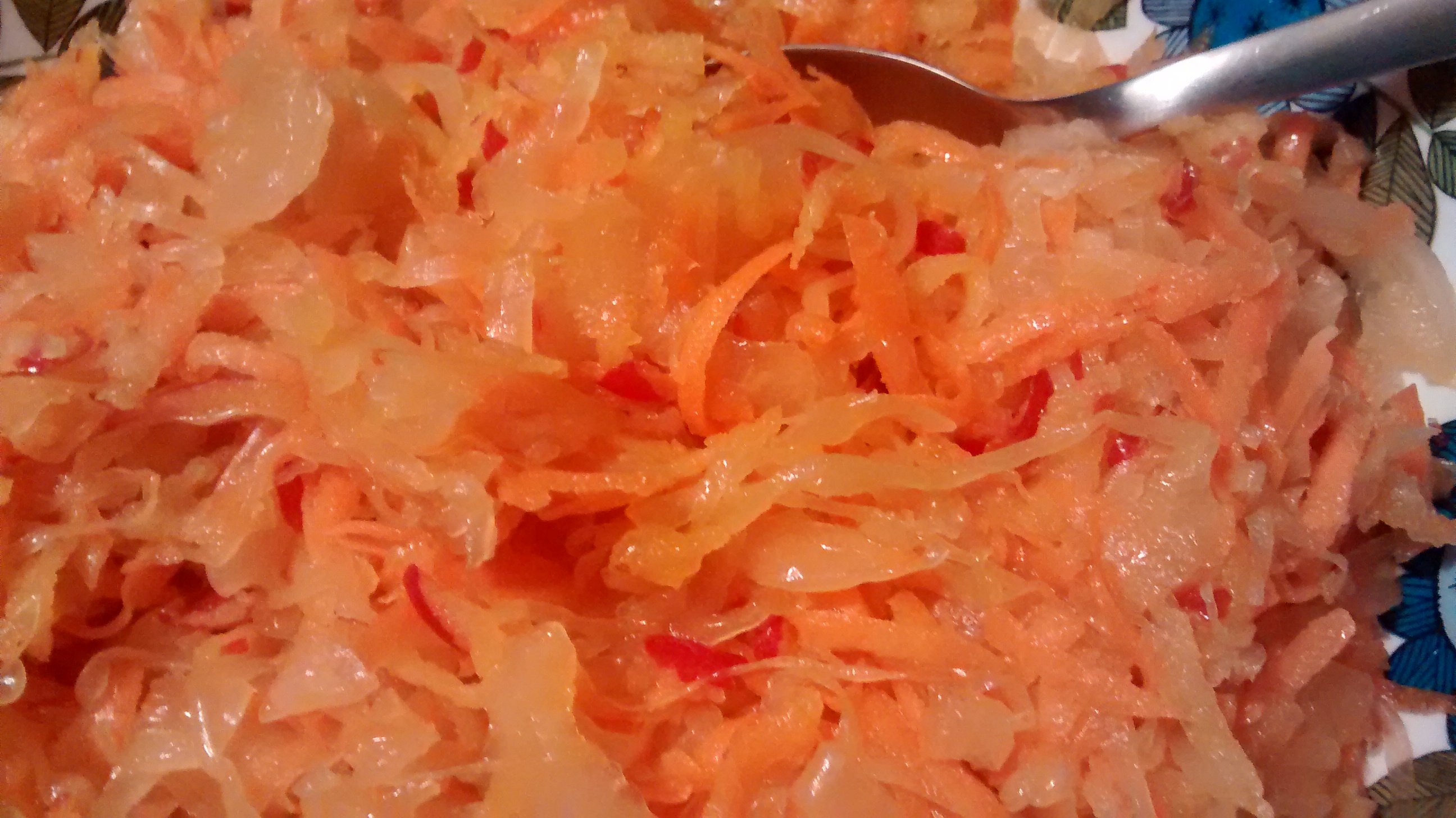
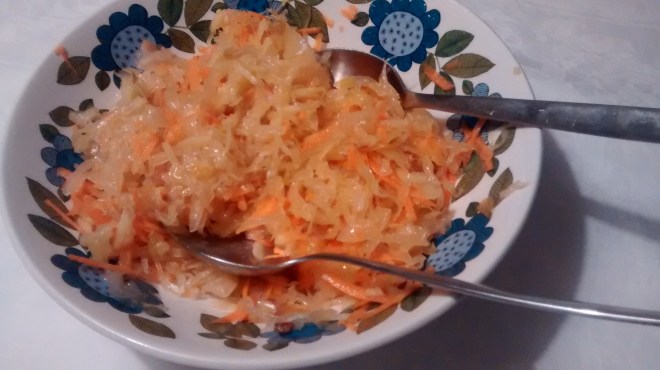
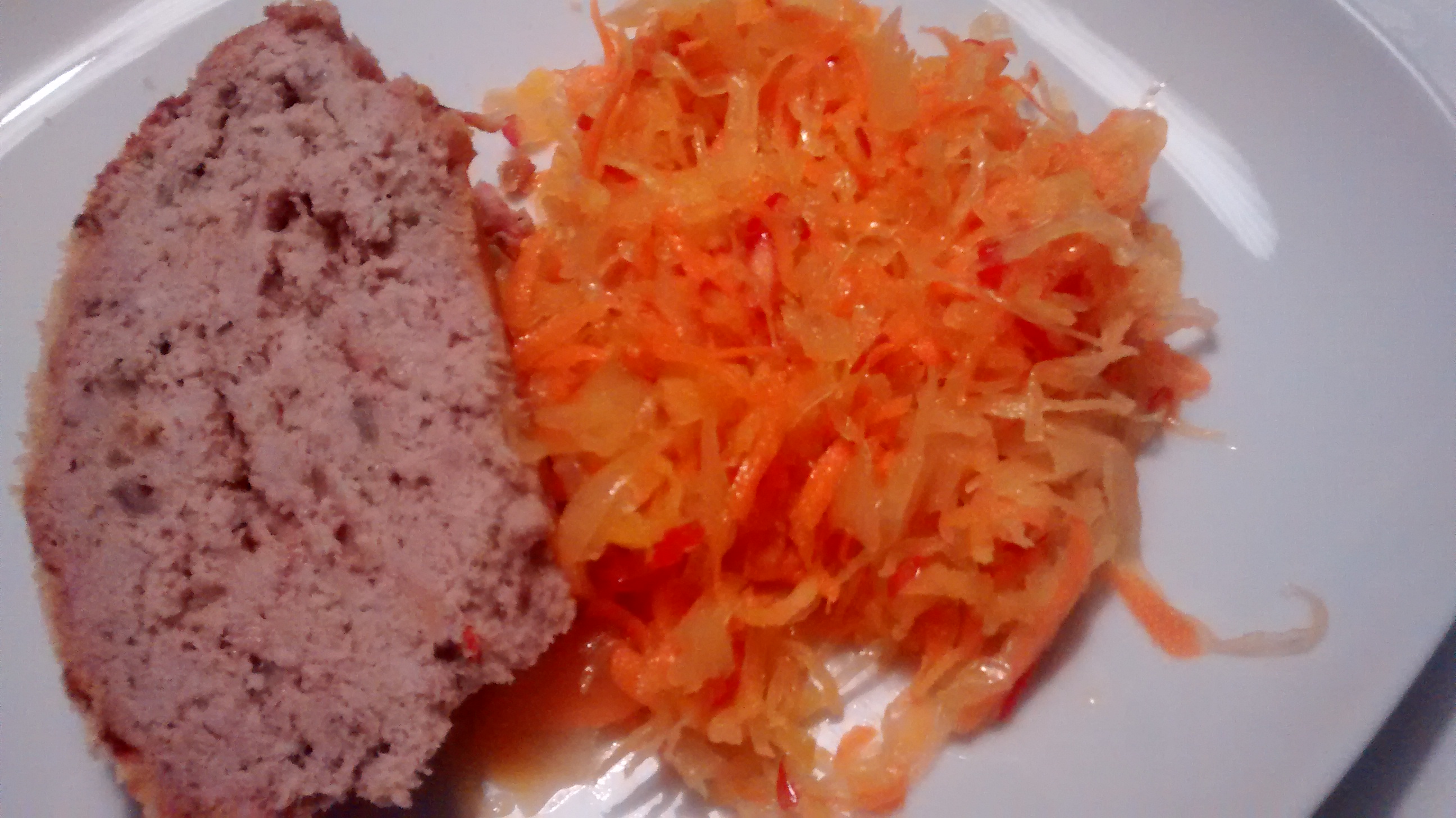
Cold Meatloaf with Carrot & Sauerkraut Salad

Note

If you have any left over and cannot eat it the next day or so – then it freezes very well – I wrap slices first in aluminium foil and then in a plastic freezer bag.


Carrot and Apple Salad

When cooking was more seasonal, this was a very popular salad in the late summer and autumn after the apple harvest.

Nowadays with better storage methods, this is a salad you can make all year round.

IMG_20151105_170540010
Serving Dish is Royal Doulton, Carnation 1982 – 1998

The following will make enough for 2 people as a side dish  – use the ratio of 2 to 3 carrots to 1 small or medium eating apple if you want to make more.

Organic carrots may have the edge here for taste but regular ones will still be good.

Use sweet and tasty eating apples such as: Jazz, Pink Lady or Cox’s orange pippins.

IMG_20151105_165014343

Ingredients

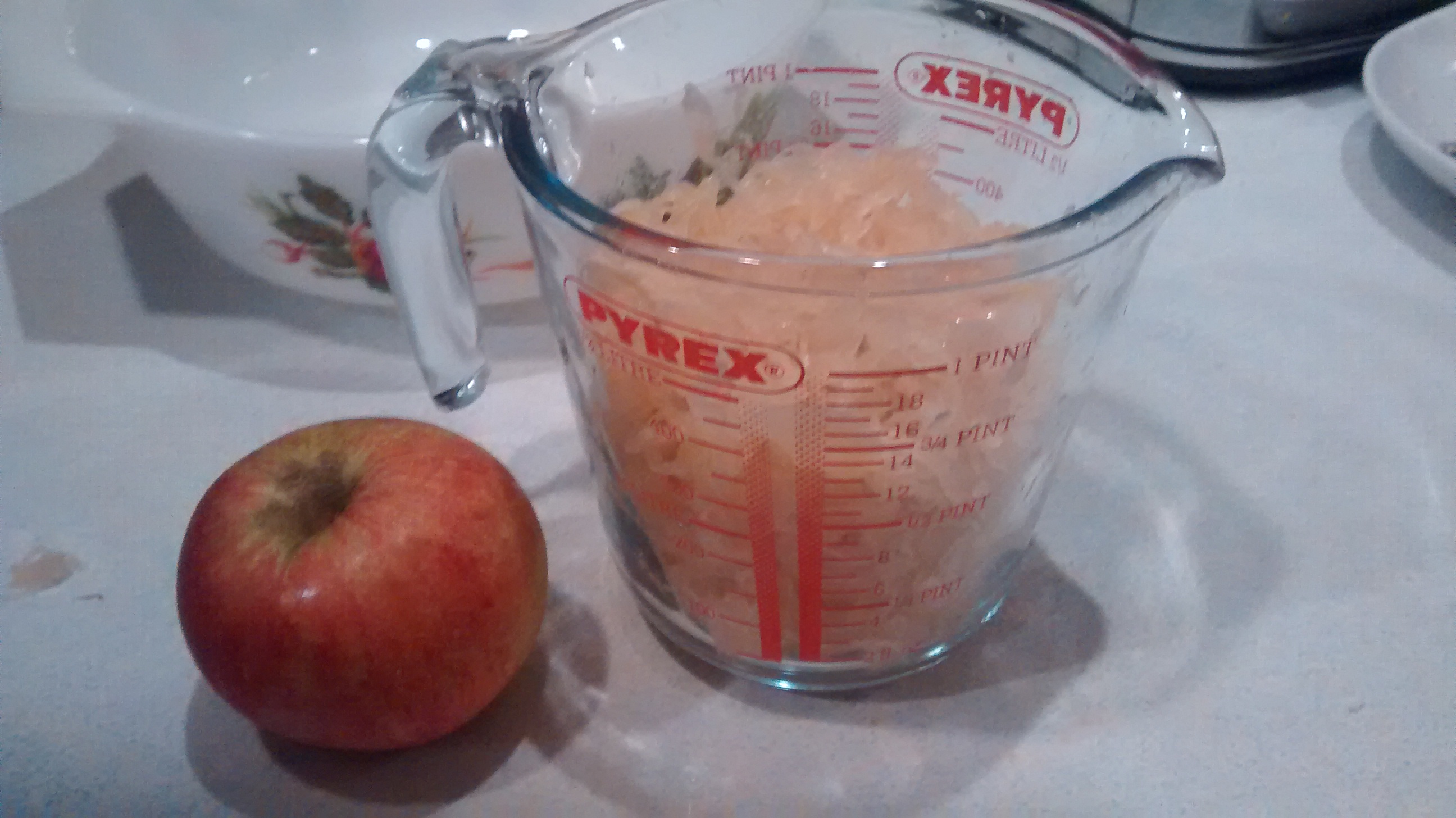
2 carrots

1 eating apple

1 tablespoon of granulated sugar

Juice of half a lemon

IMG_20151105_165002452

Method

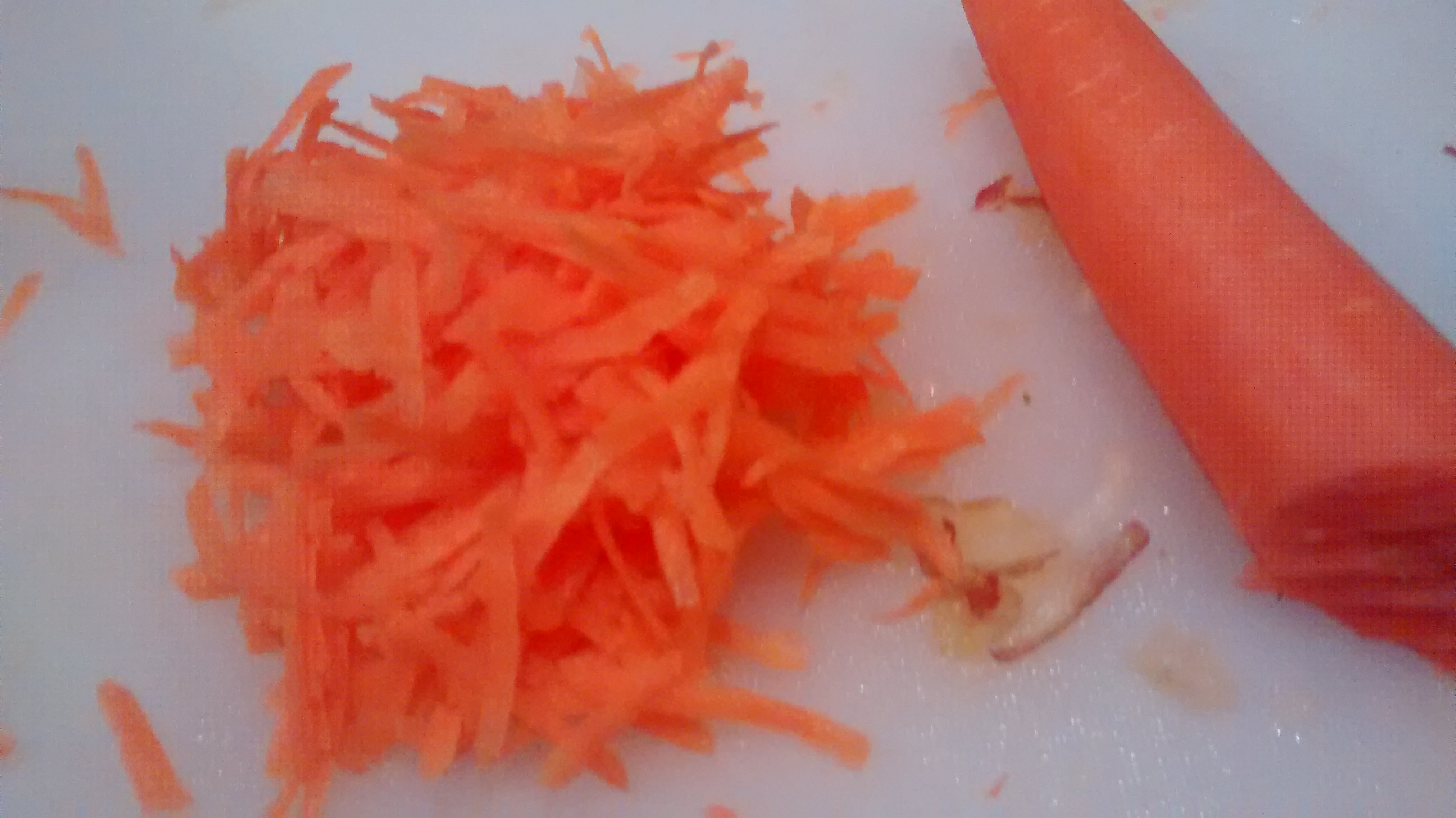
Peel the carrots and grate them using a coarse grater into a bowl.

IMG_20151105_165441999

Cut the apple into quarters and remove the seed case.

Hold the apple by the skin and grate the flesh,

also using the coarse grater,  into the bowl.

Discard the apple skin.

Sprinkle the mixture with the sugar and add the lemon juice.

IMG_20151105_170519009

Mix everything together, place into a serving dish and serve.

IMG_20151105_170511663

Note

If you do not have any apples then just carrots with the sugar and lemon juice are also good.

Krokiety Kartoflane – Potato Croquettes

This is another way my mother had of using boiled potatoes – I do not remember her boiling the potatoes especially for these – she would make them with leftover boiled potatoes. (Not that she did not know how many to potatoes to cook for a meal – she would often cook more so she had some for a different use the next day.)

I have given approximate weights below – once you have made them you will know what to expect  – I do not think my mother ever weighed out the quantities – just went by eye and consistency.

Ingredients

This will make around 12 croquettes

  • 500g of starchy potatoes – such as King Edward or Maris Piper
  • 20g of melted butter
  • 1  beaten egg
  • 2 to 3 tablespoons of plain flour
  • Breadcrumbs
  • Vegetable oil such as sunflower for shallow frying

Method

  • Mash the boiled,cold potatoes so that they are smooth and without lumps.
  • Add the slightly cooled, melted butter and the beaten egg and mix together.
  • Add the flour and mix to a soft dough – not too much flour  as a soft dough gives a more fluffy croquette.
IMG_20151103_133247862
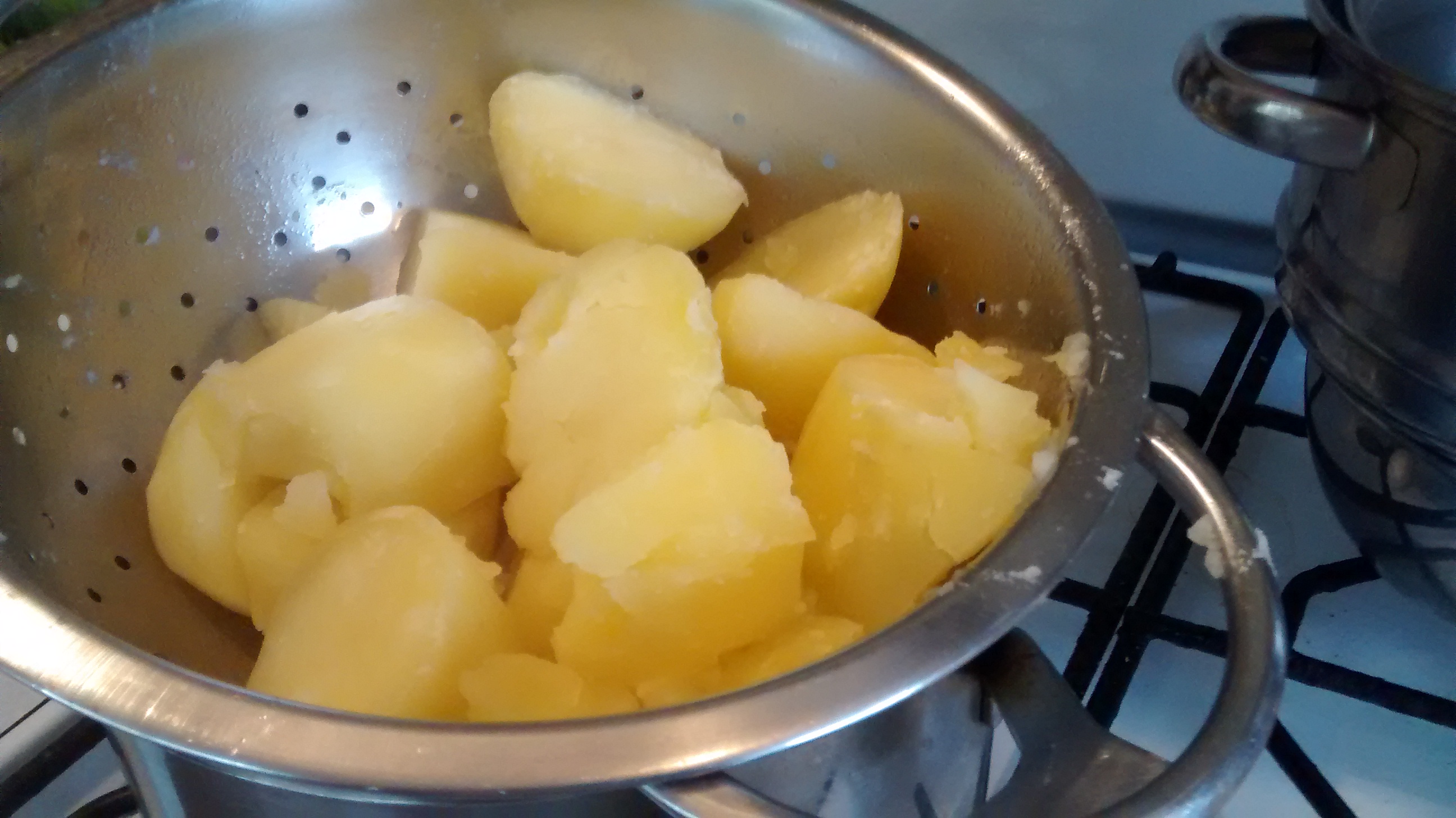
Boiled Potatoes
IMG_20150917_095842133
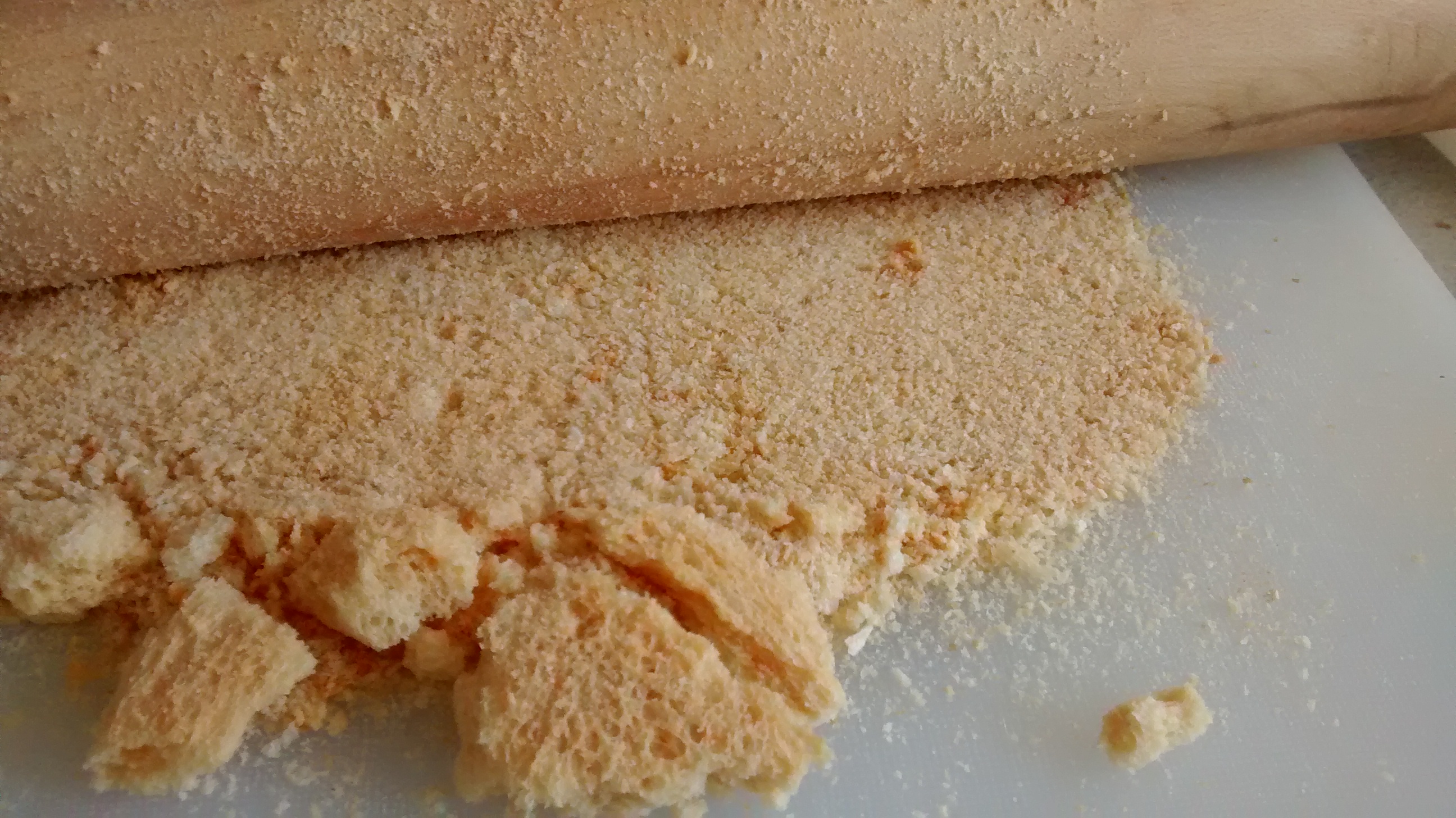
Preparing the Breadcrumbs

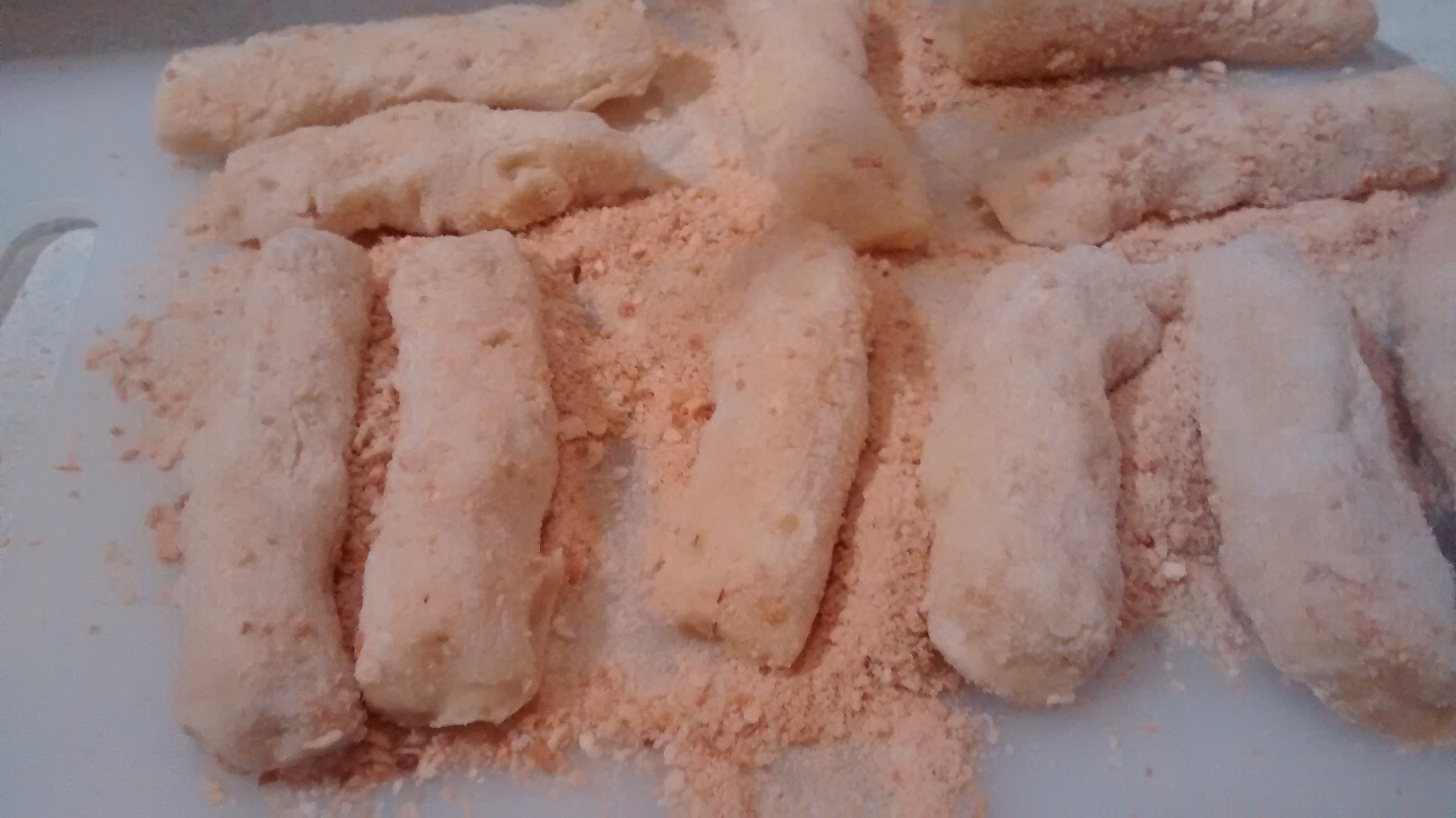
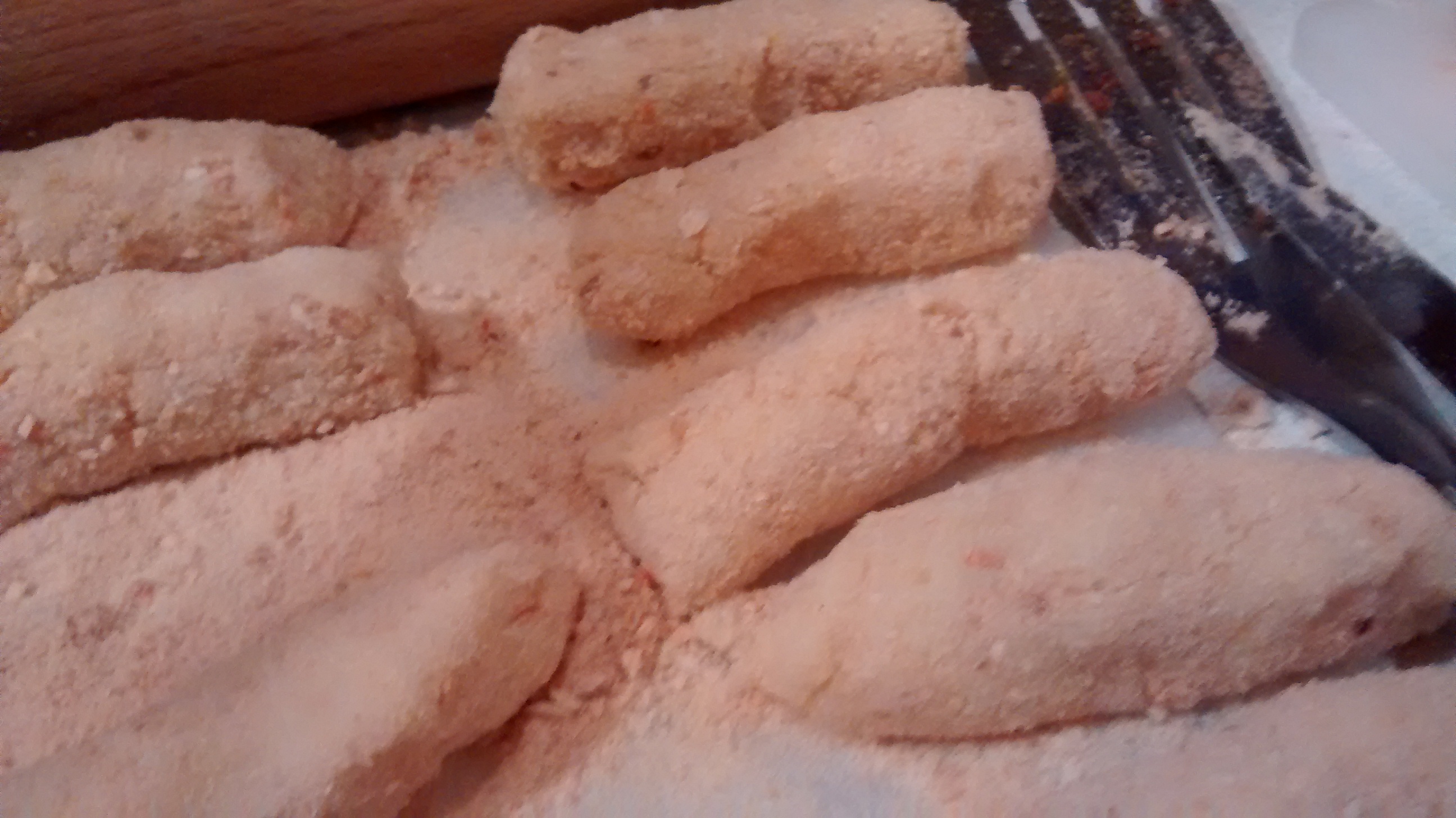
Divide the dough into 4 manageable pieces and roll out into a long sausage shape and divide them into 3. You are aiming for equal sizes of around 3cm deep and 4cm wide by 10cm long.

IMG_20151103_193756239
Shaped and Coated Croquettes

IMG_20151103_194901939

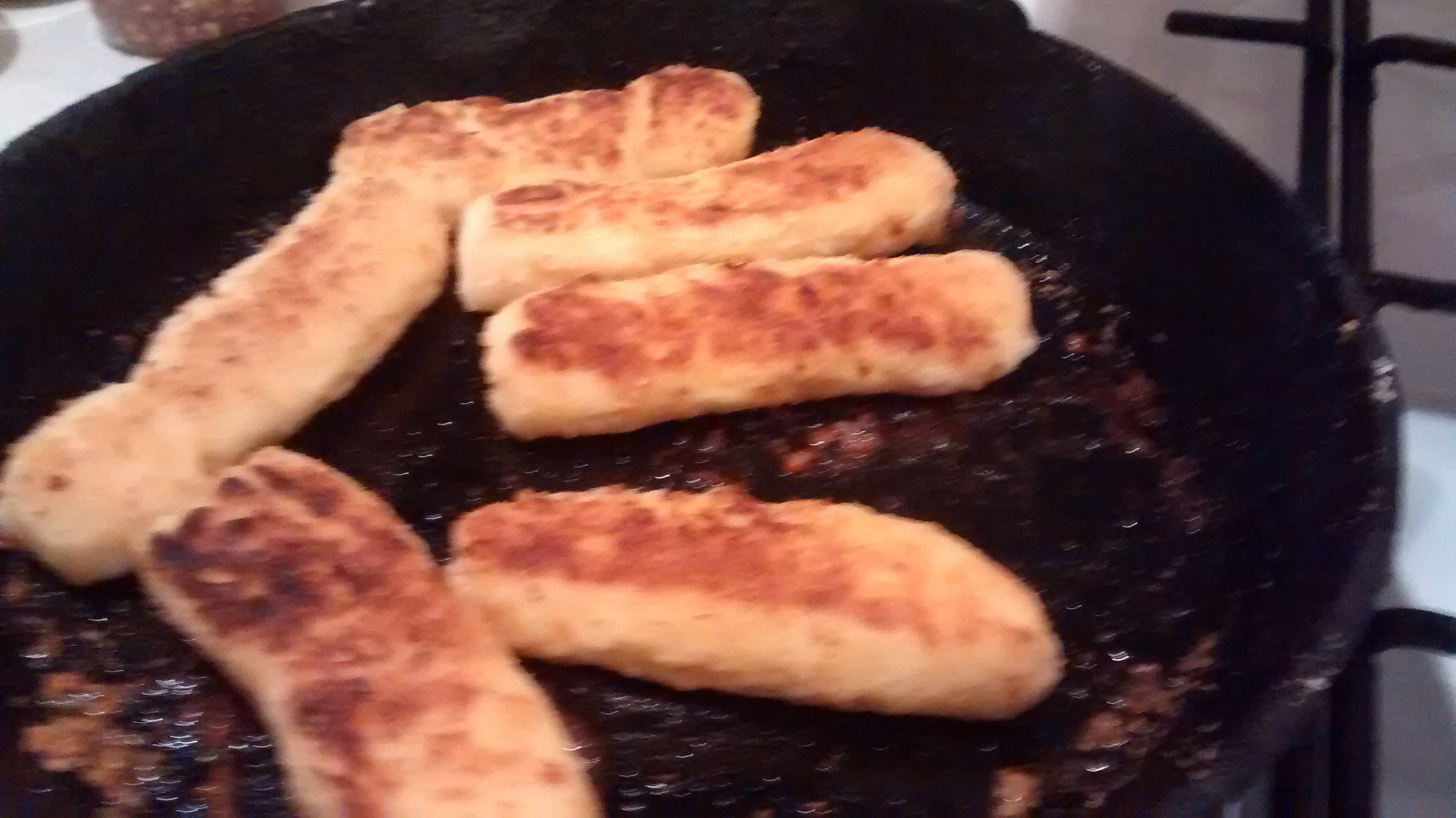
Shallow Frying
Shallow Frying

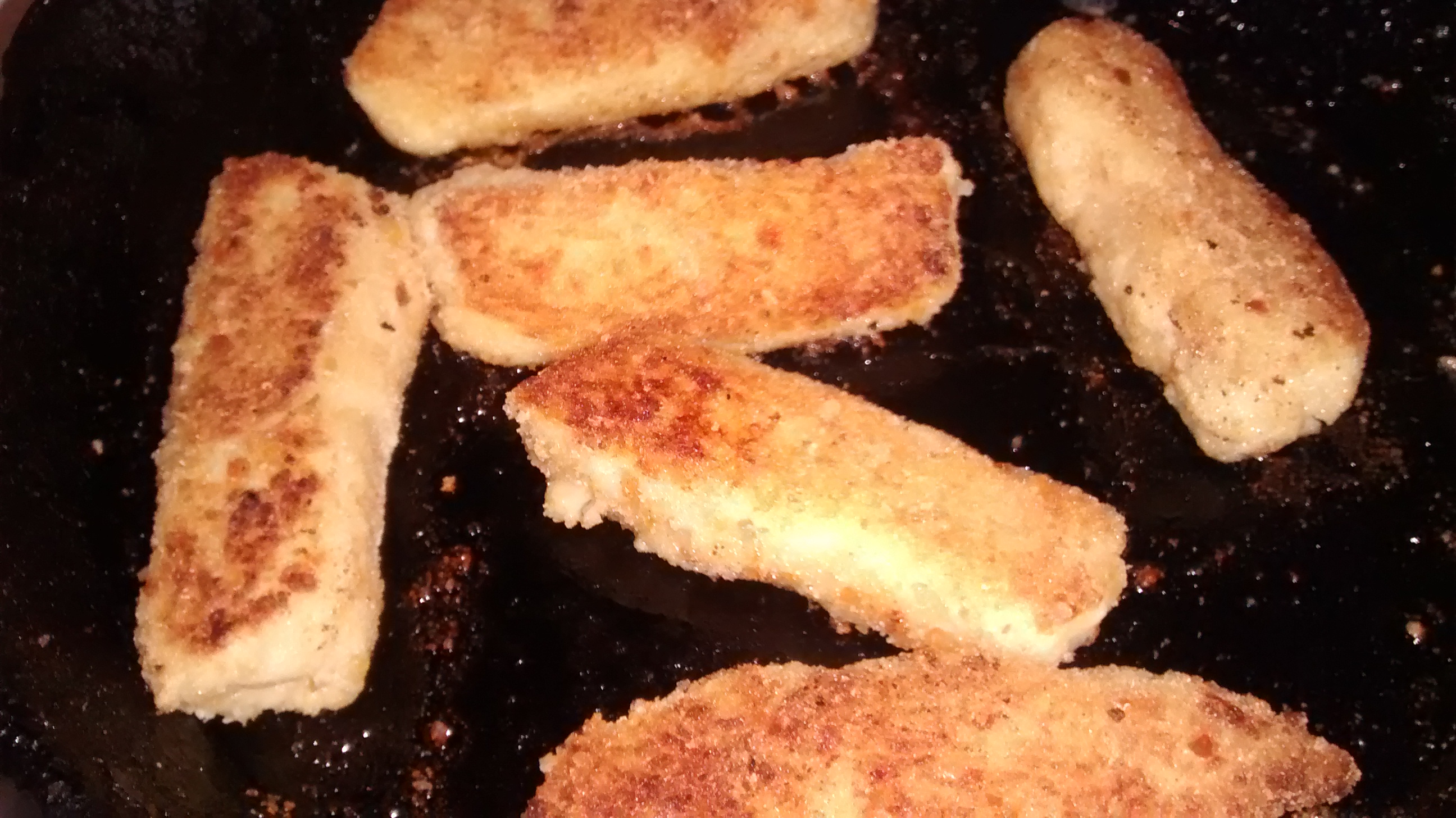
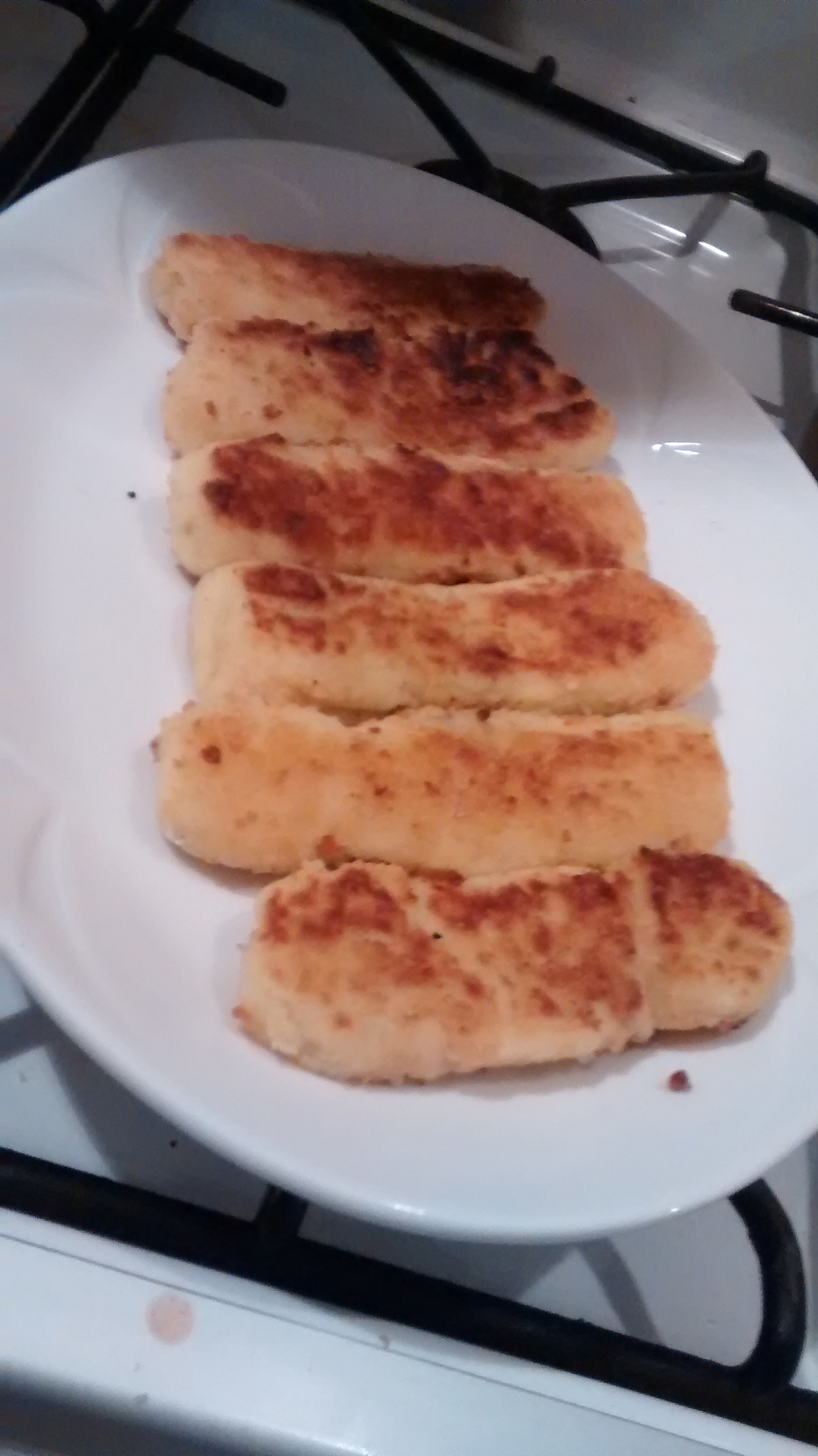
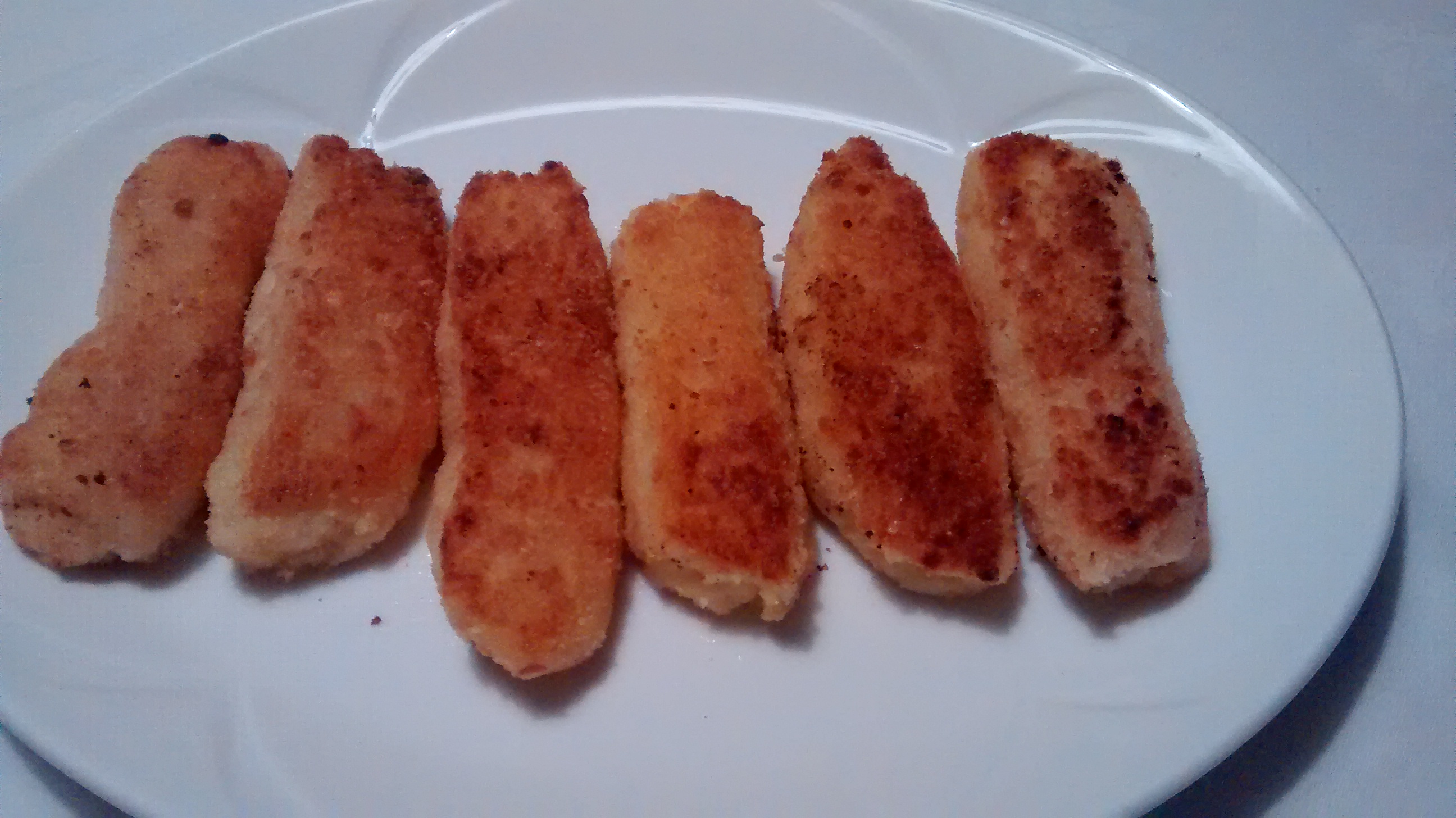
Shallow fry the croquettes in hot vegetable oil in a frying pan, turning them over so that both sides are golden and crispy.

IMG_20151103_195539708

IMG_20151103_195055583

IMG_20151103_195808911(1)

Potato Croquettes – A Variation

The above is how my mother made these croquettes, whilst looking through my Polish cookery books I came across the following variation also which I tried out & I liked these as well.

Method – as above – but instead of just melted butter, fry till golden, half a finely chopped onion in 20 -30g of butter.

Leave this to cool before adding it to the potato mixture.

à la Polonaise

Polish Style

I was well into my 20s before I realised that there was a special French culinary phrase to describe, what to me, was just the regular topping that my mother and aunties put onto certain cooked vegetables.

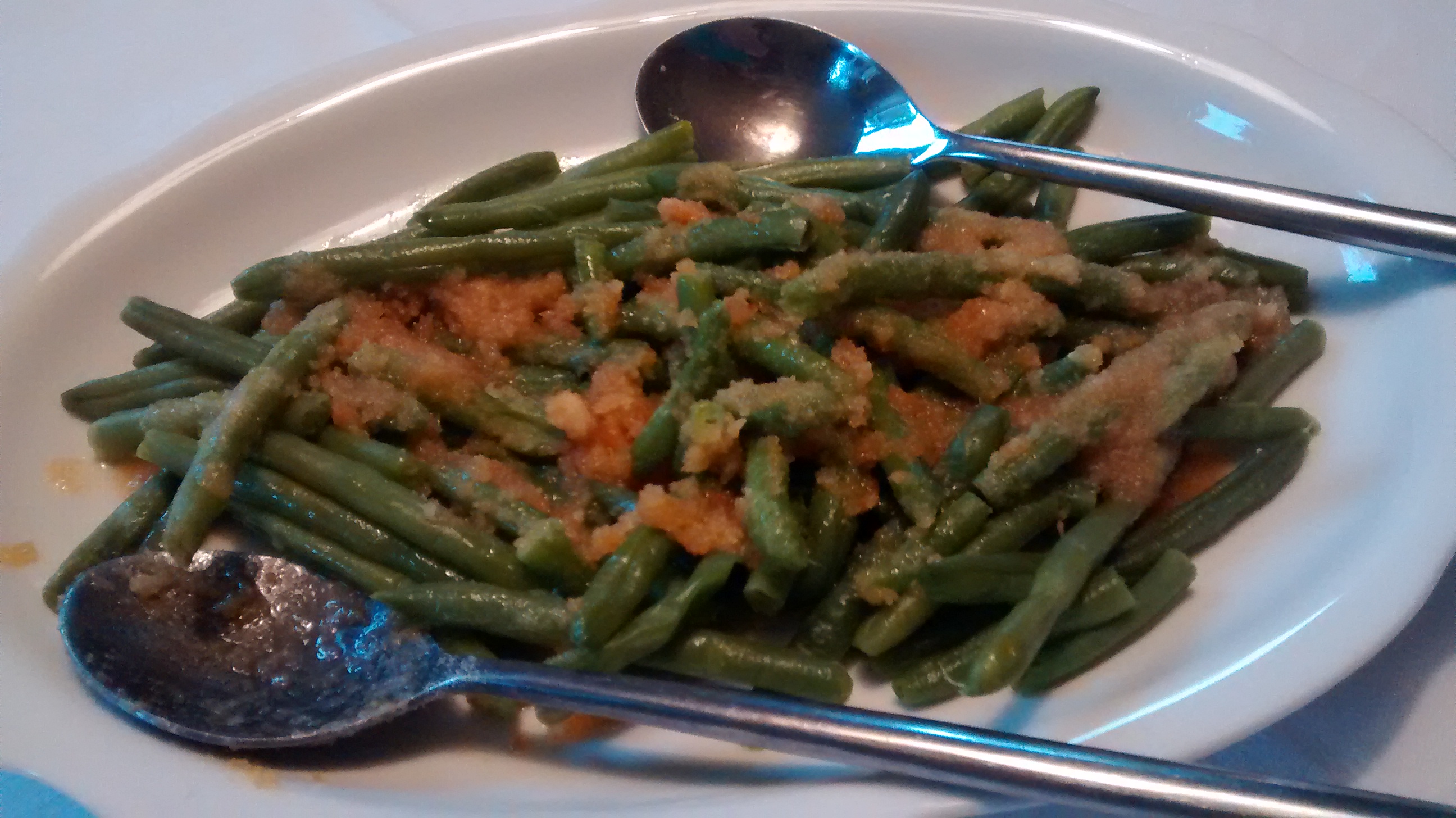
Within my family I had never been served cauliflower, Brussels sprouts  or whole green beans without a lovely crispy buttery breadcrumb mixture.

I have not discovered when this term was first used in France but some sources think it might have come into use in the early part of the 19th century when many Polish political émigrés came to France and in particular Paris.

Method for the Vegetables

Cook your cauliflower, Brussels sprouts or whole green bean in whatever way you like best.

You can if you wish cook the cauliflower whole – this can have quite a good effect when served.

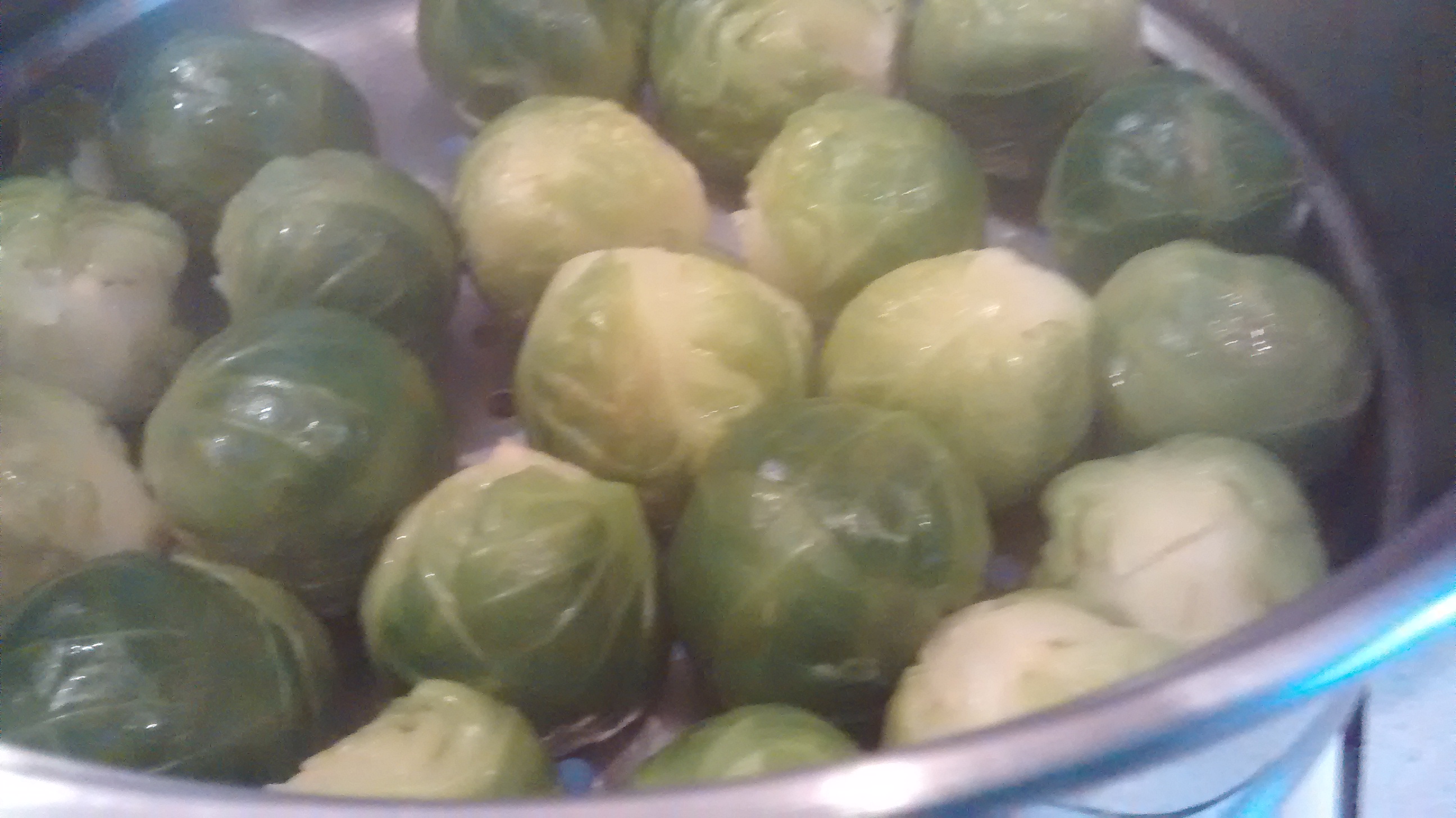
I like to steam the vegetables as I find I can get them just right – cooked – but still with a bit of bite this way.

IMG_20151107_162341255(1)
Steamed Brussels Sprouts

Place the cooked (and drained if necessary) vegetables in a serving dish.

Pour the buttery topping over the vegetables.

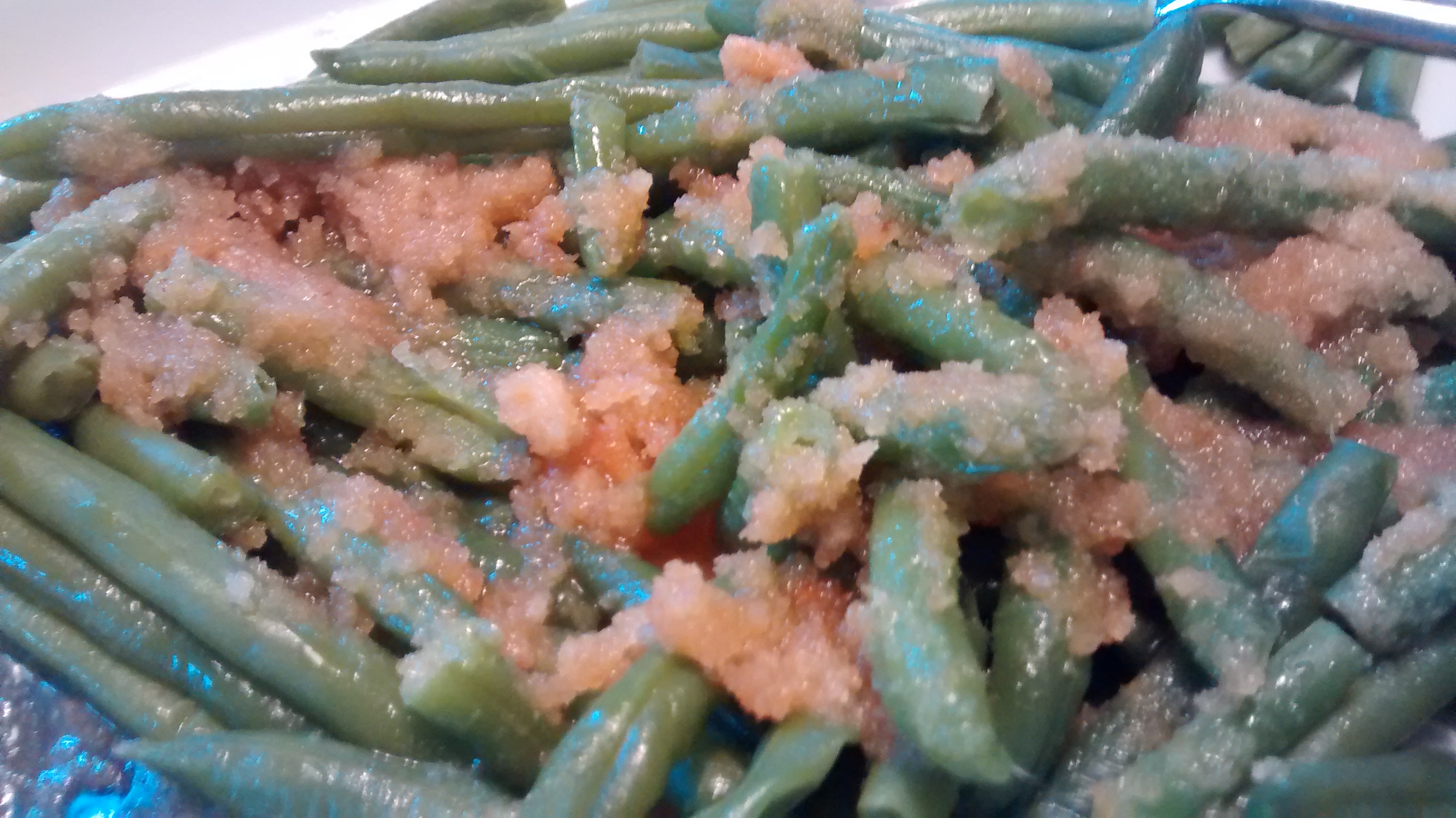
You will get a buttery crunchy taste which is a contrast to the vegetables.

Method for the  à la Polonaise topping

IMG_20150817_175613101
Butter & Breadcrumbs
IMG_20150917_100045291
Preparing the Breadcrumbs


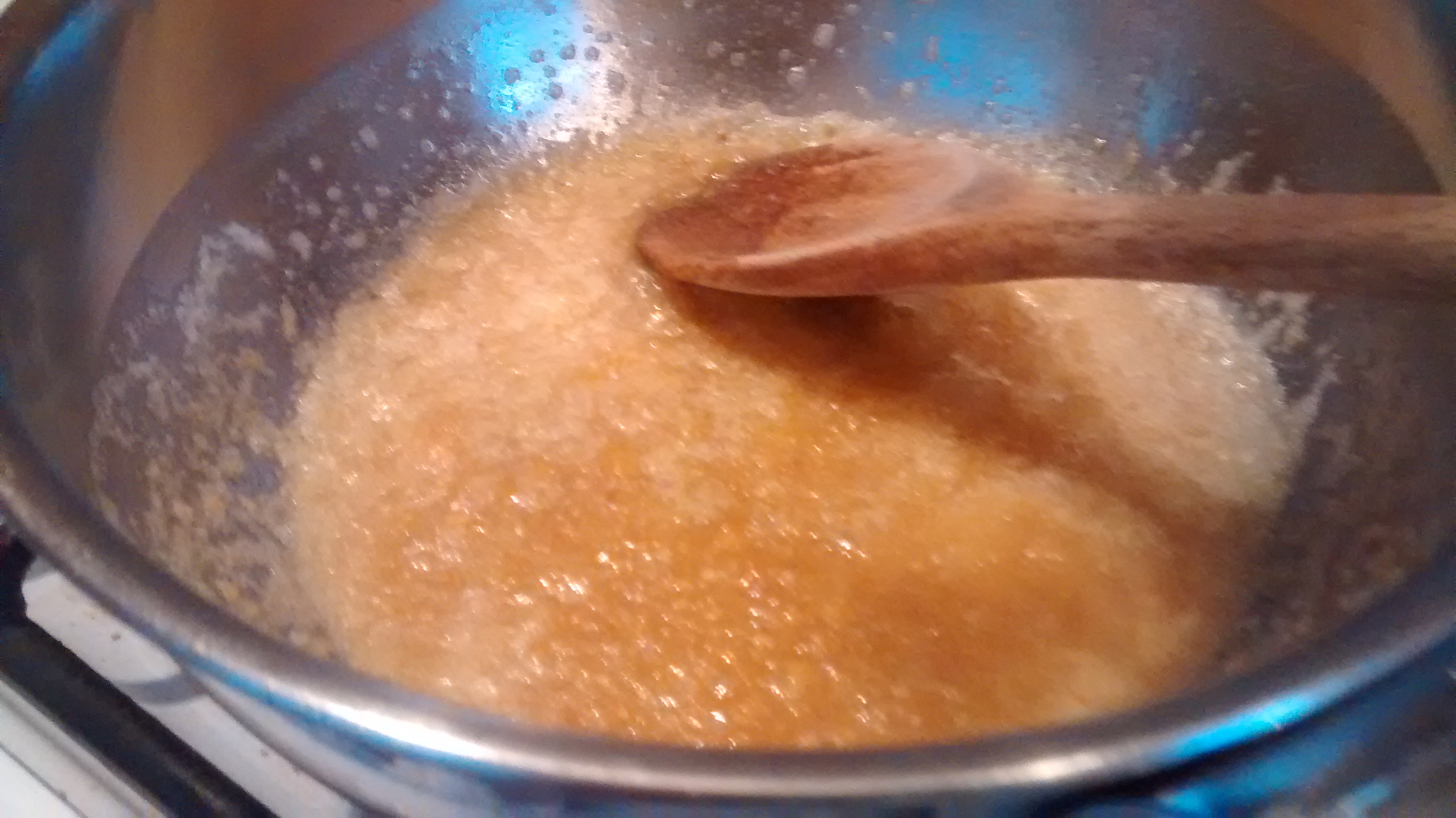
The topping is made by melting in a saucepan 2 to 3 tablespoonfuls of butter.

(If you use unsalted butter then add a pinch or two of salt)

IMG_20151103_130608867
Melting the Butter


Add to this around 2 tablespoonfuls of dried breadcrumbs and keep on the heat and stir for a few minutes.

IMG_20150917_100045291
Preparing the Breadcrumbs
IMG_20151107_162253272
Butter & Breadcrumbs


Pour the buttery mix over the vegetables.

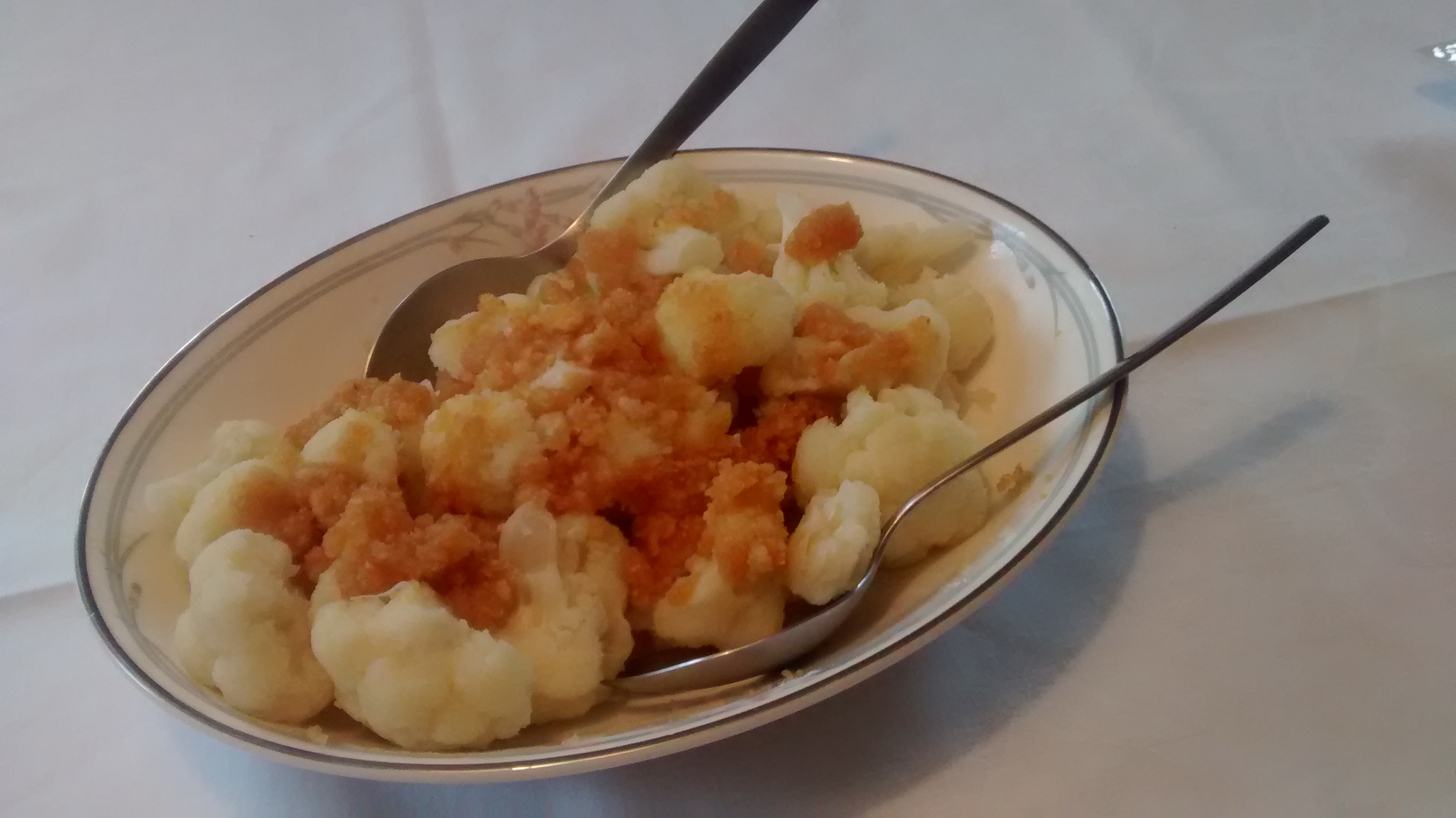
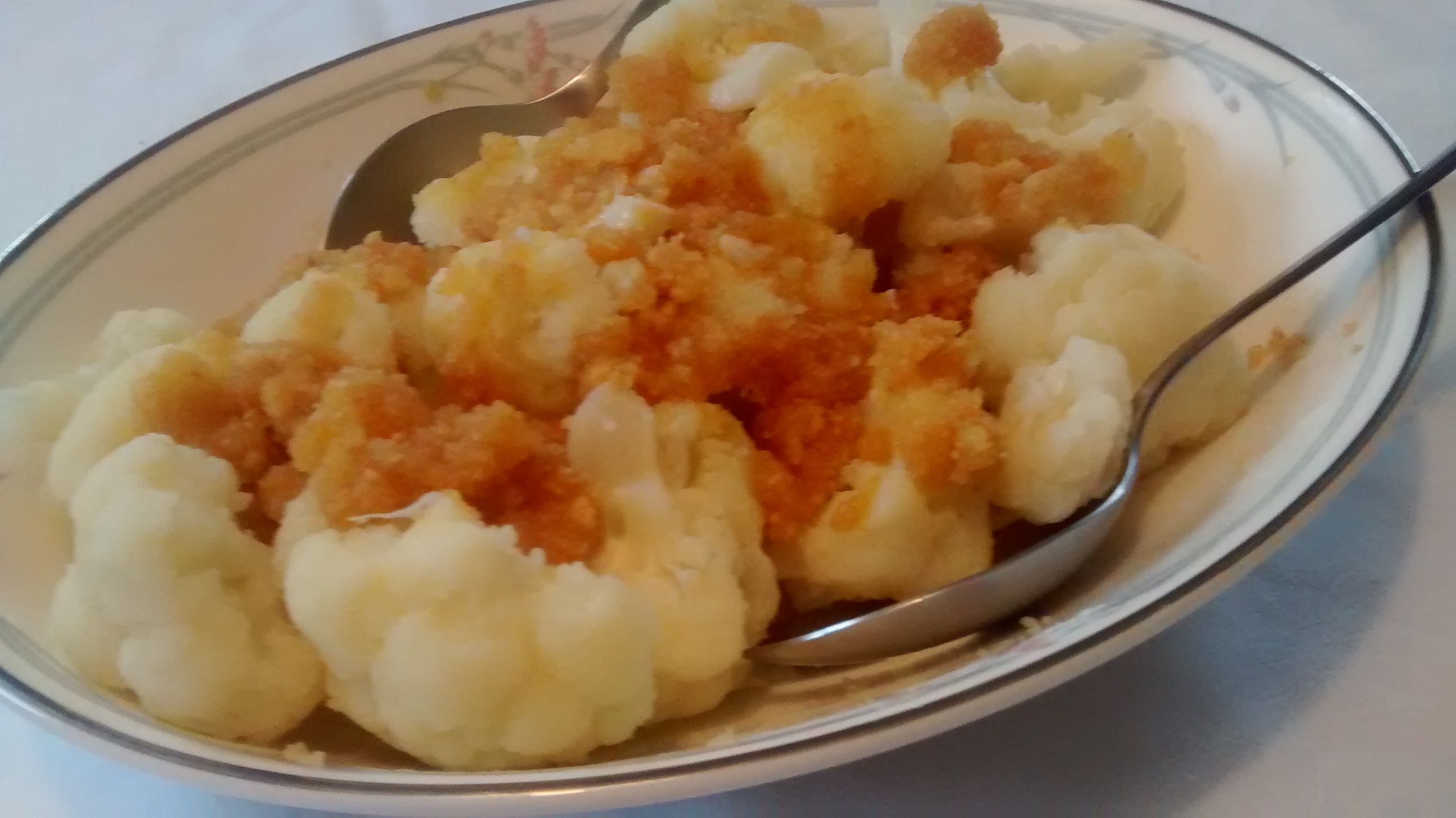
Cauliflower à la Polonaise – served in a Royal Doulton serving dish. The pattern is Carnation produced from 1982 to 1998.

IMG_20150817_180508527

IMG_20150817_180458373

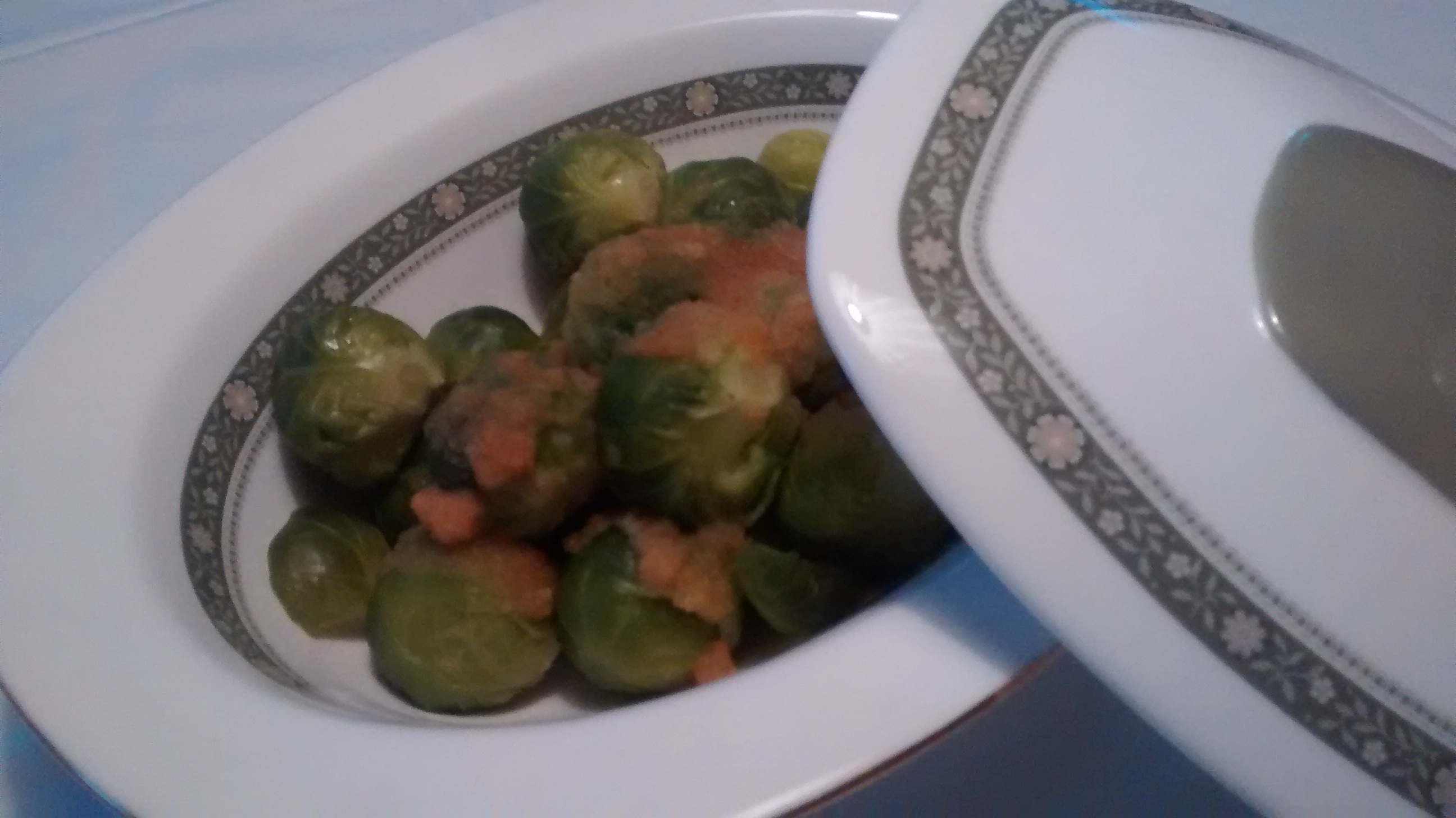
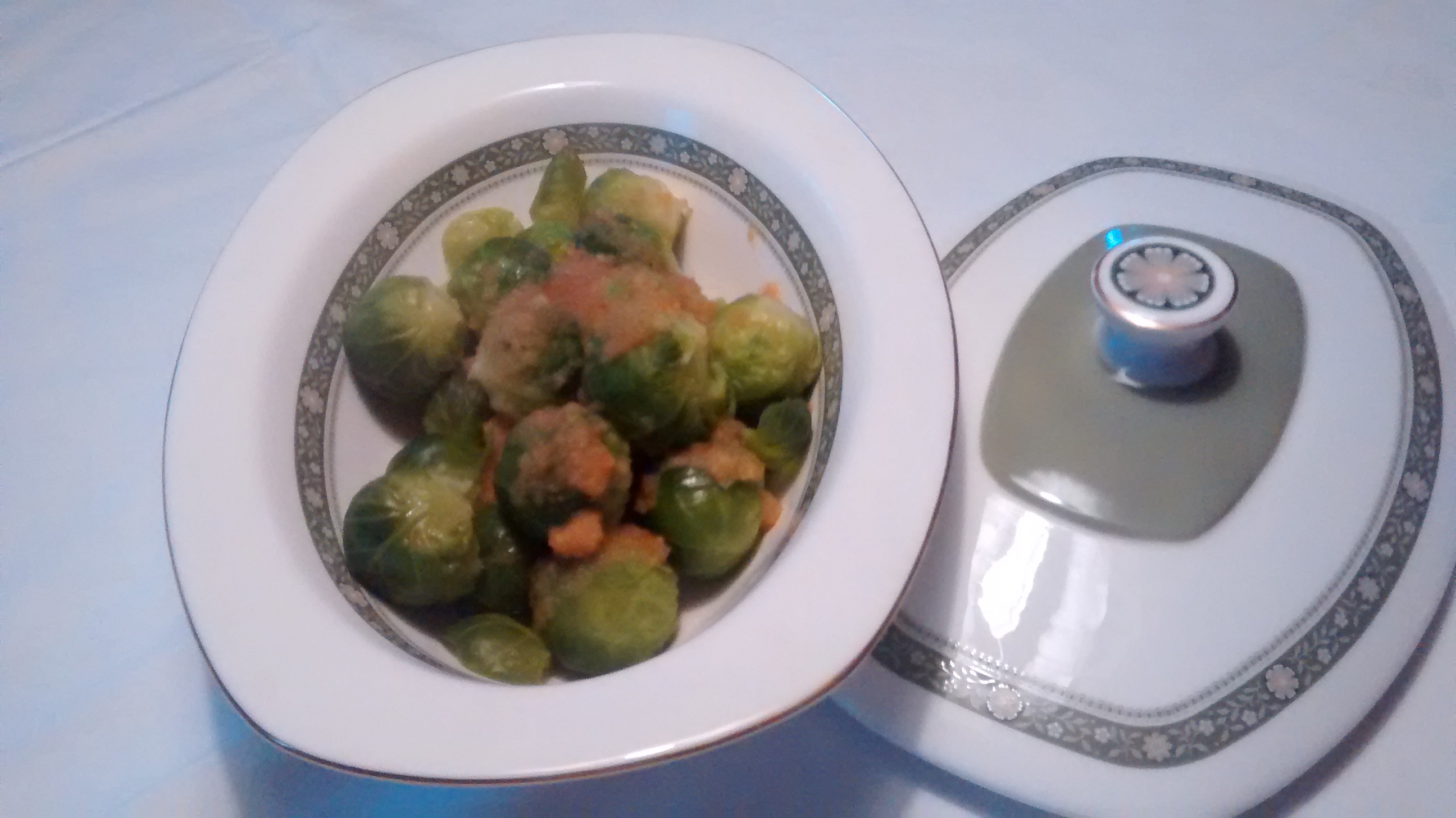
Brussels Sprouts à la Polonaise – served in a Royal Doulton serving dish. The pattern is Roundelay produced from 1970 to 1997.

IMG_20151107_162502658

IMG_20151107_162635204

IMG_20151107_162553021

IMG_20151107_161529233
Royal Doulton – Roundelay

Whole green beans à la Polonaise

IMG_20151103_131204846

IMG_20151103_131159481

Added Note

IMG_20150902_161945936

IMG_20150902_161243414

Some cookery books say that chopped hard boiled eggs and chopped flat leaf parsley are added to the topping.

Personally I have not found this to be usually so, although chopped hard boiled eggs are added to many salads and to certain soups in Poland and chopped flat leafed parsley is very often used as a garnish.

Breadcrumbs – Bułka tarta

Breadcrumbs are needed for many recipes in Polish cookery and especially in the topping à la Polonaise.

So I always make sure I have some in my store cupboard.

Bułka tarta is usually translated as breadcrumbs  –  they are the  dried and then ground or grated crumbs from white rolls (bułka is a bread roll) or white (wheat) bread.

Bread in Poland is normally made from rye flour or a mixture of rye and wheat flour.  White bread and rolls were viewed as a luxury in days gone by.

I usually make my own breadcrumbs as in the past the ones you could buy in England were often dyed orange and I did not like them at all.

Nowadays there are many Polish shops and Polish bakeries that sell these dried breadcrumbs.

I have used them and they are good.

If you want to buy them then

Bułka tarta

is what you are looking for – usually sold in 500g bags.

I still make my own as they are a good use of any type of white bread you have left over and the crumbs keep for ages in an airtight box.

Making Breadcrumbs

You need white (wheat) bread – either slices from a loaf or bread rolls – cut in half.

Put your oven on its lowest setting – on mine this is GM1

You can put the slices of bread directly on the oven shelves or you can use a silicone mesh sheet which is good as the moisture which come off the bread does not condense under the bread and it is easier to remove the dried bread from the oven when it is ready.

Leave the bread in the oven for an hour or more – it wants to be a golden brown.

IMG_20150917_074918516
Lightly Dried Bread – It can be a darker brown if desired

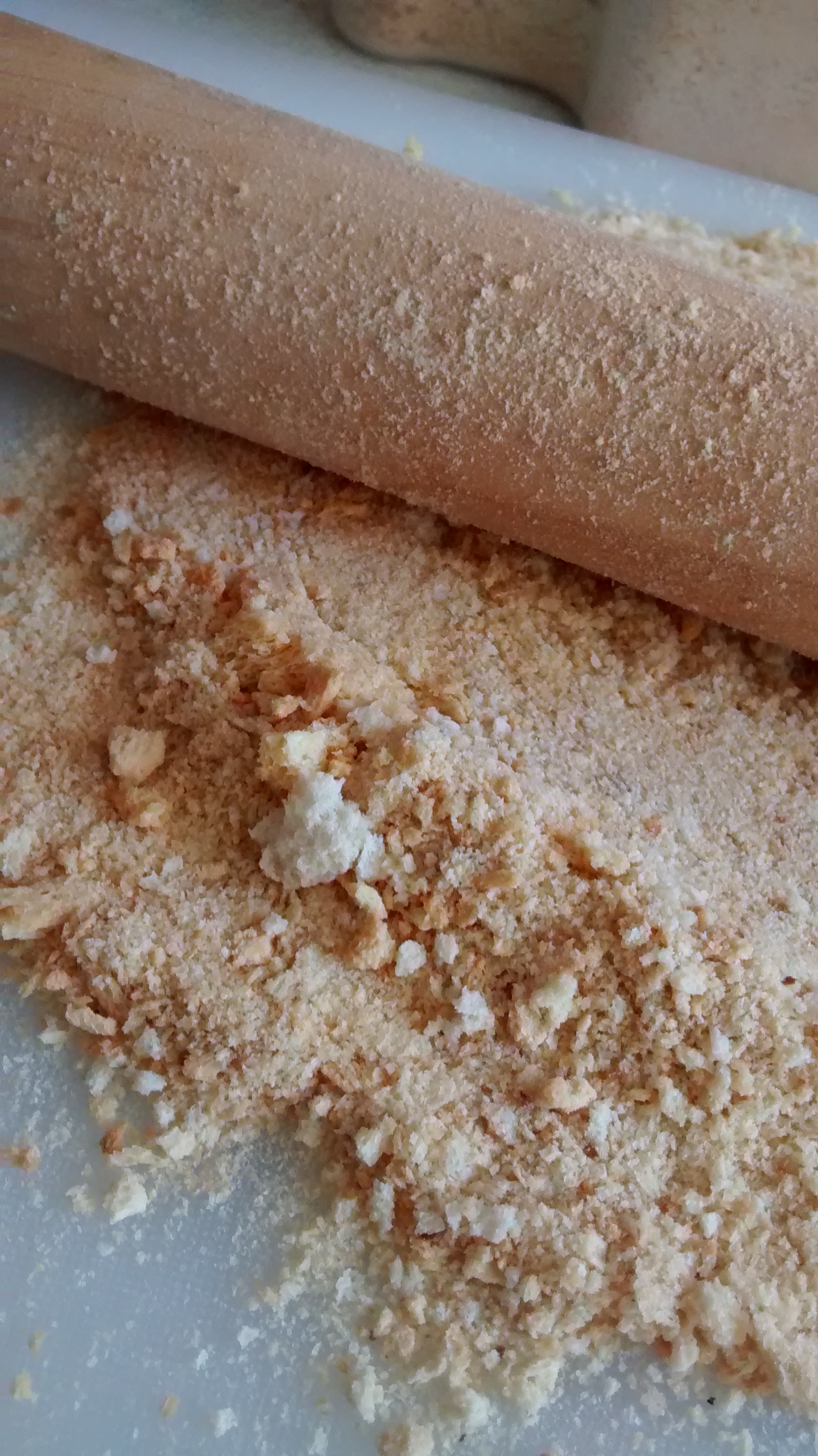
Put the dried bread on a chopping board and use a rolling pin to crush it.

IMG_20150917_100045291

IMG_20150917_095806070

I store my breadcrumbs in an airtight plastic box – I use  Sistema™ boxes which are made in New Zealand.

IMG_20150917_100015472

Kopytka – Polish Potato Dumplings

My mother called these grube kluski  – fat noodles but on my recent visits to Poland I have had these under the name kopytka, this means little hooves, which I think describes their oval shape very well.

They are very much like  Italian gnocci made with potatoes rather than semolina. (The Italian word comes from either nocchio – a knot in wood or nocca – a knuckle). I think the usual size of gnocci is smaller than the kopytka.

IMG_20150910_122355675

These were often made with boiled potatoes which had been left over from another meal. I do not remember my mother boiling potatoes especially to make these as the potatoes have to be boiled and then left to go cold. I always hoped that she would peel lots of potatoes so that there would be some left to make these, as I just loved to eat them.

We had them served with either melted butter or skwarki (crisp, fried, small squares of bacon). Recently in Poland I was served these with a creamy mushroom sauce*.

I  often boil potatoes the day before to make these as the potatoes need to be cold. The exact amounts are not critical but you must use starchy potatoes. When you have made these once you will have a good idea of the amounts involved and I am certain that my mother never weighed out the ingredients, just judged this by eye and consistency.

Ingredients

  • 600g of starchy potatoes – such as King Edward or Maris Piper
  • 1 egg  & 1 egg yolk
  • 200g of plain flour
  • Salt

Method

Peel the potatoes cut them up into pieces and boil them in salted water.

Drain the potatoes and then mash them so that there are no lumps. I have a ricer which is very good for this. Leave the potatoes to cool.

Use a large bowl and put the cold potatoes into the bowl.

Lightly beat the egg and the yolk together and add this to the potatoes.

Add a little salt.

Weigh out the flour to give an idea of how much is needed; this will depend on the type of potato and the size of the eggs. Add the flour and mix first with a wooden spoon and then by hand, you might not need all the flour or you may need more. Mix until you have a soft dough.

Divide the dough into quarters and using a floured board shape the dough and roll it with you hands until you have a long sausage about 3cm in diameter. If the dough sticks to the board then you need to add more flour.

Use a sharp knife to cut the dough into pieces, make the first cut at a diagonal and make the thickness about 1 to 1.5cm. You will get a sort of oval shape.

kopytka

13 Feb 150

Repeat this with the rest of the dough.

Fill a large pan with water, add some salt and bring this to the boil.

When the water is boiling, add the dumplings one by one, do not over fill the pan or they will stick together. I tend to do this in 4 batches.

As they cook they will float to the surface, give them about another minute and then remove them with a slotted  or a perforated spoon and put them in a colander. I have a colander sitting in an empty pan by the side of the large pan in which I am boiling the dumplings.

IMG_20151019_115258775

IMG_20151019_115514089

IMG_20151020_094306951

IMG_20151020_094317425

IMG_20151020_094418143

I find that the maximum from putting  them into the water to taking them out will be 3 minutes, if you cook these too long they will start to fall apart.

Serve as suggested above with melted butter, bacon bits or with a sauce.

13 Feb 153
Cooked Kopytka Waiting for Butter,      Bacon or Sauce

13 Feb 152

*See my earlier post

Gołąbki – Cabbage Rolls  – with Mushroom Sauce

For  mushroom sauce recipes.

Kartoflane Placki – Polish Potato Pancakes

Placki (the plural of placek) are any sort of flat cakes usually round in shape – baked or fried – sweet or savoury.

IMG_20150811_170957126

  • These fried potato pancakes are so wonderful and although they take a bit of time to prepare it is worth it.
  • I tend to make these in the winter months as they are best made with older starchy potatoes.
  • They are best eaten straight from the frying pan – more a family dish than fine dining.
  • They should be thin and slightly crispy at the edges.
  • My father said he used to have them for breakfast in Poland.
  • My mother served them with fried eggs and bacon; one of my aunties serves them with curd cheese and chopped spring onions or with sour cream, in some parts of Poland they are eaten with sugar or jam!
  • I think this recipe crossed the Atlantic and is one of the origins of Hash Browns –  but I prefer these!
  • In Poland a  large breakfast size plate pancake topped with gulasz  – goulash  is known as – placek po węgiersku –  Hungarian pancake.

Ingredients

  • 4 large starchy potatoes such as King Edward or Maris Piper
  • 1 medium or large onion
  • 1 egg or just the egg yolk
  • Plain flour
  • Salt & pepper
  • *
  • Oil for frying

Method

  • Peel the potatoes then grate them using the fine size of the grater into a large bowl, this is the part that takes time – I have tried using the coarse grate but they are not as good.
IMG_20150811_165238337
Grating the potatoes

IMG_20150811_165251112

  • Leave to stand for a few minutes and the water from the potatoes will rise to the surface. If the potatoes are very watery pour of some of the water. The easiest way is to tip up the bowl slightly over the sink and hold down the potatoes with the palm of your hand.
  • Peel the onion and also fine grate it and add to the potatoes. This is the part that would often result in the grating of my knuckles  as I tried to use every last bit of onion – I now often use some form of electrical mini-chopper to get a pulp of onion.
IMG_20150811_165955962
Onion Pulp
  • Add the egg, salt & pepper.
  • Add enough plain flour so that the mixture is thick.

IMG_20150811_170357625

  • Heat some oil in a frying pan, a thick cast iron one is ideal, place large spoonfuls of the mixture onto the hot oil and flatten them out with the spoon or spatula. A pan should be able to hold 3 or 4. Fry till golden on both sides.
  • They should be thin and  slightly crispy at the edges.

IMG_20150811_170538654_HDR

  • Do not have the pan too hot or they will burn on the outside and be raw in the centre.
  • Do not have the pan too cool or they will end up too greasy and not crispy.

IMG_20150811_171517471

  • Serve immediately or keep them warm in the oven on a low heat whilst you make more.

IMG_20150811_171511857

IMG_20150811_173653863

Polish Mixed Vegetable Salad

Before the days of shops that sell fresh and frozen produce all year round from all over the world, this salad could be made in the autumn and winter using bottled or tinned vegetables.

This salad is made using mainly cooked chopped vegetables and the aim is to make it colourful and to balance the colours and size of the ingredients.

The main three colours are white, green and orange.

IMG_20150826_184257660
Salad in a Royal Doulton Dish – Carnation – 1982 to 1998

White

The white is achieved from: potatoes, celeriac or  white beans such as haricot or cannellini  or even tinned baked beans with the sauce rinsed off.

Green

The green is achieved from peas , whole green beans or gherkins. I use frozen peas or whole green beans.

Orange

The orange is achieved from carrots or bottled paprika.

The following salad was made from potatoes, carrots and whole green beans which were cooked before assembling.

IMG_20150826_153017563
Steam the Potatoes and Carrots

IMG_20150826_153001188

Boil or steam the whole green beans.

Once the vegetables have cooled then chop them into small pieces.

IMG_20150826_154347559IMG_20150826_155112059

IMG_20150826_155125333

Mix the vegetables together with several tablespoonfuls of mayonnaise – original or light – just enough to lightly coat the vegetables.

Add salt and pepper to taste.

IMG_20150826_184307974

Variation 1

Add 2 hard boiled eggs which have been chopped to the salad.

IMG_20150902_161945936

IMG_20150826_184529924
Mixed Vegetable Salad with Hard Boiled Eggs

Variation 2

Use Celeriac instead of potato.

Peel the celeriac then cut it up into large pieces and steam these – chop the cooked celeriac into smaller pieces when it has cooked and cooled.

Polish Potato Salads

Potato salad is very popular in Poland especially as it can be made nearly all year round.

This can be served with cold meats and Polish style sausages as well as with hot dishes such as roast pork or chicken.

I like to make potato salad using starchy potatoes as I love the soft fluffy texture.

My favourite starchy potatoes are King Edward and Maris Piper.

The King Edward variety was introduced in the  United Kingdom in 1902 and was named after King Edward VII as this was his coronation year.

The Maris Piper variety was released in 1966  and was named after  Maris Lane in Trumpington on the outskirts of  Cambridge which at that time was the home of the Plant Breeding Institute.

Classic Potato Salad

IMG_20150806_194024472

Ingredients

Starchy Potatoes – from 3 large potatoes upwards

1/2 – 1 onion – chopped fine

Mayonnaise – I like to use Hellmans – original or light

Salt and pepper to taste.

Method

Peel the potatoes and cut any large potatoes into quarters and then boil or steam them to cook them.

Strain the cooked potatoes in a colander and leave them to cool slightly.

Rough chop the cooked potatoes using a knife or a spoon – you do not want the pieces to be too uniform in size.

Add the chopped onion to the potatoes and then several tablespoonfuls of mayonnaise and mix together.

I like to use potatoes that are still slightly warm as I find the mayonnaise coats them better.

However you can use cold potatoes – maybe some you have left from another meal – the salad will still be good.

Add salt and pepper to taste.

Leave to cool completely before serving.

IMG_20150806_194007779
Simple Classic Potato Salad

Variations on the Classic Salad

Potato Salad with Gherkins

IMG_20150806_183403685

Chop 2 or 3 gherkins and add these to the Potato Salad.

IMG_20150807_110645717
Chopped Gherkins


IMG_20150807_112124051
Potato Salad with Gherkins

Potato Salad with Gherkins and Boiled Eggs

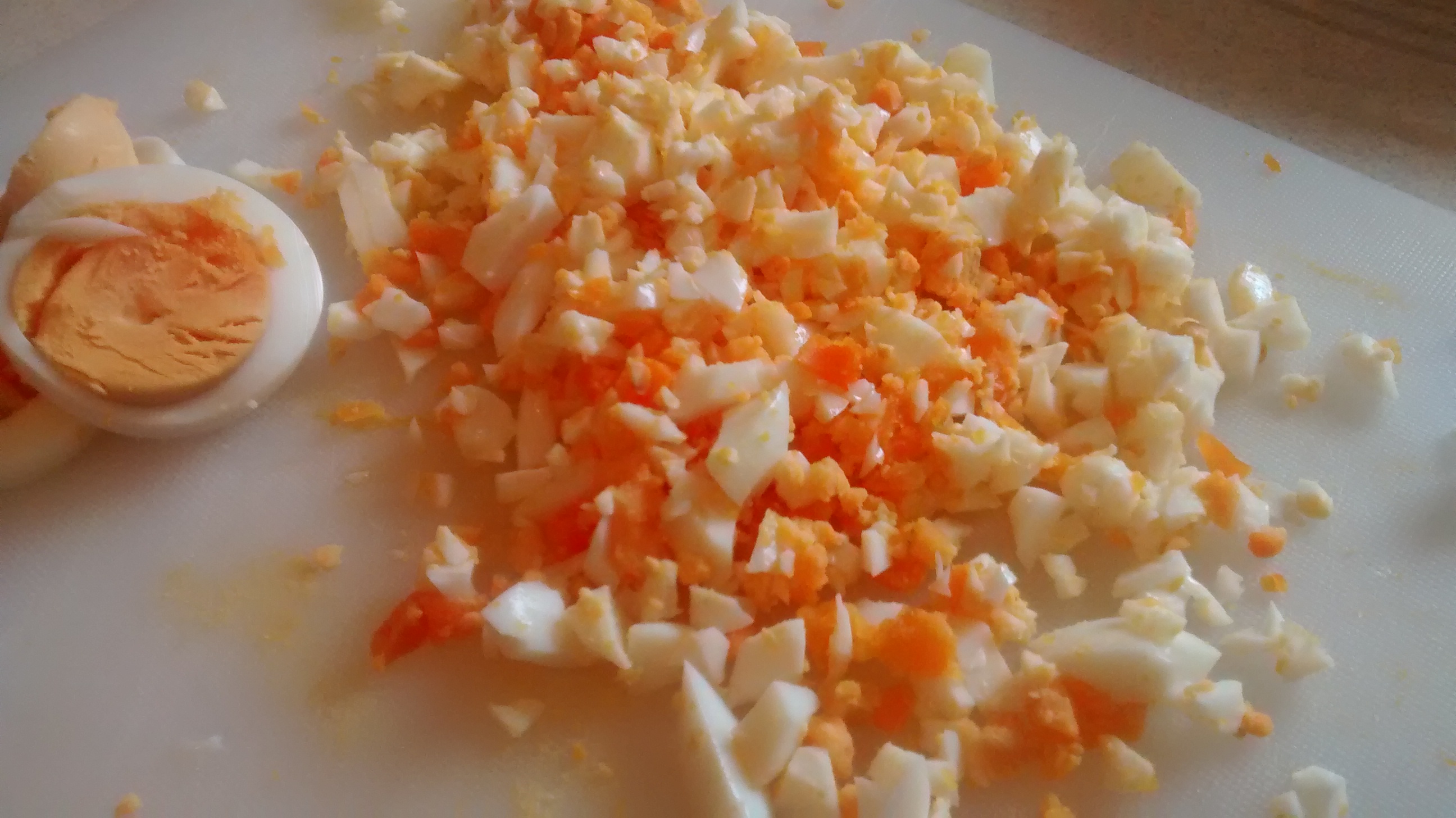
Chop 1 or 2 hard boiled eggs and add these to the potato salad with the gherkins.

IMG_20150828_124410565
Chopped Hard Boiled Eggs
IMG_20150807_114425535
Potato Salad with Gherkins and Hard Boiled Eggs

Potato Salad with Peas

Cook some frozen peas and add these to the classic potato salad

IMG_20150806_192627173
Cooked Peas
IMG_20150806_194015128
Potato Salad with Peas

Poles Adopt The Potato and Make it Their Own!

IMG_20150910_122328634

There are so many recipes and uses for the potato in Poland you would think that this was the country it originated in.

IMG_20150910_122355675

There are dozens upon dozens of recipes for potatoes, as part of a meal where it is very recognisable as potato such as when boiled or mashed, as a pancake or as a dumpling, or cold in a salad, or hot in Polish potato soup. As well as that potato starch is used as a thickener in savoury and sweet dishes and to make cakes and pastries. Potatoes have also been used to make  wódkavodka and often  samogonka -home brew vodka.

The potato plant originated in the Andes mountains of South America and was cultivated by the Incas. The part we eat is the tuber, which stores starches and sugars, of the plant Solanum tuberosum.  It is related to the deadly nightshade and the tomato (also from South America)

The Spanish Conquistadors came into contact  with the potato in around 1537 and it came across the Atlantic to Europe in around 1570.

King Jan III Sobieski grew potatoes on his estates in the 17th century – from tubers he sent back after the Battle of Vienna which was in 1683.

In the 18th century around 1760 – King August III – had potatoes on his estates and it became a fashionable vegetable.

Potatoes became part of the diet alongside kasza – porridge/groats/grits – made from buckwheat, barley or millet.

There are two words for potato in Polish – kartofel  and  ziemniak

Kartofel  is from the German word kartoffel – this was the word my parents used.  This German word itself comes from the Italian word tartufuli which means truffle like, whereas the Italian word for potato is patata.

Ziemniak  comes from the word ziemia which means earth or ground – so ziemniak means something which is from the earth – this word seems to be more popular nowadays.

The potato is well suited to grow in cold  waterlogged and often frozen  soil – which is often the case in Poland.

Care must be taken when storing potatoes so they do not  get frozen or the starches change to sugars and the potatoes will quickly go rotten.  I remember my father saying that that they stored potatoes in pits in the ground in their barn.

In post World War 2, Poland has became one of the top three potato producers in the world.

Look out for many future posts with potato recipes – below is a preview of some of the photographs

IMG_20150811_165238337

IMG_20150902_132223352

IMG_20150806_194007779

IMG_20150907_170224421IMG_20150811_171511857