How Did My Sponge Become Sandy?

In Polish the word for a fat free sponge cake which is made with just eggs, sugar and flour is  biszkopt.

A sponge cake which uses butter or margarine which is creamed with the sugar is described as piaskowy – this adjective means sandy – hence the title of this post!

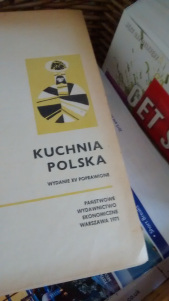
I have not managed to find an explanation as to why it is so described  but have found this term in all my Polish cookery books.

Pani Stasia’s Sponge Cake

This is a recipe which I learnt from my mother’s friend who we knew as pani Stasia*.

Pani Stasia made wonderful cakes but unfortunately I did not write many of them down – however I did for this one and it is the basis for many of my other cakes and buns.

This recipe is equivalent to the British cake –  Victoria Sponge – named after Queen Victoria in whose reign this became popular & who is said to have liked this cake very much.

Having been looking at recipes in my Polish cookery cooks I realise that pani Stasia adapted this recipe for England as self raising flour and caster sugar are not found in Polish shops.

(*Pani  translates as Madam, Lady or Mrs and is a polite form of address – it is like donna in Italian or for example  saying Miss Mary in the Southern States of America.

Stasia is the shortened form of the Polish name Stanisława. (The feminine form of Stanisław)

St Stanisław is the patron saint  of Kraków & Poland, he was a martyr, murdered by the Polish king Bolesław II the Bold in 1079 – a story which has much in common with St Thomas à Beckett and the English king Henry II  in 1170).

Ingredients

Eggs

Butter or Block Baking Margarine

Caster Sugar

Self Raising Flour

I usually use 3 or 4 eggs for this recipe – in the photographs below I have used 4 eggs to make 2 cakes which were then sandwiched together with jam and white chocolate butter cream.

IMG_20150805_064443123

Method

Grease and line the base of 2 x 21.5cm  sandwich tins. – I find anodised aluminium tins are the best. (my old tins say 8 1/2 inch on the base – 21cm or 22cm would be OK)

Pre-heat the oven to GM 4 – 180°c

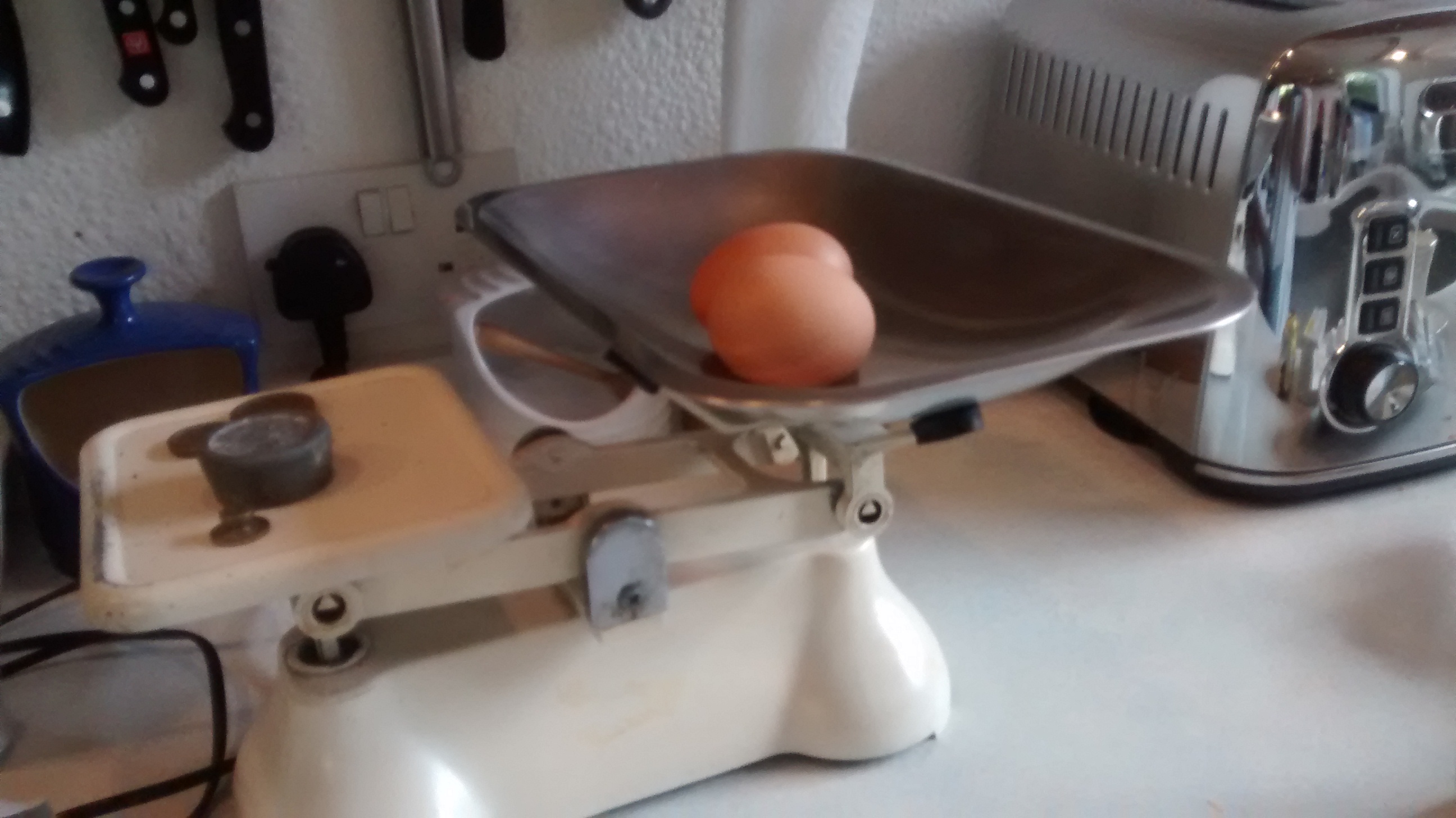
The first thing you have to do is weigh your eggs – complete with their shells.

Weighing Eggs

You then weigh out the same amount of  butter or block margarine, caster sugar and self raising flour.

At first I thought this was very strange but now find that it gives a very good way of getting the right proportions no matter what size the eggs are.

I heard the late Marguerite Patten in an earlier recorded programme on the radio a few weeks ago saying that Victorian cooks often  used this method. 

Cream together the butter and sugar until it is light and fluffy.

Add the eggs, one by one whisking again until the the mixture is light and fluffy again.

Fold in the flour with a metal spoon taking not to over mix the mixture and knock out all the air.

Divide the mixture evenly between the 2 prepared tins.

Bake in the centre of the oven for around 25 to 30 minutes  – the cake should  be golden brown and be clean when a cake tester is used.

IMG_20150804_180730655
Cakes cooling awaiting being sandwiched together

This cake is very versatile and here I have sandwiched it together with blackcurrant jam (given to me by my friend who had made it with fruit from her allotment) and white chocolate butter cream.

Sweet whipped cream is not found in Polish cookery – butter creams and similar are the standard fillings for layer cakes.

On the bottom cake first spread on the jam and then top this with the butter cream.

IMG_20150804_202127960

This butter cream is sweet and needs the contrast of a tart jam, damson jam would be another alternative.

White Chocolate Butter Cream

Ingredients

60g White chocolate

40g Butter – unsalted is best

80g Sieved  icing sugar

 Method

Melt the white chocolate in a glass bowl over a pan of hot water and allow to cool.

Cream the  butter and the icing sugar.

Beat in the cooled, melted chocolate.

Note

Take care  –  if the melted chocolate  is too hot then you will end up having to add more icing sugar and the  butter cream will be very sweet.

Dust the finished cake with icing sugar.

IMG_20150804_202910179

IMG_20150804_202121082

IMG_20150804_202846103
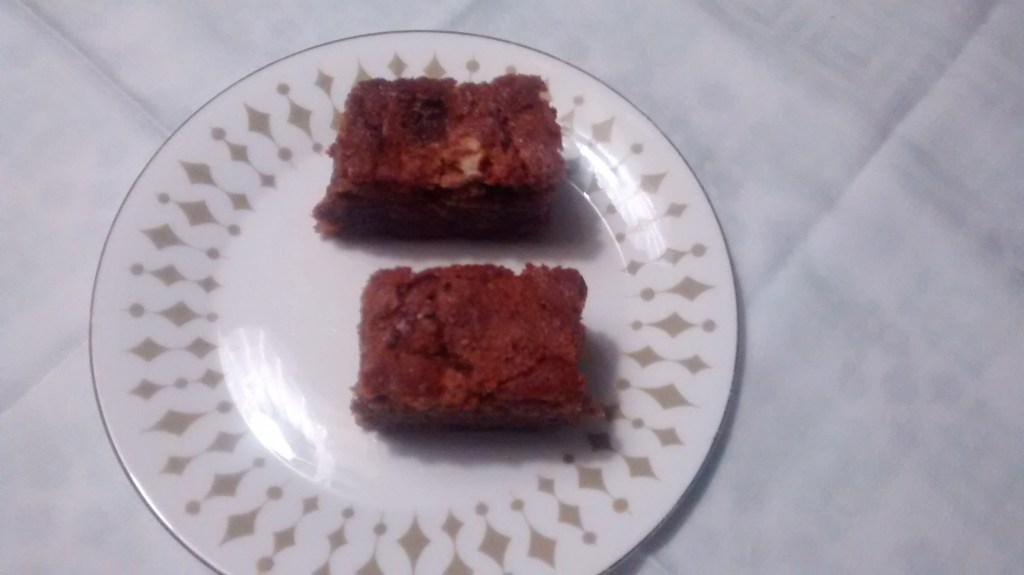
Plates are Burleigh Ware – Burges & Leigh Ltd —– Blue Mist around 1930s


IMG_20150805_064428554


IMG_20150805_065802235

IMG_20150805_065810762


Makowiec – Roasted Poppy Seed Cake

I came across this recipe recently using roasted poppy seeds which give a slightly nutty flavour to the cake.

The cake part is the same as a previous poppy seed cake – makowiec 4 -and uses the simple all in one method using soft tub margarine.

Here roasted poppy seeds are used and lemon rind is not, nor is there a lemon glaze.

Roasting Poppy Seeds

100g of poppy seeds are used in this recipe.

Poppy seeds

Use a small frying pan without any oil or butter.
Add the poppy seeds to the pan and heat gently for around 5 minutes, stirring the seeds with a wooden spatulas and do not let them burn.

IMG_20151120_073217178

Pour some milk into a jug or bowl and tip the roasted poppy seeds into the milk.

IMG_20151124_133153136

When the poppy seeds have cooled, tip then into a sieve and let them drain away until they are dry.  You can press them with a spoon to speed up the process.

IMG_20151215_073209814(1)

The seeds need to be as dry as possible – you could do this part  several hours earlier or the night before.

This cake is a modern version as soft tub margarine is used and it is an all-in-one method which is so easy to do with an electric hand whisk.

I use either Flora original or Stork for baking – both of these have given good results.

Ingredients

100g poppy seeds – roasted

175g soft tub margarine for baking

225g self-raising flour

1 ½ teaspoons baking powder

175g caster sugar

3 eggs

3 tablespoon milk (full fat or semi-skimmed)

Method

Pre heat the oven to Gas mark 4 – 1800C.

Make this as a tray bake in a tin about 31×22 cm.

I have a selection of Mermaid Hard Anodised rectangular baking tins and they are superb.

Grease the tin and use one piece of greaseproof paper to line the base and the two long sides of the tin.

IMG_20151120_074347436

Place all the ingredients except the poppy seeds into a large bowl and beat well for about 2 minutes until they are well blended.

Add the poppy seeds and  mix them well in.

Put the mixture into the tin and bake for about 30-35 minutes.

Leave to cool on a cooling rack and then take the cake out of the tin.

IMG_20151124_162509672

Dust with icing sugar before serving.

IMG_20151124_170307260(1)

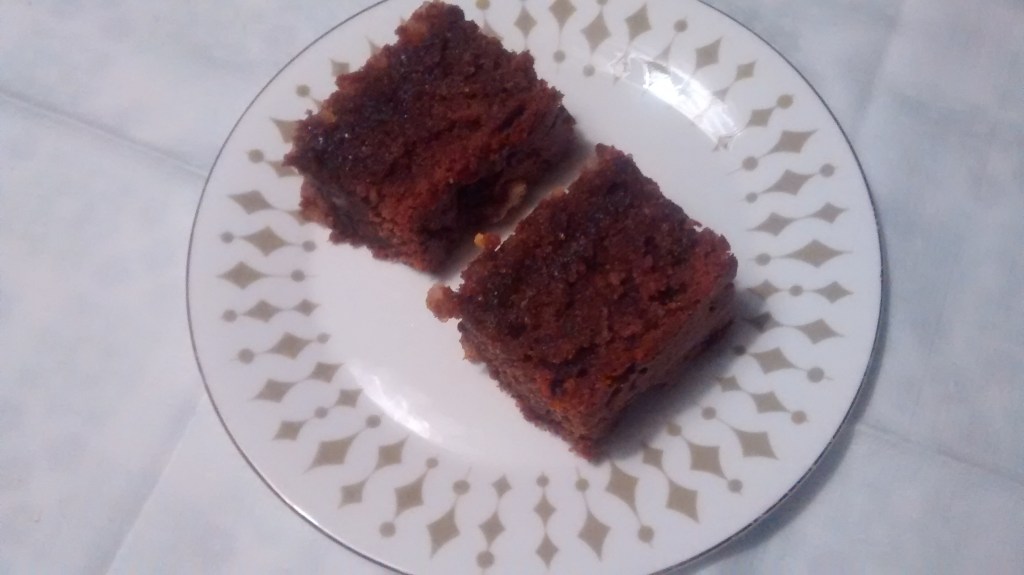
Tea Plates  – Silver Rose by Duchess

IMG_20151124_170151987


Miodownik – Piernik – Honey Spice Cake

Miód is the Polish word for honey and so Miodownik is a Honey Cake which usually contains spices. Pierna is an old Polish word for spices and so Piernik is also a Honey Spice Cake.

Some sources say the name is from pieprz – pepper or piorun – thunderbolt or devil – because of its spiciness.

These cakes have been known in Poland since the 12th century and the  spices would have come from Turkey (originally brought back by the crusaders) or India.

Honey was the original sweetener, long before sugar and there are many traditional recipes that use honey not only in cakes, but also in meat dishes.

When you travel in Poland you will find many village ladies selling their own honey, the taste varies greatly depending on where the bees have found their flowers and the honey from a forest region is dark and very flavoursome.

Piernik  can vary  from a soft dense cake to a drier but soft biscuit.

The Polish town of  Toruń is famous for its piernik and  Chopin was very found of this.

Pierniki(plural) coated with chocolate are called Katarzynki –  which means Katherine’s cakes – named after Katarzyna the daughter of one of the bakers.

Similar cakes are found throughout Europe including the French pain d’éspices, the Dutch peperkoek and the German lebkuchen.

Miodownik  and piernik are often translated as  Gingerbread but ginger is a spice rarely used in Polish cookery.

The main spices used are cinnamon and cloves with the addition according to different recipes of cardamon, black pepper, caraway, nutmeg, dried orange and/or lemon peel and then in later recipes allspice which is from the New World.

My older recipe book gives the proportions for mixing spices and there is one with black pepper which I intend to try out in the future.

Whilst looking through some of my more recent cookery books it would appear that it in Poland you can buy ready mixed spices for piernik so I would presume you can get these in Polish shops in England. I will try these out in the future as well.

IMG_20151201_074250058

I use the mixed spice mixture which is sold by Marks & Spencer which contains: dried orange peel, cassia (a variety of cinnamon), ginger, nutmeg, pimento (allspice) and caraway. I think it is the dried orange peel which makes it much nicer than other mixtures I have used.

Some recipes make a cake mixture and then leave it in a cool place for up to several weeks before baking it. I have tried one of these out many years ago and it was very good – I intend to try this again for a post in the early winter of next year.

Piernik in Poland is associated with the Christmas season and would be made for Christmas Eve and for Christmas Day, it would also be made for Święty MikołajDecember 6thSt Nicholas Day. This a day for present giving in Poland to children and I would always get a piernik shaped and decorated to look like the bishop that was St Nicholas.

Mama’s Miodownik

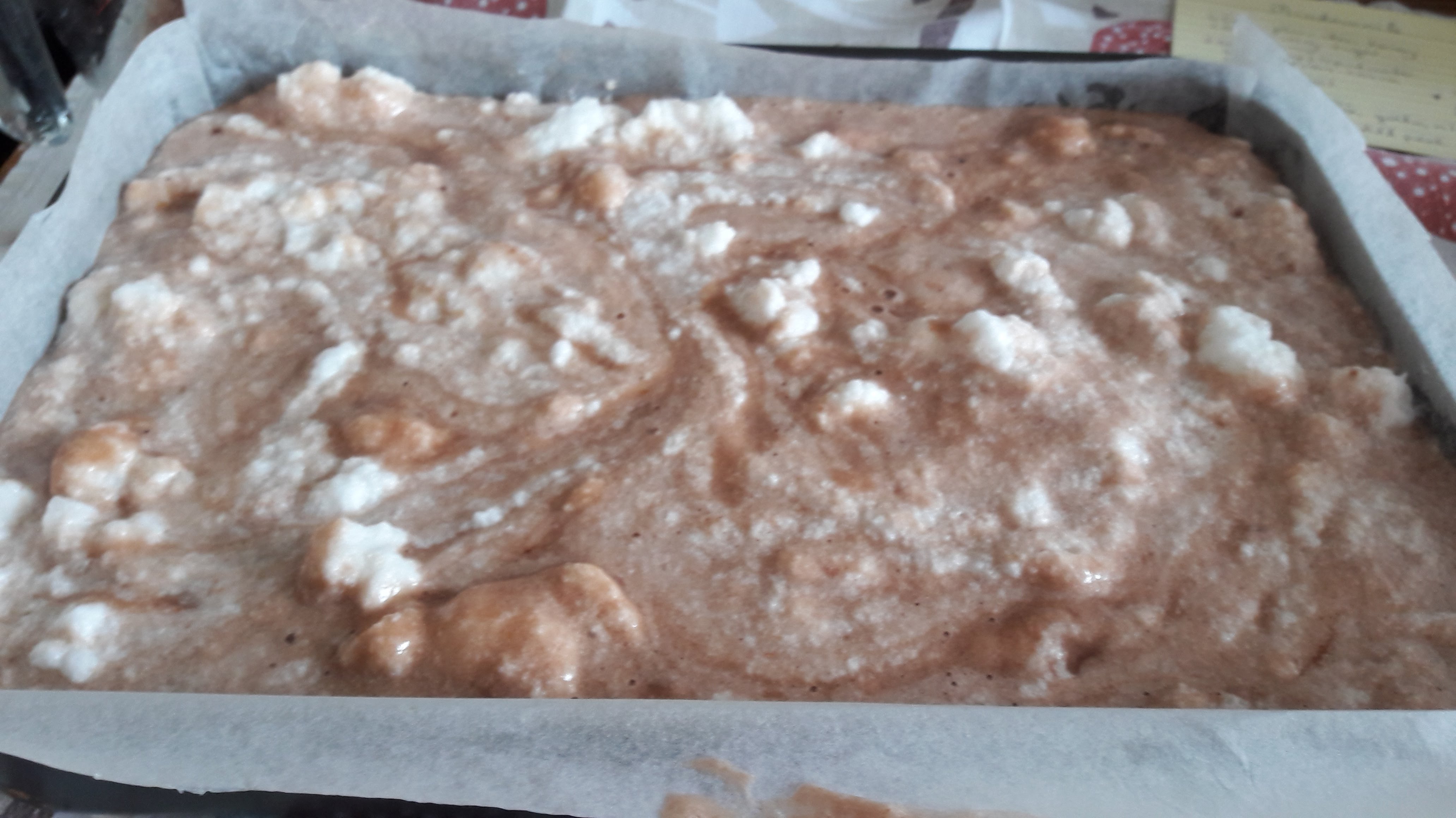
This is of my mother’s recipes and it uses sunflower oil which is a more recent addition to recipes in Polish cookery. It is a dense cake which is lovely and moist and improves with keeping.

IMG_20151130_200822771
Miodownik on Greenway Hostess designed by John Russell 1960 – 1979

IMG_20151130_200807367

Ingredients

  • 450g Clear honey
  • 250g Icing sugar
  • 4 Eggs separated
  • 250ml Tepid water
  • 4 Teaspoons cocoa
  • 250ml Sunflower oil
  • 450g Plain flour
  • Pinch of salt
  • 1 Teaspoon of bicarbonate of soda
  • 1 Teaspoon mixed spice (M&S is the best)
  • 100g mixed peel

Method

  • You can use a 25cm square tin or a 31cm x21cm rectangular tray tin.
  • Grease and line the tin.
  • Pre-heat the oven to Gas Mark 3 – 160º C.
  • In a large bowl, mix the honey and the icing sugar.

IMG_20151130_131702777

  • Add the water, cocoa, egg yolks, oil and then the mixed peel.

IMG_20151130_133606304

IMG_20151130_131717961

  • In a separate bowl mix the plain flour, salt, bicarbonate of soda and the mixed spice.
  • Add the dry mixture to the honey mixture and mix together to make a batter.

IMG_20151130_133902769

  • Whisk the egg whites until they are stiff and fold these into the honey batter.
  • Pour the mixture into the prepared tin.

20171210_114404

IMG_20151130_134205301_HDR

  • Bake on the middle shelf of the oven for around  1hour 30minutes.
  • Take care as this has a tendency to burn  at the top, you might need to cover it after about 1 hour with a piece of greaseproof paper of aluminium foil.
  • Test to make sure it is cooked through with a fine cake tester.
  • Leave to cool in the tin.

20171210_150710


IMG_20151130_200430576

 IMG_20151130_201135944_HDR

 Store in an airtight container or cover in aluminium foil

IMG_20151130_200807367

Miodownik on Greenway Hostess designed by John Russell 1960 – 1979

Addendum

I recently made this for Wigilia (Christmas Eve) around 3 weeks beforehand – it was lovely and moist by then.