Skubaniec

  • Skubaniec comes from the word skubać – to pinch or to pluck.
  • This is because the cake dough is pinched into little pieces and then assembled.
  • It could be said this cake is related to pleśniak – a very recent discovery of mine.
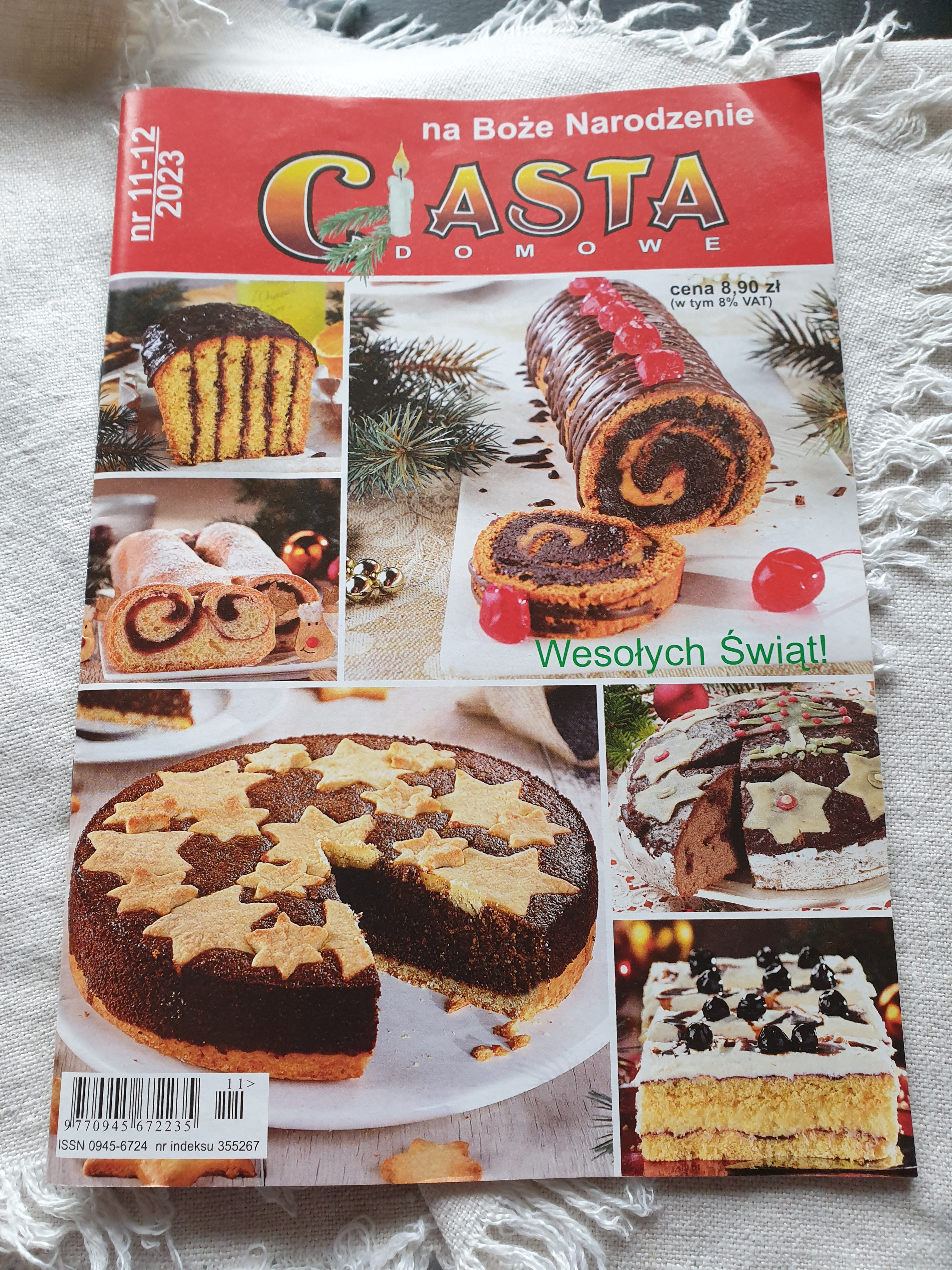
  • There is a recipe in the Christmas pamphlet, which I bought but I have adapted it after looking at other recipes. 
  • As in pleśniak there is plain and cocoa cake dough, sour fruits and meringue.
  • Baking powder is used in this dough.
  • Some recipes pinch all the dough including the base, others roll out the base.
  • The next is a meringue layer, then the fruits, followed by a pinched dough topping of plain and cocoa dough.
  • Sour cherries, blackcurrants, gooseberries are the most used fruits but I have seen recipes for apples and for rhubarb.
  • You can use 2 or more fruits – I used fresh blackberries in 1 third and bottled sour cherries in the rest.
  • Bottled fruit, drained, can be used as was here.
  • Frozen fruits can be used and the cake made out of season.
  • Defrost frozen fruit and dry the water away.
  • Egg yolks are used in the dough and then the whites in the meringue.

Ingredients – Dough

  • 420g plain flour
  • 120g icing sugar
  • 120g butter
  • 1¼ teaspoons of baking powder
  • 1 tablespoon of cocoa
  • 4 yolks
  • Cold water to bind the dough

Ingredients – Meringue 

  • 4 egg whites
  • 1 tablespoon of icing sugar

Ingredients – Fruit

  • 200g bottled cherries

Putting the cake together

  • Line 3 sides of a 26 x 23cm rectangular tin.
  • Pre-heat the oven to GM4 – 180°C.
  • Rub the butter into the flour until it is like breadcrumbs.
  • Mix in the icing sugar and the baking powder.
  • Divide the dough into three parts.
  • Take 2 parts, add 3 yolks and water to make a soft dough.
  • Add the cocoa to the other dry mixture.
  • Add 1 egg yolk and water to make a cocoa dough.
  • Take 1 half of the plain dough and roll it into a rectangle to fit the base of the tin.
  • *
  • Drain the fruit from the liquid in the jar (keep the liquid for other things).
  • *
  • Whisk the egg white till stiff.
  • Add the icing sugar, whisk again till stiff.
  • *
  • Spread the egg white mixture over the dough base.
  • *
  • Put the fruit evenly over the egg white.
  • *
  • Pinch small pieces of each colour of dough.
  • Place them on top of the fruit alternating between plain and cocoa.
  •  Bake for around 40 minutes.
  • Leave to cool in the tin.
  • NOTE
  • I did find that the cake went stale quite quickly.
  • Next time I will try using 210g of butter.

Poppy Seed – Tort

  • Today is 31 December 2023 and this will be my 590th post.
  • Thank you to everyone who reads any of them.
  • *
  • Poppy seed cakes are a very Christmas time thing in Polish cookery.
  • But of course can be found all through out the year as well.
  • This could be called a makowiec but it is light and more a tort (sponge layer cake).
  • I got a packet of ground poppy seeds (for the first time) and this recipe was on the back.
  • I tried it out and it is light, fluffy and delicious.
  • It is good just on its own but the suggestion is to add butter cream.
  • I used a rum flavoured butter cream but think, vanilla, rum or lemon rind would also work well.
  • You can cut the cake in half and sandwich it together or put the butter cream on the top.
  • The cake takes 6 eggs and was baked in a 24cm diameter round tin.
  • It is left to cool in the tin and does sink slightly in the middle.
  • I think next time using 2 sandwich type tins would be better or
  • Make ½ the quantity.

INGREDIENTS

  • 6 eggs separated.
  • 200g granulated sugar
  • 200g ground poppy seeds (a whole packet)
  • 3 tablespoons of semolina 
  • 1 teaspoon of baking powder
  • pinch of salt

Method

  • Grease and line the base of a 24 cm round tin.
  • Pre-heat the oven to GM4 – 180°C.
  • Mix together the poppy seeds, semolina and baking powder.
  • Whisk together the egg yolks and sugar till thick and creamy.
  • Fold in the poppy seed mixture.
  • Add a pinch of salt to the egg whites and whisk till stiff.
  • Fold the whites into the rest of the cake mixture.
  • Put into the cake tin and smooth over the top.
  • Bake for 40 – 45 minutes.
  • Leave to cool in the tin.
  • The cake may drop slightly in the middle.
  • *
  • Serve dusted with icing sugar or
  • Cut in half and sandwich with a butter cream of your choice – vanilla, rum or brandy or lemon rind.

Duchess & Meakin poppy tea plates.

Pleśniak

  • I first tasted pleśniak on my recent trip to Gdańsk.
  • I had never heard of it before although some of my cakes are similar.
  • It does not appear in any of my older Polish cookery books.
  • Having done a little more research I found it was in some people’s list of their top 10 favourite Polish cakes.
  • *
  • The name is intriguing in that the word means  – mildew or mouldy!
  • It consists of 3 or 4 layers, usually baked in a square or rectangle:
  • Shortcrust/chocolate shortcrust 
  • Sour fruits
  • Meringue
  • *
  • Maybe the mildew reference is to the look of the meringue layer?
  • *
  • The sour fruits are usually sour cherries, blackcurrants or gooseberries.
  • Jam or a mixture of jam and fresh or frozen fruits can be used.
  • The fruit layer should be on the sour side – so if you jam is sweet – heat it up with the addition of the juice of a lemon or two.
  • Sometimes rhubarb, cooked first, is used.
  • My placek with rhubarb & meringue could be adapted with the addition of cocoa to the pastry or the fruit.
  • *
  • I tried this out in a 26 x 21 rectangular tin.
  • I have seen several versions – sometimes with the egg whites/meringue under a layer of pastry – I think the meringue on top is easier.

Shortcrust layers

  • Start to make a rich buttery shortcrust using 250g of plain flour.
  • Do not add any sugar to the pastry.
  • Divide the crumbs part into two.
  • Use the first half to make pastry with 2 egg yolks.
  • To the second half add 3 tablespoons of cocoa powder and continue with 2 egg yolks as normal.
  • Wrap each dough separately. 
  • Leave to chill for around 30 minutes.
  • Egg whites will be used in the meringue.
  • Pre-heat the oven to GM6 – 200°C.
  • Grease and line the baking tin with one long piece of baking paper.
  • Roll out the plain shortcrust to fit into the tin.
  • Roll out the chocolate shortcrust and place this on top.
  • Prick with a fork all over.
  • Bake for around 20 – 25 minutes.
  • Leave to cool completely.

Sour Fruit Layer

  • Spread jam (sour cherry, blackcurrant or gooseberry) over the pastry.
  • If you jam is sweet – heat it up with the addition of the juice of a lemon or two first.
  • Leave to cool.
  • Add some fresh or frozen fruits if you have them.

Meringue Layer

  • Pre-heat oven to GM3 – 160°C.
  • Use 3-4 egg whites & 50g icing sugar per white.
  • Place the whites into a grease free bowl.
  • Whisk till stiff.
  • Add icing sugar and whisk again till stiff.
  • *
  • Spread meringue over the top of the fruits.
  • Bake for 30 – 35  minutes.
  • Can be longer or shorter depending on if you want the meringue crisp or soft.
  • *
  • Leave to cool.
  • Cut into squares when serving.

Royal Standard – Lyndale tea plate.

Iced Orange Yoghurt Cake 2 – variation

  • This cake is made with yoghurt and sunflower oil and is very easy to make.
  • I have made this cake before in a loaf tin but decided to try it out in a rectangular in.
  • It worked well.

Ingredients

  • 200g plain flour
  • 2 teaspoons of baking powder
  • 200g granulated sugar
  • Zest of 1 large orange
  • 185ml of Greek style yoghurt
  • 3 eggs
  • 120ml sunflower oil
  • Large pinch of salt

Method

  • Add the zest to the sugar and leave for about 30 minutes.
  • Pre-heat the oven to GM4 – 180ºC.
  • Line a 26 x 21cm line on 3 sides with 1 sheet of greaseproof paper.
  • Mix the flour, baking powder and salt together.
  • Add the yoghurt and eggs to the sugar mixture.
  • Gradually add the flour mixture and mix well.
  • Add the oil and mix well again.
  • Pour the batter into the loaf tin and smooth the top.
  • Bake for around 30 to 35 minutes.
  • Check a little earlier and cover with greaseproof  paper if it is starting to burn.
  • Leave to cool in the tin.
  • *
  • Remove from the tin and greaseproof paper before icing.

Orange Icing – Ingredients

  • 100g icing sugar – approx
  • 1½ tablespoon of  orange juice
  • Zest of half a large orange (optional)

Orange Icing – Method

  • Mix the icing sugar with the orange juice and zest.
  • Adjust sugar or juice to make a thin pouring icing.
  • Once the cake is cold, pour this over the cake.
  • Smooth down with a warm spatula.
  • Colclough – Stardust  tea plate

Cakes from Poland

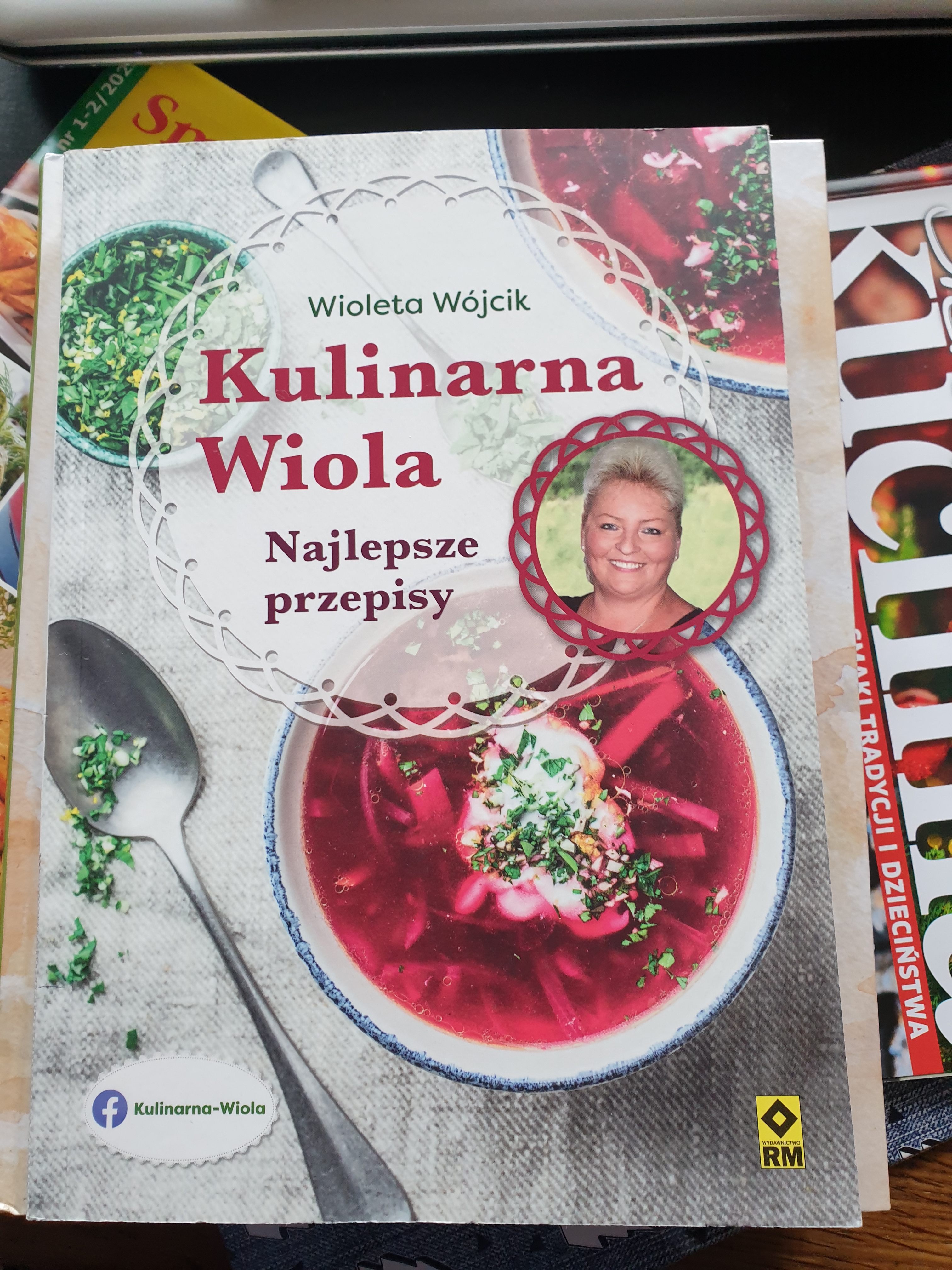
  • I am back from a short trip to Gdańsk on which I bought a couple of Recipe books.
  • One of these was was a book about cakes – ciasta – and small cakes – ciasteczka -(or buns or biscuits).
  • I got a book by the same author on my last trip, which was to Wrocław in February, – Wioleta Wójcik.
  • I am really looking forward to trying some of these out.
  • Whilst in Gdańsk I had a piece of cake called pleśniak – which was super – the name means mildew or mouldy! – there is a recipe for this and I will be trying it out soon.

Gdańskie brukowce

  • Gdańskie brukowce – means cobblestones from Gdańsk.
  • These are a form or pierniki  – honey spice cakes – that I have not come across before.
  • There are soft bits and crunchy bits.
  • They have been baked by the Pellowski bakery, established in 1922, to a secret recipe but the ingredients are stated on the packaging – including:
  • rye flour
  • sugar
  • golden syrup
  • vegetable fats
  • Polish plum jam
  • cocoa
  • spices – (inc – cinnamon and cloves) 
  • lemon juice.

They are rather like piernik – chopped up, mixed with cocoa or chocolate and Polish plum jam – powidło – and coated with a sugar glaze.

If you get the chance to try them do so – they are delicious.

I do not think I can recreate this recipe but  here below are links to my previous piernik recipes.

They were originally baked for the St Dominic’s fair – Jarmark Dominika – which takes place at the end of July and the beginning of August.

Coconut Cake

  • This is a simple recipe inspired by a large cake recipe in ‘All About Cookery New Edition’, by Mrs Beeton published in 1911.
  • Mrs Beeton writes “ … dessicated cocoanut is now sold at a moderate price, and its use saves much trouble and labour.”

  • Coconuts are the edible fruit of Cocos nucifera, – kokos in Polish, and probably originated in the area of Indonesia and Malaya and then spread to India.

  • Marco Polo came across coconuts and they were then called Pharaoh’s nuts as they were found in Egypt.
  • Venetians were trading in coconuts by the 13th Century.
  • William Dampier (1651-1715), a buccaneer and explorer brought coconuts to England though they did not become popular until the early 19th century.
  • *
  • My father was not keen on coconut so this was not a recipe my mother made.
  • I originally made this cake in a round tin but have now also also tried it out in a rectangular tin, which makes it easier to slice and portion out.

INGREDIENTS

150g butter

150g caster sugar

200g plain flour

1½ teaspoons baking powder

75g dessicated coconut

2 eggs

4 to 5 tablespoons of milk

*

2 tablespoons of apricot or strawberry jam

3 tablespoons of dessicated coconut

METHOD

Pre-heat the over to GM4 – 180°C.

Grease and line or use a cake liner in a 20cm high sided cake tin.

Cream the butter and sugar till fluffy.

Add the eggs one at a time and beat again.

Mix the flour, baking powder and coconut together.

Fold this into the mixture.

Add enough milk to make a soft mixture.

Put into the cake tin – flatten the top.

Bake for 40 – 45 minutes.

*

Leave the cake to cool completely on a wire rack.

Take the cake out of the tin.

Mix the jam with ½ a tablespoon of water and heat gently.

Brush the top of the cake with the jam.

Sprinkle the coconut on top of the jam.

*

Alternative size

26 x 20 cm rectangular cake tin.

Line 3 sides with one piece of greaseproof paper.

Bake for 35-40 minutes.

Colclough Stardust & Duchess Bramble Rose tea plates

Chocolate Orange Cake – 2

      • This is a variation on my iced orange yoghurt cake.
      • Yoghurt is used in the cake and the texture is great.
      • The cake is the same but a chocolate icing is used on the top.
      • I learnt a tip, which was to add the orange rind to the sugar for about 30 minutes beforehand- this adds to the flavour.
      • I used a chocolate bar that had some orange flavouring in it already.

      Ingredients

      • 200g plain flour
      • 2 teaspoons of baking powder
      • 200g granulated sugar
      • Zest of 1 large orange
      • 185ml of Greek style yoghurt
      • 3 eggs
      • 120ml sunflower oil
      • Large pinch of salt

      Method

      • Add the zest to the sugar and leave for about 30 minutes.
      • Pre-heat the oven to GM4 – 180ºC.
      • Use a loaf liner to line a 2 lb loaf tin.
      • Mix the flour, baking powder and salt together.
      • Add the yoghurt and eggs to the sugar mixture.
      • Gradually add the flour mixture and mix well.
      • Add the oil and mix well again.
      • Pour the batter into the loaf tin and smooth the top.
      • Bake for around 40 to 45 minutes.
      • Check a little earlier and cover with greaseproof  paper if it is starting to burn.
      • Leave to cool in the tin.

    Chocolate Orange Icing – Ingredients

  • 50g dark chocolate or dark chocolate with orange flavouring
  • Grated rind of 1 orange
  • 25g butter
  • 2 tablespoons of icing sugar

Method

  • Put the chocolate into a bowl over a pan of hot water.
  • Add the orange rind and butter.
  • Stir whilst the chocolate melts.
  • Add the icing sugar until you have a thick icing.
  • Use this to cover the top of the cake and let it dripple down the sides
  • Served on Royal Doulton  Counterpoint Tea Plates

Brazilian “Tea” Bread

  • I got this recipe recently from one of my friends who I have known for many years.
  • It is a recipe her mother made often.
  • Unlike most teas breads this is made with coffee!
  • It tastes good on its own or buttered.
  • It keeps moist for several days – that is if you have any left.
  • *
  • See if anyone can guess the unusual ingredient!

Ingredients

  • 500g mixed fruit (good to have peel in the mix)
  • 350ml strong black coffee
  • *
  • 250g plain flour
  • 2 teaspoons baking powder
  • 125g soft brown sugar
  • ½ teaspoon mixed spice
  • 1 beaten egg.

Method

  • Soak the mixed fruit in the coffee overnight.
  • *
  • Pre-heat the oven to GM3 – 160°C.
  • Mix all the dry ingredients together.
  • Add the beaten egg.
  • Stir in the soaked fruit.
  • Mix well together.
  • Bake for around 1½ hours

Royal Doulton Tapestry Tea Plate

Yorkshire Cake

  • Nearly every Yorkshire cookery book has a version of this light fruit cake.
  • It is usually called ‘cut & come again cake’.
  • It originated as a cake using yeast but by the mid 1800s with the invention of baking powder the recipes became more like this one.
  • In Poland it would be called a keks.
  • Rather than bake it in a loaf tin or a square tin I have found that a lower rectangular tin is good – rather like a placek.
  • It is very easy to make as there is just rubbing in of butter into flour and then the other ingredients are stirred in.
  • The recipe uses brown sugar – not readily available in Poland – but granulated sugar should work as well.

INGREDIENTS

  • 275g plain flour
  • 2 ½ teaspoons baking powder
  • ¼ teaspoon of ground cinnamon
  • 175g butter
  • 175g soft brown sugar
  • 120g currants
  • 175g sultanas
  • 50g raisins
  • 50g chopped mixed peel
  • 4 beaten eggs
  • 3 tablespoons of brandy (or milk – not tested)

METHOD

  • Preheat the oven to GM4 – 180°.
  • Grease and line three sides of a 32×22 cm baking tin using 1 long piece of baking paper.
  • Mix the flour with the baking powder.
  • Rub in the butter until it is like breadcrumbs.
  • Stir in the cinnamon.
  • In another bowl mix together the dried fruits and sugar.
  • Mix the flour mixture together with with fruit and sugar mixture.
  • Stir in the beaten eggs.
  • Mix in the brandy to make a soft consistency.
  • Spoon the cake mixture into the tin and flatten the top.
  • Bake for around 45 minutes – cover the top if it starts to burn.
  • Leave to cool in the tin and then on a wire rack.