Brazilian “Tea” Bread

  • I got this recipe recently from one of my friends who I have known for many years.
  • It is a recipe her mother made often.
  • Unlike most teas breads this is made with coffee!
  • It tastes good on its own or buttered.
  • It keeps moist for several days – that is if you have any left.
  • *
  • See if anyone can guess the unusual ingredient!

Ingredients

  • 500g mixed fruit (good to have peel in the mix)
  • 350ml strong black coffee
  • *
  • 250g plain flour
  • 2 teaspoons baking powder
  • 125g soft brown sugar
  • ½ teaspoon mixed spice
  • 1 beaten egg.

Method

  • Soak the mixed fruit in the coffee overnight.
  • *
  • Pre-heat the oven to GM3 – 160°C.
  • Mix all the dry ingredients together.
  • Add the beaten egg.
  • Stir in the soaked fruit.
  • Mix well together.
  • Bake for around 1½ hours

Royal Doulton Tapestry Tea Plate

Ciasteczka

  • 4 July celebration – I have just done 8 years of Blogging!
  • My first two posts were My Polish Background and then Polish Cakes.
  • I have still got lots more recipes to write about as I find more books and magazines, and friends and family give me some of their recipes.
  • Today this is post number 600.
  • It is a simple recipe, which I would have made when young.
  • Ciasteczka is the Polish for small cakes or biscuits,
  • These are soft and crumbly.
  • The secret is not to over work the soft dough.

Ingredients

225g plain flour

2 & ½ teaspoons of baking powder

125g butter

¼ teaspoon salt

80g granulated sugar

80g currants

1 egg – beaten

Milk to mix – around 5 to 6 tablespoons

Method

Pre-heat the oven to GM7 – 220°C.

Grease  two baking trays.

Rub the butter into the flour.

Add the currants, sugar and salt.

Make a well in the centre and add the beaten egg

Mix in the milk bit by bit to make a soft dough – you might not need it all.

Press out the dough on a floured board to about 1cm thickness.

Use a 7cm cutter to cut out circles.

Gather up the scraps together and cut more circles.

This should make around 12 circles.

Bake for 10 -14 minutes till lightly golden on top.

Remove from the tray and cool on a cake rack.

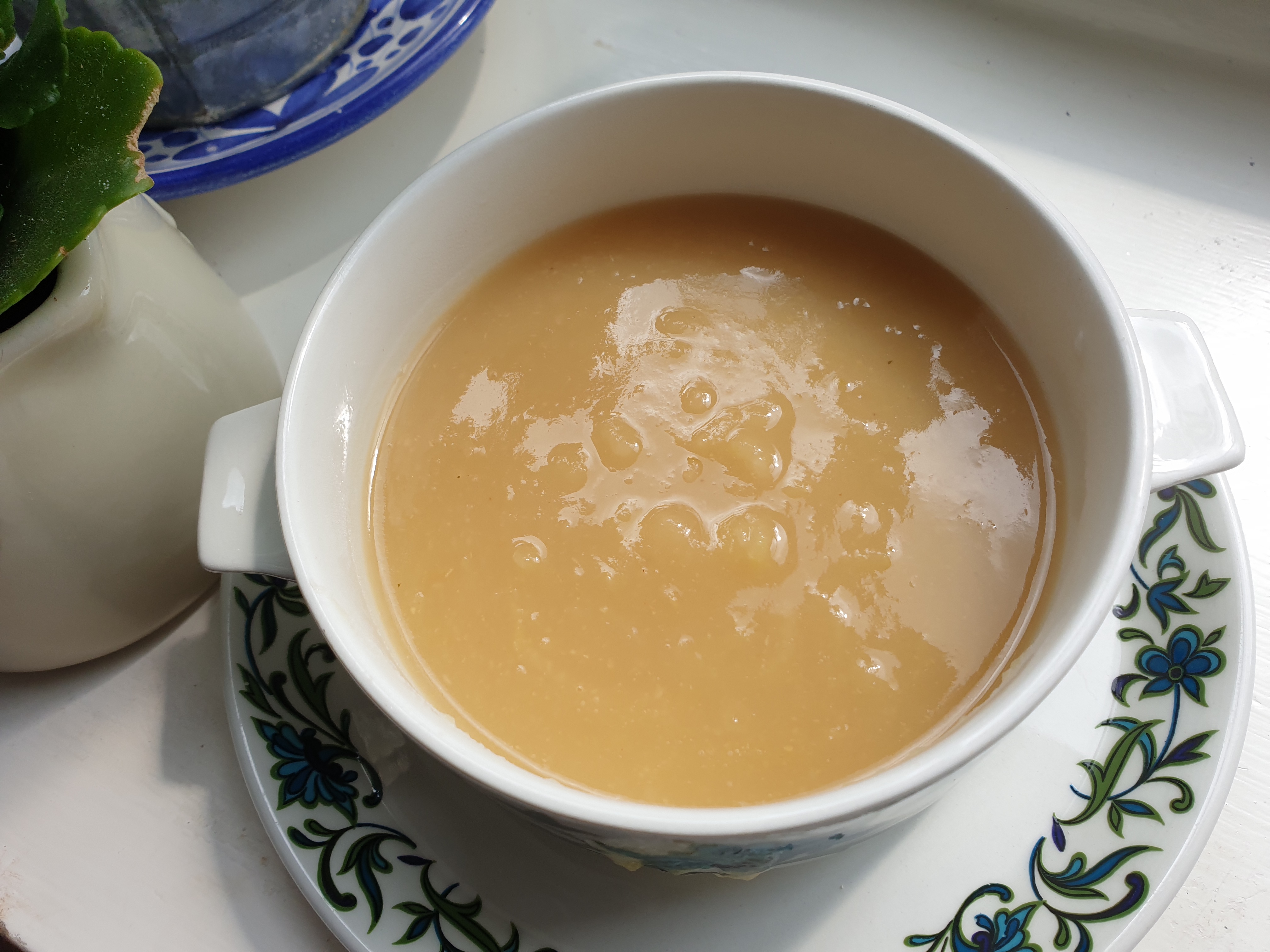
Cauliflower & White Bean Soup

  • This is a lovely “creamy” soup

Ingredients

  • 1 small cauliflower – cut into chunks – including the stalk
  • 1 tin of cannellini beans (haricot beans should be okay) – drained
  • 1 tablespoon of olive oil
  • 1 litre of chicken stock (can be from a cube, powder or concentrate)
  • Salt & pepper to taste
  • *
  • Optional

  • Sprinkling of finely chopped rosemary or chives
  • Drizzle of extra virgin olive oil for each serving

Method

  • Heat the olive oil gently and add the cauliflower.
  • Cook gently for around 5 minutes.
  • Add the stock and simmer gently for around 10 minutes until the cauliflower is soft.
  • Add half of the beans and heat together for around 5 minutes.
  • Remove from the heat and purée with a stick blender.
  • Add the remaining beans and a little water if the soup is too thick.
  • Reheat gently and simmer for a few minutes.
  • Season to taste.
  • *
  • Sprinkle each portion with rosemary or chives.
  • Drizzle with extra virgin olive.

Served in a Bavarian china dish

Butternut Squash Soup

  • I was looking for a recipe for pumpkin – dynia in Polish – soup and found one in what I call my Polish Classic “bible”.
  • I will try this out in the autumn but as there are lots of butternut squashes – dynia piżmowa  or dynia orzechowa– in Polish – in the shops at the moment I decided to try this instead.
  • I have never really cooked with butternut squash before and my main piece of advice is to be very careful peeling it.
  • I found it is best to slice off the top and bottom with a sharp knife or cleaver.
  • I found it easier to then cut it into two horizontally  and have the cut surface on a board.
  • Then use a vegetable peeler to remove the skin.
  • The soup has a mild sweet taste.

Ingredients

  • 1 butternut squash
  • 2 onions
  • 2 red or orange peppers
  • 1 ½ litres of vegetable stock
  • Around 3 tablespoons of butter
  • 125ml soured cream
  • Salt & pepper & sugar to taste.
  • *
  • Extra teaspoons of soured cream to serve

Method

  • Peel the butternut squash,
  • Chop the squash into chunks.
  • Chop the onions into small pieces.
  • Chop up the peppers and remove the seeds.
  • Gently fry the onions in the butter till golden,
  • Add the peppers and fry for a minute or two.
  • Add the vegetable stock and simmer for around 10 minutes.
  • Add the butternut squash and simmer for another 10 minutes or so.
  • Use a stick blender to purée the soup.
  • Season to taste.
  • Add the soured cream and stir before serving.
  • *
  • Add an extra teaspoon of soured cream to each serving if you want,

Meakin – Spanish Garden soup dish.

Yorkshire Cake

  • Nearly every Yorkshire cookery book has a version of this light fruit cake.
  • It is usually called ‘cut & come again cake’.
  • It originated as a cake using yeast but by the mid 1800s with the invention of baking powder the recipes became more like this one.
  • In Poland it would be called a keks.
  • Rather than bake it in a loaf tin or a square tin I have found that a lower rectangular tin is good – rather like a placek.
  • It is very easy to make as there is just rubbing in of butter into flour and then the other ingredients are stirred in.
  • The recipe uses brown sugar – not readily available in Poland – but granulated sugar should work as well.

INGREDIENTS

  • 275g plain flour
  • 2 ½ teaspoons baking powder
  • ¼ teaspoon of ground cinnamon
  • 175g butter
  • 175g soft brown sugar
  • 120g currants
  • 175g sultanas
  • 50g raisins
  • 50g chopped mixed peel
  • 4 beaten eggs
  • 3 tablespoons of brandy (or milk – not tested)

METHOD

  • Preheat the oven to GM4 – 180°.
  • Grease and line three sides of a 32×22 cm baking tin using 1 long piece of baking paper.
  • Mix the flour with the baking powder.
  • Rub in the butter until it is like breadcrumbs.
  • Stir in the cinnamon.
  • In another bowl mix together the dried fruits and sugar.
  • Mix the flour mixture together with with fruit and sugar mixture.
  • Stir in the beaten eggs.
  • Mix in the brandy to make a soft consistency.
  • Spoon the cake mixture into the tin and flatten the top.
  • Bake for around 45 minutes – cover the top if it starts to burn.
  • Leave to cool in the tin and then on a wire rack.


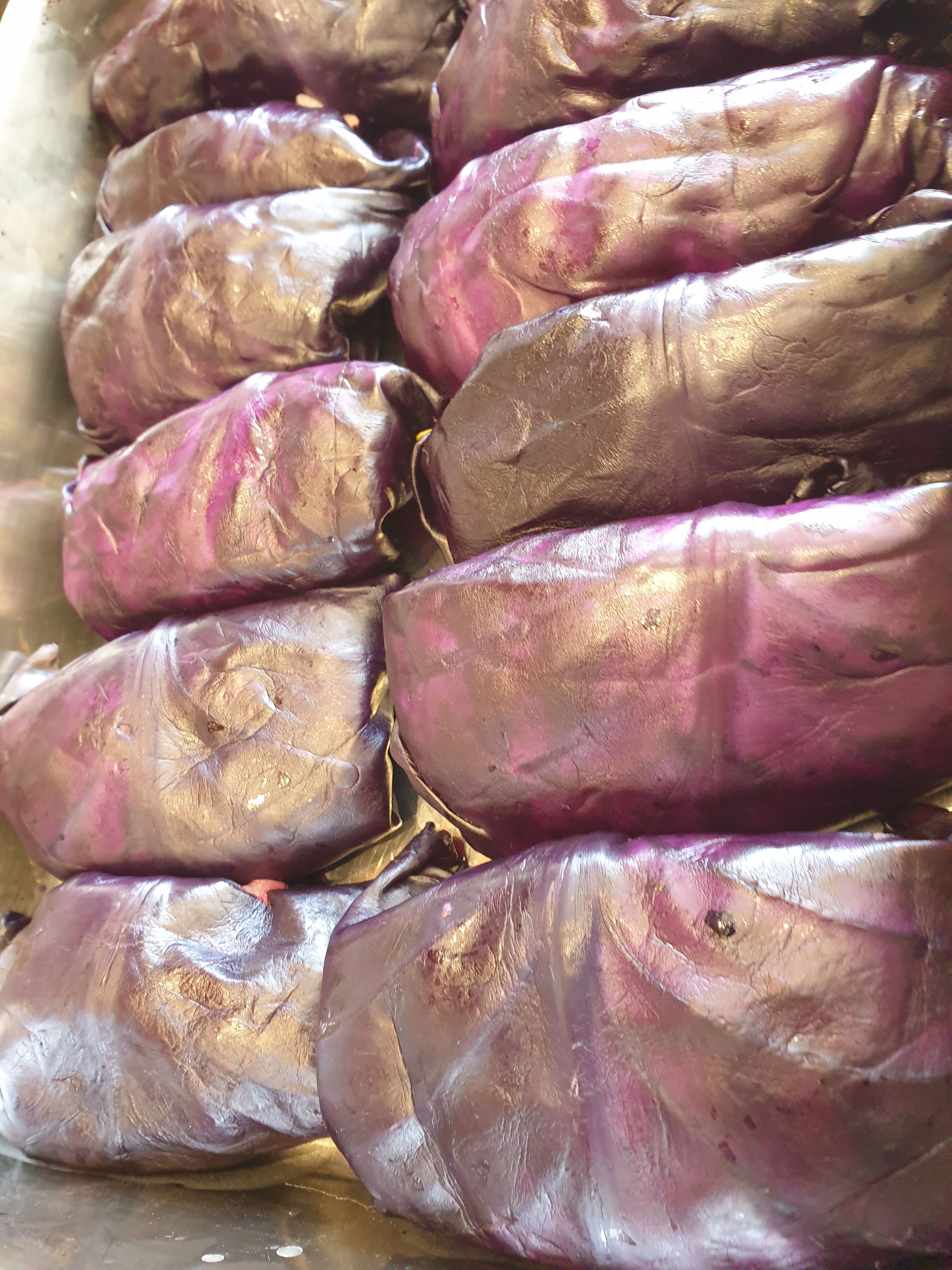
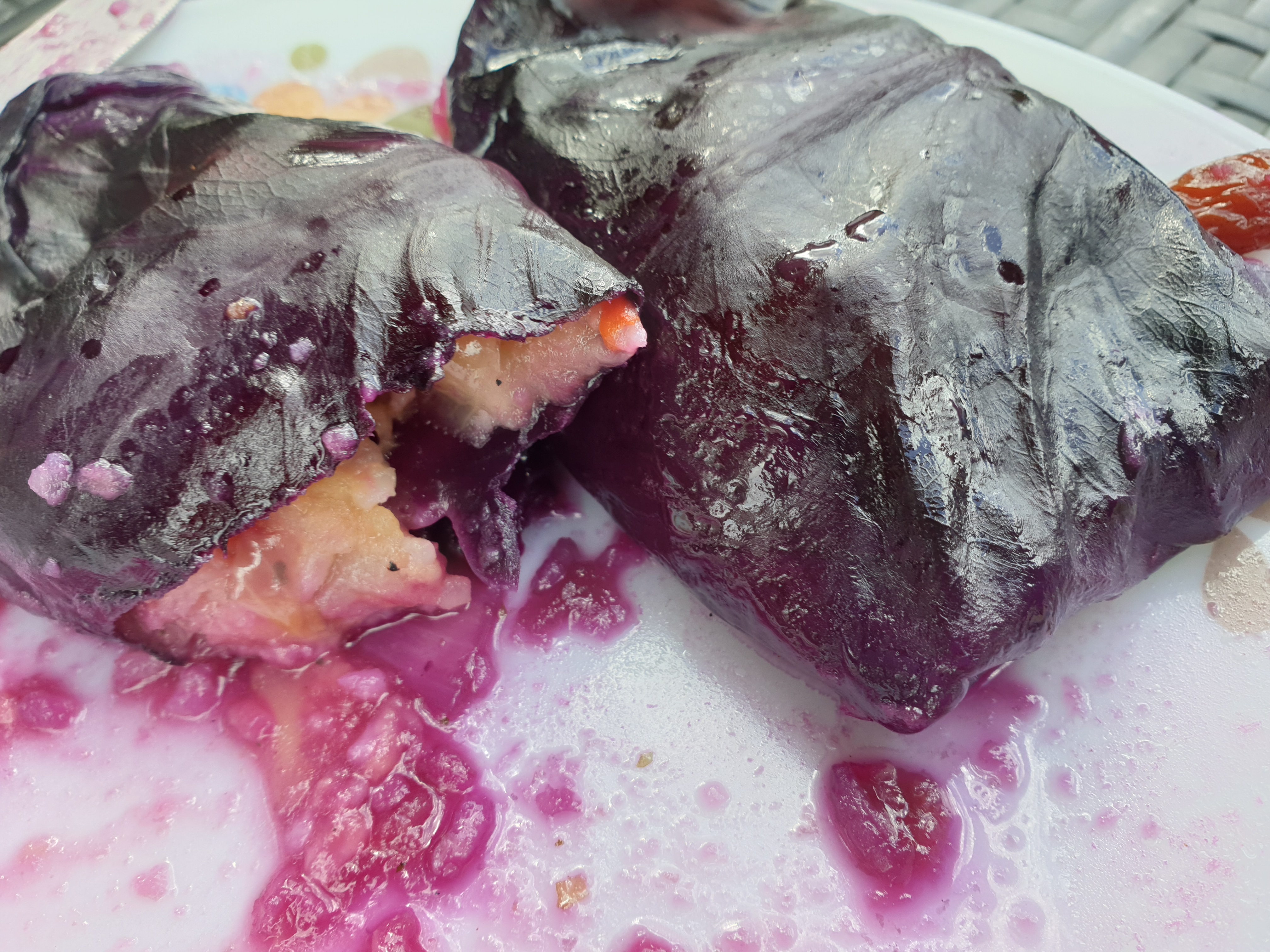
Lazy Goląbki – 2

  • I love goląbki – but must admit they are time consuming to make.
  • I came across this idea of using all the ingredients and making them into large kotlety( meatballs) cooking them in stock and then adding a tomato sauce.
  • They are called goląbki leniwe – lazy goląbki.
  • I made them with steamed cabbage as in  lazy goląbki – 1. 
  • Now I have  made kotlety with shredded fresh cabbage .
  • Here cooked rice is used as well.
  • No bread is added but semolina is used to help bind the ingredients.
  •  
  • This time I made them with fresh cabbage.

Ingredients

  • 500g minced beef
  • 100 – 150g boiled rice
  • ½  head of a small cabbage or a whole sweetheart cabbage
  • 2 egg – beaten
  • 1 teaspoons of salt
  • Ground black pepper
  • *
  • Semolina
  • Sunflower oil for lightly frying.
  • *
  • 750 ml vegetable stock
  • Several tablespoons of tomato purée 
  • *
  • Soured cream – optional

Method

  • Shred the cabbage and then chop into small pieces..
  • Pre-heat the oven to GM3 – 160°C
  • Mix the cabbage, meat and rice together until well mixed.
  • Add the beaten eggs.
  • Add the salt and pepper.
  • Mix everything together.
  • Add a little semolina if needed.
  • Using your hands make large oval shaped balls.
  • Roll then gently in the semolina.
  • *
  • Fry lightly on both sides.
  • Place tightly packed in a large roasting tin.
  • *
  • Mix the vegetable stock and tomato purée and pour over the goląbki.
  • Cover the dish with a sheet of baking foil.
  • Cook for around 2 hours.
  • *
  • Stir some soured cream into the sauce and serve.
  • *
  • TIP
  • I think it is best to make this the day before and then make up more vegetable stock and and tomato purée.
  • Pour this over the goląbki and heat again for at least an hour.
  • Add soured cream to the sauce and serve.
  • Option – not tested.

  • Add some grated cabbage to the mixture.

VERDICT

  • All my testers like the fresh cabbage version best.
  • These are meant to be lazy but they still required a lot of work.
  • Mixing the ingredients together took time.
  • I would find it easier to make my kotlety with cabbage  or even with sauerkraut and make them in tomato sauce and serve them with boiled rice.

Another Carrot Soup

  • This is a French recipe known as Potage à la Cressy because the best carrots are said to be grown in France in the area of Cressy.
  • There are several versions of this soup with potatoes being added in some.

Ingredients

  • 8 medium/large carrots
  • 1 head of celery
  • 2 onions
  • 2 tablespoons of butter
  • 100g boiled ham
  • 4 grains of allspice
  • 1.5 litres of vegetable stock
  • Salt & pepper to taste 
  • Sugar – optional
  • *
  • A few chopped celery, lovage leaves or chives to garnish.

Method

  • Chop the onions into small pieces.
  • Gently fry the onions in the butter until golden.
  • Chop the celery stems into small pieces and add these to the onions.
  • Peel and chop the carrots into small circles.
  • Chop the celery into small pieces.
  • Chop the boiled ham into small pieces.
  • Place then all into a large saucepan with the stock.
  • Add the all spice.
  • Bring to the boil and then reduce the heat and leave it all to simmer.
  • Place the lid on the saucepan and let the soup cook for until the carrots and celery are soft.
  • This may take over an hour.
  • Use a stick blender to purée the soup.
  • Season to taste.
  • Add a little sugar – optional.
  • *
  • Garnish with chopped leaves if available.
  • Royal Doulton Burgundy soup plates.

Lazy Goląbki – 1

  • I love goląbki – but must admit they are time consuming to make.
  • I came across this idea of using all the ingredients and making them into large kotlety( meatballs) cooking them in stock and then adding a tomato sauce.
  • They are called goląbki leniwe – lazy goląbki.
  • Now I have  made kotlety with shredded fresh cabbage and with cooked cabbage before.
  • Here cooked rice is used as well.
  • No bread is added but semolina is used to help bind the ingredients.
  • I decided to make these with steamed cabbage,
  • I will try fresh cabbage next time.

Ingredients

  • 500g minced beef
  • 100 – 150g boiled rice
  • /½  head of a medium cabbage or a whole sweetheart cabbage
  • 1 egg – beaten
  • 1 teaspoons of salt
  • Ground black pepper
  • *
  • Semolina
  • Sunflower oil for lightly frying.
  • *
  • 750ml – 1 litre vegetable stock
  • Several tablespoons of tomato purée 
  • *
  • Soured cream – optional

Method

  • Shred the cabbage and then steam it.
  • Dry the cooked cabbage and chop into small pieces.
  • Pre-heat the oven to GM3 – 160°C
  • Mix the cabbage, meat and rice together until well mixed.
  • Add the beaten egg.
  • Add the salt and pepper.
  • Mix everything together.
  • Add a little semolina if needed.
  • Using your hands make large oval shaped balls.
  • Roll then gently in the semolina.
  • *
  • Fry lightly on both sides.
  • Place tightly packed in a large roasting tin.
  • *
  • Mix the vegetable stock and tomato purée and pour over the goląbki.
  • Cover the dish with a sheet of baking foil.
  • Cook for around 2 hours.
  • *
  • Either stir some soured cream into the sauce and serve
  • Or
  • Serve with a dollop of soured cream at the side.

Pork Loin with Apricot Sauce

  • After making this dish with gammon I thought I would try it with pork loin.
  • This was voted delicious too!
  • INGREDIENTS
  • Pork loin joint – 1kg or more
  • Tin of apricots in syrup
  • *
  • 1 tablespoon of potato or corn flour – optional
  • Sugar – optional
  • METHOD
  • Pre-heat the oven to GM5 – 190° C.
  • This is best cooked in an enamelled tin with a lid.
  • Empty the apricots and the syrup into the base of the baking tin.
  • Place pork loin joint on top.
  • Place the lid over the tin.
  • Place in the oven and cook for the time specified for that weight of meat.
  • *
  • Just before the cooking time is up seperate the apricots and the meat.
  • Put the meat back into the oven with the lid on the tin.
  • Put the apricots into a small saucepan and heat up a little whilst stirring.
  • The apricots should have become a thick pulp with just a few large pieces.
  • Though this will depend on the size of the joint.
  • *
  • Optional
  • Mix the potato flour or cornflour with a little water.
  • Stir this into the apricots and heat gently with stirring to thicken the sauce.
  • Sweeten the sauce with sugar to taste.
  • *
  • Slice up the joint and serve with the sauce.

Cake with Rhubarb

  • This is the same recipe as Cake with Sour Fruits – 1.
  • I got this recipe from my Polish friend in Leeds.
  • It is a batter style cake but made with melted butter rather than oil, which I have used before in cakes such as
  • Victorian Apple Cake  or 
  • Cake with Peaches  
  • The original recipe was for rhubarb –   rabarbar  – in Polish and this is what I used now it is in season.
  • You need to use quite a lot of rhubarb as the cake rises and the fruit moves apart.
  • *
  • If the rhubarb is too sour you can dust the cake with icing sugar before serving.

INGREDIENTS

  • 250g butter
  • 200g granulated sugar
  • 60ml cold water
  • 3 eggs
  • 340g plain flour
  • 2 teaspoons of baking powder 
  • *
  • 450 – 500g rhubarb – cut into small pieces.

METHOD

  • Grease and line 3 sides of a 32x22cm baking tin.
  • Pre-heat the oven toGM4 – 180°C
  • *
  • Mix the baking powder with the flour.
  • Melt the butter & sugar in a saucepan – do not boil.
  • Add the water and leave to cool.
  • Beat the eggs into the flour.
  • Add the butter mixture and mix well until you have a thick batter.
  • Pour into the tin and level out the batter to all sides.
  • Cover the top with the rhubarb pieces.
  • Bake for 50-55 minutes.
  • Check the cake part is ready with a tester.
  • Leave to cool in the tin.
  • *
  • Optional – dust with icing sugar before serving.

Duchess – Silver Rose Tea Plate