Placek with Dried Fruits

  • Placek is a thin flat cake.
  • Dried fruits are called bakalie in Polish – fruit from the Balkans.
  • If this were a loaf shaped fruit cake it would be called a “keks” – however it works better in this thin version.
  • Dried apricots are used, which is a bit different.
  • The apricots are soaked overnight in brandy – so you have to start the cake the night before.

INGREDIENTS

  • 175 dried apricots – chopped
  • 3 tablespoons of brandy
  • 175g butter
  • 175g granulated sugar
  • 4 eggs beaten
  • 175g plain flour
  • 225g raisins
  • 225g currants
  • 225g cherries*
  • *
  • *Or a mixture of cherries and mixed peel if you are short of cherries

METHOD

  • Put the apricots and brandy in a small bowl.
  • Cover and leave overnight.
  • *
  • Pre the oven to GM3 – 160°C
  • Line 3 sides of a 32 x 22 baking tin.
  • Mix the apricots with the other dried fruit.
  • Cream the sugar and the butter.
  • Add the eggs and beat together.
  • Mix in all the dried fruit.
  • Fold in the flour.
  • Spread the cake mixture into the tin.
  • *
  • Bake for 50  –  60 minutes.

“Pepper Pie”

  • I got this recipe from my sister who lives in Manchester.
  • Her daughter, who visits her, often usually makes this for lunch as it is so easy.
  • It is a tinned tuna & pepper tart, rather like a quiche but without any cheese.
  • They have named it “pepper pie”.

INGREDIENTS

  • Shortcrust pastry
  • 1 tin of tuna drained – forked apart
  • ½ a red pepper chopped
  • 150 ml of Greek style yogurt (like 1 small carton)
  • 1 egg
  • Salt and pepper to taste

METHOD

  • Per-heat the oven to GM 5 GM 190°C.
  • Grease a loose bottom tart tin – 18/19cm in diameter.
  • Roll out the pastry thinly and line the tin.
  • Put the pepper on the base of the tart tin.
  • Add the tinned tuna.
  • Mix the yoghurt and the egg.
  • Pour this over the tuna and pepper.
  • Season to taste.
  • Bake in the oven for around 30 minutes.
  • *
  • Lovely hot or cold.

Option – blanche and dry the pepper first.

Apple Cake

  • It must be said that I think my mama’s recipe for jabłecznik (apple cake) is the best but I keep on trying other recipes just to give them a try.
  • This one is a more sponge like cake and you only need 2 largish baking apples.
  • NOTE – you need more baking powder than usual.

INGREDIENTS

  • 225 flour
  • 3 teaspoons of baking powder
  • 225 granulated sugar
  • 2 eggs
  • ¼ teaspoon vanilla essence
  • 150g butter – melted
  • 2 medium/large cooking apples – peeled and cored
  • ½ teaspoon ground cinnamon
  • *
  • Icing sugar to serve

METHOD

  • Cut the apples into thin slices and mix with the ground cinnamon.
  • Lightly butter a deep 20cm lose-bottomed cake tin.
  • Pre-heat the oven to GM3 160°C.
  • Melt the butter and leave to cool.
  • In a large bowl mix the flour, baking powder, sugar.
  • Lightly beat the eggs and vanilla essence.
  • Add the egg mixture to the flour mixture.
  • Beat in the cooled, melted butter.
  • Spread half the mixture on the base of the tin.
  • Put the apples on top with most in the centre.
  • Put the rest of the cake mixture over the apples making sure the middle is covered as the mixture will spread out when baking.
  • Bake for 55 to 60 minutes.
  • Dust with icing sugar to serve.

Leeks & Apples

  • This recipe comes after a slight error when I was making leek & apple soup for the first time.
  • I left the kitchen whilst cooling the leeks and the apples in the apple juice.
  • These cooked so that most of the liquid evaporated (good that I did not burn the leeks).
  • I knew that I could not rescue the soup at this stage and would have to start again so I could have good instructions.
  • I tasted what I had and it was delicious.
  • It tasted great, hot with hot roast meats and also cold with cold meats and Polish sausage.
  • You could ask your “testers” what this is? – they might reply “rhubarb”!

INGREDIENTS

  • 3 leeks – the white part
  • 2 eating apples – peeled and cored
  • 2 – 3 tablespoons of butter
  • 1 teaspoon of dried marjoram
  • 1 litre of apple juice – this can be from a carton of concentrate
  • Pinch of salt and pepper

METHOD

  • Chop the leeks into circles and then halve these.
  • Melt the butter in a pan and lightly cook the leeks – do not brown.
  • Cube the apples into small pieces and add these to the leeks and cook for a few minutes.
  • Add the marjoram.
  • Add the apple juice and simmer until the leeks are soft and you have evaporated the majority of the liquid.
  • Season with the salt and pepper.
  • *
  • Serve either hot or cold.

Bavarian china

Leek & Apple Soup

  • I saw this recipe in this book and wondered how it would come out.
  • I adapted the recipe slightly including adding extra apples to the base of the soup – not just the serving part.
  • It was delicious – a sweet warm soup – lovely.

INGREDIENTS

  • 3 leeks – the white part
  • 2 eating apples – peeled and cored
  • 2 – 3 tablespoons of butter
  • 1 teaspoon of dried marjoram
  • 1 litre of apple juice – this can be from a carton of concentrate
  • Pinch of salt and pepper
  • *
  • To serve
  • 2 eating apples with red skins – cored and cut into thin slices.
  • 1 tablespoon of pumpkin seeds – toasted (optional)

METHOD

  • Chop the leeks into circles and then halve these.
  • Melt the butter in a pan and lightly cook the leeks – do not brown.
  • Cube the apple into small pieces and add these to the leeks and cook for a few minutes.
  • Add the marjoram.
  • Add the apple juice and simmer for around 15 minutes until the leeks are soft.
  • Season with the salt and pepper.
  • *
  • Toast the pumpkin seeds in a hot frying pan.
  • *
  • Serve with the apple slices on top and then the pumpkin seeds.

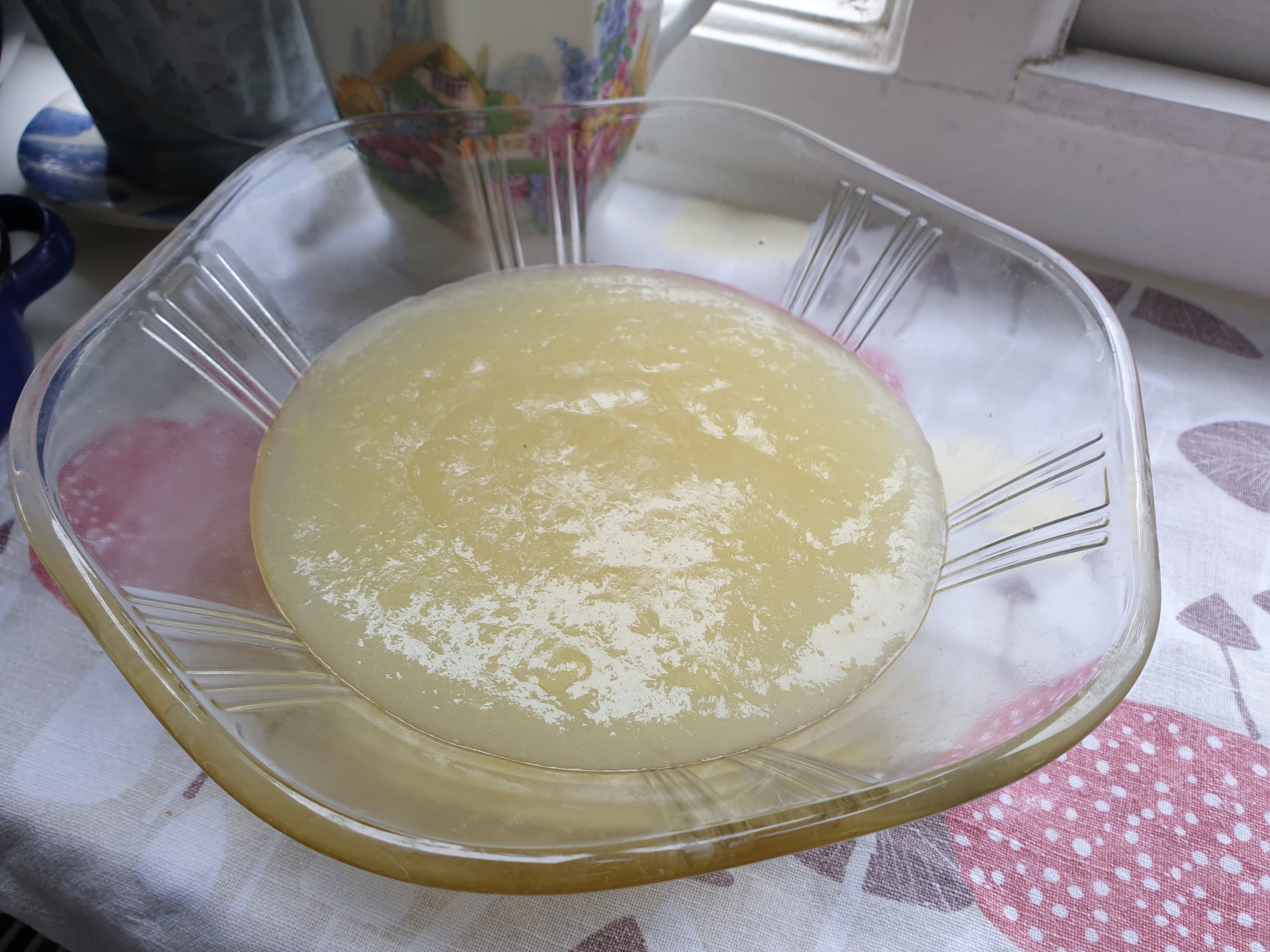
Here in a Meakin vintage serving dish.

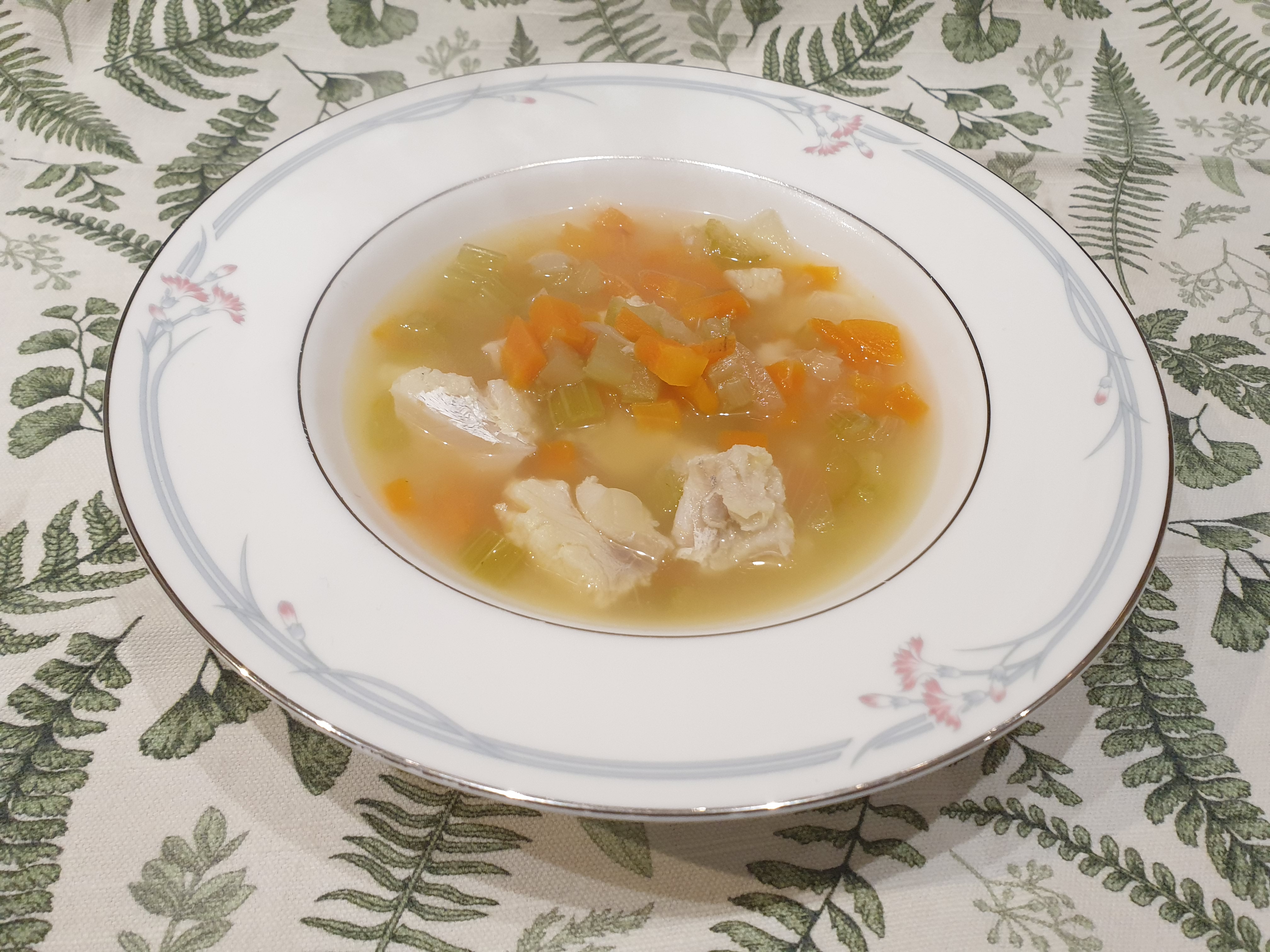
Fish Soup with Leek & Potato

INGREDIENTS

  • 300 – 350g of white fish (cod, haddock or pollock)
  • 1 medium onion
  • 2 leeks – the white part
  • 3 medium potatoes (floury type are best)
  • 2 tablespoons of butter  – to fry the onions
  • 1½ litres of vegetable stock
  • 2 bay leaves
  • 4 grains of allspice
  • 4 grains of black pepper
  • 125ml soured cream
  • Salt & Pepper to taste – if needed.
  • *
  • Large handful of chopped flat leaved parsley to serve.

Method

  • Chop the onion into small pieces.
  • Lightly fry in the butter but do not brown.
  • Chop the leek into small rings and add to the onions and butter.
  • Stir and lightly fry – again do not brown.
  • Add the stock, bay leaves, allspice and black pepper.
  • Bring to the boil and then lower the heat.
  • Start to simmer gently.
  • Chop the potatoes into small pieces and add to the soup.
  • Boil gently for around 15 minutes until the potatoes are nearly cooked.
  • Add the fish and cook for about 10 minutes.
  • Break up the fish into small pieces.
  • Season if needed.
  • Stir in the soured cream.
  • Add chopped parsley leaves to serve.

20240709_143425

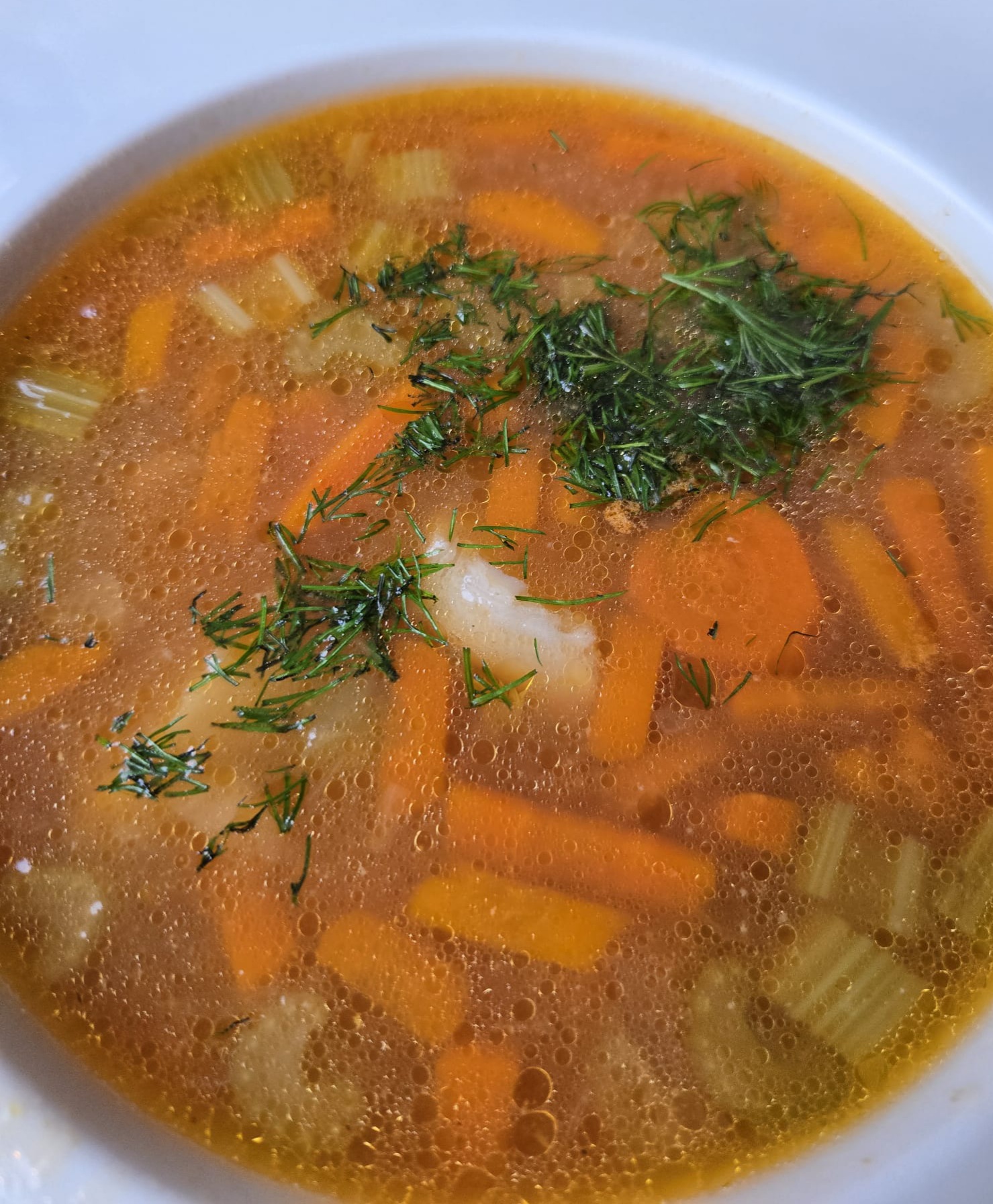
Royal Doulton Burgundy soup plate

One of my testers thought this was the best ever!

White Chocolate Sernik

  • Updated 14 February 2025.
  • This is a baked sernik (cheesecake) that I discovered recently.
  • It is based on one in a Christmas book by Mary Berry.
  • I tried it out with the ingredients adjusted several times.
  • This is my final version, which is slightly different to the one in Mary Berry’s book. 
  • It is very rich and creamy – in many ways like a set sernik.
  • The sernik tends to crack on top – do not worry it does not affect the taste!
  • I used Lindt white chocolate, which is super.
  • (I have read that Milky Bar does not melt as well.)
  • There is no sugar in the cake – the sweetness is from the chocolate – and the biscuits in the base.
  • I found it best to loosen the cake slightly in the tin and then leave it in the tin to cool.
  • I think this sernik is best served chilled.

INGREDIENTS – base

  • 150g of plain chocolate digestive biscuits
  • 40g of butter – plus a little to grease the tin.

METHOD – base

  • Melt the butter gently in a small saucepan.
  • Grease a 20cm round loose bottomed tin with some of the melted butter.
  • Crush the biscuits with a rolling pin.
  • Mix in the crushed biscuits with the melted butter.
  • Put the mixture in the bottom of the tin and flatten out to all the sides.
  • Leave to cool.

INGREDIENTS – sernik

  • 400g of full fat cream cheese or yoghurt cheese.
  • 2 eggs & 1 egg yolk (or 3 eggs)
  • 150 ml of soured cream
  • 300g of white chocolate
  • 2 – 3 drops of vanilla essence 
  • A little cocoa powder for dusting the edges.

METHOD – sernik

  • Pre-heat the oven to GM3 – 160°C.
  • Whisk together the cheese, eggs and yolk and vanilla essence until smooth.
  • Mix in the soured cream and again whisk until smooth.
  • Break the chocolate into a bowl and place over a pan of water.
  • Slowly heat the water and mix the melted chocolate well with a wooden spoon,
  • Take care not to overheat and keep mixing so it is smooth.
  • Allow to cool (this is the hardest part to gauge when to use the chocolate).
  • Slowly stir the cooled, melted chocolate into the cheese mixture and mixture until uniform.
  • Pour the mixture over the dark chocolate base.
  • Flatten the top.
  • Bake for around 50 minutes.
  • When the centre is set – turn off the oven and leave for another 15 minutes with the door slightly open,
  • Using a spatula loosen the sides from the tin.
  • Leave to go cold in the tin before removing.
  • Best kept in the fridge before serving.
  • Dust the edges with cocoa powder using a fine sieve.
  • *
  • NOTE 
  • This is quite rich so maybe do not give huge slices!
  •  

Courgette Fritters & Extras

  • I posted the original courgette fritter recipe in 2017.
  • Although courgette fritters are not from an old Polish recipe they do have some similarity  to Polish potato pancakes and to carrot pancakes.
  • Courgette in Polish is cukiniaso this is another vegetable that owes its name to Italian  – zucchini.
  • I often make variations on this recipe by adding other vegetables such a baby leaf spinach or sweetcorn (also see sweetcorn fritters).
  • Chopped chilli is also a good addition.
  • The amounts of the ingredients are all approximate.

Ingredients

  • 2 to 3 courgettes
  • 1 egg (can be 2 if using more vegetables)
  • 2 -3 tablespoons of soured cream, yoghurt, crème fraise or yoghurt cheese
  • 2 tablespoons of plain flour
  • Grated rind of 1 lemon(optional)
  • Salt
  • Sunflower oil for frying.
  • *
  • Baby leaf spinach, sweetcorn and chilli or any quickly cooked vegetable.
  • Chopped garlic – optional

Method

  • Grate the courgettes using a coarse grater.
  • Sprinkle the courgettes with salt.
  • Place the salted courgettes onto a clean tea towel and place this in a colander for around 30 minutes.
  • Wrap the tea towel up and squeeze out the liquid from the courgettes.
  • Note
  • The green stains on the tea towel will come out in a hot wash but  do not use fabric softener for tea towels used for this and similar purposes.

Place the dried grated courgettes in a bowl and add the grated lemon rind.

Keep them on a heat proof plate  in a low heat oven whilst you make the rest.

  • You can place a sheet of kitchen roll on top of the first layer to stop them sticking.
  • Serve them with grilled meats and salad.

  • Served here with grilled bacon and fried eggs.

Criss-Cross Potatoes

  • Potatoes are popular in Poland however this recipe did not originate there.
  • I went to dinner at one of my friends who lives near Leeds.
  • These potatoes were on the menu.
  • They are a cross between jacket potatoes and roast potatoes.
  • They are quicker and easier to do.
  • The recipe originated from one by Nigella Lawson.

INGREDIENTS

  • 1 to 2 Potatoes per person (depending on the size) (Maris pipers or King Edward are good)
  • Light olive oil
  • Maldon sea salt

METHOD

  • Pre-heat the oven to GM7 – 220°C
  • Cut the potatoes in half lengthwise.
  • Cut the cut surface with diagonal cuts but do not cut all the way through.
  • Rub the skins with the olive oil.
  • Place cut side up on a baking tray.
  • Put some olive oil and salt on the cut surface.
  • Bake for around 45 minutes.
  • The tops should be golden and the potato flesh soft.

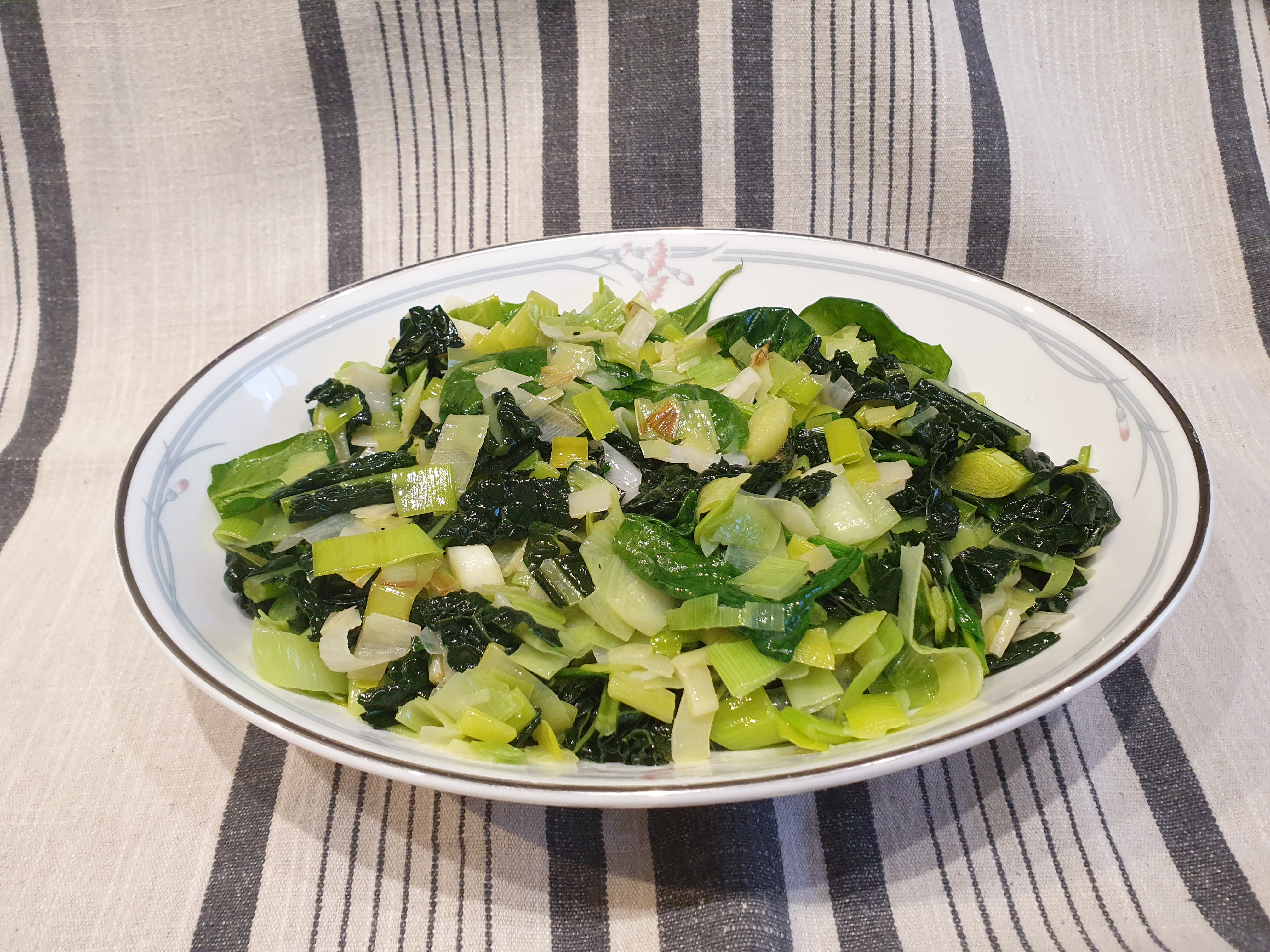
Fish Soup with Cavolo Nero

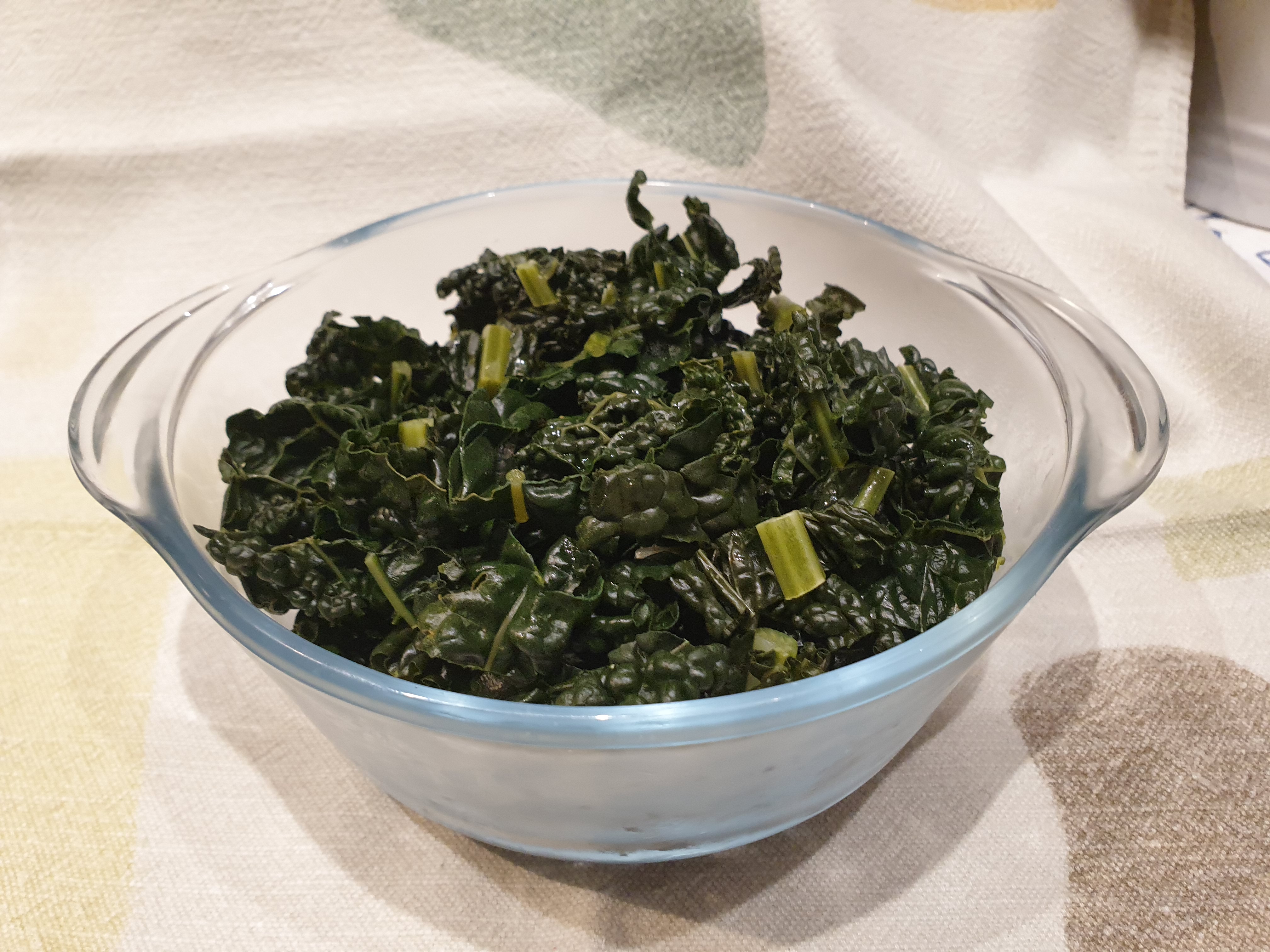
  • Cavolo nero (Italian) translates as black cabbage and in Polish it is kapusta czarna.
  • In England it is often know as Tuscan Kale.
  • I know that Poles love cabbage but – 
  • This is the first time I have used cavolo nero.

INGREDIENTS

  • 300 – 350g white fish (cod, haddock, pollock)
  • 1 large onion – chopped
  • Butter or oil to fry the onion
  • 100 – 150g cavolo nero
  • 4 tablespoons of tomato puree
  • 3 medium potatoes – starchy are best –  chopped into small chunks.
  • 2 bay leaves
  • 5 grains of allspice
  • 5 peppercorn grains
  • 1½ – 2  litres of vegetable stock
  • 125ml of soured cream – or more
  • *
  • Salt & pepper to season if needed
  • Chopped flat leaf parsley to serve

METHOD

  • Fry the onion gently in butter – do not brown.
  • Strip the leaves from the stalks of the cavolo nero.
  • Cut into fine strips.
  • Add the cavolo nero and potatoes to the onions and stir.
  • Add the stock and tomato puree.
  • Add the allspice and peppercorns.
  • Bring to the boil.
  • Then heat gently for around 10 minutes until the potatoes are beginning to soften.
  • Add the fish and cook for another 10 minutes.
  • Season if needed.
  • Stir in the soured cream and serve.

  • Royal Doulton Burgundy soup plate

OPTIONS