I make these with the pastry that I learnt from my mother – a variation on kruche & półkruche, pastry (a richer shortcrust pastry). Using the proportion of 2 parts flour to 1 part butter.
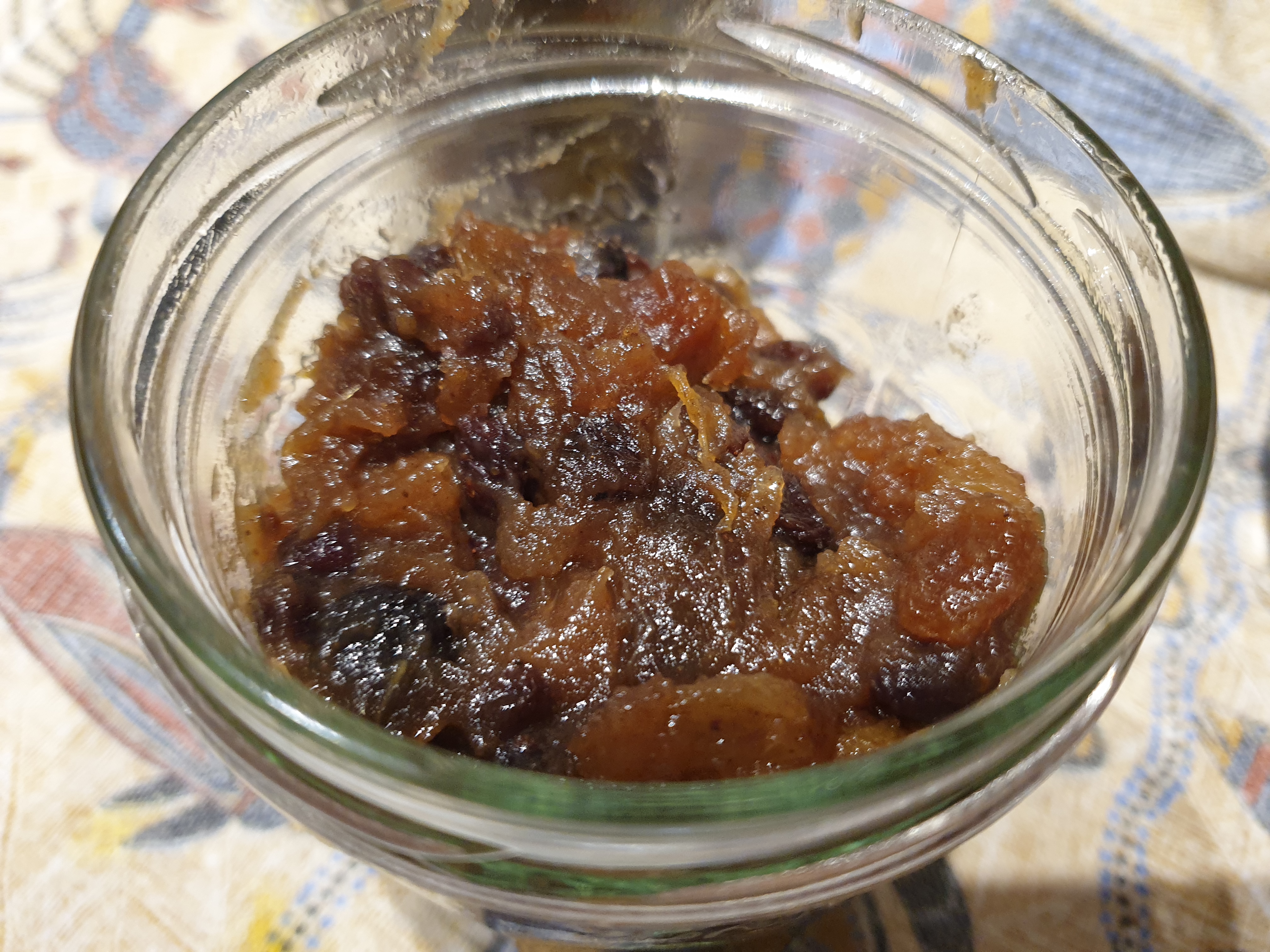
Rather than the classic mincemeat – these were made with Apple mincemeat, which is lighter and more tart.
Ingredients – Pastry
1500g plain flour
75g butter
1-2 tablespoons of icing sugar (optional)
1 egg yolk
Juice of 1 lemon (and maybe 1 tablespoon of cold water)
*
Glaze
Lightly beaten egg white
Caster sugar
Method for pastry
Rub the butter into the flour to make “breadcrumbs”.
Mix in the icing sugar.
First with a knife and then with your fingertips mix in the yolk & lemon juice (and maybe a tablespoon of cold water.)
You are aiming to get a dough which is not wet.
Rest for about 20 minutes.
Pre-heat the oven to GM6 – 200°C
You need to grease the tins well in order to get the pies out successfully.
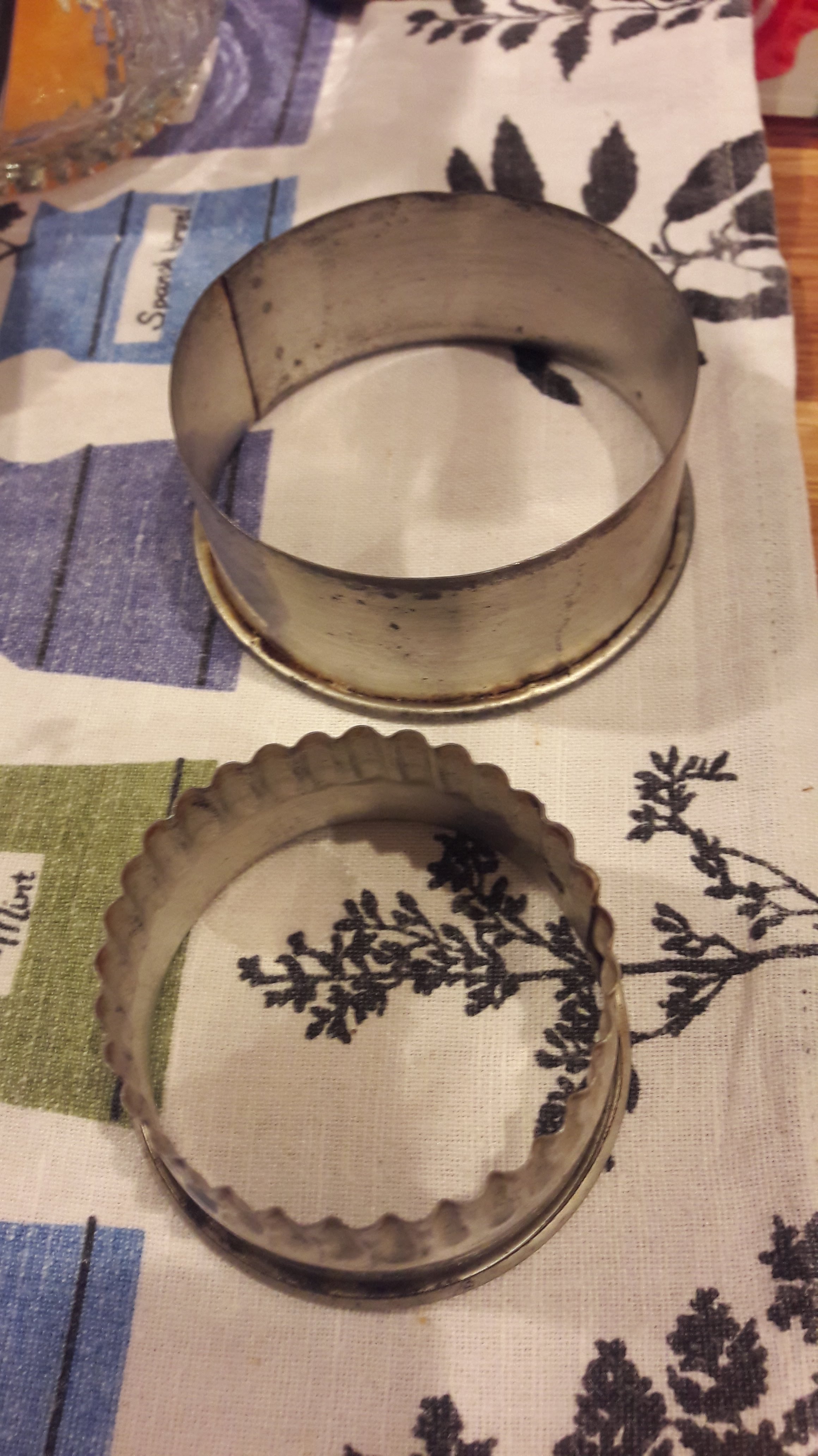
2 sizes of cutters are needed – 1 – 7cm diameter, plain, for the base, 1 – 6cm diameter, crinkle edge for the top.
My tins are anodised aluminium and have a gentle rounded shape, this I think make for the perfect balance between the pastry and the filling.
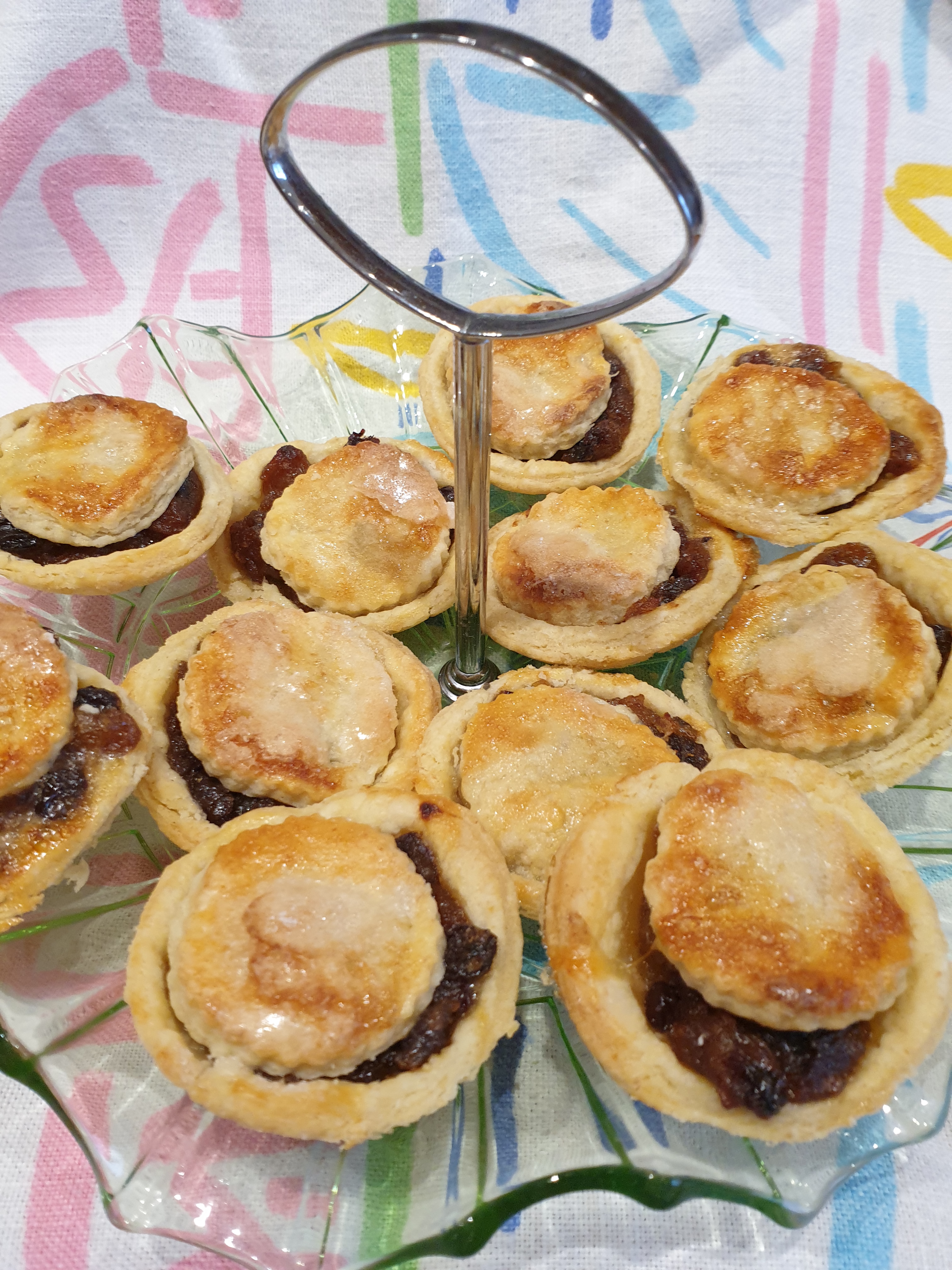
I put “tops” on my mince pies – but not fully covered ones.
*
The tops are brushed with beaten egg white and sprinkled with caster sugar.
Cut out the bases and place them in the tins.
*
Place around a tablespoonful of apple mincemeat on the pastry.
Place the smaller tops on.
Lightly beat the egg white and brush this on the tops
Sprinkle caster sugar over the egg white.
Bake for around 15 minutes – keeping an eye on them – so they do not burn.
Leave to cool slightly in the tins & carefully remove them onto a rack to fully cool.
Fruit mincemeat pies I think of these as very British – but we all love them and they have become part of our Christmas Day and New Year celebrations.
I use my mother’s recipe for the pastry – kruche ciasto – shortcrust pastry.
I like the size and proportions of little mince pies, which seem to just jump of the plate into my hand!
However they are time consuming to make so I have come up with this easier version, which I make after the holidays.
Poles would say the mincemeat is a version of bakalie and this recipe is a placek– flat cake.
Mincemeat
I always make my own mincemeat using the recipe in Delia Smith’s Christmas cookery book but without the chopped almonds (I do not like the crunch of the nuts).
When using the mincemeat I add a little extra brandy or sherry and stir it in.
Ingredients – Pastry
225g plain flour
110g butter
1 tablespoon of granulated sugar
2 egg yolks
5 tablespoons of water
*
1 tablespoon of caster sugar to sprinkle
Method – Pastry
Rub the butter into the flour to make “breadcrumbs”.
Mix in the granulated sugar.
First with a knife and then with your fingertips mix in the yolks and some of the water – until it comes together.
You are aiming to get a dough which is not wet.
Chill the pastry for around 30 minutes.
Pre-heat the oven to GM 5 – 190°C.
Grease and line a shallow tray 21cm x 26cm.
Divide the pastry into two.
Roll out one piece to line the bottom of the tin.
Spread the mincemeat evenly over the pastry – not quite to the edges.
Roll the second piece of pastry out and use to cover the filling.
Press the edges down to seal.
Bake for around 30 minutes until golden.
Remove from the oven and sprinkle with the caster sugar.
Keks is the word for a light fruit cake which is baked in a loaf tin or more often in a long narrow rectangular tin.
I am not sure how or when the word keks came into the Polish language but I am certain it comes from the English word “cakes” – however the word keks is singular in Polish and means cake, and the plural is keksy which is cakes.
Keks are make with bakalie, which is usually translated as dried fruits – however it has more varied fruits than the English version of dried grapes (raisins, sultanas, currants) and mixed peel and can include: apricots, dates, figs, prunes and nuts.
Keks – using fruit mincemeat
At Christmas time I make English fruit mincemeat using the recipe from Delia Smith but without the chopped nuts.
If I have any mincemeat left over after the Christmas period I make a fruit loaf which which is very much a keks.
This is my second version of a keks with mincemeat.
Ingredients
150 butter
150g dark brown sugar
Grated zest of an orange
Grated zest of a lemon
3 eggs
450g jar of mincemeat (exact amount is not critical)
175g mixture of sultanas, raisins, currants & mixed peel
50g of chopped walnuts
225g spelt flour
3 level teaspoons of baking powder
Method
Preheat the oven to GM3 – 160ºC
Prepare the long loaf tin by greasing it and lining the long sides using one piece of greaseproof paper.
Lightly cream the butter and sugar.
Add the grated zest of the lemon and the orange.
Beat in the eggs, one by one.
Stir in the mincemeat, the dried fruits and walnuts until it is an even consistency – a wooden spoon is good for this.
Mix the spelt flour with the baking powder.
Stir in the flour mixture.
Spoon the mixture into the tin and smooth the top.
Bake for around 60 minutes – check after 50 minutes and cover the top if necessary to prevent burning.
Leave to cool in the tin before turning it out.
Served here on hand painted Paragon octagonal tea plates.
This cake recipe is one I came across recently and I like it because it uses tea – a drink well loved in Poland.
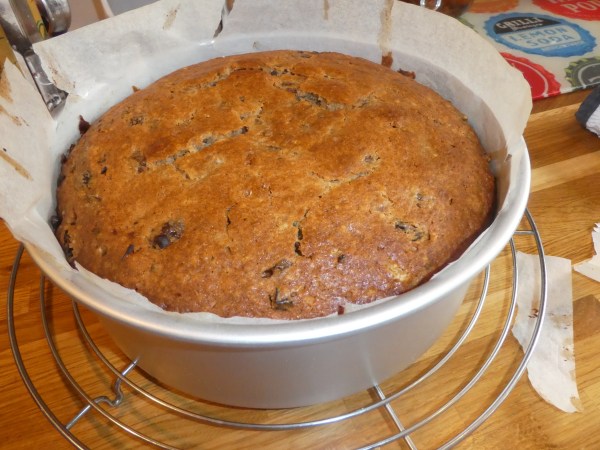
It is similar to a keks which is usually made in a loaf tin but I like to make this one in a round tin.
The recipe uses 8 tea bags and I think Earl Grey, Lady Grey & Empress Grey tea bags are really good. (If you do not have tea bags then use 8 teaspoons of loose tea, but have it in a muslin bag as you do not want the tea leaves in the cake.)
I have used dried fruits consisting just of currants, raisins, sultanas & peel.
You could make it more Polish by using a bakalie mixture which also has chopped dates, figs & prunes, however I would not add nuts – or if you want to use them – add them after the overnight soaking.
Ingredients
500g mixed dried fruit
8 tea bags (Earl Grey, Lady Grey or Empress Grey)
300ml boiling water
500g self-raising flour
325g butter or block margarine
1 teaspoon mixed spice
pinch of salt
5 eggs
Method
Place the teabags in a large bowl and add the boiling water and stir to make a very strong tea.
Add the dried fruit and stir well.
Leave the fruit to soak overnight.
Pre-heat your oven to GM 3 , 150°C.
Grease and line a 23cm loose bottom or a spring-form tin.
Place the flour and butter or margarine into a large bowl and use your finger tips to rub in the fat until the mixture looks like breadcrumbs.
In a bowl mix the sugar, salt & mixed spice thoroughly.
Add the sugar mixture to the flour & butter mixture and stir well.
Add the eggs and the soaked fruit and all the remaining liquid and stir well.
Pour the mixture into the baking tin and level the top.
Bake in the oven for 1 hour 40 minutes.
Check after an hour and place a piece of foil or greaseproof paper on the top if it is beginning to burn.
Check to see if the cake is done with a cake tester or skewer.
Note – This cake is large and you run the risk of having it underdone in the middle – make sure it is cooked in the middle when testing.
Leave to cool in the tin.
Served on tea plates – Greenway Hostess – design by John Russell, 1960 – 1979.
Smaller Sized Cake
This cake is large so I thought I would have a go at making a smaller version.
There are 5 eggs in the original recipe so I decided to do a 3 egg version.
To make it more Polish, I used a bakalie mixture which had chopped dates, figs, peel & prunes as well as the currants, raisins & sultanas.
Ingredients
300g bakalie or dried mixed fruit
5 tea bags (Earl Grey, Lady Grey or Empress Grey)
200ml boiling water
300g self-raising flour
200g butter or block margarine
1 teaspoon mixed spice
pinch of salt
3 eggs
Method
As above – using a 20cm tin.
Bake for around 1 hour 20 minutes – checking after 50 minutes and covering if necessary with a piece of greaseproof paper to stop the top burning.
Note
Maybe because of the different dried fruits I thought it came out drier than the large one & I served it sliced with some butter.
However I have found that if you wrap the cake in aluminium foil for a day or two – it improves – becoming more moist.
Served on tea plates – La prune – by Jet for Ter Steege in The Netherlands.
I came across this recipe for a yeast dough mazurek in this little recipe book and was very intrigued by the method which is quite different from the usual yeast doughs and thought I would give it a go!
It turned out very well.
Ingredients
450g plain flour
100g granulated sugar
200g butter or block margarine
50g fresh yeast or 25g of dried yeast
190 ml of milk
3 eggs
200g of bakalie (dried fruits including currants, raisins, peel, figs, dates, prunes etc)
Method
Warm the milk to hand heat and mix in the yeast.
Melt the butter on a gently heat.
In a bowl whisk the eggs with the sugar until they are light and fluffy.
Add the melted butter.
Add the milk and yeast mixture and mix thoroughly.
Leave in a warm place for 8 hours!
Grease and line a large baking tray 33cm x 24cm
Pre-heat the oven to GM5 – 190°C
Mix the bakalie(dried fruits) with the flour.
Mix the flour and fruits with the yeast mixture.
Place the dough into the tin – spreading it out evenly.
Place the dough onto the tray and put in the oven.
Bake for around 25 – 30 minutes.
Prick the surface of the cake with a fork in several places.
Leave it to cool in the tin for a while and then remove from the tin and place on a wire rack to cool.
Pour the hot chocolate topping over the top.
Topping Ingredients
50g butter
30g of granulated sugar
2 tablespoons of cocoa
2 – 3 tablespoons of water
Note
You could double this amount if you want to it to cover all over and be a bit thicker.
Method
In a small saucepan gently melt the butter and sugar .
Add the cocoa and water and mix it till it is all blended together.
Note
You can decorate the top with dried fruit and nuts – you would really need to do double the topping ingredients for this,
Served on Royal Doulton – Counterpoint – 1973 – 1987






 Journey From A Polish Kitchen