Beans – po staropolsku

Po staropolsku  means in an old Polish style and this often includes using  prunes and honey.

Originally this recipe would have been made with dried beans soaked overnight.

To make life easier I usually use tinned beans such as haricot, cannellini (white kidney beans) or black-eyed beans.


Haricot beans in Polish are called fasola jaś which means Johnny bean.  In the British TV comedy programme Mr Bean, which is very popular in Poland, our hero is called Jaś Fasola.

Ingredients

2 tins of beans (haricot, canellini or similar)

250g smoked  bacon

2 onions

12 soft – no need to soak – prunes

2-3 tablespoons of plain flour

3 tablespoons of honey

Sunflower oil for frying

Ground black pepper

Marjoram or Italian herbs

Quarters of lemon to serve

Method

Put the prunes in a dish and cover them with boiling water and leave for around 15 minutes.

Remove the prunes (save the liquor) and chop them into into quarters.

Pre-heat the oven to GM 3 – 160°C

Chop the bacon into small squares and fry these up in a little sunflower oil.

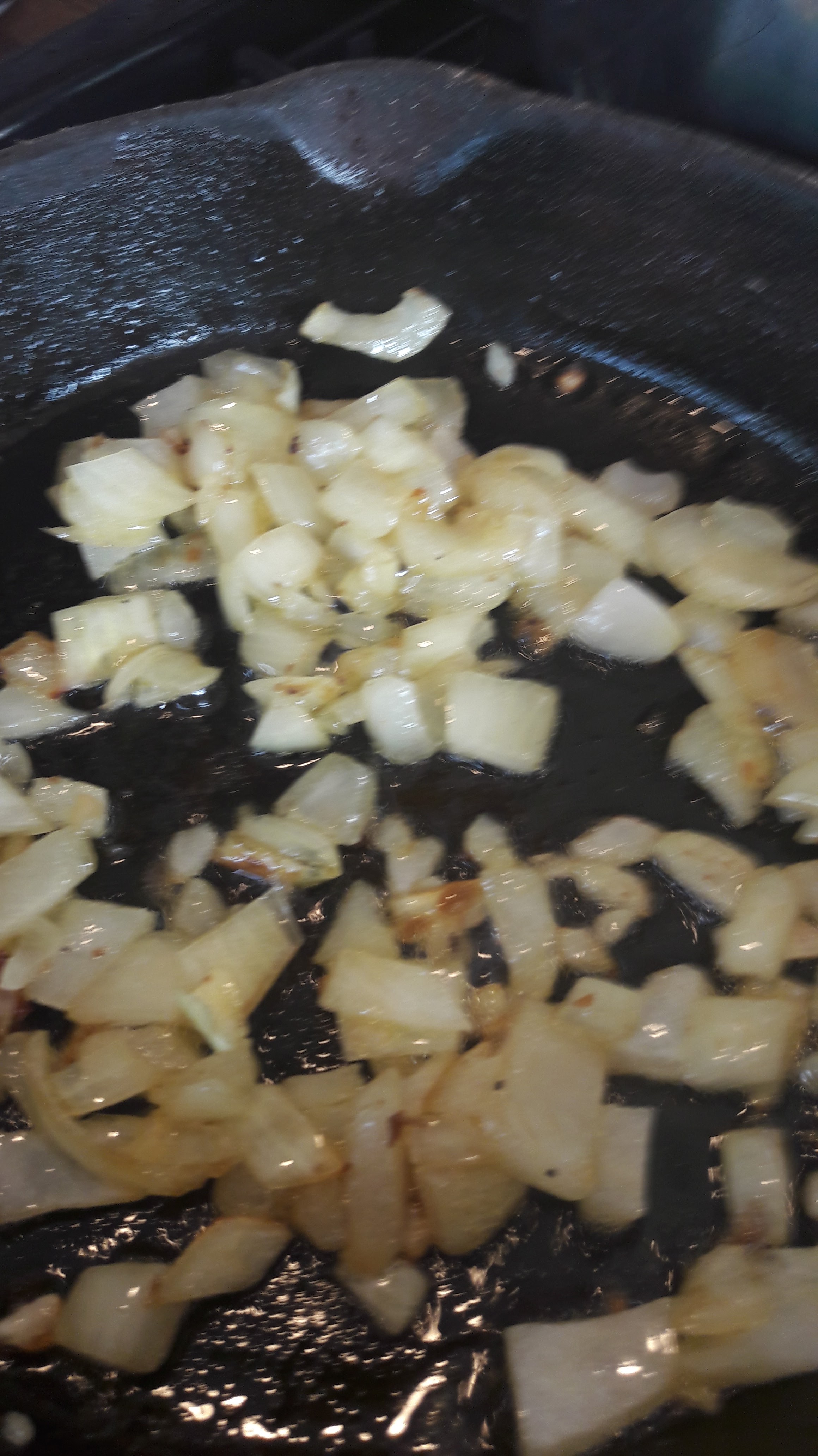
Chop the onions into small pieces and add them to the bacon and fry them all up together.

Lightly brown the flour and add the liquor from the prunes and any more water needed to make a pourable sauce.

Add the fried bacon and onions, honey,  ground pepper and marjoram.

Drain the beans from the cans and put them into an oven proof dish (one that has a lid).

Add the bacon mixture to the beans and mix together.

Put the lid on the dish and cook in the oven for at least 1 hour,  I often cook this for a lot longer as I like the beans quite soft but take care that I top up the liquid if necessary.

Serve each portion with 1 or 2 quarters of lemon – the squeezed juice adds a little zest to beans.

Pasztet – Pâté

Most Polish households have their own recipe for  pasztet.

Pasztet translates as pâté and is made with liver and other meats,  both cooked and uncooked, often with smoked bacon.  Left over cooked meats can be used.

Pasztet is a baked pâté – more a terrine & usually the sort of pâté you slice rather than spread. (A sort of liver based meat loaf).

Many recipes use rabbit but I have not included this as it is not as readily available but  I hope try this in the future.

Pork shoulder is good to use and this can be casseroled first in a chicken or vegetable stock or left over from a roast.

Cooked chicken can be roasted or poached once again in a chicken or vegetable stock.

It is good if you have a mincer to mince the meat, however I do not have one and have used a stick blender to blend the liver and a sharp knife to finely chop the cooked meat and bacon.

Pasztet is often cooked in a  loaf tin – but I thought my quantities looked too large for my tin and have used a rectangular Pyrex dish – 19 x 24 x 8cm.

The cooking times quoted are approximate  – it will depend on the amount of mixture and the depth in the dish.

Recipe 1

Country Style Pasztet

The original recipe used finely chopped shoulder pork – I used minced outdoor breed pork.

I used smoked streaky bacon as Polish bacon tends to be fatter than English bacon and this is the nearest.

The amounts of meats does not have to be exact.

Ingredients

  • 500g minced pork
  • 350 streaky bacon (rind removed)
  • 350 – 450g of chicken livers
  • 3 eggs
  • 3 tablespoons of dried breadcrumbs
  • 2 cloves of garlic  – chopped fine
  • 1 teaspoon of Italian herbs or marjoram
  • Salt – maybe a little but often the bacon is salty enough
  • Pepper
  • Butter for greasing the dish.

Method

  • Pre-heat the oven to GM4 – 180°C.
  • Chop the bacon into small squares.
  • Blend the chicken livers using a small blender or stick blender.

Mix all the ingredients together in a large bowl.

  • Butter the dish well.
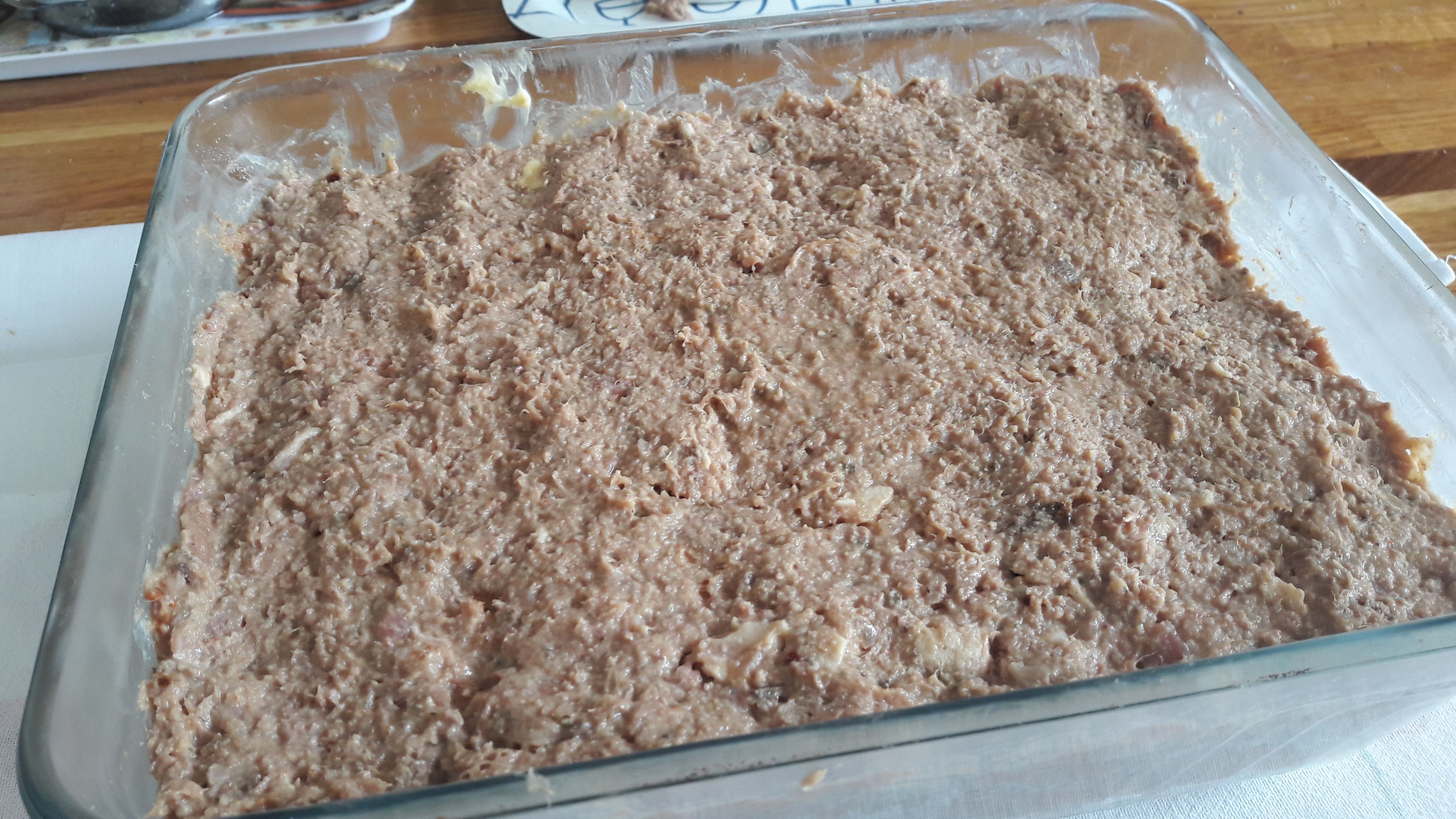
  • Place the mixture into the dish and smooth down the top.
  • Cover the dish with foil.
  • Place the dish in a roasting tin with added water.

Cook for around 70 minutes.

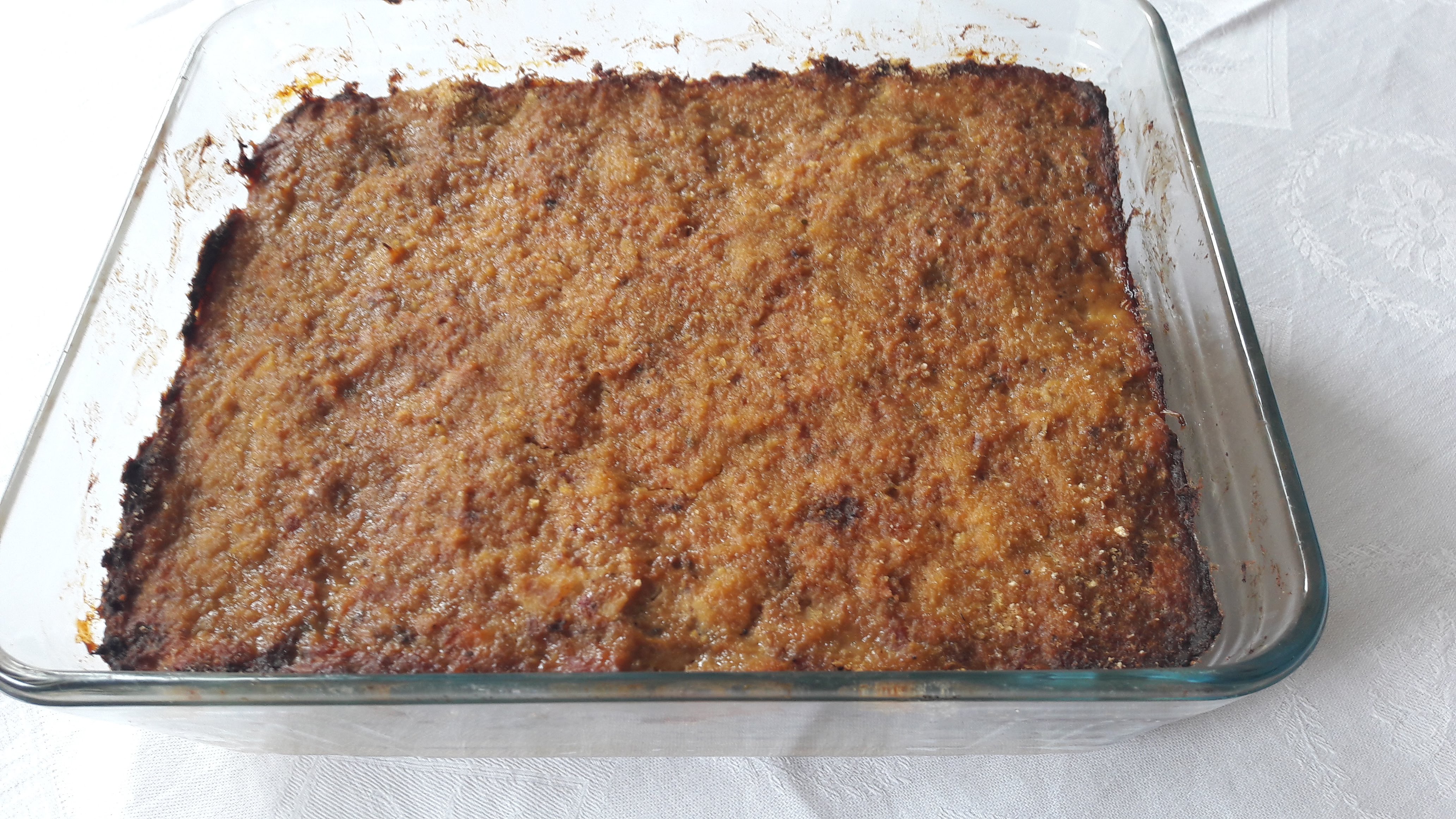
Remove the foil and cook for a further hour without the foil (more if necessary).

Leave to cool completely and then refrigerate for several hours.

Slice to serve.

Decorated here with fresh bay leaves – you can use parsley or similar.

Recipe 2

Chicken Pasztet

Any poultry can be used here – this is good way to use up roast turkey – you can even freeze the cooked turkey meat for a pasztet in the future.

Ingredients

450g chicken livers

3 onions

6 tablespoons of butter

600 – 700g of cooked chicken meat (I used breast meat as that is what I had – but thigh meat  would or a mixture is also good)

Dilute vegetable stock (can be from a cube or powder)

2 eggs

1 teaspoon of Italian herbs or marjoram

1 teaspoon of sweet paprika

Salt and pepper

Method

Slice the onions and fry them till soften in the butter.

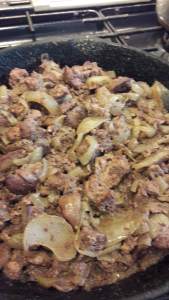
Add the chicken livers and cook them through.
20180602_081248

Leave to cool completely.

Blend the liver and onions – I used a stick blender.

Place the cooked chicken in a pan and cover with dilute vegetable stock and simmer gently , stirring often.

You want the meat to be soft and falling apart and the liquid to have been absorbed.

Leave to cool completely.

Pre-heat the oven to GM4 – 180°C.

Chop the meat as finely as possible.

Mix the meat and liver together.

Add the eggs, Italian herbs & sweet paprika.

Add salt and pepper.

Butter the dish well.

Place the mixture into the dish and smooth down the top.

Cover the dish with foil.

Place the dish in a roasting tin with added water.

Cook for around 1 hour.

Remove the foil and cook for a further hour without the foil (more if necessary).

Leave to cool completely and then refrigerate for several hours.

Slice to serve.

Served on a dish – Made in England by H & K Tunstall

Recipe 3

Pork Pasztet

600 – 700g cooked pork (from a casserole or roast)

Dilute vegetable stock (can be from a cube or powder)

250g smoked bacon (rind removed)

250g pork, veal or chicken livers

1 large onion

4 tablespoons of butter & extra for greasing the dish.

3 eggs

6 tablespoons of dried breadcrumbs & extra for the baking dish and top

250ml of milk

2 teaspoons of Italian herbs or marjoram

1 teaspoon of sweet paprika

Salt & Pepper

Method

Place the cooked pork in a pan and cover with dilute vegetable stock and simmer gently, stirring often.

Chop the bacon into small squares and add to the pork and simmer for another 20 minutes.

You want the meat to be soft and falling apart and the liquid to have been absorbed.

Leave to cool completely.

Chop the meat as finely as possible.

Slice the onion and fry it till softened in the butter.

Add the liver and cook it through.

Sprinkle with salt.

Leave to cool completely.

Blend the liver and onion –  I used a stick blender.

Pre-heat the oven to GM4 – 180°C.

In a large bowl throughly mix all the ingredients together.

Butter the dish and sprinkle with dried breadcrumbs.

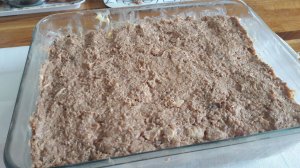
Place the mixture into the dish and smooth the top with a spoon.

Sprinkle the top with breadcrumbs.
Cover the dish with foil.

Place the dish in a roasting tin with added water.

Cook for around 80 minutes.

Remove the foil and cook for a further hour without the foil (more if necessary).
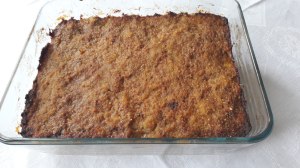
Leave to cool completely and then refrigerate for several hours.

Slice to serve.

Served on a dish by Portmeirion – Dawn Chorus – designed by Sophie Conran in the 21st century.

Podpłomyczki – Polish Unleavened Bread

This is a very old recipe for an unleavened, flat bread  – that is one made without yeast.

In Polish, bread has to contain some rye flour, so these are not called bread as  they are made from wheat flour.

Podpłomyczki – płomyczek means flame  and pod means under – these would have originally been baked on stones placed on a camp fire.

The most original recipes are made with just flour, water and salt* and are cooked on a cast iron griddle – these I think are delicious.

I think podpłomyczki are cousins of  the  rotlis from Gujarat that my friend taught me how to make!

  • As well as this recipe I tried out two other versions.
  • The first had an egg added to the mixture – I do not think it was any better.
  • The second used eggs and milk rather than water and were made slightly thicker and one suggestion was to bake them in the oven.
  • I tried baking in the oven,  on a griddle, both thick and thin.  I thought they were all horrible!
  • So I am only writing up this one recipe which was really good.

Ingredients

  • 250g plain flour
  • 200ml water
  • 1/2 teaspoon of salt.

Method

  • Mix the flour and the salt.
  • Add the water and mix to form ball of soft dough.
  • Place the dough into a plastic bag and leave it for 30 minutes.
  • On a floured board flatten the dough into a thick circle.
  • Cut the dough into eight.


  • Form each piece into a ball and then roll this out thinly using a rolling pin.
  • Cook these using a cast iron frying pan or griddle.
  • Do not use any fat or oil.
  • Turn then over to cook both sides.
  • Bamboo tongs are very useful.
  • Watch as they puff up as the water in the dough turns to steam !
  • They are best eaten straight from the pan.
  • Otherwise wrap them in a tea towel to keep them warm.

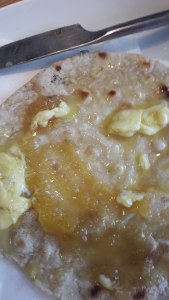
I ate them with butter and with butter and honey – delicious!

* Salt – Polish Salt Mine &  Legend

In southern Poland there is one of the oldest salt mines in the world – the Wieliczka salt mine. It is a UNESCO World Heritage Site and has produced salt since the 13th Century until 2007.

Legend has it that when Princess Kinga, a Hungarian Princess, became betrothed to Bolesław V,  Wstydliwy  (Bolesław V, the Chaste), Prince of Kraków, she asked for salt as her dowry and then threw her betrothal golden ring into a Hungarian mine.

On her arrival in Poland she asked a miner to dig in the ground and there he  found her golden ring inside a rock of  salt and that place became the site of the Wieliczka salt mine.

Because of her good works, Princess Kinga became Saint Kinga after her death.

Photos taken at Wieliczka


Sauerkraut & Mushrooms

Sauerkraut & Mushrooms  is often one of the dishes  for Wigilia (Christmas Eve) when meat is not eaten.

Ingredients

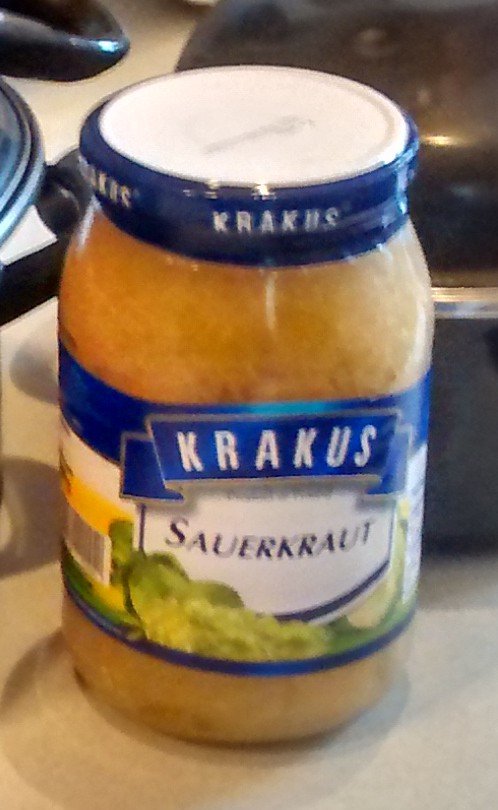
  • 1 large jar  of sauerkraut – around 800 – 900g.
  • 20 – 30g of dried mushrooms
  • 1 tablespoon granulated sugar
  • 1 onion – finely chopped
  • 2-3 tablespoons of plain flour
  • Butter or oil for frying the onion
  • Ground black pepper
  • *
  • The acidity of sauerkraut varies very much and homemade is often not as acid.
  • Rinsing bottled sauerkraut before use will lower the acidity.
  • *
  • The amount of  sugar  you add to the dish is a personal preference – if rinsed 1 tablespoon should be enough – if not rinsed you might need around 3 tablespoons.

Method

The evening before you want to make this dish place the dried mushrooms in a small bowl and cover them with boiling water and leave them overnight.

  • Cut the reconstituted mushrooms into strips.
  • Put the strips and the liquor into a saucepan and simmer them for around 5 minutes.
  • Drain the sauerkraut and keep the liquid (you might want to use it to adjust the acidity of the dish).
  • Rinse the sauerkraut with cold water.
  • Place the sauerkraut in a large saucepan and pour boiling water over it until it just covers it.
  • Add the sugar.
  • Bring to the boil and then cover the saucepan with a lid and let it gently simmer for around 10  minutes.
  • Add the mushrooms to the sauerkraut and mix together.
  • Continue heating either gently on top of the stove or put the pan with the lid into a low to medium oven.
  • Cook until the sauerkraut is soft.
  • Fry the onions until they are golden.
  • Sprinkle the flour over the onions and heat gently to brown the flour.
  • Add spoonfuls of liquid from the sauerkraut mixture to the onion mix.
  • Stir and heat to form a thickening roux/paste.
  • Add this to the sauerkraut mixture and mix throughly .
  • You can then serve this straight away or put it back in the oven for around 5 minutes.
  • Sprinkle ground black pepper on the top before serving.
  • Served here in Carnation by Royal Doulton, 1982 – 1998.
  • Serve with rye bread or boiled potatoes and hot roast pork or cooked Polish sausages.
  • For Wigilia (Christmas Eve ) this  would just be served as a separate dish.


Caraway & Dill & Parsley

When I think of Polish cooking three popular herbs which always spring to mind are caraway, dill and parsley.

They all  belong to the Apiaceae family which includes  carrot and celery. 

This family is also called  Umbelliferae (from the Latin – umbella  – for parasol or sunshade) – the flower heads consists of umbels  which have equal length flower stalks coming from a central point which forms a flattened head – rather like an umberella.

Carum carvi is caraway –  kminek – in Polish.

It  is native to  Europe,  North Africa & Western Asia.

Caraway – Drawing taken from Wikapedia


Caraway  fruits are often called seeds.

Caraway is thought to be an aid to digestion.

In 2011 Finland supplied over 25% of the world’s caraway.


Caraway is often added to rye bread, to dishes with sauerkraut and also many meat dishes,  especially pork, such as Sauerkraut & BaconPork & Prunes  and  Pork & Sauerkraut Gulasz.

Caraway  is often  added to twaròg (Polish soft curd cheese)


Anethum graveolens is dill – koperek  – in Polish.

Dill is grown for its leaves, which are fern like, and its seeds.

Dill leaves are  best when used fresh  (I never bother with dried dill).


Dill  leaves are used as a topping for many salads and for boiled new potatoes.


Dill leaves are added to twaròg (Polish soft curd cheese) and smetana (soured cream).

Dill leaves are used in sauces including ones served with fish.


Dill seeds are similar in flavour to caraway seeds.

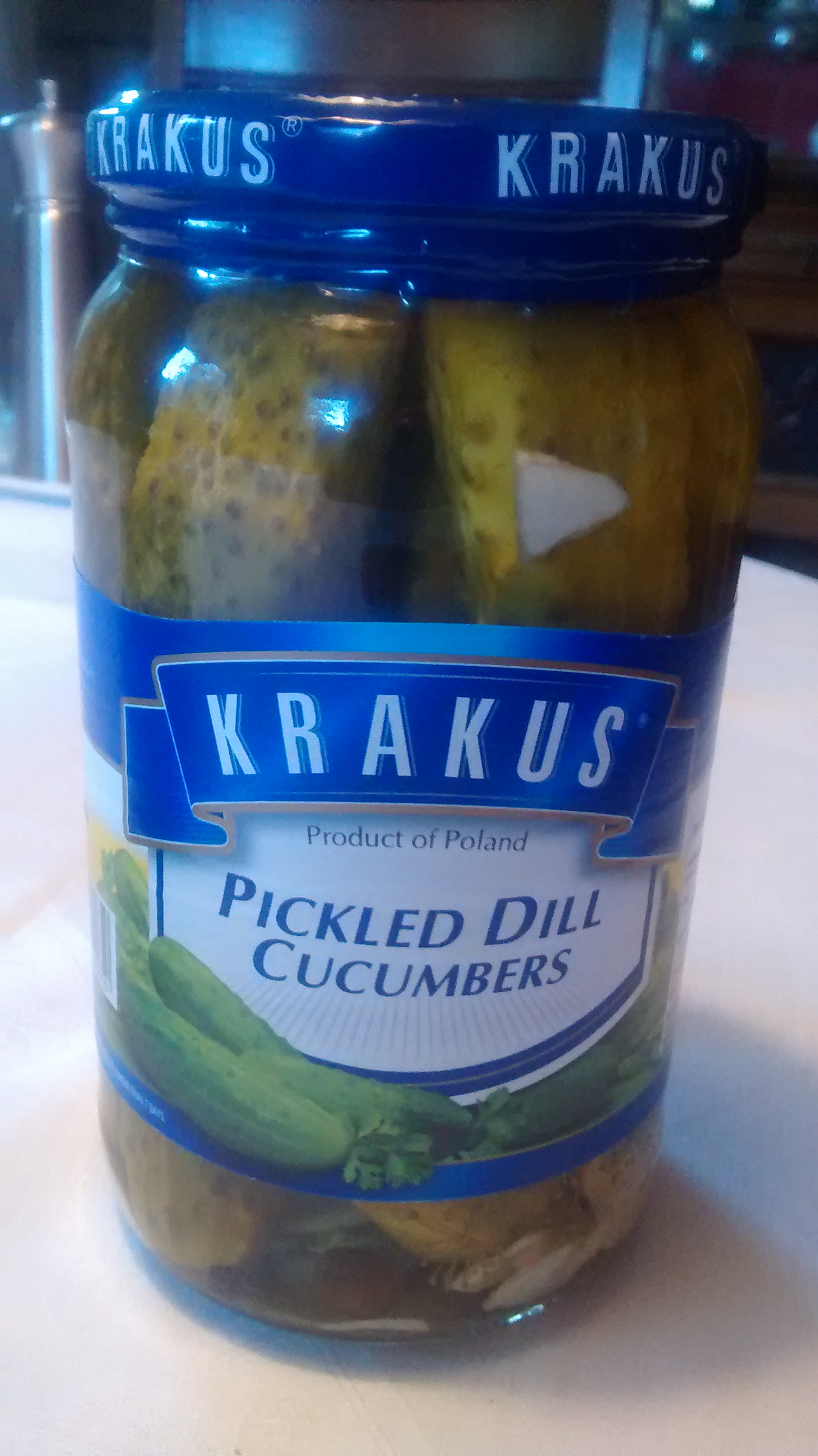
Dill seeds are used in dill pickles –    – which are cucumbers preserved in brine – Ogórki – Gherkins


The name of the Polish astronomer  – Copernicus  in Polish is  Kopernik (so in Polish he is Mr Dill!)

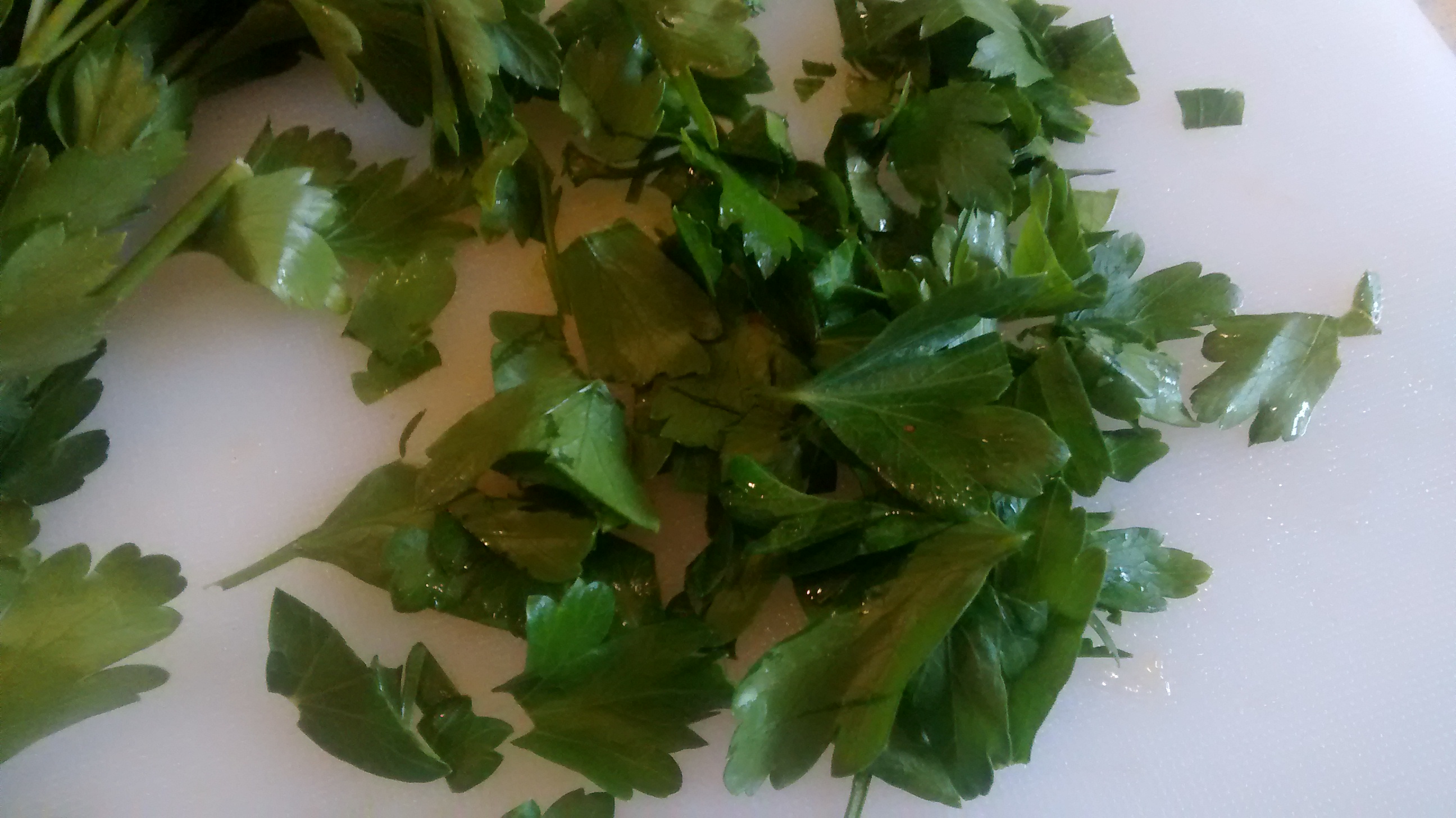
Petroselinum crispum is flat leaf parsley – pietruszka –  in Polish

Flat Leaved Parsley


Chopped flat leafed parsley  leaves are added as a garnish or topping for many salads and savoury dishes.


Petroselinum crispum tubersum

This is Parsley root or Hamburg parsley.
Flat leafed parsley is also grown for its white tap root which looks a lot like parsnip and is also used in  Polish cookery, often added to casseroles.

I have seen this for sale in Polish markets, you might find it in the larger Polish shops that have fresh produce.

20180314_172735


Parsley root grated with apple or pear and with added lemon juice is one suggestion for a fresh salad.


Budyń – Polish Custard

Budyń is similar to the thick English custard that is used on trifles, rather than the pouring type.

The word comes from the French  –  boudin, as does the English word pudding.
It is made from milk, egg yolks, sugar  and potato flour & flavoured most often with vanilla.

I have found numerous recipes – this one is my favourite.

I think this is best eaten after it has been very well chilled.

Ingredients

  • 500ml of milk (full or semi-skimmed)
  • 1 tablespoonful of butter
  • 3 tablespoons of granulated sugar
  • 3 drops of vanilla  essence
  • 2- 3 tablespoonfuls of potato starch (you can use cornflour – if potato flour is not available)
  • 3 egg yolks

Method

  • Put 300ml of the milk, the butter, sugar and the vanilla essence into a saucepan.
  • Heat gently till the butter has melted and the sugar dissolved, stirring all the time.
  • Bring this to the boil for a few seconds and then take of the heat.
  • Blend together the rest of the milk (200ml) with the egg yolks and potato flour.
  • Add some of the boiled mixture to this and stir well.
  • Add this to the rest of  the boiled mixture and stir well.
  • Put the pan back on the heat and bring back to boiling point, stirring gently.
  • Keep at boiling for 1 minute, stirring all the time.
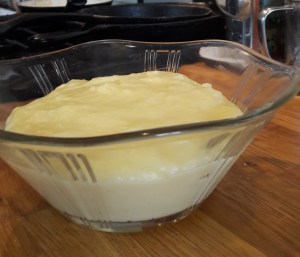
  • Pour into a glass dish (or several small dishes) – leave to cool.
  • You can cover the budyń with greaseproof paper to stop a skin forming.


  • Refrigerate for at least 2 hours before serving.
  • Serve with grated chocolate, fruit or fruit syrup.


Served  here in Art Deco sundae/trifle glass dishes from the 1930s.

Packet Budyń

Budyń can be made from packet ingredients with fresh milk.

The ingredients are cornflour & potato flour with flavouring.


This is similar to  British Birds custard which is made from cornflour and flavouring and added to fresh milk.

The budyń comes out thicker – not a pouring sauce,

Using Budyń

Budyń is used in cakes and pastries as a filling and to make  vanilla pastry cream used in several recipes including Karpatka (recipes to follow in future posts) Carpathian Mountain Cake.

Vla

When I visit my friend in The Netherlands we often have vla for dessert – this is very similar to budyń.

Vla used to be sold in bottles but more often now comes in cartons.  Originally it was also made from milk, sugar and eggs  but now the thickening is more usually cornflour.

With yoghurt

In the Netherlands,  vla is often mixed with yoghurt.

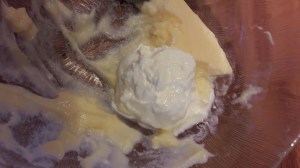
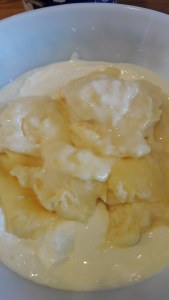
I mix roughly equal parts of budyń with chilled Greek yoghurt and whisk it together to get a well combined mixture.

This can be served with grated chocolate, fruit or fruit syrup.


1930s Art Deco glass dish


Sauerkraut – Traditional with Bacon

This is  a very popular dish to make in the winter time with produce from the stores.

Ingredients

1 large jar sauerkraut – 800-900g

100g smoked streaky bacon

1 onion

1 teaspoon caraway.

2-3  tablespoons of plain flour

Oil or bacon fat for frying

1 tablespoon granulated sugar*


*The acidity of sauerkraut varies very much and homemade is often not as acid.

*Rinsing bottled sauerkraut before use will lower the acidity.

*The amount of  sugar  you add to the dish is a personal preference – if rinsed 1 tablespoon should be enough – if not rinsed you might need 1 -2 tablespoons more.


Method

Drain the sauerkraut and keep the liquid ( you may want to use it to adjuct the acidity of the dish later ).

Rinse the sauerkraut with cold water.

Place the sauerkraut in a large saucepan and pour boiling water over it until it just covers it.

Add the sugar.

Bring to the boil and then cover the saucepan with a lid and let it gently simmer for around 10  minutes.

Continue heating either gently on top of the stove or put the pan with the lid into a low to medium oven.

Cook for  around another 30 minutes until the sauerkraut is soft.

Remove the pan from the heat and add the caraway seeds – put the dish  back into oven or keep on the stove with the lid on.

Chop the bacon into small squares and heat gently in a frying pan to release the fat.

Chop the onions into small pieces and add them to the pan and fry the onions until they are golden.

Sprinkle the flour over the onions and heat gently to brown the flour.

Add spoonfuls of liquid from the sauerkraut mixture to the onion mix.

Stir and heat to form a thickening roux/paste.

Add this to the sauerkraut mixture and mix throughly.

Put the pan back in the oven for around 10 minutes – or heat gently on the stove.

Sprinkle ground black pepper on the top before serving.

Serve with rye bread or boiled potatoes and hot roast pork or cooked Polish sausages.


Here served with Kolos rye bread,  from the Bradford Ukranian Bakery,  founded in 1961 and grilled Polish sausage from Torun (kiełbasa Toruńska) – the birthplace of the astronomer Copernicus (Kopernik ) – also famous for its spiced honey cake (piernik)

Served on Carnation by Royal Doulton, 1982 – 1998.


Kotlety with Cabbage

  • On my last trip to Poland my  cousin in Białystok suggested this variation on kotlety mielone – minced meat burgers.
  • The idea is to add shredded white cabbage to the minced meat mix.
  • I used the following  amounts by weight:
  • 2 parts minced meat : 1 part cabbage – you can go up to equal weights of each.

Ingredients

  • 500g beef mince
  • 250g white cabbage
  • 1 onion – chopped fine
  • 3  tablespoons semolina*
  • 2 eggs
  • Dried breadcrumbs
  • Salt  and pepper
  • * I used semolina instead of my usual white bread soaked in milk – I was pleased with this as an alternative.
  • Sunflower oil  for frying

Method

  • Chop the onion fine and fry in a little hot oil till lightly browned then leave till cold.
  • Cut the cabbage into fine shreds and then across so you have small squarish pieces.
  • In a large bowl mix the minced meat and cabbage till they are evenly mix.
  • Add the fried onions and mix again.
  • Add the eggs and mix.
  • Add the semolina, salt and pepper and mix until you get a uniform mixture.

Try to make each one the same size, take a handful of the mixture and press it between your hands to make a flattened circle and then place this in the dried breadcrumbs and turn it over to cover both sides and edges.

  • Once coated place them on a tray dusted with breadcrumbs until you have used all the mixture up.
  • Shallow fry the kotlety in hot oil, depending on the frying pan size,  you can do 3 to 4 at a time, turning them over so that both sides are done. Place them on kitchen roll on a plate or metal tray till they are all cooked –  you can keep them warm in a low oven.
  • I had found I like these more when they have been in the oven for a while after frying – evenly cooked through.
  • These can be served in many ways, with boiled or mashed potatoes or rice and a variety of salads.

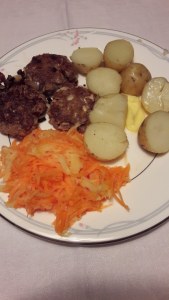
20180127_185749

Served  here with steamed & buttered new potatoes and carrot & apple salad – on

Royal Doulton – Carnation – 1982 – 1998.

Version 2 – using Cooked Cabbage

Whilst doing some research on this recipe,  I found that some cooks used cooked cabbage rather than raw.

Ingredients

As above but this time with 400g – 500g of uncooked white cabbage  (around the same weight as the minced meat).

Method

  • Chop the cabbage into large pieces and steam it till cooked.
  • Dry the cabbage with a clean tea towel to get rid of as much water as possible.
  • Chop the cabbage into very fine pieces.
  • Proceed as in the method above.

Note

For both versions, should you have any left,  you can reheat them in sauce made with chicken or vegetable stock.

Zrazy – made with Minced Meat

These zrazy are like the ones made with braising beef in that the minced meat mixture surrounds various stuffings.

The minced meat mixture  is similar to kotlety mielone  &  pulpety – but  zrazy are cooked differently.

You take a large handful of minced meat mixture , place the stuffing on it and then close up the mixture so you have an oval shape with the stuffing on the inside.

Ingredients

500g minced beef

1 beaten egg

4 tablespoons of semolina

1 onion chopped and fried

Salt & pepper

plain flour for coating

Sunflower oil for frying

Stock

500ml of chicken stock

1 -2 bay leaves

3-4 Peppercorns

2-3 Allspice berries

Stuffing

Two stuffings often used are –

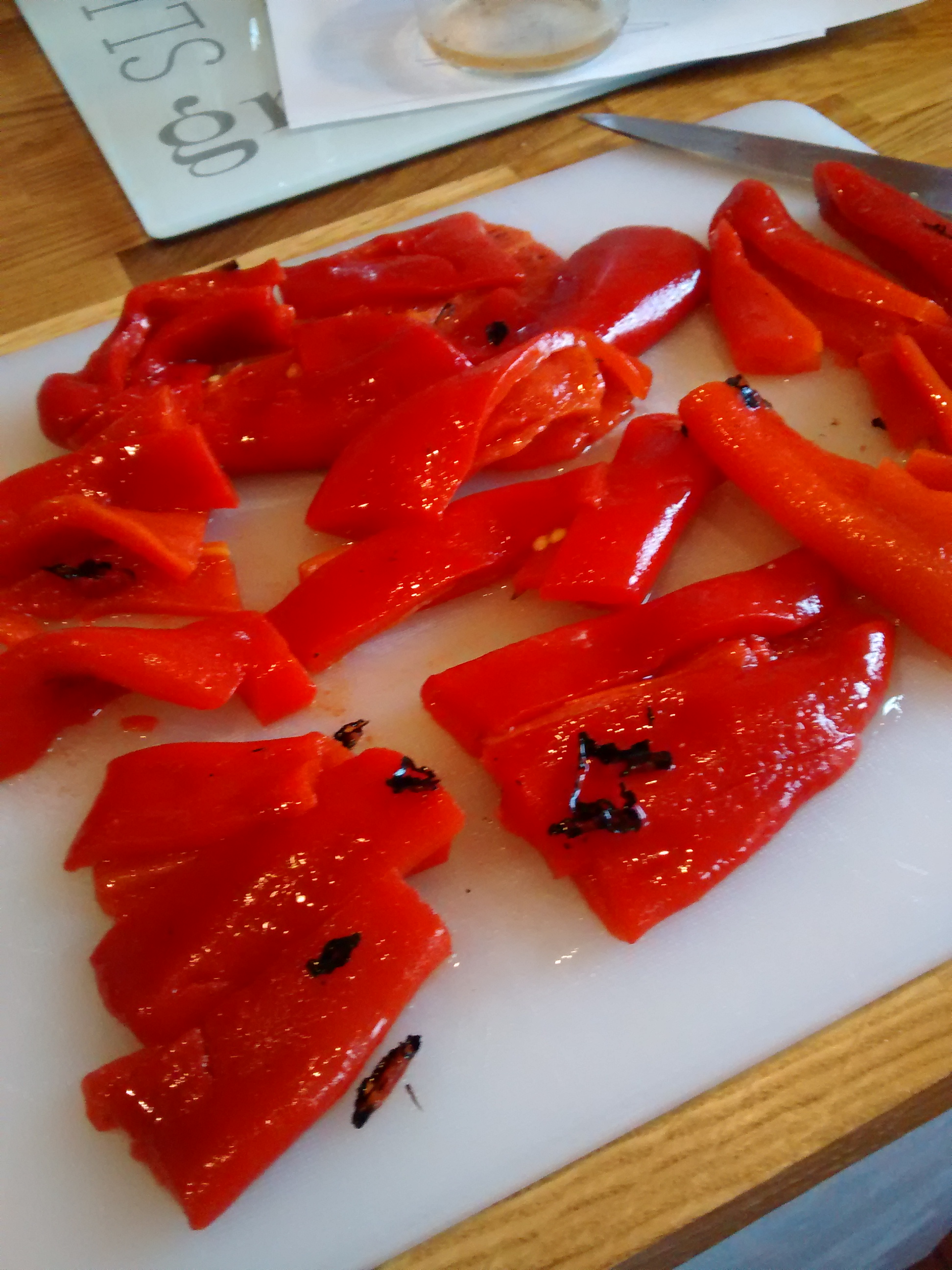
Pieces of bottled peppers


Sticks of Gouda cheese or similar

20180130_120003

Method

Pre-heat the oven to GM 3 – 160°C

Mix the beef, fried onion, egg and semolina together.

Season with salt & pepper.

Divide the mixture into around 6 pieces

Flatten out each piece and place the stuffing in the centre.

Close up the mixture around the stuffing to make an oval shaped ball.

Dust the ball with plain flour.


Lightly seal these by browning then in hot oil.


Place the zrazy into an oven proof dish – one that has a lid – so they are not touching.

Pour in the stock – enough to have some at the bottom but do not cover the zrazy.


Put the lid on and cook in the oven for 1 -2 hours.

Sauce

You can thicken the stock that the zrazy are cooked in with cornflour or you can add other ingredients such as fried mushrooms and soured cream when you come to serve them.


Two shown here – cut through – one with cheese & one with peppers,  served with a mushroom and soured cream sauce.

Served on Royal Doulton  Carnation – 1982-1998


Zrazy – Meat Roll-ups

Zrazy (this word is plural) is a meat dish popular in Eastern Poland & Lithuania and can be traced back to the 16th & 17th century in the times  of the  Polish-Lithuanian Commonwealth (1569 – 1795).

(I have seen zrazy  translated as Meat Roll-ups, Meat Olives or Collops)

Classic zrazy have a rolled shape and are made of thin slices of  beef,  beaten with a mallet, which are stuffed with a variety of ingredients including  mushrooms.

You need to use beef which is good for  braising and slow cooking  –  I used a thin cut of topside and this worked very well.


The stuffed meat is rolled and secured with thread or thin string, then lightly fried and placed in a casserole dish with stock and slow cooked at a low temperature.


Stock

For the stock,  I  use chicken or vegetable stock (this can be from a stock cube or powder)  and add bay leaves, whole peppercorns and sometimes whole allspice.


Prior to serving, the threads are removed.


Zrazy are eaten with the sauce in which they were cooked, though extra ingredients can be added to this such as  soured cream, mushrooms or tomato.

You can add some cornflour to thicken the sauce.

Po nelsońsku  –  in Lord Nelson’s style –  is when mushrooms and soured cream are added to the sauce. (I have not been able to discover why this name is used.)


Here served on Royal Doulton – Carnation – 1982 – 1998

Zrazy are often served with buckwheat or boiled potatoes, and beetroot or sauerkraut salad.

Classic Ingredients for the Stuffing

There is no end to the variety of fillings you can use, the following are two traditional ones.

The amounts you need will vary according to how many zrazy you are filling – these are a guide to proportions.

Onions & Rye bread

1/2 slice of rye bread – made into breadcrumbs

1 onion – chopped and fried in butter till golden

1/2 teaspoon of caraway seeds

Salt & pepper

You can spread a little made up mustard onto the meat first.


Dried Mushrooms

20g dried mushrooms  – add around 250ml of boiling water and soak these overnight – chop into small pieces then simmer in the liquid.

1 onion – chopped and browned in butter till golden

Add the onion to the mushrooms and continue simmering till most of the liquid is gone.


Add salt and pepper to taste.