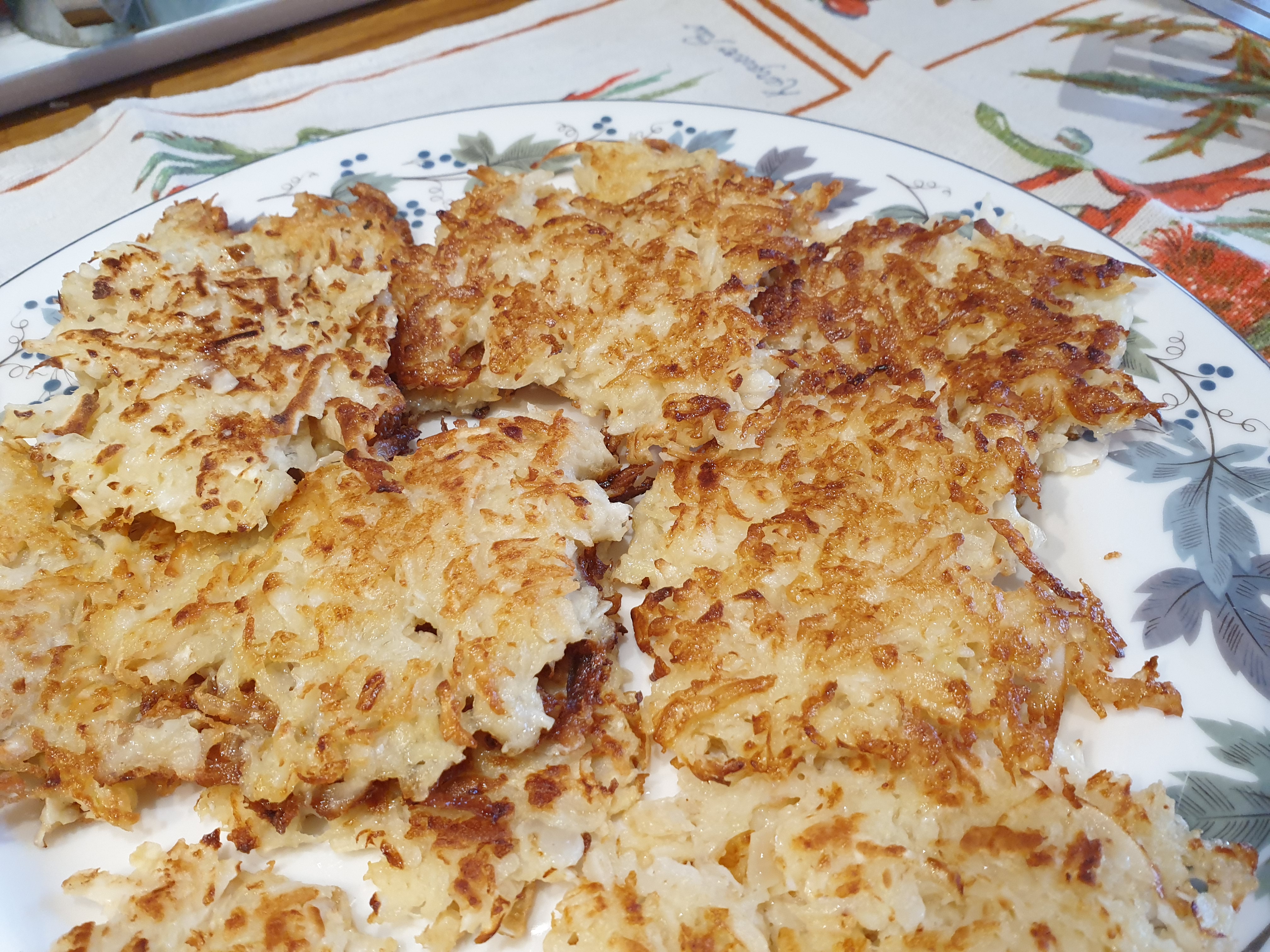
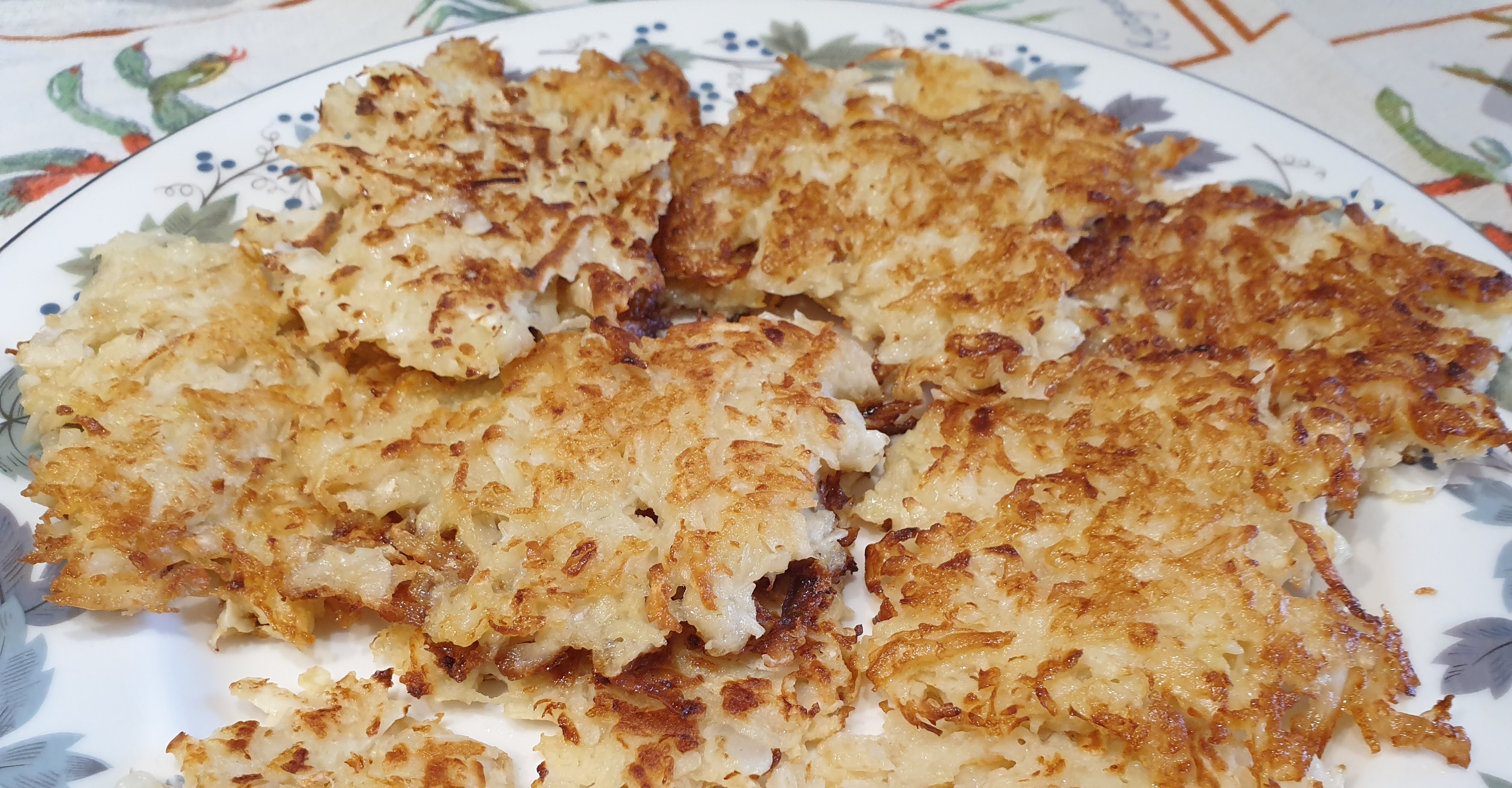
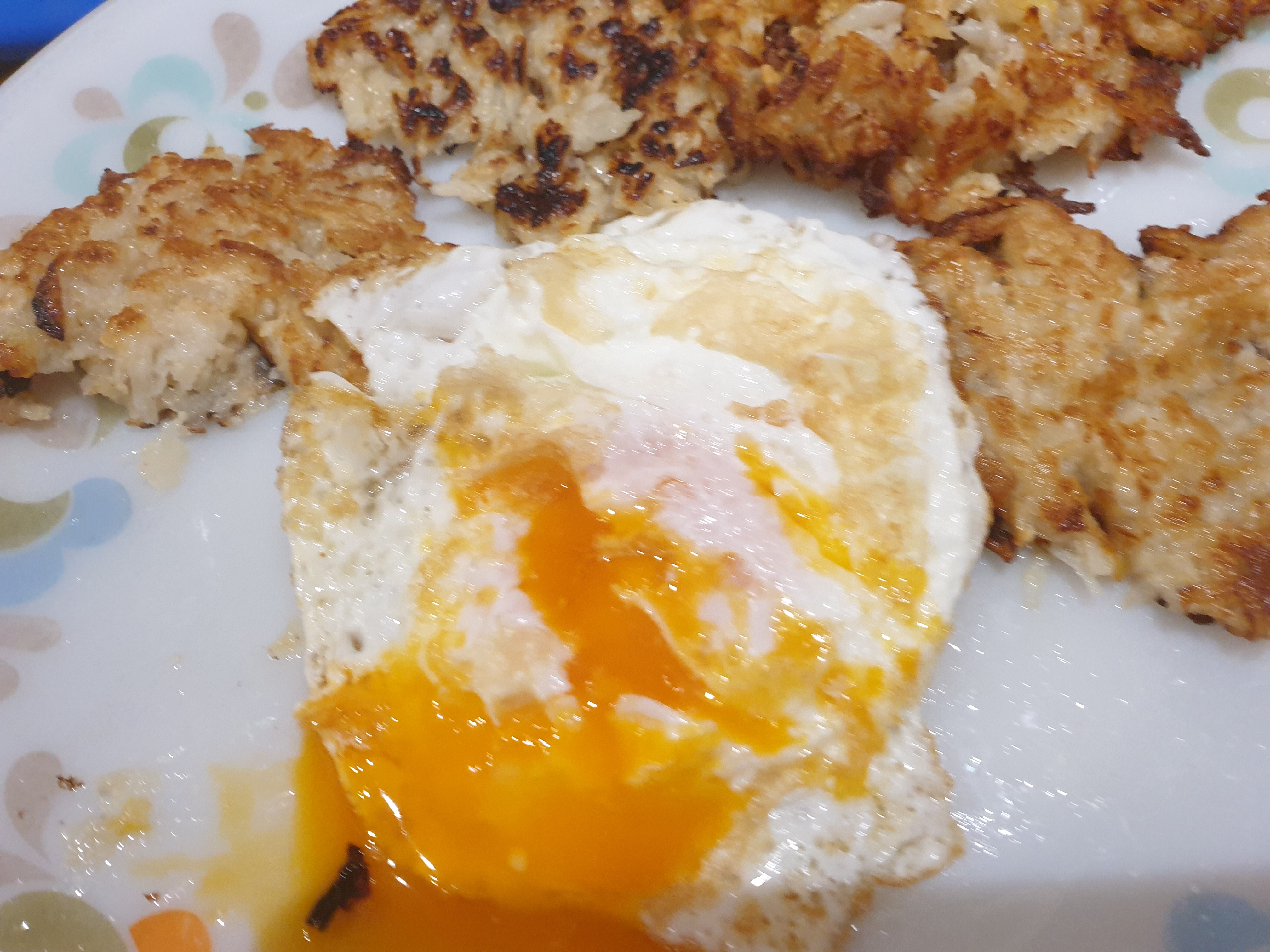
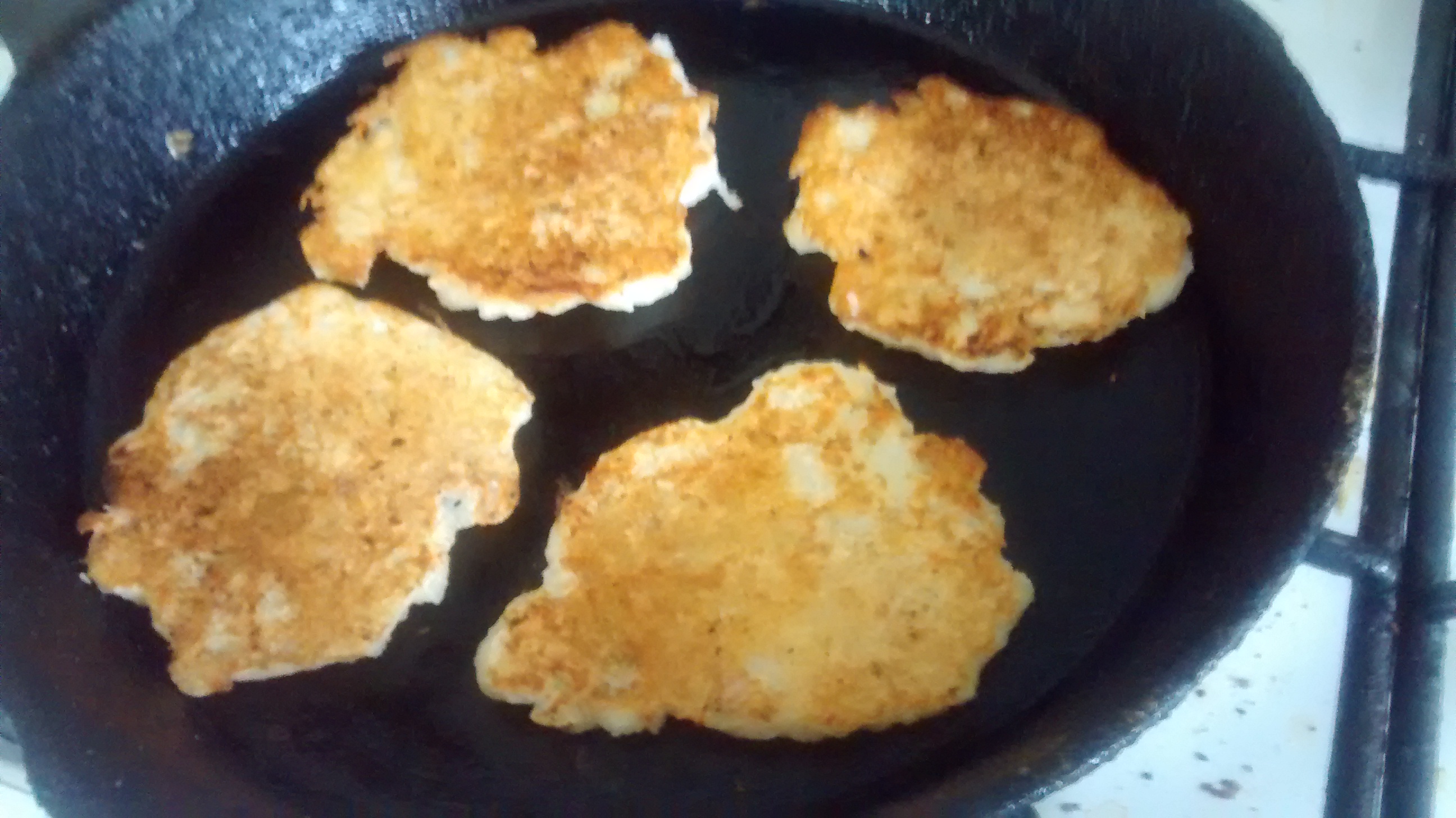
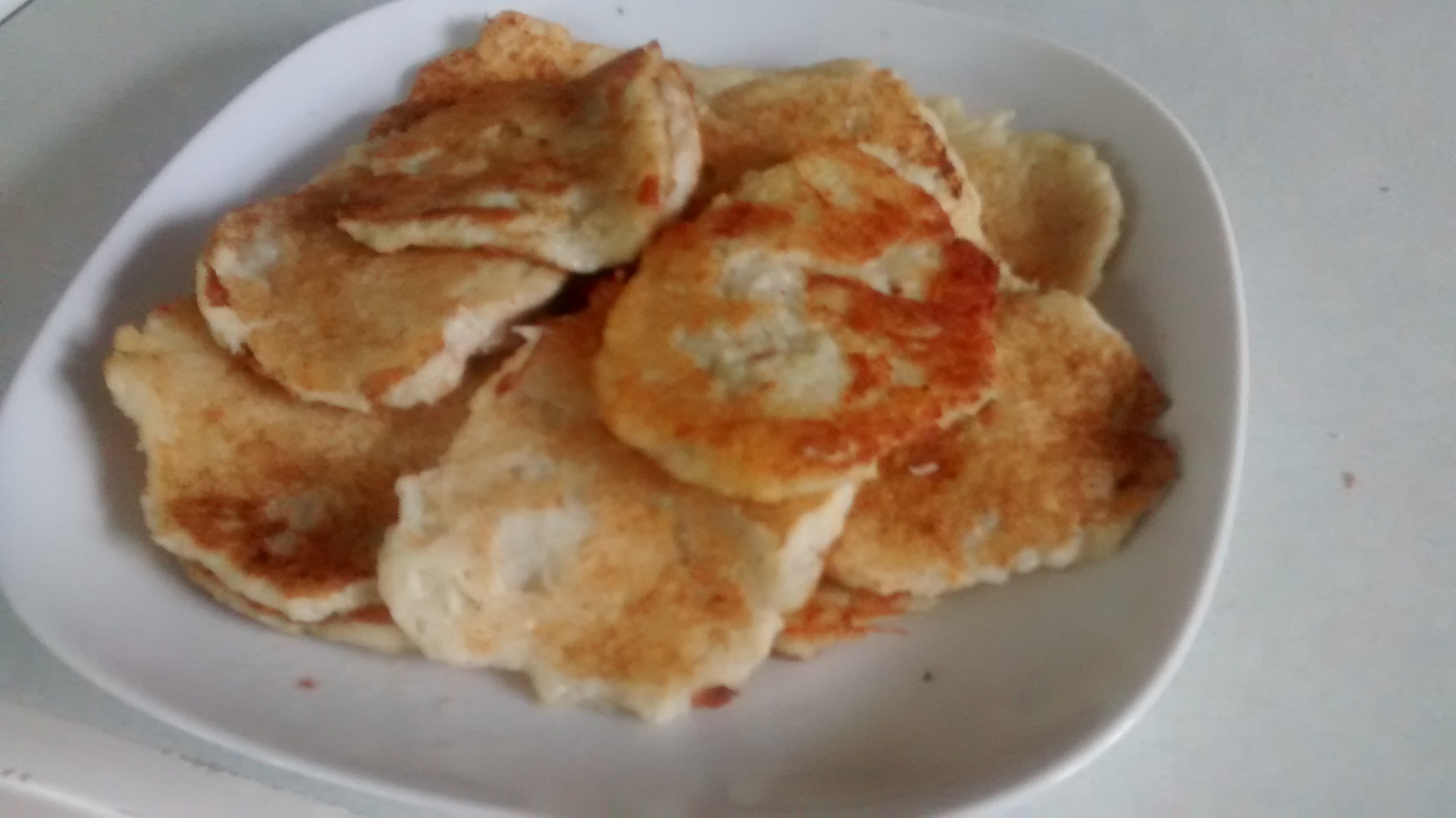
Celeriac & Potato Placki

  • I saw this recipe in a magazine and thought they would be good.
  • I had a couple of goes at these as the original recipe did not work as the placki just kept falling apart.
  • The potatoes MUST be grated on a fine grater.
  • Some – but not all – of the potato liquid needs to be removed.
  • I added onions to the original recipe.
  • They have a slightly sweet taste because of the celeriac.

INGREDIENTS

  • Around 300 – 500g of peeled celeriac
  • Equal weight of peeled potatoes
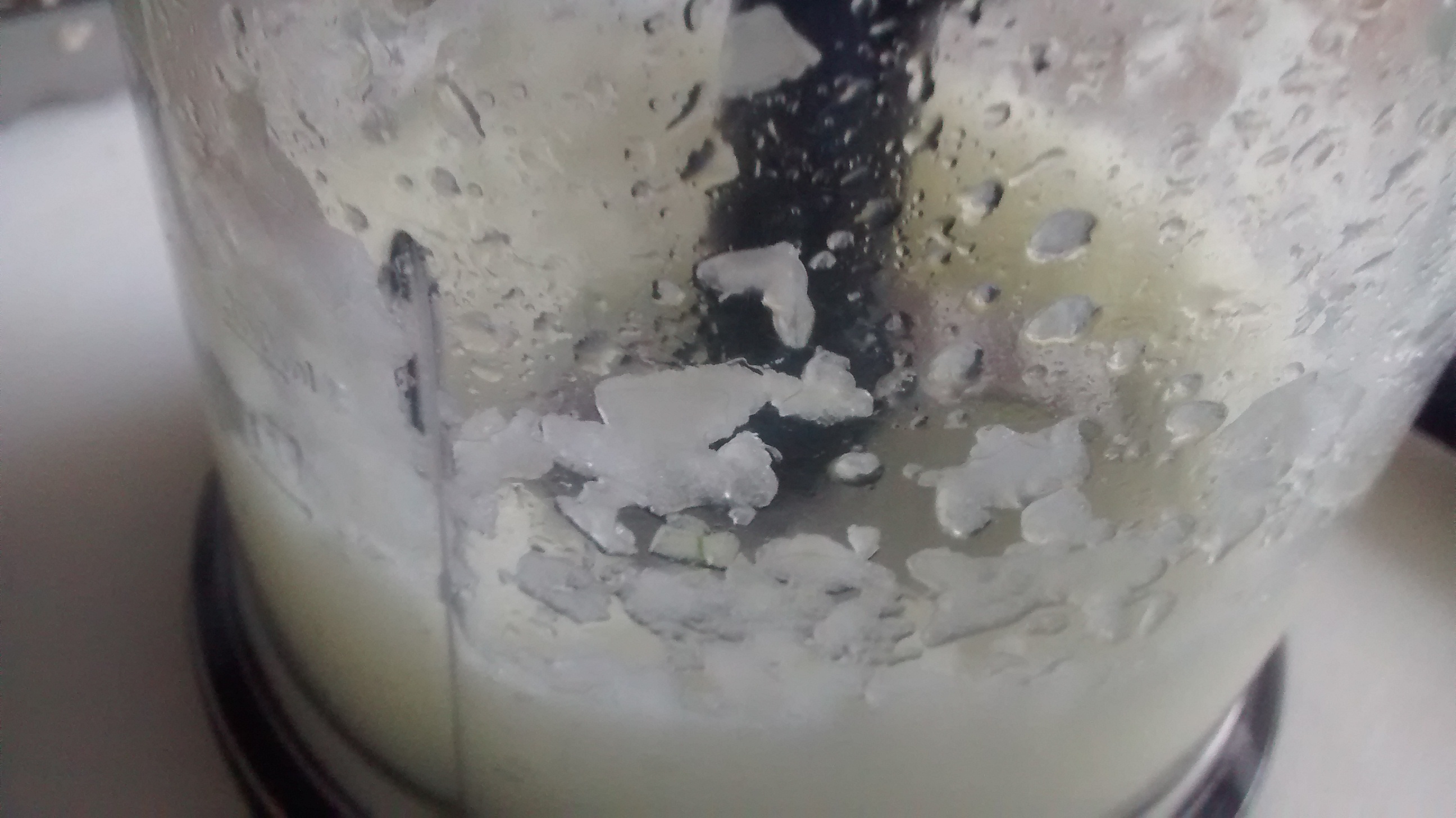
  • 2 small onions – chopped very fine or blended.
  • 2 eggs – beaten
  • 3 tablespoons of plain flour
  • Salt & pepper
  • Sunflower oil for frying.

METHOD

  • Grate the celeriac on a coarse grater and place into a bowl.
  • Grate the potato using a fine grater.
  • Use a  cheese cloth to remove some of the potato liquid BUT
  • Keep this liquid as you might need some of it.
  • Mix the grated celeriac and the grated potato.
  • Add the onions and mix well.
  • Add the beaten eggs and 3 tablespoons of flour.
  • If the mixture is very “sloppy” add a little more flour.
  • If the mixture is very dry – add a little of the potato water.
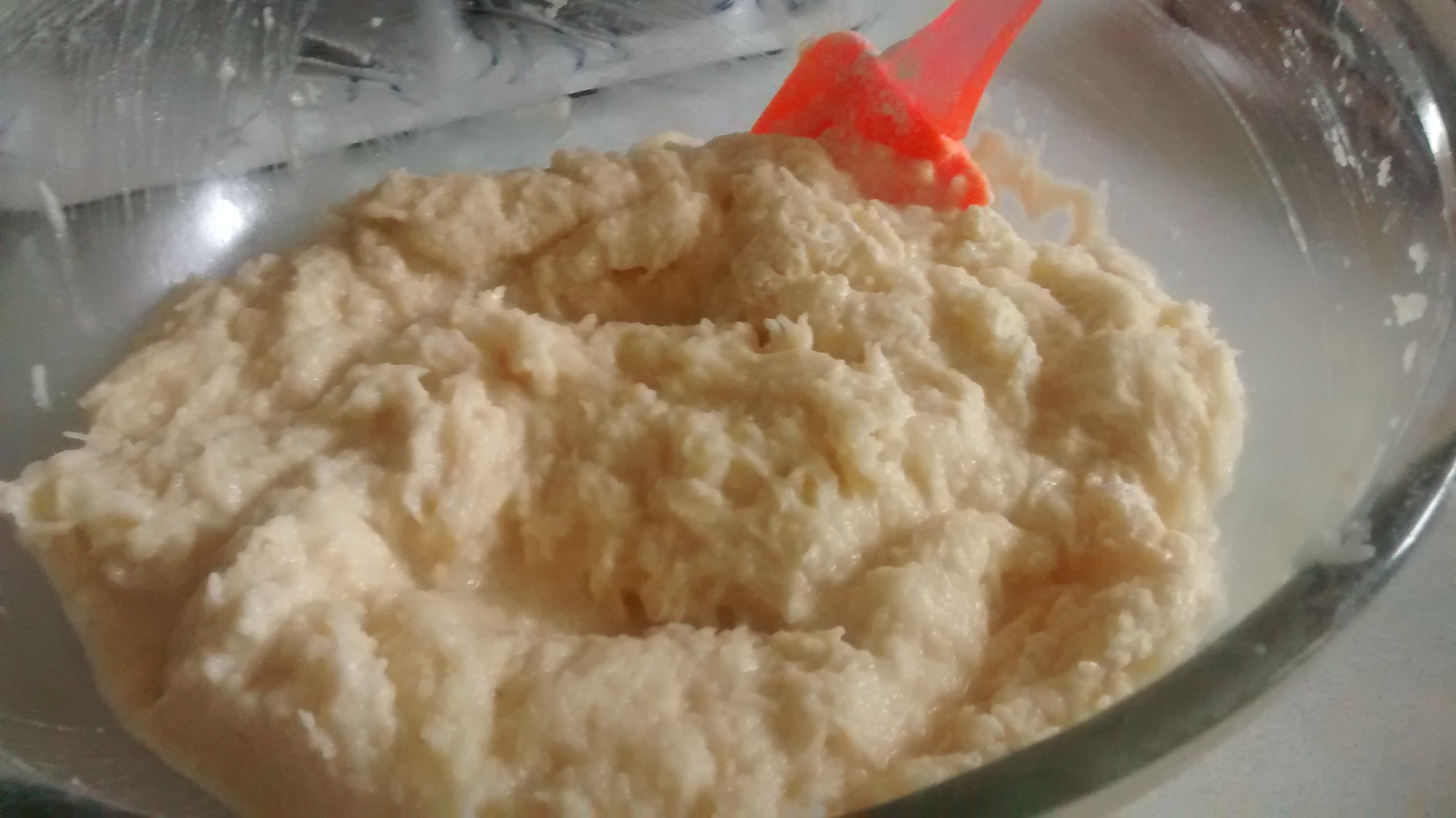
  • You are aiming for a thick mixture.
  • Season with the salt and pepper.
  • *
  • Heat the oil in a frying pan.
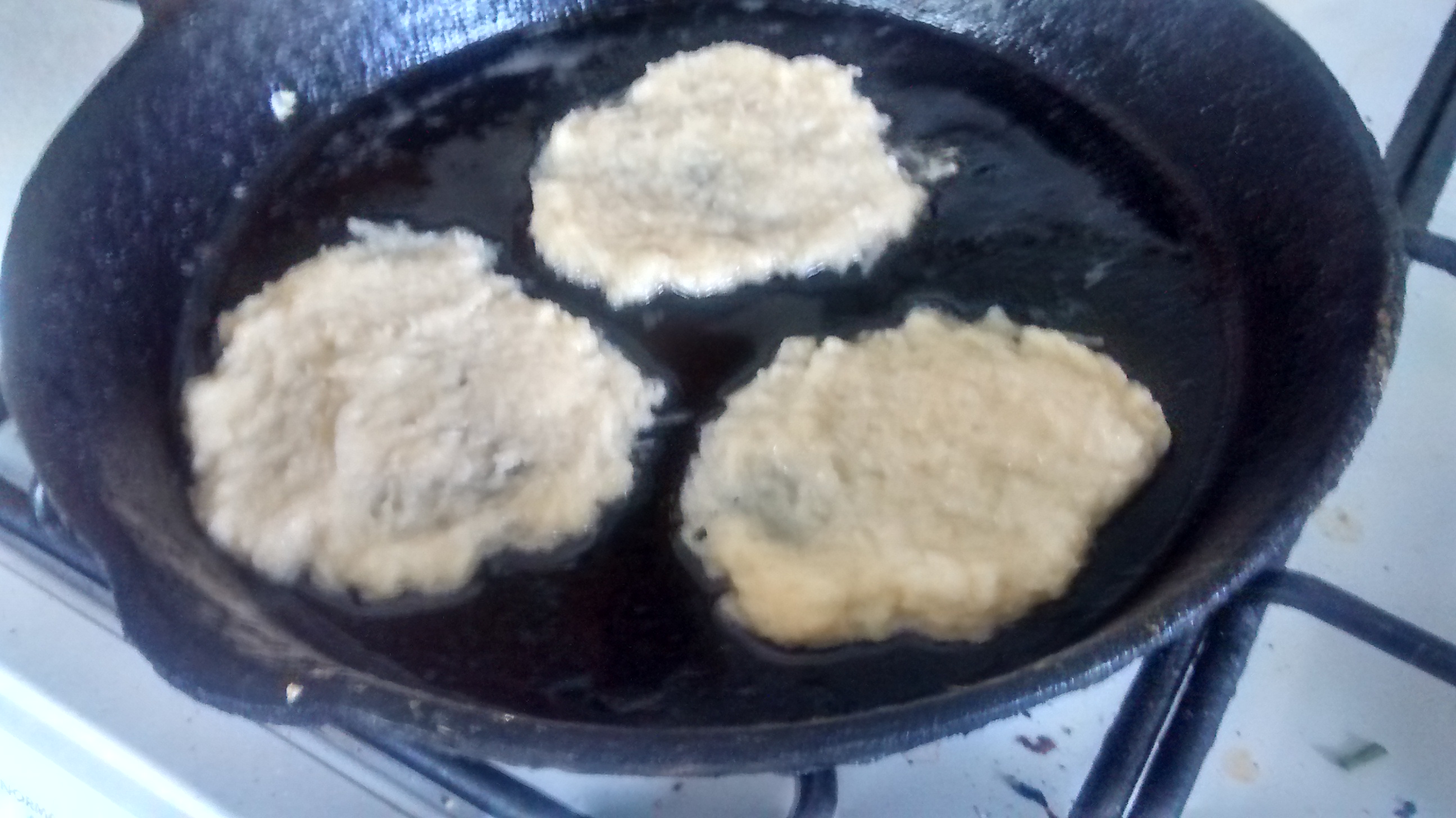
  • Fry large tablespoonfuls of mixture at a time.
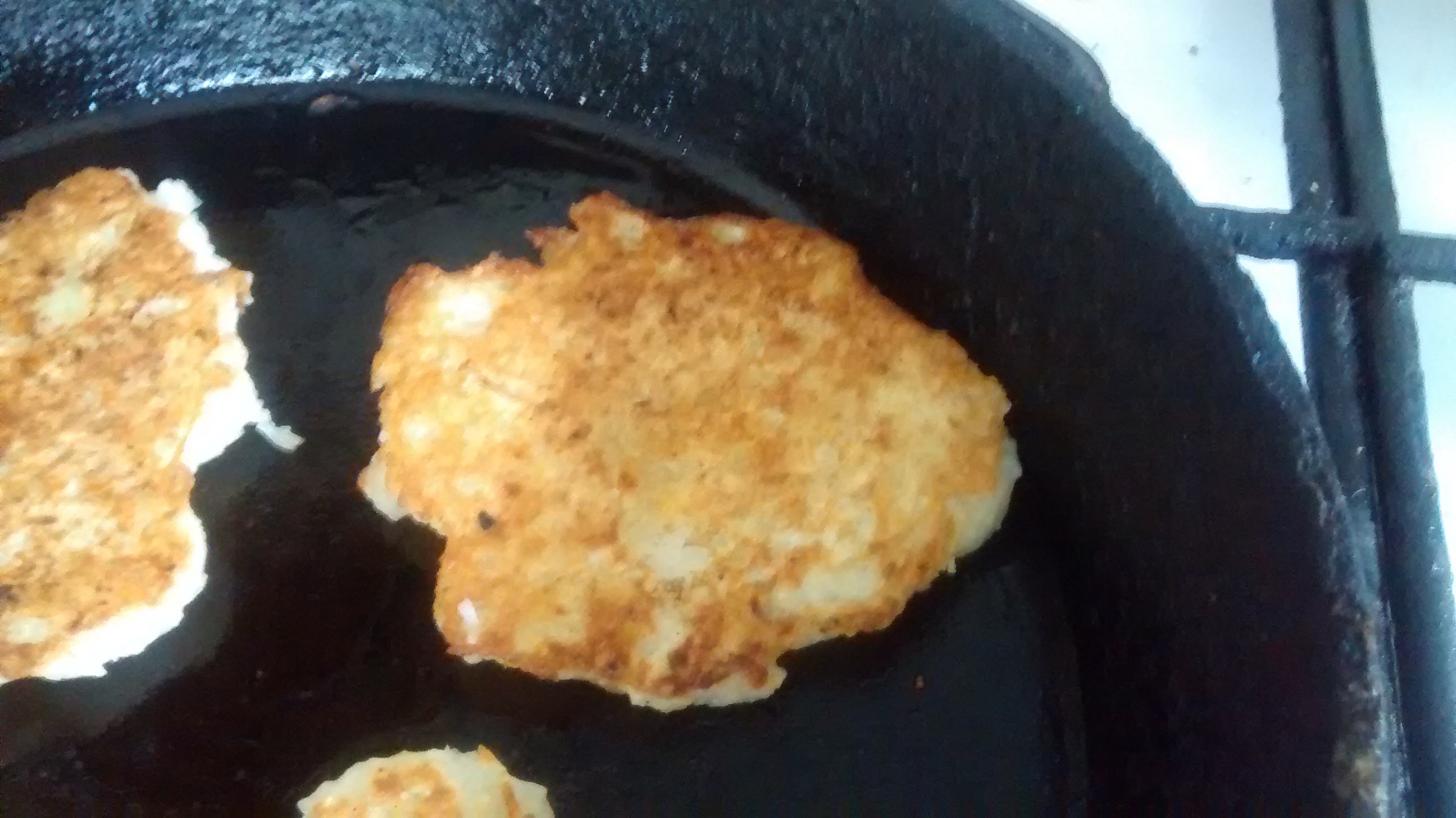
  • Cook each side on a medium heat.
  • Do not turn the placki too soon – they tend to fall apart.
  • Take care not to burn them.
  • Keep warm in a low oven if you want to serve them all together.
  • *
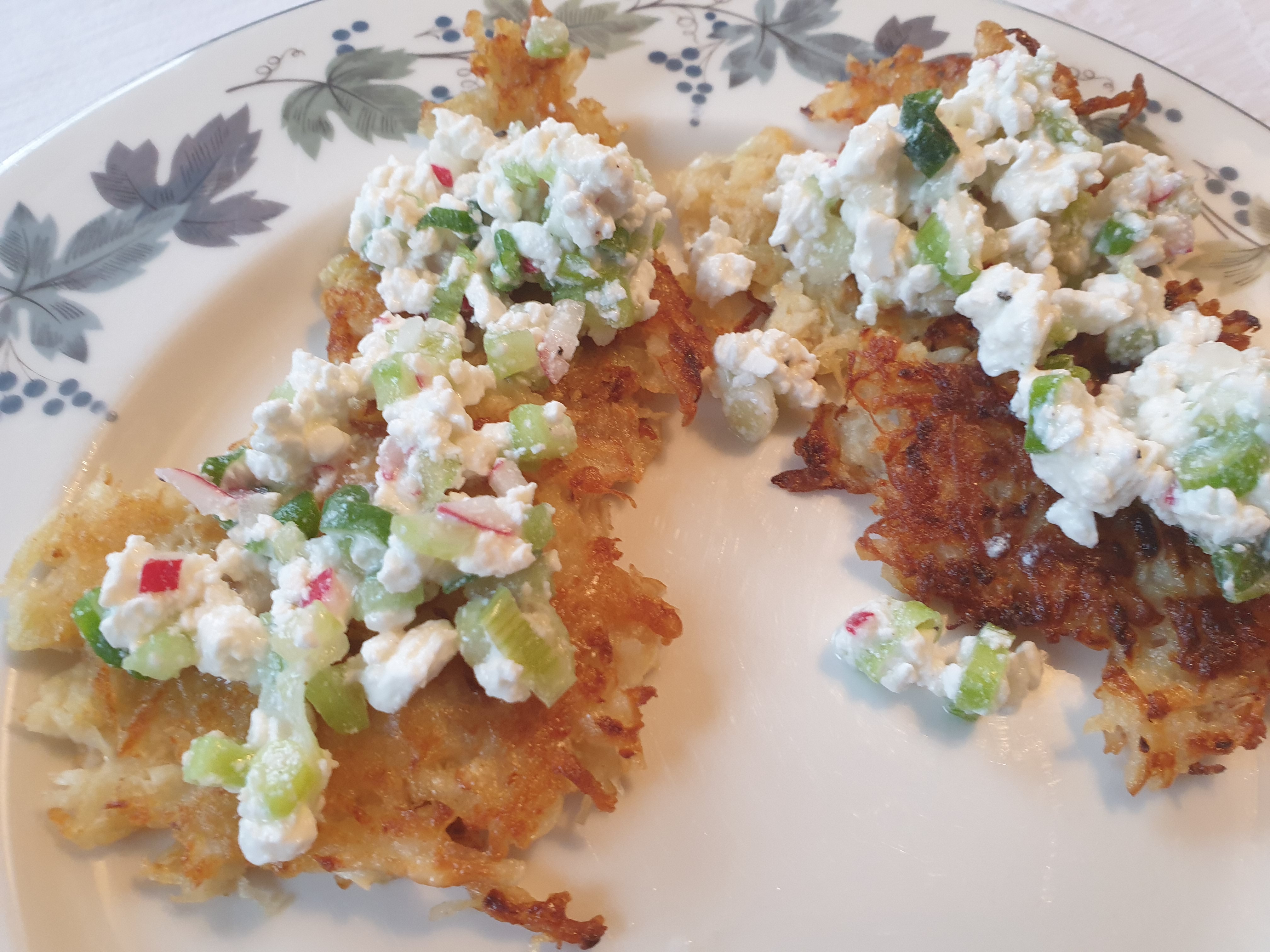
  • Serve with fried eggs or with a cold twaróg salad (see later post).

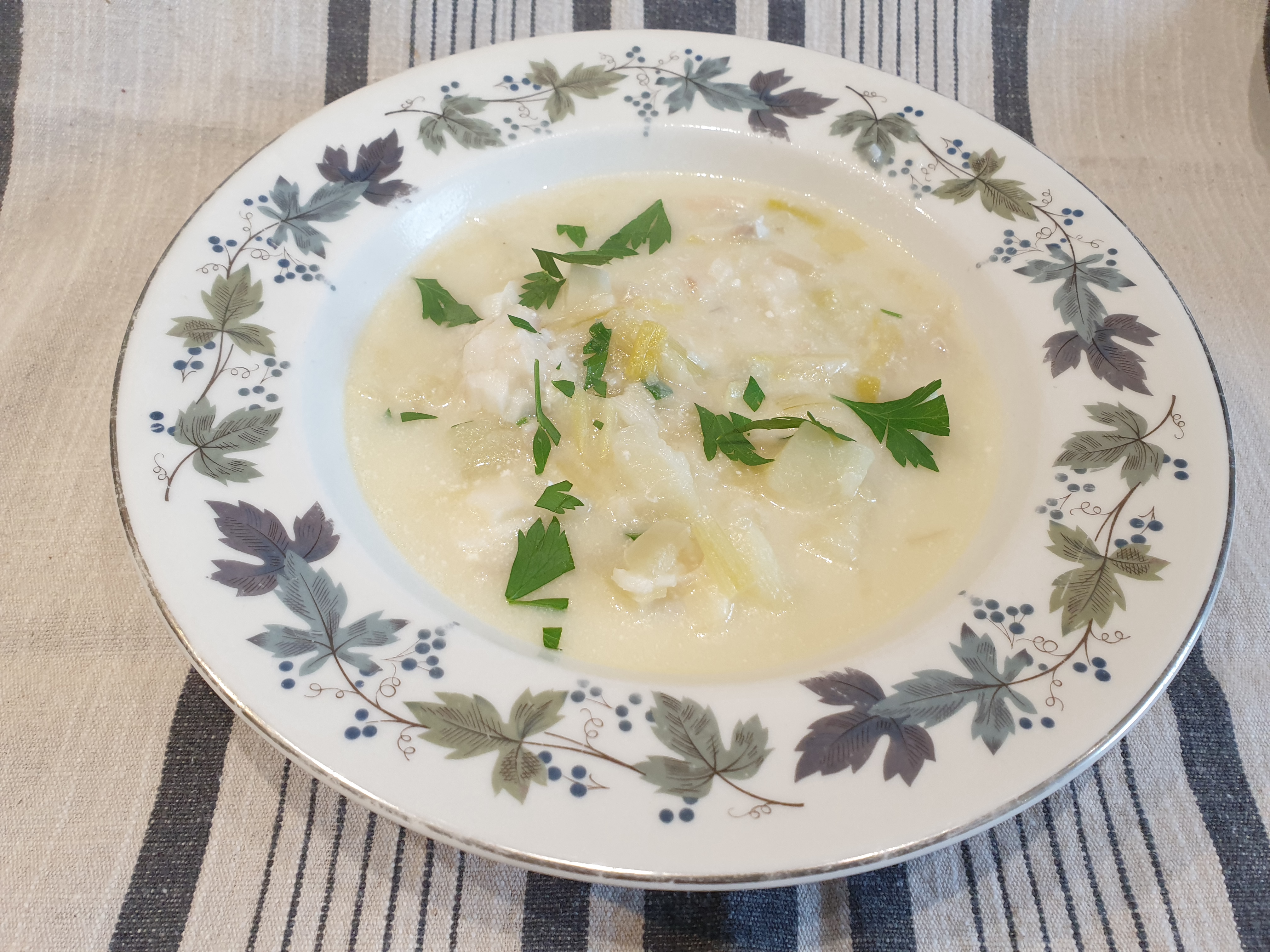
Fish Soup with Leek & Potato

INGREDIENTS

  • 300 – 350g of white fish (cod, haddock or pollock)
  • 1 medium onion
  • 2 leeks – the white part
  • 3 medium potatoes (floury type are best)
  • 2 tablespoons of butter  – to fry the onions
  • 1½ litres of vegetable stock
  • 2 bay leaves
  • 4 grains of allspice
  • 4 grains of black pepper
  • 125ml soured cream
  • Salt & Pepper to taste – if needed.
  • *
  • Large handful of chopped flat leaved parsley to serve.

Method

  • Chop the onion into small pieces.
  • Lightly fry in the butter but do not brown.
  • Chop the leek into small rings and add to the onions and butter.
  • Stir and lightly fry – again do not brown.
  • Add the stock, bay leaves, allspice and black pepper.
  • Bring to the boil and then lower the heat.
  • Start to simmer gently.
  • Chop the potatoes into small pieces and add to the soup.
  • Boil gently for around 15 minutes until the potatoes are nearly cooked.
  • Add the fish and cook for about 10 minutes.
  • Break up the fish into small pieces.
  • Season if needed.
  • Stir in the soured cream.
  • Add chopped parsley leaves to serve.

20240709_143425

Royal Doulton Burgundy soup plate

One of my testers thought this was the best ever!

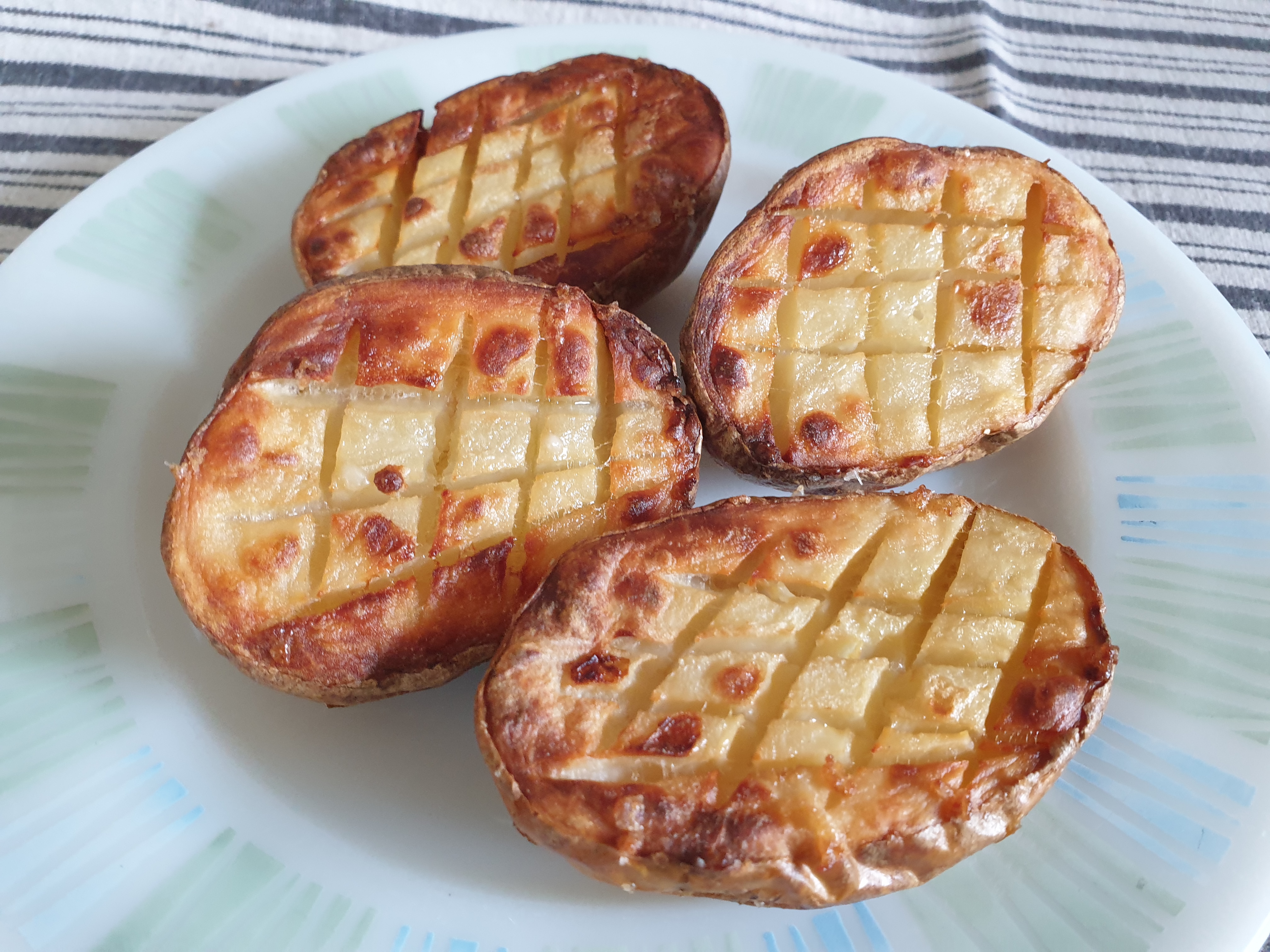
Criss-Cross Potatoes

  • Potatoes are popular in Poland however this recipe did not originate there.
  • I went to dinner at one of my friends who lives near Leeds.
  • These potatoes were on the menu.
  • They are a cross between jacket potatoes and roast potatoes.
  • They are quicker and easier to do.
  • The recipe originated from one by Nigella Lawson.

INGREDIENTS

  • 1 to 2 Potatoes per person (depending on the size) (Maris pipers or King Edward are good)
  • Light olive oil
  • Maldon sea salt

METHOD

  • Pre-heat the oven to GM7 – 220°C
  • Cut the potatoes in half lengthwise.
  • Cut the cut surface with diagonal cuts but do not cut all the way through.
  • Rub the skins with the olive oil.
  • Place cut side up on a baking tray.
  • Put some olive oil and salt on the cut surface.
  • Bake for around 45 minutes.
  • The tops should be golden and the potato flesh soft.

“Our Food is Our Identity”

  • Claudia Roden was born in Cairo, Egypt in 1936.
  • She moved to Paris in 1951.
  • Then to London in 1954.
  • Her family was Jewish.
  • She collected recipes from family, friends and anyone else who would contribute.
  • She has written many cookery books.
  •  I recently bought a second hand copy of ‘Jewish Cookery from Samarkand to Vilna’- mainly because of the Polish connections, especially Vilna (Wilno), the nearest large town my father identified with.
  • A few years ago I heard a programme on the radio in which Claudia said
  • “Our Food is Our Identity”.
  • I so agree with this statement.
  • *
  • Polish Cookery is influenced by food from other countries  – in the past from France, Italy & Germany as well as – Lithuania, Finland & Sweden.
  • Jewish cookery has also influenced some of the dishes served in Poland.
  • Many people say  that when they made a recipe they always remember the person that gave then this recipe.
  • Do you have such recipes?
  • Here are just a few of my Mama’s recipes, which will always remind me of her.
  • *
  • Bigos
  • Pierogi
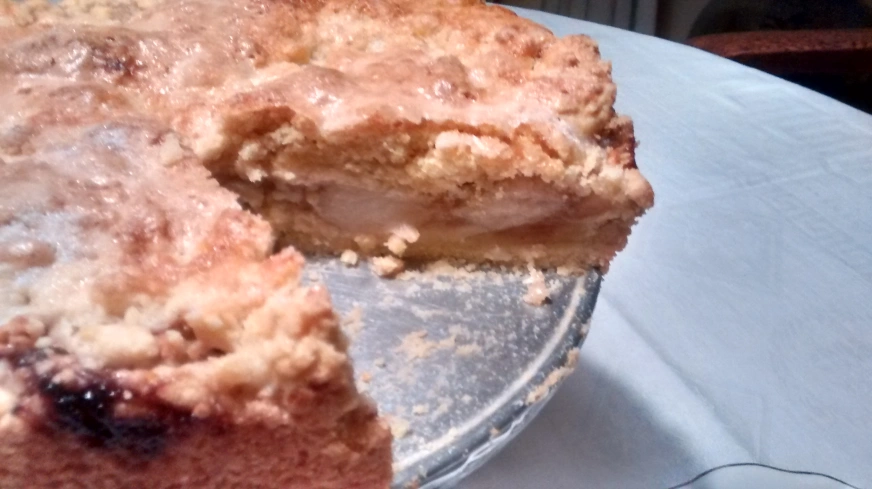
  • Polish Apple Cake
  • Polish Potato Pancakes

Szare Kluski

  • I only came across this recipe a few weeks ago.
  • Szare kluski means grey noodles or dumplings.
  • They get this name from the black colour you often get with grated raw potatoes.
  • They are in many ways similar to pyzy – but pyzy are often filled.
  • Szare kluski are made with just raw potatoes whilst pyzy are often made with half raw and half boiled potatoes.
  • The ingredients are similar to my recipe for Polish potato pancakeskartoflane placki – but without onions.
  • Szare kluski are boiled.
  • They are usually served with fried bacon or Polish sausage and / or fried onions.
  • They can also be served with a sauce (not yet tested).

INGREDIENTS

  • 1 kg starchy potatoes – before they are peeled
  • 160g plain wheat flour or 140g rye flour
  • 1-2 tablespoons of potato flour – you may not need all of this.
  • 1 egg – beaten
  • ½ teaspoon of salt.

METHOD

  • Peel the potatoes.
  • Grate them on a fine grated.
  • Put them into a large sieve with a bowl underneath.
  • Leave to stand for around 15 minutes to remove the water.
  • You will find potato starch  at the bottom of the bowl – you need to save this.
  • Mix the grated potatoes, salt, wheat (or rye) flour, egg, salt and the starch from the bottom of bowl.
  • Add enough potato flour to make a thick mixture.
  • *
  • Have ready a pan of salted boiling water.
  • Drop in tablespoonfuls of the mixture. (Use a spoon and a small spatula).
  • These will sink and then rise.
  • Once risen cook for around 1-2 more minutes.
  • *
  • Serve with fried bacon or Polish sausage and/ or fried onions.

Vintage Pyrex plate

Kartoflane Placki – 2

  • Kartoflane placki are super Polish potato pancakes.
  • I wrote a post about them many years ago.
  • We always had them with savoury items such as fried eggs.
  • Mama never served them with sweet options.
  • Having seen these in various blogs and Instagram – 
  • I decided to give them a go.
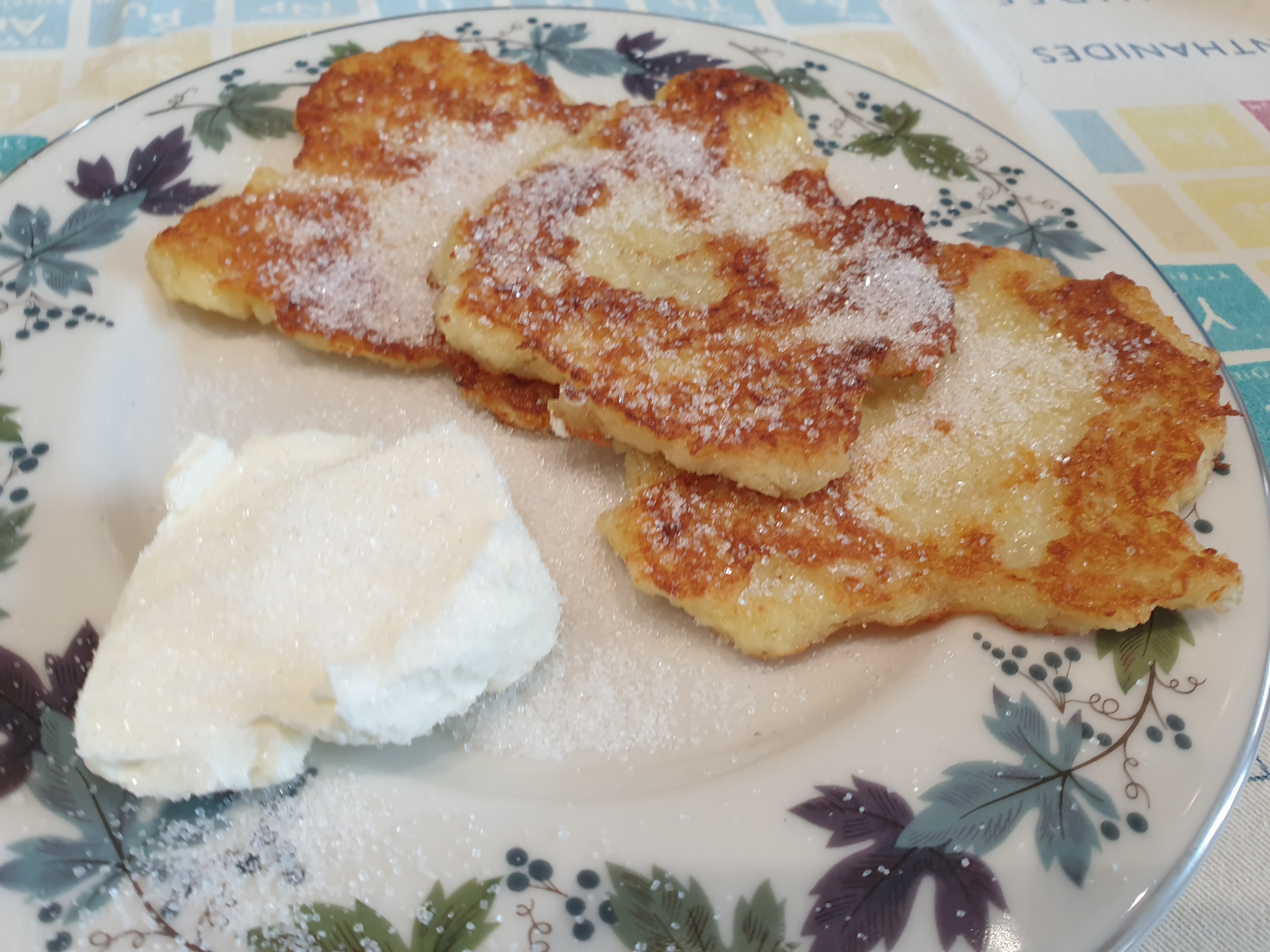
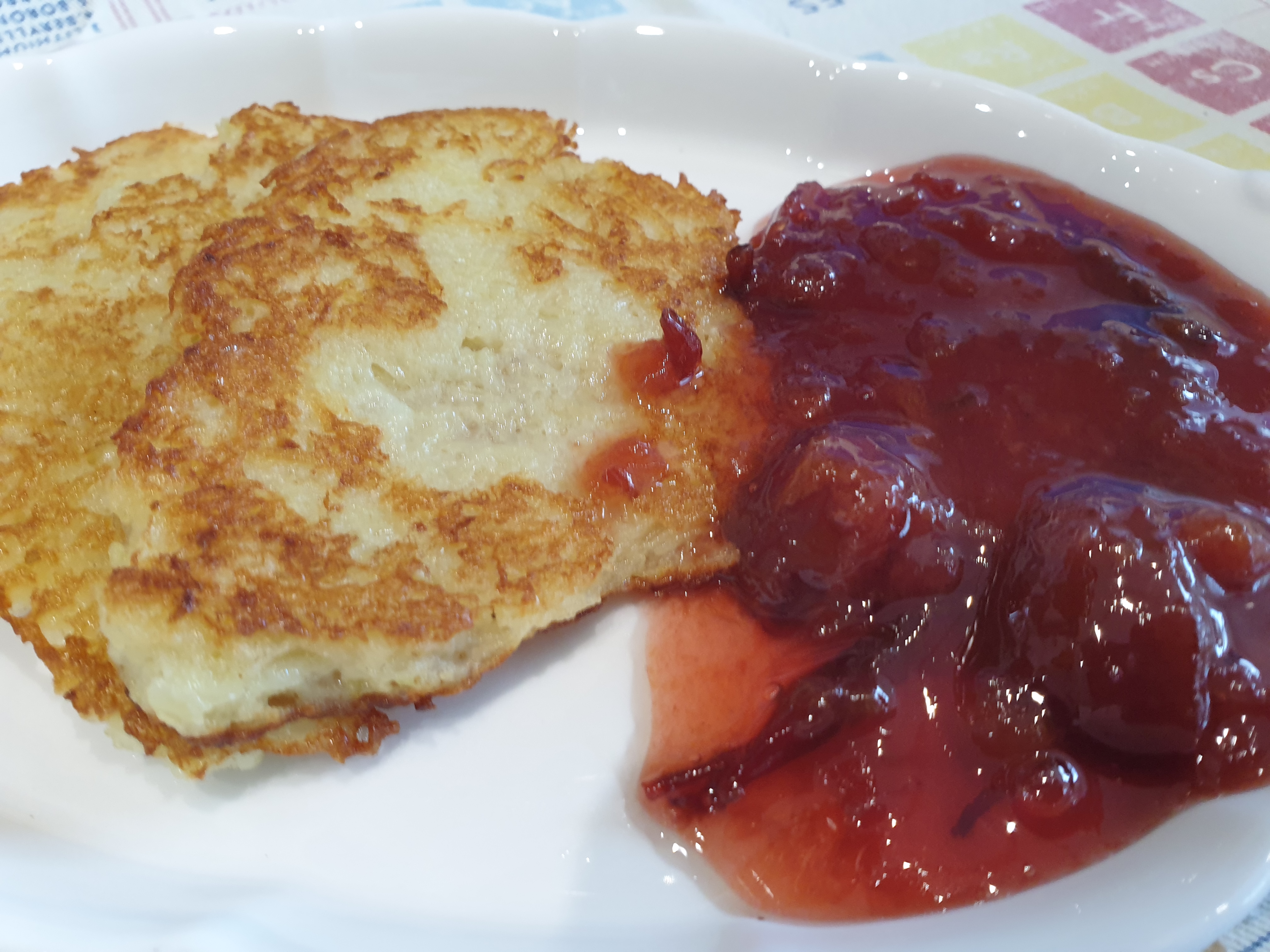
  • I  tried two options –
  • – With plum jam and
  • – With yoghurt cheese and granulated sugar.
  • They were delicious.
  • *
  • I have given the instructions again. 

Ingredients

  • 4 large starchy potatoes such as King Edward or Maris Piper
  • 1 medium or large onion
  • 1 egg or just the egg yolk
  • Plain flour
  • Salt & pepper
  • *
  • Oil for frying

Method

    • Peel the potatoes then grate them using the fine size of the grater into a large bowl, this is the part that takes time – I have tried using the coarse grate but they are not as good.
    • Leave to stand for a few minutes and the water from the potatoes will rise to the surface.
    • If the potatoes are very watery pour of some of the water. The easiest way is to tip up the bowl slightly over the sink and hold down the potatoes with the palm of your hand.
    IMG_20150811_165238337
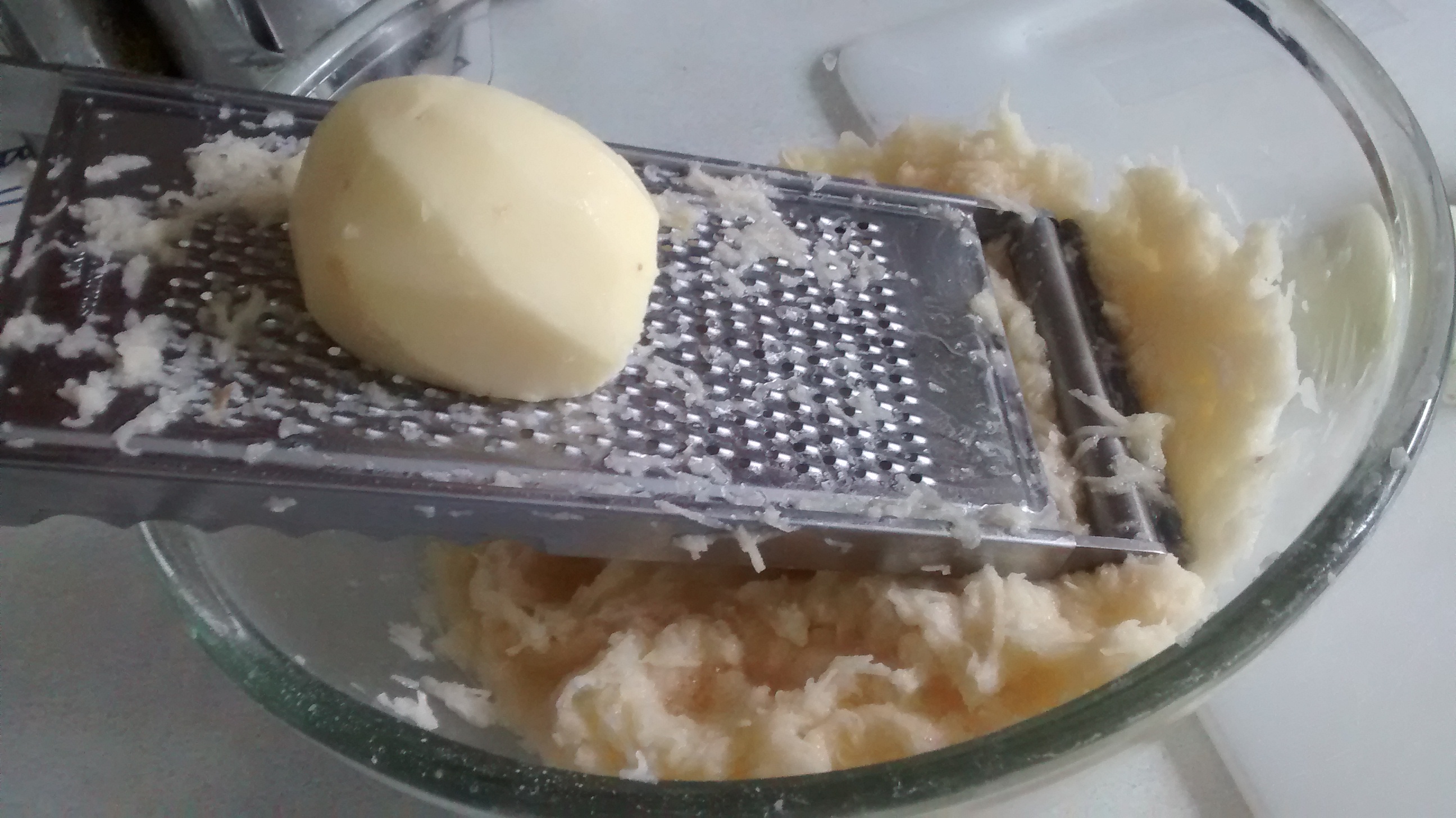
    Grating the potatoes


    • Peel the onion and also fine grate it and add to the potatoes.
    • This is the part that would often result in the grating of my knuckles  as I tried to use every last bit of onion.
    • I now often use some form of electrical mini-chopper to get a pulp of onion.
    IMG_20150811_165955962
    Onion Pulp
    • Add the egg, salt & pepper.
    • Add enough plain flour so that the mixture is thick.

    IMG_20150811_170357625

    • Heat some oil in a frying pan, a thick cast iron one is ideal, place large spoonfuls of the mixture onto the hot oil and flatten them out with the spoon or spatula.
    • A pan should be able to hold 3 or 4. Fry till golden on both sides.
    • They should be thin and  slightly crispy at the edges.

    IMG_20150811_170538654_HDR

    • Do not have the pan too hot or they will burn on the outside and be raw in the centre.
    • Do not have the pan too cool or they will end up too greasy and not crispy.

    IMG_20150811_171517471

    • Serve immediately or keep them warm in the oven on a low heat whilst you make more.

    IMG_20150811_171511857

    IMG_20150811_173653863

  • With yoghurt cheese and granulated sugar.
  • With plum jam made by my friend in Leeds.

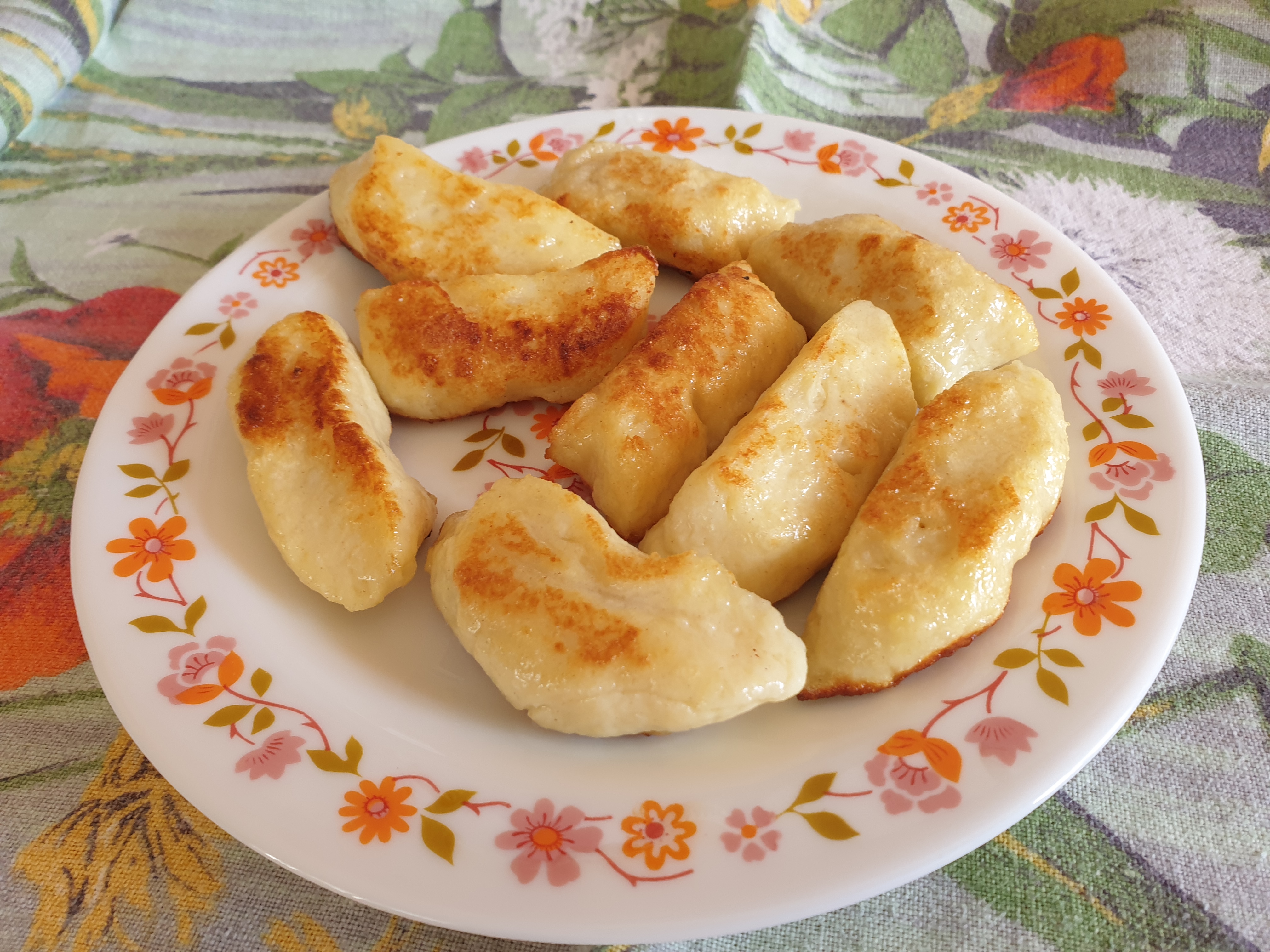
Fried Kopytka

  • My Mama often made kopytka potato dumplings but I do not remember them ever being fried afterwords.
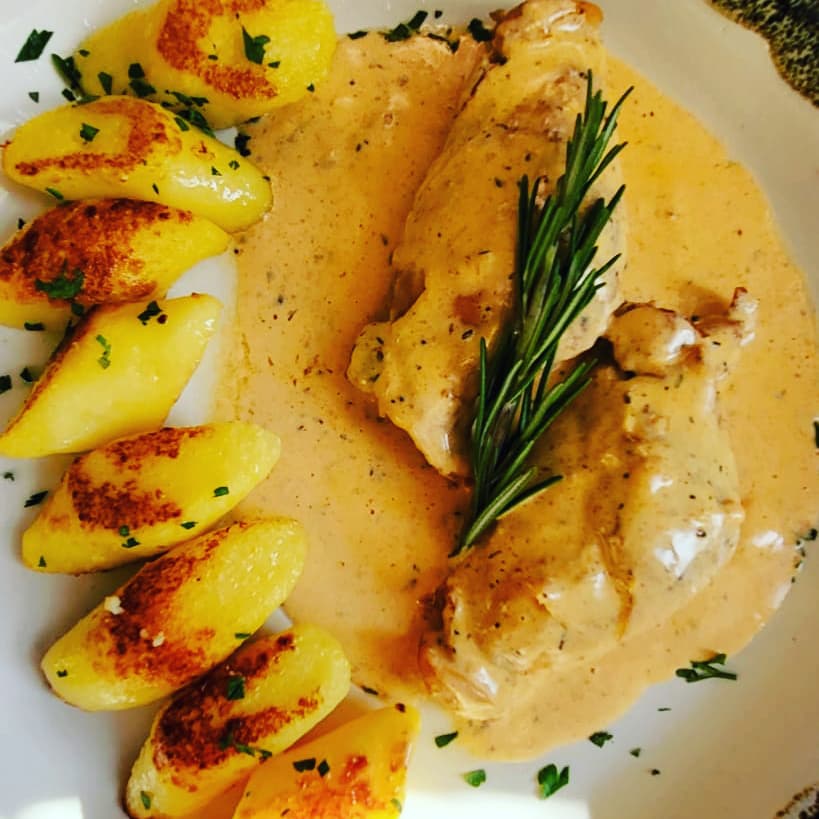
  • I had this dish of rabbit in a garlicky cream sauce with fried kopytka in a restaurant in Wrocław.
  • They were super!
  • I decided to have a go at these myself.
  • Now you can cheat if you have a Polish shop near you that sells ready made kopytka that you can boil first.
  • I decided to make these from scratch, which does involve a few steps & time.
  • *
  • THE STEPS
  • *
  • Boil starchy potatoes
  • Leave to go cold
  • *
  • Make kopytka
  • Boil the kopytka
  • Leave to go cold
  • *
  • Fry the kopytka

Ingredients

  • Starchy potatoes – boiled and left to go cold – around 500 – 600g
  • 1 egg & 1 egg yolk
  • Plain flour – around 200g
  • ½ teaspoon salt
  • Sunflower oil for frying

Method

  • Peel the potatoes cut them up into pieces and boil them in salted water.
  • Drain the potatoes
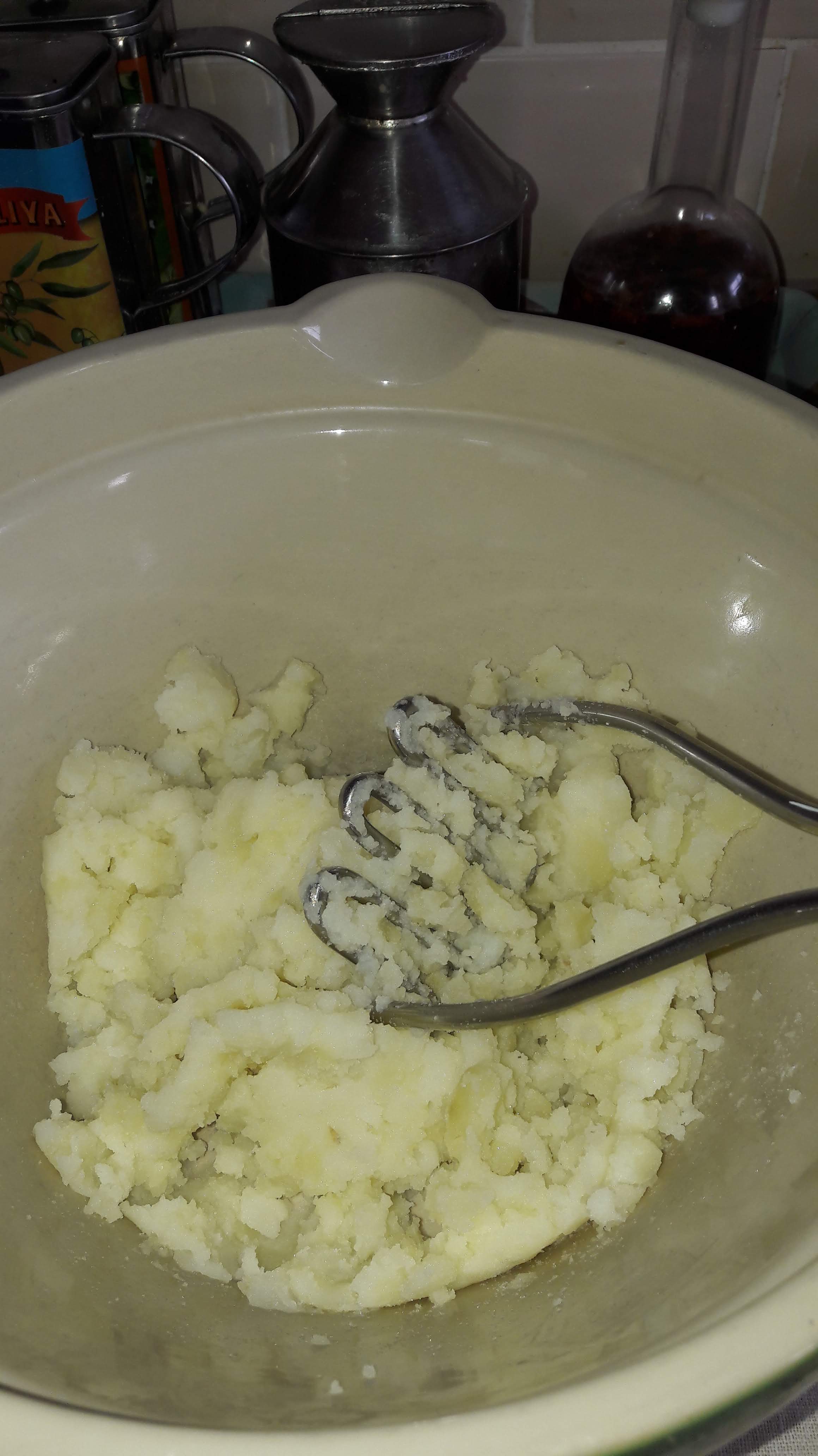
  • Mash them so that there are no lumps.
  • I have a ricer which is very good for this.
  • Leave the potatoes to cool.
  • Use a large bowl and put the cold potatoes into the bowl.
  • Lightly beat the egg and the yolk together and add this to the potatoes.
  • Add a little salt.
  • Weigh out the flour to give an idea of how much is needed,
  • This will depend on the type of potato and the size of the eggs.
  • Add the flour and mix first with a wooden spoon and then by hand, you might not need all the flour or you may need more.
  • Mix until you have a soft dough.
  • *
  • Divide the dough into quarters and using a floured board shape the dough and roll it with you hands until you have a long sausage about 3cm in diameter.
  • If the dough sticks to the board then you need to add more flour.
  • Use a sharp knife to cut the dough into pieces, make the first cut at a diagonal and make the thickness about 1 to 1.5cm.
  • You will get a sort of oval shape.
  • Repeat this with the rest of the dough.
  • *
  • Fill a large pan with water, add some salt and bring this to the boil.
  • When the water is boiling, add the dumplings one by one, do not over fill the pan or they will stick together.
  • I tend to do this in 4 batches.
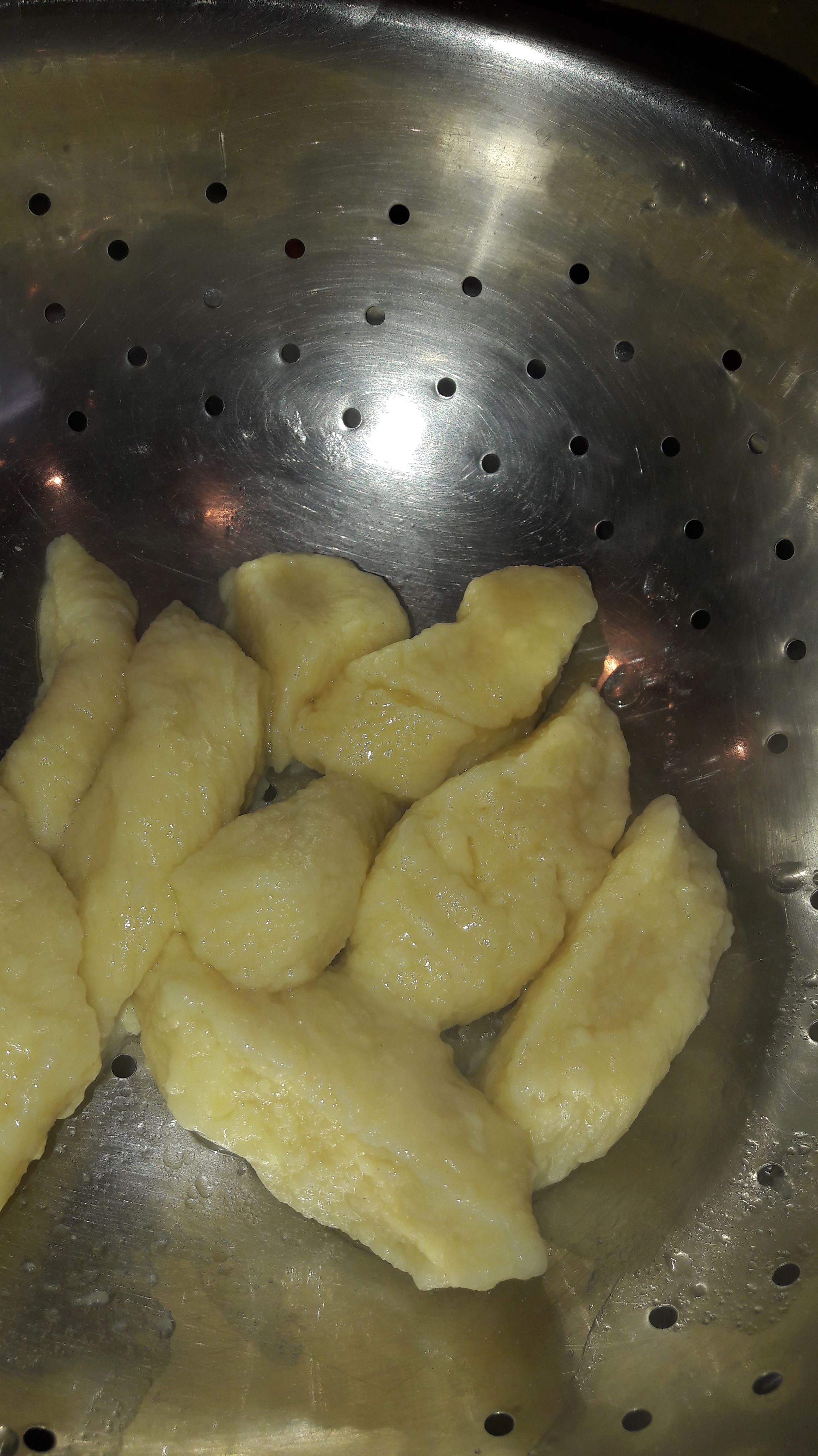
  • As they cook they will float to the surface, give them about another minute and then remove them with a slotted  or a perforated spoon and put them in a colander.
  • I have a colander sitting in an empty pan by the side of the large pan in which I am boiling the dumplings.
  • I find that the maximum from putting  them into the water to taking them out will be 3 minutes, if you cook these too long they will start to fall apart.
  • *
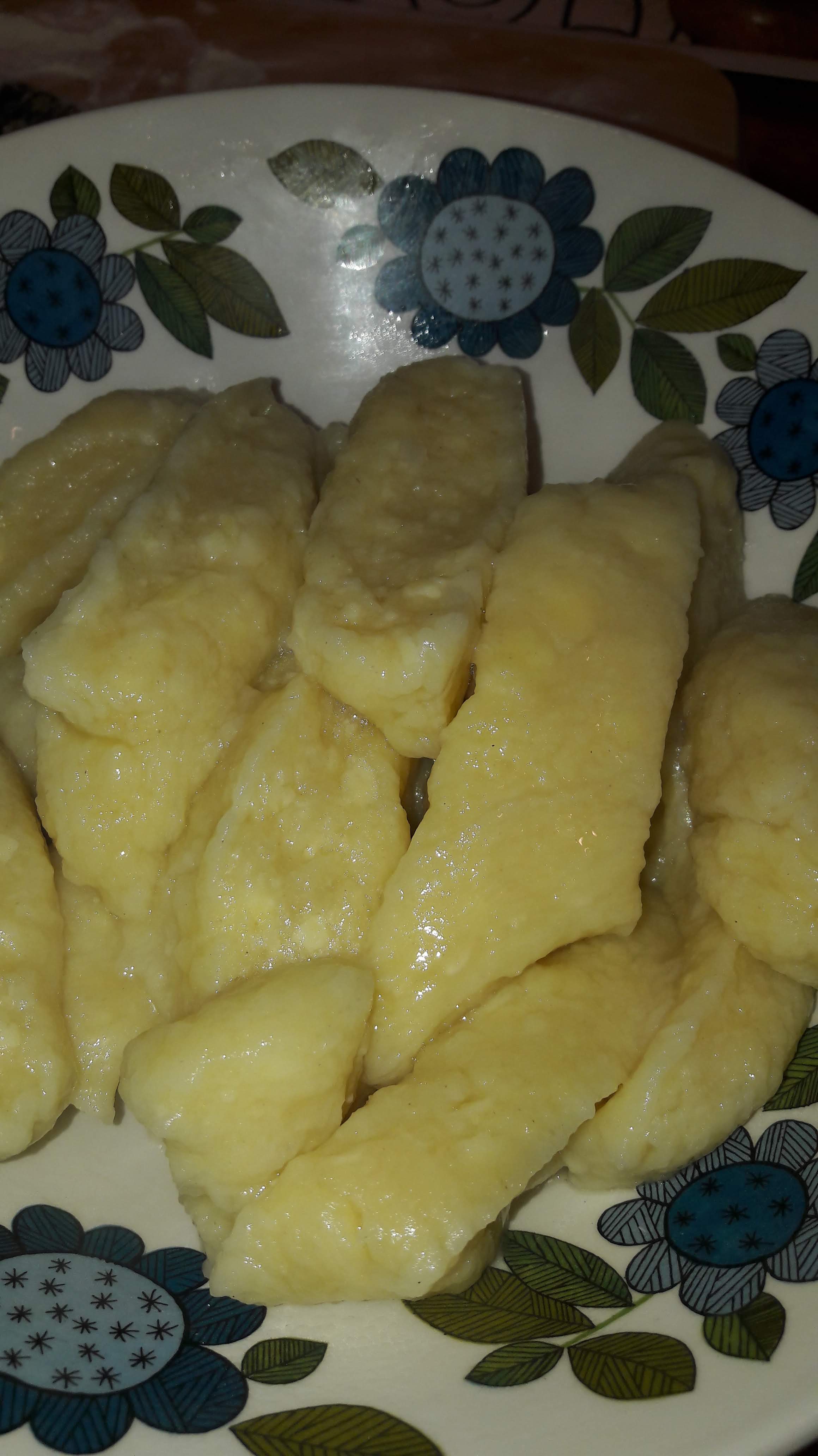
  • You need to let the kopytka dry off and go cold.
  • NOTE – kitchen roll tends to stick – baking paper is better.
  • Gently shallow fry the kopytka in sunflower oil.
  • Take care not to burn them.
  • Served here on a vintage pyrex plate.
  • Good with other fried foods or served with a sauce.

VERDICT

Everyone thought them delicious and want them to be made often!

Dividing the timing of boiling potatoes, making and boiling kopytka and then frying them to serve with a meal needs to be spaced out to make life easier!

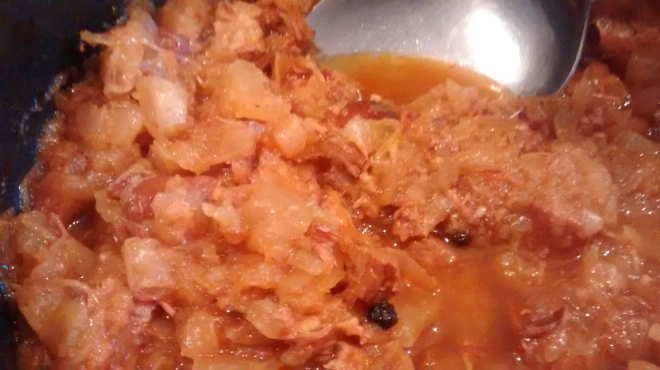
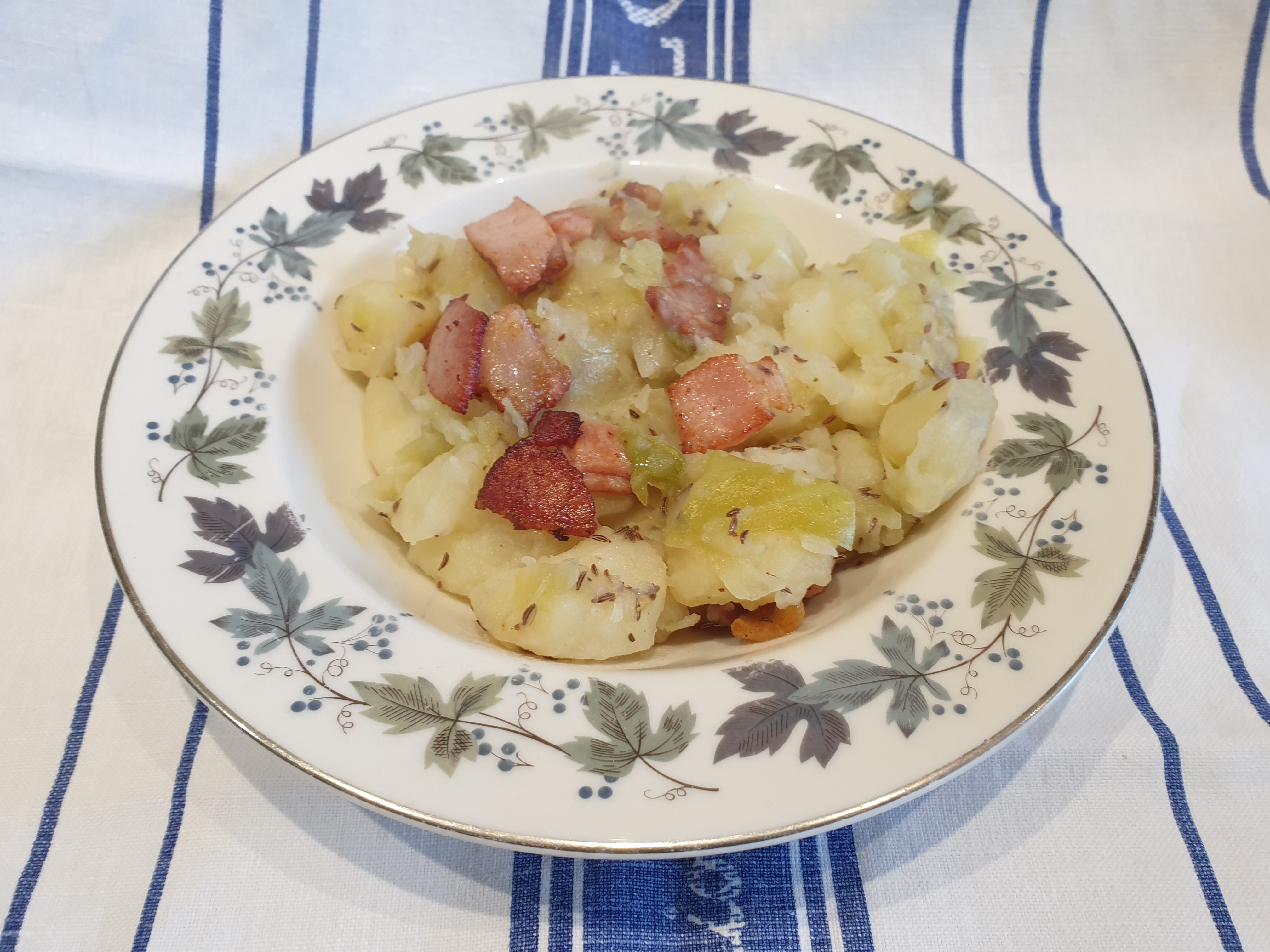
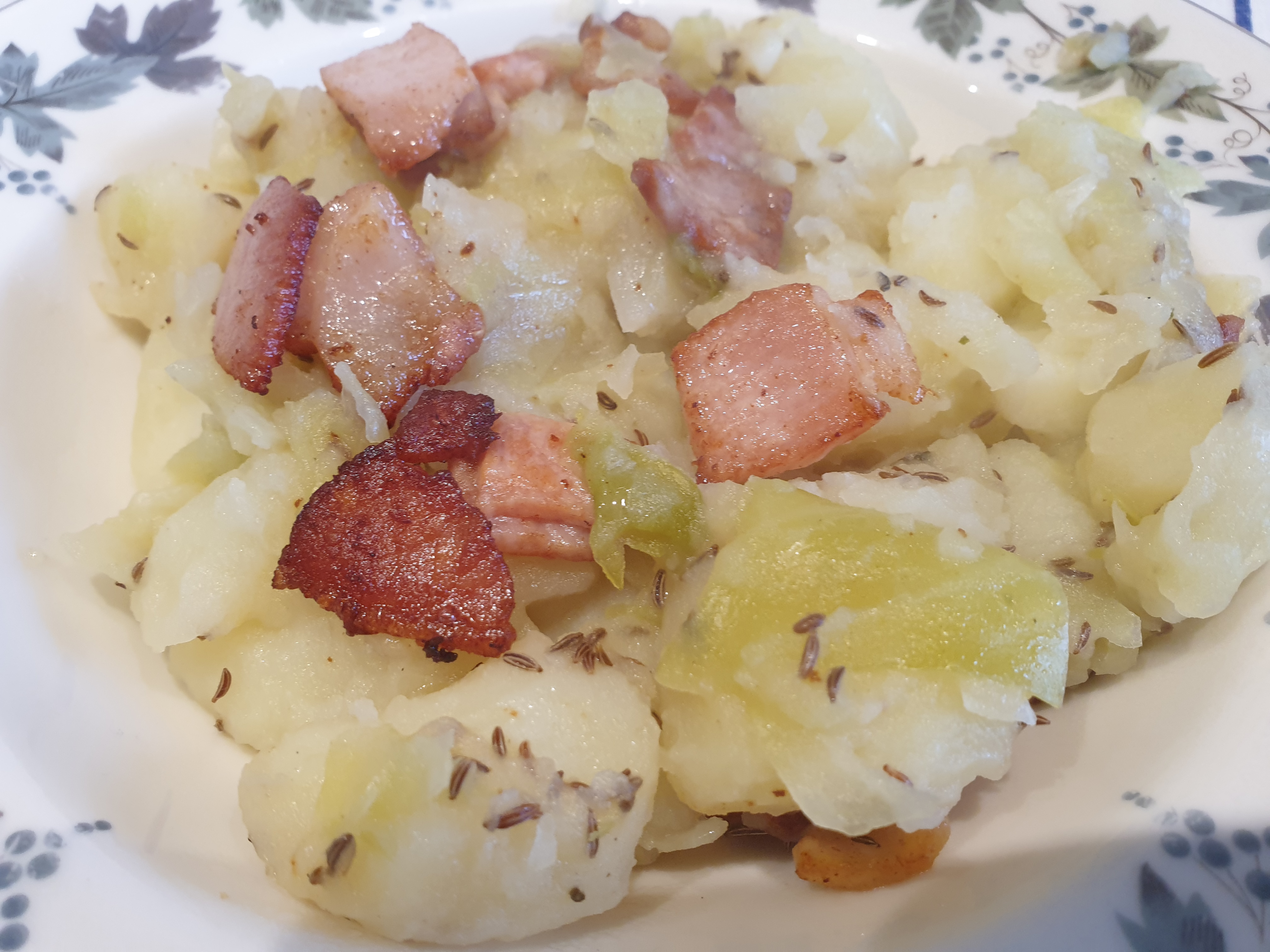
Kapusta “Parzybroda”

  • The name for this cabbage dish translates as ‘scalds your chin’ or ‘burns your beard’ .
  • I am not sure why  – but if you serve it straight from the pan it is very hot.
  • In some parts of Poland this is more like kapuśniak – cabbage soup – one that is made with fresh cabbage.
  • Here it is dish that can be eaten on its own or as a side dish.

Ingredients

  • 1 sweetheart or white cabbage
  • 500g starchy potatoes
  • 200g smoked streaky bacon
  • 1 litre vegetable stock
  • 1 tablespoon caraway seeds
  • Salt and pepper to taste

Method

  • Cut the cabbage into largish squares.
  • Peel and chop the potatoes into medium sized chunks.
  • Mix the two together in a large saucepan with the stock.
  • Bring to the boil and then simmer gently until the stock is all absorbed and the cabbage and potatoes are cooked.
  • In the meantime – chop the bacon into small squares and fry till all fat is cooked out and the bacon crisp.
  • These are called skwarki.
  • Add the caraway seeds to the cooked cabbage and potatoes – mix gently.
  • Gently mix in the fried bacon and the fat.
  • Season if necessary to taste.
  • Serve straight away.
  • Here served in a Royal Doulton – Burgundy dish

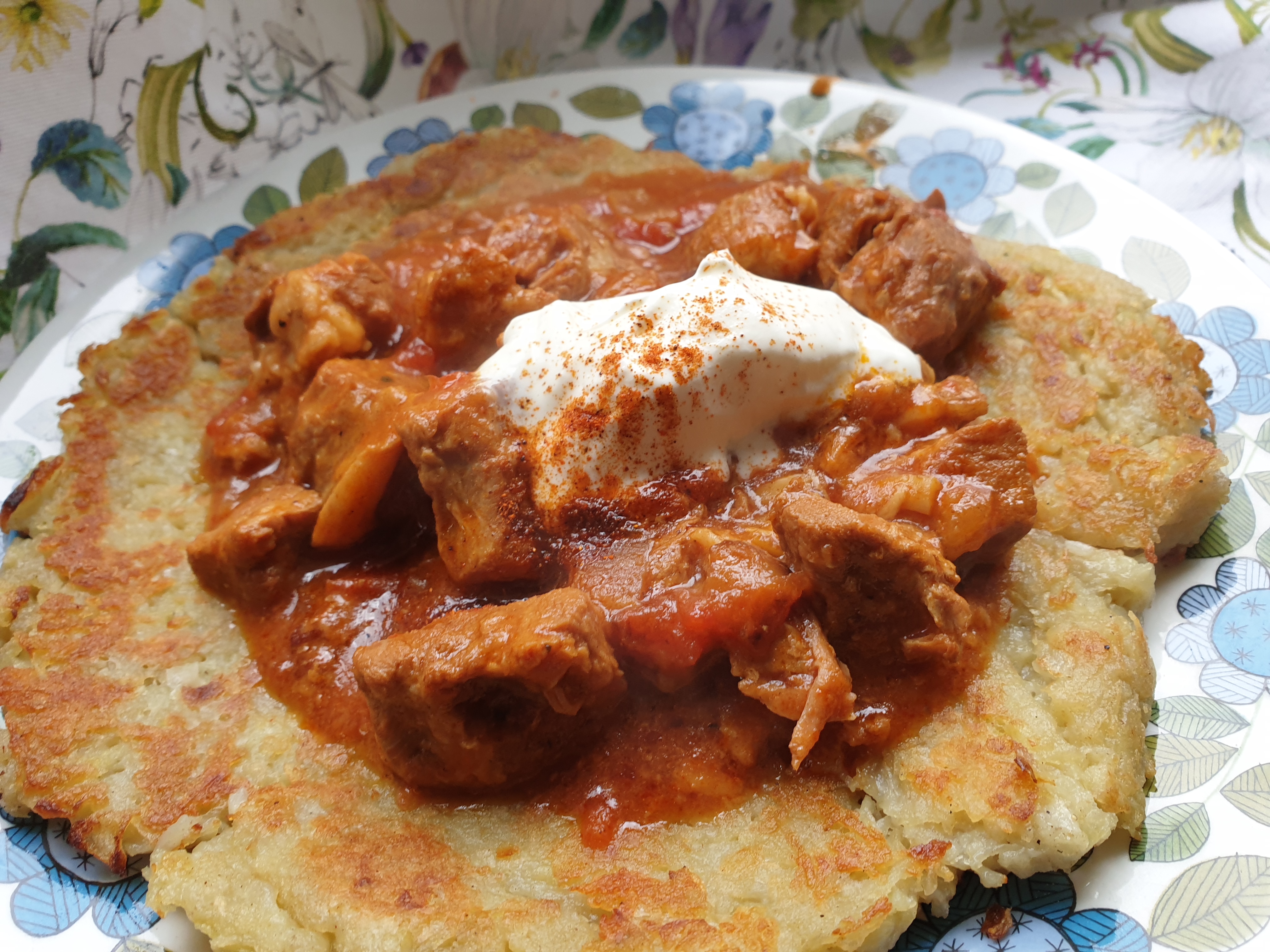
Placek po węgiersku

  • Po węgiersku  means in a Hungarian style
  • This is not so much a recipe but a way of serving two well known dishes – 
  • Kartoflane placki – Polish potato pancakes and gulasz. 
  • Usually the pancakes are made around 6-7cm in diameter, here each one is made the size of a breakfast plate around 18 – 20cm in diameter.
  • Try and made the pancake as thin as possible ( I think mine were a bit too thick!)
  • Serve with a portion of your favourite Hungarian style gulasz on top and a large dollop of soured cream and a sprinkling of sweet ground paprika.

Ingredients – Kartoflane placki

  • 4 large starchy potatoes such as King Edward or Maris Piper
  • 1 medium or large onion
  • 1 egg or just the egg yolk
  • Plain flour
  • Salt & pepper
  • *
  • Oil for frying

Method

  • Peel the potatoes then grate them using the fine size of the grater into a large bowl –  this is the part that takes time – I have tried using the coarse grate but they are not as good.
  • Leave to stand for a few minutes and the water from the potatoes will rise to the surface. If the potatoes are very watery pour of some of the water. The easiest way is to tip up the bowl slightly over the sink and hold down the potatoes with the palm of your hand.

  • Peel the onion and also fine grate it and add to the potatoes. This is the part that would often result in the grating of my knuckles as I tried to use every last bit of onion – I now often use some form of electrical mini-chopper to get a pulp of onion.

  • Add the egg, salt & pepper.

  • Add enough plain flour so that the mixture is thick.

  • Heat some oil in a frying pan, a thick cast iron one is ideal.
  • Place large spoonfuls of the mixture onto the hot oil and flatten it out to make a large circle.
  • Fry till golden on both sides.
  • It should be thin and  slightly crispy at the edges.
  • Do not have the pan too hot or it will burn on the outside and be raw in the centre.
  • Do not have the pan too cool or it will end up too greasy and not crispy.

To Serve

  • Have ready your favourite Hungarian style gulasz – cooked and hot.
  • Place a portion in the centre of the pancake.
  • Add a dollop of soured cream.
  • Sprinkle with sweet, ground paprika.
  • Served on Meakin – Topic plates – from the late 1960s.

Sweet Knedle – 2

  • In some parts of Poland the dough for plum knedle is made from cold boiled potatoes.
  • Best to boil the potatoes earlier than you need them.
  • In Poland small dark plums called węgierki (Hungarian plums) are used.
  • I think that in America these are called Italian plums.
  • Use ripe plums – small ones are best.

    Ingredients 

  • 8 plums
  • *
  • 600g cold boiled potatoes
  • 1 tablespoon of melted butter
  • 1 egg and 1 yolk
  • 120g plain flour (approx)
  • Pinch of salt
  • *
  • To serve
  • Butter
  • Dried breadcrumbs
  • Ground cinnamon
  • or
  • Soured cream
  • Icing sugar
  • Ground cinnamon 

Method

  • Make sure the potatoes are cold.
  • Mash the potatoes or use a ricer so you do not have any lumps.
  • Add the melted butter, egg, yoke and a pinch of salt.
  • Mix well together.
  • Add the flour bit by bit – you want a dough that you can handle but not too stiff.
  • *
  • Mix around 3 tablespoons of granulated sugar with 1 teaspoon of ground cinnamon.
  • Wash and dry the plums and remove the stalks.
  • Remove the stone but do not cut through completely.
  • Put ½ to 1 teaspoon of the sugar mixture in the cavity.
  • *
  • Divide the dough into 8 equal balls.
  • Flatten each ball.
  • Put a plum in the centre of the dough.
  • Shape the dough around the plum.
  • Seal up the “seam”.
  • Fashion a ball or oval with your hands.
  • *
  • Fill a wide pan with water and a tablespoon of salt and bring to the boil.
  • Drop in the knedle in batches – 3 or 4 at a time.
  • Boil for around 8-10 minutes.
  • They are ready when they float to the surface.
  • *
  • Serve with hot buttered breadcrumbs and a pinch of cinnamon
  • or
  • Serve dusted with icing sugar and soured cream and a large sprinkling of cinnamon.

Note

I have read that some people serve these as a side dishes with roast meats.