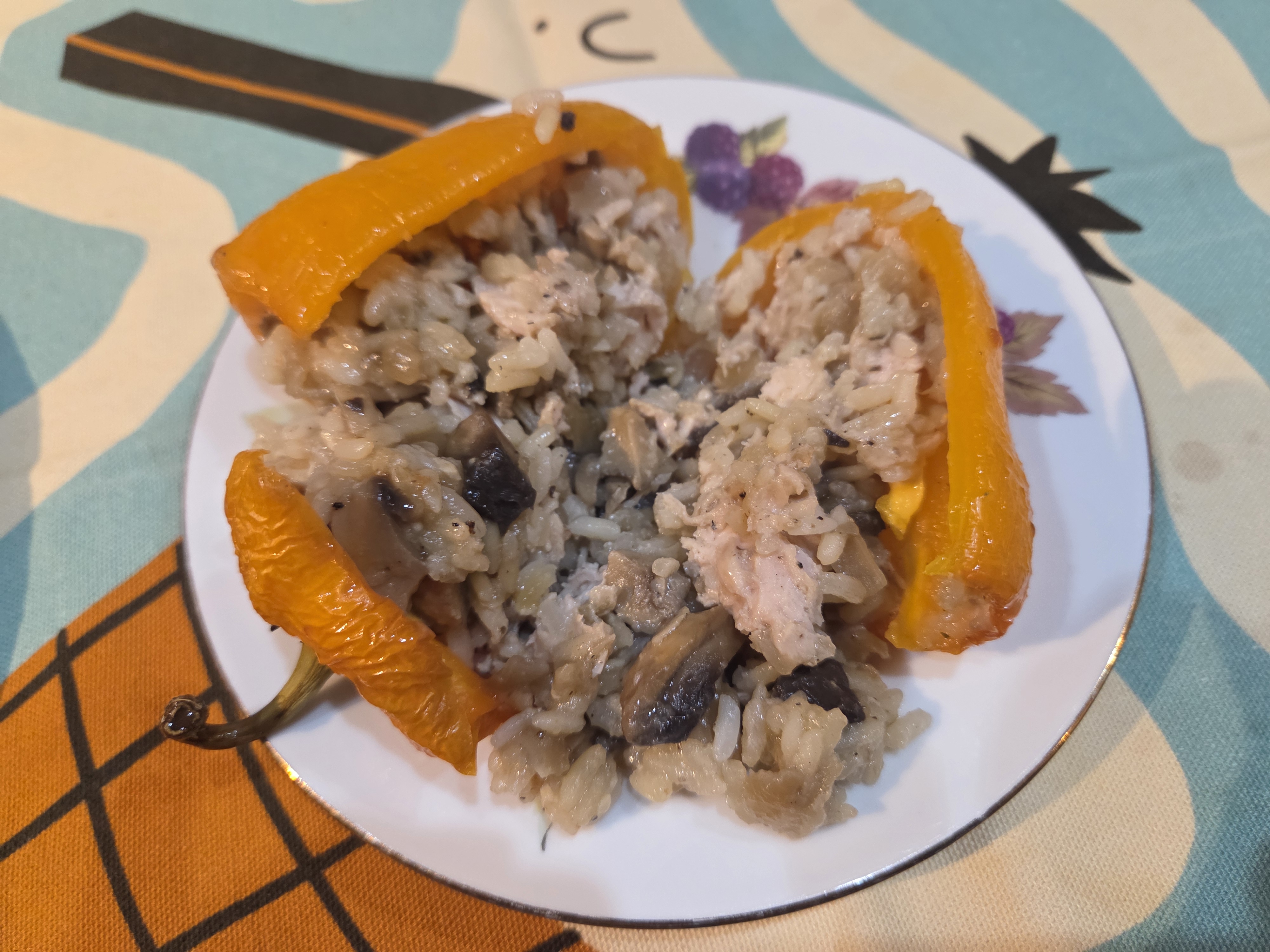
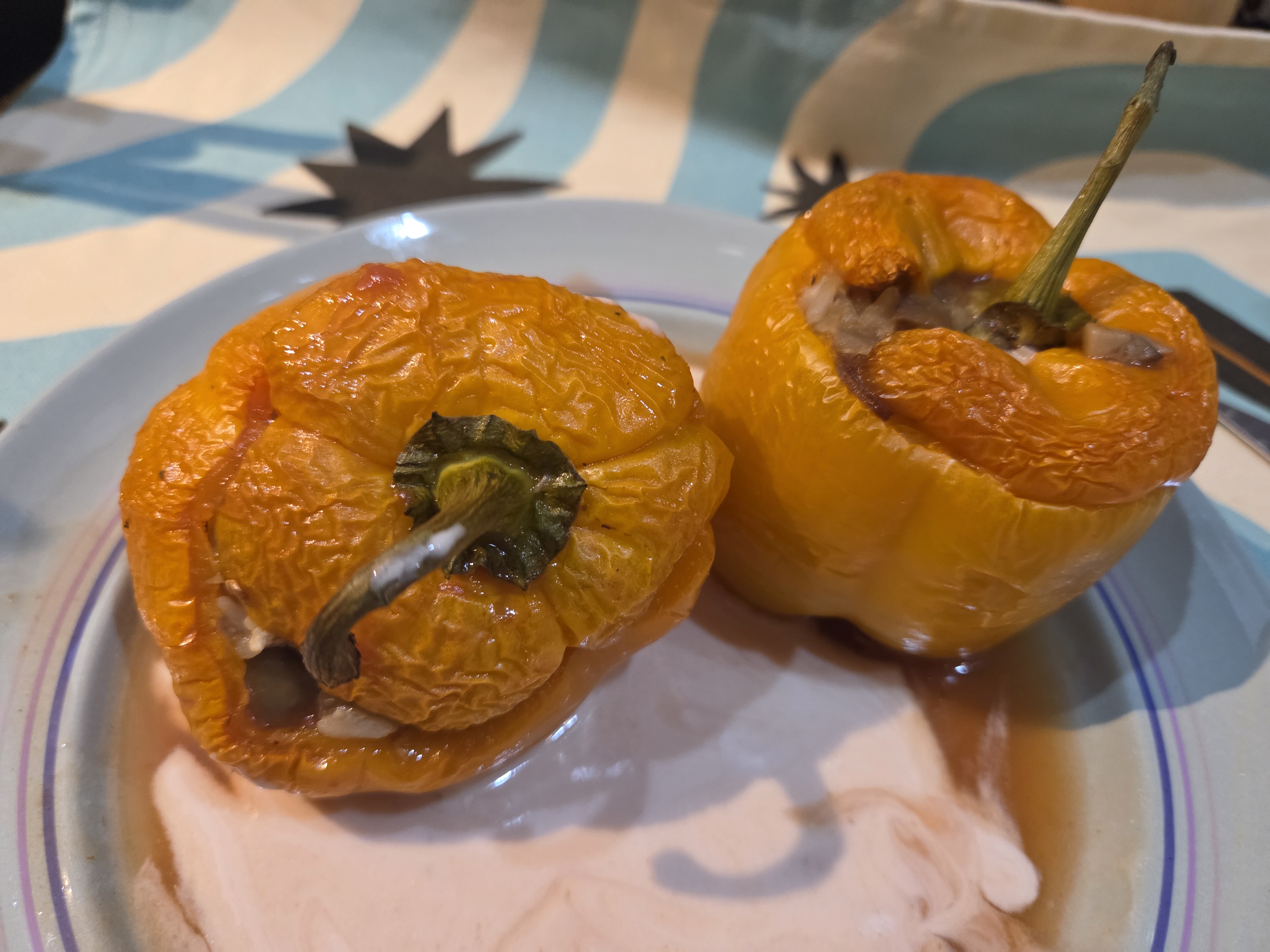
Stuffed Peppers – 2

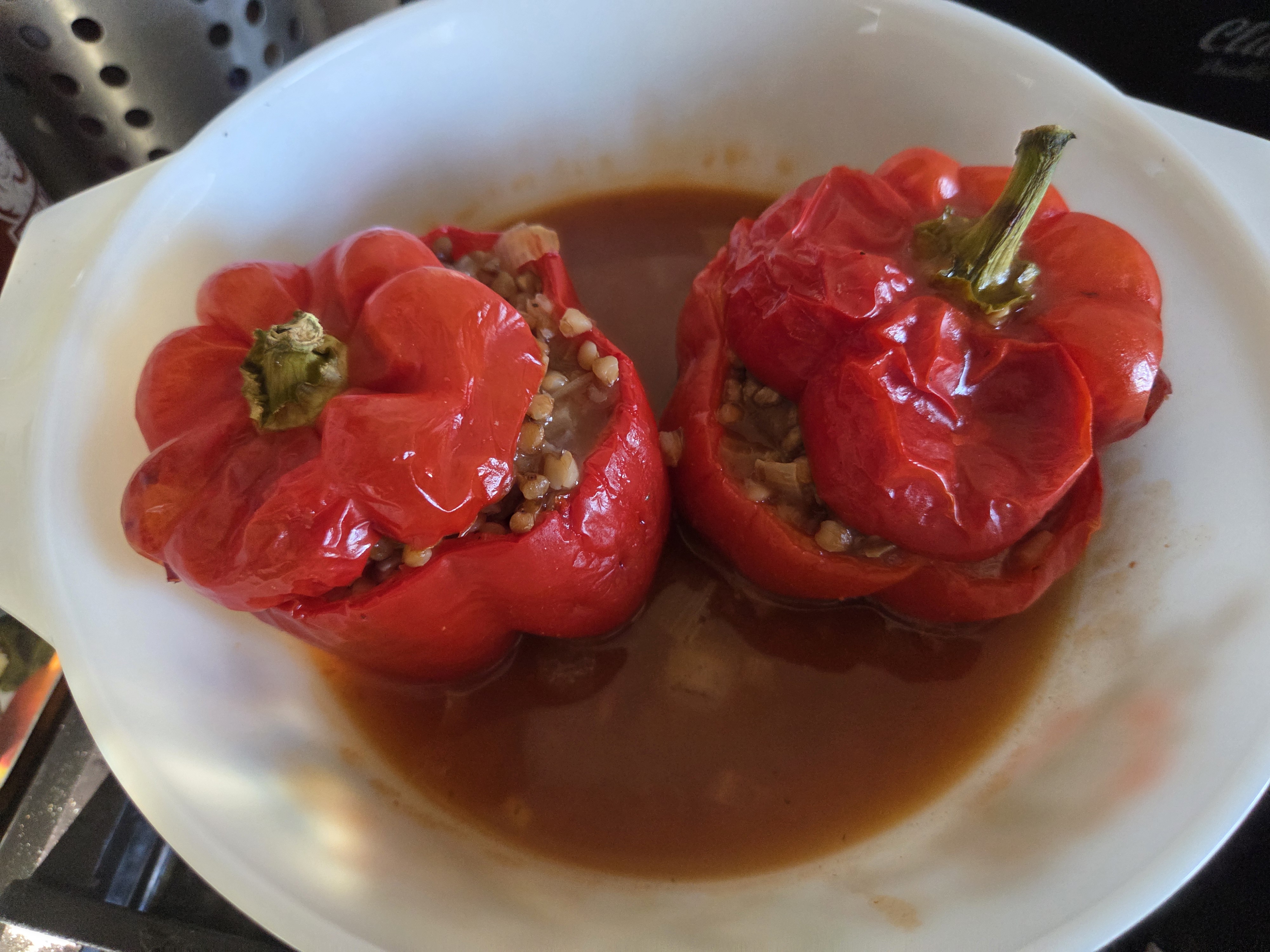
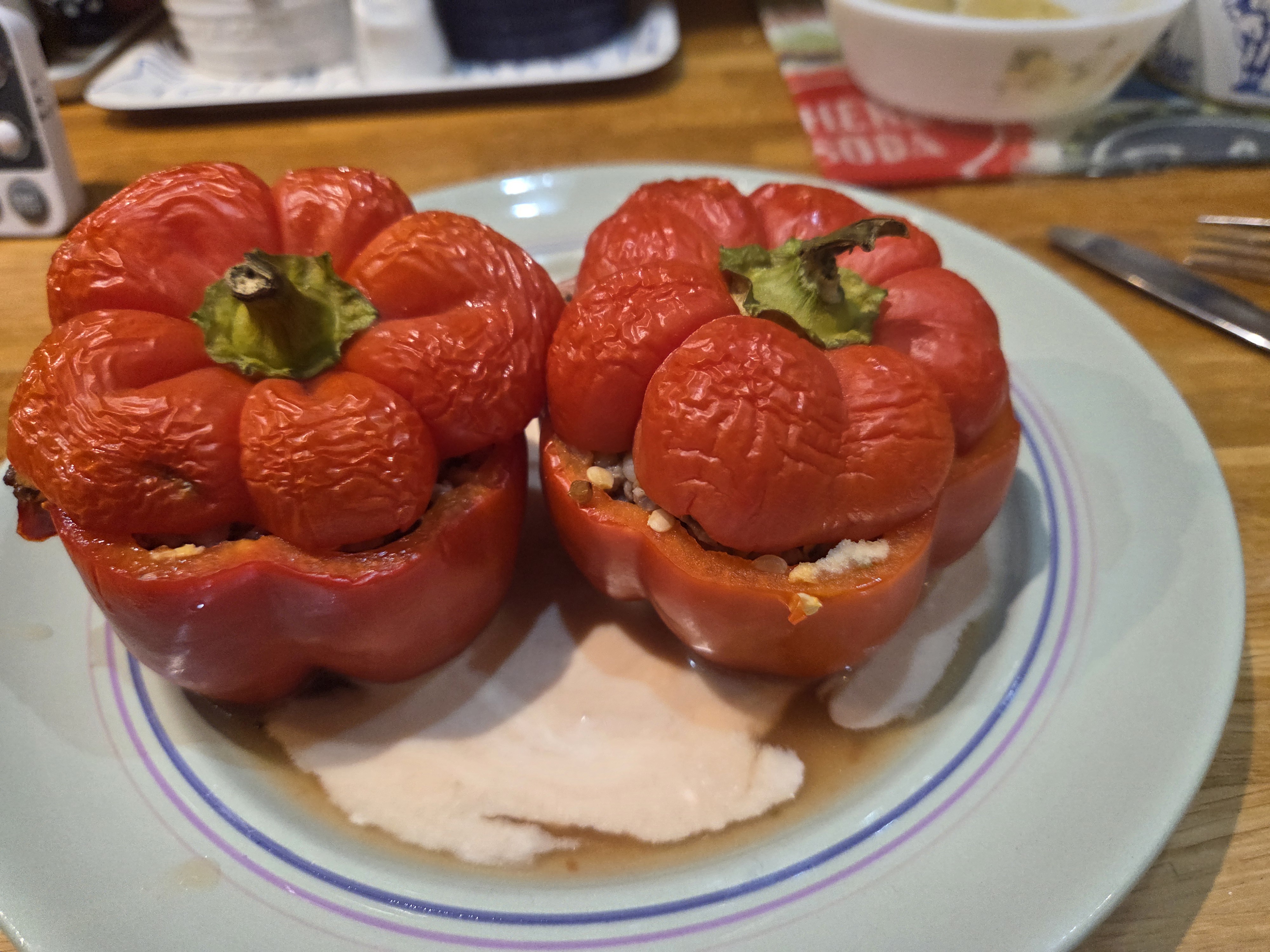
  • Everyone liked my stuffed peppers so much I decided to try out a variation.
  • This time I used rice as one of the fillings instead of buckwheat.
  • I went to Leeds market and found that the red pepper season seemed to be over.
  • There were lots of orange peppers but they were more a medium size.
  • If you can get peppers with a flat bottom rather than a pointed one.
  • Of course, you might not have any choice – you might have to use a knife in the baking try to hold the peppers up.
  • The method is as before – but written up again for ease.

INGREDIENTS

  • 6 orange or red large peppers
  • 250-300g of minced or finely chopped chicken breast
  • 1 large onion – finely chopped
  • 2 cloves of garlic – finely chopped
  • 150 – 200g of mushrooms
  • 200g of cooked rice
  • Butter for frying mushrooms and onions
  • 1 teaspoon of dried thyme
  • Salt & Pepper to taste
  • 300ml of vegetable stock – I used marigold powder
  • 1 -2 tablespoons of tomato purée or ketchup
  • 1 teaspoon of dried paprika.
  • *
  • 1 tablespoon of soured cream or yoghurt – optional

METHOD

  • Fry the onions in butter until they are golden.
  • Chop the mushrooms into small pieces and add them to the onions.
  • Fry them both together.
  • Add the garlic and fry the mixture together.
  • Pre- heat the oven to GM3 – 150°C.
  • Cut the tops of the peppers and keep to one side.
  • Scoop out the seeds from the peppers.
  • Put the peppers into a roasting tray.
  • Add some of the vegetable stock to the base.
  • Cook for around 15 minutes to soften the peppers.
  • Leave to cool slightly.
  • Turn up the oven to GM4 – 180°C
  • Mix together the cooked rice with the minced chicken and the mushroom mix, add the marjoram.
  • Season to taste.
  • Fill each pepper with the filling and put on the tops.
  •  
  • *
  • Add the rest of the vegetable stock to the baking tin and the paprika and tomato purée or ketchup and stir.
  • Put the peppers to stand in the stock mixture.
  • You might need a knife laid down to help keep the peppers vertical.
  • Put back into the oven and cook for around 1 hour.
  • You might need longer so the peppers are softish.
  • Keep looking at the progress and pour some of the stock mixture over the peppers to keep them from drying out.
  • *
  • Add the soured cream to the stock mixture to make a sauce.

NOTE – 1

If you think you will have any left – before adding the soured cream put them into an ovenproof pyrex dish with a lid with some tomato stock liquid – you can reheat them the next day in a microwave and them add some soured cream.

NOTE – 2

You can use cooked pearl barley instead of rice – NOT tested.
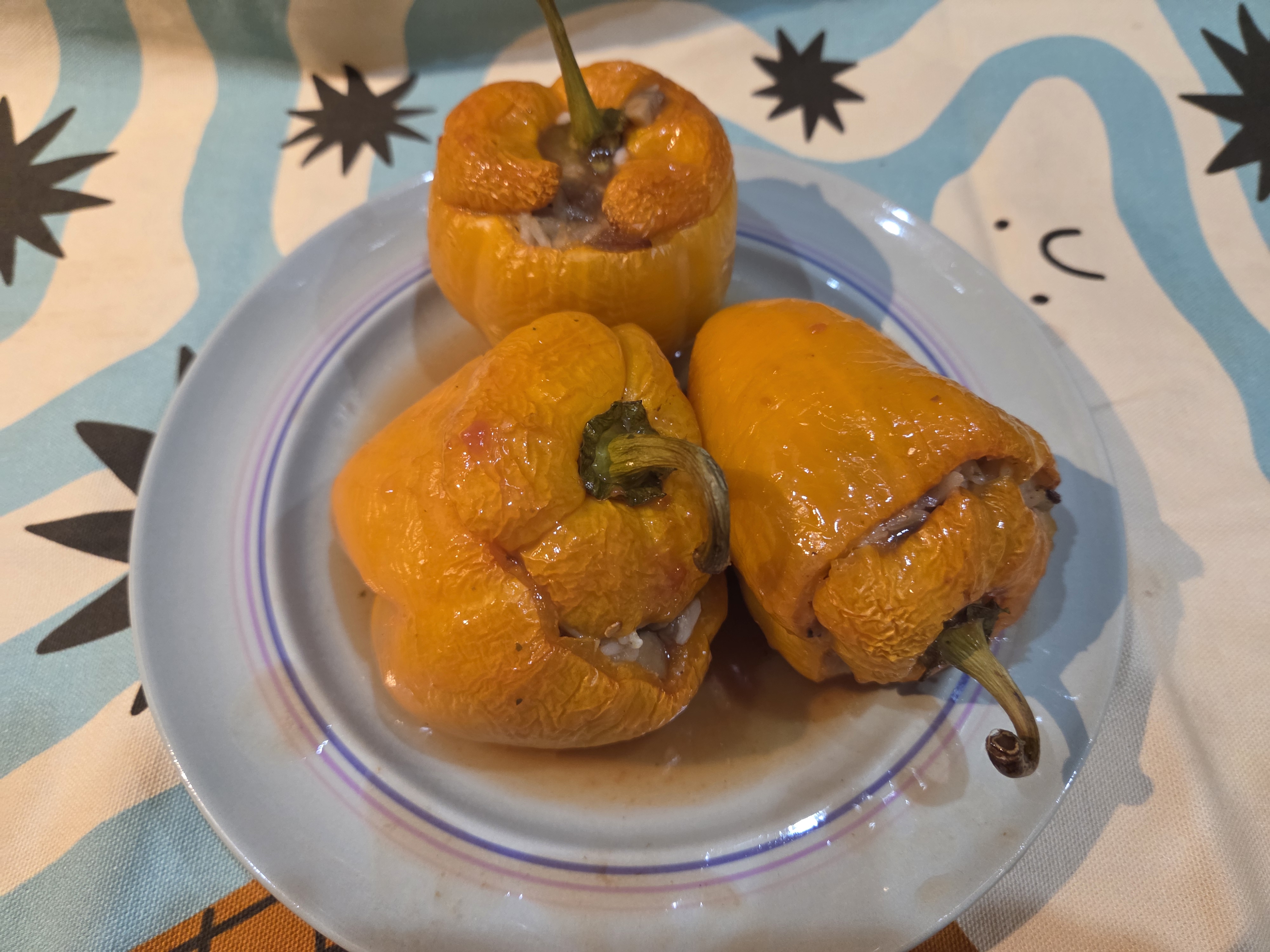
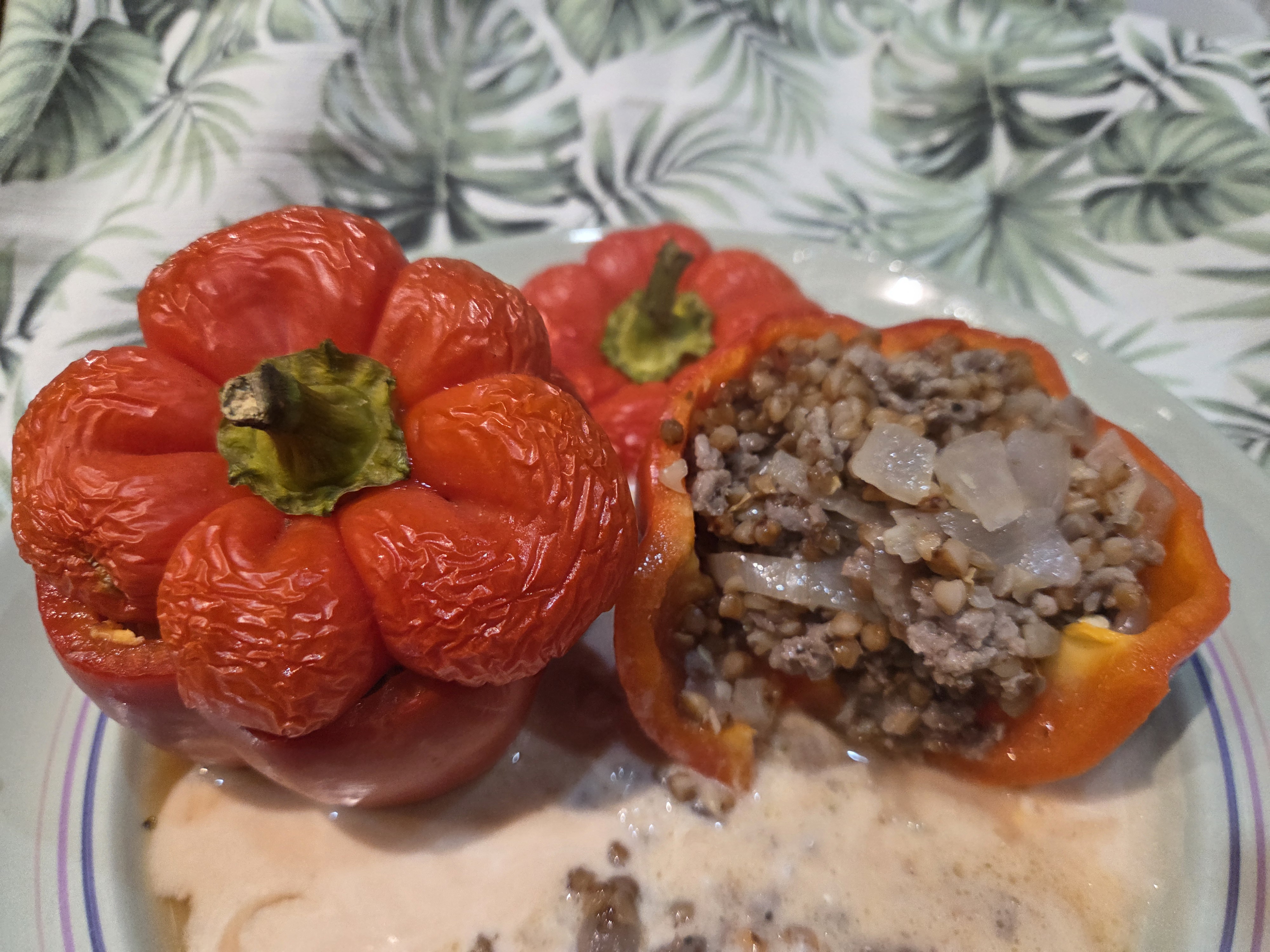
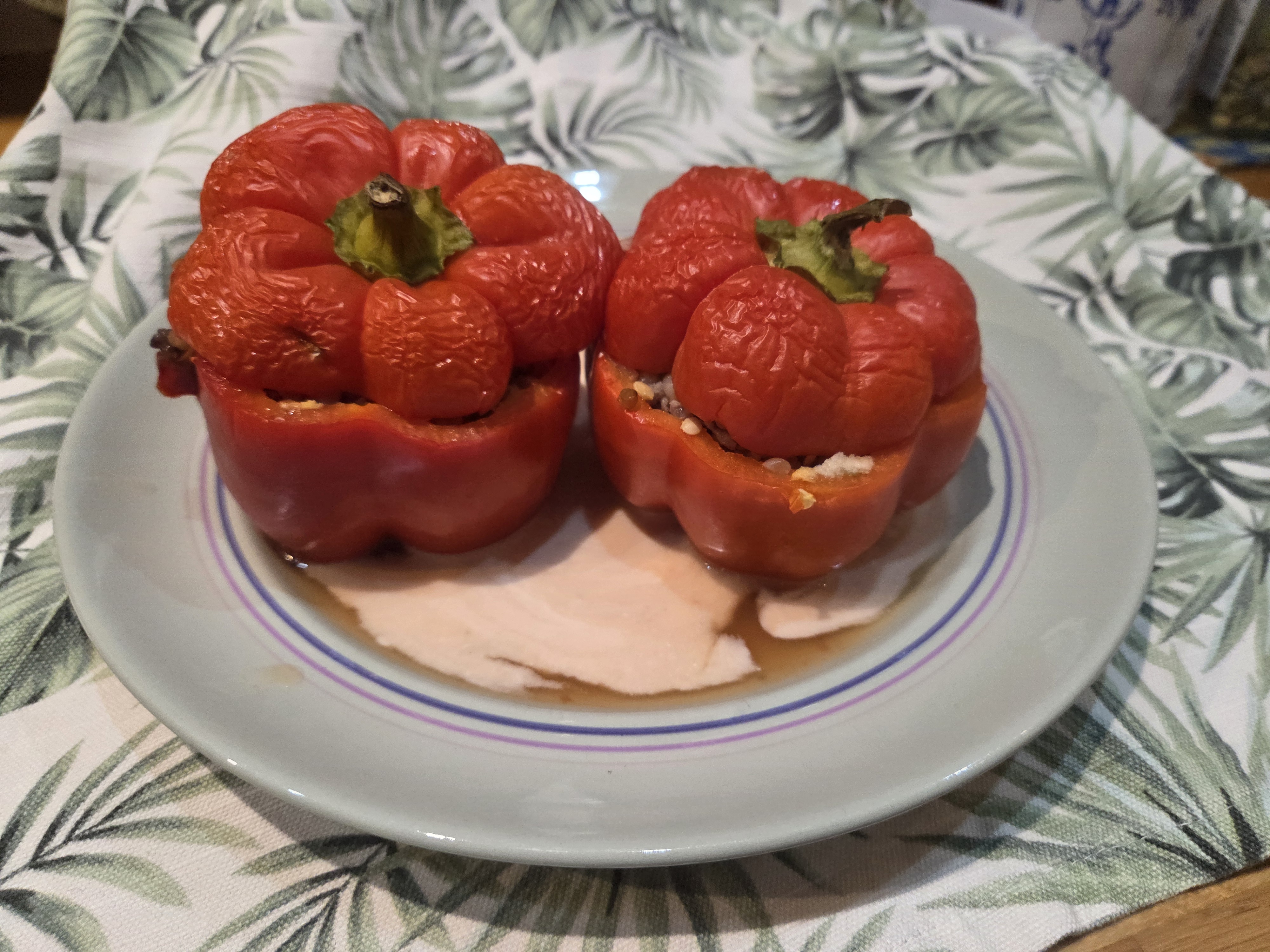
Stuffed Peppers

  • This dish is best with large fresh red peppers.
  • When I was served this in Poland, the peppers were really big and smelt wonderful.
  • You can vary the stuffing to suit but I will write up the dish I was served.
  • Cooked buckwheat or rice is used.

INGREDIENTS

  • 4 to 6 large red peppers
  • 100g cooked buckwheat or rice
  • 1 large onion – chopped and lightly fried
  • 2 cloves of garlic – chopped.
  • 200g – 250g minced beef 
  • *
  • Salt & pepper to taste.
  • Dried marjoram or mixed herbs
  • *
  • Vegetable stock – can be from powder or a cube
  • 2 tablespoons of tomato purée or tomato ketchup
  • 1 teaspoon of ground paprika
  • 2-3 tablespoons of soured cream

METHOD

  • Pre- heat the oven to GM3 – 150°C.
  • Cut the tops of the peppers and keep to one side.
  • Scoop out the seeds from the peppers.
  • Put the peppers into a roasting tray.
  • Add some of the vegetable stock to the base.
  • Cook for around 10 minutes to soften the peppers.
  • Leave to cool slightly.
  • Turn up the oven to GM4 – 180°C
  • Mix together the cooked buckwheat(or rice) with the minced meat, onion, garlic, marjoram or herbs.
  • Season to taste.
  • Fill each pepper with the filling and put on the tops.
  •  
  • *
  • Add the rest of the vegetable stock and add the paprika and tomato purée or ketchup and stir.
  • Put the peppers to stand in the stock mixture.
  • Put back into the oven and cook for around 1 hour.
  • You might need longer so the peppers are softish.
  • *
  • Add the soured cream to the stock mixture to make a sauce.

If you think you will have any left – before adding the soured cream put them into an ovenproof pyrex dish with a lid with some tomato stock liquid – you can reheat them the next day in a microwave and them add some soured cream.

These were so delicious and I am planning to try out some different fillings soon.

Chilli Jam

  • This is a recipe that I have been making for years.
  • I do not remember where I got it from.
  • I do not think of it as Polish but everyone loves it.
  • It goes really well with cold meats and Polish sausage – kielbasa.
  • I have often been asked for the recipe.
  • So I thought I would write it up and share it.
  • The amounts are not so rigid – you and adjust them to your tastes and what is available.
  • I usually go to Leeds market to buy all the fresh produce.
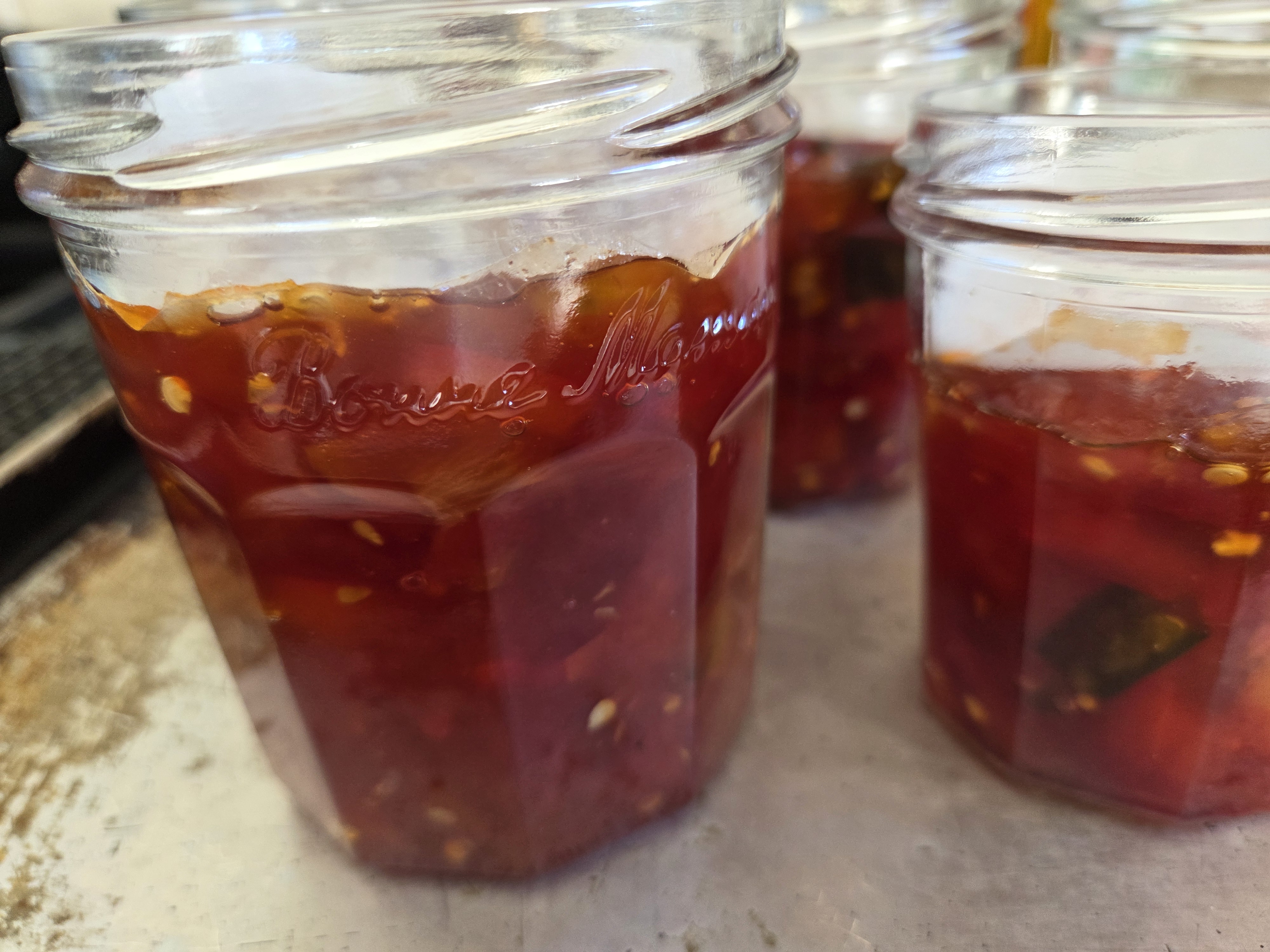
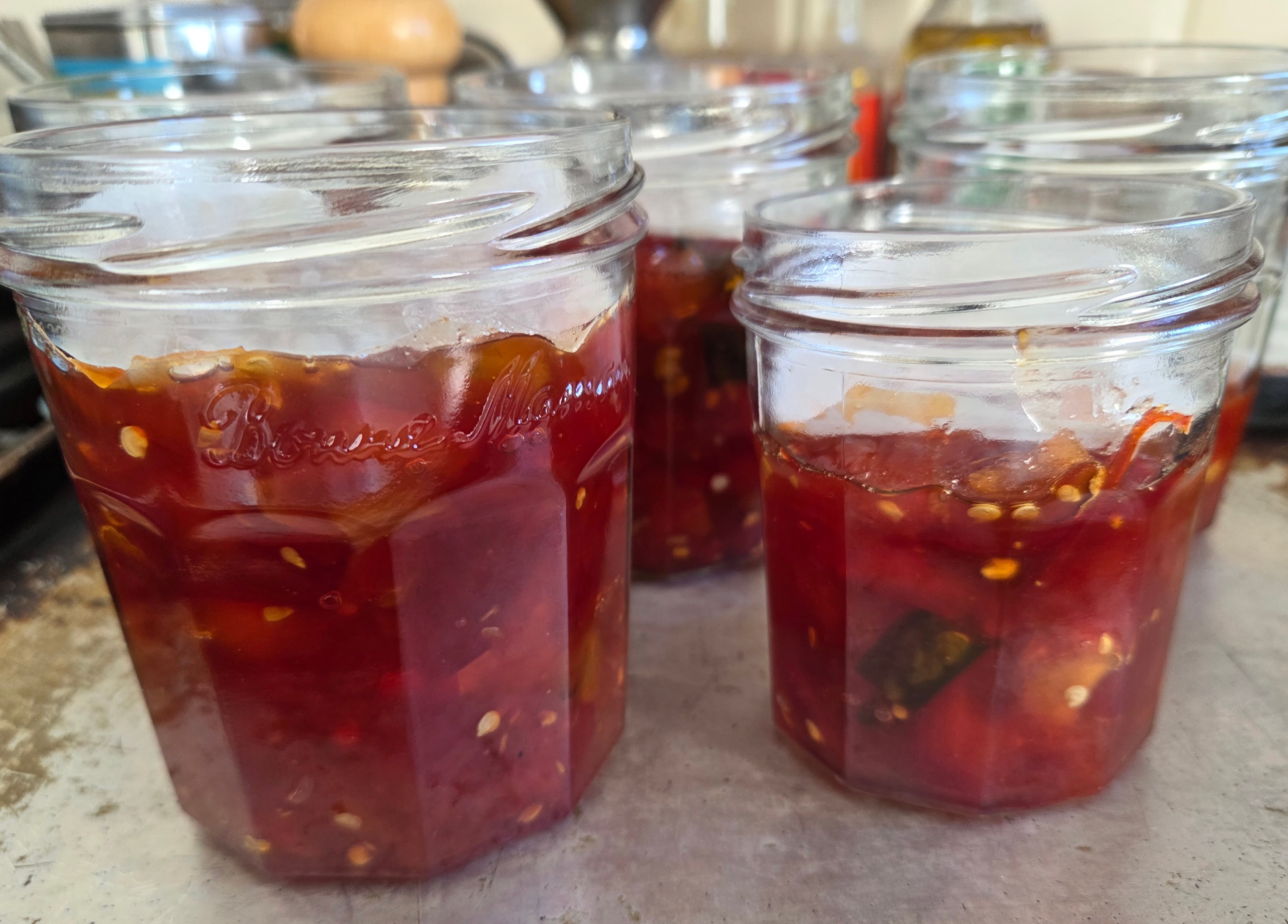
  • It makes around 4 jars –
  • HOWEVER – Because of all the chopping and the amount in a jam pan – I never double up on these ingredient quantities.

INGREDIENTS

  • 400g cherry tomatoes

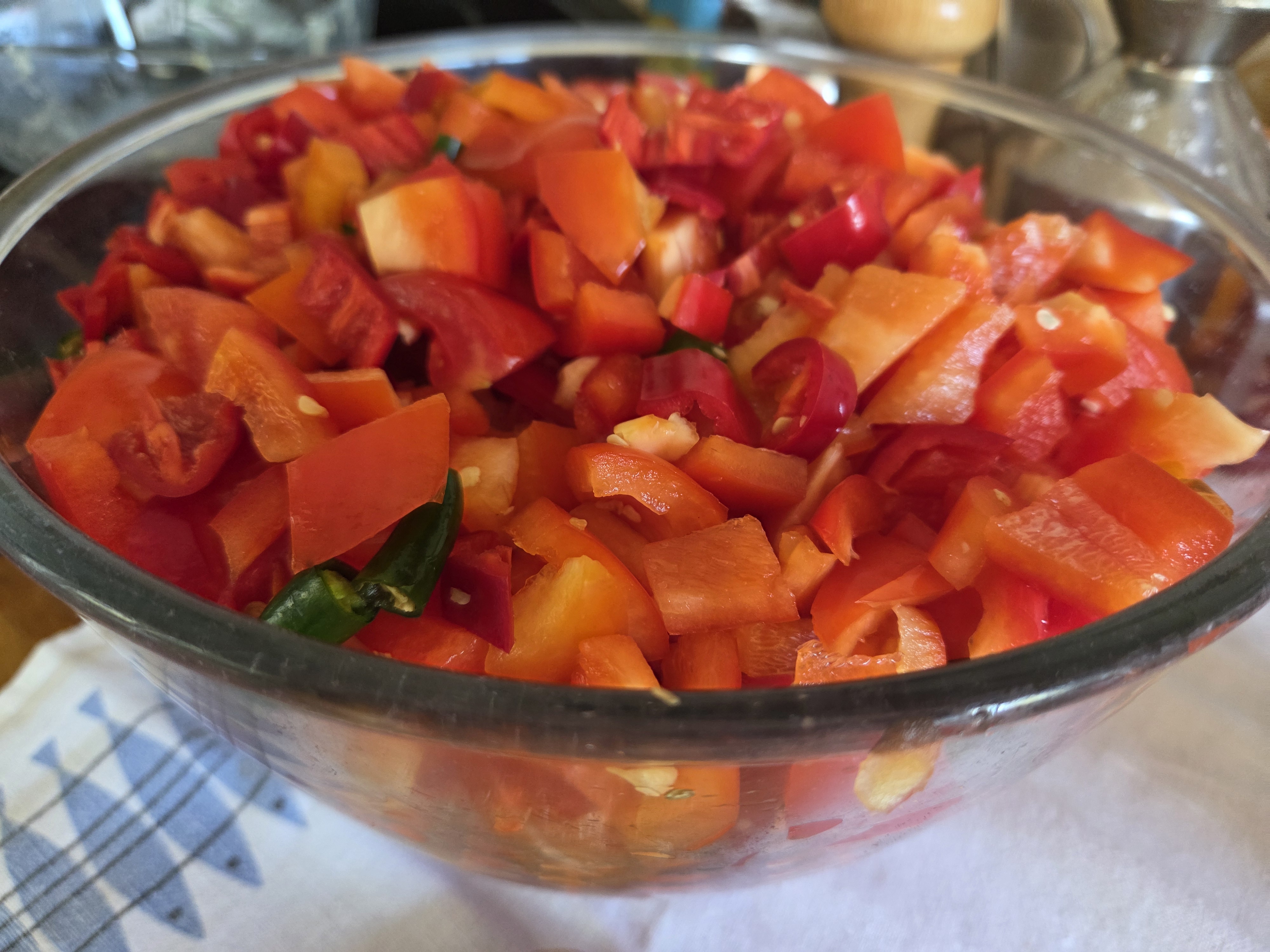
  • 9 red/orange large peppers

  • 14 small long chillies – red or green
  • 6 cloves garlic
  • Chunk of root ginger
    *
  • 700g granulated sugar
  • 200ml cider/wine vinegar.

  • METHOD

  • Chop the vegetables into small pieces.
  • On a low heat add the vinegar to a jam pan.
  • Stir in and dissolve the sugar.
  • Add the chopped vegetables and simmer till the consistency is sticky.
  • Bring to boil and cook for 1 minute – (do not cover the pan)
  • *
  • Makes around 4 (sterilised) Bon Mammon jars.

*

Battered Aubergines

  • Bakłażan is the Polish for aubergine.
  • This recipes you can often find in recipes for tapas.
  • I have used this batter as one of three batters in my post on Battered Cauliflower
  • *
  • If you liked my recipe for Breaded Aubergines I am sure you will like this as well.
  • Ingredients

  • 1 Aubergine
  • Salt
  • *
  • Batter
  • 100g flour
  • 25Oml very cold sparkling water
  • *
  • Sunflower oil to fry
  • Runny honey to serve
  • Ground black pepper

Method

  • Slice the aubergine into circles and place into a colander.
  • Sprinkle with salt and leave for 30 minutes. 
  • Dry them off with kitchen paper.
  • *
  • Whisk the sparking water into the flour – you might not want all of it.
  • You are aiming for a batter like single cream.
  • *
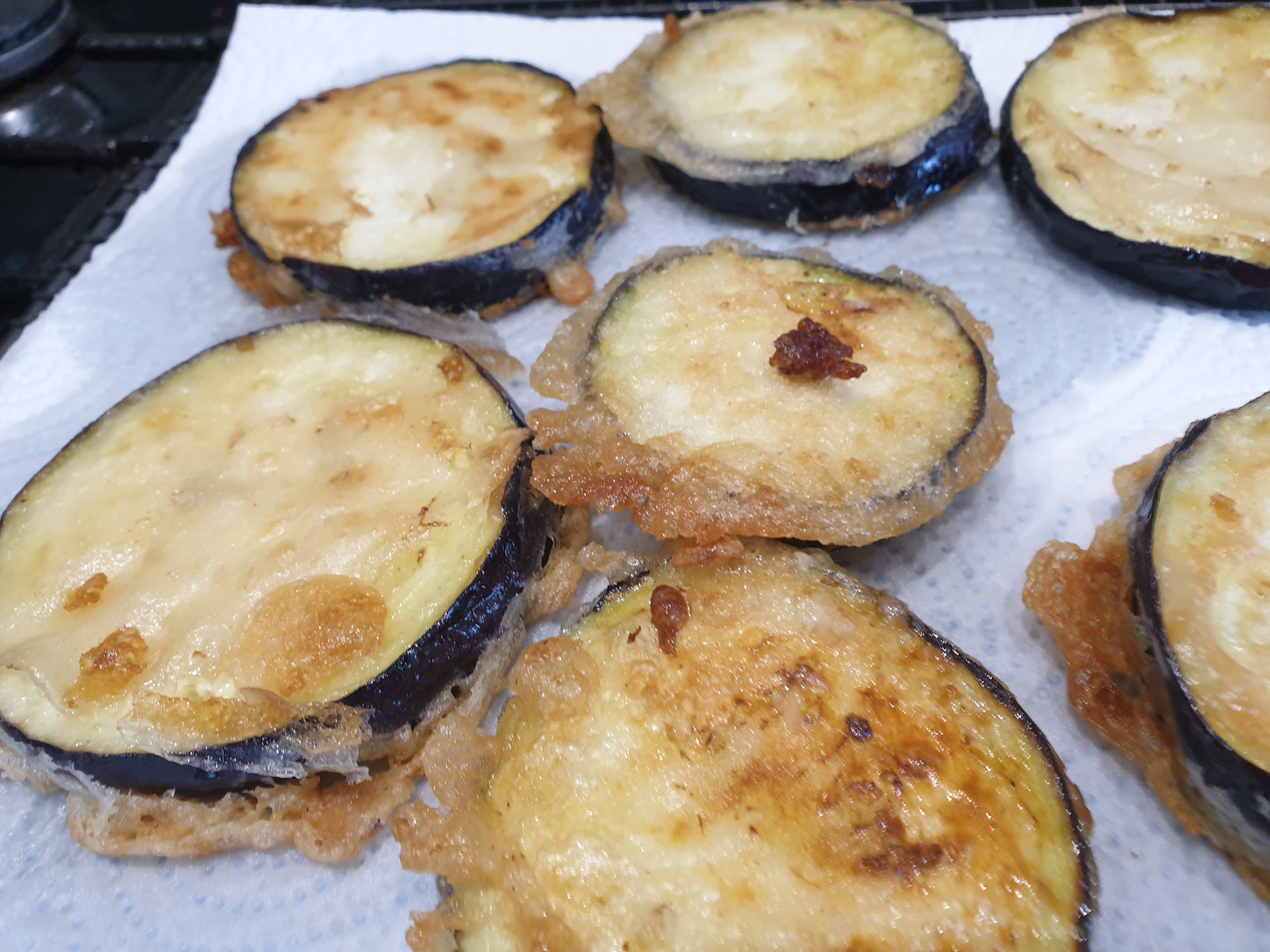
  • Coat the aubergine slices in the batter.
  • Fry in hot sunflower oil.
  • Make sure both sides are cooked.
  • *
  • Dry them off on kitchen roll.
  • You can keep them warm in an oven whilst you cook the rest.
  • *
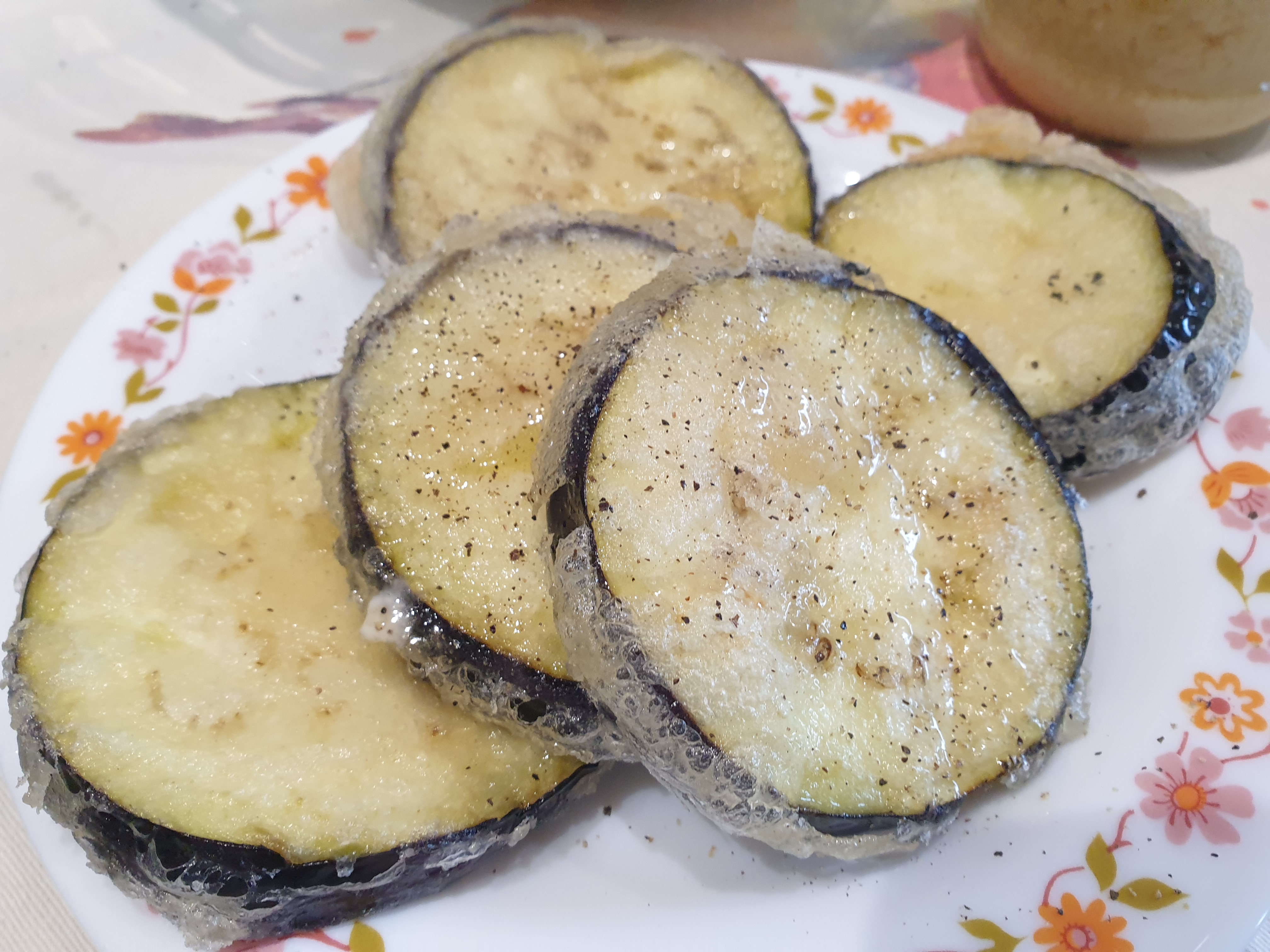
  • Sprinkle with freshly ground black pepper.
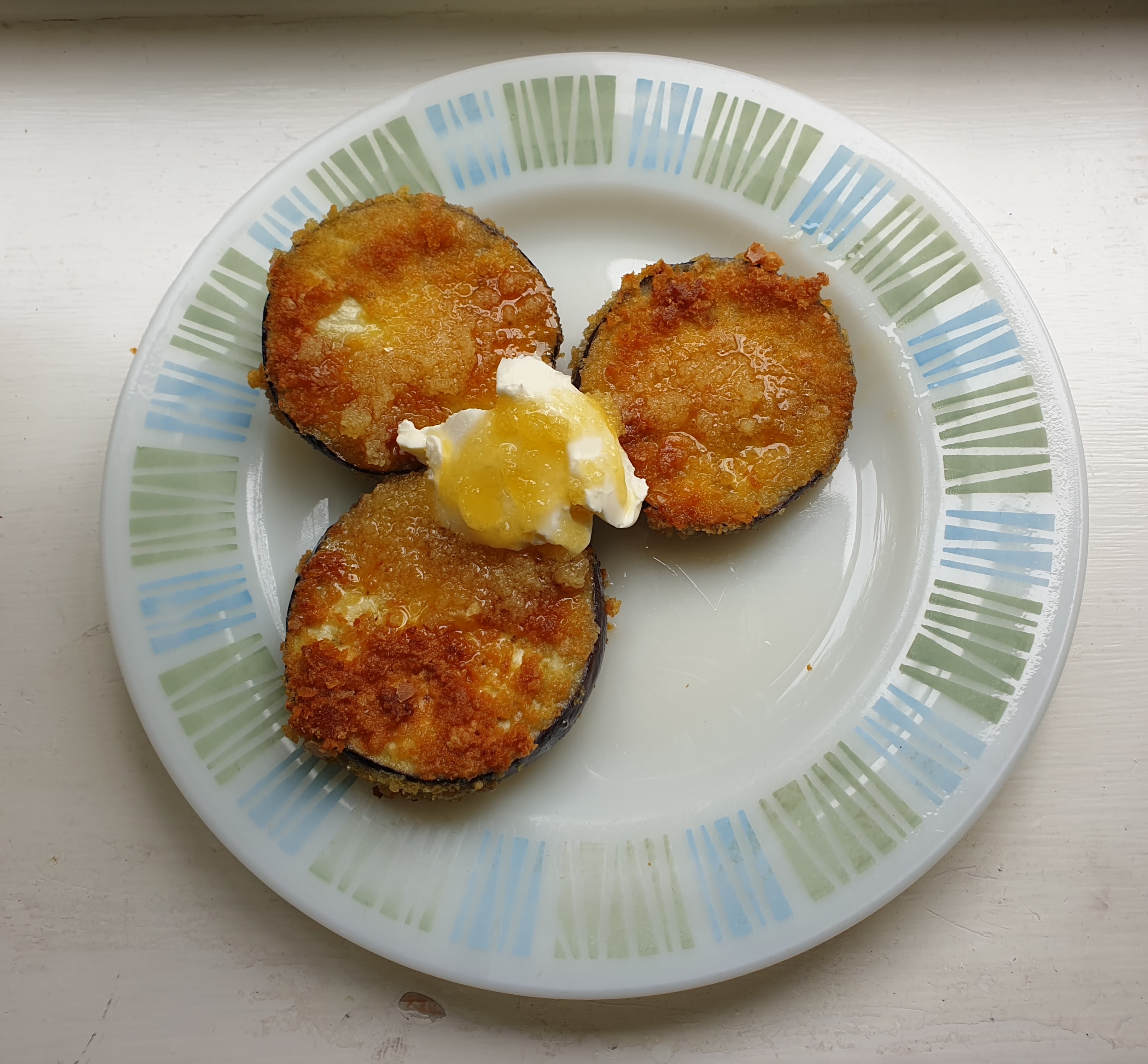
  • Serve with a little runny honey.

Vintage Pyrex plate

Breaded Parsnips

  • But did you know that in the 14th century, in England, parsnips were called ‘pasternakes’ and that in many European languages such as Dutch, Italian and Polish (pasternak) a version of this word is still used today?
  • How do you cook and serve your parsnips?
  • Mrs Beeton, in England, suggested parboiling them, cutting them into slices, dipping in beaten egg and then breadcrumbs before frying.
  • Whether the bread crumbs were fresh or dried is not stated.
  • I thought this sounded quite Polish!
  • *
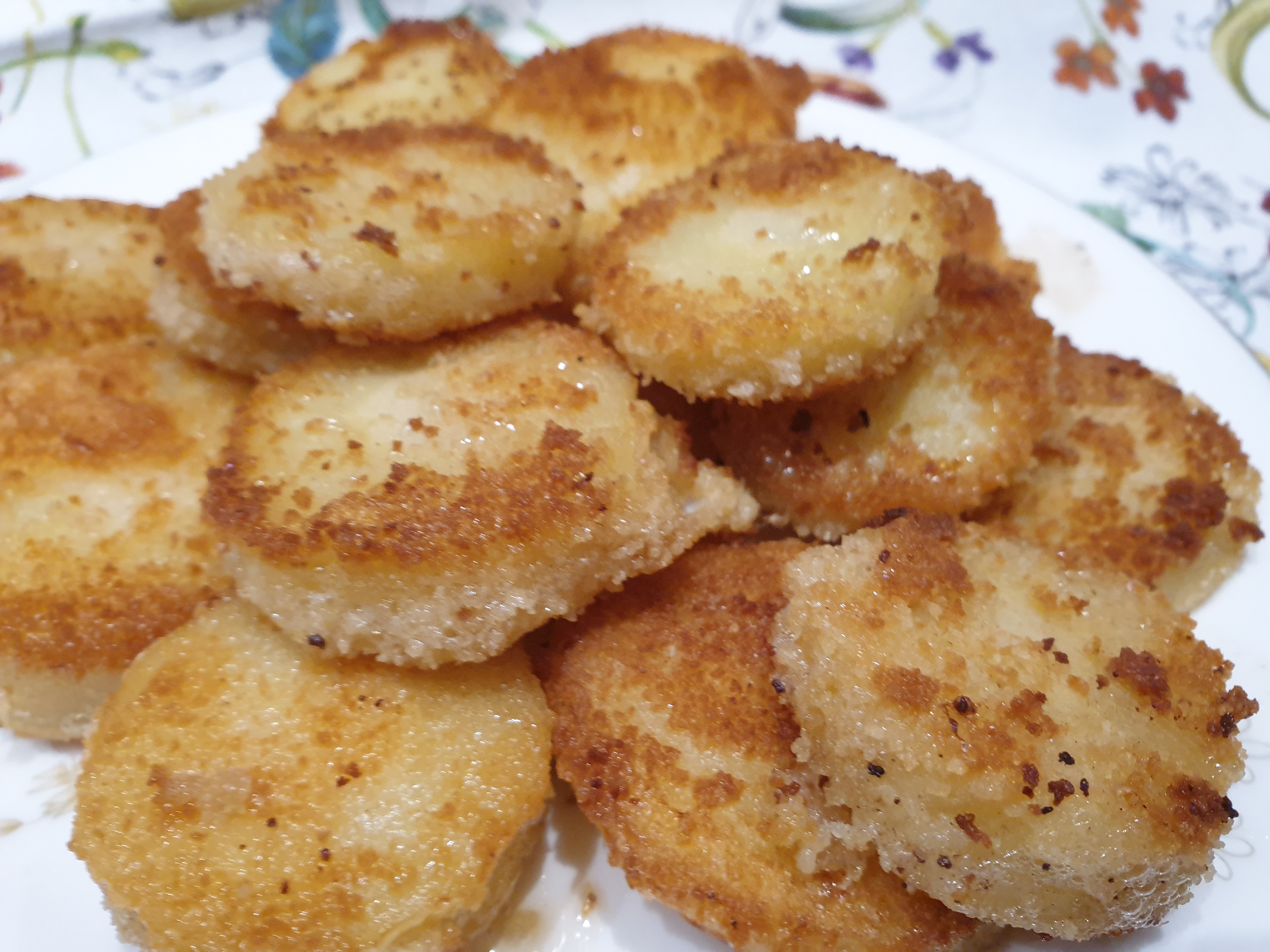
  • I parboiled the parsnips
  • Cut them into thick slices
  • Dipped them into beaten egg and then
  • Into dried breadcrumbs and
  • Fried in them on both sides in sunflower oil.

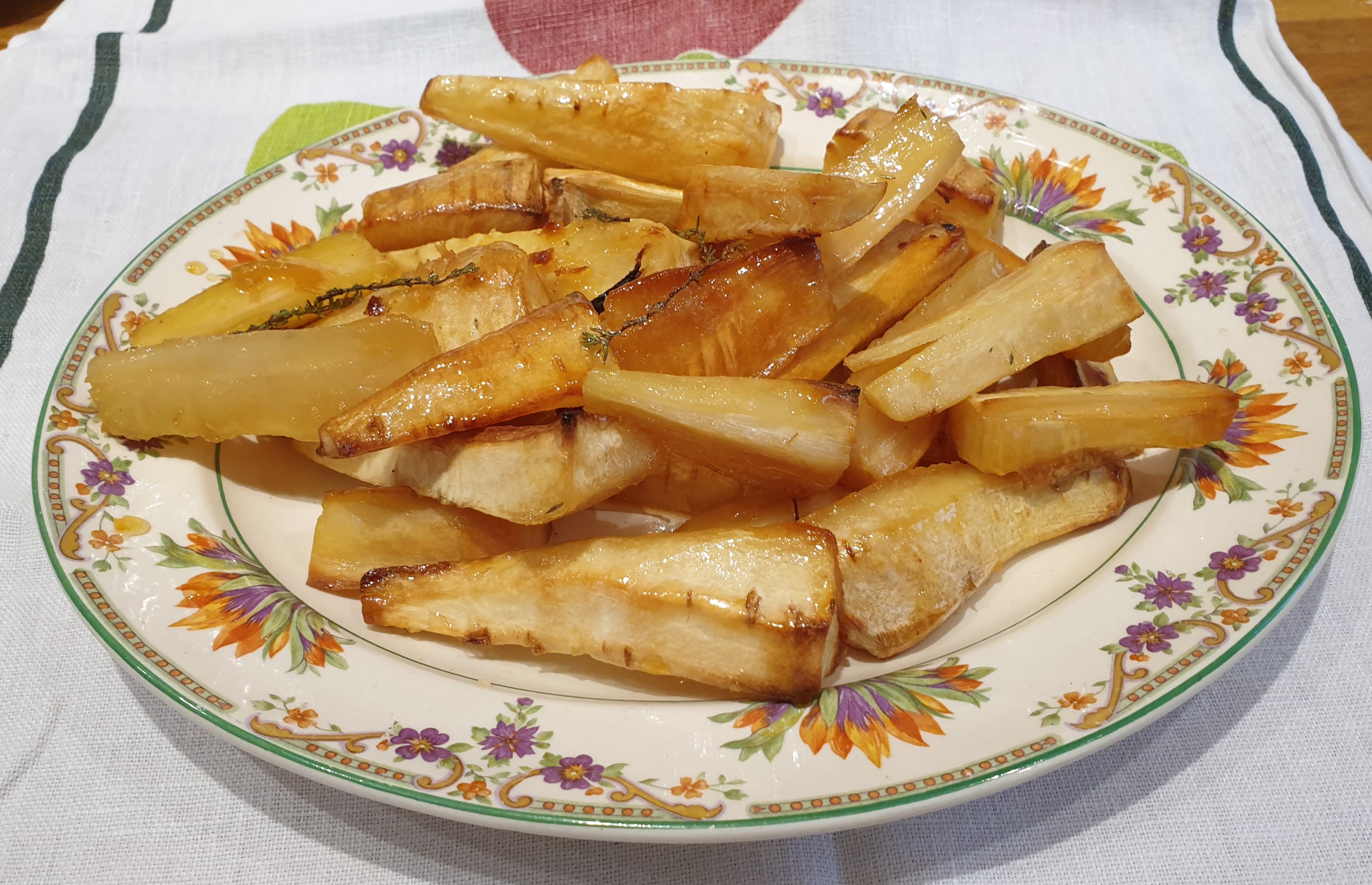
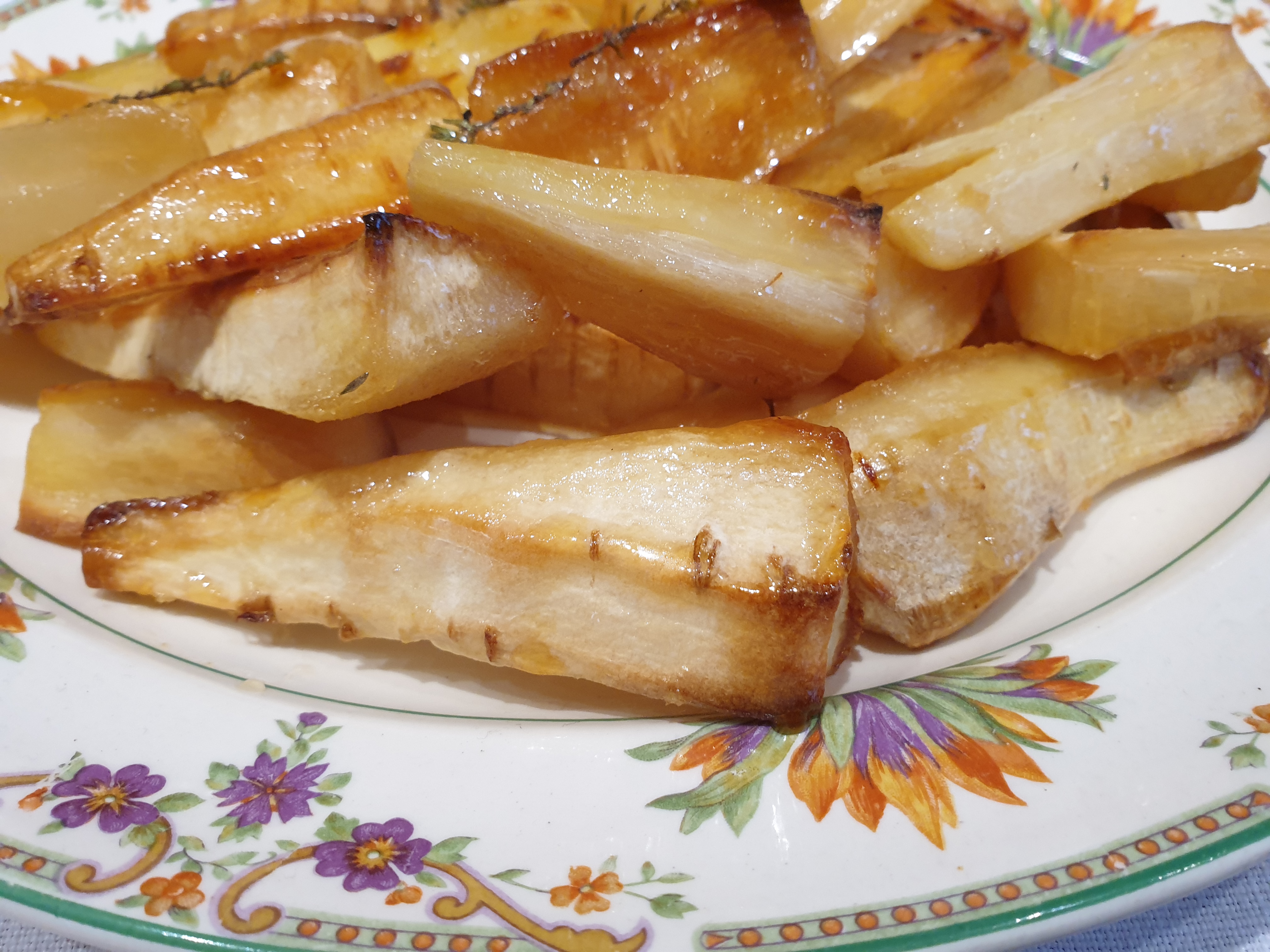
Honeyed Parsnips

  • With parsnips being in all the shops at the moment, I thought of my recipe for honeyed carrots and altered it a little for the parsnips
  • The parsnips are cut into ‘fingers’.
  • How you cut the parsnips depends on their size – try to get them roughly equal.

Ingredients

  • 4 large – 8 medium parsnips
  • 2 tablespoons runny honey

Method

  • Pre-heat the oven to GM4 – 180°C.
  • Lightly grease a baking tray.
  • Peel and cut the parsnips into quarters or eighths.
  • Bake in the oven, turning once or twice, for 40 – 45 minutes.
  • Drizzle the honey over the parsnips and turn to coat as much as possible.
  • Return to the oven and bake for another 10 minutes.
  • *
  • Serve with roast meats such as chicken, duck or pork.

Serving dish – Allerton & Sons

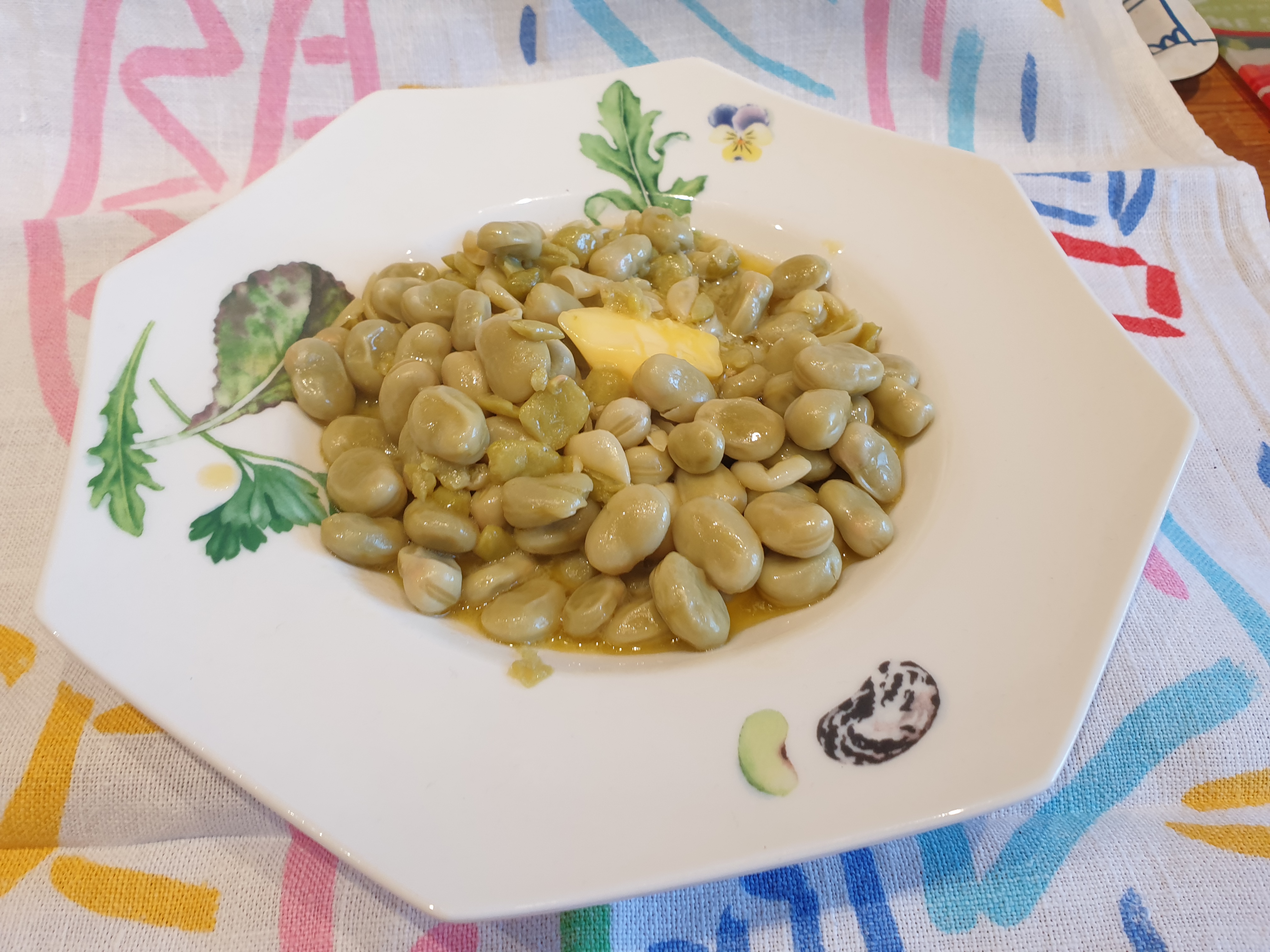
Bób

  • Bób is the Polish word for broad beans.
  • They get there own special name – not a bean name!
  • They are what are known as fava beans.
  • Fava beans are the original Old World bean.
  • There is evidence of fava bean cultivation over 10,000 years ago in the Fertile Crescent (area of the middle East).
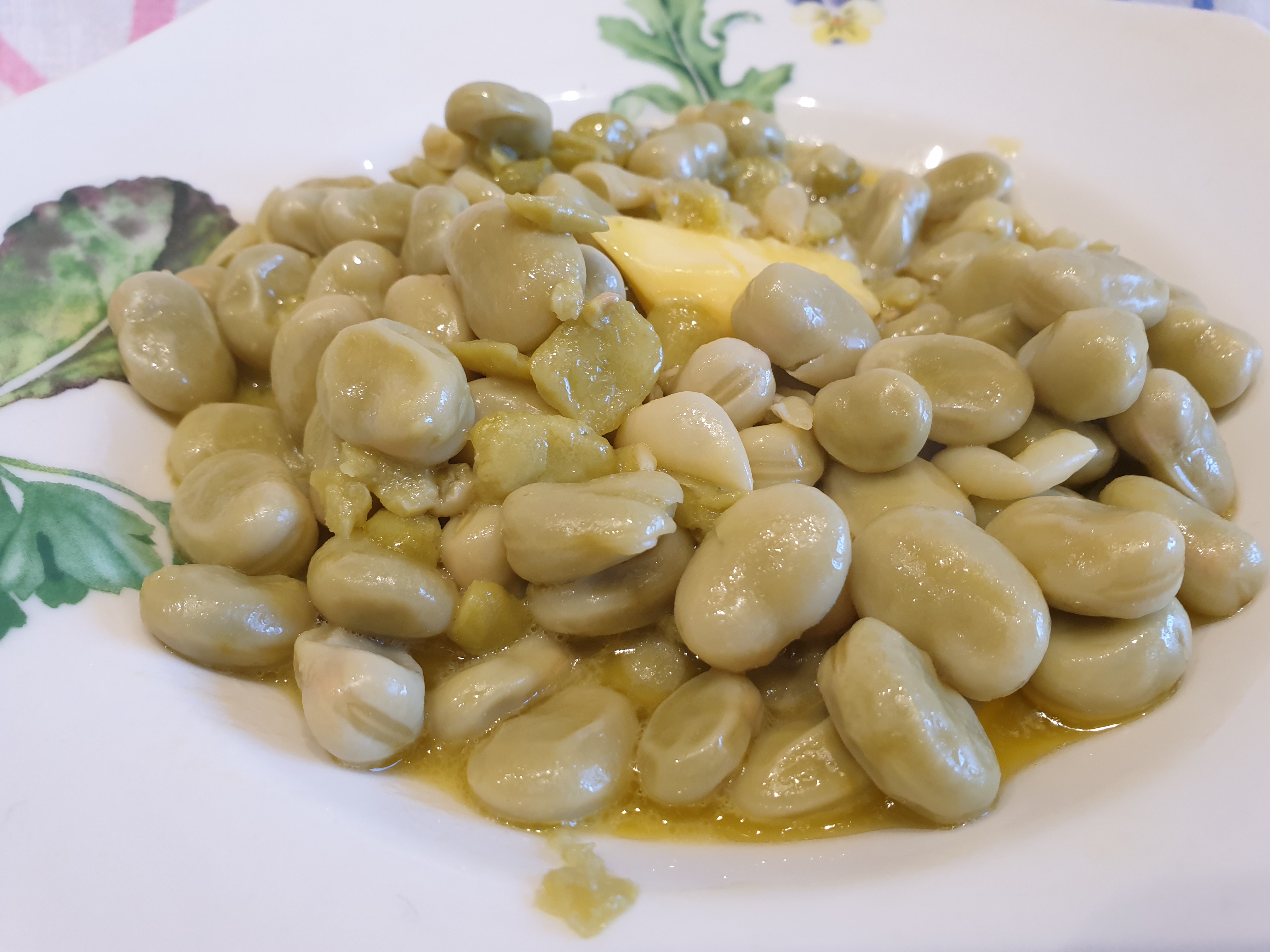
  • They are super served just boiled with lots of butter and maybe with a little dill or flat leaved parsley.
  • They are good cooked and then used cold in a salad with a variety of dressings. 
  • Unfortunately I missed the fresh bean season but found you can get them tinned from the Polish shop and this is what I used.

Ingredients

  • 1 tin of broad beans – or similar amount – fresh when in season
  • 40 – 50g butter – do not stint!
  • *
  • Chopped dill or flat leaved parsley if available

Method

  • Heat the beans in the liquor for a couple of minutes.
  • Drain and quickly add the butter and stir.
  • Add fresh dill or flat leaved parsley – optional.
  • *
  • Serve with roast meats or gulasz.

Served in Wedgewood – Chelsea Garden

Vegetable Pancakes

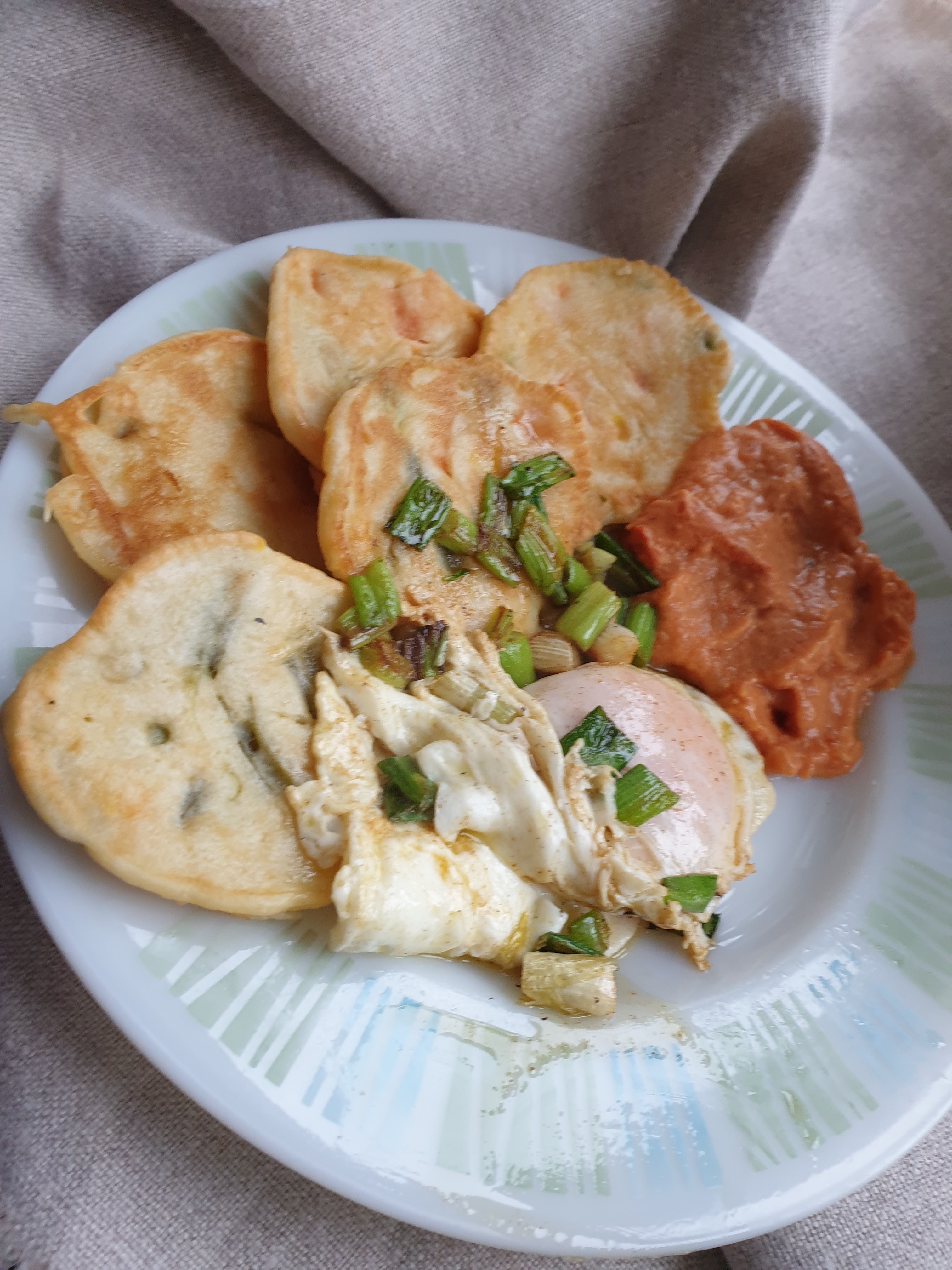
  • These pancakes are the thick American style pancakes.
  • You can use most cooked vegetables cut into small pieces.

Ingredients

  • 250g plain flour
  • Pinch salt
  • 2 eggs
  • 200ml yoghurt
  • 150 – 200ml milk
  • 200g of cooked chopped vegetables
  • *
  • Sunflower oil for frying.

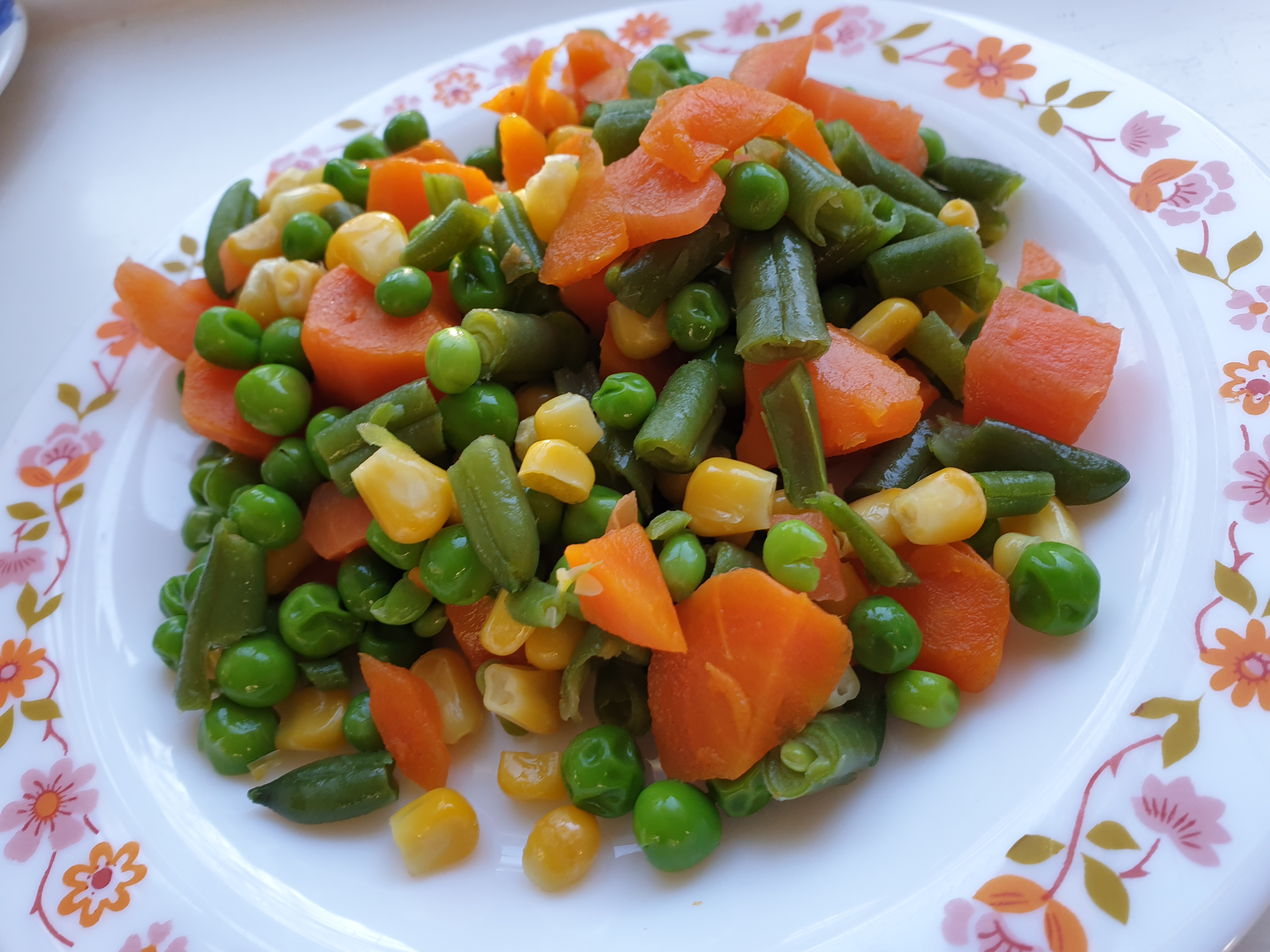
Vegetables – used 

  • Carrots
  • Whole green beans
  • Peas
  • Sweetcorn

Other suggestions 

  • Broccoli
  • Cauliflower
  • Chives (fresh)
  • Onions (fried in butter)
  • Peppers
  • Potatoes (boiled)

    Method

  • Beat the eggs, yoghurt and 150ml of milk together.
  • Mix the salt into the flour.
  • Add flour to the egg mix.
  • You are aiming for a thick batter – add more milk as required.
  • Chop all the vegetables into small pieces.
  • Make sure all the vegetables are dry.
  • Dry with a tea towel or kitchen roll as needed.
  • Mix the vegetables together.
  • Mix the vegetables into the batter.
  • *
  • Heat the oil in a frying pan.
  • Fry tablespoonfuls of  the mixture on both sides.

Serve with chopped chives or the green parts of spring onion.

Served here with tomato sauce.

Vintage Pyrex plates

Cauliflower Croquettes

  • My mother usually served cauliflower with buttery dried breadcrumbs – 
  • Known as – à la polonaise.
  • In England cauliflower is often served with a cheese sauce.
  • I often make potato croquettes – krokiety kartoflane 
  • I saw this recipe and thought it sounds like the two combined.
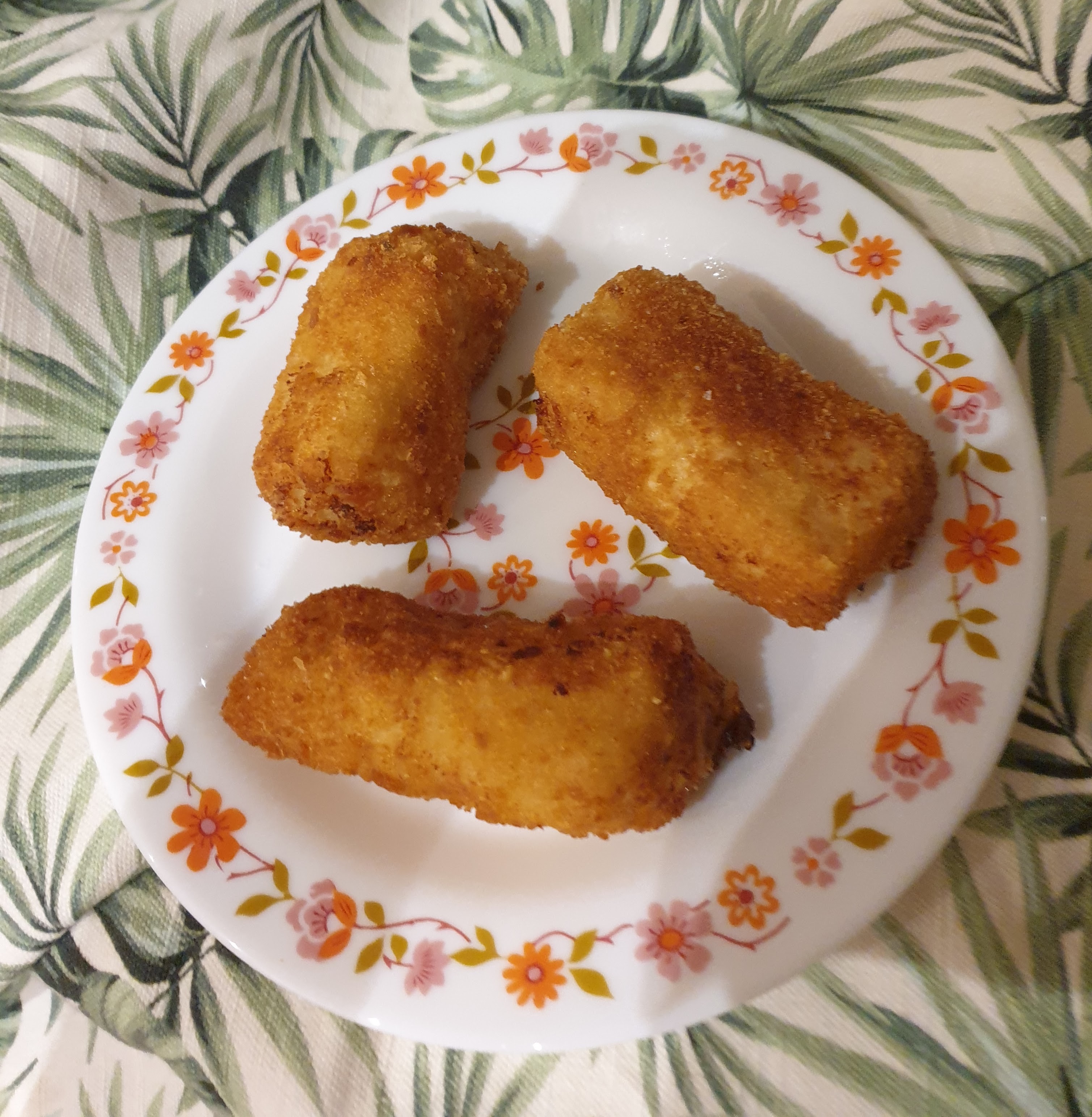
  • They were delicious.

Ingredients

  • ½ of a large cauliflower
  • 1 tablespoon of butter
  • 3 tablespoon of plain flower
  • 200ml milk
  • 50g grated cheese – Cheddar or Gouda
  • *
  • 1 egg – beaten
  • Breadcrumbs
  • More plain flour
  • Salt and pepper

Method

  • Cook the cauliflower by boiling or steaming.
  • Leave to go completely cold.
  • Remove any liquid with a clean tea towel or kitchen roll.
  • Mash the cauliflower with a potato masher.
  • Make a very thick cheese sauce.
  • Melt the butter in a saucepan.
  • Add the flour and cook together, stirring all the time.
  • Slowly add the milk and keep stirring until you have a thick sauce.
  • Add the cheese and cook a little more.
  • Stir in the cauliflower.
  • Mix all together to have a uniform mixture.
  • Season to taste.
  • Leave to cool.
  • You need 3 plates or shallow dishes – 
  • Flour in one, beaten egg in the second, dried breadcrumbs in the third.
  • Divide the cauliflower cheese mixture into 12 even pieces.
  • Roll them out into sausage shapes.
  • Dip in the flour and then in the egg.
  • Roll in the breadcrumbs. 
  • *
  • Heat the oil in a frying pan.
  • Fry the croquettes on all sides till golden – 3 or 4 at a a time.
  • Keep them warm in a low oven, whilst frying the rest.
Vintage Pyrex Plate

Though not tried yet –  I think you could do variations  by – adding cooked peas or chilli flakes or similar to the mixture.

Breaded Aubergines

  • I went to my favourite restaurant in the area, which is very near to where I live.
  • It is called Healds Hall .
  • They had a new starter on the menu, which was delicious.
  • I decided to recreate this at home.
  • I used Polish honey from the Mazurian Lakes, which was delicious.
  • The Polish word for aubergine is bakłażan and it comes from the Persian – badigan. 
  • Americans call aubergines – egg plant.

Ingredients

  • 1 Aubergine
  • Plain flour
  • 1 egg – beaten
  • Salt and pepper
  • Dried breadcrumbs
  • *
  • Sunflower oil to fry
  • *
  • To serve
  • *
  • Runny honey
  • Yoghurt cheese or cream cheese

Method

  • Slice the aubergine into 1 – 1.5cm circles.
  • Sprinkle them with salt and put them into a colander over a bowl.
  • Leave for around 30 minutes.
  • Dry the slices with kitchen roll.
  • Sprinkle with a little pepper.
  • Have ready dishes of flour, beaten egg and dried breadcrumbs.
  • Dip each slice of aubergine first into the flour, then the beaten egg and lastly the dried breadcrumbs.
  • In a frying pan heat up the oil.
  • Fry the slices gently on both sides till golden.
  • Remove from the oil, place onto kitchen roll to remove some of the oil.
  • Serve with yoghurt cheese or cream cheese with runny honey on top.