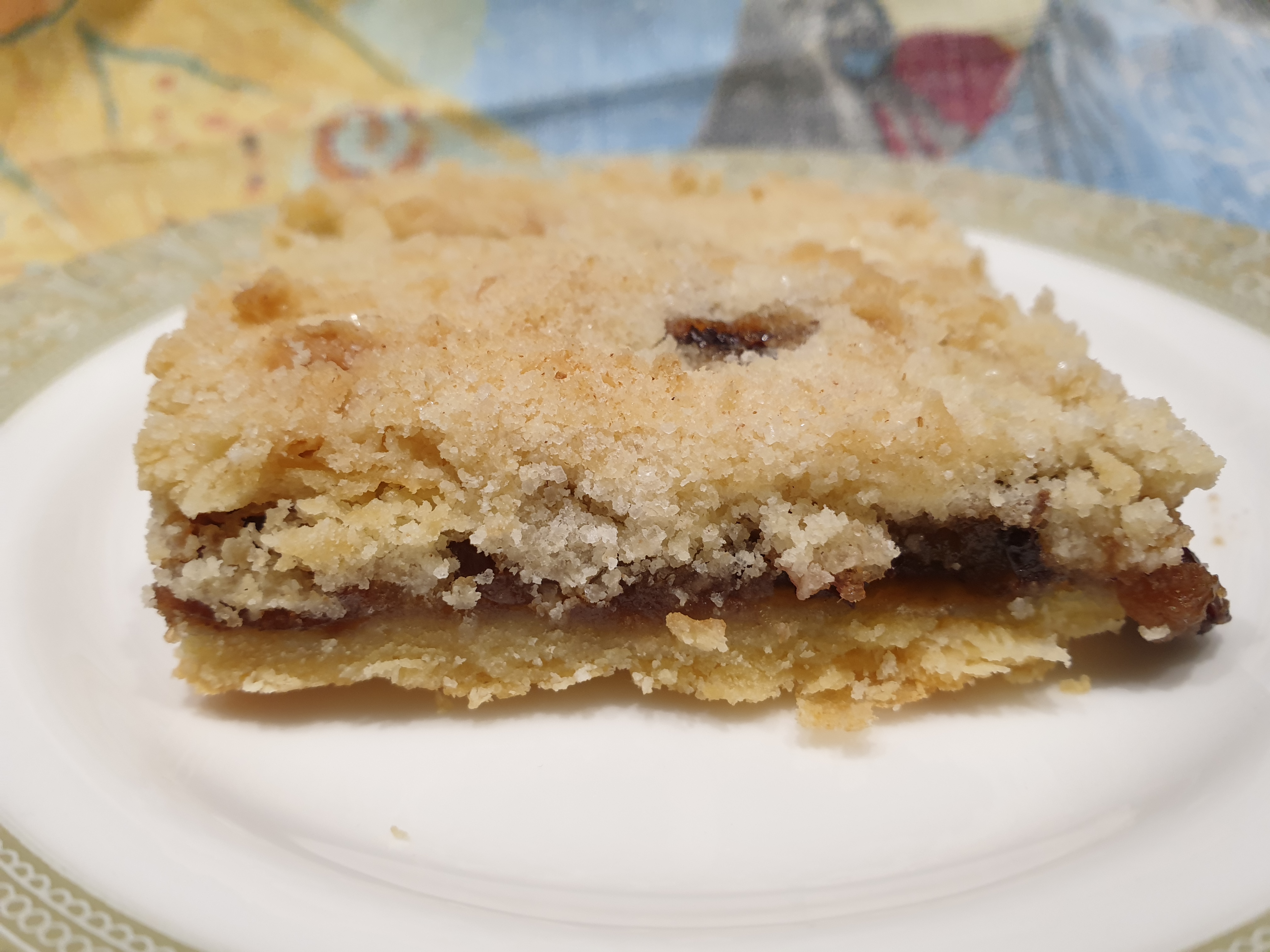
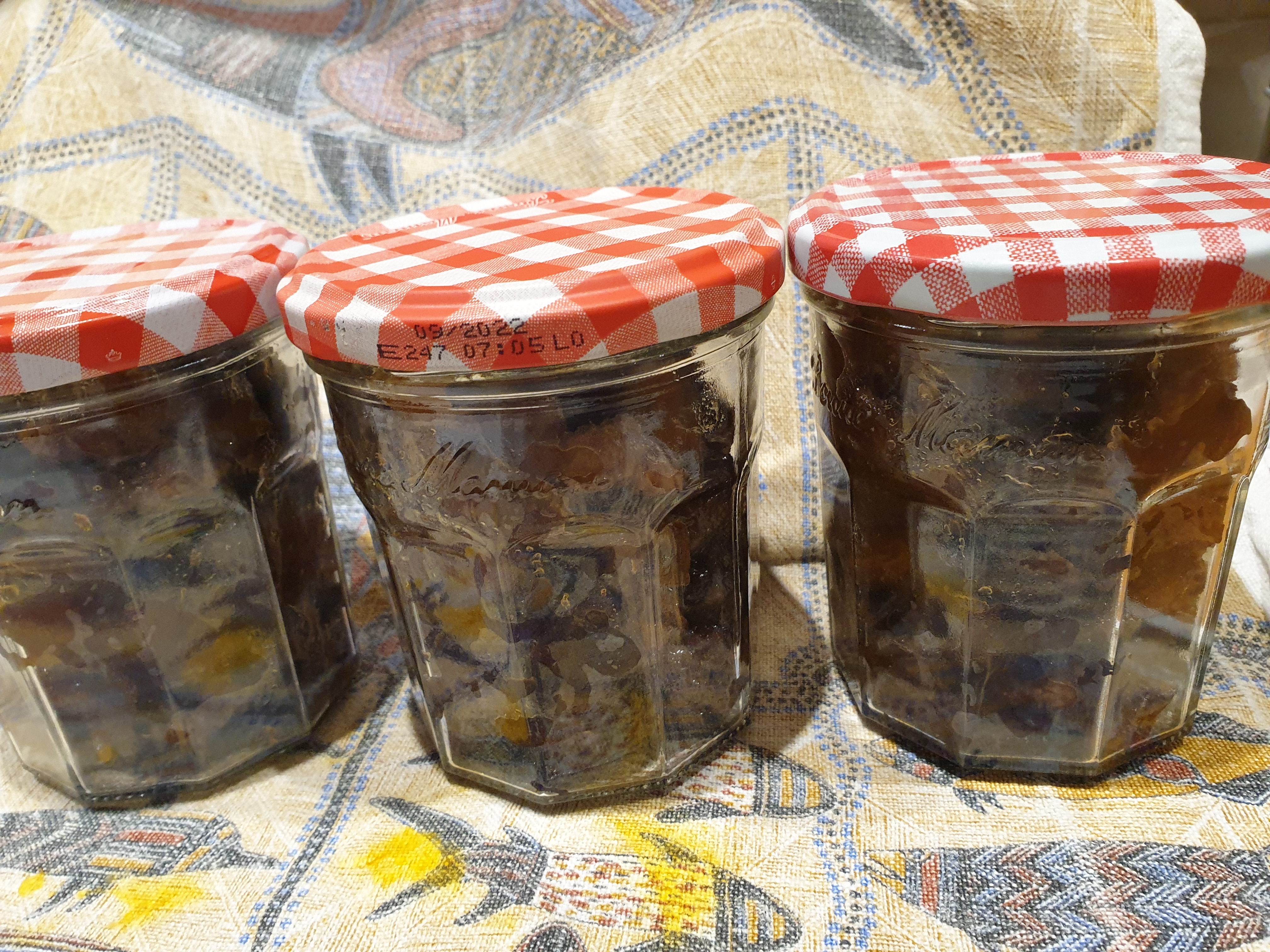
Easy Apple Cake

  • I have had a huge harvest of Bramley apples this year, so am always looking for different recipes from my standard favourite one.
  • This is based on an American idea with just a free form base and slightly raised sides.
  • It has been adapted to make a it more like a Polish apple cake  –  jabłecznik.
  • I have tried it several times and two secrets are:
  • 1) NOT have too much pastry and
  • 2) NOT to have loads of filling.
  • The pastry should be rolled out until it is thin.

Ingredients – pastry

  • 200g flour
  • 100g butter
  • 1 egg yolk
  • Juice of 1 lemon
  • *
  • 1 egg yolk – use it all – for sealing
  • *
  • 1 egg white – beaten
  • 1 tablespoon of granulated sugar

Ingredients – filling

  • 2 large Bramley apples
  • 75g raisins or sultanas
  • 75g granulated sugar
  • 1 teaspoon ground cinnamon
  • 1/2 teaspoon ground mixed spice
  • 1/4 teaspoon freshly ground nutmeg
  • *
  • Icing sugar to dust – optional

Method – filling

  • Peel and core the apples and chop them into small pieces.
  • Add the raisins, sugar and spices.
  • Mix together and leave to one side.

Method – pastry

  • Rub the butter into the flour until like breadcrumbs.
  • Add the egg yolk and lemon juice and mix to a soft dough.
  • Add more water sparingly if necessary.
  • *
  • Wrap in plastic and leave in the fridge for 30 minutes.
  • *
  • Butter / Grease a large baking sheet.
  • Pre-heat the oven to GM6 – 200°C.
  • *
  • Roll out the pastry thinly until you have a rough circle around 25cm.
  • Place the pastry onto the sheet.
  • Brush the egg yolk over a circle round 25cm in diameter.
  • Pile up the filling onto the circle.
  • Bring up the sides of the pastry.
  • Brush the sides with the egg white.
  • Sprinkle on the tablespoon of granulated sugar.
  • *
  • Bake for 30-35 minutes until the pastry is golden.
  • Leave to cool on a wire rack.
  • *
  • Sprinkle with icing sugar before serving.

Cranberry Sauce

  • This is not a hot pouring sauce.
  • More like a jam in constancy.
  • It is a fresh tasting sauce –
  • But not over sweet like many of the bought sauces in jars
  • Great with hot roast meats such as pork, chicken, duck or turkey.
  • Great with cold smoked meats and sausages.
  • Does not keep very long – maybe a week – keep in the fridge – best to make it a day or two before being needed. 

INGREDIENTS

  • 250g fresh cranberries
  • 50 – 75g granulated sugar (to taste)
  • Zest and juice of 1 orange
  • ¼ teaspoon of ground cinnamon
  • ¼ teaspoon of ground ginger
  • ¼ teaspoon of freshly ground nutmeg
  • Large pinch of ground cloves

METHOD

  • In a saucepan heat the cranberries, zest and juice of the orange and the sugar.
  • Stir gently with a wooden spoon as the fruit starts to pop.
  • Add the spices and continue cooking till all the fruit has popped.
  • Carry on stirring till you get a thick sauce and all the liquid has been absorbed.
  • Adjust sweetness if too tart.
  • This will keep for a few days in the fridge.
  • Bavarian china dish

Liver & Apples

  • As you might know from previous posts – I love liver.
  • I used lambs liver – but use pork or beef if that is want you have or like.
  • In Poland calf’s liver is thought to be the best.
  • I saw this combination ages ago and have only just had time to make it – it is super.
  • Use two frying pans to make this – it is easier.

INGREDIENTS

  • Around 100g liver per person
  • 2  apples
  • 2 small onions
  • Butter & sunflower oil  for frying

METHOD 

  • Best to make this using 2 frying pans.
  • Slice the liver thinly.
  • Cut the onions in half and slice thinly.
  • Core the apple and cut into thick slices – keep the skin on in parts of it  – remove any blemishes 
  • Fry the onions gently in the butter and oil mixture.
  • Add the apple pieces and heat these with the onions until they are soft.
  • Keep this warm whilst you cook the liver.
  • Fry the liver in another pan – to the degree of cooking you like (I like it slightly pink).
  • Serve the liver and the onion and apple mix together.
  • This apple and onion mixture was so delicious I will be using this again with pork chops or pork loin.
  • Served on oval plates – Johnstons Snowflake.

Broccoli Soup – 2

  • Although broccoli, one of the many cultivars of wild cabbage was introduced into Poland in the 16th century, its popularity seems to have waned until fairly recently.
  • My old cookery book first published in the mid 1950s makes no mention of  this vegetable – brokula -in Polish.
  • When it was introduced into England it was called ‘Italian Asparagus’.
  • I have based this recipe on my recipe for cauliflower soup and puréed the ingredients, which is more in an English style.

Ingredients

  • Around 500g of broccoli
  • 1 litre of chicken stock (can be from a cube or concentrate)
  • 500ml of milk plus a tablespoon or two.
  • 1 tablespoon of potato or cornflour
  • *
  • 125 ml of soured cream to serve
  • Salt & Pepper to taste

Method

  • Cut the broccoli into small pieces of stem and florets.
  • Simmer the stem pieces in the stock till nearly tender.
  • Add the florets and simmer till both are tender.
  • Add the 500ml of milk and bring to the boil.
  • Use a stick blender or similar to liquidise the ingredients.
  • Season to taste.
  • Mix the potato flour with the extra milk.
  • Mix the flour with the rest of the soup.
  • Heat gently, stirring whilst it thickens.
  • Stir in the soured cream before serving.
Royal Doulton – Carnation Soup Plate

Breaded Parsnips

  • But did you know that in the 14th century, in England, parsnips were called ‘pasternakes’ and that in many European languages such as Dutch, Italian and Polish (pasternak) a version of this word is still used today?
  • How do you cook and serve your parsnips?
  • Mrs Beeton, in England, suggested parboiling them, cutting them into slices, dipping in beaten egg and then breadcrumbs before frying.
  • Whether the bread crumbs were fresh or dried is not stated.
  • I thought this sounded quite Polish!
  • *
  • I parboiled the parsnips
  • Cut them into thick slices
  • Dipped them into beaten egg and then
  • Into dried breadcrumbs and
  • Fried in them on both sides in sunflower oil.

Honeyed Parsnips

  • With parsnips being in all the shops at the moment, I thought of my recipe for honeyed carrots and altered it a little for the parsnips
  • The parsnips are cut into ‘fingers’.
  • How you cut the parsnips depends on their size – try to get them roughly equal.

Ingredients

  • 4 large – 8 medium parsnips
  • 2 tablespoons runny honey

Method

  • Pre-heat the oven to GM4 – 180°C.
  • Lightly grease a baking tray.
  • Peel and cut the parsnips into quarters or eighths.
  • Bake in the oven, turning once or twice, for 40 – 45 minutes.
  • Drizzle the honey over the parsnips and turn to coat as much as possible.
  • Return to the oven and bake for another 10 minutes.
  • *
  • Serve with roast meats such as chicken, duck or pork.

Serving dish – Allerton & Sons

Bób

  • Bób is the Polish word for broad beans.
  • They get there own special name – not a bean name!
  • They are what are known as fava beans.
  • Fava beans are the original Old World bean.
  • There is evidence of fava bean cultivation over 10,000 years ago in the Fertile Crescent (area of the middle East).
  • They are super served just boiled with lots of butter and maybe with a little dill or flat leaved parsley.
  • They are good cooked and then used cold in a salad with a variety of dressings. 
  • Unfortunately I missed the fresh bean season but found you can get them tinned from the Polish shop and this is what I used.

Ingredients

  • 1 tin of broad beans – or similar amount – fresh when in season
  • 40 – 50g butter – do not stint!
  • *
  • Chopped dill or flat leaved parsley if available

Method

  • Heat the beans in the liquor for a couple of minutes.
  • Drain and quickly add the butter and stir.
  • Add fresh dill or flat leaved parsley – optional.
  • *
  • Serve with roast meats or gulasz.

Served in Wedgewood – Chelsea Garden

Banana Bread

  • This is not a Polish recipe and my mother would not have made this cake, especially as my father did not like bananas.
  • But looking online and on Instagram I find that bananas are used in many new recipes from Poland.
  • Banana bread recipes originated in the USA in the early 1930s.
  • They tended to be made in bread or loaf tins but I have found a flatter rectangular tin gives better results.
  • For the best results the bananas have to be as ripe as possible – very black spotted skins and ‘squidgy’ flesh.
  • I have adapted an old recipe of mine by using dried cranberries and am very pleased with the contrast between the bananas and the cranberries.
  • I used a packet of cranberries which was 1`70g and made the dried fruit up to 250g with sultanas – you can adjust these amounts – but I found these worked well.

Ingredients

  • 225g plain flour
  • 2½ teaspoons baking powder
  • ½ teaspoon of salt
  • 110g butter
  • 150g of granulated sugar
  • 170g dried cranberries
  • 80g sultanas
  • 450g – mashed ripe banana flesh
  • 2 eggs – beaten

Method

  • Grease and line 32 x 22cm baking tin.
  • Pre-heat the oven to GM 4 – 180°C.
  • Mix the flour, baking powder and salt together.
  • Rub in the butter till the mixture is like breadcrumbs.
  • Stir in the sugar, cranberries and sultanas.
  • Mix this with the eggs and mashed bananas till uniform.
  • Spoon into the tin and level.
  • Bake for 40 – 45 minutes.
Served on Bramble Rose by Duchess

Pork with Honeyed Plums

  • I previously wrote about pork with soured plums.
  • This time the recipe uses honey to sweeten the plums.
  • I have previously posted the recipe for honeyed plum sauce.
  • The pork is cooked separately from the plums.
  • Grilled pork chops or roast loin of pork works well. 

Ingredients

  • 10 plums
  • 250ml water (maybe a little extra)
  • 4-6 tablespoons of runny honey

Method

  • Simmer the plums gently in the water.
  • Stir until the plums fall apart.
  • Add extra water if needed.
  • Add as much honey as required to taste.
  • Remove the stones – optional.
  • Serve hot with the cooked pork.

  • Served on a Royal Doulton – Burgundy plate

Kedgeree

  • This dish was very popular in Victorian times in Britain.
  • It originated in India and was often served for breakfast.
  • It originated in India and was called – ‘khichari’.
  • It was started as a dish with rice, fried onion, lentils and eggs.
  • Over time, the lentils were left out and fish was added.
  • There are many different recipes  but they all include: boiled rice, fish (often smoked) and hard boiled eggs. Paprika, cayenne pepper or curry powder is added.
  • I made this whilst doing some research into old English recipes.
  • Everyone loved it and I thought that it would be a “hit” in Poland too.

INGREDIENTS

  • 2 onions – finely chopped
  • 75g butter (do not stint on this)
  • 300ml of vegetable stock
  • 200g-250g long grained rice – boiled
  • 250g-300g smoked haddock
  • 3 – 4 hard boiled eggs – cut into quarters
  • 1 lemon – cut into quarters
  • 1 teaspoon ground paprika or cayenne pepper
  • Salt and pepper to taste
  • *
  • Flat leaved parsley to garnish

METHOD

  • Poach the fish in the vegetable stock for 6 – 8 minutes.
  • Remove the skin and flake the fish.
  • Meantime melt the butter in a large frying pan.
  • Gently fry the onions till golden.
  • Add rice and a few tablespoons of the stock.
  • Add the paprika, stir and continue cooking.
  • Add the flaked fish and more stock if too dry.
  • Cook through for a few minutes.
  • Season to taste.
  • Serve in a large dish with hard boiled eggs and lemons around the side.
  • Garnish with flat leaved parsley.
  • Diners should squeeze lemon juice over their portion.