The Polish word pulpety comes from the Italian word polpette & that word come from polpa meaning pulp.
The word polpette has been used in Italy since the 15th century – though of course meatballs in many forms are to been found in most cultures & countries and are a way of using every last piece of carcass.
Pulpety in Poland are made from meat or fish – I am just going to cover meat in this post.
Meat pulpety can be made from fresh meat or from cooked meat. I prefer the fresh meat ones and if I have any roast meat leftovers I am more likely to use them up in other ways such as in Pierogi – Polish Filled Pasta fillings.
The difference being that pulpety are very small and they are boiled/simmered not fried.
They are often used as an accompaniment for soup – with around 4 to 6 being added to a serving of soup. (There will be much more on the topic of soup in the future.)
Pulpety can be simmered in water or stock – I always uses stock – either chicken or vegetable.
Meat pulpety
Ingredients
400g of minced beef or pork or a mixture of the two
1 onion
1 slice of white bread or bread roll, left for half an hour in a bowl with a little milk – do not use the excess milk just the wet slightly squeezed bread.
Stock / bullion – chicken or vegetable – can be from a stock cube.
Method
Grate the onion on a fine grated or use an electric mini-chopper.
In a large bowl mix all the ingredients together except for the dried breadcrumbs, it is best to do this using both hands, making sure that all the ingredients are thoroughly combined.
Add enough dried breadcrumbs so that it is a firm mixture.
Put some flour in a dish for your hands to make it easier to shape the pulpety.
Pinch off small bits of the meat mixture and roll the piece between your hands to make small round balls and place these onto a floured board or tray whilst you make them all.
You can leave these to chill in a cool place or in the fridge if you have time.
In a large pan heat up some stock and drop the pulpety into the boiling liquid and then let them simmer for around 5 minutes.
Remove them from the liquid with a slotted spoon.
Polish style would be to have around 5 pulpety in a bowl of soup – but often I do these for a light lunch and have a large bowl of soup with lots of pulpety per serving.
In the photograph below, they were served in a tomato soup.
Served In A Sauce
The varieties here are endless – make one of your favourite sauces for example mushroom or tomato and drop the cooked pulpety into the sauce and let them simmer.
You can then serve them with potatoes, pasta, rice or to be very Polish – buckwheat.
I was looking for some salad recipes for red cabbage and came across these three in my Polish recipe books.
Two different methods are used to prepare the cabbage and I was intrigued to see how they would turn out. They were both a success and I will be using them again.
Red Cabbage Salad 1
This method is in between using raw and cooked cabbage.
Ingredients
½ head of red cabbage
1 large Bramley Apple
Juice of 2 lemons
1 small onion
2 tablespoons of olive oil
Salt & pepper to taste
1- 2 teaspoon of sugar
Method
Using a sharp knife shred the cabbage into fine slices.
Put the shredded cabbage into a pan and just cover with water, bring this to the boil and then let it simmer for 1 to 2 minutes – no more.
Strain the cabbage from the water, pour the juice of a lemon over the cabbage and mix it in, as well as taste, this will give the cabbage a lovely colour, and leave it to cool.
Chop the cabbage into small pieces.
Note – next time I will chop into much smaller pieces.
Peel and coarse grate the apple and add this to the cabbage.
Chop the onion into fine pieces and add this to the cabbage.
Mix in the juice of another lemon and 2 tablespoons of olive oil.
Add salt & pepper and sugar to taste.
This salad goes well with roast pork, goose or duck.
Red Cabbage Salad 2 & 3
For these the cabbage is grated on a coarse grater – this was quite hard to do but well worth it.
It is the dressing which makes these two salad different – both are delicious.
Red Cabbage Salad 2
Ingredients
½ head of red cabbage
1 Bramley apple
Juice of a lemon
Dressing
3 tablespoons of mayonnaise
3 tablespoons of soured cream
1 tablespoon of made-up mustard Polish, French or German style
Juice of half a lemon
Salt & pepper & sugar to taste
Method
Grated the cabbaged using a coarse grater
Peel and grate the apple using a coarse grater
Mix the grated cabbage and apple together.
Mix up all the ingredients for the dressing.
Add the dressing to the salad and thoroughly mix it all together.
Red Cabbage Salad 3
Ingredients
½ head of red cabbage
1 Bramley apple
50g of chopped walnuts
Dressing
3 to 4 tablespoons of olive oil
Juice of a lemon
1 tablespoon of runny honey
Salt & pepper to taste.
Method
Grated the cabbaged using a coarse grater
Peel and grate the apple using a coarse grater
Mix the grated cabbage and apple together.
Mix the ingredients for the dressing and pour this over the salad and mix it in.
Chop the walnuts into small pieces and mix them in before serving.
A Little Note About Walnuts
Walnuts (Juglans regia) are native to south-east Europe and south-west China. They are the oldest tree food known dating back to 7,000 BC.
There are accounts of their cultivation in Babylon (now Iraq) in 2,000BC.
Juglans regia means means Jupiter’s royal nut.
They are the seed of a drupe (stone fruit) – not a true Botanical nut.
In Polish walnuts are orzechy włoskie – nuts Italian – so named it is thought as they were brought to Poland by traders from Imperial Rome.
Black walnuts (Juglans nigra) are native to North America.
There is a little bit of linguistic confusion with this dish – I have noticed it in most translations for this recipe.
Kotlety is the Polish word for cutlets or chops as discussed in my last post.
Mielone means minced – so kotlety mielone are what in the USA are called meat patties or now in England as burgers.
My mother called both dishes kotlety – I would realise from the ingredients as to which dish was being prepared in the kitchen.
We had kotlety mielone once a week at home, any left would be heated up in a sauce, often mushroom, the next day.
In Poland they would have been made with minced pork but previously this was hard to get and my mother found it hard work to use a hand mincer, so she made hers with minced beef using the beef that the butcher would mince for her.
In her original recipe she would use an onion which was grated finely; this was the job that was often delegated to me! Later on she changed her recipe and would chop up the raw onion finely and fry this up lightly and let it go cold before adding it to the mince mixture. I now like this second version better, but both are good and you can even do half and half.
Nowadays I use an electric mini chopper to “grate” the onion.
I used beef in this recipe for years and then tried pork, and also half and half; I like the ones half and half the best, however I always make sure it is lean pork mince.
Ingredients
500g minced beef or pork, or 250g of each
1 beaten egg
1 slice of white bread or bread roll, left for half an hour in a bowl with a little milk – do not use the excess milk just the wet slightly squeezed bread
1 onion finely grated, or chopped and fried till golden brown and left to cool. (or half and half)
In a large bowl mix all the ingredients together except for the dried breadcrumbs, it is best to do this using both hands, making sure that all the ingredients are thoroughly combined.
If the mixture seems too wet then add a tablespoon full of dried breadcrumbs and mix this in.
Pour some dried breadcrumbs onto a large plate or board.
Try to make each one the same size, take a handful of the mixture and press it between your hands to make a flattened circle and then place this in the dried breadcrumbs and turn it over to cover both sides and edges.
Once coated place them on a tray dusted with breadcrumbs until you have used all the mixture up.
Shallow fry the kotlety in hot oil, depending on the frying pan size, you can do 3 to 4 at a time, turning them over so that both sides are done. Place them on kitchen roll on a plate or metal tray till they are all cooked – you can keep them warm in a low oven.
I usually serve them with creamy mashed potatoes or lightly buttered boiled rice.
Sometimes I add some finely chopped peppers or chillies to the mixture and serve them with boiled rice.
You can make the kotlety with minced chicken or turkey.
In Poland many people think that ones made with minced veal are the best.
Jasia’s Variations
My cousin Janina (Jasia is the diminutive) in her farm house in the Mazurian lakes in North East Poland made some kotlety mielone which had an addition to the usual recipe. Each one had a small piece of stuffing inside. The meat recipe was the same as was the method of cooking but when she was making them, she placed a little extra at the centre and this added an extra dimension to an old favourite.
The stuffing she used was one of the following:
A cube of cheese – the type which will melt like Gouda or cheddar
A chunk of pickled gherkin.
A thick slice of fried mushroom.
The Next Day
You can eat any kotlety you have left, cold with mustard and any salad.
However if I have any kotlety left, I often re-heated them in a sauce in the oven, my favourite is mushroom sauce.
I often just make a very quick sauce by frying up some sliced mushrooms in a little butter, adding some stock (mushroom or chicken – made from a stock cube). Add the kotlety into the pan and heat them through in the oven for around 1 hour.
Add some soured cream mixed with a tablespoon of corn flour and out this back in the oven for a while or continue heating it on a top burner.
Super served with creamy mashed potatoes – sprinkle chopped dill or parsley over them before serving.
Served on Carnation (1982 – 1998) by Royal Doulton.
The word kotlety(plural) come from the Italian word cotoletta(singular) for cutlet or chop.
Kotlety are made from pork loin or porkchops and the meat is beaten thin, dipped in beaten egg, coated in dried breadcrumbs and quickly shallow fried in oil
They can also be called bitki – which means something that is beaten or kotlety panierowane – which means coated in breadcrumbs.
Coteletta alla Milanesie is veal coated in breadcrumbs and is thought to be the inspiration for Wiener Schnitzel.
I do not know if the dish arrived in Poland from Italy or Austria however for many this is thought of as a very Polish dish. I have had this served in every Polish home I have visited and it is usually on most Polish restaurant menus.
My mother used to make them with either pork chops or pork loin if it was available. Nowadays pork loin is readily available and that is what I use.
Ingredients
Thin slices of pork loin – around 2 pieces per person
Beaten egg – 1 tends to be enough for up to 3 to 4 people
Dried breadcrumbs – home made – look for bułka tarta in a Polish shop
Sunflower oil for frying
Method
Trim the fat from the meat.
Use a metal or wooden kitchen mallet – (I find the wooden ones with very spiky heads are a bit too rough.) to beat the meat slices, turning them over to do both sides.
Have the beaten egg in a shallow dish and dip in a slice or two meat at a time.
Have the breadcrumbs on a large plate and dip the egg coated slices in the breadcrumbs, turning them over to cover both sides.
I use a cast iron frying pan into which I put some sunflower oil and heat this up to a medium to highish heat.
Quickly fry the kotlety, first on one side and then turn them over to do the over side.
You do not want the oil too hot so it burns the breadcrumbs however you do not want the heat too low or the breadcrumbs will soak up too much oil and be very greasy.
I find you can do two at a time (three if they are small pieces).
You can place the cooked ones onto kitchen paper whilst you do the rest and you can also keep them in a low oven till they are all done.
I like the freshly cooked ones the best – I always choose the last ones fried!
I serve these with creamy mashed potato, cooked frozen green peas and a Polish salad such as the ones made with sauerkraut.
Sometimes I add an English style, home made apple sauce made from the Bramley apples in my garden.
Years ago one of my colleagues had a book about Eastern European cookery in which it stated that at one time the Poles were the biggest meat eaters in Europe.
I have tried to find this publication for this reference but to no avail.
I looked up figures for meat consumption in Europe per capita and figures for the early 21st century have Luxenbourg, Spain & Austria in the top three.
Surprisingly for a nation of supposed meat lovers, a common surnames is Jarosz and Jaroszewicz and other variations on this which comes from the word jarosz which means vegetarian. We had several family friends with this surname.
If you hear the word meat in Poland, then think pork, that is the nation’s favourite, be it fresh pork or changed into the wide variety of sausages and smoked meats. I think pork will always take top place in a meal at a Polish special occasion.
In communist times, I visited my mother’s sister who had a small farm and kept pigs and made her own sausages, smoking them in a special smoking unit which was in the attic of the house; they were delicious.
On a more recent trip to other relatives in a large town, I learnt that they had put in a special order for smoked sausages and meats from a lady in a nearby village when they knew I was coming and these were far superior to what was available from the shops.
In the past, cattle were mainly kept for milk, cream, butter and cheese and any beef recipes would be for dishes that require long slow cooking. In recent times dishes are appearing in restaurants and magazines which feature cuts such as sirloin steak.
Sheep were mainly kept for wool and in the mountain regions in the South of Poland for their milk for making cheese.
There are many recipes for wild boar, venison, rabbit or hare in regional cookery.
Goose, duck and chicken are often eaten – of course a village chicken is always preferred if possible.
This post is an introduction to th meat dishes that I will be posting in the future – although I have posted a few already
I have very fond memories of the first time I tasted this cake, it was a very warm, late summer’s day in the land of a thousand lakes in North East Poland – the Mazurian Lakes.
My cousin Krystyna went outside and came back in with one basket of eggs she had collected and another of ripe plums from one of the trees outside. We set to and made this cake to her recipe, calling in the other cousins to eat it as soon as it was cool enough!
The contrasts between the texture of the cake and cooked plums and also the sweetness of the cake and the slight tartness of the plums make this a cake to remember.
The use of oil means this is a relevantly modern recipe & it is so easy to make.
The original recipe was made using metric cups but I have converted it to weights as I am happier using these.
I make this using Victoria Plums.
Ingredients
350 – 400g of plums – small plums are best
4 eggs
170g granulated sugar
200g self raising flour
60ml sunflower oil
Icing sugar – to dust
Method
Pre heat the oven to Gas mark 4 – 1800C
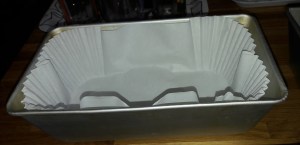
Take a roasting tin around 22cm by 31 cm and use one piece of greaseproof paper to line the 2 long sides and the base.
Cut the plums into quarters and take out the stones.
Whisk the eggs and sugar until the mixture is thick and creamy.
Add the oil and the flour and lightly beat everything together to make a thick batter.
Pour the batter into the roasting tin.
Place the cut plums, skin side down in rows on the batter until the top is full – they will start to sink – do not worry.
Bake for 30 to 35 minutes.
Dust with icing sugar when it has cooled slightly.
Cut into squares to serve.
Tea plates are Counterpoint (1973 – 1987) by Royal Doulton.
Note
If you have any cake left, it is better not to cover it with too airtight a cover as it will go soggy.
I love collecting recipes & getting cookery books & magazines.
I have recipes from Poland, the United Kingdom, the United States of America as well as from other countries that I have visited & from some I have not.
I write up recipes on cards for many of my favourite recipes as I find it hard to remember all the details and amounts.
The hardest thing I find is getting the measurements right.
When trying to get a recipe from my mother she would say in Polish things like “ just add enough flour until it is the consistency you want” or ” add the milk until it is right”.
I used to find this so hard, however now I find I say similar things especially when writing for this blog. It is difficult as there are so many variables that all make a difference, such as the type of flour, the temperature & humidity in the kitchen and so on.
At least you can be sure with weights & measures!
Well sadly – not always – hence this post.
For many recipes the exact amounts do not matter that much however with cakes & pastries the correct proportions do matter .
Let me start with weights.
I used to use pounds & ounces – especially when this was how everything in England was sold & how it was written in books.
Many years ago I bought some balance scales and a set of metric weights.
Balance scales I think are more accurate than the ones with just one top pan especially for small weights & I love the way they work.
I know the new electronic scales are good especially as you can zero the bowl and add ingredients – I just love using the balance scales – there is a sense of symmetry that just appeals to me.
Well going totally metric has not happened in England but recipe books & magazines tend to be in metric and imperial – I just stick to the metric.
At least I thought I am safe with my Polish books as they use metric weights!
How wrong I was!
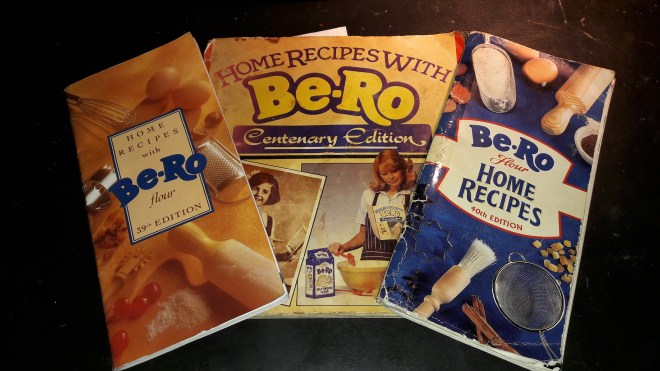
Some of my Polish cookery books are written using grams & kilograms – but not all of them and especially not my favourite old book – which was also my first.
Kuchnia Polska – Polish Kitchen or Polish Cookery
In this book the weights are given in dekagrams (decagrams) – abbreviated to dkg (deka is from Greek and means 10 – so 1 dekagram is 10grams.
When I went to Poland I found that when shopping for food my cousins all talked in deko or deka and they would ask for 20 deka of sausage when I would have asked for 200grams.
So not too big an adjustment to make when using a recipe however my biggest problem was not concentrating and half way through I would forget and when seeing for example 25dkg of something – I would add 25g!
I did have a few disasters!
Now I always write out the weights in grams – usually on post it notes & leave these in the book – especially for recipes I use often. This is a useful hint for recipes that you want to halve as well – as lack of concentration halfway through can also have disastrous results.
So is it any easier using volume?
Measuring in pints or litres should be easy if you have a jug with graduated markings but there is a little problem as UK pints and American pints are different. An American pint is 16 fluid ounces & a UK pint is 20 fluid ounces.
In American recipes the quart which is 2 pints is often used – but the American quart is smaller than a UK quart. My auntie in America was correct when she said a quart was near enough the same as a litre.
In many American recipe books you will often find that volume measurements in are given in cups.
If you use the same cup as someone else then it is no problem in measuring and not much of a problem with liquids, with solids then it does make a difference in how tightly you pack in the ingredient and how level or heaped is the top.
So no wonder there are charts published which give the weight equivalents for cup volumes of different foodstuffs.
All this then begs the following question …
What is a cup?
or in Poland
What is a szklanka (glass/tumbler)?
A szklanka in Poland is 250ml – a quarter of a litre – this is a metric cup.
An America cup is is 8 fluid ounces (half an American pint) and approximately 240ml.
There is an Imperial cup which is 10 fluid ounces (half a UK pint) and approximately 284ml – you might find this in older UK cookery books.
I had a look at some of my cups and found that only 2 of them held the equivalent of an American cup – whereas 2 of my tumblers held 250ml – so definitely a Polish szklanka.
I found that some of my mugs were the old Imperil cup – half a UK pint
I looked at my bought measuring cups and saw that they were different – one was an American cup the other a metric cup – I must remember that when I use them next.
What size is your spoon?
In Europe certainly before 1700 it was common practice to have your own spoon with you when you went travelling. Just as now when you would rarely leave the house without your wallet, mobile phone and keys, then having our own knife and spoon was very common. Indeed the English expression ” being born with a silver spoon in your mouth” – refers to this – as well as being rich.
In later times and especially with the introduction of the new invention from Italy of the fork it became more common for households to have sets of cutlery for guests.
Sizes of spoons evolved for different uses but now in recipes there are mainly 3 sizes used for measuring – teaspoon, dessert spoon and table spoon with 1 tablespoon being 3 teaspoons & 1 dessert spoon being 2 teaspoons.
The sizes of these spoons are different in the UK, in the USA and in Europe with the ones in the USA being nearly the same as the metric ones.
In the UK a teaspoon is nearly 6ml and a table spoon is just under 18ml.
In Europe a teaspoon is 5ml and a tablespoon is 15ml whilst in the USA the teaspoon is just slightly less than 5ml and a tablespoon is just slightly less than 15ml – so for practical purposes they are the same.
I have some measuring spoons which have both the UK and metric sizes on them but I have noticed that ones for sale now just have the metric sizes on them.
Note
I have not covered the variations that are to be found in Australia & Canada & other countries.
In Conclusion
Just be aware of differences in measurements if you are using recipes from other countries.
Make notes & keep them with your recipes, or even rewrite your recipes on cards so you do not forget any changes you make.
A racuch – according to my dictionary is a kind of pancake.
Racuszki or racuchy are plural words for them- used much more as you never have just one! They are small thick pancakes similar to dropped scones, Scotch pancakes or American style pancakes.
In my old Polish recipe book, the recipe uses soured milk, but as I do not have this, I use my own thick yoghurt instead.
Racuszki
1 egg
250ml yoghurt
200g plain flour
1/2 teaspoon of bicarbonate of soda
large pinch salt.
Method
In a large bowl mix the flour, pinch of salt, the egg and some of the yoghurt, mix it with a wooden spoon. I found my new one with a hole in it which I bought in The Netherlands very good for this.
Keep adding the yoghurt (and some water if needed) and mix till you get a batter which is thick and then beat it more till it is smooth and glossy.
Then add the bicarbonate of soda and give this a final mix.
Use a griddle or thick cast iron frying pan and use oil to grease it lightly and heat it up.
You need to try and keep a low to medium heat so as not to burn the pancakes.
Place tablespoonfuls of the batter on the frying pan and cook until the base is set and golden then turn them over and cook the other side.
They are traditionally served warm with jam or thick fruit syrup – caster sugar also goes well.
With Sour Cherry Jam
Yoghurt Cheese Pancakes
I have recently been to The Netherlands to stay with my friend and was looking at the local newspaper and saw a recipe for pancakes using qwark (I can manage enough Dutch words to figure out some recipes – especially if there is a photograph!)
I thought they sounded very much like racuszki, so I jotted the recipe down and when I came home I adapted it slightly by using self raising flour, adding a little vanilla essence and used my own yoghurt cheese instead of qwark.
In the original recipe they served them warm with yoghurt & honey, I also tried them with melted butter & sugar, and with maple syrup – from the large bottle I got from my friend who lives in Canada.
They were super and ones I had left could be easily reheated and were still soft and not rubbery – I will be using this recipe lots from now on.
Ingredients
2 eggs separated
2 tablespoons sugar
250g yoghurt cheese
200ml milk (you might not need it all)
125g self raising flour
Pinch salt
2-3 drops of vanilla essence
Method
Whisk the egg whites until they are stiff – I tend to do this first so you can use the beaters for the rest of the recipe – without having to wash them to remove the grease.
In a large bowl mix the egg yolks, sugar, yoghurt cheese, flour, pinch of salt, vanilla essence and around half the milk.
Keep adding more milk and mix well until you have a thick batter – like double cream.
With a metal spoon fold in the stiff egg whites.
Use a griddle or thick cast iron frying pan and use oil to grease it lightly and heat it up.
You need to try and keep a low to medium heat so as not to burn the pancakes.
Place tablespoonfuls of the batter on the frying pan and cook until the base is set and golden then turn them over and cook the other side.
Ciocia* Pola’s Apple Racuszki
*Aunty
Many years ago I went to stay with my one of mother’s sisters (Apolonia) who lived in the area called mazury – the Masurian Lake District in North East Poland.
With apples from the garden she made racuszki – using a thick yeast risen batter and roughly chopped apples – a cross between a pancake and a fritter. They were delicious.
I have made them here many times using her recipe. Whilst researching and checking other variations I saw that several recipes used grated apples – these came out stodgy with little taste of the apple – you need to keep the pieces fairly large.
Ingredients
125 ml of milk (full or semi-skimmed)
25g caster sugar and 1 teaspoon
10g fresh yeast or 5g dried yeast
25g butter
1 egg
125g plain flour
pinch of salt
2 Bramley apples
*
Icing sugar, caster sugar or cinnamon sugar to dust.
Method
Warm half the milk and add a teaspoon of caster sugar and the yeast and mix it all together and leave it to froth up.
Melt the butter and leave it to cool.
Whisk the egg with the sugar until it is thick and creamy.
Put the flour and salt into a large bowl.
Use a wooden spoon (one with a hole works really well) and beat in the yeast mixture, the egg & sugar mixture and then the melted butter.
Slowly add the rest of the milk, mixing until the mixture has the consistency of double cream.
Cover the bowl with a cloth and leave this to rise.
Peel, core and quarter the apples and cut them into small chunks or slices cut in half.
Add the apples to the risen batter and mix them well in to coat them.
Use a griddle or thick cast iron frying pan and use oil to grease it lightly and heat it up.
You need to try and keep a low to medium heat so as not to burn the pancakes.
Place large tablespoons of apple and batter onto the pan and cook them so that they are golden brown on both sides.
Remove them from the pan and dust them with icing sugar, caster sugar or cinnamon sugar.
Eat them whilst they are hot & as they say in Poland – Smacznego! (may they be delicious!)
Buckwheat (Fagopyrum tataricum) is used very much in Polish cookery as the plant grows well in a cold climate. Buckwheat requires a well drained soil but without too much fertiliser – lots of fertiliser reduces the yield. It is not in fact a grass or cereal crop but the flour is used in much the same way as wheat.
Buckwheat is related to sorrel and rhubarb and has small triangular seeds. The plant originated in South East Asia and then was brought to Europe.
I have read that it came to Poland via Manchuria and Siberia but the Polish word for buckwheat – grykaindicates that it came from the Greeks – I have also read that the plant was brought to areas of what are now Eastern Poland, Russia & the Ukraine in the 7th century by Byzantine Greeks.
Another regional word used in Polish for buckwheat is hreczka – this again suggests a Greek origin.
Photographs from the book Kuchnia Polska by Maciej Kuroń
The triangular seeds have a strong scent which is quite distinctive and the flour is grey/speckled black in colour. It is mixed with wheat flour to make pancakes and bliny.
Bliny are popular in Eastern Poland and in the area called Kresy – the Eastern Borderlands – from where both my parents came as well as in the Ukraine and Russia.
The word bliny is plural – I doubt very much if the singular blin is much used!
Bliny are best cooked on a griddle or a cast iron frying pan.
Bliny are small risen pancakes made using yeast they are in the American style of pancake.
Bliny can be served warm or cold – I much prefer them warm!
Bliny
Ingredients
80g plain flour
80g buckwheat flour
1 egg
125 ml warm milk (full or semi-skimmed)
125 ml warm water
25g fresh yeast or 1 tablespoon of dried yeast
1 tablespoon of sugar
1 tablespoon of melted butter
Pinch of salt
Method
Put the yeast, sugar and milk in a bowl and leave to rise. (You can place this over bowl of warm water).
Wheat Flour & Buckwheat Flour
In a large bowl mix the flours together and add yeast mixture and then the beaten egg.
Add the water bit by bit until the mixture is like pouring cream, you might not need it all.
Add the pinch of salt and the melted butter then cover with a cloth and leave to rise.
Use the risen batter to make small pancakes by using 1 large tablespoon per pancake – I make 3 or 4 at a time in my lightly greased cast iron pan.
Once you get the pan hot, lower the heat to a steady low so as not to burn the bliny.
Once they are cooked on one side, turn then over using a spatula and cook for a few minutes more.
Serving suggestions
Serve the bliny with any of the following: melted butter, soured cream, twaróg, yoghurt cheese or cream cheese, smoked salmon, pickled herrings or even caviar, gherkins, fried onions, skwarki (crispy bacon bits) fried mushrooms and one of my favourites a fried egg.
Served With Yoghurt Cheese and Chopped Parsley
Served with Melted Butter
Buckwheat Pancakes
These are thin pancakes and are also very popular in Northern France where they are called gallettes de sarrasin.
The French for buckwheat is sarrasin or blé noir.
Many years ago whilst on holiday in France I bought and brought home a very large French pancake pan.
However on my gas stove it is too large for a good distribution of heat – you get a hot spot in the centre which tends to burn that part – so I use my smaller pancake pan.
Last week whilst in a department store in Leeds I saw the following – An Electric Crêpe Pan – It might be good.
Ingredients
75g buckwheat flour
25g plain flour
2 eggs
120ml of milk (full or semi-skimmed)
120ml of water
25g of melted butter
pinch of salt
Some extra milk might be needed.
Method
Make these in the same way as standard pancakes adding the melted butter after the batter has been standing for about an hour.
I think these pancakes are best with savoury fillings and my favourite is in fact French in origin, Breton style with a slice of good ham, grated Gruyère cheese and a soft fried egg.
The fillings are put on the cooked pancake and the sides are folded over but with the filling still showing in the centre. (You can put this back on the pan to heat it a little more.)
Melted Butter & Grated Cheese
Melted Butter, Grated Cheese & Fried Egg
Poffertjes
These mini buckwheat pancakes are Dutch in origin and it was only as I was trying out the recipes again that I realised how similar they are to bliny – but these are not served with savoury toppings but with icing sugar.
(The Dutch for buckwheat is boekweit)
Several decades ago when on a visit to The Netherlands I bought a special cast iron pan which is used for making poffertjes .
It was in the days before cheap flights & just hand luggage and I had travelled there by car – not as easy to bring home without.
If you do not have access to the authentic pan you can make them on a frying pan – my cast iron pan works very well.
Cast Iron Proffertje Pan with 19 Indentations
Poffertjes
Ingredients
10g dried yeast
1 teaspoon sugar
125g buckwheat flour
125 plain flour
Pinch of salt
1 egg
350ml of full fat or semi-skimmed milk – warmed slightly
1 tablespoon of butter – melted
Icing sugar to serve.
Method
In a small bowl or jug dissolve the sugar, the yeast and around 50 ml of the milk.
Leave for around 10 minutes or so as it froths up.
In a separate bowl, combine the buckwheat and wheat flours, salt, egg, yeast mixture and half the remaining milk and mix well.
Now add the remaining milk until the mixture is like double cream – you might not need all the milk.
Add the melted butter.
Cover the bowl and leave for around 1 hour until the mixture has bubbled and risen.
Lightly grease the pan and heat the pan – keep it the pan warm but not too hot or you will burn the poffertjes.
Using a teaspoon fill each indentation in the pan – you need around 2 teaspoons for each.
Turn the poffertjes around as soon as the bottom has set, using two forks.
Dredge the poffertjes with lots of icing sugar.
Using a Cast Iron Frying pan
Canadian Alternative!
One of my friends who now lives in Canada brought me a large bottle of maple syrup on her last visit and I tried this over the poffertjes instead of the icing sugar – they were delicious.
I had not planned to write about cheesecakes again so soon but recently I had made lots of yoghurt cheese and I decided to make a baked cheesecake for my visitors.
There are so many variations you can make of baked cheesecakes – here is one with a chocolate and an orangey twist.
I had a packet of milk chocolate digestive biscuits already opened and I thought I would try a variation on my usual recipe.
Ingredients for the base
100- 150g of chocolate digestive digestive biscuits (milk or dark)
50 – 75g of butter
A few chunks of dark chocolate
Method
Grease a spring-form or loose bottomed tin with melted butter. (You can use a 19cm, 20cm or 22cm tin – adjust the amounts of the base ingredients to suit.)
Crush the biscuits in a bowl.
Melt the butter in a pan over a low heat then add the chocolate and let it melt.
Add the butter & chocolate mix to the biscuits and mix them all together.
Press the mixture into the base of the tin and leave it to cool completely.
Once cool you can put it the tin into the fridge whilst you make the yoghurt cheese mixture.
Ingredients for yoghurt cheese mixture
Around 450g of yoghurt cheese (or use cream cheese)
3 eggs separated
80g of caster sugar
60g of chopped mixed peel (I use the peel from Marks & Spencer)
2 tablespoons of custard powder
The custard powder helps as the yoghurt cheese is often quite “wet” – this is a tip I got from the book Eat Well The Yochee Way by Nikki & David Goldbeck.
Method
Pre-heat the oven to GM 3 – 160ºC.
Whisk the egg yolks and the sugar till they are pale and fluffy.
Lightly whisk in the yoghurt cheese and the custard powder till it is all well combined.
Mix in the mixed peel.
Whisk the egg whites until they are stiff and then fold them into the mixture with a metal spoon.
Pour the mixture onto on the biscuit base.
Bake in the oven for 50 minutes.
When the cake is ready switch off the oven and leave it in there for at least 40 minutes.
Take out the cake to cool.
Once it is cold – take the cake out of the tin by loosening the outer ring or placing the cake tin with the loose bottom on a tin can and sliding the cake tin down.
Dust the cake with icing sugar before serving.
I think this cake is best made the day before you want to serve it – so it is well cooled and set.
The blue & white table cloth is a new 100% cotton one from Ikea.
The tea plate is Las Palmas by Aynsley from the 1960s.