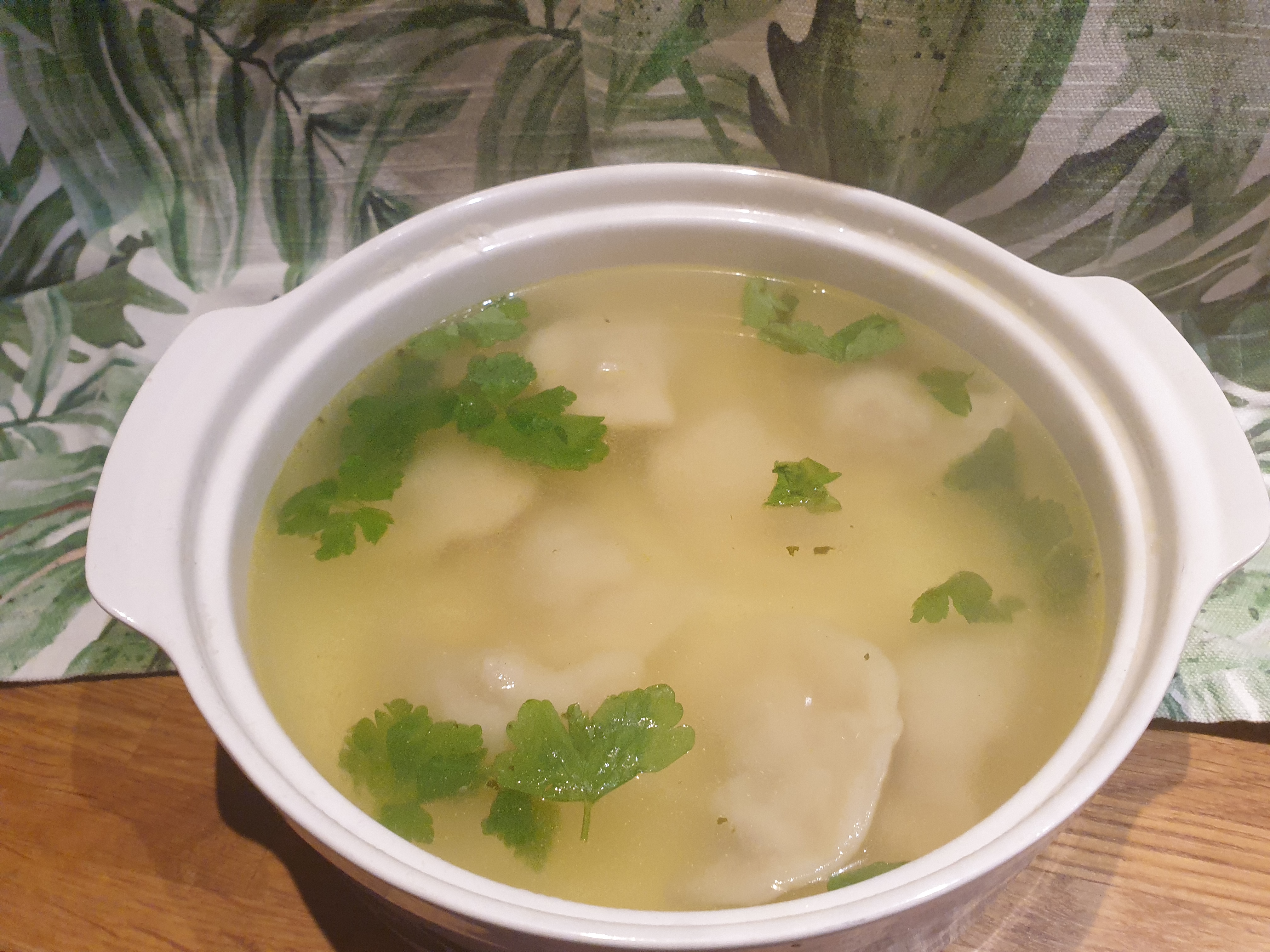
Kołduny

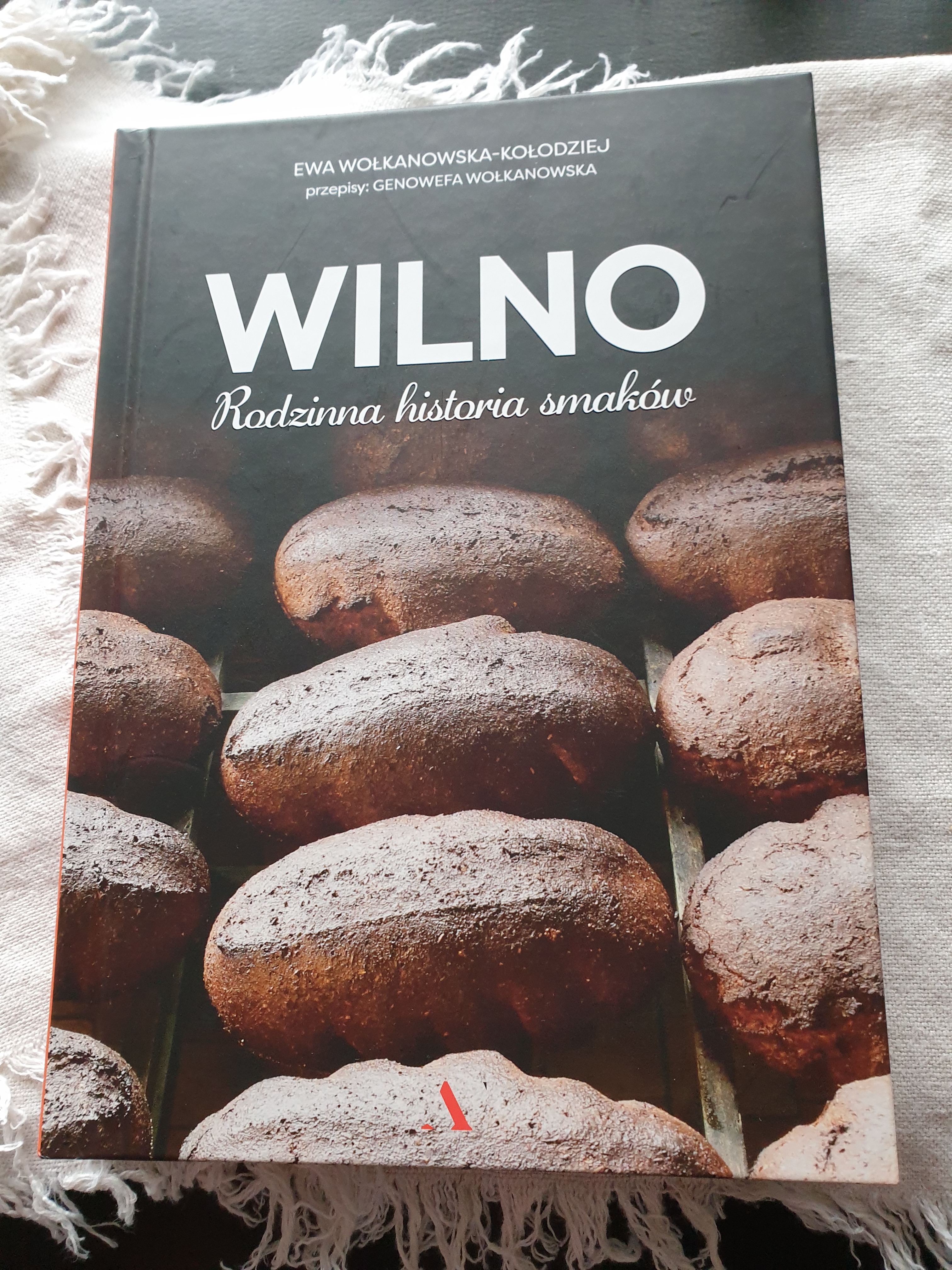
  • Looking in my new recipe book “Wilno” I came across a recipe for kołduny.
  • They looked very much like pierogi and did I some research to find out how they were similar and how different.
  • Firstly the dough is made with just flour and hot (not boiling) water! – I was very curious as to how this would work out.
  • The filling is meat, usually pork or beef or a mixture.
  • The filling is raw minced meat – not cooked meat as in pierogi.
  • Most recipes used “fatty” meat or added lard (I did not).
  • The chopped onion is also raw.
  • Garlic is added – I have not come across this used in pierogi.
  • Kołduny are described as smaller than pierogi – I now realise that my pierogi are small so these did not seem much smaller.
  • In order to cook the kołduny they are simmered for 20 minutes – much longer than pierogi are boiled.
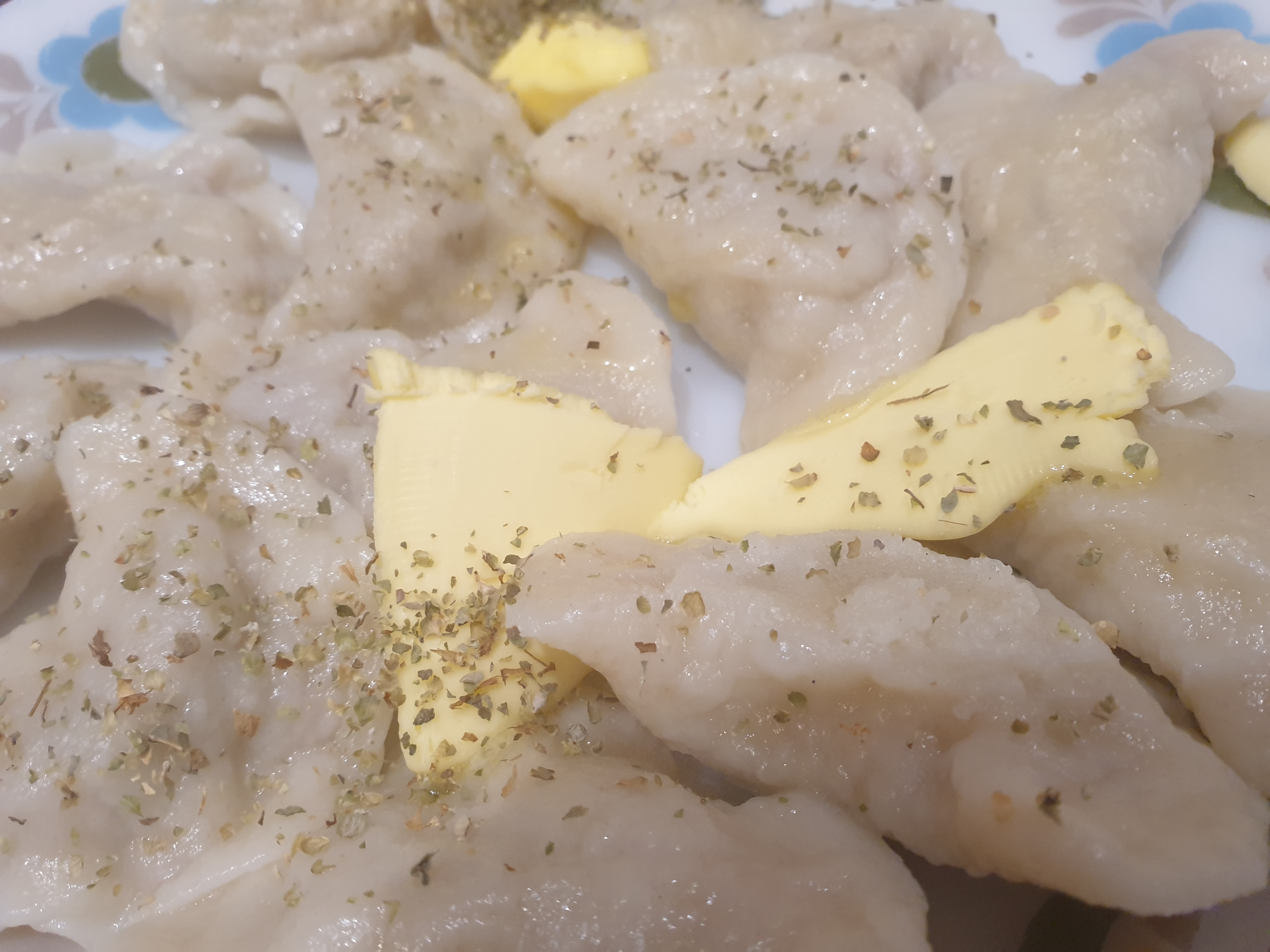
  • The kołduny are served with marjoram (fresh or dried) and butter or soured cream or
  • They are often served in soup usually rosoł clear chicken soup.
  • In the book it states that the kołduny are not eaten with a knife and fork but with a soup!
  • I found it hard to eat the ones in the soup as they were very hot to bite through!
  • VERDICT
  •  The dough was good and I would make that again. 
  • However I suppose it is what one is used – but we all preferred the Polish cooked meat fillings of pierogi.

INGREDIENTS – DOUGH

  • 480g plain flour
  • ¼ teaspoon salt
  • Around 500ml of water at about 70°C (you might not need it all)

METHOD – DOUGH

  • In a bowl mix the flour with the salt.
  • Make a well in the centre and add 250ml of the water.
  • At first using a knife or spoon – later with your hands –
  • Keep adding water slowly and mix this in with the flour until you have a smooth ball of dough.
  • Leave this to rest for 30 minutes.

INGREDIENTS – FILLING

  • 500g of  minced pork or beef or a mixture.
  • 1 egg
  • 1 onion – chopped fine
  • 2 cloves of garlic – chopped fine
  • Marjoram – fresh or dried
  • Salt & pepper

METHOD – FILLING

  • Mix the ingredients together.
  • Season with the salt & pepper.

Making the kołduny

  • Prepare trays with floured tea towels to put the kołduny on.
  • Cut the dough into quarters.
  • Roll out the dough until it is thin.
  • Cut out circles around a tumbler or cutter around 7cm in diameter. 
  • Place a ball of filling in the centre.
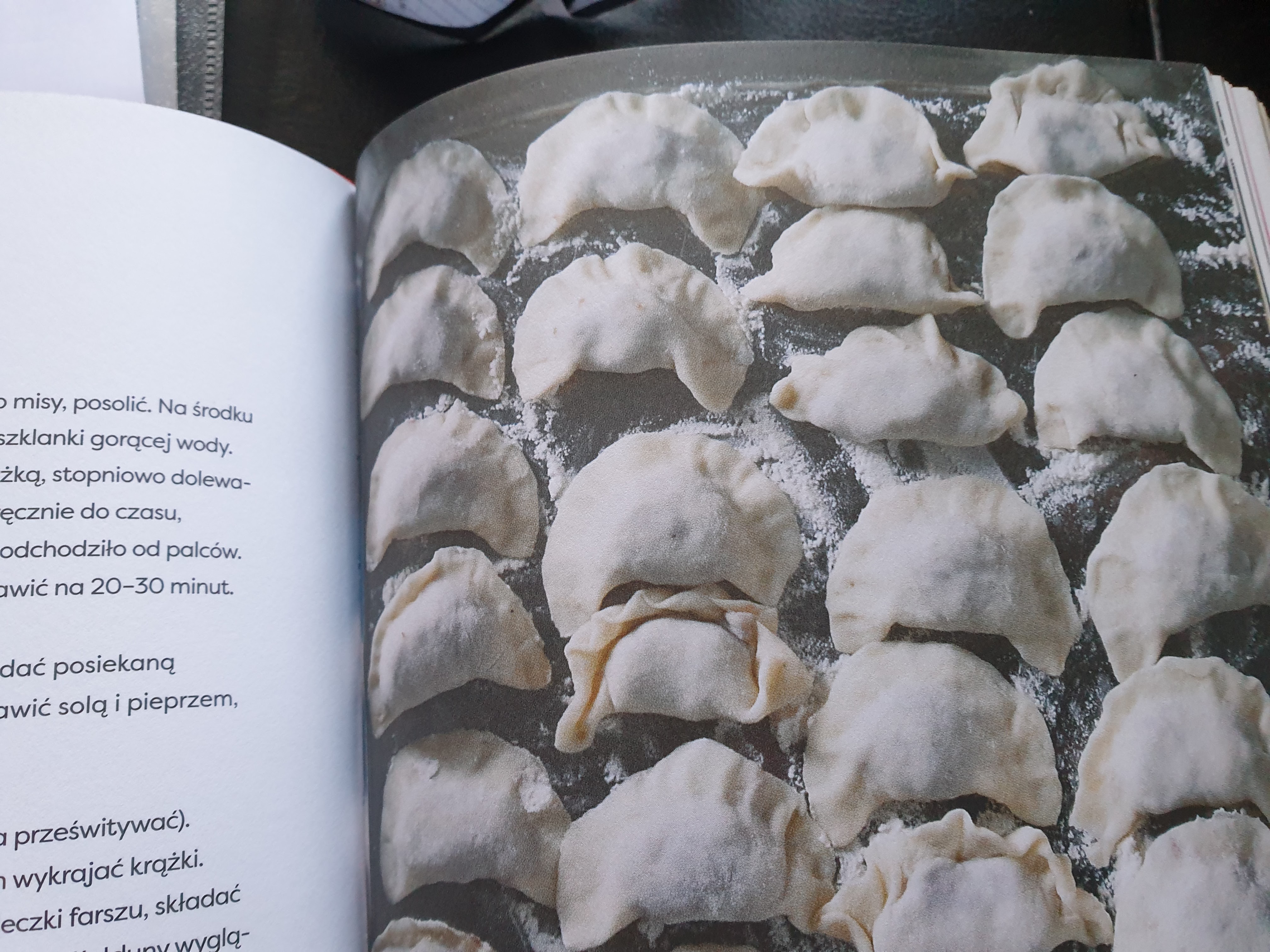
  • Seal up the edges with your fingers to get a semi circle.
  • Place on the floured trays.
  • Repeat with the rest of the dough and with re-rollings from the cutting.
  • *
  • Use a wide saucepan or deep frying pan.
  • Add boiling water, salt and a little oil.
  • Add about 8 kołduny and simmer them for 15 minutes.
  • Remove with a slotted spoon.
  • Repeat with the rest of them.
  • *
  • Serve with butter and marjoram or
  • In rosoł – clear chicken soup.
  • Take care when biting in as the filling will be very hot.
  • *
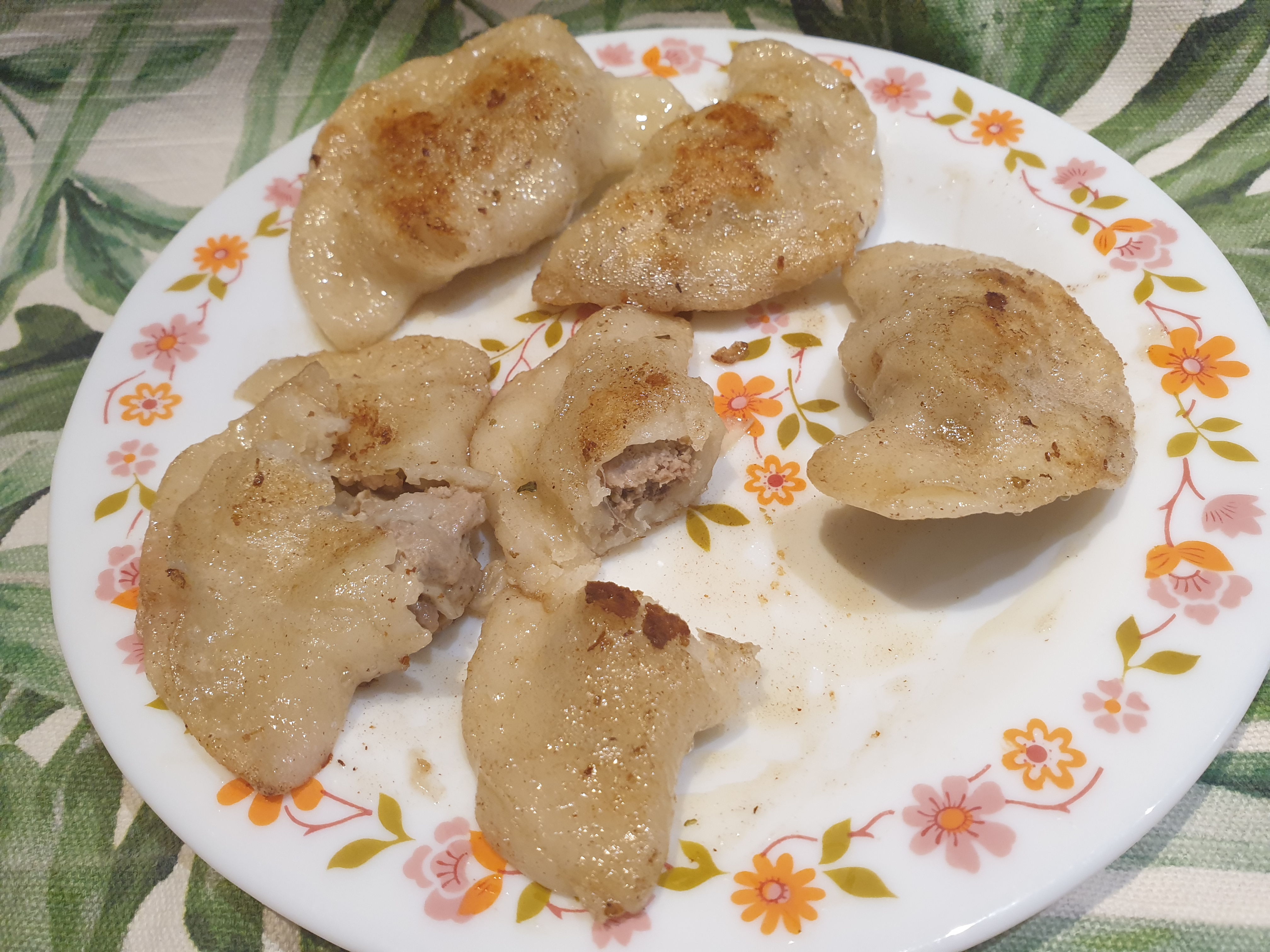
  • Although not traditional we fried up left over kołduny the next day.

Carrot & Parsnip Soup

I had lots of carrots and parsnips needing to be used up so I decided to make a slightly different soup.

  • I cooked a chicken as for rosȯł – clear chicken bouillon, with instead of 1 or 2 carrots and parsnips, I used around 8 of each, peeled but whole.
  • Once cooked I removed the chicken for a different dish and strained the cooked vegetables from the liquid.

  • For the best results, leave the liquid in a cool place for a few hours or even overnight so that you can skim off some of the chicken fat.
  • Use a blender to purée the carrots, parsnips and the onion.
  • In a saucepan add the puréed vegetables and enough of the liquid stock to give the required consistency for a soup – not too thick.
  • This puréed style of soup is more English than Polish! 
  • Gently heat the soup for around 5 minutes, stirring it occasionally.
  • Check for seasoning and to serve, stir in around 100ml of soured cream or 150ml of Greek style yoghurt.

Ingredients – if not wanting to make the rosȯł from scratch

  • 2 litres of good chicken stock (or a from stock cubes if you do not have any)
  • 8 carrots
  • 8 parsnips
  • 1-2 onions
  • 2-3 grains allspice
  • 1 bay leaf
  • Salt & pepper to taste
  • 100ml soured cream or 150ml Greek style yoghurt

Method

  • Simmer the vegetables in the chicken stock with the allspice and bay leaf till they are all soft.
  • Purée the vegetables in the soup using a stick blender.
  • Season to taste.
  • Add soured cream or yoghurt to serve.

Karoflanka – Potato Soup

When I was young and I told my friends that my mother made potato soup, they all thought this sounded rather weird & tasteless.

Whereas, it was one of my favourite soups and like most Polish soups, it is not a purée, it has chucks of potato in it.

This following is based on my memory of my mother’s recipe.

For the best results, I use rosół (chicken bouillon) or homemade chicken stock when I have it.

Ingredients

  • 750g – 1 kilo of potatoes
  • 2 large onions
  • 200g smoked bacon
  • 2 litres of chicken stock or rosół
  • Large bunch of flat leaved parsley
  • 1 bay leaf
  • 2-3 grains of allspice
  • 4-5 peppercorns
  • A little oil for frying
  • Chopped flat leaved parsley to garnish
  • Extra seasoning may not be necessary because of the bacon and rosół/stock.

Method

  • Chop the smoked bacon into small squares.
  • Slowly heat the bacon in a heavy bottomed pan or good Teflon red spot non stick pan without oil.
  • Let all the fat cook out.
  • Chop the onions into small pieces and fry them with the onions.
  • You want the onions well browned, even some slightly charred.


  • Peel and chop the potatoes into chunks.
  • Fry them lightly in oil so all sides are done.
  • Mix the potatoes with the smoked bacon and onions in a large pan.
  • Add the chicken stock or rosół.
  • Chop the parsley leaves and add them with the allspice, bay leaf and peppercorns.
  • Add 1.5 to 2 litres of water and bring this to the boil.
  • Reduce the heat, put a lid on the pan and simmer gently for around 15 minutes.
  • You are aiming for cooked pieces of potatoes – do not let it disintegrate to a pulp! 
  • Garnish with chopped flat leaved parsley when serving.


Served here in Royal Stafford – Blossom Time from the 1950s

Creamier Version

Looking through other recipes for this soup, I found that often some soured cream was added at the end just before serving.

So add 3 to 4 tablespoons of soured cream to some slightly cooled soup in a little dish and then mix this into the pan and serve.


Served here in Royal Doulton –  Burgundy – 1959 to 1981.

Note

Both are super –  but my vote is for my mother’s version!

Tomato Soup

There are many versions of tomato soup – some people just add tomato puree or a tin of tomatoes to rosół, (chicken bullion). For many this was standard practice on Monday with any that was left over from Sunday lunch and also in winter months in the past when fresh tomatoes were not so readily available.

I prefer to make a more refreshing fresh tomato soup.

Ripe tomatoes make the best soup – if you are lucky enough to have your own from the garden or allotment then these will be great or look out for ripe tomatoes on a market rather than the hard bullet ones often sold for salads.

Little note from the Metro newspaper

My mother always served boiled rice as the soup accompaniment.

Many years ago, well before Poland joined the European Union, when there were not as many Poles living in England, one of my English friends went for dinner at at a Polish lady’s house.  On telling me about the lovely food she said ” …. we had tomato soup with rice in it!” My instant reply without thinking was “but tomato soup always has rice in it”.   

Ingredients

  • 700g – 800g of ripe fresh tomatoes
  • 1 large or 2 medium onions
  • 1.5 litres of vegetable stock – came be from a cube or powder
  • Salt & ground pepper to taste
  • A little granulated sugar – optional – might not be needed.
  • Boiled rice to serve

Method


  • Pour boiling water over the tomatoes in a bowl and leave to cool.
  • Skin the tomatoes.
  • Chop the tomatoes into quarter.
  • Chop the onion into fine pieces.
  • Place the tomatoes, onion and vegetable stock into a large saucepan.
  • Bring to the boil and then put on the lid and simmer for at least 30 minutes.
  • You want the tomatoes and onions to have cooked away into the liquid -no large pieces left.
  • Season to taste.

Although sour soups are popular in Poland – tomato soup does not want to be sour.  Depending on the tomatoes used, I sometimes add a little granulated sugar.

  • To serve place a handful of cooked boiled rice into each soup plate.

Served here in my mother’s Crown Devon – Fieldings – Glenwood soup plates – made in England – 1939.

Rosół – Chicken Soup

This is my 200th post!

So it is fitting that this one is a Polish classic.

Rosół – Chicken Soup – must be the most well know of Polish soups and can be the basis for many others.

It is a clear soup which is known as a bouillonbulion in Polish. The word consommé which I thought was interchangeable with it, in fact denotes a clear soup which has been cleared with egg whites cooked in it.

Rosół is usually served with cooked pasta, often fine noodles and is the origin of chicken noodle soup.

In times gone by the chicken used would have been an old broiler – these are not as available here as much.  Nowadays for taste it pays to use the very best free range chicken you can get.

A whole chicken is simmered for around 2 hours with Wloszczyzna – Soup Greens.

I was talking with my Polish friend who lives in Leeds and she told me that the addition of  LubczykLovageLevisticum officinale leaves enhances the flavour.

I have this herb, which belongs to the celery & parsley family , growing in a pot in my garden but as it was still a bit early in the year when I made this, I have not been able to try this out – I must do so later!

Ingredients

  • 1 whole chicken
  • 1 onion – halved (leave some dark skin on to add colour) or 2 leeks – trimmed
  • 3 whole peeled carrots
  • 2 whole peeled parsnips
  • Half a celeriac – peeled
  • 8 peppercorns
  • 2 -3 allspice grains
  • 1 bay leaf
  • Leaves & stalks of fresh herbs such as thyme, parsley and lovage
  • 1 tablespoon of salt
  • Chopped parsley to serve

Method

  • Place all the ingredients into a large stock pot and cover with boiling water.
  • Bring it all to the boil and put on the lid.
  • Either lower the heat to let it all simmer or put the pot  into an oven at around GM 2 – 150°C.
  • Leave to simmer for around 2 hours until the meat is tender.
  • Remove the chicken.
  • Strain the soup.
  • Leave the liquid to cool and then place in a cold place or fridge preferably overnight.
  • Remove as much fat as possible from the top of the liquid.

Note

The soup should have some oczka – little eyes on the top – these are the fat droplets –  tastes have changed somewhat and less fat is prefered by many now.

To Serve

Heat up the soup gently to boiling and simmer for a few minutes.

Pasta & Noodles

This is the classic way of serving.

Very small pasta shapes or larger pasta cut into small pieces or noodles are all cooked beforehand and a small amount is placed in the soup dish and hot rosół poured over them to serve.


Chopped flat-leaved parsley is added on serving.

Served in Royal Doulton – Carnation – 1982 – 1998


You can add some of the cooked carrots, sliced, to the soup and/or some of the cooked chicken meat, chopped.

Uszka (Polish filled pasta) can be added and the convention is to add three or five uszka to each soup serving.


Note

The cooked chicken can be used in many dishes which require cooked chicken such as in the filling for pierogi.

I find that the meat is really tasty and succulent and makes super sandwiches with some mayonnaise.

Note

Rosół  is often used as the base of many other soups.