Lovely Liver!

For many people  – liver is love it or loath it.

I think certainly for me and most Poles it is love it!

The Polish for liver is wątroba – which means “waste maker” – as the liver is the organ in the body where substances are broken down.

In Poland the most sought after livers  are calves liver & rabbit liver.

My aunty in Białystok- cooked some rabbit liver for me when I  was there last – I thought it was utterly delicious  –  but as far as I am aware it is not readily available to buy in England.

I  see calves liver for sale more and more here in England and I  buy this whenever I can.

My mother always cooked pig’s liver, never ox liver.

I usually cook lambs liver if I cannot get calves liver.

I think liver is best lightly cooked, even slightly pinky,  it becomes hard and tough if over cooked.

There is a restaurant in Krakow called Dom Polonii ( House of the Poles) just off  Rynek Główny (Main Square) it serves very traditional dishes.

Rynek Główny (Main Square)

I like to eat there very much and can never make up my mind which dish I want the most. Their fried liver is super and I will have that at least once when I visit Kraków.

Liver is the main ingredient of  pâtés and similar dishes which are very popular in Poland –  I will look at these in future posts.

Cooking Liver

These recipes are all  variations on a simple theme.

I use calves or lamb’s liver for these recipes .

Preparing the liver

  • Depending on how it has been prepared by the butcher,  you might have to remove some veins or membranes.
  • Slice the liver into thin equal sized slices.
  • Dip each piece into a mixture of plain flour and ground black pepper.

 Simple Style Liver

  • Lightly pan fry the liver slices in a mixture of butter & sunflower oil on both sides.
  • Sprinkle on some Italian Herbs.
  • Add around 150 ml of chicken or vegetable stock (can be from a cube, concentrate or powder) … depends on the size of your pan.
  • Put the lid on the pan (a glass lid is good for this) and simmer gently for 2 -3  minutes.  (The time will depend on the thickness of the slices)

Liver with Soured Cream

  • Follow the instructions for the simple style but only cook for 1 -2 minutes.
  • Take the pan off the heat and add 2 tablespoons of soured cream and mix well.
  • Return to the heat  and allow to simmer for  1 -2 minutes.

Liver with Onions 1

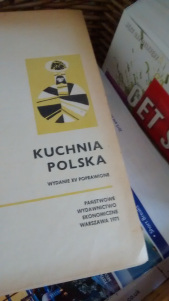
In my old Polish cookery book  (my bible in many respects) this simple recipe (without the herbs) is called  …. po angielskiu  which means  …. English style!

Kuchnia Polska – Polish Kitchen or Polish Cookery
  • Thinly slice 1 or 2 onions (I like lots of onions with the liver).
  • Fry the onions in butter & sunflower oil till golden.
  • In a separate pan lightly pan fry the liver slices in a mixture of butter & sunflower oil on both sides.
  • Sprinkle on some Italian Herbs.
  • Add the onions to the fried liver and mix together and serve.

Liver with Onions 2

  • Thinly slice 1 or 2 onions (I like lots of onions with the liver).
  • In a pan, fry the onions in butter & sunflower oil till golden. (You can fry a little longer to slightly char or caramelise them if you like)
  • In a separate pan, lightly fry the liver slices in a mixture of butter & sunflower oil on both sides.
  • Sprinkle on some Italian Herbs.
  • Add around 150 ml of chicken or vegetable stock (can be from a cube, concentrate or powder) … depends on the size of your pan.
  • Put the lid on the pan (a glass lid is good for this) and simmer gently for 2 -3  minutes.  (The time will depend on the thickness of the slices).
  • This will give a tasty sauce with the liver.
  • Place the fried onions on top and serve.

Liver with Mushrooms

  • Thinly slice mushrooms around 100g of button mushrooms
  • Fry them gently in a mixture of butter & sunflower oil.
  • Add the mushrooms to the fried liver as in the simple style above and mix together.
  • Add around 150 ml of chicken or vegetable stock (can be from a cube, concentrate or powder) … depends on the size of your pan.
  • Put the lid on the pan (a glass lid is good for this) and simmer gently for 2 -4  minutes.  (The time will depend on the thickness of the slices).

Liver with Mushrooms & Soured Cream

  • Follow the instructions for the Liver with Mushrooms but only cook for 1 -2 minutes.
  • Take the pan off the heat and add 2 tablespoons of soured cream and mix well.
  • Heat up slowly and allow to simmer for  1 -2 minutes.

Served here on Royal Doulton – Carnation, 1982-1998

Serving suggestions

Sprinkle liberally  with chopped parsley.

All of the above go well with boiled potatoes, creamy mashed potatoes, boiled rice, noodles or pasta such as tagliatelle.

Caraway Yeast Buns

Whilst doing some research on caraway,  I found that in 2011, Finland  produced over 25% of the worlds caraway.

So I thought why not a recipe from Finland!

This is a based on a recipe for pulla –  in Poland they would be called  bułeczki  – they are yeast buns and in Finland they are served with coffee.

These buns  are originally flavoured with crushed cardamon seeds – I have adapted this for caraway.

In Poland caraway is often added to rye bread but not usually added to wheat flour buns.

Ingredients

500g plain flour

50g butter

80g of granulated sugar

300ml tepid milk

1 teaspoon of dried yeast

1 egg beaten

1 tablespoonful of caraway seeds

1 teaspoon of salt

1 egg white, beaten, for glazing (does not burn as easily as whole egg).

Optional

Crushed sugar cubes.

Method

In a small dish start the yeast off with 2 tablespoons of the milk and 1 tablespoon of the sugar until it is bubbling.

Rub the butter into the flour.

Add the salt, caraway seeds, sugar, yeast mixture, milk and egg.

Mix thouroughly with a wooden spoon.


Cover the dough with clingfilm or a cloth and leave to rise.

I left mine over night in a cool cellar and then followed by a few hours in the morning in a warmer kitchen.

Grease 2 baking sheets.

Take the dough out of the bowl – a special dough scraper is very good for this.

20180320_063137


Divide the dough into 12 pieces  – a dough cutter is most useful for this  and shape each one into a ball using floured hands – do not over work the dough or add flour – keep the mix as soft as possible.

Place the balls on the sheets – leaving room for expansion.

Cover and leave to rise.

Pre-heat the oven to GM 6 – 200°C

Brush the top of each bun with the beaten egg white and sprinkle with the crushed sugar if desired.

Bake for 10-15 minutes until golden – brown.


Getting ready for morning coffee


Enamelled coffee pot by the Cathrineholm ironworks in Norway  –  Lotus – from the 1960s,

Coffee cups and saucers by Elizabethan  – Carnaby – from the 1970s

The buns are on a hand-decorated  cake stand made by Fairmont & Main who were established in Huddersfield in 1994.

The pattern is Carnival and this is a recent birthday present from one of my friends.

Note

As with all yeast buns these will go stale quickly – if I have any left – I cut them in half and pack into bags and freeze them.

On de-frosting I toast them and serve with butter.

Karpatka – Carpathian Mountain Cake

Karpatka – Carpathian Mountain Cake  – gets its name as the top looks like the rugged mountains and the icing sugar dusting looks like a fine covering of snow.

The Carpathian Mountains – Karpaty in Polish –  are a mountain range in an arc roughly 1,500 kilometres in central and eastern Europe; part of the range is in Southern Poland  and can be described as Alpine.


It is made with 2 layers of  choux pastry with vanilla pastry cream in between the layers and the top dusted with icing sugar.

Choux Pastry

This was invented by an Italian chef in the mid 16th century and soon became popular in France.  It gets its name from the French for cabbage as the little buns made from this pastry  looked like little cabbages.

It is made without any raising agent. It is the large water content in the dough which turns to steam in the high oven temperature which causes the pastry to rise.

  • I read loads of conflicting advice on how to make choux pastry. 
  • My first attempt came out more like a Yorkshire pudding.
  • After several attempts I  now have a recipe that works.

Ingredients

  • 6 eggs
  • 300ml of water
  • 2 teaspoon of granulated sugar
  • 200 g of plain flour or strong plain flour *
  • 100g butter
  • pinch of salt
  • *Using strong flour gives a drier pastry whilst using plain flour gives a softer pastry.

Method

  • Pre-heat the oven to GM6 200°C
  • Grease 2 equal sized rectangular baking trays with sides or a large rectangular tin.
  • Put the water, pinch of salt, sugar  and the butter into a saucepan.
  • Heat gently so the butter melts and then slowly bring this to the boil.


  • Sift the flour.
  • Taking the pan off the heat add the flour, all in one go.
  • Return the pan to a gentle heat.
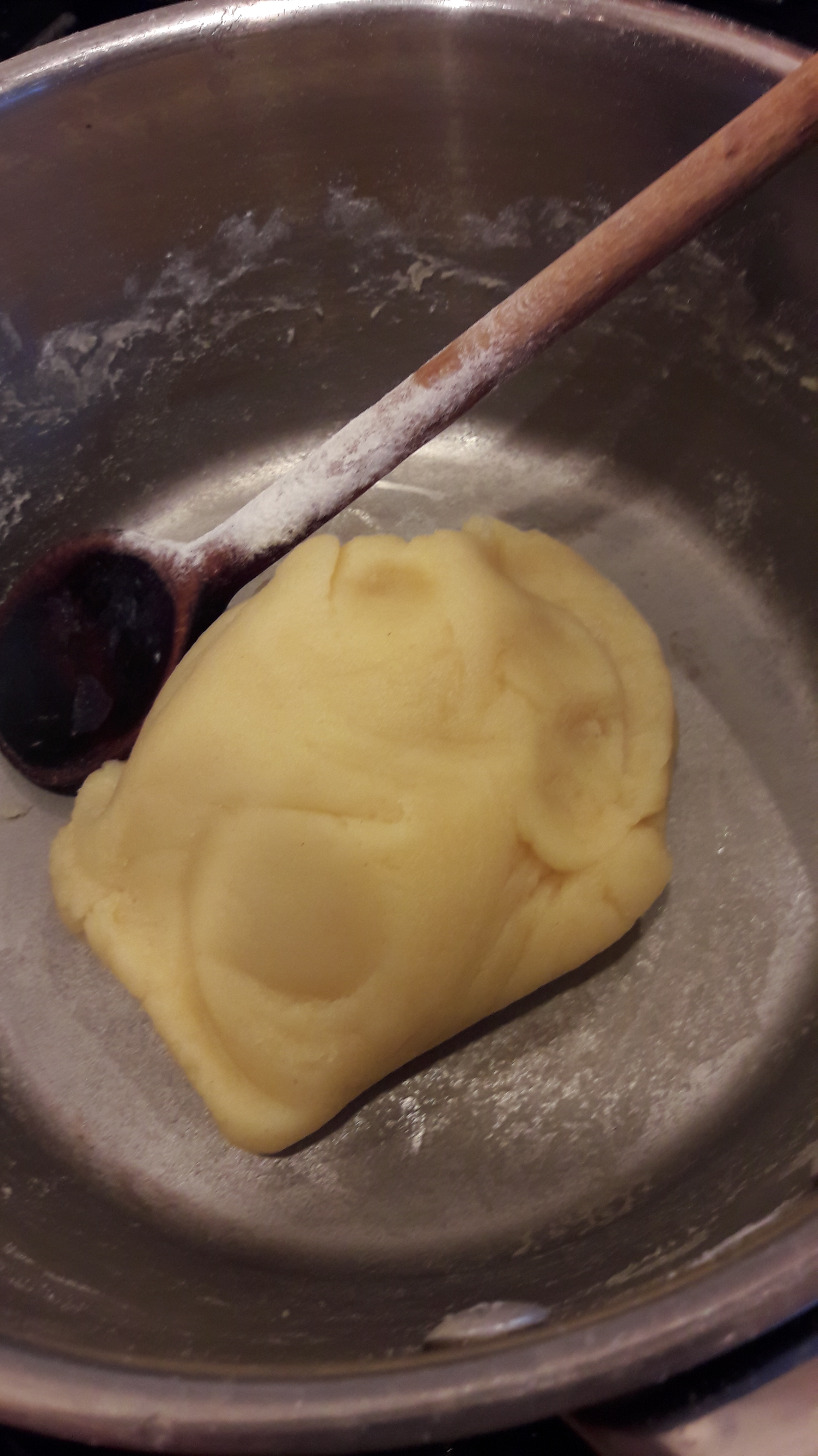
  • Using a wooden spoon blend this all  together until the dough forms a ball in the middle of the pan.


  • Take the pan off the heat and put the dough into a bowl and leave till it is completely cold.
  • Add the eggs one by one, continually blending the mixture. You can use a wooden spoon to do this – I have found it easier to start with an electric whisk to begin with and then change to a wooden spoon at the end.  You get a thick paste type mixture.


Divide the mixture between the two trays and spread it out to fill the tray – do not smooth down the top – you want to have rough peaks.

  • Bake for  10 minutes.
  • Increase the heat up GM7 – 220°C and bake for another 10 minutes
  • Using a cake tester make holes in the top of the pastry to remove some of the steam.
  • Bake for another 5 – 10 minutes.
  • The pastry should be ready now, test to see if it feels dry – if not return for a few more minutes.

Vanilla Pastry Cream

Ingredients

Budyń made with 500ml of milk.

  • 3 tablespoons  of granulated sugar
  • 2-3 drops of vanilla essence
  • 1 egg yolk
  • 125g butter

Method

  • Cream together the butter, sugar and egg yolk till pale and fluffy.
  • Add the vanilla essence and mix this in well.
  • Add the budyń, spoonful by spoonful, mixing it well in.

Assembling the Cake

Note

Whilst testing this recipe, I used half quantities of the choux pastry – ie just 1 tray – and cut this in half – the photographs – reflect this.

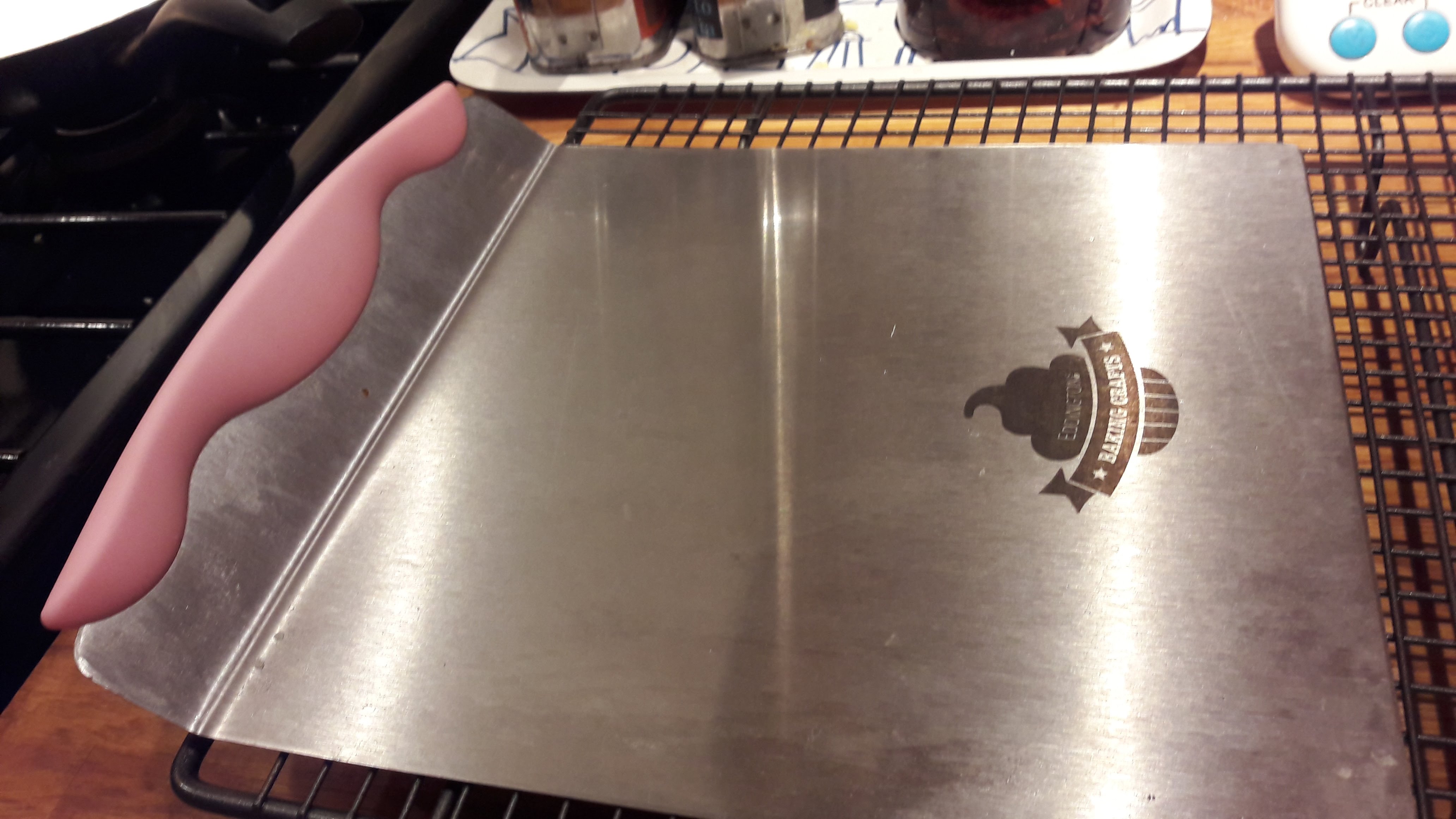
Great Cake Lifter


  • Place one piece of the baked pastry onto a serving board.
  • Cover the pastry with all the  pastry cream spreading it evenly  to the edges.
  • Place the second piece of pastry on top.
  • Dust the top lightly with icing sugar.
  • Cut into squares to serve.


Served on Las Palmas by Aynsley  from the 1960s.

Easier Option

Though not as authentic but easier you can just use the chilled budyń on its own as the filling.

Served here on  Greenaway by John Russell from the 1960s.


Placek with Cranberries, Chocolate & Nuts

After Christmas I found  I had lots of dried cranberries & nuts left from other recipes.

So I decided to make a variation on my placek (flat cake) with chocolate, nuts & sultanas

Ingredients

  • 120g butter
  • 120g Demerara sugar
  • 2 eggs
  • 120g plain flour
  • 1 teaspoon of baking powder
  • 1/4 teaspoon of vanilla essence
  • 100g dried cranberries
  • 100g chopped chocolate (a mixture of dark & white)
  • 80g chopped nuts

Method

  • Grease and line a 21 x 26 cms baking tray.
  • Pre-heat the oven to GM4 – 180°C
  • Chop the nuts and the chocolate.
  • Mix the nuts, chocolate & cranberries together.
  • Cream together the butter and Demerera sugar.
  • Mix in the vanilla essence and the eggs.
  • Mix in the nut mixture.
  • Mix the baking powder with the flour.
  • Gently fold in the flour.
  • Put the mixture into the baking tray.
  • Bake for around 30 – 35 minutes.
  • Leave to cool in the tin.
  •  

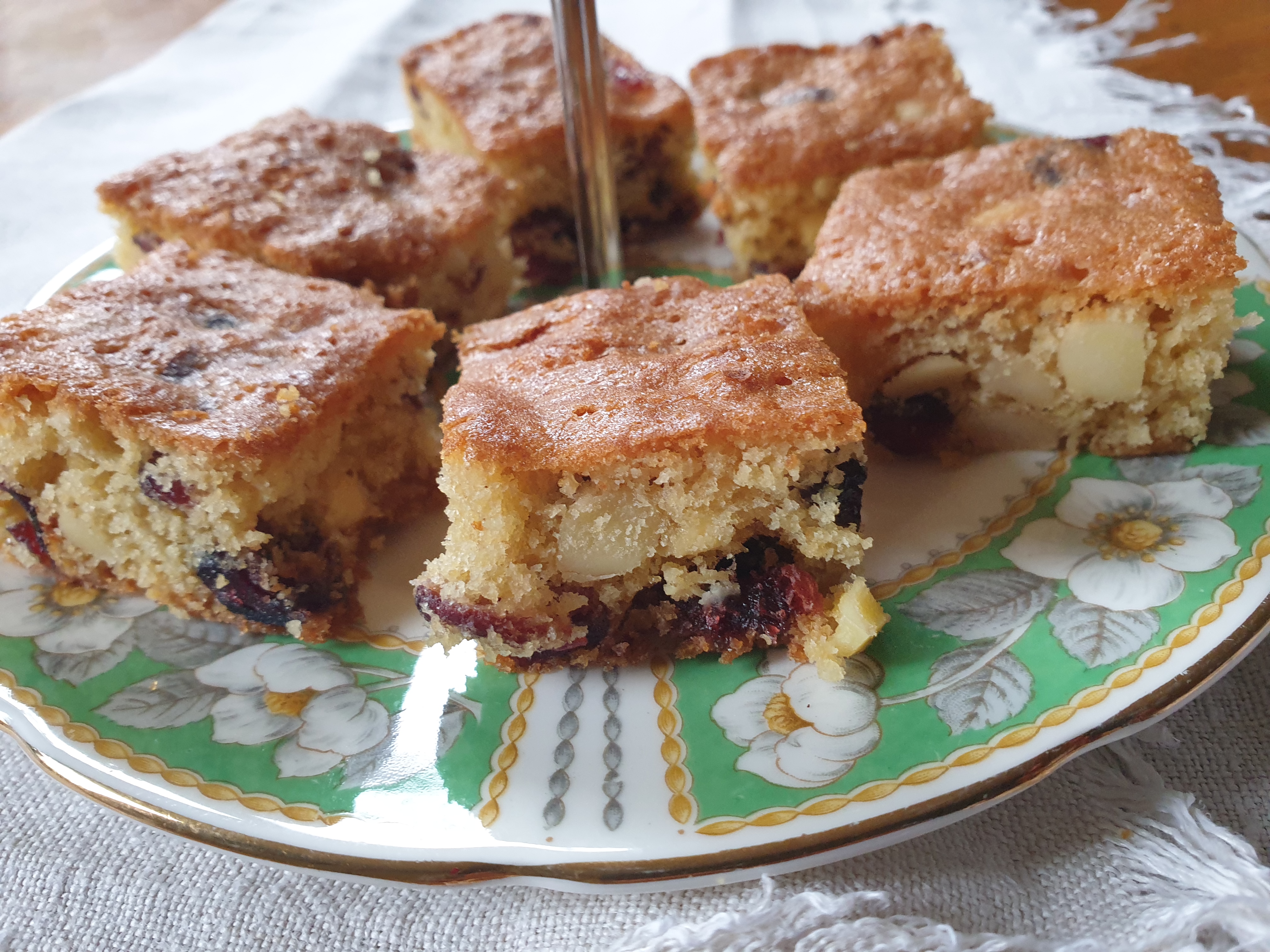
Cut into squares to serve.

Served on Queen Anne tea plates – design name unknown.

Updated on 27 July 2023

I used just white chocolate in the recipe and chopped almonds.


Heathcote Cake Stand

A Little Caper!

Capparis spinosa is the caper bush.  The plant is best known for the edible, unripened  flower buds – capers – kapary (in Polish)  which are often used as a seasoning and are usually  pickled in brine, vinegar or wine.

These perennial plants are native to the Mediterranean and some parts of Asia. Their use dates back to around 2,000 BC  where they are mentioned as a food in Sumerian literature.

The caper buds are picked by hand which can make the cost of a small jar expensive.

Pickled nasturtium (Tropaeolum maius) (nasturcja in Polish)  seeds – often called poor man’s capers are a good substitute.

Cooking With Capers

Capers have long been used in the Mediterranean region especially  in Italian cooking.

Capers are usually  added to the dish toward the end of the cooking process, to keep their shape and flavour.

Sos kaparowy – Caper sauce

This is very popular in Poland and is made with chopped capers and mayonnaise  and is served with hard-boiled eggs.

Potato Salad with Capers

This is my variation of the classic Polish potato salad with caper  sauce.

Ingredients

  • 200g  waxy potatoes
  • 100g whole green beans
  • 100g peas
  • 2-3 spring onions – green part
  • 2 tablespoons of capers – drained
  • 2-3 tablespoons mayonnaise – home-made or a good full fat bought variety
  • 1 tablespoon of made up mustard
  • Salt & pepper
  • 2 – 3  hard-boiled eggs

    Method

  • The potatoes, green beans and the peas all need to be boiled or steamed, drained and then dried as much as possible using a clean tea towel.
  • I usually use starchy potatoes for potato salad but have found that waxy ones are better for this one.
  • Chop the beans into small pieces.
  • Chop the green parts of the onion into fine pieces.

Mix together the mayonnaise and the mustard.

I have found that the lighter sort of mayonnaise soon makes this salad have a watery dressing after a very short time.

It is better to use home-made mayonnaise or a good bought one – I use Hellmann’s.

  • Mix the vegetables with the dressing and add salt & pepper to taste.
  • Chop the hard-boiled eggs and scatter these on the top of the salad to serve.

Served here in a bowl by Meakin  –  Cadiz  – 1964  – 1970

Lemon Cream Roulade

This cake is a roulade – in Polish  – rolada.

I made this cake for my nephew when he came to visit recently as he loves cakes with lemons.

You need to make the sponge for a “Swiss roll” and then fill it with lemon cream.

The sponge cake made using potato flour is very Polish but fresh double cream is not usually found in Polish cookery – soured cream is the norm.  Also lemon curd I think of as quite British although I did come across something similar in one of my Polish cooks books.   You can make your own lemon curd but I  use Sicilian lemon curd from Marks & Spencer as I think this is so lemony.


I made the sponge using the recipe  Biszkopt – Sponge Cake using Potato Flour

Or to be easier, use the English Style fat free sponge recipe from

Sponge with Sweet Orange Jam

Use the instructions for how to make and roll the roulade from the first recipe.

Both of  these recipes use 2 eggs.

Lemon Cream

I used a large tub of double cream 250ml/300ml – it was more than enough – I did not use it all.

I would think that 200ml of double cream would be enough.

I  whisked this up till it was thick and stiff.

I then added 3 -4 tablespoons of lemon curd and whisked again.

Unroll the cold sponge, spread it with the cream and roll up again.

Dredge with icing sugar


Cake Plate H & K Tunstall


Served on – Tuscan China – Bird of Paradise – Hand Painted – 1930s


Placek with Chocolate, Nuts & Sultanas

I have been making this placek (low flat cake) for years but I cannot remember where I got the recipes from.

The cake varies every time I make it as I alter the type or amount of each chocolate used and I also alter the dried fruit and nuts.

It is not quite a Polish recipe as  Demerara sugar is used rather than granulated & this is not a typical Polish ingredient.

Sugar

Sugar is produced from either sugar cane (a perennial grass) or sugar beet (a tap root).  When sugar cane is refined you get lots of partially refined products such as: treacle, golden syrup, Demerara sugar & various other brown sugars.

Demerara sugar is so named after a region in Guyana where it was first produced.

When sugar beet is used to make sugar you do not get all these brown sugars.

In Poland the main sugar products on sale are granulated sugar and icing sugar, also you can find vanilla sugar, for baking, which is sold in little sachet which contain one tablespoon of sugar.

Ingredients

120g butter

120g Demerara sugar

2 eggs

120g self raising flour

1/4 teaspoon of vanilla essence

100g chopped chocolate (can be a mixture of dark, milk & white)

100g chopped nuts

80g sultanas (or currants or raisins)

Note

I though dried cranberries might work well here – they did – see later post.

Method

Grease and line a 21 x 26 cms baking tray.

Pre-heat the oven to GM4 – 180°C

Chop the nuts and the chocolate.

Mix the nuts, chocolate & sultanas together.

Cream together the butter and Demerera sugar.

Mix in the vanilla essence and the eggs.

Mix in the nut mixture.

Gently fold in the flour.

Put the mixture into a baking tray.

Bake for around 30 – 35 minutes.

Leave to cool in the tin.

Cut into squares to serve.

Served on Royal Grafton – Woodside – 1950s

Save

Save

Save

Save

Save

Save

Mince Pies

I think of these as very British – but we all love them and they have become part of our Christmas Day celebrations. Originally the pies were made with meat and this idea of meat and spices came from the Middle East and it is thought to have been the brought back by the Crusaders.

I make these with the pastry that I learnt from my mother  – a variation on kruche & półkruche,  pastry (a richer shortcrust pastry).  Using the proportion of 2 parts flour to 1 part butter.

Ingredients

Pastry

200g plain flour

100g butter or block margarine

1-2 tablespoons of icing sugar

1 egg yolk

Juice of 1 lemon (and maybe 1 tablespoon of cold water)

Glaze

Lightly beaten egg white

Caster sugar

Mincemeat

I always make my own mincemeat using the recipe in Delia Smith’s Christmas cookery book but without the chopped almonds (I do not like the crunch of the nuts).

When making the pies I add a little extra brandy or sherry to the mincemeat and stir it in.

My tins are anodised aluminium and have a gentle rounded shape, this I think make for the perfect balance between the pastry and the filling.

I put “tops” on my mince pies – but not fully covered ones.

The tops are brushed with beaten egg white and sprinkled with caster sugar.

Method for pastry

Rub the butter into the flour to make “breadcrumbs”.

Mix in the icing sugar.

First with a knife and then with your fingertips mix in the yolk & lemon juice (and  maybe a tablespoon of cold water.)

You are aiming to get a dough which is not wet.

Rest for about 10 minutes.

Pre-heat the oven to GM6 – 200°C

You need to grease the tins well in order to get the pies out successfully.

I often use the pastry in two halves.

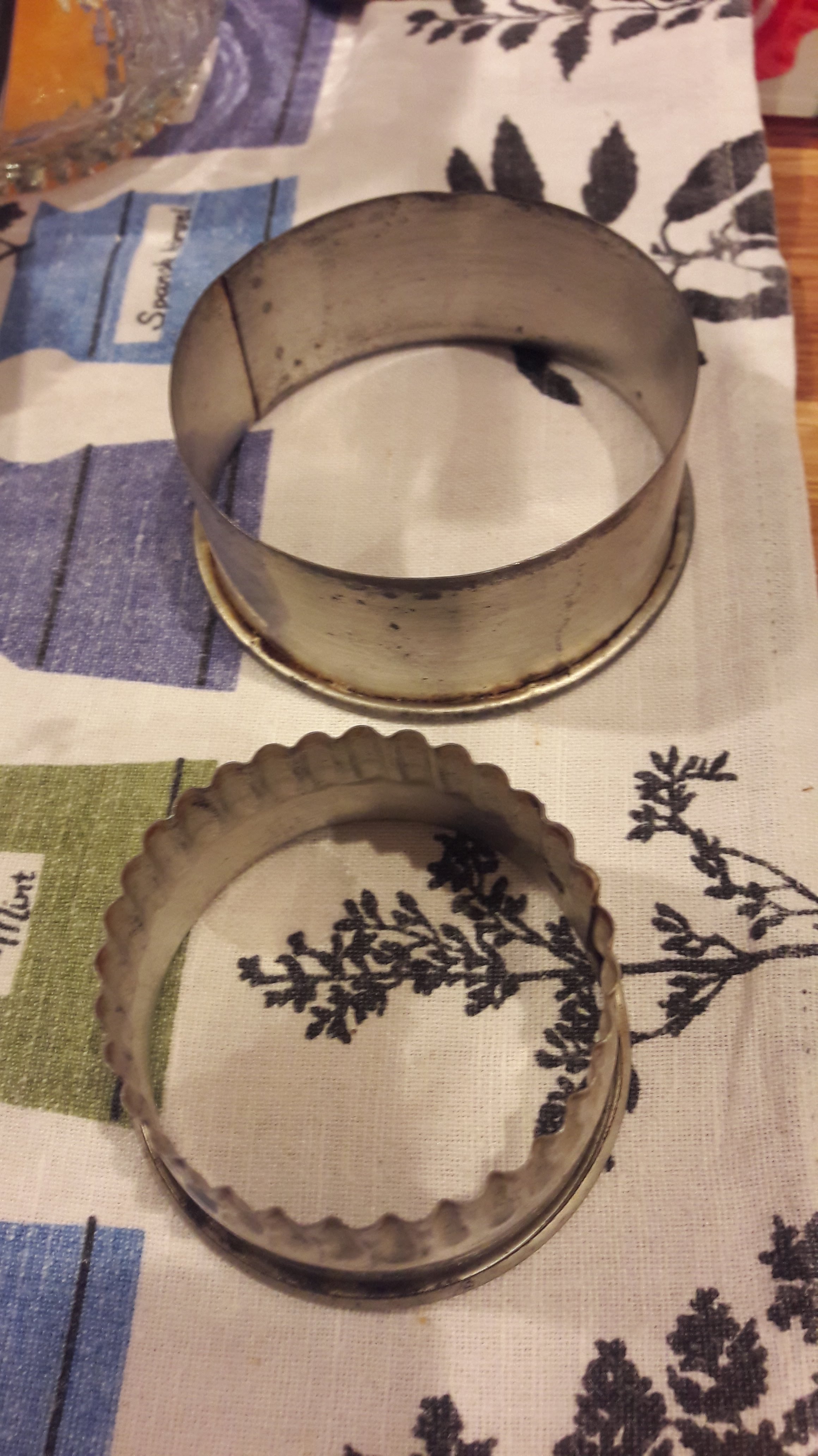
2 sizes of cutters are needed – 1 – 7cm diameter, plain, for the base, 1 – 6cm diameter, crinkle edge for the top.

Cut out the bases and place them in the tins

Place around a tablespoonful of mincemeat on the pastry.

Place the smaller tops on.

Lightly beat the egg white and brush this on the tops

Sprinkle caster sugar over the egg white.

Bake for around 15 minutes – keeping an eye on them – so they do not burn.

Leave to cool slightly in the tins & carefully remove them onto a rack to fully cool.

Tea-plate is Stardust by Colclough from the 1960s.

Mince pies on buffet table

Save

Piernik – Honey Spice Cake

Pierna is an old Polish word for spices and  piernik is a cake made with honey and spices.

Some sources say the name is from pieprz – pepper or piorun – thunderbolt or devil – because of its spiciness.

These cakes have been known in Poland since the 12th century and the spices would have come from Turkey (originally brought back by the crusaders) or India.

The very first recipes were just honey, flour (wheat or rye) and spices.

Honey was the original sweetener, long before sugar, and when you travel in Poland you will find many village ladies selling their own honey, the taste varies greatly depending on where the bees have found their flowers and the honey from a forest region is very dark and full of flavour.

Piernik  can vary  from being a soft dense cake to a drier but soft biscuit.

The Polish town of  Toruń is famous for its piernik and  Chopin was very found of this.

Pierniki (plural) coated with chocolate are called Katarzynki –  which means Katherine’s cakes – named after Katarzyna the daughter of one of the bakers.

Similar cakes are found throughout Europe including the French pain d’éspices, the Dutch peperkoek and the German lebkuchen.

Piernik is often translated as  Gingerbread but ginger is only rarely used!

The main spices used are cinnamon , cloves and cardamom with the addition according to different recipes of: aniseed, black pepper, caraway, coriander, nutmeg, dried orange and/or lemon peel and then in later recipes allspice which is from the New World.

Spice Mixture for Piernik

Having looked at many recipes I have made my own basic 3 spice mixture – to which I can add other spices if I want a variation.

I have mixed equal parts of ground cinnamon, cloves & cardamom & saved them in a jar.


In Polish shops in England you can buy ready mixed spices for piernik.

This little packet contains around 2 tablespoons.

You can use the mixed spice mixture which is sold by Marks & Spencer which contains: dried orange peel, cassia (a variety of cinnamon), ginger, nutmeg, pimento (allspice) and caraway.


Piernik in Poland is associated with the Christmas season and would be made for Christmas Eve and for Christmas Day, it would also be made for Święty MikołajDecember 6thSt Nicholas Day. This a day for present giving in Poland to children and I would always get a piernik shaped and decorated to look like the bishop that was St Nicholas.

I have been looking through my many recipe books and there are just dozens of different recipes & I have been trying some of these out.

Many of the recipes have the addition of chopped nuts and/or mixed peel – I have not added these to my tests as I just wanted to try out the “basic” recipe.

Some of the recipes were for large quantities & I have cut them down in size.  Many do not give baking tin sizes or oven temperatures – so I have done a bit of trial and error with some of the ones I have done.

In many of the recipes the dough or batter once mixed up is left for up to 3 weeks before baking.  This indeed is a slow fermentation!

Even if the piernik is mixed and baked on the same day, most of them benefit from being wrapped and left for several days before serving.

The recipes in this post are ones you mix and bake on the same or the next day.

My mother made miodownik  – honey spice cake (which could be classed as a piernik). Hers is a more moist cake using vegetable oil, which is certainly a more modern ingredient.

This first recipe is adapted from a recently bought little cookbook.

The honey used in the book was given as fir tree honey – this would be a dark honey and would make the cake very dark.

(I remember getting some of this when one of my cousins came from Poland – it was nearly black!)

The honey you use will make a difference to the colour and flavour of the cake. I have used a basic clear type honey.

As only honey is used in this recipe, I think this one  is nearer the old recipes.

Piernik 1

Ingredients

450g plain flour

350g runny honey

125g butter or block margarine

Grated rind of a 1 lemon

1 egg – beaten

100ml of milk

1 + 1/2 teaspoons of spices

1 teaspoon of bicarbonate of soda

pinch of salt

Method

Pre-heat the oven to GM4 – 180°C.

Grease and line a large loaf tin – mine is longer than the regular 2lb tin.

Gently melt the butter in a small saucepan.

Mix together the spices, bicarbonate of soda and salt & add these to the flour in a large bowl.

Add the egg, the milk and the lemon rind and mix together.

Add the honey and the milk and mix together till you have a uniform smooth consistency.

Put the mixture into the tin and smooth the top.

Bake for around 50 minutes – checking a little earlier & cover with greaseproof paper it it looks like burning on the top if you need more time.

Leave to cool in the tin.


Wrap in foil to store.

The piernik can be dusted with icing sugar, topped with icing or with chocolate icing – of course these are relatively modern additions to the medieval piernik!

Variation

Addition of pepper

I made the piernik as above with the addition of 1/2 a teaspoon of freshly ground black pepper with the spices.

I did not think it added much to the flavour – I was expecting it to be a little peppery!


Piernik 2

This little honey recipe book has around 2 dozen recipes for piernik  to choose from! (miód is Polish for honey)


Ingredients

400g plain flour

1 tablespoonful of butter

120g of granulated sugar

2 eggs

250g runny honey

125ml of milk

1 teaspoon of baking soda

2 teaspoons of spices

Method

Warm the honey slightly.

Put the flour in a large bowl and rub in the butter.

Add the sugar,  bicarbonate of soda and the spices.

Mix in the eggs.

Add the honey

Add the milk & mix to give a very thick batter.

Cover the bowl with a cloth and leave it in a cool place for a couple of hours.

Grease & line a 32cm by 22cm baking tin.

Pre-heat the oven to GM 5 -190°C.

Put the cake mixture into the tin and spread it out.

Bake for around 30 minutes (check earlier  and cover if it looks like burning.)

Leave in the tin to cool.

Wrap in foil and leave for a couple of days .


Tea plate is Sonnet by Royal Doulton, 1971 to 1998.

This piernik can be dusted with icing sugar, topped with icing or with chocolate icing.

It can also be cut into 2 slabs which are then sandwiched together with powidła which is a lovely spread – often translated as jam but  is not really a jam.

It is made from fresh ripe plums which are heated and stirred for hours until the water is driven off and you get a thick paste.  The traditional version does not have any extra sugar added.

I bought some in my local Polish shop, I have seen it for sale before in glass jars, this product is in a plastic tub


Pierniczki – Small Honey Cakes

Pierniczki are a small cake or biscuit version of piernik.

For  Święty MikołajDecember 6thSt Nicholas Day I often buy packets of these glazed with clear or white icing or chocolate (You can get them in lots of shops nowadays including Lidl & Aldi) but sometimes I make them myself as they are very easy & delicious.

Ingredients

280g plain flour

1 teaspoon of bicarbonate of soda

180g of granulated sugar

2 teaspoons of  spice

100g of runny honey

2 eggs

Optional

Icing sugar to dust

Method

Pre heat the oven to GM 5 – 190oC

Grease several baking sheets.

In a bowl mix all the dry ingredients together.

Beat the eggs lightly and mix these and the honey into the dry ingredients.

Place tablespoons well apart on the greased sheets and bake for about 10 minutes.

They do spread quite a bit.

Leave to cool for a few minutes on the tray and then put the on a wire rack to cool and the dust with icing sugar.

Pierniczki – Small Honey Cakes (filled)

The dough for these is made the evening before.

Ingredients

120g runny honey

60g granulated sugar

2 teaspoons of spice

40g of butter

250g of plain flour

1/2 teaspoon of baking powder

1 large egg

Filling

Powidła, apricot or sour cherry jam

Optional

Lightly beaten egg white for a glaze

Method

Heat the honey in a saucepan over a moderate heat and add the sugar and spices, stirring all the time for about 3 to 4 minutes so that the sugar is dissolved but do not let the honey boil.

Remove from the heat and allow it to cool.

In a separate pan melt the butter and then set that aside to cool.

In a large bowl add the baking powder to the flour.

Pour in the honey mixture, melted butter and the egg and mix with a a wooden spoon to form a soft dough.

Transfer to a small bowl and cover with a cloth and refrigerate overnight.

The next day -take out for 15 minutes before using.

Grease several baking sheets.

Pre-heat the oven to GM 4 – 180°C

You need a 6cm round cutter.

Cut the dough into halves or thirds.

Roll out the dough till it is thin and cut out circles.

Place a largish teaspoon of the powidła or jam on the middle of the circle (going for height).


The more jam the better but it can be hard to seal the circles – takes a bit of practice!

Place another circle on top and press the edges together firmly.


You can brush the tops with beaten egg white.

Place on the baking sheet – leaving some space between circles.


Bake for 15 minutes – checking earlier as they burn easily.

Leave to cool slightly on the tin before placing them on a wire rack.


Dust them with icing sugar.

Served on tea plates – Counterpoint by Royal Doulton 1973 – 1987.

Easy unfilled option

I think once you have tried the jam filled ones, these will be the only ones you want!

However if you want a harder biscuit to decorate with icing  then just place single circles on the baking trays and bake for 8 – 10  minutes – you really need to keep an eye on these as they burn very easily.

These come out as a quite hard biscuit.

These can be decorated with icing or chocolate icing.


Save

Save

Save

Save

Save

Save

Save

Save

Save

Save

Save

Save

Save

Save

Save

Save

Save

Save

Save

Save

Save

Save

Save

Save

Walnut Tort

This is the same  recipe as the  Hazelnut tort only here ground walnuts  are used instead of hazelnuts.

I used the 6 egg recipe and made it in 2 x 18cm sponge cake tins.

A Little Note About Walnuts

Walnuts (Juglans regia) are native to south-east Europe and south-west China. They are the oldest tree food known dating back to 7,000 BC.

There are accounts of their cultivation in Babylon (now Iraq) in 2,000BC.

Juglans regia means means Jupiter’s royal nut.

They are the seed of a drupe (stone fruit) – not a true Botanical nut.

In Polish walnuts are orzechy włoskie –  nuts Italian – so named it is thought as they were brought to Poland by traders from Imperial Rome.

Black walnuts (Juglans nigra) are native to North America.

Ingredients

6 eggs

225g  caster sugar

225g ground walnuts

2 sponge fingers – crushed.

Optional – extra chopped walnuts for sprinkling on the butter cream or grated dark chocolate.

P1030465

Method

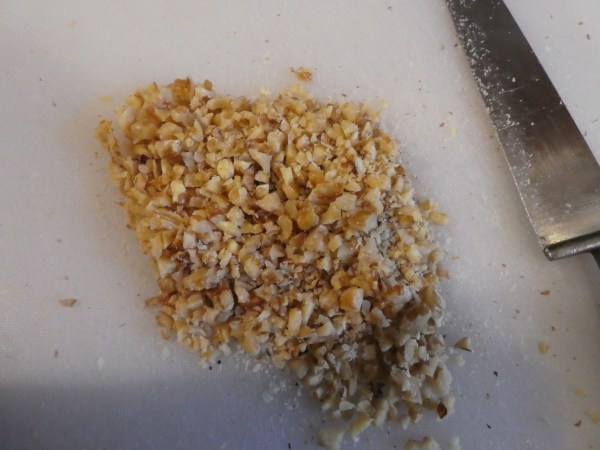
You will need to grind the walnuts and of course an electric grinder makes this very easy.

It is best to chop the walnuts into small pieces as this will make it easier and grind the walnuts in small batches so as not to over strain the motor.

Pre-heat the oven to GM5 – 190°C.

Grease and line 2 x 18cm in diameter tins.

Crush the sponge fingers and mix them with the ground walnuts.


Whisk together the eggs and sugar until they are pale and frothy.

Fold in the walnut mixture.

Divide the mixture between the two tins and bake in the oven for around 20 minutes.

Allow the cakes to cool .

Drizzle each cake with a poncz (sweetened punch). I used 50ml of weak black tea, 1 tablespoon of rum  and 1 tablespoon of  sugar.


Sandwich together with a butter cream & cover the top and sides also.

The following flavours are good with walnuts.

I used a rum butter cream made from 80g butter, 1 egg yolk  1 tablespoon of rum and  around 230g of icing sugar.

Cream the butter and the egg yolk and add the rum.  Mix in the icing sugar until you have the desired consistency.

More butter cream would have been better – I was trying to use the minimum this time!

I added chopped nuts to the top and sides (I used a cake stand with a small lip – a totally flat stand would have make it easier to add the nuts to the sides).


Served on – Tuscan China – Bird of Paradise – Hand Painted – 1930s

An Austrian Influence

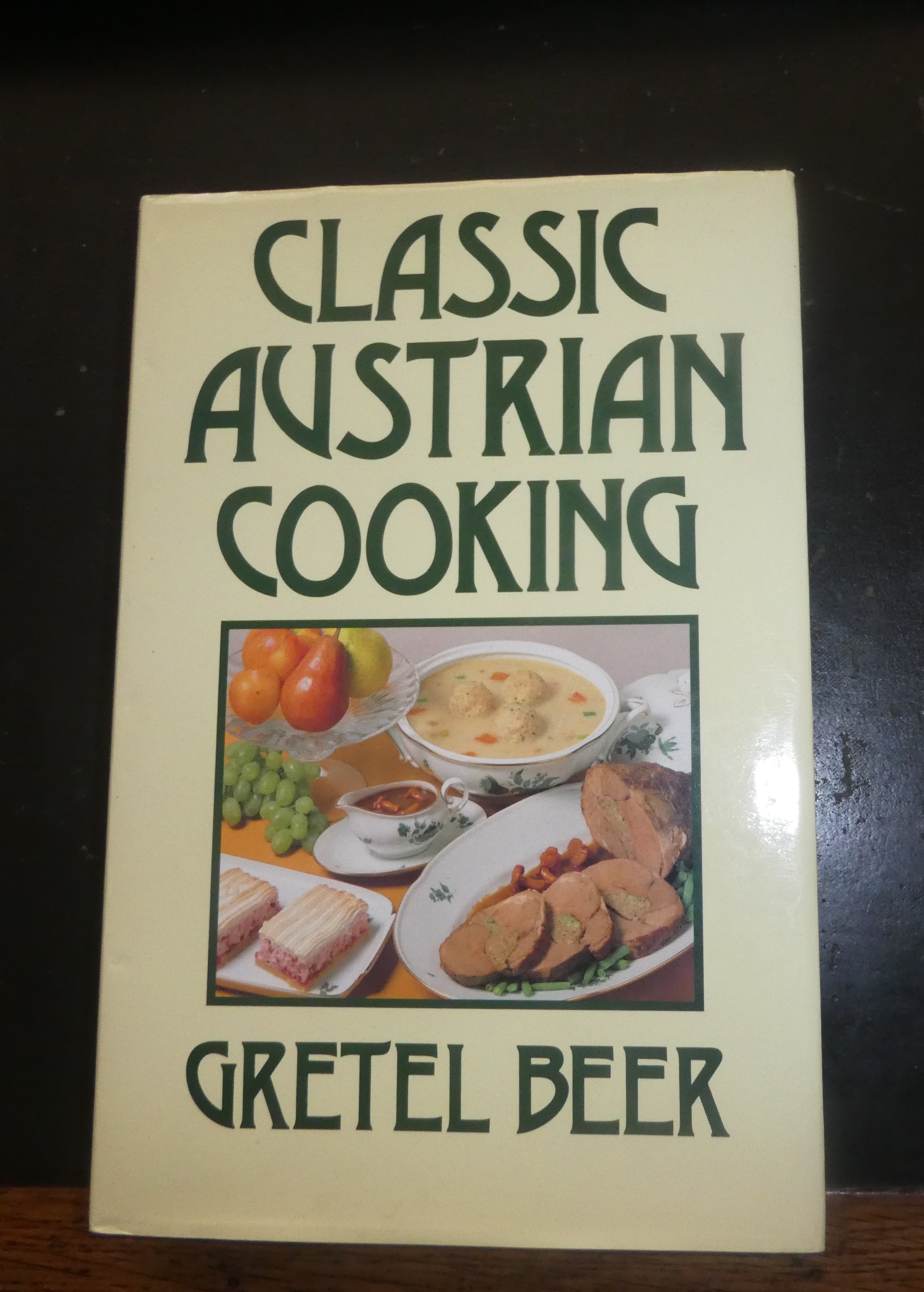
A few weeks ago I bought an excellent Austrian cookery book in a charity shop.


I know that there is a lot of overlap & influence between Polish & Austrian Cookery  and have enjoyed looking at this book and comparing my recipes with ones here.

On the back cover it says

The culinary flavour of Austria is a gentle flavour. It knows of the fiery spices of Hungary and the elegance of French cuisine. It derives much of its strength from Moravia and much of its daring from Poland.”

For several of the cakes apricot or redcurrant jam is used to cover the top and sides of the cake before icing it.

For a walnut gateau, similar to my recipe, redcurrant jam is used.

I decided to do a variation of this with my walnut tort and to use raspberry jam.

The 2 cakes were made as above.

A poncz(sweet punch) was used made from 50ml of weak black tea and 1 tablespoon of sugar to drizzle the cakes.

The cakes were then sandwiched together with a raspberry butter cream using  60g Butter, 180g icing sugar & 2 tablespoons of raspberry jam which were creamed together.


Then the  top and sides were covered with raspberry jam, warmed slightly for ease of spreading and then this was allowed to dry.

I then made a lemon icing with the juice of 1 lemon and  icing sugar and used this to cover the top and sizes.


Served on Royal Grafton – Woodside  –  from the 1950s

However

This did not work too well – the icing I made was too stiff and I disturbed the jam underneath and got a mottled pink and white icing which  then  dripped down onto the base of the cake stand!!

However my friends thought the cake tasted wonderful and loved the combination of  flavours, so I decided to make the icing with the juice of 1 lemon, 1 tablespoon of raspberry jam & icing sugar and see how that worked.

Storage

Do not cover the cake completely or it will go very soggy – cover it with a net or similar which will let the air circulate but keep insects off.


Alternative Icing 1

I decided to test out the raspberry icing over a creamed sponge cake – I used 4 eggs and equal amounts of butter, caster sugar and self raising flour and baked them in 2 x 20 cm anodised baking tins.

I sandwiched the cakes together with a layer of jam and the raspberry butter cream as above.


I then made a thick icing using the juice of 1 lemon, 1 tablespoon of raspberry jam & icing sugar.


Served on Aynsley  –  Las Palmas – 1960s

Alternative Icing 2

This icing was not as tangy as on the original cake so I tested this again with a more pouring, dripping glaze – this time using the juice a lemon, 1 tablespoon of raspberry jam & enough icing sugar to make a more pouring glaze.

I made just one 22cm round walnut cake and cut it in half &  used a poncz(sweet punch) made from 50ml of weak black tea and 1 tablespoon of sugar to drizzle the cake.


A few thoughts!

With hindsight I would not use one cake again as it was hard to cut it through evenly & there were lots of crumbs – if I only wanted to use 4 eggs,  I would make 2 smaller cakes.

I still have not got the icing quite right – this time there was too much & it was a bit too runny – maybe just the juice of half a lemon would be enough – however the taste was very good.

The cake improved over the next few days as the icing seeped into the cake.


Served on Colclough – Stardust – from the 1960s.

Storage

As with the cakes above do not cover the cake completely or it will go very soggy – cover it with a net or similar which will let the air circulate but keep insects off.


try Save

Save

Save

Save

Save

Save

Save

Save

Save

Save

Save

Save

Save

Save

Save

Save

Save

Save

Save

Save

Save

Save

Save

Save

Save

Save

Save

Save
Save

Save

Save

Save

Save

Save

Save

Save

Save

Save

Save

Save

Save

Save

Save

Save