Legend has it that in nearly 3,000 years BC the Chinese Emperor, Shen Nung, was sitting outside when leaves from the evergreen shrub Camellia sinensis fell into some boiling water which he then tasted – and so tea was born!
Traders from the Dutch East India Company (Vereenigde Oost-Indische Compagnie)(VOC) first brought tea from China to Holland at the beginning of the 17th century where it became very popular & it was Dutch traders that brought tea to Poland.
Tea is mentioned in the mid 17th century by King Jan Kazimierz II (1609-1672) in a letter to his wife Ludowika Maria(1611-1667) and the drink became very popular with the nobility.
Tea in Polish is herbata which comes from the Dutch Herba thee & which earlier may have been from the Latin Herba thea.
Cza (cha) – is a Chinese word for tea and in Polish the word for a teapot is czajnik.
Poland – a country of tea drinkers
I think tea could be classed as Poland’s national drink and per capita per annum the Polish consumption is the 4th in Europe (figures from 2014) following Ireland, the UK and Russia & in 9th place globally, ahead of Japan and Saudi Arabia.
A typical Pole drinks a glass of tea for breakfast, lunch, dinner & supper and in between as well.
Serving Tea in Poland
Tea is served as “black” tea – though in fact it is very light weak tea – it is never served with milk. It is served on its own or with slices of lemon or a small amount of fruit syrup such as cherry or raspberry.
The syrup in the photographs below is raspberry – malina
Tea was often served with honey although nowadays it is more likely to be served with sugar. However I usually drink my tea without sweetness, except when I add some fruit syrup.
Polish honey from the lime tree also know as the linden tree.
Note
The Polish for July is lipiec – meaning the month of the linden blossom – many Polish cities have parks and avenues with linden trees & in July the air is heady with the scent.
Porcelain lidded sugar bowl by TCM Germany – bought in a second hand shop in Krakòw
The tradition way is to brew a very strong solution of tea called esencja (essence) and this is poured into a glass or cup and boiling water added to make a very light coloured – weak tea.
Often a samowar was used with the strong essence of tea kept in the little teapot (often this could be a little enamel pot) and the samowar is used to boil the water and keep the essence warm.
Samo means by itself …. war means to heat or to boil.
The photographs are of my samowar which is electric – It was made in the 1980s.
My father talked about their samowar in Poland which had a tube in the centre into which you put hot charcoal to heat the water.
Tea Bags
Nowadays tea bags are often used and a very popular brand is Yellow Label from Unilever Polska – Liptons .
Thomas Lipton(1848-1931) was from Glasgow, Scotland and Lipton Yellow Label has been sold since 1890 when the first version of the Yellow pack with a red Lipton shield was used.
Strangely enough this brand of tea is not marketed in the UK – I used to bring it back from Poland – now I can buy it in all the Polish shops.
Tea Glasses
Tea was always served in tall glasses often with a holder of metal or straw . Many years ago I had a big clear out and got rid of my straw holders – I so regret that now!
Images below from photos on the World Wide Web
Last Saturday, I went to the second hand market in Huddersfield and found 2 pairs of tea glass holders, 1 pair in stainless steel & 1 pair in silver plate. They have cleaned up very well – I am so pleased I found them.
Glass handled mugs are a substitute.
China cups and saucers are also used on many occasions –
Tea is often used in baking, it can be used to soak dried fruits before making a cake or as part of a poncz (punch) to drizzle over a cake such as a yeast babka.
These biscuits are not at all Polish in origin – I like to think of them as a Scottish & Polish Alliance!
Cranberries & Lingonberries
Cranberries and lingonberries grow wild in acidic bogs around many forests in Poland and especially in the countryside where my father lived, in what was North East Poland before the war.
Cranberries & Lingonberries belong to the genus Vaccinium and the plants are small, low growing, evergreen shrubs.
Cranberries in central and northern Europe are Vaccinium oxycoccos , whilst Vaccinium microcarpum or Vaccinium macrocarpon are to be found in the USA.
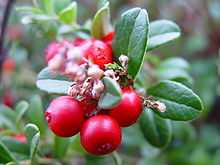
Lingonberries are Vaccinium vitis-idaea .
The berries of the cranberry are larger and oval.
The berries of the lingonberry are round and much smaller than the cranberry, about a third or quarter of the size.
Image of lingonberries taken from Wikipedia
The Polish for cranberry is żurawina, the word comes from żuraw which means a crane – so the same as the English word, as parts of the plant reminded people of the bird.
The Polish for lingonberry is borówka or borowina, both these names contain the part bor which means (from) the forest.
Notes
1 -There are dozens of different names in English for lingonberry which in fact comes from the Swedish name.
2- The commercially grown dried cranberries used in this recipe were grown in the USA.
Oats
Oats (Avena sativa) – owies in Polish, are grown in Poland but for this recipe I have considered them Scottish!
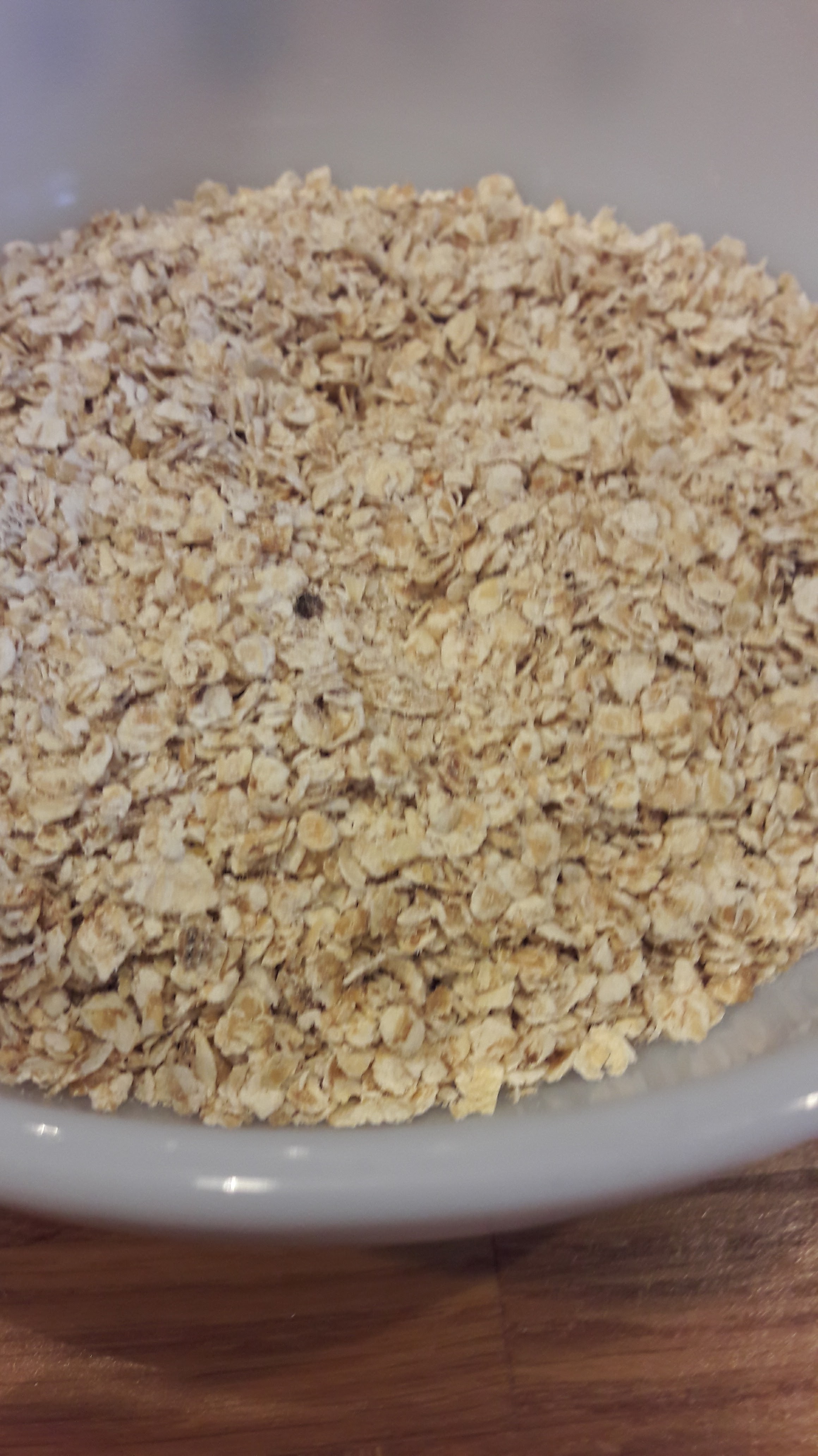
Rolled Oats
Royal Scottish – Polish Alliance!
The mother of Bonnie Prince Charlie(1720-1788) was – Maria Klementyna Sobieska(1702-1735) – she was the granddaughter of the Polish King Jan III Sobieski(1629-1696) and she married James Stuart(1688-1766), The Pretender.
In March 2016, The Scotsman printed an article titled
Scotland and Poland a 500 year relationship.
Some of the facts & figures below are taken from this.
More Polish nationals now live in Scotland than any other group from outside the UK and the two countries share a rich history.
The links were forged back in the late 1400s when trade agreements were established between Aberdeen and the old Baltic seaport of Gdańsk.
Under King Stefan Batory(1533-1586), Scottish merchants became suppliers to the royal court in Kraków and grain and timber from Poland was traded with Scotland.
Many Scots moved to Poland to seize new business opportunities and buried in St John’s Archcathedral in Warsaw is Alexander Chalmers (written as Czamer) , from Dyce near Aberdeen, a judge and four times mayor of Warsaw between 1691 and 1703.
There are many surnames in Poland which are Scottish in origin such as: Machlejd(MacLeod), Makolroys(MacElroy) and Szynklers(Sinclaire).
Around 38,000 Polish soldiers were stationed in Scotland after the fall of Poland in WW2 and many of those who were unable to return to their homeland after the end of the war stayed and it is estimated that around 2,500 Polish-Scottish marriages took place around this period.
There was a wave of immigration in the 1980s with the declaration of Martial Law in Poland and then again after 2004 when Poland joined the European Union.
One of the most popular brands of tea sold in Poland is Yellow label which was created by Sir Thomas Lipton( 1848-1931) who was from Glasgow, Scotland.
Since 1995 Krakòw has been twinned with Edinburgh.
Ingredients
100g butter
100g granulated sugar
5ml of golden syrup
5ml of boiling water
100g of self raising flour
100g of rolled oats
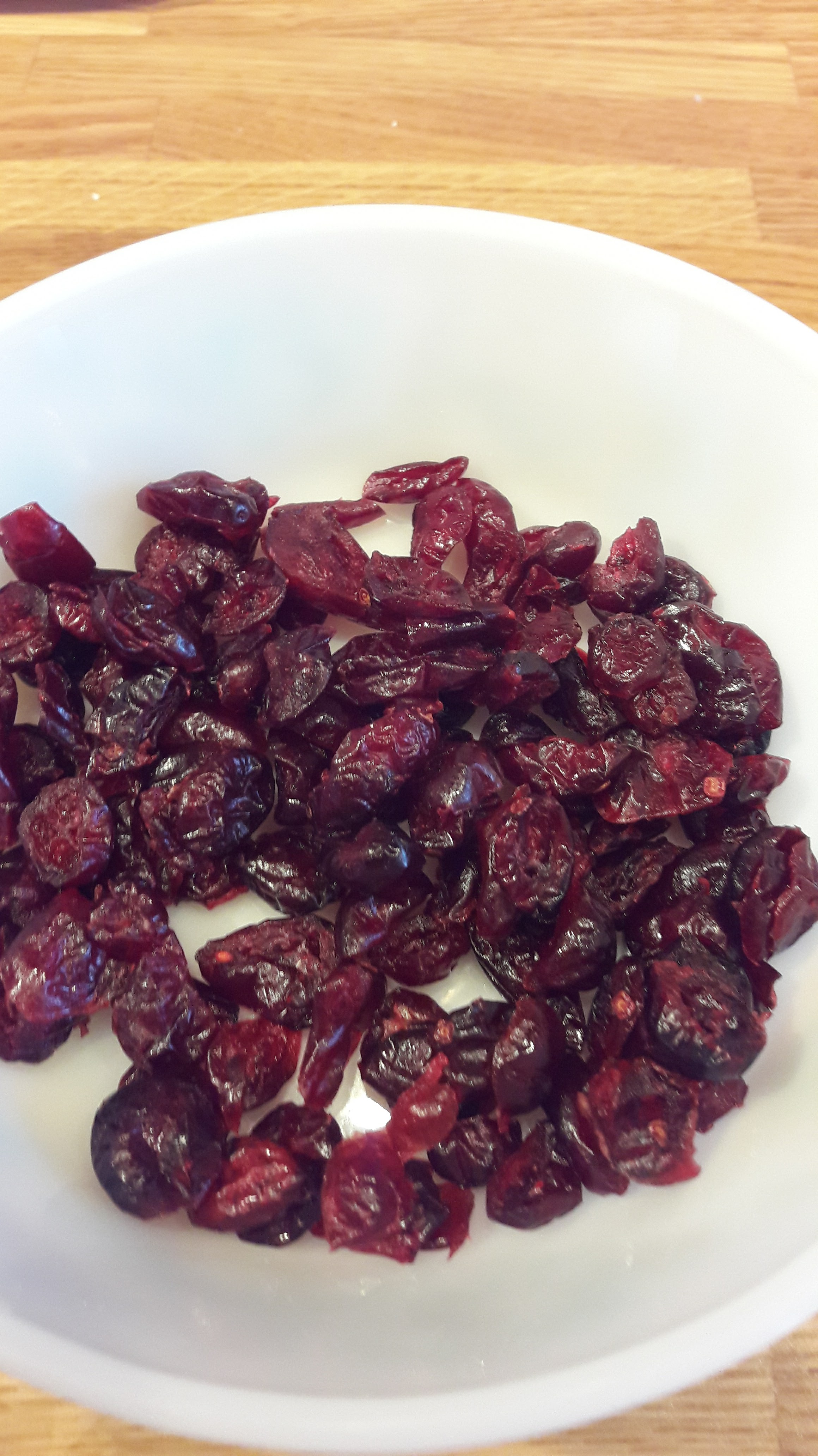
50g of dried cranberries
Dried cranberries
Method
Pre-heat the oven to GM 5 – 190°C.
Grease at least 2 baking trays – (you will have to take the biscuits off when they are cooked and re-grease these tins.)
Place the butter or margarine in a pan with the granulated sugar and heat slowly so that the butter is melted.
Add the teaspoon of golden syrup and then the teaspoon of boiling water and mix well together.
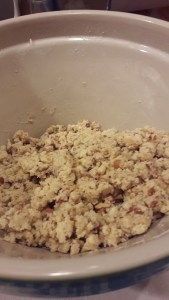
Take the pan off the heat, add the flour and oats and mix this together.
Then mix in the cranberries.
Using your hands, make small balls and place them on the trays, leaving space around them as they will spread.
Place in the oven and bake for around 8 – 10 minutes, watch them carefully as they suddenly seem to catch & burn.
I often look at them half way through and flatten them with a spatula.
Take them out of the oven and leave them to cool a little before you use a spatula to take them of the trays and leave them to fully cool on a wire cooling rack.
Plate is by Royal Grafton – no pattern name – made in England
These cookies were made for me by my aunt on my visit to America, many years ago.
She said that she often made these for Christmas. I have adjusted the recipe to weights rather than cups as I find that easier. Also below I have the ingredients for just half the original amount which will make around 12 largish cookies … so you can try them out .
Ingredients
110g butter
2 and 1/2 tablespoons of granulated sugar
1 teaspoon of vanilla essence
1/2 tablespoon of water
130g plain flour
1/4 teaspoon salt
120g chopped pecans (or you can use walnuts)
Icing sugar for finishing.
Method
Pre-heat the oven to GM3 – 160ºC
Grease 2 baking sheets.
Cream the butter, sugar, vanilla essence and water together.
Add the flour and the salt.
Stir in the chopped pecans.
Take amounts of the mixture larger than a walnut and press this together in your hands – it will stick together easily – shape it into a crescent.
Place them on a greased baking sheet.
Bake for around 25 minutes.
Let them cool for a few minutes and then dredge or roll them in icing sugar.
Served on a tea plate by Royal Grafton – Woodside – 1950s
Whilst I have been writing this post I mentioned it in an email to my cousin who wrote
“Do you know we still use that recipe particularly at Christmas but I can eat them any time. I like them as crescents but also as thumbprint style with a dab of perhaps raspberry, strawberry or apricot preserves–and then powdered sugar sifted on top.”
and also
“As you know, the recipe calls for butter and my feeling is, anything is better with butter! My best friend gave me a little kitchen plaque that says, “I believe in the unparalleled power of butter!”
So I tried these out using raspberry jam – delicious!
Kohlrabi in Polish is kalarepa – it belongs to the cabbage family – the Brassicas – and has been cultivated from Brassica oleracea – the wild cabbage.
It is a swollen stem and spherical and its taste and texture is similar to cabbage heart and it can be eaten both raw & cooked.
Kohlrabi
My auntie in Wembley used to grow kohlrabi in the garden & on their allotment but until recently I never saw it for sale in England whereas in Poland it is a common vegetable, it matures quickly, withstands the frost and can be stored for some time.
This kohlrabi I bought from the outdoor market in Leeds.
For all the salads below the raw kohlrabi has been peeled and then grated on a medium grater.
Here I have just used 1 kohlrabi per salad.
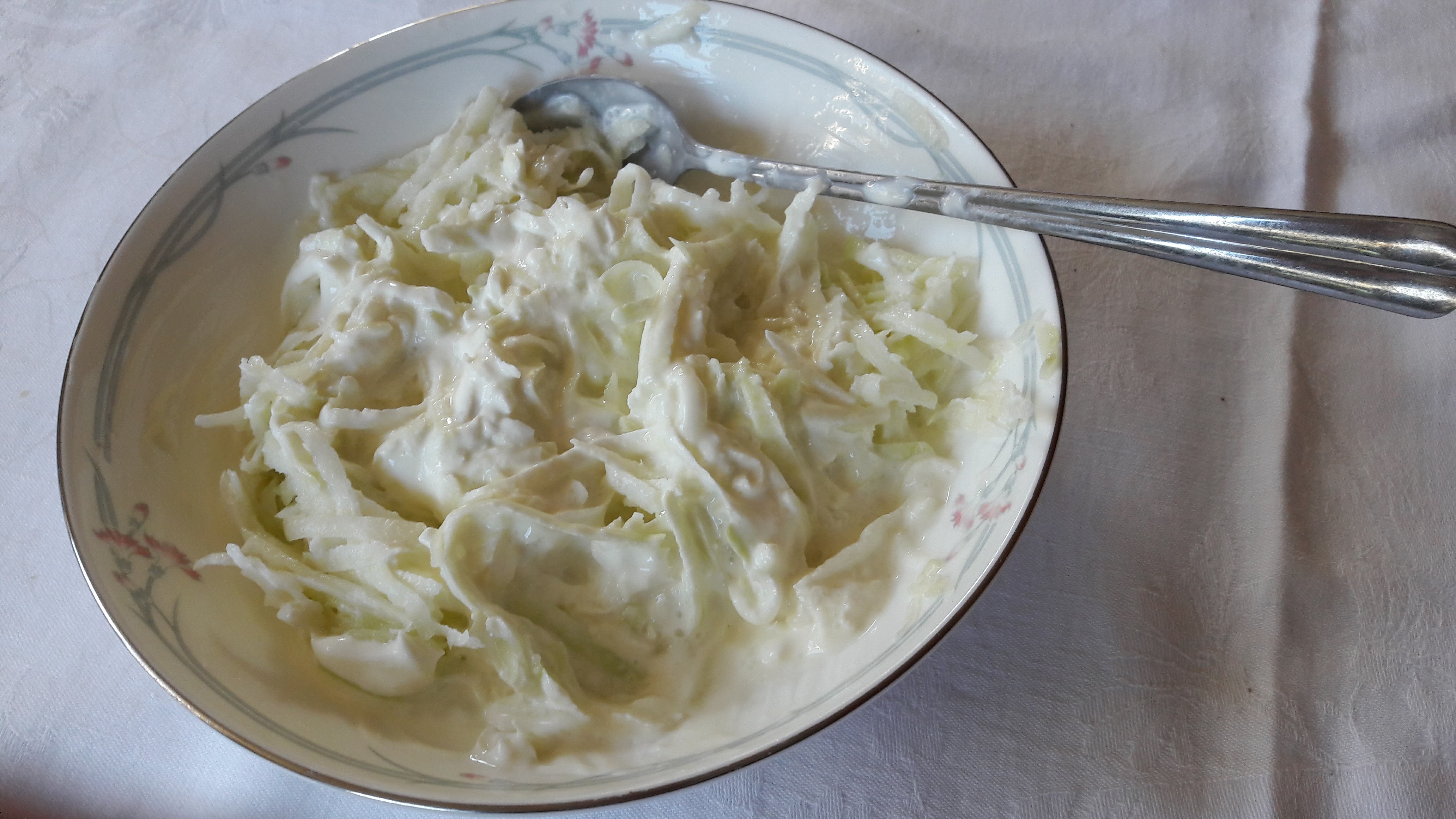
Simple Kohlrabi Salad
Served here in a Royal Doulton – Carnation dish – 1982 – 1998.
Ingredients
1 kohlrabi
2 – 3 tablespoons of soured cream
Juice of half a lemon.
Method
Mix the soured cream with the lemon juice.
Mix the grated kohlrabi with the dressing.
Kohlrabi Salad with Apple
1 kohlrabi
1 Red or Pink eating apple
2 -3 tablespoons of full fat Greek yoghurt
1-2 tablespoons of apple juice
Method
Grated kohlrabi is mixed with a chopped eating apple – use an apple with a red or pink skin for the lovely colour – here I used a Pink Lady which has a super taste.
Mix the natural Greek style full fat yoghurt and apple juice for the dressing.
Served here in J & G Meakin – Topic by Alan Rogers, 1967.
Kohlrabi Salad with Apple & Raisins
This is made as the salad above with addition of around 40g of raisins
Kohlrabi & Carrot Salad
Ingredients
1 kohlrabi
1 carrot
2-3 tablespoons of soured cream
juice of half a lemon
Method
Grate the carrot & the kohlrabi using a medium grater
Mix the soured cream with the lemon juice
Mix everything together.
Served here in a Royal Doulton – Carnation dish – 1982 – 1998
The green part of spring onions or chives can be added to the carrots & apples
Cooked kohlrabi in salads
You can steam the kohlrabi – steam several whole ones and peel them once they are cooked and cooled.
Use the steamed kohlrabi in place of steamed Celeriac in salads.
Daucus carota – the carrot – was cultivated from wild carrots in the countries we now know as Afghanistan & Iran and are mentioned there in the 10th century and by the 12th century they were mentioned in Europe.
These tap roots were originally white, yellow or purple in colour.
The orange colour that we recognise today was breed by growers in Europe in the 17th century especially in the Netherlands. It is thought that this was in honour of Prince William of Orange-Nassau (Willem van Oranje) who had an orange stripe on his flag. Nowadays orange is thought of as the national colour for the Netherlands.
These pancakes made with carrots in Polish are called racuszki z marchwi.
They are small round pancakes like American pancakes or dropped scones and are served with sugar or sweetened soured cream.
Ingredients
450g carrots, peeled and finely grated
140g twaróg/cream cheese or yoghurt cheese
2 eggs separated
3 tablespoons of plain flour
1/2 teaspoon of baking powder
Sunflower oil for frying
To Serve
Caster sugar or soured cream sweetened with icing sugar.
Method
Whisk the whites until they are stiff.
In a small dish mix the baking powder with the flour.
In a large bowl mix together well the finely grated carrots, the cream (or yoghurt) cheese and the egg yolks.
Add the flour mixture.
Fold in the stiff egg whites.
Heat some sunflower oil in a cast iron frying pan or griddle.
Use 2 tablespoonfuls of the mixture for each pancake, cook on one side and then turn them over and cook on the other side.
Sprinkle with caster sugar or with a dollop of sweetened soured cream.
Served here on Wedgwood – Hathaway Rose – 1959 -1987.
Note
I have also tried them with maple syrup poured on them & these too were delicious.
The recipe for this salad with leeks was given to me by one of my cousins in Białystok, Poland.
This salad goes well with cold meats & smoked Polish sausages, but with all its ingredients it can even be a little meal on its own.
Vegetable names in Polish
Leek in Polish is por & in Italian it is porro
Many vegetable names in Polish have origins in Italian, this is because when, the Italian Princess, who became Queen Bona of Poland on her marriage to King Zygmunt the Old, came to Poland in the 16th Century with her chefs she introduced many vegetables into the Polish diet – the most notable being the tomato. Because of this many of the Italian names or slight variations of them have become the names used in Polish.
There is also Włoszczyzna – which means Italian stuff – is it used in Polish cookery all the time – it translates as soup vegetables and is mixture of: carrots, celeriac or celery leaves, leek or onion, parsnip or parsley root & parsley leaves & sometimes savoy cabbage which is used as the base for many soups and casseroles. When written in a recipe every Polish cook will know what it is though some may have different versions of the mixture.
Although this is not an old Polish recipe it is certainly in the traditional Polish style with cooked vegetables and hard boiled eggs.
The chopped hard boiled eggs to garnish is very much in the tradition of à la polonaise.
Cheese is used in this recipe and is the type that is calledser zółty – yellow cheese and is of the semi-hard type such as Edam, Gouda or Massdam from the Netherlandswhich you can buy in England.
Gouda – The Last Thursday In August – 2013
The last Thursday in August is always the last cheese market of the year in Gouda.
Red kidney beans and sweetcorn are also used in this recipe. Now my father would never eat sweetcorn – he considered it fit only for animal fodder – as this was what it would have been used for in his youth!
Ingredients
You can vary the quantities to what you have available – the ones below are for guidance.
2 leeks – the white part finely chopped
1 tin of red kidney beans – drained
I small tin or half a large tin of sweetcorn – drained
“Yellow” cheese such as Edam, Gouda or Maasdam – chopped into small cubes
2 hard boiled eggs – very finely chopped or grated.
3 tablespoons of mayonnaise
2 teaspoons of ketchup or tomato purée
Salt & pepper to taste
Method
In a large bowl mix together the leeks, red kidney beans, sweetcorn & cheese.
In a small bowl mix together the mayonnaise and ketchup or tomato purée.
Mix the dressing with the vegetables combining it all well.
Add salt & pepper to taste.
Place the salad into a serving bowl and sprinkle the chopped or grated hard boiled eggs over the top.
The serving dish is Royal Doulton – Carnation – 1982-1998.
Here is a salad made with one of Poland’s favourite vegetables – cabbage – and is one I have been making for many, many years since it was given to me by one of my cousins (British born like me) who lives in Wembley.
However it is not a classic Polish salad because it contains oranges which would have been a luxury item in times gone by and certainly in communist times when nothing was imported that was not strictly necessary.
There are just 3 main ingredients & a couple of options for the dressing.
The amounts here are just a guide – for example – I just usually add a handfull of raisins – this time I weighed them.
Ingredients
Around half a small white cabbage
2 Oranges
80g Raisins
Dressing – mayonnaise or yoghurt or a mixture of the two
A pinch of salt & pepper to taste.
Method
Peel the oranges, cut them into slices, separate the segments and then chop these into small pieces.
Finely shred the cabbage
Mix the oranges, raisins & cabbage together.
Add the dressing (see below) and mix well together.
You can add salt and pepper here if desired – I find just a tiny amount is needed.
Served here in Royal Doulton, Carnation, 1982 – 1998
Dressing
Mayonnaise – I use Hellmann’s – original or light
Greek yoghurt
Mayonnaise & Greek Yoghurt
Any of the above with some extra orange juice.
I tend to make this salad a while before it is needed as with the magic of osmosis – raisins become plumped up with the juice from the oranges & the dressing becomes sweet from the sugars in the raisins.
This salad goes well with roast dinners, cold smoked meats and Polish style sausages.
This recipe is in an old Polish style – po staropolsku with its use of prunes and caraway seeds.
I prefer to use prunes with the stones in and I usually buy then from a Nut & Dried Fruit stall in Leeds Kirkgate Market. However in January 2017 there were no prunes with stones on the market. The lady on the stall said this was because of a very poor harvest – so I used stoned prunes to try out this recipe for the photographs for this post.
This recipe uses a method of cooking which is called duszone – that translates from Polish as suffocated but also when used in cooking asbraised however I think suffocated is much more evocative.
You will need a roasting tin with a lid.
A joint of pork is first sealed by browning it on all sides and then it is placed in a roasting dish with a little liquid and then a lid is placed over the contents and the dish is cooked in an oven. Meat cooked this way is very succulent.
Ingredients
800g boneless pork loin joint
NoteYou can always scale up this recipe for a larger piece of pork.
100g prunes
2 onions – finely chopped
1 tablespoon of plain flour
2 tablespoons of butter
1 tablespoon of olive oil
salt & ground black pepper
1 teaspoon caraway seeds
Method
At least an hour before you want to cook the pork, put the prunes in a small bowl and pour boiling water over the prunes to cover them.
Leave them to plump up and then remove the stones from the prunes. (I left mine for 4 hours).
Retain the liquid from the soaking as this will be needed.
Pre heat the oven to Gas Mark 3 – 1600C
Coat the joint with the flour, salt and pepper.
In a frying pan, melt the butter, add the oil and on a high heat, brown all the sides of the joint.
Put the meat and the frying juices into the roasting tin.
Put the prunes and onions around the pork and add the liquid from the soaking of the prunes, put on the lid and place the dish into the oven.
About 1 ¼ hours should be enough for this weight.
Take out the pork and place it on a warm serving dish, cover with foil, and leave in a warm place whilst you finish the prunes.
Stir the caraway seeds into the onion and prune mixture and heat this up on the top of the stove to thicken for 2 to 3 minutes.
Caraway Seeds
Cut the pork into thick slices and place them on a platter or serving dish and put the prune & onion mixture around them.
Serve with boiled potatoes.
Here served on a bone china platter, Josephine Yellow
To understand a Polish Christmas one has to know about its historical and cultural background as these have shaped what we have today.
Poles love festivals and traditions and there seem to me to be more celebrations in Poland than in England with every possible Saint’s day or other opportunity for a gathering, with eating and drinking, taken.
Polish Recipe Books For Christmas
History & Background
In the first centuries AD, around the river Warta, between the river Odra (Oder) and the river Wisła (Vistula) was the cradle of Poland. (The Wisła runs from the Carpathian Mountains to the Baltic Sea.) This region was immense forest land but many areas along the rivers had been cleared. In the east of Poland there are still the remains of the primeval forest at Białowierza (White Tower), this is a National Park were bison and wild boar roam.
By the 5th century the “Amber Road” was the trade route from the Baltic in the North to the Mediterranean in the South.
In the 6th & 7th centuries, many different Slav tribes arrived there, and as by now more of the land had been cleared, they settled.
The People of the Fields
By the mid 10th centurythe Polanie tribe became dominant – these were the people of the fields – pole means fields in Polish.
Agriculture in General
Compared to England the summers are warmer and the winters much colder, a drier cold than in England, often up to -300 C, with lots of snow.
The fertile plains of Poland have made it an agricultural country and the people are close to the land and understand about the seasons and food production. Even now in towns people have vegetable gardens & allotments.
Main crops are wheat, rye, buckwheat, potatoes and cabbage.
Dill is a favourite herb, also flat leaf parsley and caraway.
Pork is the most popular meat.
Poultry and eggs are used extensively
Butter, milk, soured milk, smetana (soured cream), twaróg (curd cheese) feature in many recipes.
In the south in the Tatra Mountains they make smoked cheeses from sheep’s milk.
In the 16th century southern Poland was 40C warmer than it is today and grapes for wine were grown.
Food from the Forest
Mushrooms, fruits and berries are even today collected from forests, eaten, preserved or even sold at the roadside.
Fish are caught in rivers and lakes, fish farms are becoming popular.
Dried mushrooms provide a lot of flavour in the winter diet.
Food Preservation for the Winter
Drying
Fermentation with Brine
Bottling
Smoking
Marinating
Jams – using sugar
Christianity in Poland
In 966 Duke Mieszko the First, Poland’s first recorded leader converted to Christianity.
By the 13th & 14th centuries Roman Catholicism was the main religion in Poland.
In the late 14th century the marriage of the Polish Queen Jadwiga to the Duke of Lithuania was on the promise of his and his people’s conversion to Christianity and the formation of a new enlarged Poland.
In the 16th century the Reformation did come to Poland and did have followers but it mostly died out following arguments between different factions & the Catholic counter reformation.
After the middle of the 17th century the main religion was again Roman Catholicism and is still so today.
Poland was more tolerant of different religions than many of its neighbours and by the early 20th century it had more Jewish people that any other country in Europe.
Advent
St Andrew’s Day – 30 November is celebrated in Poland, and the eve on 29November has many superstitions and traditions to do with foretelling the future especially with regards to future husbands.
The nearest Sunday to 30 November is the start of Advent, this can be from 27 November to 3 December so there are always 4 Sundays before Christmas day.
Advent is a time of reflection, prayer and preparation.
In the past Advent was like Lent; a time of doing without.
In Poland Christmas is celebrated from the evening of 24 December – Wigilia (the vigil) and parties and visiting relatives and family happens from then on.
It seems very strange to the Poles to have all the Christmas parties before Christmas when is still Advent.
The Christmas days are called Gody – days of Harmony and Goodwill
6 December – St Nicholas Day
Older pictures show Swięty Mikołaj (St Nicholas) in his bishop’s robes, newer ones tend to be more like the English Santa.
Presents were to be found on the doorstep or hidden in the house or under the pillow.
Pierniki – spiced honey cakes are given to children, often in the shape of the bishop.
He returns again on Christmas Eve after the evening meal.
It used to be that presents were given on just one of these days, usually 6 December and Christmas Eve was more about the meal and carols and Church.
Nowadays you are likely to get presents on both days.
Before the Second World War the presents were small tokens such as mandarin oranges (a luxury – as they were imported), chocolates, and an item of new clothes or a small toy.
Christmas Tree
The old Polish Tradition was to hang from the ceiling just the tip of a spruce/fir tree (tip side down) decorated with apples and nuts which were either wrapped in silver or gold paper or painted and ribbons. Old Polish Village houses are made of wood – so it was easy to attach the tree tip.
Doorways and walls were often decorated with separate boughs of the remainder of the tree.
This custom originated in pre-Christian times and texts dating back to the 15th & 16th centuries referred to this use of the tree as a pagan rite. Unable to halt the growing trend, the church then reinterpreted the tree to be the Tree of Knowledge – the tree of good and evil.
The tradition of using the whole tree came from Germany in the late 18th century and early 19th century first into the towns and then into richer villages and by the 1920s this had taken over.
In small flats and in towns, and with small funds, people often still just decorate a branch of a fir tree.
Decorations for the tree
Apples symbolise health & beauty, strength & vitality and paradise
Nuts wrapped in Silver or Gold guarantee prosperity & vitality.
When I was young we tied wrapped sweets & chocolates on the tree.
The Tree is put up on Christmas Eve (though nowadays maybe a day or 2 before) the whole family helps.
Decorated with glass baubles – in the past these were often blown eggs decorated with glitter. There are also many straw decorations – angels and stars.
Many of the old ornaments look like the apples and nuts of before.
Some of my mother’s old nut baubles with a few newer ones
Recent Magazine Feature
Nowadays Polish Glass Factories make 2,500 glass baubles a day, some of them very elaborate and expensive.
Paper chains guarantee love within the family.
Candles and baubles guard the house from malevolent deeds.
The star on the top of the tree helps guide back absent family and friend
Bells symbolise good news
Angels are the guardians of the house.
Clip on candles holders with real candles though nowadays artificial lights are more likely to be used.
Photograph’s of my mother’s clip in candle holders.
Pierniki – spiced honey cakes with white icing were used in some areas.
Polish Cribs – szopka
Cribs are varied in Poland, mostly wooden and carved, often with the shepherds dressed in traditional Polish highland costume.
Every year In Krakow in the Grand Square (Rynek Glówny) there is a competition held on the morning of the first Thursday of December, of Christmas cribs.
Model makers come carrying their cribs and they are judged. The winners are kept in the Museum of Ethnography – the rest are sold.
I saw an exhibition of past winners when they were on tour in England in 2011 at The Lowry in Salford.
This competition began in 1937. It was intended to bring back to life a tradition which had died shortly after the First World War, that of the Crib Theatre and these cribs are portable theatres for traditional puppet Nativity plays.
These ornate cribs are very colourful and richly decorated. They are covered in coloured foils, and are inspired by the architecture of Krakow eg Wawel Cathedral and the unequal spires of The Church of the Virgin Mary – Mariatski
They can be from 15 cm high up to 2 metres high and some have clockwork mechanisms or lights.
In the past the Christmas cribs were mostly the works of Krakow masons in their idle weeks of the Polish rainy late autumn.
Nowadays it is a pastime of many Krakow dwellers of all walks of life. And the city boasts several dynasties of Christmas crib makers where two or three generations construct brand-new cribs every year.
Christmas cards
In the past these were always postcards but now folded cards are coming in to vogue.
Copies of old cards from Zakopane from the 1930s – bought in the Folk Museum there.
From an Old Christmas Card from the 1930s
Cards are only sent to family and friends that will not been seen over Christmas.
In Communist times cards depicted, branches of fir trees and baubles, nowadays many religious cards are sent.
A Polish Christmas Card
Often when Poles send cards to family abroad they include a piece opłatek. This was originally bread but now a paper thin wafer with an impression of the Nativity scene is used and is a symbol of forgiveness, unity and love.
The opłatek usually has the corner nipped off to show that this is being shared. My aunty in America always does this.
This is a very Important Meal – Poles want to be with their family on this evening.
This Christmas Eve supper became a fixed tradition in Poland in the 18th century.
It is a completely unique experience with an ordinary evening meal transformed into a celebration of family love and solidarity and it is also so strange that in a country of meat lovers this meatless meal is so important and loved.
The days before the meal were a time to thoroughly clean the house.
The day used to be a day Fasting & Abstinence as the last day of Advent – no meat on that day (abstinence) and only 1 main/large meal (fasting)
There are usually 12 dishes for the 12 apostles though some areas have an odd number of dishes either 7, 9 or 11.
I only make dishes which would have been available through food preservation in the winter or are seasonal.
Presents
If there are presents they are placed under the tree and opened at the end of the meal.
In some areas of the West of Poland– presents today come from Gwiazdor – Starman
In the South West of Poland from an angel or baby Jesus.
In Communist times to try and remove the religious idea – many tried to favour Gwiazdor often portrayed in red robes with gold star or even to introduce the Russian Grandfather Frost on January 1st – unsuccessfully.
However Gwiazdor had links with St Nicholas (Swięty Mikołaj) as he often carries a star in front of St Nicholas.
Carols
The oldest hymn/carol in the Polish Language is Bogurodzica (Mother of God) and is known from the beginning of the 13th Century.
Carols are rich and varied with examples from many different centuries with ones originating from:
church music
to many with music from the Royal Court such as the Polonaise
to lively folk & dance music &
quiet lullabies.
Many carols feature shepherds as the Poles from the countryside felt an empathy with them.
Bóg się Rodzi – a Polonaise( Polonez )– words from the 18th Century.
Przebieżeli do Betlejem – music from the 16th Century.
Carols are sung from midnight mass till 2nd February in Church.
Carollers went from the second day of the Holiday – 26 December until 6 January – carrying:
a star,
a crib,
a stork – the New Year – new life
a baby goat – fertility
a bear – hostile forces of Nature
In some areas Carollers went from Christmas Eve – after their own meal.
They are welcome visitors however if your house is left out then this is seen as a sign of bad luck.
Food for Christmas Day
Many would say that this meal is just like a very special Sunday Dinner.
There are not as many must have dishes on Christmas Day
As with all Polish dinners there is soup to start and this would be most likely rosol – clear chicken consommé with small pasta pieces (the original chicken noodle soup)
There will be lots of MEAT with Pork Dishes mainly such as:
Tort – rich layer cake often made from hazel nuts.
Nowadays there will also there will be chocolates & these Polish dried plums with chocolate continue the tradition of dried fruits at Christmas time – I love them!
My China & Tableware – A New Tradition
Classic white china would be the norm for Christmas but over the last couple of years I have started to use china with poppies* and other red flowers at Christmas time as well as china with autumn and winter foliage from my collection of china.
*Although not a Christmas flower – these poppies are a remembrance to the Battle at Monte Cassino in May 1944 & the military song – Czerwone maki na Monte Cassino – Red poppies on Monte Cassino. As my father fought there, these are very special for me.
New Year’s Eve – Sylwestra
31 December is the feast of Saint Sylwester (Sylvester) and this is the name of the festival in Polish.
In the towns & cities the evening is often celebrated with a dance – no special traditional dishes – more of the Christmas Day type food.
Sleigh rides from house to house, with food at each, were popular in times gone by on the eve and on New Year’s Day.
The 3 Kings – 6 January – Epiphany
During the Christmas period the priest would visit all the homes of his parishioners and say prayers, bless the house and get an offering. He would also bless some chalk or blessed chalk would be obtained at the Mass on 6 January. This chalk is used on 6 January to write over the door frame in the house –
For example for next year – 2017
20+ K + M + B + 17
For the year and Kasper, Melchior and Baltazar – the traditional names of the kings.
To bless all who enter or leave in the coming year.
The end of the Christmas period
In the church – 2 February – Candlemas day – 40 days after Christmas – is the official end of Christmas and then karnawał starts – the festive time before Lent.
Kołaczyki means little wheels from the word koła which means wheels.
In a previous post – Bułeczki – Sweet Yeast Buns– I gave a recipe for basic sweet yeastdough – since then I have tried out a slightly different recipe – nearly the same ingredients but a slightly different method – and I think these turned out to be the best yeast buns I have ever made – so this is – Basic sweet yeast dough version two.
A few reminders when using yeast in baking
Learn to be patient – you cannot control the timings exactly with yeast, it depends on the temperature of the room and the flour used and other variables.
Do yeast baking on a day you are planning to be in & have other things to do, but ones you can break off from when needed.
Heat the milk so it is at body temperature – use the finger test – too hot and you will kill the yeast – too cold is okay – it will just take longer.
An egg glaze often burns too quickly – I have found an egg white or egg white & water glaze gives a better result.
Older Polish recipes use fresh yeast. I have used dried yeast and have had very good results. (I have not tried using easy bake yeast for this recipe).
Basic Sweet Yeast Dough Version 2
Ingredients
Leaven – Starter
100g plain flour
30g fresh yeast or 15-20g dried yeast
125ml milk
Rest of ingredients
3 egg yolks
60g sugar
50g melted butter or block margarine
400g plain flour
1/4 tsp salt
Zest of 1 lemon
2-3 drops of vanilla essence
125ml milk
and
Save 1 egg white for use as a wash on the buns.
Method
Warm the milk slightly – so it is just warm to the touch – and add the yeast and mix together.
Put the flour in to a bowl and add the milk and yeast mix it all together and leave it covered until it is double in size.
*
Melt the butter and leave it to cool.
*
Whisk the yolks and sugar until they are pale and fluffy.
Grease 2 baking sheets – You should get around 15 buns. – invite people round!
Into a large bowl put: the flour and the salt, the yeast starter, the yolk mixture, the zest of a lemon, the vanilla essence and the milk.
Mix it all together so that you get a soft dough that comes away from the side of the bowl – you do not have to knead it.
Then work in the melted butter (this is the hardest part) until it is all incorporated and you have a uniform shiny dough.
Cover the dough with a cloth and leave this to rise until it is double in size.
Onto a floured surface place the dough and form it into a rectangle and then roll this out until it is around 2cm thick.
Using a 8cm diameter cutter cut out circles of dough and place them on the greased baking sheets, leaving room for the dough to rise.
Gather together the left over dough and repeat the process.
Cover the trays and leave the circles to rise and double in size.
Pre heat the oven to GM5 – 190ºC
Use a clean napkin or tea towel and cover the base of a tumbler.
Use the covered tumbler and press down on the centre of each circle to form an indentation into which you will put a filling.












 Journey From A Polish Kitchen