Pork & Pears

This is a new recipe for me – it is from the South West of Poland, the area called Śląsk – Silesia in English.

Pyrus communis is the European pear.

Pears originated in the Caucasus and then spread to Asia and Ancient Persia and from there to Europe.

Pears have been cultivated for over 4,000 years.

The Polish for pear is gruszka

Pears are more demanding than apples and so you will find that there are more pear orchards in Southern Poland where there is more sun and because of the fertile soil.

Conference is a a popular cultivated variety in England. It was cultivated by Thomas Francis Rivers and it won 1st prize in 1885 National British Pear Conference in London.

It is also popular and grown in Poland now where it is called Konferencja.

This is a good pear for this recipe as it need to be a hard pear that keeps its shape and does not disintegrate.

Version 1 Using Shoulder Pork

Ingredients

400g – 500g of shoulder pork – in slices.

4 -5 hard pears such as Conference

1 parsnip

1 carrot

1 onion

1 -2 tablespoons of plain flour.

300ml of vegetable or chicken stock (can be from powder or a cube)

4 -5 grains of  ziele angeliskie which is allspice

Salt

Sunflower oil for frying.


Allspice also called pimenta or Jamaican pepper is very popular in Polish cookery.

It is the dried unripe berry of Pimenta dioica, a tree native to the Greater Antilles, southern Mexico and Central America.

The name allspice was coined as early as 1621 by the English, who thought it combined the flavour of cinnamon, nutmeg and cloves.

It used to be very popular in England and that is why in Poland it is called ziele angielskie which means English herb(Why herb rather than spice I do not know!) 

Until recently it seemed to have fallen out of favour in England though now it seems to be being used more and more.

In Poland it is used with meats as well as or instead of peppercorns and is used in cakes.

I have been able to obtain it a lot more readily in the past few years and am now using it a great deal especially in casseroles as I love the taste.

Method

Pre-heat the oven to GM4 – 180°C

Peel & chop the parsnip and carrot into rough cubes.

Chop the onion into small pieces.

Fry the all gently together and put them at the bottom of a the casserole dish.

Lightly dust the pork and fry gently in sunflower oil.


Add the pork on top of the vegetables.

Sprinkle with salt.

Pour in the stock & put on the lid.

Place in the oven and cook for 1 hour – then turn the oven down to GM3 – 160°C and cook for another 2 hours.

Peel the pears and cut then in half and remove core & pips.

Place the pears on top of the meat & cover with the lid.

Cook for around 20 – 30 minutes until the pears are tender.

You can make this in advance with just the vegetables and pork and then re-heat it at GM4 – 180°C – for around an hour and then add the pears.

Using Dried Pears

Dried pears are often used rather than fresh – drying fruit is a very popular method of fruit preservation in Poland & means that this recipe could be made in the winter when all the fresh fruit was no longer available.

Dried Pears are for sale in the fruit and nut stall In Kirkstall Market in Leeds.

You have to reconstitute the pears – this is best done overnight.

Place the pears in a dish and pour hot weak black tea over the pears and leave them or you can use just hot boiled water  – I think the pears with tea taste better.

Cook the meat as before and after you have added the re-constituted pears cook the dish for another 30 – 35 minutes.

Version 2 Using Pork Loin with dried pears

You have to reconstitute the pears – this is best done overnight.

Place the pears in a dish and pour hot weak black tea over the pears and leave them or you can use just hot boiled water  – I think the pears with tea taste better.

Fry some slices of pork loin on both sides in a mixture of oil and butter in a deep frying pan.

Add the reconstituted pears about 3 per piece of meat with some of the liquid.

Cover the pans with a tight fitting lid (good to have a glass one to see what is happening – as it is easy for this to burn because of the sugar in the pears & liquid) and simmer for 25 -30 minutes.


One of my books said these went very well with dumplings from Śląsk (Silesia in English) – these I will have to investigate for a later post next year.


Save

Save

Chicken Casserole

When chicken for roasting were considered to be a luxury meal, my mother would buy older chickens and make a casserole.

This is a dish I often make as I find it so easy and delicious.  It comes out slightly different every time, depending on what I vegetables I have bought  and what I have in the fridge or my store cupboard.

You can use a whole chicken and put that into the dish with the other ingredients but nowadays I usually chicken pieces with thighs being my favourite .

I have not given amounts because they are not that important, they will depend mostly on the size of your dish.

Ingredients

The following are the basic ingredients, the must haves.

Whole chicken  or chicken pieces – I think chicken thighs are the best

Onion – chopped – you can use spring onion or leek as well, or even instead of

Garlic – at least 1 clove

Tomatoes – fresh, tinned or passata or

250 ml chicken stock  (can be from a cube) with 1-2 tablespoons of tomato purée

Bay leaf

Herbs – I use Italian seasoning or oregano & 1-2 teaspoons of sweet paprika

Salt and pepper

Optional

This dish is so versatile – you can add any vegetable that you have –  I use some of the following: (mushrooms, carrots and peppers being the most often used)

Mushrooms – button ones put in whole or larger ones cut into 2 or 4 without the stalks as these tend to be too woody

Carrots – chopped

Peppers –sliced, any colour, fresh or from a jar or tin, I like red the best

Celery or celeriac– chopped

Tinned sweet corn

Tinned beans – any variety

Lettuce – shredded fine

Parsnips – chopped

Courgettes or cucumber – thick slices

Cabbage – shredded fine

and so on with vegetables …

Glass of white wine or vermouth or sherry

and 2 tablespoons of soured cream to serve.

Method

Pre-heat the oven to Gas Mark 4 – 180°C or get ready a slow cooker.

Put the chicken into a large casserole dish or if using chicken pieces remove the skin and roll them in a mixture of flour and herbs and lightly brown them in a frying pan and put these into the dish.

Fry the onions and garlic and add these to the dish.

Add all the other ingredients to the dish.

There will be enough liquid in the vegetables for the casserole, so do not add any extra water – but you can add extra stock, wine or sherry if you want now  or later if the liquid becomes too reduced.

Cover the dish with a lid or foil and place in the hot oven for  at least 3 hour for chicken pieces & 4 hours for a whole chicken.


Tip

This dish is best made the day before, cook it for at least 2 hours and then leave it in the dish to cool.  The following day put it a medium hot oven again for at least 1 hour.  (You might want to add extra stock, wine or sherry if the liquid has become too reduced.) The juices soak into the meat and it tastes wonderful.

Serve with potatoes, rice or buckwheat .

More Pork & Prunes

This recipe is in an old Polish style  –  po staropolsku  with its use of prunes and honey. I love the flavour of the meat with this sweetness added to it.

See also Pork & Prunes recipe 2

Pork & Prunes 3

This is a dish could be served on special occasions such as Christmas Day.

This recipe needs a large piece of pork loin which will have some of the prunes placed in cuts on the top.

I usually use prunes with the stones still in however in January 2017 there were no prunes with stones on the market in Leeds. The lady on the stall said this was because of a very poor harvest – so I have used these stoned prunes to try out the recipe for the photographs & this post.

Ingredients

1.5kg – 2kg boneless pork loin in one piece – skinless if possible (I used a joint with skin on this time – I think skinless is defiantly  better)


200g prunes

100ml of  sherry or vermouth

350ml of chicken stock – can be made from stock cubes

bouquet garni made from flat leaf parsley, bay leaf and thyme

1 tablespoon of plain flour

2 tablespoons of butter

1 tablespoon of olive oil

salt & ground black pepper

2 tablespoons of honey

Method

You will need a roasting tin with a lid.

Pour the stock into a pan and bring it to the boil and then add the prunes and cover these with a lid.  Let them simmer gently for 20 minutes stirring occasionally.

20170129_124753


Allow the prunes to cool so you can handle them and take out the stones.

Take 8-10 of the prunes and put them in a dish and pour the sherry over them and leave them for at least 30 minutes.

Pre heat the oven to Gas Mark 3 – 1600C.

Take the pork and in what will be the top make 8 to 10 deep cuts with a sharp knife.  Into each pocket place one of the prunes that has been soaked in the wine.

(If your joint has the skin on it then cut under the skin and put the prunes between the skin and the meat).

20170129_132241


Keep the sherry liquid as you will need it later.

Coat the joint with the flour, salt and pepper.

In a frying pan, melt the butter, add the oil and on a high heat, brown all the sides of the joint or if the joint is too large for the pan use the roasting pan on top of the stove to fry it in.

Put the meat and the frying juices into the roasting tin.

Add 6 tablespoons of the stock and cover the dish with the lid and put the dish in the oven for 40 – 50 minutes.

Take the dish out of the oven , add the rest of the prunes and the stock, put the lid back on and cook in the oven for another 40-50 minutes until the meat is tender.

Take out the meat and put it on a warm serving dish cover it with foil and a tea towel and leave it to rest in a warm place whilst you finish the sauce.

20170129_152828


Take the bouquet garni out of the dish and add the sherry liquid and honey  to the prunes and bring this to the boil.  Then simmer it gently and use a balloon whisk to blend the sauce together and break up any large pieces of prunes.

Pour the sauce into a gravy boat or jug and serve with the meat.

Slice up the meat.


Served here on Carnation by Royal Doulton, 1982 – 1998

Prune Sauce

I had some of the prune sauce left over  and I had decided to cook some duck breasts.

I thought why not heat up the prune sauce and serve it with the duck, which is what I did – it was delicious  together.

So I thought  “Why not try to create a prune sauce which can be cooked separately for serving with roast or pan fried meats such as pork, duck or game“.

So I did and here is the recipe.

Ingredients

150g prunes – pitted are easiest for this

250ml hot boiling water

250ml chicken stock – can be from cube or concentrate

1 tablespoon of butter

1 tablespoon of flour

3 tablespoon of honey

50 ml sherry or vermouth

1 bay leaf

Ground black pepper

Method

Place the prunes in a small bowl and pour the hot water over them and leave them to soak for at least an hour.

If using prunes with stones remove these now.

In a saucepan melt the butter and add the flour and heat gently stirring with a wooden spoon to make a roux.

Slowly add the stock and bring this to the boil, stirring constantly so that you do not get any lumps.

20170209_163831


Add the prunes and the liquid they were soaked in, the  bay leaf and ground black pepper.

20170209_164005


Simmer gently until the prunes are soft.

Add the sherry and the honey and simmer for another 3 to 4 minutes.

Remove the bay leaf.

Use a balloon whisk to blend the sauce together and break up any large pieces of prunes.


Pour the sauce into a gravy boat or jug and serve hot with your meat.

Note

If possible, depending on how you have cooked the meat , add any meat juices to the sauce, stirring well.


Pork & Prunes

This recipe is in an old Polish style  –  po staropolsku  with its use of prunes and caraway seeds.

I  prefer to use prunes with the stones in and  I usually buy then from a Nut & Dried Fruit stall in Leeds Kirkgate Market. However in January 2017 there were no prunes with stones on the market. The lady on the stall said this was because of a very poor harvest – so I  used stoned prunes to try out this recipe for the photographs for this post.

This recipe uses a method of cooking which is called duszone – that translates from Polish as suffocated but also when used in cooking as braised  however I think suffocated is much more evocative.

You will need a roasting tin with a lid.

A joint of pork  is first sealed by browning it on all sides and then it is placed in a roasting dish with a little liquid and then a lid is placed over the contents and the dish is cooked in an oven.  Meat cooked this way is very succulent.

Ingredients

800g boneless pork loin joint

Note  You can always scale up this recipe for a larger piece of pork.

100g prunes

2 onions – finely chopped

1 tablespoon of plain flour

2 tablespoons of butter

1 tablespoon of olive oil

salt & ground black pepper

1 teaspoon caraway seeds

Method

At least an hour before you want to cook the pork, put the prunes in a small bowl and pour boiling water over the prunes to cover them.

Leave them to plump up and then remove the stones from the prunes. (I left mine for 4 hours).

Retain the liquid from the soaking as this will be needed.

Pre heat the oven to Gas Mark 3 – 1600C

Coat the joint with the flour, salt and pepper.

In a frying pan, melt the butter, add the oil and on a high heat, brown all the sides of the joint.

Put the meat and the frying juices into the roasting tin.

Put the prunes and onions around the pork and add the liquid from the soaking of the prunes, put on the lid and place the dish into the oven.

About 1 ¼ hours should be enough for this weight.

20170121_174651


Take out the pork and place it on a warm serving dish, cover with foil,  and leave in a warm place whilst you finish the prunes.

Stir the caraway seeds into the onion and prune mixture and heat this up on the top of the stove to thicken for 2 to 3 minutes.


Cut the pork into thick slices and place them on a platter or serving dish and put the prune & onion mixture around them.

Serve with boiled potatoes.


Here served on a bone china platter, Josephine Yellow

by Wedgwood, 1941 – 1964


Po staropolsku – in an Old Polish Style

In many recipe books and often on menus in restaurants you can see dishes described as po staropolsku which means in an Old Polish Style.

What exactly does that mean?

I have found this a hard question to answer as there two sides to its meaning, one is about hospitality and the other is the ingredients.

Hospitality

When restaurants use  po staropolsku they are trying to evoke connections to noblemen & democracy with the chivalry & hospitality that was found in the manor houses in Poland, particularly from the 16th to the 18th century.  They are trying to make you think of the quality of the food and the surroundings.

The Poles are thought to be a very hospitable nation and a very famous saying in Poland is  – “Gość w dom, Bóg w dom”  which means  when you have a guest in your house, you have God in your house, meaning treat your guests to the very best.

The chef & writer, the late Maciej Kuroń (1960 – 2008) in his book Kuchnia Polska (Polish Cookery)has a new saying –

“Lepiej gościa zabić, niż nie nakarmić “which means – it is better to kill a guest rather than not feed them well.

I noted this quote many months ago – today when I tried to find the reference in the book, which is a large tome of over 900 pages, I could not find it – when I do in the future I will come back and add  it here.

Some of my reference cookery books.

Ingredients

Many old recipes can be classed as po staropolsku – especially if they contain:

  • Honey
  • Cloves
  • Cinnamon
  • Caraway
  • Herbs such as marjoram, thyme & juniper
  • Dried fruits – especially prunes
  • Dried mushrooms
  • Grains such as buckwheat
  • Game & birds

Dishes included various soups & especially Sour Soups (I will write about these in the future), honey cakes, pierogi, gołąbki, bigos and dishes with meat & dried fruits.

Pork and Prunes

Some of my favourite dishes in the old Polish style combine pork with prunes, often with honey.  I love the flavour of the meat with all this sweetness added to it.

I am going to write up 3 different recipes  – the first in this post – the others to follow shortly.

The best pork to use is a boneless joint of pork loin which has also had the skin removed, but if you cannot get this then leg of pork is good as well.

When roasting pork allow 50 minutes per kilo, plus 25 minutes at Gas mark 5 – 1900C.

Note  You can always scale up this recipe for a larger piece of pork.

I have found that the best prunes are lovely plump ones from Agen in France but the ones that are more dried are also good, you just have to soak them for longer before you can take out the stones.

You can of course use ready stoned prunes – I just prefer the ones with stones in  – though they are increasingly harder to find – I can get them from a Nut & Dried Fruit stall in Leeds Kirkgate Market.

However in January 2017 there were no prunes with stones on the market. The lady on the stall said this was because of a very poor harvest – so I have had to use stoned prunes to try out the recipes for the photographs & this post.

Pork and Prunes 1

Ingredients

800g boneless pork loin joint

100g prunes

1 tablespoon of honey

Coarse salt

At least an hour before you want to roast the pork, put the prunes in a small bowl and pour boiling water over the prunes to cover them.

Leave them to plump up and then remove the stones from the prunes.

Retain the liquid from the soaking as this will be needed.

Pre heat the oven to Gas Mark 5 – 1900C.

Place the pork in a roasting tin and rub some coarse salt onto the fat on the top.

Put the prunes under and around the pork with the water from the soaking & extra to cover the bottom of the roasting tin and place in the oven.

Roast the pork – about 1 ¼ hours should be enough for this weight, baste the meat with the liquid from the prunes and juices a couple of times, adding extra water if needed.

When the meat is ready, take out of the oven, cover with foil and then a tea towel and leave it to rest.

Add the honey to the prunes and juices, stir these together over some heat in the roasting pan, you may need to add some more water.

Slice the pork and place on a serving dish and place the prune mixture around the pork to serve.

Here served on a Royal Doulton Plate – Carnation 1982-1998.


Pork & Sauerkraut Gulasz

This dish has 3 all time Polish favourites in it –  pork and sauerkraut as well  as caraway seeds.

The sauerkraut in this dish does not have any hint of “sour” and is just wonderful.

Ingredients

500g to 600g of shoulder or spare rib pork cut into cubes

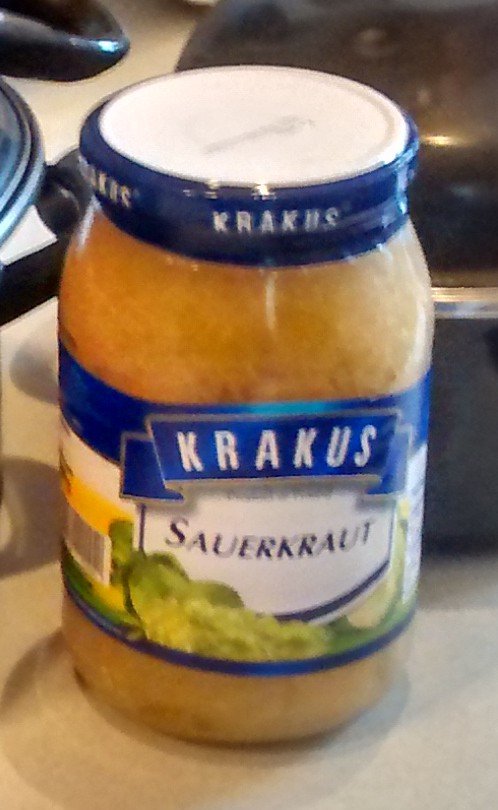
Around 450g of sauerkraut – this is half a large jar or a small jar if you can find these.

IMG_20150711_183051570_HDR


2 onion – finely chopped

2 cloves of garlic – crushed

1 teaspoon caraway seeds

350ml chicken stock – can be made from stock cubes

2 tablespoons of plain flour

Salt & ground black pepper

Oil for frying

2  tablespoons of soured cream

Chopped flat leaf parsley to garnish

Method

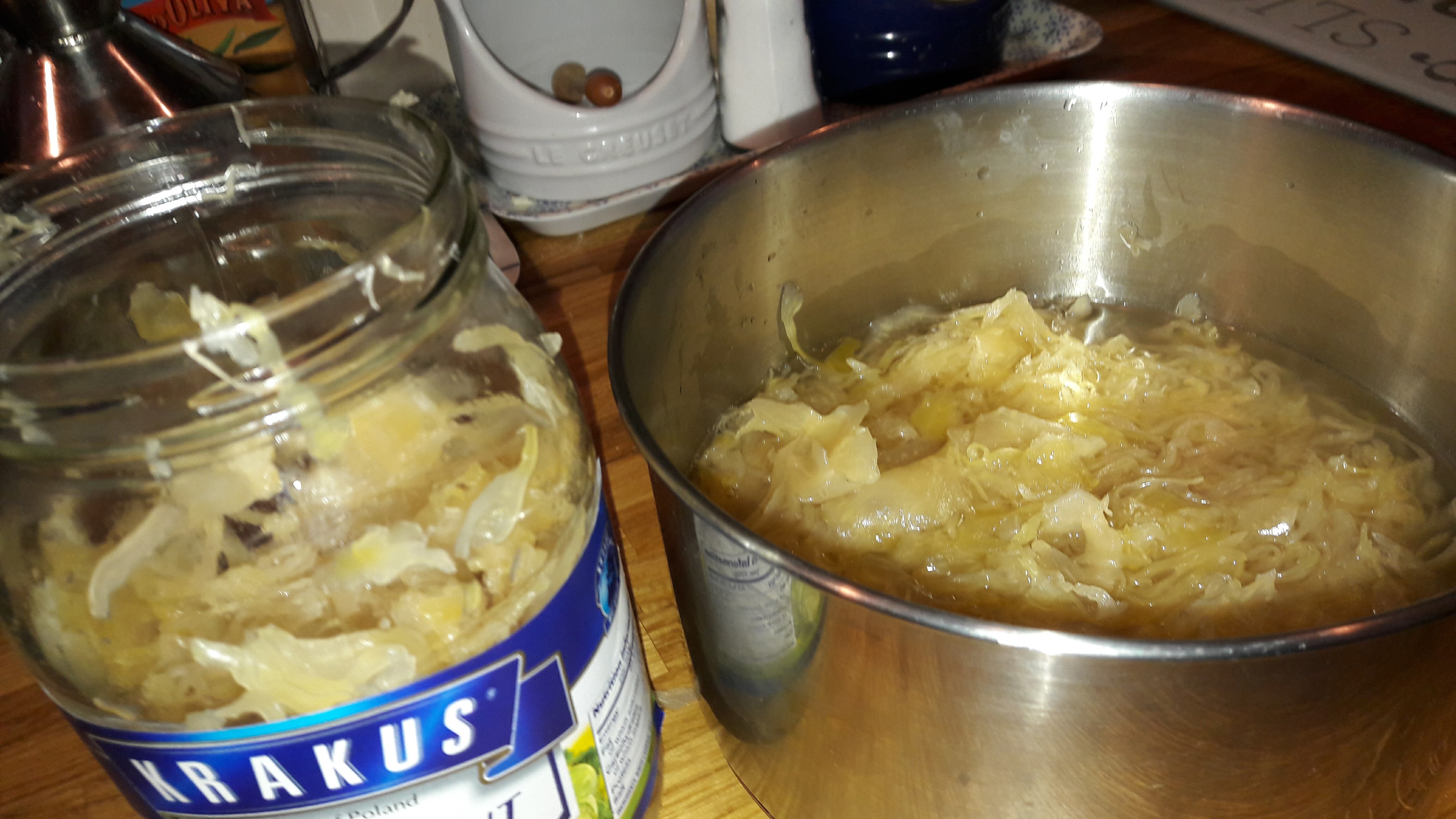
Put the sauerkraut in a saucepan and cover it with water, bring it to the boil then simmer gently for about 10 minutes and then drain the sauerkraut.

20170110_082627


Pre heat the oven to Gas Mark 3 – 1600C

On a large plate mix together the flour, salt and pepper.

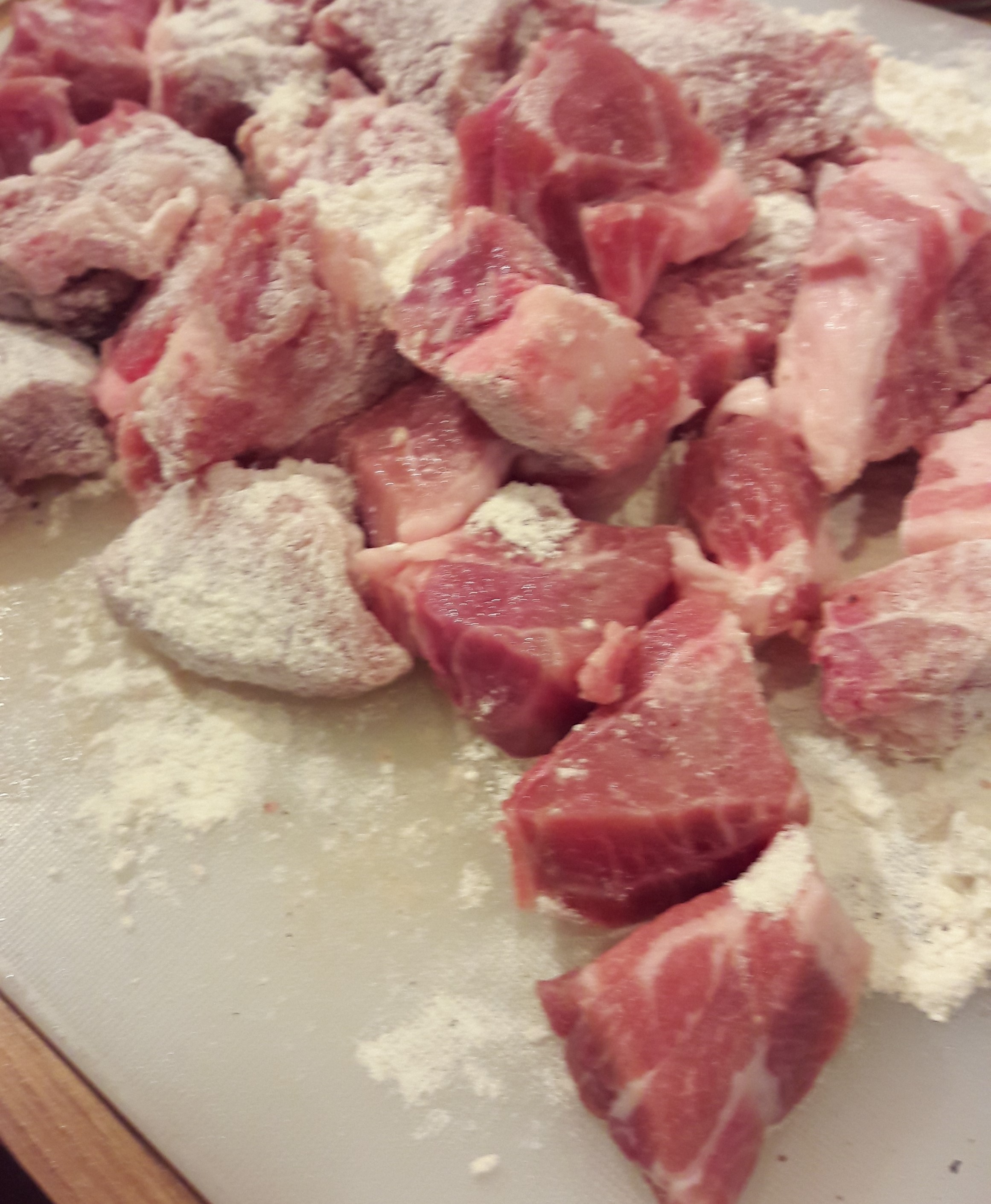
Coat the pork cubes in the flour mixture and brown these in the oil in a hot frying pan.

pork

Place the pork into a casserole dish.

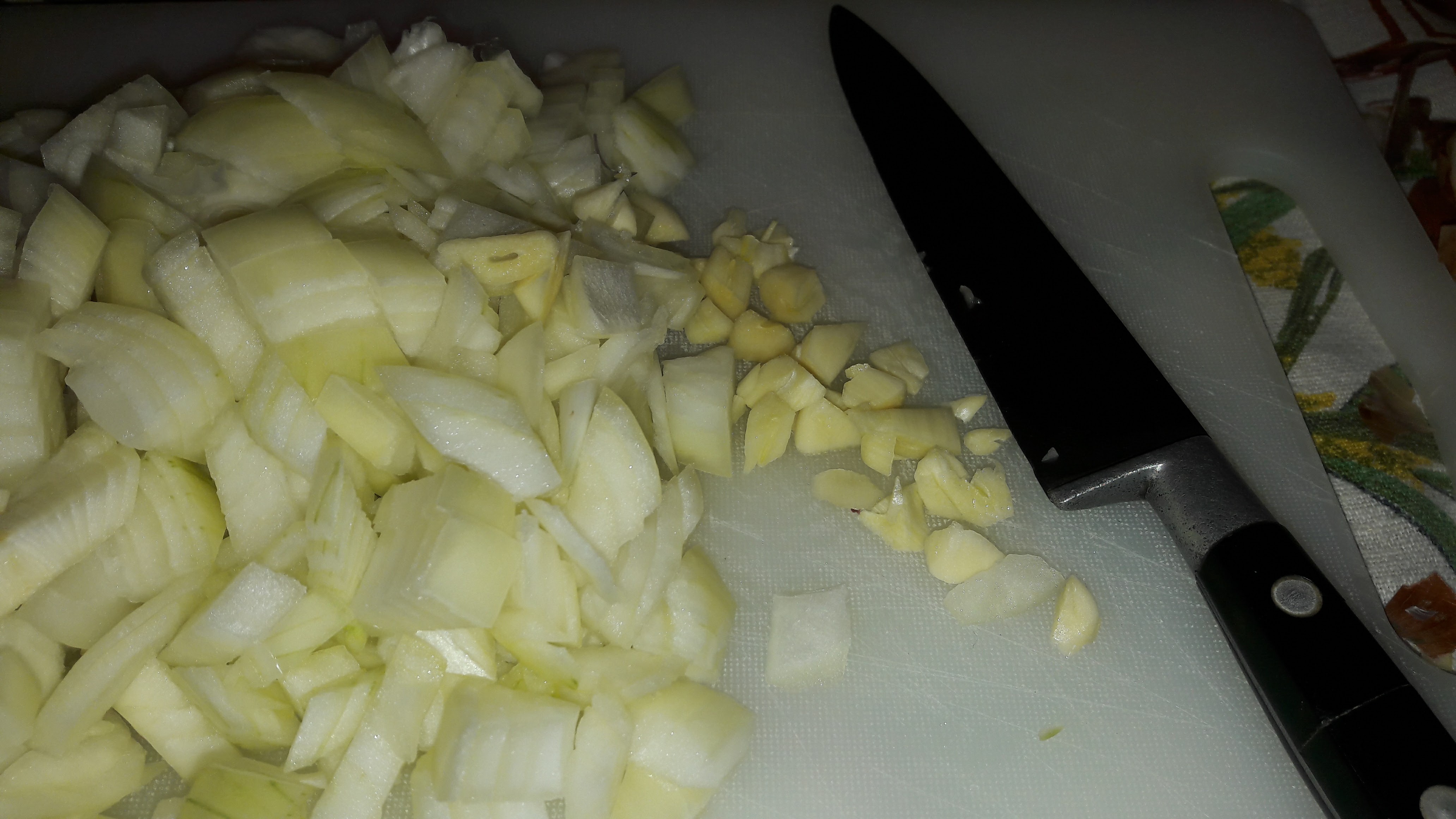
Lightly fry the onions and garlic in the frying pan and then add them to the pork.

20170110_083735


Add the sauerkraut and the caraway seeds to the casserole dish.

Mix the ingredients together and add the stock.

Put the lid on the dish and put it in the oven and cook till the meat is tender about 2½ to 3 hours.

img_20161217_123646310_hdr


Stir in the soured cream and then sprinkle the chopped parsley on top.


Serve with boiled potatoes.

Served in Cadiz, 1964 – 1970 by J & G Meakin

Gulasz

  • The word gulasz comes from the Hungarian gulyás and is the word for a casserole or stew.
  • In Hungary the meat would most likely have been beef but in Poland it is either pork or beef.
  • When beef is used it is usually called węgierski  – Hungarian style.
  • As stewing steak used to be more readily available in England than casserole pork my mother made this with beef.
  • I make this with either beef or pork, both are delicious as the slow cooking and tomato purée give an intense rich flavour.

Classic Gulasz

Ingredients

  • 500g stewing beef or shoulder or spare rib pork
  • 2 onions
  • 2 cloves of garlic
  • 2 tablespoons of tomato purée
  • 250ml chicken stock – can be made from stock cubes
  • 2 teaspoons of (sweet) paprika (not smoked)
  • 1 bay leaf
  • 2 tablespoons of plain flour
  • salt & ground black pepper
  • oil for frying

Method

  • Pre heat the oven to Gas Mark 3 – 1600C
  • Roughly chop the onions and crush the garlic.
  • img_20161215_143237495

Mix the tomato purée and the paprika into the stock.

img_20161215_142655586

Cut the meat into cubes and coat the pieces in a mixture of flour, salt and ground pepper.

Beef Coated in Plain Flour, salt & pepper

In a frying pan heat the oil until it is hot and fry the meat until all the sides are sealed.

  • Place the meat into a casserole dish.
  • Fry the garlic and onions in the frying pan, adding some oil if necessary but trying not to use too much or the dish will be greasy.

img_20161215_144305409

  • Add the onions to the meat then add the bay leaf and some more ground pepper.
  • Pour the stock mixture into the casserole dish and put on the lid.

img_20161217_123646310_hdr

Cook in the oven until the meat is tender, this could be about 3 ½ hours  to  4 ½ hours but often I find it needs  longer.

Classic Beef Gulasz

Serve with potatoes, hefty style pasta or boiled rice as well as salads such as:

If served on top of a large, breakfast plate sized potato pancake this is known as a

węgierski placek  – Hungarian pancake.

Tip

  • Make this a day ahead of when you need it, cook the dish for at least 3 hours and leave it to cool.
  • The next day cook it again for at least 1 hour, you might have to add a little water or stock but not too much, the sauce should be thick not watery.

Using a slow cooker

  • Nowadays I often make gulasz using a slow cooker instead of the oven.
  • I made a gulasz using pork shoulder and cooked it in the slow cooker for 8 hours.

Pork gulasz served in a dish by J & G Meakin Studio Pottery

Unknown Design Name

Luxury Style Gulasz 

All houses in Poland have cellars and even people living in block of flats have a cellar area of their own; if you ever get the chance to look in these you will find that they are filled with: jams, preserves, bottled fruit and vegetables, sauerkraut and salted gherkins.

Bottled sweet red peppers in brine are often found amongst these jars.  The addition of the peppers from one of these jars to the gulasz makes it even better.

Of course if like me you do not have the home-made variety you can buy these from most delicatessens or supermarkets now.

One Of My Two Cellars

img_20161205_074039868

IMG_20150819_064345546

You can use fresh red peppers and I use these when they are plentiful, either will make a delicious gulasz but I think I like ones with the bottled peppers best.

The recipe is a variation on the classic gulasz but you have to use less stock or you will end up with it being too watery due the water content of the peppers – especially the fresh ones.

Ingredients

  • 500g stewing beef  or shoulder or spare rib pork
  • 2 onions
  • 2 cloves of garlic
  • 3 tablespoons of tomato purée
  • 150ml chicken stock – can be made from stock cubes
  • 2 teaspoons of (sweet) paprika (not smoked)
  • 1 bay leaf
  • Jar of bottled red peppers or 3 to 4 fresh red peppers
  • 2 -3 tablespoons of soured cream
  • 2 tablespoons of plain flour
  • Salt & ground black pepper
  • Oil for frying
  • Paprika to dust on the top

Method

  • Pre heat the oven to Gas Mark 3 – 1600C
  • Roughly chop the onions and crush the garlic
  • Mix the tomato purée and the paprika in the stock
  • If using the bottled peppers cut them into long strips and then cut these into halves
  • If using the fresh peppers, cut them into long strips, de-seed them and cut these into halves
  • Cut the meat into cubes and coat the pieces in a mixture of flour, salt and ground pepper
  • In a frying pan heat the oil until it is hot and fry the meat until all the sides are sealed
  • Place the meat into a casserole dish
  • Fry the garlic and onions in the frying pan, adding some oil if necessary but trying not to use too much or the dish will be greasy
  • Add the onions to the meat then add the bay leaf and some more ground pepper
  • Add the peppers to the dish and mix the contents together

Pour the stock mixture into the casserole dish and put on the lid

Cook in the oven until the meat is tender, this could be about 3 ½ to 4 hours but often I find it needs longer.

IMG_20150826_153257903

When you are ready to serve the gulasz, mix in one to two tablespoons of soured cream and then put the other tablespoon of soured cream on top in the centre and dust some extra paprika on this.

Serve as for the classic style gulasz.

Here served in a dish by J & G Meakin – Topic from 1967

More Duck

Duck With Sour Cherries

After apples (see It’s Only A Bird!) one of the most popular ways of serving roast duck in Poland is with sour cherries.

Sour cherries & sweet cherries  are related but in Polish they have have completely different names

Prunus cerasus  are wiśnie  –  sour cherries also known as morello cherries  &  Prunus avium are czereśnie –  sweet cherries.

Prunus cerasus originated in the Iranian plateau & Eastern Europe.

Annual crop production figures for sour cherries in 2012  show:

1  – Turkey with over 187,000 tonnes

2  – Russia with over 183,000 tonnes &

3 –  Poland with over 175,000 tonnes

So the figure for Poland is high when you think of the size of the top two countries, especially when figures for the whole of the United States of America are only  around  38,000tonnes.

For this recipe fresh sour cherries would have to be cooked with some sugar but  here in England rather than fresh sour cherries you have to use bottled ones.

Previously I used to be able to buy bottled sour cherries produced by Krakus or PEK but recently went out shopping for these I could not find any shops that stocked them.

In one of the Polish shops I found some from the company EDMAL and I also found some in Lidl.

Both are good though personally  I preferred the taste of the EDMAL ones.

The Lidl ones are pitted whearas the EDMAL ones still have the stones in – you can remove the stones if you want or just warn people that the stones are still in.

Cherry Stoner

There is more liquid in the EDMAL jar as this is sold as a kompot.

Kompot is a non-alcoholic sweet beverage, that may be served hot or cold.

It is made by cooking fruit such as apples, rhubarb, gooseberries, or sour cherries in a large volume of water, together with sugar or raisins. Sometimes spices such cinnamon are added for additional flavour, especially in winter when kompot is usually served hot.

For this recipe you need to strain more liquid off from the kompot which you  can save and drink later.

A jar is easily enough for  4 people and could serve 6.

The sour cherries are cooked separately from the duck in this recipe.


Rather than using whole duck,  I use duck breasts, 1 per person, as this makes it easier for me especially when there are more than two people for dinner.

I am giving instructions for 2 different coatings for the duck here –  the rest of the instructions are the same.

Ingredients

Duck breasts – 1 per person

Jar of sour cherries.

Italian herbs or  ground allspice

Salt & pepper

Method

Rub the duck breasts with Italian herbs, ground black pepper and salt and leave for at least an hour.

or

Rub the duck breasts with allspice and salt and leave for at least an hour

Duck breast with Italian herbs, salt and pepper.


Duck breast with allspice and salt.

img_20161030_135738822


Allspice  is very popular in Polish cooking. It is the dried berry of the plant Pimenta diocia

Allspice in Polish is ziele angielskie  which translates as  herb English because it came to Poland from English traders who brought it from the West Indies in the 16th century.  I do not know why it is called herb (which indicates the  green part of a plant) as the word more often used for spice in Polish is zioła (indicating dried berries or roots etc).

Pre-heat the oven to GM4 – 180°C

Put a baking tray in the oven for around 10 minutes to heat up.

Heat a heavy based frying pan (I use a cast iron pan) until it is very hot –  you do not need any added oil or fat.

Place the duck breasts in the pan skin side down and turn the heat down to medium and cook for 2 minutes. Turn them over and cook for a further 2 minutes.

Put the duck onto the heated baking tray.

Bake in the oven for around 15 minutes.

You can serve the duck breast as whole pieces or slice them up.

Whilst the duck is in the oven, put the strained cherries with some of the juice into a pan and bring to the boil, then simmer gently for around 5 minutes – do not let them boil dry – add extra juice if necessary.

Serve the cooked duck with the cherries, adding some of the juices as well as the fruit.

Duck with sour cherries served on Carnation (1982 -1998) by Royal Doulton


It’s Only A Bird!

I was in Poland during a time of economic difficulties when there were food shortages & rationing. It was in the summer holiday period,

In order to alleviate the meat shortage in the main tourist areas, hotels & restaurants had been all allocated a different Meatless Day each week.

Now in Poland when you say meat – most people think pork!

I had not really been affected by this as most of my time had been spent with relatives and much of it in the countryside but I did make one visit to Warsaw and went with my cousin to a small but posh restaurant.

The maître d’  came up to me and this was the conversation:

“My dear lady, I am afraid you have come to us on a meatless day”

“Please do not worry,  what do you have on the menu?”

“There is roast duck”

“Is duck not meat?”

“It’s only a bird!”

On that day I had the best roast duck with apples I have ever eaten!

I have spent some time recreating this dish. The duck I had in Warsaw had been roasted stuffed with apples  – here I have been using duck breast fillets as this fits in better with the meals I make.

I have tried using eating apples & cooking apples and they have both turned out very well. The recipe with cooking apples is nearer to the original Polish roast but as they were both delicious I am including them both.

For these recipes I have used Gressingham duck breasts.

Gressingham duck was first breed in Lancashire, England in the 1980s near a village of that name.  It is cross between the small flavourful wild Mallard and the larger Pekin duck.  It gives a succulent duck with more breast meat, less fat and a rich, gamey  flavour.

img_20161009_094100084_hdr


Production is now by Gressingham Foods Ltd in East Anglia.

I have used the same method for preparing and cooking the duck breasts, allowing 1 breast per person.  The difference between the 2 recipes is the type of apple used.

Duck with Bramley Apples

Ingredients

1 Duck breast per person

2 to 3 Bramley apples

1 tablespoon of butter

1 tablespoon of sugar

Italian Herbs

Salt & Pepper

Method

Rub the duck breasts with Italian herbs, ground black pepper and salt and leave for at least 1 hour.

Pre-heat the oven to GM 4 – 180°C.

Peel and core the Bramley and cut into quarters or eighths depending on the size of the apples.

In a saucepan, over a low heat, melt the butter, add the apples and cook then for around 5 minutes – you want them to to be softened but not a purée.  Keep them warm in the pan whilst you do the duck breasts.


Heat a heavy based frying pan (I use a cast iron pan) until it is very hot- you do not need any added oil or fat.

Place the duck breasts in the pan skin side down and turn the heat down to medium and cook for 2 minutes. Turn them over and cook for a further 2 minutes.

Put the apples onto a baking tray and sprinkle a tablespoon of sugar over them.

Put the duck breast on top of the apples with the skin side up.

Bake in the oven for around 15 minutes.


Duck with Eating Apples

Ingredients

1 Duck breasts per person

2 to 3 eating apples such as Pink Lady or Jazz

1 tablespoon of butter

Italian Herbs

Salt & Pepper

Method

Rub the duck breasts with Italian herbs, ground black pepper and salt and leave for at least 1 hour.

Pre- heat the oven to GM 4 – 180°C.

Leave the skins on the eating apples.

dsc03246


Core the apples and cut them into thick slices.

In a saucepan, over a low heat, melt the butter,add the apples and cook then for around 5 minutes – you want them to to be softened but not a purée.  Keep them warm in the pan whilst you do the duck breasts.

Heat a heavy based frying pan (I use a cast iron pan) until it is very hot- you do not need any added oil or fat.

Place the duck breasts in the pan skin side down and turn the heat down to medium and cook for 2 minutes. Turn them over and cook for a further 2 minutes.

Put the apples onto a baking tray.


Put the duck breast on top of the apples with the skin side up.

Bake in the oven for around 15 minutes.


Pulpety – Polish Meatballs

The Polish word pulpety comes from the Italian word polpette & that word come from  polpa meaning pulp.

The word polpette has been used in Italy  since the 15th century – though of course meatballs in many forms are to been found in most cultures & countries  and are a way of using every last piece of carcass.

Pulpety in Poland are made from meat or fish – I am just going to cover meat in this post.

Meat pulpety can be made from fresh meat or from cooked meat.  I prefer the fresh meat ones and if I have any  roast meat leftovers I am more likely  to use them up in other ways such as in  Pierogi – Polish Filled Pasta  fillings.

Fresh meat pulpety are very similar to  kotlety mielone.

The difference being that pulpety are very small and they are boiled/simmered not fried.

They are often used as an  accompaniment for soup – with around 4 to 6 being added to a serving of  soup. (There will be much more on the  topic of soup in the future.)

Pulpety can be simmered in water or stock  – I always uses stock – either chicken or vegetable.

Meat pulpety

Ingredients

  • 400g of minced beef or pork or a mixture of the two
  • 1 onion
  • 1 slice of white bread or bread roll, left for half an hour in a bowl with a little milk – do not use the excess milk just the wet slightly squeezed bread.
  • 1 beaten egg
  • 1 teaspoon Italian herbs
  • Dried breadcrumbs – see Breadcrumbs – Bułka tarta
  • Salt & pepper
  • Some flour for your hands for shaping.
  • Stock / bullion – chicken or vegetable – can be from a stock cube.

Method

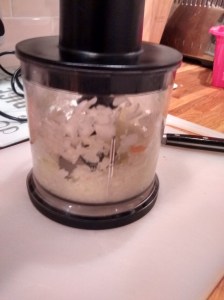
Grate the onion on a fine grated or use an electric mini-chopper.

img_20161024_064841982_hdr


In a large bowl mix all the ingredients together except for the dried breadcrumbs, it is best to do this using both hands, making sure that all the ingredients are thoroughly combined.


Add enough dried breadcrumbs so that it is a firm mixture.

IMG_20150917_095836695


  • Put some flour in a dish for your hands to make it easier to shape the pulpety.
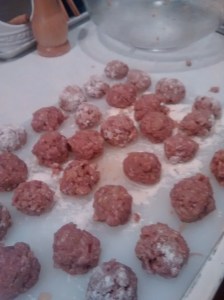
  • Pinch off small bits of the meat mixture and roll the piece between your hands to make small round balls and place these onto a floured board or tray whilst you make them all.
  • You can leave these to chill in a cool place or in the fridge if you have time.

IMG_20160321_185441693


In a large pan heat up some stock and drop the pulpety into the boiling liquid and then let them simmer for around 5 minutes.


Remove them from the liquid with a slotted spoon.


Polish style would be to have around 5 pulpety in a bowl of soup –  but  often I do these for a light lunch and have a large bowl of soup with lots of pulpety per serving.

In the photograph below, they were served in a tomato soup.


Served In A Sauce

The varieties here are endless – make one of your favourite sauces for example mushroom or tomato and drop the cooked pulpety into the sauce and let them simmer.

You can then serve them with potatoes, pasta, rice or to be very Polish – buckwheat.