The Polish word for yeast is drożdże and drożdżówka is any sweet cake or bun made using yeast.
Often the cake is a large flat cake ( placek) made in a large roasting tin.
This yeast cake is made with plain flour not strong flour and the mixture is mixed with a wooden spoon to form a soft mixture and is not kneaded.
My late father has two cousins living in Białystok, North East Poland, they are both wonderful cooks.
This yeast cake is based on a recipe given to me by one of these aunties.
As with any recipe made with yeast, timings are so unpredictable depending on many variables including the room temperature.
I always bake with yeast when I am at home for most of the day with other activities to do whilst waiting for the dough to rise etc.
Ingredients
Yeast Cake
400g plain flour
250ml of tepid milk
1 egg
2 tablespoons of granulated sugar
1 tablespoon of sunflower oil
150g of raisins or sultanas
10g of fresh yeast or 5g of dried yeast
Crumble Topping
2 tablespoons of plain flour
1 tablespoon of butter
1 tablespoon of granulated sugar
Method
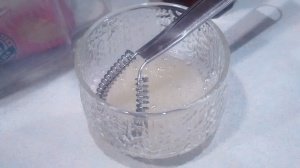
Mix the yeast with 2 tablespoons of the milk and 1 tablespoon of the sugar and leave this till it starts bubbling.
In a bowl whisk together the egg and 1 tablespoon of the sugar.
Add the oil and whisk again.
Add the milk and the raisins or sultanas and mix well.
Add the flour and mix this all together with a wooden spoon to form a very loose, soft dough.
Cover the bowl with clingfilm or a cloth and leave in a warm place to rise.
Make the crumble topping by rubbing the butter into the flour until the mixture resembles bread crumbs and then stir in the sugar.
Grease and line a large roasting tin.
25cm x 34 cm or 22cm x 32cm.
Put the risen dough into the tin – use a spatula to spread it out.
Sprinkle the crumble mixture over the top and leave to rise again.
Pre-heat the oven to GM6 – 200°C.
Place the risen cake into the oven and bake for 15 minutes.
Then lower the temperature to GM5 – 190°C and bake for another 10 minutes – keeping an eye on this and cover with foil if it looks like it is burning.
You might want also want to move it down a shelf for the last 5 minutes.
Leave to cool in the tin for about 5 minutes then take it out and remove from the greaseproof paper – so it does not go soggy on the base.
Served on Sonnet by Royal Doulton, 1971 – 1998.
As with most yeast cakes this is best eaten as soon as possible as it will soon go stale – you might need to invite round lots of friends and family!
If all is not eaten on the day of baking, I cut the cake into slices and pack into a plastic container and freeze – these are then toasted and served with butter at a later date.
Toasted and buttered yeast cake served on Las Palmas by Aynsley from the 1960s.
Variations
The dried fruits added can be varied and I have made this with raisins, mixed peel and 1 teaspoon of mixed spice.
Served on Counterpoint by Royal Doulton, 1973 – 1987.
Other dried fruit options can be used, such as apricots, cranberries, pears or prunes and so on, chopping larger fruits into small pieces.
I made this with apricots, sultanas and a 1/4 teaspoon of vanilla essence.
The dried fruits add sweetness to the cake and I think the small amount of sugar works well – you can if you like add a few extra tablespoons of sugar.
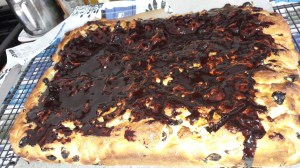
I came across this recipe for a yeast dough mazurek in this little recipe book and was very intrigued by the method which is quite different from the usual yeast doughs and thought I would give it a go!
It turned out very well.
Ingredients
450g plain flour
100g granulated sugar
200g butter or block margarine
50g fresh yeast or 25g of dried yeast
190 ml of milk
3 eggs
200g of bakalie (dried fruits including currants, raisins, peel, figs, dates, prunes etc)
Method
Warm the milk to hand heat and mix in the yeast.
Melt the butter on a gently heat.
In a bowl whisk the eggs with the sugar until they are light and fluffy.
Add the melted butter.
Add the milk and yeast mixture and mix thoroughly.
Leave in a warm place for 8 hours!
Grease and line a large baking tray 33cm x 24cm
Pre-heat the oven to GM5 – 190°C
Mix the bakalie(dried fruits) with the flour.
Mix the flour and fruits with the yeast mixture.
Place the dough into the tin – spreading it out evenly.
Place the dough onto the tray and put in the oven.
Bake for around 25 – 30 minutes.
Prick the surface of the cake with a fork in several places.
Leave it to cool in the tin for a while and then remove from the tin and place on a wire rack to cool.
Pour the hot chocolate topping over the top.
Topping Ingredients
50g butter
30g of granulated sugar
2 tablespoons of cocoa
2 – 3 tablespoons of water
Note
You could double this amount if you want to it to cover all over and be a bit thicker.
Method
In a small saucepan gently melt the butter and sugar .
Add the cocoa and water and mix it till it is all blended together.
Note
You can decorate the top with dried fruit and nuts – you would really need to do double the topping ingredients for this,
Served on Royal Doulton – Counterpoint – 1973 – 1987
Kołaczyki means little wheels from the word koła which means wheels.
In a previous post – Bułeczki – Sweet Yeast Buns– I gave a recipe for basic sweet yeastdough – since then I have tried out a slightly different recipe – nearly the same ingredients but a slightly different method – and I think these turned out to be the best yeast buns I have ever made – so this is – Basic sweet yeast dough version two.
A few reminders when using yeast in baking
Learn to be patient – you cannot control the timings exactly with yeast, it depends on the temperature of the room and the flour used and other variables.
Do yeast baking on a day you are planning to be in & have other things to do, but ones you can break off from when needed.
Heat the milk so it is at body temperature – use the finger test – too hot and you will kill the yeast – too cold is okay – it will just take longer.
An egg glaze often burns too quickly – I have found an egg white or egg white & water glaze gives a better result.
Older Polish recipes use fresh yeast. I have used dried yeast and have had very good results. (I have not tried using easy bake yeast for this recipe).
Basic Sweet Yeast Dough Version 2
Ingredients
Leaven – Starter
100g plain flour
30g fresh yeast or 15-20g dried yeast
125ml milk
Rest of ingredients
3 egg yolks
60g sugar
50g melted butter or block margarine
400g plain flour
1/4 tsp salt
Zest of 1 lemon
2-3 drops of vanilla essence
125ml milk
and
Save 1 egg white for use as a wash on the buns.
Method
Warm the milk slightly – so it is just warm to the touch – and add the yeast and mix together.
Put the flour in to a bowl and add the milk and yeast mix it all together and leave it covered until it is double in size.
*
Melt the butter and leave it to cool.
*
Whisk the yolks and sugar until they are pale and fluffy.
Grease 2 baking sheets – You should get around 15 buns. – invite people round!
Into a large bowl put: the flour and the salt, the yeast starter, the yolk mixture, the zest of a lemon, the vanilla essence and the milk.
Mix it all together so that you get a soft dough that comes away from the side of the bowl – you do not have to knead it.
Then work in the melted butter (this is the hardest part) until it is all incorporated and you have a uniform shiny dough.
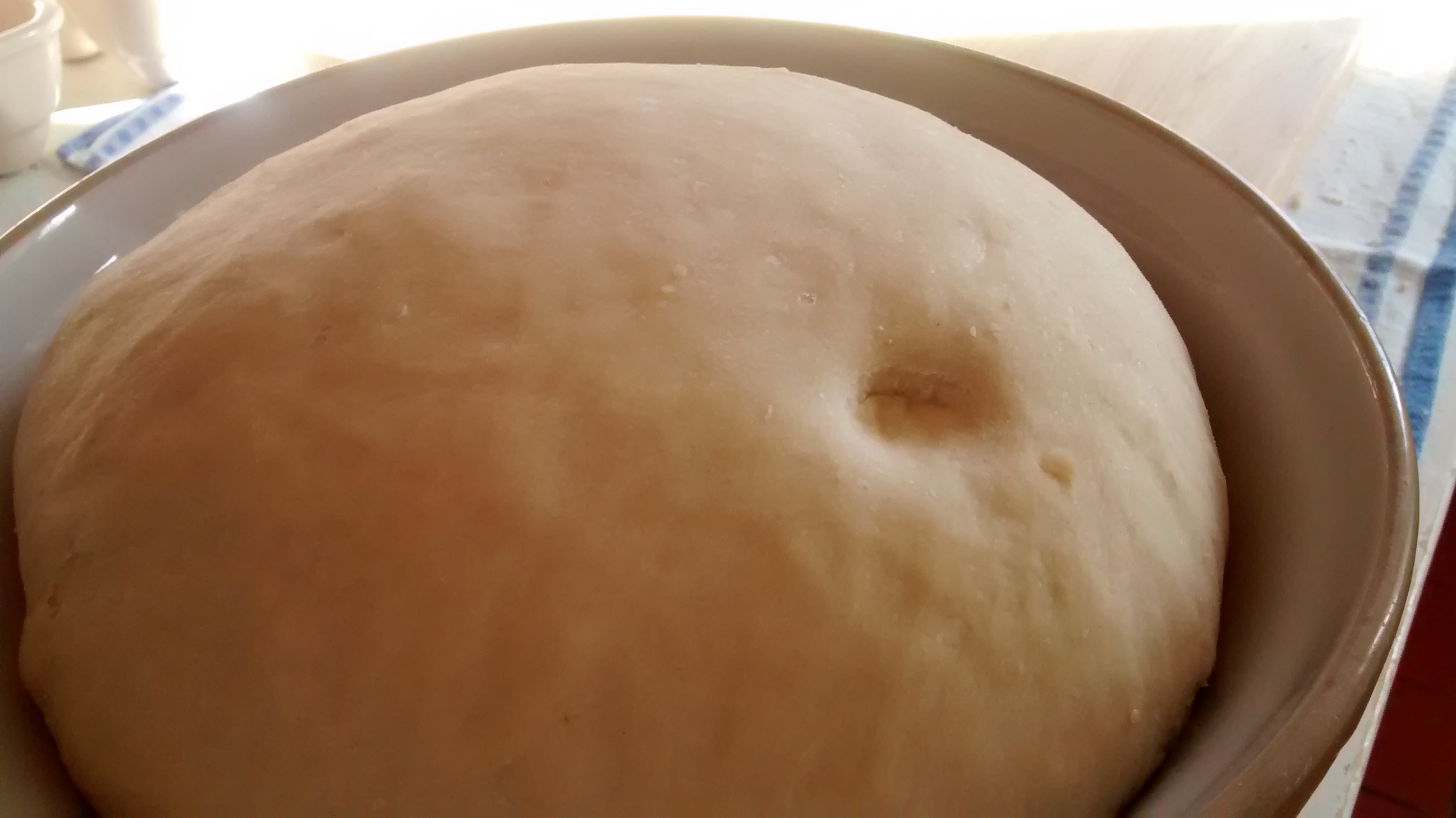
Cover the dough with a cloth and leave this to rise until it is double in size.
Onto a floured surface place the dough and form it into a rectangle and then roll this out until it is around 2cm thick.
Using a 8cm diameter cutter cut out circles of dough and place them on the greased baking sheets, leaving room for the dough to rise.
Gather together the left over dough and repeat the process.
Cover the trays and leave the circles to rise and double in size.
Pre heat the oven to GM5 – 190ºC
Use a clean napkin or tea towel and cover the base of a tumbler.
Use the covered tumbler and press down on the centre of each circle to form an indentation into which you will put a filling.
Bułeczki – this word can cause a little confusion as it can mean – little white bread rolls or a more sweet yeast bun.
This recipe has been used to make round buns with a filling – it can be used for a variety of sweet buns – all of which are very popular in Poland.
A few reminders when using yeast in baking
Learn to be patient – you cannot control the timings exactly with yeast, it depends on the temperature of the room and the flour used and other variables.
Do yeast baking on a day you are planning to be in & have other things to do, but ones you can break off from when needed.
Heat the milk so it is at body temperature – use the finger test – too hot and you will kill the yeast – too cold is okay – it will just take longer.
An egg glaze often burns too quickly – I have found an egg white or egg white & water glaze gives a better result.
The older Polish recipes use fresh yeast. I have used dried yeast and had very good results. (I have not tried using easy bake yeast for this recipe).
Basic sweet dough recipe
Ingredients
Yeast starter
25g fresh yeast or 15g dried yeast
1 tablespoon of sugar
250ml milk – warmed
Rest of dough
3 yolks
100g granulated sugar
*******
500g plain flour
2-3 drops of vanilla essence
Zest of 1 lemon
1/4 teaspoon of salt
******
60g of melted butter
******
Egg or egg white to glaze (whole egg tends to brown very quickly).
Fillings
Jam – I used strawberry jam and also blackcurrant jam (made by my friend in Leeds) and I think the more tart blackcurrant jam goes better with the semi-sweet dough.
Mincemeat – I used my own mincemeat which is from the recipe by Delia Smith but without the chopped almonds. This of course in one way is very English, but it would be recognised in Poland if described as bakalie – which is a mixture made of dried fruits (often with figs or dates), nuts and honey.
Method
Mix the yeast, sugar and warmed milk together and leave it till it doubles in size.
Whisk the yolks and sugar together until the mixture is pale and thick.
Put the flour into a large bowl, add the yeast starter, the yolks & sugar mix, vanilla essence, lemon zest and the salt.
Combine everything together and knead it together until the dough leaves the side of the bowl clean.
Add the melted butter and mix it in and then knead it well until you get a glossy smooth dough.
Place it back in the bowl and cover with a cloth and leave it until it doubles in size.
Grease 1 or 2 baking sheets to hold 16 buns.
Knead the dough again lightly, then cut in to half and half again and so on to give 16 pieces.
Roll each piece into a smooth ball, then flatten it and roll it out into a circle.
Put a small spoonful of filling onto each circle and then draw the edges of the dough circle together and pinch the dough to seal in the filling.
Turn the balls over so the seal is on the underside.
Place the buns on the baking sheets with room apart for them to double in size.
Cover the buns with a cloth and leave them to rise to double in size.
Pre-heat the oven to GM 5 – 190ºC
When the buns have doubled in size brush them with an egg or egg white wash.
I used whole egg in this case but since have found that egg white does not burn as quickly.
Bake the buns for around 15 minutes.
Leave to cool before serving.
Tea plates are Las Palmas by Aynsley from the 1960s.
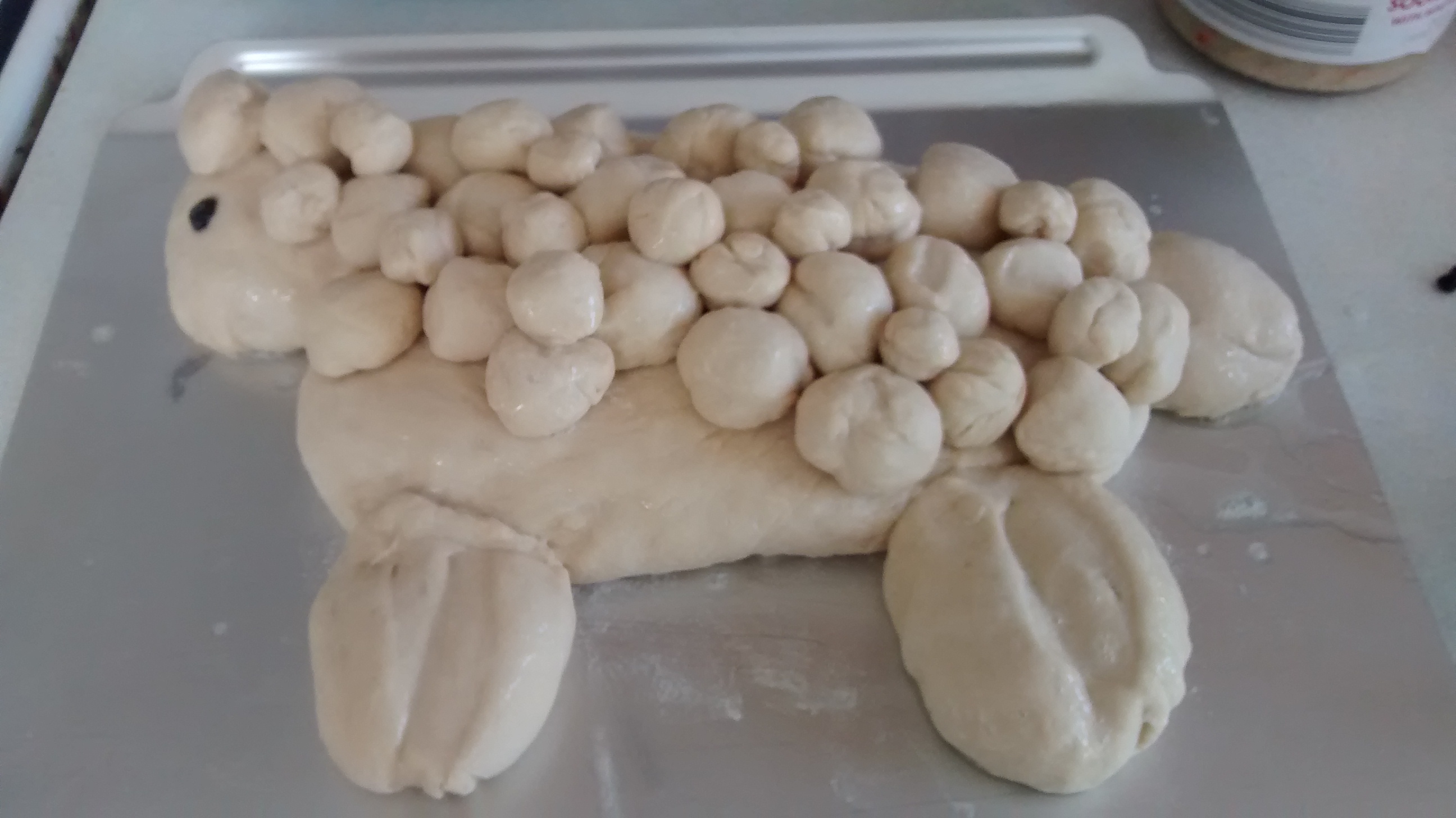
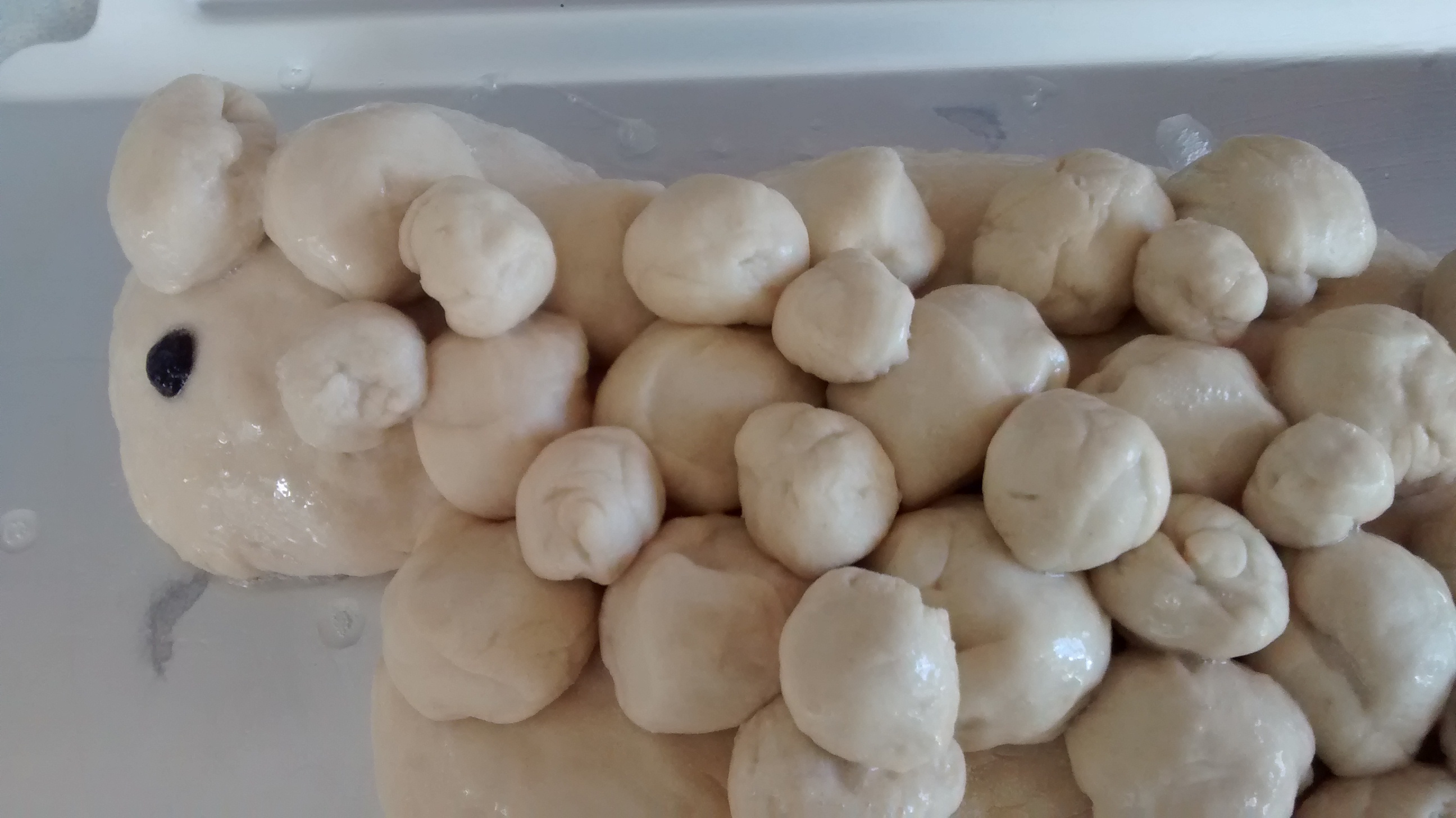
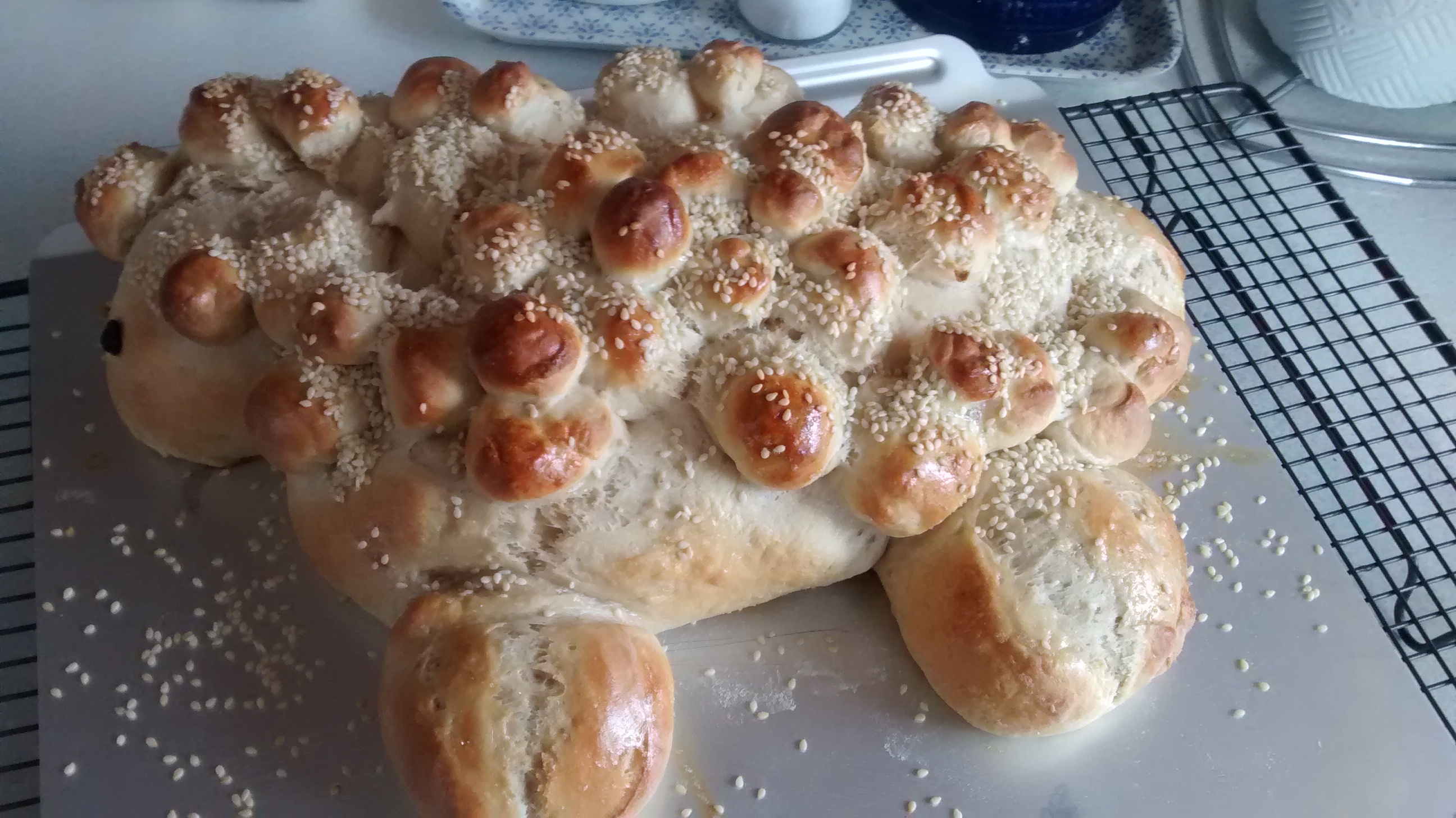
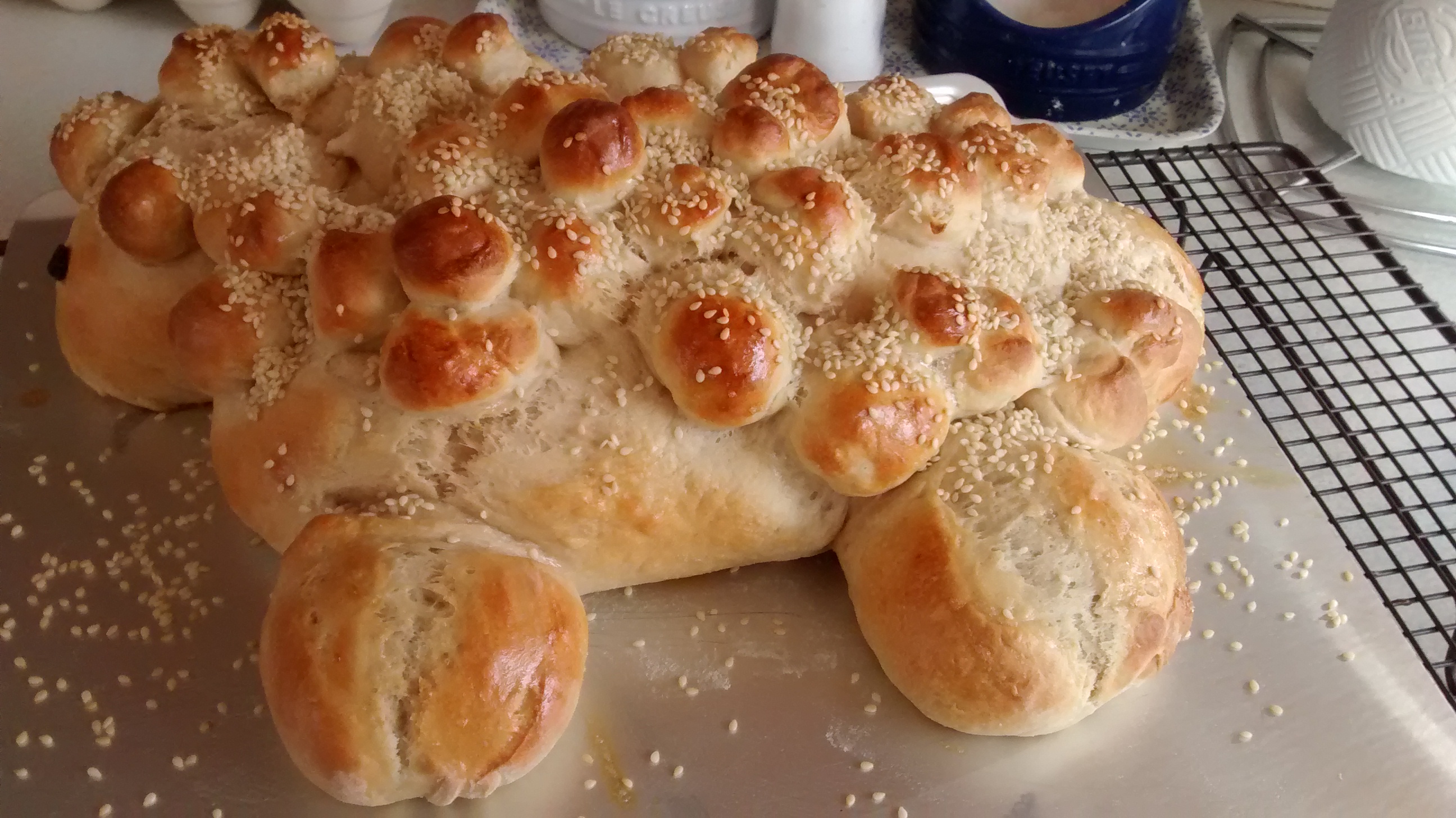
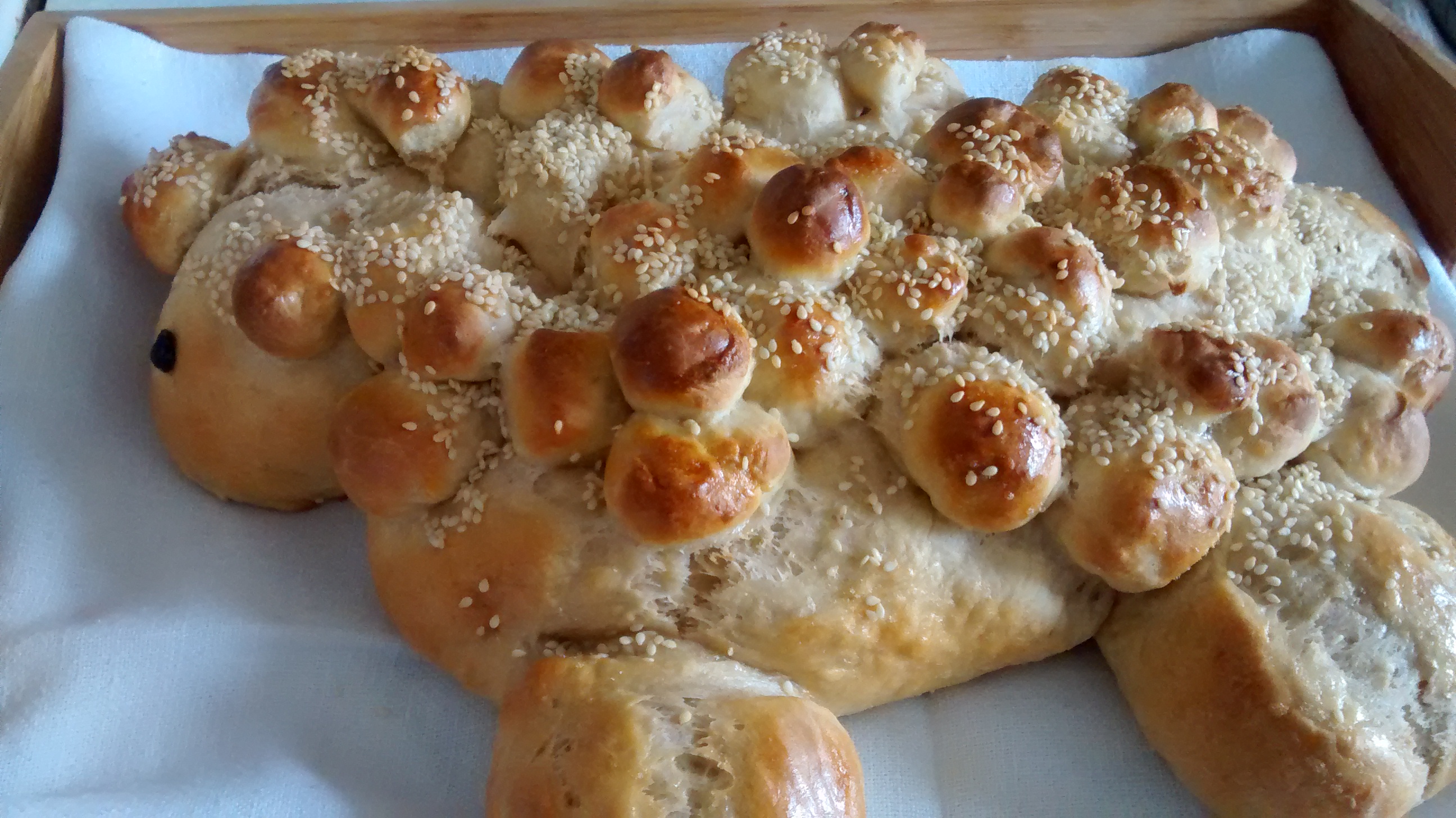
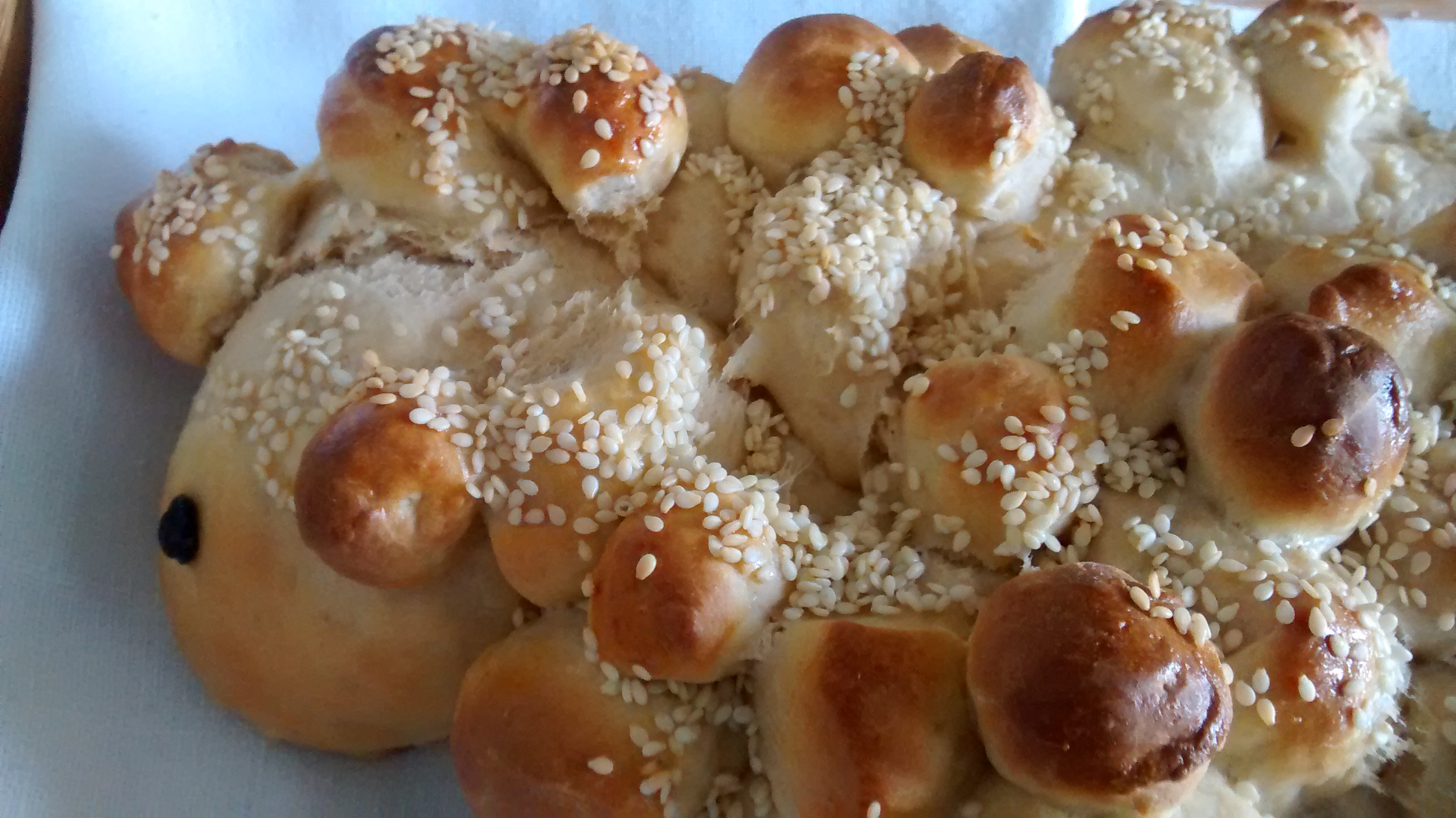
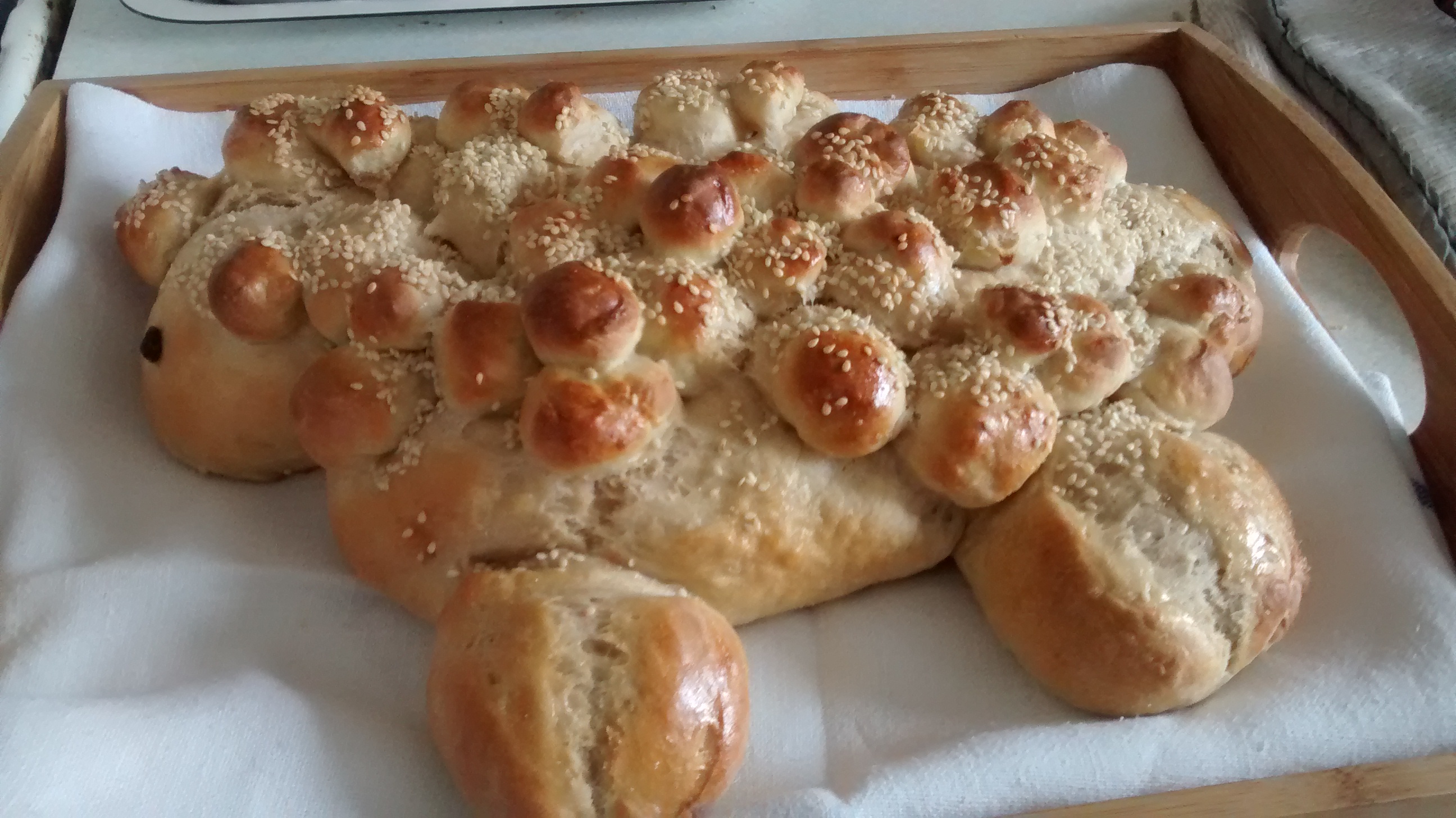
The Lamb is a symbol of Christ Resurrected – The Lamb of God – The Saviour of the World.
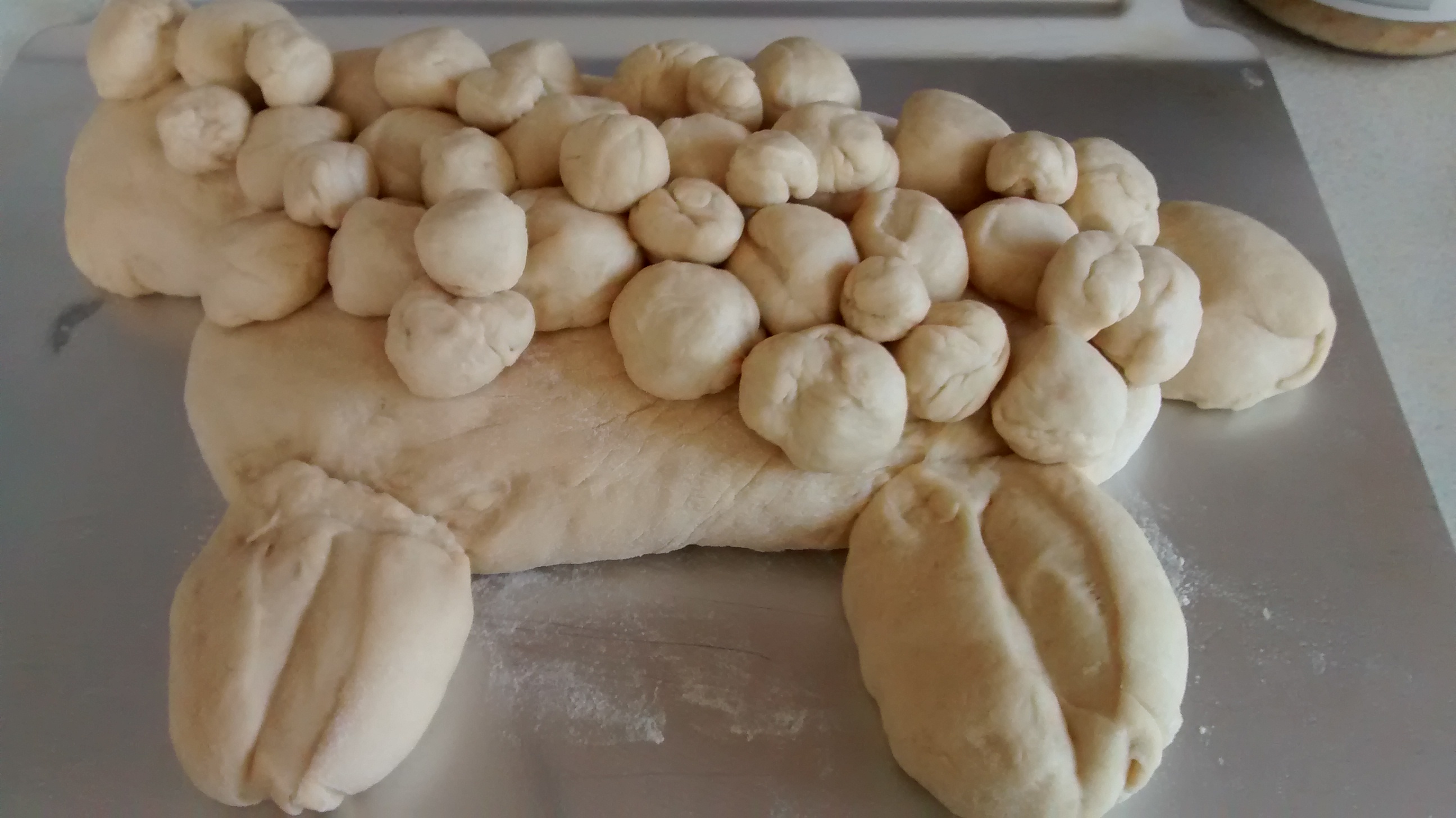
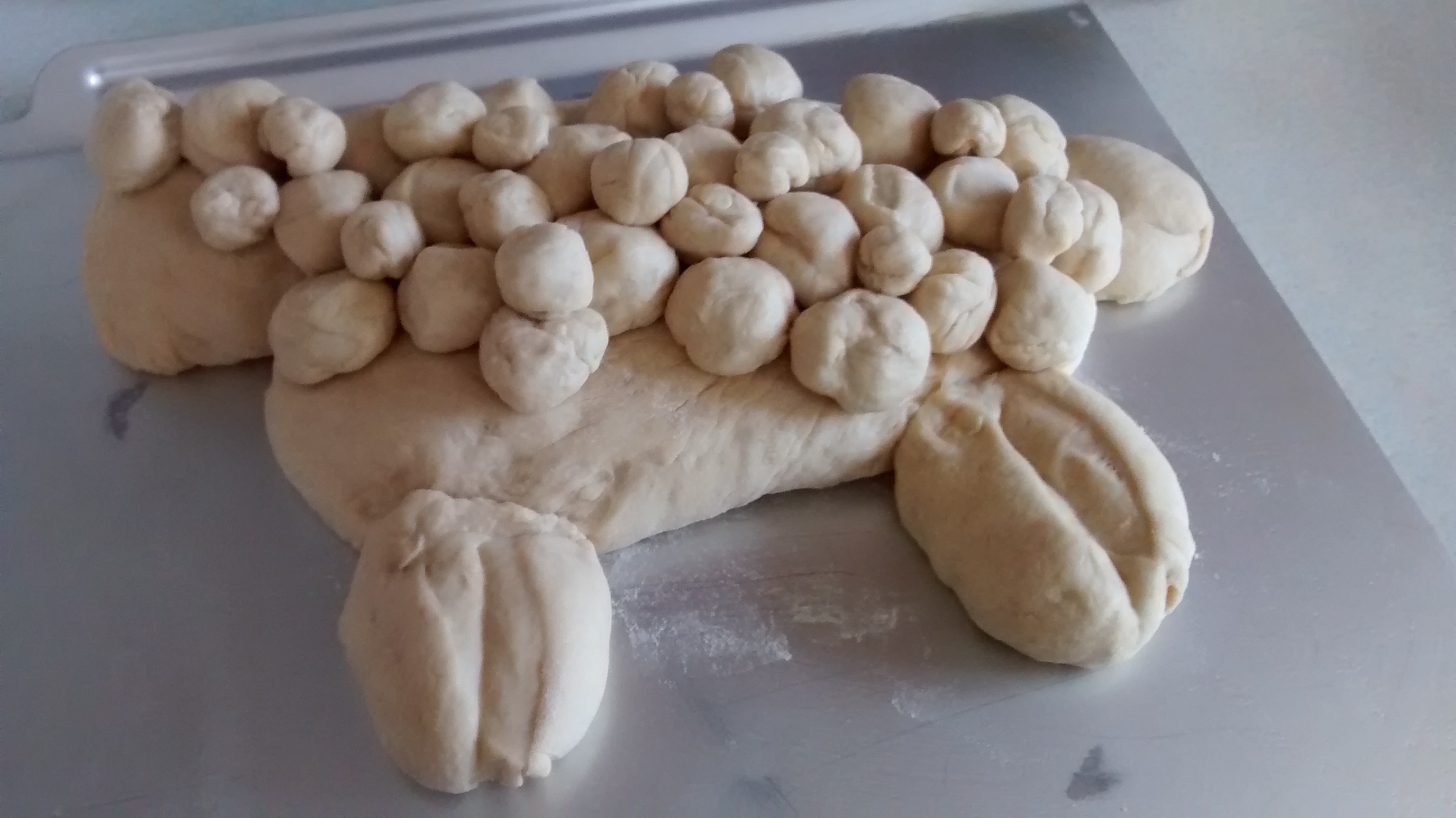
In Poland there is a tradition of having a Lamb on the table at Easter. This would be made out of moulded butter or sugar or baked as a cake. There are moulds available for making a lamb-shaped cake into which you pour the cake mixture before you bake it.
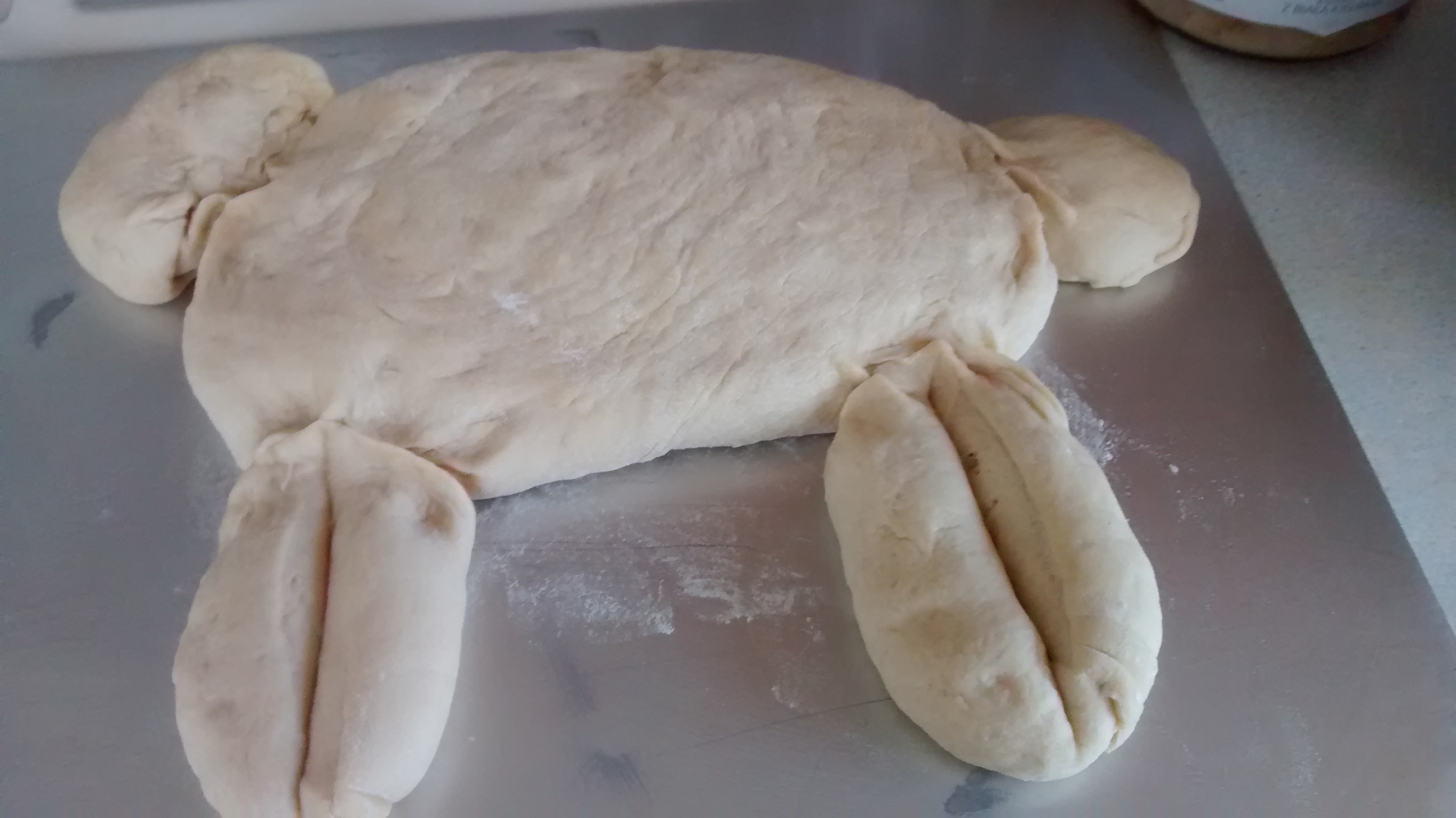
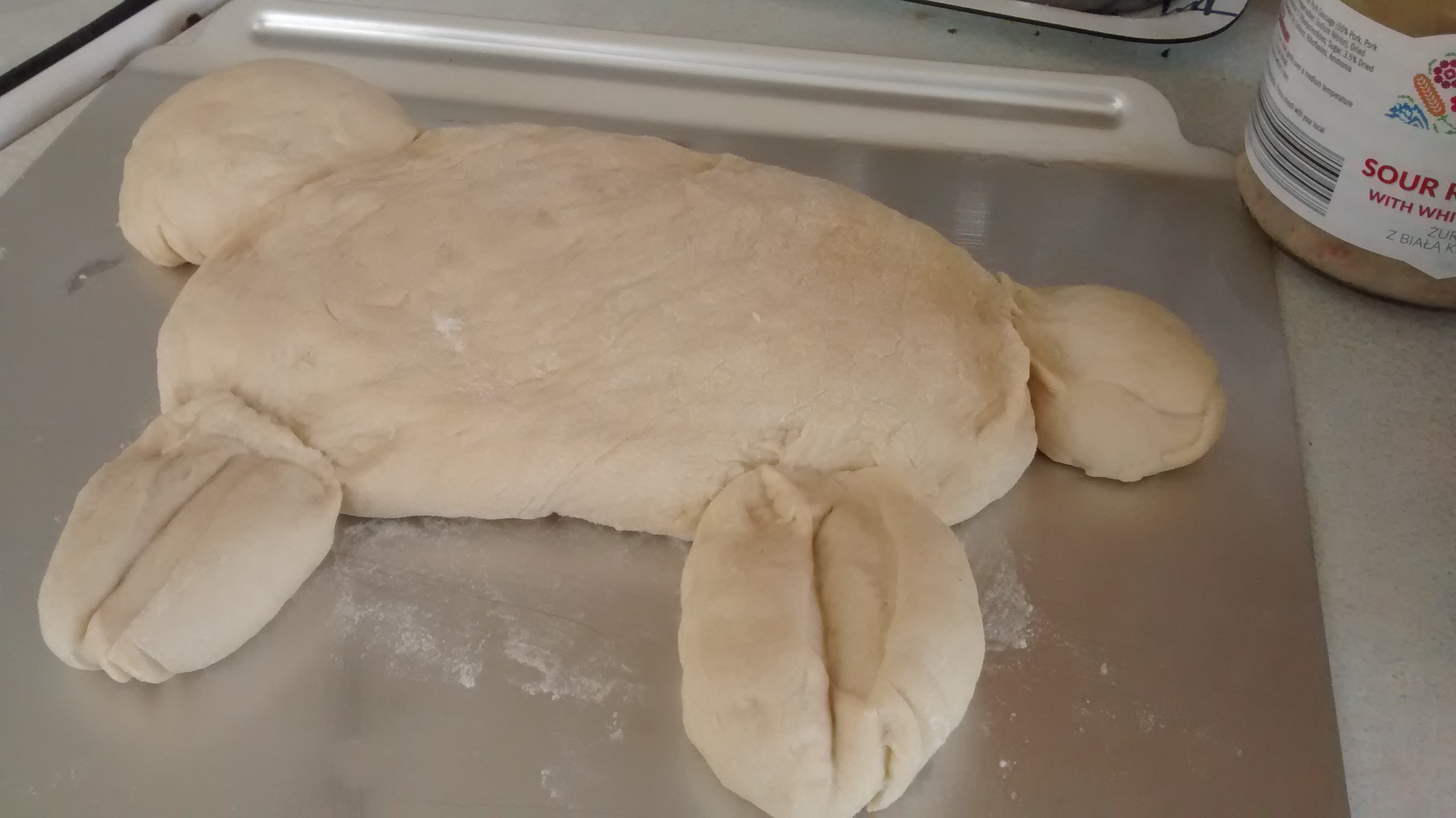
My auntie in America sent me the instructions for making a lamb using bread dough. I think the result is super.
First let me start by trying to explain a little bit of linguistic confusion around the use of the word bread.
The Polish for bread is chleb and is used for rye bread and any bread which contains at least some rye flour.
The word bułka means a loaf and bułeczka means a little loaf or roll (bułeczki – is the plural) and these words are used for soft wheat loaves or rolls.
So bułeczki are what in England are called bread rolls or bread buns.
However the word is also used for sweet dough yeast buns or sometimes small cakes in general.
The following instructions are for an enriched dough for bread rolls or buns – that is a dough with added milk, butter and eggs.
I will write write about sweet yeast buns in the future
A few pointers – learnt over the past few weeks
Learn to be patient – you cannot control the timings exactly with yeast, it depends on the temperature of the room and the flour used and other variables.
Do yeast baking on a day you are planning to be in & have other things to do, but ones you can break off from when needed.
Heat the milk so it is at body temperature – use the finger test – too hot and you will kill the yeast – too cold is okay – it will just take longer.
Strong flour gave me the best results.
Have the dough as wet & soft as you can handle – do not be tempted to add more and more flour as you form the dough at the beginning.
Knead the dough as much as possible – it can be quite relaxing once you get going.
Use the amount of salt as and when stated in the recipe, it gives the bread taste and controls the yeast.
An egg glaze often burns too quickly – I have found an egg white or egg white & water glaze gives a better result.
The Polish recipes I have looked at make a rozczyn – a leaven in the form of a batter or starter to begin with – I have liked using this method very much.
The older Polish recipes use fresh yeast. I have used dried yeast and had very good results. (I have not tried using easy bake yeast for this recipe).
Basic Enriched Bread Dough
Ingredients
Leaven
250ml tepid milk
25g fresh yeast or 15g dried yeast(1 tablespoon)
1 tbs sugar
100g strong flour
Dough
400g strong flour
1 egg
1 tsp salt
50g butter or margarine or 2 tbs vegetable oil
Wash
1 egg white or
1egg white & 1 tbs water
Optional
Poppy seeds
Sesame seeds
Method
Mix the yeast and sugar with the warmed milk – if using dried yeast leave for a few minutes to let the yeast start to work.
Put the 100g of flour into a bowl and add the milk and yeast mixture, mix it all in to form a batter.
Cover the bowl with a tea towel or cling-film and leave it to rise.
Put the 400g of flour in a large bowl.
Whisk the egg with the salt.
Add the leaven and the egg mixture to the flour and bring it together by hand to from a ball. You might have to add extra milk to get a soft ball – try not to add more flour.
In a small pan melt the butter and leave it cool
Turn the dough out onto a firm surface and knead until you have a nice smooth ball – one of my books says do this for 30 minutes! – knead it for at least 10 minutes.
Now this is the hardest part!
Flatten out the dough and pour the butter or oil over it.
Then incorporate the butter or oil into the dough and knead it until once again you have a nice smooth ball.
Place the dough into a clean bowl and with a tea towel or cling-film and leave it to double in size.
Pre-heat the oven to GM5 – 200°C
Grease a large baking sheet.
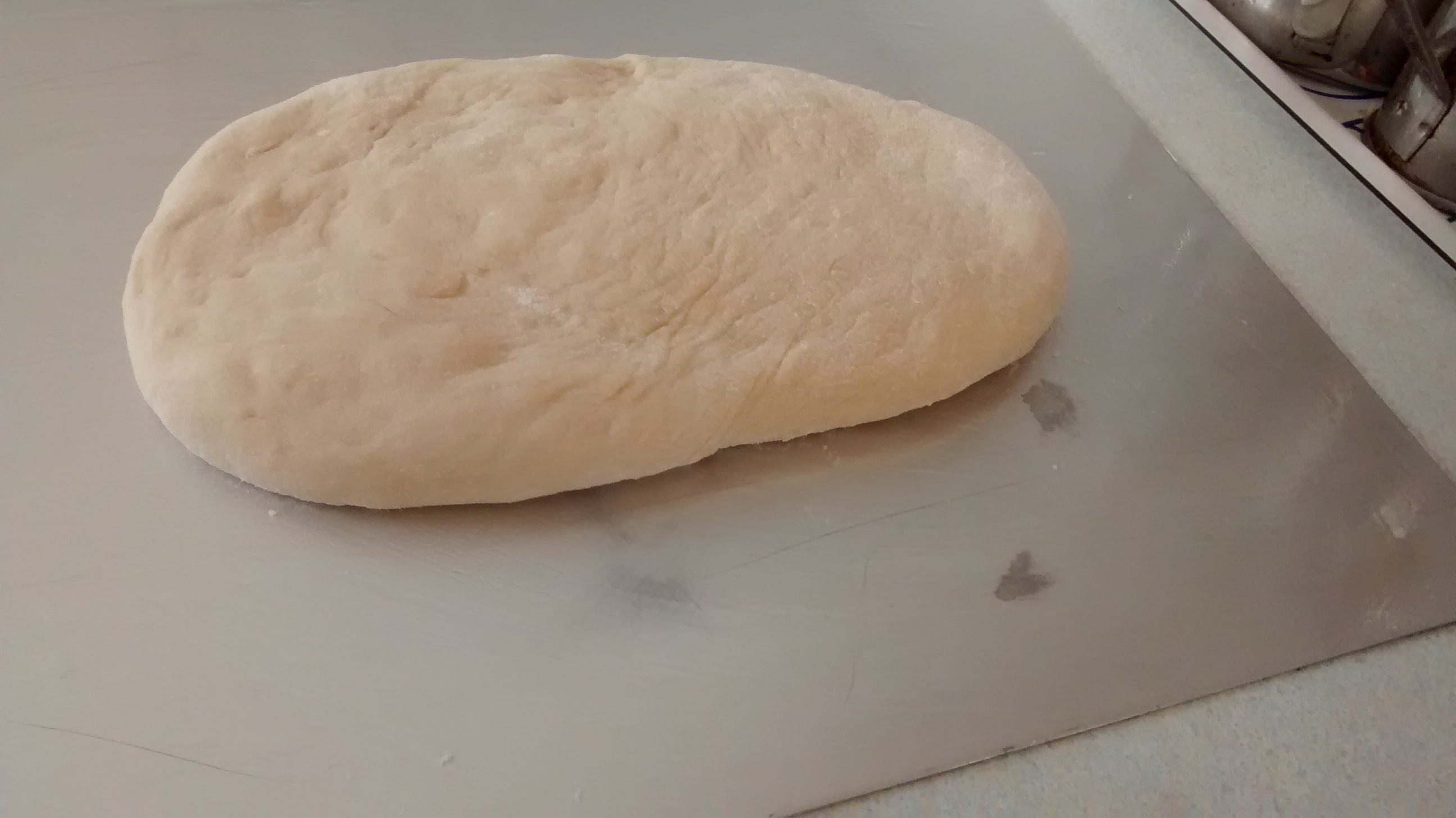
Take the dough and on a floured surface roll it out into a rectangle.
The next part is to shape the dough, brush with an egg white wash and sprinkle with seeds as desired and bake for 15 minutes.
Three Traditional Shapes
Bułeczki – Kajzerki – Rogaliki
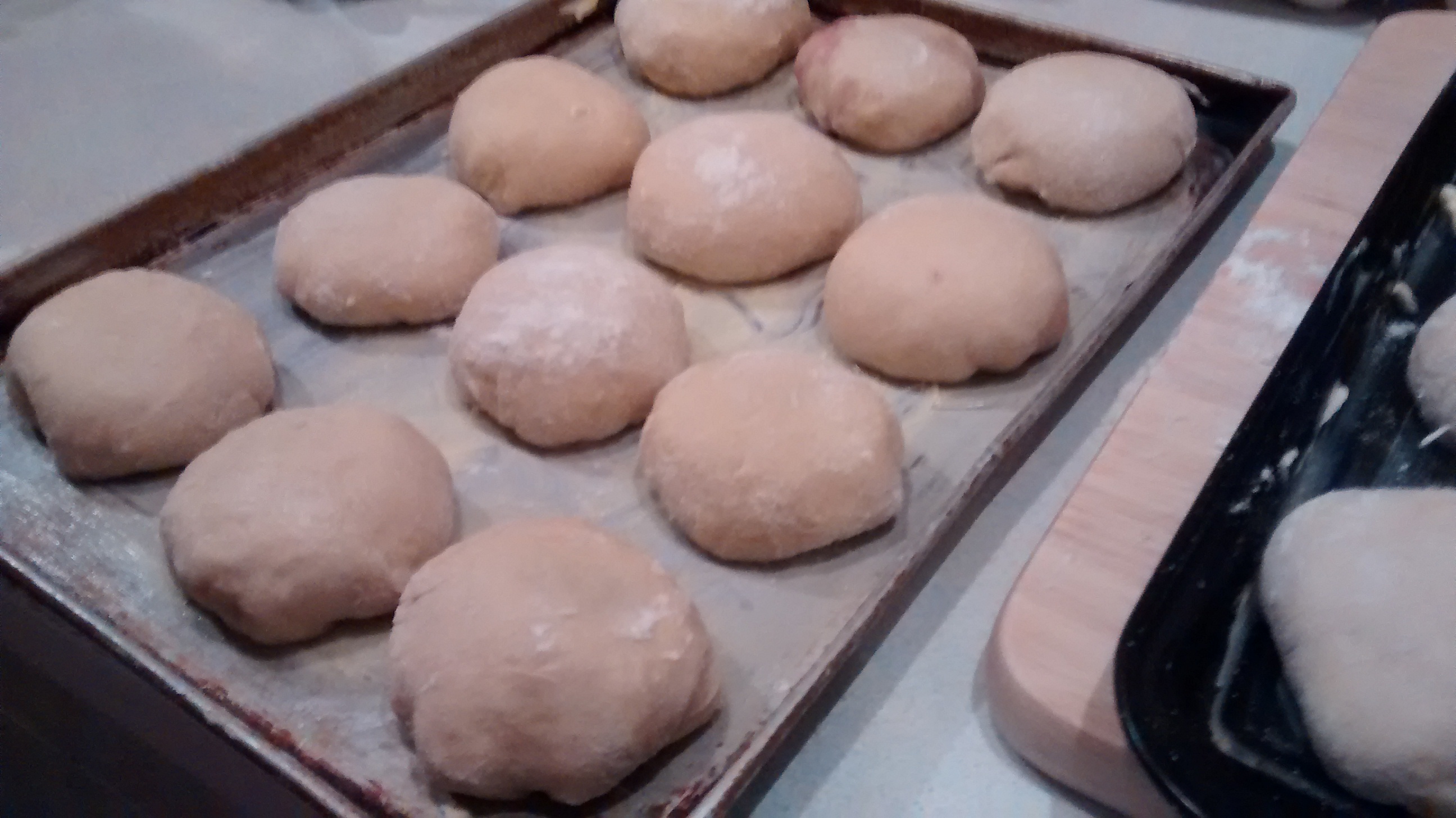
Bułeczki – Round Buns
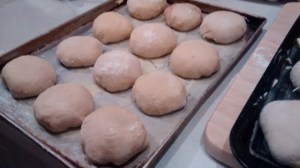
This amount of dough will make 12 buns.
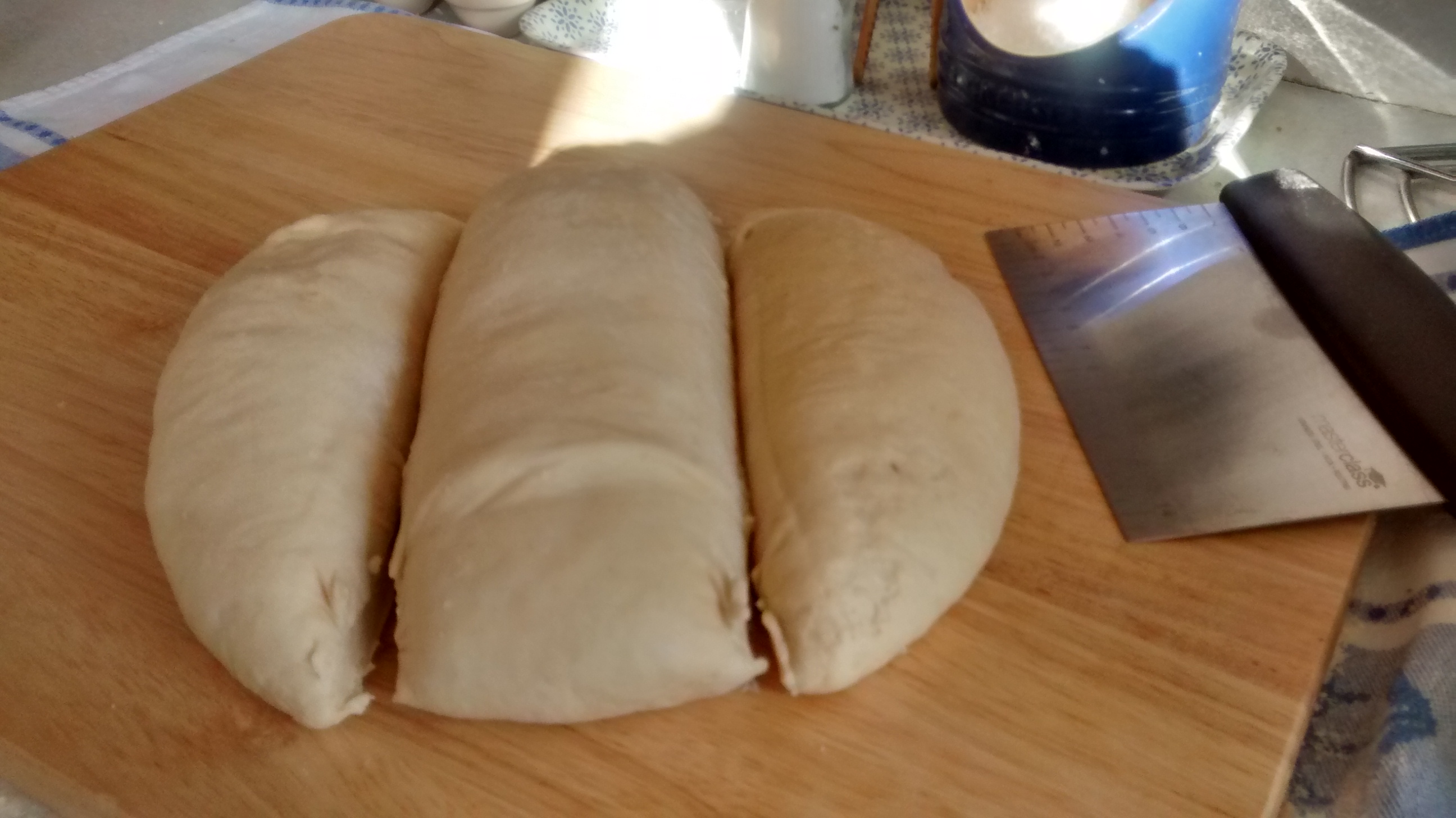
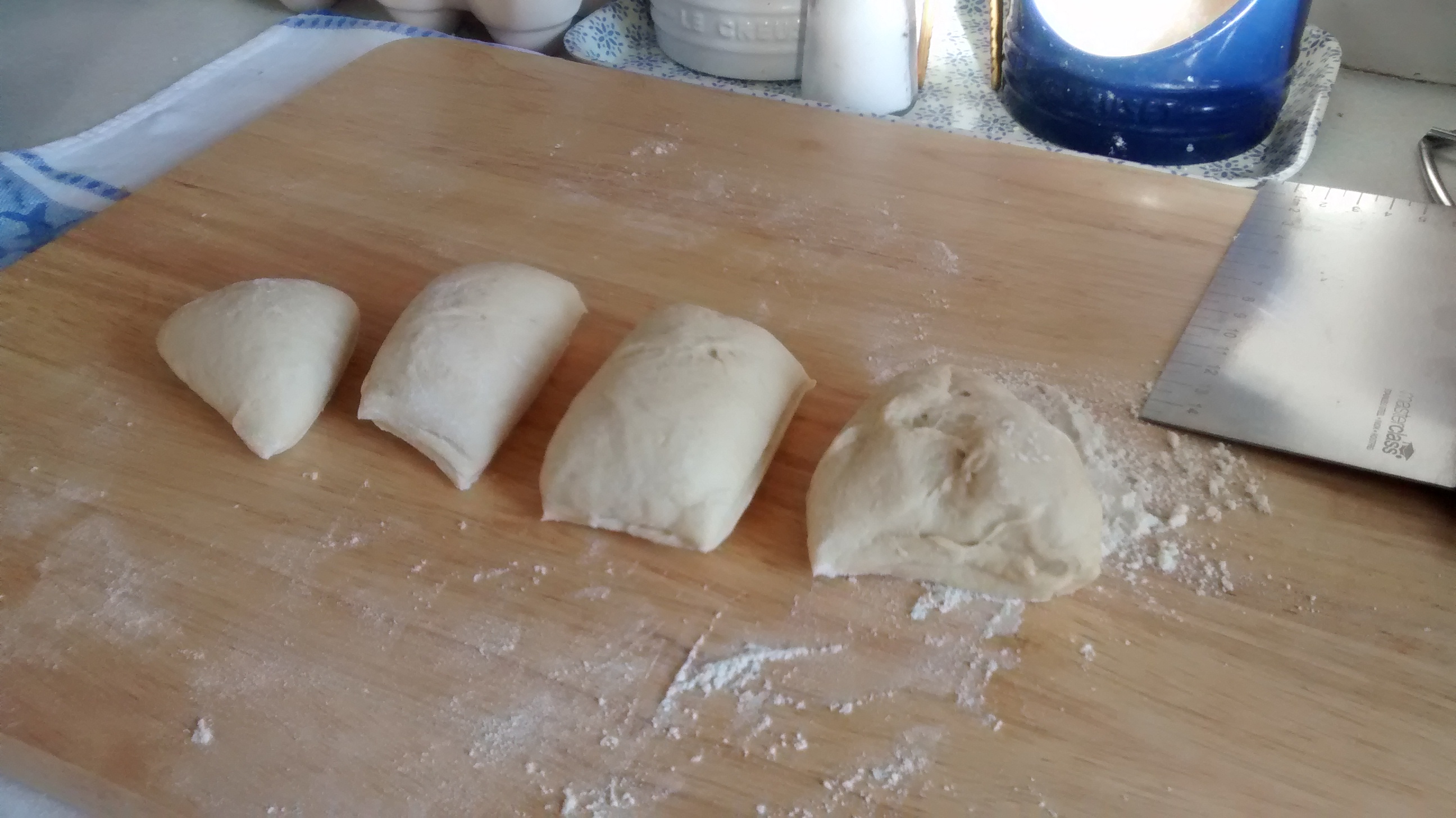
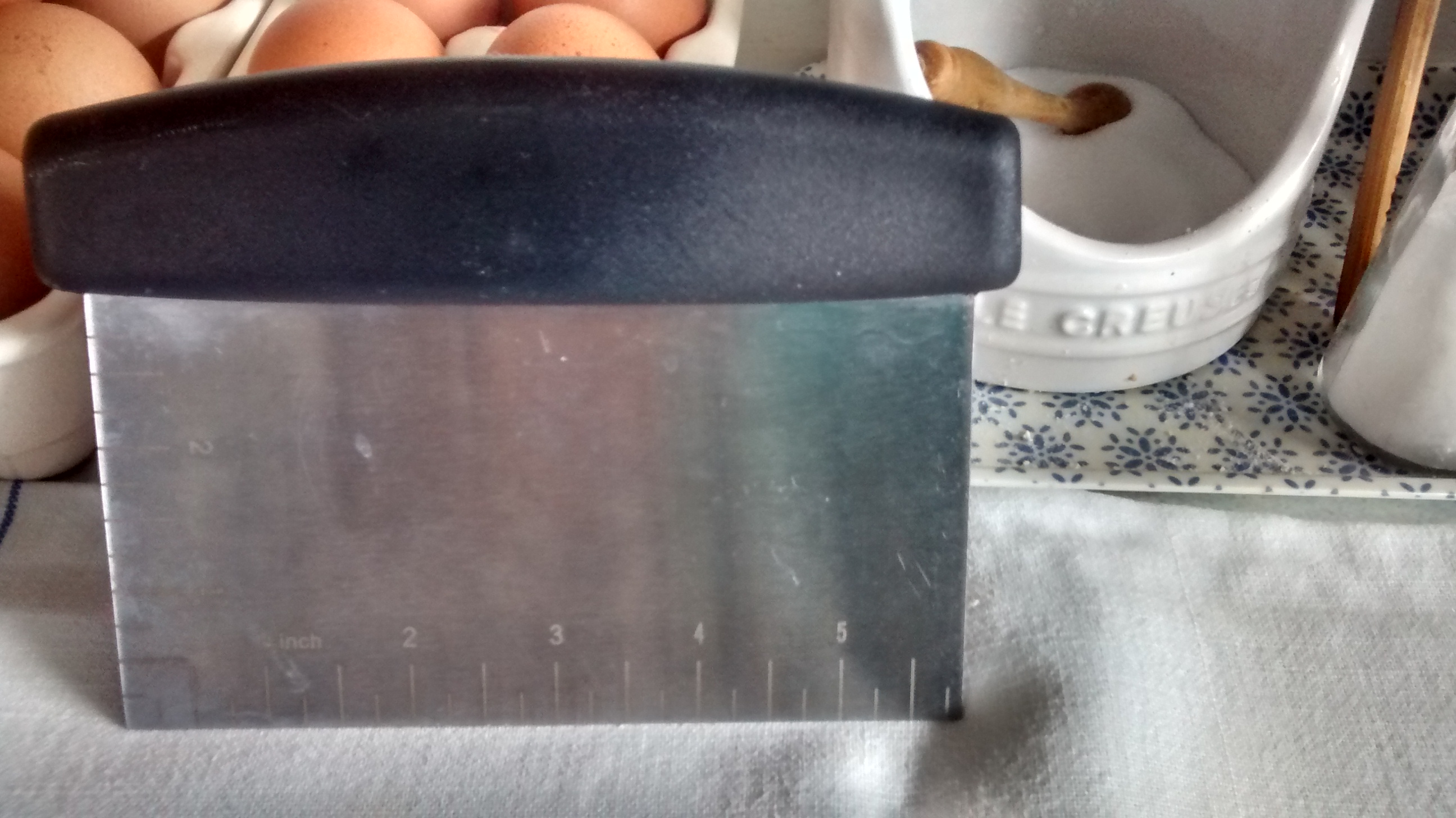
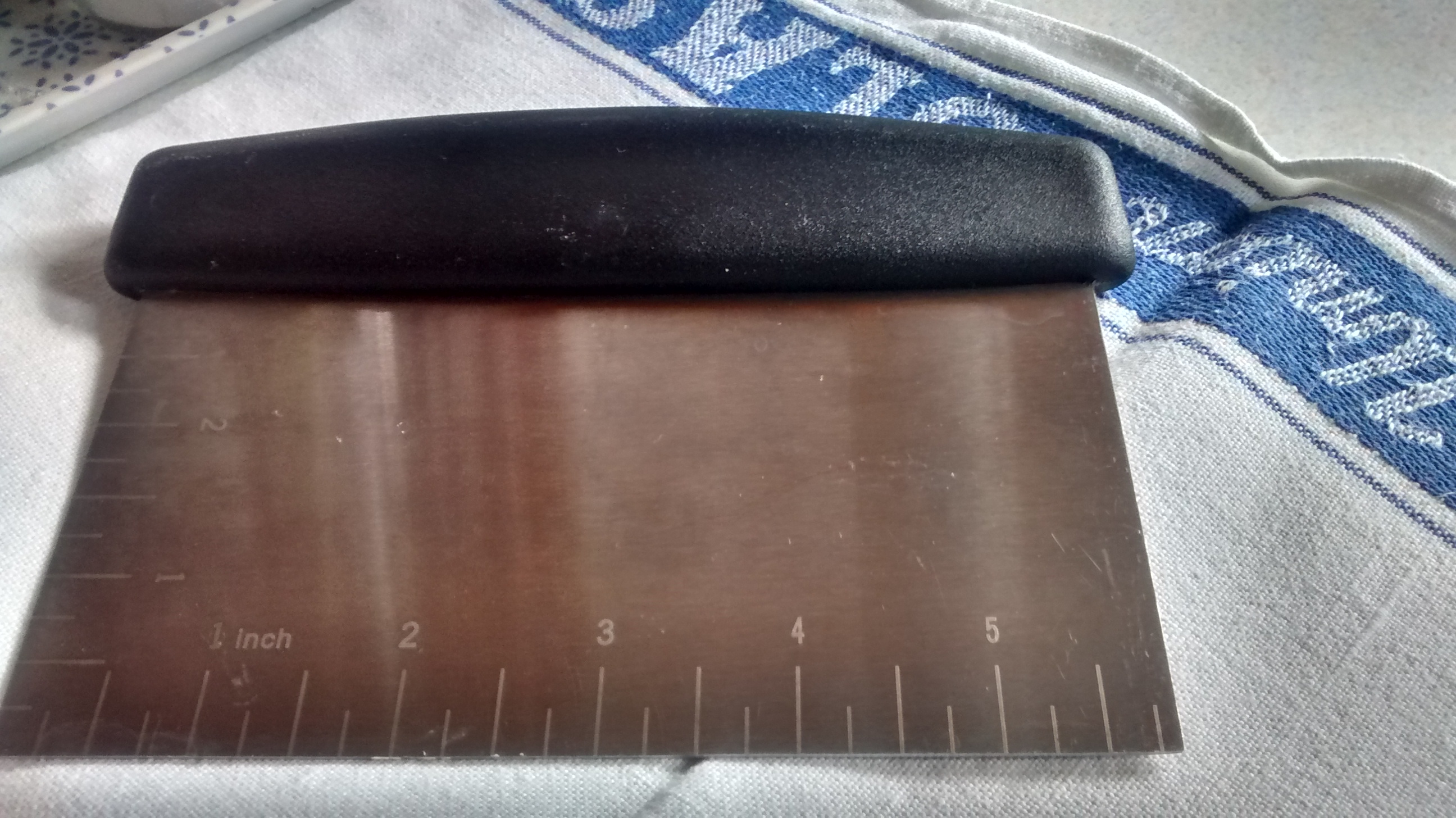
Use a sharp knife or a dough cutter to divide the dough.
Stainless Steel Dough Cutter
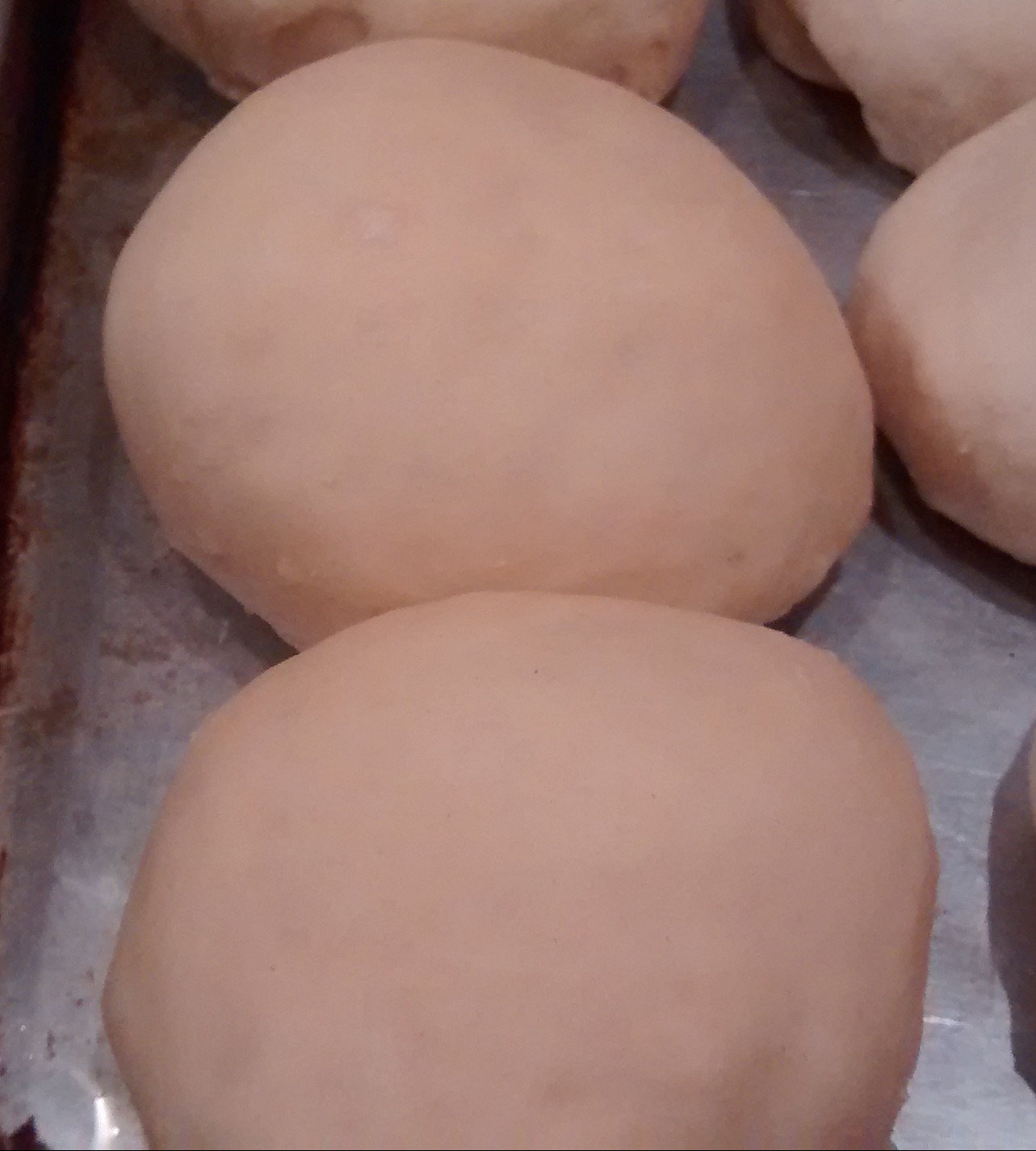
Divide the dough into 2, then each half divide into 2 again. Then divide each piece into 3 equal pieces so giving you 12 pieces. Roll each piece of dough in your hands to make a smooth round ball. Place these on the greased baking sheet with space between them for them to rise. Cover loosely with a cloth and leave them to rise.
Pre-heat the oven to GM5 – 200°C
Make an egg white wash by whisking an egg white in a little bowl or an egg white and 1 tablespoon of water.
Use a pastry brush to brush the tops of the buns.
Sprinkle with poppy or sesame seeds if desired.
Bake for around 15 minutes until they are golden brown – check a little earlier and move them lower in the oven or lower the temperature if the tops are beginning to burn.
Kajzerki
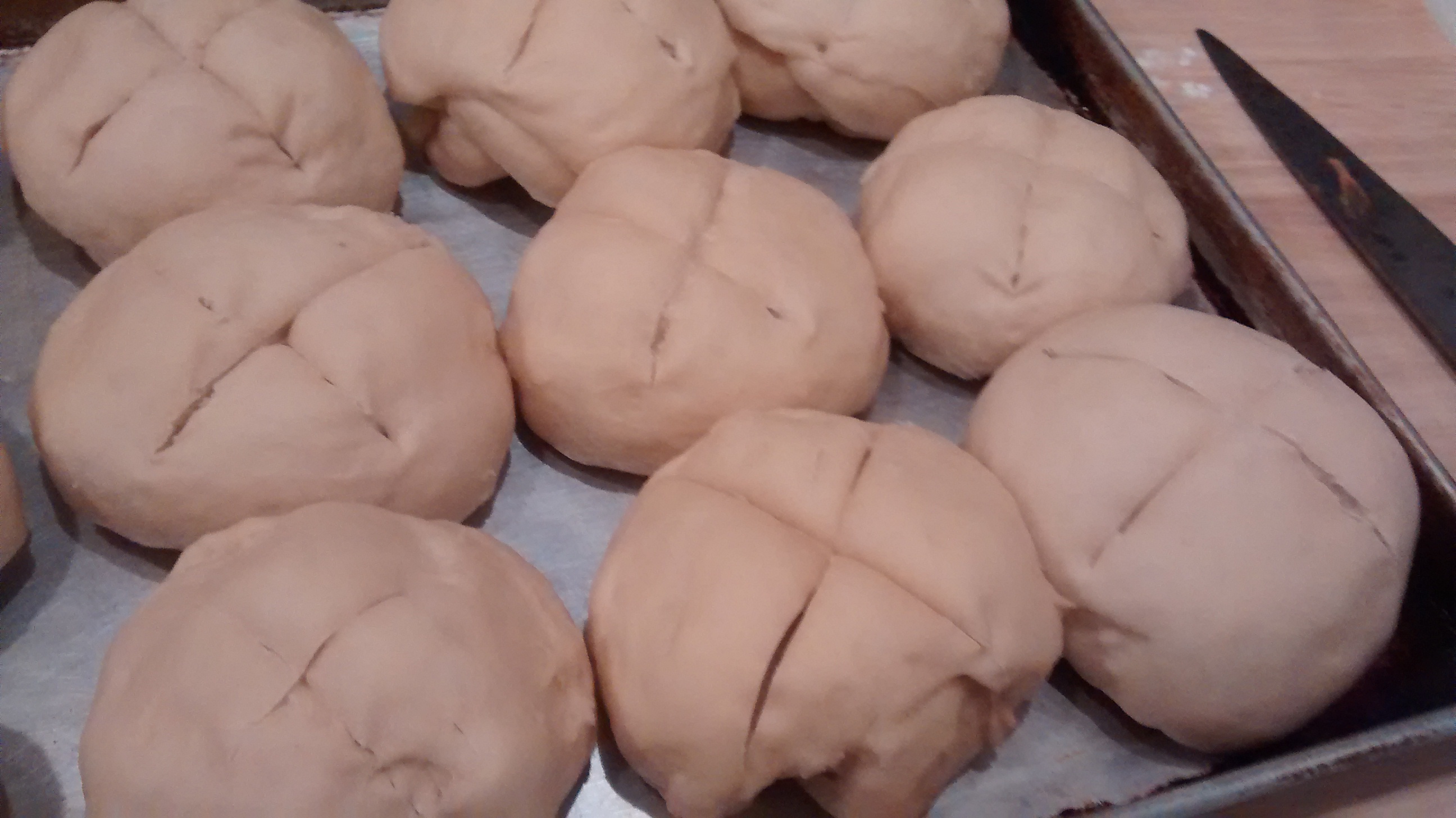
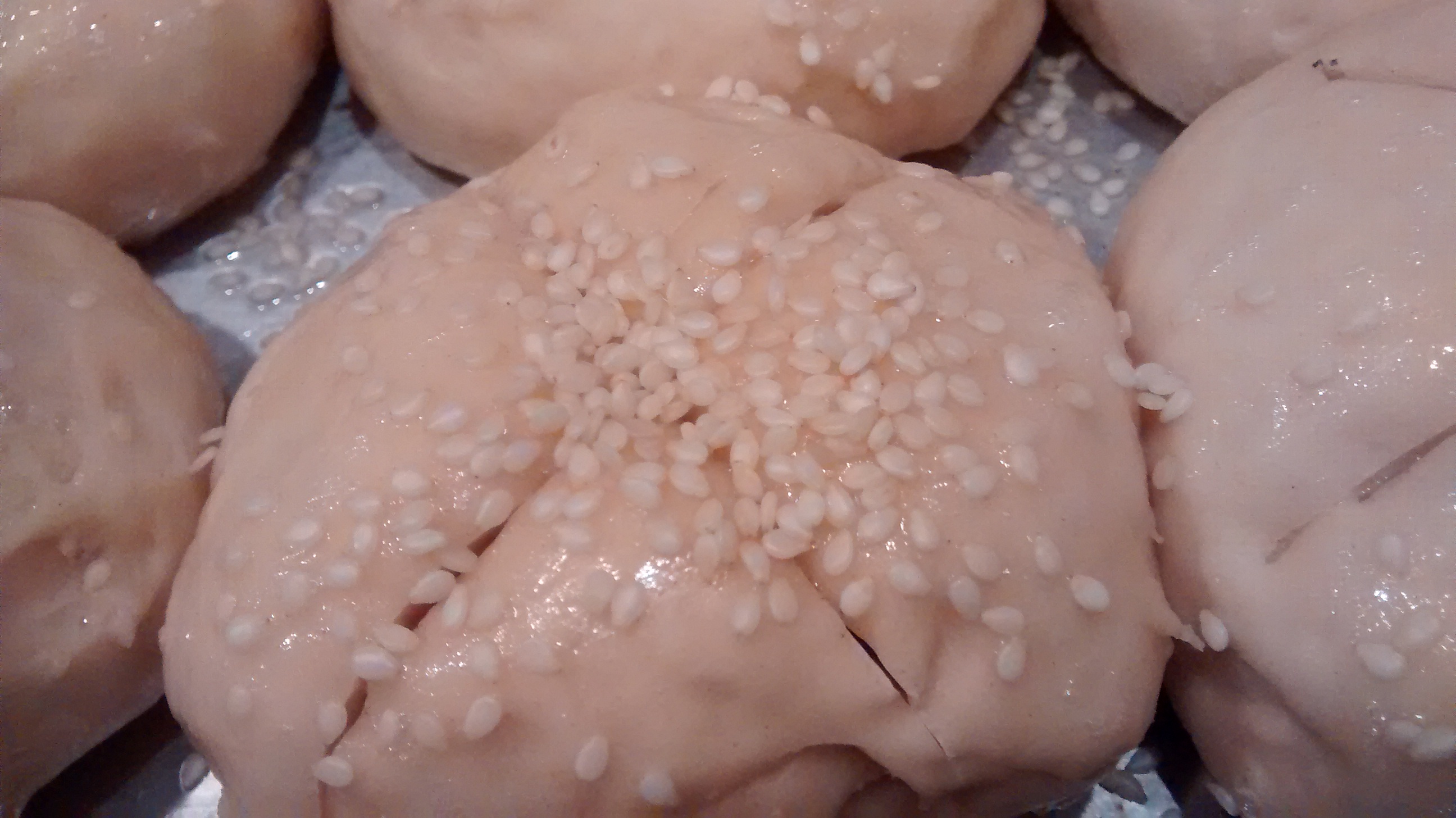
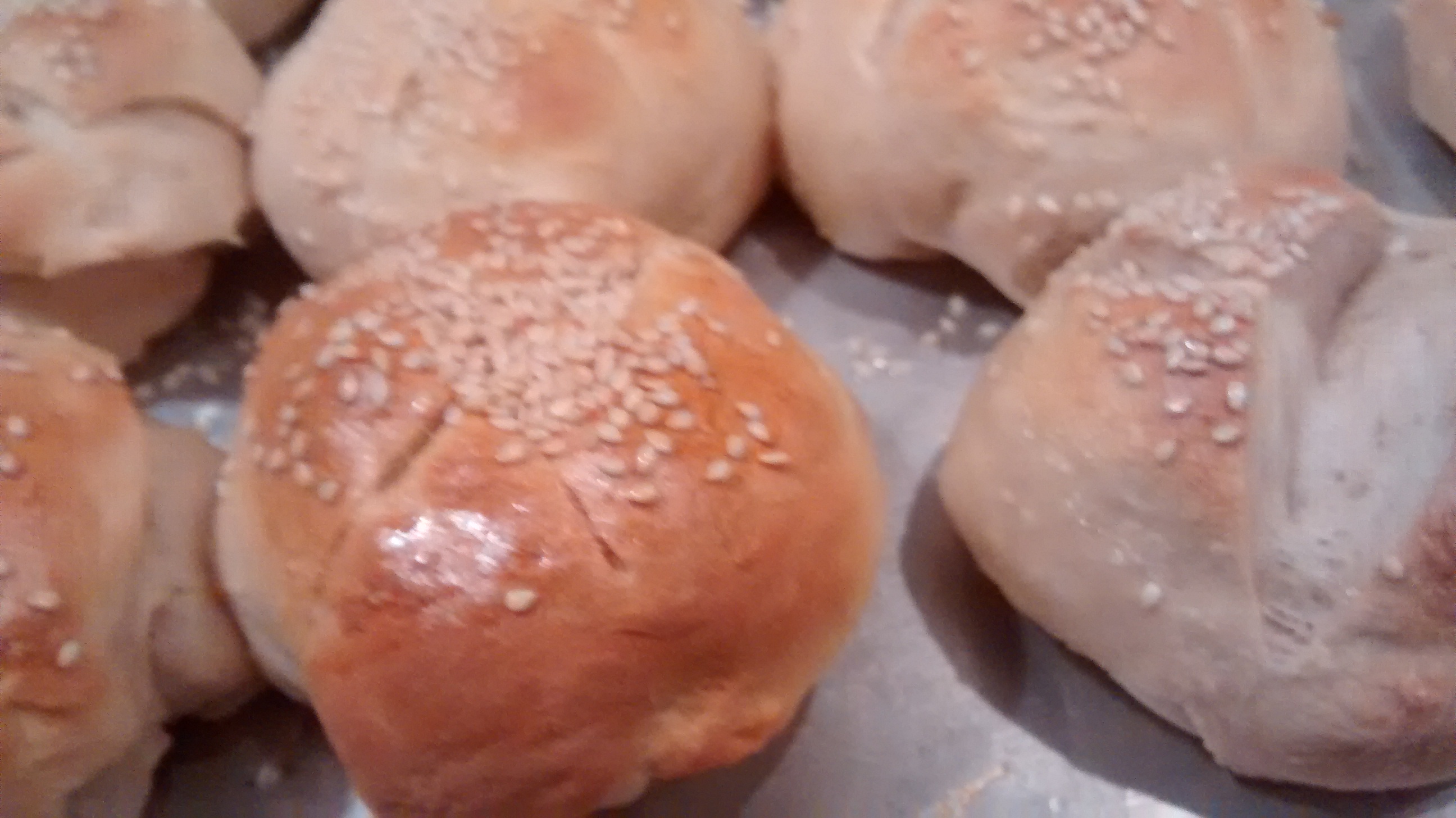
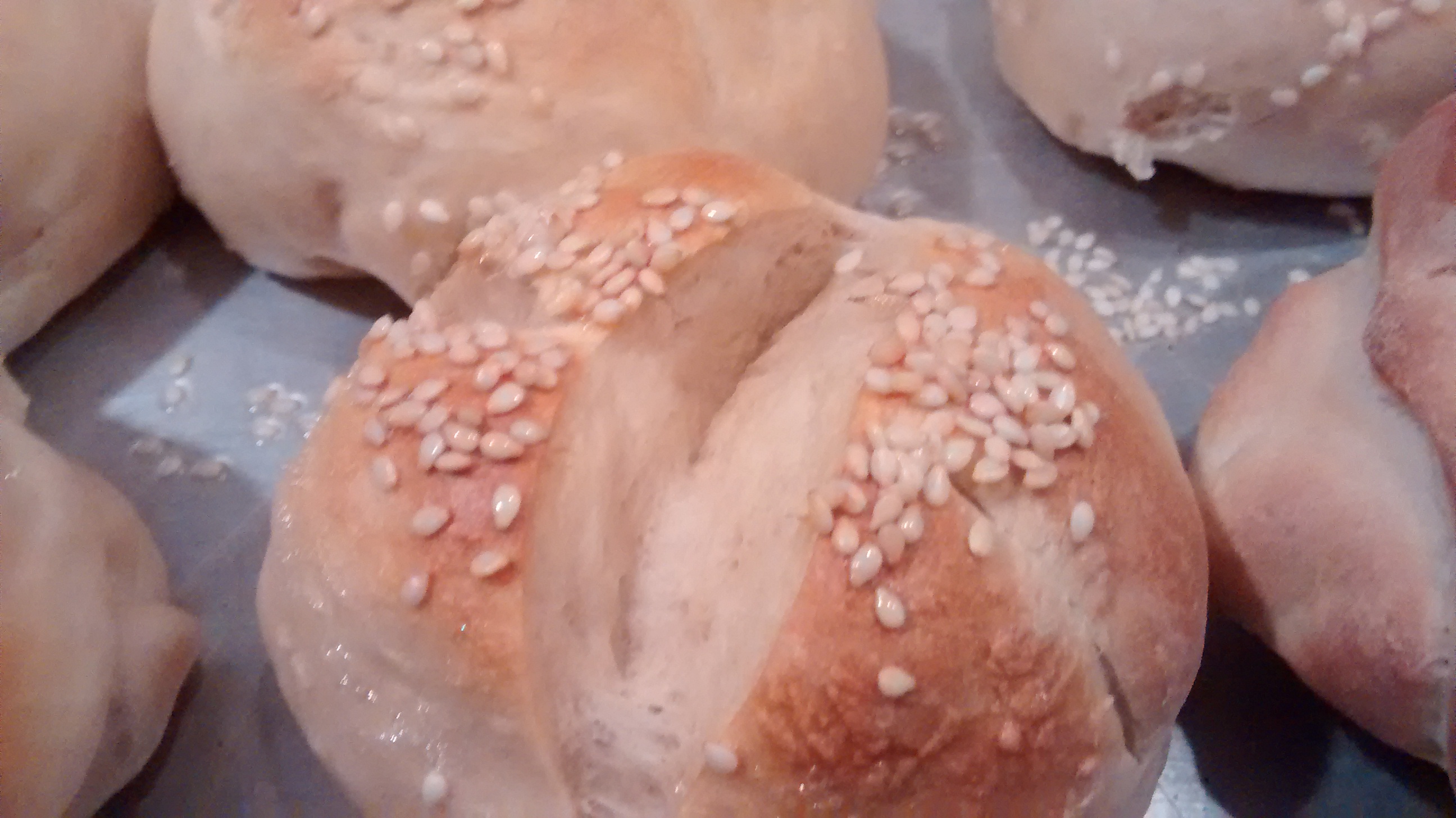
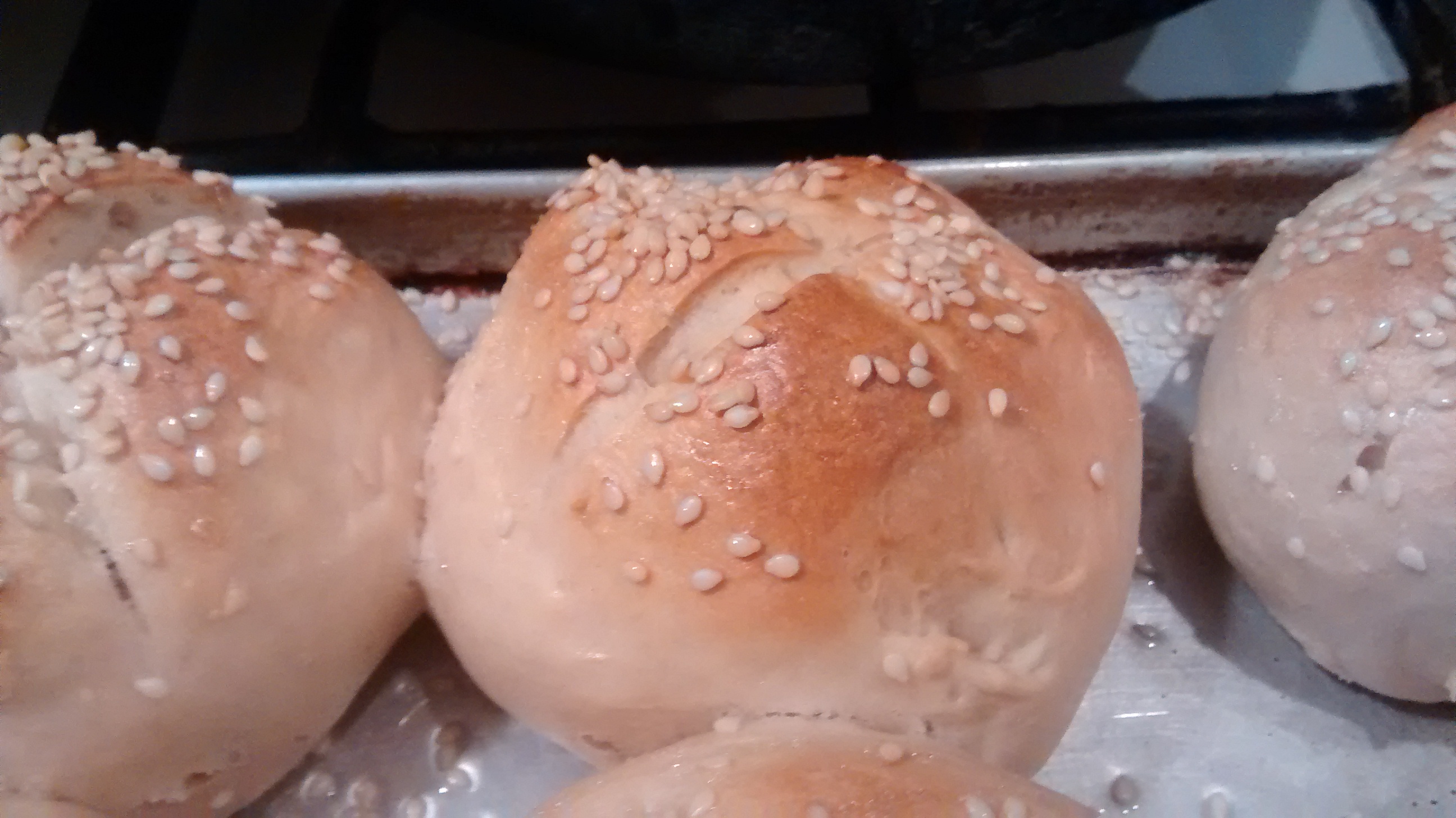
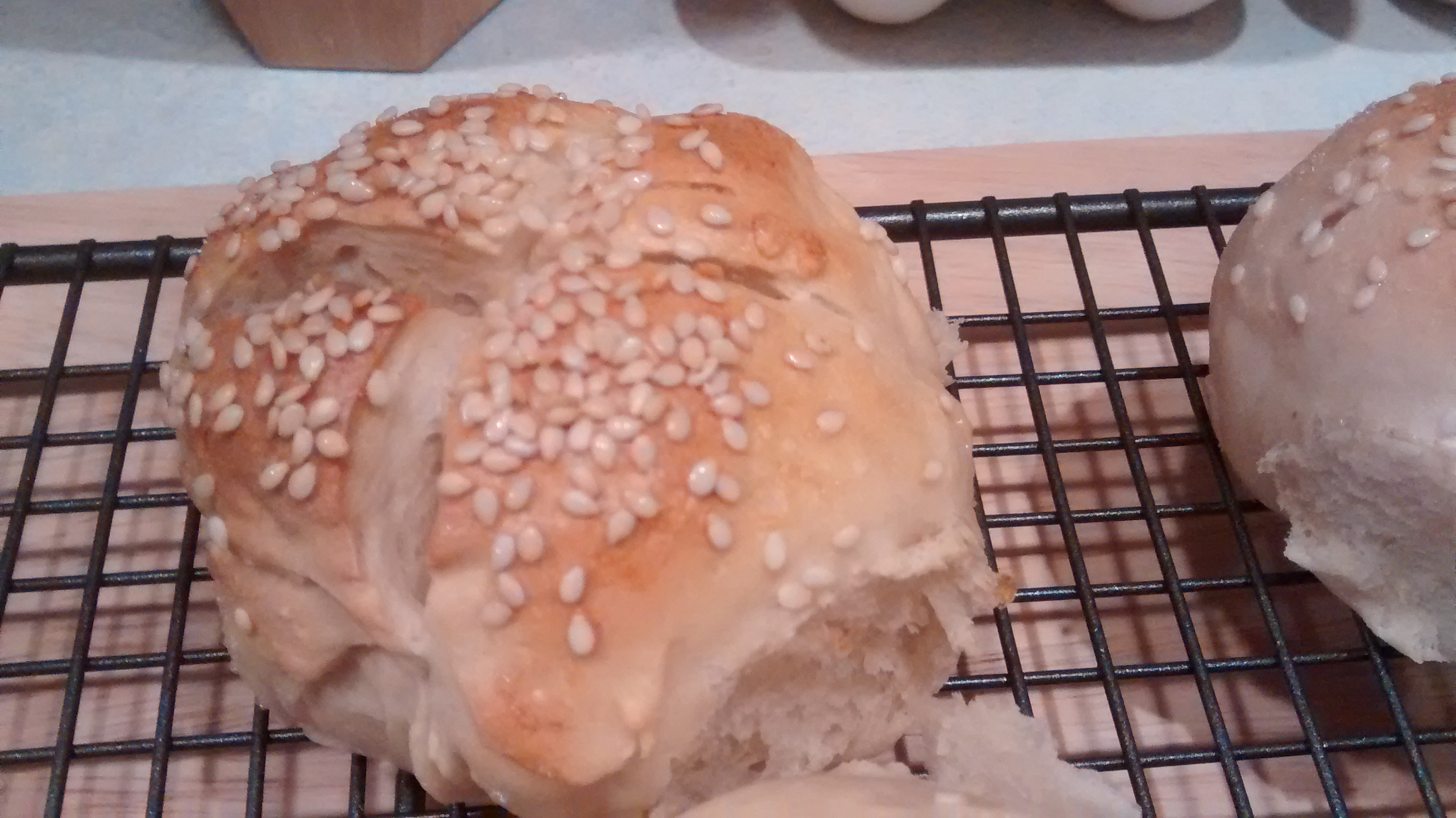
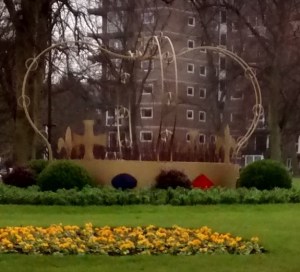
These are Kaiser rolls and originated in Austria – they are meant to look like a crown for the Kaiser. Cut a cross on the top of the dough using a sharp knife – this expands as the dough rises – or you can make 3 cuts to make a 6 pointed star. However the traditions Kaiser roll does in fact have a 5 point cut at the top.
Make 12 buns as in the instructions above
Cut a cross in the top of each bun – cover them with a cloth and leave them to rise.
Pre-heat the oven to GM5 – 200°C
Make an egg white wash by whisking an egg white in a little bowl or an egg white and 1 tablespoon of water.
Use a pastry brush to brush the tops of the buns.
Sprinkle with poppy or sesame seeds if desired.
Bake for around 15 minutes until they are golden brown – check a little earlier and move them lower in the oven or lower the temperature if the tops are beginning to burn.
A couple of days after making these rolls I went to Harrogate and saw this crown!
Rogaliki – Crescent Rolls
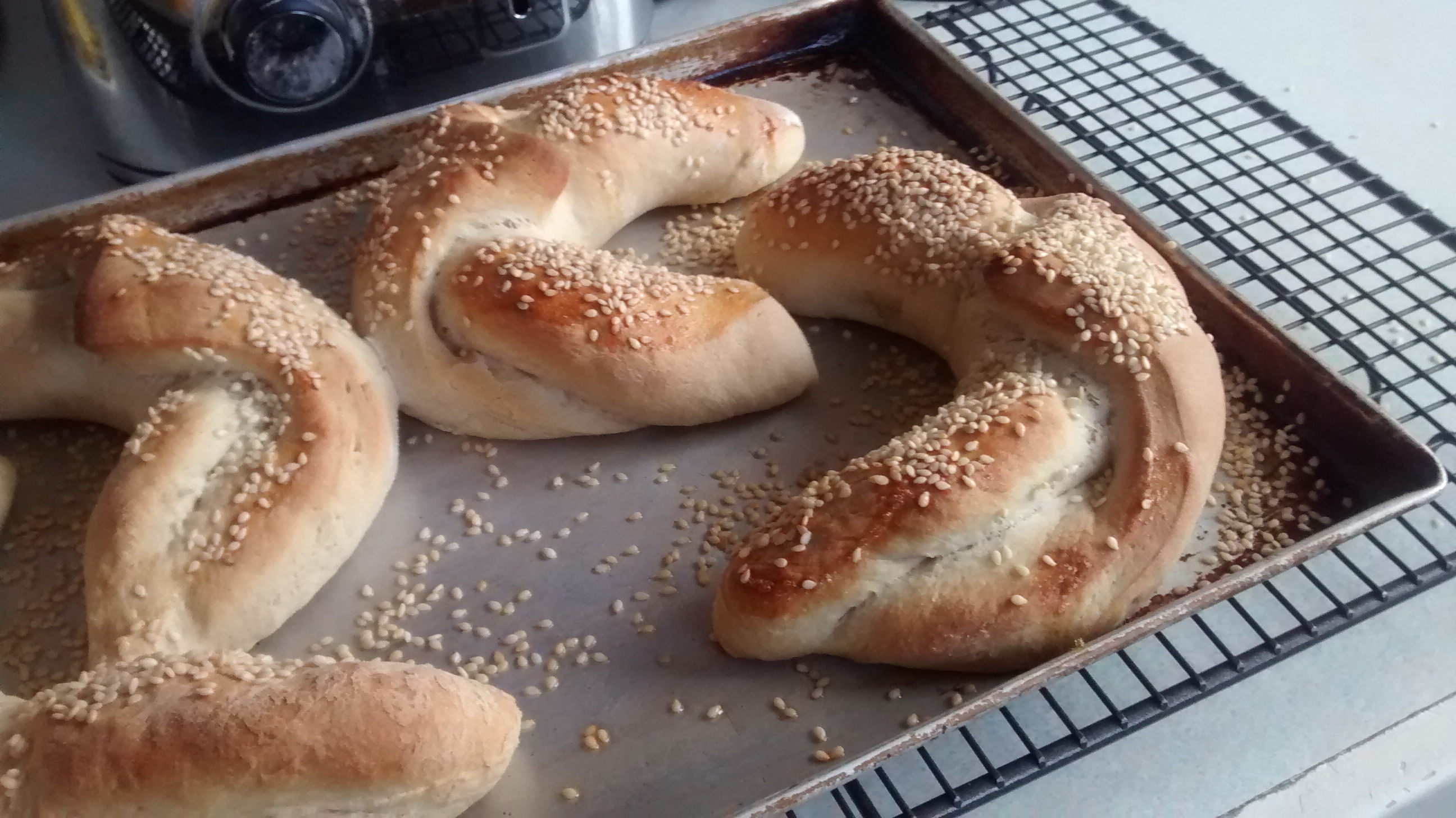
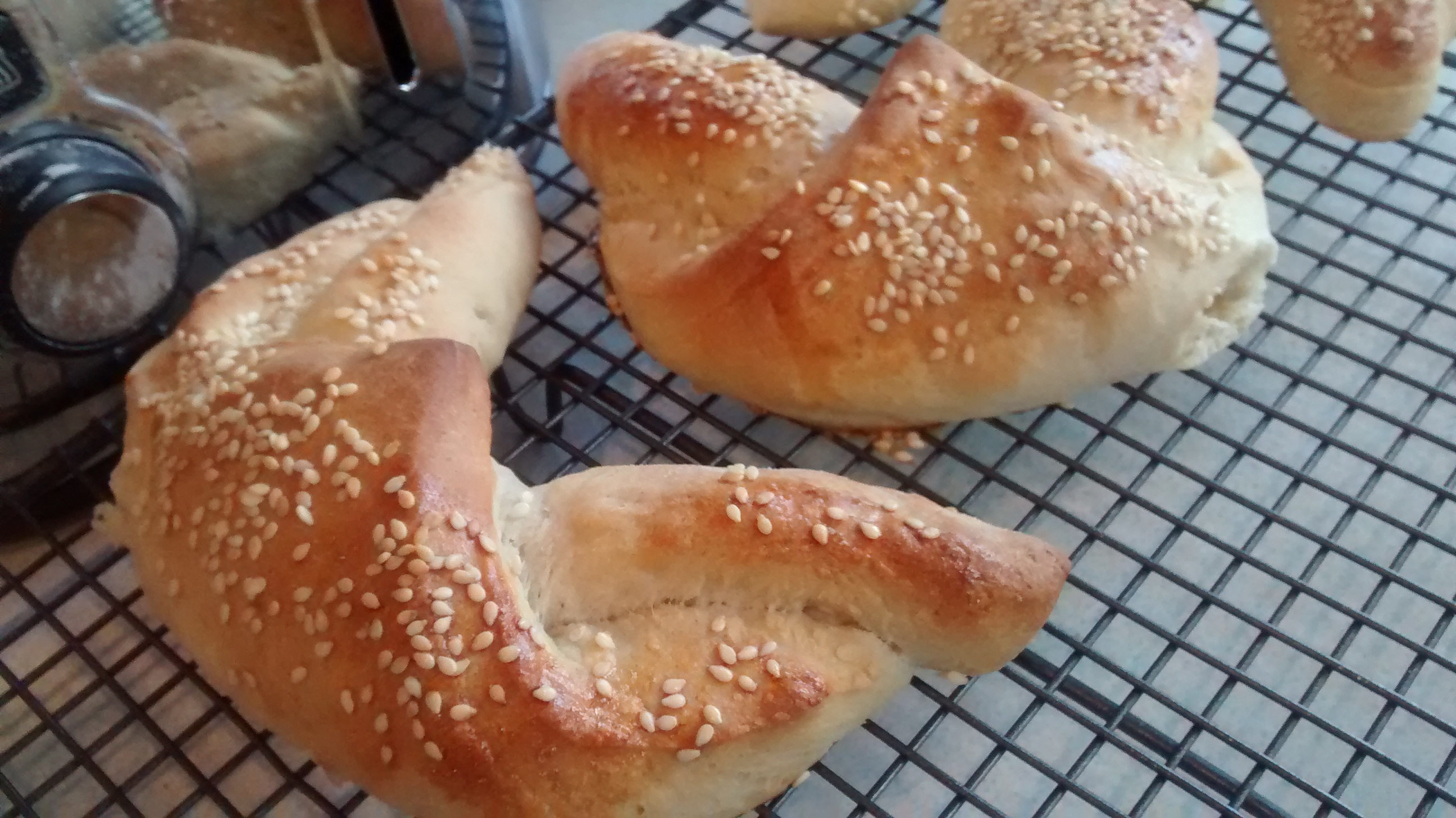
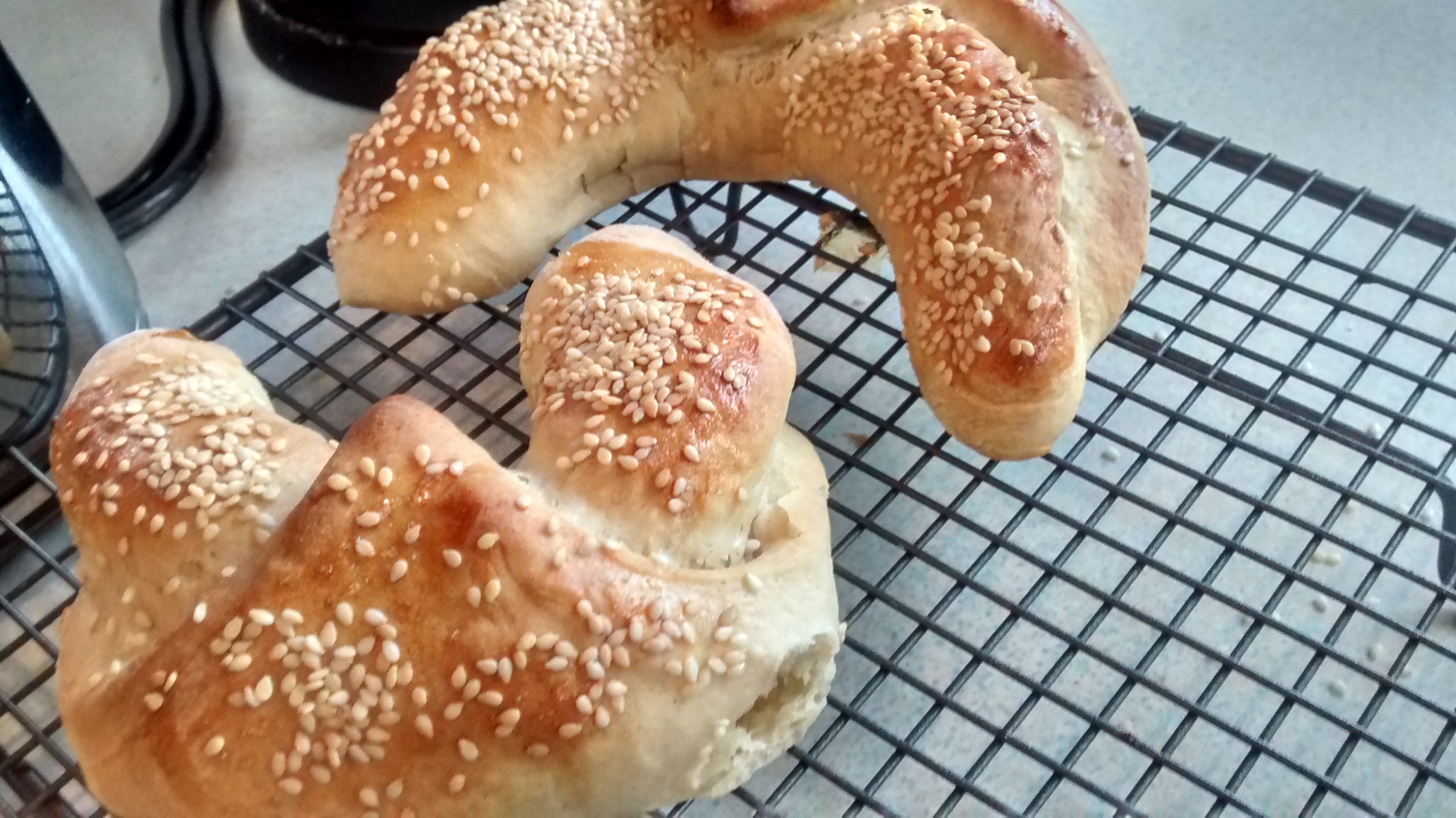
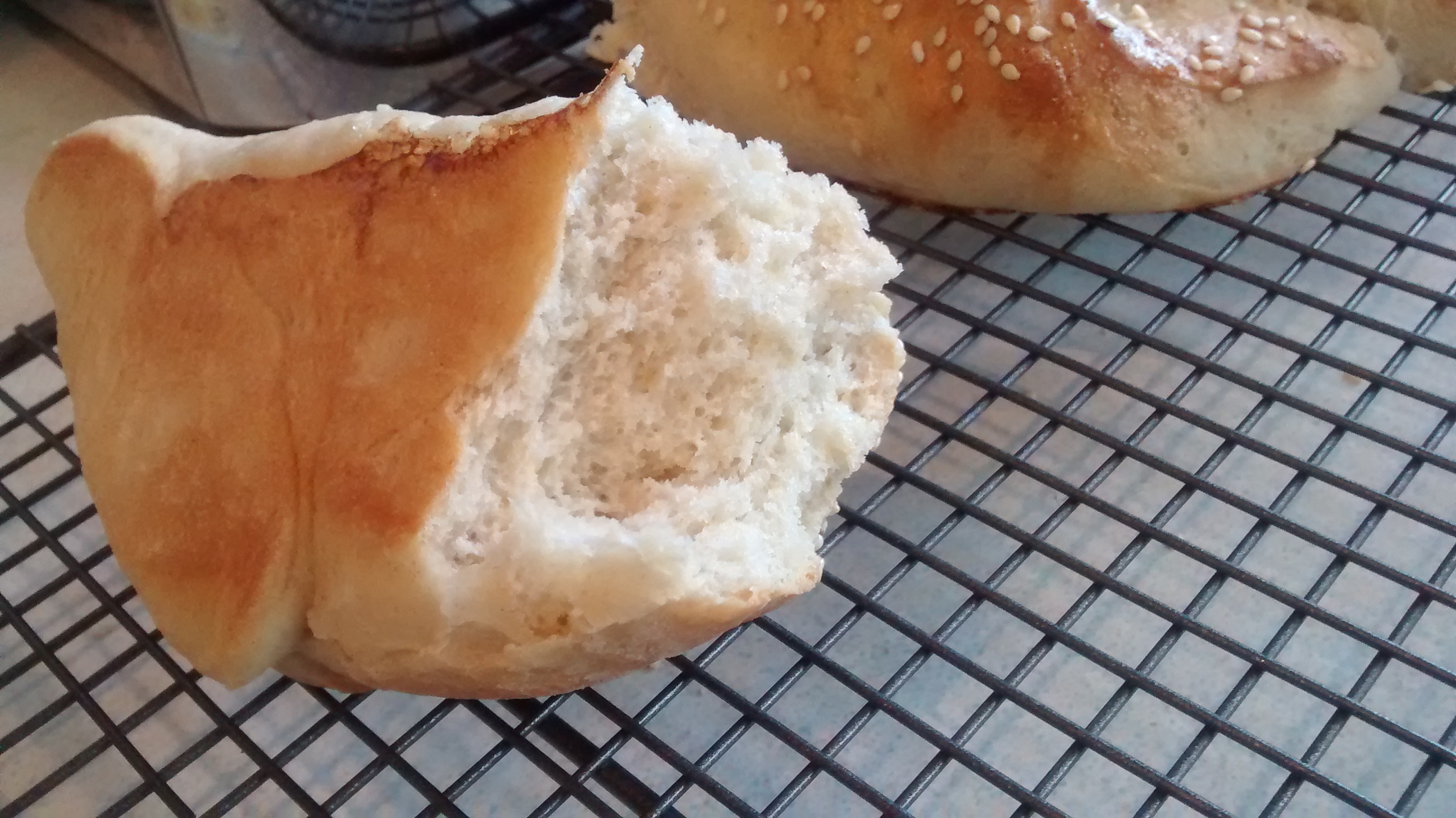
Rogaliki means little horns and these rolls are made into a crescent shaped which look like horns.
This amount of dough makes 8 rolls and you will need 2 greased baking sheets.
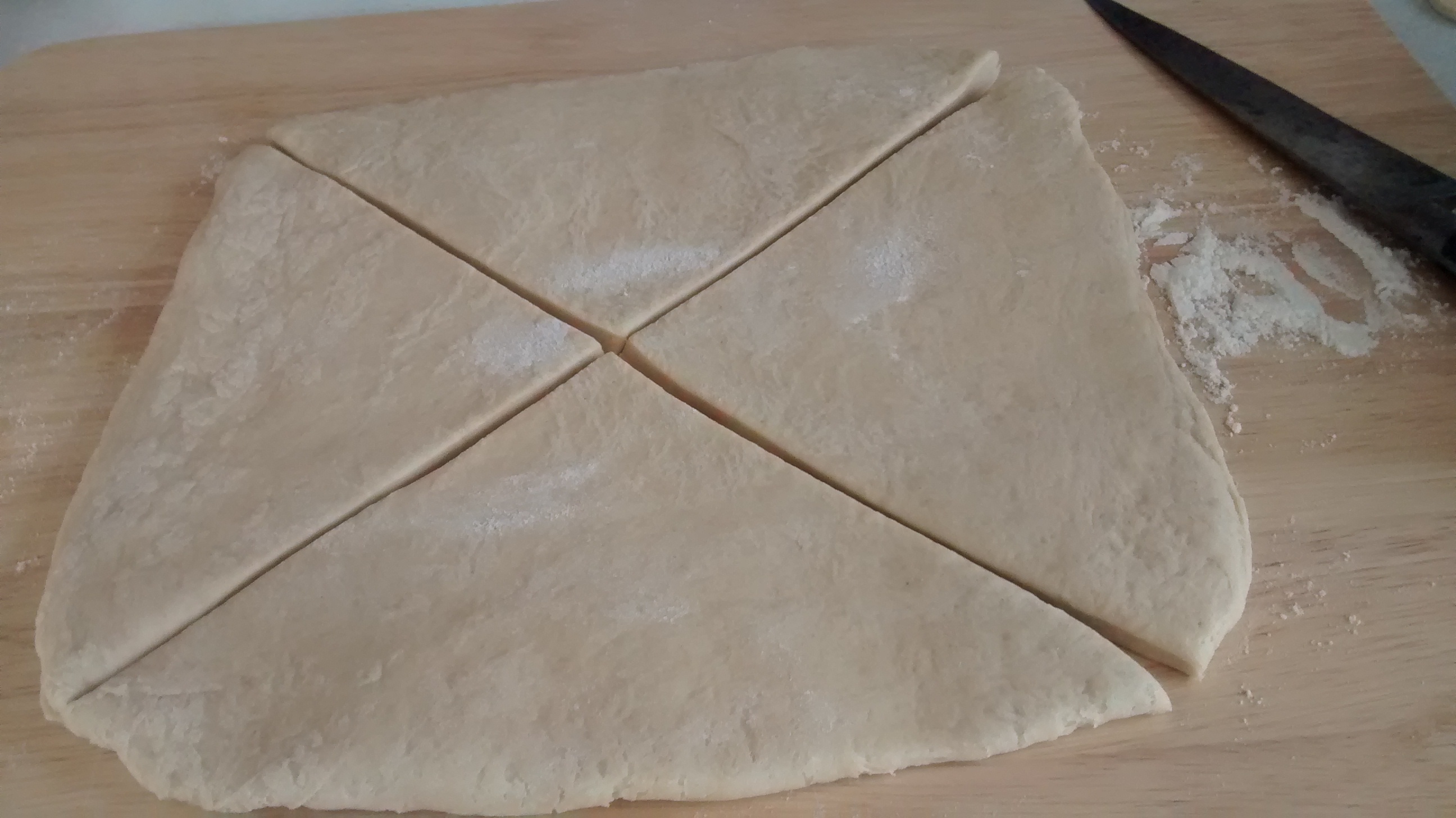
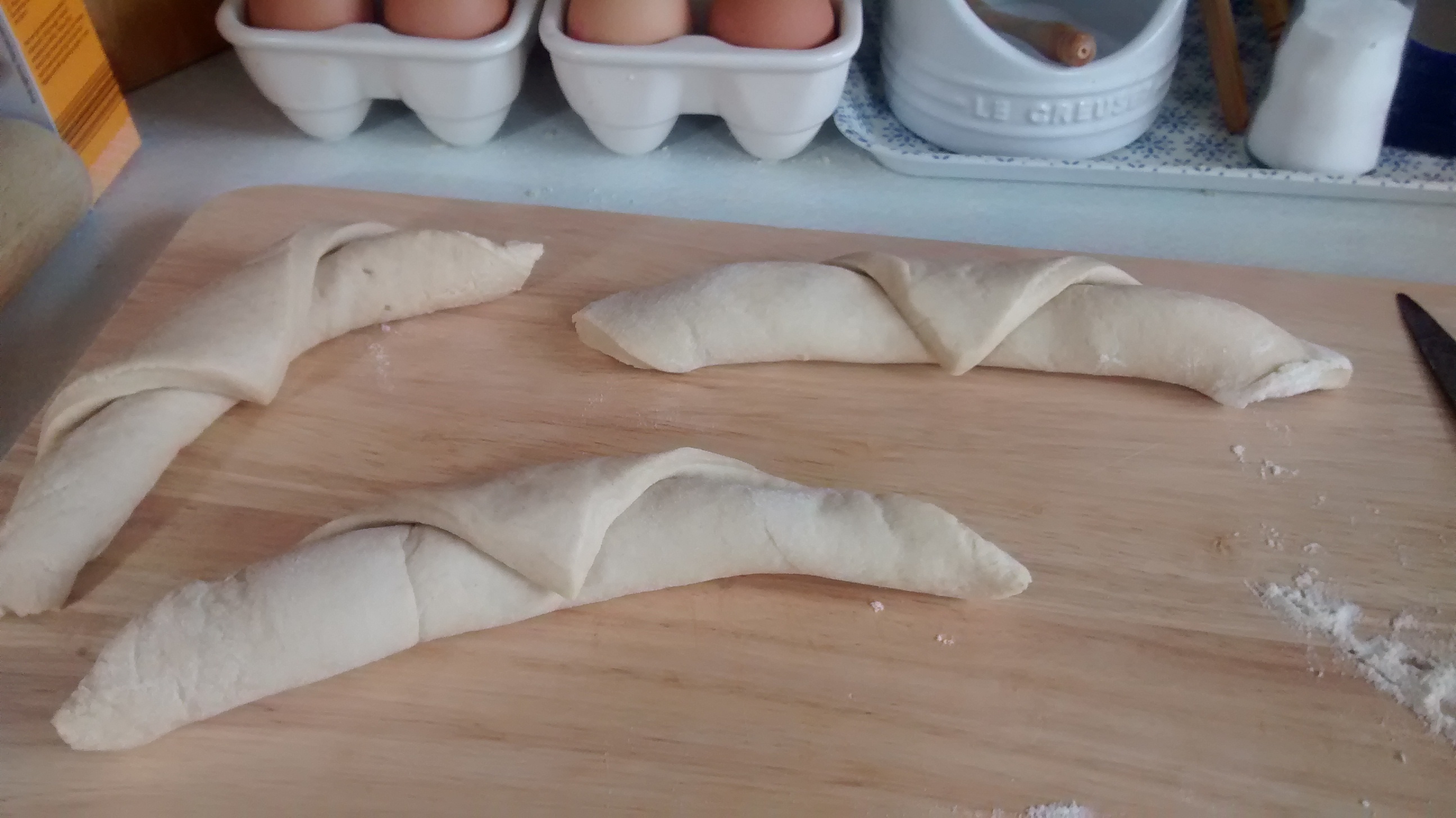
Take the dough and divide it into 2, take each piece separately and roll it out into a rectangle, as thinly as possible, and cut this diagonally across to make 4 triangles.
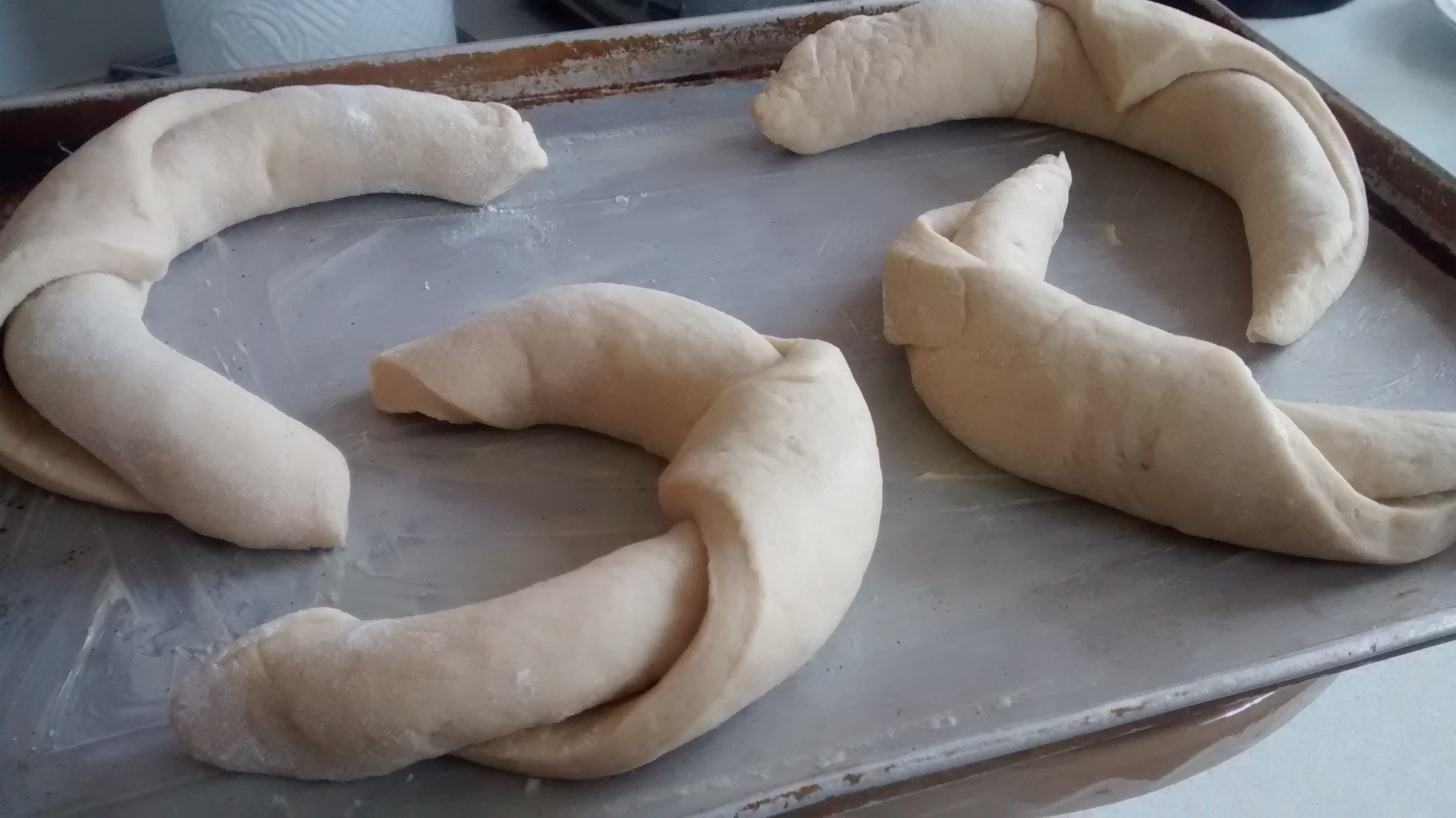
Starting with the long end roll up each piece ending with the point at the top. Curve the shape around to make a crescent shape.
Place these on the greased baking sheet with space between them. Cover loosely with a cloth and leave them to rise.
Pre-heat the oven to GM5 – 200°C
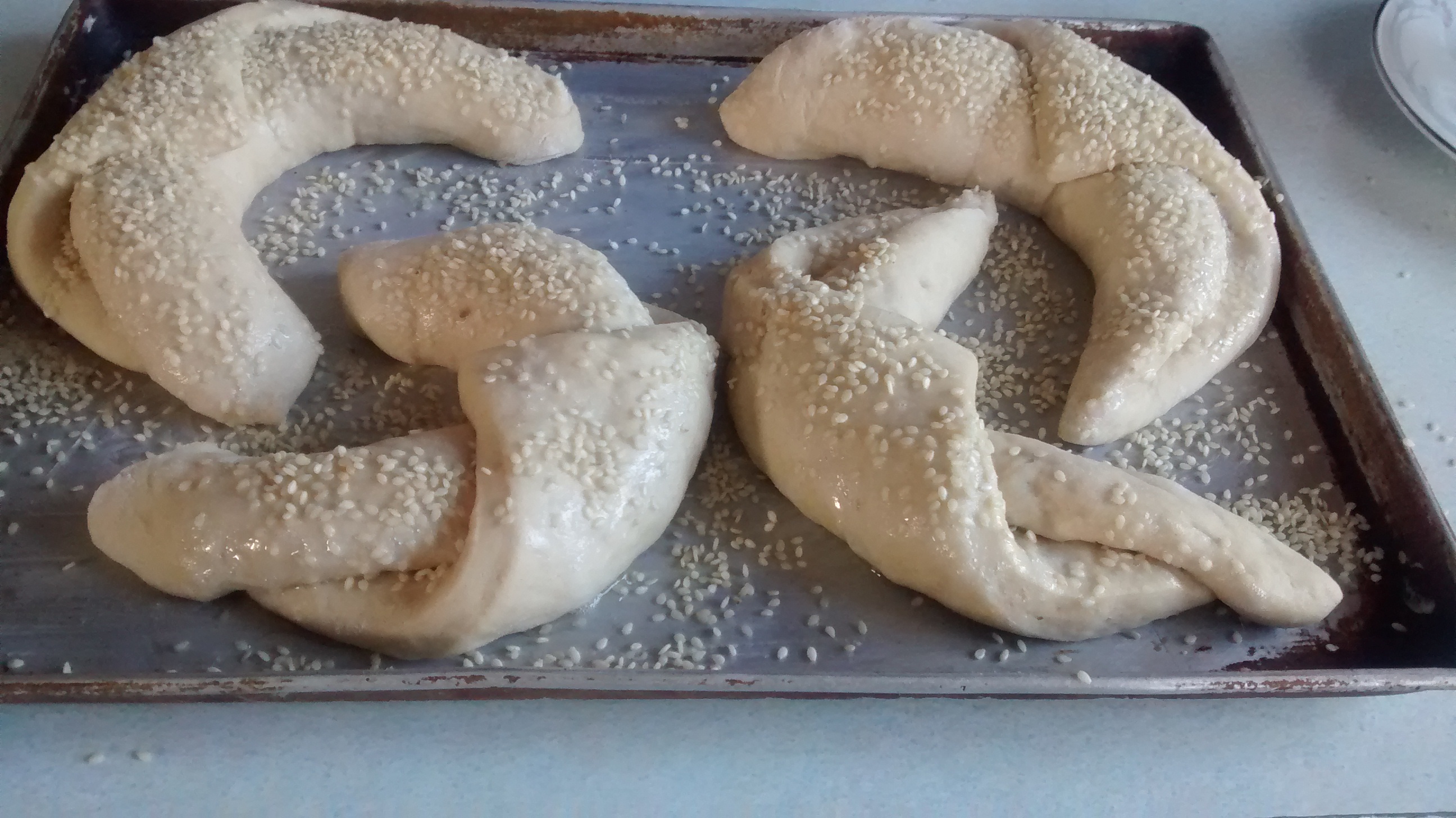
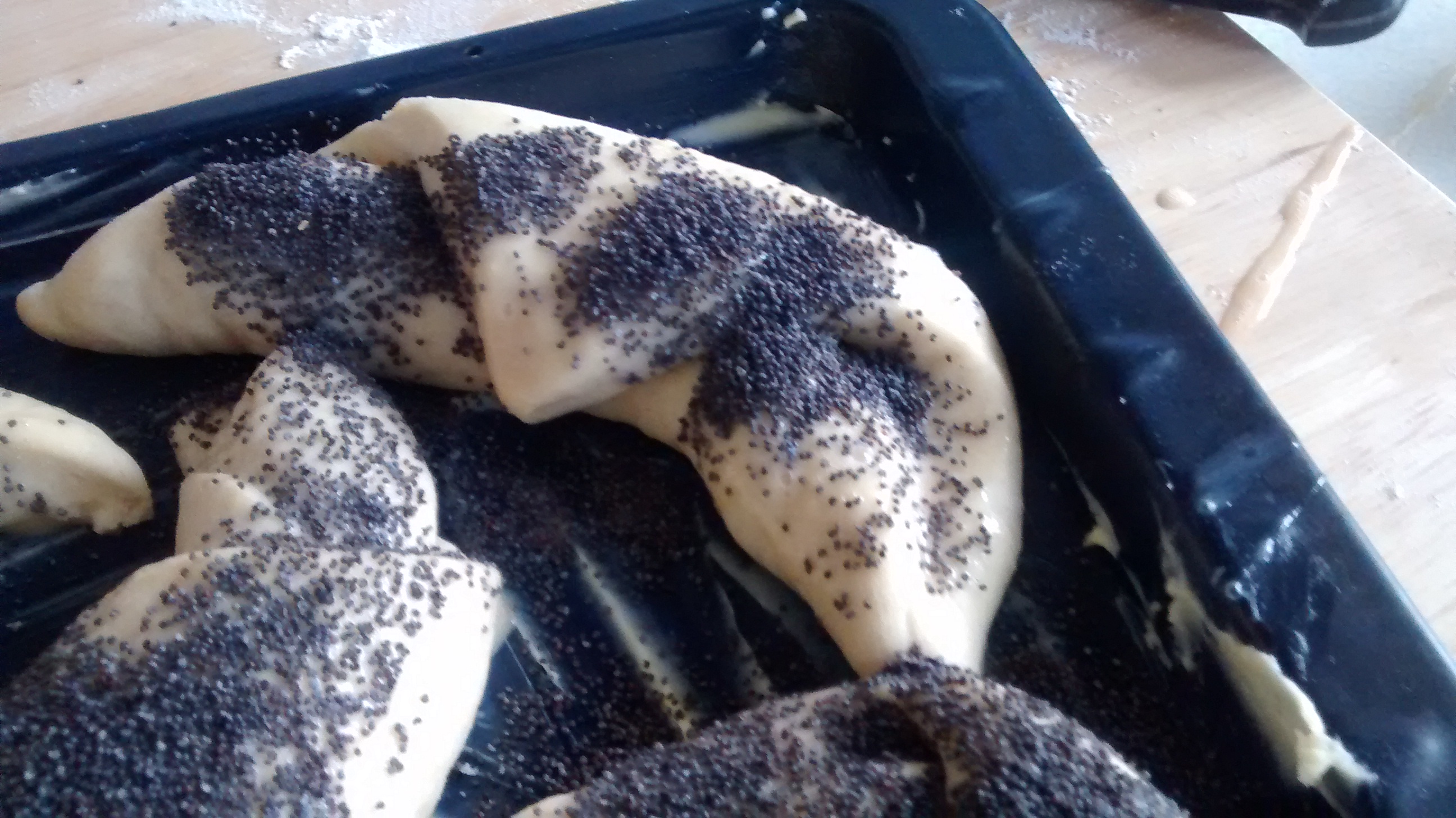
Brush with the egg white wash and sprinkle with seeds as desired.
Bake for around 15 minutes until they are golden brown – check a little earlier and move them lower in the oven or lower the temperature if the tops are beginning to burn.
Babka is the name of a Polish cake. The name means grandmother and it is thought to refer to the the shape of the cake which is round and dumpy or tall and tapered and looks like the full and pleated skirts found in Polish costumes.
A yeast babka is a classic Polish cake. It is usually made with the addition of some dried fruits or peel.
A yeast babka is traditional for Easter Sunday.
My mother never had much success with making yeast cakes and so abandoned the process.
In the past I have tried to make a yeast babka also without much success.
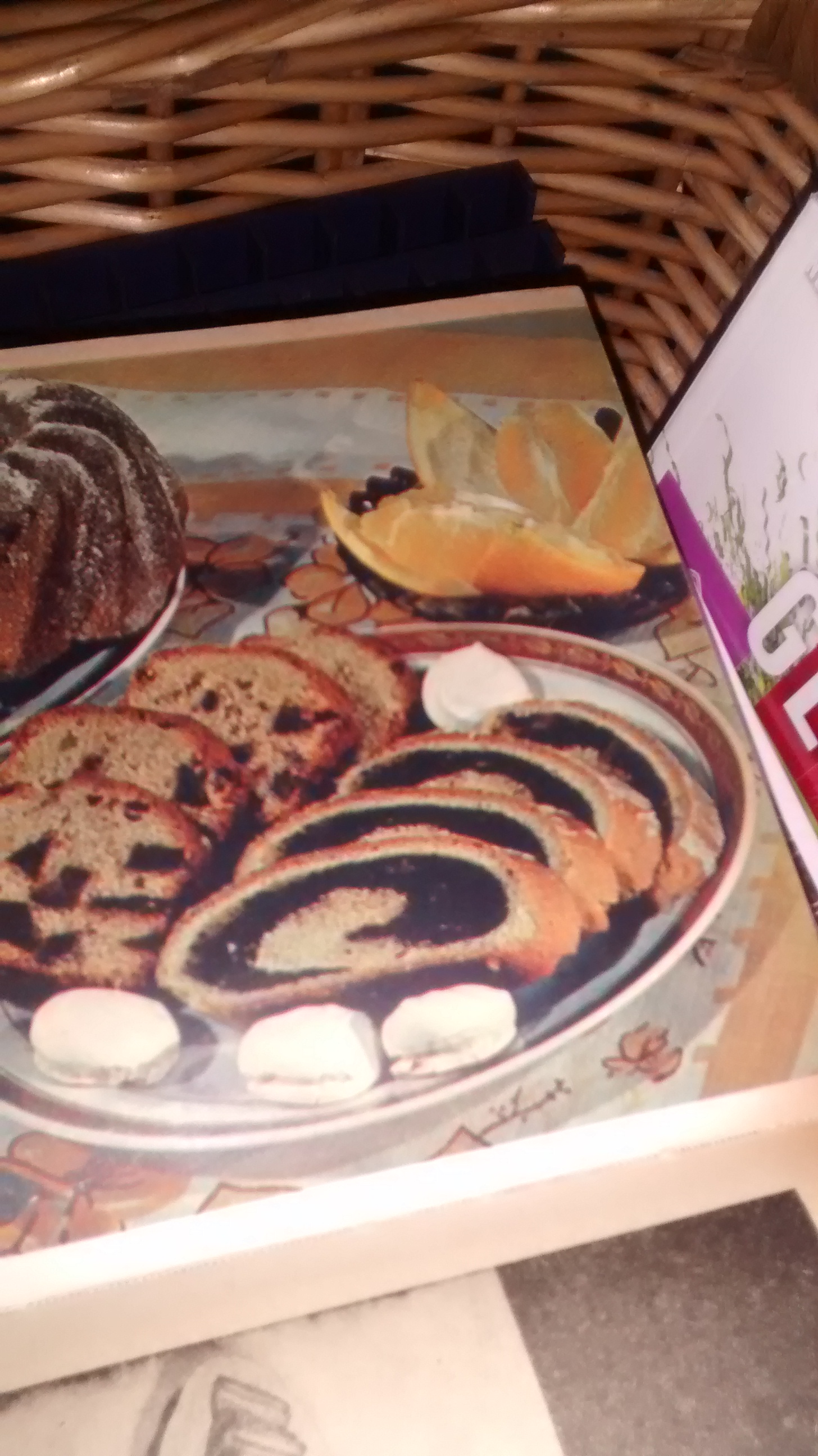
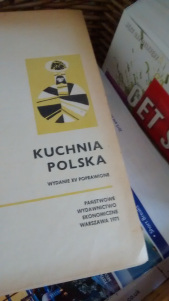
Once I started writing this blog I went back to my old Polish cookery book – “my bible”
Kuchnia Polska – Polish Kitchen or Polish Cookery – 15th edition published in 1971.
I used one of the recipes from this book and the result was wonderful!
I have now realised where I was going wrong:
I had been treating this cake as if I was making bread and in fact the technique is quite different.
You have to use ordinary plain flour not strong flour.
The mixture is a batter – you do not knead it.
You have to have lots of patience – the yeast can take hours and hours to rise.
The yeast will rise even in a coldish kitchen – it just takes a long time – even overnight or in the fridge.
Note
I used dried yeast for this recipe as that is easier for me and nearer to using fresh yeast.
I am sure you can adapt this to use the quick action yeast although I have not tried this myself.
Ingredients
Starter
100g plain flour
250 ml of milk
50g of fresh yeast or 25g of dried yeast
25g of granulated sugar
Rest of cake
5 egg yolks
150g of granulated sugar
400g of plain flour
pinch of salt
2 drops of vanilla essence
100g of melted butter or margarine
50g of raisins or sultanas
Method
First make the starter
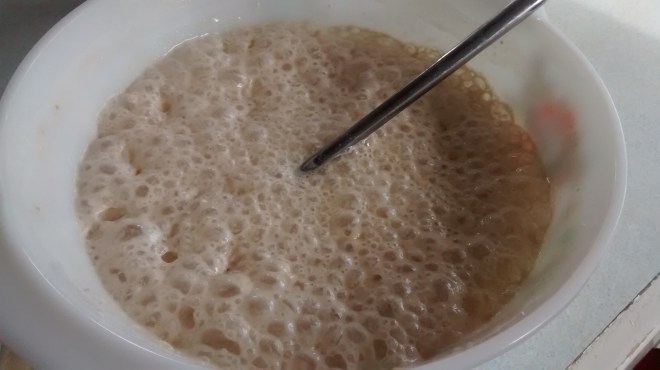
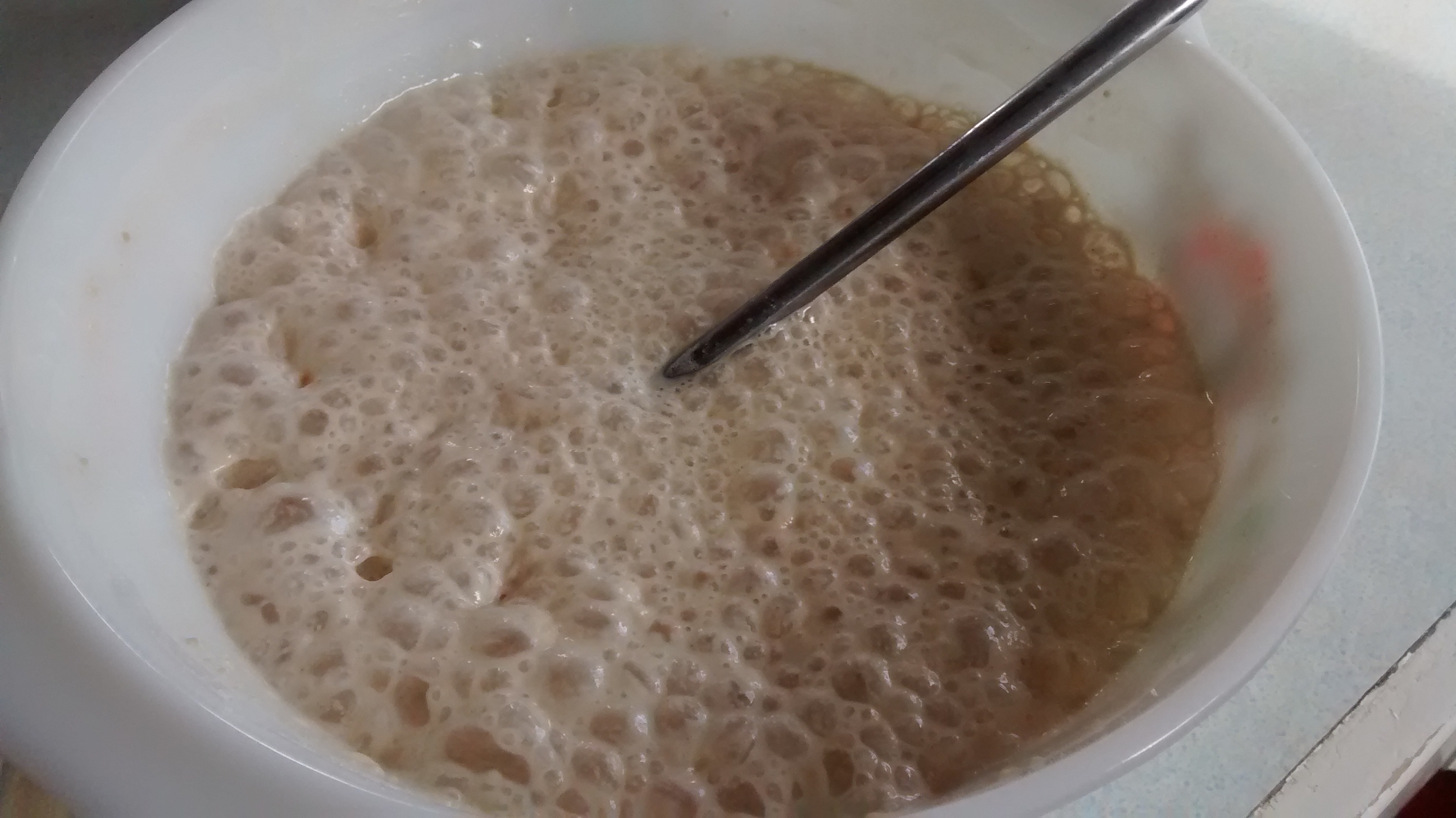
Mix together the yeast and sugar.
Add this to the milk and flour.
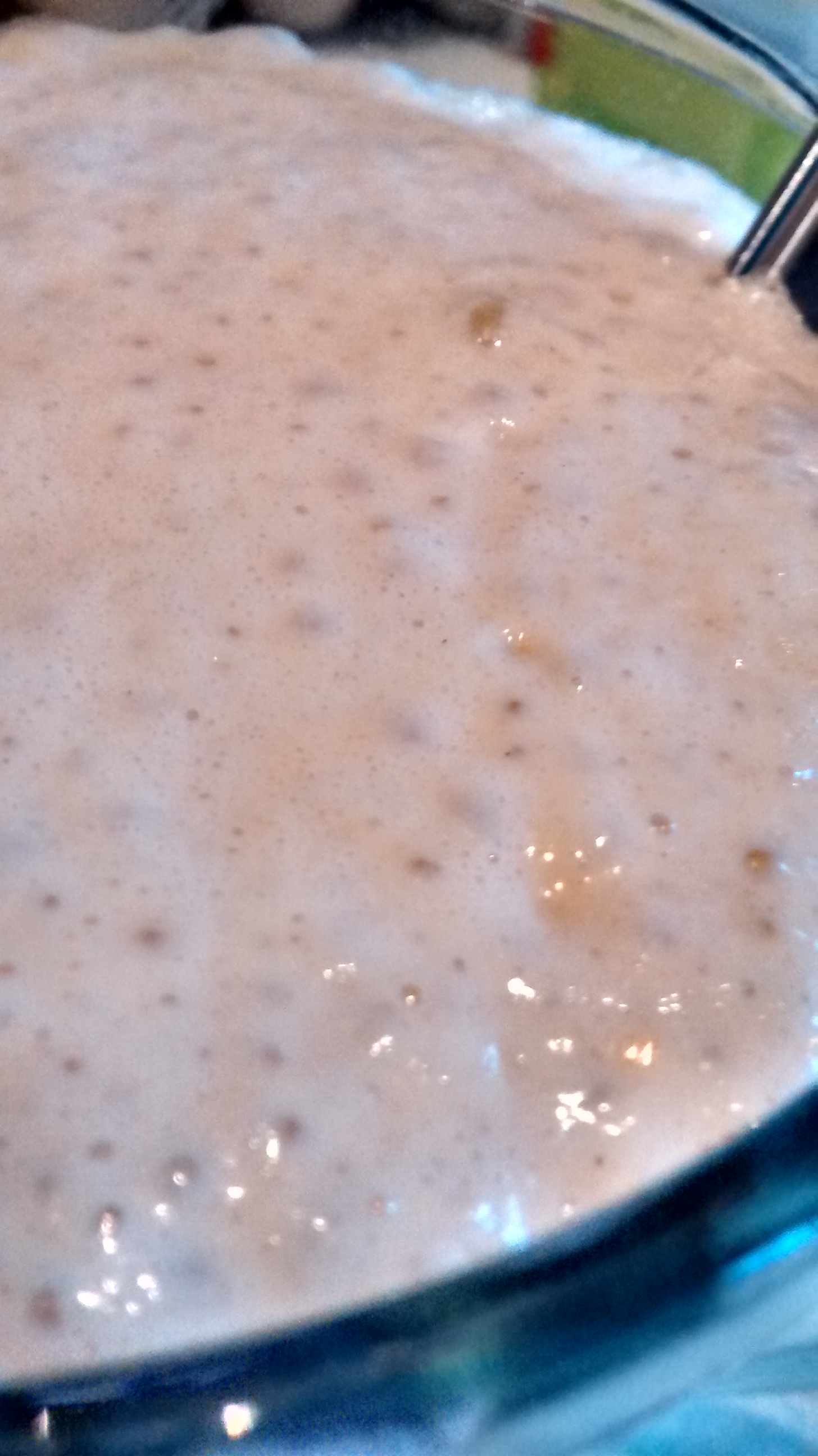
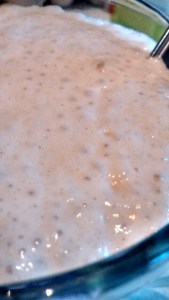
Leave in to bubble and rise to around double its size.
Grease and flour a babka tin
Pre-heat the oven to GM5
Place the egg yolks and the sugar in a bowl and whisk until they are pale and creamy.
Add the rest of the flour, the risen starter, the pinch of salt and the drops of vanilla essence and mix it all together.
Add the melted butter a little at a time, mixing it in after each addition.
Add the raisins or sultanas and mix them well in so you have a unified mixture.
Place the mixture in the prepared tin – it should fill around a 1/3rd of the tin.
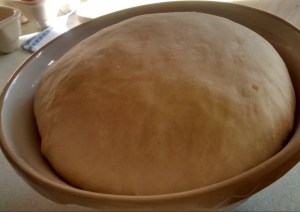
Cover the tin with a clean tea towel and leave the mixture to rise and nearly fill the tin.
This can take several hours.
Bake in the oven for around 40 to 45 minutes.
Leave to cool and then carefully remove out of the tin.
Dust with icing sugar.
The tea plates are Greenway Hostess designed by John Russell 1960 – 1979.
Easter babka
The babka for Easter is normally glazed with a thin icing made with lemon juice & icing sugar or instead of lemon juice you can use vanilla essence and a little water or you can use rum.
Also prior to this glaze you can make a poncz (this word originates from the English word punch) and drizzle this over the babka.
A rum poncz can be made from around 150ml of weak black tea, 45 ml of rum, 1 to 2 tablespoons of granulated sugar and a squeeze of lemon juice. These are mixed together until the sugar has dissolved. (You can use tepid tea to dissolve the sugar but not too hot to evaporate the rum.)
Weak Black Tea
A lemon poncz can be make from the juice of a lemon and around 2 tablespoons of icing sugar.
A yeast cake which is fresh will not absorb as much of the liquid poncz, so if you have time you can made this the day before you want add the poncz or wait for several hours at least.
I am hoping to make a yeast babka for Easter with a glaze and will include photos of this in my post for Easter.
Babka means grandmother and refers to the round dumpy shape reminiscent of an older lady wearing a long full skirt as is traditional in many Polish folk costumes.
Wooden Dolls in Polish Costumes
There are references to this cake in Poland in the early 18 century.
The early cakes will have been yeast cakes.
Later cakes were creamed sponge cakes and then marbled (usually with cocoa powder) cakes became very popular.
Yeast cakes are glazed with either warmed honey, a sugar and lemon glaze or poncz (derived from the English word – punch) which is a sweetened syrup made with tea and rum.
At Easter a yeast babka is very traditional and it would also be covered in a thin icing glaze.
A creamed sponge babkacan be made with wheat flour or a mixture of potato flour and wheat flour.
Dried fruit such as currants, sultanas, raisins or candied peel can be added – just small amounts – this is not a heavy fruit cake!
Many are also iced or glazed with a lemon or vanilla icing
The marbled cakes are often coated with a runny chocolate icing which is allowed to run down from the top.
Assorted Babka Tins
Yeast Babka with Raisins – Dusted with Icing Sugar
Creamed Sponge Babka
Marbled Babka
In other parts of Europe there are similar cakes such as Gugelhopf or Kugelhopf in southern Germany, Austria and Switzerland and Bundkuchen in Northern Germany.
In Italy there is the panetonne – the name for this in Polish is włoska babka which means Italian babka.
In the 1950s Nordic Ware in the USA produced a tin which they trademarked as a Bundt tin.
It is thought the name comes from a Bundkuchen – a cake for a large gathering in Northern Germany.
Babecki – small Babka cakes
Babecki – made in a new tin from Marks & Spencer – which they call a 12 cup mini Bundt tray.
The origin of baba au rhum or rum baba
Legend has it that when Stanisław Leszczyński (1677-1766) the exiled King of Poland was living in Lorraine in France (He was made Duke of Lorraine and Bar for his lifetime) he had acquired some (yeast) babka which turned out to be very dry. His pastry chef revived it by soaking it in a sugary rum liquid (very like the poncz they use in Poland). This became the start of baba au rhum in France. These are usually done as small individual cakes nowadays. note
Dry babka will soak up more liquid than a freshly baked one – so if you are making this it is better to use cake at least a day old.
Savarin
The savarin was invented in Paris in 1844 and was inspired by the baba au rhum but it is large cake made in a circular(ring) tin. In the centre it usually has fruit in syrup and whipped cream (this is not used in Polish cookery).
Recipes to Follow
Future posts are coming up shortly with recipes for the various types of babka – look out for these!
Photo from my Old Polish CookbookKuchnia Polska – Polish Kitchen or Polish Cookery
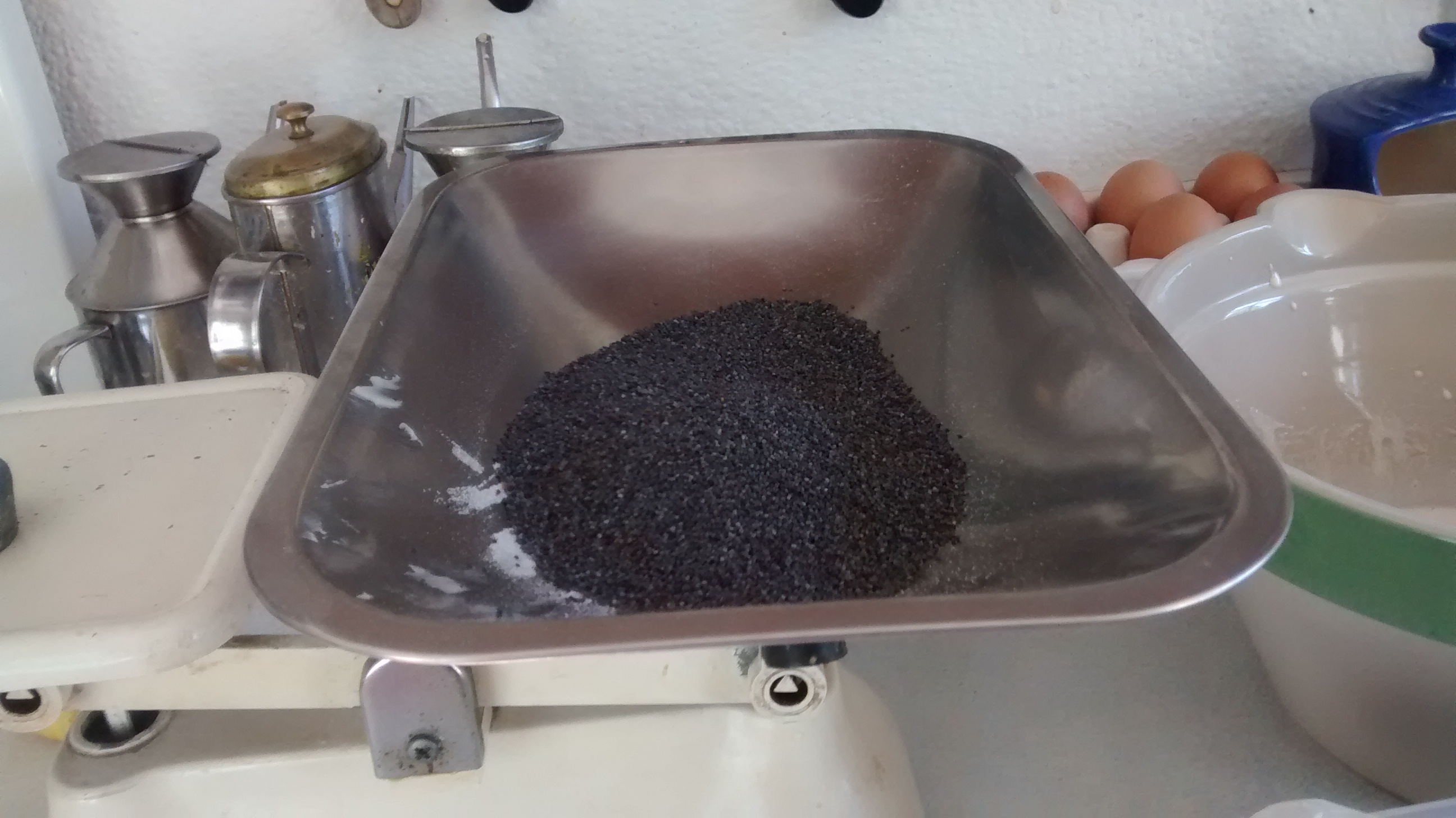
Weighing Poppy Seeds
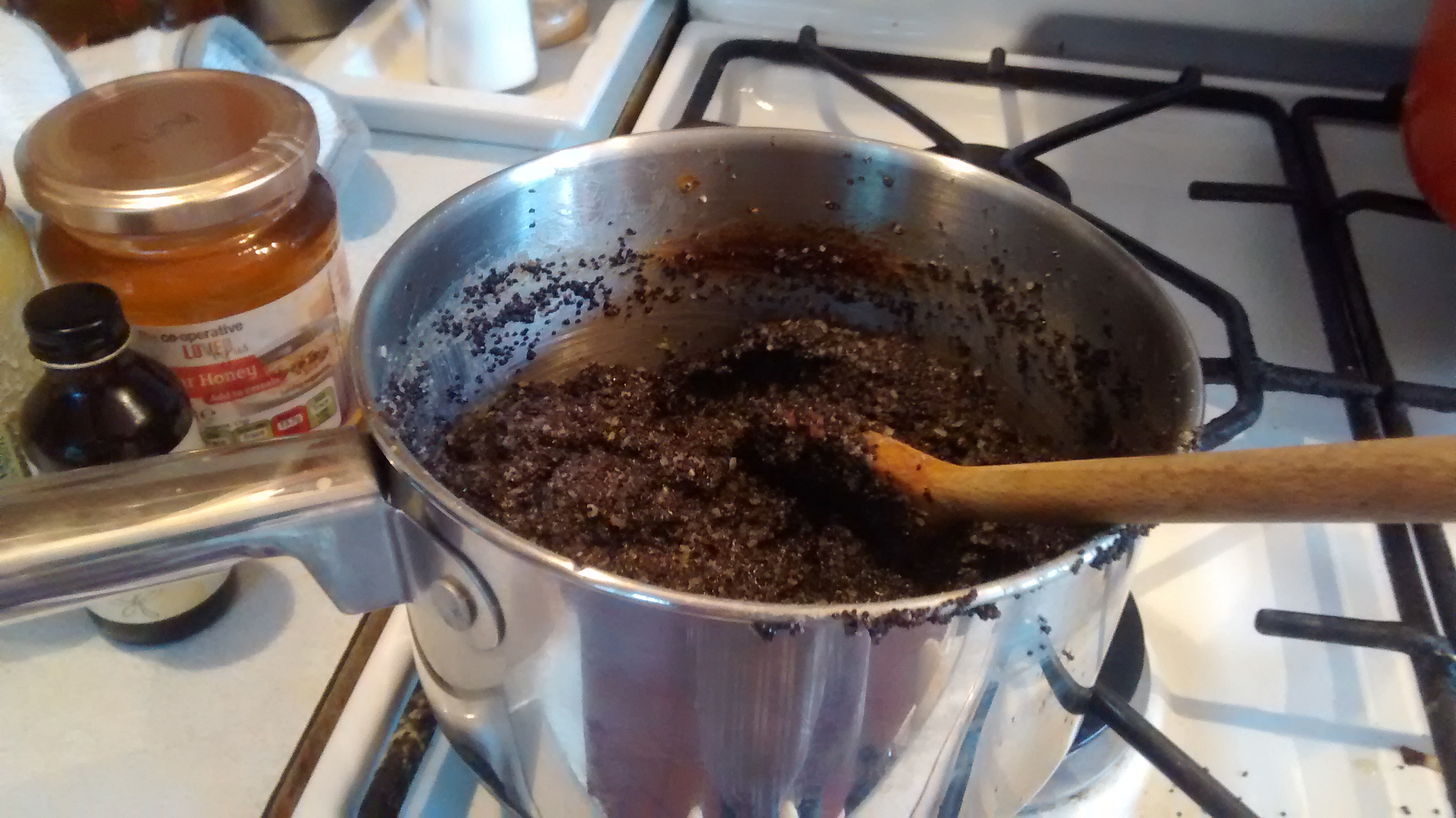
Poppy seed mix
I do not know why but the smell of baking yeast cakes just fills me with warm loving feeling, it is so wonderful.
Yeast cakes feature greatly in Polish festivals and there is Babka for Easter, Makowiec (Poppy seed roll) for Christmas Eve and doughnuts before the start of Lent and New Year’s Eve and Epiphany.
Surprisingly my mother did not seem to have a great success with yeast cookery, maybe her kitchen was a bit cool, I do not know. We got our yeast cakes from her friends. I have done lots of experimenting with yeast recipes and have had a lot of success (and some failures from which I also learnt much!). I now know that you can succeed in a cool kitchen; you just have to start a day beforehand.
Watching the yeast rise still seems like magic to me even though I am well aware of the science that makes it happen. It can be unpredictable and depends on the yeast and the temperature.
I prefer to use fresh yeast but cannot always get it, so now I use dried yeast and also get good results. I have used the type of yeast that you add straight to the flour but I like to see that the yeast is active before it goes into the flour so this is not my favourite type – but I have to admit is does work in many recipes.
Many recipes use a batter starter and I like this method as you can see the yeast making the mixture really rise.
The best time to make a yeast cake is on a day when you are in and doing other things as the times for rising and proving can vary, you have to be around and do the next stage when the time is right, you cannot rush it.
One of the drawbacks with yeast pastry is that the cakes go stale very quickly so you need lots of people on hand to help to eat it all.
Poppy Seeds
Poppy seeds are the blue-grey seeds of the poppy – Papaver somniferum. They have been used since antiquity and were known in Egyptian, Minoan and Sumerian cultures. They are used in European and Middle Eastern cooking and are especially popular in Jewish and in Polish cooking.
Mak is the Polish word for poppy seed and a cake made with poppy seeds is called makowiec.
This is one of the dishes served on Christmas Eve and I will be writing about the food for that evening later in the year.
Makowiec – Poppy Seed Roll
Traditional Recipe
This classic yeast cake is served on Christmas Eve. Poppy seeds and honey are used to make a filling which I think is just so delicious. Some fillings also use dried fruits such as raisins but I prefer it without.
I have been searching for many years for the best recipe for this cake and I think I now have it. Many recipes that I have tried, have made a cake which is so large that it has tried to escape out of the baking tray and the oven and I have been experimenting to get an amount which is more suitable for the standard size oven in the United Kingdom.
Also the shape of a nice roll of cake has eluded me till now, mine seemed to rise too much and crack and spread across the baking tray with all the filling escaping!
On a visit to Poland I was given a suggested that you wrap the rising yeast roll in greaseproof paper to keep its shape and this worked. So at last I have the size and shape that works well.
Without a doubt this recipes is time consuming – so in my next posts I will give some easier simpler variations which are also delicious.
There are 3 parts to the making of this cake: the poppy seed filling, the yeast pastry and the icing.
Poppy Seed Filling
I make the poppy seed filling first, or during the time the yeast is rising, as it has to be cool when used. You can make the filling ahead of time – there are several stages where you can leave it to finish later. I often make till until the addition of the butter and add the rum and egg just before I need it. You can also freeze this filling at this stage.
Ingredients
200g poppy seeds
500ml milk (whole or semi-skimmed)
50g ground almonds
120 ml runny honey & 1 tablespoon
25g butter
1 large egg – separated
1 tablespoon of rum
¼ teaspoon of vanilla essence
Put the poppy seeds and milk into a saucepan and simmer then together for 30 minutes, stirring occasionally to stop any sticking or burning. The aim is to cook the seeds and adsorb as much of the milk as possible. You need to watch this carefully and keep adjusting the heat to stop the mixture burning.
Using a fine sieve, strain the poppy seeds from the liquid – leave this for a while to remove as much liquid as possible.
The poppy seeds need to be crushed, I use a hand held blender for about 5 minutes which I find is the easiest way but you can use a pestle and mortar or a mincer.
Once crushed, place the poppy seeds back into a saucepan and add the ground almonds, the vanilla essence and the 120ml of honey and mix thoroughly.
Add the butter to the mixture and simmer gently for about 5 minutes and then leave this mixture to cool completely and then add the rum.
Whisk the 15ml (1 tablespoon) of honey with the egg yolk until this is thick and creamy and then add this to the mixture.
Just before you need the filling, whisk the egg white until it is stiff and then fold this egg white into the poppy seed mixture.
Yeast Pastry
This is made in 2 stages
Yeast Starter
5g fresh yeast or a 1/2 teaspoon of dried yeast
40g plain flour
60ml of milk (whole or semi-skimmed)
Mix the ingredients together in a bowl then cover this with a tea towel or cling film and leave the bowl in a warm place for 3 hours.
After this place the bowl in the fridge – you can leave this overnight.
Rest of Dough
10g fresh yeast or 1 teaspoon of dried yeast
40g sugar
60ml milk (whole or semi-skimmed)
1 egg and 2 egg yolks
300g plain flour
pinch of salt
100g butter at room temperature
Warm the milk slightly and put it into a large bowl, add the yeast and sugar and leave in a warm place for 15 minutes or until you can see that the yeast is active and rising.
Add the starter, the egg and egg yolks, the pinch of salt and the flour. Mix and then knead the dough until it forms a soft ball.
Cover the bowl with a tea towel or cling film and leave for 15 minutes.
Add the butter in tablespoonful amounts to the dough, kneading slightly at each addition and then knead the dough for 10 minutes. The dough should be soft and elastic but not sticky, if it is too sticky add some more flour knead till it is the correct texture.
Place the dough into an oiled bowl and cover with a tea towel or cling film and leave to rise.
Putting together the poppy seed roll
Have ready a greased baking tray as the size of rectangle of dough you need is governed by the length of the baking tray.
When the dough is ready, roll it out into a rectangle of around 20cm by 25cm. It will be about 1cm in thickness.
Place the filling onto the dough leaving about 2cm clear at all the edges.
Roll up the poppy seed roll lengthwise and then enclose the roll reasonably tightly lengthwise in greaseproof paper, do not cover the ends of the roll which will rise and expand lengthwise.
Place the roll onto a baking sheet with at least 5cm at each end to allow for the expansion and leave this to rise for about 1 hour.
Pre heat the oven to GM4 – 180oC
Place the risen roll into the oven with the greaseproof paper still on.
Bake for about 40 minutes and then cool on a wire rack, remove the greaseproof paper as soon as the roll has cooled slightly.
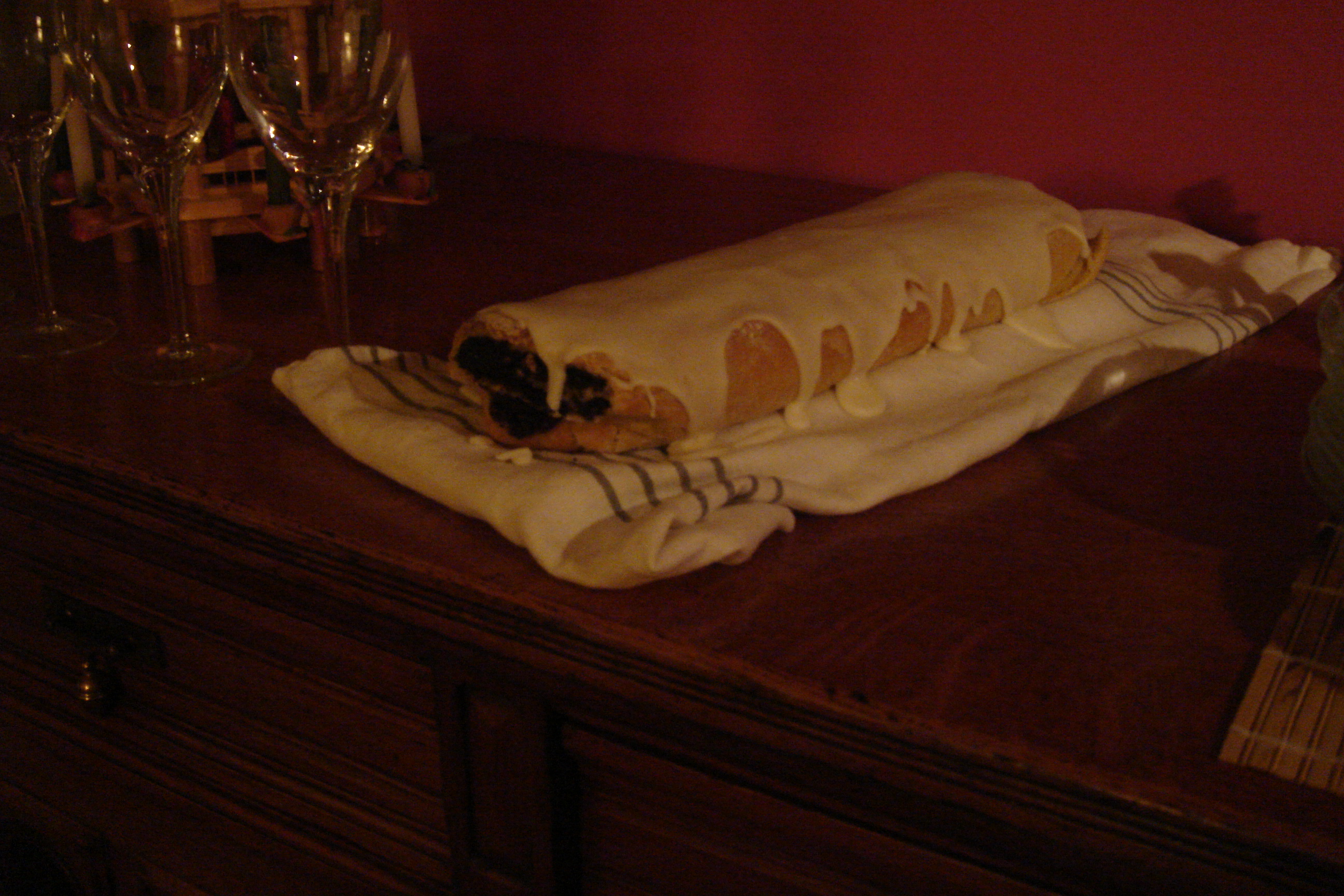
Before serving dust the roll with icing sugar – or you can glaze it with a thin lemon icing.
I cut the short end of the roll off and do not serve these.
Lemon Icing
Juice of ½ lemon
100g icing sugar – sieved
The amount of icing sugar you need will vary, depending on the size of the lemon and the dampness of the sugar.
Place the lemon juice in a bowl and slowly add the sugar mixing it with a wooden spoon is best, use more or less sugar to make a soft runny icing which will coat the back of the spoon.
Easier Recipes
So that is the end of my first recipe, which does take quite a while to make but I felt I had to include this traditional version especially now I have mastered it.
There are many other poppy seed cakes and I will be continuing next with a few of these. They quicker and easier to make but are still very delicious and also a few recipes for poppy seed cakes which have evolved from these.
There seems to be is no end to the variety of cakes in Poland: yeast cakes, tort(layer cake), poppy seed cakes, apple cakes, cheesecakes, cakes with berries, honey cakes, cakes with nuts and many more. I could write a book just on cakes alone, even on just one type of cake.
The influence of France, Austria and Hungary can be seen or rather tasted in some of the cakes and pastries. This has come about through royal alliances in the past with foreign princesses bringing their chefs to Poland.
There are special cakes for different days of the year especially Easter and Christmas Eve.
A Few Notes on Ingredients
I have adapted some recipes, as did my mother, to take into consideration the availability of ingredients here in England.
Cream in Poland is smetana – soured cream, and before its general availability in England we would use single or double cream with lemon juice added to it.
As in many countries in Europe, there is not any self-raising flour in Poland. There are different flours for bread making and there is a special plain flour for cake making to which you have to add baking powder. Many recipes use potato flour and sometimes cornflour.
Sugar in Poland is from sugar beet and is white sugar so there is not a tradition of cakes with brown sugar or syrup or treacle. Strangely enough the sugar is granulated or icing there is not any caster sugar.
Butter in Poland is unsalted and this although is better for baking and certainly for making butter cream, I do not find it makes enough of a difference to go out and get this type specially, salted will do if that is what you have.
Tort is usually layered up with rich butter cream or similar.














 gether the yeast and sugar.




 Journey From A Polish Kitchen