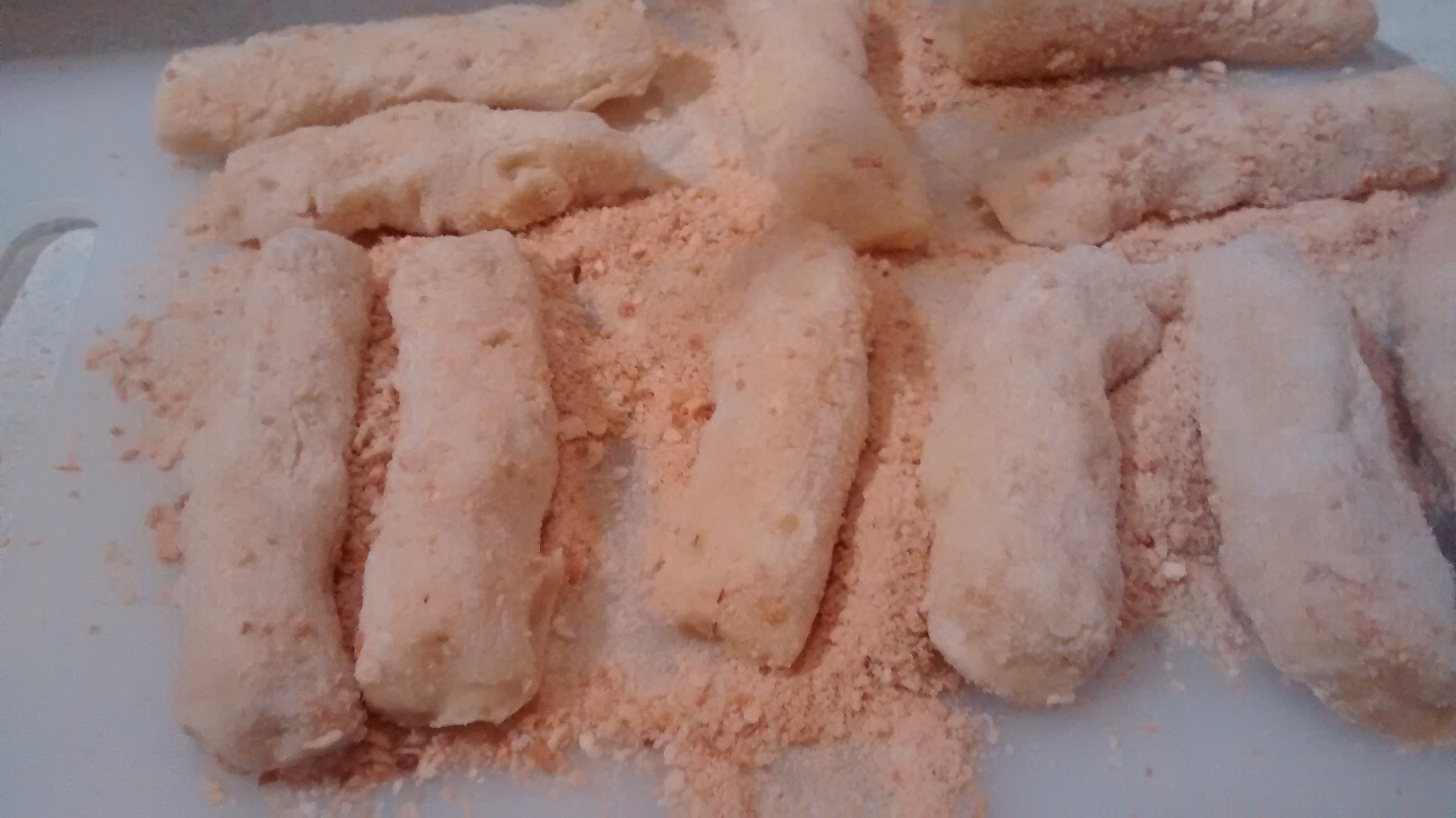
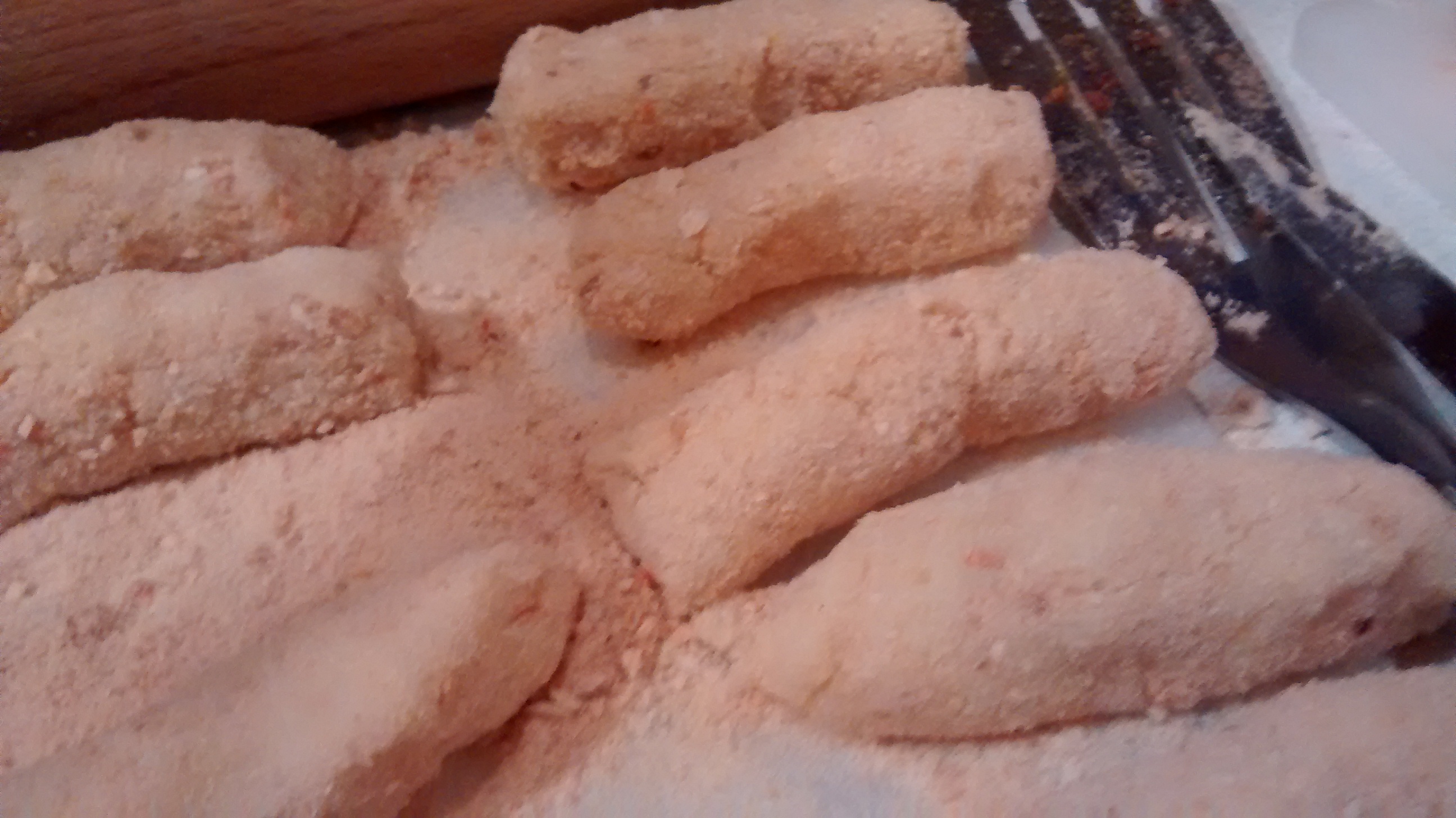
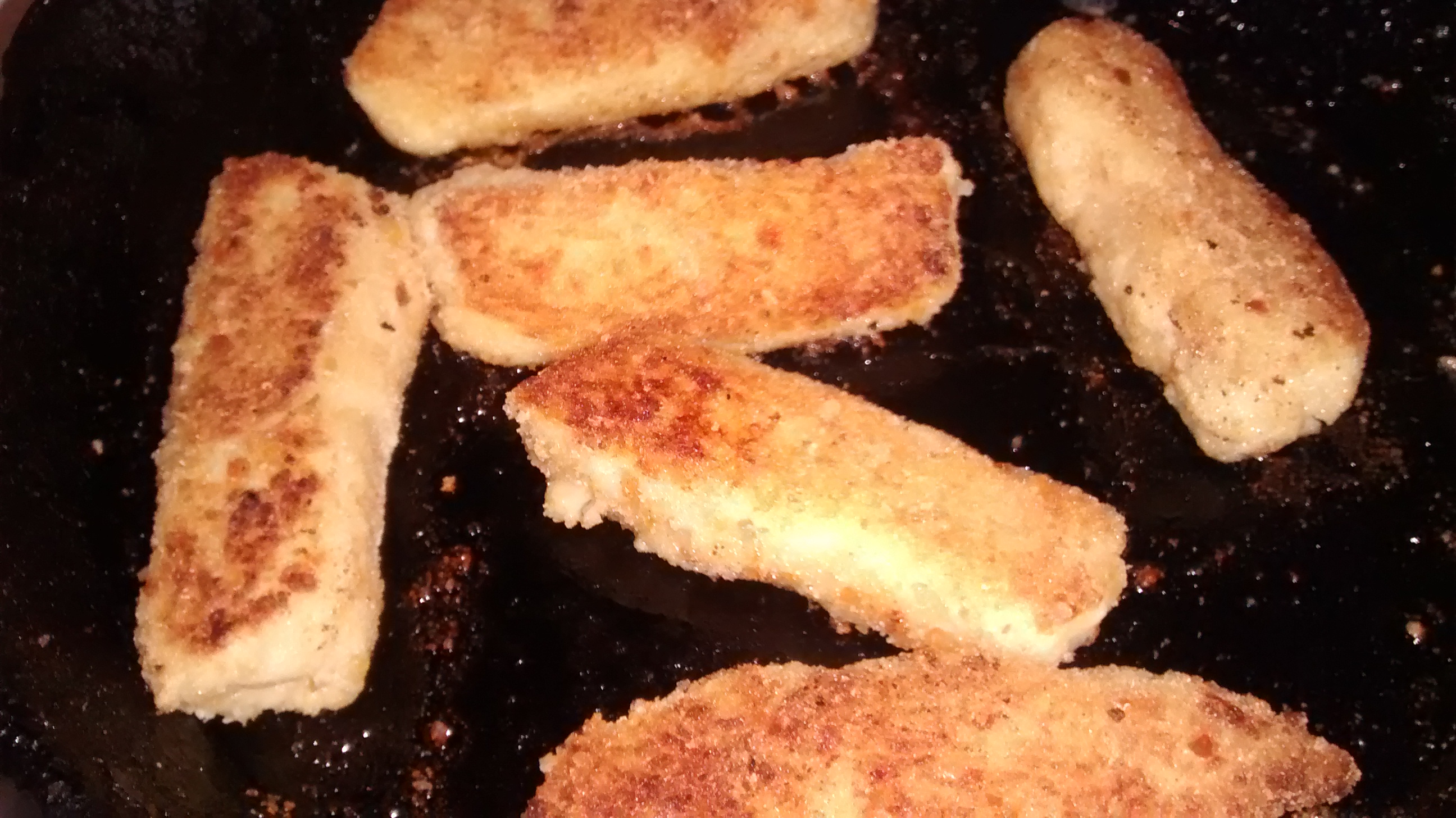
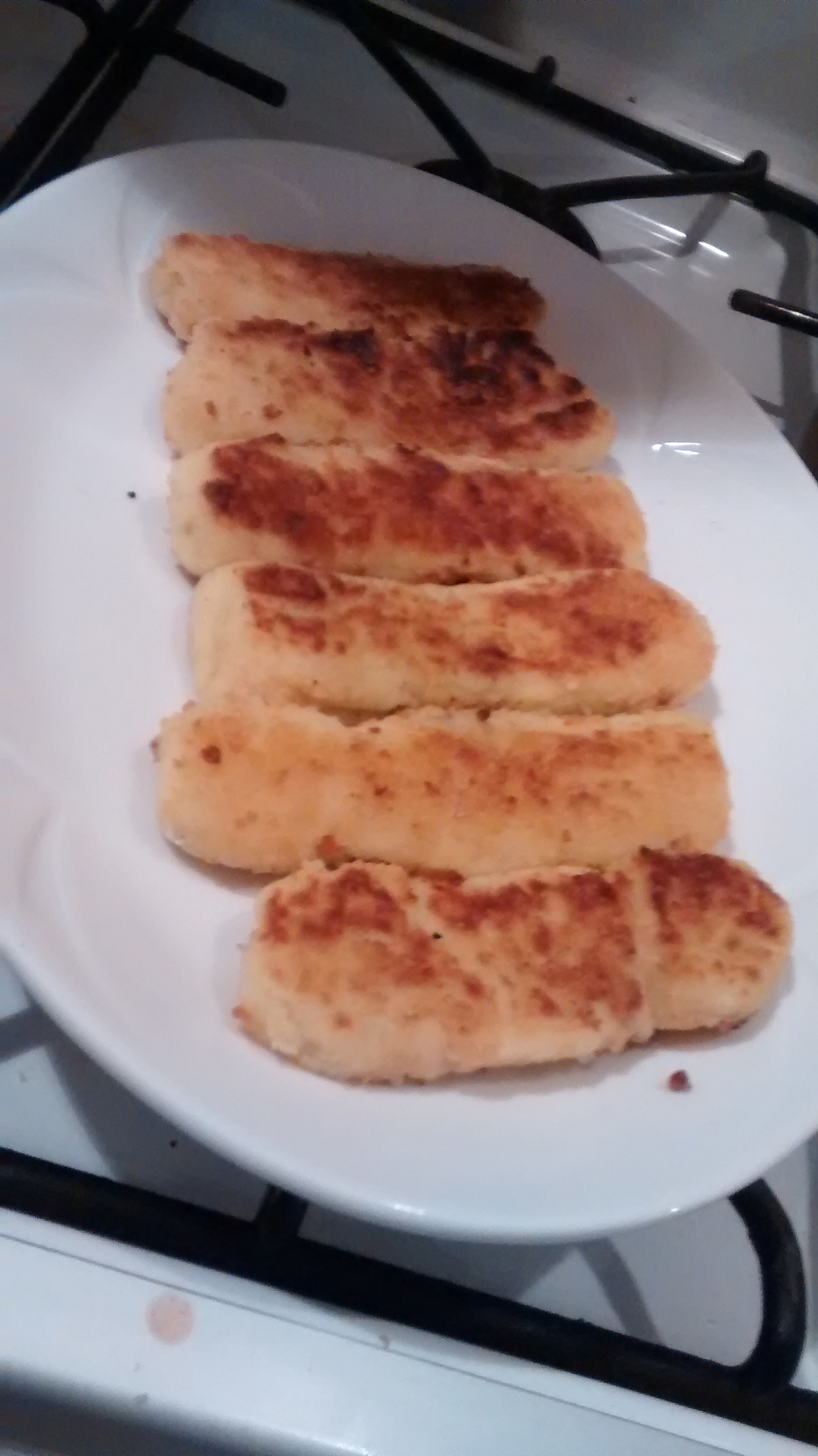
Kopytka – Polish Potato Dumplings

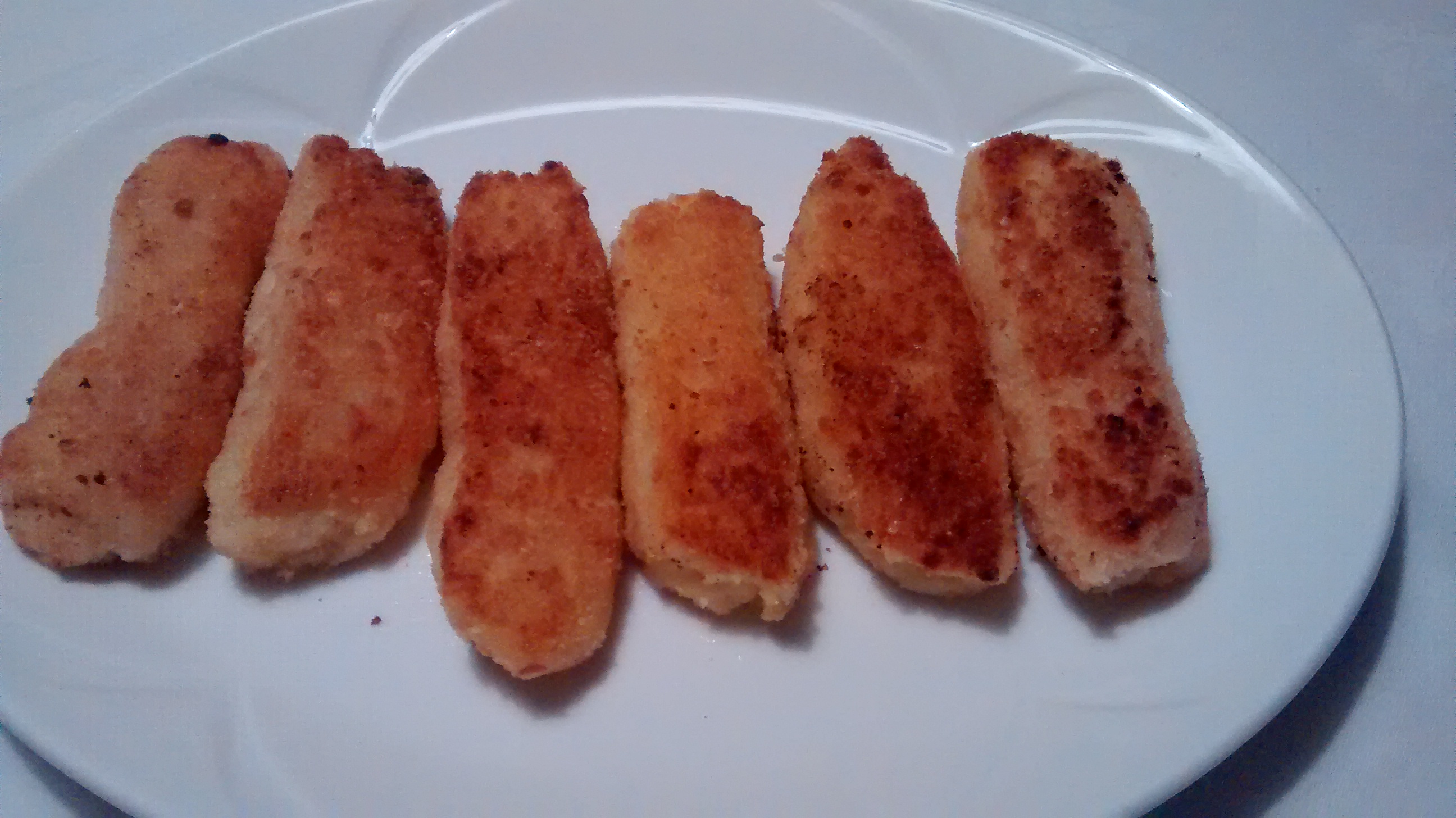
My mother called these grube kluski  – fat noodles but on my recent visits to Poland I have had these under the name kopytka, this means little hooves, which I think describes their oval shape very well.

They are very much like  Italian gnocci made with potatoes rather than semolina. (The Italian word comes from either nocchio – a knot in wood or nocca – a knuckle). I think the usual size of gnocci is smaller than the kopytka.

IMG_20150910_122355675

These were often made with boiled potatoes which had been left over from another meal. I do not remember my mother boiling potatoes especially to make these as the potatoes have to be boiled and then left to go cold. I always hoped that she would peel lots of potatoes so that there would be some left to make these, as I just loved to eat them.

We had them served with either melted butter or skwarki (crisp, fried, small squares of bacon). Recently in Poland I was served these with a creamy mushroom sauce*.

I  often boil potatoes the day before to make these as the potatoes need to be cold. The exact amounts are not critical but you must use starchy potatoes. When you have made these once you will have a good idea of the amounts involved and I am certain that my mother never weighed out the ingredients, just judged this by eye and consistency.

Ingredients

  • 600g of starchy potatoes – such as King Edward or Maris Piper
  • 1 egg  & 1 egg yolk
  • 200g of plain flour
  • Salt

Method

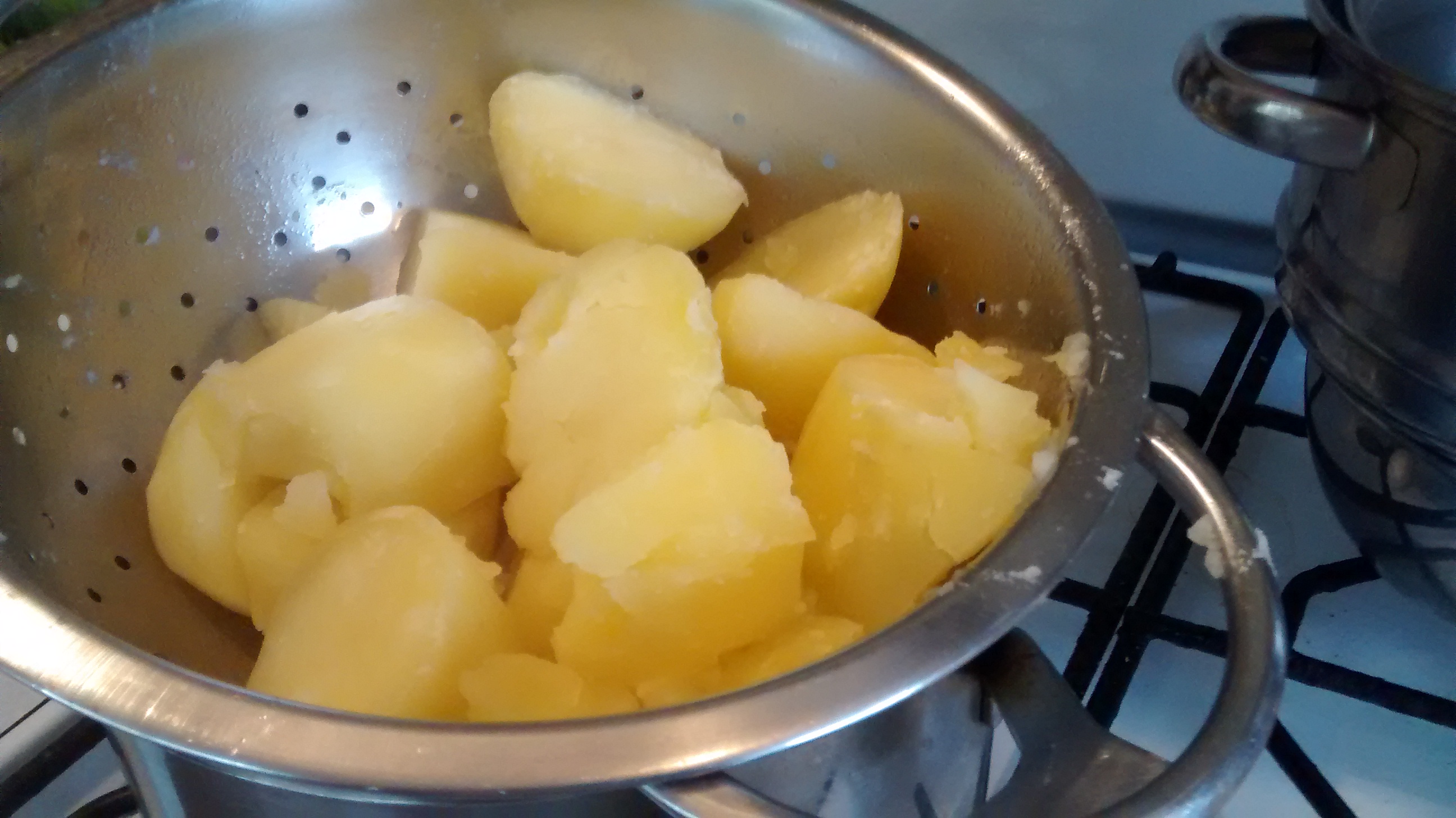
Peel the potatoes cut them up into pieces and boil them in salted water.

Drain the potatoes and then mash them so that there are no lumps. I have a ricer which is very good for this. Leave the potatoes to cool.

Use a large bowl and put the cold potatoes into the bowl.

Lightly beat the egg and the yolk together and add this to the potatoes.

Add a little salt.

Weigh out the flour to give an idea of how much is needed; this will depend on the type of potato and the size of the eggs. Add the flour and mix first with a wooden spoon and then by hand, you might not need all the flour or you may need more. Mix until you have a soft dough.

Divide the dough into quarters and using a floured board shape the dough and roll it with you hands until you have a long sausage about 3cm in diameter. If the dough sticks to the board then you need to add more flour.

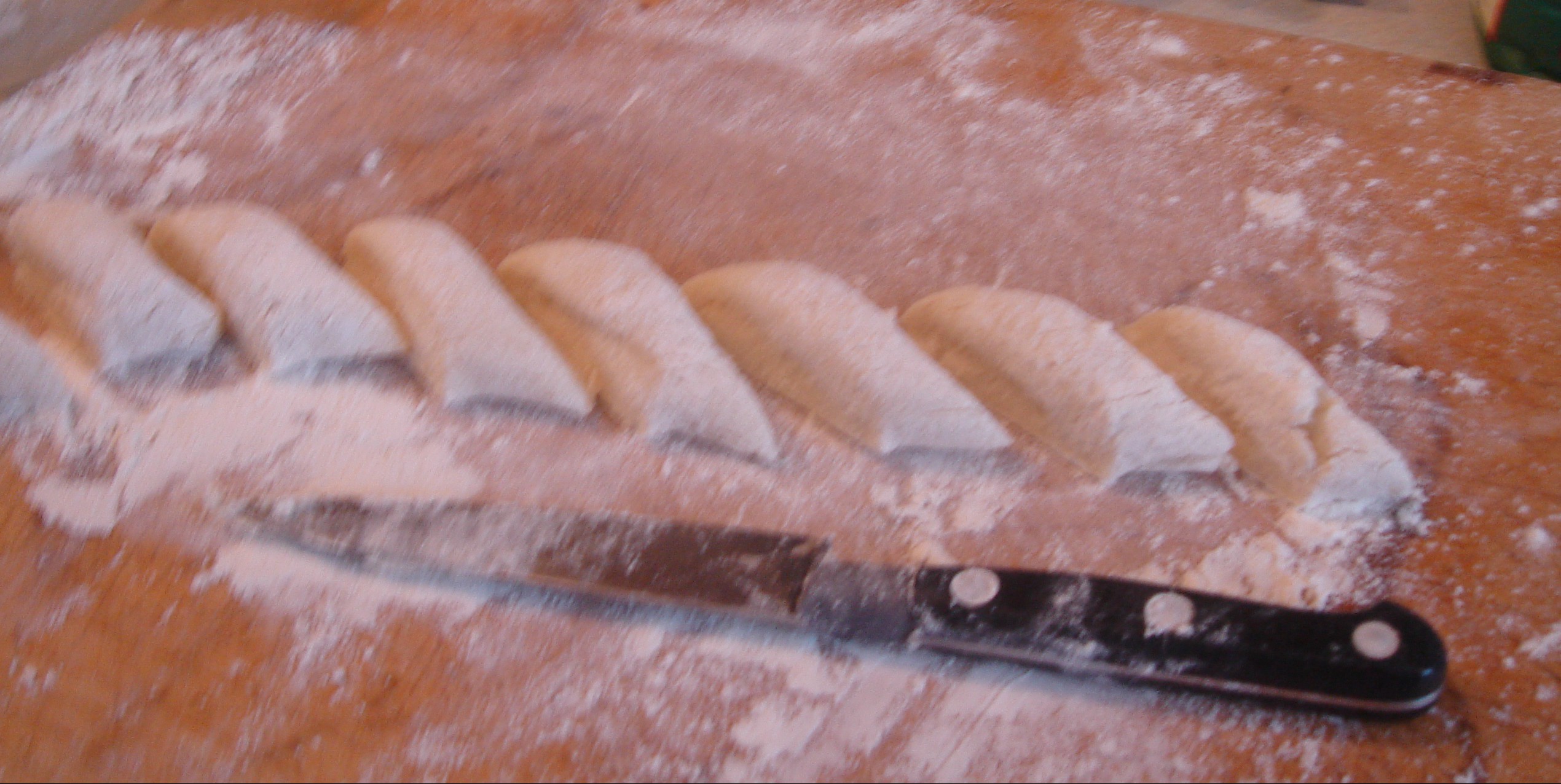
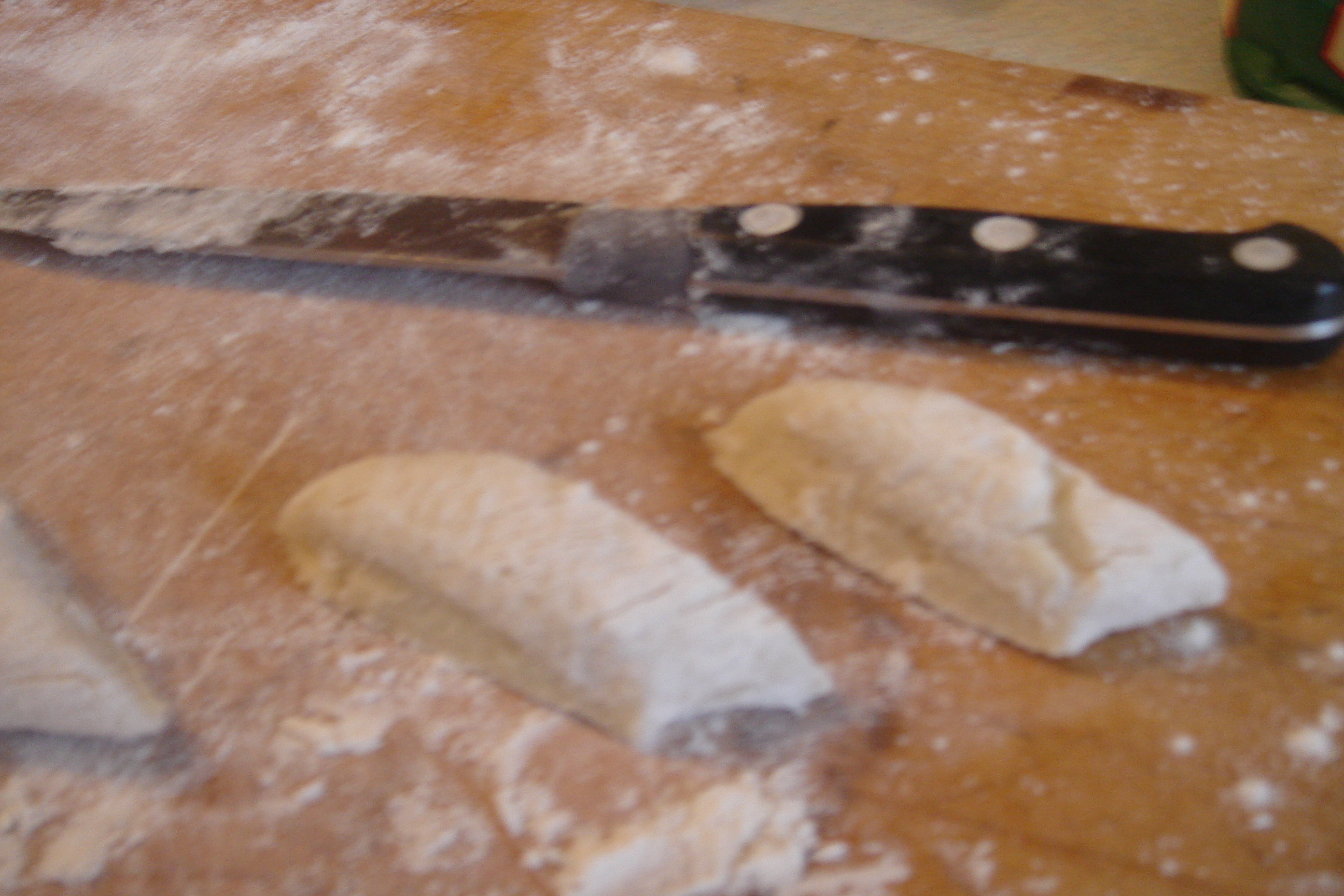
Use a sharp knife to cut the dough into pieces, make the first cut at a diagonal and make the thickness about 1 to 1.5cm. You will get a sort of oval shape.

kopytka

13 Feb 150

Repeat this with the rest of the dough.

Fill a large pan with water, add some salt and bring this to the boil.

When the water is boiling, add the dumplings one by one, do not over fill the pan or they will stick together. I tend to do this in 4 batches.

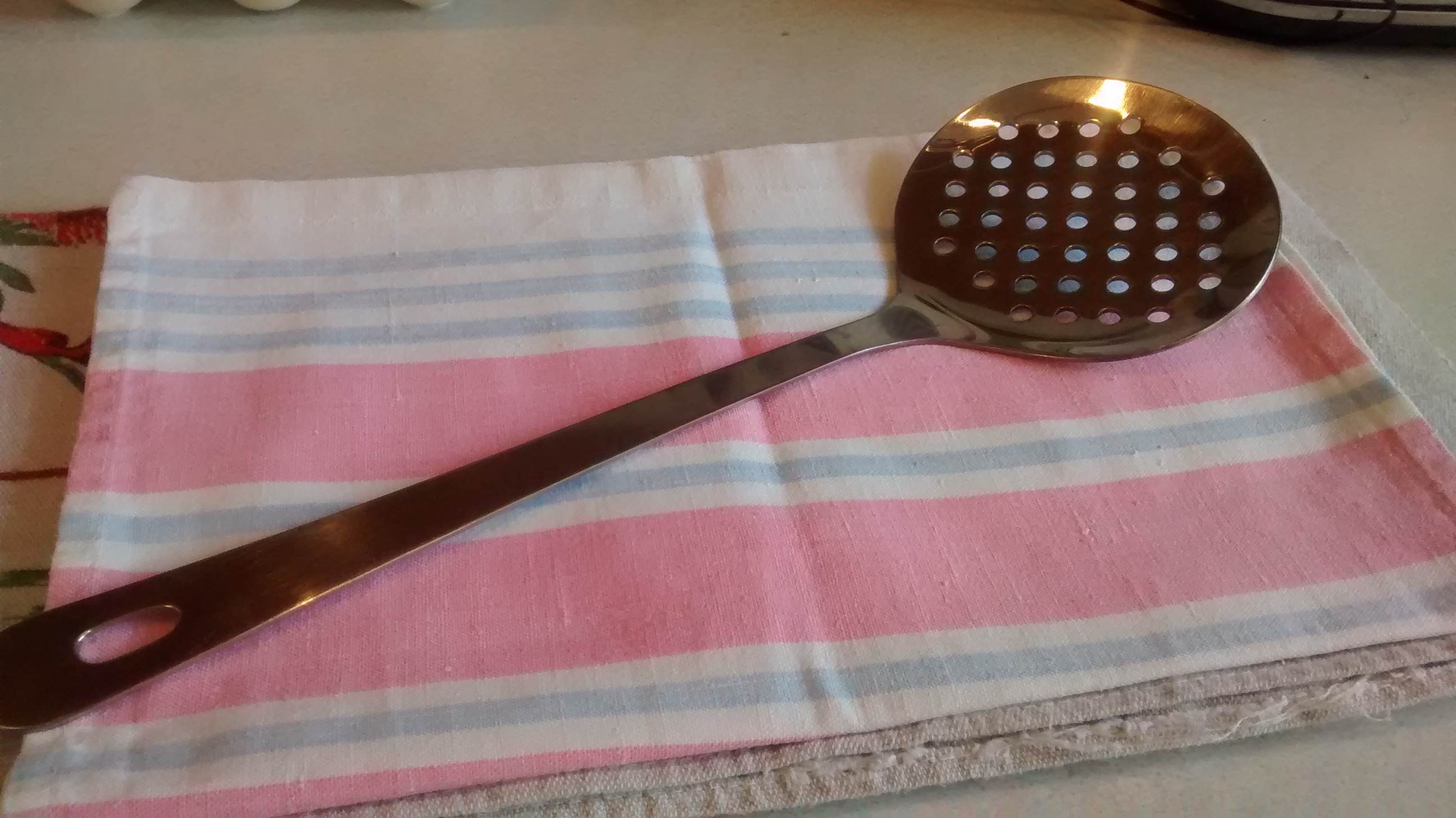
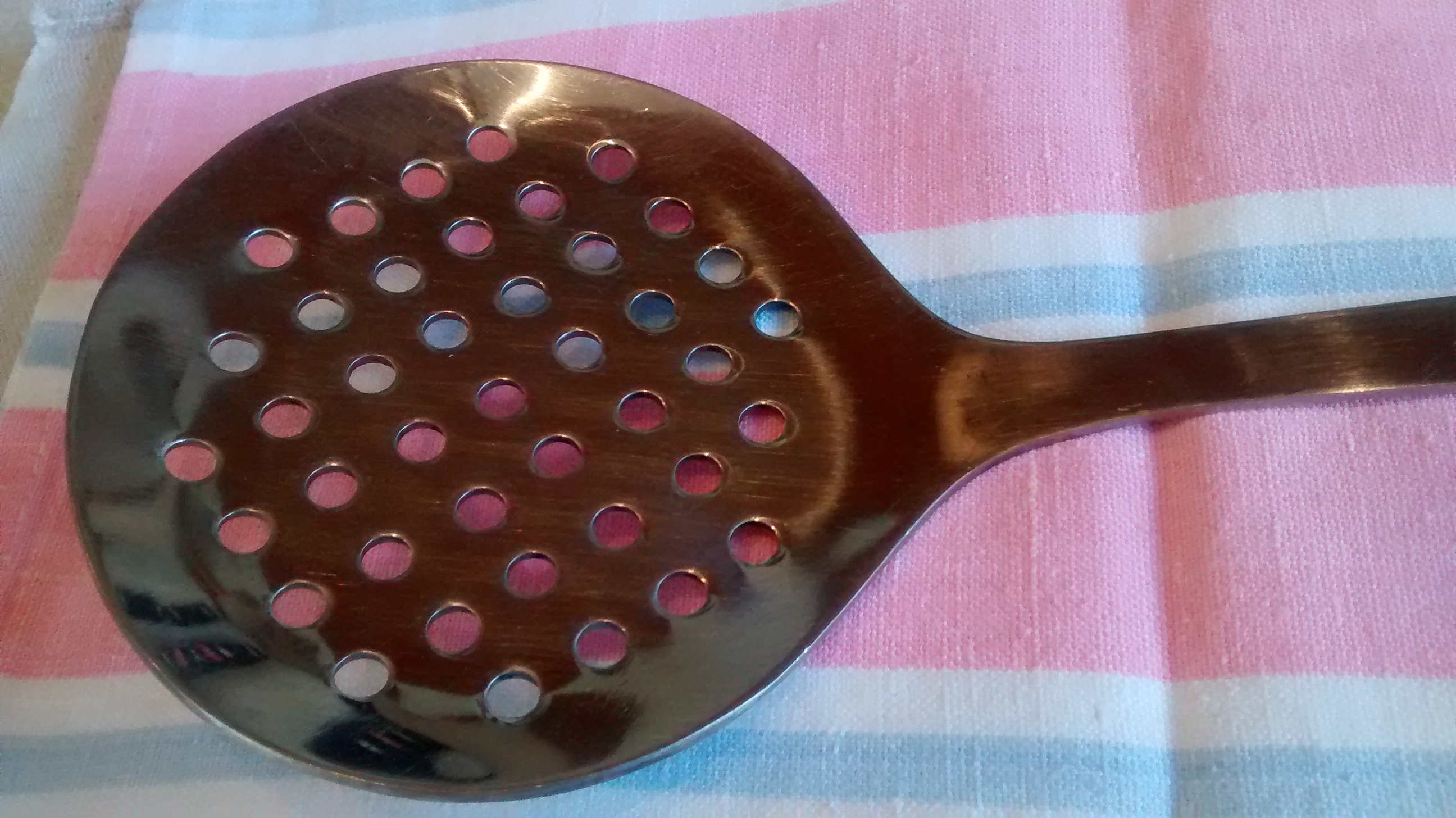
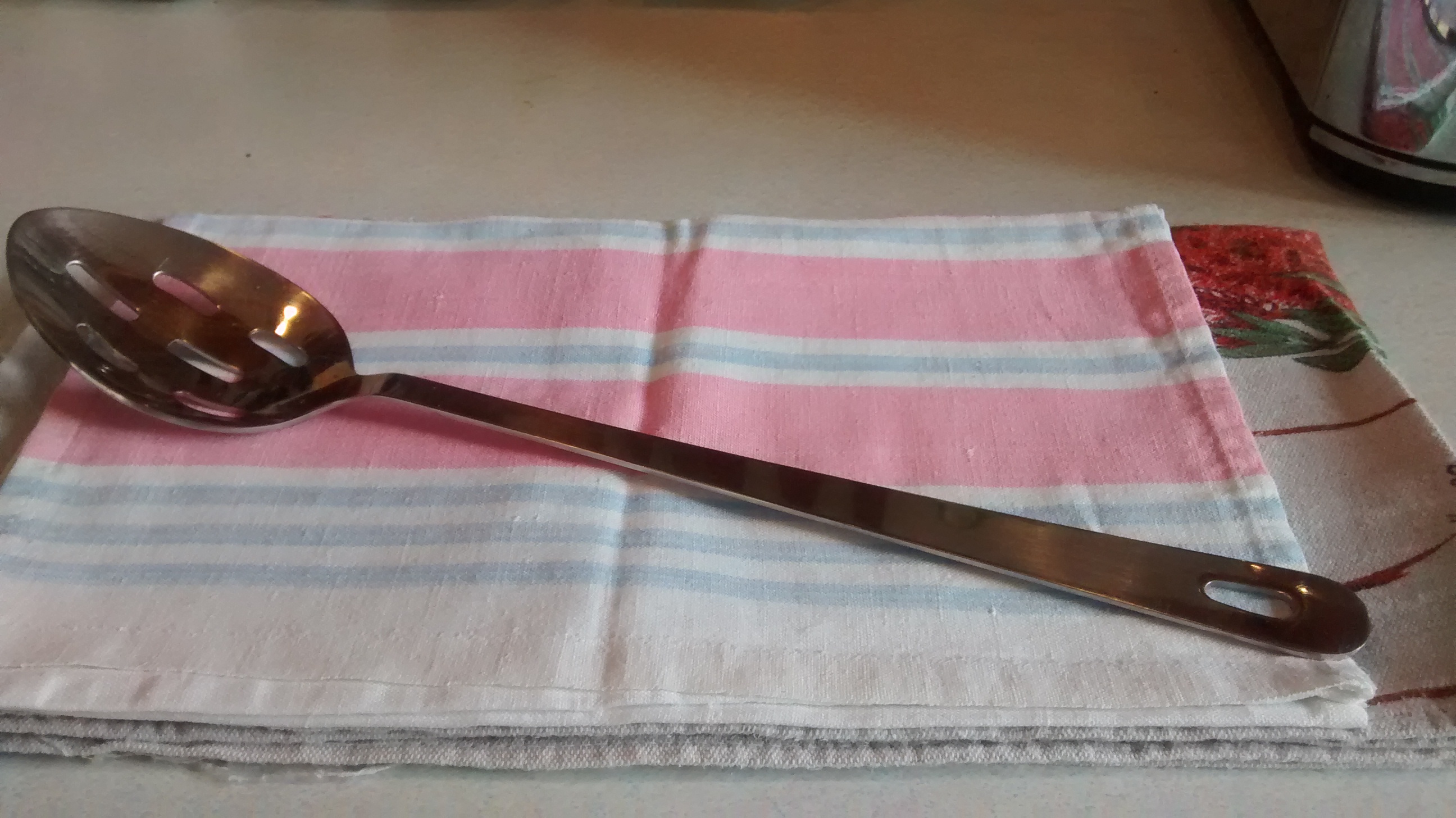
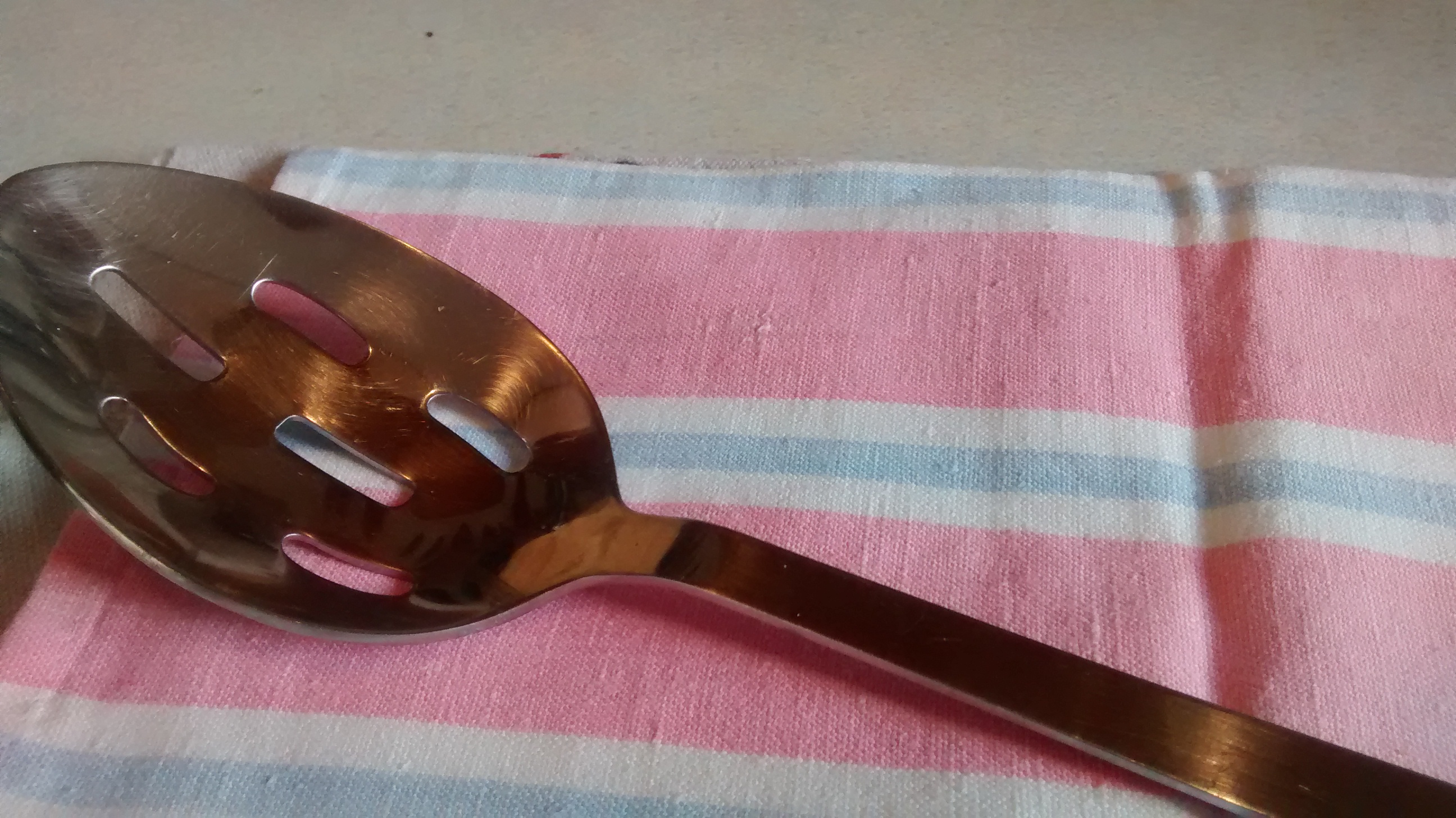
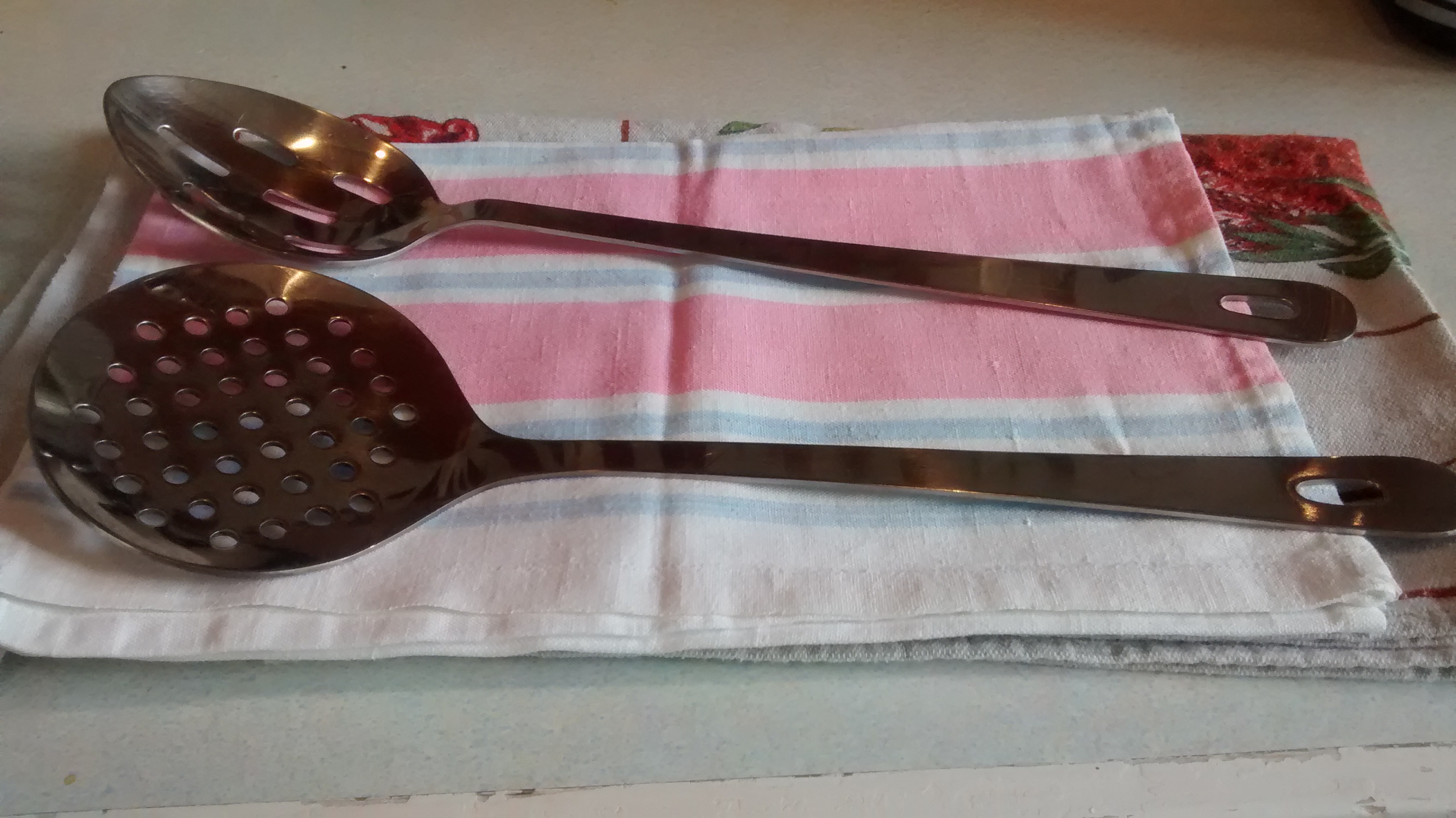
As they cook they will float to the surface, give them about another minute and then remove them with a slotted  or a perforated spoon and put them in a colander. I have a colander sitting in an empty pan by the side of the large pan in which I am boiling the dumplings.

IMG_20151019_115258775

IMG_20151019_115514089

IMG_20151020_094306951

IMG_20151020_094317425

IMG_20151020_094418143

I find that the maximum from putting  them into the water to taking them out will be 3 minutes, if you cook these too long they will start to fall apart.

Serve as suggested above with melted butter, bacon bits or with a sauce.

13 Feb 153
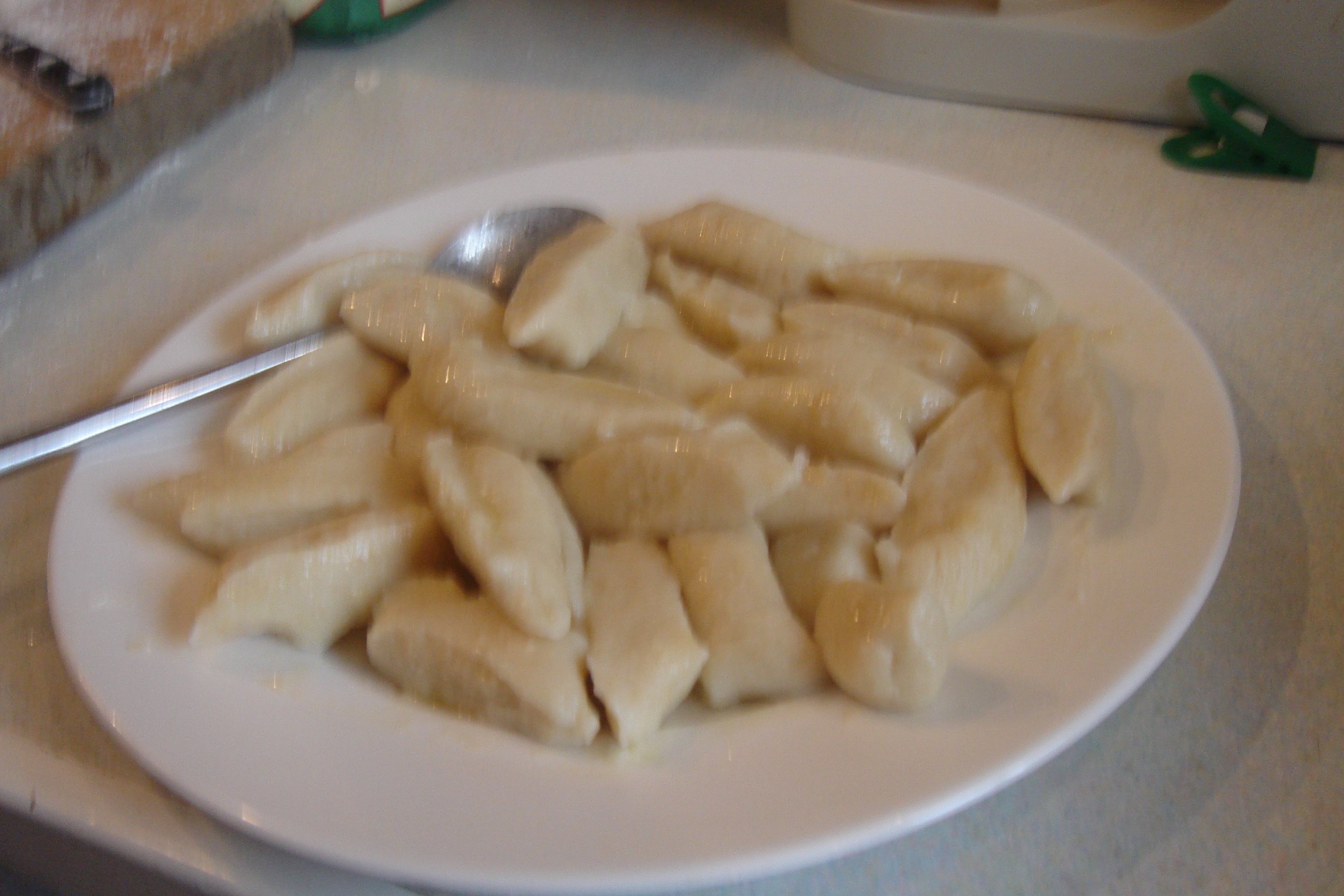
Cooked Kopytka Waiting for Butter,      Bacon or Sauce

13 Feb 152

*See my earlier post

Gołąbki – Cabbage Rolls  – with Mushroom Sauce

For  mushroom sauce recipes.

Kartoflane Placki – Polish Potato Pancakes

Placki (the plural of placek) are any sort of flat cakes usually round in shape – baked or fried – sweet or savoury.

IMG_20150811_170957126

  • These fried potato pancakes are so wonderful and although they take a bit of time to prepare it is worth it.
  • I tend to make these in the winter months as they are best made with older starchy potatoes.
  • They are best eaten straight from the frying pan – more a family dish than fine dining.
  • They should be thin and slightly crispy at the edges.
  • My father said he used to have them for breakfast in Poland.
  • My mother served them with fried eggs and bacon; one of my aunties serves them with curd cheese and chopped spring onions or with sour cream, in some parts of Poland they are eaten with sugar or jam!
  • I think this recipe crossed the Atlantic and is one of the origins of Hash Browns –  but I prefer these!
  • In Poland a  large breakfast size plate pancake topped with gulasz  – goulash  is known as – placek po węgiersku –  Hungarian pancake.

Ingredients

  • 4 large starchy potatoes such as King Edward or Maris Piper
  • 1 medium or large onion
  • 1 egg or just the egg yolk
  • Plain flour
  • Salt & pepper
  • *
  • Oil for frying

Method

  • Peel the potatoes then grate them using the fine size of the grater into a large bowl, this is the part that takes time – I have tried using the coarse grate but they are not as good.
IMG_20150811_165238337
Grating the potatoes

IMG_20150811_165251112

  • Leave to stand for a few minutes and the water from the potatoes will rise to the surface. If the potatoes are very watery pour of some of the water. The easiest way is to tip up the bowl slightly over the sink and hold down the potatoes with the palm of your hand.
  • Peel the onion and also fine grate it and add to the potatoes. This is the part that would often result in the grating of my knuckles  as I tried to use every last bit of onion – I now often use some form of electrical mini-chopper to get a pulp of onion.
IMG_20150811_165955962
Onion Pulp
  • Add the egg, salt & pepper.
  • Add enough plain flour so that the mixture is thick.

IMG_20150811_170357625

  • Heat some oil in a frying pan, a thick cast iron one is ideal, place large spoonfuls of the mixture onto the hot oil and flatten them out with the spoon or spatula. A pan should be able to hold 3 or 4. Fry till golden on both sides.
  • They should be thin and  slightly crispy at the edges.

IMG_20150811_170538654_HDR

  • Do not have the pan too hot or they will burn on the outside and be raw in the centre.
  • Do not have the pan too cool or they will end up too greasy and not crispy.

IMG_20150811_171517471

  • Serve immediately or keep them warm in the oven on a low heat whilst you make more.

IMG_20150811_171511857

IMG_20150811_173653863

Polish Mixed Vegetable Salad

Before the days of shops that sell fresh and frozen produce all year round from all over the world, this salad could be made in the autumn and winter using bottled or tinned vegetables.

This salad is made using mainly cooked chopped vegetables and the aim is to make it colourful and to balance the colours and size of the ingredients.

The main three colours are white, green and orange.

IMG_20150826_184257660
Salad in a Royal Doulton Dish – Carnation – 1982 to 1998

White

The white is achieved from: potatoes, celeriac or  white beans such as haricot or cannellini  or even tinned baked beans with the sauce rinsed off.

Green

The green is achieved from peas , whole green beans or gherkins. I use frozen peas or whole green beans.

Orange

The orange is achieved from carrots or bottled paprika.

The following salad was made from potatoes, carrots and whole green beans which were cooked before assembling.

IMG_20150826_153017563
Steam the Potatoes and Carrots

IMG_20150826_153001188

Boil or steam the whole green beans.

Once the vegetables have cooled then chop them into small pieces.

IMG_20150826_154347559IMG_20150826_155112059

IMG_20150826_155125333

Mix the vegetables together with several tablespoonfuls of mayonnaise – original or light – just enough to lightly coat the vegetables.

Add salt and pepper to taste.

IMG_20150826_184307974

Variation 1

Add 2 hard boiled eggs which have been chopped to the salad.

IMG_20150902_161945936

IMG_20150826_184529924
Mixed Vegetable Salad with Hard Boiled Eggs

Variation 2

Use Celeriac instead of potato.

Peel the celeriac then cut it up into large pieces and steam these – chop the cooked celeriac into smaller pieces when it has cooked and cooled.

Polish Potato Salads

Potato salad is very popular in Poland especially as it can be made nearly all year round.

This can be served with cold meats and Polish style sausages as well as with hot dishes such as roast pork or chicken.

I like to make potato salad using starchy potatoes as I love the soft fluffy texture.

My favourite starchy potatoes are King Edward and Maris Piper.

The King Edward variety was introduced in the  United Kingdom in 1902 and was named after King Edward VII as this was his coronation year.

The Maris Piper variety was released in 1966  and was named after  Maris Lane in Trumpington on the outskirts of  Cambridge which at that time was the home of the Plant Breeding Institute.

Classic Potato Salad

IMG_20150806_194024472

Ingredients

Starchy Potatoes – from 3 large potatoes upwards

1/2 – 1 onion – chopped fine

Mayonnaise – I like to use Hellmans – original or light

Salt and pepper to taste.

Method

Peel the potatoes and cut any large potatoes into quarters and then boil or steam them to cook them.

Strain the cooked potatoes in a colander and leave them to cool slightly.

Rough chop the cooked potatoes using a knife or a spoon – you do not want the pieces to be too uniform in size.

Add the chopped onion to the potatoes and then several tablespoonfuls of mayonnaise and mix together.

I like to use potatoes that are still slightly warm as I find the mayonnaise coats them better.

However you can use cold potatoes – maybe some you have left from another meal – the salad will still be good.

Add salt and pepper to taste.

Leave to cool completely before serving.

IMG_20150806_194007779
Simple Classic Potato Salad

Variations on the Classic Salad

Potato Salad with Gherkins

IMG_20150806_183403685

Chop 2 or 3 gherkins and add these to the Potato Salad.

IMG_20150807_110645717
Chopped Gherkins


IMG_20150807_112124051
Potato Salad with Gherkins

Potato Salad with Gherkins and Boiled Eggs

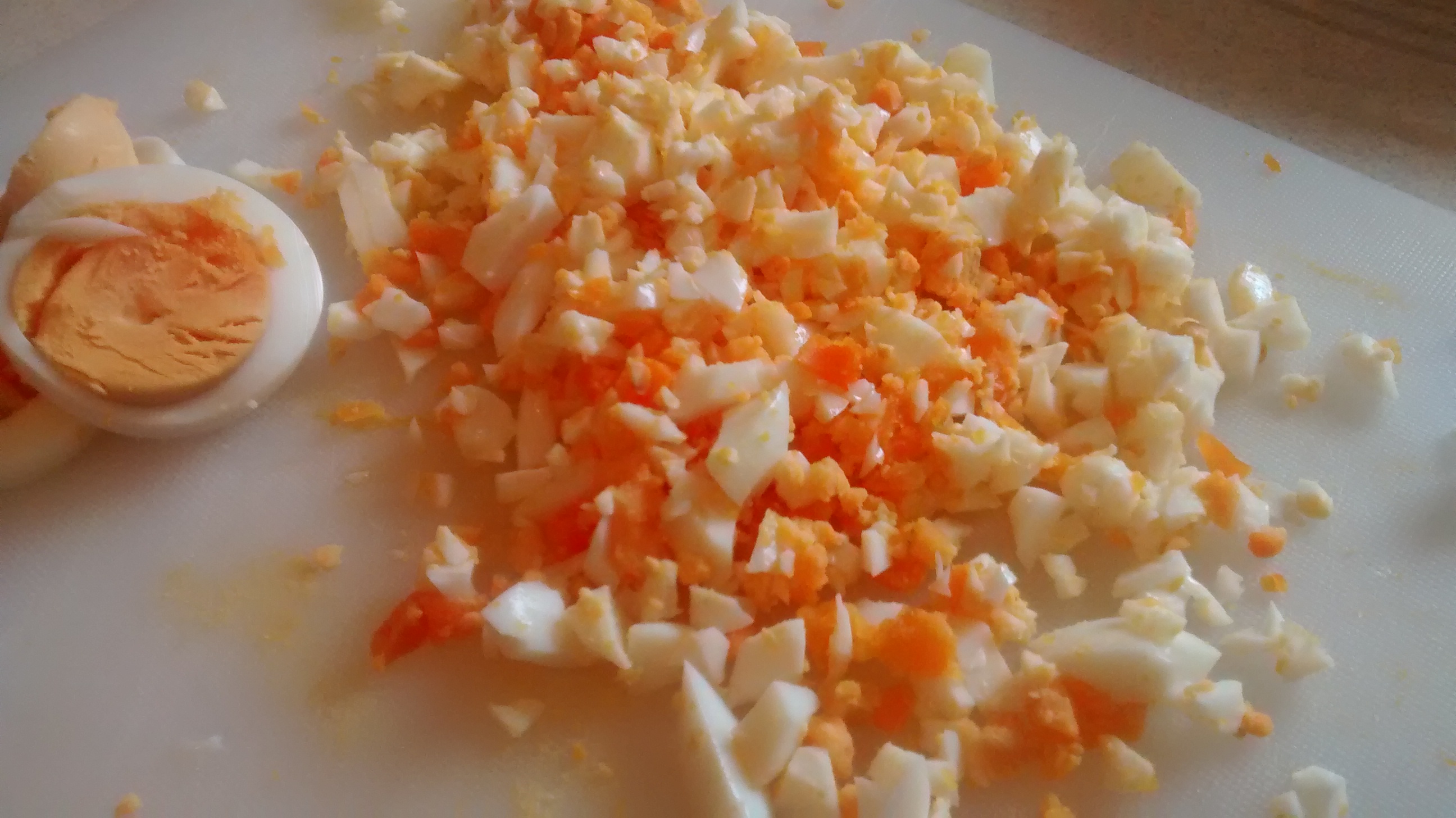
Chop 1 or 2 hard boiled eggs and add these to the potato salad with the gherkins.

IMG_20150828_124410565
Chopped Hard Boiled Eggs
IMG_20150807_114425535
Potato Salad with Gherkins and Hard Boiled Eggs

Potato Salad with Peas

Cook some frozen peas and add these to the classic potato salad

IMG_20150806_192627173
Cooked Peas
IMG_20150806_194015128
Potato Salad with Peas

Poles Adopt The Potato and Make it Their Own!

IMG_20150910_122328634

There are so many recipes and uses for the potato in Poland you would think that this was the country it originated in.

IMG_20150910_122355675

There are dozens upon dozens of recipes for potatoes, as part of a meal where it is very recognisable as potato such as when boiled or mashed, as a pancake or as a dumpling, or cold in a salad, or hot in Polish potato soup. As well as that potato starch is used as a thickener in savoury and sweet dishes and to make cakes and pastries. Potatoes have also been used to make  wódkavodka and often  samogonka -home brew vodka.

The potato plant originated in the Andes mountains of South America and was cultivated by the Incas. The part we eat is the tuber, which stores starches and sugars, of the plant Solanum tuberosum.  It is related to the deadly nightshade and the tomato (also from South America)

The Spanish Conquistadors came into contact  with the potato in around 1537 and it came across the Atlantic to Europe in around 1570.

King Jan III Sobieski grew potatoes on his estates in the 17th century – from tubers he sent back after the Battle of Vienna which was in 1683.

In the 18th century around 1760 – King August III – had potatoes on his estates and it became a fashionable vegetable.

Potatoes became part of the diet alongside kasza – porridge/groats/grits – made from buckwheat, barley or millet.

There are two words for potato in Polish – kartofel  and  ziemniak

Kartofel  is from the German word kartoffel – this was the word my parents used.  This German word itself comes from the Italian word tartufuli which means truffle like, whereas the Italian word for potato is patata.

Ziemniak  comes from the word ziemia which means earth or ground – so ziemniak means something which is from the earth – this word seems to be more popular nowadays.

The potato is well suited to grow in cold  waterlogged and often frozen  soil – which is often the case in Poland.

Care must be taken when storing potatoes so they do not  get frozen or the starches change to sugars and the potatoes will quickly go rotten.  I remember my father saying that that they stored potatoes in pits in the ground in their barn.

In post World War 2, Poland has became one of the top three potato producers in the world.

Look out for many future posts with potato recipes – below is a preview of some of the photographs

IMG_20150811_165238337

IMG_20150902_132223352

IMG_20150806_194007779

IMG_20150907_170224421IMG_20150811_171511857

Ogórki – Gherkins

IMG_20150807_110414045

Gherkins are cucumbers that have been fermented in brine or pickled with vinegar.

Botanically cucumbers are fruit although they are a vegetables from the culinary point of view.

In Polish the word ogórki means cucumbers.

Kiszone ogórki  means  fermented cucumbers –  either in brine or vinegar.

Letnie ogórki means summer cucumbers – which are  fresh salad cucumbers.

The Latin name for the cucumber is Cucumis sativus and it is a member of the gourd family and so related to pumpkins and melons.

It is thought the plant originated in India and then was taken to Greece and from there to northern Europe.

I have read that the making of pickles by fermenting in brine is over 4,000 years old.  This would preserve vegetables throughout the winter – well before the days of frozen food and supermarkets!

A quick look at the journey of the word  – Gherkin – according to several dictionary sources.

This is a word that started in Greece and travelled to England & America via Poland, Germany and The Netherlands.

Angourion – Medieval Greek for cucumber.

Ogórek – Polish for cucumber

Gurke – German for cucumber

Augurk – Dutch for a brined or pickled cucumber

Gherkin  – English for a brined or pickled cucumber

In Poland, July & August  are the main months for making gherkins at home and once when I was there at that time in my relatives’ houses every container seemed to have been put into use for a stage in their production.

Everyone has their own special recipe using brine and sometimes vinegar with the addition of garlic and herbs and spices – the most often used is the flower head of the dill plant – hence we get dill pickles.  Some methods are very quick taking just a few days others take longer.

The type of cucumber used is a different variety than the salad cumber it is shorter, fatter, often knobbier and has a lower water content.

I cannot at the moment give you a good recipe for making gherkins as I have rarely seen the right variety of cucumbers for sale in England – maybe now with more Polish shops I might see some next year and try out some recipes.

The bought gherkins I like are the Polish Krakus ones.

IMG_20150806_183403685

Another type I like are ones you can buy in Lidl – these are made with sugar and vinegar and are sliced lengthways – they have only a slight vinegar taste and are sweet – I do not like the very vinegary kind.

IMG_20150806_183411786

There are many uses of gherkins in Polish cookery – the most famous must be gherkin soup  – which I just love – but that recipe I will cover later once I start to write about soups.

Of course gherkins – form part of many salads.

IMG_20150807_110423969(1)
Gherkins Sliced Lengthways – a very simple salad

Gherkin and Tomato  Salad

Ingredients

3 or 4 Gherkins – cut into discs

4 or 5 Tomatoes- cut into half & then thinly sliced

1 small onion – finely chopped

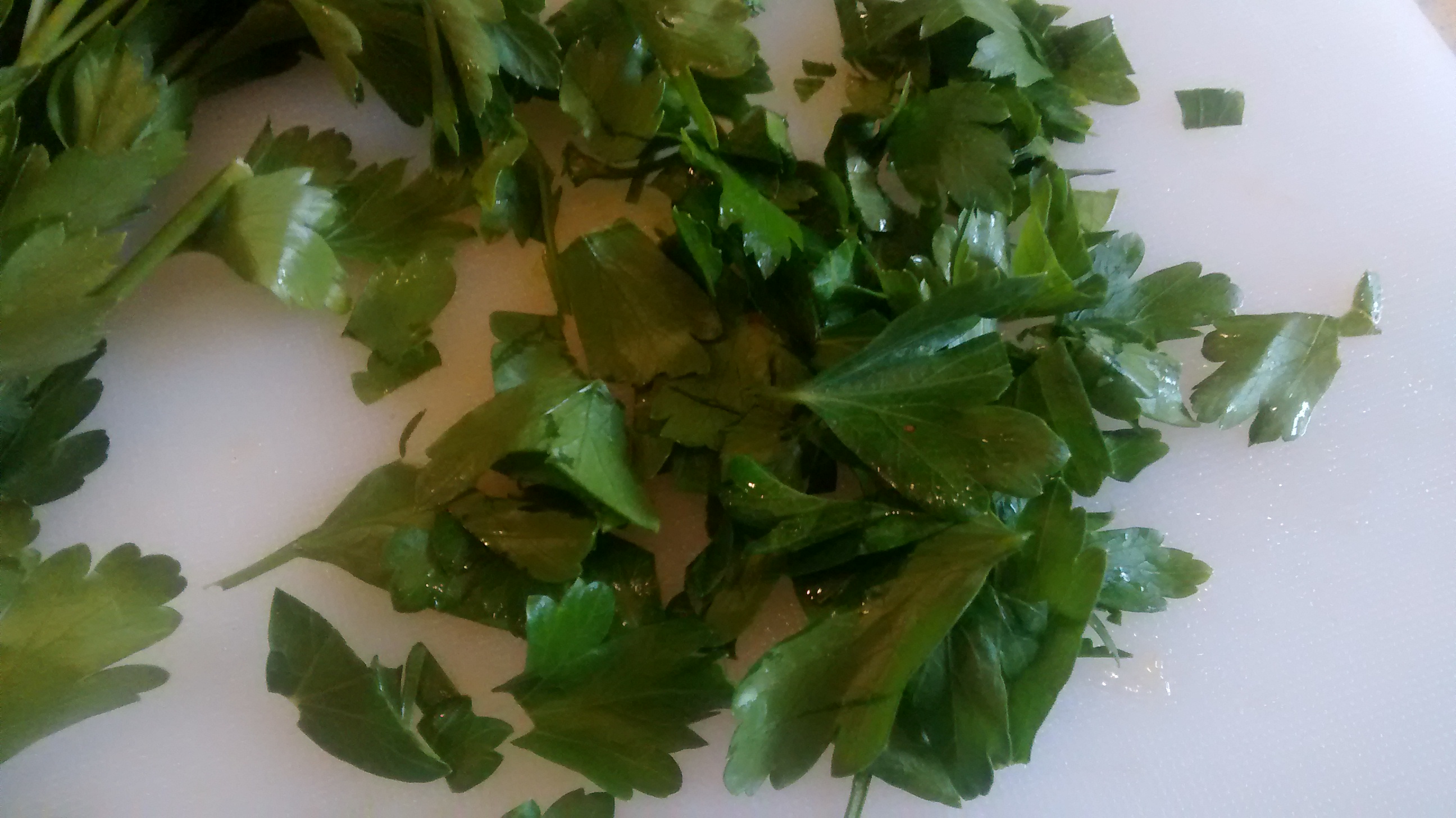
Flat-leaved parsley  – finely chopped – to garnish

Salt and pepper to taste.

Method

In a bowl mix  together the gherkins, tomatoes and onions.

Sprinkle with a little salt and add 1 or 2 tablespoons of the liquid from the gherkin jar (if none is available then use some lemon juice) and mix again.

Place into a serving dish and sprinkle with chopped flat leaved parsley and freshly ground black pepper.

IMG_20150902_161728804

IMG_20150902_161720963

Tomato Salad

IMG_20150910_124432805_HDR

IMG_20150910_124500132

The  tomato is botanically the fruit of Solanum lycopersicum, although from a culinary point of view it is a vegetable.

It belongs to the deadly nightshade family as does the potato.

The tomato plant originated in the Andes in South America and tomatl was the name  in the Nahuatl language give to it by the Aztec people, which then became tomate and then tomato in English.

The tomato was brought over to Europe by the Conquistadors in the late 15th Century.

The original fruits were yellow hence the Italian name pomodoro (pomo d’oro – apple of gold).

When the Italian princess, who became Queen Bona of Poland on her marriage to King Zygmunt the Old, came to Poland with her chefs in the 16th Century , the tomato was introduced to the Polish diet.

Tomato in Polish is pomidor – so you can see or rather hear its Italian root.

Home grown tomatoes are of course the best, however here in the North of England I have not had much success in growing them outdoors.

To get the best flavour from tomatoes it is best NOT to keep them in the refrigerator.

IMG_20150910_124432805_HDR
Keep your tomatoes at room temperature

A simple tomato salad is served in Poland, always it seemed to me with the addition of onions, chives or the green part of spring onion.  For many it is standard fare for breakfast with cold meats or Polish curd cheese.

Ingredients

Tomatoes – thinly sliced into whole rounds if small or halved if large.

Half an onion – finely chopped  or

Chives or the green part of spring onions  – finely chopped

Lemon juice

Salt and pepper to taste.

Method

Arrange the tomato slices on a plate

Squeeze a little lemon juice over them

Sprinkle a little salt and pepper over them

Garnish with onion or chives

IMG_20150808_173117488(1)
Chives & Spring Onions

IMG_20150828_124157431

IMG_20150730_174515396
Tomato Salad with Onions
IMG_20150730_174511139
Tomato Salad with Chives
IMG_20150730_174526959
Salads for Breakfast
IMG_20150731_062705601
Tomato Salad, Curd Cheese & Rye Bread – Typical Breakfast Fare

Cabbage Salad

Fresh cabbage features in many salads in Poland, the following much loved version can be made throughout the year.

In English the word coleslaw is used for a cabbage salad – this word is from the Dutch koolsla –  kool – cabbage,  sla – salad.

IMG_20150719_092859028

Ingredients

IMG_20150719_075848353

IMG_20150826_153305083
I like to use Light or Original
  • 1 or 2 carrots
  • Hard white cabbage – around a quarter or half a medium one
  • 1 eating apple – red skinned is nice for colour
  • 1 onion – I like to use a red one for colour
  • Mayonnaise
  • Lemon juice – optional
  • Salt & pepper to taste

Method

I always start by grating the carrot using a large grater and then cut the cabbage into fine strands so that I have equal quantities of orange and white.  Put these into a large mixing bowl.

IMG_20150719_075813054

I find that 1 carrot is often enough for the amount I need. In the photo below 2 carrots were used to make a larger amount of salad.

IMG_20150719_081639225_HDR

  • Chop the onion into small pieces and add this to the bowl.
  • Grate the apple including the skin and add this to the bowl.
  • Add several tablespoons of mayonnaise and mix well to coat the mixture.
  • You might want to add a little lemon juice to make the mayonnaise a little thinner.
  • Add some salt and pepper to taste.
  • Serve with cold smoked Polish style meats or sausage or with a hot roast or casserole as a good contrast.

IMG_20150719_092914473

Śmietana – Soured Cream – A Classic Polish Salad Dressing

Śmietana – Soured Cream – must be one of the most used salad dressings in Poland.

Soured cream is used  just on its own and sometimes if it is thick or because they like it that way people will add lemon juice to make it more runny.

I am going to write about the three classic salads which will have soured cream on them.

Mizeria

Legend has it that this salad was beloved by Queen Bona, the Italian princess, who married King Zygmunt 1 in the early part of the 16th Century.

She is famous for bringing her chefs and a variety of vegetables to Poland  and many vegetables names in Polish have Italian roots.

The word mizeria comes from the Latin meaning misery.  It is said that this salad made the Queen homesick for Italy.  I can understand the cucumber – not sure about the soured cream – but that is the story.
It certainly is a delicious cooling salad for a hot day.

I was talking with one of my Polish friends earlier last week and I said that I was going to write about mizeria and she said “Oh there were 20 people for dinner yesterday and I made a huge bowl of mizeria – it was delicious and it  was all eaten!”

It is the salad that everyone loves to make in the summer and it is so easy.

Ingredients

Just – Cucumber, Soured Cream and a little salt.

Option extras

Lemon juice added to the soured cream.

Some people add little bit of icing sugar.

Dill or chives as a garnish.

Take a cucumber and peel off the skin. If the skin is thin then sometimes I do not peel it all off,  just stripes so that you have a nice pattern later of dark and pale green.

Cut the cucumber into thin slices and put them into a bowl

IMG_20150826_152124939

IMG_20150826_152058186

Lightly salt the cucumber.

IMG_20150826_153257903

Add several spoonfuls of soured cream to the cucumber and mix them together, you want to coat most of the slices.

Sprinkle with a garnish of chopped dill or chives if desired and serve.

This is delicious with Polish style smoked meats and sausage and also with  hot roast meats as a lovely contrast.

IMG_20150804_135839012
Mizeria Garnished with Dill
Dill
Dill

IMG_20150804_135831841

IMG_20150826_184651144
Mizeria Garnished with Chives

IMG_20150826_184656690

note

This is best made with  young fresh cucumbers in summer.  However now that you can get greenhouse grown cucumbers all year round I sometimes find that they are a bit old and woody,  if this is the case I would remove the seed area – this is best done by cutting the cucumber lengthwise in two and removing the seeds by pulling a teaspoon down the seedy middle. Then you can slice the cucumber as before.

Some cooks salt the sliced cucumber and leave this for about half an hour and then discard the liquid before adding the soured cream.   I do not usually do this unless I am making it for serving at a much later time.

Radish Salad

Ingredients

  • Radish and Soured Cream.
  • Chives or Spring onions to garnish.
  • Prepare the radishes by removing the hairy roots and stalks.
  • Thinly slice the radishes.

IMG_20150808_173026142

  • Put the radish slices in a bowl and add several tablespoons of soured cream (thinned with lemon juice it desired).
  • Garnish with chives or the green part of spring onions, finely chopped.

IMG_20150828_124157431

IMG_20150808_173518034

IMG_20150808_173528200

I love the way the radish skin colour seeps into the soured cream after a while and makes it pale pink.

Lettuce Salad

This is the most simple salad you can make – just use lettuce leaves pulled off from the head of lettuce, wash and dry them using a tea towel or a salad spinner  and add several tablespoons of soured cream (thinned with lemon juice it desired) and mix them together.

Garnish with a few chives if you have them and serve.

IMG_20150808_173032852

IMG_20150808_174131180

IMG_20150808_174138916

Polish Salads – All Year Round – Both Raw and Cooked

Sałata is the Polish word for lettuce.

IMG_20150808_173032852

Sałatka is the Polish word  my parents used for salad.

However when I visited Poland for the first time I realised that there is another word for salad and that is – Surówka.

Surówka – this come from a Polish word meaning raw.

There is a distinction between the two in that a sałatka is a dish served cold of mainly cooked vegetables and a surówka is a dish served cold of mainly raw, pickled or fermented vegetables.

Poland 2 115
Some ingredients for salads for sale

As it is hard in English to differentiate between the two – I will be writing about many classic cold Polish vegetable dishes and will be calling them all salads.

Fruit, cold meats, fish, either cooked or pickled, and hard boiled eggs also feature in these salads.

A salad accompaniment with a meal is often more usual than hot cooked vegetables and a tomato or gherkin salad is normal fare for breakfast.

Vegetables that have been pickled, fermented, bottled or canned will feature throughout the year at least once a day in Polish meals.  Before widespread refrigeration this is how people preserved food for use throughout  the winter.

Old Polish houses always had cellars, the Polish word is piwnica, from the word piwo which means beer so it means the place where beer is kept.  The ones I have seen in Poland were filled with bottled fruit and vegetables as well as jams, ready to make meals and salads throughout the year.  In blocks of flats there is still in the basement level, cellar space for each flat.

My aunties said they could not imagine life without a cellar. Their cellars were filled with many jars of bottled paprika that they had prepared – what in England we call peppers or capsicums,  various mixed vegetables, cranberries and lingonberries.

IMG_20150819_064345546
Paprika – Capsicum – Pepper

I am very lucky in having  two cellars in my house and spent a week in spring this year organising them – including an area for tinned and bought bottled vegetables ready for making salads amongst other things.

Cellar – Mainly for Food

IMG_20150128_074150351

IMG_20150128_074119449

IMG_20150128_074103642

IMG_20150128_074219079

Cellar – Mainly for Drinks

IMG_20150827_080423772

IMG_20150827_080323322

IMG_20150827_080534068


Salad dressings

Three of the most popular salad dressings used are:

Lemon Juice

IMG_20150817_140017297
One of my cousins came to visit me a couple of weeks ago and brought me this lovely, large, glass lemon squeezer.

If lemons are scarce or expensive or for convenience in Poland you can buy packets of citric acid which you can mix up with water.

Smetana – Soured Cream

Nowadays you can find soured cream in many English stores but if there is none then lemon juice added to fresh single cream will give nearly the same result.

IMG_20150826_153257903

Mayonnaise

Although I have made mayonnaise, I tend to buy it now and my favourite is Hellmann’s – original or light (the very low fat version I think is horrid as it has a  strange taste and texture). Sometimes if making the salad ahead of time I think the original is a bit better as it does not get as watery from the vegetables but mostly I use the light version.

IMG_20150826_153305083

Vegetables waiting to be made into salads

IMG_20150806_192627173

IMG_20150723_090818508

IMG_20150711_183051570_HDR

IMG_20150719_075813054

IMG_20150806_183403685

Salad Garnishes

Garnishes  are chopped fine and sprinkled on the top of the dish of salad,  these are often: flat leafed parsley, dill, chives, the green part of spring onions and hard boiled eggs.  If none of these are available ground paprika might sometimes be sprinkled on the salad.

IMG_20150808_173117488
Spring Onions and Chives

IMG_20150828_124157431

IMG_20150804_135831841
Dill Garnish
IMG_20150828_124410565
Chopped Hard Boiled Eggs

IMG_20150828_124350022