Piernik with Chocolate

I came across this recipe in the book my Polish friend, who lives in Leeds, bought for me in Poland this summer.

20180916_153212


I thought it sounded interesting and I have adapted it slightly.

Piernik is a honey spice cake which has its origins in the 12th Century.

The spices used will have originaly been brought back by the Crusadors.  I make up a mixture of equal parts of cinnamon, cloves and cardamon.

Piernik in Poland is associated with the Christmas season and would be made for Christmas Eve and for Christmas Day, it would also be made for Święty MikołajDecember 6thSt Nicholas Day. This a day for present giving in Poland to children and I would always get a piernik shaped and decorated to look like the bishop that was St Nicholas.

As it is Święty Mikołaj next week on  December 6thSt Nicholas Day – I  thought this was a good day to post this recipe.

The addition of chocolate to coat the piernik is more recent. Chocolate made by Wedel in Poland started in 1851.

Here the chocolate is grated or chopped finely and added to the cake mixture.

The result is delicious and I will certainly be adding this to my Wigilia (Christmas Eve) menu.

I found grating the chocolate hard work – it was easier for me to chop this amount into very small pieces, using a cleaver type knife.

Ingredients

250ml runny honey

230g granulated sugar

2 large eggs (or 3 medium)

1.5 teaspoons of piernik spices (cinnamon: cloves: cardamon in equal amounts  so a half  teaspoon of each).

350g plain flour

2 teaspoons of baking powder

100g dark chocolate – grated or finely chopped

100g chopped mixed peel


Icing Sugar to serve

Method

Pre-heat the oven to GM3 – 160°C

Grease and line a 32cm x 22cm shallow Mermaid tin (use one sheet for the two long sides and the base).

Put the honey, eggs, sugar and the spices into a large bowl and whisk well together.

In another bowl mix the flour, baking powder, chopped/grated chocolate and the mixed peel.

Gently fold the flour mixture into the honey mixture and then mix it all together.

Pour the mixture into the tin and bake for around 1 hour 10 minutes, check it after 40 minutes and cover if it is starting to catch.

Test with a cake tester to check it is done and then leave it  in the oven for 10 minutes with the door slightly open.

Then put on a cake rack to cool.


Dust with icing sugar before serving.


Plates, cups & saucers are Lyndale by Royal Standard from the 1950s

Teapot is Café Culture by Maxwell Williams

Fruity Ribs

My Polish friend who lives in Leeds often goes back to Poland to visit relatives and to have a holiday.

This summer she brought me back a recipe book which covers  a year of meals (365 meals) divided into 4 sections – namely the 4 seasons.

20180916_153212


There are lots of lovely recipes in the book and I am sure I will be trying many of them.

Here are two I have tried already – adapted slightly to make life easier!

Recipe 1 (autumn)

1 or 2 racks of pork ribs

2 tablespoons of raisins or sultanas

120g of ready to eat prunes

120g of ready to eat apricots

3-4 tablespoons of plain flour

3 large onions – chopped

500ml dry red wine ( more might be needed or some extra water)

4 peppercorns

4 grains of allspice

4 cloves

1 teaspoon of  dried marjoram or Italian herbs

1/2 teaspoon of salt

3 – 4  eating apples (best if quite tart – such as Granny Smiths)

Sunflower oil for frying

Method

Place the apricots & raisins in a bowl and cover them with hot water and leave for around 30 minutes.

Pre-heat the oven to GM3 160°C.

Chop the ribs into 2 rib portions.

Put the flour onto a plate and then flour the ribs on both sides.

Fry the ribs lightly in hot oil on both sides.

Place the ribs in the bottom of a oven proof dish which has a lid.

Fry the onions until golden.

Slowly add some of the liquid from the soaked fruit and cook together mixing it well.

Add this to the ribs in the dish.

Add the peppercorns, allspice, cloves, marjoram and salt.

Pour the red wine over the rib mixture.

Place in the oven for around 45 minutes.

Cut the soaked apricots into strips and add these, the prunes and the raisins to the dish and give the mixture a stir.

Place back in the oven and cook for around 90 minutes to 2 hours until the meat is tender.

Check on the liquid level during this time and add wine or water if needed.

Remove the core from the apples and cut them into quarters (leave the skin on).

Place the apples, skin side down, on top of the ribs and place the lid back on.

Put the dish back in the oven for around 20 minutes.

When serving, place the cooked apples on top of the ribs and sauce.

Serve with boiled potatoes or rice.


Recipe 2 (spring)

Start this the evening before

Ingredients

1 or 2 racks of pork ribs

4 -5 tablespoons of runny honey

750 ml of apple juice (more might be needed)

Juice & finely grated rind of 1 lemon

100g of ready to eat prunes

3 -4  large tart apples (I used Bramleys)

3 cloves

Piece of cinnamon bark – around 10cm long

Method

Chop the ribs into 2 rib portions.

Coat both sides of the ribs with the honey and place them in a non-metal dish and sprinkle the lemon rind on the top.

Cover the dish and place it in a fridge overnight.

Next Day

Pre-heat the oven to GM3 160°C

Place the ribs into an oven proof dish which has a lid.

Add the cloves and cinnamon bark to the dish.

Peel, core and thickly slice the apples & sprinkle lemon juice on them.

Arrange the apples and prunes over the ribs.

Pour the apple juice over the contents.

Place the lid on top of the dish and put in the oven.

Cook for around 2 – 3 hours until the meat is tender.

You might have to add more apple juice when you check on the progress


Variation

Instead of ribs you might want to use slices of shoulder pork (750g  – 1kg) the method is just the same.

I tried this with recipe 2 – the one with the apple juice.


Served here with boiled new potatoes and brussel sprouts à la Polonaise.

Serving dishes  are Carnation by Royal Doulton, 1982 – 1998


Apricot Placek

This is a variation on Prune placek (flat cake) which I posted recently, this time using dried apricots instead of prunes.

There is a base of short crust type pastry, a layer of softened apricots and a cake topping which contains oats and sesame seeds.

Ingredients

Base

  • 175g plain flour
  • 125g butter
  • 50g caster sugar

Filling

  • 225g soft dried apricots
  • 1 tablespoon granulated sugar
  • 1 tablespoon of cornflour

Topping

  • 125g butter
  • 75g caster sugar
  • 1 tablespoon of honey
  • 125g soft dried apricots
  • 125g self-raising flour
  • ½ teaspoon of bicarbonate of soda
  • 125g rolled oats
  • 50g sesame seeds

Method – Base

  • Grease and line a rectangular 20 x 27cm tin.
  • Pre-heat the oven to GM 4 – 180°C
  • Rub the butter into the flour to made breadcrumbs.
  • Mix in the caster sugar.
  • Bring the mixture together to make a dough.
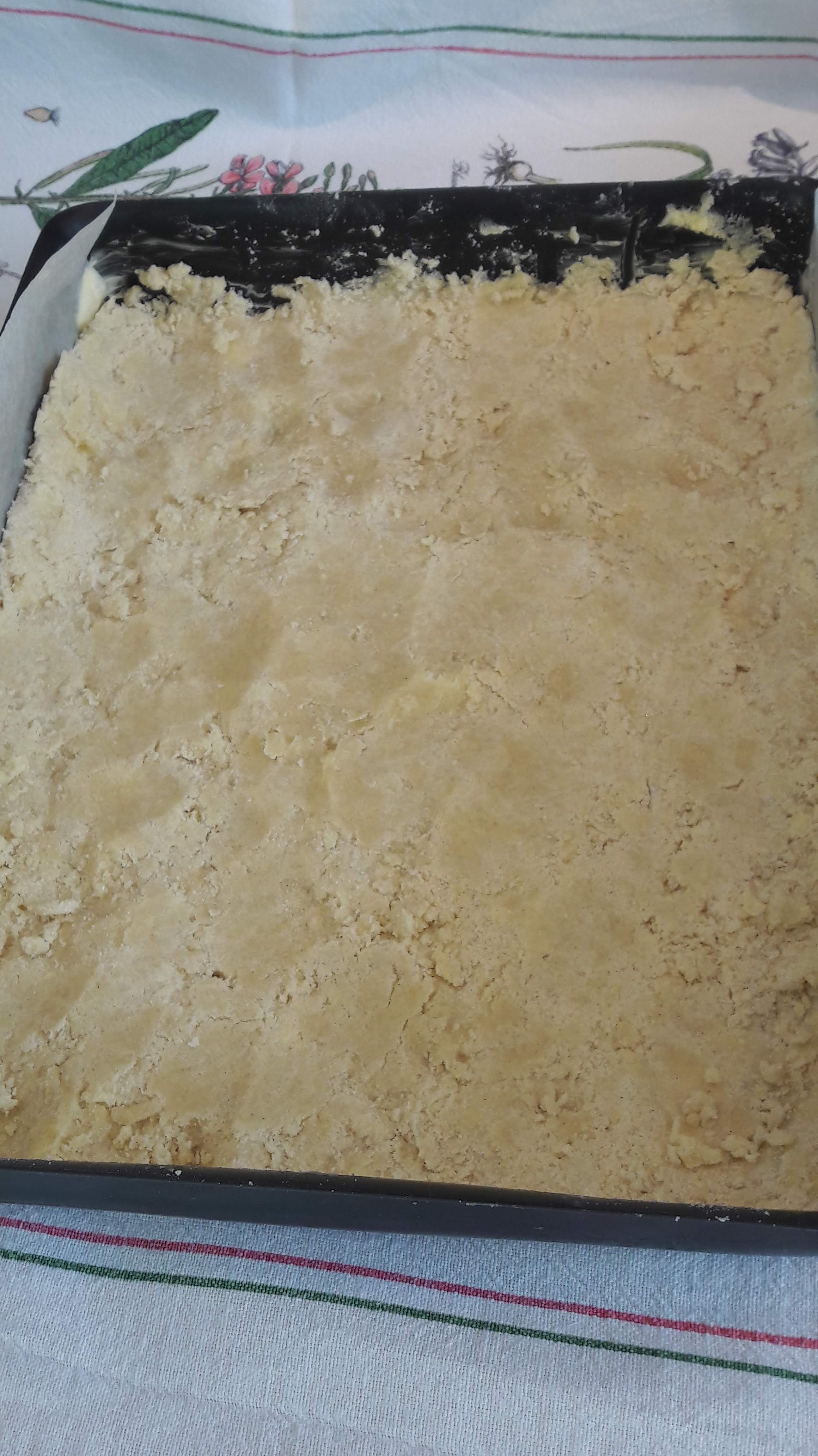
  • Press the dough into the tin.

  • Bake the base for around 25 minutes until it is golden on top.
  • Leave till it is cold.

Filling

  • Chop the apricots into small pieces.
  • Put the apricot and sugar into a small pan and cover them with water
  • Simmer the apricots, sugar and water  for 10 minutes until you have a soft pulp – take care not to boil the mixture dry – add more water if needed.
  • Mix the cornflour with some water to form a paste and add this to the mixture and stir until it thickens.
  • Remove from the heat and leave it till it is cooled completely.

Spread the filling on top of the pastry base.

Topping

  • In a pan gently melt the butter, sugar and honey.
  • Leave to cool slightly.
  • Chop the 125g of apricots into small pieces.
  • Add the apricots to the butter mixture and mix .
  • In a bowl mix the flour, bi-carbonate of soda, oats and sesame seeds.
  • Add the butter mixture to the dry ingredients and mix well in.
  • Spread this mixture over the apricot filling.
  • Sprinkle the reserved sesame seeds over the top.
  • Bake for 25 – 30 minutes until the top is golden.
  • Cut into squares or rectangles to serve.

Tea plates are Bramble Rose by Duchess from the 1960s.

Prune Placek

This recipe was given to me by one of my cousins (British born like me) who lives in Wembley.

Although this is not a traditional Polish recipe it does reminds me of a Polish placek (flat cake) and contains prunes which are very popular and used in many recipes in Poland.

There is a base of  easy to make shortcrust type pastry, a layer of softened prunes and a cake topping which contains oats and sesame seeds.

Muscovado sugar is used – this is definitely not a Polish sugar as it is produced in the process of refining sugar cane whilst in Poland sugar is made from sugar beet.

Note

You can make the filling ahead of when  you need it as it has to be cold.  I often make the base and the filling in the evening and then finish the placek the next day.

Ingredients

Base

175g plain flour

125g butter or margarine

50g caster sugar

Filling

225g no-need-to-soak prunes

1 tablespoon dark muscovado sugar

1 tablespoon of cornflour

Water

Topping

120g butter or margarine

60g caster sugar

1 tabelspoon of honey

125g no-need-to-soak prunes

100g self-raising flour

1/2 teaspoon of bicarbonate of soda

100g rolled oats

50g sesame seeds (keeping  back 2 tablespoons to sprinkle on the top)

Method

Base

Pre-heat the oven to GM 4 – 180°C

Grease and line a rectangular 20 x 27cm tin.

Rub the butter into the flour to made breadcrumbs.

Mix in the caster sugar.

Bring the mixture together to make a dough.

Press the dough into the tin.


Bake the base for around 25 minutes until it is golden on top.

Leave till it is cold.

Filling

Cover the prunes with water in a small pan and add the sugar.

Simmer the prunes, sugar and water  for 10 minutes until you have a soft pulp – take care not to boil the mixture dry – add more water if needed.

Mix the cornflour with some water to form a paste and add this to the mixture and stir until it thickens.

Remove from the heat and leave it till it is cooled completely.

Spread the filling on top of the pastry base.

Topping

In a pan gently melt the butter, sugar and honey.

Leave to cool slighty.

Chop the prunes into small pieces.

Add the prunes to the butter mixture and mix .

In a bowl mix the flour, bi-carbonate of soda, oats and sesame seeds.

Add the butter mixture to the dry ingredients and mix well in.

Spread this mixture over the prune filling.

Sprinkle the reserved sesame seeds over the top.

Bake for 25 – 30 minutes until the top is golden.

Cut into squares or rectangles to serve.

Variations

Other dried fruits can be used for the filling  – such as apricots, dates or figs.


The serving cake plate is a recent purchase from Leeds second hand market.

The design is Field Fare by James Cooper for Washington Pottery, Hanley, Staffordshire from around the 1950s.

The cups and saucers are another very recent purchase from a local car boot sale.

They are bone china by Colclough, pattern number 8266, from I think the 1970s.

The stoneware tea plate is Blue Mist, Burleigh Ware by Burges and Leigh Ltd  from the 1930s.


Pasztet – Pâté

Most Polish households have their own recipe for  pasztet.

Pasztet translates as pâté and is made with liver and other meats,  both cooked and uncooked, often with smoked bacon.  Left over cooked meats can be used.

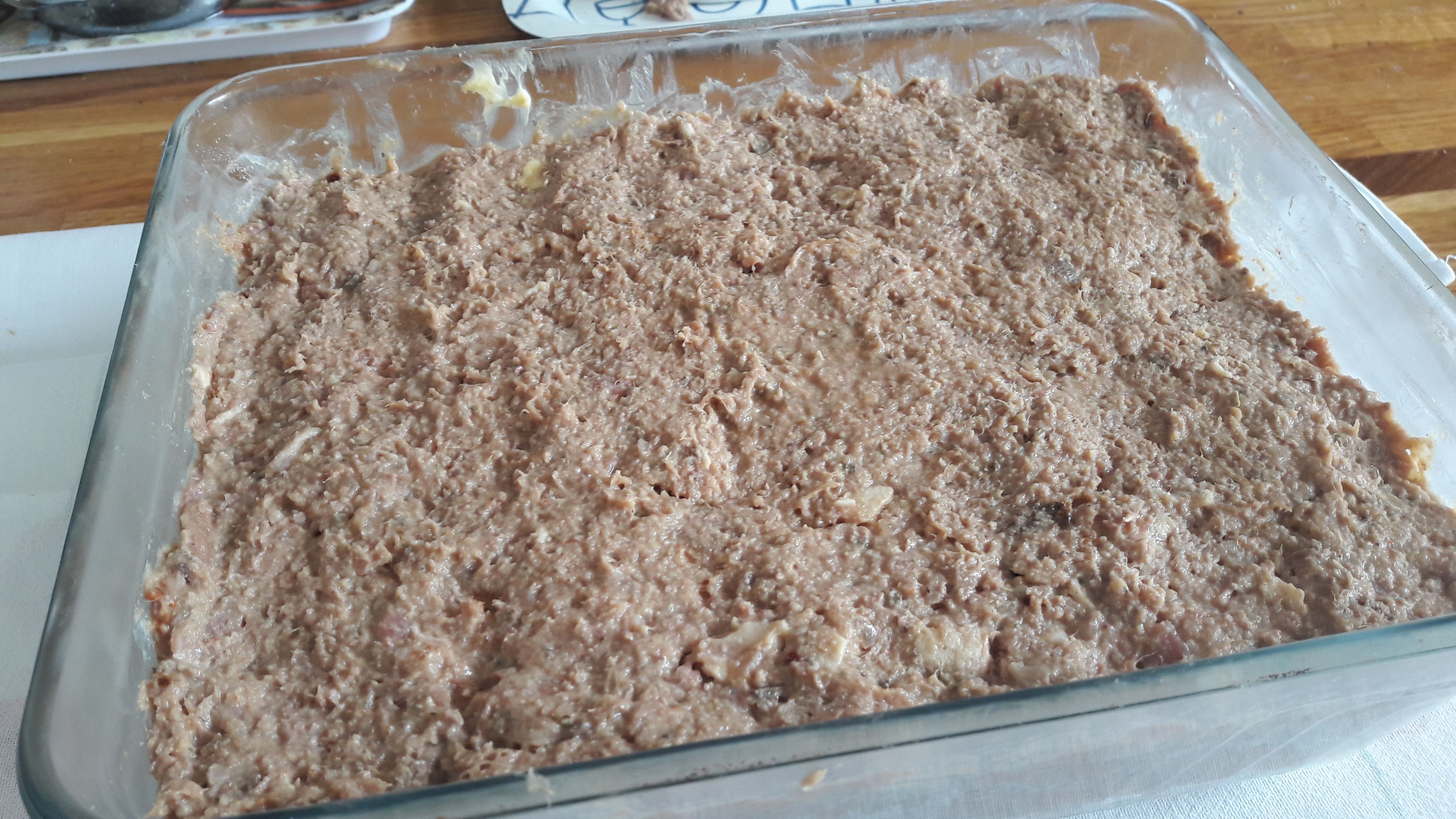
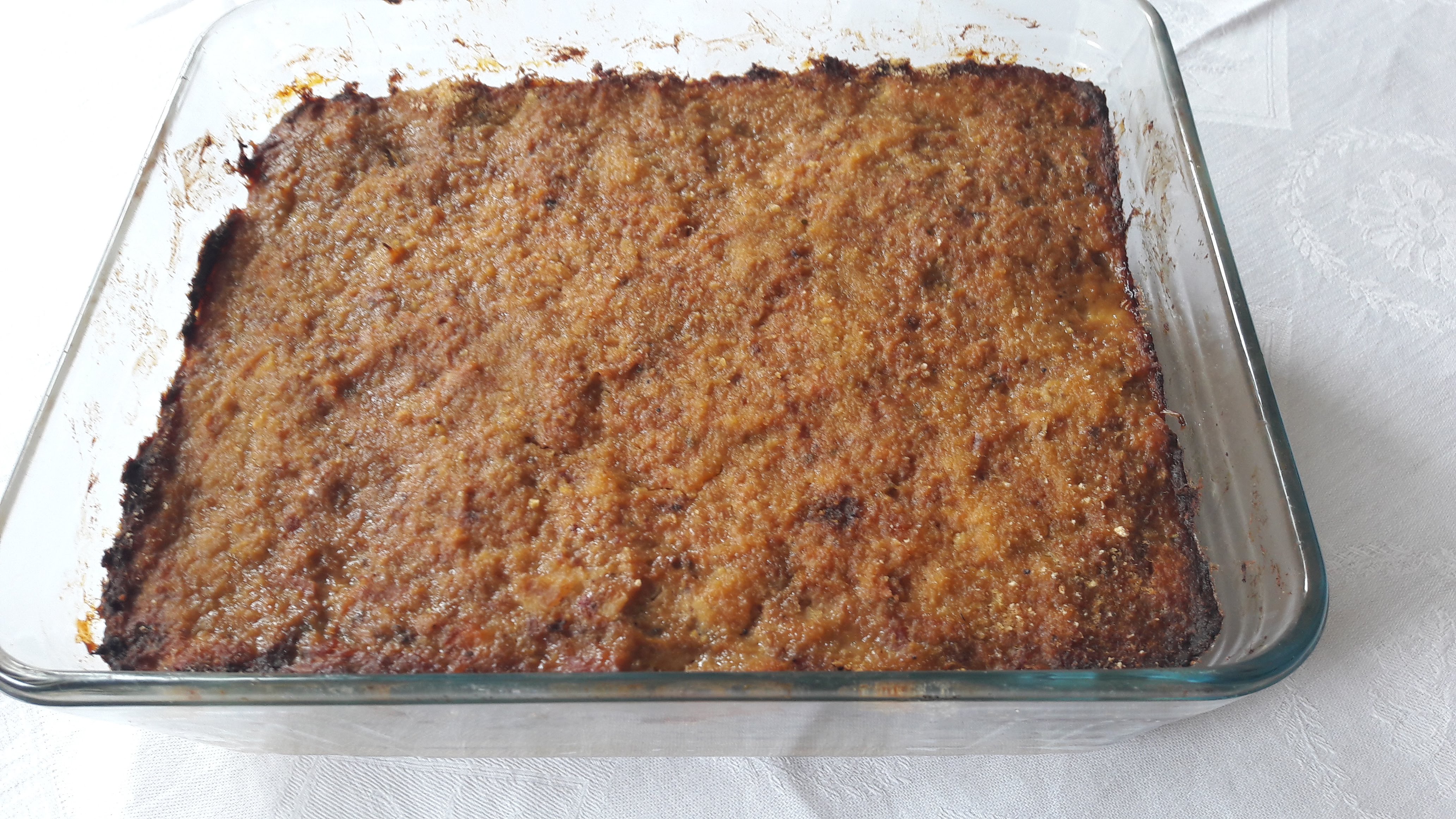
Pasztet is a baked pâté – more a terrine & usually the sort of pâté you slice rather than spread. (A sort of liver based meat loaf).

Many recipes use rabbit but I have not included this as it is not as readily available but  I hope try this in the future.

Pork shoulder is good to use and this can be casseroled first in a chicken or vegetable stock or left over from a roast.

Cooked chicken can be roasted or poached once again in a chicken or vegetable stock.

It is good if you have a mincer to mince the meat, however I do not have one and have used a stick blender to blend the liver and a sharp knife to finely chop the cooked meat and bacon.

Pasztet is often cooked in a  loaf tin – but I thought my quantities looked too large for my tin and have used a rectangular Pyrex dish – 19 x 24 x 8cm.

The cooking times quoted are approximate  – it will depend on the amount of mixture and the depth in the dish.

Recipe 1

Country Style Pasztet

The original recipe used finely chopped shoulder pork – I used minced outdoor breed pork.

I used smoked streaky bacon as Polish bacon tends to be fatter than English bacon and this is the nearest.

The amounts of meats does not have to be exact.

Ingredients

  • 500g minced pork
  • 350 streaky bacon (rind removed)
  • 350 – 450g of chicken livers
  • 3 eggs
  • 3 tablespoons of dried breadcrumbs
  • 2 cloves of garlic  – chopped fine
  • 1 teaspoon of Italian herbs or marjoram
  • Salt – maybe a little but often the bacon is salty enough
  • Pepper
  • Butter for greasing the dish.

Method

  • Pre-heat the oven to GM4 – 180°C.
  • Chop the bacon into small squares.
  • Blend the chicken livers using a small blender or stick blender.

Mix all the ingredients together in a large bowl.

  • Butter the dish well.
  • Place the mixture into the dish and smooth down the top.
  • Cover the dish with foil.
  • Place the dish in a roasting tin with added water.

Cook for around 70 minutes.

Remove the foil and cook for a further hour without the foil (more if necessary).

Leave to cool completely and then refrigerate for several hours.

Slice to serve.

Decorated here with fresh bay leaves – you can use parsley or similar.

Recipe 2

Chicken Pasztet

Any poultry can be used here – this is good way to use up roast turkey – you can even freeze the cooked turkey meat for a pasztet in the future.

Ingredients

450g chicken livers

3 onions

6 tablespoons of butter

600 – 700g of cooked chicken meat (I used breast meat as that is what I had – but thigh meat  would or a mixture is also good)

Dilute vegetable stock (can be from a cube or powder)

2 eggs

1 teaspoon of Italian herbs or marjoram

1 teaspoon of sweet paprika

Salt and pepper

Method

Slice the onions and fry them till soften in the butter.

Add the chicken livers and cook them through.
20180602_081248

Leave to cool completely.

Blend the liver and onions – I used a stick blender.

Place the cooked chicken in a pan and cover with dilute vegetable stock and simmer gently , stirring often.

You want the meat to be soft and falling apart and the liquid to have been absorbed.

Leave to cool completely.

Pre-heat the oven to GM4 – 180°C.

Chop the meat as finely as possible.

Mix the meat and liver together.

Add the eggs, Italian herbs & sweet paprika.

Add salt and pepper.

Butter the dish well.

Place the mixture into the dish and smooth down the top.

Cover the dish with foil.

Place the dish in a roasting tin with added water.

Cook for around 1 hour.

Remove the foil and cook for a further hour without the foil (more if necessary).

Leave to cool completely and then refrigerate for several hours.

Slice to serve.

Served on a dish – Made in England by H & K Tunstall

Recipe 3

Pork Pasztet

600 – 700g cooked pork (from a casserole or roast)

Dilute vegetable stock (can be from a cube or powder)

250g smoked bacon (rind removed)

250g pork, veal or chicken livers

1 large onion

4 tablespoons of butter & extra for greasing the dish.

3 eggs

6 tablespoons of dried breadcrumbs & extra for the baking dish and top

250ml of milk

2 teaspoons of Italian herbs or marjoram

1 teaspoon of sweet paprika

Salt & Pepper

Method

Place the cooked pork in a pan and cover with dilute vegetable stock and simmer gently, stirring often.

Chop the bacon into small squares and add to the pork and simmer for another 20 minutes.

You want the meat to be soft and falling apart and the liquid to have been absorbed.

Leave to cool completely.

Chop the meat as finely as possible.

Slice the onion and fry it till softened in the butter.

Add the liver and cook it through.

Sprinkle with salt.

Leave to cool completely.

Blend the liver and onion –  I used a stick blender.

Pre-heat the oven to GM4 – 180°C.

In a large bowl throughly mix all the ingredients together.

Butter the dish and sprinkle with dried breadcrumbs.

Place the mixture into the dish and smooth the top with a spoon.

Sprinkle the top with breadcrumbs.
Cover the dish with foil.

Place the dish in a roasting tin with added water.

Cook for around 80 minutes.

Remove the foil and cook for a further hour without the foil (more if necessary).
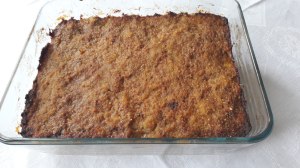
Leave to cool completely and then refrigerate for several hours.

Slice to serve.

Served on a dish by Portmeirion – Dawn Chorus – designed by Sophie Conran in the 21st century.

Lovely Liver!

For many people  – liver is love it or loath it.

I think certainly for me and most Poles it is love it!

The Polish for liver is wątroba – which means “waste maker” – as the liver is the organ in the body where substances are broken down.

In Poland the most sought after livers  are calves liver & rabbit liver.

My aunty in Białystok- cooked some rabbit liver for me when I  was there last – I thought it was utterly delicious  –  but as far as I am aware it is not readily available to buy in England.

I  see calves liver for sale more and more here in England and I  buy this whenever I can.

My mother always cooked pig’s liver, never ox liver.

I usually cook lambs liver if I cannot get calves liver.

I think liver is best lightly cooked, even slightly pinky,  it becomes hard and tough if over cooked.

There is a restaurant in Krakow called Dom Polonii ( House of the Poles) just off  Rynek Główny (Main Square) it serves very traditional dishes.

Rynek Główny (Main Square)

I like to eat there very much and can never make up my mind which dish I want the most. Their fried liver is super and I will have that at least once when I visit Kraków.

Liver is the main ingredient of  pâtés and similar dishes which are very popular in Poland –  I will look at these in future posts.

Cooking Liver

These recipes are all  variations on a simple theme.

I use calves or lamb’s liver for these recipes .

Preparing the liver

  • Depending on how it has been prepared by the butcher,  you might have to remove some veins or membranes.
  • Slice the liver into thin equal sized slices.
  • Dip each piece into a mixture of plain flour and ground black pepper.

 Simple Style Liver

  • Lightly pan fry the liver slices in a mixture of butter & sunflower oil on both sides.
  • Sprinkle on some Italian Herbs.
  • Add around 150 ml of chicken or vegetable stock (can be from a cube, concentrate or powder) … depends on the size of your pan.
  • Put the lid on the pan (a glass lid is good for this) and simmer gently for 2 -3  minutes.  (The time will depend on the thickness of the slices)

Liver with Soured Cream

  • Follow the instructions for the simple style but only cook for 1 -2 minutes.
  • Take the pan off the heat and add 2 tablespoons of soured cream and mix well.
  • Return to the heat  and allow to simmer for  1 -2 minutes.

Liver with Onions 1

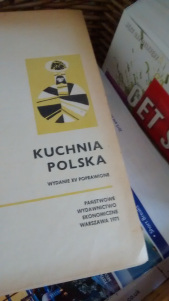
In my old Polish cookery book  (my bible in many respects) this simple recipe (without the herbs) is called  …. po angielskiu  which means  …. English style!

Kuchnia Polska – Polish Kitchen or Polish Cookery
  • Thinly slice 1 or 2 onions (I like lots of onions with the liver).
  • Fry the onions in butter & sunflower oil till golden.
  • In a separate pan lightly pan fry the liver slices in a mixture of butter & sunflower oil on both sides.
  • Sprinkle on some Italian Herbs.
  • Add the onions to the fried liver and mix together and serve.

Liver with Onions 2

  • Thinly slice 1 or 2 onions (I like lots of onions with the liver).
  • In a pan, fry the onions in butter & sunflower oil till golden. (You can fry a little longer to slightly char or caramelise them if you like)
  • In a separate pan, lightly fry the liver slices in a mixture of butter & sunflower oil on both sides.
  • Sprinkle on some Italian Herbs.
  • Add around 150 ml of chicken or vegetable stock (can be from a cube, concentrate or powder) … depends on the size of your pan.
  • Put the lid on the pan (a glass lid is good for this) and simmer gently for 2 -3  minutes.  (The time will depend on the thickness of the slices).
  • This will give a tasty sauce with the liver.
  • Place the fried onions on top and serve.

Liver with Mushrooms

  • Thinly slice mushrooms around 100g of button mushrooms
  • Fry them gently in a mixture of butter & sunflower oil.
  • Add the mushrooms to the fried liver as in the simple style above and mix together.
  • Add around 150 ml of chicken or vegetable stock (can be from a cube, concentrate or powder) … depends on the size of your pan.
  • Put the lid on the pan (a glass lid is good for this) and simmer gently for 2 -4  minutes.  (The time will depend on the thickness of the slices).

Liver with Mushrooms & Soured Cream

  • Follow the instructions for the Liver with Mushrooms but only cook for 1 -2 minutes.
  • Take the pan off the heat and add 2 tablespoons of soured cream and mix well.
  • Heat up slowly and allow to simmer for  1 -2 minutes.

Served here on Royal Doulton – Carnation, 1982-1998

Serving suggestions

Sprinkle liberally  with chopped parsley.

All of the above go well with boiled potatoes, creamy mashed potatoes, boiled rice, noodles or pasta such as tagliatelle.

Caraway Yeast Buns

Whilst doing some research on caraway,  I found that in 2011, Finland  produced over 25% of the worlds caraway.

So I thought why not a recipe from Finland!

This is a based on a recipe for pulla –  in Poland they would be called  bułeczki  – they are yeast buns and in Finland they are served with coffee.

These buns  are originally flavoured with crushed cardamon seeds – I have adapted this for caraway.

In Poland caraway is often added to rye bread but not usually added to wheat flour buns.

Ingredients

500g plain flour

50g butter

80g of granulated sugar

300ml tepid milk

1 teaspoon of dried yeast

1 egg beaten

1 tablespoonful of caraway seeds

1 teaspoon of salt

1 egg white, beaten, for glazing (does not burn as easily as whole egg).

Optional

Crushed sugar cubes.

Method

In a small dish start the yeast off with 2 tablespoons of the milk and 1 tablespoon of the sugar until it is bubbling.

Rub the butter into the flour.

Add the salt, caraway seeds, sugar, yeast mixture, milk and egg.

Mix thouroughly with a wooden spoon.


Cover the dough with clingfilm or a cloth and leave to rise.

I left mine over night in a cool cellar and then followed by a few hours in the morning in a warmer kitchen.

Grease 2 baking sheets.

Take the dough out of the bowl – a special dough scraper is very good for this.

20180320_063137


Divide the dough into 12 pieces  – a dough cutter is most useful for this  and shape each one into a ball using floured hands – do not over work the dough or add flour – keep the mix as soft as possible.

Place the balls on the sheets – leaving room for expansion.

Cover and leave to rise.

Pre-heat the oven to GM 6 – 200°C

Brush the top of each bun with the beaten egg white and sprinkle with the crushed sugar if desired.

Bake for 10-15 minutes until golden – brown.


Getting ready for morning coffee


Enamelled coffee pot by the Cathrineholm ironworks in Norway  –  Lotus – from the 1960s,

Coffee cups and saucers by Elizabethan  – Carnaby – from the 1970s

The buns are on a hand-decorated  cake stand made by Fairmont & Main who were established in Huddersfield in 1994.

The pattern is Carnival and this is a recent birthday present from one of my friends.

Note

As with all yeast buns these will go stale quickly – if I have any left – I cut them in half and pack into bags and freeze them.

On de-frosting I toast them and serve with butter.

Drożdżówka – Yeast Cake

  • The Polish word for yeast is drożdże and drożdżówka is any sweet cake or bun made using yeast.
  • Often the cake is a large flat cake ( placek) made in a large roasting tin.
  • This yeast cake is made with plain flour not strong flour and the mixture is mixed with a wooden spoon to form a soft mixture and is not kneaded.
  • My late father has two cousins living in Białystok, North East Poland, they are both wonderful cooks.
  • This yeast cake is based on a recipe given to me by one of these aunties.
  • As with any recipe made with yeast, timings are so unpredictable depending on many variables including the room temperature.
  • I always bake with yeast when I am at home for most of the day with other activities to do whilst waiting for the dough to rise etc.

Ingredients

Yeast Cake

  • 400g plain flour
  • 250ml of tepid milk
  • 1 egg
  • 2 tablespoons of granulated sugar
  • 1 tablespoon of sunflower oil
  • 150g of raisins or sultanas
  • 10g of fresh yeast or 5g of dried yeast

Crumble Topping

  • 2 tablespoons of plain flour
  • 1 tablespoon of butter
  • 1 tablespoon of granulated sugar

Method

  • Mix the yeast with 2 tablespoons of the milk and 1 tablespoon of the sugar and leave this till it starts bubbling.
  • In a bowl whisk together the egg  and 1 tablespoon of the sugar.
  • Add the oil and whisk again.
  • Add the milk and the raisins or sultanas and mix well.
  • Add the flour and mix this all together with a wooden spoon to form a very loose, soft dough.
  • Cover the bowl with clingfilm or a cloth and leave in a warm place to rise.
  • Make the crumble topping by rubbing the butter into the flour until the mixture resembles bread crumbs and then stir in the sugar.
  • Grease and line a large roasting tin.
  • 25cm x 34 cm or 22cm x 32cm.
  • Put the risen dough into the tin – use a spatula to spread it out.
  • Sprinkle the crumble mixture over the top and leave to rise again.


  • Pre-heat the oven to  GM6 – 200°C.
  • Place the risen cake into the oven and bake for 15 minutes.
  • Then lower the temperature to GM5 – 190°C and bake for another 10 minutes – keeping an eye on this and cover with foil if it looks like it is burning.
  • You might want also want to move it down a shelf for the last 5  minutes.
  • Leave to cool in the tin for about 5 minutes then take it out and remove from the greaseproof paper – so it does not go soggy on the base.


Served on Sonnet by Royal Doulton, 1971 – 1998.

As with most yeast cakes this is best eaten as soon as possible as it will soon go stale – you might need to invite round lots of friends and family!

If all is not eaten on the day of baking, I cut the cake into slices and pack into a plastic container and freeze – these are then toasted and served with butter at a later date.


Toasted and buttered yeast cake served on Las Palmas by Aynsley from the 1960s.

Variations

The dried fruits added can be varied  and I have made this with raisins, mixed peel and 1 teaspoon of mixed spice.


Served on Counterpoint by Royal Doulton, 1973 – 1987.

Other dried fruit options can be used, such as apricots, cranberries, pears or prunes and so on,  chopping larger fruits into small pieces.

I made this with apricots, sultanas and a 1/4 teaspoon of vanilla essence.


The dried fruits add sweetness to the cake and I think the small amount of sugar works well – you can if you like add a few extra tablespoons of sugar.


Karpatka – Carpathian Mountain Cake

Karpatka – Carpathian Mountain Cake  – gets its name as the top looks like the rugged mountains and the icing sugar dusting looks like a fine covering of snow.

The Carpathian Mountains – Karpaty in Polish –  are a mountain range in an arc roughly 1,500 kilometres in central and eastern Europe; part of the range is in Southern Poland  and can be described as Alpine.


It is made with 2 layers of  choux pastry with vanilla pastry cream in between the layers and the top dusted with icing sugar.

Choux Pastry

This was invented by an Italian chef in the mid 16th century and soon became popular in France.  It gets its name from the French for cabbage as the little buns made from this pastry  looked like little cabbages.

It is made without any raising agent. It is the large water content in the dough which turns to steam in the high oven temperature which causes the pastry to rise.

  • I read loads of conflicting advice on how to make choux pastry. 
  • My first attempt came out more like a Yorkshire pudding.
  • After several attempts I  now have a recipe that works.

Ingredients

  • 6 eggs
  • 300ml of water
  • 2 teaspoon of granulated sugar
  • 200 g of plain flour or strong plain flour *
  • 100g butter
  • pinch of salt
  • *Using strong flour gives a drier pastry whilst using plain flour gives a softer pastry.
Method

  • Pre-heat the oven to GM6 200°C
  • Grease 2 equal sized rectangular baking trays with sides or a large rectangular tin.
  • Put the water, pinch of salt, sugar  and the butter into a saucepan.
  • Heat gently so the butter melts and then slowly bring this to the boil.


  • Sift the flour.
  • Taking the pan off the heat add the flour, all in one go.
  • Return the pan to a gentle heat.
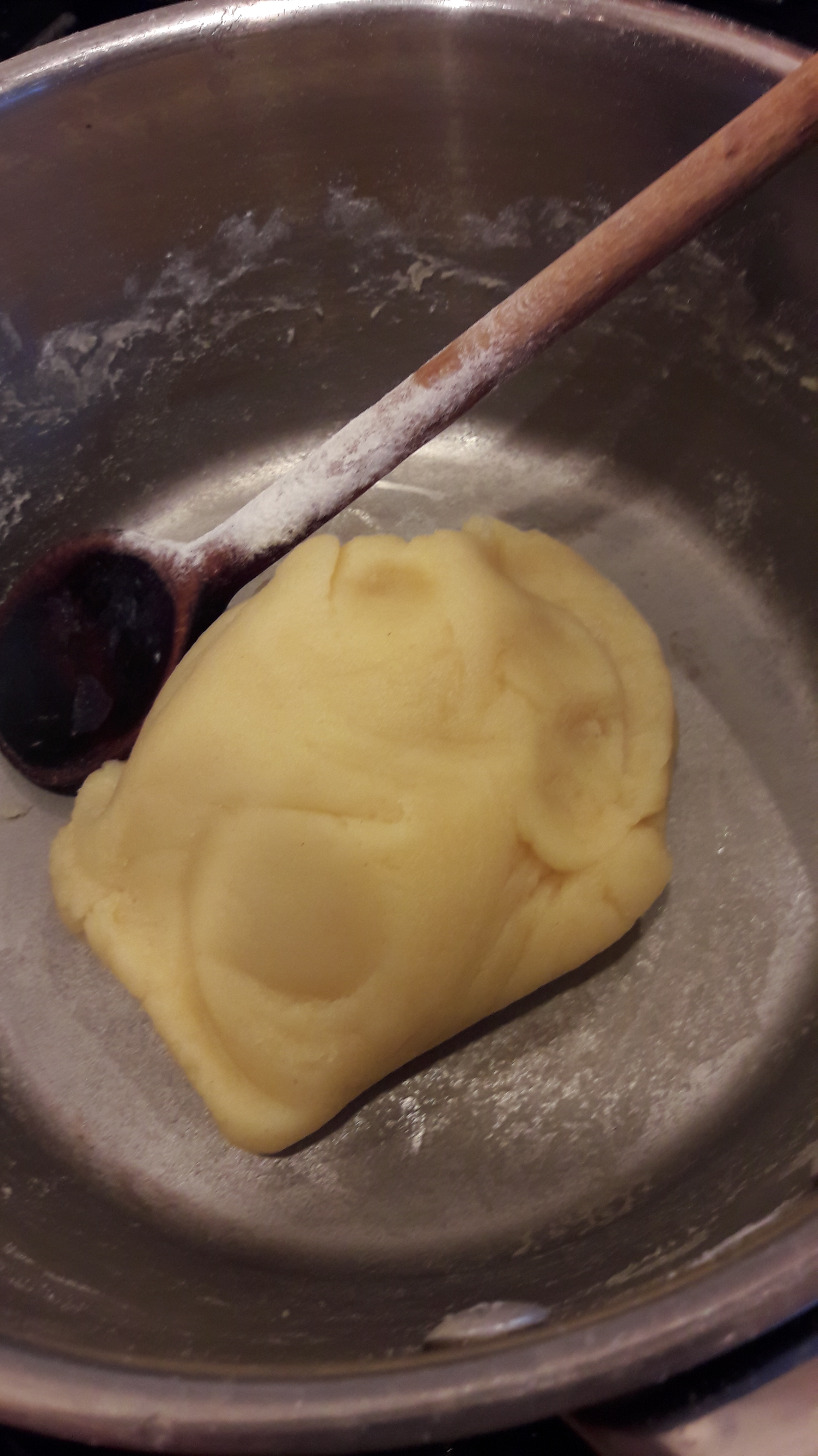
  • Using a wooden spoon blend this all  together until the dough forms a ball in the middle of the pan.


  • Take the pan off the heat and put the dough into a bowl and leave till it is completely cold.
  • Add the eggs one by one, continually blending the mixture. You can use a wooden spoon to do this – I have found it easier to start with an electric whisk to begin with and then change to a wooden spoon at the end.  You get a thick paste type mixture.


Divide the mixture between the two trays and spread it out to fill the tray – do not smooth down the top – you want to have rough peaks.

  • Bake for  10 minutes.
  • Increase the heat up GM7 – 220°C and bake for another 10 minutes
  • Using a cake tester make holes in the top of the pastry to remove some of the steam.
  • Bake for another 5 – 10 minutes.
  • The pastry should be ready now, test to see if it feels dry – if not return for a few more minutes.

Vanilla Pastry Cream

Ingredients

Budyń made with 500ml of milk.

  • 3 tablespoons  of granulated sugar
  • 2-3 drops of vanilla essence
  • 1 egg yolk
  • 125g butter

Method

  • Cream together the butter, sugar and egg yolk till pale and fluffy.
  • Add the vanilla essence and mix this in well.
  • Add the budyń, spoonful by spoonful, mixing it well in.

Assembling the Cake

Note

Whilst testing this recipe, I used half quantities of the choux pastry – ie just 1 tray – and cut this in half – the photographs – reflect this.

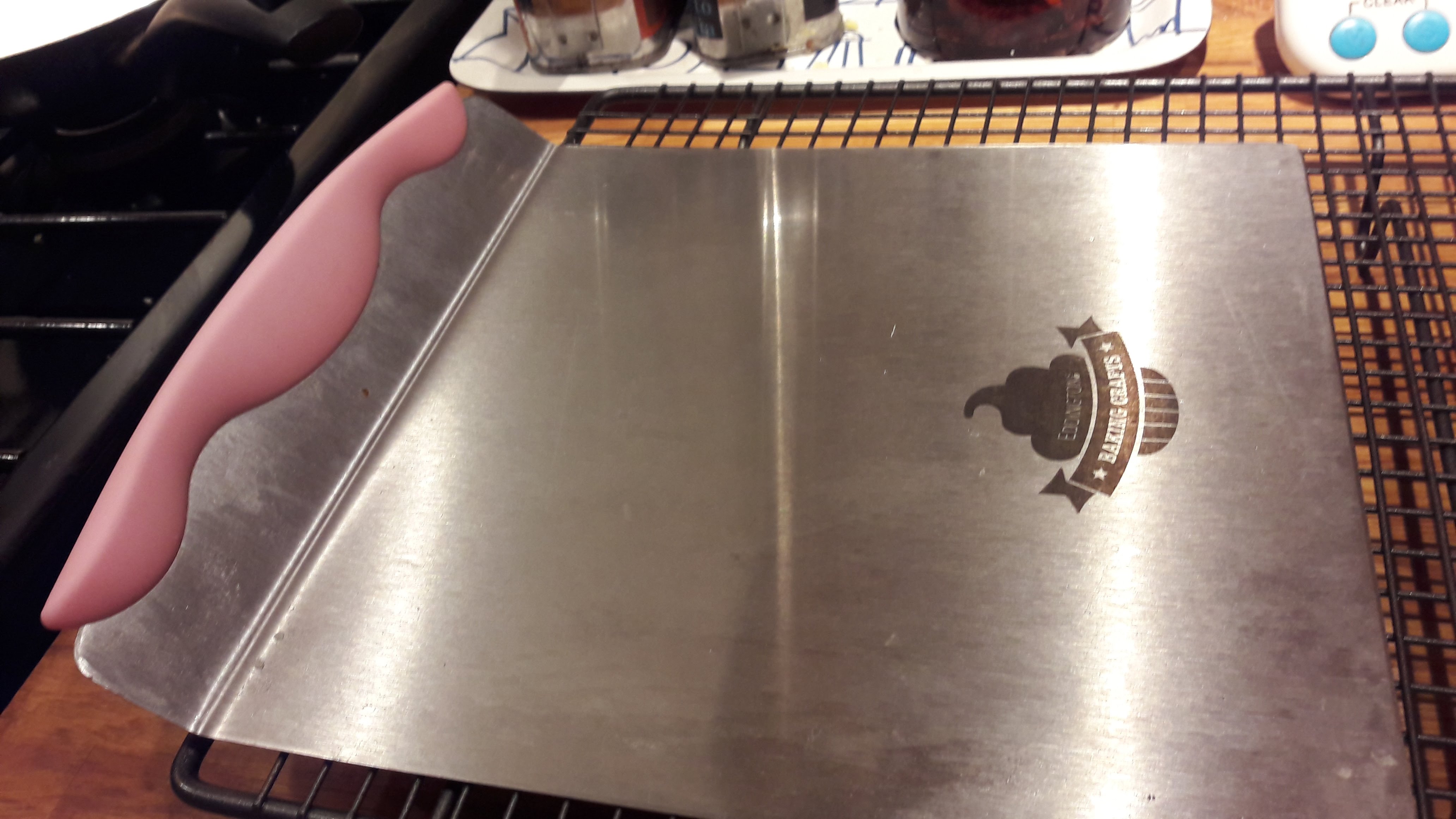
Great Cake Lifter


  • Place one piece of the baked pastry onto a serving board.
  • Cover the pastry with all the  pastry cream spreading it evenly  to the edges.
  • Place the second piece of pastry on top.
  • Dust the top lightly with icing sugar.
  • Cut into squares to serve.


Served on Las Palmas by Aynsley  from the 1960s.

Easier Option

Though not as authentic but easier you can just use the chilled budyń on its own as the filling.

Served here on  Greenaway by John Russell from the 1960s.


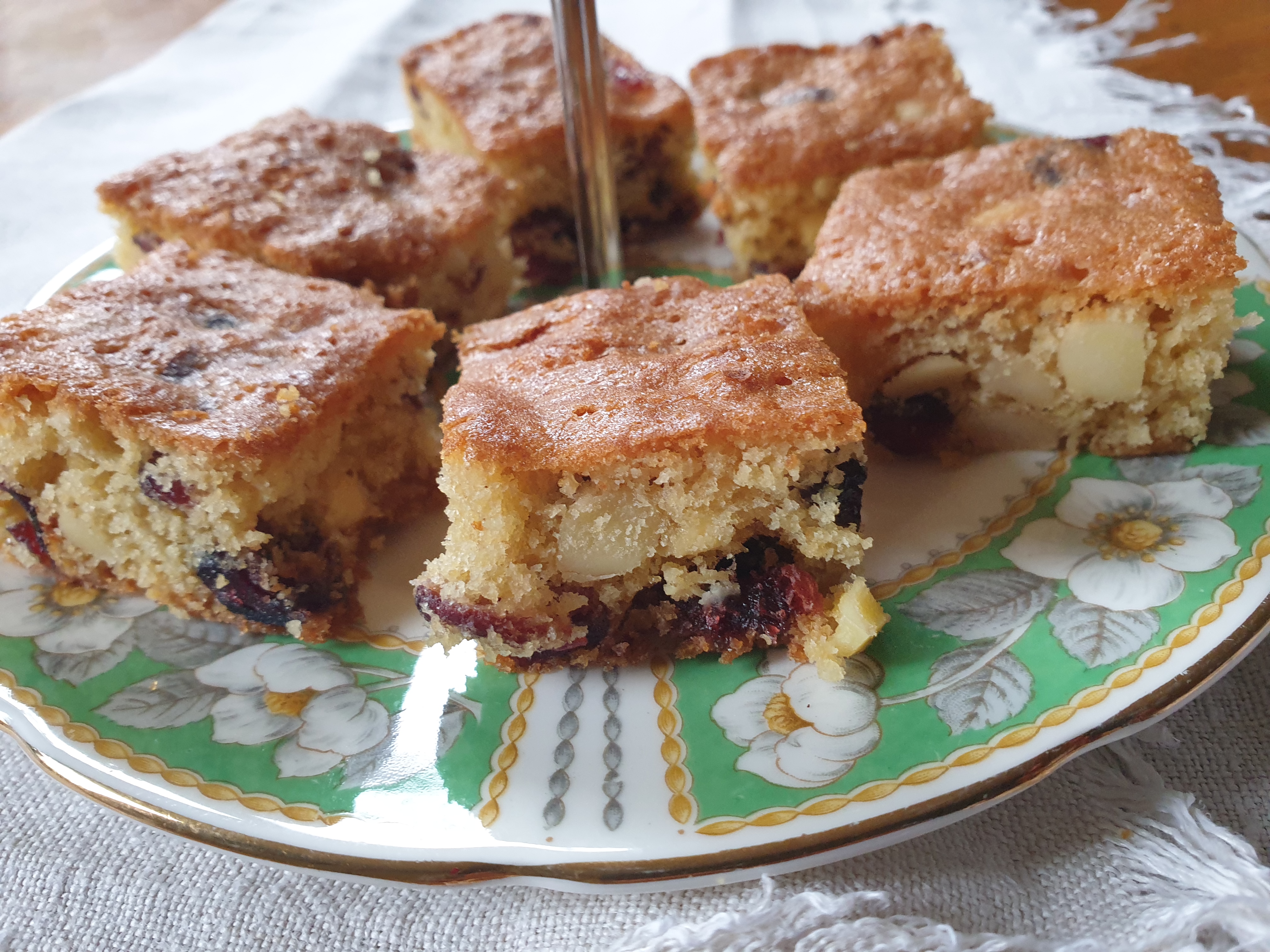
Placek with Cranberries, Chocolate & Nuts

After Christmas I found  I had lots of dried cranberries & nuts left from other recipes.

So I decided to make a variation on my placek (flat cake) with chocolate, nuts & sultanas

Ingredients

  • 120g butter
  • 120g Demerara sugar
  • 2 eggs
  • 120g plain flour
  • 1 teaspoon of baking powder
  • 1/4 teaspoon of vanilla essence
  • 100g dried cranberries
  • 100g chopped chocolate (a mixture of dark & white)
  • 80g chopped nuts

Method

  • Grease and line a 21 x 26 cms baking tray.
  • Pre-heat the oven to GM4 – 180°C
  • Chop the nuts and the chocolate.
  • Mix the nuts, chocolate & cranberries together.
  • Cream together the butter and Demerera sugar.
  • Mix in the vanilla essence and the eggs.
  • Mix in the nut mixture.
  • Mix the baking powder with the flour.
  • Gently fold in the flour.
  • Put the mixture into the baking tray.
  • Bake for around 30 – 35 minutes.
  • Leave to cool in the tin.
  •  

Cut into squares to serve.

Served on Queen Anne tea plates – design name unknown.

Updated on 27 July 2023

I used just white chocolate in the recipe and chopped almonds.


Heathcote Cake Stand