Kohlrabi Salads

Kohlrabi in Polish is kalarepa  –  it belongs to the cabbage family – the Brassicas  –  and has been cultivated from Brassica oleracea – the wild cabbage.

It is a swollen stem and spherical and its taste and texture is similar to cabbage heart and it  can be eaten both raw & cooked.

My auntie in Wembley used to grow kohlrabi  in the garden & on their allotment  but until recently I never saw it for sale in England whereas in Poland it is a common vegetable, it matures quickly, withstands the frost and can be stored for some time.

This kohlrabi I bought from the outdoor market in Leeds.

For all the salads below the raw kohlrabi has been peeled and then grated on a medium grater.

Here I have just used 1 kohlrabi per salad.

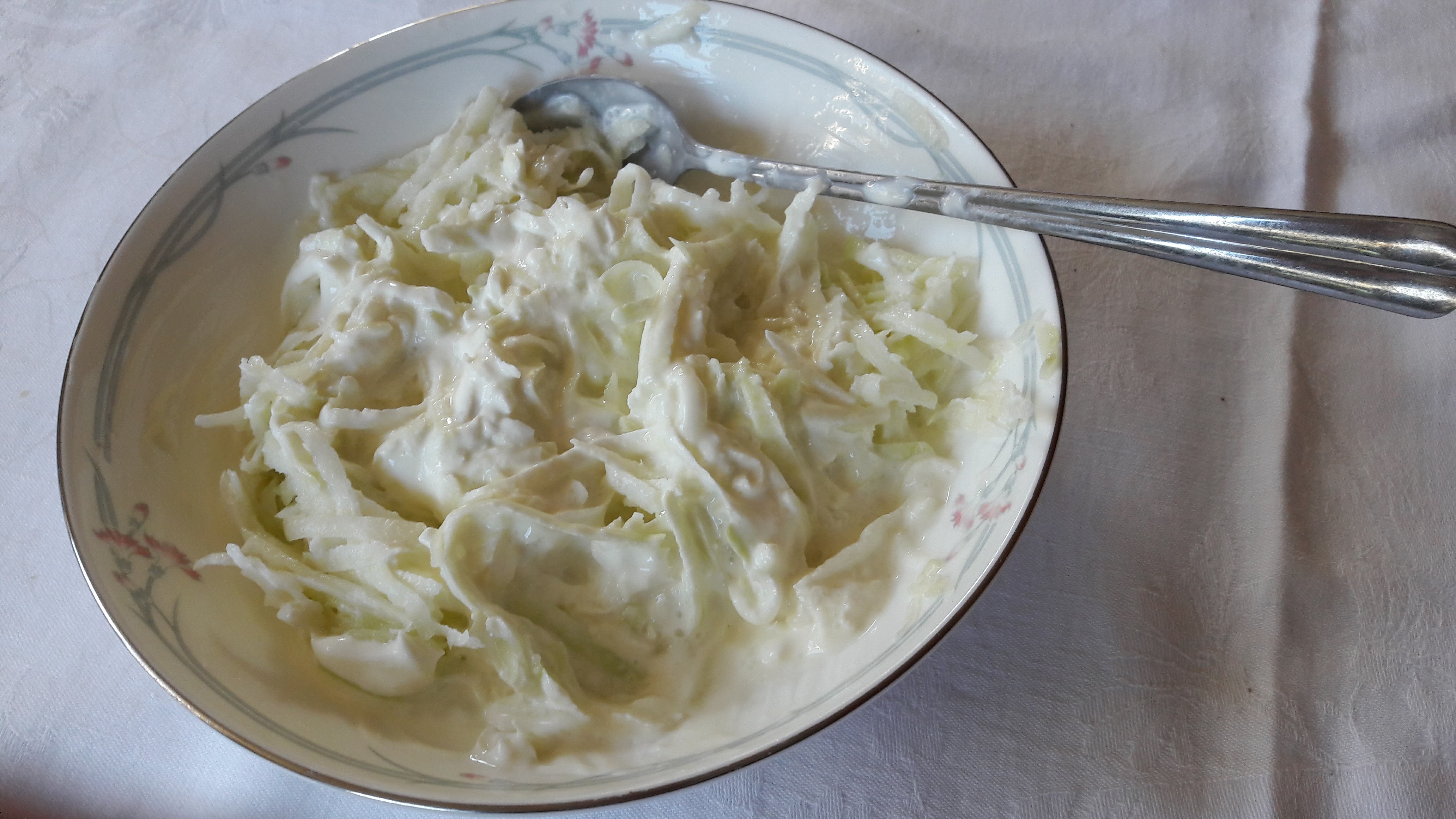
Simple Kohlrabi Salad


Served here in a Royal Doulton – Carnation dish – 1982 – 1998.


Ingredients

1 kohlrabi

2 – 3 tablespoons of soured cream

Juice of half a lemon.

Method

Mix the soured cream with the lemon juice.

Mix the grated kohlrabi  with the dressing.

Kohlrabi Salad with Apple

1 kohlrabi

1 Red or Pink eating apple

2 -3 tablespoons of full fat Greek yoghurt

1-2 tablespoons of apple juice

Method

Grated kohlrabi  is mixed with a chopped eating apple – use an apple with a red or pink skin for the lovely colour – here I used a Pink Lady which has a super taste.

Mix the natural Greek style full fat  yoghurt  and apple juice for the dressing.

20170407_172104


Served here in J & G Meakin – Topic by Alan Rogers, 1967.

Kohlrabi Salad with Apple & Raisins

This is made as the salad above with addition of around 40g of raisins

Kohlrabi & Carrot Salad

Ingredients

1 kohlrabi

1 carrot

2-3 tablespoons of soured cream

juice of half a lemon

Method

Grate the carrot & the kohlrabi using a medium grater

Mix the soured cream with the lemon juice

Mix everything together.


Served here in a Royal Doulton – Carnation dish – 1982 – 1998

The green part of spring onions or chives can be added to the carrots & apples


20170407_173514


Cooked kohlrabi in salads

You can steam the kohlrabi – steam several whole ones and peel them once they are cooked and cooled.

Use the steamed kohlrabi in place of steamed  Celeriac in salads.

Carrot Pancakes

Daucus carota – the carrot – was cultivated from wild carrots in the countries we now know as Afghanistan & Iran and are mentioned there in the 10th century and by the 12th century they were mentioned in Europe.

These tap roots were originally white, yellow or purple in colour.

The orange colour that we recognise today was breed by growers in Europe in the 17th century especially in the Netherlands.  It is thought that this was in honour of Prince William of Orange-Nassau (Willem van Oranje) who had an orange stripe on his flag. Nowadays orange is thought of as the national colour for the Netherlands.

These pancakes made with carrots in Polish are called racuszki z marchwi.

They are small round pancakes like American pancakes or dropped scones and are served with sugar or sweetened soured cream.

Ingredients

  • 450g carrots, peeled and finely grated
  • 140g twaróg/cream cheese or yoghurt cheese
  • 2 eggs separated
  • 3 tablespoons of plain flour
  • 1/2  teaspoon of baking powder
  • Sunflower oil for frying

To Serve

Caster sugar or soured cream sweetened with icing sugar.

Method

  • Whisk the whites until they are stiff.
  • In a small dish mix the baking powder with the flour.
  • In a large bowl mix together well the finely grated carrots, the cream (or yoghurt) cheese and the egg yolks.
  • Add the flour mixture.
  • Fold in the stiff egg whites.
  • Heat some sunflower oil in a cast iron frying pan or griddle.
  • Use 2 tablespoonfuls of the mixture for each pancake, cook on one side and then turn them over and cook on the other side.
  • Sprinkle with caster sugar or with a dollop of sweetened soured cream.


Served here on Wedgwood – Hathaway Rose – 1959 -1987.

Note

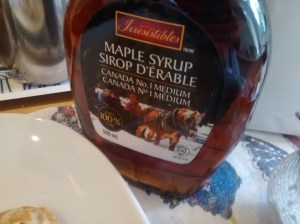
I have also tried them with maple syrup poured on them & these too were delicious.

IMG_20160729_161009545


Chocolate Babka

It has taken me a while to get to this recipe for a super chocolate babka .

I had bought an unused, still with stickers, Oneida babka tin in a charity shop and wanted to try it out.

20170114_080317 20170114_080302

I looked up several recipes and tried then out.

The first one was like rubber, the second was dry as dust but finally the third one turned out well.

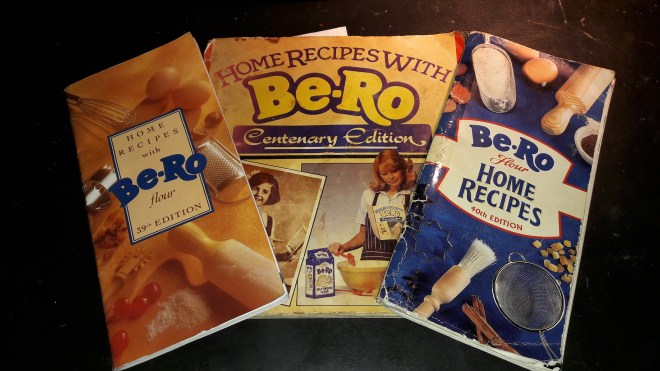
I have adapted this recipe from one that is found in the older Be-Ro(flour) recipes books.

This recipe just uses cocoa powder.

20170204_064412

These books were ones I used as a child , they contain simple basic recipes for traditional British cakes & biscuits and are very easy to follow.

Cake Ingredients

  • 400g self raising flour
  • 450g caster sugar
  • 1 teaspoon salt
  • 50g cocoa powder
  • 200g butter or block margarine
  • 4 eggs
  • 150ml evaporated milk
  • 150ml water
  • 2 drops of vanilla essence

Method

Grease the babka tin.

One tip I have learnt when using these tins is that it is best to brush them well with melted butter and then sprinkle dried breadcrumbs over the surface to prevent sticking  – I think this works better than flour.

  • Pre-heat the oven oven to GM 4  – 180°C
  • You need to use a large bowl for this cake mixture.
  • Rub the butter into the flour so that the mixture is like breadcrumbs.
  • Stir in the salt, sugar and cocoa powder.
  • Lightly beat the eggs and add the evaporated milk, the water and the drops of vanilla essence.
  • Stir the liquid mixture into the dry ingredients mixing thoroughly to give a thick batter.
  • Pour the cake batter into the tin.

20170128_121607

Bake for around 40 to 45 minutes, checking it is baked with a cake tester or wooden skewer.

Leave to cool in the tin and then turn out the cake onto a cooling rack.

Chocolate Icing Ingredients

  • 60g butter
  • 1 tablespoon of cocoa powder
  • 3 tablespoons of hot milk
  • 250g icing sugar
  • 1-2 drops of vanilla essence

Method

  • Heat up some milk in a small pan (I use a bit more than is needed and measure it out after heating).
  • Melt the butter in a pan.
  • Blend in the cocoa powder.
  • Stir in the icing sugar, milk and essence (I add the sugar in stages -aiming  for a slightly runny icing) and beat until it is thick and smooth – adjusting with icing sugar and extra milk as necessary.
  • Try and dribble the icing over the cake first, rather than spread it on with a spatula.  Then use a spatula to even it out over the whole cake.


The cake stand & pastry forks are Crazy Daisy (21st Century design) by Portmeirion

The tea service is Lyndale, by Royal Standard from the 1950s.

The green teapot is Cafe Culture by Maxwell Williams.

If you have any left after serving, then this cake keeps well if kept in an air tight container.

I use a plastic cake saver from Morrisons Supermarket  which is really useful (however a cake stand on a foot is too high – you have to use a lower stand or plate).


The plate is Beechwood by Royal Adderley, 1955  to 1964.

Salad With Leeks

The recipe for this salad with leeks  was given to me by one of my cousins in Białystok, Poland.

This salad goes well with cold meats & smoked Polish sausages, but with all its ingredients it can even be a little meal on its own.

Vegetable names in Polish

Leek in Polish is por & in Italian it is porro

Many vegetable names in Polish have origins in Italian, this is because when, the Italian Princess, who became Queen Bona of Poland on her marriage to King Zygmunt the Old, came to Poland in the 16th Century with her chefs she introduced many vegetables into the Polish diet – the most notable being the tomato . Because of this many of the Italian names or slight variations of them have become the names used in Polish.

There is also Włoszczyzna – which means Italian  stuff  – is it used in Polish cookery all the time – it translates as soup vegetables  and is mixture of: carrots, celeriac or celery leaves, leek or onion, parsnip or parsley root & parsley leaves & sometimes savoy cabbage which is used as the base for many soups and casseroles.  When written in a recipe every Polish cook will know what it is though some may have different versions of the mixture.

Although this is not an old Polish recipe it is certainly in the traditional Polish style with cooked vegetables and hard boiled eggs.

The chopped hard boiled eggs  to garnish is very much in the tradition of à la polonaise.

Cheese is used in this recipe and is the type that is called  ser zółty yellow cheese and is of the semi-hard type such as Edam, Gouda or Massdam from the Netherlands  which you can buy in England.

Gouda – The Last Thursday In August – 2013

The last Thursday in August is always the  last cheese market of the year in Gouda.

Red kidney beans and sweetcorn are also used in this recipe. Now my father would never eat sweetcorn – he considered it fit only for animal fodder – as this was what it would have been used for in his youth!

Ingredients

You can vary the quantities to what you have available – the ones below are for guidance.

2 leeks  – the white part finely chopped

1 tin of red kidney beans – drained

I small tin or half a large tin of sweetcorn – drained

“Yellow” cheese such as Edam, Gouda or Maasdam – chopped into small cubes

2 hard boiled eggs – very finely chopped or grated.

3 tablespoons of mayonnaise

2 teaspoons of ketchup or tomato purée

Salt & pepper to taste

Method

In a large bowl mix together the leeks, red kidney beans, sweetcorn & cheese.

In a small bowl mix together the mayonnaise and ketchup or tomato purée.


Mix the  dressing with the vegetables combining it all well.

Add salt & pepper to taste.

Place the salad into a serving bowl and sprinkle the chopped or grated hard boiled eggs  over the top.

The serving dish is Royal Doulton – Carnation – 1982-1998.


Keks

Keks is the word for a light fruit cake which is baked in a loaf tin or even more so a long narrow rectangular tin.

I am not sure how or when the word keks came into the Polish language but I am certain it comes from the English word “cakes” –  however the word keks is singular in Polish and means cake, and the plural is  keksy which is cakes.

It is thought that the keks originated from recipes for cakes from ancient Rome with the cakes being baked with pomegranate seeds, pine nuts and dried grapes and  using barley flour and then later in the middle ages honey was used and other fruits.

Keks is mentioned in a Polish cookery compendium from 1682 by Stanisław Czerniecki.

Nowadays keks is made using wheat flour and bakalie.

Bakalie is usually translated as dried fruits – however it has more varied fruits than the English version of dried grapes (raisins, sultanas, currants) & mixed peel.

Bakalie can be a mixture of the following:

  • Apricots
  • Currants
  • Dates
  • Figs
  • Mixed peel
  • Prunes
  • Raisins
  • Sultanas
  • Nuts – almonds, hazel & walnuts

Of course you can vary the mixture every time you make it.

The use of  sweet dried fruits came into use in Poland through the influence of Turkish cooking where most of these fruit and nuts grow.

Traditional keks is baked in a long narrow rectangular tin, however I also use the English style 2lb loaf tins especially as you can get greaseproof cake tin liners which make life a lot easier.

NOTE

I have tried these out several times and have found two things that you must do to make turn out well:

  1. Toss the fruit in flour so it does not all clump together.
  2. Bake the cake at a low temperature so it cooks through.

Keks

Ingredients -1

Amounts for a long narrow tin

300g butter or block baking margarine

300g granulated  sugar

6 eggs

2-3 drops vanilla essence

300g plain flour

80g potato flour

2 teaspoons  baking powder

1 teaspoon of ground cinnamon

400g  bakalie (dried fruit  & nuts – see above) & 1 tablespoon plain flour

butter & dried breadcrumbs to prepare the tin or greaseproof paper

Ingredients -2

Amounts scaled down amounts for a 2lb loaf tin

200g butter or block baking margarine

200g granulated  sugar

4 eggs

2-3 drops vanilla essence

200g plain flour

60g potato flour

1.5 teaspoons  baking powder

1 teaspoon of ground cinnamon

300g  bakalie (dried fruit  & nuts – see above) & 1 tablespoon plain flour

Butter & dried breadcrumbs to prepare the tin or greaseproof paper or liner

Method

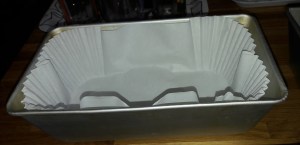
Prepare the baking tin by either coating with butter & dried bread crumbs or cut a sheet of  greaseproof paper to line the long side and base of the loaf tin or use a liner where appropriate.

Pre heat the oven to GM 3 – 160º C

Prepare the bakalie (dried fruit & nuts) by chopping the larger fruits into smaller pieces.

Place them in a bowl with 1 tablespoon of plain flour and mix thoroughly so all the fruit is coated.

20170212_055711

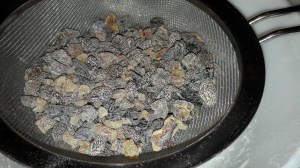
Tip the coated fruit into a large sieve and shake well to remove excess flour.
20170212_060009

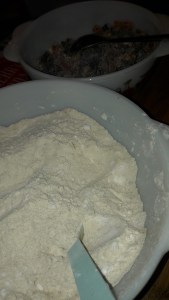
Mix the baking powder and cinnamon with the flours
20170216_072648

In a large bowl cream the butter and sugar together until they are light and fluffy

Add the vanilla essence

Add the eggs one by one, each with a tablespoon of flour

Fold in the rest of the flour

20170216_074357

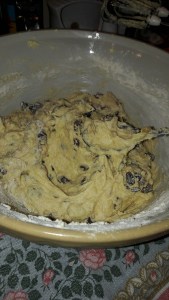
Carefully mix in the bakalie

20170215_065831

Spoon the mixture into the prepared tin and put in the oven

20170215_070044

Bake for around 1 hour 30 minutes for the long tin & 1 hour 20 minutes for the smaller loaf tin

Check at around 1 hour & cover the top with greaseproof paper if it starts to brown on top too quickly

Test the cake with a cake tester or wooden skewer near the end of the cooking time to check that it is baked throughout

Leave the cake to cool in the tin before turning it out.

Aynsley, Las Palmas from the 1960s

Colclough 4212, Art Deco 1930s, Blue Violets/Pansies

Keks – using fruit mincemeat

At Christmas time I make English fruit mincemeat using the recipe from Delia Smith but without the chopped nuts.

20170215_042413

If I have any mincemeat over after the Christmas period  when I make mince pies,  I make a fruit loaf which which is very much a keks.

I bake this in a 2lb loaf tin.

Note

You can also use 2 small 1lb loaf tins or even a round 22cm tin – adjusting the baking time.

Ingredients

  • 150 butter
  • 100g soft brown sugar
  • 75g sultanas or currants  and mixed peel
  • 225g self raising flour
  • 450g jar of mincemeat (exact amount is not critical)
  • 3 eggs
  • Optional 25g flaked almond to sprinkle on top

Method

Pre-heat the oven to GM2- 150ºC

Prepare the loaf tin by greasing it, lining the long sides or using a greaseproof liner.
20170207_112805

Lightly cream the butter and sugar

Beat in the eggs, one by one

Stir in the mincemeat and the  extra dried fruit until it is an even consistency – a wooden spoon is good for this

Stir in the flour.

If the mixture seems a bit dry add a tablespoon of rum or similar

Spoon the mixture into the tin and smooth the top

Sprinkle nuts on top if using

Bake for around 1 hour 15 minutes

Leave to cool in the tin before turning it out.

Cabbage & Orange Salad

Here is a salad made with one of Poland’s favourite vegetables – cabbage –  and is one I have been making for many, many years since it was given to me by one of my cousins (British born like me) who lives in Wembley.

However it is not a classic Polish salad because it contains oranges which would have been a luxury item in times gone by and certainly in communist times when nothing was imported that was not strictly necessary.

There are just 3 main ingredients & a couple of options for the dressing.

The amounts here are just a guide  – for example – I just usually add a handfull  of raisins – this time I weighed them.

Ingredients

  • Around half a small white cabbage
  • 2 Oranges
  • 80g Raisins
  • Dressing – mayonnaise or yoghurt  or a mixture of the two
  • A pinch of salt & pepper to taste.

Method

Peel the oranges, cut them into slices, separate the segments and then chop these into small pieces.

Finely shred the cabbage

p1020202


Mix the oranges, raisins & cabbage together.

  • Add the dressing (see below) and mix well together.
  • You can add salt and pepper here if desired – I find just a tiny amount is needed.

Served here in Royal Doulton, Carnation, 1982 – 1998

Dressing

  1. Mayonnaise – I use Hellmann’s – original or light
  2. Greek yoghurt
  3. Mayonnaise & Greek Yoghurt
  4. Any of the above with some extra orange juice.

I tend to make this salad a while before it is needed as with the magic of osmosis – raisins become plumped up with the juice from the oranges & the dressing becomes sweet from the sugars in the raisins.

This salad goes well with roast dinners, cold smoked meats and Polish style sausages.


Beetroot & Chocolate Cake

  • I had a request from the 93 year old mother of one of my friends to make her a cake that included beetroot in the ingredients – maybe a red velvet cake.
  • Now I had never seen one of these cakes and certainly never made one and I did have doubts about it.
  • I did some research and found lots of recipes for red velvet cakes but nearly all of them used just red food colouring.
  • I then found a recipe for a cake using beetroot and tested it out and surprisingly it came out very, very well. The recipe uses sunflower oil and is an easy to make batter cake.
  • This is not a traditional Polish recipe at all but it does contain a favourite Polish vegetable – namely – beetroot.

    Ingredients

  • 250g cooked beetroots (I used ready cooked vacuum packed beetroots  – 1 pack is more than enough)
  • 1/2 teaspoon of vanilla extract
  • 300g caster sugar
  • 250ml sunflower oil
  • 3 eggs
  • 225g plain flour
  • 1 teaspoon of bicarbonate of soda
  • 1/4 teaspoon salt
  • 6 tablespoons cocoa powder

Method

  • Grease and line a  21 x 31 cm baking tin.
  • Preheat the oven to Gas mark 4 – 180ºC
  • Drain the beetroots from the water and place in a sieve for a while to ensure they are dry – you can dry them with some kitchen roll as well.
  • Purée the beetroots – using a food chopper or blender

In a large bowl combine the puréed beetroots, eggs, vanilla essence, oil and sugar.

In a separate bowl mix together the flour, bicarbonate of soda, salt and cocoa.

20170219_113354

Add the dry ingredients to the other bowl and beat well together.

20170219_114510

Pour the batter mixture into the prepared tin.

20170219_115514

Bake for 45 to 50 minutes.

Test if done with a cake tester or wooden skewer.

Leave to cool in the tin.

20170219_125037

The cake is delicious and moist – it has a slightly red tinge to the very dark nearly black colour.

Here I have just served it plain.

Served on Royal Doulton, Counterpoint, 1973 – 1987.

You can dust the top  with icing sugar if desired.

The cake is delicious on its own but many versions have a topping of some description.

I made one using butter, cream cheese ( or yoghurt cheese), icing sugar and lemon.

Ingredients for Topping

  • 50g butter
  • 100g of full fat cream cheese, twaróg or yoghurt cheese
  • Finely grated rind of 1 lemon
  • 1 teaspoon of lemon juice
  • 250 – 300g icing sugar

Method

  • The butter needs to be at room temperature.
  • Cream the butter, lemon rind, lemon juice and the cream cheese and 2 tablespoons of the icing sugar until the mixture is smooth and well combined.
  • Slowly add the icing sugar and mix well in until it is smooth and firm enough to use as a topping.

You can make the topping ahead of time and keep it in a container in the fridge – topping the cake later when needed.

Take care not to get too many brown cake crumbs in the icing when spreading it on the cake.

Served on Colclough, Enchantment, tea plates from the 1960s

with Portmeirion, Crazy Daisy, pastry forks.

The cake was voted delicious!

Pork & Prunes

This recipe is in an old Polish style  –  po staropolsku  with its use of prunes and caraway seeds.

I  prefer to use prunes with the stones in and  I usually buy then from a Nut & Dried Fruit stall in Leeds Kirkgate Market. However in January 2017 there were no prunes with stones on the market. The lady on the stall said this was because of a very poor harvest – so I  used stoned prunes to try out this recipe for the photographs for this post.

This recipe uses a method of cooking which is called duszone – that translates from Polish as suffocated but also when used in cooking as braised  however I think suffocated is much more evocative.

You will need a roasting tin with a lid.

A joint of pork  is first sealed by browning it on all sides and then it is placed in a roasting dish with a little liquid and then a lid is placed over the contents and the dish is cooked in an oven.  Meat cooked this way is very succulent.

Ingredients

800g boneless pork loin joint

Note  You can always scale up this recipe for a larger piece of pork.

100g prunes

2 onions – finely chopped

1 tablespoon of plain flour

2 tablespoons of butter

1 tablespoon of olive oil

salt & ground black pepper

1 teaspoon caraway seeds

Method

At least an hour before you want to cook the pork, put the prunes in a small bowl and pour boiling water over the prunes to cover them.

Leave them to plump up and then remove the stones from the prunes. (I left mine for 4 hours).

Retain the liquid from the soaking as this will be needed.

Pre heat the oven to Gas Mark 3 – 1600C

Coat the joint with the flour, salt and pepper.

In a frying pan, melt the butter, add the oil and on a high heat, brown all the sides of the joint.

Put the meat and the frying juices into the roasting tin.

Put the prunes and onions around the pork and add the liquid from the soaking of the prunes, put on the lid and place the dish into the oven.

About 1 ¼ hours should be enough for this weight.

20170121_174651


Take out the pork and place it on a warm serving dish, cover with foil,  and leave in a warm place whilst you finish the prunes.

Stir the caraway seeds into the onion and prune mixture and heat this up on the top of the stove to thicken for 2 to 3 minutes.


Cut the pork into thick slices and place them on a platter or serving dish and put the prune & onion mixture around them.

Serve with boiled potatoes.


Here served on a bone china platter, Josephine Yellow

by Wedgwood, 1941 – 1964


Po staropolsku – in an Old Polish Style

In many recipe books and often on menus in restaurants you can see dishes described as po staropolsku which means in an Old Polish Style.

What exactly does that mean?

I have found this a hard question to answer as there two sides to its meaning, one is about hospitality and the other is the ingredients.

Hospitality

When restaurants use  po staropolsku they are trying to evoke connections to noblemen & democracy with the chivalry & hospitality that was found in the manor houses in Poland, particularly from the 16th to the 18th century.  They are trying to make you think of the quality of the food and the surroundings.

The Poles are thought to be a very hospitable nation and a very famous saying in Poland is  – “Gość w dom, Bóg w dom”  which means  when you have a guest in your house, you have God in your house, meaning treat your guests to the very best.

The chef & writer, the late Maciej Kuroń (1960 – 2008) in his book Kuchnia Polska (Polish Cookery)has a new saying –

“Lepiej gościa zabić, niż nie nakarmić “which means – it is better to kill a guest rather than not feed them well.

I noted this quote many months ago – today when I tried to find the reference in the book, which is a large tome of over 900 pages, I could not find it – when I do in the future I will come back and add  it here.

Some of my reference cookery books.

Ingredients

Many old recipes can be classed as po staropolsku – especially if they contain:

  • Honey
  • Cloves
  • Cinnamon
  • Caraway
  • Herbs such as marjoram, thyme & juniper
  • Dried fruits – especially prunes
  • Dried mushrooms
  • Grains such as buckwheat
  • Game & birds

Dishes included various soups & especially Sour Soups (I will write about these in the future), honey cakes, pierogi, gołąbki, bigos and dishes with meat & dried fruits.

Pork and Prunes

Some of my favourite dishes in the old Polish style combine pork with prunes, often with honey.  I love the flavour of the meat with all this sweetness added to it.

I am going to write up 3 different recipes  – the first in this post – the others to follow shortly.

The best pork to use is a boneless joint of pork loin which has also had the skin removed, but if you cannot get this then leg of pork is good as well.

When roasting pork allow 50 minutes per kilo, plus 25 minutes at Gas mark 5 – 1900C.

Note  You can always scale up this recipe for a larger piece of pork.

I have found that the best prunes are lovely plump ones from Agen in France but the ones that are more dried are also good, you just have to soak them for longer before you can take out the stones.

You can of course use ready stoned prunes – I just prefer the ones with stones in  – though they are increasingly harder to find – I can get them from a Nut & Dried Fruit stall in Leeds Kirkgate Market.

However in January 2017 there were no prunes with stones on the market. The lady on the stall said this was because of a very poor harvest – so I have had to use stoned prunes to try out the recipes for the photographs & this post.

Pork and Prunes 1

Ingredients

800g boneless pork loin joint

100g prunes

1 tablespoon of honey

Coarse salt

At least an hour before you want to roast the pork, put the prunes in a small bowl and pour boiling water over the prunes to cover them.

Leave them to plump up and then remove the stones from the prunes.

Retain the liquid from the soaking as this will be needed.

Pre heat the oven to Gas Mark 5 – 1900C.

Place the pork in a roasting tin and rub some coarse salt onto the fat on the top.

Put the prunes under and around the pork with the water from the soaking & extra to cover the bottom of the roasting tin and place in the oven.

Roast the pork – about 1 ¼ hours should be enough for this weight, baste the meat with the liquid from the prunes and juices a couple of times, adding extra water if needed.

When the meat is ready, take out of the oven, cover with foil and then a tea towel and leave it to rest.

Add the honey to the prunes and juices, stir these together over some heat in the roasting pan, you may need to add some more water.

Slice the pork and place on a serving dish and place the prune mixture around the pork to serve.

Here served on a Royal Doulton Plate – Carnation 1982-1998.


Pork & Sauerkraut Gulasz

This dish has 3 all time Polish favourites in it –  pork and sauerkraut as well  as caraway seeds.

The sauerkraut in this dish does not have any hint of “sour” and is just wonderful.

Ingredients

500g to 600g of shoulder or spare rib pork cut into cubes

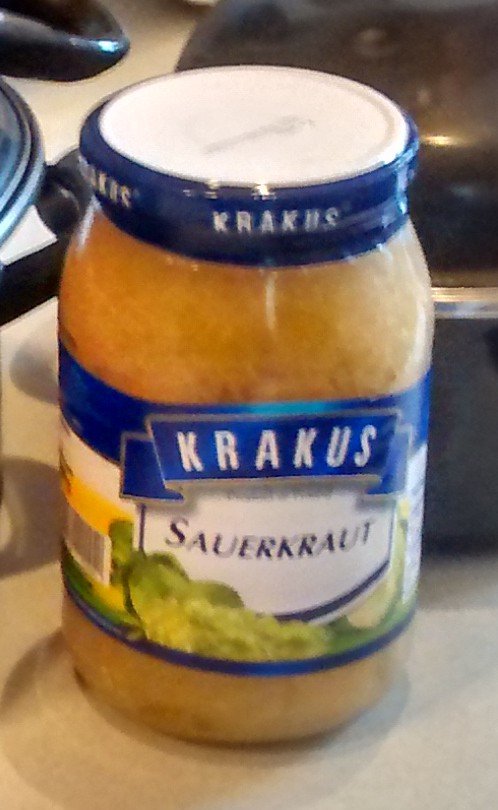
Around 450g of sauerkraut – this is half a large jar or a small jar if you can find these.

IMG_20150711_183051570_HDR


2 onion – finely chopped

2 cloves of garlic – crushed

1 teaspoon caraway seeds

350ml chicken stock – can be made from stock cubes

2 tablespoons of plain flour

Salt & ground black pepper

Oil for frying

2  tablespoons of soured cream

Chopped flat leaf parsley to garnish

Method

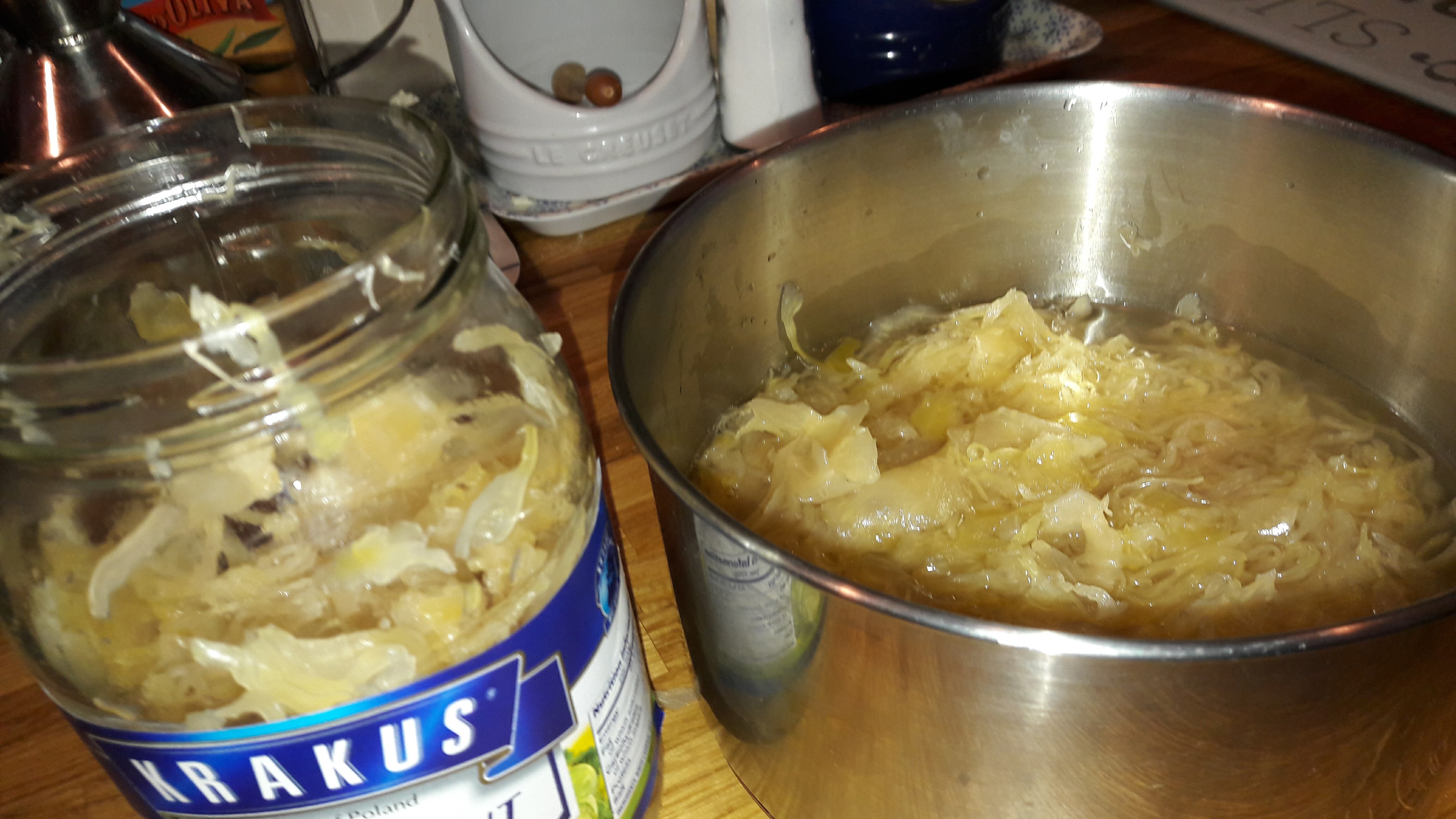
Put the sauerkraut in a saucepan and cover it with water, bring it to the boil then simmer gently for about 10 minutes and then drain the sauerkraut.

20170110_082627


Pre heat the oven to Gas Mark 3 – 1600C

On a large plate mix together the flour, salt and pepper.

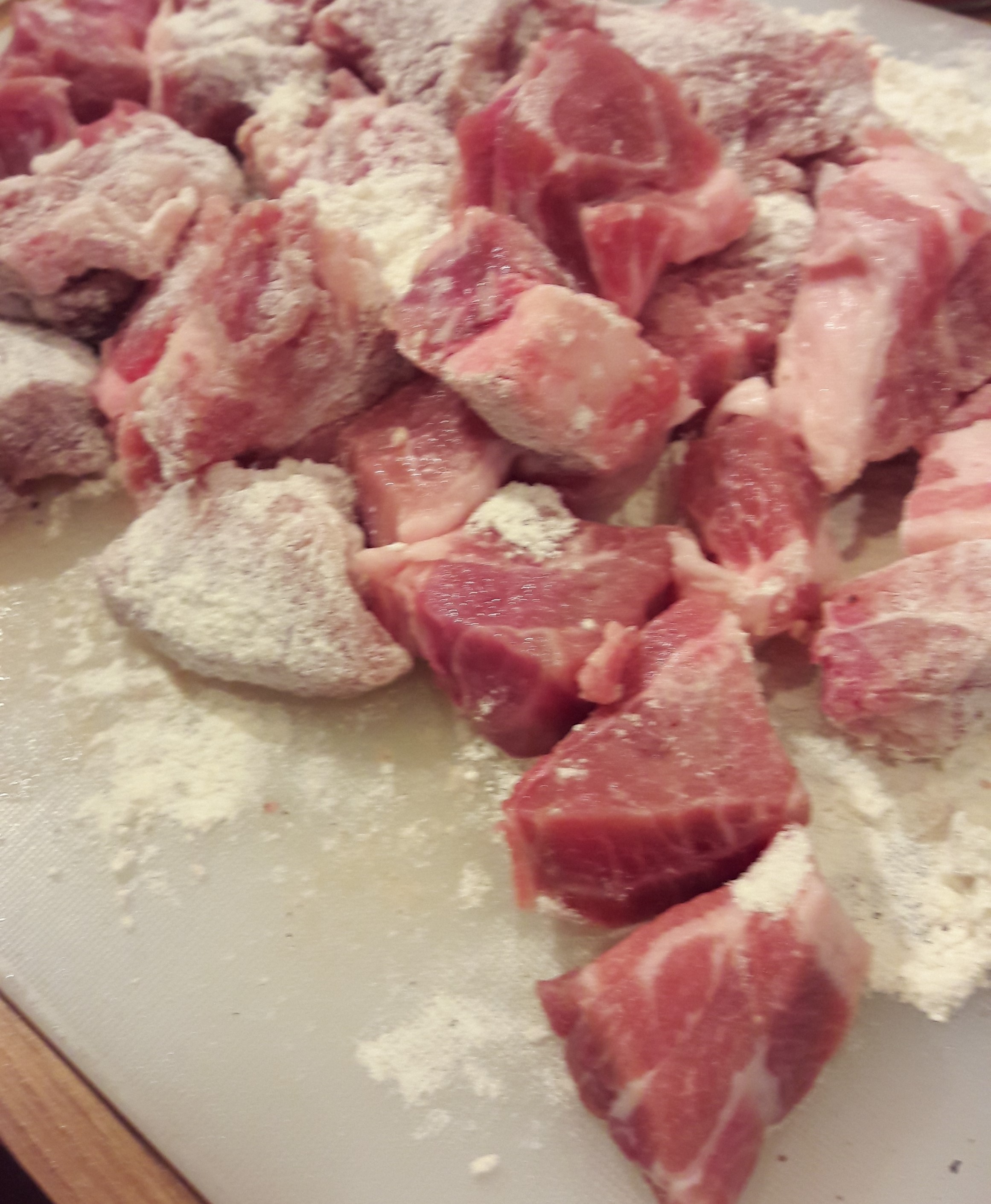
Coat the pork cubes in the flour mixture and brown these in the oil in a hot frying pan.

pork

Place the pork into a casserole dish.

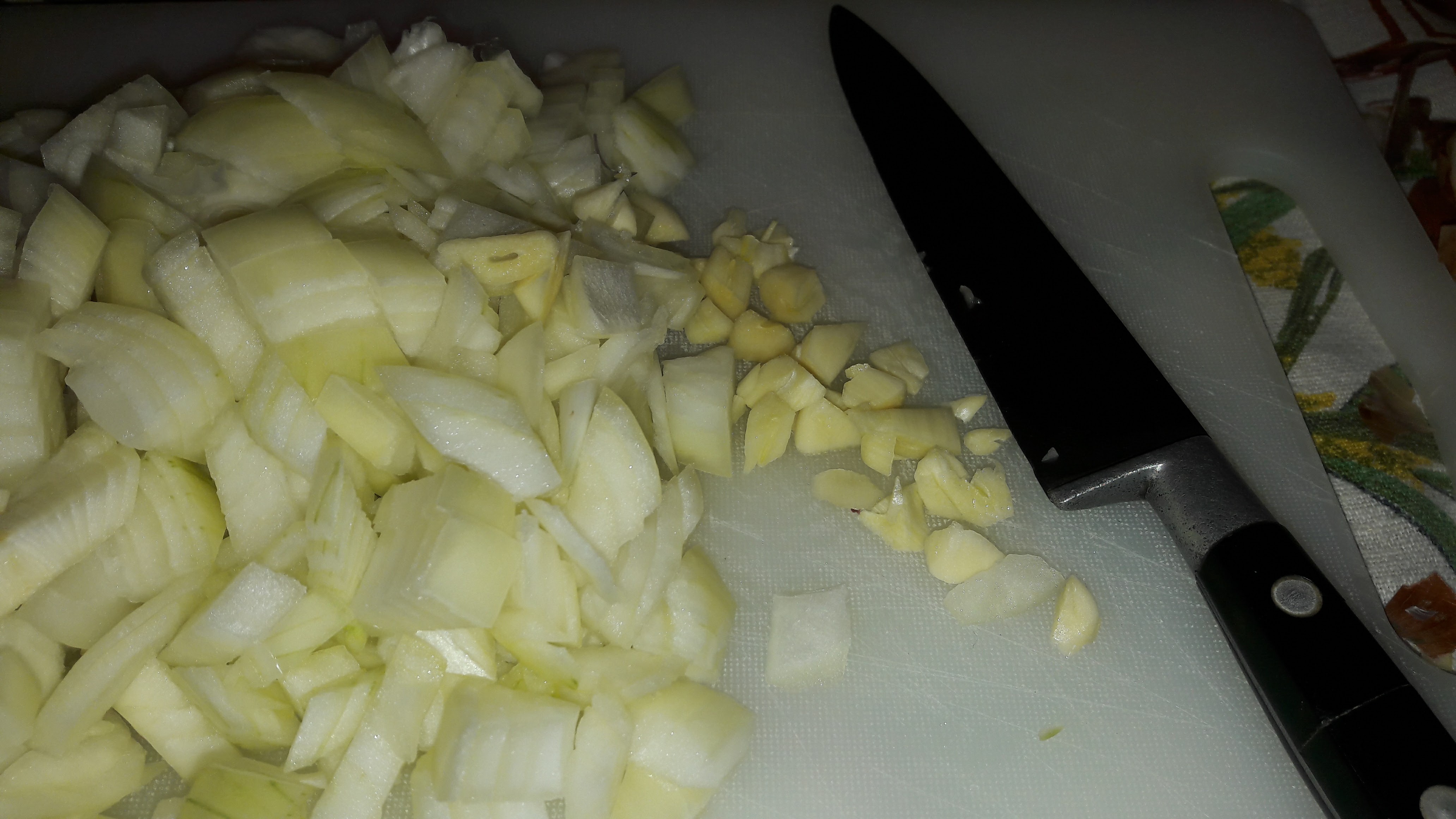
Lightly fry the onions and garlic in the frying pan and then add them to the pork.

20170110_083735


Add the sauerkraut and the caraway seeds to the casserole dish.

Mix the ingredients together and add the stock.

Put the lid on the dish and put it in the oven and cook till the meat is tender about 2½ to 3 hours.

img_20161217_123646310_hdr


Stir in the soured cream and then sprinkle the chopped parsley on top.


Serve with boiled potatoes.

Served in Cadiz, 1964 – 1970 by J & G Meakin