Waffles – Revisited

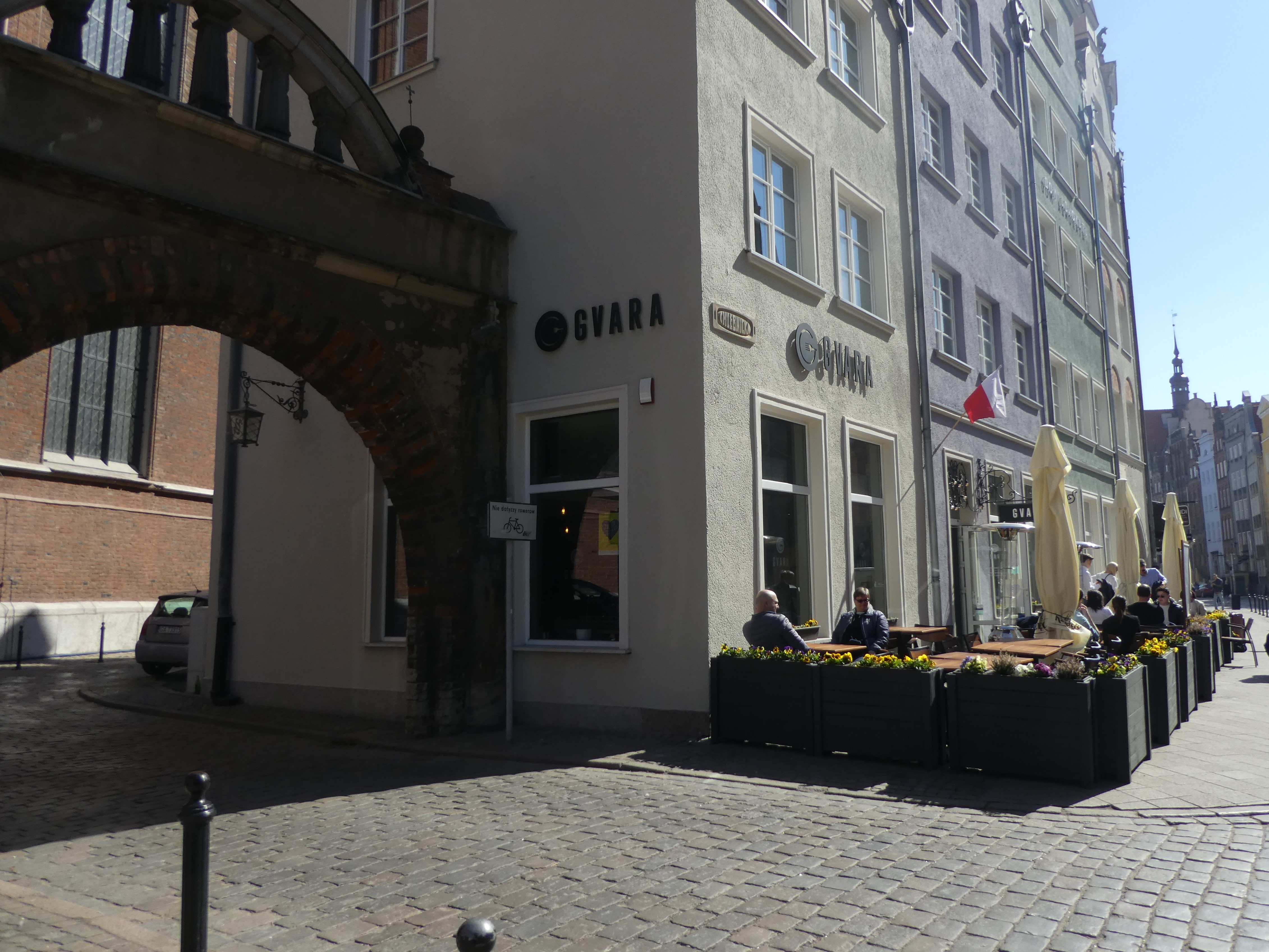
  • The last time I went to Gdansk, I had savoury waffles in the Gvara Restaurant.
  • On coming home I made them here and posted about them in June 2019 under the title Waffles.
  • Once more in the Gvara Restaurant in October 2024, waffles were on the menu for breakfast.
  • This time you got 3 toppings – called 3 ways – in one order:
  • Bacon and Eggs
  • Spinach and Eggs
  • Curd cheese and smoked salmon
  • Note – the salmon was whole cooked salmon smoked – thick chunks.
  • If you did not like the curd cheese and smoked salmon – they would do another topping.
  • A really filling breakfast.

Baking Powder Waffles

This recipe is based on the one in the recipe book that comes with my Salter waffle maker.

I used whole milk and found this worked very well.

Ingredients

  • 250g plain flour
  • 2 tablespoons of granulated sugar
  • 4 teaspoons of baking powder
  • 1/2 teaspoon of salt
  • 2 egg
  • 90g of butter
  • 350ml of whole milk

Method

This amount made eight waffles in my maker.

It is best to make all the waffles at once and either keep them warm in a low oven or you can pop then in a toaster later.

  • Mix the flour, salt, sugar and baking powder together in a bowl.
  • Melt the butter.
  • Beat the eggs until they are fluffy.
  • Add the eggs and then the milk to the flour mixture and mix well.
  • Add the melted butter to the mixture and mix well.
  • I made the waffles as per the instructions of the waffle maker.
  • Pre-heat the maker for around 5 minutes.
  • Brush some oil or butter onto the plates for the first batch.
  • Use a ladle to pour on the mixture – filling the plate till around 3/4 full.
  • Cook for around 5 minutes – all steam should have finished being given off by now.

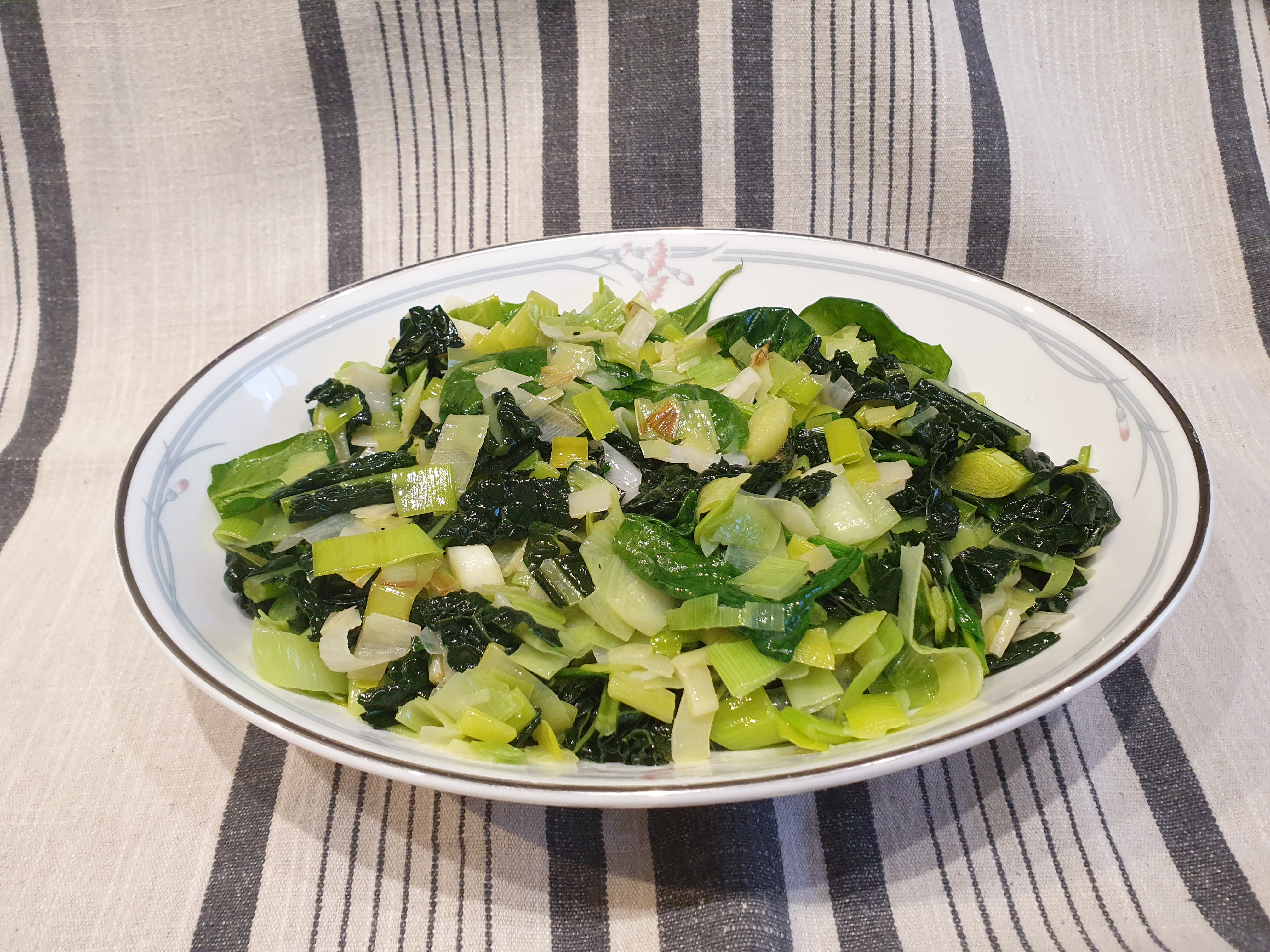
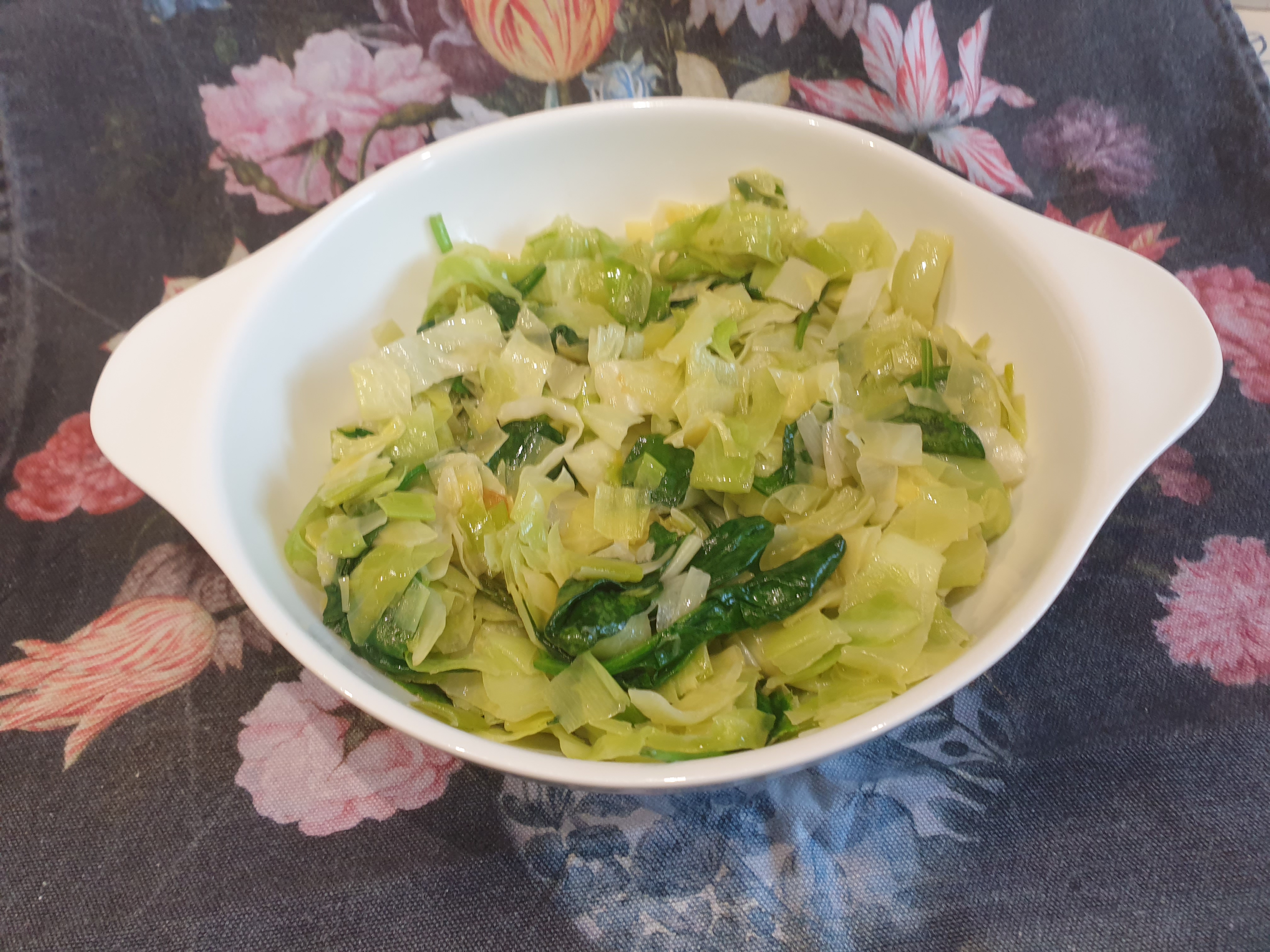
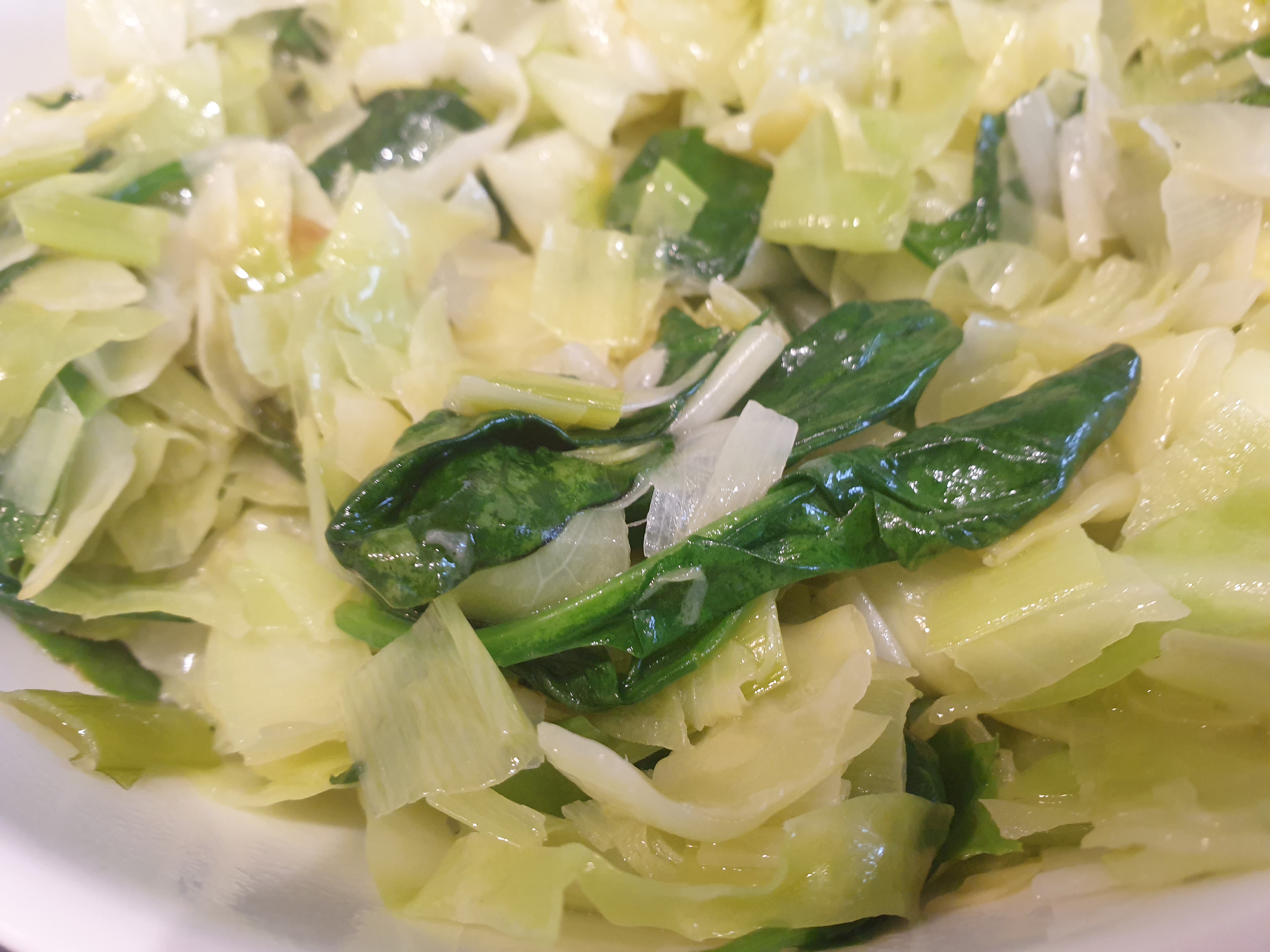
Eat Your Greens – 2

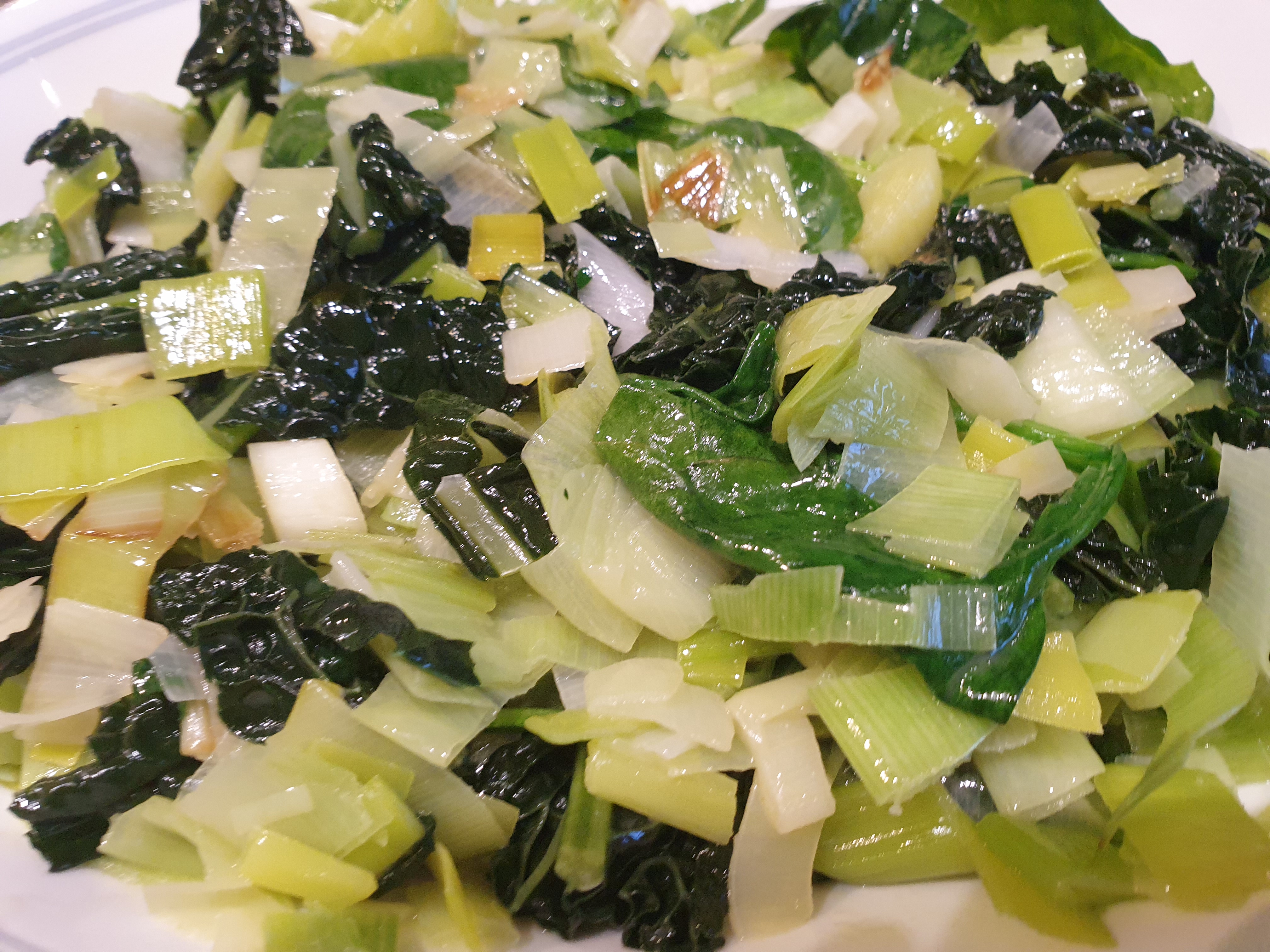
  • This is a lovely recipe for vegetables to eat with a roast dinner or breaded pork.
  • It is a variation on Eat Your Greens – 1.
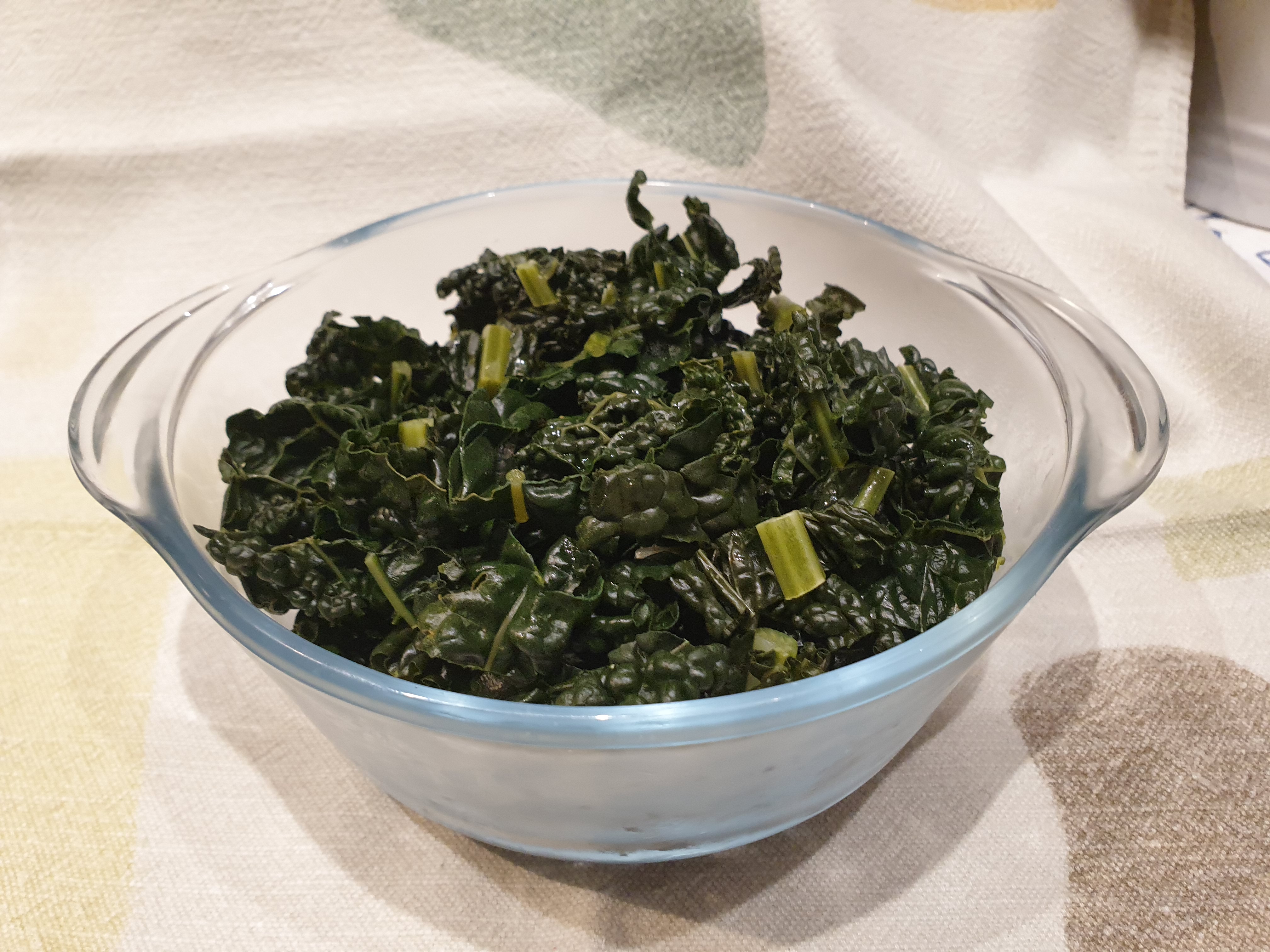
  • In this recipe cavolo nero is used rather than white cabbage.
  • As this takes longer to cook – it is part steamed first.
  • The amounts are fairly fluid – does not matter to much.

Ingredients

    • 100g of cavolo nero

    • 1 large or 2 medium sized leek(s)

    • 120g of fresh spinach

    • 2 tablespoons of butter

    • 1 teaspoon of sea salt

Method

    • Cut the cavolo nero into fine pieces.

    • Steam this for around 10 minutes.

    • Cut the leek(s) into discs and then halve these.

    • Melt the butter in a large saucepan. (a wok style is good).

    • Stir fry the cavolo nero and leeks gently for around 5 – 8 minutes.

    • Stirring all the while – so they do not burn.

    • Add in the spinach and stir.

    • Cook for around 2 minutes.

    • Sprinkle with the salt and serve.

  • Option 
  • Kale could be used – this has not been tested.

Eat Your Greens – 1

  • This is a lovely recipe for vegetables to eat with a roast dinner or breaded pork.
  • It is a recipe that you have to make at the last minute – unlike a lot of Polish recipes for vegetables or salads.
  • The amounts are fairly fluid – does not matter too much.

Ingredients

  • ½ a sweetheart cabbage or white cabbage
  • 1 large or 2 medium sized leek(s)
  • 120g of fresh spinach
  • 2 tablespoons of butter
  • 1 teaspoon of sea salt

Method

  • Shred the cabbage into fine pieces.
  • Cut the leek(s) into discs and then halve these.
  • Melt the butter in a large saucepan. (a wok style is good).
  • Stir fry the cabbage and leeks gently for around 5 – 8 minutes.
  • Stirring all the while – so they do not burn.
  • Add in the spinach and stir.
  • Cook for around 2 minutes.
  • Sprinkle with the salt and serve.


Courgette Fritters & Extras

  • I posted the original courgette fritter recipe in 2017.
  • Although courgette fritters are not from an old Polish recipe they do have some similarity  to Polish potato pancakes and to carrot pancakes.
  • Courgette in Polish is cukiniaso this is another vegetable that owes its name to Italian  – zucchini.
  • I often make variations on this recipe by adding other vegetables such a baby leaf spinach or sweetcorn (also see sweetcorn fritters).
  • Chopped chilli is also a good addition.
  • The amounts of the ingredients are all approximate.

Ingredients

  • 2 to 3 courgettes
  • 1 egg (can be 2 if using more vegetables)
  • 2 -3 tablespoons of soured cream, yoghurt, crème fraise or yoghurt cheese
  • 2 tablespoons of plain flour
  • Grated rind of 1 lemon(optional)
  • Salt
  • Sunflower oil for frying.
  • *
  • Baby leaf spinach, sweetcorn and chilli or any quickly cooked vegetable.
  • Chopped garlic – optional

Method

  • Grate the courgettes using a coarse grater.
  • Sprinkle the courgettes with salt.
  • Place the salted courgettes onto a clean tea towel and place this in a colander for around 30 minutes.
  • Wrap the tea towel up and squeeze out the liquid from the courgettes.
  • Note
  • The green stains on the tea towel will come out in a hot wash but  do not use fabric softener for tea towels used for this and similar purposes.

Place the dried grated courgettes in a bowl and add the grated lemon rind.

Keep them on a heat proof plate  in a low heat oven whilst you make the rest.

  • You can place a sheet of kitchen roll on top of the first layer to stop them sticking.
  • Serve them with grilled meats and salad.

  • Served here with grilled bacon and fried eggs.

Pierogi with Chicken & Spinach

    • I have been trying out new fillings for pierogi – all with chicken – here is the third and last for now – will be trying out different ones  later.
    • The filling is  made with cooked chicken as usual but I have found that chicken thighs make a tastier dish than chicken breast.
    • I cooked the chicken as for  rosȯł – chicken soup.
    • Spinach is often added to twaróg or yoghurt cheese but I wanted a more meaty mixture.
    • Lots of spinach cooks down to quite a small amount so the amount can be whatever you have.
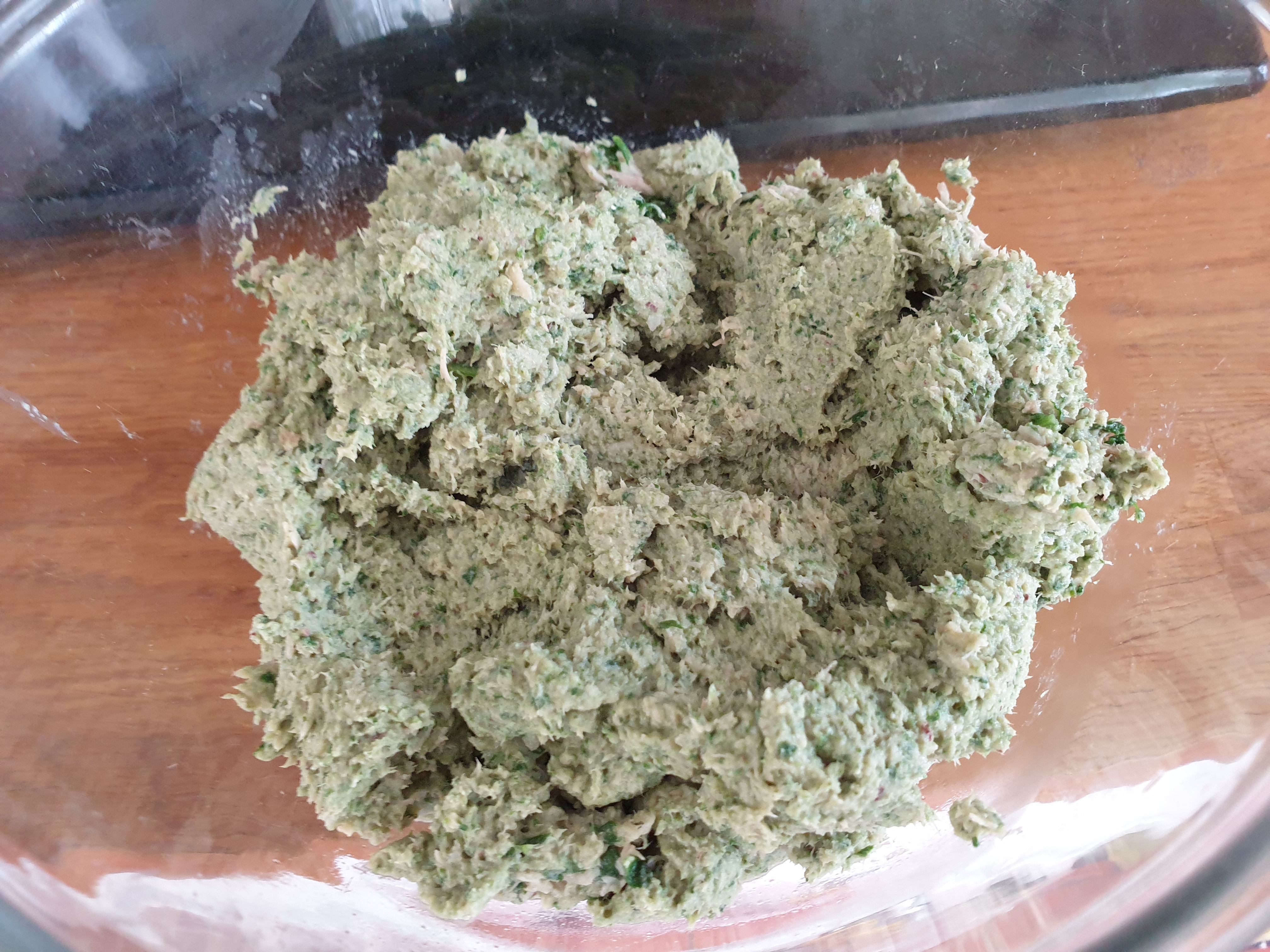
    • You can mince the chicken and spinach but I used a mini-chopper, which gave a great smooth filling.

Ingredients – Filling 

  • 150 – 200g cooked chicken thighs
  • 150 -200g fresh spinach
  • 1-2 tablespoons melted butter
  • Salt and pepper to taste
  • *
  • Melted butter to serve

Method – Filling

  • Blanch the spinach in  rosȯł,  chicken stock or boiling water for several minutes.
  • Let it cool and drain it.
  • Whisk the spinach in a mini chopper.
  • Minch the chicken or use a mini chopper.
  • Mix the spinach with the chicken until well mixed.
  • Mix well in the cooled, melted butter.
  • Season to taste.
  • *
  • Serve with melted butter.
  • *
  • Instructions for putting the pierogi together are below the photographs.

How to make pierogi

Ingredients – Dough

  • 250g pasta flour or plain flour & 2 tablespoons of fine semolina
  • 150ml water
  • 1   tablespoon oil – sunflower or light olive
  • ½ teaspoon salt
  • 1 egg yolk.

Method – Dough

  • In a jug or bowl mix together the water, oil and the yolk.
  • Put the flour and salt into a large bowl and make a well in the centre.
  • Pour in the liquid from the jug and initially use a knife to mix this into the flour and then use your hands to mix the liquid and flour to get a ball of dough.
  • Turn this out onto a floured board and knead the dough for a few minutes until you have a smooth ball.
  • Cover and leave to rest for about ½ an hour.
  • *
  • Cut the dough into half.
  • Prepare a large tray and cover it with a clean cotton or linen tea towel and sprinkle this with flour.
  • On a floured board roll out the dough a half at a time until you have a sheet of thinly rolled dough.
  • Cut out circles using a 7 cm diameter cutter.
  • The excess dough can be re-mixed and rolled out again.
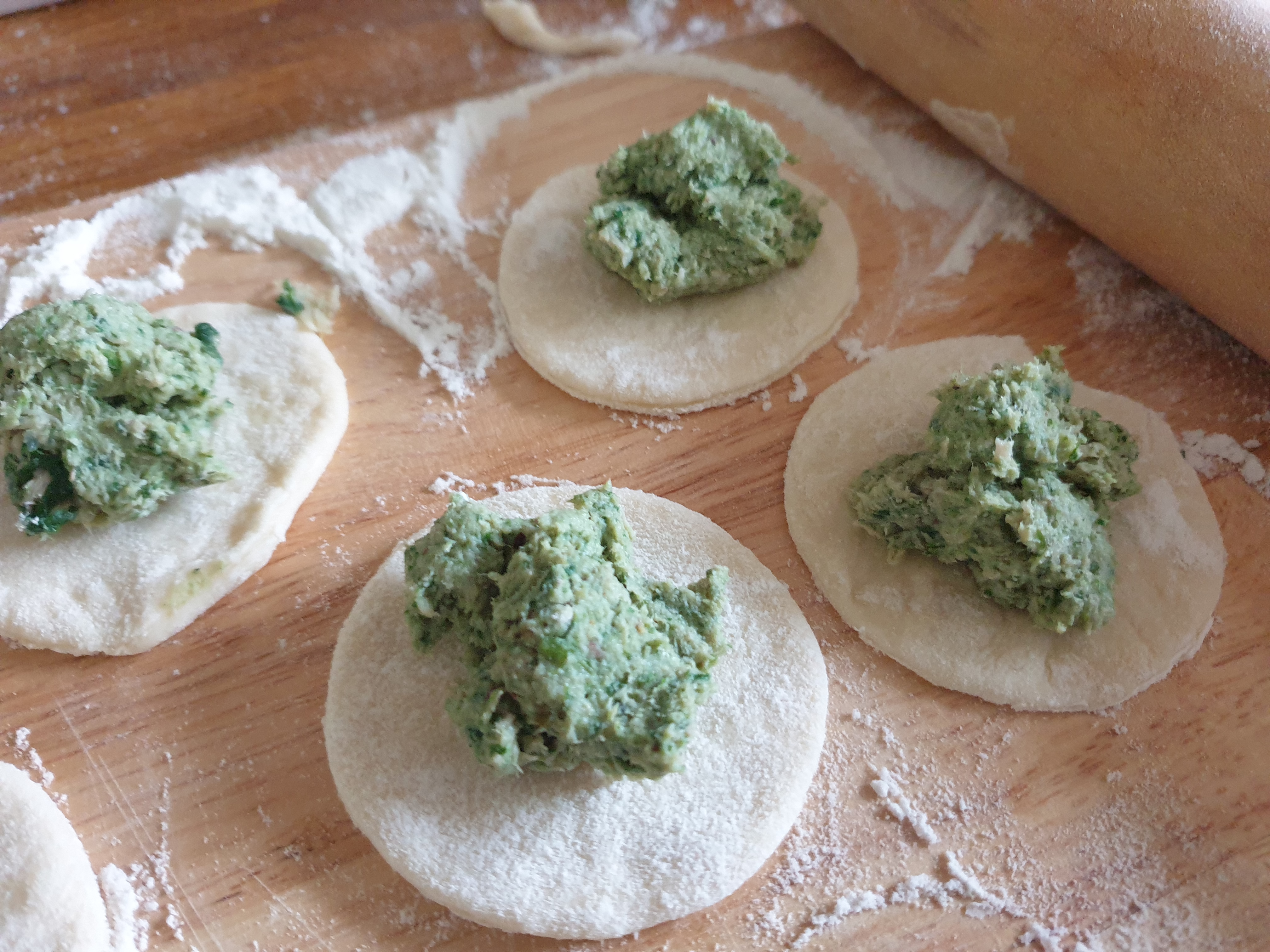
  • Around a half tablespoon of filling is put on  each circle and then they are folded over and the edges pinched together to make a good seal.
  • You learn from experience how much filling to put in as too much will make it hard to seal them and if not properly sealed they will burst on boiling.  Do not worry if you have a few mishaps – it still happens – even with experience – it is hard to salvage one that has gone wrong – just accept that there will be a few that you do not cook.
  • Place the sealed pierogi on prepared tray until they are all made, do not let then touch each other.
  • *
  • To cook the pierogi
  • Use a large pan of boiling water to which you have added some salt and a drizzle of oil.
  • Drop the pierogi in one by one and allow them to boil.  I usually do about 5 to 6 at a time.
  • As they cook they will float to the surface, let them boil for 2 minutes and then remove them with a slotted or perforated spoon and put into a colander above a pan for a few seconds to drain and serve with melted butter.
  • Continue boiling batches in the same water.
  • If you want to make all the pierogi to serve together then you need to get a large oven proof dish.
  • Melt lots of butter in the dish.
  • Keep the dish warm in a low oven.
  • As you take out the cooked pierogi add them to the dish and coat them with the melted butter.
  • Keep on adding more as they cook.

Spinach Pancakes – 2

  • This version of pancakes is the thicker type more like an American style pancake.
  • In Polish they would be known more as  racuszki or placki.
  • In England more like dropped scones or Scottish Pancakes.
  • This recipe uses milk.
  • Though not tried you could make a version with yoghurt & milk.

Ingredients

  • 1 egg
  • 100g fresh spinach
  • 90ml milk
  • 70 – 90g plain flour
  • 1 teaspoon baking powder
  • *
  • 50g granulated sugar for a sweet version
  • *
  • Sunflower oil for frying

Method

  • Shred the spinach in a mini-chopper or blender.
  • Mix the eggs with the milk.
  • Mix the baking powder with the flour.
  • Add the spinach to the egg mixture.
  • *
  • Add sugar if using.
  • *
  • Add the flour to the mixture until it is thick enough to drop off a spoon.
  • *
  • Fry tablespoonfuls on both sides on a hot oiled griddle pan.

Good served with sweet or savoury extras


Served here on Vintage Pyrex, Royal Doulton – Tapestry and Carnation.

Spinach Pancakes – 1

  • I kept hearing about spinach pancakes and looked for a good recipes.
  • In the end, I adapted my own pancake recipe
  • This version is the thin type – often called a crêpe or in Polish  naleśnik.
  • This is adapted the recipe the perfect pancake 
  • Using  less flour and
  • Less liquid.
  • *
  • Butter and oil for frying

Ingredients

  • 2 eggs
  • 100g fresh spinach
  • 200ml milk
  • 100ml water
  • 150g plain flour

Method

  • Shred the spinach in a mini-chopper or blender.
  • Mix the eggs with the milk and water.
  • Add the flour until well blended.
  • Add the spinach.
  • *
  • If you leave this batter for a while, you will have to mix up the spinach.
  • *
  • Get a pancake pan hot with a little oil and butter.
  • Use a standard ladle amount of batter to pour the mixture into the pan.
  • Tilt the pan so that the mixture covers the surface completely and evenly.
  • Cook the pancakes on one side and turn then over.
  • You can make them up one by one or stack then up with a piece of greaseproof paper in between them.
  • You can do this and leave then for later use.
  • Pancakes with sweet fillings are normally folded into triangles – fan -shaped  by folding the pancake into half and half again.
  • Pancakes with savoury fillings are normally rolled up.
  • *
  • Pancakes rolled up without a filling can be cut and used as noodles or added to soups.


Green Early Summer Soup

In olden days, and even in Communist times in Poland, the only vegetables available in winter were root vegetables or preserved or bottled ones.

When sorrel leaves started to grow this marked the end of winter – a herald of spring and the start of fresh greens.

I grow sorrel in pots in my garden.

I posted a recipe for Polish sorrel soup nearly a year ago.  The following recipe does not require as much sorrel, though should you not have any sorrel at all, then use more spinach and another lemon.

Ingredients

  • 100g sorrel leaves
  • 100g of fresh spinach leaves (or use frozen)
  • ½ a head of a large lettuce
  • Juice of 1 lemon
  • 125ml soured cream
  • 2 egg yolks
  • Salt & Pepper if needed
  • *
  • Chopped hard boiled eggs – around 1 egg  per serving.

Method

  • Have the vegetable stock ready and hot in a saucepan.
  • Remove any thick stalks from the sorrel and spinach.
  • Chop the lettuce, sorrel and spinach.
  • Add them to the stock.
  • Bring to the boil and then simmer gently for around 5 minutes.
  • Take off the heat and leave to cool a little (for safety).
  • Blend the soup until you have a thick purée.
  • Adjust the seasoning if necessary.
  • Bring back to the boil.
  • In a small dish mix the soured cream with the egg yolks.
  • Take the pan off the boil and add the lemon juice
  • Stir in the soured cream mixture and then use a balloon whisk to mix it in.
  • Adjust the seasoning if needed.
  • *
  • Serve with chopped hard boiled eggs.


Soup plate – Royal Doulton – Burgundy – 1959-1981

Early Summer Soup

In the original recipe this was called spring soup.  I thought it a bit strange as not all the ingredients are out in spring – so I have re-named it to early summer soup.

Otherwise you could call it green leaves soup!

It is a really super soup – very tangy  with the sourness loved by Poles.

If you have the vegetable stock and some hard boiled eggs ready – then this is a very quick soup to make.

Some of the ingredients – growing in pots in my garden

It is hard to give exact amounts needed – around 500ml in volume of different leaves.

Ingredients

  • Large handfuls of sorrel
  • Large handfuls of spinach – or use frozen leaf spinach
  • Several sprigs of flat-leaved parsley
  • A stem of lovage or some celery leaves
  • 1 litre of vegetable stock – can be from a cube or concentrate.
  • 1 tablespoon of plain flour
  • 2 tablespoon of milk
  • 250ml soured cream
  • *
  • Hard boiled eggs – 1 per serving

Method

  • Have the vegetable stock ready and hot in a saucepan.
  • Remove all the leaves from the stalks.
  • Chop the leaves.
  • Add the leaves to the stock.
  • Mix the flour with the milk.
  • Add the flour mixture to the soup.
  • Mix well and simmer for 3 minutes.
  • Take the pan off the boil and stir in the soured cream.
  • Serve with a hard boiled egg chopped in half per serving.

Served in Royal Doulton – Carnation  1982- 1998

Leśny mech – Forest moss


A Polish Heritage Day was held in the Leeds Polish Centre on the first Saturday after 3rd May in 2017 & 2018.

The 3rd will take place on Saturday, 4 May 2019.

May 3rd  is Polish Constitution Day – a National Holiday in Poland to celebrate – Konstytucja 3 maja 1791.

This was the first  written constitution in Europe and the second in the World with the American constitution in 1789 being the first. It was very progressive for its time.

There was a hugh table with Polish cakes for sale – I contributed the iced poppy seed cake – makowiec on a glass stand in the middle of the photograph.

One of the ladies brought a cake I had never seen before which she told me was called Leśny mech – which means Forest Moss and it looked amazing as it was bright green!

Others certainly knew this cake and it very quickly disappeared!

I was amazed to find that the cake is made with spinach!

I have tried to find the origins of the cake as it is certainly not one my mother ever mentionned – all that I have found is that it is based on a Turkish cake – called  Ispanakli Kek (Spinach Cake).

Short History of Spinach

Spinacia oleracea is spinach & the plant originated in Persia (modern Iran), ispanakh in Persian &  ispanak in Turkish and szpinak in Polish.

Spinach was found in China by the early years of AD, where it is called Persian vegetable.

There are records of spinach in Spain by the 12th century.

Spinach came to England in the 14th century and was popular because it grew in the spring and helped to break the monotony of the Lenten diet.

Catherine de Medici who was from Florence in the 16th century married into the French royal family. She loved spinach  and the term which is used till this day – à la Florentine, which is used to signify a dish with spinach, was coined in her honour.

Leśny mech

Forest Moss – this cake with its amazing colours is meant to look like the forest floor with red berries growing.

I made this cake with 250g of  baby leaf spinach which gives a light green colour. I have read that if you use full leaf older spinach this gives a darker colour and has more flavour – I have not tried this yet.

I also know that you can use frozen spinach -400g of frozen – squeezed out and patted dry – but I have not tried this.

I used frozen raspberries for the berries – when it is later in the year I will use fresh raspberries or alpine strawberries from the garden or whinberries(bilberries) from the woods. Many people use pomegranate seeds when making this in the winter months.

Ingredients

  • 250g baby leaf spinach
  • 240g of  granulated sugar
  • 4 eggs
  • 185 ml sunflower oil (3/4 of  a 250ml cup)
  • 400g plain flour
  • 3 teaspoons of baking powder
  • 1/2 teaspoon of vanilla essence

Method

Pre-heat the oven to GM4 – 180°C.

Grease and line the bottom of a loose-bottomed (or spring formed) cake tin – 26cm in diameter.

  • Use a mini-chopper/blender to whizz up the spinach – most likely in batches to get it all done.
  • Mix the flour and baking powder together.
  • Place the eggs, sugar and vanilla essence into a large bowl and use an electric whisk to whisk them together for 4 to 6 minutes till it is pale and fluffy.
  • Gently stir in the spinach.
  • Fold in the flour mixture.
  • Pour the batter into the prepared tin.
  • Bake on a lower shelf of the oven for 40 – 50 minutes.
  • Leave to cool in the tin.


  • Lightly shave off any golden brown edges of the cake with a sharp knfe or fine grater.
  • Cut off the top third of the cake and crumble it by hand into a bowl.

Place the bottom piece of the cake onto the serving plate or cake stand.

Optional

A sweet poncz (sweet punch for moistening the cake) can be used on the bottom layer.  You can make one from 60ml of cold weak black tea, the juice of 1 lemon and 1 – 2 tablespoons of icing sugar. Mix the ingredients together and use a pastry brush to spread it on the cake.

Now add a white filling!

Some recipes use whipped double cream, sweetened with icing sugar and set with gelatine. Other recipes make a filling with mascarpone.

I used my own yoghurt cheese – you can use cream cheese.

Filling Ingredients

Approximate amounts

  • 500g yoghurt cheese
  • 2 tablespoons of icing sugar
  • 1/2 teaspoon of vanilla essence or fine grated rind of a lemon
  • optional – a couple of tablespoons of soured cream – depending on the cheese and how soft you want the filling

Method

Mix the ingredients together – adjusting the sweetness and consistency to taste.

Assembling the cake.

  • Place bottom layer on a plate or cake stand.
  • Brush on the poncz – optional
  • Spread on the white filling
  • Sprinkle the cake crumbs over the top of the cake to cover filling
  • scatter red berries over the top (do this later if not serving straight away)

To decorate – red colours – raspberries, whinberries (bilberries) alpine strawberries, pomegranate seeds


Making this cake gave me a chance to use the beautiful Lead Crystal Cake Stand, which was a present from my cousin in Lanchester. It was just right for this large cake.

Made by Nachtmann in Germany  – Tortenplatte (tort/gateau plate/ stand) – style name – Venus.


Plates used are La Prune by Jet for Ter Steege in The Netherlands.

Cotton napkin with a design of rhubarb was bought from the Hepworth Gallery shop in Wakefield (Sadly – No longer in stock – as I wanted to buy some more!).