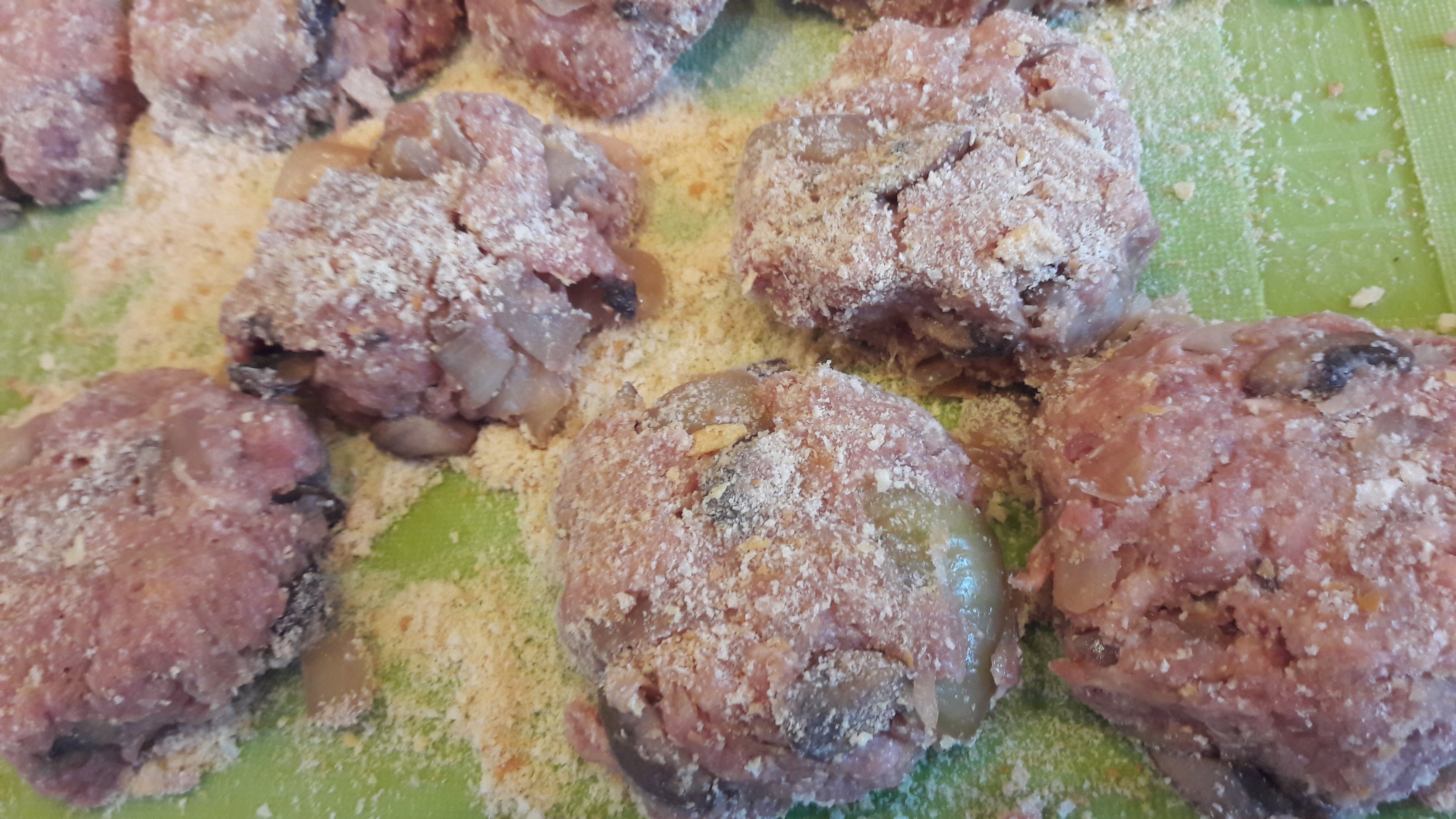
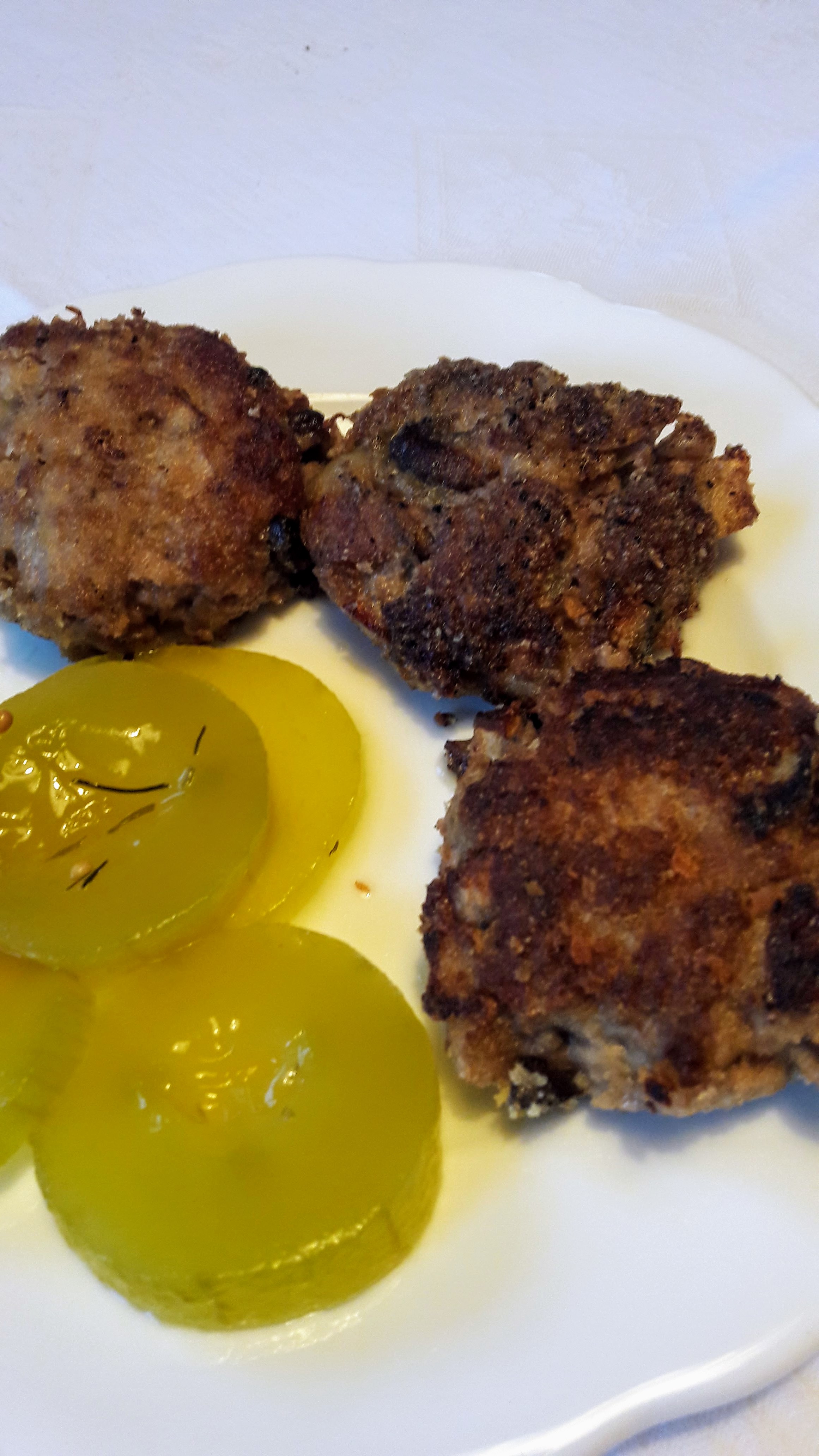
Zrazy – Meat Roll-ups

Zrazy (this word is plural) is a meat dish popular in Eastern Poland & Lithuania and can be traced back to the 16th & 17th century in the times  of the  Polish-Lithuanian Commonwealth (1569 – 1795).

(I have seen zrazy  translated as Meat Roll-ups, Meat Olives or Collops)

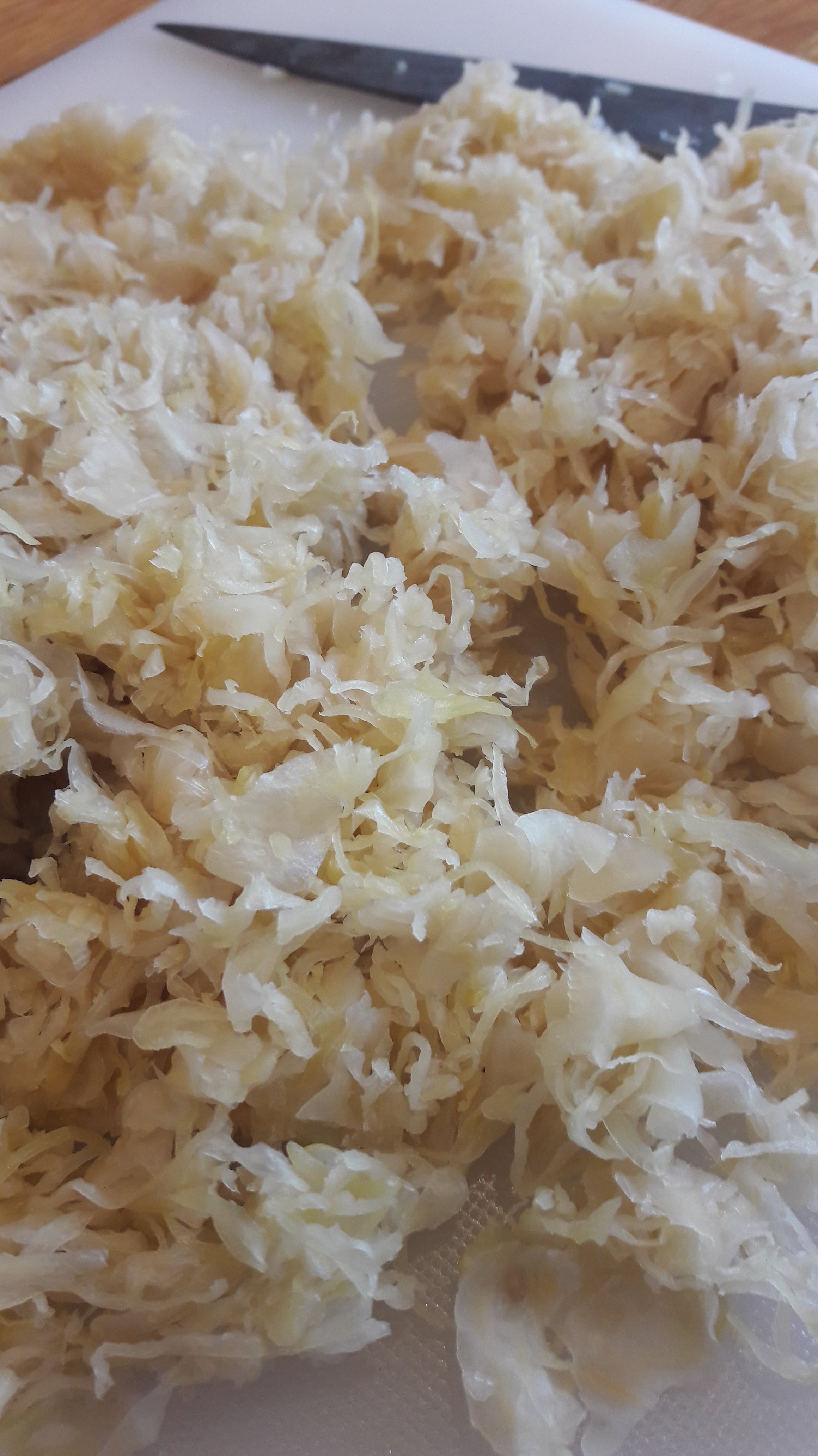
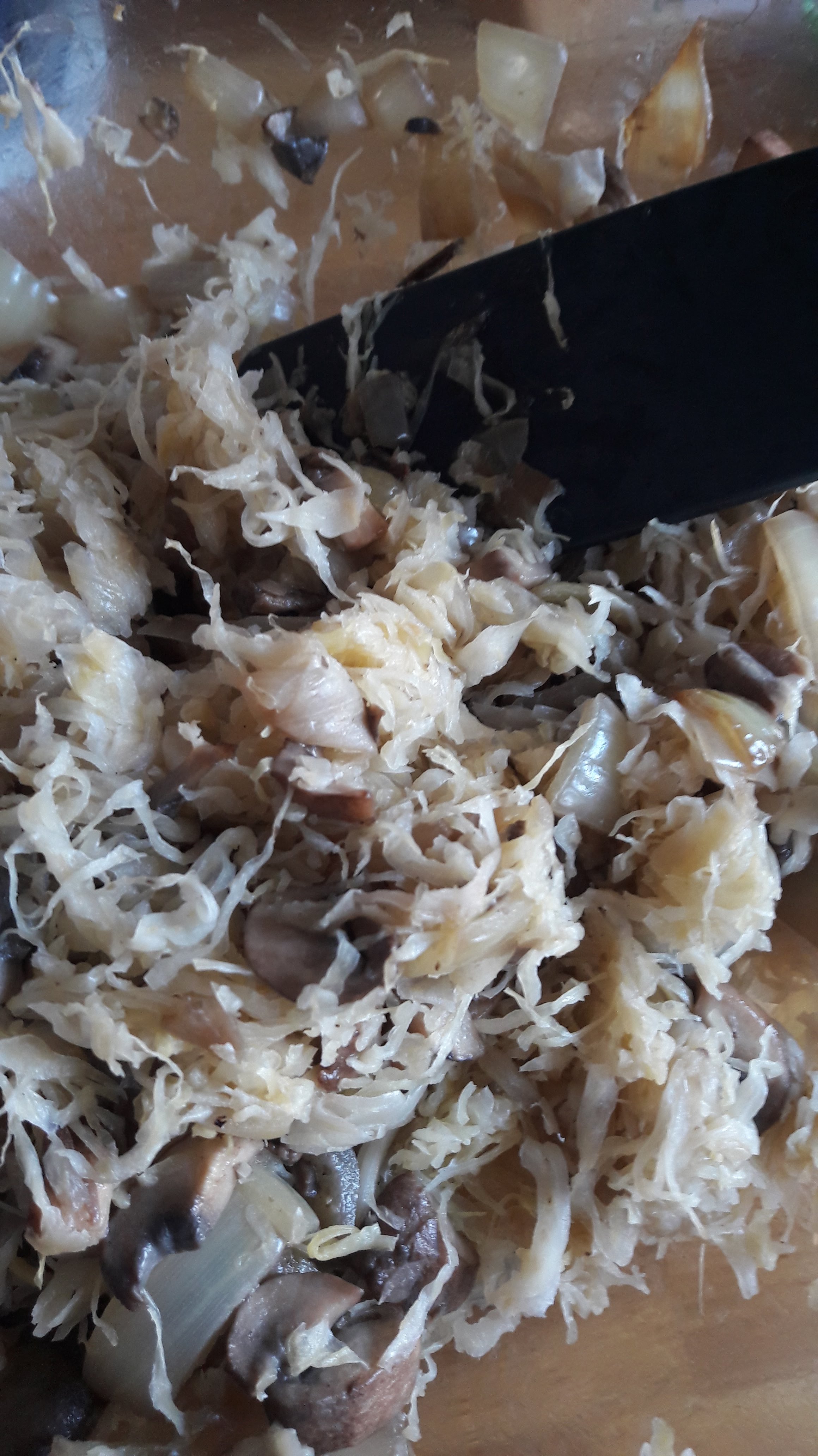
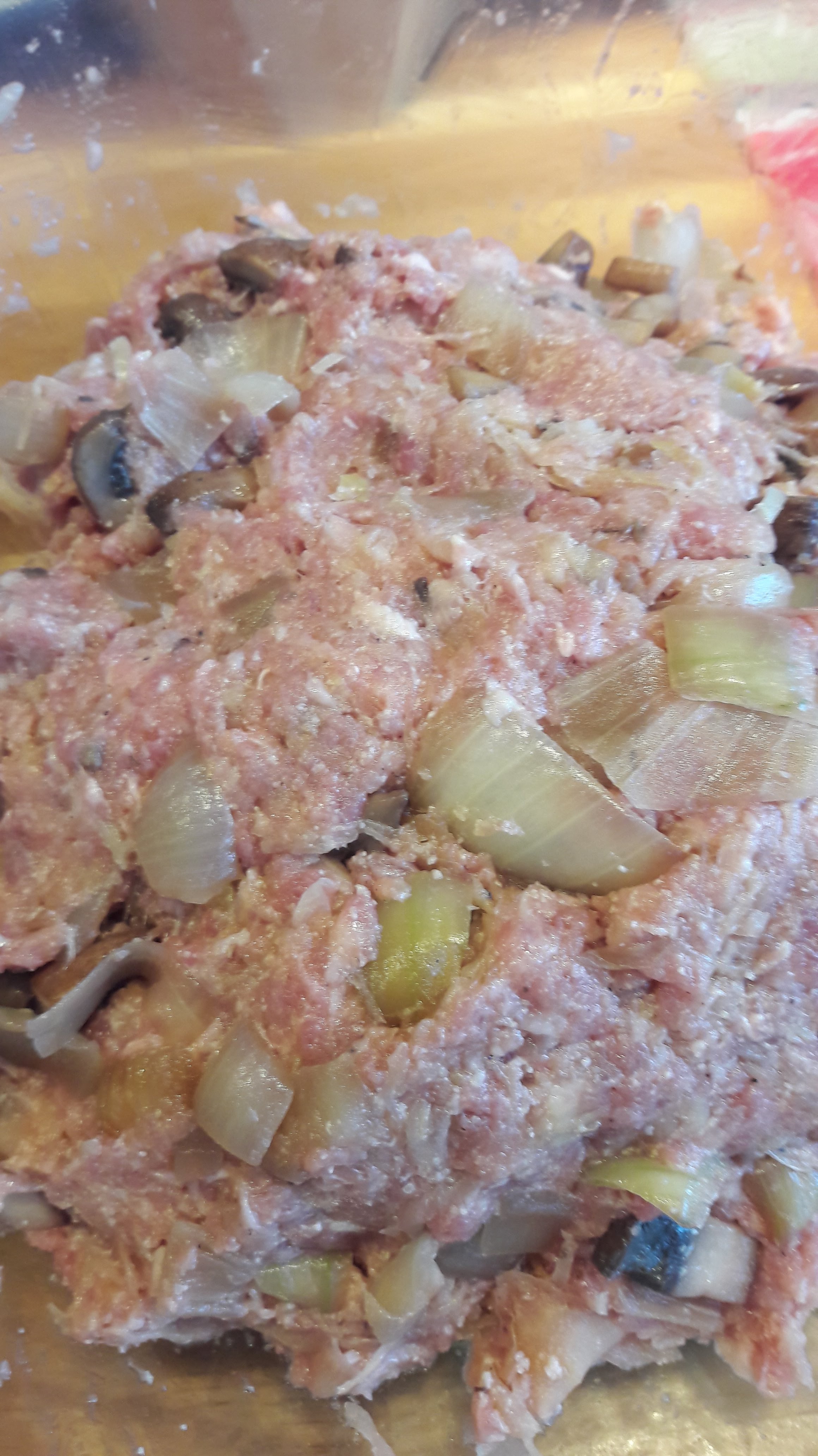
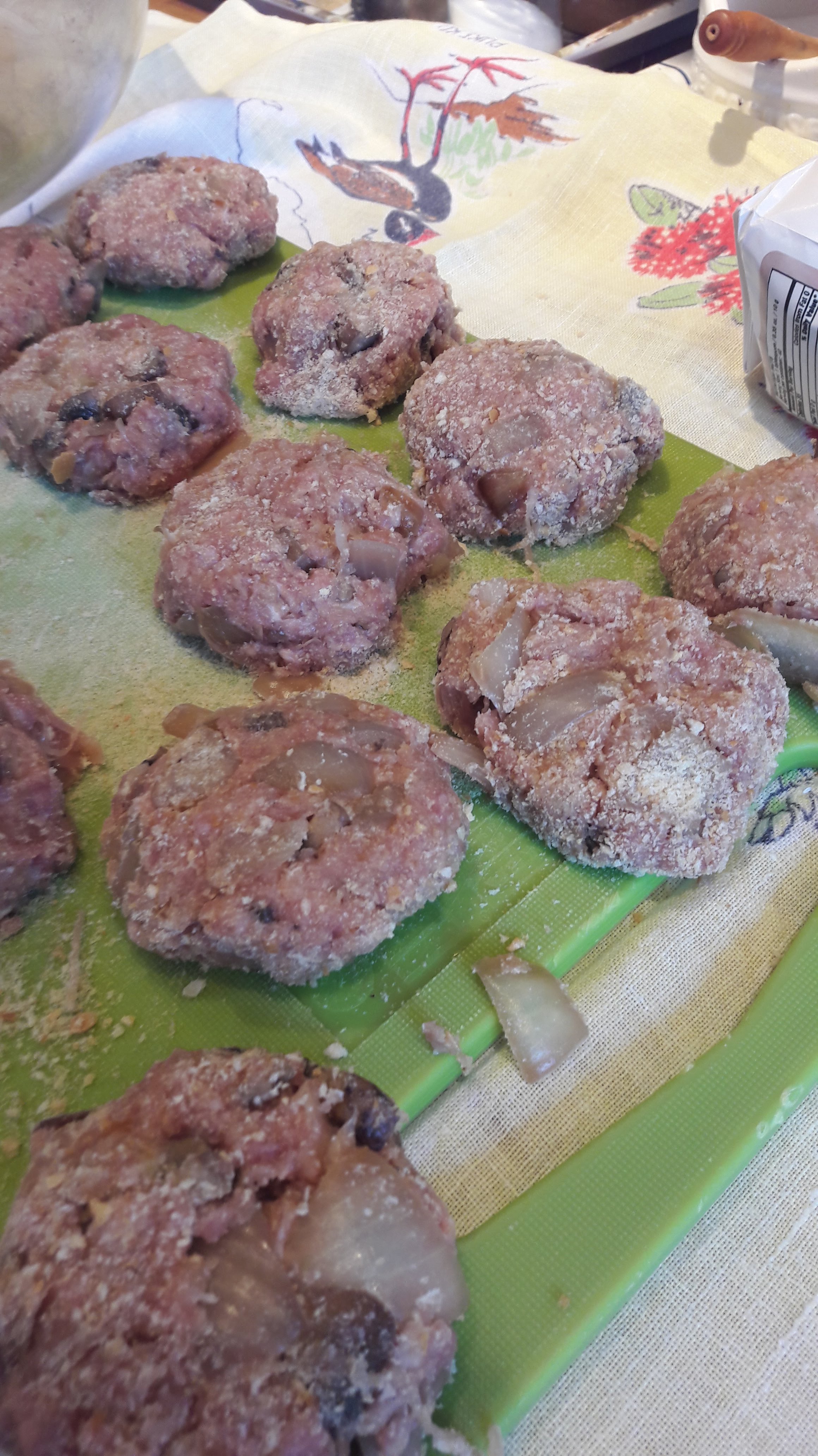
Classic zrazy have a rolled shape and are made of thin slices of  beef,  beaten with a mallet, which are stuffed with a variety of ingredients including  mushrooms.

You need to use beef which is good for  braising and slow cooking  –  I used a thin cut of topside and this worked very well.


The stuffed meat is rolled and secured with thread or thin string, then lightly fried and placed in a casserole dish with stock and slow cooked at a low temperature.


Stock

For the stock,  I  use chicken or vegetable stock (this can be from a stock cube or powder)  and add bay leaves, whole peppercorns and sometimes whole allspice.


Prior to serving, the threads are removed.


Zrazy are eaten with the sauce in which they were cooked, though extra ingredients can be added to this such as  soured cream, mushrooms or tomato.

You can add some cornflour to thicken the sauce.

Po nelsońsku  –  in Lord Nelson’s style –  is when mushrooms and soured cream are added to the sauce. (I have not been able to discover why this name is used.)


Here served on Royal Doulton – Carnation – 1982 – 1998

Zrazy are often served with buckwheat or boiled potatoes, and beetroot or sauerkraut salad.

Classic Ingredients for the Stuffing

There is no end to the variety of fillings you can use, the following are two traditional ones.

The amounts you need will vary according to how many zrazy you are filling – these are a guide to proportions.

Onions & Rye bread

1/2 slice of rye bread – made into breadcrumbs

1 onion – chopped and fried in butter till golden

1/2 teaspoon of caraway seeds

Salt & pepper

You can spread a little made up mustard onto the meat first.


Dried Mushrooms

20g dried mushrooms  – add around 250ml of boiling water and soak these overnight – chop into small pieces then simmer in the liquid.

1 onion – chopped and browned in butter till golden

Add the onion to the mushrooms and continue simmering till most of the liquid is gone.


Add salt and pepper to taste.


A Little Caper!

Capparis spinosa is the caper bush.  The plant is best known for the edible, unripened  flower buds – capers – kapary (in Polish)  which are often used as a seasoning and are usually  pickled in brine, vinegar or wine.

These perennial plants are native to the Mediterranean and some parts of Asia. Their use dates back to around 2,000 BC  where they are mentioned as a food in Sumerian literature.

The caper buds are picked by hand which can make the cost of a small jar expensive.

Pickled nasturtium (Tropaeolum maius) (nasturcja in Polish)  seeds – often called poor man’s capers are a good substitute.

Cooking With Capers

Capers have long been used in the Mediterranean region especially  in Italian cooking.

Capers are usually  added to the dish toward the end of the cooking process, to keep their shape and flavour.

Sos kaparowy – Caper sauce

This is very popular in Poland and is made with chopped capers and mayonnaise  and is served with hard-boiled eggs.

Potato Salad with Capers

This is my variation of the classic Polish potato salad with caper  sauce.

Ingredients

  • 200g  waxy potatoes
  • 100g whole green beans
  • 100g peas
  • 2-3 spring onions – green part
  • 2 tablespoons of capers – drained
  • 2-3 tablespoons mayonnaise – home-made or a good full fat bought variety
  • 1 tablespoon of made up mustard
  • Salt & pepper
  • 2 – 3  hard-boiled eggs

    Method

  • The potatoes, green beans and the peas all need to be boiled or steamed, drained and then dried as much as possible using a clean tea towel.
  • I usually use starchy potatoes for potato salad but have found that waxy ones are better for this one.
  • Chop the beans into small pieces.
  • Chop the green parts of the onion into fine pieces.

Mix together the mayonnaise and the mustard.

I have found that the lighter sort of mayonnaise soon makes this salad have a watery dressing after a very short time.

It is better to use home-made mayonnaise or a good bought one – I use Hellmann’s.

  • Mix the vegetables with the dressing and add salt & pepper to taste.
  • Chop the hard-boiled eggs and scatter these on the top of the salad to serve.

Served here in a bowl by Meakin  –  Cadiz  – 1964  – 1970

Pasta Salads

The general word for pasta in Polish is makaron .. from the Italian macaroni or maccheroni which is thought to originate from the Greek makariafood made from barley.

You need some cooked pasta – small shapes are the best – I often use Fiorelli – little tubes with lacy edges.


When I am cooking some pasta for a meal,  I often do a bit more so I have some left to make a salad the next day.

Try not to over cook the pasta.

The weight of dry pasta will result in around double the weight of cooked pasta  eg 250g of dry pasta will result in around 500g of cooked pasta.

I find that mayonnaise or mayonnaise based dressing  are best with these salads.

Cooked vegetables work well with these salads and also tinned or bottled vegetables and so it is a good store cupboard dish.

Below are several ideas – but you can do many variations – I always use a few different colours to make it look attractive.

Pasta, Peppers & Sweetcorn Salad

  • 400 – 500g cold cooked pasta.
  • 1 small tin of sweetcorn, drained (or frozen loose sweetcorn – cooked)
  • 1 or 2  fresh red peppers or 2-3 pieces of  bottled peppers.
  • 1-2 tablespoons of mayonnaise
  • Salt & ground back pepper

20171108_094335


IMG_20150819_064345546


Method

  • In a large bowl mix the pasta and sweetcorn together.
  • If using fresh peppers then remove the stalk and the seeds and chop the flesh into small pieces.
  • Blanch the peppers by putting them in a dish with boiling water and letting them stand for about 10 minutes then drain and pat dry.


  • If using bottled peppers then drain them from the liquid and cut into small pieces.
  • Add the peppers to the salad mixture.
  • Mix in the mayonnaise.
  • Add salt & pepper to taste.


Pasta, Peas, Peppers  & Sweetcorn Salad

Ingredients

  • 400 – 500g cold cooked pasta.
  • 1 small tin of sweetcorn, drained (or frozen loose sweetcorn – cooked)
  • 1 or 2  fresh red peppers or 2-3 pieces of  bottled pepper
  • 150g of cooked frozen peas
  • 1-2 tablespoons of mayonnaise
  • Salt & ground back pepper.

Method

Make the salad as above then add the cooked peas and mix well


Pasta, Peppers & Sweetcorn Salad with Tuna

  • 400 – 500g cold cooked pasta.
  • 1 small tin of sweetcorn, drained (or frozen loose sweetcorn – cooked)
  • 1 or 2  fresh red peppers or 2-3 pieces of  bottled peppers.
  • 1  x  145g tin of tuna chunks in oil or brine – drained
  • 1-2 tablespoons of mayonnaise (variation –  add half a teaspoon of tomato puree or even hot pepper sauce)
  • Salt & pepper to taste – you will need less salt if you are using the tuna in brine.

Method

  • Make the salad as in Pasta, Peppers & Sweetcorn Salad up to the addition of the mayonnaise.
  • Break up the tuna into smaller pieces and add this to the salad and mix it in.
  • Add the mayonnaise.
  • Salt & pepper to taste – (you will need less salt if you are using the tuna in brine).

20180114_165443

Variations

Add some chopped chillies to the mixture – I use  green ones to differentiate them from the red peppers.

Pasta, Peas, Peppers & Sweetcorn Salad with Tuna

Ingredients

  • 400 – 500g cold cooked pasta.
  • 1 small tin of sweetcorn, drained (or frozen loose sweetcorn – cooked)
  • 1 or 2  fresh red peppers or 2-3 pieces of  bottled pepper
  • 150g of cooked frozen peas
  • 1  x  145g tin of tuna chunks in oil or brine – drained
  • 1-2 tablespoons of mayonnaise
  • Salt & ground back pepper.

Method

  • Make the salad as in Pasta, Peas, Peppers,  & Sweetcorn Salad
  • Break up the tuna into smaller pieces and add this to the salad. and mix it in
  • Salt & pepper to taste – (you will need less salt if you are using the tuna in brine).

20180114_170929

Pasta, Peas, Peppers & Sweetcorn Salad with Polish Smoked Sausage.

Ingredients

  • 400 – 500g cold cooked pasta.
  • 1 small tin of sweetcorn, drained (or frozen loose sweetcorn – cooked)
  • 1 or 2  fresh red peppers or 2-3 pieces of  bottled pepper
  • 150g of cooked frozen peas
  • 200g of Polish smoked sausage or ham
  • 1-2 tablespoons of mayonnaise
  • Salt & ground back pepper

Method

  • Make the salad as in Pasta, Peas, Peppers & Sweetcorn Salad.
  • Slice the sausage into thin slices and then chop these into halves and quarters.
  • Add this is to the salad and mix in
  • Salt & pepper to taste.

IMG_20160302_063114078


20180114_171331


Hard Boiled Egg Garnish

1 or 2 hard boiled eggs can be chopped and used to garnish the tuna or smoked sausage salads.


Lemon Cream Roulade

This cake is a roulade – in Polish  – rolada.

I made this cake for my nephew when he came to visit recently as he loves cakes with lemons.

You need to make the sponge for a “Swiss roll” and then fill it with lemon cream.

The sponge cake made using potato flour is very Polish but fresh double cream is not usually found in Polish cookery – soured cream is the norm.  Also lemon curd I think of as quite British although I did come across something similar in one of my Polish cooks books.   You can make your own lemon curd but I  use Sicilian lemon curd from Marks & Spencer as I think this is so lemony.


I made the sponge using the recipe  Biszkopt – Sponge Cake using Potato Flour

Or to be easier, use the English Style fat free sponge recipe from

Sponge with Sweet Orange Jam

Use the instructions for how to make and roll the roulade from the first recipe.

Both of  these recipes use 2 eggs.

Lemon Cream

I used a large tub of double cream 250ml/300ml – it was more than enough – I did not use it all.

I would think that 200ml of double cream would be enough.

I  whisked this up till it was thick and stiff.

I then added 3 -4 tablespoons of lemon curd and whisked again.

Unroll the cold sponge, spread it with the cream and roll up again.

Dredge with icing sugar


Cake Plate H & K Tunstall


Served on – Tuscan China – Bird of Paradise – Hand Painted – 1930s


Lemon Drizzle Cake

This is not a Polish recipe but my nephew loves cakes with lemons and after trying many versions this is the one I baked for him especially when he came to visit recently.  I will be sticking with this recipe from now on.

Ingredients – Cake

  • 175g butter or block margarine
  • 175g caster sugar
  • 3 eggs
  • Zest of 2 lemons
  • Juice of 1 lemon
  • 160g self-raising  flour

Ingredients – Drizzle

  • Juice of 1 lemon
  • 110g caster sugar

Method

  • Grease and line a large (2lb) loaf tin – or use a ready bought liner.
  • Pre-heat the oven to GM 4 – 180oC
  • Cream the butter and sugar till soft and fluffy
  • Add the lemon zest and mix again.
  • Add the eggs, 1 by 1, and mix well.
  • Add the juice of 1 lemon and mix well.
  • Fold in the flour with a metal spoon.
  • Put the mixture into the loaf tin and gently level the top.
  • Bake for around 50 – 60 minutes – check after 40 minutes and cover the top with greaseproof paper if needed to prevent the top burning.
  • Leave to cool slightly in the tin and then remove and place on a cake rack and allow to cool a little more.
  • Prepare the drizzle by mixing the sugar and lemon juice until it dissolves.
  • Remove the greaseproof paper or liner and place the cake onto a plate (a long rectangular one with a lip around the side is the best ) so that the base is flat and excess drizzle does not run off.
  • Prick the top of the cake with a skewer
  • Gently spoon all the drizzle over the top of the cake

Save

Placek with Chocolate, Nuts & Sultanas

I have been making this placek (low flat cake) for years but I cannot remember where I got the recipes from.

The cake varies every time I make it as I alter the type or amount of each chocolate used and I also alter the dried fruit and nuts.

It is not quite a Polish recipe as  Demerara sugar is used rather than granulated & this is not a typical Polish ingredient.

Sugar

Sugar is produced from either sugar cane (a perennial grass) or sugar beet (a tap root).  When sugar cane is refined you get lots of partially refined products such as: treacle, golden syrup, Demerara sugar & various other brown sugars.

Demerara sugar is so named after a region in Guyana where it was first produced.

When sugar beet is used to make sugar you do not get all these brown sugars.

In Poland the main sugar products on sale are granulated sugar and icing sugar, also you can find vanilla sugar, for baking, which is sold in little sachet which contain one tablespoon of sugar.

Ingredients

120g butter

120g Demerara sugar

2 eggs

120g self raising flour

1/4 teaspoon of vanilla essence

100g chopped chocolate (can be a mixture of dark, milk & white)

100g chopped nuts

80g sultanas (or currants or raisins)

Note

I though dried cranberries might work well here – they did – see later post.

Method

Grease and line a 21 x 26 cms baking tray.

Pre-heat the oven to GM4 – 180°C

Chop the nuts and the chocolate.

Mix the nuts, chocolate & sultanas together.

Cream together the butter and Demerera sugar.

Mix in the vanilla essence and the eggs.

Mix in the nut mixture.

Gently fold in the flour.

Put the mixture into a baking tray.

Bake for around 30 – 35 minutes.

Leave to cool in the tin.

Cut into squares to serve.

Served on Royal Grafton – Woodside – 1950s

Save

Save

Save

Save

Save

Save

Czekolada – Chocolate

A very brief history of chocolate

Chocolate originated in Central America around 2,000 years ago from the seeds of the cacao tree – Theobroma cacao.

Theo = god  &  broma = food  – means food of the gods

30 – 50 seeds (called beans) are found in a large pod.

It was consumed by the Aztecs & Mayans as a beverage.

Christopher Columbus took the cacao beans back to Spain in the middle of 16th Century and  within a hundred years it was established throughout Europe.

Chocolate in Europe was originally a beverage  and was sweetened to balance its bitter flavour.

In Spanish it is called is el chocolate which  comes from the Nahuatl (language of the Aztecs) word  xocolatl or chocolātl …. and so we get  czekolada in Polish and chocolate in English.

By the 19th century many processes had been invented which led to the modern solid form of chocolate

Famous Names in Chocolate.

Coenraad Johannes Van Houten, in 1815, introduced alkaline salts to reduce the bitterness & in 1828 reduced the natural fat – cacao butter  and produced  cocoa powder.

Joseph Fry learnt to make chocolate moldable by adding back the melted cacao butter.

Daniel Peter invented milk chocolate by using powdered milk developed by Henri Nestlé.

Rodolphe Lindt invented the conching (method of mixing and reducing the particle size of cocoa solids) machine.

John Cadbury in 1824 had a grocer’s shop in Birmingham where he prepared ground cocoa. Moving to a factory in 1831.

Milton S. Hershey in 1893 purchased chocolate processing equipment at the World’s Columbian Exposition in Chicago.

John Mackintosh had a confectionery business in Halifax from 1890.

Henry Isaaac Rowntree had a confectionery business  in York in 1862.

Joseph Terry was a  confectionery & chocolate maker in York from 1862.

Nowadays roughly two thirds of the world’s cocoa is produced in Western Africa  with Côte d’Ivoire being the largest source.

Chocolate in Poland

Chocolate in Poland has been by tradition dark & slightly bitter  – it is called gorzka – which means bitter.  Recently there has been a move to make milk chocolate. Personally I have not liked the milk chocolate produced in Poland, I much prefer the dark chocolate.

E Wedel.png


Karol  Ernest Wedel  (1813 – 1902) came to Poland from Berlin, accompanied by his wife, Karolina and in 1851, set up his own business in Warsaw, originally serving drinking chocolate.

The logo of the company is based on Karol Wedel’s signature.

Thought by many to be the Polish national chocolate brand.

In 1894 the company moved its main factory to another site in Warsaw.

His son Emil Albert Fryderyk Wedel (1841-1919)  worked in sweet and chocolate factories in  Europe before inheriting and expanding his father’s business.

His descendant Jan Wedel  who died  in 1960,  opened a second factory in 1934 in Praga another area of Warsaw, it was  one of the most modern in Poland.

Prior to  World War II,  Wedel became a successful private company, with shops in London and Paris.

The war devastated Poland and the company.

After the war, Wedel rebuilt the factory, but it was nationalised by the communist government and then re-privatised  in 1989 after the fall of communism.

In 1991 it was bought by PepsiCo Foods and Beverages.

In 1999, Cadbury bought E.Wedel and the factory in Praga, from PepsiCo.  The Praga factory was modernised in 2007.

In March 2010  Kraft Foods Inc acquired Cadbury plc.  The European Commission insisted that Wedel be sold in order for the takeover to go ahead.

It was sold to Lotte of  South Korea in June 2010.


Warsaw in the late 1970s


E Wedel.png


Image result for wawel chocolates poland

Adam Antoni Piasecki (1873 -1945)  Started a confectionery company in 1898 in Kraków naming it Wawel after the Royal Castle in Kraków.


Wawel Palace


Main Square –  rynek główny


At first his small workshop at Długa Street employed  five people.  His first shop was opened in a tenement house in the Main Square in Kraków and there is still a shop in this area today.

In 1951  three confectionery companies from Kraków merged  to form the new Zakłady Przemysłu Cukierniczego Wawel  (Wawel Confectionery Plant).

In 1992, as a result of privatisation, Zakłady Przemysłu Cukierniczego Wawel has become a joint stock company.

In 2005, the company changed its name to Wawel SA.

Plums & Chocolate

Candied Plums coated in chocolate with a cocoa cream filling (instead of the plum stone) –  I remember this combination from when I was a child & I still love it today.

Many visitors to Poland bring these goodies back for their friends.

These chocolates are made by  Solidarność / Goplana   whose origins are with Jan Kolański in 1911.


Mince Pies

I think of these as very British – but we all love them and they have become part of our Christmas Day celebrations. Originally the pies were made with meat and this idea of meat and spices came from the Middle East and it is thought to have been the brought back by the Crusaders.

I make these with the pastry that I learnt from my mother  – a variation on kruche & półkruche,  pastry (a richer shortcrust pastry).  Using the proportion of 2 parts flour to 1 part butter.

Ingredients

Pastry

200g plain flour

100g butter or block margarine

1-2 tablespoons of icing sugar

1 egg yolk

Juice of 1 lemon (and maybe 1 tablespoon of cold water)

Glaze

Lightly beaten egg white

Caster sugar

Mincemeat

I always make my own mincemeat using the recipe in Delia Smith’s Christmas cookery book but without the chopped almonds (I do not like the crunch of the nuts).

When making the pies I add a little extra brandy or sherry to the mincemeat and stir it in.

My tins are anodised aluminium and have a gentle rounded shape, this I think make for the perfect balance between the pastry and the filling.

I put “tops” on my mince pies – but not fully covered ones.

The tops are brushed with beaten egg white and sprinkled with caster sugar.

Method for pastry

Rub the butter into the flour to make “breadcrumbs”.

Mix in the icing sugar.

First with a knife and then with your fingertips mix in the yolk & lemon juice (and  maybe a tablespoon of cold water.)

You are aiming to get a dough which is not wet.

Rest for about 10 minutes.

Pre-heat the oven to GM6 – 200°C

You need to grease the tins well in order to get the pies out successfully.

I often use the pastry in two halves.

2 sizes of cutters are needed – 1 – 7cm diameter, plain, for the base, 1 – 6cm diameter, crinkle edge for the top.

Cut out the bases and place them in the tins

Place around a tablespoonful of mincemeat on the pastry.

Place the smaller tops on.

Lightly beat the egg white and brush this on the tops

Sprinkle caster sugar over the egg white.

Bake for around 15 minutes – keeping an eye on them – so they do not burn.

Leave to cool slightly in the tins & carefully remove them onto a rack to fully cool.

Tea-plate is Stardust by Colclough from the 1960s.

Mince pies on buffet table

Save

Dried Fruits at Christmas

  • In Polish households fruits that have been dried from the summer often feature as one of the 12 dishes at the evening meal at Wigilia – Christmas Eve.
  • The main fruits that were dried were: apples, pears & plums.
  • The dishes are easy to make but you need to start the process 2 or 3 days before hand.
  • I use hot black tea to reconstitute the fruits & often using Earl Grey Tea to give it a little twist but you can use just hot boiled water.

Prunes

A good deal depends on the quality of the prunes and Agen prunes from France are the best.  You need to find good plump large prunes which still have the stones in them. However these last two years I have had difficulties find these and have had to used stoned prunes.

Ingredients

  • 500g prunes
  • 1 litre of hot tea – Earl Grey is good
  • 2 tablespoons of rum

Method

  • Place the prunes in a large bowl.
  • Make a jug of hot tea and leave to brew for about 4 minutes.
  • Pour the hot tea over the prunes, if using loose leaf tea, you need to strain it as you pour.
  • Make sure all the prunes are covered by adding more hot water.
  • Leave the prunes overnight to plump up.
  • Put the prunes and liquid (you might need to add some water) into a pan and simmer gently for about 15 minutes then leave to cool.
  • Add the rum when the prunes are cold.

Pears

Ingredients

  • 500g dried pears ( they come as half a pear)
  • 1 litre of hot tea – Earl Grey is good
  • Small piece of cinnamon stick
  • 3-4 whole cloves or allspice seeds.


Method

  • Cut the pears in half.
  • Place the pears in a large bowl.
  • Make a jug of hot tea and leave to brew for about 4 minutes.
  • Pour the hot tea over the pears, if using loose leaf tea, you need to strain it as you pour.
  • Make sure all the pears are covered by adding more hot water.
  • Leave the pears overnight to plump up.
  • Put the pears and liquid (you might need to add some water) into a pan, add a small cinnamon stick, 3-4 cloves or 3-4 whole allspice seeds and simmer gently for about 15 minutes 15 minutes, stirring occasionally .  Take care not to cook for too long – you do not want a “mush”.
  • Remove the spices then leave to cool.


Dried Fruit Salad

  • My mother used to buy mixed dried fruits to make this & I have bought this in the past from the dried fruit & nut stall on Leeds Kirkstall Market.
  • When I enquired about this – the stall holder said that they had not had this mixture for many years! She did tell me that the mixture had consisted of dried – apples, apricots, peaches, pears & plums.
  • Some people make the dried fruit salad for Wigila (Christmas Eve) using 12 fruits ( another reminder of  the 12 apostles.)  So – raisins, currants, sultanas, cranberries, cherries, figs and other dried berries would be used as well.

Ingredients

  • 500g mixed dried fruits
  • 1 litre of hot tea – Earl Grey is good
  • Small piece of cinnamon stick
  • 3-4 whole cloves or allspice seeds.

Method

  • Cut the larger fruits in half.
  • Place the fruits in a large bowl.
  • Make a jug of hot tea and leave to brew for about 4 minutes.
  • Pour the hot tea over the fruits , if using loose leaf tea, you need to strain it as you pour.
  • Make sure all the fruits are covered by adding more hot water.
  • Leave the fruits overnight to plump up.


  • Put the fruits and liquid (you might need to add some water) into a pan, add a small cinnamon stick, 3-4 cloves or 3-4 whole allspice seeds and simmer gently for about 15 minutes, stirring occasionally .  Take care not to cook for too long – you do not want a “mush”!
  • Remove the spices  then leave to cool.

20171215_185612

 Note

When I make any of these at other times of the year, I often serve them with soured cream or plain yoghurt or a mixture of the two.


Piernik – Honey Spice Cake – Using Rye & Wheat Flour

Piernik is a cake which has been known in Poland since the 12th century.

The very first recipes used just honey, wheat or rye flour and spices (see notes in previous piernik post for spices)

I have tried a recipe which did just use honey, rye flour and spices – I did not like the result at all, so will not be including that one!

I also tried one which used wheat and potato flour which also did not turn out well.

I then went on to make the recipe below which also uses wheat flour, egg yolks and icing sugar.

I tried this out twice as the first time it did not rise very much, so I doubled the amount of bicarbonate of soda and was pleased with the result.

Piernik with rye & wheat flour

Ingredients

110g rye flour

160g plain flour

160g runny honey

2 egg yolks

100g icing sugar

1 teaspoon of piernik spices (cinnamon : cloves : cardamom – in equal parts)

1/2 teaspoon of bicarbonate of soda

2 tablespoons of cold water.

Method

Pre-heat the oven to Gas Mark 3 – 160°C

Line the tin with aluminium foil, grease the foil and then coat with dried breadcrumbs.

Or

Grease & line  a 2 lb loaf tin or use a paper liner


In a large bowl mix together the rye flour, plain flour and the spices.

In a small saucepan heat the honey to boiling point & turn it off the heat & allow to cool slightly.

Pour the hot honey over the flour and mix well.


Beat the yolks with the icing sugar until  they are pale and fluffy.

Add this to the flour and honey mixture.


Mix the bicarbonate of soda with the water and mix this in.

Put the mixture into the prepared tin & smooth the top.

Brush the top with cold water.


Bake for around 40 minutes in the long tin & 1 hour  in the loaf tin. Check earlier and cover with greaseproof paper to stop burning if necessary.


This piernik is not very sweet and could be split in half and sandwiched back together with powidła  – Polish plum spread (see notes in previous piernik post) and covered in a chocolate coating made from melted butter & dark chocolate.

I just had it sliced and spread with powidła (Polish plum spread) or sour cherry or raspberry jam.

Served on La prune by Jet for Ter Steege in The Netherlands.