Turnips – 3 Ways!

White turnip – rzepa in Polish – is Brassica rapa, a root vegetable of the cabbage family.


3 Ways

  1. Raw & grated –  in a salad – surówka
  2. Cooked  & cold  – in a salad – sałatka
  3. Cooked & hot   – as a vegetable, side-dish with a meal

Raw & cooked, white turnip can be used instead of  celeriac or kohlrabi as in all of my posts:

Celeriac salads & More Celeriac salad recipes

Kohlrabi salads.

Various dressing can be used: lemon juice, soured cream, mayonnaise and yoghurt on their own or in various combinations.

Turnip, Carrot & Apple salad

Ingredients

2 Turnips

2 carrots

2  red skinned apples such as Braeburn or Pink Lady

Juice of 1 lemon

Salt & pepper to taste


Method

Peel and coarse grate the turnips and carrots.

Core the apples and chop into small pieces.

Mix them all together wth the lemon juice.


Cooked Turnip Salad – 1

Ingredients

2 turnips

2 carrots

Around 100g of cooked frozen peas

2 -3 tablespoons of mayonnaise (full fat is best for cooked vegetables)

Salt & pepper to taste

Method

Peel the turnips & carrots and steam them.

Chop them into rough cubes.

Mix them with the cooked peas and the mayonnaise


Cooked Turnip Salad – 2

As above with the addition of  3 to 4 chopped gherkins


Cooked Turnip – served hot

Peel and steam the turnip – not too much you do not want a watery pulp.

Rough mash the cooked turnip.

Serve hot with a variety of toppings.

Skwarki  – crispy smoked bacon bits

Chopped bacon is heated in a fryng pan until all the fat is released and the bacon pieces are crispy.


Slightly charred onion bits

Chopped onions are gently cooked in a little butter and then slowly heated until they are slightly charred.


Buttered breadcrumbs – à la polonaise.


More Hot Beets!

Beetroot must be one of Poland’s favourite vegetables and I have written recipes about them previously  – many of these are for salads.

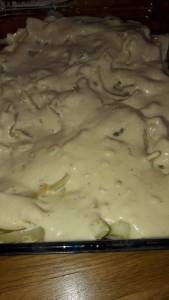
Here is another recipes which I came across recently – raisins, apple, horseradish and a little soured cream is added to make a hot dish to serve with roast meats.

The original recipe used grated fresh horseradish – I have adapted it by using prepared horseradish sauce which I have in all the time.
Cooked beetroots are needed and these can be prepared in your favourite way – boiling, steaming or roasting.


Ingredients

700g of cooked beetroots

2 Bramley cooking apples

50g of raisins

1 tablespoon of butter

80mls of soured cream

2 – 3 tablespoons of horseradish sauce

Juice of 1 – 2 lemons

Salt & pepper

Method

Put the raisins in a small bowl and pour boiling water over them and leave them to stand for about 30 minutes.

Coarse grate the cooked beetroots or use a blender.

Peel and core the apples and coarse grate them and pour some lemon juice on them.

In a deep frying pan gently melt the butter.

Add the grated apples and heat gently until they start to soften.

Add the grated beetroot, the raisins and water and continue to heat them together, stirring occasionally.

Add the horseradish sauce and the soured cream and mix well in, continue to heat for a couple of minutes.

Add more lemon juice, salt & pepper to taste.

Serve hot.


Note

You can put them in an oven proof dish in a low oven whilst you wait for other items to cook.

20190208_185106

Served here with kotlety – breaded pork and boiled new potatoes.

Note

If you have any left – they taste good cold as well!


Beef Gulasz with Caraway

I came across this recipe recently which uses Gouda cheese with soured cream to thicken the sauce – it works really well and I will be trying this in other recipes.

Ingredients

400g – 500g braising steak – cubed

200g – 250g of mushrooms (chestnut type are good) – sliced

2 large onions – chopped

300ml of chicken stock (can be from a cube or concentrate)

3 tablespoons of caraway seeds

1 -2 tablespoons of plain flour

50g of Gouda cheese – chopped into small cubes.

3 tablespoons of soured cream

Sunflower oil for frying

Salt & pepper to taste.

Flat-leafed parsley to garnish – chopped

Method

Pre heat the oven to Gas Mark 3 – 1600C

On a large plate mix together the flour, salt and pepper.

Coat the meat cubes lightly in the flour mixture and brown these in the oil in a hot frying pan.

Place the beef into a casserole dish.

Lightly fry the onions and mushrooms in the frying pan and then add them to the beef.


Add the stock and caraway seeds to the pan.

Put on the lid and cook in the oven for around 3 hours until the beef is tender.

Before serving stir in the cubes of cheese and the soured cream and mix well into the sauce.

Garnish with flat-leafed parsley.

Served here with mashed potatoes on Royal Doulton – Carnation – 1982 – 1998.

Mushroom Soup

Grzyby is the Polish word for mushrooms.

Mushroom gathering in Poland is a National pastime and has been in the past, a source of food and income for many.

Mushrooms can be dried, pickled, salted and marinated.

On those damp misty days in autumn when in England people would think – what a dull day,  a Pole would wake up and think – Great, a good day for gathering mushrooms!

Most Poles think the best dried mushrooms are Boletus edulis, in Poland they are called borowik, prawdzik or prawdziwek(translates as the real thing!), in Italy porcini and I try and use these whenever I can.

Packets of dried mushroom in England tend to be 25g or 30g and can be of mixed types.

My father knew all about mushrooms but never really passed the knowledge on to me – mainly because of the limited availbility of transport to suitable woods around where we lived in Lancashire.

On my first visit to Poland I did go to Białowieża forest and went with a guide and collected lots of mushrooms including chanterelles which in Poland are called kurki.

Dried mushrooms feature in many Polish dishes including ones made for Wigilia – Christmas Eve.

Nowadays, the common field mushroom – Agaricus bisporus – is produced on a huge scale and makes up a large part of commercial mushroom production with Poland being the 3rd biggest producer in Europe, following Italy and The Netherlands.

Mushroom soup in olden days was nearly always made with just dried mushrooms.

I make my soup with both dried and fresh mushrooms.

As with all soups the quantities do not have to be exact.

You can make your own vegetable stock or use cubes or powder.


Ingredients

25-30g of dried mushrooms – Boletus edulis are good.

250g of fresh mushrooms  – chestnut type are good.

Around 125ml of soured cream

1 onion – diced

Butter to fry the onion

1 – 1.5 litres of vegetable stock – can be from power or a cube (I use Marigold bouillon)

2 tablespoon of cornflour – optional

Salt & Pepper to taste

Chopped Flat-leaf parsley or chives to garnish


Method

Start the night before by preparing the dried mushrooms.

Put the dried mushrooms in a jug or bowl and add around 250ml of boiling water.

Leave the mushrooms overnight.

Strain the mushrooms from most of the liquor – saving this for later.

Chop the mushrooms into smaller pieces.

Gently simmer the mushrooms in a little of the liquor for about 5 minutes.

Gently fry the diced onion in some butter till they are golden.

Seperate the caps from the stalks of the fresh mushrooms.

Thinly slice the fresh mushroom caps  – if the caps are large cut the slices into 2 or 3.

Optional

If the stalks are not too “woody”  – chop them into very small pieces  – otherwise discard them.

Add the mushrooms to the onions, mix and fry gently.

Into a large pan or stockpot, add the onions and mushroom, the re-constituted mushrooms and the liquor from the soaked mushrooms and mix well.

Add the  vegetable stock and bring the mixture to the boil, then cover with a lid and leave to simmer.

You could put the pot into a low oven around GM2 – 150°C.

Allow to simmer for a couple of hours.

Add the soured cream and stir gently – check for seasoning.

or

Mix the cornflour with some of the soured cream, add and stir to thicken, then add the rest of the soured cream.

Sprinkle with chopped parsley or chives to serve.


Served on Royal Doulton  – Carnation – 1982 – 1998  &  Queen Anne side plates – pattern name unkown.

Potatoes – po nelsońsku

  • Po nelsońsku  –  in Lord Nelson’s style –  is when mushrooms and soured cream are added to the sauce. (I have not been able to discover why this name is used.)
  • In the traditional version of this dish, dried mushrooms are used and are soaked overnight.
  • I have also made a version with dried and fresh mushrooms.
  • Floury potatoes such as King Edward or Maris Piper are the best for this dish.
  • Packets of dried mushroom in England tend to be 25g or 30g and I have used a full packet for the recipe (you can use more).
  • The best dried mushrooms are Boletus edulis, in Poland they are called borowik or prawdzik, in Italy porcini.

Ingredients

  • 1 kg of floury potatoes
  • 10 -15g of dried mushrooms
  • 2 onions
  • 60ml of soured cream
  • 250 ml of milk for soaking the mushrooms & 125ml (or more) for the sauce
  • 100g of butter for frying the onions & the sauce
  • 2 to 3 tablespoons of plain flour
  • Salt & pepper


Method

  • Start the night before by preparing the mushrooms. Put the mushrooms in a jug or bowl and add around 250ml of boiling water. When this has cooled add around 250ml of milk.
  • Leave the mushrooms overnight.
  • Alternately you could start this very early in the morning and make the dish in the evening.
  • Boil the potatoes till nearly cooked and leave them to cool.
  • Slice the potatoes into around 2cm thick slices.
  • Strain the mushrooms from most of the liquor – saving this for the sauce.
  • You can chop the mushrooms into smaller pieces if you want.
  • Gently simmer the mushrooms in a little of the liquor for about 5 minutes.
  • Make a sauce by first melting 2 tablespoons of butter in a saucepan, add the flour, stir together with a wooden spoon and gently cook until you have a thick roux.
  • Slowly add the liquor from the soaked mushrooms and mix and heat till you have a thick sauce.
  • Add more milk if needed – you want a very thin pouring sauce.
  • Then add the soured cream and mix together.
  • Pre-heat the oven to GM 4 – 180°C


  • Halve the onions and thinly slice and then fry them till golden in some butter.
  • Butter a deepish ovenproof glass or ceramic dish.
  • Place a layer of potatoes on the bottom followed by the onions, then the mushrooms, some of the sauce and finish with a top layer of potatoes.


  • Season with salt and pepper as you go along.
  • Pour the rest of the sauce over the top.
  • Depending on the size and depth of the dish you could have more layers but always start and finsh with potatoes.
  • Bake in the oven for at least an hour (You can lower the temperature and leave to cook for much longer).
  • This goes well served with roast chicken or pork.


Served on Royal Doulton – Tapestry  1966 – 1988

Ingredients – Version 2

This has fewer dried mushrooms & fresh mushrooms are added.

  • 1 kg of floury potatoes
  • 10g of dried mushrooms
  • 100 – 150g of  fresh mushrooms (chestnut type are good)
  • 250 ml of milk for soaking the mushrooms & 125ml (or more) for the sauce
  • 100g of butter for frying the onions, mushrooms & the sauce
  • 2 onions
  • 2 to 3 tablespoons of plain flour
  • 60ml of soured cream
  • Salt & pepper

Method – Version 2

  • Start the night before by preparing the mushrooms. Put the mushrooms in a jug or bowl and add around 250ml of boiling water. When this has cooled add around 250ml of milk.
  • Leave the mushrooms overnight.
  • Alternately you could start this very early in the morning and make the dish in the evening.
  • Boil the potatoes till nearly cooked and leave them to cool.
  • Slice the potatoes into around 2cm thick slices.
  • Strain the mushrooms from most of the liquor – saving this for the sauce.
  • You can chop the mushrooms into smaller pieces if you want.
  • Gently simmer the re-constituted mushrooms in a little of the liquor for about 5 minutes.
  • Thinly slice the fresh mushroom caps and fry them gently in butter.
  • Mix the two types of mushrooms together.
  • Make a sauce by first melting 2 tablespoons of butter in a saucepan, add the flour, stir together with a wooden spoon and gently cook until you have a thick roux.
  • Slowly add the liquor from the soaked mushrooms and mix and heat till you have a thick sauce.
  • Add more milk if needed – you want a very thin pouring sauce.
  • Then add the soured cream and mix together.
  • Pre-heat the oven to GM 4 – 180°C
  • Halve the onions and thinly slice and then fry them till golden in some butter.
  • Butter a deepish ovenproof glass or ceramic dish.
  • Place a layer of potatoes on the bottom followed by the onions, then the mushrooms, some of the sauce and finish with a top layer of potatoes.
  • Season with salt and pepper as you go along.
  • Pour the rest of the sauce over the top.
  • Depending on the size and depth of the dish you could have more layers but always start and finsh with potatoes.
  • Bake in the oven for at least an hour (You can lower the temperature and leave to cook for much longer).
  • This goes well served with roast chicken or pork.

Version 3 – Less Expensive & Quicker

  • In Poland there are mushroom stock cubes which are very useful especially for making sauces.
  • Years ago I brought loads back to England, now you can find these in the many Polish food shops.
  • The ones I use are made by Knorr.  These stock cubes contain a small amount of dried mushroom extract.


  • Dissolve the stock cube im 250ml of  hot water, when this has cooled add around 250ml of milk.
  • Increase the amount of fresh mushrooms to 150 – 200g.
  • Follow the instructions as  for Version 2.

Lovely Liver!

For many people  – liver is love it or loath it.

I think certainly for me and most Poles it is love it!

The Polish for liver is wątroba – which means “waste maker” – as the liver is the organ in the body where substances are broken down.

In Poland the most sought after livers  are calves liver & rabbit liver.

My aunty in Białystok- cooked some rabbit liver for me when I  was there last – I thought it was utterly delicious  –  but as far as I am aware it is not readily available to buy in England.

I  see calves liver for sale more and more here in England and I  buy this whenever I can.

My mother always cooked pig’s liver, never ox liver.

I usually cook lambs liver if I cannot get calves liver.

I think liver is best lightly cooked, even slightly pinky,  it becomes hard and tough if over cooked.

There is a restaurant in Krakow called Dom Polonii ( House of the Poles) just off  Rynek Główny (Main Square) it serves very traditional dishes.

Rynek Główny (Main Square)

I like to eat there very much and can never make up my mind which dish I want the most. Their fried liver is super and I will have that at least once when I visit Kraków.

Liver is the main ingredient of  pâtés and similar dishes which are very popular in Poland –  I will look at these in future posts.

Cooking Liver

These recipes are all  variations on a simple theme.

I use calves or lamb’s liver for these recipes .

Preparing the liver

  • Depending on how it has been prepared by the butcher,  you might have to remove some veins or membranes.
  • Slice the liver into thin equal sized slices.
  • Dip each piece into a mixture of plain flour and ground black pepper.

 Simple Style Liver

  • Lightly pan fry the liver slices in a mixture of butter & sunflower oil on both sides.
  • Sprinkle on some Italian Herbs.
  • Add around 150 ml of chicken or vegetable stock (can be from a cube, concentrate or powder) … depends on the size of your pan.
  • Put the lid on the pan (a glass lid is good for this) and simmer gently for 2 -3  minutes.  (The time will depend on the thickness of the slices)

Liver with Soured Cream

  • Follow the instructions for the simple style but only cook for 1 -2 minutes.
  • Take the pan off the heat and add 2 tablespoons of soured cream and mix well.
  • Return to the heat  and allow to simmer for  1 -2 minutes.

Liver with Onions 1

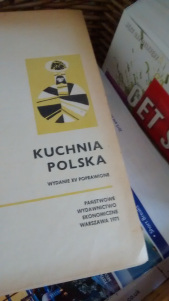
In my old Polish cookery book  (my bible in many respects) this simple recipe (without the herbs) is called  …. po angielskiu  which means  …. English style!

Kuchnia Polska – Polish Kitchen or Polish Cookery
  • Thinly slice 1 or 2 onions (I like lots of onions with the liver).
  • Fry the onions in butter & sunflower oil till golden.
  • In a separate pan lightly pan fry the liver slices in a mixture of butter & sunflower oil on both sides.
  • Sprinkle on some Italian Herbs.
  • Add the onions to the fried liver and mix together and serve.

Liver with Onions 2

  • Thinly slice 1 or 2 onions (I like lots of onions with the liver).
  • In a pan, fry the onions in butter & sunflower oil till golden. (You can fry a little longer to slightly char or caramelise them if you like)
  • In a separate pan, lightly fry the liver slices in a mixture of butter & sunflower oil on both sides.
  • Sprinkle on some Italian Herbs.
  • Add around 150 ml of chicken or vegetable stock (can be from a cube, concentrate or powder) … depends on the size of your pan.
  • Put the lid on the pan (a glass lid is good for this) and simmer gently for 2 -3  minutes.  (The time will depend on the thickness of the slices).
  • This will give a tasty sauce with the liver.
  • Place the fried onions on top and serve.

Liver with Mushrooms

  • Thinly slice mushrooms around 100g of button mushrooms
  • Fry them gently in a mixture of butter & sunflower oil.
  • Add the mushrooms to the fried liver as in the simple style above and mix together.
  • Add around 150 ml of chicken or vegetable stock (can be from a cube, concentrate or powder) … depends on the size of your pan.
  • Put the lid on the pan (a glass lid is good for this) and simmer gently for 2 -4  minutes.  (The time will depend on the thickness of the slices).

Liver with Mushrooms & Soured Cream

  • Follow the instructions for the Liver with Mushrooms but only cook for 1 -2 minutes.
  • Take the pan off the heat and add 2 tablespoons of soured cream and mix well.
  • Heat up slowly and allow to simmer for  1 -2 minutes.

Served here on Royal Doulton – Carnation, 1982-1998

Serving suggestions

Sprinkle liberally  with chopped parsley.

All of the above go well with boiled potatoes, creamy mashed potatoes, boiled rice, noodles or pasta such as tagliatelle.

Zrazy – Meat Roll-ups

Zrazy (this word is plural) is a meat dish popular in Eastern Poland & Lithuania and can be traced back to the 16th & 17th century in the times  of the  Polish-Lithuanian Commonwealth (1569 – 1795).

(I have seen zrazy  translated as Meat Roll-ups, Meat Olives or Collops)

Classic zrazy have a rolled shape and are made of thin slices of  beef,  beaten with a mallet, which are stuffed with a variety of ingredients including  mushrooms.

You need to use beef which is good for  braising and slow cooking  –  I used a thin cut of topside and this worked very well.


The stuffed meat is rolled and secured with thread or thin string, then lightly fried and placed in a casserole dish with stock and slow cooked at a low temperature.


Stock

For the stock,  I  use chicken or vegetable stock (this can be from a stock cube or powder)  and add bay leaves, whole peppercorns and sometimes whole allspice.


Prior to serving, the threads are removed.


Zrazy are eaten with the sauce in which they were cooked, though extra ingredients can be added to this such as  soured cream, mushrooms or tomato.

You can add some cornflour to thicken the sauce.

Po nelsońsku  –  in Lord Nelson’s style –  is when mushrooms and soured cream are added to the sauce. (I have not been able to discover why this name is used.)


Here served on Royal Doulton – Carnation – 1982 – 1998

Zrazy are often served with buckwheat or boiled potatoes, and beetroot or sauerkraut salad.

Classic Ingredients for the Stuffing

There is no end to the variety of fillings you can use, the following are two traditional ones.

The amounts you need will vary according to how many zrazy you are filling – these are a guide to proportions.

Onions & Rye bread

1/2 slice of rye bread – made into breadcrumbs

1 onion – chopped and fried in butter till golden

1/2 teaspoon of caraway seeds

Salt & pepper

You can spread a little made up mustard onto the meat first.


Dried Mushrooms

20g dried mushrooms  – add around 250ml of boiling water and soak these overnight – chop into small pieces then simmer in the liquid.

1 onion – chopped and browned in butter till golden

Add the onion to the mushrooms and continue simmering till most of the liquid is gone.


Add salt and pepper to taste.


Courgette Fritters

The first post on this blog was on 4 July 2015 – just over 2 years ago.

Now this will be my 100th post!

Although courgette fritters are not from an old Polish recipe they do have some similarity  to Polish potato pancakes and to carrot pancakes.

Courgette in Polish is cukini – so another vegetable that owes its name to Italian  – zucchini.

Courgettes belong to cucurbitaceae family as do cucumbers which are very well loved in Poland – so I am sure this recipe would be very popular there too.

I have read that courgettes did not become popular in Poland until the 1970s although the larger marrow and pumpkins were often cooked and many recipes for these can be used for courgettes.

The amounts in the ingredients are all approximate.

Ingredients

  • 2 to 3 courgettes
  • 1 egg
  • 2 tablespoons of soured cream, double cream, crème fraise or yoghurt cheese
  • 2 tablespoons of plain flour
  • Grated rind of 1 lemon
  • Salt
  • Sunflower oil for frying.

Method

  • Grate the courgettes using a coarse grater.
  • Sprinkle the courgettes with salt.
  • Place the salted courgettes onto a clean tea towel and place this in a colander for around 30 minutes.
  • Wrap the tea towel up and squeeze out the liquid from the courgettes.

Note

The green stains on the tea towel will come out in a hot wash but  do not use fabric softener for tea towels used for this and similar purposes.

Place the dried grated courgettes in a bowl and add the grated lemon rind.

  • Add the beaten egg and the soured cream (double cream, crème fraise or yoghurt cheese) and mix together.
  • Add the flour and mix thoroughly.
  • Heat the oil in a frying pan and use large tablespoonfuls of the mixture to make the fritters.
  • Fry them on both sides until they are golden brown.

Keep them on a heat proof plate  in a low heat oven whilst you make the rest.

  • You can place a sheet of kitchen roll on top of the first layer to stop them sticking.
  • Serve them with grilled meats and salad.

Option

A chopped red chilli or two and also a chopped garlic clove can be added to the mixture.

Pastry – ciasto kruche & półkruche

This was originally posted in June 2017 – I updated it in September 2019. 

There are two classic pastries, kruche and półkruche in Poland & the most difficult part is trying to get a good translation of the names.

Ciasto kruche

Ciasto is pastry and the word kruche means brittle, fragile or crumbly and ciasto kruche is often translated as shortcrust pastry – however it is quite different to British shortcrust pastry – in someways it is nearer to shortbread.

Having done a lot more research, I now think it is what is called in French – pâte sucrée.

This pastry is used to make a Polish cake called Mazurek of which there are many versions.

Ciasto półkruche

The pół part of the word półkruche means half or semi – but semi-shortcrust pastry does not really explain much!

This pastry is often used to make a Polish cake called placek  – a flat cake.

Served here on tea plates – Colclough – Enchantment 1950s – 1960s.

Both of these pastries are much richer than shortcrust pastry.

Ciasto kruche

The 4 ingredients are

  • plain flour
  • butter
  • icing sugar and
  • egg yolks (and a pinch or two of salt)

Notes

  • Use a flour which is low in gluten  – a cake flour not  a bread flour.
  • Butter give the best results but block  margarine can be used .
  • The pastry is fragile due to its high fat content.
  • Use just egg yolks (raw or hard boiled ), because the protein in the whites makes pastry tougher.
  • Using cooked egg yolks gives a more  in crumbly pastry.

Ratios for kruche

  • 3 flour:  2 Butter:  1 Icing sugar
  • or
  • 2 flour: 1 butter:  ½ – 1 Icing sugar
  • Usually – 1 yolk per 100g flour
  • A pinch or two of salt.


Ciasto półkruche

Here flour, butter, icing sugar and egg yolks (and a pinch or two of salt) are also used but there can be other additions such as:

  • baking powder
  • egg whites
  • soured cream or milk,
  • granulated sugar  or vanilla sugar
    .

The proportions of the main ingredients are different in that półkruche has a lower fat content than kruche.

Ratios półkruche

  • 2 flour: 1 butter
  • or
  • 3 flour: 1 Butter

Both kruche  and  półkruche are  baked in an oven heated  at GM5 – 190°C or GM6 – 200° C,  for 20 to 25 minutes.

Ciasto kruche 1 – using raw egg yolks

Ingredients

  • 340g plain flour
  • 170g butter – chilled
  • 100g icing sugar
  • 3 egg yolks
  • pinch of salt.

Method

  • Add a pinch of salt to the flour.
  • Use a knife to cut the chilled butter into small pieces into the flour and then use your fingers to make the mixture like breadcrumbs.
  • Add the icing sugar and mix this together.
  • Add the yolks and gently mix this in then and bring it all together into a dough – try and handle the pastry as little as possible.
  • Wrap the dough in greaseproof paper and avoid touching the dough with warm hands, as it increases its temperature and this leads to increased use of flour.
  • Once the dough has been kneaded, cool (at least 30 minutes in the centre of the refrigerator and up to 2 hours) and then roll out to the desired shape and size.
  • Roll out the dough and shape it as required.

Note

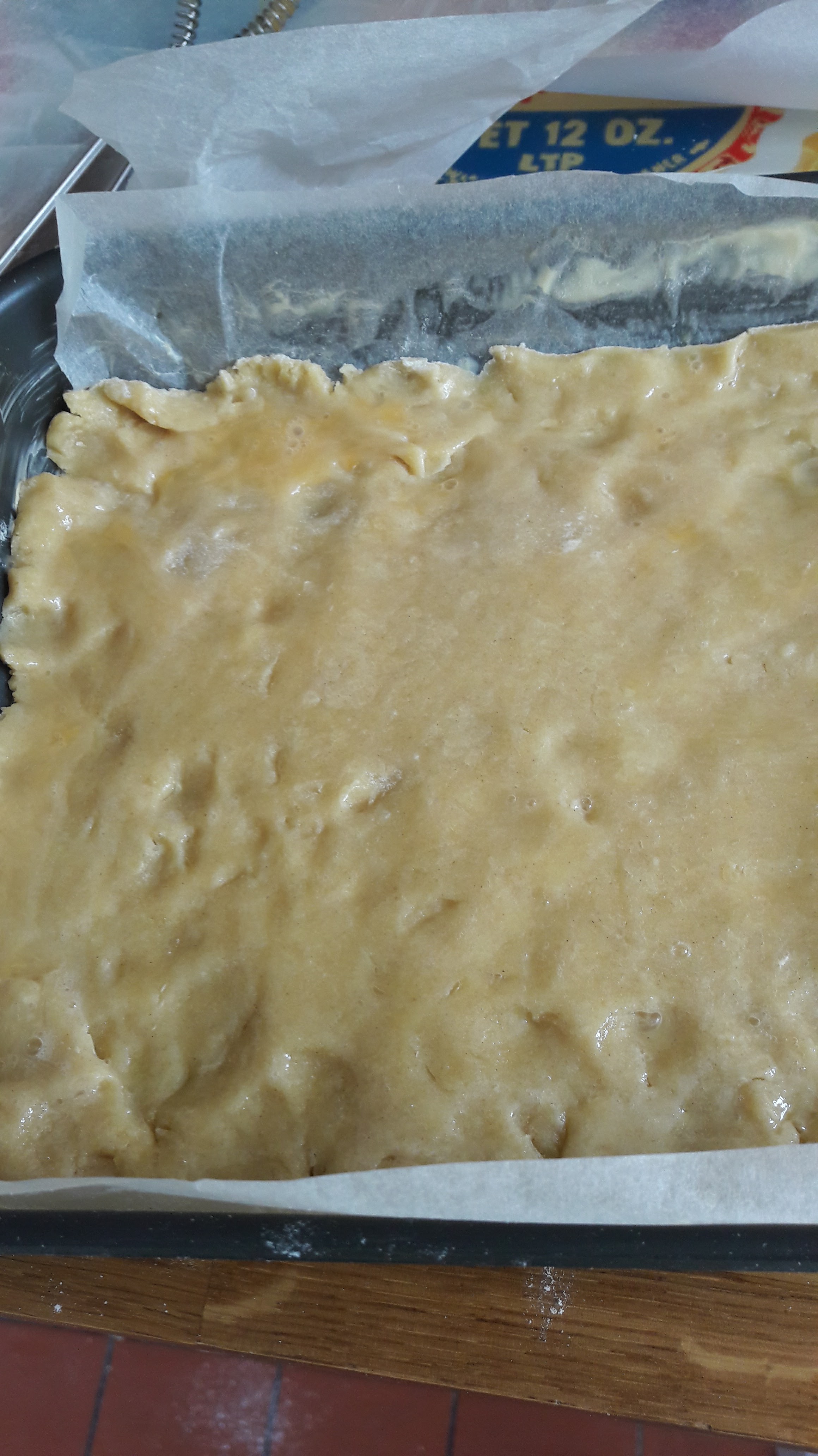
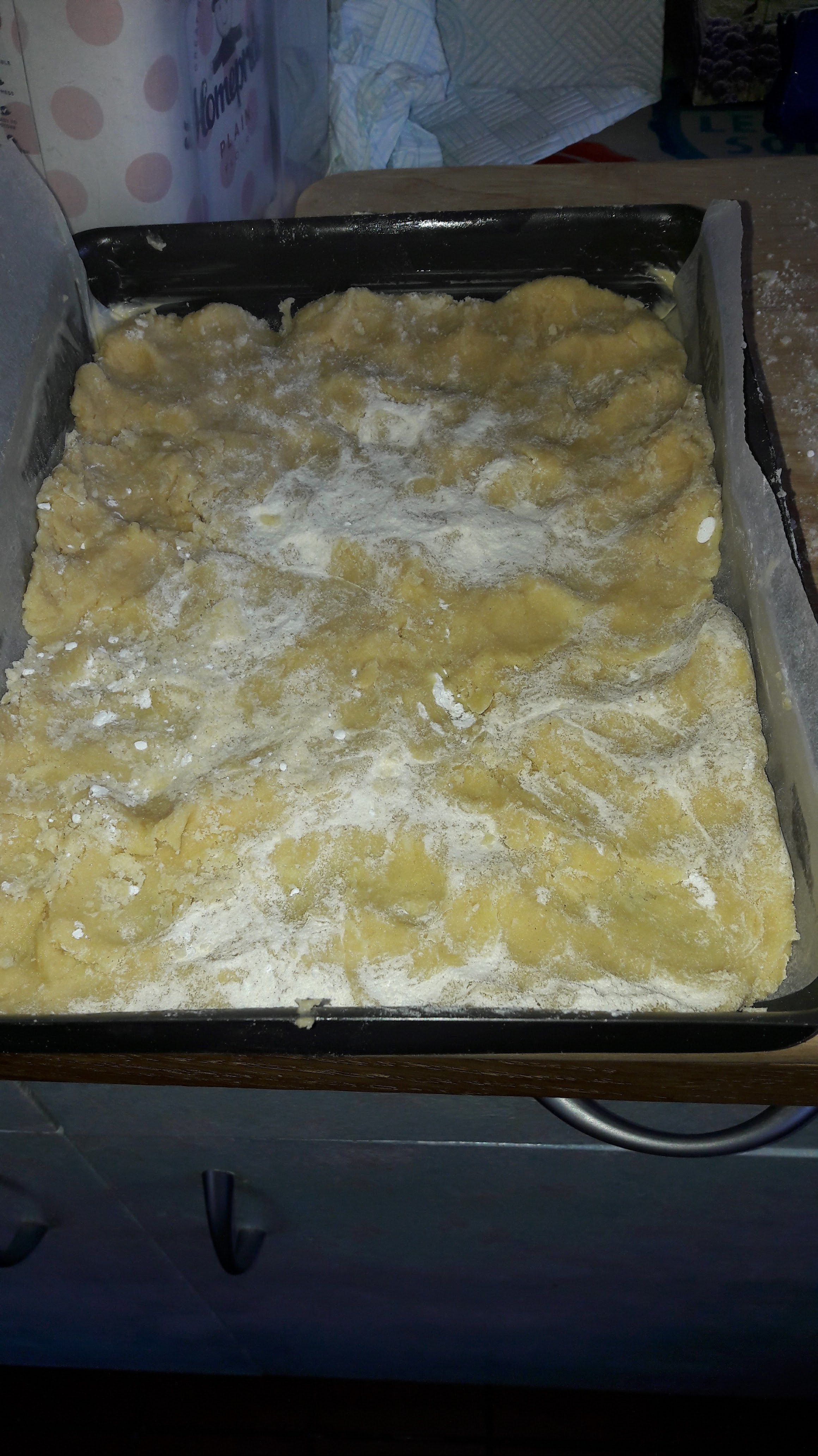
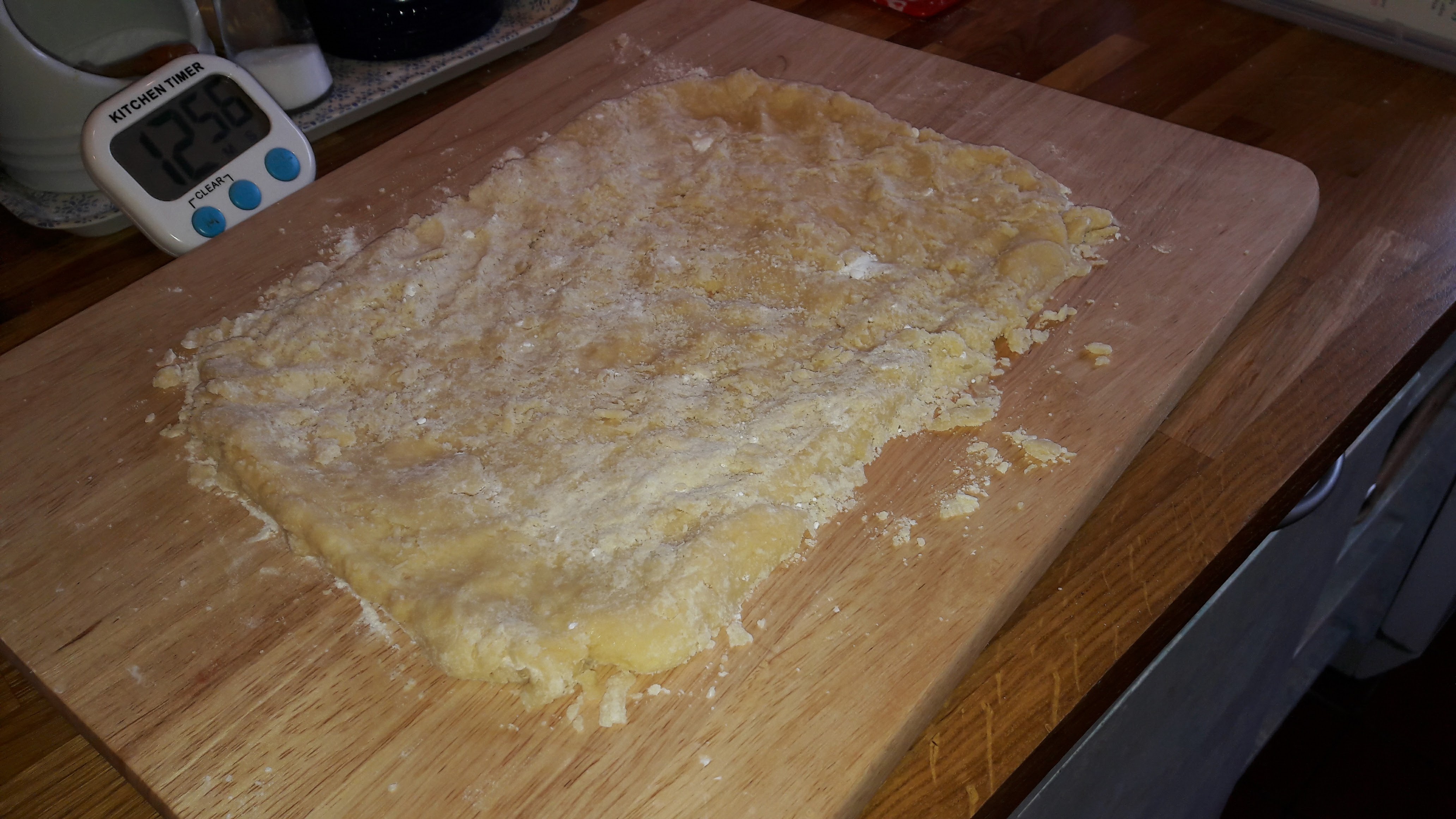
As this dough is very crumbly – I often find I have to piece and press the dough into the cake tin.

 Ciasto kruche 2 – with cooked egg yolks

I have seen recipes using hard boiled yolks and always thought “Strange! – having tried this out – I found that this is the best pastry ever!  Delicious & crisp.

Ingredients

  • 300g plain flour
  • 200g butter – chilled
  • 100g icing sugar
  • 3 cooked egg yolks
  • pinch or two of salt.

There are 2 ways of cooking the egg yolks:

1 – Hard boil the eggs for 10 minutes, allow to cool and separated the cooked yolks from the whites (this give you cooked egg whites to add to salads or similar). Use a fork to break up the yolks into very small pieces.


2 – Separate the raw yolks from the whites, then place these in a colander and cook over hot water (this gives you raw egg whites to use in other recipes).

Method

  • Add a pinch of salt to the flour.
  • Use a knife to cut the chilled butter into small pieces into the flour and then use your fingers to make the mixture like breadcrumbs.
  • Add the icing sugar and mix this together.
  • Add the broken up yolks and gently mix this in then and bring it all together into a dough – try and handle the pastry as little as possible.
  • Wrap the dough in greaseproof paper and chill it in the fridge for about 30 minutes.

Ciasto półkruche -1

Ingredients

  • 300g plain flour
  • 1/2 teaspoon baking powder
  • 150g butter
  • 100g icing sugar
  • 1 egg & 2 yolks
  • 1 – 2  tablespoons of soured cream
  • pinch of salt

Method

  • Add a pinch of salt and the baking powder to the flour.
  • Use a knife to cut the chilled butter into small pieces into the flour and then use your fingers to make the mixture like breadcrumbs.
  • Add the icing sugar and mix this together.
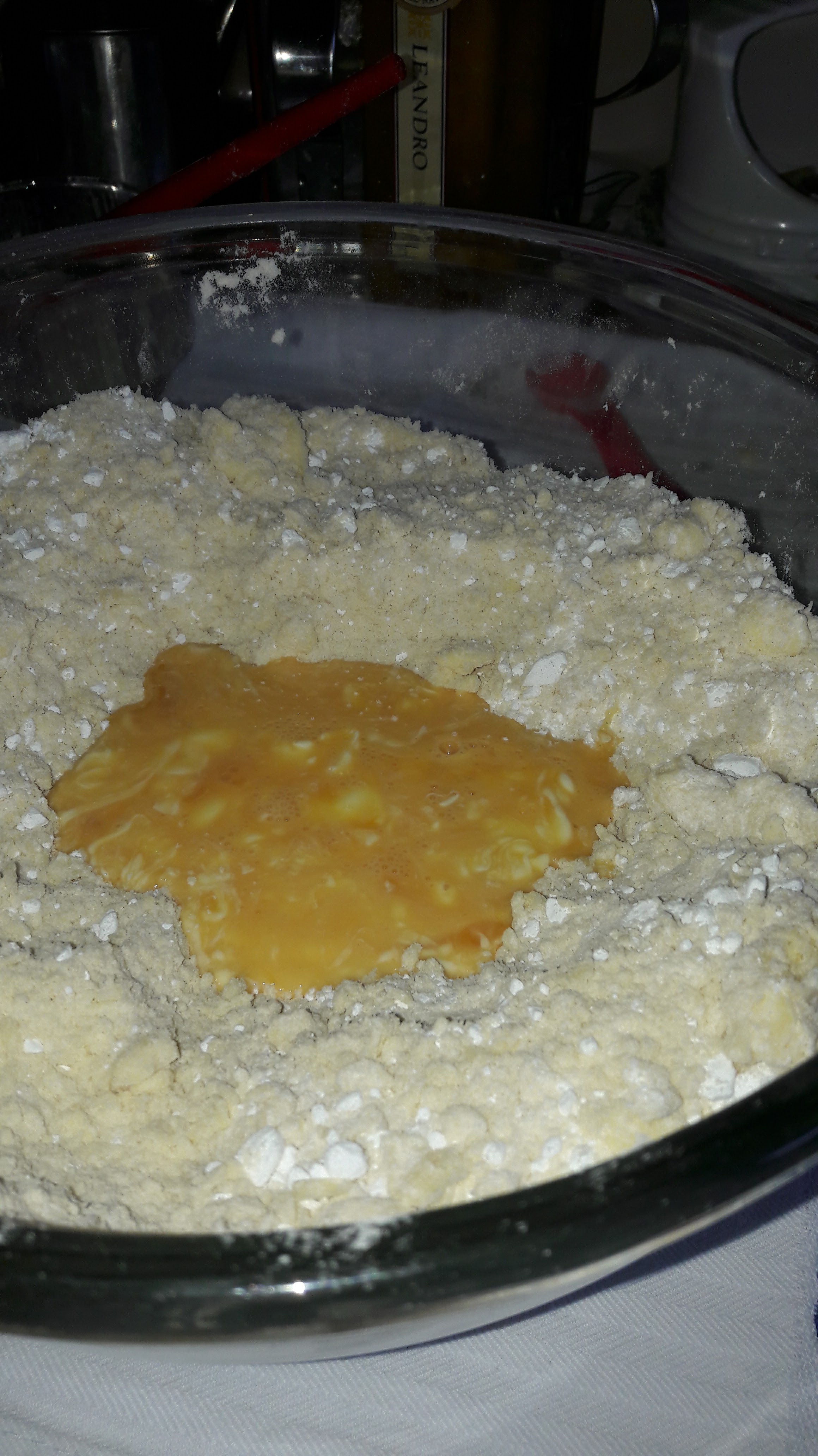
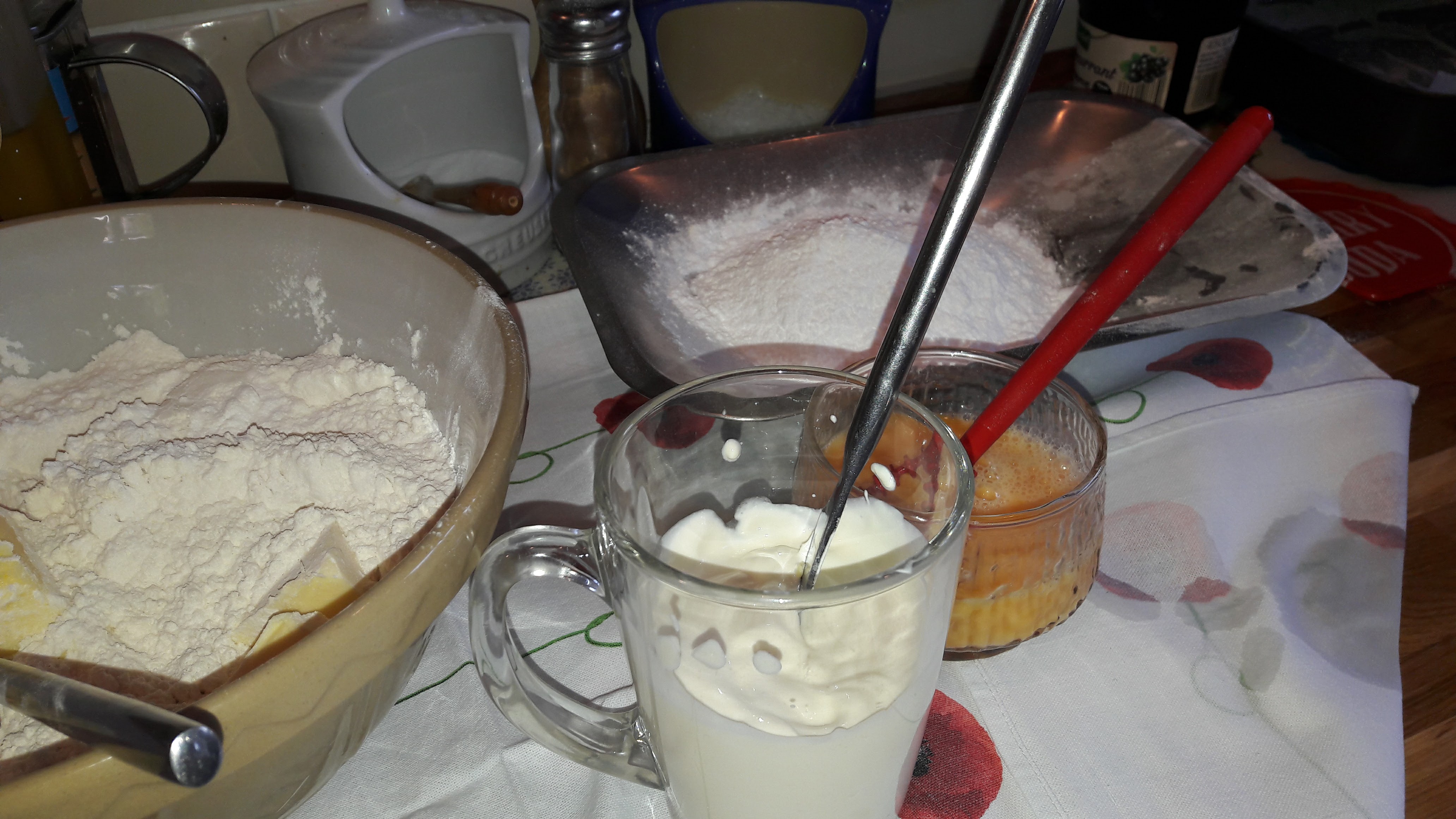
  • Make a well in the centre and add the eggs, yolks and the soured cream and gently mix this in then and bring it all together into a soft dough
  • Try and handle the pastry as little as possible.


  • Because of the use of baking powder this dough is used straight away.
  • I tend to flatten and shape this dough by hand rather than using a rolling pin.


Ciasto półkruche -2

  • 500g plain flour
  • 1 teaspoon baking powder
  • 200g butter
  • 150g icing sugar
  • 2 eggs & 1 yolk
  • 4 -5 tablespoons of soured cream


Method

  • Add a pinch of salt and the baking powder to the flour.
  • Use a knife to cut the chilled butter into small pieces into the flour and then use your fingers to make the mixture like breadcrumbs.
  • Add the icing sugar and mix this together.
  • Make a well in the centre and add the eggs, yolk and the soured cream and gently mix this in then and bring it all together into a soft dough
  • Try and handle the pastry as little as possible.


  • Because of the use of baking powder this dough is used straight away.
  • I tend to flatten and shape this dough by hand rather than using a rolling pin.


Kohlrabi Salads

Kohlrabi in Polish is kalarepa  –  it belongs to the cabbage family – the Brassicas  –  and has been cultivated from Brassica oleracea – the wild cabbage.

It is a swollen stem and spherical and its taste and texture is similar to cabbage heart and it  can be eaten both raw & cooked.

My auntie in Wembley used to grow kohlrabi  in the garden & on their allotment  but until recently I never saw it for sale in England whereas in Poland it is a common vegetable, it matures quickly, withstands the frost and can be stored for some time.

This kohlrabi I bought from the outdoor market in Leeds.

For all the salads below the raw kohlrabi has been peeled and then grated on a medium grater.

Here I have just used 1 kohlrabi per salad.

Simple Kohlrabi Salad


Served here in a Royal Doulton – Carnation dish – 1982 – 1998.


Ingredients

1 kohlrabi

2 – 3 tablespoons of soured cream

Juice of half a lemon.

Method

Mix the soured cream with the lemon juice.

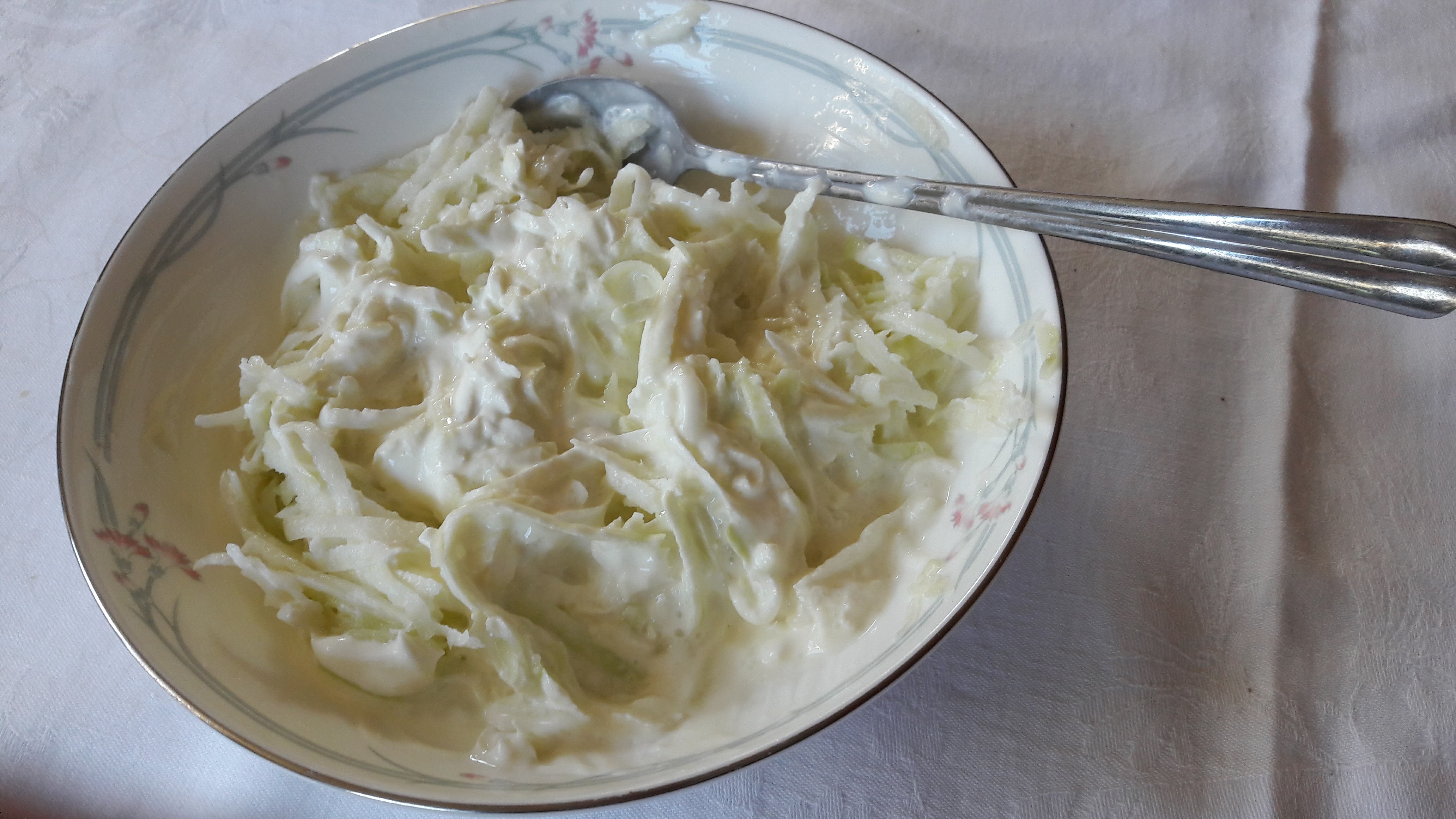
Mix the grated kohlrabi  with the dressing.

Kohlrabi Salad with Apple

1 kohlrabi

1 Red or Pink eating apple

2 -3 tablespoons of full fat Greek yoghurt

1-2 tablespoons of apple juice

Method

Grated kohlrabi  is mixed with a chopped eating apple – use an apple with a red or pink skin for the lovely colour – here I used a Pink Lady which has a super taste.

Mix the natural Greek style full fat  yoghurt  and apple juice for the dressing.

20170407_172104


Served here in J & G Meakin – Topic by Alan Rogers, 1967.

Kohlrabi Salad with Apple & Raisins

This is made as the salad above with addition of around 40g of raisins

Kohlrabi & Carrot Salad

Ingredients

1 kohlrabi

1 carrot

2-3 tablespoons of soured cream

juice of half a lemon

Method

Grate the carrot & the kohlrabi using a medium grater

Mix the soured cream with the lemon juice

Mix everything together.


Served here in a Royal Doulton – Carnation dish – 1982 – 1998

The green part of spring onions or chives can be added to the carrots & apples


20170407_173514


Cooked kohlrabi in salads

You can steam the kohlrabi – steam several whole ones and peel them once they are cooked and cooled.

Use the steamed kohlrabi in place of steamed  Celeriac in salads.