A Little Caper!

Capparis spinosa is the caper bush.  The plant is best known for the edible, unripened  flower buds – capers – kapary (in Polish)  which are often used as a seasoning and are usually  pickled in brine, vinegar or wine.

These perennial plants are native to the Mediterranean and some parts of Asia. Their use dates back to around 2,000 BC  where they are mentioned as a food in Sumerian literature.

The caper buds are picked by hand which can make the cost of a small jar expensive.

Pickled nasturtium (Tropaeolum maius) (nasturcja in Polish)  seeds – often called poor man’s capers are a good substitute.

Cooking With Capers

Capers have long been used in the Mediterranean region especially  in Italian cooking.

Capers are usually  added to the dish toward the end of the cooking process, to keep their shape and flavour.

Sos kaparowy – Caper sauce

This is very popular in Poland and is made with chopped capers and mayonnaise  and is served with hard-boiled eggs.

Potato Salad with Capers

This is my variation of the classic Polish potato salad with caper  sauce.

Ingredients

  • 200g  waxy potatoes
  • 100g whole green beans
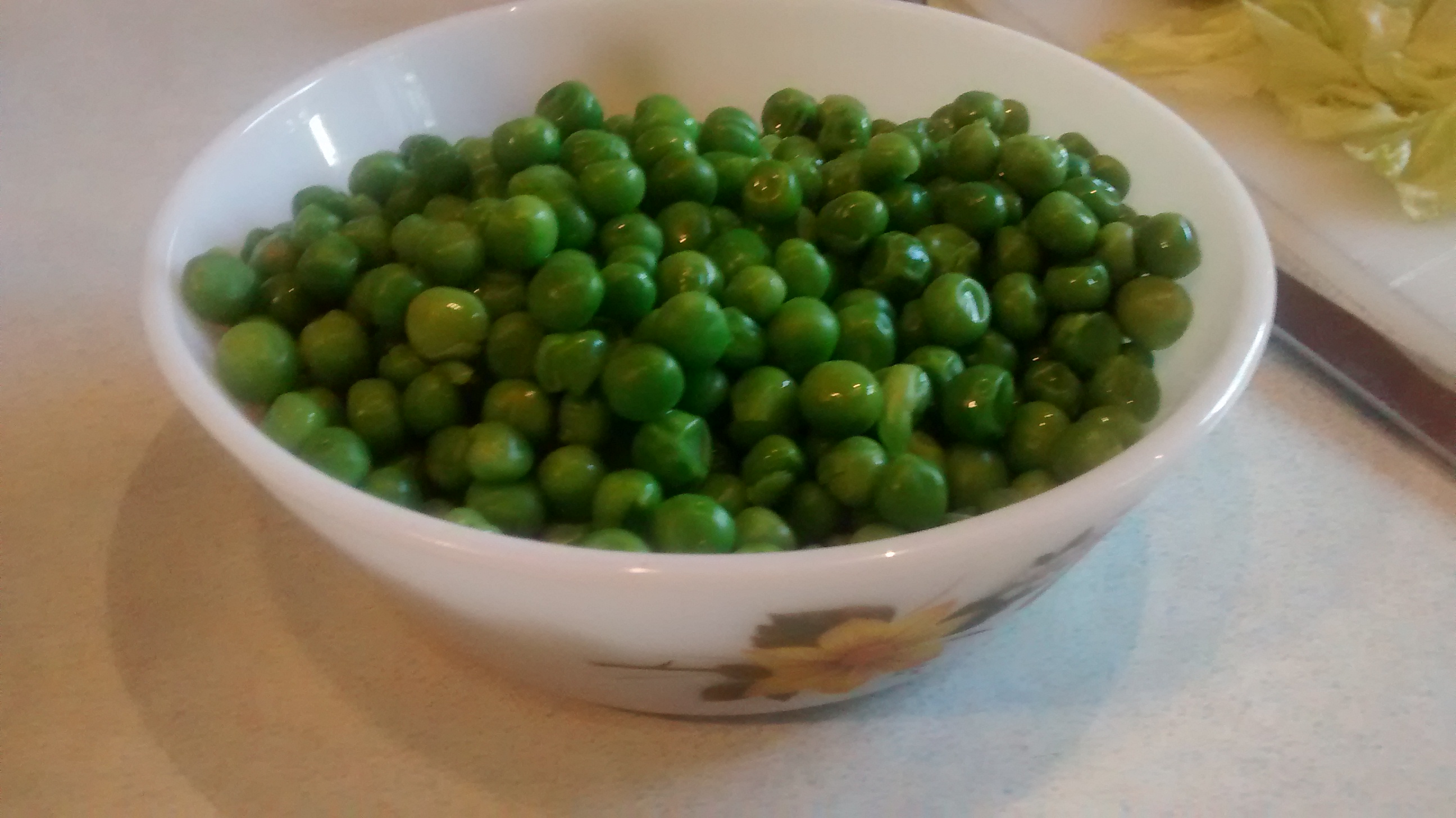
  • 100g peas
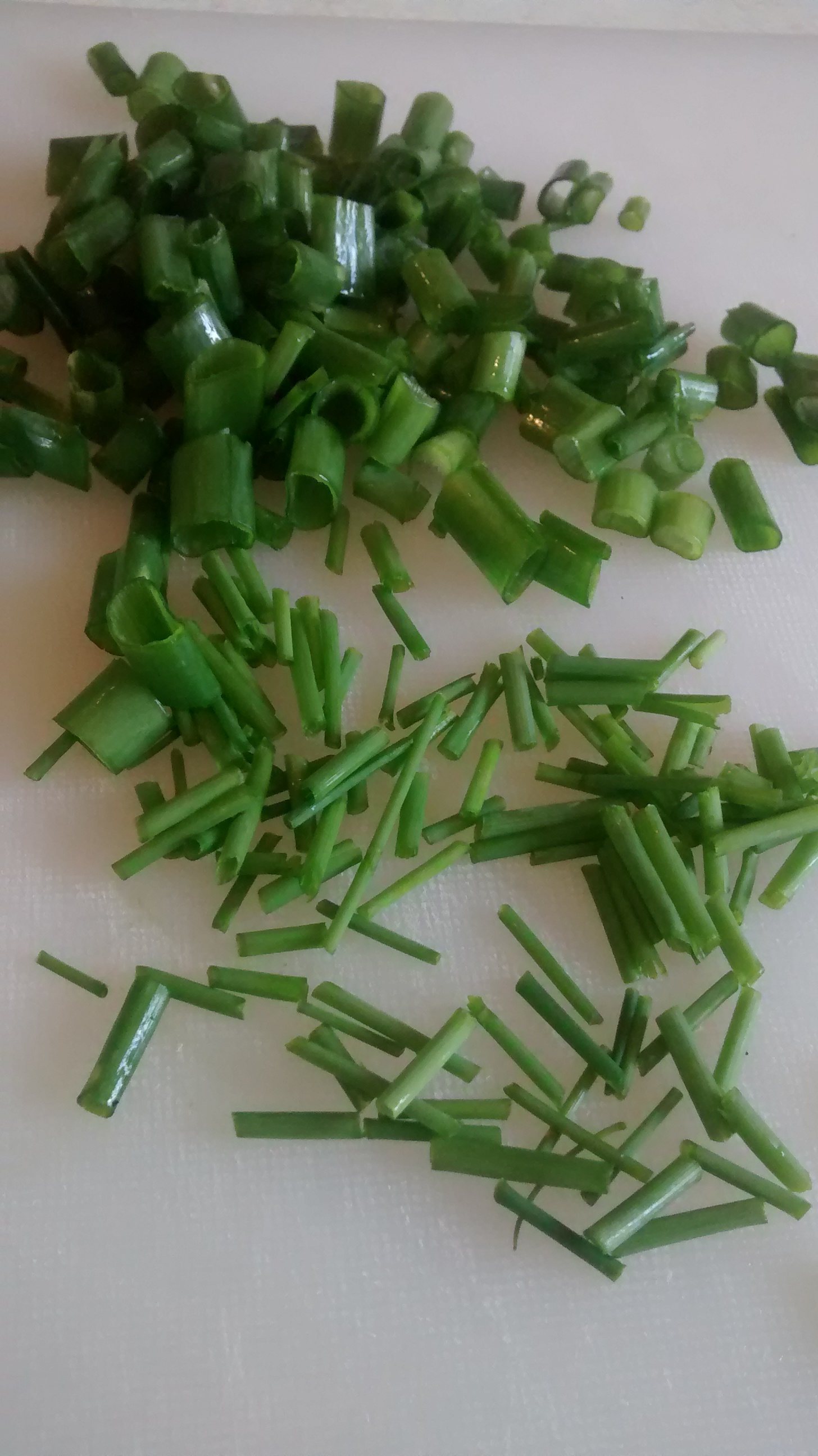
  • 2-3 spring onions – green part
  • 2 tablespoons of capers – drained
  • 2-3 tablespoons mayonnaise – home-made or a good full fat bought variety
  • 1 tablespoon of made up mustard
  • Salt & pepper
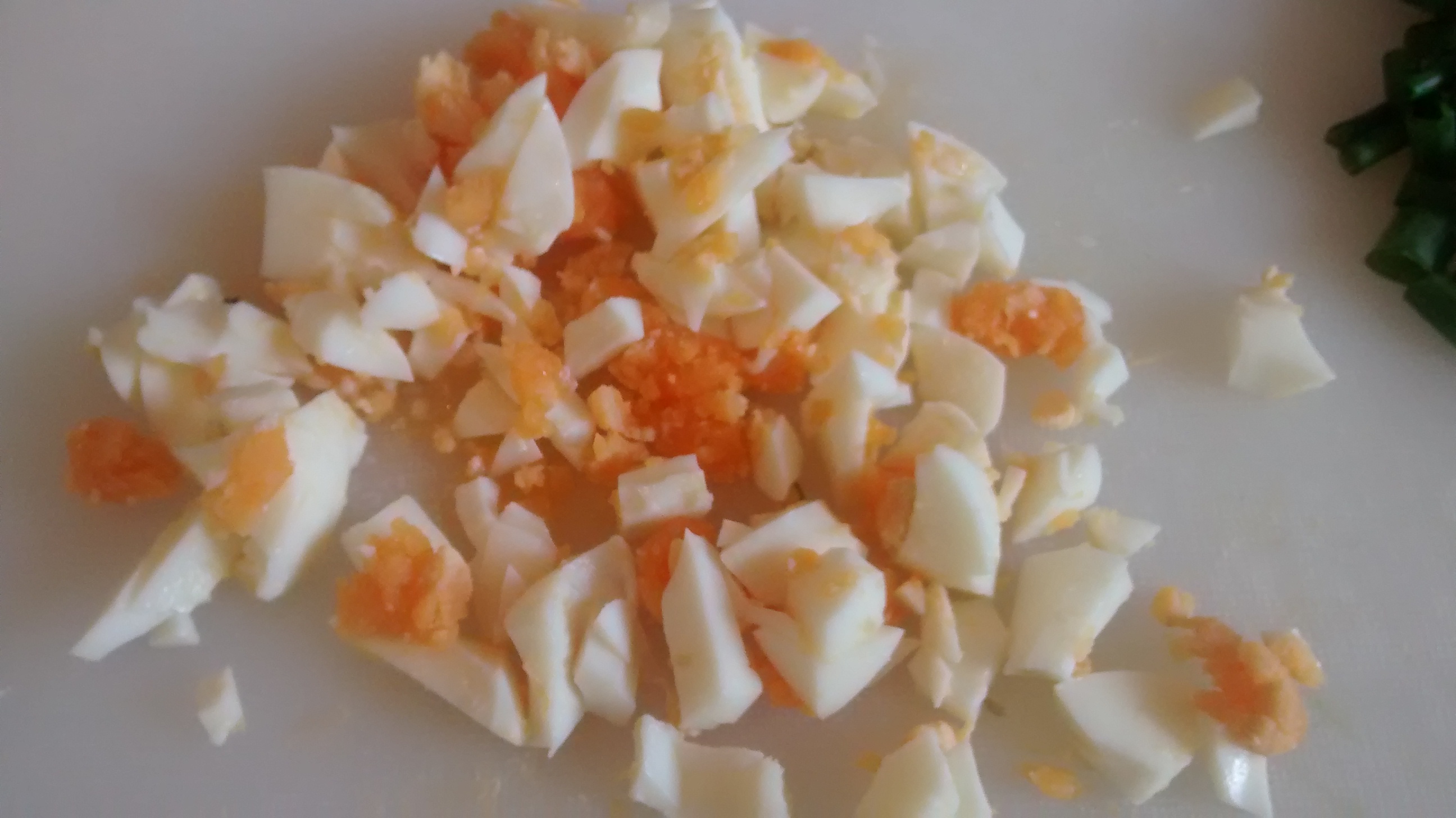
  • 2 – 3  hard-boiled eggs

    Method

  • The potatoes, green beans and the peas all need to be boiled or steamed, drained and then dried as much as possible using a clean tea towel.
  • I usually use starchy potatoes for potato salad but have found that waxy ones are better for this one.
  • Chop the beans into small pieces.
  • Chop the green parts of the onion into fine pieces.

Mix together the mayonnaise and the mustard.

I have found that the lighter sort of mayonnaise soon makes this salad have a watery dressing after a very short time.

It is better to use home-made mayonnaise or a good bought one – I use Hellmann’s.

  • Mix the vegetables with the dressing and add salt & pepper to taste.
  • Chop the hard-boiled eggs and scatter these on the top of the salad to serve.

Served here in a bowl by Meakin  –  Cadiz  – 1964  – 1970

Pork & Pears

This is a new recipe for me – it is from the South West of Poland, the area called Śląsk – Silesia in English.

Pyrus communis is the European pear.

Pears originated in the Caucasus and then spread to Asia and Ancient Persia and from there to Europe.

Pears have been cultivated for over 4,000 years.

The Polish for pear is gruszka

Pears are more demanding than apples and so you will find that there are more pear orchards in Southern Poland where there is more sun and because of the fertile soil.

Conference is a a popular cultivated variety in England. It was cultivated by Thomas Francis Rivers and it won 1st prize in 1885 National British Pear Conference in London.

It is also popular and grown in Poland now where it is called Konferencja.

This is a good pear for this recipe as it need to be a hard pear that keeps its shape and does not disintegrate.

Version 1 Using Shoulder Pork

Ingredients

400g – 500g of shoulder pork – in slices.

4 -5 hard pears such as Conference

1 parsnip

1 carrot

1 onion

1 -2 tablespoons of plain flour.

300ml of vegetable or chicken stock (can be from powder or a cube)

4 -5 grains of  ziele angeliskie which is allspice

Salt

Sunflower oil for frying.


Allspice also called pimenta or Jamaican pepper is very popular in Polish cookery.

It is the dried unripe berry of Pimenta dioica, a tree native to the Greater Antilles, southern Mexico and Central America.

The name allspice was coined as early as 1621 by the English, who thought it combined the flavour of cinnamon, nutmeg and cloves.

It used to be very popular in England and that is why in Poland it is called ziele angielskie which means English herb(Why herb rather than spice I do not know!) 

Until recently it seemed to have fallen out of favour in England though now it seems to be being used more and more.

In Poland it is used with meats as well as or instead of peppercorns and is used in cakes.

I have been able to obtain it a lot more readily in the past few years and am now using it a great deal especially in casseroles as I love the taste.

Method

Pre-heat the oven to GM4 – 180°C

Peel & chop the parsnip and carrot into rough cubes.

Chop the onion into small pieces.

Fry the all gently together and put them at the bottom of a the casserole dish.

Lightly dust the pork and fry gently in sunflower oil.


Add the pork on top of the vegetables.

Sprinkle with salt.

Pour in the stock & put on the lid.

Place in the oven and cook for 1 hour – then turn the oven down to GM3 – 160°C and cook for another 2 hours.

Peel the pears and cut then in half and remove core & pips.

Place the pears on top of the meat & cover with the lid.

Cook for around 20 – 30 minutes until the pears are tender.

You can make this in advance with just the vegetables and pork and then re-heat it at GM4 – 180°C – for around an hour and then add the pears.

Using Dried Pears

Dried pears are often used rather than fresh – drying fruit is a very popular method of fruit preservation in Poland & means that this recipe could be made in the winter when all the fresh fruit was no longer available.

Dried Pears are for sale in the fruit and nut stall In Kirkstall Market in Leeds.

You have to reconstitute the pears – this is best done overnight.

Place the pears in a dish and pour hot weak black tea over the pears and leave them or you can use just hot boiled water  – I think the pears with tea taste better.

Cook the meat as before and after you have added the re-constituted pears cook the dish for another 30 – 35 minutes.

Version 2 Using Pork Loin with dried pears

You have to reconstitute the pears – this is best done overnight.

Place the pears in a dish and pour hot weak black tea over the pears and leave them or you can use just hot boiled water  – I think the pears with tea taste better.

Fry some slices of pork loin on both sides in a mixture of oil and butter in a deep frying pan.

Add the reconstituted pears about 3 per piece of meat with some of the liquid.

Cover the pans with a tight fitting lid (good to have a glass one to see what is happening – as it is easy for this to burn because of the sugar in the pears & liquid) and simmer for 25 -30 minutes.


One of my books said these went very well with dumplings from Śląsk (Silesia in English) – these I will have to investigate for a later post next year.


Save

Save

Po staropolsku – in an Old Polish Style

In many recipe books and often on menus in restaurants you can see dishes described as po staropolsku which means in an Old Polish Style.

What exactly does that mean?

I have found this a hard question to answer as there two sides to its meaning, one is about hospitality and the other is the ingredients.

Hospitality

When restaurants use  po staropolsku they are trying to evoke connections to noblemen & democracy with the chivalry & hospitality that was found in the manor houses in Poland, particularly from the 16th to the 18th century.  They are trying to make you think of the quality of the food and the surroundings.

The Poles are thought to be a very hospitable nation and a very famous saying in Poland is  – “Gość w dom, Bóg w dom”  which means  when you have a guest in your house, you have God in your house, meaning treat your guests to the very best.

The chef & writer, the late Maciej Kuroń (1960 – 2008) in his book Kuchnia Polska (Polish Cookery)has a new saying –

“Lepiej gościa zabić, niż nie nakarmić “which means – it is better to kill a guest rather than not feed them well.

I noted this quote many months ago – today when I tried to find the reference in the book, which is a large tome of over 900 pages, I could not find it – when I do in the future I will come back and add  it here.

Some of my reference cookery books.

Ingredients

Many old recipes can be classed as po staropolsku – especially if they contain:

  • Honey
  • Cloves
  • Cinnamon
  • Caraway
  • Herbs such as marjoram, thyme & juniper
  • Dried fruits – especially prunes
  • Dried mushrooms
  • Grains such as buckwheat
  • Game & birds

Dishes included various soups & especially Sour Soups (I will write about these in the future), honey cakes, pierogi, gołąbki, bigos and dishes with meat & dried fruits.

Pork and Prunes

Some of my favourite dishes in the old Polish style combine pork with prunes, often with honey.  I love the flavour of the meat with all this sweetness added to it.

I am going to write up 3 different recipes  – the first in this post – the others to follow shortly.

The best pork to use is a boneless joint of pork loin which has also had the skin removed, but if you cannot get this then leg of pork is good as well.

When roasting pork allow 50 minutes per kilo, plus 25 minutes at Gas mark 5 – 1900C.

Note  You can always scale up this recipe for a larger piece of pork.

I have found that the best prunes are lovely plump ones from Agen in France but the ones that are more dried are also good, you just have to soak them for longer before you can take out the stones.

You can of course use ready stoned prunes – I just prefer the ones with stones in  – though they are increasingly harder to find – I can get them from a Nut & Dried Fruit stall in Leeds Kirkgate Market.

However in January 2017 there were no prunes with stones on the market. The lady on the stall said this was because of a very poor harvest – so I have had to use stoned prunes to try out the recipes for the photographs & this post.

Pork and Prunes 1

Ingredients

800g boneless pork loin joint

100g prunes

1 tablespoon of honey

Coarse salt

At least an hour before you want to roast the pork, put the prunes in a small bowl and pour boiling water over the prunes to cover them.

Leave them to plump up and then remove the stones from the prunes.

Retain the liquid from the soaking as this will be needed.

Pre heat the oven to Gas Mark 5 – 1900C.

Place the pork in a roasting tin and rub some coarse salt onto the fat on the top.

Put the prunes under and around the pork with the water from the soaking & extra to cover the bottom of the roasting tin and place in the oven.

Roast the pork – about 1 ¼ hours should be enough for this weight, baste the meat with the liquid from the prunes and juices a couple of times, adding extra water if needed.

When the meat is ready, take out of the oven, cover with foil and then a tea towel and leave it to rest.

Add the honey to the prunes and juices, stir these together over some heat in the roasting pan, you may need to add some more water.

Slice the pork and place on a serving dish and place the prune mixture around the pork to serve.

Here served on a Royal Doulton Plate – Carnation 1982-1998.


Buckwheat, Bliny & More

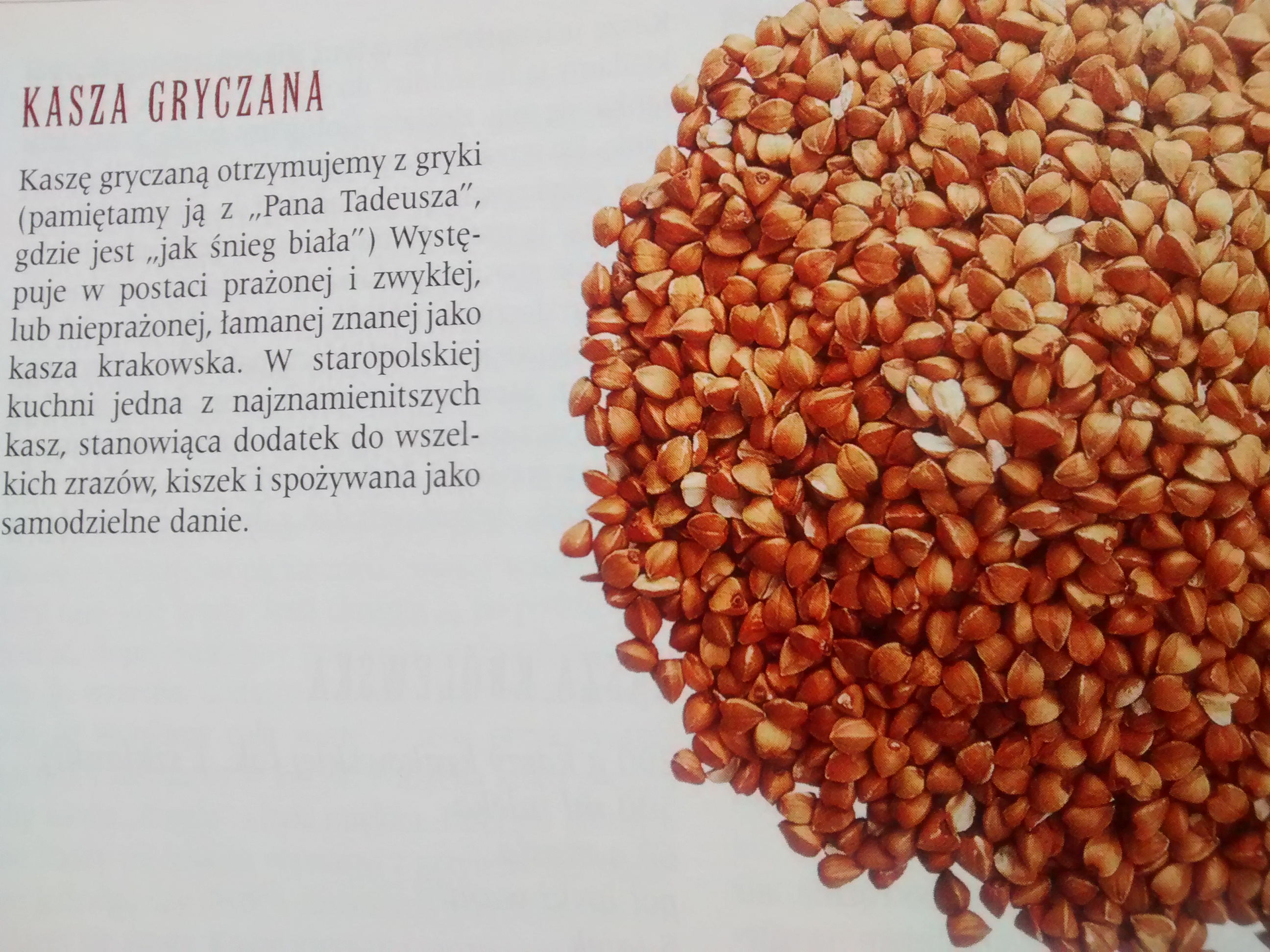
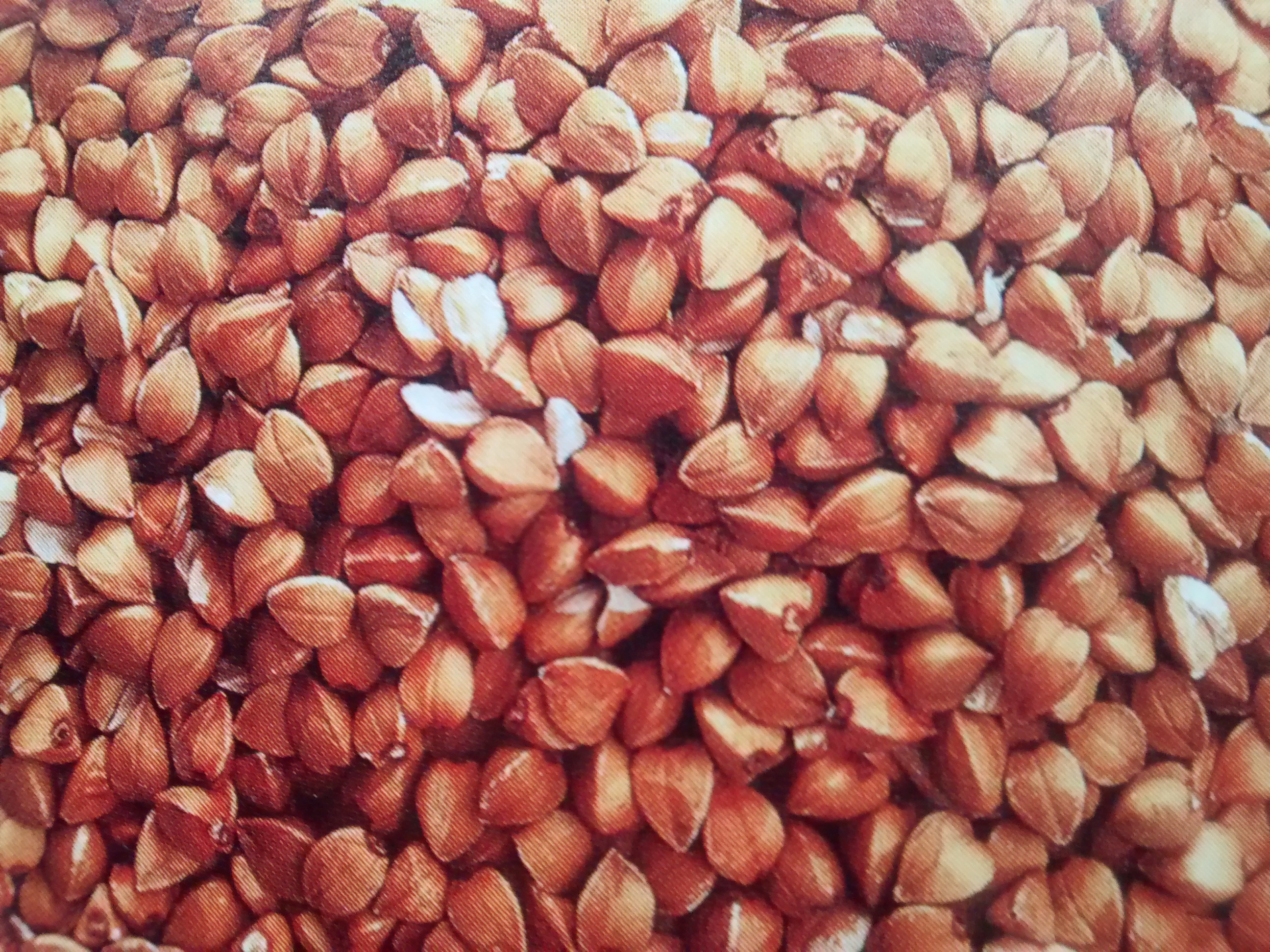
Buckwheat (Fagopyrum tataricum) is used very much in Polish cookery as the plant grows well in a cold climate.  Buckwheat requires a well drained soil but without too much fertiliser  –  lots of fertiliser reduces the yield.  It is not in fact a grass or cereal crop but the flour is used in much the same way as wheat.

Buckwheat is related to sorrel and rhubarb and has small triangular seeds. The plant originated in South East Asia and then was brought to Europe.

I have read that it came to Poland via Manchuria and Siberia but the Polish word for buckwheat –  gryka indicates that it came from the Greeks – I have also read that the plant was brought to areas of what are now  Eastern Poland, Russia & the Ukraine in the 7th century by Byzantine Greeks. 

Another regional word used in Polish for buckwheat is hreczka – this again suggests a Greek origin.

Photographs from the book Kuchnia Polska by Maciej Kuroń

IMG_20160727_120344274 IMG_20160727_120326637


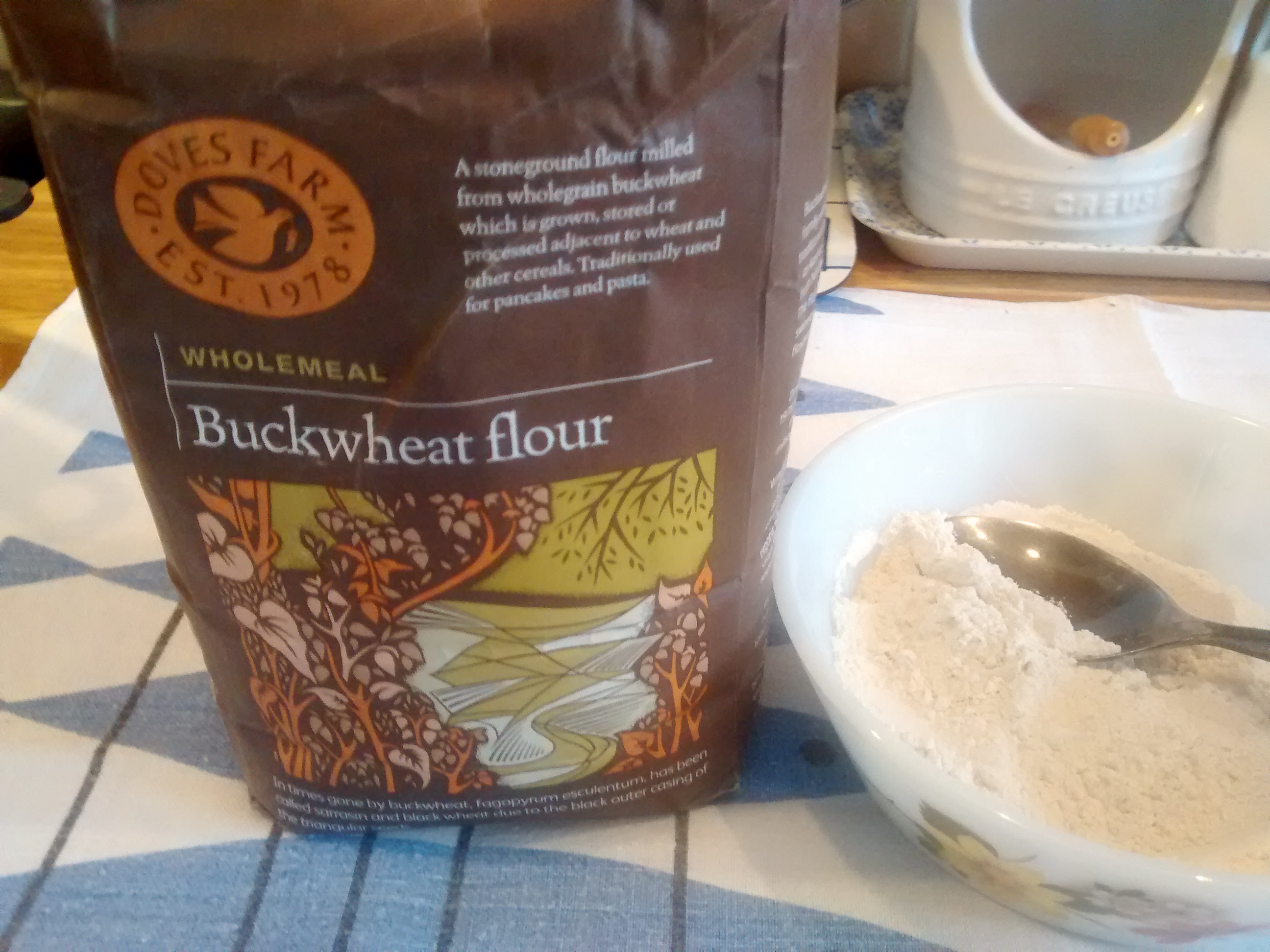
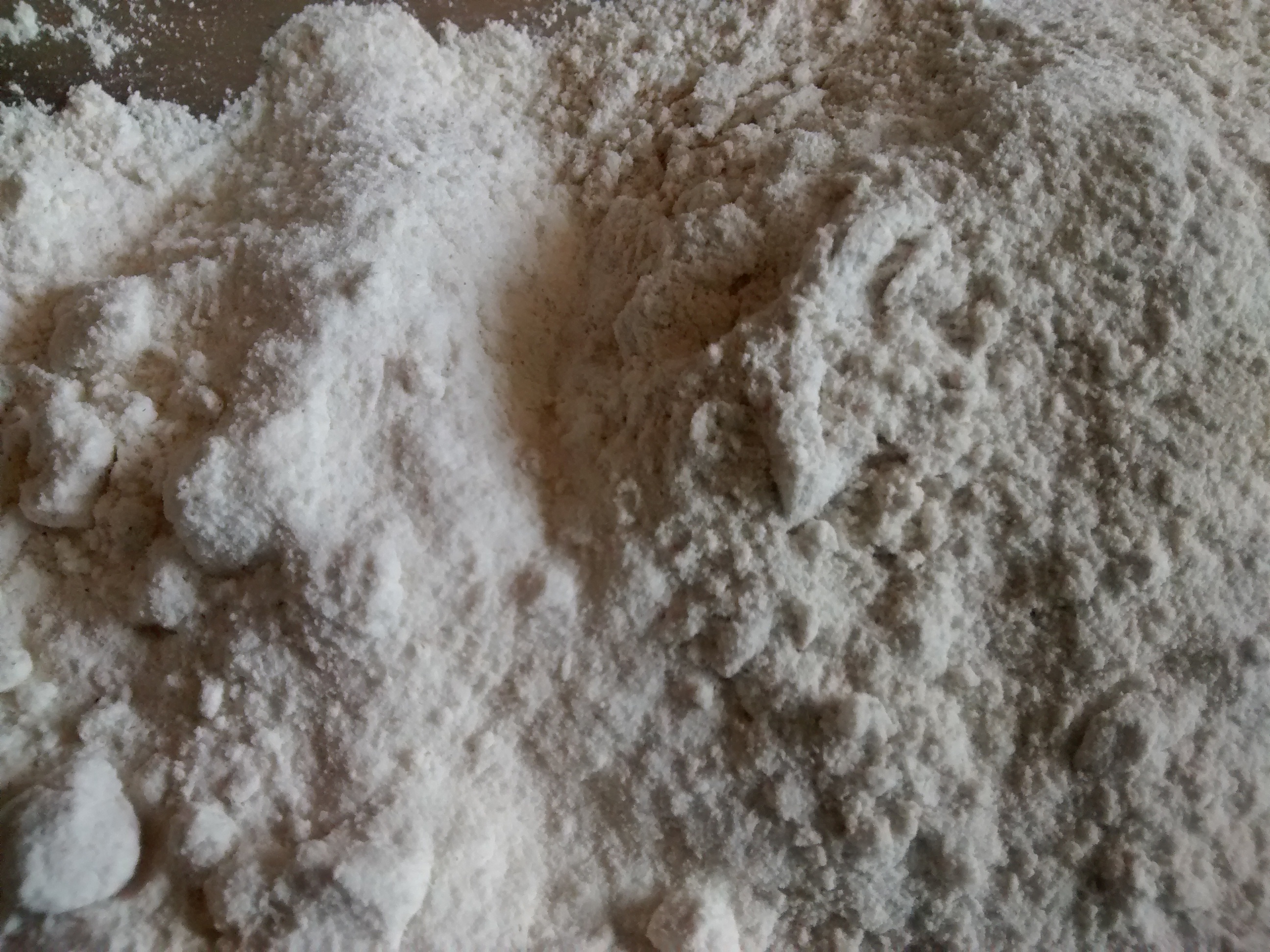
The triangular seeds have a strong scent which is quite distinctive and the flour is grey/speckled black in colour.  It is mixed with wheat flour to make pancakes and bliny.

IMG_20160727_063737039


  • Bliny are popular in Eastern Poland and in the  area called Kresy – the Eastern Borderlands –  from where both my parents came as well as in the Ukraine and Russia.
  • The word bliny is plural – I doubt very much if the singular blin is much used!
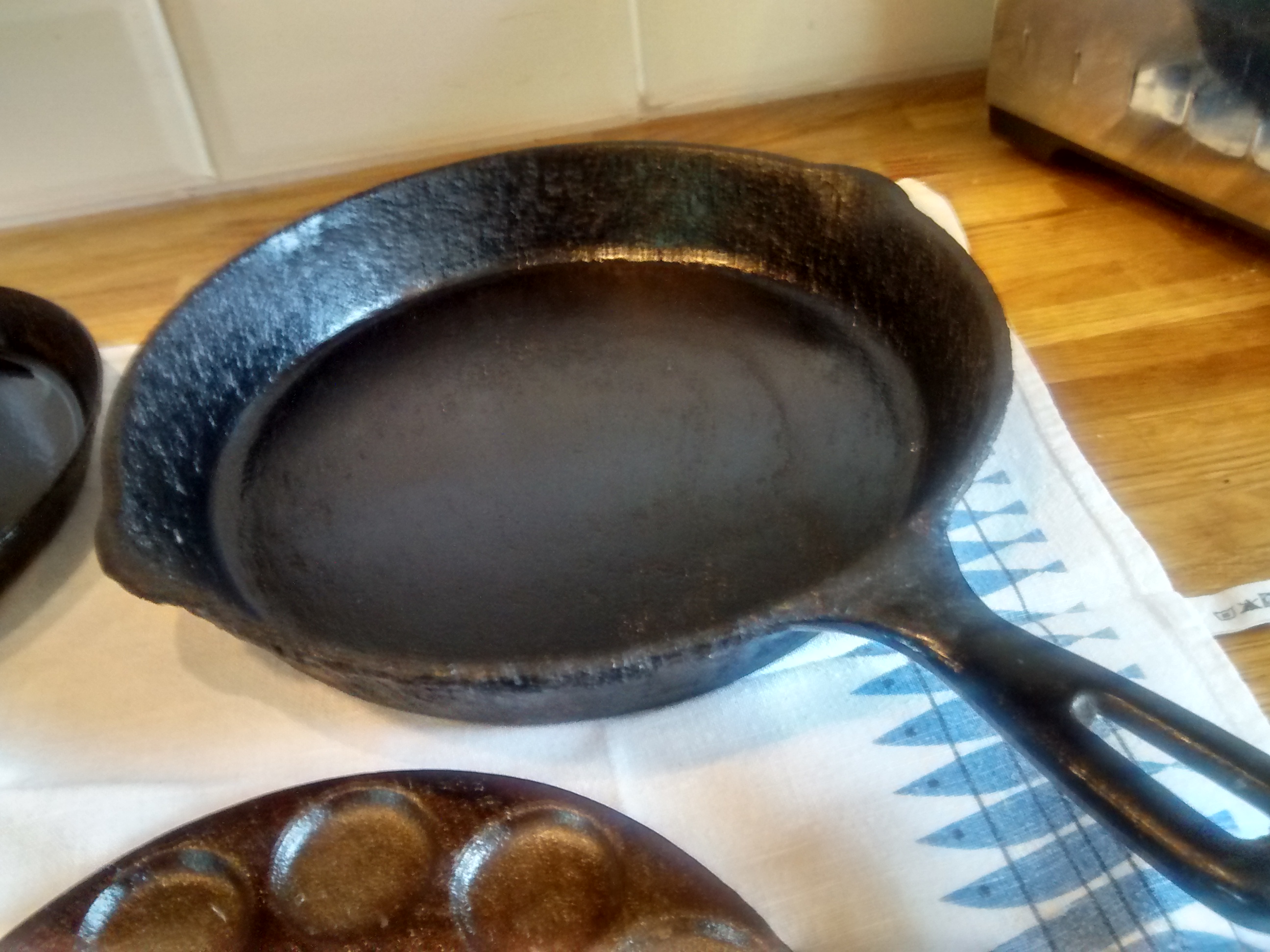
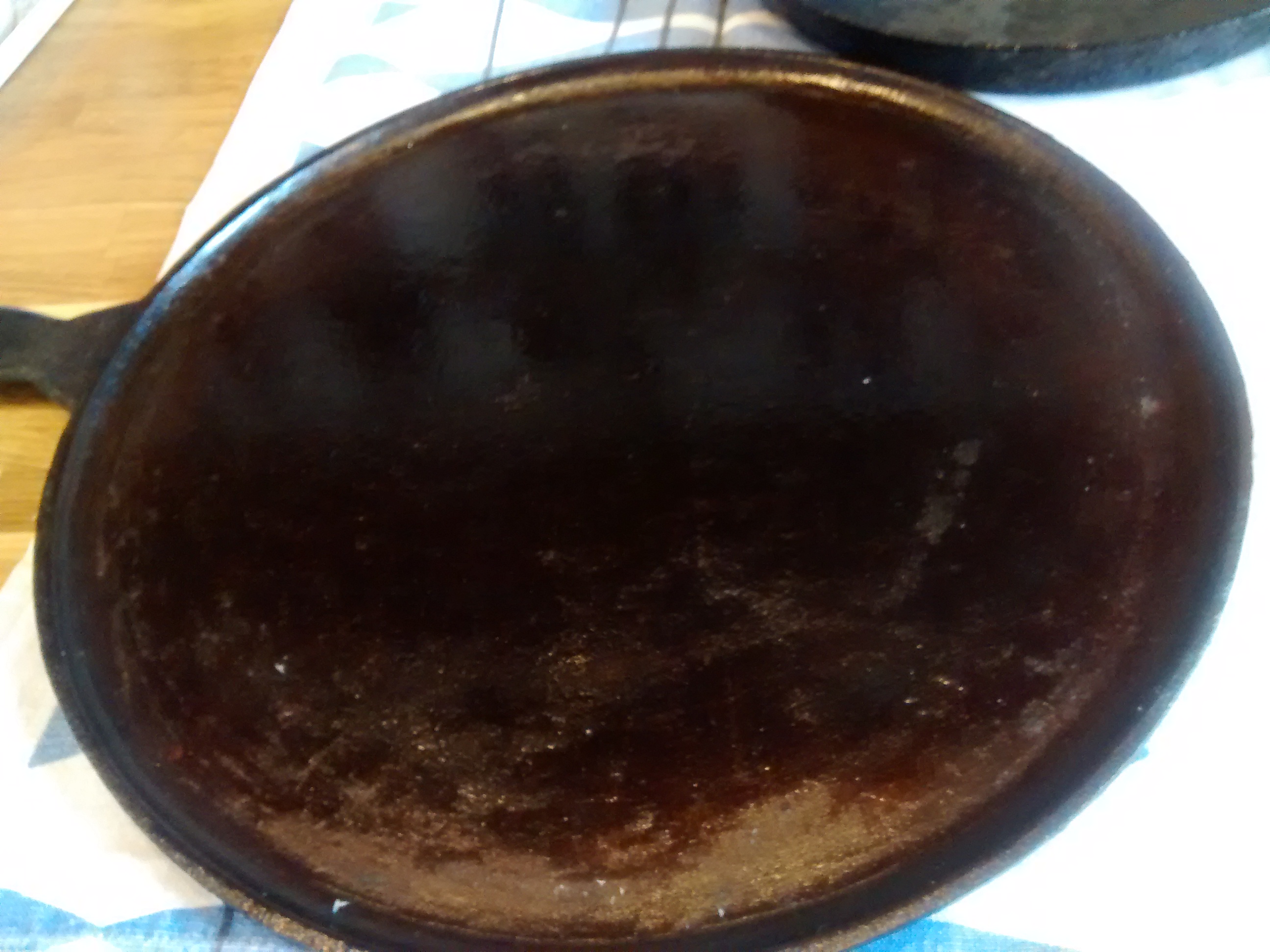
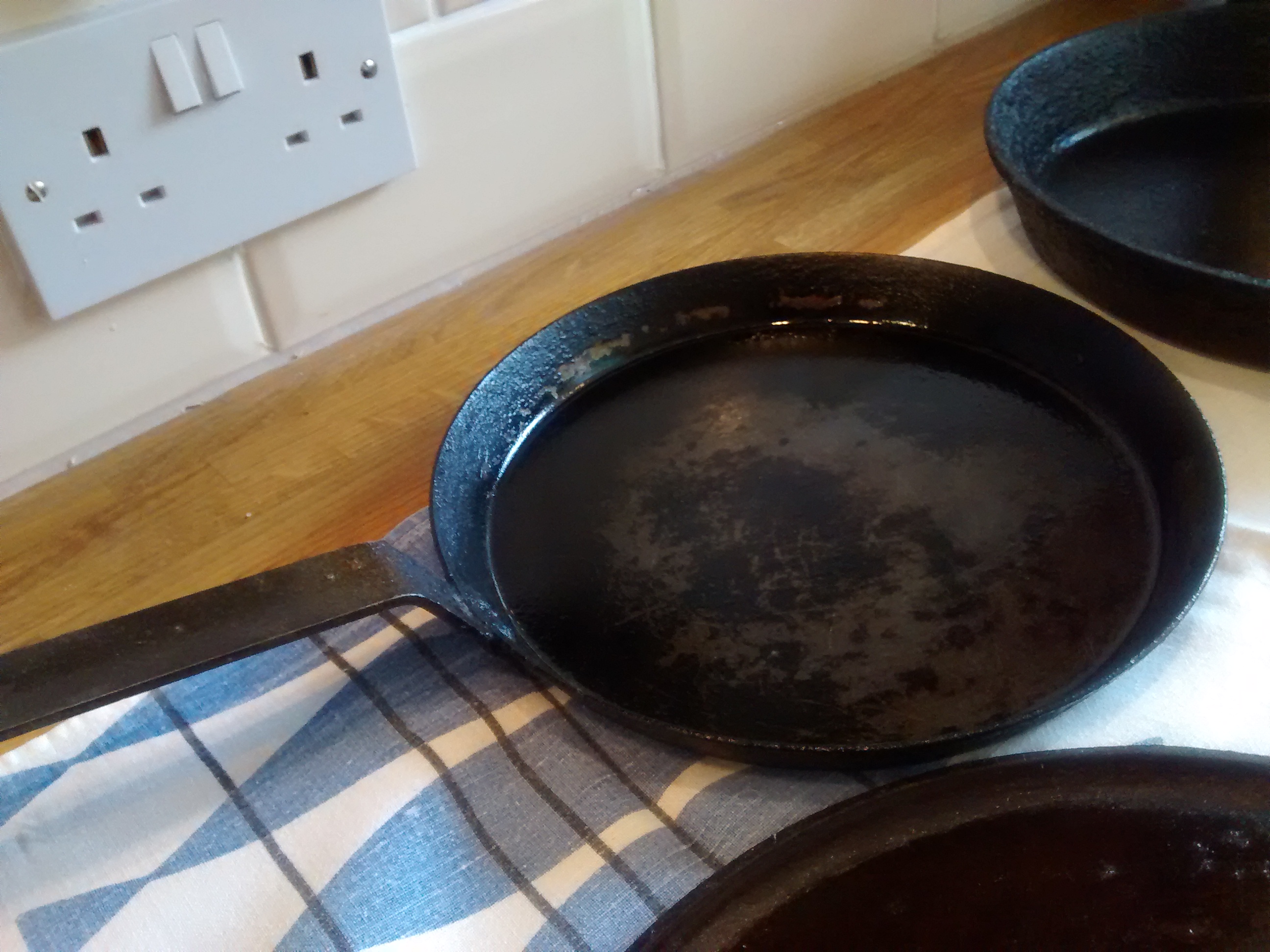
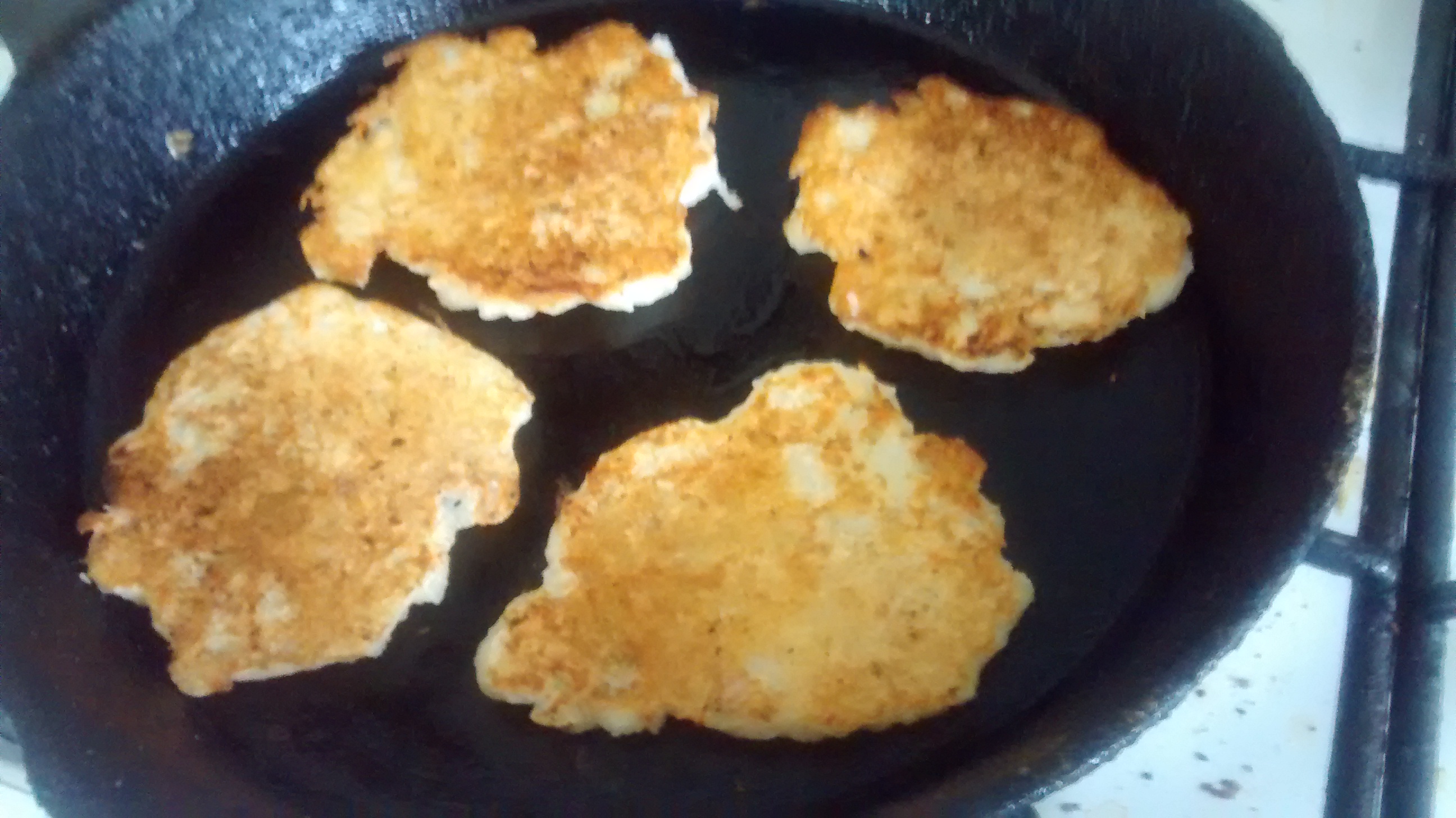
  • Bliny are best cooked on a griddle or a cast iron frying pan.
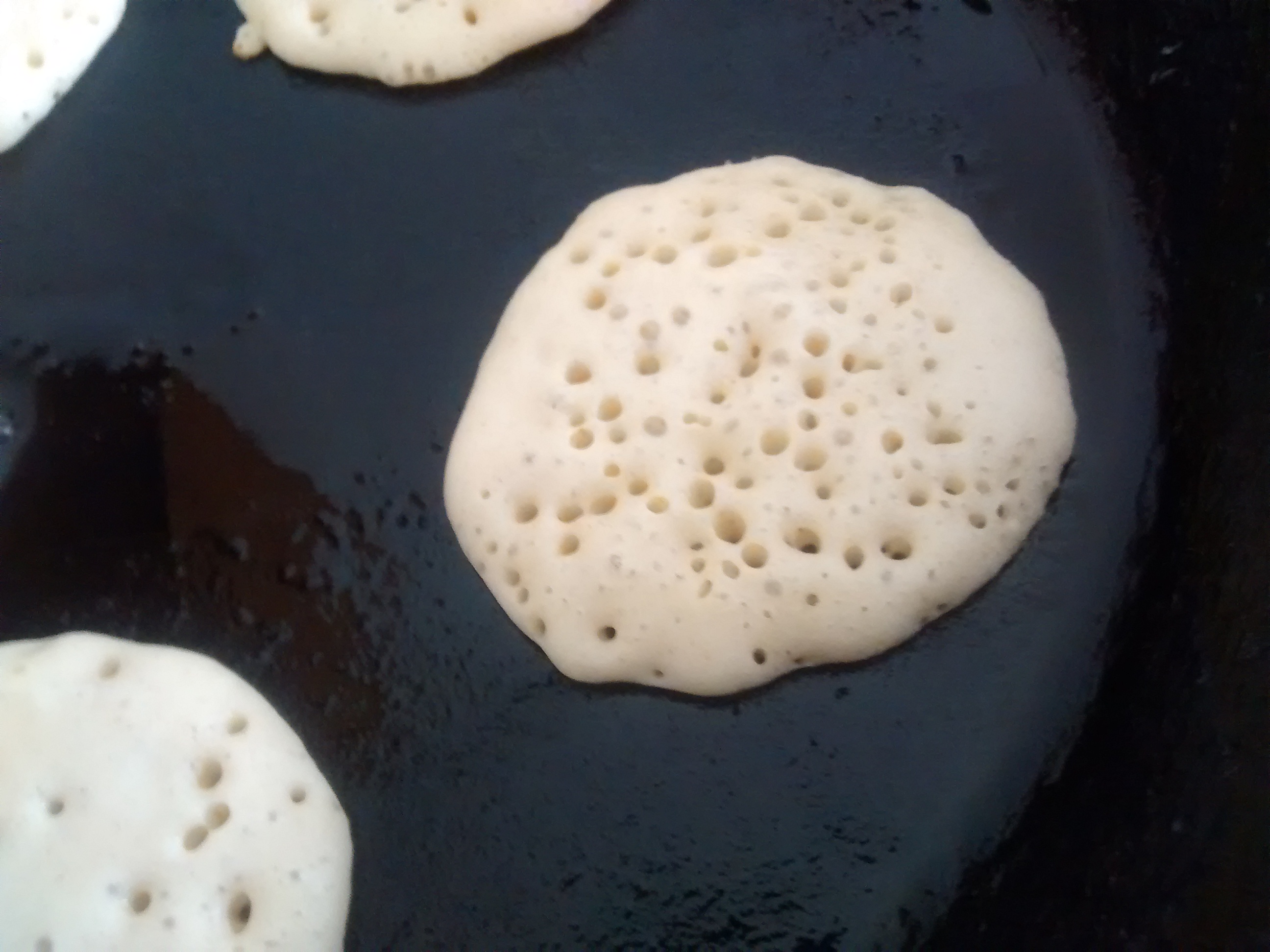
  • Bliny are small risen pancakes made using yeast  they are  in the American style of pancake.

IMG_20160726_154754099_HDR


Bliny can be served warm or cold – I much prefer them warm!

Bliny

Ingredients

  • 80g plain flour
  • 80g buckwheat flour
  • 1 egg
  • 125 ml warm milk (full or semi-skimmed)
  • 125 ml warm water
  • 25g fresh yeast or 1 tablespoon of dried yeast
  • 1 tablespoon of sugar
  • 1 tablespoon of melted butter
  • Pinch of salt

Method

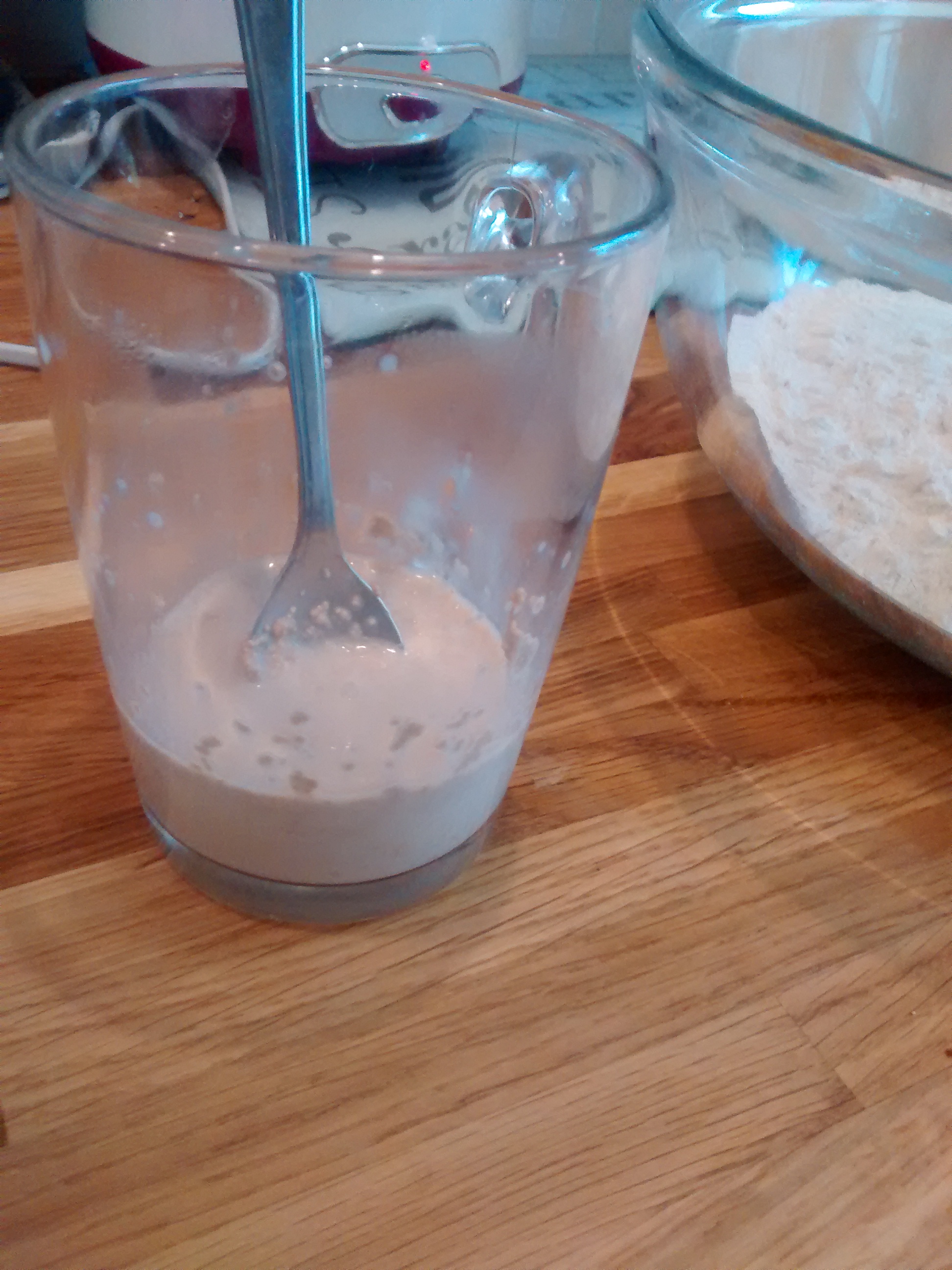
Put the yeast, sugar and milk in a bowl and leave to rise. (You can place this over bowl of warm water).

IMG_20160727_114311327
Wheat Flour & Buckwheat Flour


  • In a large bowl mix the flours together and add yeast mixture and then the beaten egg.
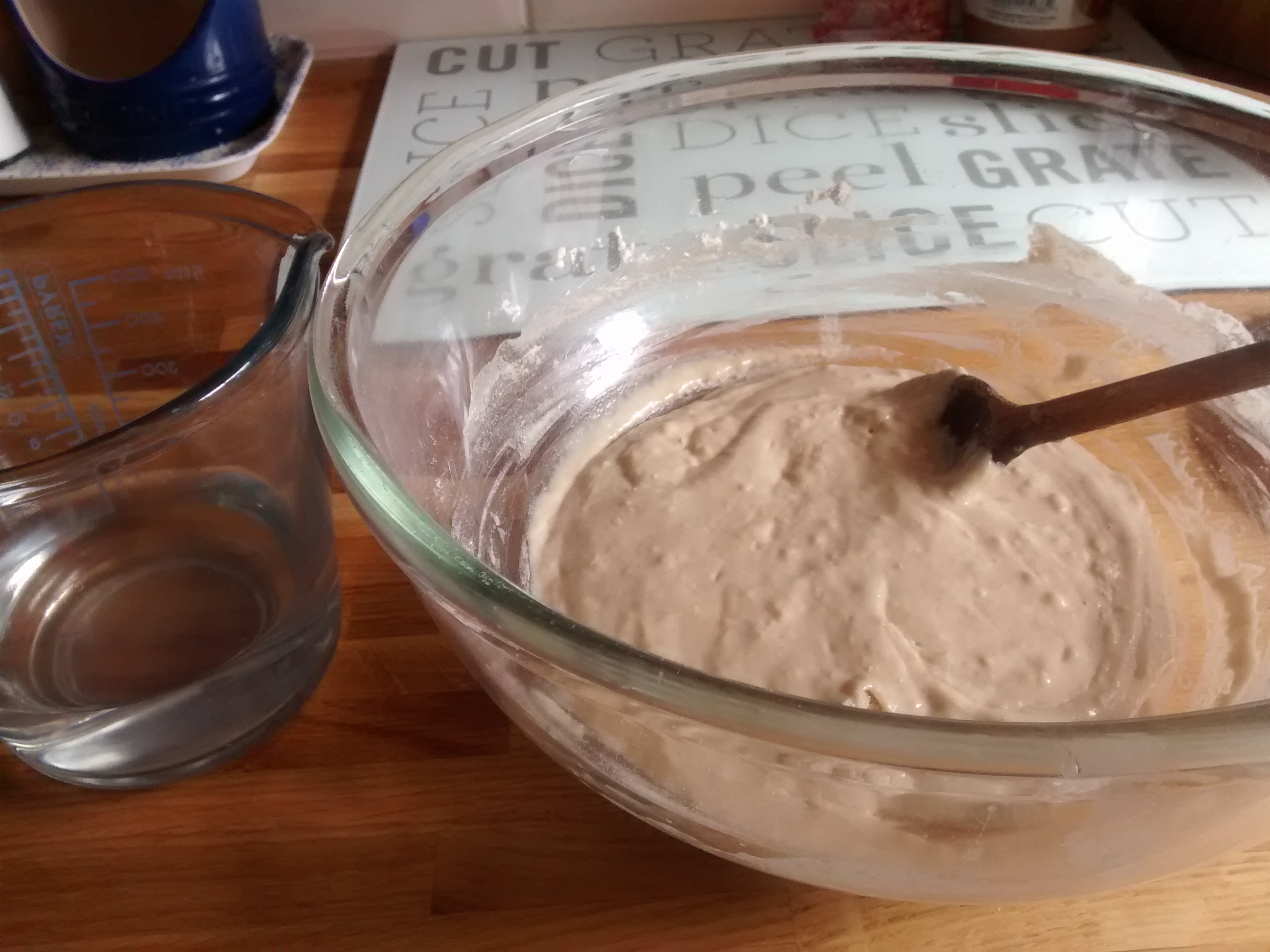
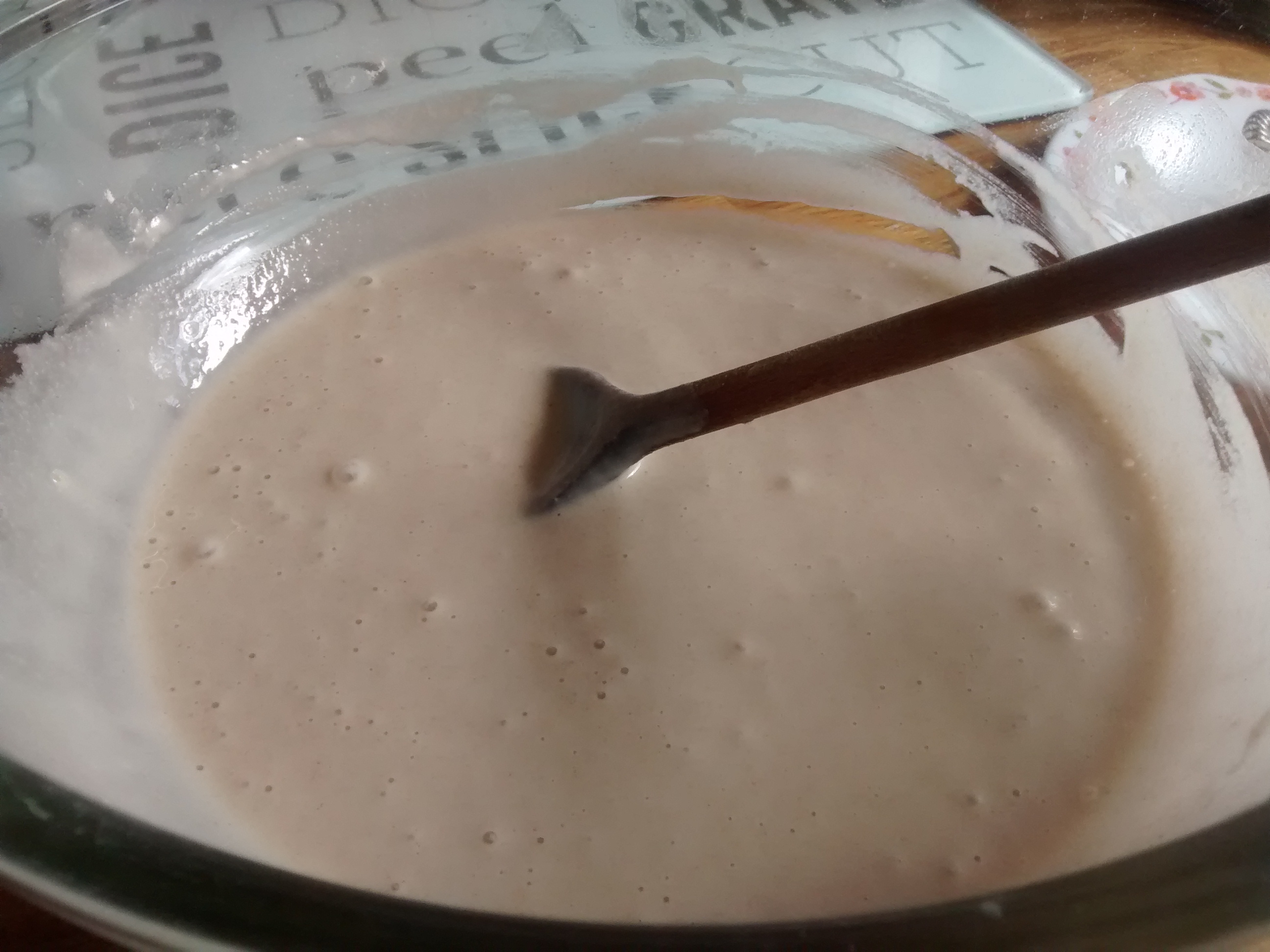
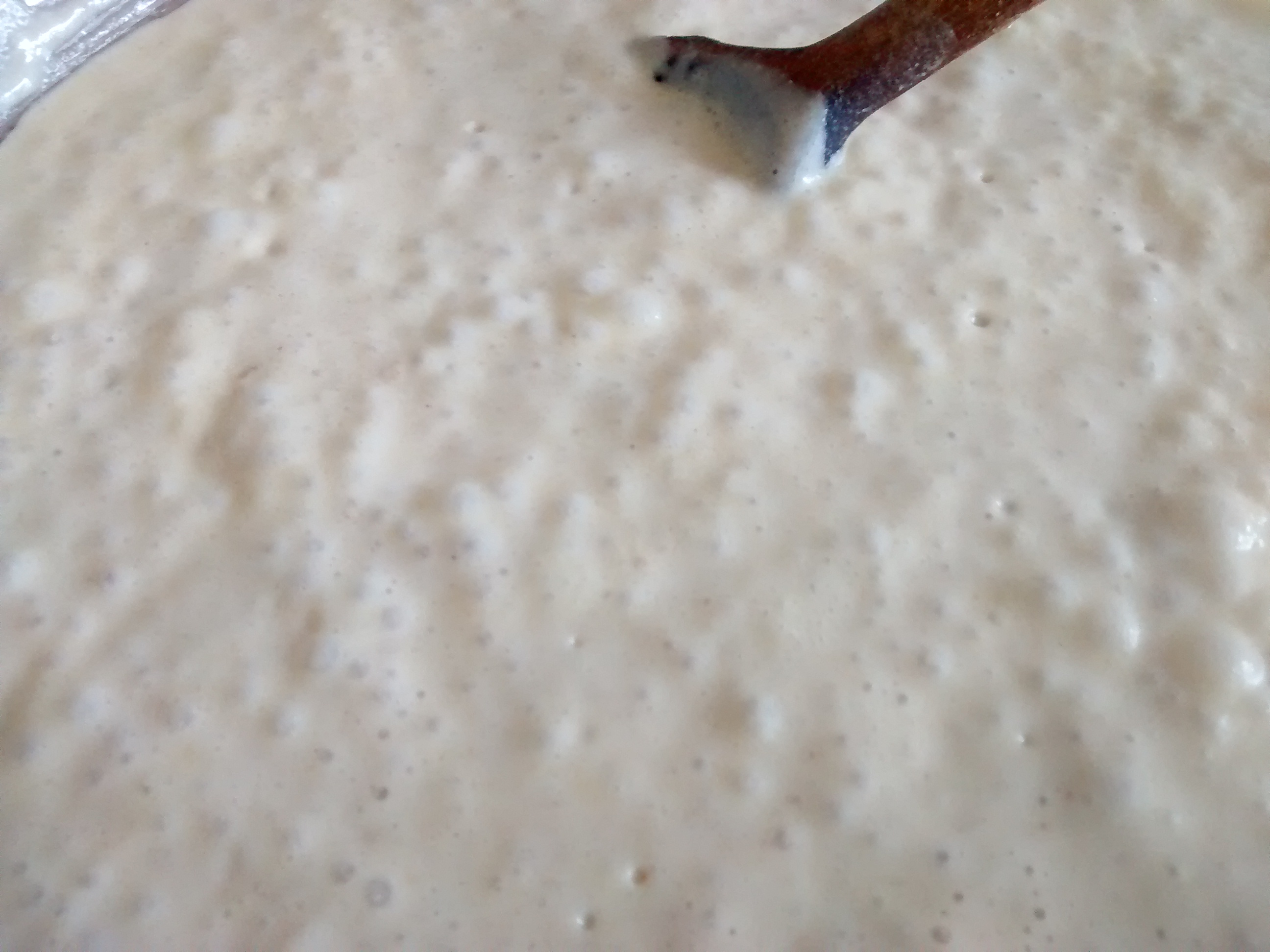
  • Add the water bit by bit until the mixture is like pouring cream, you might not need it all.
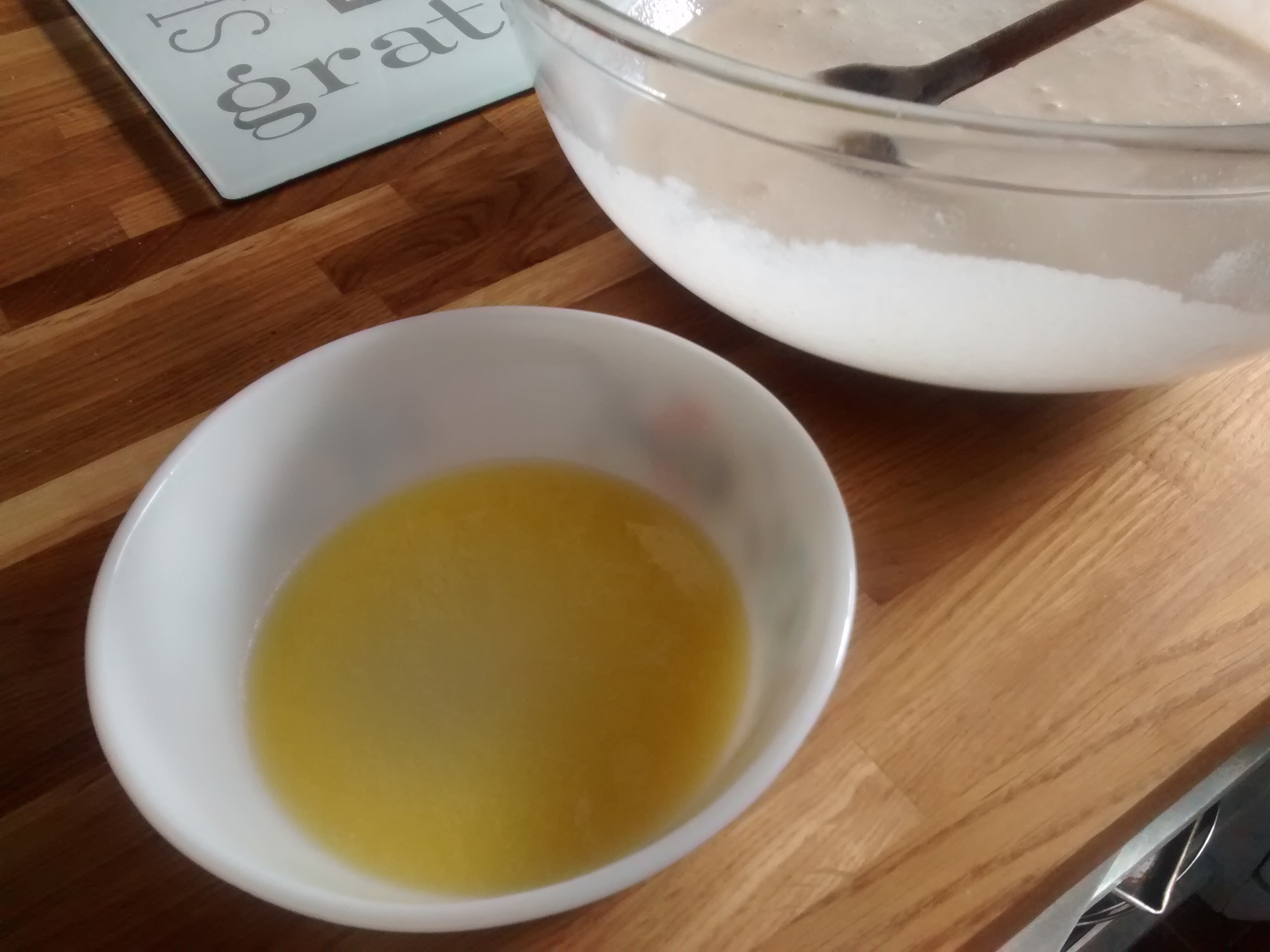
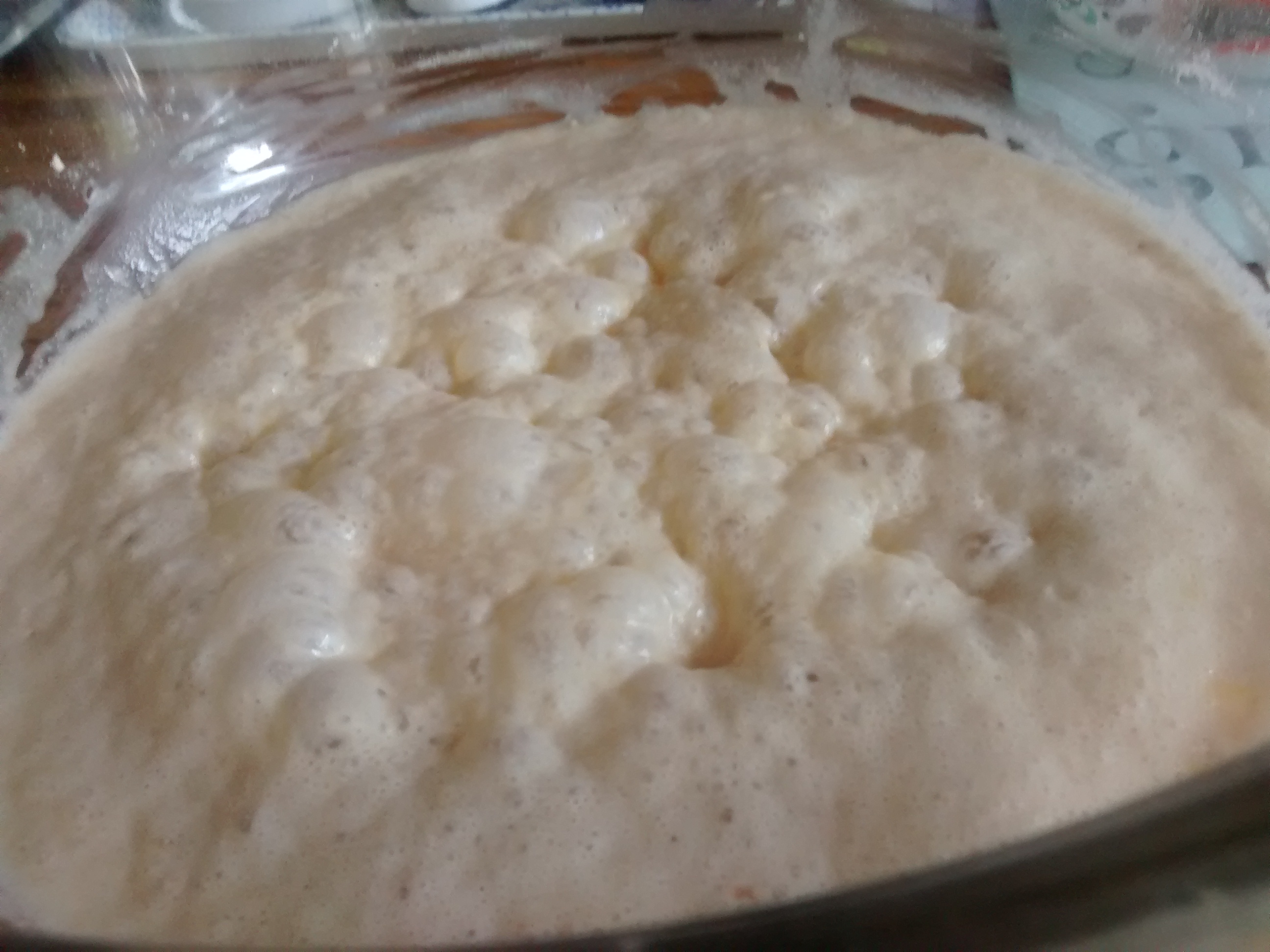
  • Add the pinch of salt and the melted butter then cover with a cloth and leave to rise.

IMG_20160728_092149196 IMG_20160728_092344523 IMG_20160728_092333317 IMG_20160728_092512944 IMG_20160728_105025558 IMG_20160728_105042723


IMG_20160728_105901519_HDR IMG_20160728_105855880


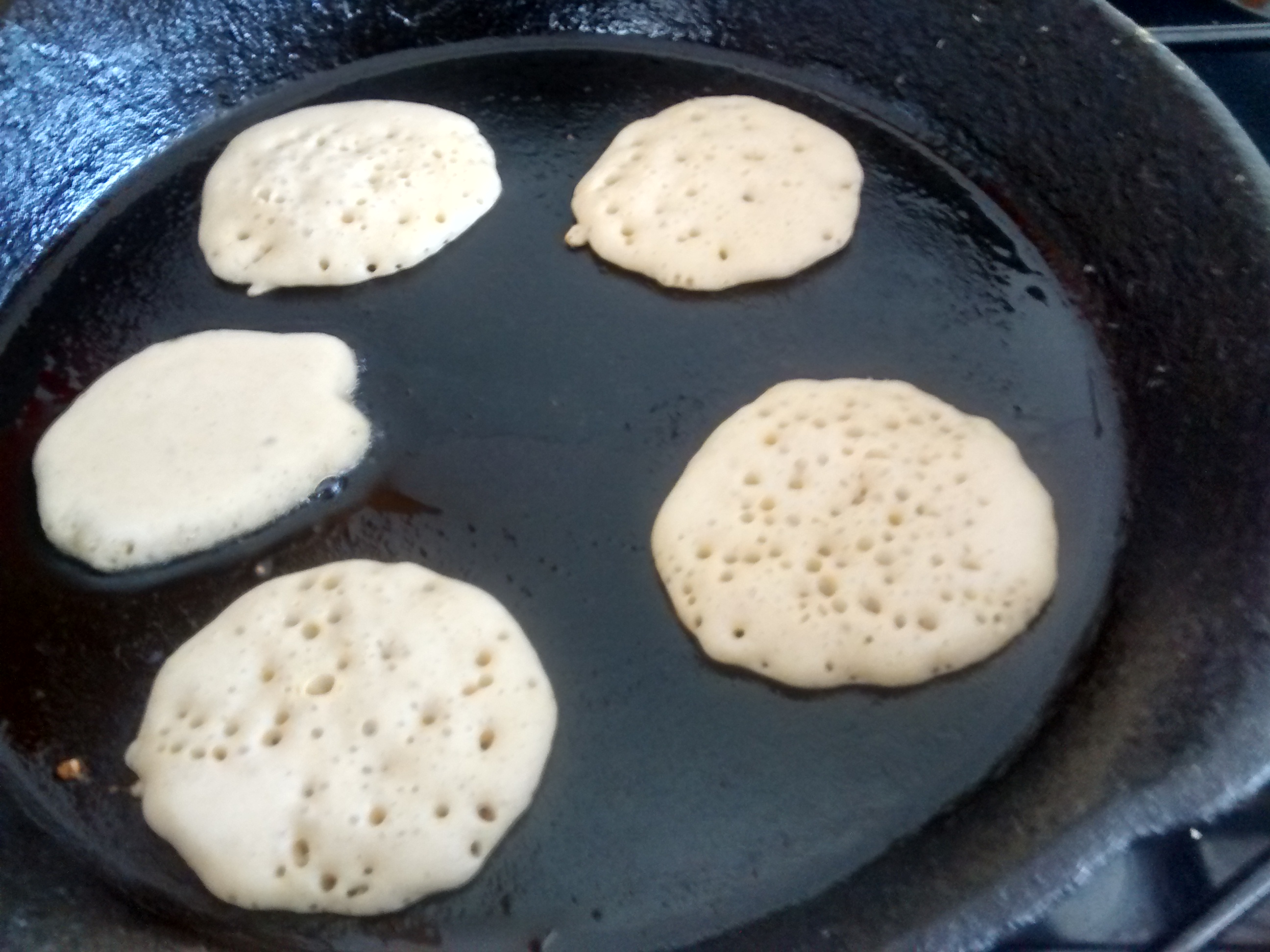
  • Use the risen batter to make small pancakes by using 1 large tablespoon per pancake –  I make 3 or 4 at a time in my  lightly greased cast iron pan.
  • Once you get the pan hot, lower the heat to a steady low so as not to burn the bliny.
  • Once they are cooked on one side, turn then over using a spatula and cook for a few minutes more.

IMG_20160728_105937003


Serving suggestions

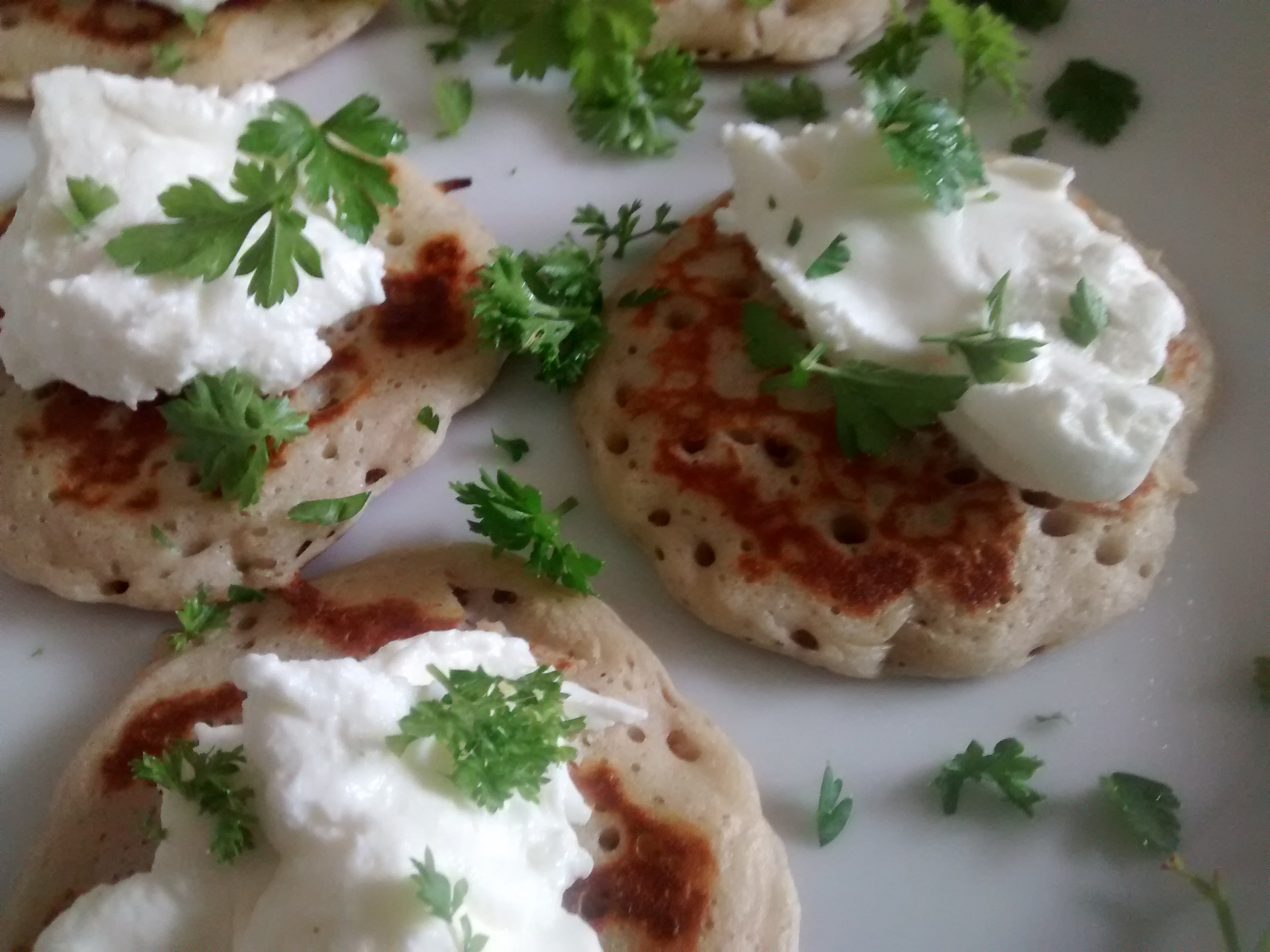
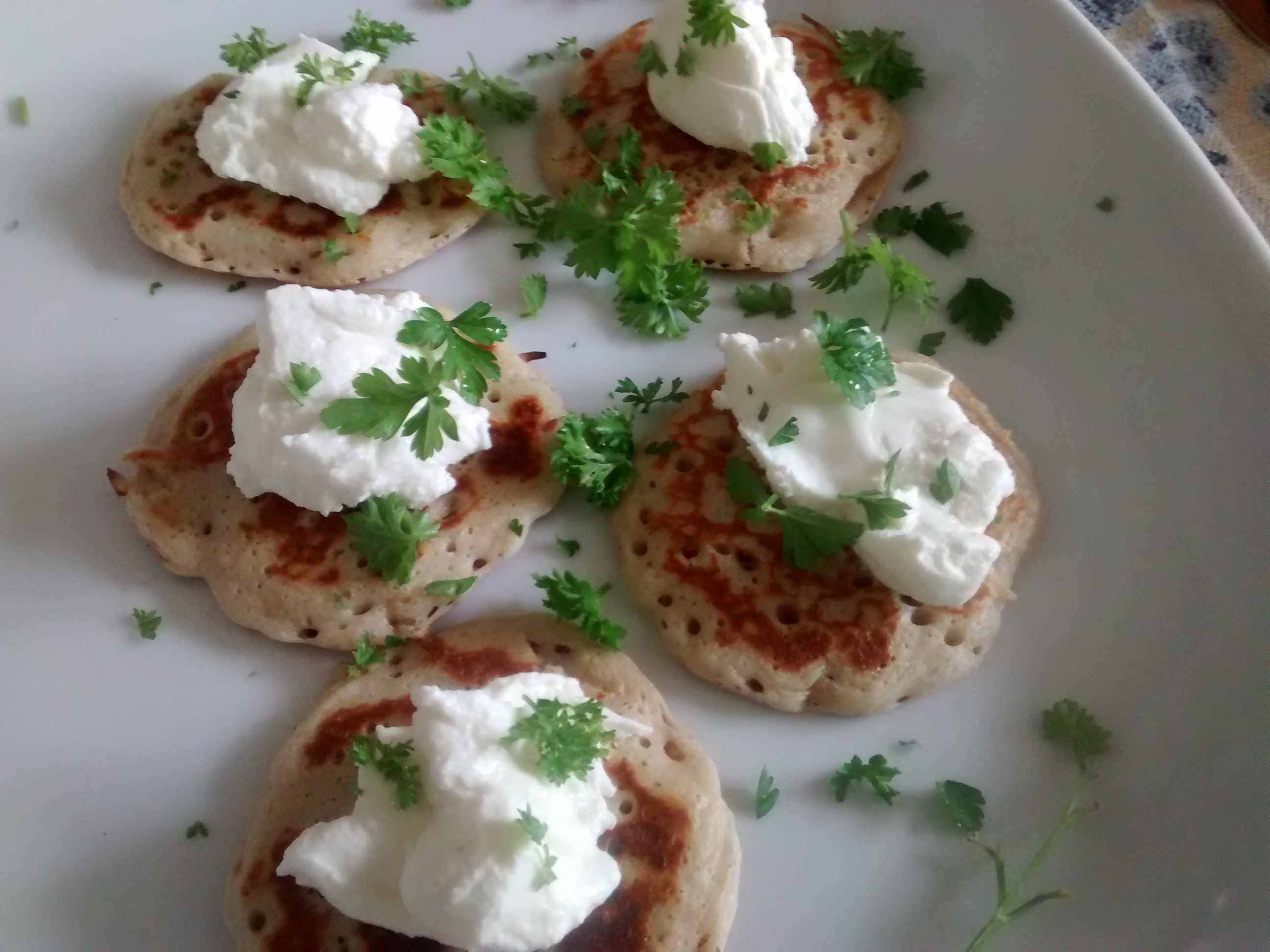
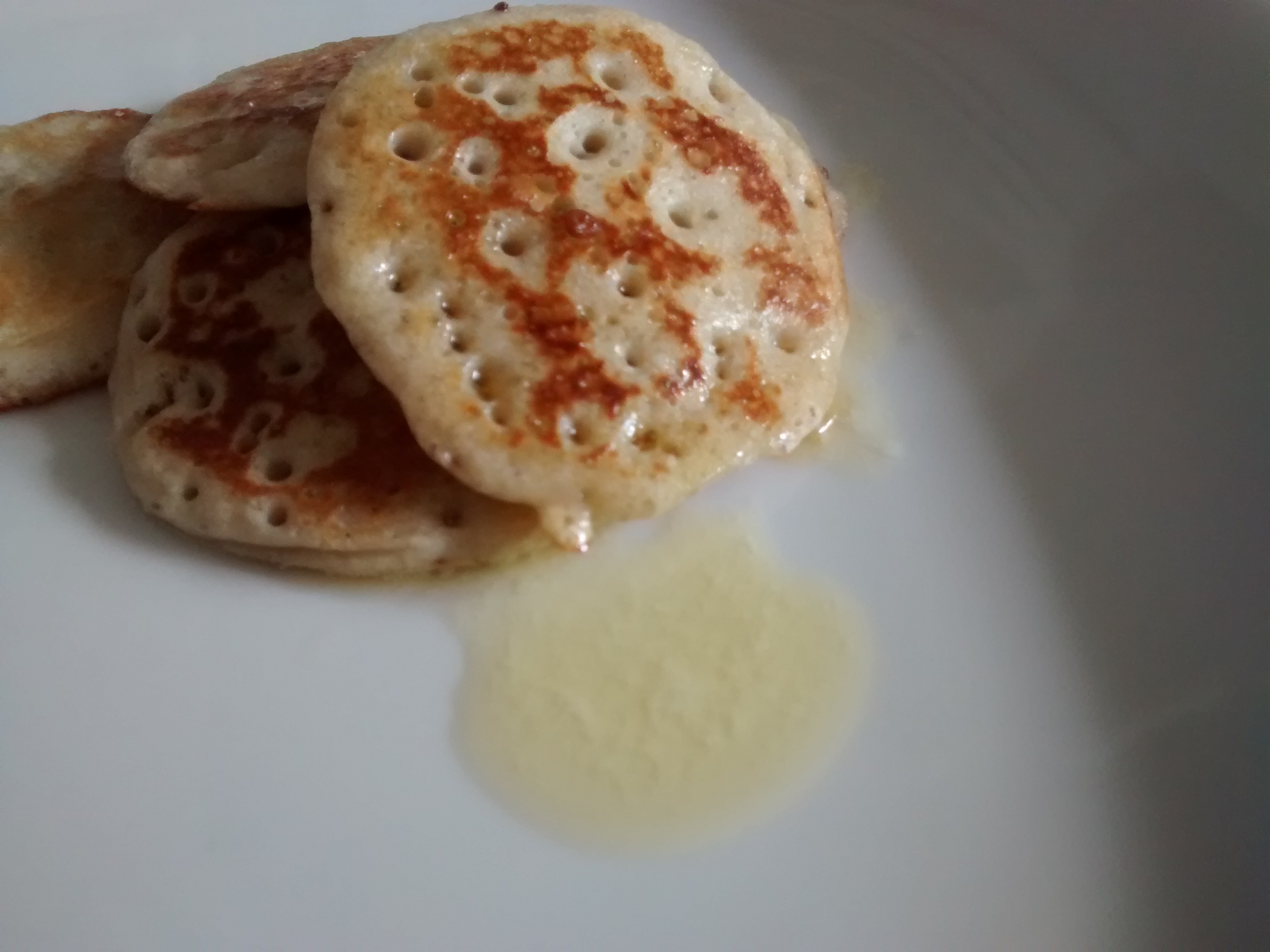
Serve the bliny with any of the following: melted butter, soured cream, twaróg, yoghurt cheese or cream cheese,  smoked salmon,  pickled herrings or even caviar,  gherkins, fried onions, skwarki (crispy bacon bits) fried mushrooms and one of my favourites a fried egg.

IMG_20160728_110728618
Served With Yoghurt Cheese and Chopped Parsley

IMG_20160728_110732377


IMG_20160728_110116268
Served with Melted Butter


Buckwheat Pancakes

These are thin pancakes and are also very popular in Northern France where they are called gallettes de sarrasin.

The French for buckwheat is  sarrasin or blé noir.

Many years ago whilst on holiday in France I bought and brought home a very large French pancake pan.

IMG_20160726_154736455


However on my gas stove it is too large for a good distribution of heat – you get a hot spot in the centre which tends to burn that part – so I use my smaller pancake pan.

IMG_20160726_154823589


Last week whilst in a department store in Leeds I saw the following – An Electric Crêpe Pan – It might be good.

IMG_20160730_123522083


Ingredients

  • 75g buckwheat flour
  • 25g plain flour
  • 2 eggs
  • 120ml of milk (full or semi-skimmed)
  • 120ml of water
  • 25g of  melted butter
  • pinch of salt
  • Some extra milk might be needed.

Method

Make these in the same way as standard pancakes adding the melted butter after the batter has been standing for about an hour.

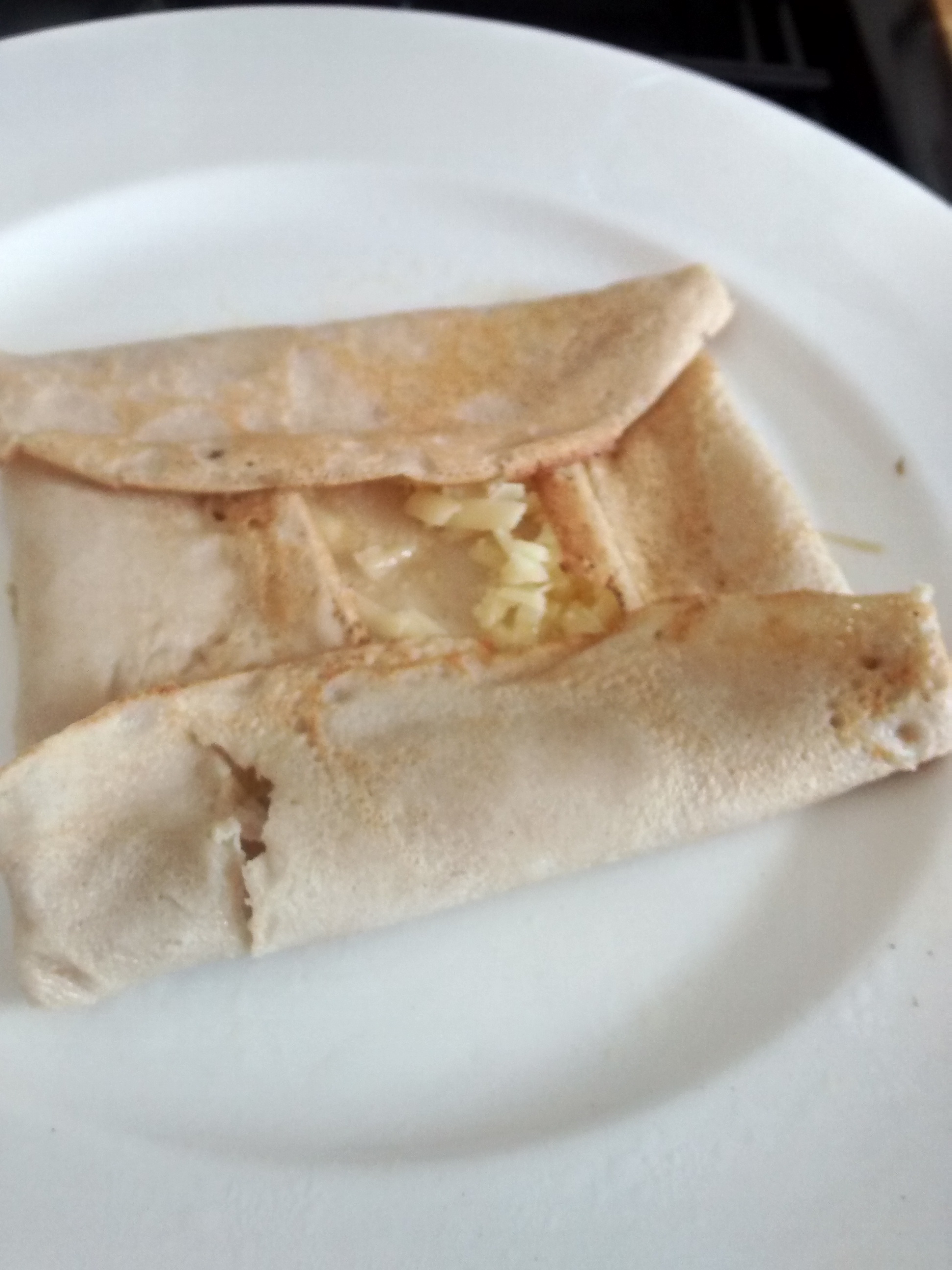
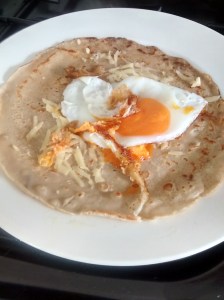
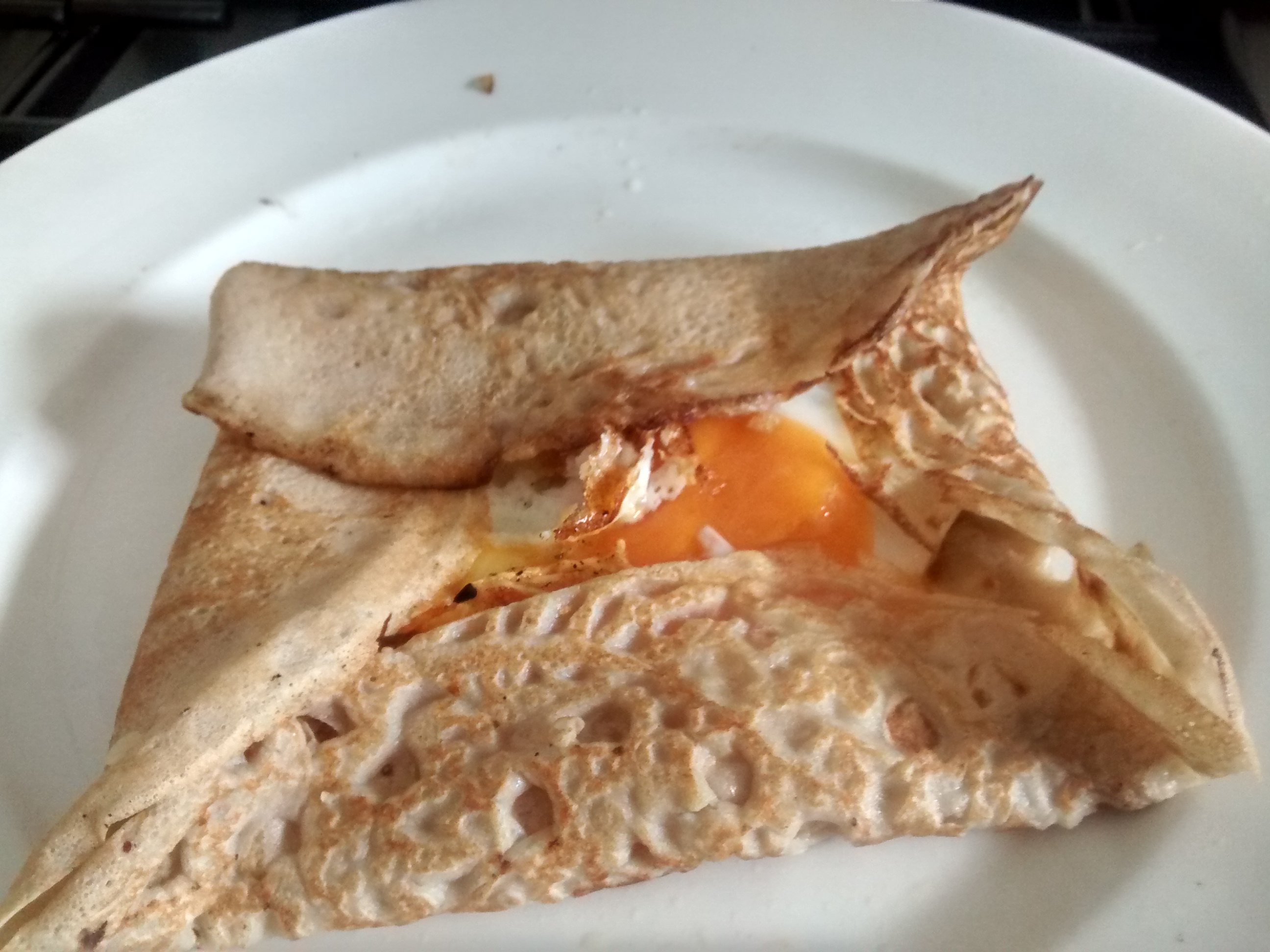
I think these pancakes are best with savoury fillings and my favourite is in fact French in origin, Breton style with a slice of good ham, grated Gruyère cheese and a soft fried egg.

The fillings are put on the cooked pancake and the sides are folded over but with the filling still showing in the centre. (You can put this back on the pan to heat it a little more.)

IMG_20160727_125205566_HDR
Melted Butter & Grated Cheese


IMG_20160727_125233017_HDR


IMG_20160727_130108334_HDR
Melted Butter, Grated Cheese & Fried Egg

IMG_20160727_130152531_HDR

Poffertjes

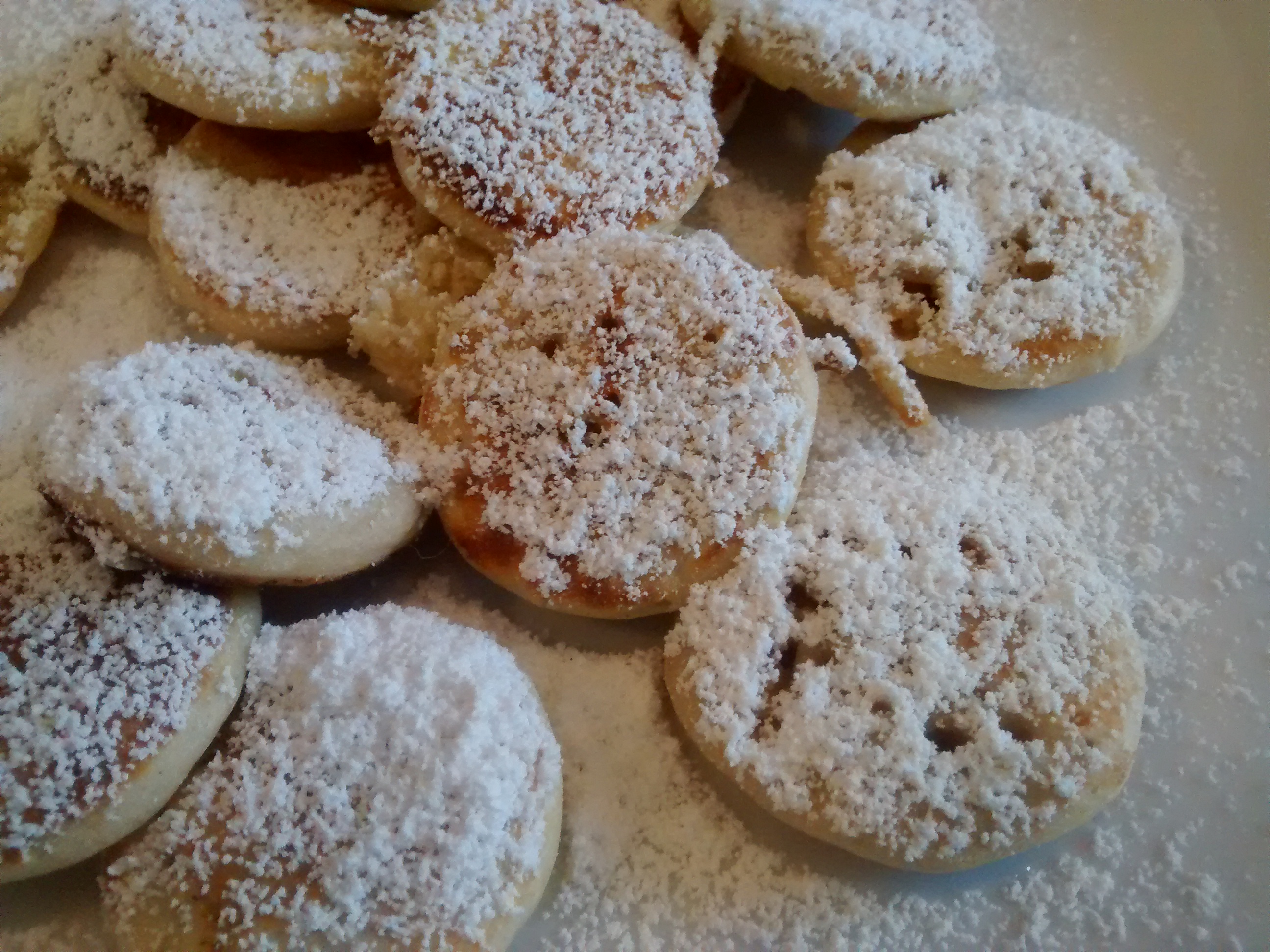
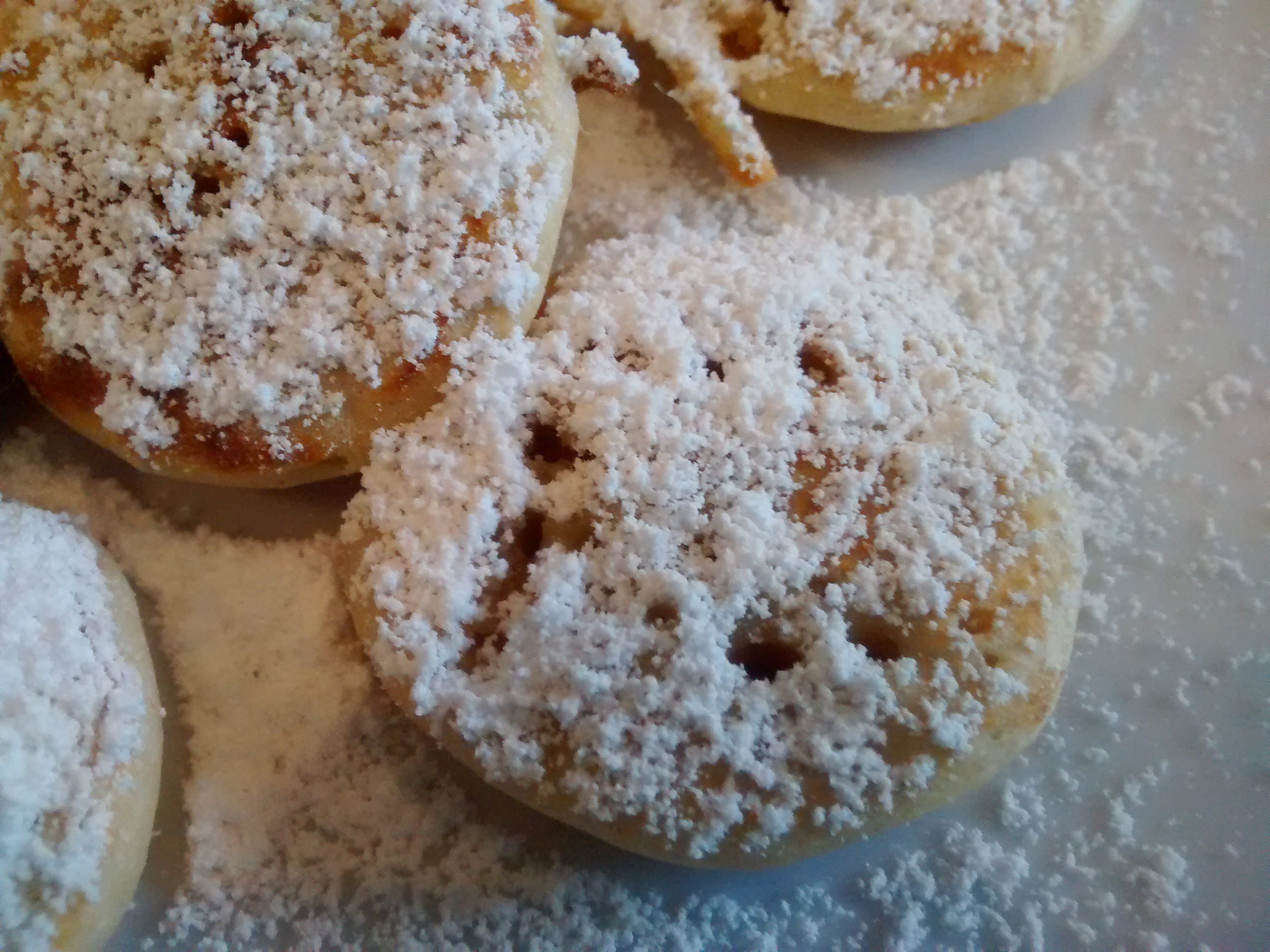
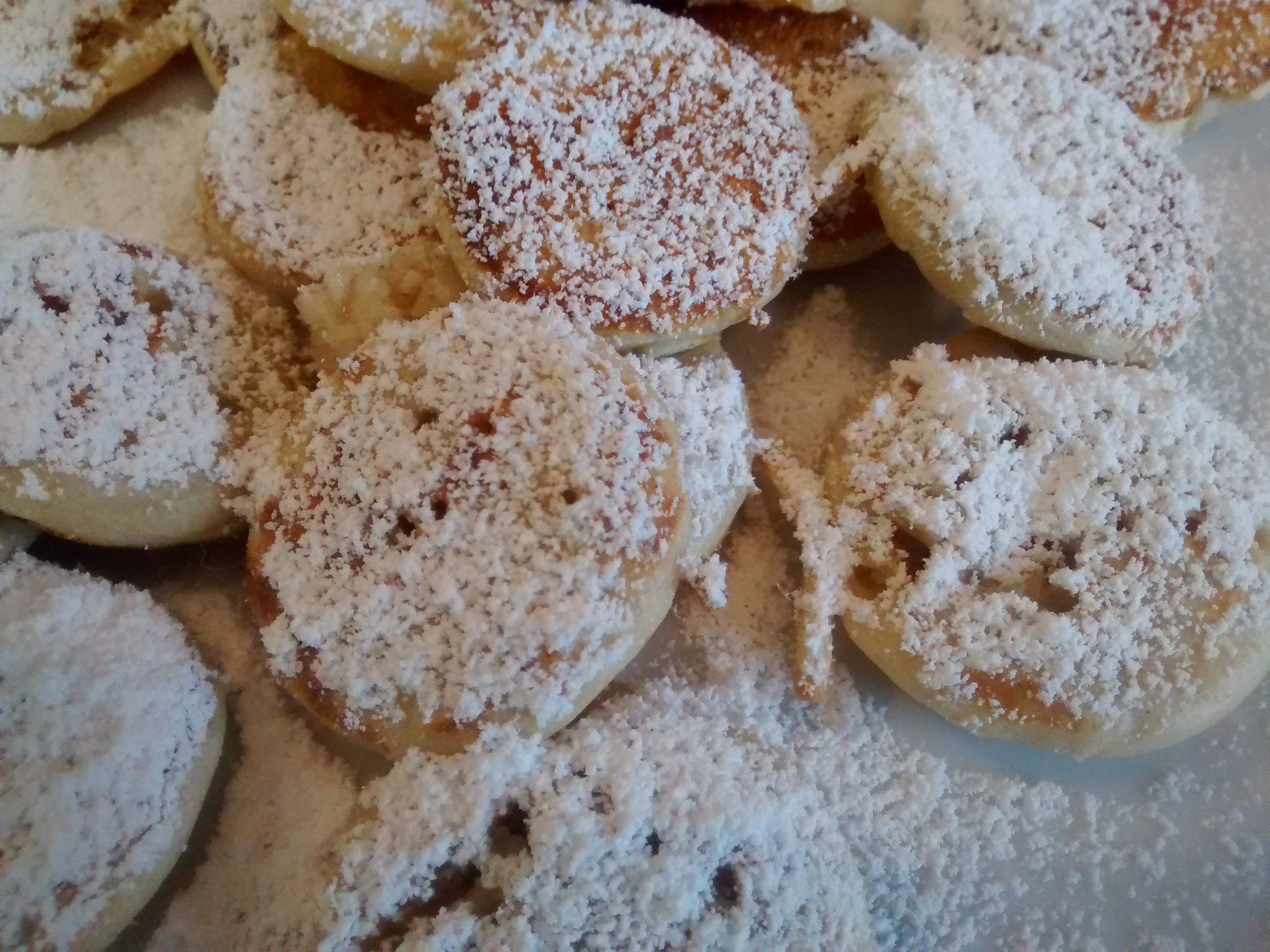
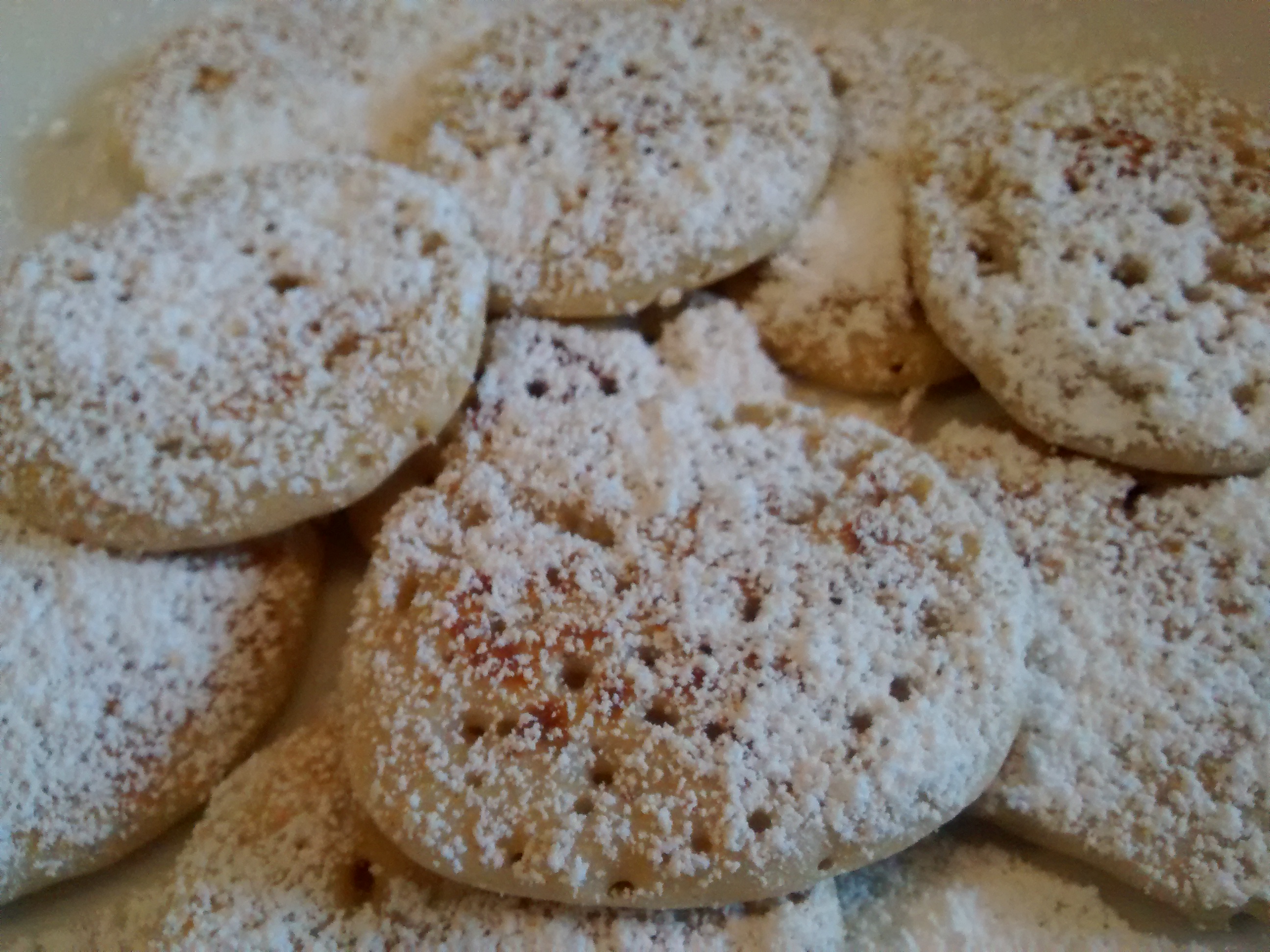
These mini buckwheat pancakes are Dutch in origin and it was only as I was trying out the recipes again that I realised how similar they are to bliny – but these are not served with savoury toppings but with icing sugar.

(The Dutch for buckwheat is boekweit)

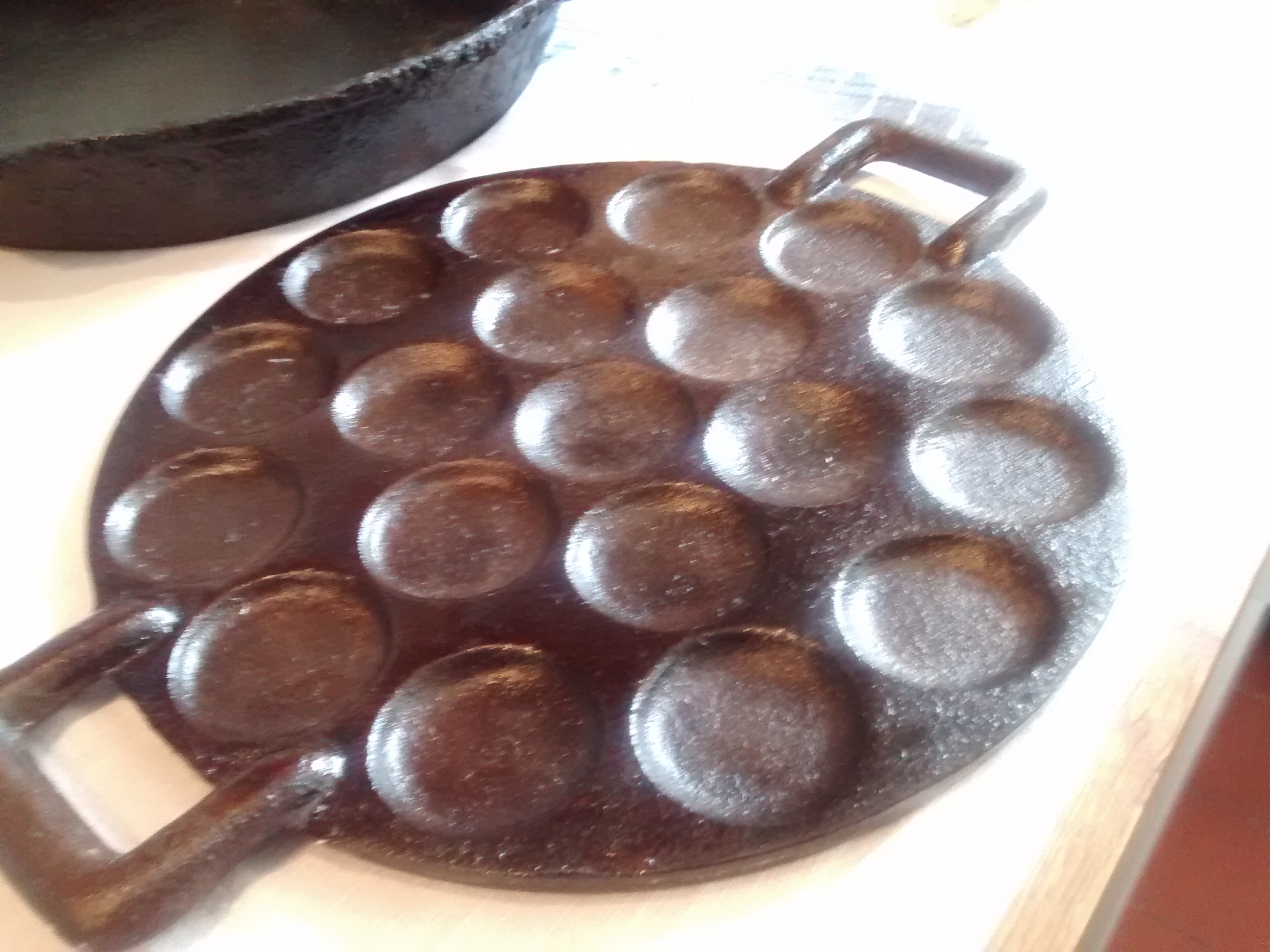
  • Several decades ago when on a visit to The Netherlands I bought a special cast iron pan which is used for making poffertjes .
  • It was in the days before cheap flights & just hand luggage and  I had travelled there by car – not as easy to bring home without.
  • If you do not have access to the authentic pan  you can make them on a frying pan – my cast iron pan works very well.


IMG_20160726_154901789
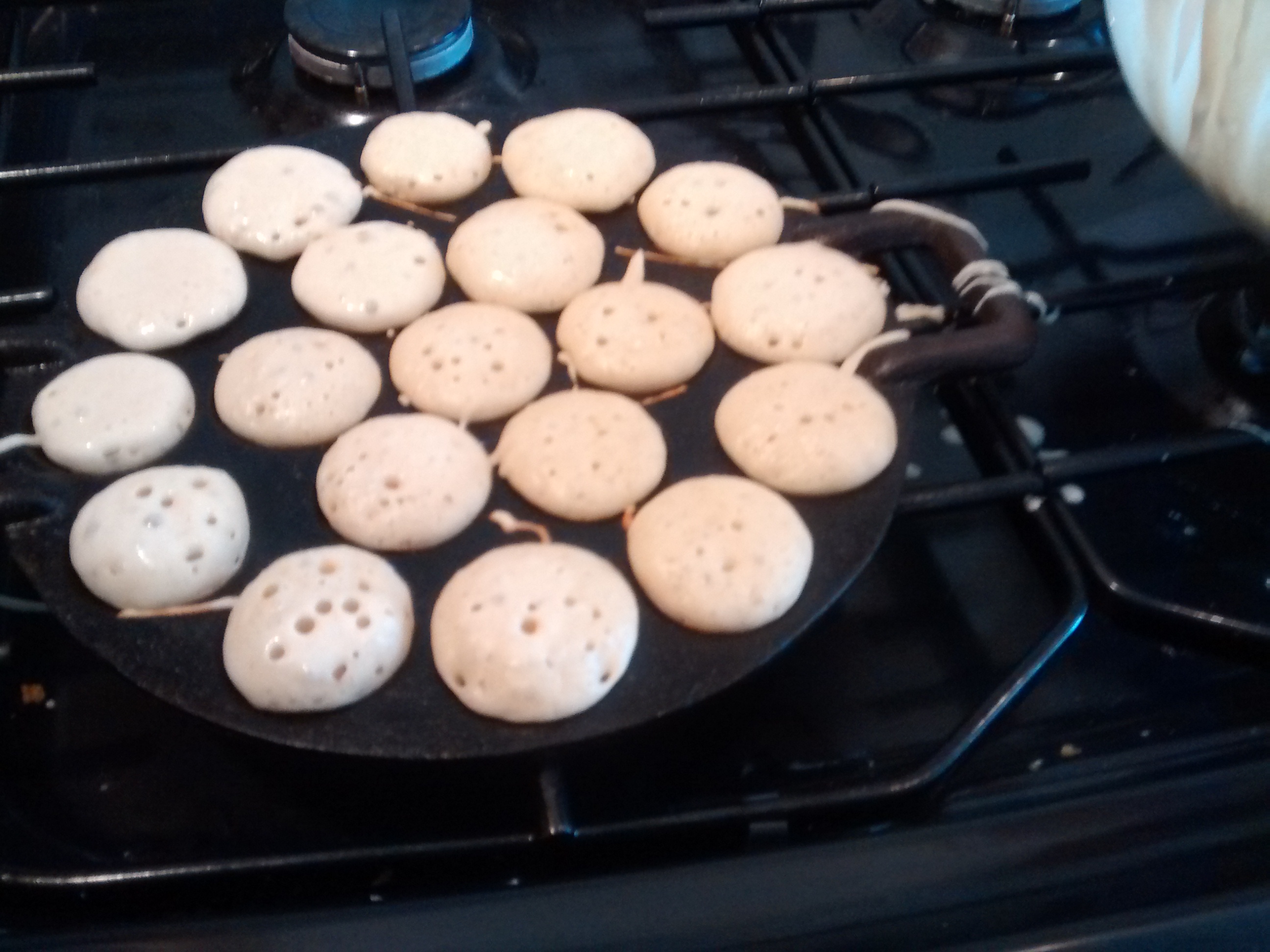
Cast Iron Proffertje Pan with 19 Indentations

IMG_20160726_154754099_HDR


Poffertjes

Ingredients

  • 10g dried yeast
  • 1 teaspoon sugar
  • 125g buckwheat flour
  • 125 plain flour
  • Pinch of salt
  • 1 egg
  • 350ml of full fat or semi-skimmed milk – warmed slightly
  • 1 tablespoon of  butter – melted
  • Icing sugar to serve.

Method

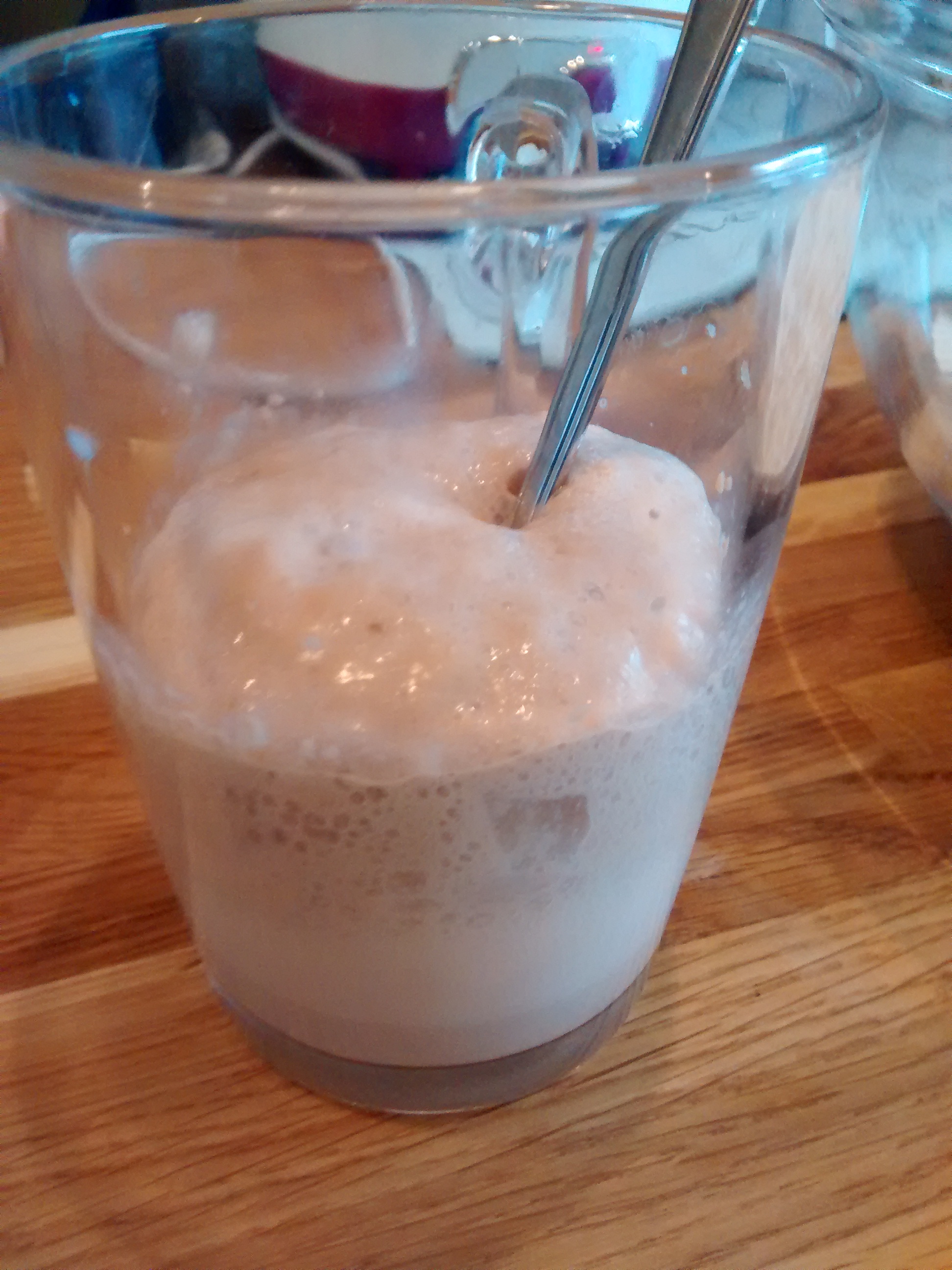
  • In a small bowl or jug dissolve the sugar, the yeast and around 50 ml of the milk.
  • Leave for around 10 minutes or so as  it froths up.

IMG_20160729_131108738


IMG_20160729_133101810


  • In a separate bowl, combine the  buckwheat and wheat flours, salt, egg, yeast mixture and half the remaining milk and mix well.
  • Now add the remaining milk  until the mixture is like double cream – you might not need all the milk.
  • Add the melted butter.
  • Cover the bowl and leave for around 1 hour until the mixture has bubbled and risen.
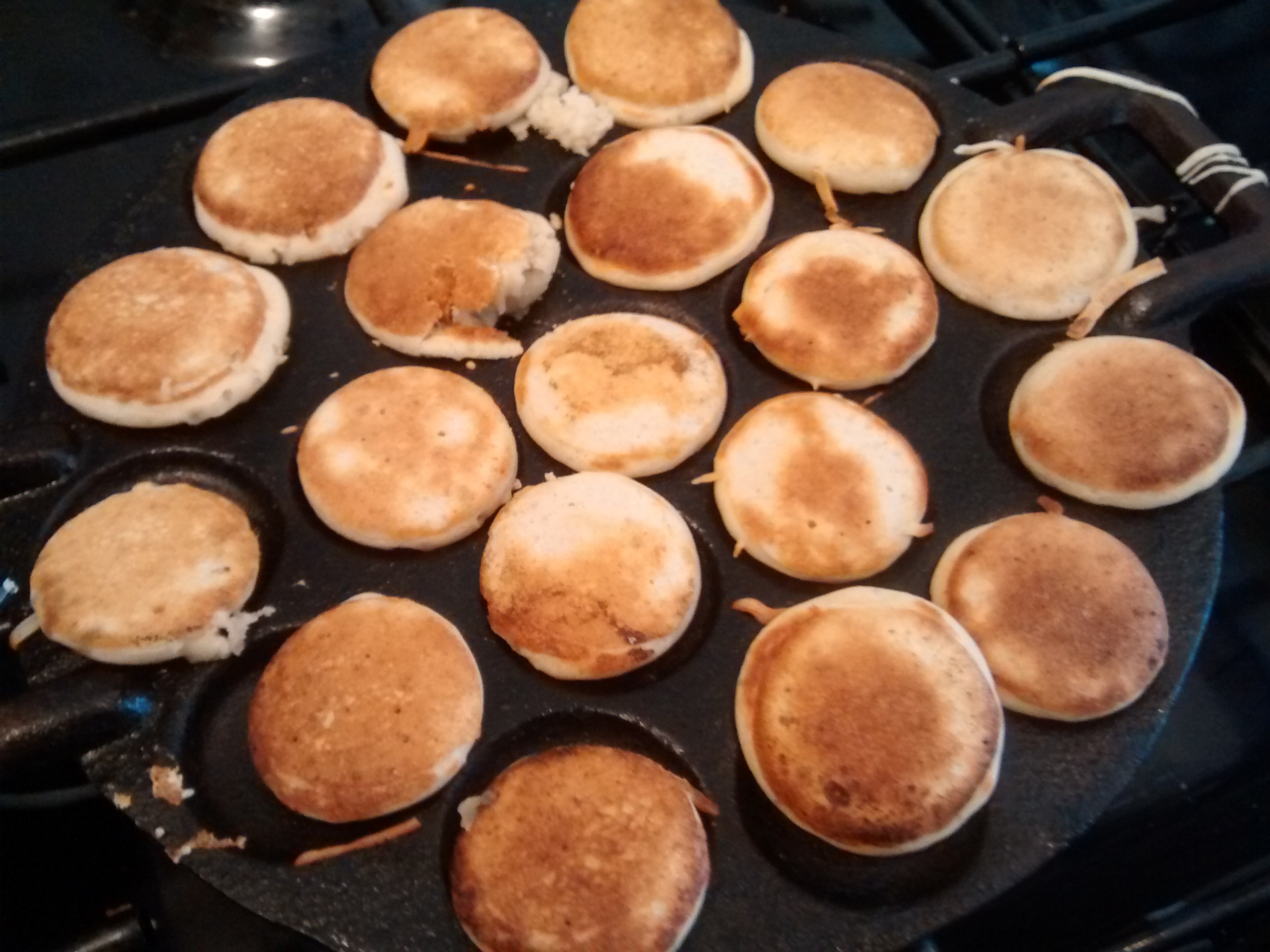
  • Lightly grease the pan and heat the pan – keep it the pan warm but not too hot or you will burn the poffertjes.
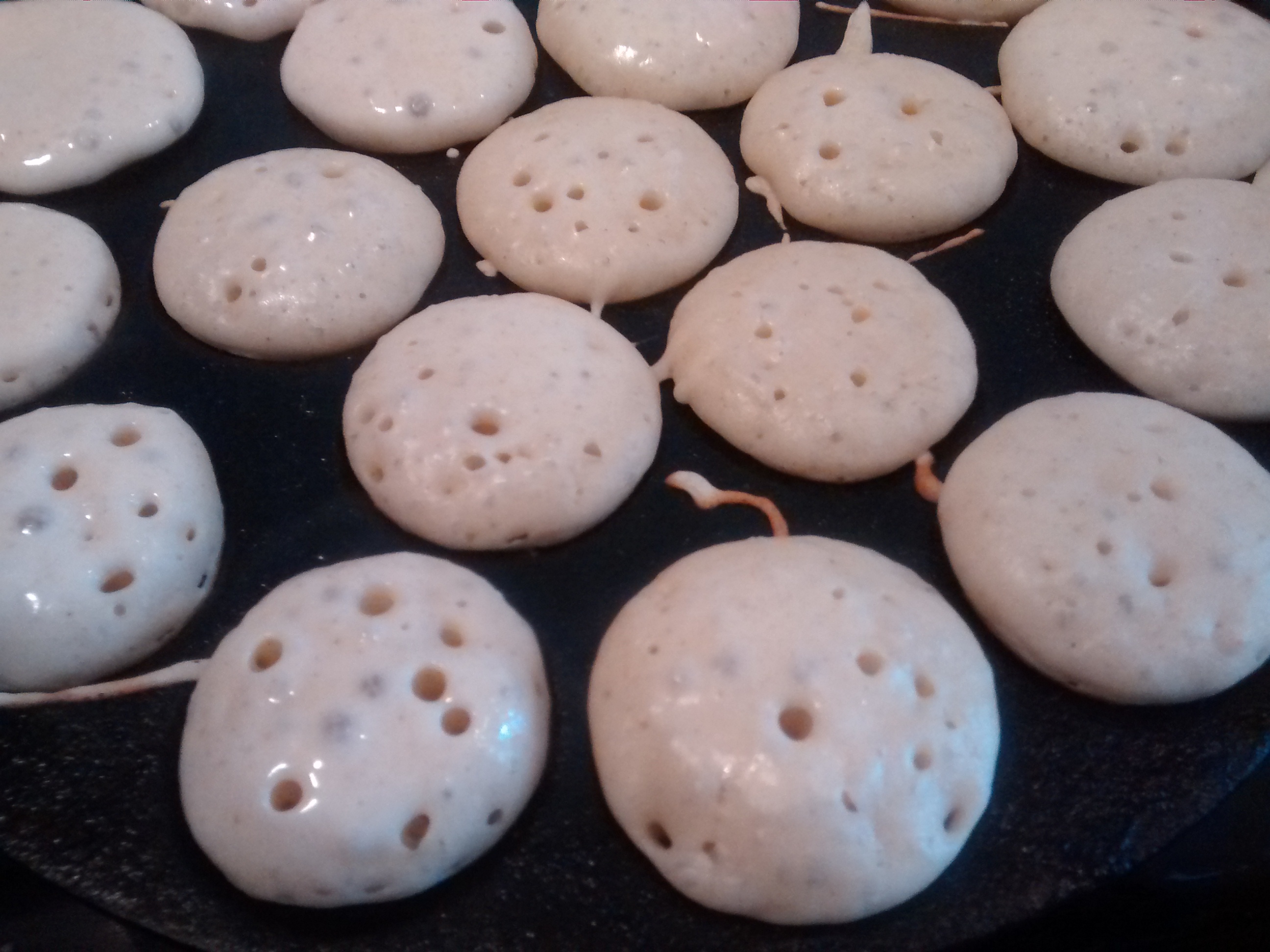
  • Using a teaspoon fill each indentation in the pan – you need around 2 teaspoons for each.
  • Turn the poffertjes around as soon as the bottom has set, using two forks.

IMG_20160729_155011830 IMG_20160729_155005608 IMG_20160729_155148766


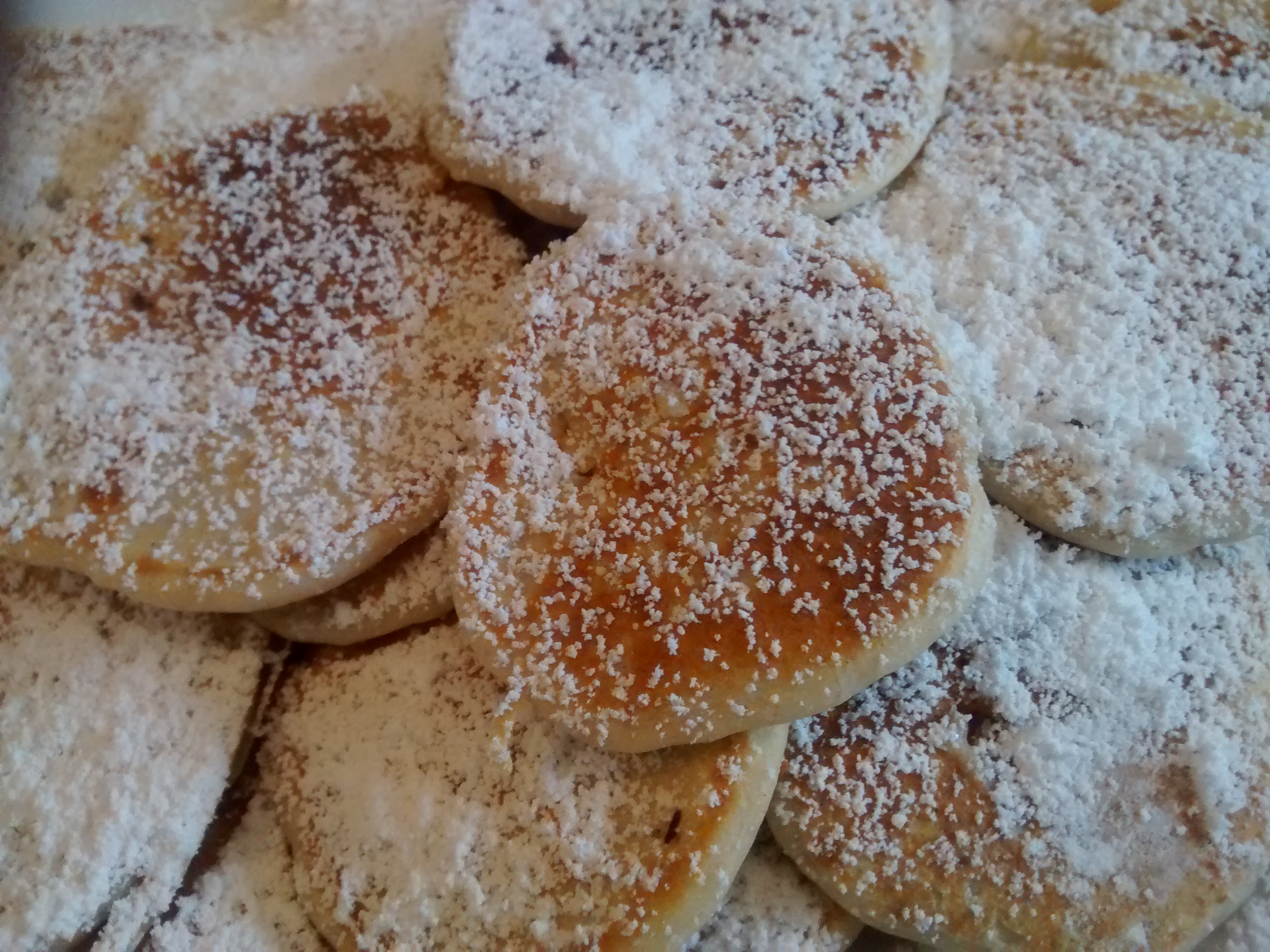
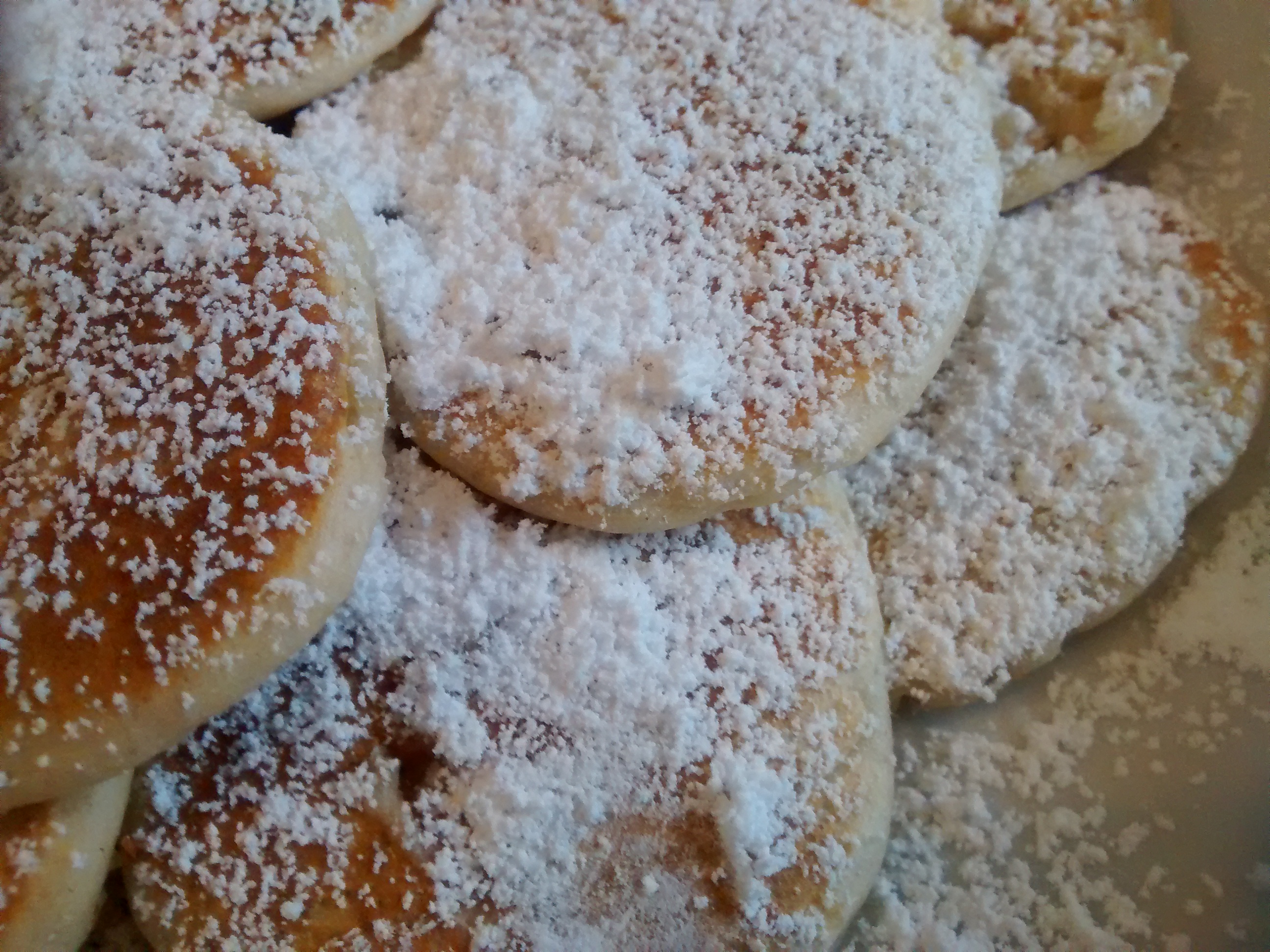
Dredge the poffertjes with lots of icing sugar.


IMG_20160729_155323367 IMG_20160729_155326899 IMG_20160729_155335265


IMG_20160729_161532512_HDR
Using a Cast Iron Frying pan


IMG_20160729_161517656_HDR


IMG_20160729_162716300 IMG_20160729_163631458 IMG_20160729_163635244


Canadian Alternative!

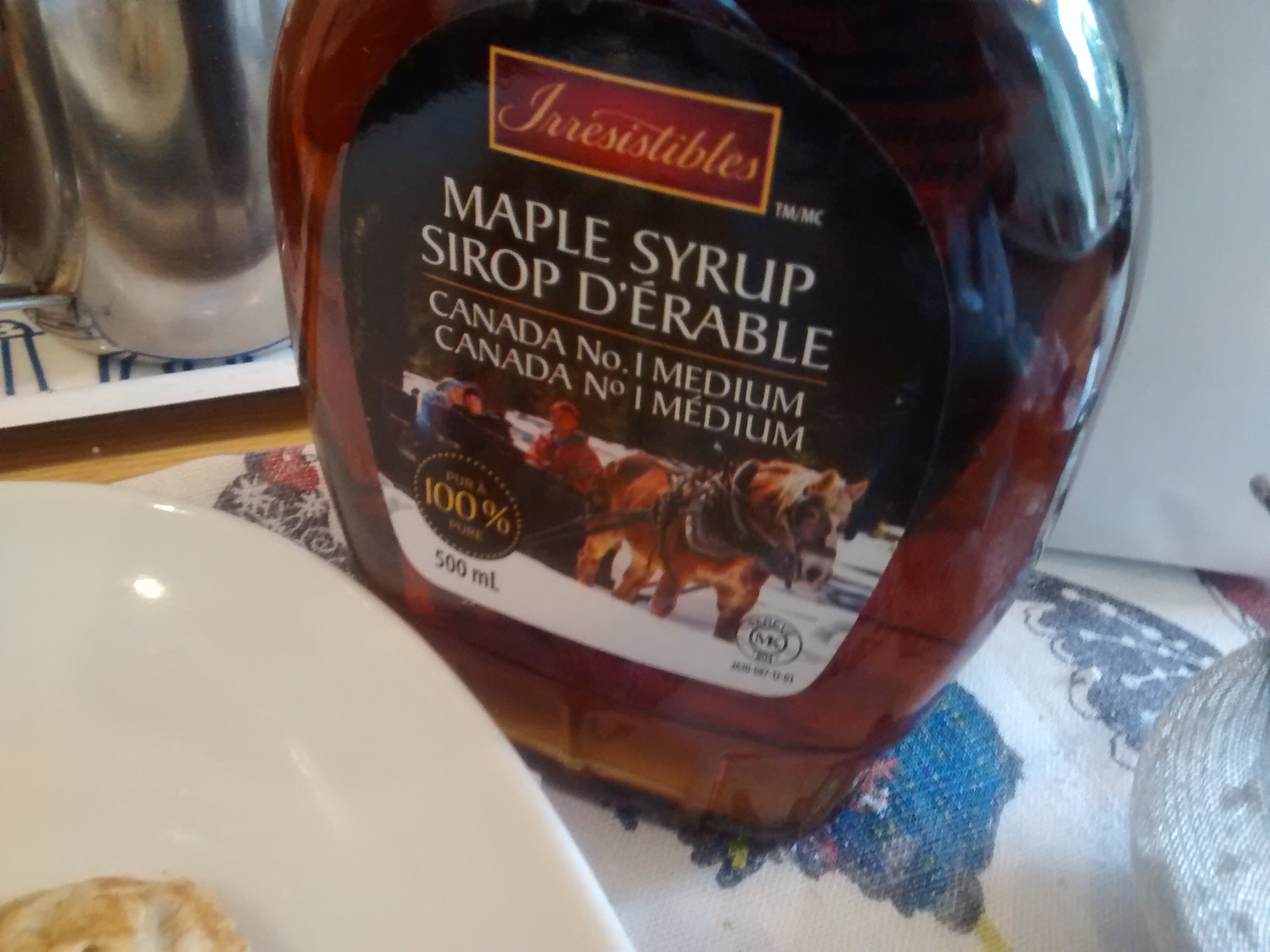
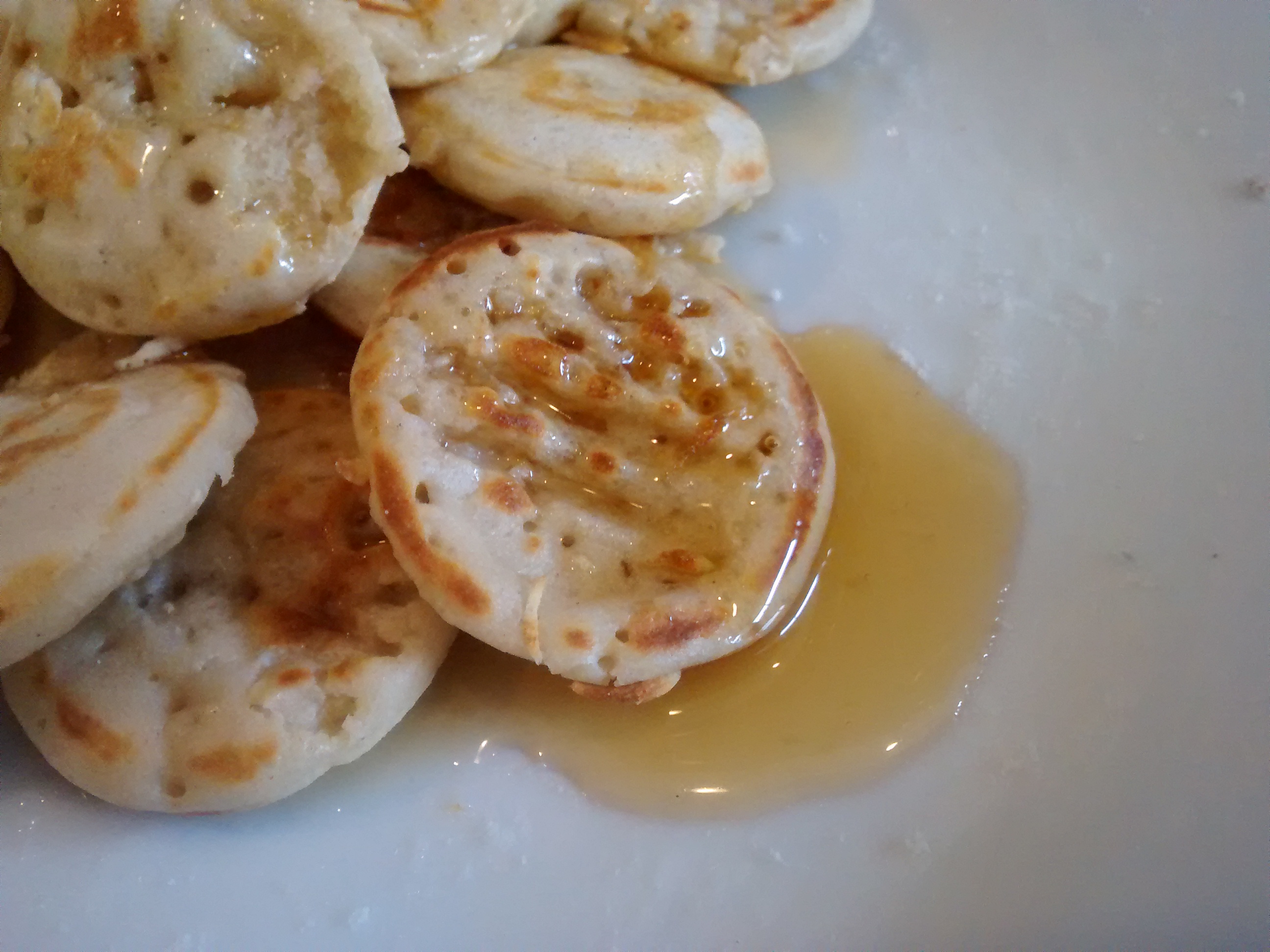
One of my friends who now lives in Canada brought me a large bottle of maple syrup on her last visit and I tried this over the poffertjes instead of the icing sugar – they were delicious.

IMG_20160729_161009545


IMG_20160729_161041541


Palm Sunday & Holy Saturday

Palm Sunday is the Sunday before Easter and marks the beginning of Holy Week.

Palms are blessed in church on this day to commemorate Christ’s entry into Jerusalem.

Of course palm trees do not grow in Poland and so other plants are substituted. Often pussy willow  is used as the catkins are usually out around this time. My mother always called pussy willow – palma – the Polish for palm.


Picture12


Twigs For Sale in the Old Square in Kraków


Picture11

Palms are also made from  dried grasses and corn which are often dyed to make them colourful or from coloured paper which is rolled and the edges cut to make a fringe.

IMG_20160317_084252377_HDR


IMG_20160317_085832182


IMG_20160317_084304081

In many villages the farmers would make huge palms for the procession completing with each other to see who had the biggest and best.

The Main Square in  Kraków – Decorated with Large Palms


It is still Lent in Holy Week so the food eaten is simple and often meat, butter and egg free. Most baking and cooking done now is to make food to eat at Easter.

As well as going to church services it is a time for houses to undergo a massive clean-up especially inside.

Holy Saturday is the last day of Lent – the day before Easter.

This is the only day in the Catholic year on which Mass is not celebrated.

In Poland there is the tradition on this day to have the food for Easter blessed.

This has its roots in the early medieval church in the 12th Century and the food would have originally  been just bread and eggs.

In times past in villages the priest would have gone around to people’s houses and blessed the food there. Nowadays people bring a basket of food to the church and the food is blessed with Holy Water and is then taken home and not eaten till the Easter Sunday Breakfast.

Once blessed this basket is called święconka meaning  that which has been blessed

The basket is lined with a cloth – often white linen and sometimes embroidered.  A white linen cloth is used to cover the basket. These cloths represent the white shroud in which Jesus was wrapped.

What goes into the basket depends on several factors but hard boiled eggs and bread are usually present. Everything in the basket has a symbolic meaning.

Eggs –  Christ’s Resurrection – a symbol of life.

Bread – Christ as the Bread of Heaven.

Salt –  Preservation & Purification & Zest for Life

Horseradish – The Harsh & Bitter sacrifice of Christ.

Cooked Meat & Sausage – Joy & Abundance of God’s mercy.

Babka – The risen  dough  – this represents the Risen Christ.

Shaped Lamb (butter/cake/bread) – Christ – The Lamb of God -(see Lamb Bread)

Cheese – Moderation.

Butter – End of Lent.

Getting a basket ready to take to Church

IMG_20160317_091427426 IMG_20160317_091412273

IMG_20160314_121021117

IMG_20160314_121012463


IMG_20160209_170105296

IMG_20160302_063114078


IMG_20160314_121030337


IMG_20160301_080227533


Picture33 Picture23


See Babka


IMG_20160314_121136387


IMG_20160314_121150500


People coming & going to church in Kraków with baskets of food.


Food for sale for Easter in Kraków.

Picture17

Picture22

The special meal at Easter in Poland is the Easter Breakfast –  although it is a lot later than a normal breakfast being usually around 11am

This meal is a cold buffet and includes the food that was blessed in church on Easter Saturday.

The hard boiled eggs are cut up into quarters or eighths and they are shared between everyone present  at the start of the meal.

POSTSCRIPT

Since posting I received the following photographs from my friend in Leeds who is The Director of the Polish Saturday School.

Sugar Lambs to go in the basket for blessing.


Salt Dough Lambs – made for the Easter Fair


à la Polonaise

Polish Style

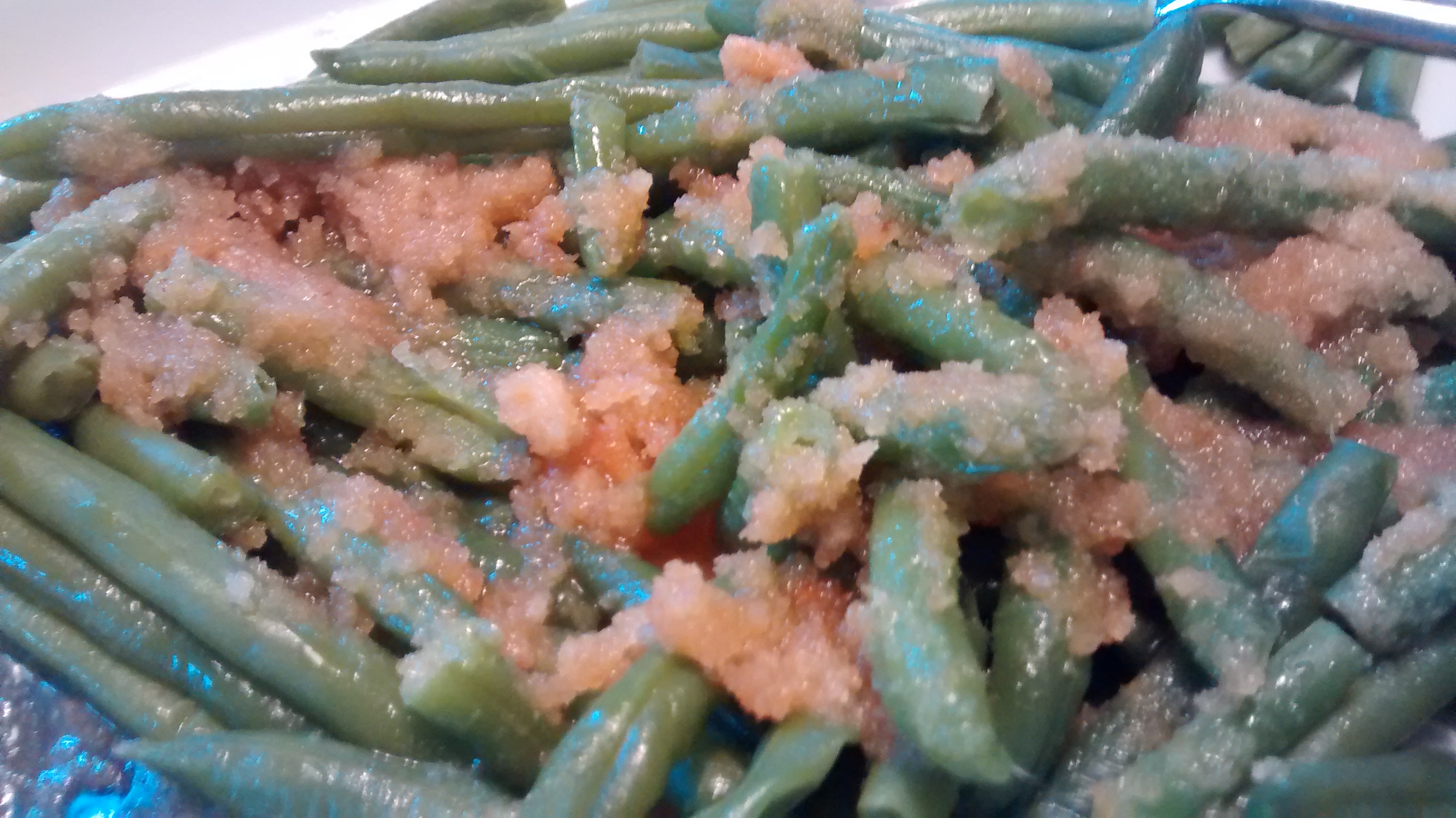
I was well into my 20s before I realised that there was a special French culinary phrase to describe, what to me, was just the regular topping that my mother and aunties put onto certain cooked vegetables.

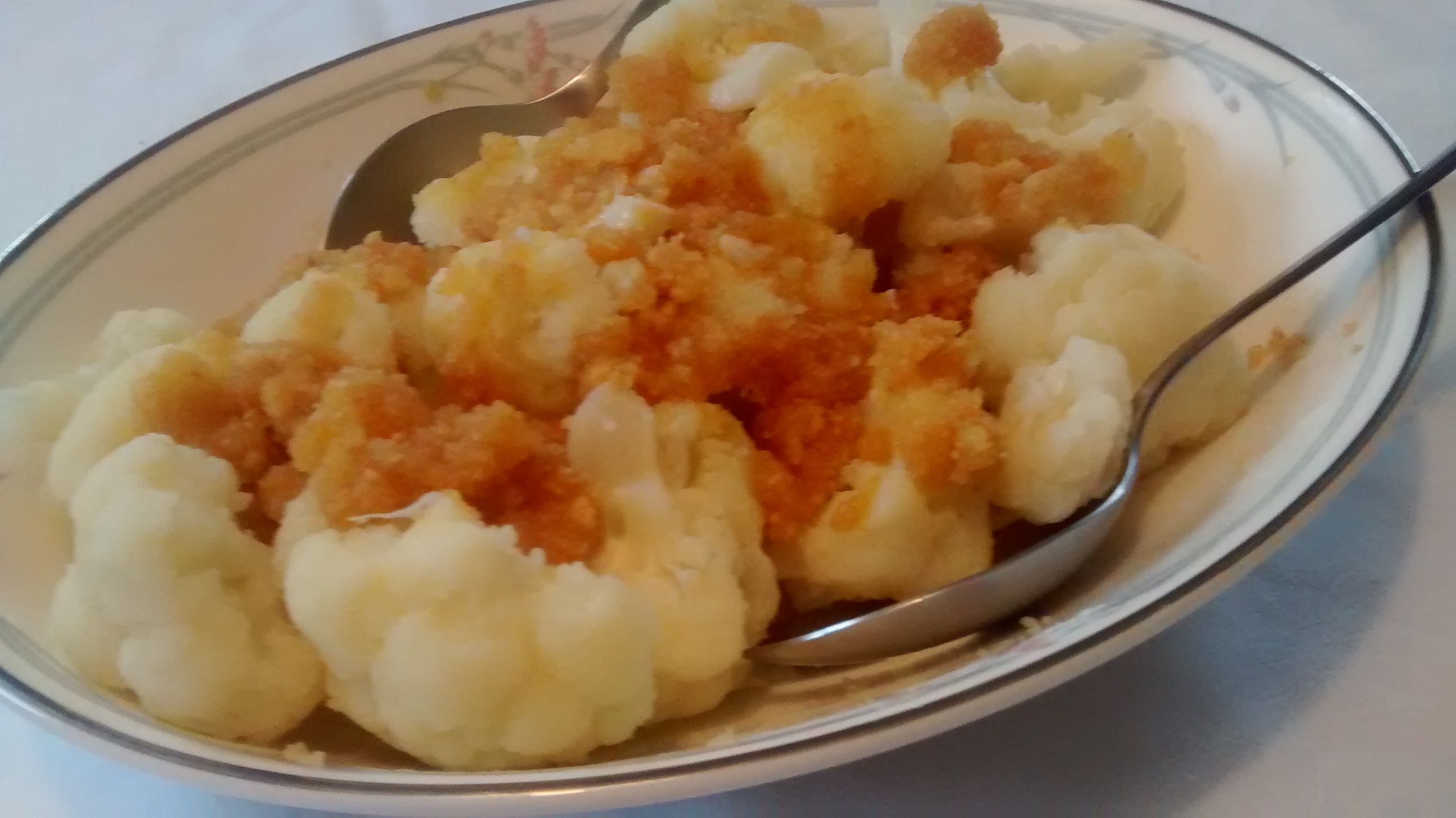
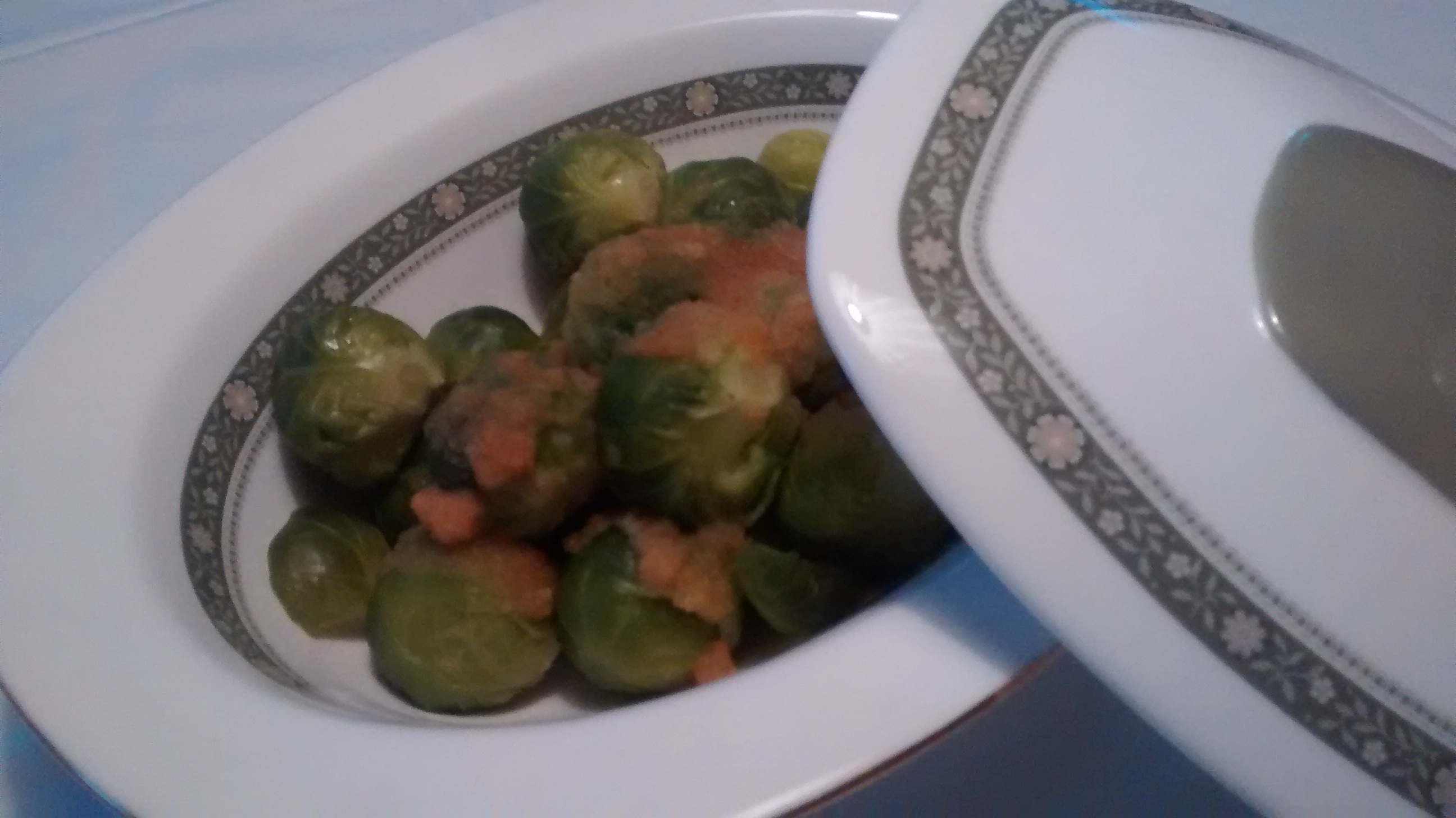
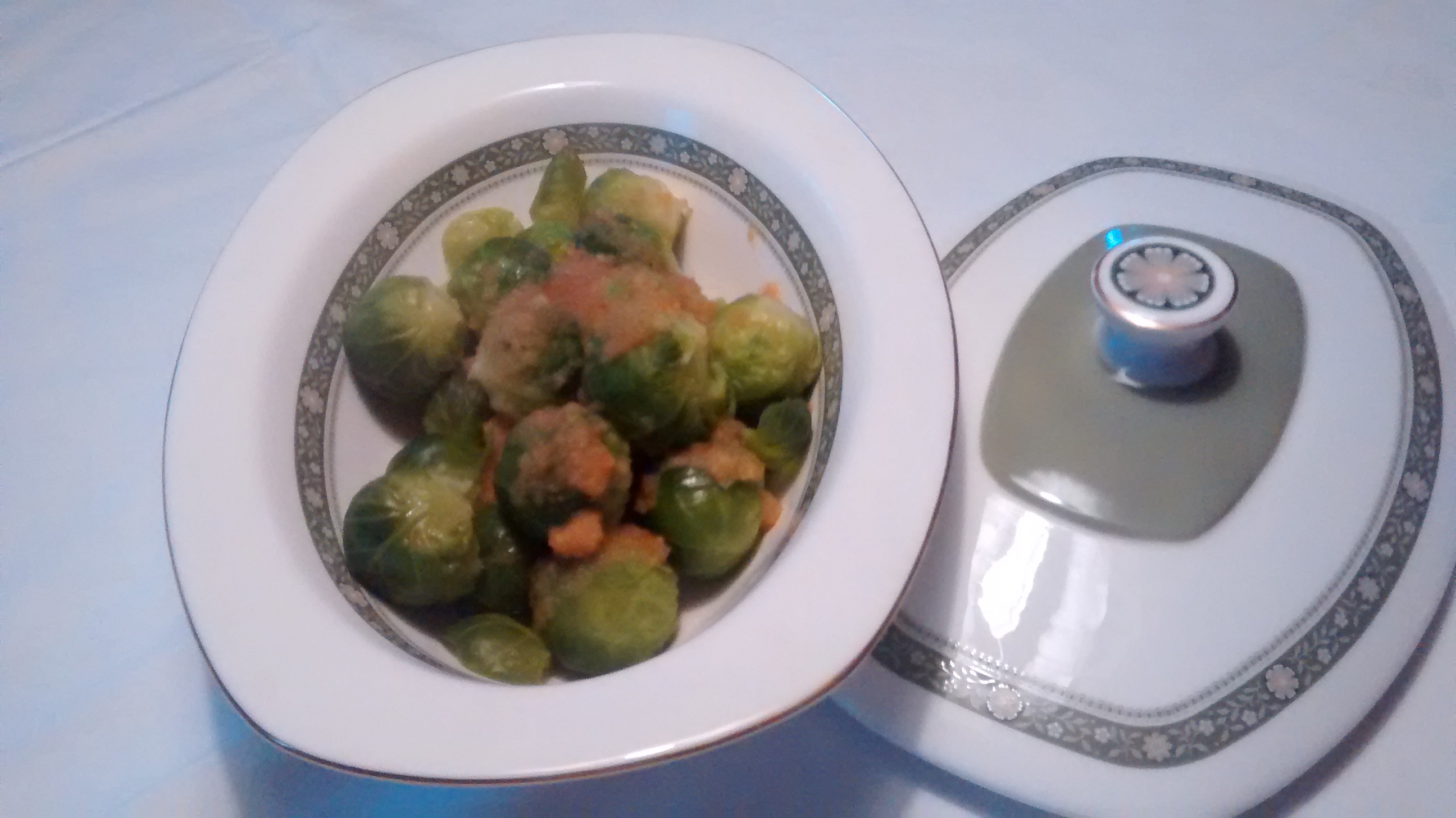
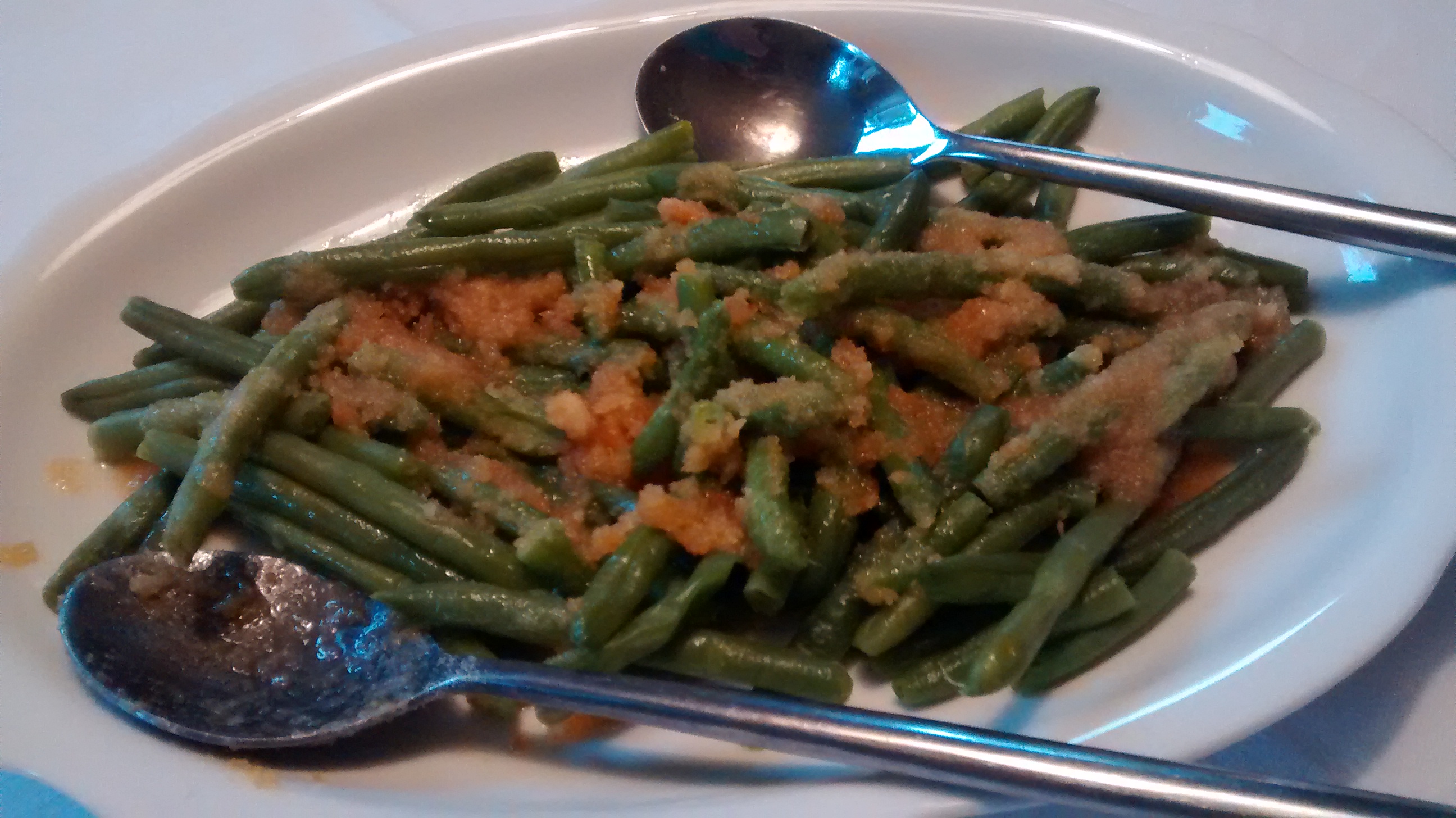
Within my family I had never been served cauliflower, Brussels sprouts  or whole green beans without a lovely crispy buttery breadcrumb mixture.

I have not discovered when this term was first used in France but some sources think it might have come into use in the early part of the 19th century when many Polish political émigrés came to France and in particular Paris.

Method for the Vegetables

Cook your cauliflower, Brussels sprouts or whole green bean in whatever way you like best.

You can if you wish cook the cauliflower whole – this can have quite a good effect when served.

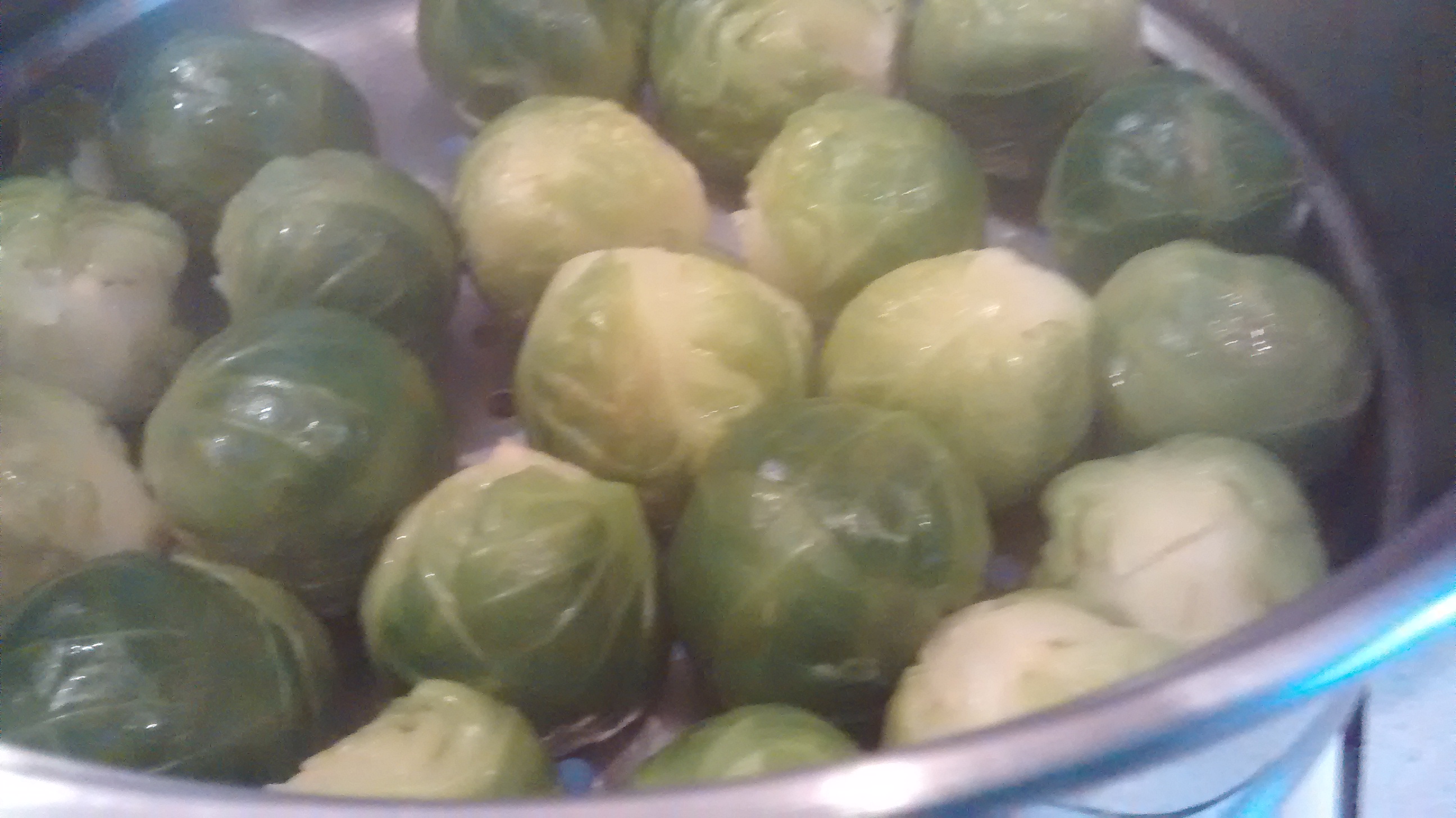
I like to steam the vegetables as I find I can get them just right – cooked – but still with a bit of bite this way.

IMG_20151107_162341255(1)
Steamed Brussels Sprouts

Place the cooked (and drained if necessary) vegetables in a serving dish.

Pour the buttery topping over the vegetables.

You will get a buttery crunchy taste which is a contrast to the vegetables.

Method for the  à la Polonaise topping

IMG_20150817_175613101
Butter & Breadcrumbs
IMG_20150917_100045291
Preparing the Breadcrumbs


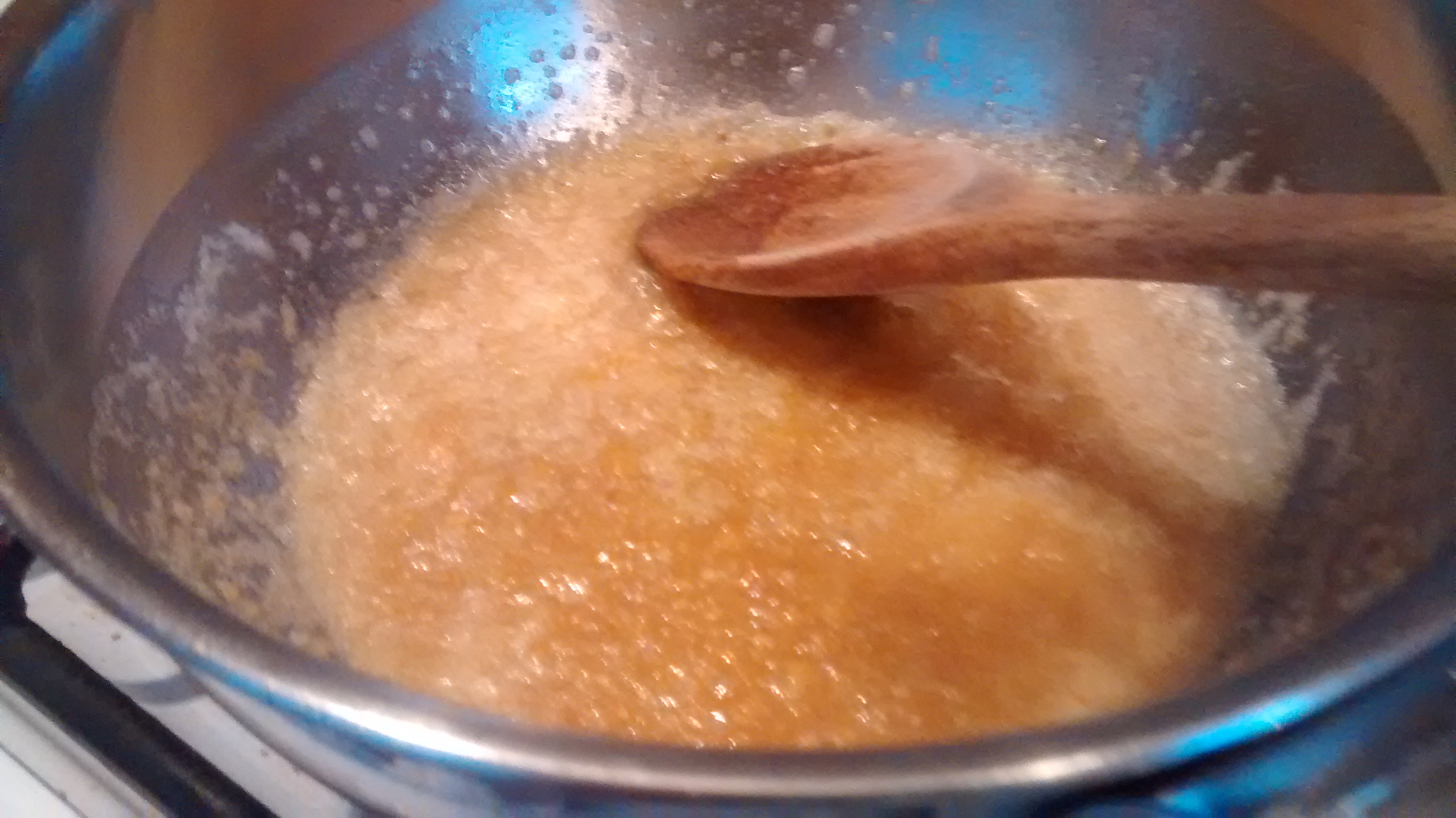
The topping is made by melting in a saucepan 2 to 3 tablespoonfuls of butter.

(If you use unsalted butter then add a pinch or two of salt)

IMG_20151103_130608867
Melting the Butter


Add to this around 2 tablespoonfuls of dried breadcrumbs and keep on the heat and stir for a few minutes.

IMG_20150917_100045291
Preparing the Breadcrumbs
IMG_20151107_162253272
Butter & Breadcrumbs


Pour the buttery mix over the vegetables.

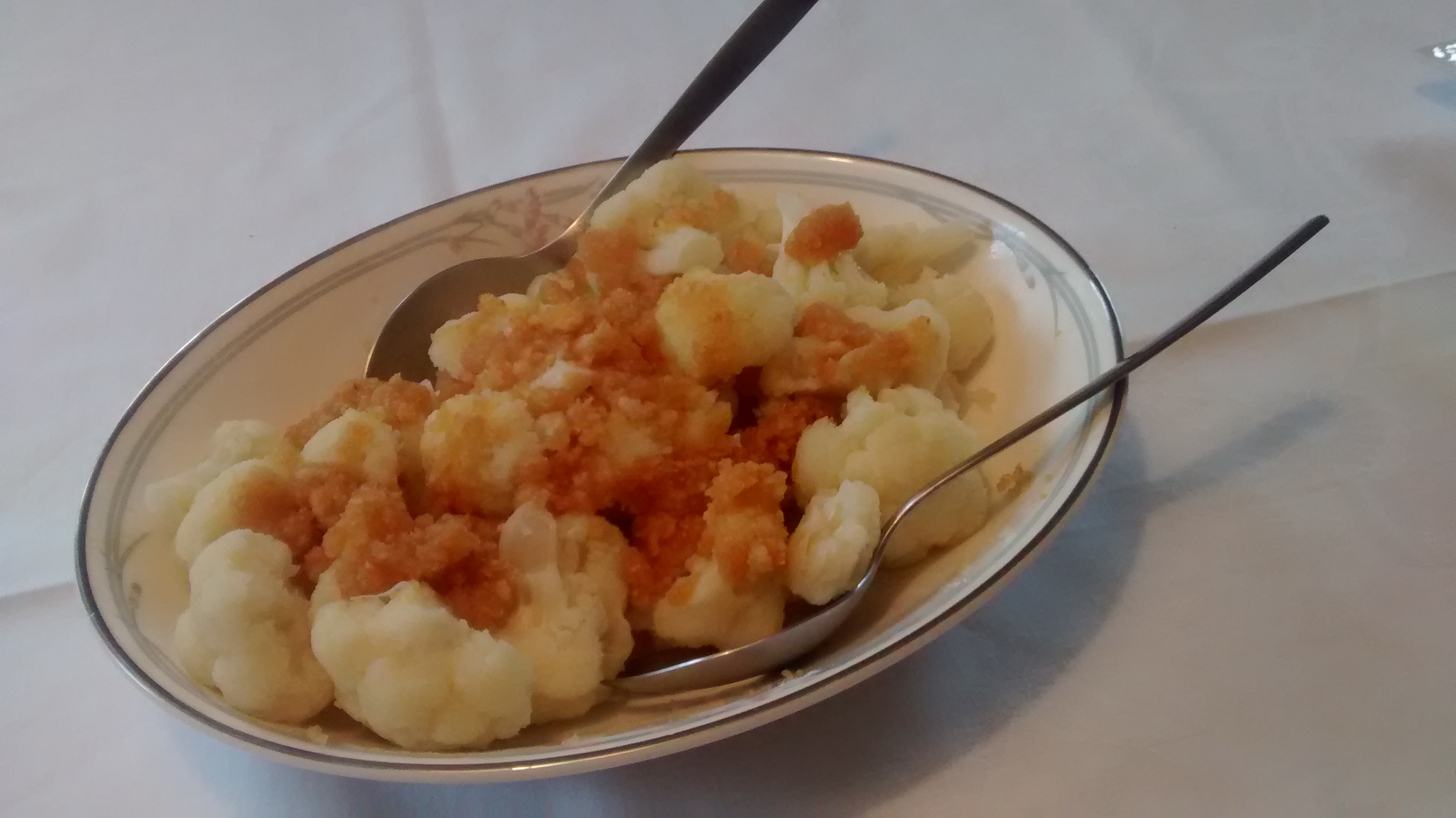
Cauliflower à la Polonaise – served in a Royal Doulton serving dish. The pattern is Carnation produced from 1982 to 1998.

IMG_20150817_180508527

IMG_20150817_180458373

Brussels Sprouts à la Polonaise – served in a Royal Doulton serving dish. The pattern is Roundelay produced from 1970 to 1997.

IMG_20151107_162502658

IMG_20151107_162635204

IMG_20151107_162553021

IMG_20151107_161529233
Royal Doulton – Roundelay

Whole green beans à la Polonaise

IMG_20151103_131204846

IMG_20151103_131159481

Added Note

IMG_20150902_161945936

IMG_20150902_161243414

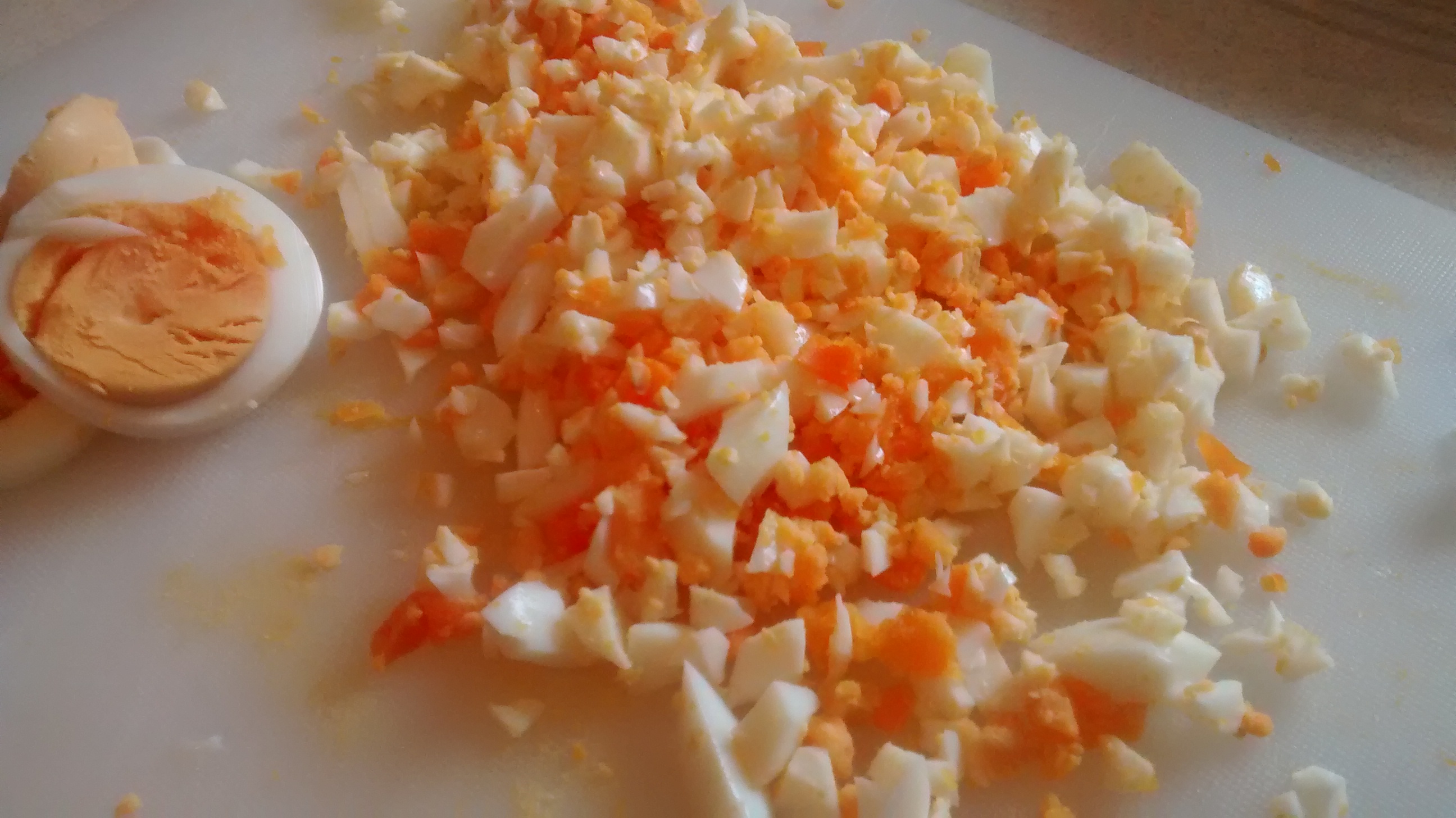
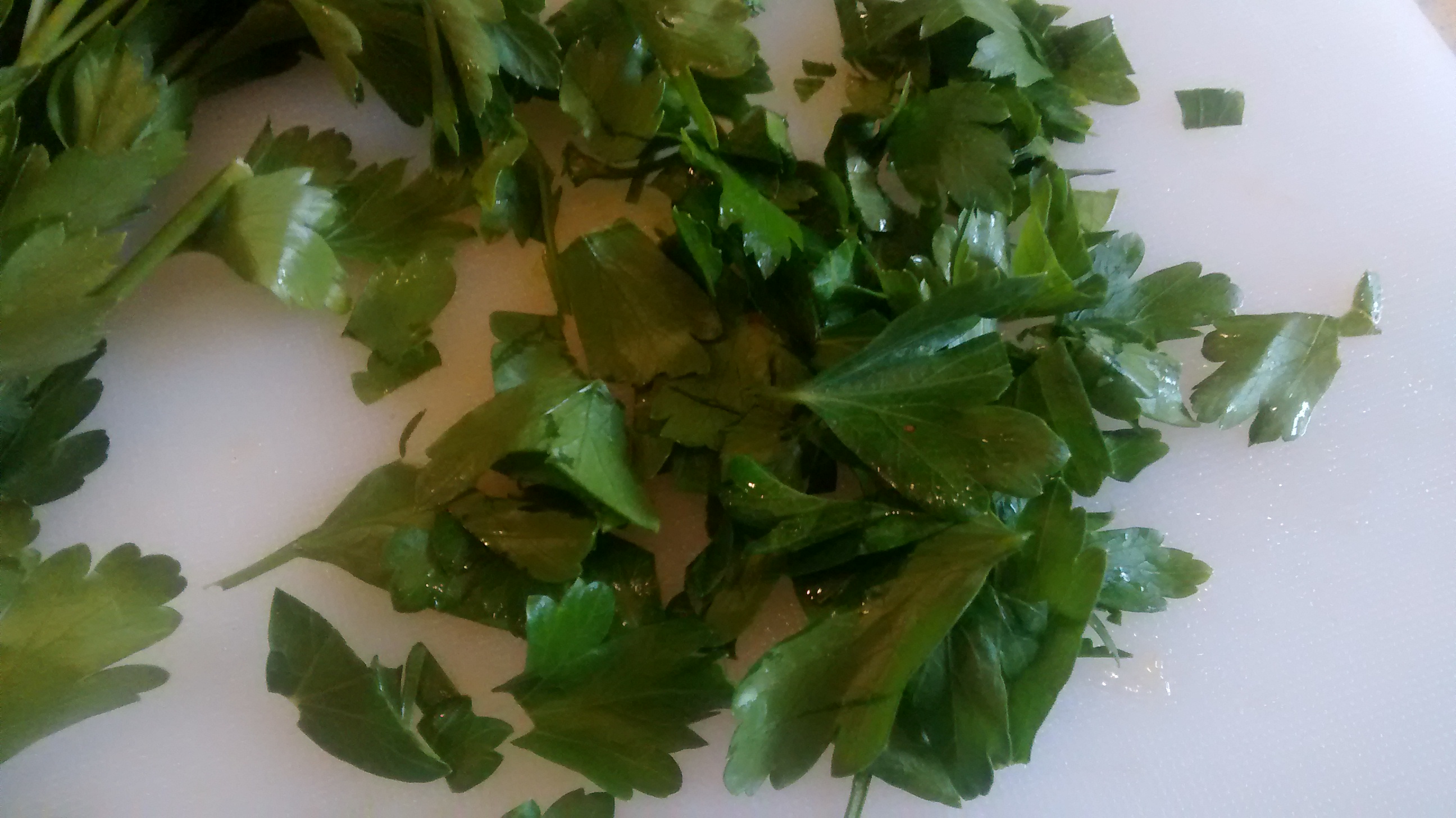
Some cookery books say that chopped hard boiled eggs and chopped flat leaf parsley are added to the topping.

Personally I have not found this to be usually so, although chopped hard boiled eggs are added to many salads and to certain soups in Poland and chopped flat leafed parsley is very often used as a garnish.

Breadcrumbs – Bułka tarta

Breadcrumbs are needed for many recipes in Polish cookery and especially in the topping à la Polonaise.

So I always make sure I have some in my store cupboard.

Bułka tarta is usually translated as breadcrumbs  –  they are the  dried and then ground or grated crumbs from white rolls (bułka is a bread roll) or white (wheat) bread.

Bread in Poland is normally made from rye flour or a mixture of rye and wheat flour.  White bread and rolls were viewed as a luxury in days gone by.

I usually make my own breadcrumbs as in the past the ones you could buy in England were often dyed orange and I did not like them at all.

Nowadays there are many Polish shops and Polish bakeries that sell these dried breadcrumbs.

I have used them and they are good.

If you want to buy them then

Bułka tarta

is what you are looking for – usually sold in 500g bags.

I still make my own as they are a good use of any type of white bread you have left over and the crumbs keep for ages in an airtight box.

Making Breadcrumbs

You need white (wheat) bread – either slices from a loaf or bread rolls – cut in half.

Put your oven on its lowest setting – on mine this is GM1

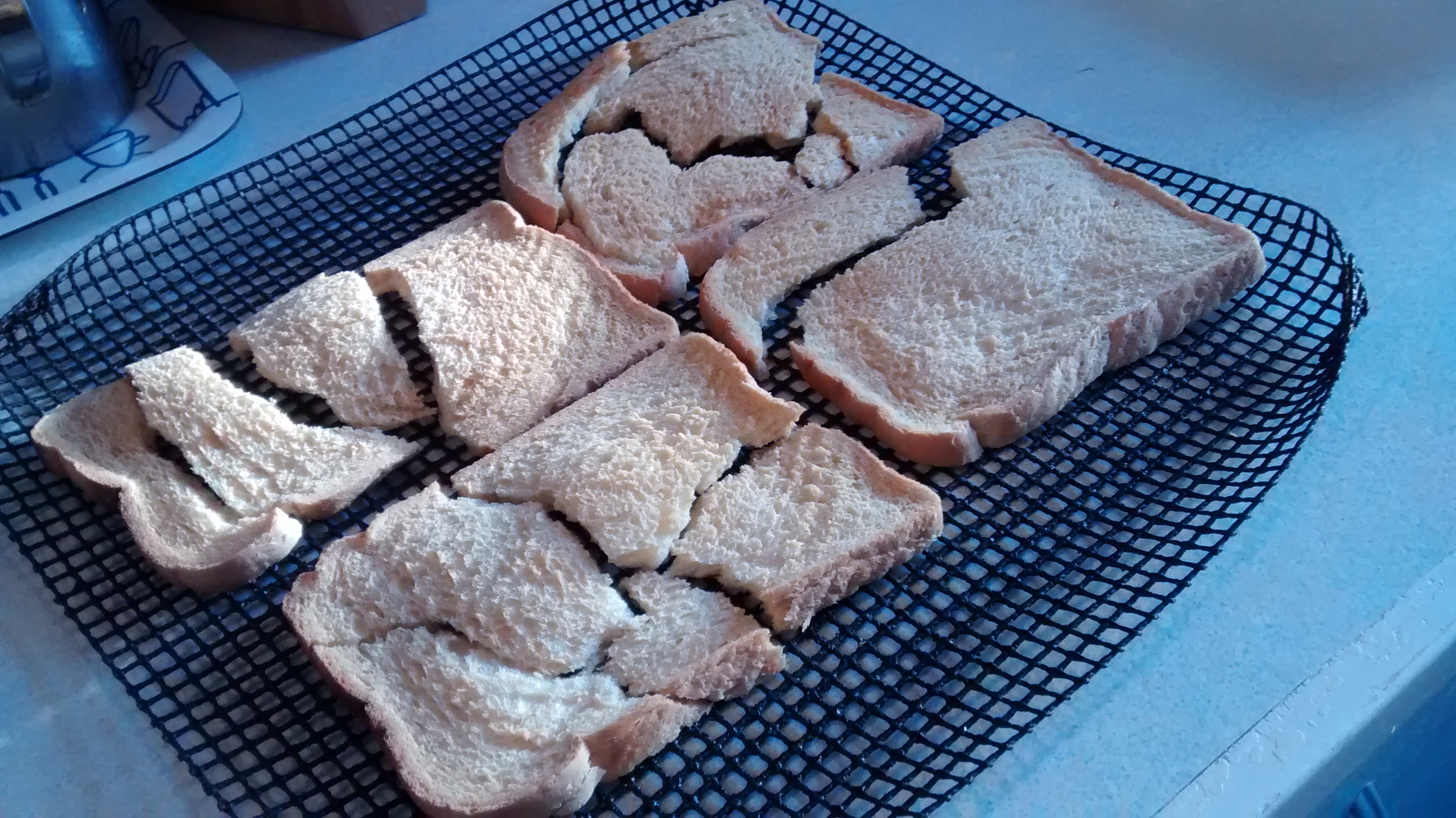
You can put the slices of bread directly on the oven shelves or you can use a silicone mesh sheet which is good as the moisture which come off the bread does not condense under the bread and it is easier to remove the dried bread from the oven when it is ready.

Leave the bread in the oven for an hour or more – it wants to be a golden brown.

IMG_20150917_074918516
Lightly Dried Bread – It can be a darker brown if desired

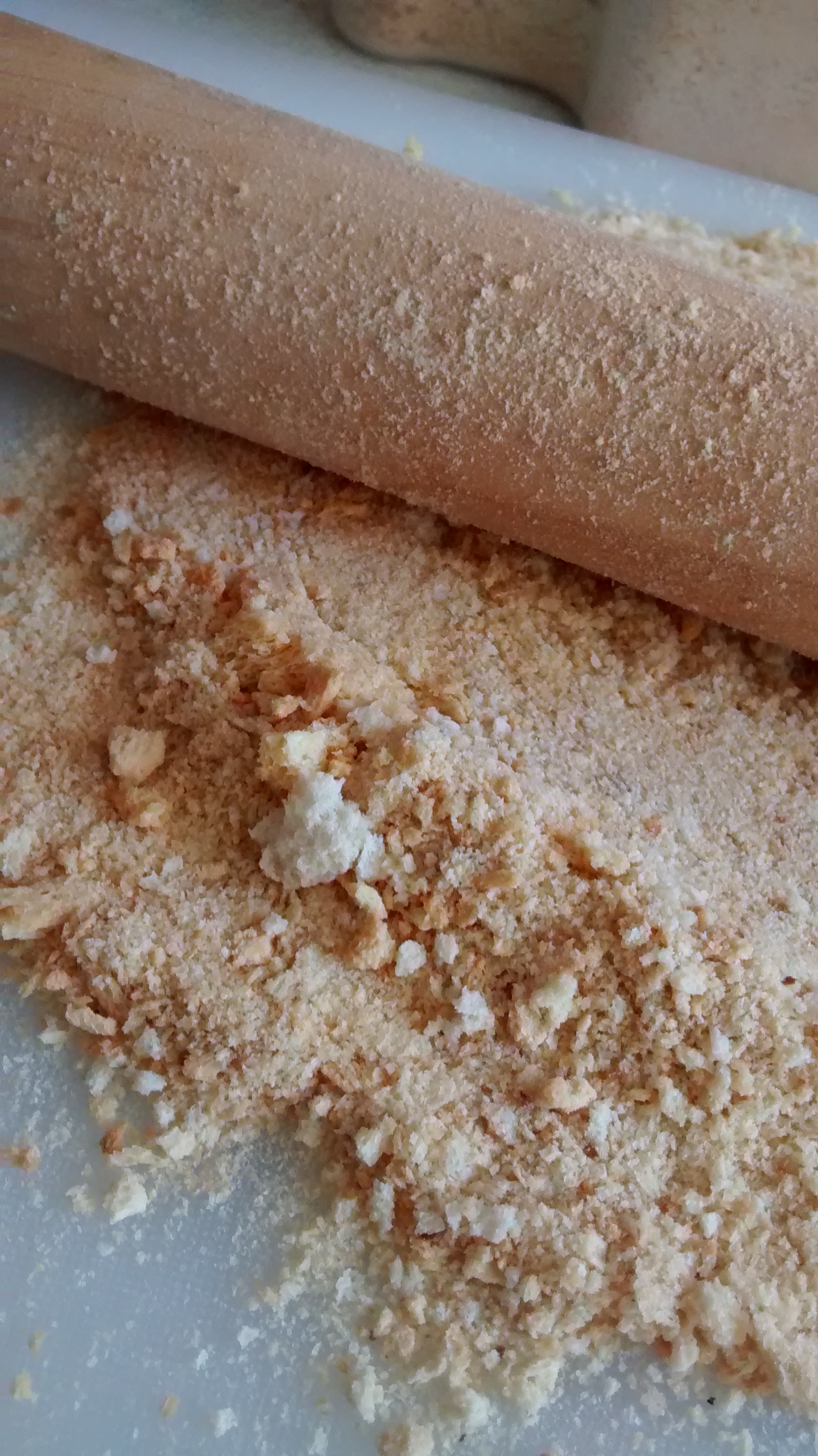
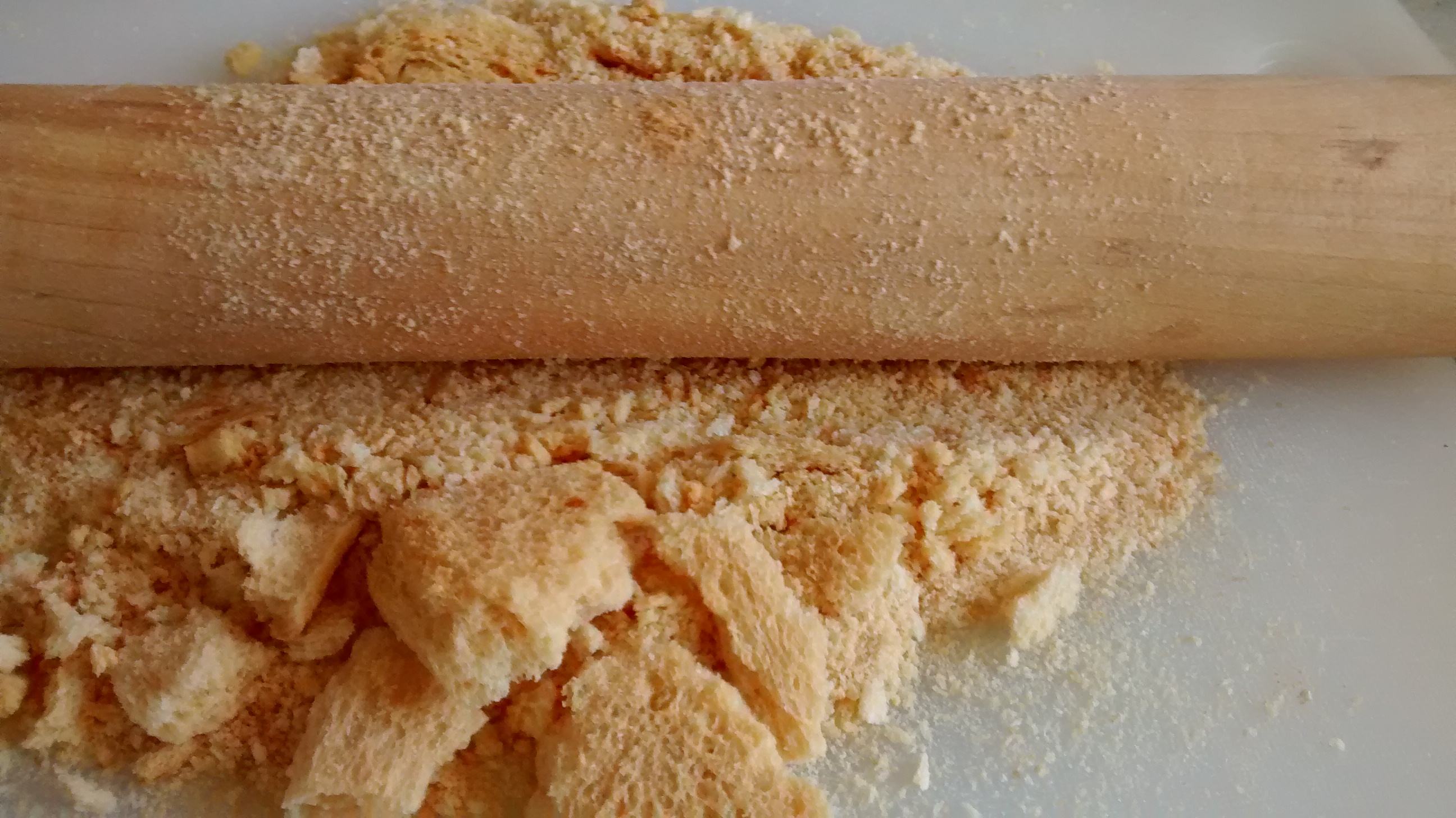
Put the dried bread on a chopping board and use a rolling pin to crush it.

IMG_20150917_100045291

IMG_20150917_095806070

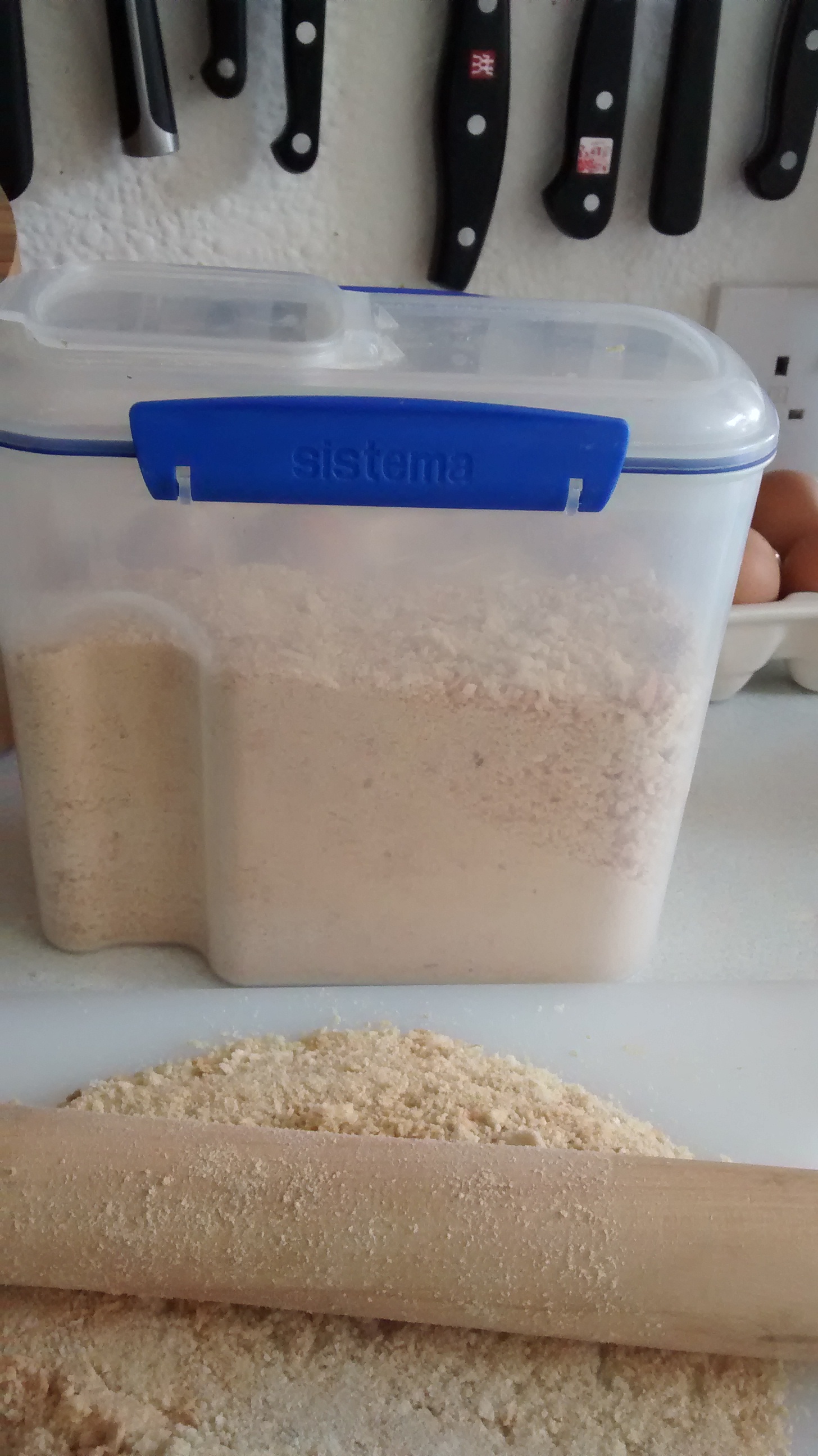
I store my breadcrumbs in an airtight plastic box – I use  Sistema™ boxes which are made in New Zealand.

IMG_20150917_100015472

Poles Adopt The Potato and Make it Their Own!

IMG_20150910_122328634

There are so many recipes and uses for the potato in Poland you would think that this was the country it originated in.

IMG_20150910_122355675

There are dozens upon dozens of recipes for potatoes, as part of a meal where it is very recognisable as potato such as when boiled or mashed, as a pancake or as a dumpling, or cold in a salad, or hot in Polish potato soup. As well as that potato starch is used as a thickener in savoury and sweet dishes and to make cakes and pastries. Potatoes have also been used to make  wódkavodka and often  samogonka -home brew vodka.

The potato plant originated in the Andes mountains of South America and was cultivated by the Incas. The part we eat is the tuber, which stores starches and sugars, of the plant Solanum tuberosum.  It is related to the deadly nightshade and the tomato (also from South America)

The Spanish Conquistadors came into contact  with the potato in around 1537 and it came across the Atlantic to Europe in around 1570.

King Jan III Sobieski grew potatoes on his estates in the 17th century – from tubers he sent back after the Battle of Vienna which was in 1683.

In the 18th century around 1760 – King August III – had potatoes on his estates and it became a fashionable vegetable.

Potatoes became part of the diet alongside kasza – porridge/groats/grits – made from buckwheat, barley or millet.

There are two words for potato in Polish – kartofel  and  ziemniak

Kartofel  is from the German word kartoffel – this was the word my parents used.  This German word itself comes from the Italian word tartufuli which means truffle like, whereas the Italian word for potato is patata.

Ziemniak  comes from the word ziemia which means earth or ground – so ziemniak means something which is from the earth – this word seems to be more popular nowadays.

The potato is well suited to grow in cold  waterlogged and often frozen  soil – which is often the case in Poland.

Care must be taken when storing potatoes so they do not  get frozen or the starches change to sugars and the potatoes will quickly go rotten.  I remember my father saying that that they stored potatoes in pits in the ground in their barn.

In post World War 2, Poland has became one of the top three potato producers in the world.

Look out for many future posts with potato recipes – below is a preview of some of the photographs

IMG_20150811_165238337

IMG_20150902_132223352

IMG_20150806_194007779

IMG_20150907_170224421IMG_20150811_171511857

Polish Salads – All Year Round – Both Raw and Cooked

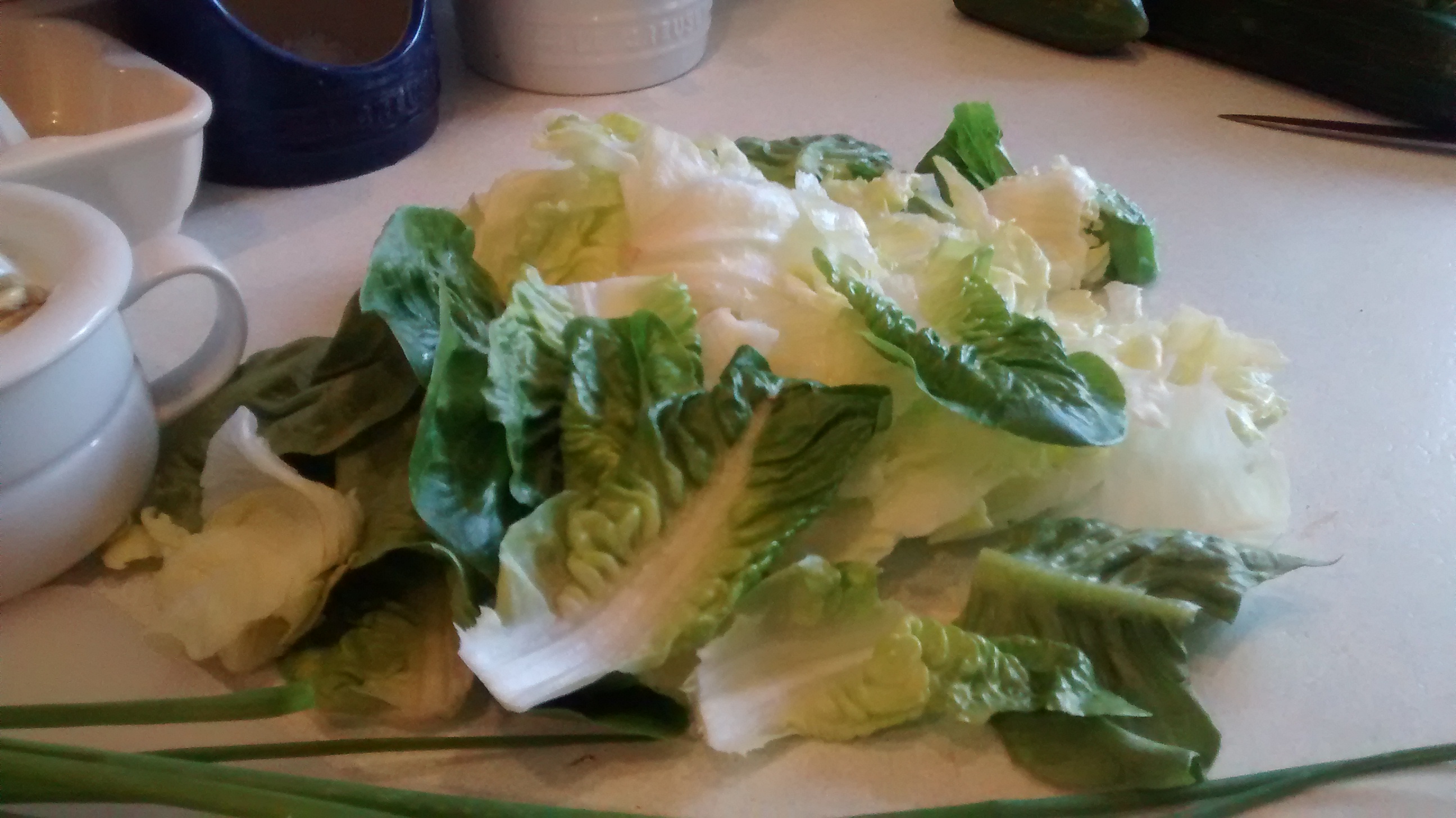
Sałata is the Polish word for lettuce.

IMG_20150808_173032852

Sałatka is the Polish word  my parents used for salad.

However when I visited Poland for the first time I realised that there is another word for salad and that is – Surówka.

Surówka – this come from a Polish word meaning raw.

There is a distinction between the two in that a sałatka is a dish served cold of mainly cooked vegetables and a surówka is a dish served cold of mainly raw, pickled or fermented vegetables.

Poland 2 115
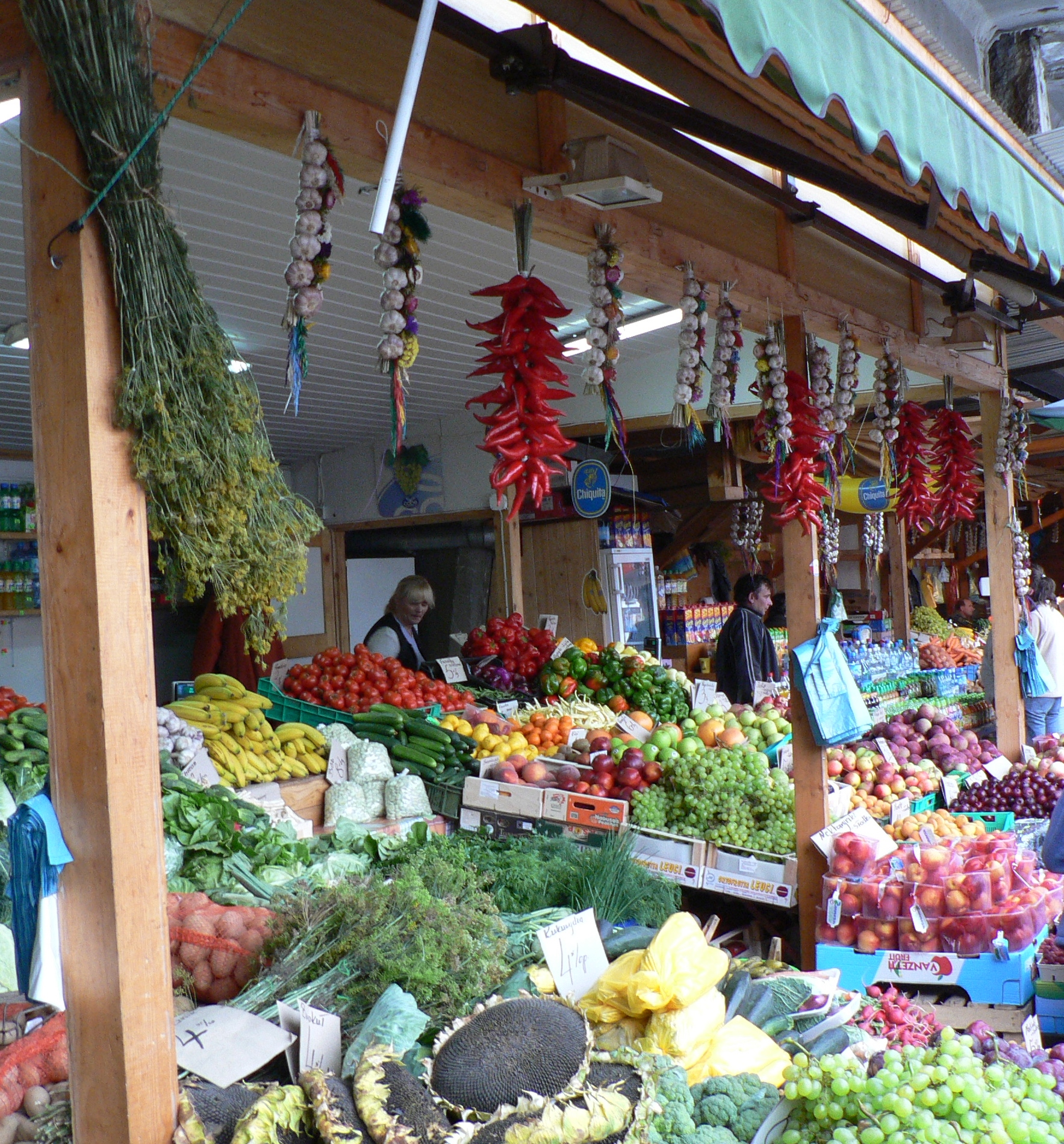
Some ingredients for salads for sale

As it is hard in English to differentiate between the two – I will be writing about many classic cold Polish vegetable dishes and will be calling them all salads.

Fruit, cold meats, fish, either cooked or pickled, and hard boiled eggs also feature in these salads.

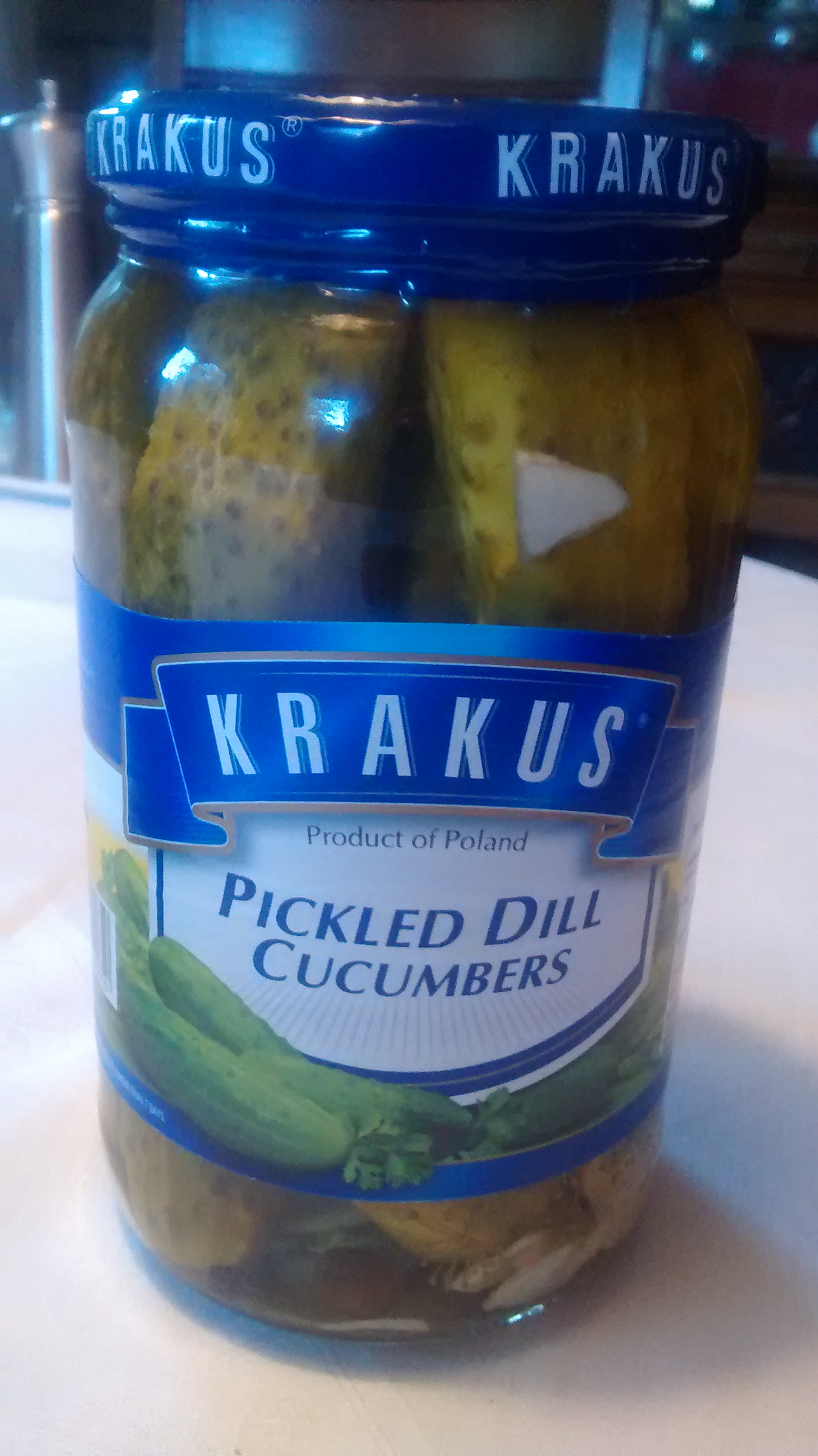
A salad accompaniment with a meal is often more usual than hot cooked vegetables and a tomato or gherkin salad is normal fare for breakfast.

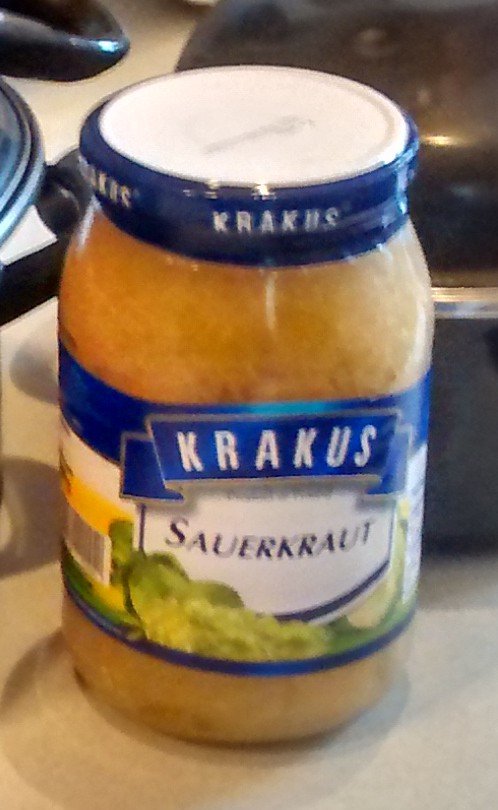
Vegetables that have been pickled, fermented, bottled or canned will feature throughout the year at least once a day in Polish meals.  Before widespread refrigeration this is how people preserved food for use throughout  the winter.

Old Polish houses always had cellars, the Polish word is piwnica, from the word piwo which means beer so it means the place where beer is kept.  The ones I have seen in Poland were filled with bottled fruit and vegetables as well as jams, ready to make meals and salads throughout the year.  In blocks of flats there is still in the basement level, cellar space for each flat.

My aunties said they could not imagine life without a cellar. Their cellars were filled with many jars of bottled paprika that they had prepared – what in England we call peppers or capsicums,  various mixed vegetables, cranberries and lingonberries.

IMG_20150819_064345546
Paprika – Capsicum – Pepper

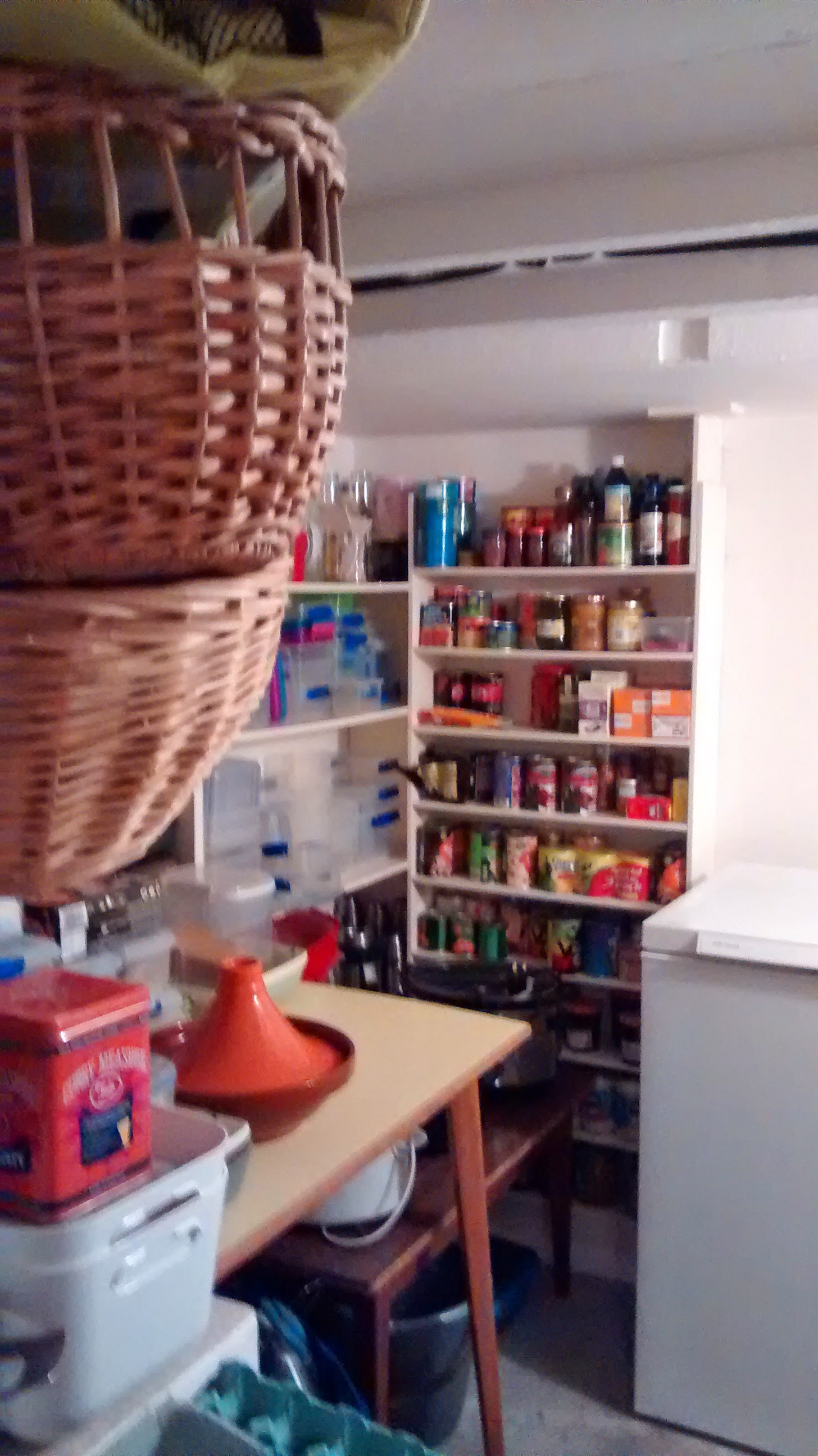
I am very lucky in having  two cellars in my house and spent a week in spring this year organising them – including an area for tinned and bought bottled vegetables ready for making salads amongst other things.

Cellar – Mainly for Food

IMG_20150128_074150351

IMG_20150128_074119449

IMG_20150128_074103642

IMG_20150128_074219079

Cellar – Mainly for Drinks

IMG_20150827_080423772

IMG_20150827_080323322

IMG_20150827_080534068


Salad dressings

Three of the most popular salad dressings used are:

Lemon Juice

IMG_20150817_140017297
One of my cousins came to visit me a couple of weeks ago and brought me this lovely, large, glass lemon squeezer.

If lemons are scarce or expensive or for convenience in Poland you can buy packets of citric acid which you can mix up with water.

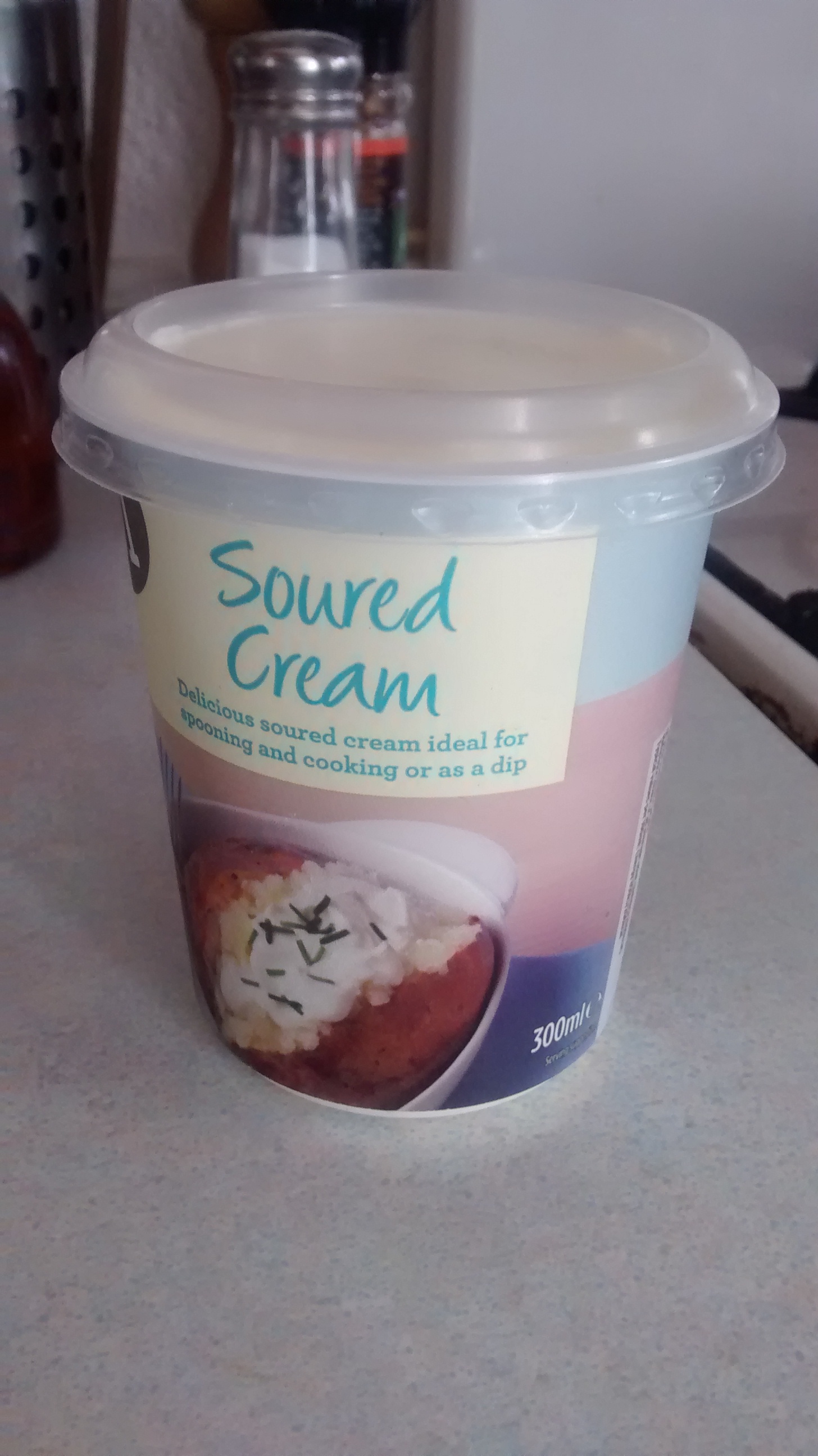
Smetana – Soured Cream

Nowadays you can find soured cream in many English stores but if there is none then lemon juice added to fresh single cream will give nearly the same result.

IMG_20150826_153257903

Mayonnaise

Although I have made mayonnaise, I tend to buy it now and my favourite is Hellmann’s – original or light (the very low fat version I think is horrid as it has a  strange taste and texture). Sometimes if making the salad ahead of time I think the original is a bit better as it does not get as watery from the vegetables but mostly I use the light version.

IMG_20150826_153305083

Vegetables waiting to be made into salads

IMG_20150806_192627173

IMG_20150723_090818508

IMG_20150711_183051570_HDR

IMG_20150719_075813054

IMG_20150806_183403685

Salad Garnishes

Garnishes  are chopped fine and sprinkled on the top of the dish of salad,  these are often: flat leafed parsley, dill, chives, the green part of spring onions and hard boiled eggs.  If none of these are available ground paprika might sometimes be sprinkled on the salad.

IMG_20150808_173117488
Spring Onions and Chives

IMG_20150828_124157431

IMG_20150804_135831841
Dill Garnish
IMG_20150828_124410565
Chopped Hard Boiled Eggs

IMG_20150828_124350022