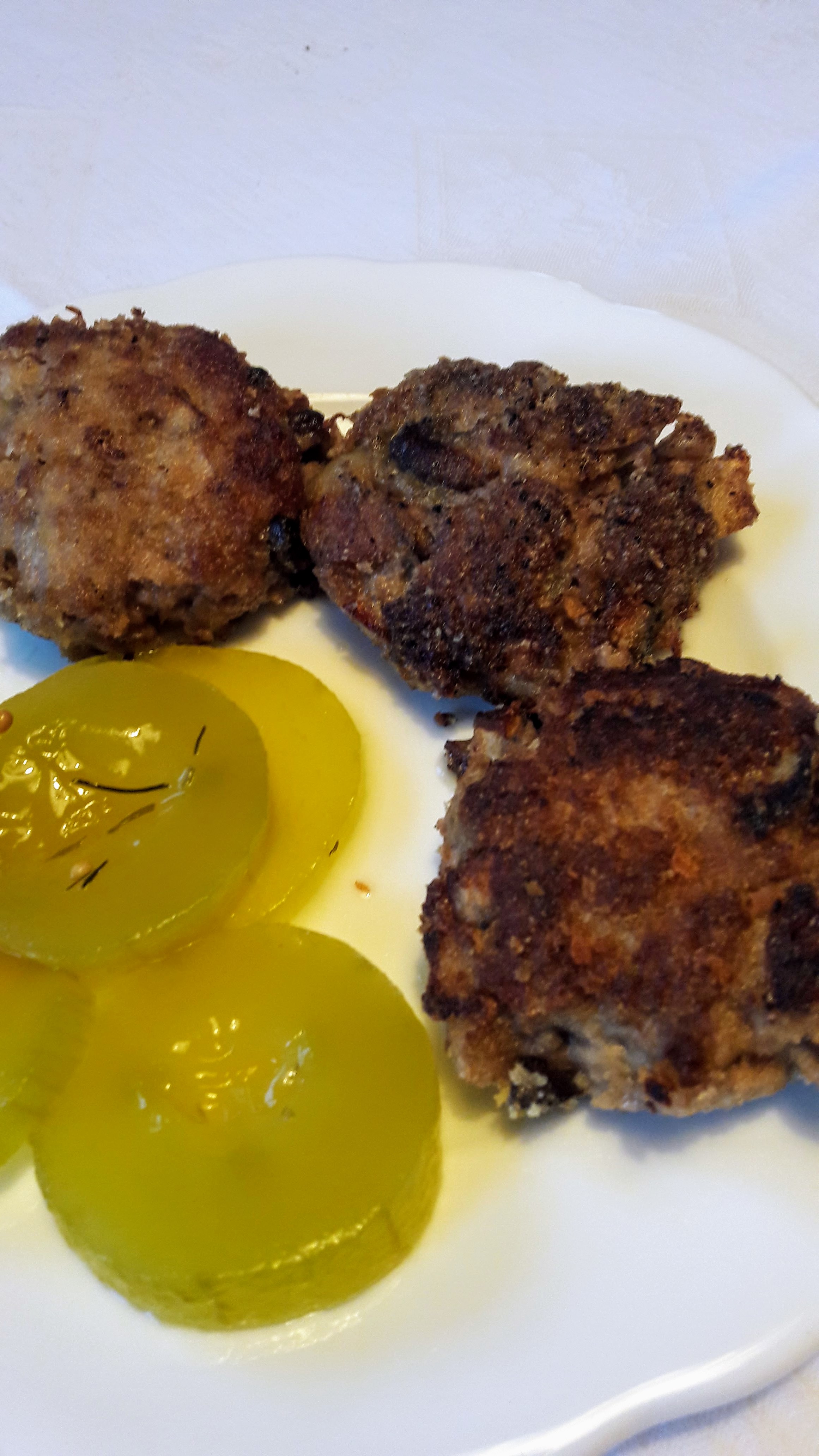
Pasztet – Pâté

Most Polish households have their own recipe for  pasztet.

Pasztet translates as pâté and is made with liver and other meats,  both cooked and uncooked, often with smoked bacon.  Left over cooked meats can be used.

Pasztet is a baked pâté – more a terrine & usually the sort of pâté you slice rather than spread. (A sort of liver based meat loaf).

Many recipes use rabbit but I have not included this as it is not as readily available but  I hope try this in the future.

Pork shoulder is good to use and this can be casseroled first in a chicken or vegetable stock or left over from a roast.

Cooked chicken can be roasted or poached once again in a chicken or vegetable stock.

It is good if you have a mincer to mince the meat, however I do not have one and have used a stick blender to blend the liver and a sharp knife to finely chop the cooked meat and bacon.

Pasztet is often cooked in a  loaf tin – but I thought my quantities looked too large for my tin and have used a rectangular Pyrex dish – 19 x 24 x 8cm.

The cooking times quoted are approximate  – it will depend on the amount of mixture and the depth in the dish.

Recipe 1

Country Style Pasztet

The original recipe used finely chopped shoulder pork – I used minced outdoor breed pork.

I used smoked streaky bacon as Polish bacon tends to be fatter than English bacon and this is the nearest.

The amounts of meats does not have to be exact.

Ingredients

  • 500g minced pork
  • 350 streaky bacon (rind removed)
  • 350 – 450g of chicken livers
  • 3 eggs
  • 3 tablespoons of dried breadcrumbs
  • 2 cloves of garlic  – chopped fine
  • 1 teaspoon of Italian herbs or marjoram
  • Salt – maybe a little but often the bacon is salty enough
  • Pepper
  • Butter for greasing the dish.

Method

  • Pre-heat the oven to GM4 – 180°C.
  • Chop the bacon into small squares.
  • Blend the chicken livers using a small blender or stick blender.

Mix all the ingredients together in a large bowl.

  • Butter the dish well.
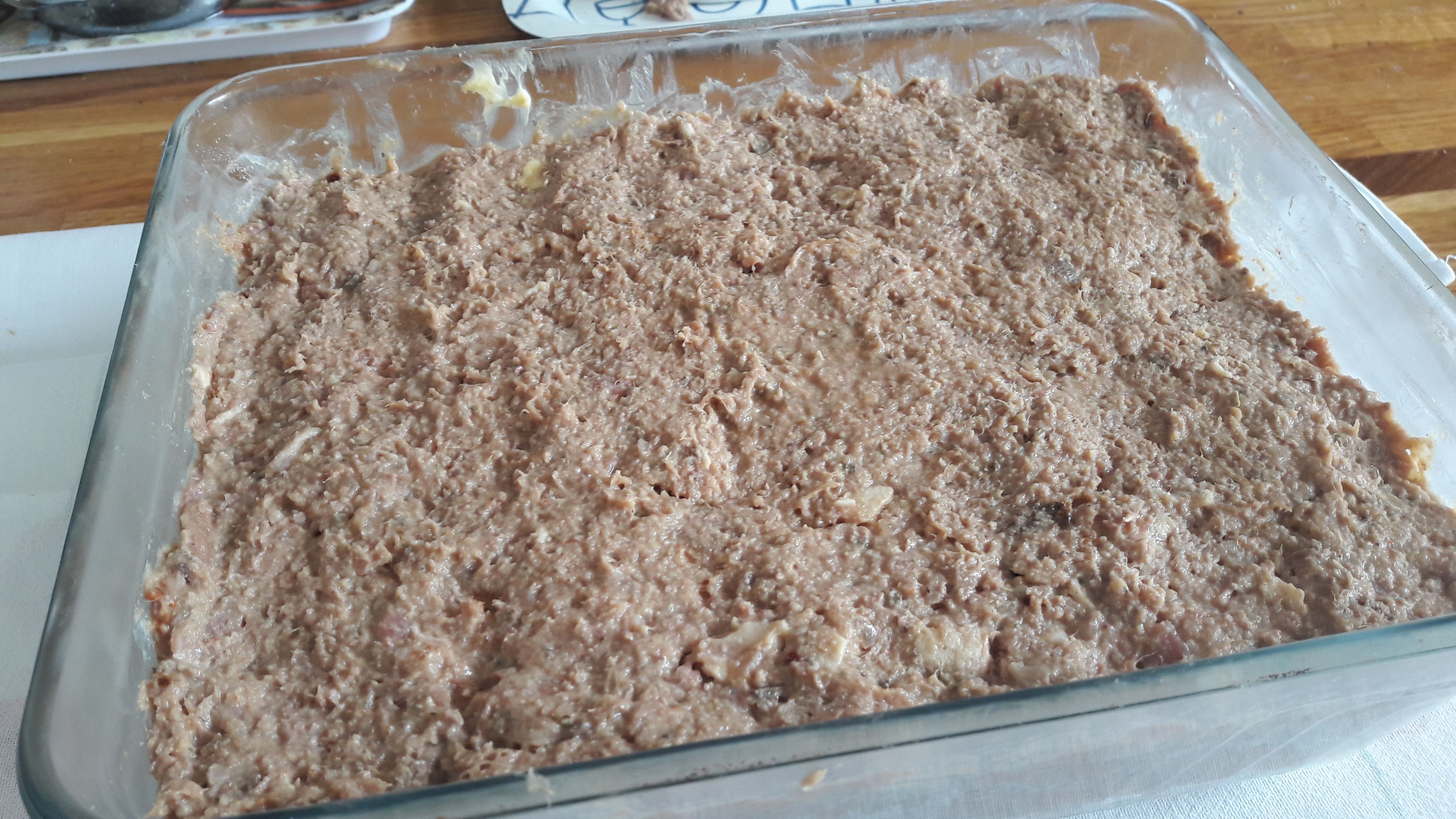
  • Place the mixture into the dish and smooth down the top.
  • Cover the dish with foil.
  • Place the dish in a roasting tin with added water.

Cook for around 70 minutes.

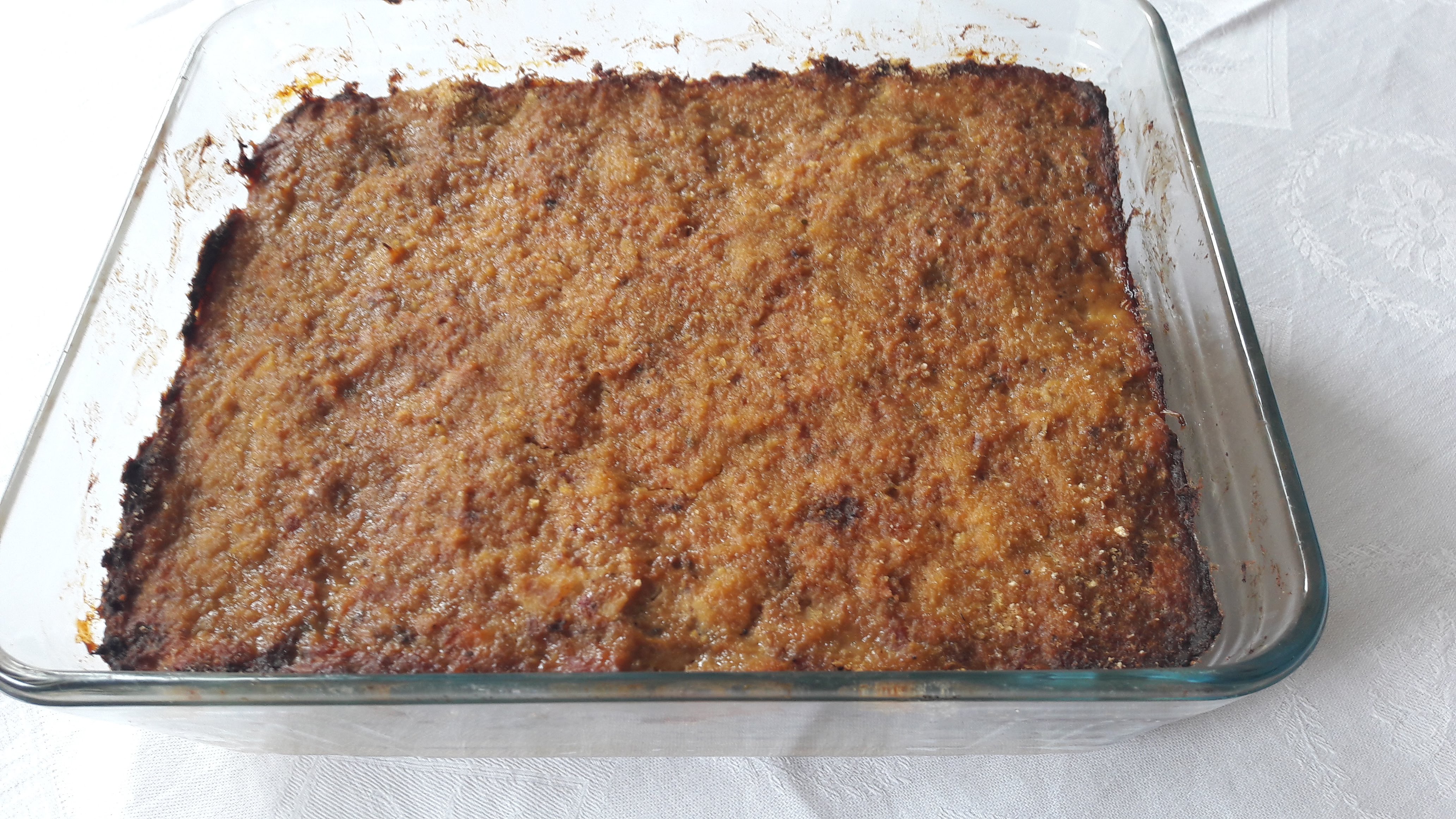
Remove the foil and cook for a further hour without the foil (more if necessary).

Leave to cool completely and then refrigerate for several hours.

Slice to serve.

Decorated here with fresh bay leaves – you can use parsley or similar.

Recipe 2

Chicken Pasztet

Any poultry can be used here – this is good way to use up roast turkey – you can even freeze the cooked turkey meat for a pasztet in the future.

Ingredients

450g chicken livers

3 onions

6 tablespoons of butter

600 – 700g of cooked chicken meat (I used breast meat as that is what I had – but thigh meat  would or a mixture is also good)

Dilute vegetable stock (can be from a cube or powder)

2 eggs

1 teaspoon of Italian herbs or marjoram

1 teaspoon of sweet paprika

Salt and pepper

Method

Slice the onions and fry them till soften in the butter.

Add the chicken livers and cook them through.
20180602_081248

Leave to cool completely.

Blend the liver and onions – I used a stick blender.

Place the cooked chicken in a pan and cover with dilute vegetable stock and simmer gently , stirring often.

You want the meat to be soft and falling apart and the liquid to have been absorbed.

Leave to cool completely.

Pre-heat the oven to GM4 – 180°C.

Chop the meat as finely as possible.

Mix the meat and liver together.

Add the eggs, Italian herbs & sweet paprika.

Add salt and pepper.

Butter the dish well.

Place the mixture into the dish and smooth down the top.

Cover the dish with foil.

Place the dish in a roasting tin with added water.

Cook for around 1 hour.

Remove the foil and cook for a further hour without the foil (more if necessary).

Leave to cool completely and then refrigerate for several hours.

Slice to serve.

Served on a dish – Made in England by H & K Tunstall

Recipe 3

Pork Pasztet

600 – 700g cooked pork (from a casserole or roast)

Dilute vegetable stock (can be from a cube or powder)

250g smoked bacon (rind removed)

250g pork, veal or chicken livers

1 large onion

4 tablespoons of butter & extra for greasing the dish.

3 eggs

6 tablespoons of dried breadcrumbs & extra for the baking dish and top

250ml of milk

2 teaspoons of Italian herbs or marjoram

1 teaspoon of sweet paprika

Salt & Pepper

Method

Place the cooked pork in a pan and cover with dilute vegetable stock and simmer gently, stirring often.

Chop the bacon into small squares and add to the pork and simmer for another 20 minutes.

You want the meat to be soft and falling apart and the liquid to have been absorbed.

Leave to cool completely.

Chop the meat as finely as possible.

Slice the onion and fry it till softened in the butter.

Add the liver and cook it through.

Sprinkle with salt.

Leave to cool completely.

Blend the liver and onion –  I used a stick blender.

Pre-heat the oven to GM4 – 180°C.

In a large bowl throughly mix all the ingredients together.

Butter the dish and sprinkle with dried breadcrumbs.

Place the mixture into the dish and smooth the top with a spoon.

Sprinkle the top with breadcrumbs.
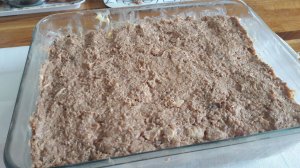
Cover the dish with foil.

Place the dish in a roasting tin with added water.

Cook for around 80 minutes.

Remove the foil and cook for a further hour without the foil (more if necessary).
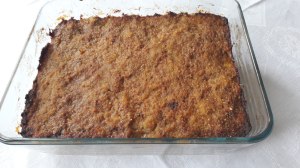
Leave to cool completely and then refrigerate for several hours.

Slice to serve.

Served on a dish by Portmeirion – Dawn Chorus – designed by Sophie Conran in the 21st century.
Easy Pâté

Not long to go now and I will have been blogging for 3 Years.

This is my 150th Post!

The Polish for pâté is pasztet.

Pasztet recipes tend to be for large cooked pâtés which are served as slices – I will be looking at recipes for these later.

Here I am looking at 2 easy recipes using chicken livers which are very simple to make.

These are more spready pâtés – which you can put into a large dish or into individual pots.

I could not find any fresh chicken livers in my local shops but did find tubs of frozen chicken liver – they contain around 225g per tub and the cost was very reasonable.

Soaking the livers

All my recipe books say to soak the livers for at least 1 hour and up to 6 hours in milk – to help remove any bitterness.

I do not remember doing this in the past but decided to try this out – they tasted lovely – not sure how much was due to the soaking.

Chicken liver pâté version 1

Ingredients

  • 450g chicken livers
  • 50g butter
  • 1 small onion
  • 2 cloves of garlic
  • 1 teaspoon of dried Italian herbs (or chopped fresh herbs such as oregano and thyme if you have them)
  • 6 tablespoons of sherry or marsala or brandy.
  • Salt & Pepper

Method

  • Soak the livers for at least 1 hour and up to 6 hours in milk.
  • Drain the milk off and pat dry the livers.
  • Chop the onion into small pieces.
  • Peel and chop the garlic.
  • In a frying pan melt the butter and add the onion and garlic.
  • Fry gently to soften the onion.
  • Add the herbs.
  • Add the chicken livers, mix and fry gently for 10 – 12 minutes, you can use a spatula to help break up the livers as they cook.
  • Sprinkle with salt and ground pepper, mix and then leave to go cold. (I often do this at night and then the rest the next day).
  • Place the cold cooked livers into a large bowl and use a stick blender start blending it all together.
  • Add the sherry and continue blending until you have a smooth paste.
  • Place the mixture into a large dish or into individual ramekin pots – mine made 4 pots.
  • Cover the pots with clingfilm and refrigerate them for around 3 hours.

Served here with toasted rye bread and gherkins.

Served on La prune by Jet for Ter Steege of the Netherlands.

Chicken liver pâté version 2

This is more creamy and spreadble than version 1

Ingredients

450g chicken livers

50g butter

1 small onion

2 cloves of garlic

1 teaspoon of dried Italian herbs (or chopped fresh herbs such as oregano and thyme if you have them).

2 – 3 tablespoons of creme fraishe or soured cream

1-2 tablespoons  of sherry or marsala or brandy.

Salt & Pepper

Method

Soak the livers for at least 1 hour and up to 6 hours in milk.
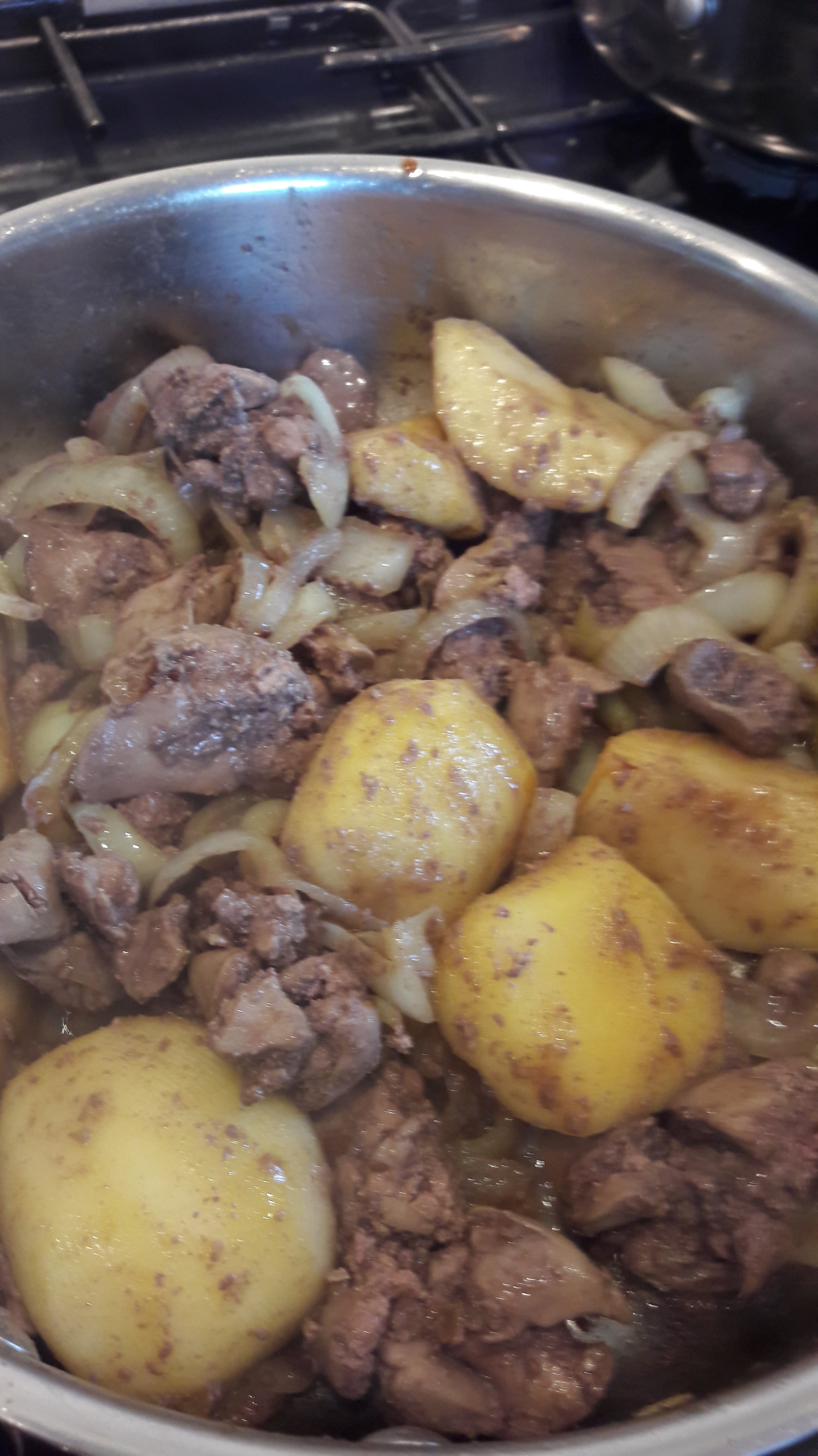
Drain the milk off and pat dry the livers.

Chop the onion into small pieces.

Peel and chop the garlic.

In a frying pan melt the butter and add the onion and garlic.

Fry gently to soften the onion.

Add the herbs.

Add the chicken livers, mix and fry gently for 10 – 12 minutes, you can use a spatula to help break up the livers as they cook.

Sprinkle with salt and ground pepper, mix and then leave to go cold. (I often do this at night and then the rest the next day).

Place the cold cooked livers into a large bowl and use a stick blender start blending it all together.

Add crème fraiche and the sherry and continue blending until you have a smooth paste.

Place the mixture into a large dish or into individual ramekin pots – mine made 6 pots.

Cover the pots with clingfilm and refrigerate them for around 3 hours.

Served here with toasted rye bread.

Chicken Livers

Having written about liver in general in Lovely Liver!  I thought I would also look at chicken livers in particular.

These would have featured in my shopping on a regular basic many years ago but have been somewhat neglected in recent years – this will now change!

I could not find any fresh chicken livers in my local shops but did find tubs of frozen chicken liver – they contain around 225g per tub and the cost was very reasonable.

20180513_155419

Soaking the livers

All my recipe books say to soak the livers for at least 1 hour – to help remove any bitterness.

I do not remember doing this in the past but decided to try this out – they tasted lovely – not sure how much was due to the soaking.

Buttery Chicken Livers with Onions

450 -500g of chicken livers

500ml of milk

3-4 tablespoons of plain flour

3 onions

4-5 tablespoons  of butter

1 teaspoon of Italian seasoning

Salt & pepper

Method

Put the chicken livers in a bowl with the milk and leave for at least an hour.

Drain them off and pat them dry and dredge them in the flour.

Cut the onions in half and cut them into thin slices.

Fry the onion gently in some of the butter until they are golden brown.

In a separate pan fry the floured chicken livers on all sides for 2-3 minutes.

Sprinkle them with the Italian seasoning, mix well and cook for a further few minutes.

Add the livers to the onions and mix well.

Sprinkle with salt and pepper.

These are best served with something quite plain such as boiled rice or crusty rolls and maybe a tomato salad.

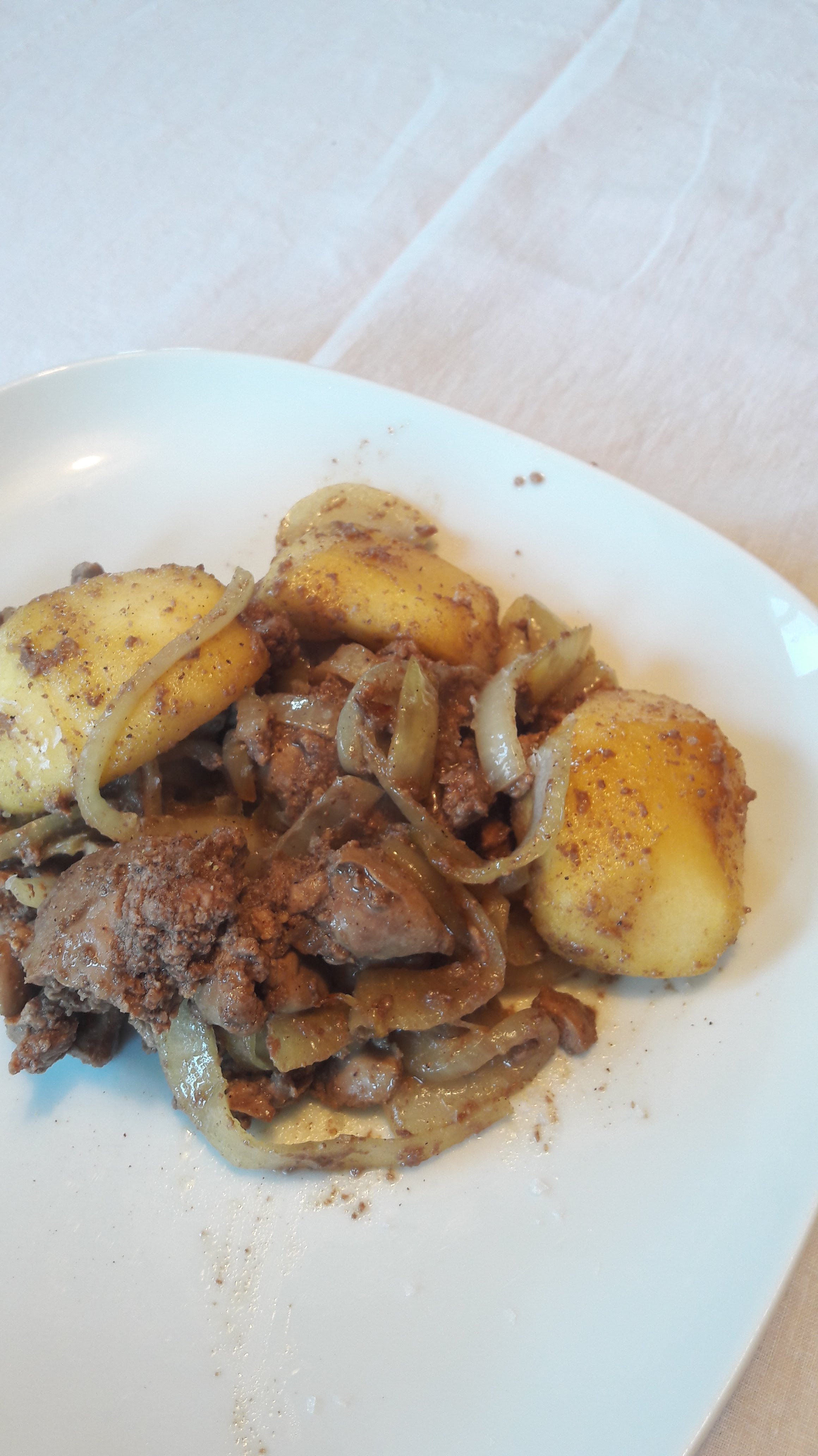
Chicken Livers with Apples

450 -500g of chicken livers

6 tablespoons of butter

2 to 3 tablespoons of sunflower oil

2 onions

2 eating apples (I used Pink Lady)

1 tablespoon of granulated sugar

Salt & pepper

Method

  • This really needs 3 frying pans!
  • I have described each as a separate stage but you can  do these at the same time.
  • Cut the onions into half and then slice into thin half circles.
  • In one frying pan,  fry the onions gently in 3 tablespoons of butter until they are golden.
  • Peel and core the apples and cut them into quarters.
  • In another frying pan, melt the 1 tablespoon of butter and heat the apples gently on all sides.
  • Add the tablespoon of sugar and continue to cook on a low heat for 2-3 minutes until the sugar starts to caramelise.
  • Add the apples to the onions and mix together.
  • In a separate pan melt 2 tablespoons of butter.
  • Fry the chicken livers in the butter, stirring and turning them for around 3-4  minutes.
  • Sprinkle with salt and pepper.
  • Mix the livers with the apples and onions.

Good served with crusty bread.

Breaded Liver

This is a very simple and easy way to cook liver but it is delicious.

Depending on how it has been prepared by the butcher,  you might have to remove some veins or membranes.

I used lamb’s liver for this.

Ingredients

  • 300g of sliced liver
  • 1 beaten egg
  • Dried breadcrumbs
  • Sunflower oil for frying
  • Salt & Pepper

Method

  • Slice the liver into thin equal sized slices.
  • Dip the liver slices into beaten egg.
  • Sprinkle with salt and ground black pepper.
  • Coat the slices in dried breadcrumbs.

Fry the slices in hot sunflower oil.

Served here with lettuce with a soured cream dressing.

Royal Doulton – Carnation – 1982 -1988.

Lovely Liver!

For many people  – liver is love it or loath it.

I think certainly for me and most Poles it is love it!

The Polish for liver is wątroba – which means “waste maker” – as the liver is the organ in the body where substances are broken down.

In Poland the most sought after livers  are calves liver & rabbit liver.

My aunty in Białystok- cooked some rabbit liver for me when I  was there last – I thought it was utterly delicious  –  but as far as I am aware it is not readily available to buy in England.

I  see calves liver for sale more and more here in England and I  buy this whenever I can.

My mother always cooked pig’s liver, never ox liver.

I usually cook lambs liver if I cannot get calves liver.

I think liver is best lightly cooked, even slightly pinky,  it becomes hard and tough if over cooked.

There is a restaurant in Krakow called Dom Polonii ( House of the Poles) just off  Rynek Główny (Main Square) it serves very traditional dishes.

Rynek Główny (Main Square)

I like to eat there very much and can never make up my mind which dish I want the most. Their fried liver is super and I will have that at least once when I visit Kraków.

Liver is the main ingredient of  pâtés and similar dishes which are very popular in Poland –  I will look at these in future posts.

Cooking Liver

These recipes are all  variations on a simple theme.

I use calves or lamb’s liver for these recipes .

Preparing the liver

  • Depending on how it has been prepared by the butcher,  you might have to remove some veins or membranes.
  • Slice the liver into thin equal sized slices.
  • Dip each piece into a mixture of plain flour and ground black pepper.

 Simple Style Liver

  • Lightly pan fry the liver slices in a mixture of butter & sunflower oil on both sides.
  • Sprinkle on some Italian Herbs.
  • Add around 150 ml of chicken or vegetable stock (can be from a cube, concentrate or powder) … depends on the size of your pan.
  • Put the lid on the pan (a glass lid is good for this) and simmer gently for 2 -3  minutes.  (The time will depend on the thickness of the slices)

Liver with Soured Cream

  • Follow the instructions for the simple style but only cook for 1 -2 minutes.
  • Take the pan off the heat and add 2 tablespoons of soured cream and mix well.
  • Return to the heat  and allow to simmer for  1 -2 minutes.

Liver with Onions 1

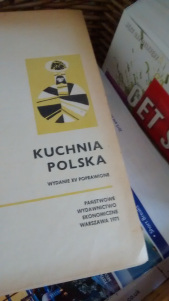
In my old Polish cookery book  (my bible in many respects) this simple recipe (without the herbs) is called  …. po angielskiu  which means  …. English style!

Kuchnia Polska – Polish Kitchen or Polish Cookery
  • Thinly slice 1 or 2 onions (I like lots of onions with the liver).
  • Fry the onions in butter & sunflower oil till golden.
  • In a separate pan lightly pan fry the liver slices in a mixture of butter & sunflower oil on both sides.
  • Sprinkle on some Italian Herbs.
  • Add the onions to the fried liver and mix together and serve.

Liver with Onions 2

  • Thinly slice 1 or 2 onions (I like lots of onions with the liver).
  • In a pan, fry the onions in butter & sunflower oil till golden. (You can fry a little longer to slightly char or caramelise them if you like)
  • In a separate pan, lightly fry the liver slices in a mixture of butter & sunflower oil on both sides.
  • Sprinkle on some Italian Herbs.
  • Add around 150 ml of chicken or vegetable stock (can be from a cube, concentrate or powder) … depends on the size of your pan.
  • Put the lid on the pan (a glass lid is good for this) and simmer gently for 2 -3  minutes.  (The time will depend on the thickness of the slices).
  • This will give a tasty sauce with the liver.
  • Place the fried onions on top and serve.

Liver with Mushrooms

  • Thinly slice mushrooms around 100g of button mushrooms
  • Fry them gently in a mixture of butter & sunflower oil.
  • Add the mushrooms to the fried liver as in the simple style above and mix together.
  • Add around 150 ml of chicken or vegetable stock (can be from a cube, concentrate or powder) … depends on the size of your pan.
  • Put the lid on the pan (a glass lid is good for this) and simmer gently for 2 -4  minutes.  (The time will depend on the thickness of the slices).

Liver with Mushrooms & Soured Cream

  • Follow the instructions for the Liver with Mushrooms but only cook for 1 -2 minutes.
  • Take the pan off the heat and add 2 tablespoons of soured cream and mix well.
  • Heat up slowly and allow to simmer for  1 -2 minutes.

Served here on Royal Doulton – Carnation, 1982-1998

Serving suggestions

Sprinkle liberally  with chopped parsley.

All of the above go well with boiled potatoes, creamy mashed potatoes, boiled rice, noodles or pasta such as tagliatelle.

Kotlety with Sauerkraut

Having made kotlety mielone (minced meat burgers ) with first fresh and then cooked cabbage,  I started to think of a variation which in a way is more Polish!

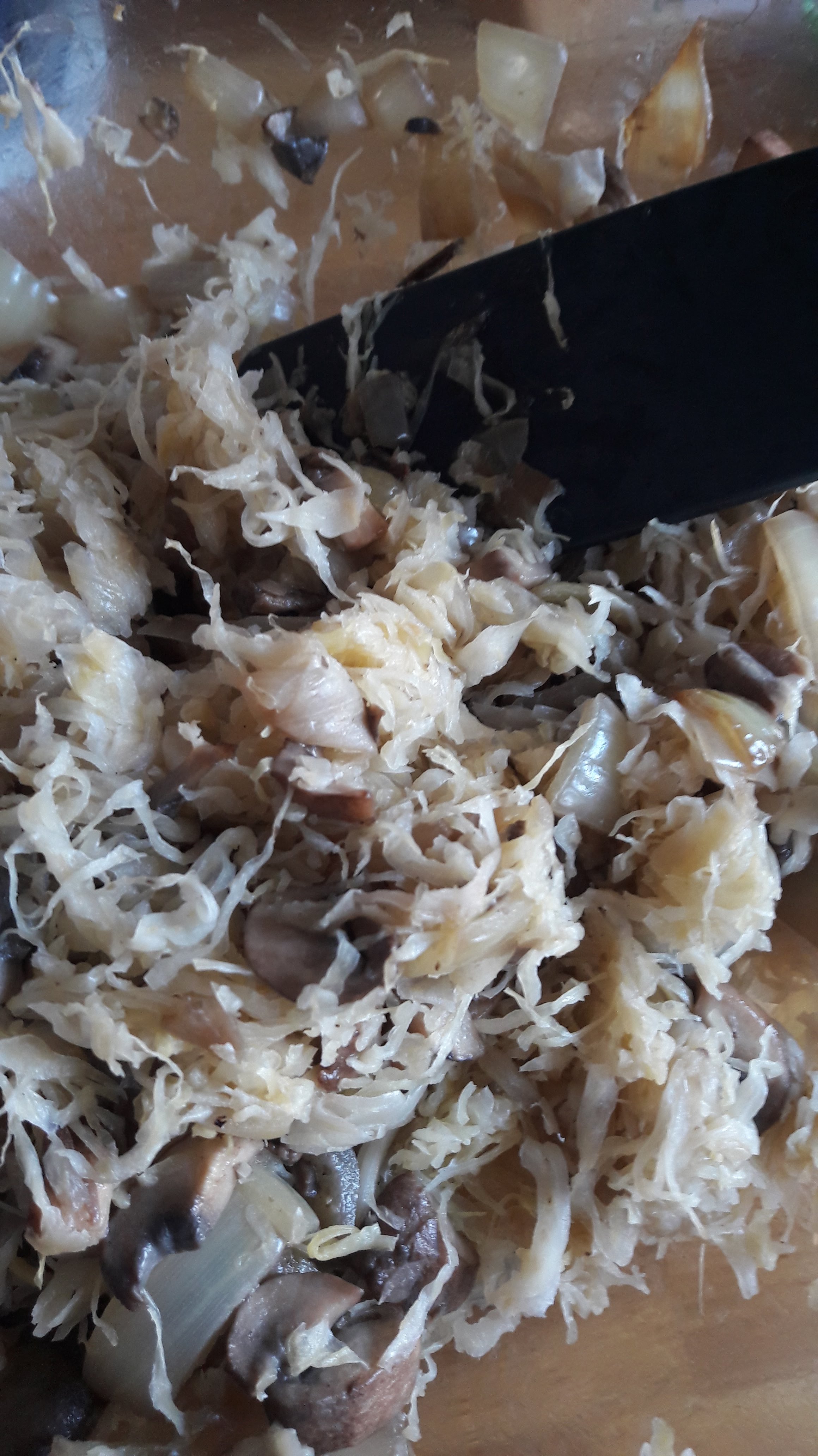
I decided to use sauerkraut and also some fresh mushrooms  – though dried ones might even be more Polish.

Ingredients

500g beef mince

Half a 900g jar of sauerkraut *

150g of mushrooms

1 onion – chopped fine

2 -3  tablespoons semolina

2 eggs

Butter & sunflower oil for frying

Dried breadcrumbs  

Salt  and pepper

* I often freeze the other half of the jar in a plastic tub for another time.

Method

Drain the sauerkraut and rinse with cold water.

Place the sauerkraut in a pan of water and simmer gently for 5-10 minutes.

Drain the sauerkraut and leave to cool then dry  it with a tea towel.

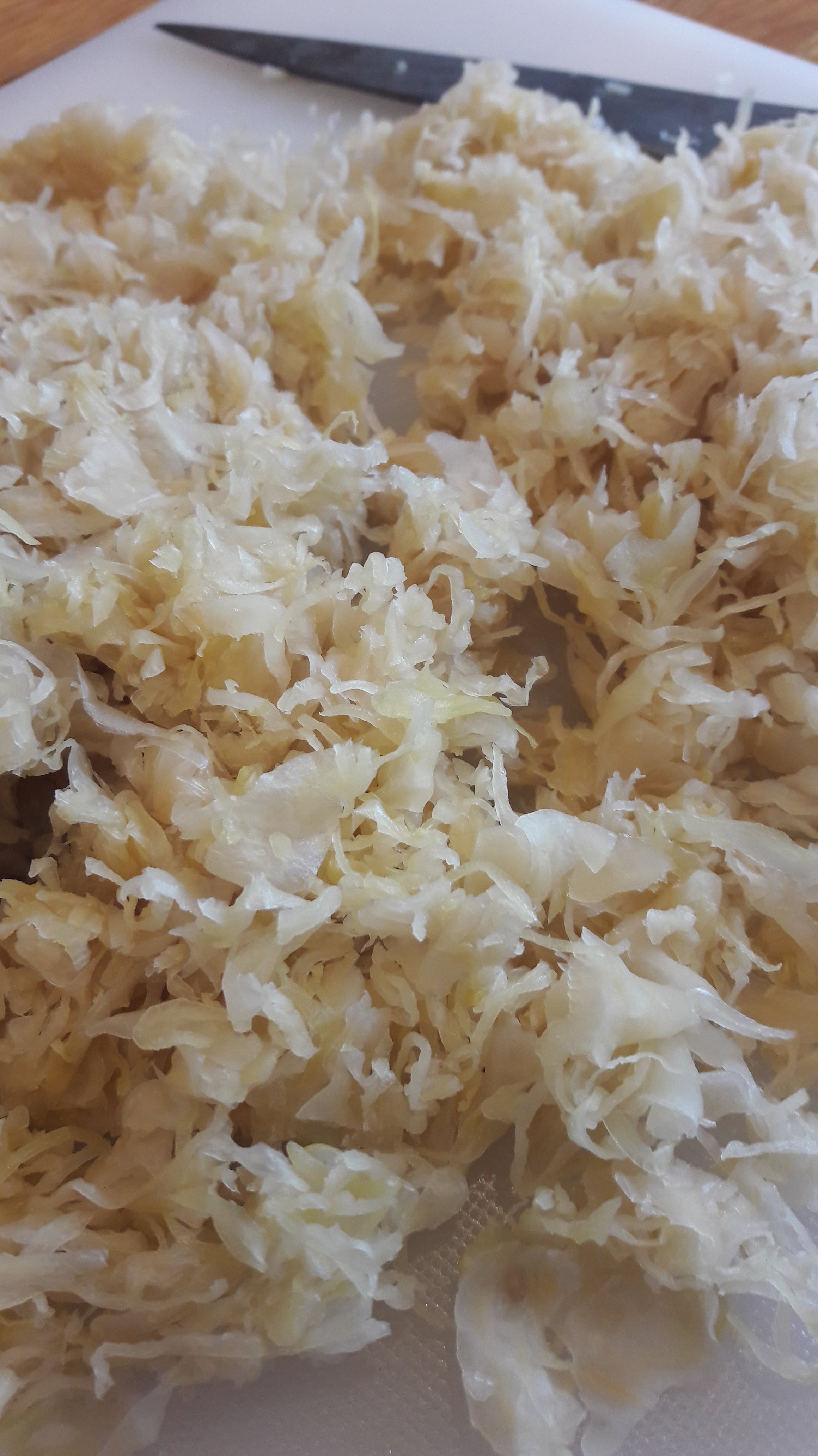
Chop the sauerkraut into small pieces using a sharp knife.

Fry the chopped onion in a little hot oil and butter.

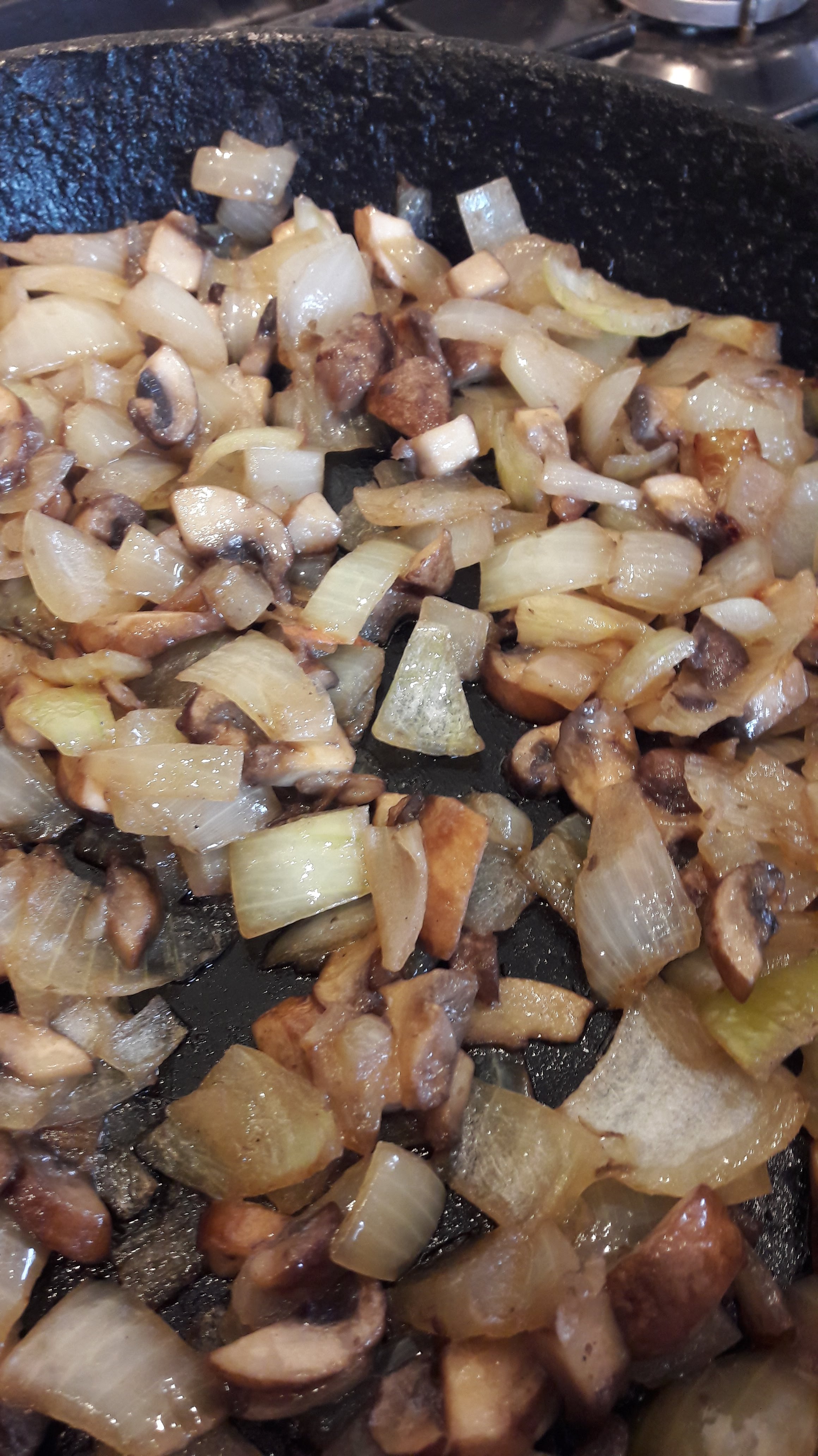
Chop the mushrooms into small pieces and add them to the onions and continue frying until the onions are lightly browned – leave the mixture to cool.

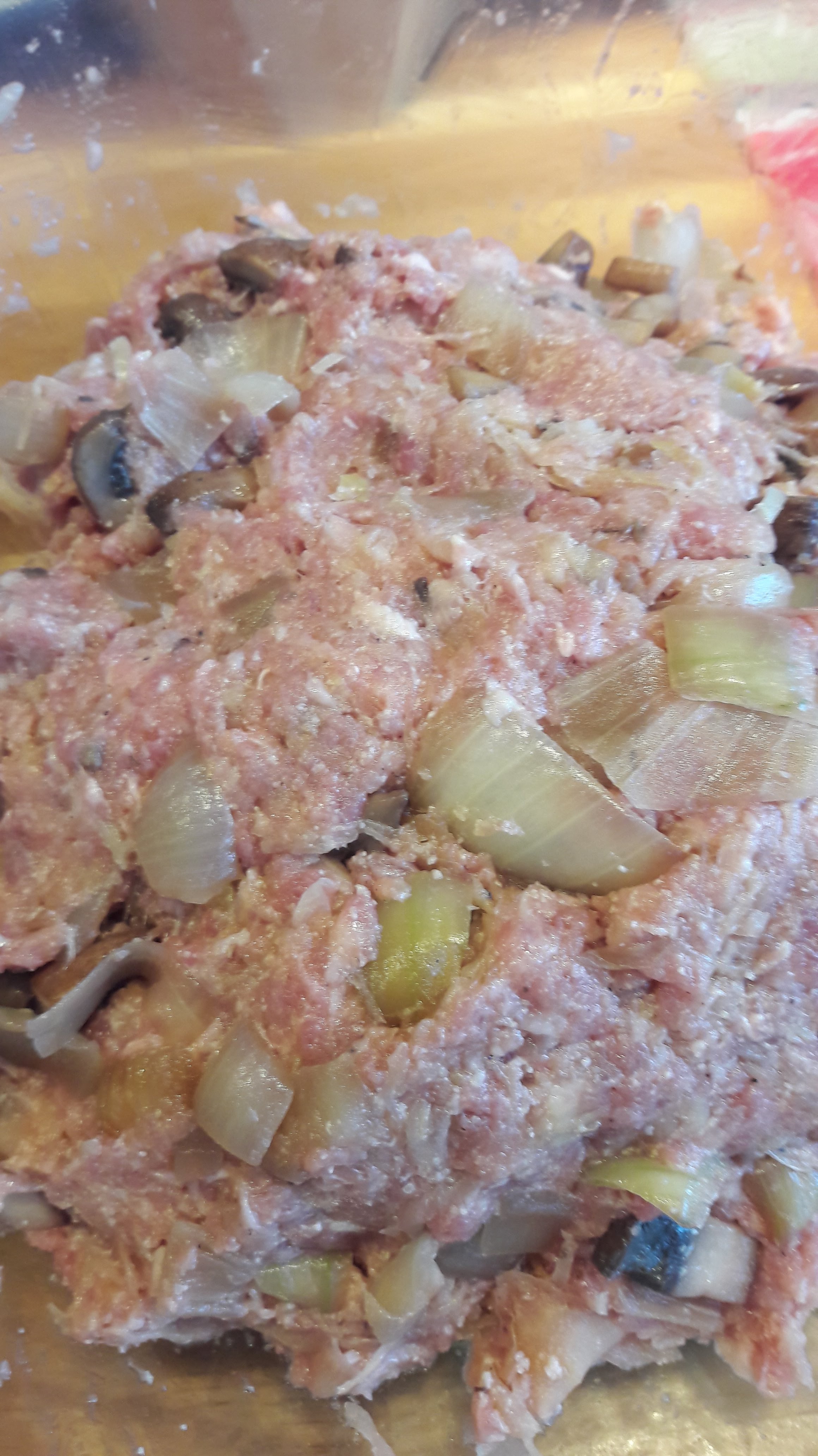
In a large bowl mix the minced meat,  the sauerkraut and onion and mushroom mixture until they are evenly mix.

Add the eggs and mix.

Add the semolina, salt and pepper and mix until you get a uniform mixture.

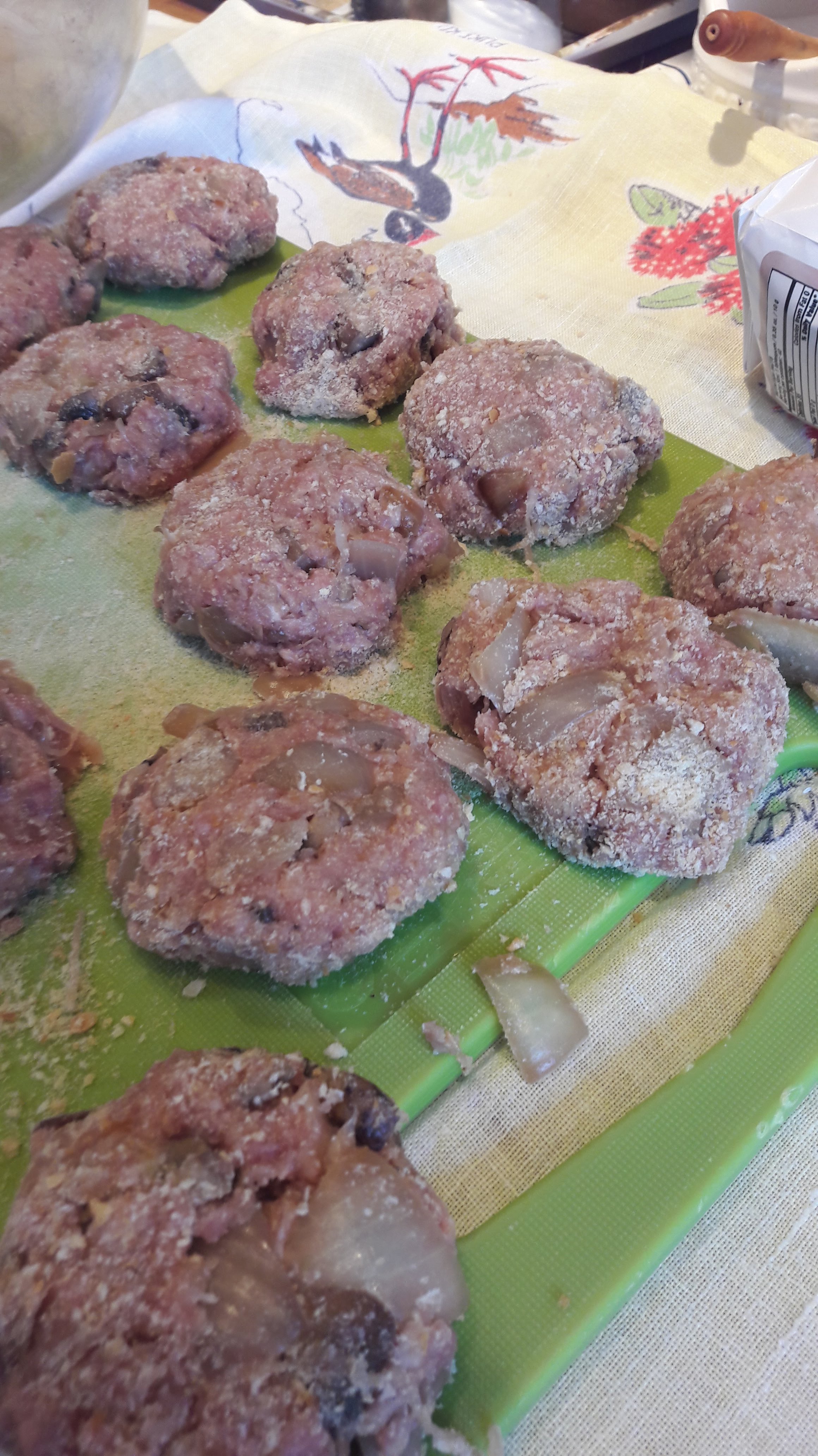
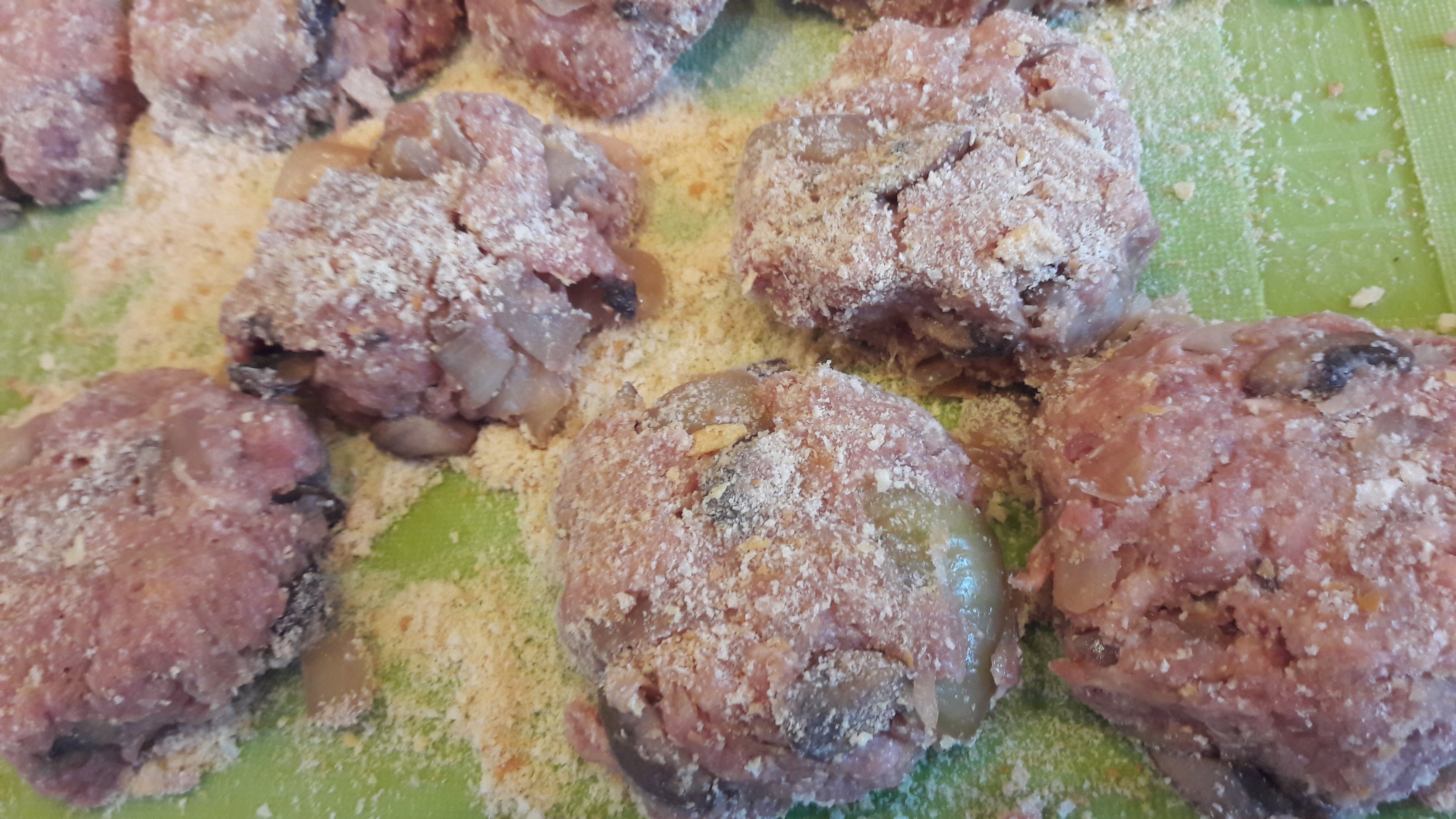
Try to make each one the same size, take a handful of the mixture and press it between your hands to make a flattened circle and then place this in the dried breadcrumbs and turn it over to cover both sides and edges.

Once coated place them on a tray dusted with breadcrumbs until you have used all the mixture up.

Pre-heat the oven to GM3 – 160°C

Shallow fry the kotlety in hot oil, depending on the frying pan size,  you can do 4 to 5 at a time, turning them over so that both sides are done.

Place them on a  metal tray  and put in the oven and keep adding to these as you keep frying the batches.


Served here with gherkins

20180422_200309


They were voted as delicious!

Note

Should you have any left,  you can reheat them in sauce made with chicken or vegetable stock.


Bean Salad

Bean Salad with Apple & Hard-boiled Eggs

As I was trying out some herring salads I came across the following mixture which worked so well together.  I decided it would make a good salad mixture on its own.

Originally this would have been made with soaked and then boiled haricot beans  – for ease I use a tin of baked beans from which the sauce has been washed off.

Ingredients

1 tin of haricot beans (tinned beans (410g) with the tomato sauce washed off , rinsed and patted dry).

1 thinly sliced then chopped onion

2 chopped (red skinned) apples

3- 4  chopped hard-boiled eggs

2-3 tablespoons of  mayonnaise ( full fat is the best here)

Salt & pepper to taste


Method

Prepare all the ingredients

Mix all the ingredients together in a large bowl.

You can sprinkle chopped flat-leaved parsley on top when serving.


Caraway Yeast Buns

Whilst doing some research on caraway,  I found that in 2011, Finland  produced over 25% of the worlds caraway.

So I thought why not a recipe from Finland!

This is a based on a recipe for pulla –  in Poland they would be called  bułeczki  – they are yeast buns and in Finland they are served with coffee.

These buns  are originally flavoured with crushed cardamon seeds – I have adapted this for caraway.

In Poland caraway is often added to rye bread but not usually added to wheat flour buns.

Ingredients

500g plain flour

50g butter

80g of granulated sugar

300ml tepid milk

1 teaspoon of dried yeast

1 egg beaten

1 tablespoonful of caraway seeds

1 teaspoon of salt

1 egg white, beaten, for glazing (does not burn as easily as whole egg).

Optional

Crushed sugar cubes.

Method

In a small dish start the yeast off with 2 tablespoons of the milk and 1 tablespoon of the sugar until it is bubbling.

Rub the butter into the flour.

Add the salt, caraway seeds, sugar, yeast mixture, milk and egg.

Mix thouroughly with a wooden spoon.


Cover the dough with clingfilm or a cloth and leave to rise.

I left mine over night in a cool cellar and then followed by a few hours in the morning in a warmer kitchen.

Grease 2 baking sheets.

Take the dough out of the bowl – a special dough scraper is very good for this.

20180320_063137


Divide the dough into 12 pieces  – a dough cutter is most useful for this  and shape each one into a ball using floured hands – do not over work the dough or add flour – keep the mix as soft as possible.

Place the balls on the sheets – leaving room for expansion.

Cover and leave to rise.

Pre-heat the oven to GM 6 – 200°C

Brush the top of each bun with the beaten egg white and sprinkle with the crushed sugar if desired.

Bake for 10-15 minutes until golden – brown.


Getting ready for morning coffee


Enamelled coffee pot by the Cathrineholm ironworks in Norway  –  Lotus – from the 1960s,

Coffee cups and saucers by Elizabethan  – Carnaby – from the 1970s

The buns are on a hand-decorated  cake stand made by Fairmont & Main who were established in Huddersfield in 1994.

The pattern is Carnival and this is a recent birthday present from one of my friends.

Note

As with all yeast buns these will go stale quickly – if I have any left – I cut them in half and pack into bags and freeze them.

On de-frosting I toast them and serve with butter.

Podpłomyczki – Polish Unleavened Bread

This is a very old recipe for an unleavened, flat bread  – that is one made without yeast.

In Polish, bread has to contain some rye flour, so these are not called bread as  they are made from wheat flour.

Podpłomyczki – płomyczek means flame  and pod means under – these would have originally been baked on stones placed on a camp fire.

The most original recipes are made with just flour, water and salt* and are cooked on a cast iron griddle – these I think are delicious.

I think podpłomyczki are cousins of  the  rotlis from Gujarat that my friend taught me how to make!

  • As well as this recipe I tried out two other versions.
  • The first had an egg added to the mixture – I do not think it was any better.
  • The second used eggs and milk rather than water and were made slightly thicker and one suggestion was to bake them in the oven.
  • I tried baking in the oven,  on a griddle, both thick and thin.  I thought they were all horrible!
  • So I am only writing up this one recipe which was really good.

Ingredients

  • 250g plain flour
  • 200ml water
  • 1/2 teaspoon of salt.

Method

  • Mix the flour and the salt.
  • Add the water and mix to form ball of soft dough.
  • Place the dough into a plastic bag and leave it for 30 minutes.
  • On a floured board flatten the dough into a thick circle.
  • Cut the dough into eight.


  • Form each piece into a ball and then roll this out thinly using a rolling pin.
  • Cook these using a cast iron frying pan or griddle.
  • Do not use any fat or oil.
  • Turn then over to cook both sides.
  • Bamboo tongs are very useful.
  • Watch as they puff up as the water in the dough turns to steam !
  • They are best eaten straight from the pan.
  • Otherwise wrap them in a tea towel to keep them warm.

I ate them with butter and with butter and honey – delicious!

* Salt – Polish Salt Mine &  Legend

In southern Poland there is one of the oldest salt mines in the world – the Wieliczka salt mine. It is a UNESCO World Heritage Site and has produced salt since the 13th Century until 2007.

Legend has it that when Princess Kinga, a Hungarian Princess, became betrothed to Bolesław V,  Wstydliwy  (Bolesław V, the Chaste), Prince of Kraków, she asked for salt as her dowry and then threw her betrothal golden ring into a Hungarian mine.

On her arrival in Poland she asked a miner to dig in the ground and there he  found her golden ring inside a rock of  salt and that place became the site of the Wieliczka salt mine.

Because of her good works, Princess Kinga became Saint Kinga after her death.

Photos taken at Wieliczka


Caraway Biscuits

Caraway is such a popular herb/spice in Poland and is used in breads, meat & vegetable dishes.  So it is quite surprising that it is not used  in cakes or biscuits there.

Drawing from Wikipeadia


I decided to try out some biscuits with caraway seeds.  I found that the biscuts were better if not too sweet.

These are the results – they are semi-sweet and are really delicious  with cheese.

Ingredients

225g self-raising flour

100g butter

50g caster sugar

1 egg – beaten

6 teaspoons of caraway seeds

Grated rind of a lemon

1 – 2 tablespoons of lemon juice

Method

Pre-heat the oven to GM 4 – 180°C

Grease 2 or 3 baking sheets.

Rub the fat into the flour until it is like fine breadcrumbs.

Stir in the sugar, caraway and lemon rind.

Mix in the egg and lemon juice to form a soft dough.

Roll out the dough on a floured board.

Cut out circle using a 7.5cm  diameter, fluted cutter.

Bake for 15 – 20 minutes till lightly browned (take care not to burn them).

Leave them to cool on the tray and then move them off on to a cooling rack.


Served on Las Palmas by Aynsley, from the 1960s, with some soft Brie.

Variation

Use 75g of caster sugar instead of the 50g to make a slighly sweeter biscuit which is delicious just nibbled on its own with tea or coffee.