Spinach Pancakes – 2

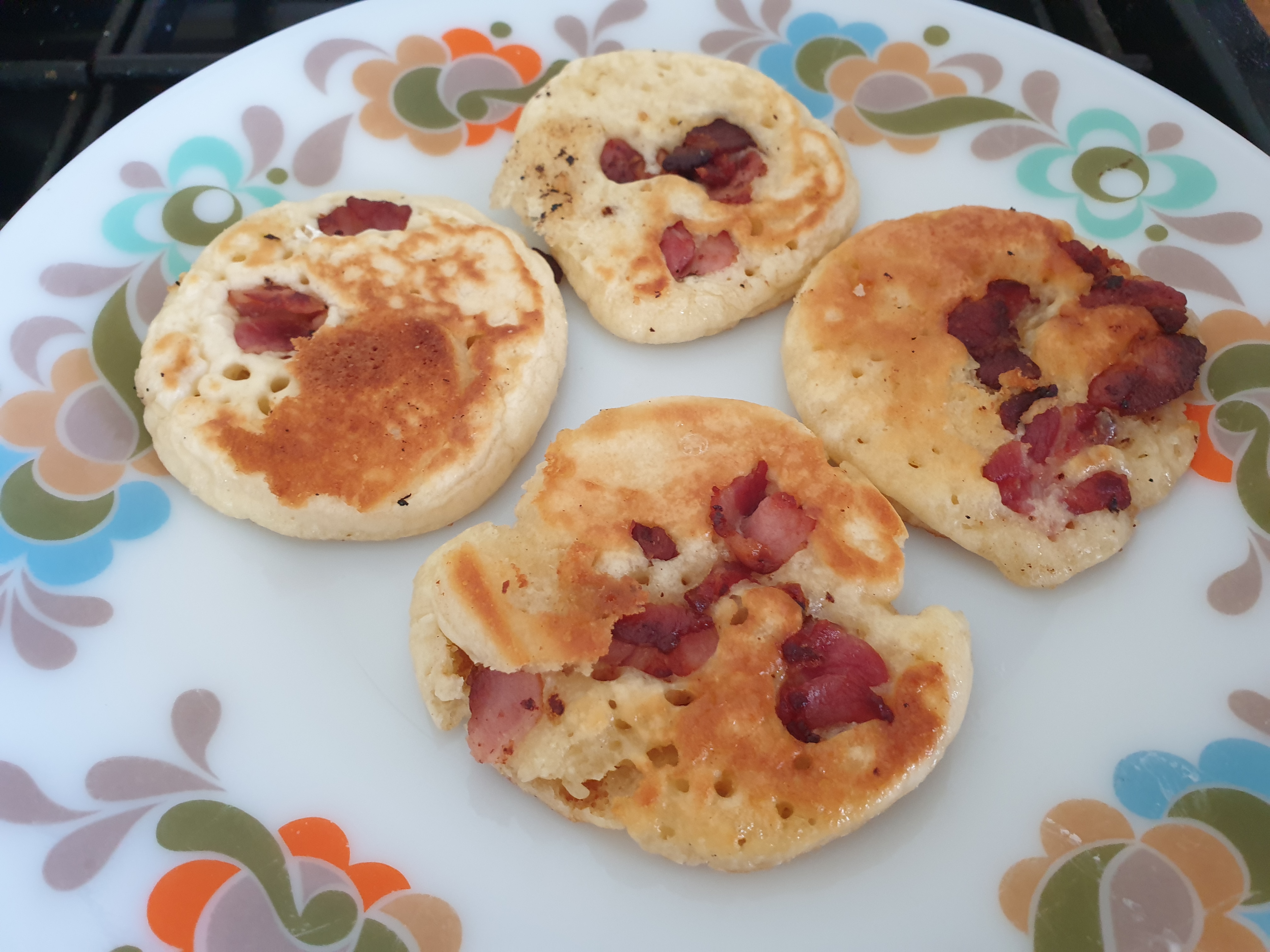
  • This version of pancakes is the thicker type more like an American style pancake.
  • In Polish they would be known more as  racuszki or placki.
  • In England more like dropped scones or Scottish Pancakes.
  • This recipe uses milk.
  • Though not tried you could make a version with yoghurt & milk.

Ingredients

  • 1 egg
  • 100g fresh spinach
  • 90ml milk
  • 70 – 90g plain flour
  • 1 teaspoon baking powder
  • *
  • 50g granulated sugar for a sweet version
  • *
  • Sunflower oil for frying

Method

  • Shred the spinach in a mini-chopper or blender.
  • Mix the eggs with the milk.
  • Mix the baking powder with the flour.
  • Add the spinach to the egg mixture.
  • *
  • Add sugar if using.
  • *
  • Add the flour to the mixture until it is thick enough to drop off a spoon.
  • *
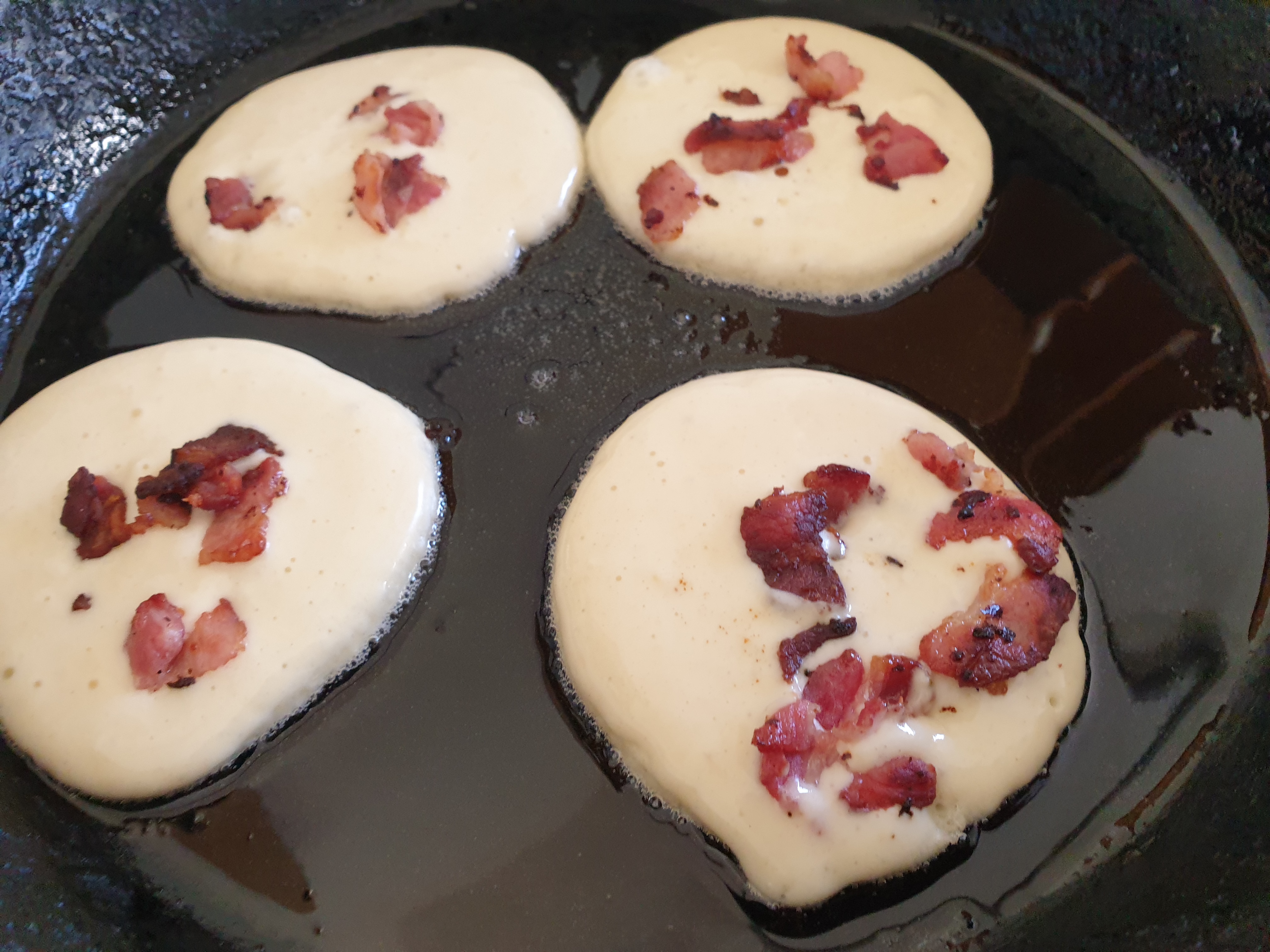
  • Fry tablespoonfuls on both sides on a hot oiled griddle pan.

Good served with sweet or savoury extras


Served here on Vintage Pyrex, Royal Doulton – Tapestry and Carnation.

Pear & Walnut Salad

  • A very simple and slightly sweet salad.
  • Good with hot roast meats, chicken or duck.
  • Or even serve as a light lunch with bread and butter.

Ingredients

  • 2 large pears – peeled and chopped.
  • 100g walnuts – chopped
  • 100g crumbly white cheese – dry twaróg, Wensleydale or Lancashire
  • Mixed salad or shredded lettuce
  • *
  • Juice of 1 lemon
  • 1 tablespoon of honey
  • 1 tablespoon of virgin olive oil

Method

  • Put the salad leaves or lettuce at the base of the serving dish.
  • Mix the pears and walnuts together.
  • Put these on top of the salad leaves.
  • Crumble the cheese on top.
  • Mix the dressing together and pour over the top.
  • Mix the salad together and serve.

Cheesecake with Rhubarb

  • I live in West Yorkshire not far from the Rhubarb Triangle. 
  • However I do have rhubarb growing in my garden.
  • In the last week or so the rhubarb has started to spring up and I thought I would use it in a baked cheesecake – sernik.
  • There is cooked rhubarb in the cheese mix and a thick rhubarb syrup poured over the cake when it is served.
  • As the rhubarb has to be cold – best to make this the evening before.
  • In England ginger is often added to rhubarb – so here the biscuit base was made from crisp ginger biscuits.
  • This cake was a great hit with everyone who tried it.

Ingredients

  • 150g ginger biscuits
  • 70g butter
  • *
  • 400g rhubarb (leaves and ends removed)
  • 90g granulated sugar
  • 100ml water
  • *
  • 400g curd cheese (twaròg, yoghurt cheese  or cream cheese)
  • 90g granulated sugar
  • 1 egg & 2 yolks
  • 125ml soured cream

Method – Rhubarb

  • Cut the rhubarb into small chunks.
  • Simmer gently with the sugar and water.
  • Once the rhubarb is cooked – leave to cool.
  • *
  • Place the mixture into a large sieve for an hour or so,
  • *
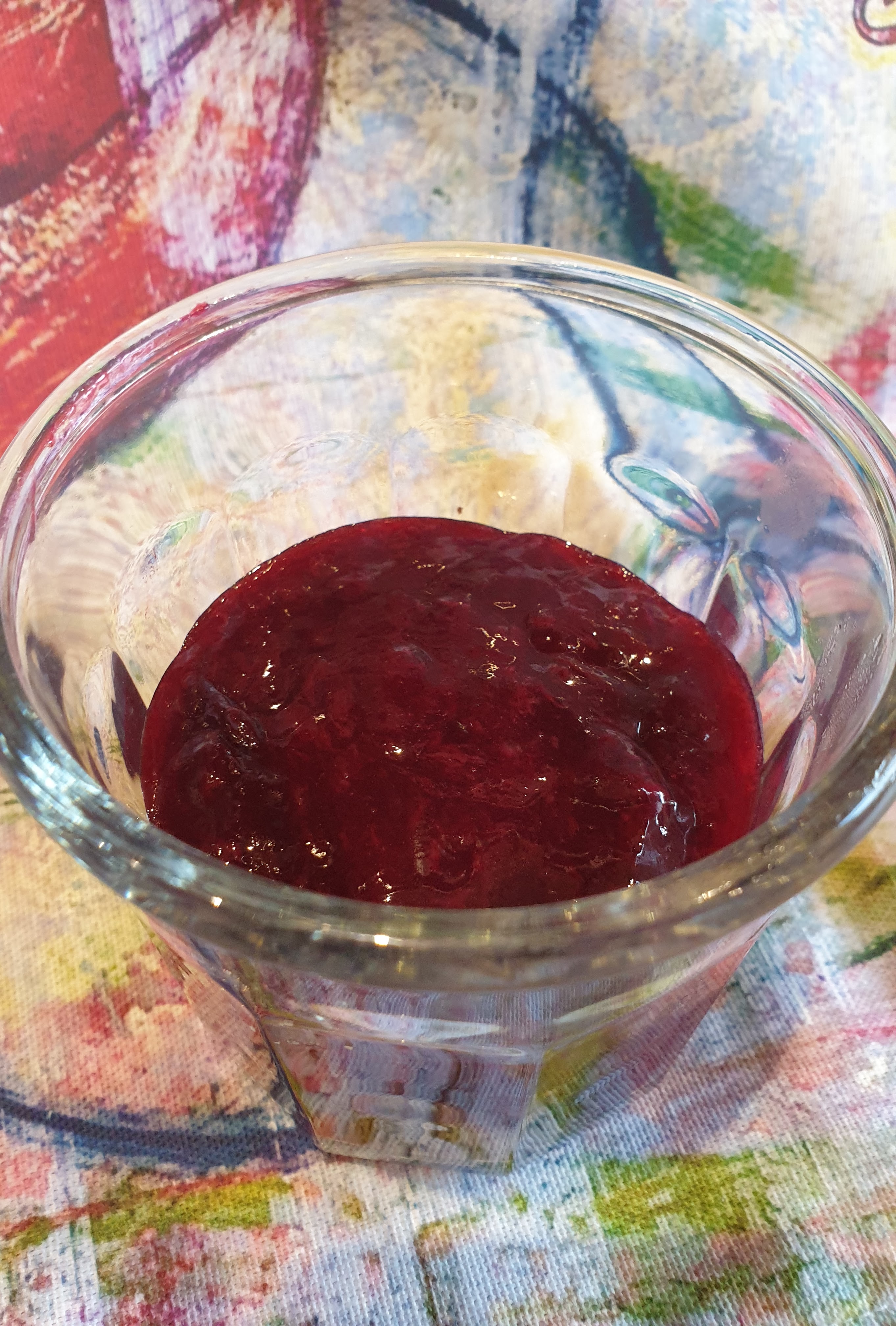
  • Use the rhubarb pulp in the cake.
  • *
  • Pour the liquid into a small saucepan and simmer gently.
  • Reduce the liquid until you have a thick syrup.
  • Leave to cool completely.

Method – Cake Base

  • Butter well a 20cm diameter loose bottomed tin.
  • Melt the butter.
  • Crush the biscuits till fine crumbs.
  • Mix the crushed biscuits and the melted butter.
  • Press the mixture down into the tin to cover the bottom.
  • Leave to cool completely.

Method – Cake Filling

  • Pre-heat the oven to GM3 – 160°C
  • Mix the curd cheese and sugar well.
  • Beat the egg and the yolks.
  • Add the egg mixture to the cheese mixture.
  • Mix in the soured cream.
  • Add in the rhubarb pulp and mix well.
  • Put the mixture on top of the biscuit base.
  • Flatten with a spatula.
  • Bake for around 1 hour 15 minutes.
  • *
  • Turn off the oven and leave the door open 
  • Leave the cake inside to cool.
  • *
  • To serve pour some rhubarb syrup over each portion.
  • Served on Royal Doulton – Carnation.
  • Rhubarb napkin from the Hepworth Gallery from a Rhubarb exhibition several years ago.

Note – this cheesecake does not keep as long as most- you need to get your friends and family round to eat it quickly!

Mixed Vegetable Sałatka – another version

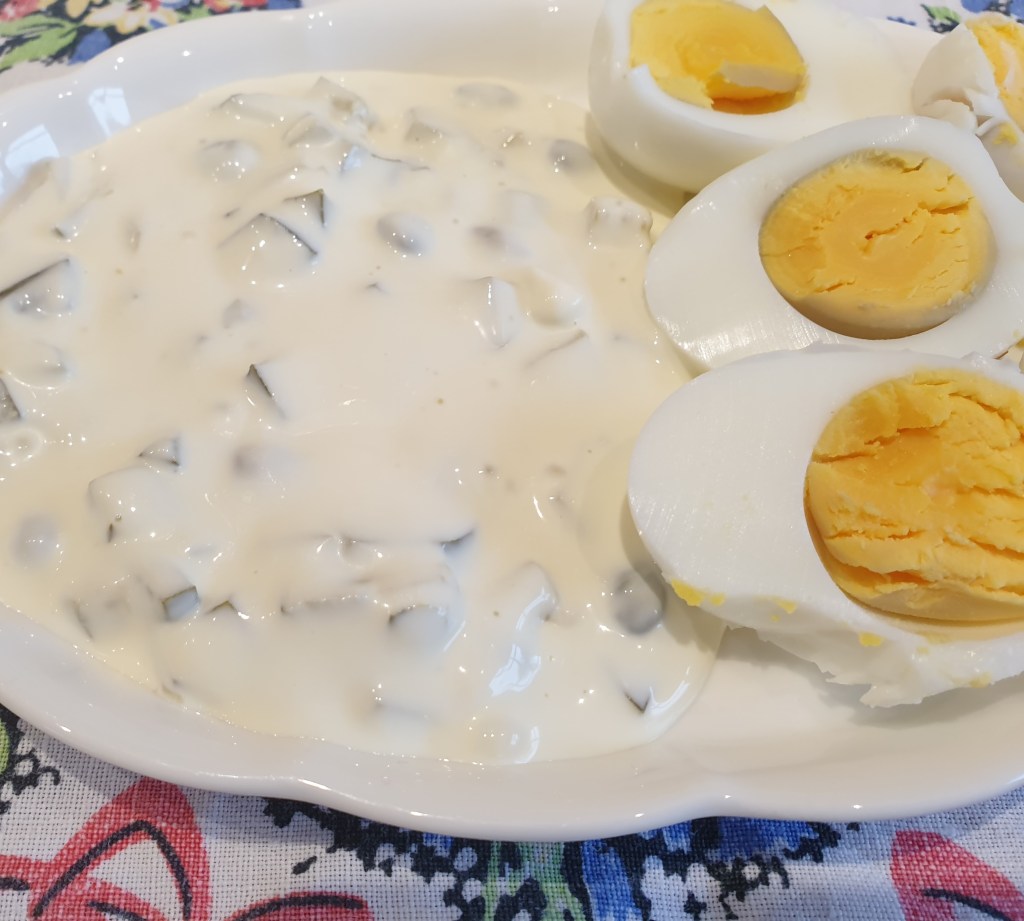
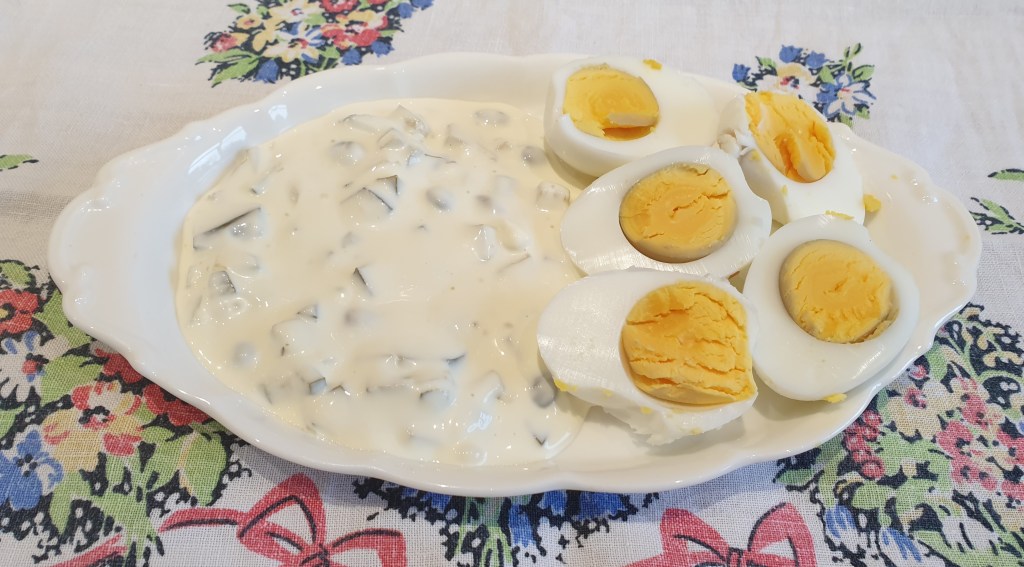
  • This recipe is a slightly different take on the classic Polish mixed vegetable salad.
  • Rather than potatoes, I used boiled parsnips and carrots.
  • This is a salad you can tinker with often – depending on the ingredients you have at hand. 

Ingredients

  • 2 – 3 cooked carrots cut onto small pieces
  • 2-3 cooked parsnips cut into small pieces
  • 1-2 gherkins cut into small pieces
  • Bunch of spring onions cut into small pieces
  • 3-4 hardboiled eggs – cut into small chunks
  • 2-3 tablespoons of mayonnaise 
  • Salt & Pepper to taste

Method

  • Mix all the vegetable together.
  • Add the mayonnaise and mix all together.
  • Season to taste.
  • Place in a dish.
  • Add the eggs and spring onions on top.
  • Mix together when serving.

The dish is Freiberg – Cordoflam made in East Germany.

Spinach Pancakes – 1

  • I kept hearing about spinach pancakes and looked for a good recipes.
  • In the end, I adapted my own pancake recipe
  • This version is the thin type – often called a crêpe or in Polish  naleśnik.
  • This is adapted the recipe the perfect pancake 
  • Using  less flour and
  • Less liquid.
  • *
  • Butter and oil for frying

Ingredients

  • 2 eggs
  • 100g fresh spinach
  • 200ml milk
  • 100ml water
  • 150g plain flour

Method

  • Shred the spinach in a mini-chopper or blender.
  • Mix the eggs with the milk and water.
  • Add the flour until well blended.
  • Add the spinach.
  • *
  • If you leave this batter for a while, you will have to mix up the spinach.
  • *
  • Get a pancake pan hot with a little oil and butter.
  • Use a standard ladle amount of batter to pour the mixture into the pan.
  • Tilt the pan so that the mixture covers the surface completely and evenly.
  • Cook the pancakes on one side and turn then over.
  • You can make them up one by one or stack then up with a piece of greaseproof paper in between them.
  • You can do this and leave then for later use.
  • Pancakes with sweet fillings are normally folded into triangles – fan -shaped  by folding the pancake into half and half again.
  • Pancakes with savoury fillings are normally rolled up.
  • *
  • Pancakes rolled up without a filling can be cut and used as noodles or added to soups.


Coconut Meringue Cake

  • As I  said in my coconut macaroons recipe, my mother did not use coconut in her baking.
  • This is an English recipe that I have made for years.
  • Egg yolks are used in the cake base and whites in the topping.
  • The egg whites are whisked till stiff but then the sugar and coconut are just folded in.

Ingredients

  • BASE
  • 75g butter
  • 100g caster sugar
  • 175g plain flour
  • 1½ teaspoons baking powder
  • Pinch of salt
  • 2 egg yolks
  • 3 tablespoons milk
  • 2-3 drops vanilla essence
  • TOPPING
  • 2 egg whites
  • 100g caster sugar
  • 50g desiccated coconut

Method

  • Grease and line a 26 x 20cm baking tin.
  • Preheat the oven to GM3 – 160°C.
  • Cream the butter and sugar till light and fluffy
  • Beat in the egg yolks, vanilla essence and milk.
  • Mix the flour, baking powder and salt together.
  • Fold the flour mixture to the creamed mixture.
  • Spread this over the base of the tin.
  • *
  • Whisk the egg whites stiffly.
  • Fold in the sugar and coconut.
  • Spread this mixture over the cake base.
  • Bake for 30-35 minutes.
  • Leave to cool in the tin.
  • Cut into slices when cool.
Stardust by Colclough Tea Plate

Fish Soup

  • I thought that this soup would be excellent for Good Friday.
  • The base is a simple vegetable soup with mainly “green” vegetables and a few carrots.
  • You can vary the vegetables that you use.
  • Any white fish will be good and  you just need small pieces.
  • Where my late father used to live the small river formed part of the border between the then Poland and Russia.
  • He would often catch river fish, which he really liked.
  • I am sure he would have enjoyed this soup. 

Ingredients

  • 150g white fish  (Basa, Cod or Haddock)
  • 1 onion 
  • 2 leeks
  • 2 sticks of celery
  • ½ tin of sweetcorn
  • 1 large carrot
  • 3 tablespoons of butter
  • 1½ litres of vegetable stock
  • 2 tablespoons of soured cream
  • Salt & Pepper to taste

Method

  • Chop up the onion and leeks.
  • Fry them gently in the butter.
  • Chop the celery into thin slices.
  • Chop the carrots into small pieces.
  • Mix all the vegetables together and add the stock.
  • Bring to the boil and then simmer till nearly soft.
  • Cut the fish into small pieces and add them to the soup.
  • Simmer till the fish is cooked.
  • Stir in the soured cream.
  • Season to taste.


Royal Doulton Burgundy Soup Plate

Optional – If you use more fish you can serve this more as a main dish .

Fish Pulpety

  • There are several Polish saying around fish.
  • My father used to say – ryba lubi pływać – which translates as – “Fish likes to  swim”  -this means – “You have to have a drink when eating fish” or  “You have to eat some fish when having a drink (of alcohol).”
  • If one gets an invitation  –  na rybkę (for a little fish)  – it means  – “come over for a drink (and some fish).
  • A third one translates as  – “Fish, to taste right, must swim three times – in water, in butter and in wine”.
  • *
  • Pulpety are usually little “meat” balls – cooked by simmering in stock. 
  • Here they have been made with cooked white fish.
  • They can be served with sauces or dips or served in soups.

Ingredients

  • 150g cooked white fish
  • 1 onion chopped
  • 30g white breadcrumbs – moistened with a little water or stock if available
  • 1 tablespoon of dried breadcrumbs
  • 1 egg
  • 1 tablespoon of  plain flour
  • Salt & Pepper
  • *
  • Plain flour for shaping balls

Method

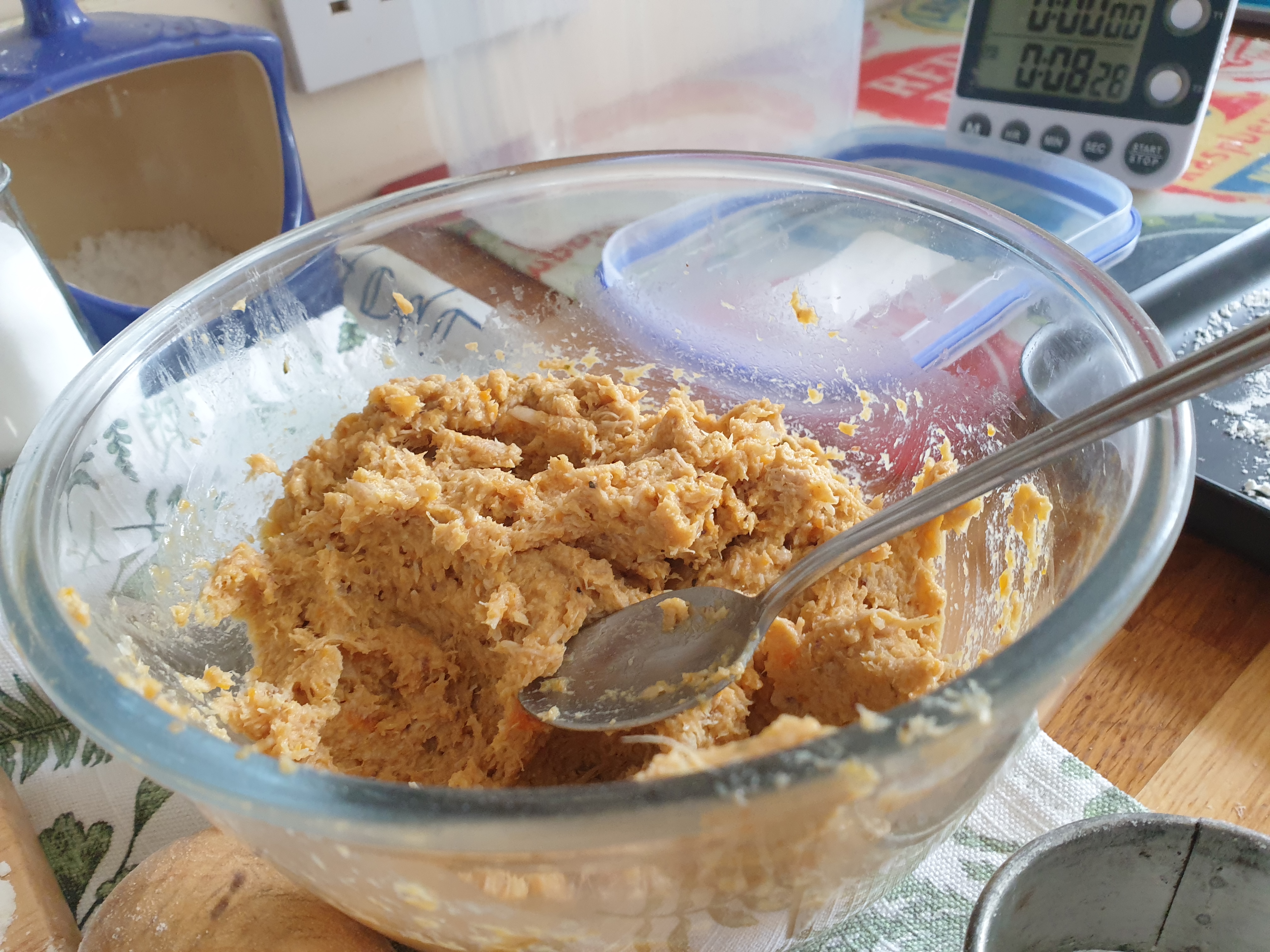
  • Mix fish, onion and bread together using a mincer or mini chopper.
  • Add eggs, dried breadcrumbs, flour and salt & pepper.
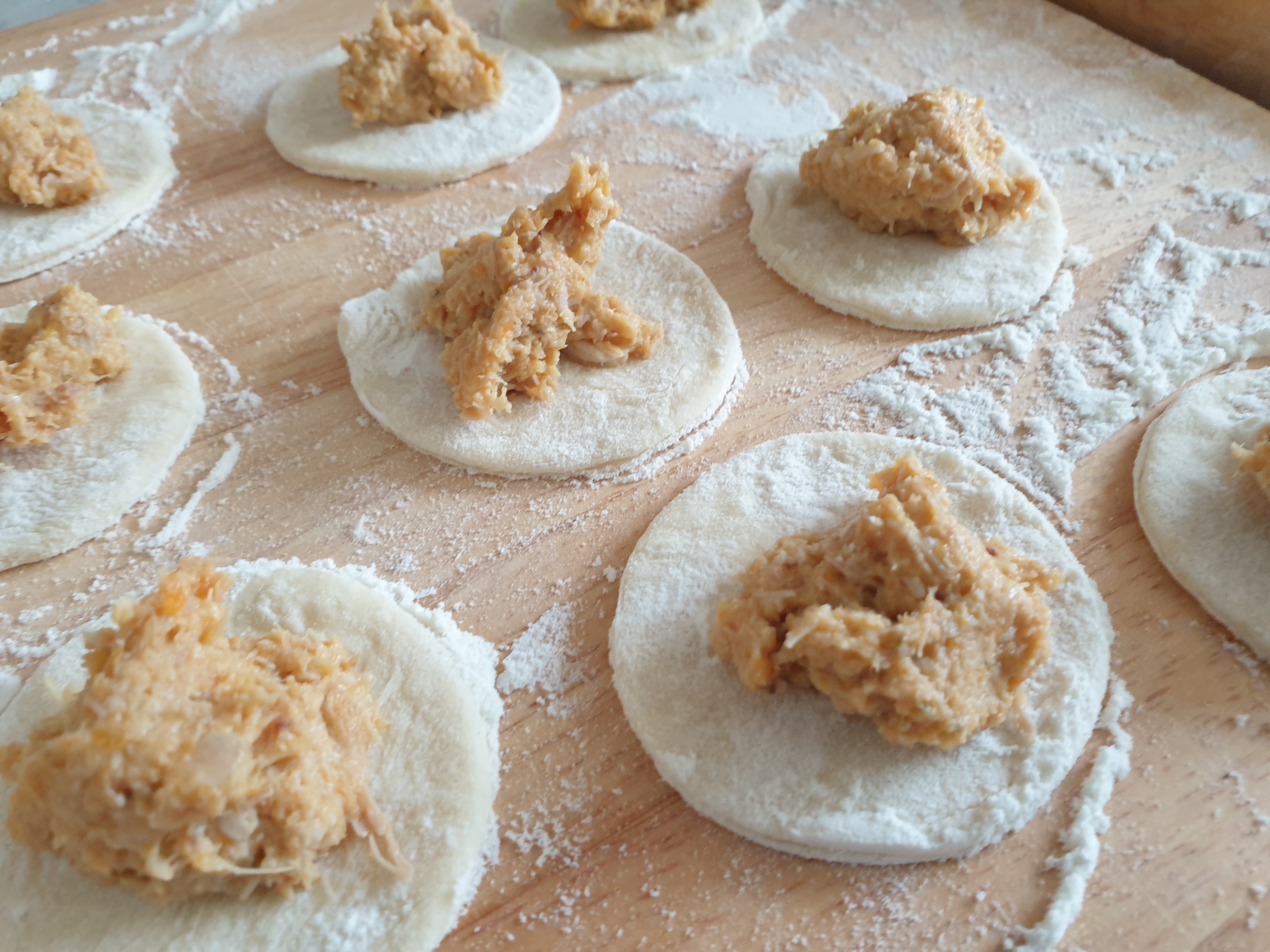
  • Make small balls using flour to coat.
  • Boil in salted water or vegetable stock.

Option

  • Fry the chopped onion in a little butter first.
  • Served alone –  add your favourite sauces or dip.
  • Served in a light “green” vegetable soup.


Date & Walnut Cake

  • This cake is not really a Polish recipe but it is well liked in my family.
  • The instructions for the original recipe said to make this in a large loaf tin.
  • However I think it is much better baked as a round cake.

Ingredients

  • 225g dried dates
  • Pinch of bicarbonate of soda
  • 150ml of boiling water
  • *
  • 75g butter
  • 75g granulated sugar
  • 2 eggs
  • 225g plain flour
  • 2½ teaspoons of baking powder
  • 75g of walnuts- chopped

Method

  • Grease and line a 20cm circular tin – or use a cake liner.
  • Chop the dates and put them into a bowl.
  • Add the bicarbonate of soda.
  • Pour on the boiling water and mix.
  • Leave till cool.
  • *
  • Pre-heat the oven to GM 4 – 180°C
  • Cream the butter and sugar.
  • Beat in the eggs.
  • Mix the baking powder with the flour and stir this in.
  • Stir in the walnuts.
  • Stir in the dates.
  • Mix well together.
  • Spoon into the baking tin – smooth the top with a wooden spoon.
  • Bake for 40 – 45 minutes
  • Leave to cool in the tin.
Lyndale by Royal Standard from the 1950s

Bajgiel

  • The original Polish word for bagel is bajgiel.
  • It is a yeast based wheat bread product, which is parboiled and then baked.
  • They are similar to obwarzanki, which were known in Medieval times.
  • They are shaped by hand into a ring.
  • Bagels are often topped with salt, sesame seed or poppy seeds.
  • They appear to be first mentioned in the early 17th century.
  • The Jewish name beygal name stems from German beugal, which means a ring or a bracelet.
  • One legend, which does not have much substance, is that they were named in honour of the King of Poland, Jan Sobieski III, who led forces to save Austria from Turkish invaders. The baker, aware of the king’s love of horses, shaped the yeast dough into a circle and called it a beugel, which is Austrian for “stirrup.” Or the Germn bügel, a stirrup
  • The best sweetener in the dough is honey.
  • The ingredients are mixed and kneaded to form the dough.
  • The dough  is shared into a circle.
  • The bagels are best proofed for at least 12 hours at a low temperature of around –  4.5°–10 °C
  • Each bagel in boiled in water for 2-3 minutes that may contain additives such as lye or honey. 
  • Remove and drain.
  • Brush with egg white.
  • Sprinkle tops with salt, poppy or sesame seeds.
  • Then baked at GM6 -200°C for around 10 minutes
  • *
  • This is the first time I have made them and had looked at many different recipes – I was so pleased with these – they were super.
  • Best eaten fresh but good split and toasted the next day too.

Ingredients

  • 450g plain flour
  • 250ml warm water
  • 1 teaspoon dried yeast
  • 1½ teaspoons salt
  • 1 tablespoon honey
  • *
  • 1½litres of water to boil
  • 2 tablespoons honey
  • 2 tablespoons bicarbonate of soda
  • 2 teaspoons salt
  • *
  • Egg white – beaten
  • Poppy or sesame seeds or salt

Method

  • Mix the yeast, warm water and honey and leave for around 10 minutes.
  • Mix the flour and the salt
  • Add the yeast mixture to the flour.
  • Knead the dough for 10 minutes.
  • Leave the ball of dough in a covered bowl for 1 hour.
  • Take the bowl into a cool place or fridge for 12 hours or overnight.
  • *
  • Cut the dough into 8 equal parts.
  • Roll each piece into a ball and then flatten it.
  • Using your fingers and thumb make a hole in the middle and stretch out to form a ring.
  • Place on a board these on a board and leave at room temperature for 1- 1½ hours.
  • *
  • Pre-heat oven to GM6- 200 °C.
  • Flour a couple of baking sheets
  • *
  • Heat the water with the honey, bicarbonate of soda and salt.
  • Parboil each bagel for 2-3 minutes.
  • Use a slotted spoon to remove them.
  • Drain on a cooling rack.
  • *
  • Brush the tops with beaten egg white.
  • Sprinkle with poppy , sesame seeds or salt or leave plain.
  • Bake for  around 10 minutes till golden.
  • Take off the baking sheets and leave to cool on a baking rack.
  • Bagel served with egg mayonnaise and chives on a  W.H. Grindley & Co Ltd – Hawaii design plate from the 1960s.