Leśny mech – Forest moss


A Polish Heritage Day was held in the Leeds Polish Centre on the first Saturday after 3rd May in 2017 & 2018.

The 3rd will take place on Saturday, 4 May 2019.

May 3rd  is Polish Constitution Day – a National Holiday in Poland to celebrate – Konstytucja 3 maja 1791.

This was the first  written constitution in Europe and the second in the World with the American constitution in 1789 being the first. It was very progressive for its time.

There was a hugh table with Polish cakes for sale – I contributed the iced poppy seed cake – makowiec on a glass stand in the middle of the photograph.

One of the ladies brought a cake I had never seen before which she told me was called Leśny mech – which means Forest Moss and it looked amazing as it was bright green!

Others certainly knew this cake and it very quickly disappeared!

I was amazed to find that the cake is made with spinach!

I have tried to find the origins of the cake as it is certainly not one my mother ever mentionned – all that I have found is that it is based on a Turkish cake – called  Ispanakli Kek (Spinach Cake).

Short History of Spinach

Spinacia oleracea is spinach & the plant originated in Persia (modern Iran), ispanakh in Persian &  ispanak in Turkish and szpinak in Polish.

Spinach was found in China by the early years of AD, where it is called Persian vegetable.

There are records of spinach in Spain by the 12th century.

Spinach came to England in the 14th century and was popular because it grew in the spring and helped to break the monotony of the Lenten diet.

Catherine de Medici who was from Florence in the 16th century married into the French royal family. She loved spinach  and the term which is used till this day – à la Florentine, which is used to signify a dish with spinach, was coined in her honour.

Leśny mech

Forest Moss – this cake with its amazing colours is meant to look like the forest floor with red berries growing.

I made this cake with 250g of  baby leaf spinach which gives a light green colour. I have read that if you use full leaf older spinach this gives a darker colour and has more flavour – I have not tried this yet.

I also know that you can use frozen spinach -400g of frozen – squeezed out and patted dry – but I have not tried this.

I used frozen raspberries for the berries – when it is later in the year I will use fresh raspberries or alpine strawberries from the garden or whinberries(bilberries) from the woods. Many people use pomegranate seeds when making this in the winter months.

Ingredients

  • 250g baby leaf spinach
  • 240g of  granulated sugar
  • 4 eggs
  • 185 ml sunflower oil (3/4 of  a 250ml cup)
  • 400g plain flour
  • 3 teaspoons of baking powder
  • 1/2 teaspoon of vanilla essence

Method

Pre-heat the oven to GM4 – 180°C.

Grease and line the bottom of a loose-bottomed (or spring formed) cake tin – 26cm in diameter.

  • Use a mini-chopper/blender to whizz up the spinach – most likely in batches to get it all done.
  • Mix the flour and baking powder together.
  • Place the eggs, sugar and vanilla essence into a large bowl and use an electric whisk to whisk them together for 4 to 6 minutes till it is pale and fluffy.
  • Gently stir in the spinach.
  • Fold in the flour mixture.
  • Pour the batter into the prepared tin.
  • Bake on a lower shelf of the oven for 40 – 50 minutes.
  • Leave to cool in the tin.


  • Lightly shave off any golden brown edges of the cake with a sharp knfe or fine grater.
  • Cut off the top third of the cake and crumble it by hand into a bowl.

Place the bottom piece of the cake onto the serving plate or cake stand.

Optional

A sweet poncz (sweet punch for moistening the cake) can be used on the bottom layer.  You can make one from 60ml of cold weak black tea, the juice of 1 lemon and 1 – 2 tablespoons of icing sugar. Mix the ingredients together and use a pastry brush to spread it on the cake.

Now add a white filling!

Some recipes use whipped double cream, sweetened with icing sugar and set with gelatine. Other recipes make a filling with mascarpone.

I used my own yoghurt cheese – you can use cream cheese.

Filling Ingredients

Approximate amounts

  • 500g yoghurt cheese
  • 2 tablespoons of icing sugar
  • 1/2 teaspoon of vanilla essence or fine grated rind of a lemon
  • optional – a couple of tablespoons of soured cream – depending on the cheese and how soft you want the filling

Method

Mix the ingredients together – adjusting the sweetness and consistency to taste.

Assembling the cake.

  • Place bottom layer on a plate or cake stand.
  • Brush on the poncz – optional
  • Spread on the white filling
  • Sprinkle the cake crumbs over the top of the cake to cover filling
  • scatter red berries over the top (do this later if not serving straight away)

To decorate – red colours – raspberries, whinberries (bilberries) alpine strawberries, pomegranate seeds


Making this cake gave me a chance to use the beautiful Lead Crystal Cake Stand, which was a present from my cousin in Lanchester. It was just right for this large cake.

Made by Nachtmann in Germany  – Tortenplatte (tort/gateau plate/ stand) – style name – Venus.


Plates used are La Prune by Jet for Ter Steege in The Netherlands.

Cotton napkin with a design of rhubarb was bought from the Hepworth Gallery shop in Wakefield (Sadly – No longer in stock – as I wanted to buy some more!).

Carrot Piernik

Piernik is a spiced honey-cake.

I would describe this cake as a “Pseudo-piernik” as  granulated sugar rather than honey is used.

My Polish friend in Leeds gave me this recipe and she got it from another Polish lady. The written copy could be described as being in “Ponglish” being written partly in English with additional notes in Polish!

The original recipe used cups which except for liquids I find hard to work with and  much prefer weights.

I tried out a few alterations & variations until I reached this final version which I feel is the easiest way to get consistent results.

I made it is two different tins: the longer tin gave a thinner cake which was  better for cutting in two and adding  a filling, the shorter tin gave a thicker cake which was  better with just a topping.

Ingredients

  • 225g granulated sugar
  • 250ml sunflower oil
  • 3 eggs
  • 1/2 teaspoon vanilla essence
  • Zest of 1 large orange
  • 225g coarse grated carrots
  • 225g plain flour
  • 3 teaspoons of baking powder
  • 2 teaspoons of mixed spice (I use Marks & Spencer’s) or cinnamon

Method

  • Grease and line a 32cm x 22cm or a 27cm x 21cm tin.
  • Pre-heat oven to GM5 – 190°C
  • Mix well together the sugar, oil, eggs, vanilla essence &  orange rind (I use an electric whisk).
  • Mix together the flour, baking powder, spices & salt and lightly mix this into the whisked mixture.
  • Mix in the grated carrots.
  • Pour the batter into the prepared tin.
  • Depending on the tin size, bake for 25 – 35 minutes but keep an eye on it and cover with foil or greaseproof if it starts to burn.
  • Leave to cool in the tin.


Finishing – several ways

  • Dust with icing sugar
  • Drizzle with a melted chocolate & butter mixture
  • Cut into two and sandwich together with powidła – Polish plum jam* or sour cherry jam – then dust with icing and drizzle with chocolate & butter topping
  • Top with orange butter icing

*Powidła is a lovely spread – often translated as jam but  is not really a jam.

It is made from fresh ripe plums which are heated and stirred for hours until the water is driven off and you get a thick paste.  The traditional version does not have any extra sugar added.

I bought some in my local Polish shop, I have seen it for sale in glass jars or in plastic tubs.

Chocolate Drizzle

Ingredients

  • 50g of plain chocolate
  • 1 tablespoon of butter

Method

  • Place the chocolate and butter in a bowl over a saucepan with some water in it.
  • Heat the water in the pan and stir the mixture to combine it together.
  • Use a spoon to drizzle the mixture over the top of the cake.


Orange Butter Icing

Ingredients

  • 50g of butter
  • 2 tablespoon of orange juice
  • Grated rind of 1/2  a large orange
  • Around 250g of icing sugar


Method

  • Melt the butter with the juice and rind in a small saucepan.
  • Leave to cool slightly.
  • Mix in the icing sugar to get a thick spreadable icing.


Royal Albert – Primulette – tea set – from the 1950s

Green teapot – Café Culture by Maxwell Williams

Optional

Add 100g of sultanas to the mixture.


20190313_085148

Note

I have posted a previous carrot recipe which I have used to make small buns.

The ingredients are similar but in different proportions – soft dark brown sugar is used which is not usually available in Poland.

Chocolate Orange Babka

This is a new recipe for a babka – it is very moist and tastes delicious.

I serve it just dusted with icing sugar but you could add a thin chocolate glaze.

Ingredients

  • 225g Butter or Block Margarine
  • 225g Caster Sugar
  • Finely grated zest and the juice of 1 orange
  • 1 teaspoon of vanilla essence
  • 2 tablespoons of apricot jam
  • 4 eggs
  • 175g self raising flour
  • 1 teaspoon of baking powder
  • 50g of cocoa

Method

Pre-heat the oven to GM3 – 160°C

Grease & flour well a large babka tin, tapping away any excess.

  • Beat well together the butter and sugar till pale and fluffy.
  • Beat the eggs well and gradually add them, beating the mixture after each addition.
  • Mix  in the vanilla essence, apricot jam, orange zest and juice.
  • In a separate bowl mix the flour, baking powder and cocoa together.
  • Fold the flour mixture into the beaten mixture.
  • Spoon the cake mixture into the babka tin and level the top.
  • Bake for 50 – 55 minutes until the babka has risen and a cake tester comes out clean.
  • Cool for at least 5 minutes in the tin, then turn this out onto a wire cake rack to cool.
  • Dust with icing sugar before serving.

Served on Crown – fine bone china – England (no pattern name given).

Szarlotka

  • Szarlotka is the word my mother used for (apple) crumble.
  • In some parts of Poland szarlotka is the word used for an apple cake.
  • I wanted to create a cake that was cross between a cake and a crumble.
  • I have used half the quantity from my apple cake (jabłecznik) recipe as the base and then used a drier crumble type mixture – called kruszonka in Polish – for the top.
  • I have already done this  for a rhubarb cake, so I have revisted this recipe.
  • I have adjusted the recipe to use just one type of flour (plain) and one type of sugar (granulated) to make it  easier.

Apple Filling

  • You can use an apple filling with just apples and sugar with the addition of cinnamon.
  • Sometimes in Poland raisins or sultanas are added to the apples.
  • As I had some homemade, fruit mincemeat left from last year to use up (made from Delia Smith’s recipe but without nuts) before I made this year’s batch,  I added some of this to the apples.

Ingredients

  • 4 to 6 Bramley Apples
  • Granulated Sugar to taste – keep it slightly tart
  • A little water
  • 4 tablespoons of mincemeat

Method

  • Make the apple filling first, even the day beforehand as it needs to be cold before you use it.
  • Peel and core the apples and cut them into thick slices.
  • Stew the apples gently with some sugar and very little water. You can make this in a saucepan on the stove or place the apples and sugar in a dish in the oven.
  • Do not add a lot of sugar at the beginning as it does not want to be too sweet, you can adjust the sweetness at the end.
  • Do not make it too much of a purée, cook it so that you have some soft apples but with some harder less cooked chunks as well.
  • Leave this to be completely cool.
  • Mix in the mincemeat.

Note

When I have lots of apples, I cook a large amount and portion this up and keep them in the freezer –  add the mincemeat when making the cake.

Base

  • 150g  plain flour
  • 2 teaspoons of baking powder
  • 100g butter
  • 40g granulated sugar
  • 1 egg yolk
  • 1 or 2 tablespoons of lemon juice or water.

Topping (kruszonka)

  • 120g plain flour
  • 60g butter
  • 60g granulated sugar

Method – Base

  • You have to use a loose bottom or spring-form tin or you will not be able to get the cake out.
  • I use a loose bottomed anodised aluminium cake tin which is 22cm in diameter and 8cm deep.
  • Grease the tin well.
  • First make the cake base by rubbing the butter into the flour to make crumbs, then stir in the sugar.
  • Add the yolk and lemon juice and bring the ingredients together to form a soft dough – do not handle the dough too much.
  • Pre heat the oven to GM 4 – 180ºC.
  • Make the dough into a rough flat circle and press it into the base of the tin.

Method – Topping

  • Make the topping by rubbing the butter into the flour to make crumbs and then stir in the sugar.
  • Put the  apple mixture on top of the base – it wants to be quite a thick layer.
  • Sprinkle the topping crumbs over the apple mixture.
  • Bake in the oven for around 1 hour.
  • Leave to cool in the tin.
  • Use a long metal spatula to ease the cake from the side of the tin, then place the cake on to the top of a tin can and slide the side down.

Tea set here is  Woodside by Royal Grafton, 1940 – 1959

Piernik with Chocolate

I came across this recipe in the book my Polish friend, who lives in Leeds, bought for me in Poland this summer.

20180916_153212


I thought it sounded interesting and I have adapted it slightly.

Piernik is a honey spice cake which has its origins in the 12th Century.

The spices used will have originaly been brought back by the Crusadors.  I make up a mixture of equal parts of cinnamon, cloves and cardamon.

Piernik in Poland is associated with the Christmas season and would be made for Christmas Eve and for Christmas Day, it would also be made for Święty Mikołaj – December 6th – St Nicholas Day. This a day for present giving in Poland to children and I would always get a piernik shaped and decorated to look like the bishop that was St Nicholas.

As it is Święty Mikołaj next week on  December 6th – St Nicholas Day – I  thought this was a good day to post this recipe.

The addition of chocolate to coat the piernik is more recent. Chocolate made by Wedel in Poland started in 1851.

Here the chocolate is grated or chopped finely and added to the cake mixture.

The result is delicious and I will certainly be adding this to my Wigilia (Christmas Eve) menu.

I found grating the chocolate hard work – it was easier for me to chop this amount into very small pieces, using a cleaver type knife.

Ingredients

250ml runny honey

230g granulated sugar

2 large eggs (or 3 medium)

1.5 teaspoons of piernik spices (cinnamon: cloves: cardamon in equal amounts  so a half  teaspoon of each).

350g plain flour

2 teaspoons of baking powder

100g dark chocolate – grated or finely chopped

100g chopped mixed peel


Icing Sugar to serve

Method

Pre-heat the oven to GM3 – 160°C

Grease and line a 32cm x 22cm shallow Mermaid tin (use one sheet for the two long sides and the base).

Put the honey, eggs, sugar and the spices into a large bowl and whisk well together.

In another bowl mix the flour, baking powder, chopped/grated chocolate and the mixed peel.

Gently fold the flour mixture into the honey mixture and then mix it all together.

Pour the mixture into the tin and bake for around 1 hour 10 minutes, check it after 40 minutes and cover if it is starting to catch.

Test with a cake tester to check it is done and then leave it  in the oven for 10 minutes with the door slightly open.

Then put on a cake rack to cool.


Dust with icing sugar before serving.


Plates, cups & saucers are Lyndale by Royal Standard from the 1950s

Teapot is Café Culture by Maxwell Williams

Drożdżówka – Yeast Cake

  • The Polish word for yeast is drożdże and drożdżówka is any sweet cake or bun made using yeast.
  • Often the cake is a large flat cake ( placek) made in a large roasting tin.
  • This yeast cake is made with plain flour not strong flour and the mixture is mixed with a wooden spoon to form a soft mixture and is not kneaded.
  • My late father has two cousins living in Białystok, North East Poland, they are both wonderful cooks.
  • This yeast cake is based on a recipe given to me by one of these aunties.
  • As with any recipe made with yeast, timings are so unpredictable depending on many variables including the room temperature.
  • I always bake with yeast when I am at home for most of the day with other activities to do whilst waiting for the dough to rise etc.

Ingredients

Yeast Cake

  • 400g plain flour
  • 250ml of tepid milk
  • 1 egg
  • 2 tablespoons of granulated sugar
  • 1 tablespoon of sunflower oil
  • 150g of raisins or sultanas
  • 10g of fresh yeast or 5g of dried yeast

Crumble Topping

  • 2 tablespoons of plain flour
  • 1 tablespoon of butter
  • 1 tablespoon of granulated sugar

Method

  • Mix the yeast with 2 tablespoons of the milk and 1 tablespoon of the sugar and leave this till it starts bubbling.
  • In a bowl whisk together the egg  and 1 tablespoon of the sugar.
  • Add the oil and whisk again.
  • Add the milk and the raisins or sultanas and mix well.
  • Add the flour and mix this all together with a wooden spoon to form a very loose, soft dough.
  • Cover the bowl with clingfilm or a cloth and leave in a warm place to rise.
  • Make the crumble topping by rubbing the butter into the flour until the mixture resembles bread crumbs and then stir in the sugar.
  • Grease and line a large roasting tin.
  • 25cm x 34 cm or 22cm x 32cm.
  • Put the risen dough into the tin – use a spatula to spread it out.
  • Sprinkle the crumble mixture over the top and leave to rise again.


  • Pre-heat the oven to  GM6 – 200°C.
  • Place the risen cake into the oven and bake for 15 minutes.
  • Then lower the temperature to GM5 – 190°C and bake for another 10 minutes – keeping an eye on this and cover with foil if it looks like it is burning.
  • You might want also want to move it down a shelf for the last 5  minutes.
  • Leave to cool in the tin for about 5 minutes then take it out and remove from the greaseproof paper – so it does not go soggy on the base.


Served on Sonnet by Royal Doulton, 1971 – 1998.

As with most yeast cakes this is best eaten as soon as possible as it will soon go stale – you might need to invite round lots of friends and family!

If all is not eaten on the day of baking, I cut the cake into slices and pack into a plastic container and freeze – these are then toasted and served with butter at a later date.


Toasted and buttered yeast cake served on Las Palmas by Aynsley from the 1960s.

Variations

The dried fruits added can be varied  and I have made this with raisins, mixed peel and 1 teaspoon of mixed spice.


Served on Counterpoint by Royal Doulton, 1973 – 1987.

Other dried fruit options can be used, such as apricots, cranberries, pears or prunes and so on,  chopping larger fruits into small pieces.

I made this with apricots, sultanas and a 1/4 teaspoon of vanilla essence.


The dried fruits add sweetness to the cake and I think the small amount of sugar works well – you can if you like add a few extra tablespoons of sugar.


Karpatka – Carpathian Mountain Cake

Karpatka – Carpathian Mountain Cake  – gets its name as the top looks like the rugged mountains and the icing sugar dusting looks like a fine covering of snow.

The Carpathian Mountains – Karpaty in Polish –  are a mountain range in an arc roughly 1,500 kilometres in central and eastern Europe; part of the range is in Southern Poland  and can be described as Alpine.


It is made with 2 layers of  choux pastry with vanilla pastry cream in between the layers and the top dusted with icing sugar.

Choux Pastry

This was invented by an Italian chef in the mid 16th century and soon became popular in France.  It gets its name from the French for cabbage as the little buns made from this pastry  looked like little cabbages.

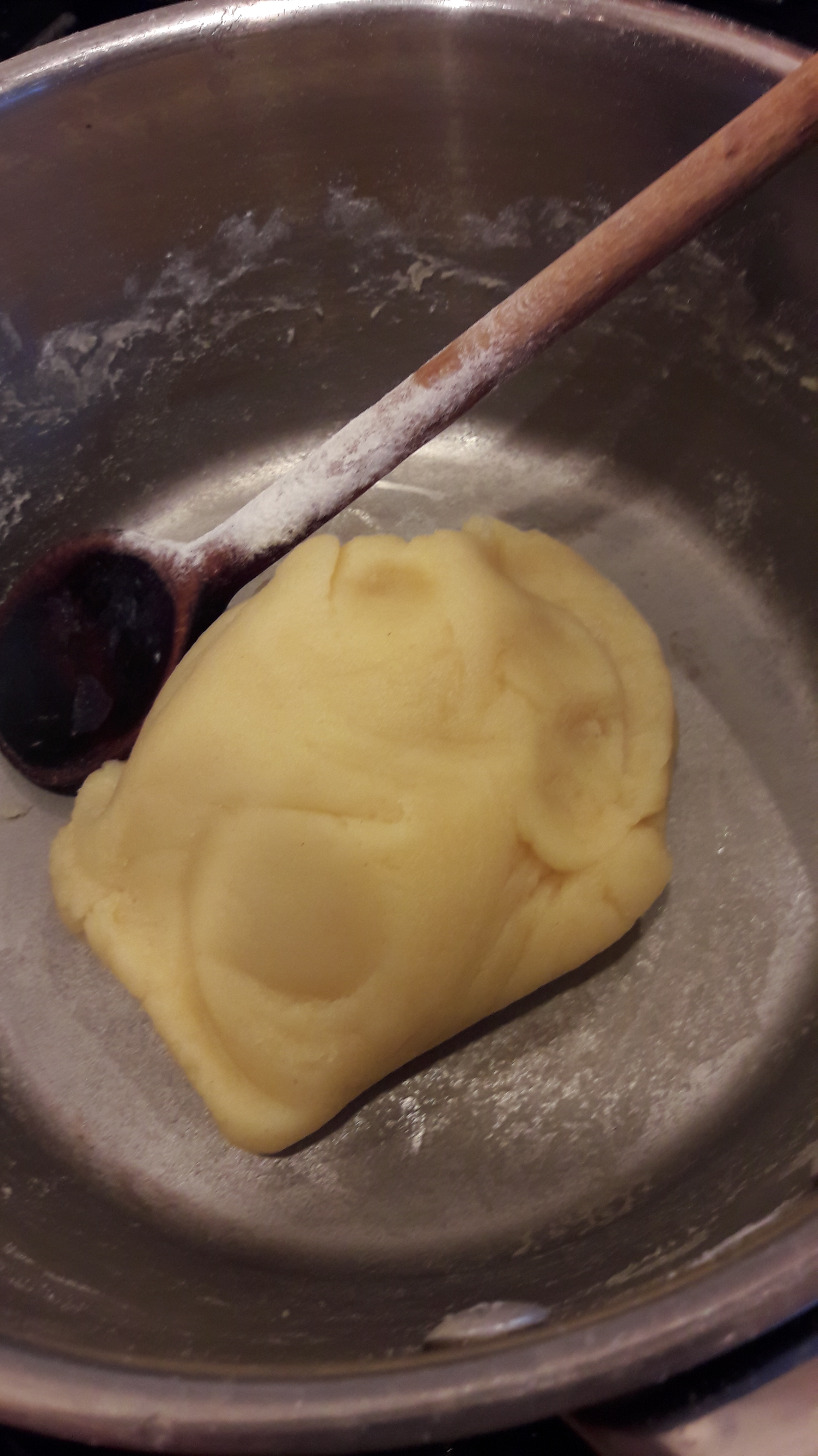
It is made without any raising agent. It is the large water content in the dough which turns to steam in the high oven temperature which causes the pastry to rise.

  • I read loads of conflicting advice on how to make choux pastry. 
  • My first attempt came out more like a Yorkshire pudding.
  • After several attempts I  now have a recipe that works.

Ingredients

  • 6 eggs
  • 300ml of water
  • 2 teaspoon of granulated sugar
  • 200 g of plain flour or strong plain flour *
  • 100g butter
  • pinch of salt
  • *Using strong flour gives a drier pastry whilst using plain flour gives a softer pastry.

Method

  • Pre-heat the oven to GM6 200°C
  • Grease 2 equal sized rectangular baking trays with sides or a large rectangular tin.
  • Put the water, pinch of salt, sugar  and the butter into a saucepan.
  • Heat gently so the butter melts and then slowly bring this to the boil.


  • Sift the flour.
  • Taking the pan off the heat add the flour, all in one go.
  • Return the pan to a gentle heat.
  • Using a wooden spoon blend this all  together until the dough forms a ball in the middle of the pan.


  • Take the pan off the heat and put the dough into a bowl and leave till it is completely cold.
  • Add the eggs one by one, continually blending the mixture. You can use a wooden spoon to do this – I have found it easier to start with an electric whisk to begin with and then change to a wooden spoon at the end.  You get a thick paste type mixture.


Divide the mixture between the two trays and spread it out to fill the tray – do not smooth down the top – you want to have rough peaks.

  • Bake for  10 minutes.
  • Increase the heat up GM7 – 220°C and bake for another 10 minutes
  • Using a cake tester make holes in the top of the pastry to remove some of the steam.
  • Bake for another 5 – 10 minutes.
  • The pastry should be ready now, test to see if it feels dry – if not return for a few more minutes.

Vanilla Pastry Cream

Ingredients

Budyń made with 500ml of milk.

  • 3 tablespoons  of granulated sugar
  • 2-3 drops of vanilla essence
  • 1 egg yolk
  • 125g butter

Method

  • Cream together the butter, sugar and egg yolk till pale and fluffy.
  • Add the vanilla essence and mix this in well.
  • Add the budyń, spoonful by spoonful, mixing it well in.

Assembling the Cake

Note

Whilst testing this recipe, I used half quantities of the choux pastry – ie just 1 tray – and cut this in half – the photographs – reflect this.

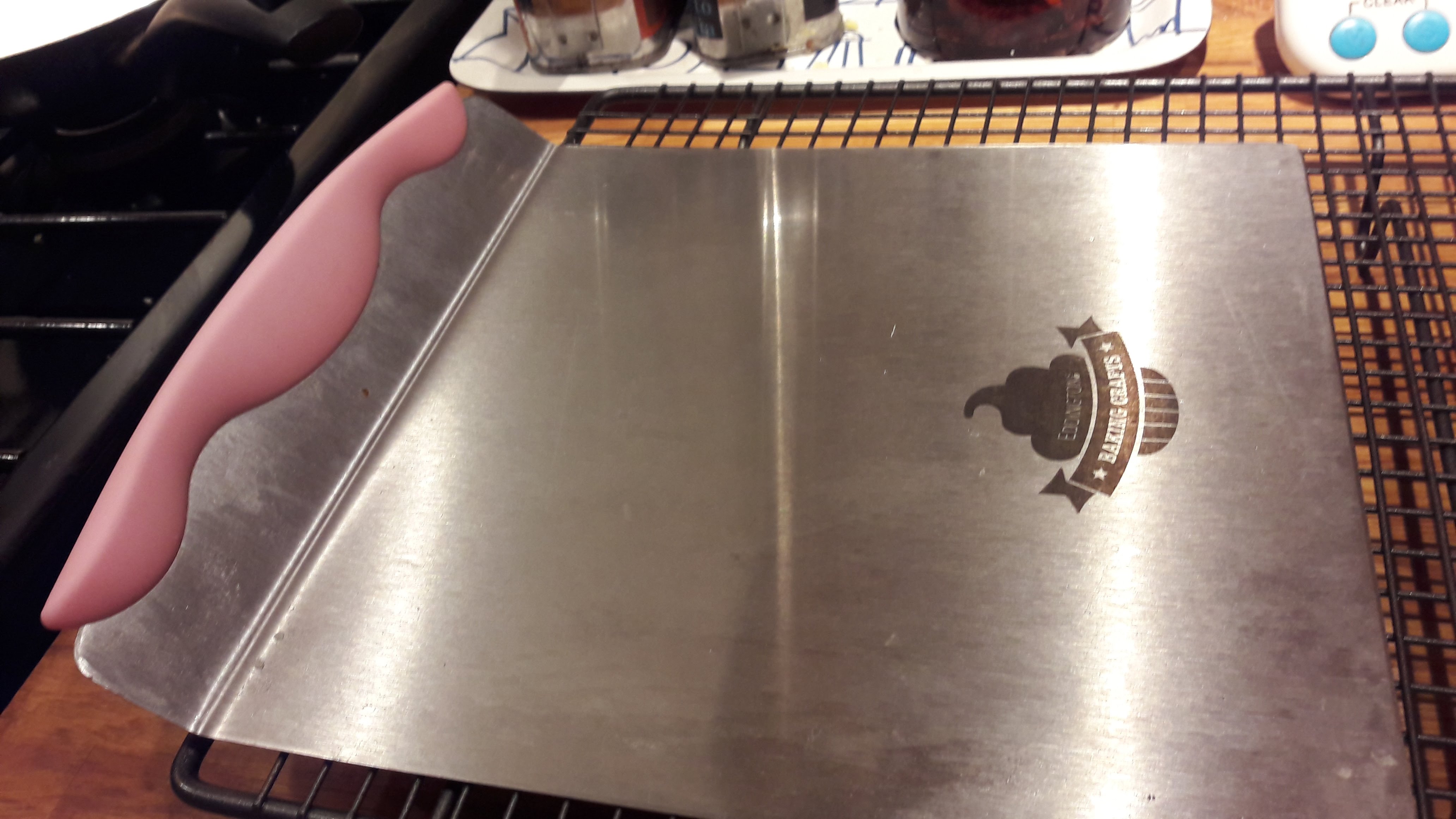
Great Cake Lifter


  • Place one piece of the baked pastry onto a serving board.
  • Cover the pastry with all the  pastry cream spreading it evenly  to the edges.
  • Place the second piece of pastry on top.
  • Dust the top lightly with icing sugar.
  • Cut into squares to serve.


Served on Las Palmas by Aynsley  from the 1960s.

Easier Option

Though not as authentic but easier you can just use the chilled budyń on its own as the filling.

Served here on  Greenaway by John Russell from the 1960s.


Piernik – Honey Spice Cake – Using Rye & Wheat Flour

Piernik is a cake which has been known in Poland since the 12th century.

The very first recipes used just honey, wheat or rye flour and spices (see notes in previous piernik post for spices)

I have tried a recipe which did just use honey, rye flour and spices – I did not like the result at all, so will not be including that one!

I also tried one which used wheat and potato flour which also did not turn out well.

I then went on to make the recipe below which also uses wheat flour, egg yolks and icing sugar.

I tried this out twice as the first time it did not rise very much, so I doubled the amount of bicarbonate of soda and was pleased with the result.

Piernik with rye & wheat flour

Ingredients

110g rye flour

160g plain flour

160g runny honey

2 egg yolks

100g icing sugar

1 teaspoon of piernik spices (cinnamon : cloves : cardamom – in equal parts)

1/2 teaspoon of bicarbonate of soda

2 tablespoons of cold water.

Method

Pre-heat the oven to Gas Mark 3 – 160°C

Line the tin with aluminium foil, grease the foil and then coat with dried breadcrumbs.

Or

Grease & line  a 2 lb loaf tin or use a paper liner


In a large bowl mix together the rye flour, plain flour and the spices.

In a small saucepan heat the honey to boiling point & turn it off the heat & allow to cool slightly.

Pour the hot honey over the flour and mix well.


Beat the yolks with the icing sugar until  they are pale and fluffy.

Add this to the flour and honey mixture.


Mix the bicarbonate of soda with the water and mix this in.

Put the mixture into the prepared tin & smooth the top.

Brush the top with cold water.


Bake for around 40 minutes in the long tin & 1 hour  in the loaf tin. Check earlier and cover with greaseproof paper to stop burning if necessary.


This piernik is not very sweet and could be split in half and sandwiched back together with powidła  – Polish plum spread (see notes in previous piernik post) and covered in a chocolate coating made from melted butter & dark chocolate.

I just had it sliced and spread with powidła (Polish plum spread) or sour cherry or raspberry jam.

Served on La prune by Jet for Ter Steege in The Netherlands.

Beef & Piernik

The original recipe is Belgian – if fact a recipe from Flandres or Flanders in English.

It is a recipe I adapted from a book I bought in Belgium many years ago.

The recipe is called Carbonnade flamande and uses pain d’ épices to thicken and flavour a beef casserole.

Belgian beer is used in the original recipe – I use Polish beer (piwo) – which is also a light coloured lager beer.

(When I went to my local Polish shop – they did not have the beers I normally use such as  Żywiec or Tyskie, so I used the EB which was there & it was very good).

I use piernik – a Polish honey spice cake instead of the pain d’ épices.

Note

I often slice up part of a piernik I have made and freeze this so I have some ready for this recipe.

Ingredients

500g of braising steak – cubed

2 onions chopped

2 – 3 slices of piernik (depends on the size)

500ml Polish lager

300ml vegetable or chicken stock (NOT BEEF) – can be from cubes or powder

1 bay leaf

Dried Italian herbs

2-3 grains of pepper

Sprinkling of salt

Oil for frying

Method

Pre-heat the oven to GM4 – 180°C

You need an oven proof casserole dish with a tight fitting lid  – I use an enamelled dish.

Fry the beef lightly and then put this into the casserole dish.


Add the chopped onions, herbs, bay leaf, peppercorns and salt.

Chop the piernik into cubes and add this to the dish


Pour the beer over to cover the ingredients – add some of the stock if necessary.

The rest of the stock is used to top up the dish as it is cooking (this is better than putting it all in at the start).

Cook at GM4 – 180°C, for 1 hour then turn the oven down to GM3 – 160°C and cook for another 2 hours.

More time many be needed or you can take it out and re-heat it at GM4 – 180°C for at least 1 hour the next day.

Serve here with steamed new potatoes.

To compliment the sweetness of this dish serve with something tangy such as

ogórki (gherkins) or a sauerkraut salad.

Save

Piernik – Honey Spice Cake

Pierna is an old Polish word for spices and  piernik is a cake made with honey and spices.

Some sources say the name is from pieprz – pepper or piorun – thunderbolt or devil – because of its spiciness.

These cakes have been known in Poland since the 12th century and the spices would have come from Turkey (originally brought back by the crusaders) or India.

The very first recipes were just honey, flour (wheat or rye) and spices.

Honey was the original sweetener, long before sugar, and when you travel in Poland you will find many village ladies selling their own honey, the taste varies greatly depending on where the bees have found their flowers and the honey from a forest region is very dark and full of flavour.

Piernik  can vary  from being a soft dense cake to a drier but soft biscuit.

The Polish town of  Toruń is famous for its piernik and  Chopin was very found of this.

Pierniki (plural) coated with chocolate are called Katarzynki –  which means Katherine’s cakes – named after Katarzyna the daughter of one of the bakers.

Similar cakes are found throughout Europe including the French pain d’éspices, the Dutch peperkoek and the German lebkuchen.

Piernik is often translated as  Gingerbread but ginger is only rarely used!

The main spices used are cinnamon , cloves and cardamom with the addition according to different recipes of: aniseed, black pepper, caraway, coriander, nutmeg, dried orange and/or lemon peel and then in later recipes allspice which is from the New World.

Spice Mixture for Piernik

Having looked at many recipes I have made my own basic 3 spice mixture – to which I can add other spices if I want a variation.

I have mixed equal parts of ground cinnamon, cloves & cardamom & saved them in a jar.


In Polish shops in England you can buy ready mixed spices for piernik.

This little packet contains around 2 tablespoons.

You can use the mixed spice mixture which is sold by Marks & Spencer which contains: dried orange peel, cassia (a variety of cinnamon), ginger, nutmeg, pimento (allspice) and caraway.


Piernik in Poland is associated with the Christmas season and would be made for Christmas Eve and for Christmas Day, it would also be made for Święty Mikołaj – December 6th – St Nicholas Day. This a day for present giving in Poland to children and I would always get a piernik shaped and decorated to look like the bishop that was St Nicholas.

I have been looking through my many recipe books and there are just dozens of different recipes & I have been trying some of these out.

Many of the recipes have the addition of chopped nuts and/or mixed peel – I have not added these to my tests as I just wanted to try out the “basic” recipe.

Some of the recipes were for large quantities & I have cut them down in size.  Many do not give baking tin sizes or oven temperatures – so I have done a bit of trial and error with some of the ones I have done.

In many of the recipes the dough or batter once mixed up is left for up to 3 weeks before baking.  This indeed is a slow fermentation!

Even if the piernik is mixed and baked on the same day, most of them benefit from being wrapped and left for several days before serving.

The recipes in this post are ones you mix and bake on the same or the next day.

My mother made miodownik  – honey spice cake (which could be classed as a piernik). Hers is a more moist cake using vegetable oil, which is certainly a more modern ingredient.

This first recipe is adapted from a recently bought little cookbook.

The honey used in the book was given as fir tree honey – this would be a dark honey and would make the cake very dark.

(I remember getting some of this when one of my cousins came from Poland – it was nearly black!)

The honey you use will make a difference to the colour and flavour of the cake. I have used a basic clear type honey.

As only honey is used in this recipe, I think this one  is nearer the old recipes.

Piernik 1

Ingredients

450g plain flour

350g runny honey

125g butter or block margarine

Grated rind of a 1 lemon

1 egg – beaten

100ml of milk

1 + 1/2 teaspoons of spices

1 teaspoon of bicarbonate of soda

pinch of salt

Method

Pre-heat the oven to GM4 – 180°C.

Grease and line a large loaf tin – mine is longer than the regular 2lb tin.

Gently melt the butter in a small saucepan.

Mix together the spices, bicarbonate of soda and salt & add these to the flour in a large bowl.

Add the egg, the milk and the lemon rind and mix together.

Add the honey and the milk and mix together till you have a uniform smooth consistency.

Put the mixture into the tin and smooth the top.

Bake for around 50 minutes – checking a little earlier & cover with greaseproof paper it it looks like burning on the top if you need more time.

Leave to cool in the tin.


Wrap in foil to store.

The piernik can be dusted with icing sugar, topped with icing or with chocolate icing – of course these are relatively modern additions to the medieval piernik!

Variation

Addition of pepper

I made the piernik as above with the addition of 1/2 a teaspoon of freshly ground black pepper with the spices.

I did not think it added much to the flavour – I was expecting it to be a little peppery!


Piernik 2

This little honey recipe book has around 2 dozen recipes for piernik  to choose from! (miód is Polish for honey)


Ingredients

400g plain flour

1 tablespoonful of butter

120g of granulated sugar

2 eggs

250g runny honey

125ml of milk

1 teaspoon of baking soda

2 teaspoons of spices

Method

Warm the honey slightly.

Put the flour in a large bowl and rub in the butter.

Add the sugar,  bicarbonate of soda and the spices.

Mix in the eggs.

Add the honey

Add the milk & mix to give a very thick batter.

Cover the bowl with a cloth and leave it in a cool place for a couple of hours.

Grease & line a 32cm by 22cm baking tin.

Pre-heat the oven to GM 5 -190°C.

Put the cake mixture into the tin and spread it out.

Bake for around 30 minutes (check earlier  and cover if it looks like burning.)

Leave in the tin to cool.

Wrap in foil and leave for a couple of days .


Tea plate is Sonnet by Royal Doulton, 1971 to 1998.

This piernik can be dusted with icing sugar, topped with icing or with chocolate icing.

It can also be cut into 2 slabs which are then sandwiched together with powidła which is a lovely spread – often translated as jam but  is not really a jam.

It is made from fresh ripe plums which are heated and stirred for hours until the water is driven off and you get a thick paste.  The traditional version does not have any extra sugar added.

I bought some in my local Polish shop, I have seen it for sale before in glass jars, this product is in a plastic tub


Pierniczki – Small Honey Cakes

Pierniczki are a small cake or biscuit version of piernik.

For  Święty Mikołaj – December 6th – St Nicholas Day I often buy packets of these glazed with clear or white icing or chocolate (You can get them in lots of shops nowadays including Lidl & Aldi) but sometimes I make them myself as they are very easy & delicious.

Ingredients

280g plain flour

1 teaspoon of bicarbonate of soda

180g of granulated sugar

2 teaspoons of  spice

100g of runny honey

2 eggs

Optional

Icing sugar to dust

Method

Pre heat the oven to GM 5 – 190oC

Grease several baking sheets.

In a bowl mix all the dry ingredients together.

Beat the eggs lightly and mix these and the honey into the dry ingredients.

Place tablespoons well apart on the greased sheets and bake for about 10 minutes.

They do spread quite a bit.

Leave to cool for a few minutes on the tray and then put the on a wire rack to cool and the dust with icing sugar.

Pierniczki – Small Honey Cakes (filled)

The dough for these is made the evening before.

Ingredients

120g runny honey

60g granulated sugar

2 teaspoons of spice

40g of butter

250g of plain flour

1/2 teaspoon of baking powder

1 large egg

Filling

Powidła, apricot or sour cherry jam

Optional

Lightly beaten egg white for a glaze

Method

Heat the honey in a saucepan over a moderate heat and add the sugar and spices, stirring all the time for about 3 to 4 minutes so that the sugar is dissolved but do not let the honey boil.

Remove from the heat and allow it to cool.

In a separate pan melt the butter and then set that aside to cool.

In a large bowl add the baking powder to the flour.

Pour in the honey mixture, melted butter and the egg and mix with a a wooden spoon to form a soft dough.

Transfer to a small bowl and cover with a cloth and refrigerate overnight.

The next day -take out for 15 minutes before using.

Grease several baking sheets.

Pre-heat the oven to GM 4 – 180°C

You need a 6cm round cutter.

Cut the dough into halves or thirds.

Roll out the dough till it is thin and cut out circles.

Place a largish teaspoon of the powidła or jam on the middle of the circle (going for height).


The more jam the better but it can be hard to seal the circles – takes a bit of practice!

Place another circle on top and press the edges together firmly.


You can brush the tops with beaten egg white.

Place on the baking sheet – leaving some space between circles.


Bake for 15 minutes – checking earlier as they burn easily.

Leave to cool slightly on the tin before placing them on a wire rack.


Dust them with icing sugar.

Served on tea plates – Counterpoint by Royal Doulton 1973 – 1987.

Easy unfilled option

I think once you have tried the jam filled ones, these will be the only ones you want!

However if you want a harder biscuit to decorate with icing  then just place single circles on the baking trays and bake for 8 – 10  minutes – you really need to keep an eye on these as they burn very easily.

These come out as a quite hard biscuit.

These can be decorated with icing or chocolate icing.


Save

Save

Save

Save

Save

Save

Save

Save

Save

Save

Save

Save

Save

Save

Save

Save

Save

Save

Save

Save

Save

Save

Save

Save