Chocolate Cookies

  • I was given this recipe recently and it is amazing how the icing sugar comes out crinkled.
  • They are so chocolatey 
  • Cookies would be called ciasteczka in Poland.
  • After mixing up the ingredients you have to refrigerate for at least 4 hours.
  • I always mix this in the evening and leave it overnight.

Ingredients

  • 30g cocoa
  • 100g granulated sugar
  • 2 tablespoons sunflower oil
  • 1 egg
  • 1 teaspoon of vanilla extract
  • 65g plain flour
  • ½ teaspoon baking powder
  • ¼ teaspoon salt
  • 30g walnuts – chopped
  • *
  • 2 -3 tablespoons icing sugar

Method

  • Mix the cocoa and sugar together
  • Add the oil, beaten egg and vanilla essence.
  • Mix the flour, baking powder and salt together.
  • Mix the flour mixture with the cocoa mixture until combined.
  • Mix in the walnuts.
  • Cover the bowl and place in the fridge.
  • Leave overnight.
  • *
  • Pre-heat the oven to GM3 – 150°C.
  • Line 2 baking trays with baking paper.
  • Put the icing sugar into a small/medium bowl.
  • Using a spoon divide the mixture into 12 even pieces.
  • Place these onto a large plate.
  • Drop 3 pieces into the icing sugar.
  • Roll them a little in the sugar to coat.
  • Pick each one up and roll in your palms to make an even ball.
  • Roll the ball in the icing sugar again.
  • This initial coating really works to stop the mixture sticking to your hands.
  • Place the ball on the baking sheet.
  • Leave space as these will spread.
  • Repeat with the other balls.
  • Bake for 11-12 minutes.
  • They will be soft and firm up once they cool.
  • Leave them to cool on the tray for 5-10 minutes.
  • Transfer them to a wire rack to cool completely. 
Crown Staffordshire Serving Plate

Babeczki

INGREDIENTS

  • This is based on an old English recipe.
  • They have a shortcrust pastry base with slightly lemony filling.
  • They are best made with a rich buttery pastry.

Ingredients

  • Shortcrust pastry – Kruche ciasto – from 250g plain flour
  • *
  • 50g butter
  • 100g caster sugar
  • Grated rind of 2 lemons
  • 1 tablespoon of lemon juice
  • 1 tablespoon of soured cream
  • 2eggs & 1 yolk
  • 100g ground almonds

Method

  • Pre-heat the oven to – GM5
  • Butter shallow tart tins.
  • Roll out the pastry very thinly.
  • Cut out circles to fit and line each tart mould.
  • *
  • Cream the butter and sugar with the lemon rind.
  • Add in the eggs and yolk.
  • Mix in the lemon juice and  soured cream.
  • Mix in the almonds.
  • *
  • ¾ fill each tart – leaving room for expansion.
  • Bake for 15-16 minutes.
  • Leave to cool a little before removing them from the tins.
  • Served on Royal Standard – Lyndale – 1949 – 1960.

Coconut Macaroons

  • I think coconut is a relatively new ingredient in Polish cookery.
  • I am sure my mother did not use it.
  • Most Polish recipes that I that I have seen are for cakes that are similar to sweets called  Raffaello  – introduced by Ferrero in 1990.
  • This recipe is the same  as Makaroniki  –  Almond Macaroons with coconut instead of almonds.
  • They are so easy to make and a good use for spare egg whites.
  • Did you know that botanically coconuts are not a nut but a drupe (stone fruit) similar to a plum or a peach?

INGREDIENTS

  • 2 egg whites
  • 170g caster sugar
  • 170g desiccated coconut

METHOD

  • Pre-heat the oven to GM 3 – 160°C
  • Line 2 baking sheets with baking paper
  • Mix the sugar and coconut together.
  • Whisk the egg white till they form stiff peaks.
  • Fold in the coconut mixture carefully until well mixed.
  • Place tablespoons of the mixture on the baking sheets.
  • Flatten them down with the back of a spoon.
  • Bake for 20- 25 minutes.
  • Leave to cool slightly before removing them onto a wire rack.

Vintage Glass Dish

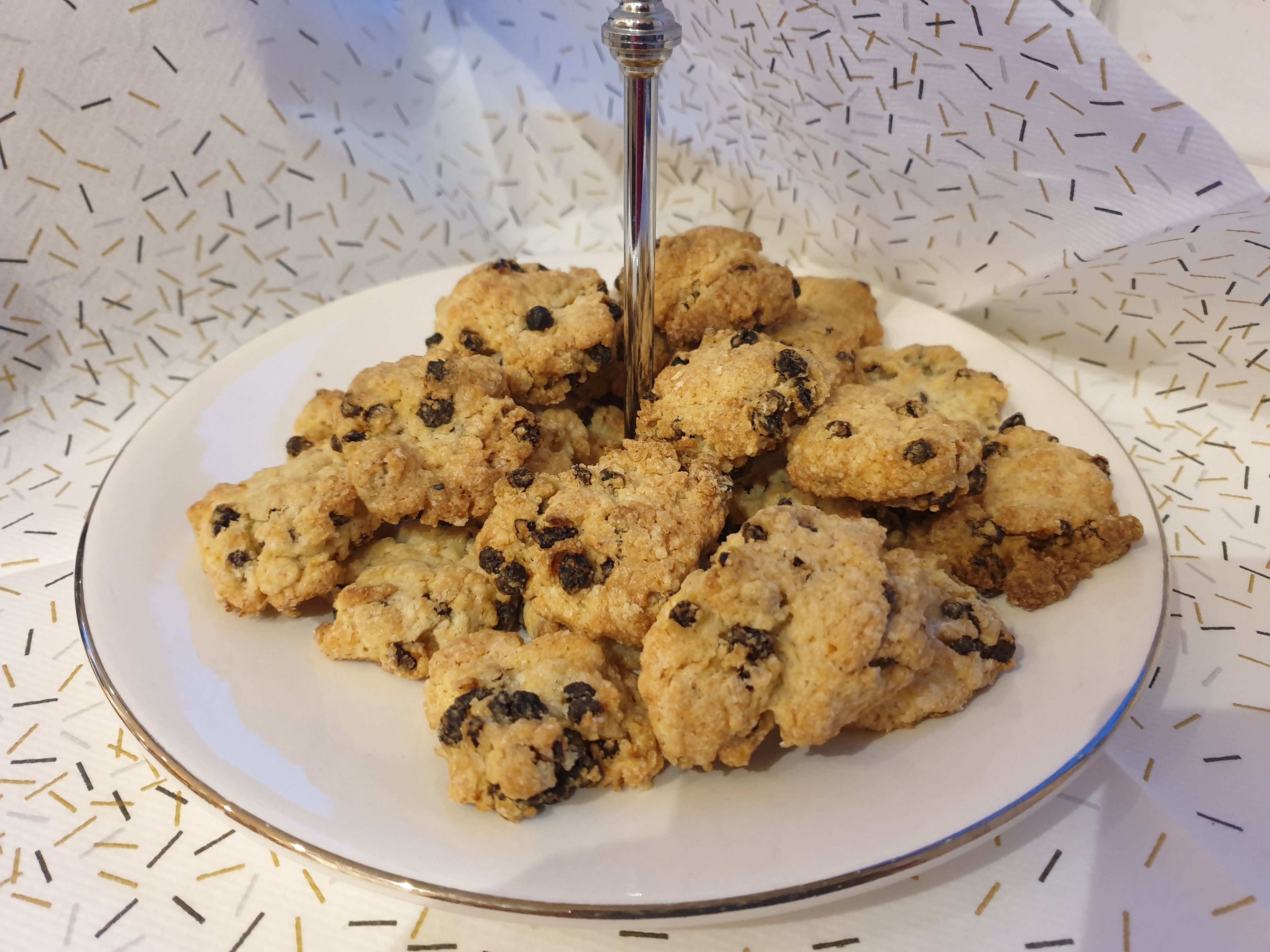
Ciasteczka

  • This recipe is based on an English recipe 19th century recipe for Rout Biscuits.
  • A rout is a large gathering or party and was often used to describe a card party.
  • They are intended to be eaten in one or two bites.
  • The original recipe was for around four times this amount as the baking was to cater for a large number of people.

INGREDIENTS

  • 225g plain flour
  • 110g butter
  • 90g granulated sugar
  • 110g currants
  • 1 egg – beaten
  • Grated rind of 1 orange
  • 2-3 tablespoons of brandy

METHOD

  • Pre-heat the oven to GM6 – 220°C
  • Flour several baking trays.
  • Rub the butter into the flour.
  • Stir in the sugar, currants and the orange rind.
  • Stir in the egg and enough brandy to make a stiff dough.
  • With your hands make small balls from the dough and place them on the baking sheets.
  • Flatten then slightly.
  • They do not spread when cooking so they can be fairly close together.
  • Bake for 14 – 15 minutes.

Bay Biscuits

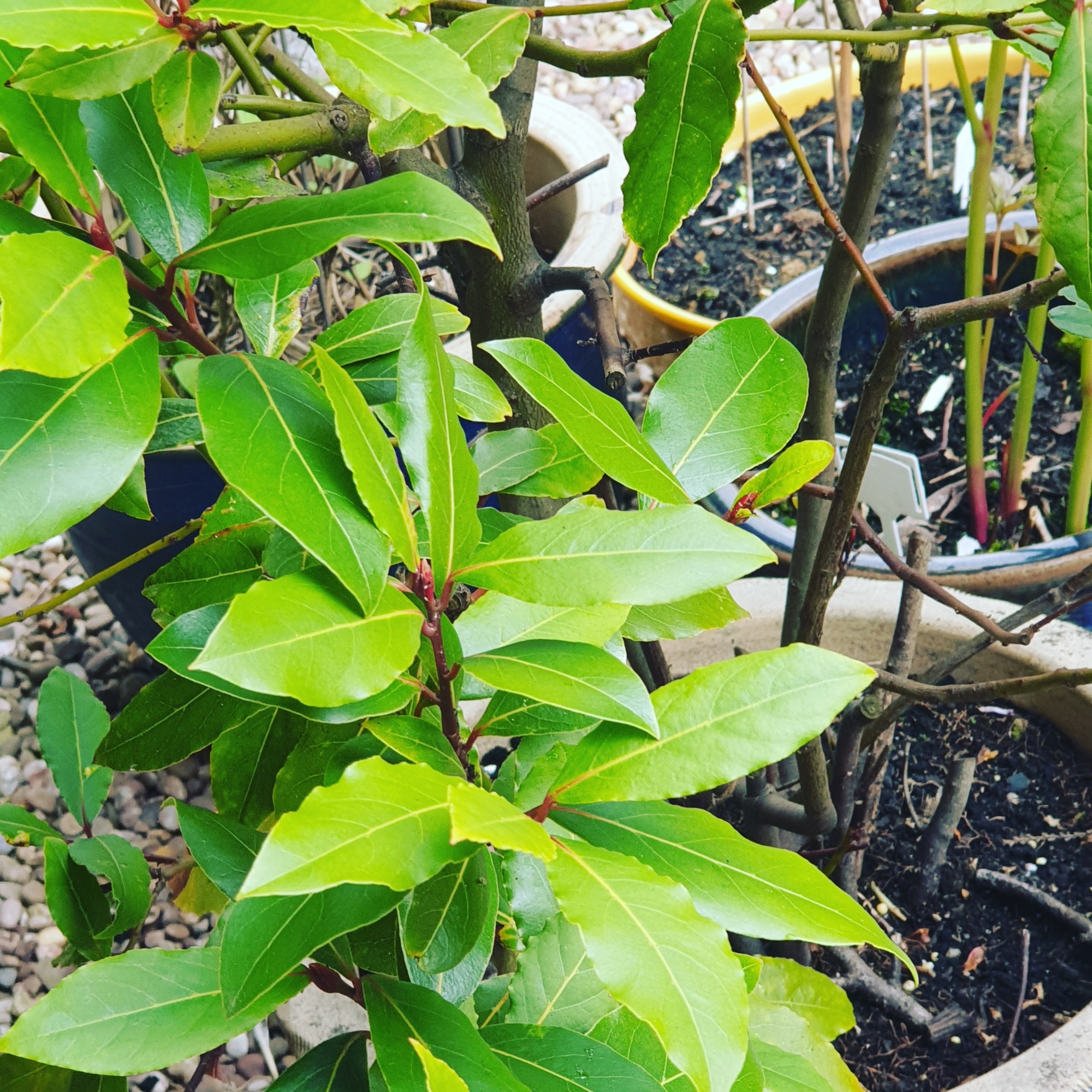
  • I came across this recipe for rich buttery biscuits flavoured with bay leaves, which sounded interesting.
  • You use dried bay leaves.
  • I think they are super.

Ingredients

  • 200g plain flour
  • 100g butter
  • 100g granulated sugar
  • 3 egg yolks
  • 3 tablespoons of water (approx.)
  • 2 dried bay leaves

Method

  • Pre-heat the oven to GM4 – 180ºC.
  • Grease some baking trays.
  • Take a tablespoon of sugar out of the 100g.
  • Grind with the bay leaves.
  • *
  • Rub the butter into the flour to get breadcrumbs.
  • Mix in the sugar and the bay leaves and sugar.
  • Slowly add the egg yolks and enough water to make a stiff dough.
  • Roll out thinly on a floured board.
  • Cut out circles using a 7.5cm round cutter.
  • Bake for around 12 minutes.
  • Leave to cool on a wired rack.

Makaroniki

Makaroniki are Almond Macaroons

  • Did you know that wild almonds contain large amounts of hydrogen cyanide?
  • A mutation produced the sweet almond trees, which became domesticated.
  • These sweet almonds only contain a very small amount of hydrogen cyanide.
  • Macaroons have been made in Italy from the end of the 8th century.
  • By the 16th century they were being made in France.
  • The word macaroon comes from the Italian ammaccare – to crush and these biscuits are called amaretti in Italy.
  • In my Kuchnia Polska (classic recipe book from the 1950s) the recipe includes how to prepare and grind the almonds!

INGREDIENTS

  • 175g ground almonds
  • 175g caster sugar
  • 2 egg whites
  • 2 to 3 drops of almond essence
  • Handful of flaked almonds or almond halves

METHOD

  • Line 2 baking sheets with greaseproof paper.
  • Pre-heat the oven to GM2 – 150°C.
  • Mix the ground almonds with the sugar.
  • Add the drops of almond essence.
  • Whisk the egg whites till stiff.
  • Fold in the almond mixture with a metal spoon.
  • Place tablespoons of the mixture on the baking sheets.
  • Flatten them with the back of a spoon.
  • Add some flaked almonds on the centre.
  • Bake for 20 minutes.
  • Leave to cool on a wire rack.


Pampuchy – 1

  • The word pampuchy is another of those many items of food translated as dumplings.
  • These are steamed yeast buns also known as  bułeczki naparze  or kluski drożdżowe.
  • The  puch part  in the word mean down as in duck or goose down and signifies lightness and fluffiness. (Though I have also read the word may come from a German word for pancake).
  • In olden times these were steamed using a cloth over a wide pan of water with a domed lid.
  • I use my 2 tier steamer and can do 2 layers of 4 at a time.
  • I think they are similar to Chinese steamed buns but doubt they would have had butter in them as that is not used much there.
  • Maybe no egg yolks either as the Chinese buns do not look as cream coloured.

Ingredients

  • 350g plain flour
  • 250 warm milk
  • 2 teaspoons of granulated sugar
  • ½ tablespoon of dried yeast
  • Large pinch of salt
  • 2 egg yolks
  • 2 tablespoons of melted butter

Method

  • To the milk add the sugar, yeast and 1 tablespoon of the flour.
  • Leave to froth up for around 20 minutes.
  • Add the yeast mixture to the flour and salt and add the egg yolks.
  • Mix together to make a rough ball.
  • Add the melted butter and mix it in until you have a ball again.
  • Knead for about 5 minutes.
  • Cover and leave to rise for about 1 hour.
  • Bring the dough together and gently knead for about 2 minutes.
  • Divide the dough into 16 equal parts.
  • Roll them gently into smooth balls.
  • Place on a tray or board, cover and leave for about 30 minutes.
  • Steam them for 10 minutes.
  • *
  • Best served immediately.
  • *
  • They go well with a dish with a lot of sauce such as gulasz or mushroom sauce.

Here they were served with beef pulpety in a gulasz style pepper & tomato sauce.

Jagodówki – Whinberry Yeast Buns

  • These  drożdżówki – sweet yeast buns – with whinberries(bilberries) get their own name.
  • Jagodówki or Jagodzianki– Jagody being whinberries.
  • These grew in abundance in the woods near where both my mother and father used to live in the North East of the then Poland.
  • I imagine both my grandmothers baking these when the fruit was ripe in summer.
  • Some also grew in the area of Lancashire where I was brought up and we often picked these.
  • If you are lucky enough to have these growing near you – go and pick them and bake.
  • Otherwise use imported blueberries – their big American cousins.

Filling

There are 3 ways to make the filling:

  • Berries sprinkled with granulated sugar and left for a while.
  • Berries sprinkled with granulated sugar and cooked in a pan for a few minutes.
  • Use blueberry jam.

Ingredients – Buns

  • 200g & 50g plain flour
  • 150 ml warm milk
  • 1 teaspoon of granulated sugar
  • ½ tablespoon of dried yeast
  • ¼ teaspoon of salt
  • 60g granulated sugar
  • 2 egg yolks
  • *
  • Egg white for brushing – beaten

Ingredients – crumble topping – kruszonka

  • 30g plain flour
  • 20g butter
  • 20g granulated sugar

Method crumble topping – kruszonka

  • Rub the butter into the flour to get breadcrumbs.
  • Stir in the sugar.

Method – Buns

  • Mix the milk, yeast,  1 teaspoon of sugar and 50g of plain flour.
  • Leave for 20 minutes.
  • Put the 200g  of plain flour,  60g of sugar, salt, yolks and yeast mixture in a bowl.
  • Mix together to form a soft dough.
  • Add a little extra milk if this is too dry.
  • Knead for 10 minutes – set a timer – till you get a smooth ball.
  • Cover and leave for 1½ – 2 hours.
  • Line baking tray with baking paper.
  • *
  • Lightly knead the dough for a few minutes.
  • Divide the dough into 6.
  • Roll each one to make a ball and then flatten it.
  • Place a tablespoon of the filling in the centre.
  • Take the edges of the dough and bring together and seal.
  • Place the balls, sealed side down, on the baking tray.
  • Brush with beaten egg white.
  • Sprinkle the kruszonkacrumble mixture over the top 
  • *
  • Cover and leave for 30 minutes.
  • *
  • Pre-heat the oven  to GM6 – 200°C.
  • Bake for 12-14 minutes.
  • Leave to cool on a wire rack.

Chocolate Macaroons

  • This is an English recipe, which is over a hundred years old.
  • These macarons were very popular in Edwardian England (1901 – 1910).

Ingredients

  • 2 egg whites
  • 85g ground almonds
  • 85g caster sugar
  • 85g grated dark chocolate
  • 30g ground rice

Method

  • Pre-heat the oven to GM4 – 180°C.
  • Line 2 baking sheets with baking parchment.
  • Mix all the dry ingredients together.
  • Whisk eggs whites until stiff.
  • Gently fold in the dry ingredients until well mixed.
  • Roll tablespoon sized balls in your hands.
  • Place well apart on the baking sheets to allow for spreading.
  • Bake for around 20 minutes.
  • Do not over bake them.

Cake Plate – Dubarry – Crown Devon from the 1930s

Caraway Biscuits 2

This is an old English recipe for caraway biscuits.

Compared to my first recipe for caraway biscuits it has a higher butter content and fewer caraway seeds. (you can always add more).

Ingredients

  • 270g plain flour
  • 225g butter
  • 200g granulated sugar
  • 1 teaspoon of caraway seeds
  • 1 egg – beaten

Method

  • Pre-heat the oven to GM2 – 150°C.
  • Flour two baking trays.
  • Rub the butter into the flour so you get fine breadcrumbs.
  • Stir in the sugar and caraway seeds.
  • Mix in enough of the egg to form a soft dough.
  • Roll the dough out to 1cm thickness.
  • Use an 8cm cutter to cut out the biscuits.
  • Re-roll the cast of dough and make more biscuits.
  • Bake for 30 – 35 minutes until light golden brown.
  • Leave on the tray on a wire rack.