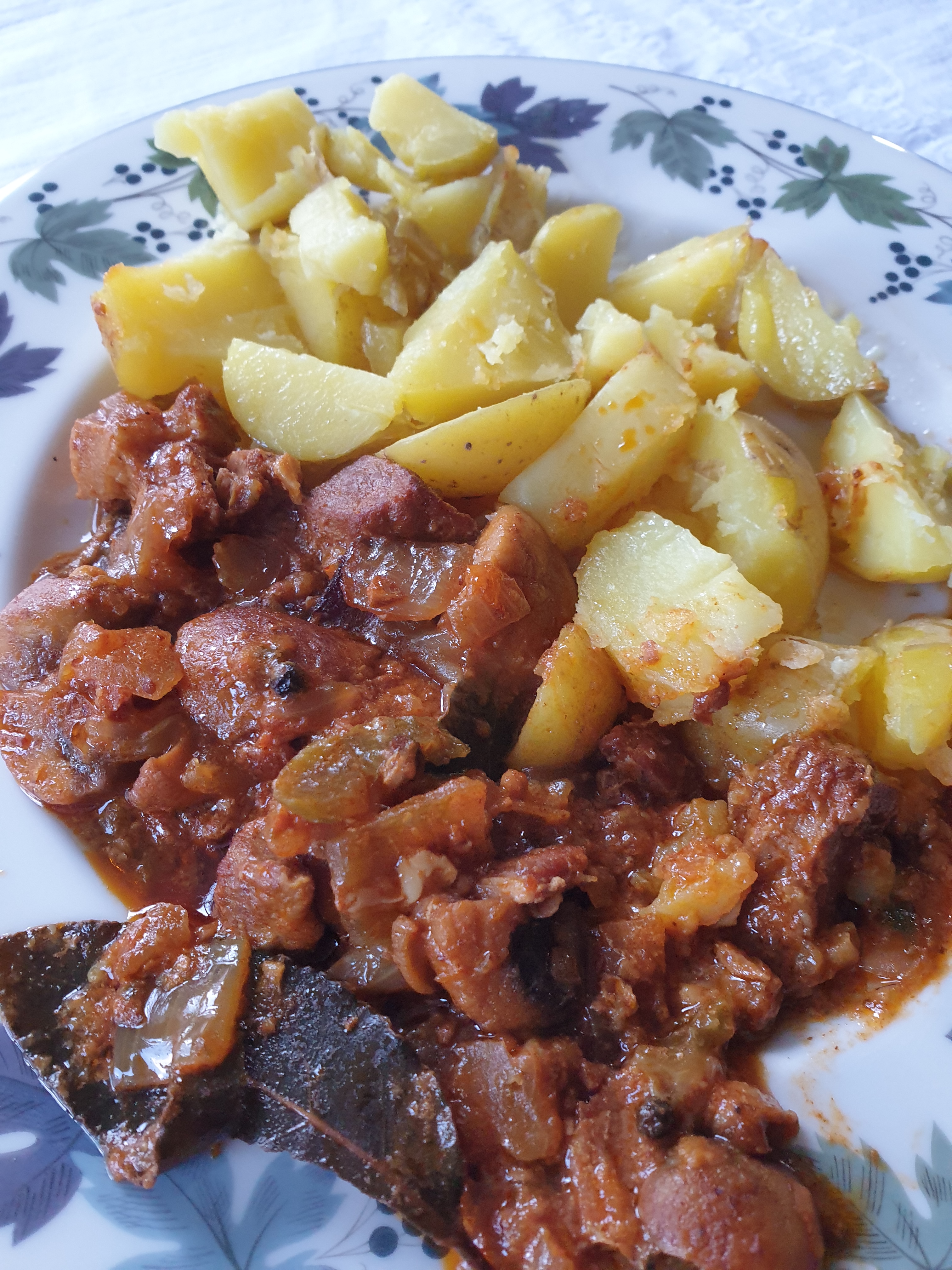
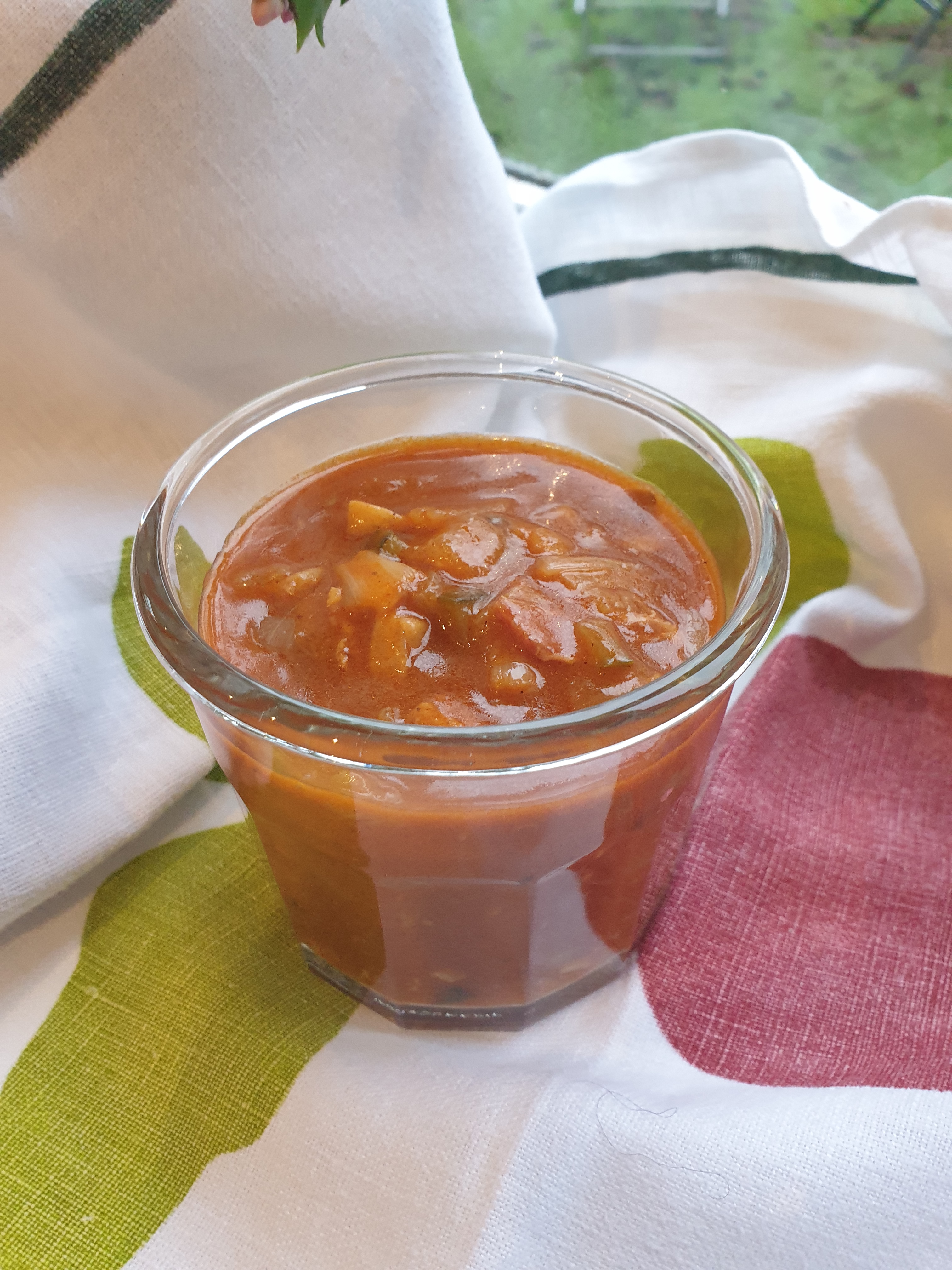
Sos myśliwski – Hunter’s Sauce

  • Sos  myśliwski  – this translates as Hunter’s sauce.
  • I can understand the name if wild mushrooms are used but otherwise I do not know why it gets this name.
  • Gherkins are used in the sauce and this addition verges on “magical”.
  • I had never made this before but will now be making it often as it is so delicious.

Ingredients 

  • 2 slices of smoked bacon – chopped
  • 100g of fresh mushrooms – sliced
  • 2 large gherkins – chopped into cubes
  • 2 tablespoons of butter
  • 1 tablespoon of plain flour.
  • 2 tablespoons of tomato purée
  • 1 onion – chopped
  • 2 cloves of garlic – chopped
  • Large pinch of allspice
  • 1 teaspoon of of ground paprika
  • 1 teaspoon of hot ground paprika
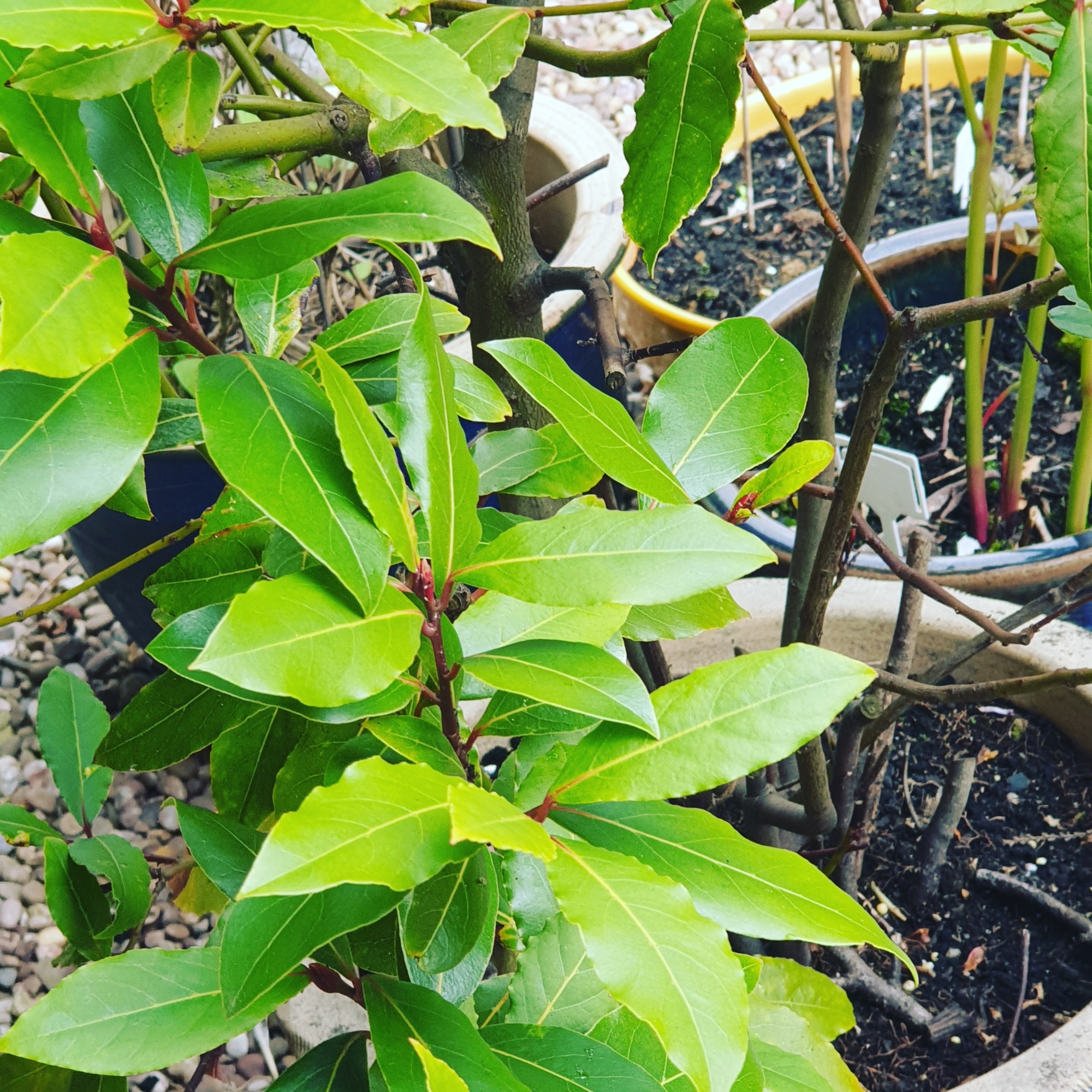
  • 2 bay leaves
  • 1 teaspoon of made mustard.
  • 500ml of vegetable or chicken stock.

Method

  • Melt the butter in a saucepan.
  • Fry the mushrooms, onions and garlic.
  • Add the bacon and fry together for a few minutes.
  • Add the flour and stir and cook for a few minutes.
  • To the stock add the tomato purée, allspice, both paprikas and mustard. 
  • Stir it all together.
  • Slowly add this to the fried ingredients and stir whilst it thickens. 
  • Add the bay leaves and gherkins.
  • Simmer for around 20 minutes till the ingredients soften.
  • Serve the sauce hot with roast meats.

Orange Tort

This is my 450 post – I hope everyone enjoys reading them – I love doing the research, cooking and writing.

  • My mother used to make an orange sponge cake with orange icing.
  • This was one of my favourite cakes.
  • This is a fancier version, sandwiched with orange butter cream with orange icing on top.
  • I made a small version but it is easy enough make a larger version.

Orange Cake – Ingredients

  • 2 Eggs – weight in shells
  • Equal weight of:
  • Butter
  • Caster Sugar
  • Plain Flour
  • *
  • 2 teaspoons of baking powder
  • Grated rind of 1 orange
  • 30ml orange juice.

Orange Cake – Method

  • Grease and line the base of 18cm sandwich tins.
  • Weigh the eggs and then the other ingredients.
  • Cream together the butter and sugar until it is light and fluffy.
  • Add the orange rind.
  • Add the eggs, one by one whisking until the mixture is light and fluffy again.
  • Stir in the orange juice.
  • Add the baking powder to the flour.
  • Sieve the flour.
  • Fold in the flour with a metal spoon taking not to over mix the mixture and knock out all the air.
  • Divide the mixture evenly between the 2 prepared tins.
  • Bake in the centre of the oven for around 20 to 25 minutes.
  • The cakes should be golden brown and be clean when a cake tester is used.
  • Leave to cool on a wire rack.
  • Make sure the cake is completely cold before assembly.

Note – You need 1 large orange or 2 small oranges for the butter cream & icing

Orange Butter Cream – Ingredients

  • 50g butter (unsalted is best)
  • 100g icing sugar (approx)
  • Grated rind of ½ large orange (or 1 small)
  • 1 tablespoons of orange juice

Orange Butter Cream – Method

  • Cream the butter and icing sugar.
  • Add the rind and juice and mix well.
  • Adjust thickness with icing sugar if necessary. 

Orange Icing – Ingredients

  • 100g icing sugar (approx)
  • 1 tablespoon of  orange juice
  • Grated rind of ½ large orange (or 1 small orange)

Orange Icing – Method

  • Mix the juice and the rind .
  • Mix together with the icing sugar till smooth and thick.
  • Adjust the icing for top of cake or thick as a dripped down glaze.

Assembling the Cake

  • Do this when the cake is cold.
  • Save all the juice not required in the cake, buttercream and icing.
  • Divide the juice into two.
  • Place one round of cake onto a serving plate.
  • Skewer the cake with a wooden BBQ skewer
  • Spoon half of the orange juice over the top of the cake.
  • Leave for 5 minutes.
  • Spread the orange butter cream over the cake.
  • Place the second round of the cake on top.
  • Skewer the top with a wooden BBQ skewer.
  • Spoon the rest of the orange juice over the top of the cake.
  • Leave for a 5 minutes.
  • Spread the spread the orange icing over the top of the cake.
  • Served on Cake Plates by Allertons Ltd Pattern Number ALL5

Mushroom Sauce – Fresh Mushrooms

  • Nowadays you can get fresh mushrooms all year round so this sauce can be made at any time.
  • In Poland you can buy mushroom stock cubes which are very useful especially for making sauces.
  • Years ago I brought loads back to England – now you can find these in the many Polish food shops.
  • The ones I use are made by Knorr and contain a small amount of dried mushroom extract.*
  • * If you cannot get these maybe use a few drops of  Henderson’s sauce or Lea & Perrins – NOT TRIED.

Ingredients

  • 150g fresh button mushroom caps – white and/or chestnut
  • 500ml hot boiling water
  • 1 mushroom stock cube
  • 1 heaped tablespoon of potato flour or cornflour
  • 3 tablespoons of milk
  • 2 large tablespoons of soured cream.
  • Butter to cook the mushrooms in.

Note

I rarely have to add any more salt or pepper as the stock cube has enough seasoning in it.

Method 

  • Dissolve the stock cube in the hot water.
  • Slice the mushroom caps into fine slices and fry them gently in some butter till they are soft.
  • Simmer gently for about 5 to 10 minutes.
  • In a little dish mix the potato flour or cornflour with the milk.
  • Add the cornflour mixture to the cooked mushrooms and stir gently over the heat until the sauce thickens.
  • Remove from the heat and add the 2 large tablespoonfuls of soured cream and mix.

Note

None of these amounts are exact – they are a rough guide depending on what you have – you can use more water, milk or soured cream and so on.

Super served with boiled or creamy mashed potatoes – sprinkle chopped dill or parsley over them before serving.

Great for any roast dinner – especially on Christmas Day.

Served on Carnation (1982 – 1998) and Burgundy (1959 – 1981)  by Royal Doulton.

Miodownik – 3

  • This is honey & spice cake, which could be made for Christmas time.
  • I saw this cake recently in a post by Thistles and Kiwis thistlesandkiwis.org whose interesting blog I follow. 
  • It is adapted from “In Good Company” by Sophie Hansen.
  • I have adapted it a little to make it more like a Polish Cake.
  • In this cake butter is used rather than oil as in my Mama’s miodownik.
  • This cake can be made at the last minute for Wigilia(Christmas Eve) or Christmas Day.

Ingredients

  • 150g butter
  • 240g runny honey
  • 260g plain flour
  • 3 teaspoons of baking powder
  • 100g granulated sugar
  • 1 teaspoon cinnamon
  • ½ teaspoon ginger
  • ½ teaspoon nutmeg
  • Zest of 1 orange
  • 3 eggs – beaten
  • 200g full fat Greek style yoghurt
  • *
  • Icing sugar to dust or lemon icing

Method

  • Pre-heat the oven to GM4 – 180°C
  • Grease and line a 32 x 22cms or 26 x 20cm cake tin.
  • Melt the butter in a saucepan.
  • Add the honey and mix well together.
  • Add the orange zest.
  • Leave to cool for 5 minutes.
  • Mix the baking powder and flour together.
  • Add the sugar and spices.
  • Add the eggs and yoghurt and mix well.
  • Add the butter and honey mixture.
  • Mix everything together to give a thick batter.
  • Pour into the prepared tin.
  • Cook for 30 -35 minutes.
  • Leave to cool on a wire rack.
  • *
  • Dust with icing sugar to serve or glaze with a thin lemon icing.*

Royal Standard – Lyndale tea plate – 1949 – 1960.

*Option – Add a Chocolate glaze – this one was some Chocolate with Orange Peel melted with butter.

  • The china tray is by Ross Dean in Burslem
  • The octagonal tea plate is by Paragon – Made in England and hand-painted. 

Szary sos – Grey sauce

  • This is a very old Polish recipe.
  • Szary is translated as grey but it can also mean dusky or dark, which sounds better.
  • Some books call it Polish Sauce.
  • Wine is not a Polish product.
  • I think you could use a sweet vermouth or sherry – will try that next time.
  • Maybe if you do not have any piernik – honey spice cake – you could use plain sponge and some peirnik spices such as cinnamon and cloves.
  • *
  • It is often served with fish such as carp, perch or pike.
  • I think it would go well with roast meats such as chicken or pork.

Ingredients

  • 1 small onion – finely chopped
  • 1 – 2 tablespoons of butter
  • 1 tablespoon of plain flower
  • 50 – 70g piernik (honey spiced cake)
  • 300ml vegetable stock (can use chicken or fish)
  • 125ml red or rose wine
  • 50g sultanas or raisins
  • 20g flaked almonds
  • Juice of ½ lemon
  • Sugar & lemon juice to taste
  • Salt & pepper to taste

Method

  • Melt the butter in a medium sauce pan.
  • Add the onion and stir.
  • Cook until they are soft and golden.
  • Add the flour and cook with stirring for a few minutes.
  • Stir in the stock and cook till the liquid thickens.
  • Add the wine and stir and cook again.
  • Break up the piernik into small pieces and add this to the sauce.
  • Cook for a few minutes until the cake falls apart.
  • Add the sultanas and gently simmer for a minute or two.
  • When ready to serve adjust the thickness with a little more wine if needed.
  • Add the lemon juice.
  • Adjust the taste with sugar, lemon juice and seasoning.
  • Pour the sauce over the food.
  • Sprinkle with the flaked almonds.

Carrot Piernik – 2

  • This is a variation of my previous carrot piernik and I think even better.
  • Demerara sugar is used, which is not really found in Poland, but you could used granulated sugar instead – should not make too much difference.
  • The use of vegetable oil in this recipe would not have been possible until the early 20th century.
  • The spelt flour that is used in this recipe is the flour of an ancient wheat grain – Triticum spelta.
  • It has been cultivated since 5,000 BC.
  • It is the precursor of modern wheat – Triticum aestivum.
  • Spelt has a lower yield than modern wheat but it will grow in poor soil and many different regions.
  • Spelt is thought to be easier to digest than modern wheat.
  • Spelt makes this piernik extra nice
  • You could use whole-wheat flour if you cannot find spelt.
  • This piernik can be made at the last minute – it stays moist for 3-4 days.

Have you ever baked with spelt flour?

Ingredients

  • 125ml sunflower oil
  • 120g demerara sugar
  • 2 eggs
  • 150g spelt flour
  • Grated zest of a small orange
  • 1 teaspoon ground cinnamon
  • 1 teaspoon ground nutmeg
  • ½ teaspoon ground ginger
  • ½ teaspoon ground cloves
  • Pinch of salt
  • Pinch of pepper
  • 1 teaspoon of baking powder
  • 200g coarse grated carrots
  • 50g chopped walnuts (optional)

Method

  • Pre-heat the oven to GM4 – 180°C.
  • Grease and line the base of a 20cm diameter tin.
  • Mix together the flour, baking powders, spices, salt and pepper.
  • Whisk together the oil, sugar, orange zest and eggs.
  • Mix in the grated carrots.
  • Mix in the flour mixture.
  • Stir in the nuts.
  • Pour the batter into the prepared tin.
  • Level off the top.
  • Bake for around 45-50 minutes.
  • Dust with icing sugar when serving.
Royal Doulton – Sonnet – 1971 – 1998

Mushroom Sauce using Dried Mushrooms

  • Mushroom sauce must be my favourite sauce.
  • I posted a long post with two versions of  mushroom sauce over a year ago.
  • As I have been posting lots of sauce recipes lately I thought I would re-visit mushroom sauce and have split the old post into two.
  • I looked through my Polish cookbooks and many of the mushroom sauces are made with only dried mushrooms.
  • These are delicious and have a strong flavour however it works out very expensive and are not available everywhere.
  • Dried & fresh mushrooms are used in this recipe.
  • The best dried mushrooms are Boletus edulis, in Poland they are called borowik or prawdzik (translates as the “the real thing”), in Italy porcini.
  • I recently got some other dried mushroom which are also good.

Podgrzybki Xerocomus badius

Mushroom sauce 

Ingredients

  • 150g fresh button mushroom caps – white and/or chestnut
  • 5g of  dried mushroom (around 3 slices)
  • 500ml hot boiling water
  • 1 heaped tablespoon of cornflour
  • 3 tablespoons of milk
  • 2 large tablespoons of soured cream
  • Butter to cook the mushrooms in
  • Salt & pepper to taste

Method

  • You need to start this sauce the night before or in the morning for use in the evening.
  • Cover the dried mushrooms with 500ml of boiling water and leave to soak.
  • The following day take out the reconstituted mushrooms and using a knife you can chop then up into tiny pieces or if the are soft enough you can  spread out the pulp on a chopping board.
  • Slice the mushroom caps into fine slices and fry them gently in some butter till they are soft.
  • Add the dried mushroom pulp and the liquor in which they were seeped.
  • Simmer gently for about 5 to 10 minutes.

  • In a little dish mix the cornflour with the milk.
  • Add the cornflour mixture to the cooked mushrooms and stir gently over the heat until the sauce thickens.
  • Add salt & pepper to taste.
  • Remove from the heat and add the 2 large spoonfuls of soured cream and mix well in.

Note

None of these amounts are exact – they are a rough guide depending on what you have – you can use more water, milk or soured cream and so on.

Super served with boiled or creamy mashed potatoes – sprinkle chopped dill or parsley over them before serving.

Served on Burgundy (1959 – 1981) and Carnation (1982 – 1998)  by Royal Doulton.

Battered Cauliflower

  • On a recent trip to my favourite restaurant – Healds Hall in Liversedge – I had a starter of battered cauliflower with fried chillies.
  • It was delicious and I decided to try out the battered cauliflower part.
  • I looked up recipes for various batters and found a myriad of recipes. 
  • Recipes use plain flour, potato flour, cornflour or rice flour or a mixture.
  • Most recipes used sparking spring water or soda water.
  • Some recipes used ice (not tried this).
  • Some recipes used beer (not tried this).
  • Some recipes used whole egg or egg white (I tried this).
  • I tried out 3 variations and they all worked well.
  • *
  • Here are a few tips for whichever recipe you use.
  • Cut the cauliflower into small pieces.
  • Dry the cauliflower if necessary.
  • Sprinkle flour over the cauliflower before dipping in the the batter – this helps it to stick.
  • Liquid must be as cold as possible.
  • Mix the batter quickly – lumps are okay.
  • Batter should be quite thin.
  • Use the mixed batter straight away.
  • The oil for frying must be HOT.
  • Do not put too many pieces in to cook at one time.
  • Remove the cooked battered cauliflower with tongs or a slotted spoon.
  • Leave on a wire rack for a few minutes.
  • But do not leave the cooked cauliflower resting for long.
  • *
  • You can serve these as they are or with a variety of toppings.
  • You can adapt this for other vegetables.

Batter Version 1 – quickest & easiest

Ingredients – 1

  • 100g plain flour & extra for dusting the cauliflower.
  • 200ml very cold sparkling water (or soda water)
  • Salt & pepper
  • *
  • Sunflower oil to fry.

Method – 1

  • Heat the oil till it is hot for frying.
  • Flour the cut cauliflower pieces.
  • Add salt & pepper to the 100g of flour.
  • Quickly mix in the water checking for thickness – you might not need it all.
  • Dip in the cauliflower.
  • Fry the battered cauliflower until lightly golden.
  • Remove pieces and place on a wire rack.

Batter Version 2

Ingredients – 2

  • 70g plain flour & extra for dusting the cauliflower.
  • 30g potato or corn flour**
  • 200ml very cold sparkling water (or soda water)
  • Salt & pepper
  • *
  • Sunflower oil to fry.
  • *
  • ** proportions can be different – 50:50 or 30:70

Method – 2

  • Heat the oil till it is hot for frying.
  • Flour the cut cauliflower pieces.
  • Mix the 2 flours together.
  • Add salt & pepper to the flours.
  • Quickly mix in the water checking for thickness – you might not need it all.
  • Dip in the cauliflower.
  • Fry the battered cauliflower until lightly golden.
  • Remove pieces and place on a wire rack.

Batter Version 3

Ingredients – 3

  • 100g plain flour & extra for dusting the cauliflower.
  • ½ beaten egg white
  • 100ml very cold sparkling water (or soda water)
  • Salt & pepper
  • *
  • Sunflower oil to fry

Method – 3

  • Heat the oil till it is hot for frying.
  • Flour the cut cauliflower pieces.
  • Add salt & pepper to the flour.
  • Mix in the egg white.
  • Quickly mix in the water checking for thickness – you might not need it all.
  • Dip in the cauliflower.
  • Fry the battered cauliflower until lightly golden.
  • Remove pieces and place on a wire rack.

Can just serve them as they are or with say lightly fried peppers and chillis

Tomato Sauce – Winter

  • This is a quick and easy sauce that can be made at all times of the year.
  • In olden times this could have been made in the winter when fresh tomatoes were not available.
  • This sauce is served hot.

    Ingredients

  • 50g tomato purée
  • ½ small onion – chopped
  • 250ml vegetable stock
  • 125ml soured cream
  • Juice of 1 lemon
  • 1-2 teaspoons of sugar – optional
  • Salt and pepper to taste

    Method

  • Simmer the onion in the vegetable stock until it is a pulp.
  • Blend with a stick blender.
  • Add the tomato purée, stir and simmer for a few more minutes.
  • Stir in the just of 1 lemon.
  • Adjust the sweetness with sugar.
  • Season to taste.
  • Stir in the soured cream just before serving.

Option

  • Add some paprika or mixed herbs to the sauce.

Obwarzanki

  •  Obwarzanki  or  Obarzanki  – the name suggests  parboiling.
  • Nowadays around 150,000 are sold on the streets of Kraków a day, mainly from carts
  • They are known from mediaeval times.
  • There is a mention of them in a document from 1394.
  • It is said the Queen Jadwiga (1373 – 1399) enjoyed them especially with herrings.
  • *
  • I have found many different recipes.
  • The ones in Kraków are made with yeast.
  • The two recipes I tried did not contain yeast.
  • I tried a recipe with plain flour, eggs and icing sugar.
  • The dough was made into rolls, which were plaited together.
  • This was quite hard to do!
  • After par-boiling seeds such as poppy or sesame seeds or salt can be sprinkled on them before baking.
  • The following recipe is easier to make into a simple circle shape. 
  • I preferred the texture and taste of these.
  • This is the recipe I will use again.

Ingredients

  • 300g plain flour
  • 160ml slightly warmed milk
  • 1 egg – beaten
  • 1/2 teaspoon salt
  • *
  • Water with 1-2 tablespoon of sugar or honey to boil.
  • *
  • Poppy or sesame seeds or salt flakes for top

Method

  • Mix the flour and salt.
  • Add the egg and enough milk to bring the mixture together.
  • Knead the dough until you have a smooth soft ball.
  • Cover and leave for 30 minutes.
  • *
  • Pre-heat the oven to GM4 – 180°C.
  • Divide the dough into 8 even pieces.
  • Roll each piece into a long thin roll.
  • Make a sort of flattened S shape.
  • Cut at the bends into 3 equal pieces.
  • Join each piece into a circle and pinch the joint together.
  • *
  • Get ready a large pan of water and add honey.
  • Bring to the boil.
  • Drop in the circles, one by one, around 5-6 to the pan.
  • When they float to the top, leave for a few more minutes.
  • Remove them with wooden tongs, shake of any water.
  • Place on a wire rack whilst waiting for the rest to cook.
  • *
  • Place them on a baking sheet.
  • Sprinkle with poppy seeds ,sesame seeds or salt flakes.
  • Bake for 20mins.

Served with here with scrambled eggs and smoked ham on Royal Doulton – Tapestry 1966 – 1988.

NOTE

  •  Obwarzanki go stale very quickly, they are usually made daily.
  • But you can heat them up again or toast them lightly.