Minestrone

Minestrone in Poland is called włoska zupa which means Italian soup.

It is a mixed vegetable soup (sometimes made with a meat base stock) and often has pasta or rice added to it.  Some versions have grated Parmesan cheese sprinkled on before serving.

The name comes from –  ministrare – to serve or to administer (some think this links to serving or administering it for health reasons).

My memories of this soup is that it had always had some shredded Savoy cabbage in it.

Savoy cabbage was introduced into England in the 18th century from The Netherlands and it is named after the Savoy Region in France.

In Poland it was introduced in the 16th century along with other vegetables by the Italian chefs that came with the Italian Princess Bona Sforza who married the Polish King, Zygmunt the Old.  In Polish it is called włoska kapusta  which means Italian cabbage.

I have found dozens of recipes and all use many different vegetables – I could not really get a consensus so have tried out a couple of variations.

Here is an alphabetic list of suggested vegetables:

  • Beans – Borlotti or Cannellini
  • Beans – whole green
  • Broccoli
  • Cauliflower
  • Carrots
  • Celery
  • Celeriac
  • Courgettes
  • Kohlrabi
  • Leeks
  • Onions
  • Peas
  • Peppers – red, orange or yellow
  • Savoy cabbage
  • Spinach
  • Tomatoes (or tomato purée)

You need around 600g of mixed vegetables  to make  2 litres of soup with 100 – 150g being Savoy Cabbage.

As a minimum, I would always have: carrots, onions (or leeks), Savoy cabbage and tomatoes.

You can use whatever is in season as well as frozen or tinned vegetables.

Marjoram (Origanum majorana) or Oregano (Origanum vulgare) are two of the herbs used to flavour Minestrone as well as Flat-leaved Parsley and maybe Basil.

Marjoram & Oregano are both in the Lamiaceae (Mint) family with Marjoram having a milder, floral and woody flavour and Oregano being stronger, more pungent and spicy.  (Marjoram is more readily available in Poland – especially in dried form).

I often just use dried Italian Herbs.

Minestrone Version 1

Ingredients

  • 3 – 4 tomatoes
  • 100g of Savoy cabbage
  • 2 – 3 carrots
  • 2 -3 sticks of celery
  • 50g green beans
  • 1 large onion
  • Olive oil for frying
  • Marjoram or Italian herbs – fresh or dried
  • Salt &  ground black pepper

Method

  • Skin the tomatoes using boiling water and chop them up.
  • Chop the onion into small pieces and fry in hot olive oil.
  • Chop the carrots, celery and green beans and add them to onion.
  • Continue frying gently to soften them.
  • Place these  and the tomatoes into a large pan and add 1.5 – 2 litres of boiling water.
  • Shred the cabbage into fine strands and add these to the pot.
  • Add the herbs and salt and ground black pepper.
  • Bring to the boil and then simmer for around 45 minutes.
  • Season to taste.

Option

If you like more of a tomato taste add a couple of tablespoons of tomato purée before simmering.


Served in Royal Doulton – Carnation – 1982 to 1998.

Minestrone Version 2

Ingredients

  • 3-4 tomatoes
  • 1 red pepper
  • 100 -150g Savoy cabbage
  • 2 – 3  carrots
  • 2  – 3 leeks
  • Spinach  – can be 50g of frozen
  • 1 -2 tins of Borlotti or Cannellini beans
  • 1.5 litres of chicken stock – can be from cubes
  • Olive oil for frying
  • Marjoram or Italian herbs – fresh or dried
  • Salt &  ground black pepper
  • Cooked pasta – a small handful per serving

Method

  • Skin the tomatoes using boiling water and chop them up.
  • Chop the leeks into rounds and fry in hot olive oil.
  • Chop the carrots and pepper and add them to leeks.
  • Continue frying gently to soften them.
  • Place these and the tomatoes into a large pan and add 1.5 – 2 litres of chicken stock.
  • Shred the cabbage into fine strands and add these to the pot.
  • Add the herbs and salt and ground black pepper.
  • Bring to the boil and then simmer for around 20 minutes.
  • Drain the beans from the tin and add these to the soup.
  • Add the spinach.
  • Bring to the boil again and then simmer for around 20 minutes
  • Season to taste.
  • Add some cooked pasta (chopped if necessary) to each soup plate and cover with hot soup and serve.

Served in Royal Doulton – Burgundy – 1959 to 1981.

Red on Red!

  • I recently went to a family gathering, although it was in fact a very sad occasion, it did include a lovely buffet meal.
  • There was a beetroot and carrot salad served, which had a lovely sweetness and seemed to me quite Polish in style.
  • I asked one of cousins if she knew who had made the salad and was told that this was one of the dishes supplied by a local “deli” in Consett.
  • So I have had a go at making this and made one with beetroot and another with red cabbage – both delicious.
  • Serve with cold meats and Polish style sausages or roast pork or grilled lamb chops.

Sweet Red Dressing

I made the same dressing for both of the salads – using redcurrant the first time and lingonberry the second.

Ingredients

  • Around 200g (7-8 tablespoons) of either Redcurrant jelly, Lingonberry jam or Cranberry sauce.
  • Juice of one lemon.

Method

  • Put the jelly/jam into a small saucepan.
  • Add the lemon juice.
  • Heat gently and stir with a wooden spoon.
  • Keep stirring until the ingredients have combined and you have a thick liquid.
  • Leave to cool before use.

Beetroot & Carrot Salad

Ingredients

  • Boiled beetroots  – I used 2 vacuum packets
  • 2 Carrots

Method

  • Chop the beetroot into small chunks or cubes.
  • Grate the carrots using the coarse grater.
  • Mix the beetroot and carrots together.
  • Pour the dressing over them and mix well.
  • *
  • I found that this was better if it was left for many hours as the beetroot really absorbs the dressing.
  • You can add the dressing to the beetroots first and leave overnight and then add the carrots the next day.
  • Instead of chopping the beetroot you can grate it using a coarse grater.

Red Cabbage & Carrot Salad

Ingredients

  • Half a red cabbage
  • 2 carrots

Method

  • Grate the red cabbage using a coarse grater.
  • Grate the carrots.
  • Mix the red cabbage and carrots together.
  • Pour the dressing over them and mix well.
  • *
  • This is also better when left for several hours before serving.

Note 

Both keep well for several days in a covered glass or plastic container in the fridge.

Half French?- Ciasto pȯłfrancuskie 1

Ciasto  pȯłfrancuskie translates as half or semi French pastry.

Now this does not really mean anything to me!

I am going to start this post with a little introduction to two similarly named pastries frequently used in Polish cooking.

  • Ciasto francuskie  – translates as French pastry
  • Ciasto pȯłfrancuskie  – translates as half or semi French pastry.

They are both buttery, unsweetened pastry.

French pastry is puff pastry.

Now I do not intend to write about puff pastry as it is something I am really not inclined to make as it is so time consuming and you can buy ready made version both chilled and frozen which are okay.

Maybe in several years when short of topics I might give it a go!

I am going to write about ciasto pȯłfrancuskie. I  have seen this described as rough puff pastry  – but it  is not – rough puff is slightly easier and quicker than puff pastry  but once again I am not going to write about this.

I have seen many different recipes for this half-French pastry and they fall into three broad categories:

  • ciasto pȯłfrancuskie – śmietanowe – dough  made with some soured cream.
  • ciasto pȯłfrancuskie – serowe – dough made with twaróg – curd cheese.
  • ciasto pȯłfrancuskie – drożdźowe – dough made with yeast.

Ciasto  pȯłfrancuskie 1 – with soured cream

Ingredients

  • 300g plain flour
  • 225g butter
  • 1 egg
  • 2 yolks
  • 4 tablespoons of soured cream

Method

This dough should be left for around 12 hours in a cool place before using therefore I usually make this in the evening for the next morning.

  • Put the flour into a large bowl.
  • Add the butter and with a knife chop it up roughly.
  • Then with your finger tips rub the butter in until you have fine breadcrumbs.
  • Beat the egg and yolks together.
  • Stir in the egg and some of the soured cream.
  • Bring the dough together, adding as much soured cream as is needed to bring the dough together.
  • Shape the dough into a ball and leave covered in the bowl in a cool place for around 12 hours.
  • *** After 12 Hours ***
  • Preheat the oven to GM7 – 220ºC
  • Grease several baking sheets.
  • Divide the dough into 4 and work with each quarter at a time, leaving the rest in a cool place .
  • Roll the dough out thinly
  • The dough is cut into shapes and a teaspoon of filling added and the pastry sealed as appropriate.

Traditional shapes

  • Squares filled and folded into triangles and sealed
  • Triangles filled and rolled up and formed into crescents
  • Circles filled and folded over into semi-circles and sealed.

I found that the circles using a 7cm cutter were the easiest to handle and gave the best filling to to pastry ratio and am sticking to this size and shape.


Filling ideas

  • Jam – I found this often escapes from the pastry – lots of care  is needed.
  • Poppy Seed Mix  – * see below
  • Mincemeat – This English fruit mix would be recognised in Poland as bakalie -Balkan mix.


  • Bake for 10 to 12 minutes till golden brown
  • Dust with icing sugar whilst still warm.


Poppy Seed Filling

I make this amount of  poppy seed filling and then divide it into 4 or 5 small batches and freeze them for later use.

Ingredients

  • 200g poppy seeds
  • 500ml milk (whole or semi-skimmed)
  • 50g ground almonds
  • 120 ml runny honey & 1 tablespoon
  • 25g butter
  • 1 egg yolk
  • ¼ teaspoon of vanilla essence
  • optional 1 teaspoon of  rum

Method

  • Put the poppy seeds and milk into a saucepan and simmer then together for 30 minutes, stirring occasionally to stop any sticking or burning. The aim is to cook the seeds and adsorb as much of the milk as possible. You need to watch this carefully and keep adjusting the heat to stop the mixture burning.
  • Using a fine sieve, strain the poppy seeds from the liquid – leave this for a while to remove as much liquid as possible.
  • The poppy seeds need to be crushed, I use a hand held blender for about 5 minutes which I find is the easiest way but you can use a pestle and mortar or a mincer.
  • Once crushed, place the poppy seeds back into a saucepan and add the ground almonds, the vanilla essence and the 120ml of honey and mix thoroughly.
  • Add the butter to the mixture and simmer gently for about 5 minutes and then leave this mixture to cool completely and then add the rum.
  • Whisk the 1 tablespoon of honey with the egg yolk until this is thick and creamy and then add this to the mixture.
  • Optional – add a teaspoon of rum.


Pearl Barley

I got the idea for cooking pearl barley this way after making krupnik which  is the name of the very traditional Polish pearl barley soup.

Pearl or pearled barley, is whole grain barley that has been processed to remove its fibrous outer hull and polished to remove some or all of the bran layer.  It is the most common form of barley for cooking.

Pęczak is the Polish for pearled barley.

Seeds and grains such as barley, buckwheat and millet were popular in Poland long before potatoes. Rice used to be very expensive, especially before World War 2.

You can cook pearl barley by either  boiling it in salted water or using the absorption method with three times the volume of water to pearl barley, to get a very good plain addition to a meal.

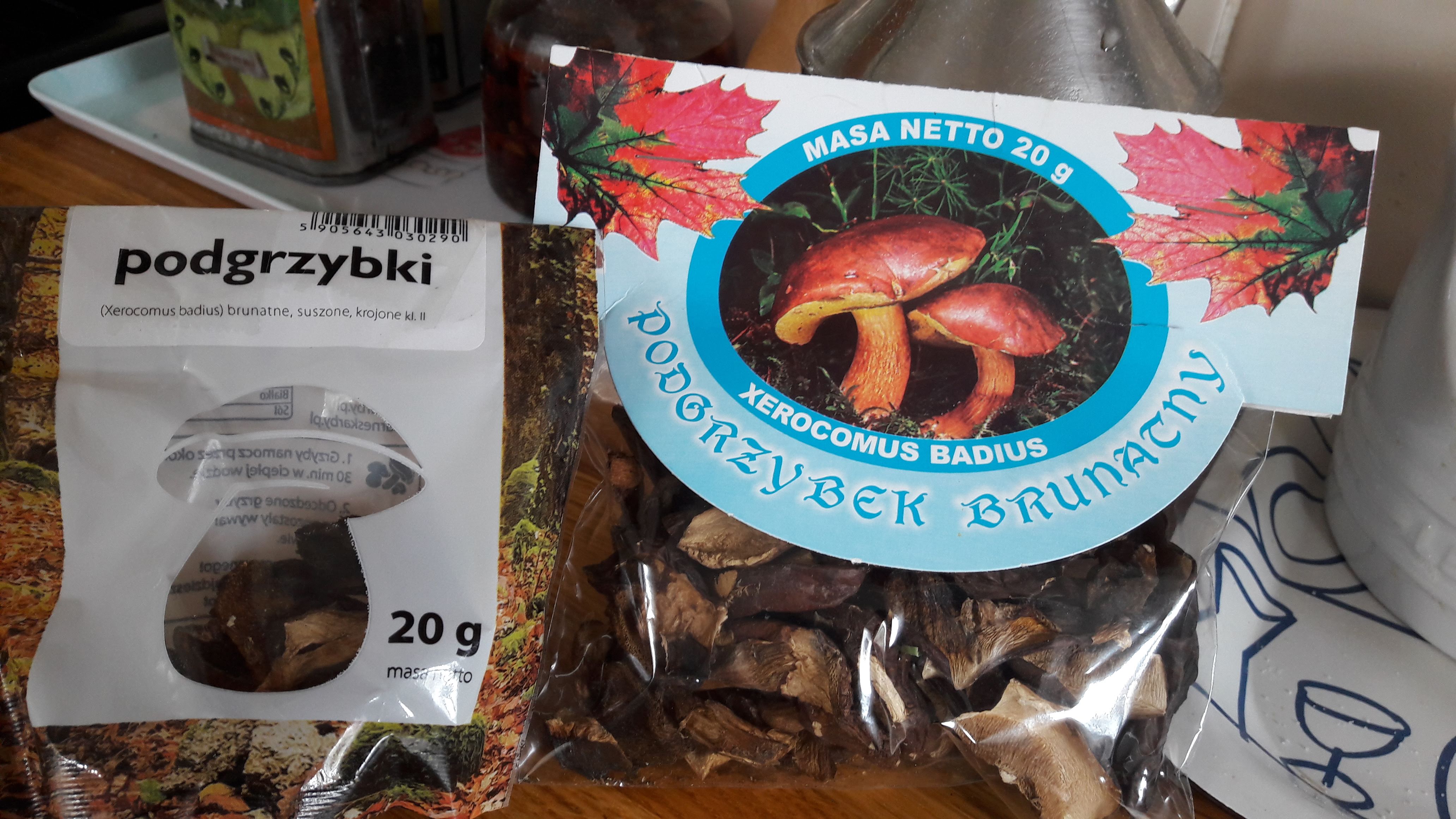
This method adds some cooked vegetables and lots of taste and I think the use of the dried mushrooms is a must.

Ingredients

  • 10g dried mushrooms
  • 1.5 litres of chicken stock or vegetable stock
  • 3 carrots
  • 2 parsnips
  • 3 stalks of celery *(or half a celeriac)
  • 4-5 peppercorns
  • 2-3 allspice grains
  • Salt & ground black pepper
  • 150g of pearl barley

Method

  • Cover the mushrooms with boiling water and leave overnight.
  • Chop the mushrooms into small pieces.
  • Add the chopped mushrooms and the liquor from soaking to a saucepan of stock.
  • Peel and grate the carrots on a medium grater.
  • Peel and chop the parsnips into small pieces,
  • Chop the celery stalks fine.*
  • Add the carrots, parsnips and celery to the stock.
  • Add the peppercorns and allspice to the pot.
  • Bring to the boil.
  • Rinse the pearl barley with cold water.
  • Add the pearl barley to the soup and bring back to the boil.
  • Cook for around 5 minutes.
  • Cover the pot with a lid.
  • Turn the heat down and simmer for around 30 minutes.
  • Check that the pearl barley is nearly cooked.
  • Continue simmering and stirring until all the liquid has been absorbed.
  • Check the seasonings.
  • *
  • *If using celeriac – peel, cook the whole piece – remove when nearly cooked and chop into small pieces and put back in.


Served in a J & G Meakin dish – Topic designed by Alan Rogers – 1966 – 1979.

Rogaliki – Filled

Rogaliki – Crescent Rolls

Updated 11 January 2024.

Rogaliki means little horns and these rolls are made into a crescent shape which look like horns.

This amount of dough makes 16 rolls and you will need 2 greased baking sheets.

Many Polish yeast recipes  make a rozczyn – a leaven in the form of a batter or starter to begin with – I have liked using this method very much.

Older Polish recipes use fresh yeast.  I tend to use dried yeast and had very good results.  I like using the little measured out sealed packets of dried yeast, which are sufficient for up to 500g of flour and are equivalent to 25g of fresh yeast.

I have two earlier post:

Bułeczki – bread rolls

Here I made a bread roll version of rogaliki.

Kołaczyki  –  little wheels

Here I made a Basic sweet yeast dough – version 2.

Now this could be Basic sweet yeast dough version 3 – I keep refining the recipe and this now has to be the very  best yet!

Ingredients

Leaven – Starter

  • 150g plain flour
  • 200ml warm milk
  • 4 tablespoons of granulated sugar
  • 1 pkt of dried yeast (= 1 tablespoon)

Rest of Ingredients

  • 300g plain flour
  • 100g butter
  • 2 yolks
  • *
  • a little more milk might be needed 
  • Egg white to glaze
  • Icing sugar to dust

Method

  • Mix the yeast and sugar into the hand hot milk.
  • Put the 150g of flour into a bowl and mix in the milk mixture until it is like double cream.
  • Cover the bowl and leave it to rise.
  • *
  • Rub the butter into the 300g of flour until it is like breadcrumbs.
  • Add the egg yolks and the yeast starter.
  • Mix till you get a soft dough – you might need to add a tablespoon or so of milk – depends on the flour.
  • Knead the dough till you have a nice smooth ball.
  • Leave in a bowl, covered,  to rise and double in size.
  • *
  • Pre-heat the oven to GM 4 – 180°C
  • Grease two baking sheets.
  • *
  • Knead the risen dough lightly for a few minutes.
  • Divide the dough into two.
  • Roll the dough out to make a circle/oval.
  • With a knife or pizza cutter divide the dough into 8 (nearly) triangles.
  • Place a teaspoon of filling at the fat end.
  • Roll up the triangle from the fat end to get the horn shape.
  • You can curve it slightly.
  • Place them on a baking sheet – as far apart as possible.
  • Repeat with the rest of the dough.
  • Brush the tops with egg white.
  • Cover loosely and leave for about 15 minutes.
  • Bake for around 14 – 15 minutes.
  • *
  • Leave to cool slightly and then dust with icing sugar.

The tiered cake stand is by Laura Ashley & the tea plates are Las Palmas by Aynsley from the 1960s.

Option

You can use half plain flour & half spelt flour – this also gives good results.

Fillings

You can use a whole range of fillings with the easiest to prepare being jam (though sometimes this is the hardest to keep in the pastry!). Traditional Poppy seed mix and sweet cheese mix as in many of my previous posts are often used.

Here are just a few new ones ….

Prune Filling

  • Make some very strong Earl Grey tea.
  • Chop up around 200g of pitted prunes.
  • Place the prunes into a bowl and cover with the warm tea.
  • Leave for a few hours to plump up the prunes.
  • Add the grated rind of a lemon.
  • Simmer the prunes gently.
  • Keep stirring & heating to drive off the any liquid – you want a thick pulp.
  • Leave to go cold completely before using.

Walnut Filling

  • Grind 100g of chopped walnuts.
  • Add the nuts to around 3 tablespoons of apricot jam.
  • Mix well together.

Ground Almond Filling

  • 100g of ground almond.
  • Add the nuts to around 3 tablespoons of apricot jam.
  • Mix well together

Date Filling

  • Chop 200g of dried dates.
  • Place in a small saucepan and cover with water – you can add a little lemon juice as well.
  • Heat gently and stir.
  • Cook until you have a soft pulp.

….. and of course you can try many more ……

Babka with Three Chocolates!

I was inspired by the use of 3 sorts of chocolate in a recipe I saw from Lidl to decorate a babka.

Babka is the name of a Polish cake – the word means grandmother and refers to the round dumpy shape reminiscent of an older lady wearing a long full skirt as is traditional in many Polish folk costumes.

Wooden Dolls in Polish Costumes

This marbled babka was made using a creamed sponge mixtureusing my mother’s friend’s basic recipe for a creamed sponge.

Ingredients – Cake

  • In this recipe you weigh the eggs in their shells and then use the same weights of butter, caster sugar and self raising flour.
  • Use 4 or 5 eggs
  • 2 drops of vanilla essence
  • 2 tablespoons of cocoa
  • 2 tablespoons of water

Method

  • Pre-heat the oven to GM4 – 180°C
  • Grease the babka tin with melted butter using a pastry brush.
  • For this babka, 4 eggs were used. (I could have used 5 eggs for this tin).
  • Cream the butter and sugar.
  • Beat the eggs with the vanilla essence and add them gradually – mixing in thoroughly.
  • Fold in the flour.
  • Use half of the mixture and place spoonfuls in the bottom of the tin.
  • Mix the cocoa and water together.
  • Mix the cocoa mixture into the second half of the cake mixture.
  • Placed this on top of the plain mixture and flatten it off.
  • With a metal knife lightly mix the two to give a marbling effect.
  • Bake the cake for 40 to 45 minutes.
  • Leave the cake to cool in the tin before turning out.

Ingredients – Icing

  • 100g of dark chocolate and 60g of butter
  • 50g of milk chocolate and 30g of butter
  • Shavings of white chocolate.

Method

  • Put the dark chocolate and butter into a glass bowl.
  • Heat the bowl over hot water, stirring till it all melts together.
  • Drizzle this over the babka and leave to cool.
  • Put the milk chocolate and butter into a glass bowl.
  • Heat the bowl over hot water, stirring till it all melts together.
  • Drizzle this over the dark chocolate.
  • Scatter the white chocolate shaving over the milk chocolate icing.


Portmeirion plate – The Holly & The Ivy – the pattern inspired by the 17th Century English Carol – launched in 1997.

Served on tea plates by Duchess – Poppies – from the 1980s.

Pierniczki

Piernik is Polish honey spice cake – pierniczki are little honey spice cakes

My Polish friend in Leeds was in Poland in November and bought some new bombki *(Christmas Tree ornaments).  These have wycinanki – Polish paper-cut designs(folk art popular since the mid 1800s) as their inspiration.

*Bombki – Glass baubles – in the past these were often blown eggs decorated with glitter. There are also many straw decorations – angels or stars.

Glass baubles originated in Germany in the 19th century  but they were soon being made in Poland with their large glass blowing industry.  Many are made in small family run workshops, some now specialise in individual and unusual designs.

She has included these and some angels in decorating a window in a chapel in Lancashire.


She also sent me a recipe for pierniczki – made with wheat and rye flour.

I tried them out – yummy – easy to make & cut out!

Ingredients

  • 100g butter
  • 100g runny honey
  • 300g plain flour
  • 100g rye flour
  • 130g icing sugar
  • 1 tablespoon of mixed spice (or 1 teaspoon each of ground cinnamon, cloves & cardamon)
  • 1 tablespoon of cocoa
  • 1 teaspoon of baking soda
  • 2 large eggs – beaten
  • Icing made with water or lemon juice to decorate

Method

  • Put the butter and honey into a small saucepan and heat gently to melt.
  • Leave to cool.
  • Mix all the dry ingredients together in a bowl.
  • Add the beaten eggs and the butter & honey mixture.
  • Mix together to make a soft dough.
  • The dough will be slightly sticky – do not add extra flour.
  •  Pre-heat the oven to GM 4 – 180°C.
  • Line baking sheets with greaseproof paper.
  • Divide the dough into four.
  • Use rye flour to flour the pastry board.
  • Roll out the dough to around 4mm thickness (no less).
  • Use cutters to cut out shapes.
  • Place them on the baking sheets with a little room between.
  • Bake for 9 -11 minutes.
  • Leave to cool on a baking rack.
  • *
  • These piernicki should be soft.
  • They are only semi-sweet.
  • You can have decorating them with icing – I just did a bit of drizzling.


Krupnik – Pearl Barley Soup

Krupnik is the name of the very Polish  – Pearl Barley soup.

Krupnik is also the name of the famous honey liquor drink known in Poland from the 13th century.

I always wondered why these two had the same name. I now know that krupa is an old name for grain and  barley in particular – hence the connection.

Barley ( Hordeum vulgare) grows in temperate regions and is one of the  oldest known cultivated grains, known in Eurasia as early as 10,000 years ago.

Jęczmień is the Polish for barley.

Pęczak is the Polish for pearled barley.

Pearl or pearled barley, is whole grain barley that has been processed to remove its fibrous outer hull and polished to remove some or all of the bran layer.  It is the most common form of barley for cooking. 

I think of this as a quite filling winter soup.

Ingredients

  • 10g dried mushrooms
  • 2 litres of chicken stock (homemade is best – but use cubes if you have no other)
  • 3 carrots
  • 2 parsnips
  • Half a celeriac or 3 stalks of celery (celeriac is more traditional but not always available in British shops).
  • 150g of pearl barley
  • 4-5 peppercorns
  • 2-3 allspice grains
  • Salt & ground black pepper
  • Flat-leaved parsley – to garnish

Method

  • Cover the mushrooms with boiling water and leave overnight.
  • Chop the mushrooms into small pieces.
  • Add the chopped mushrooms and the liquor from soaking to a saucepan of stock.
  • Peel and grate the carrots on a medium grater.
  • Peel and chop the parsnips into small pieces,
  • If using celeriac – peel, cook the whole piece – remove when nearly cooked and chop into small pieces and put back in.
  • If using celery stalks – chop them fine.
  • Add the carrots, parsnips and celery/celeriac to the stock.
  • Add the peppercorns and allspice to the pot.
  • Bring to the boil.
  • Rinse the pearl barley with cold water.
  • Add the pearl barley to the soup and bring back to the boil.
  • Cook for around 5 minutes.
  • Cover the pot with a lid.
  • Turn the heat down and simmer for around 30 minutes.
  • If using celeriac – remove and chop it up into small pieces and put it back in.
  • Check that the pearl barley has cooked, simmer for longer if need be.
  • Check the seasonings.
  • Serve garnished with flat-leaved parsley.


Served in Royal Doulton – Tapestry  – 1966 – 1988.

Little Poppy Seed Cakes

Christmas is coming up and I have been thinking of making an easier version of makowiec – the Traditional Poppy seed cake.

I have posted versions for larger cakes and for little buns with the traditional poppy seed filling.

Several years ago I got an Austrian cookery book which has many similar recipes to Polish ones and I made some babeczki  or buleczki – little cakes, with a yeast pastry & poppy seed filling for Wigilia from it.


I thought I would have another go at these but with some changes.

The poppy seed filling I have changed quite a bit and it is easier than my traditional one. The recipe for the dough I have changed slightly and the shaping method quite a lot.

Poppy Seed Filling

Ingredients

  • 180ml of milk (full fat or semi)
  • Around 100ml of runny honey (extra may be needed)
  • 120g of poppy seeds *
  • 50g of raisins
  • Strong Earl Grey tea
  • Grated zest of 1 lemon
  • *
  • * You can grind the poppy seeds – I used a little electric grinder.

Method

  • Make some strong Earl Grey tea.
  • Put the raisins in a small bowl and cover them with the hot tea and leave till they go cold.
  • Into a small saucepan put the poppy seeds and the milk.
  • Bring to the boil then lower the heat.
  • Simmer gently for around 20 minutes, stirring constantly.
  • Take care not to let the mixture burn.
  • Add the honey and continue heating and stirring.
  • Drain the raisins and add them to the mixture and mix them in.
  • Keep stirring and try and drive off any liquid left.
  • Taste for sweetness – you may want to add more honey.
  • Leave to go completely cold before using.
  • Add the grated lemon rind.
  • *
  • If this is too much filling – you can always freeze some.


Yeast Dough

Ingredients

  • 1/2 tablespoon of dried yeast
  • 4-5 tablespoons of milk (full fat or semi)
  • 250g of strong flour
  • Pinch of salt
  • 120g of butter
  • 20g of caster sugar
  • 1 egg yolk
  • 1 egg white for glazing (I always use just egg white now – it does not burn as easily as whole egg)

Method

  • Warm 3-4 tablespoons of the milk to hand heat.
  • Add the yeast and leave it to froth up.
  • Place the flour into a large bowl and add the salt.
  • Cut in the butter with a knife and then make breadcrumbs with your fingers.
  • Stir in the sugar.
  • Make a well in the centre.
  • Add the egg yolk and the yeast mixture.
  • Use a knife at first to bring the dough together.
  • You may need some of the extra milk.
  • Use your fingers to gather all the ingredients into  a ball.
  • Knead the dough for around 5 minutes till you have a smooth dough.
  • Leave the dough to rest for at least 45 minutes – covered with a tea cloth.
  • ******
  • Grease and line several baking trays.
  • Cut the dough into 3 or 4 portions.
  • Roll the dough out thinly.
  • Use a 6cm cutter to cut out circles.
  • Place a small teaspoon of filling on half of the circles.
  • Place a second pastry circle on top.
  • Use a pastry fork to crimp the edges together making sure they are sealed.
  • Glaze with beaten egg white.
  • Pre-heat the oven to GM4 – 180°C (quite low for a yeast pastry!).
  • Bake for 12-13 minutes.
  • Dust with icing sugar whilst still warm.
  • Leave to cool.

You could drizzle with runny lemon icing instead.

Served here on Duchess – tea plates – Poppies from the 1960s.


Piernik with Chocolate 2

Piernik in Poland is associated with the Christmas season and would be made for Christmas Eve and for Christmas Day, it would also be made for Święty MikołajDecember 6thSt Nicholas Day. This is a day for present giving in Poland to children and I would always get a piernik shaped and decorated to look like the bishop that was St Nicholas.

I came across this recipe, which has grated dark chocolate added to the mixture and the result is excellent.  I posted it last year as Piernik with Chocolate.  Here I have added a sour cherry jam topping which makes it even better!

Ingredients

  • 250ml of runny honey
  • 220g of granulated sugar
  • 2 large eggs
  • 1.5 teaspoons of mixed spice (or 0.5 teaspoons each of ground cardamom, cinnamon & cloves)
  • 350g of plain flour
  • 2 teaspoons of baking powder
  • 100g of grated dark chocolate (I used one with 74%cocoa)
  • 100g of mixed peel
  • To serve
  • Sour Cherry Jam & Icing Sugar

Method

  • Grease and line a 32 x 22 cm tin.
  • Pre-heat the oven to GM3 – 160°C.
  • Whisk together the honey, sugar, eggs and spices.
  • Mix the flour and the baking powder together and mix this in.
  • Stir in the grated chocolate and the mixed peel.
  • Pour the thick batter into the tinand smooth down the top.
  • Bake for 60 – 65 minutes until a tester comes out clean.
  • Leave to cool in the tin.
  • *
  • Warm 2 – 3 tablespoons of sour cherry jam to make it easier to use.
  • Remove the piernik from the tin.
  • Brush the top of the piernik thickly with the jam and leave to cool and set.
  • Dust the top with icing sugar.
  • Cut into rectangles or triangles to serve.