Traditional Polish Recipes Made Easy & New Variations
Author: jadwiga49hjk
I love cooking and baking. I love trying out new recipes and currently am trying out many old favourites from my Polish cookbooks and family recipes. I am trying out many variations, often to make them easier but still delicious.
I collect glass cake stands and china tableware, mainly tea plates, jugs and serving dishes, many of which I use on a daily basis. They are an eclectic mixture from the 20th & 21st century.
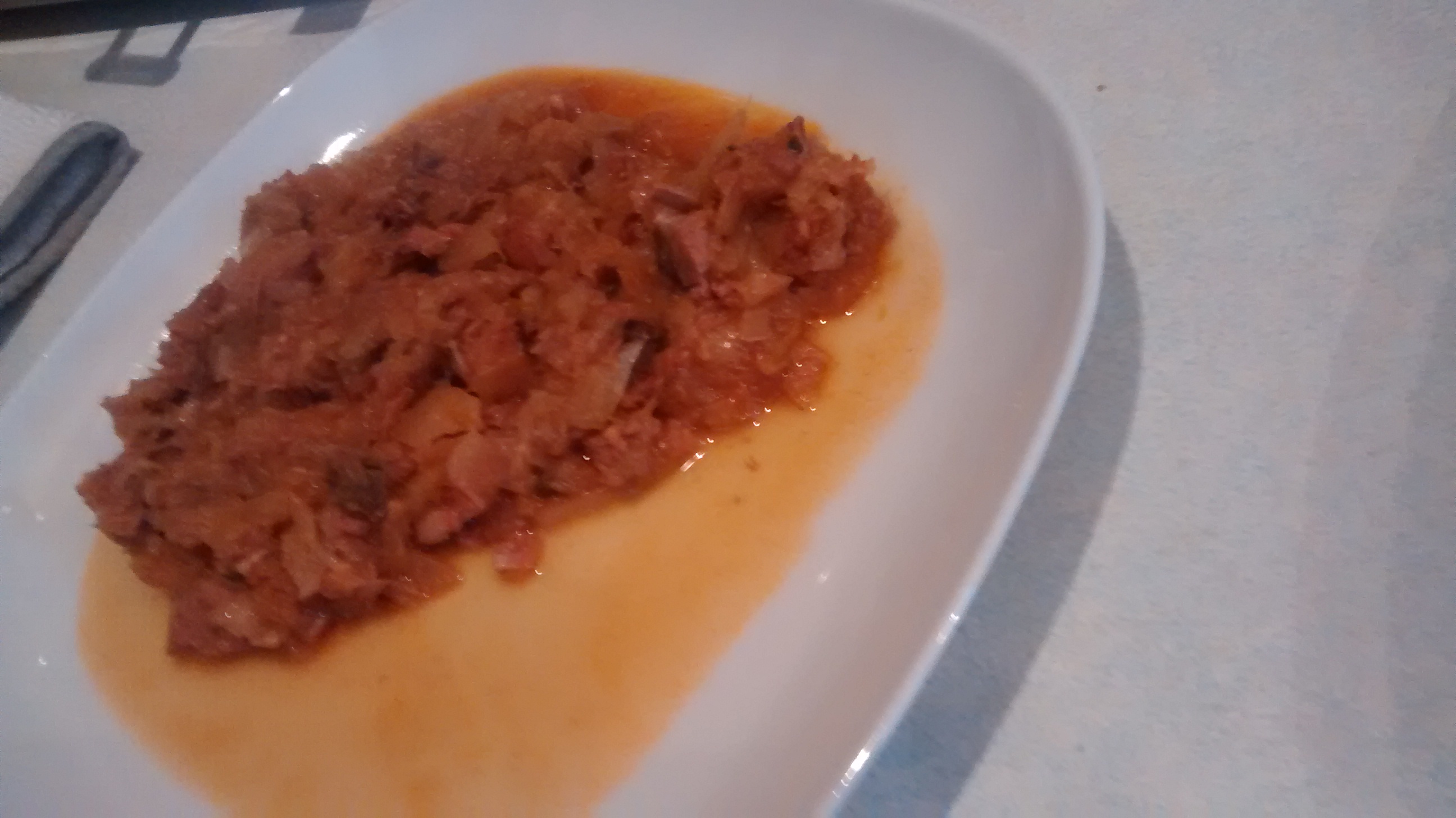
Bigos is often called Poland’s national dish. It is Poland’s sweet and sour dish using sweet (fresh) cabbage and sour(fermented) cabbage (sauerkraut).
Quick Bigos
This is a smaller, quicker version than the traditional bigos recipe.
I often make it somewhere in between the traditional recipe and this quick recipe as all the amount are very flexible.
If you can only get large jars of sauerkraut then you can put half the contents into a plastic bag or box and freeze it for later use.
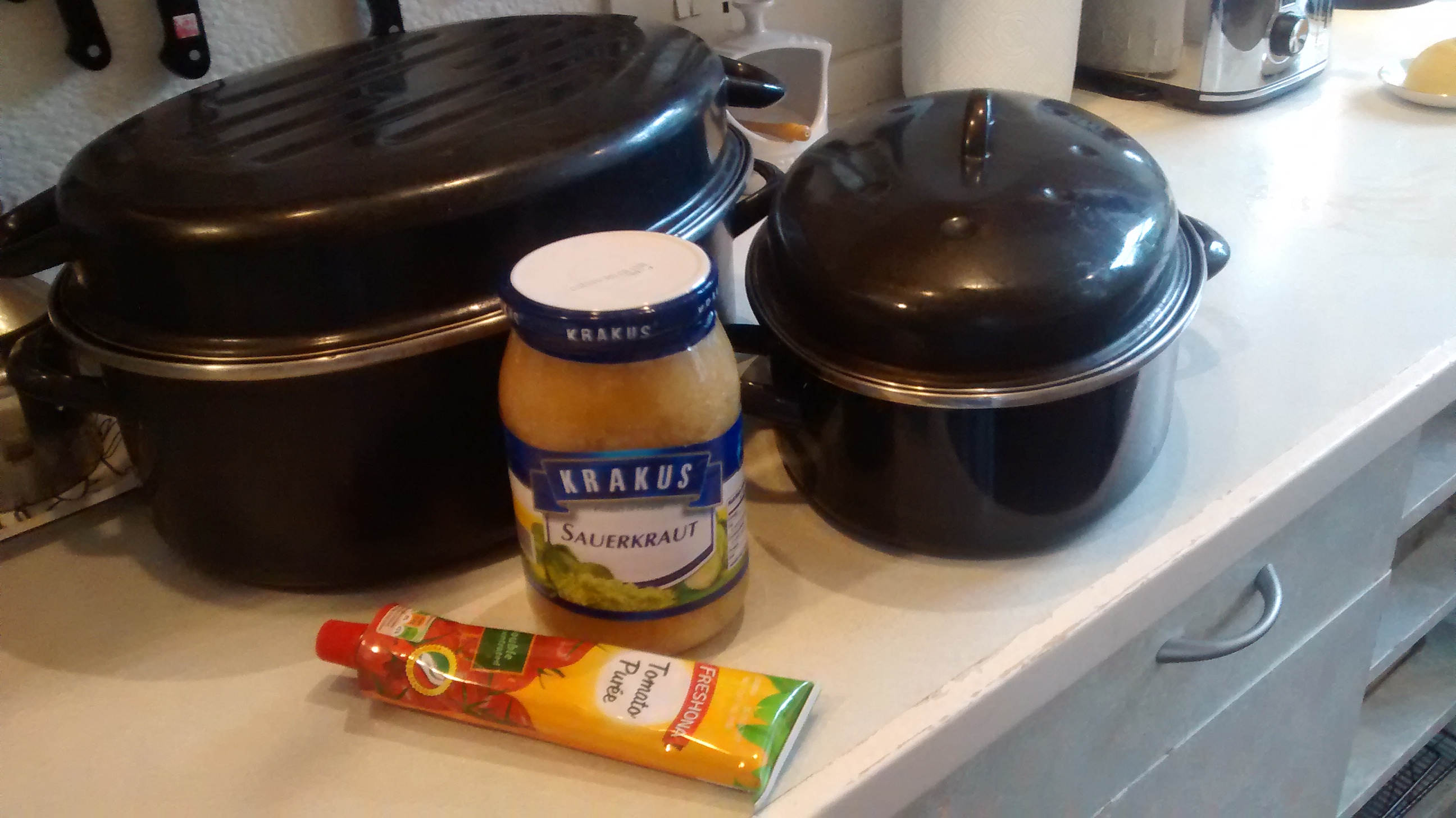
Getting Ready to Cook Bigos
BigosBigos
Ingredients
500g sauerkraut (1 small tin or jar or half a large jar)
300g fresh white cabbage – 1 small head or half a large head
100g of Frankfurters or Polish Ring
100g smoked bacon
1 large onion
100g tomato purée (1/2 tube)
20g plain flour
2 bay leaves
3 to 4 peppercorns
sugar or lemon juice to taste – optional
fat/oil to fry in
note – salt should not be needed as the sausage and bacon contain salt.
Finely chop the fresh cabbage into long strands and place in a large pan with the sauerkraut.
In a jug mix the tomato purée with some hot water and then add this to the pan. Add more boiling water to cover the cabbage mixture.
Add the bay leaves and peppercorns and then boil gently till the cabbage is becoming soft.
Slice up the various smoked sausages, chop the bacon into small squares and add to the cabbage mixture and boil gently till everything is soft.
Chop the onion into small pieces and fry till golden, add the flour and fry till the mixture is just about to burn and then add this mixture to the bigos.
Adjust the sourness to taste with sugar and or lemon juice.
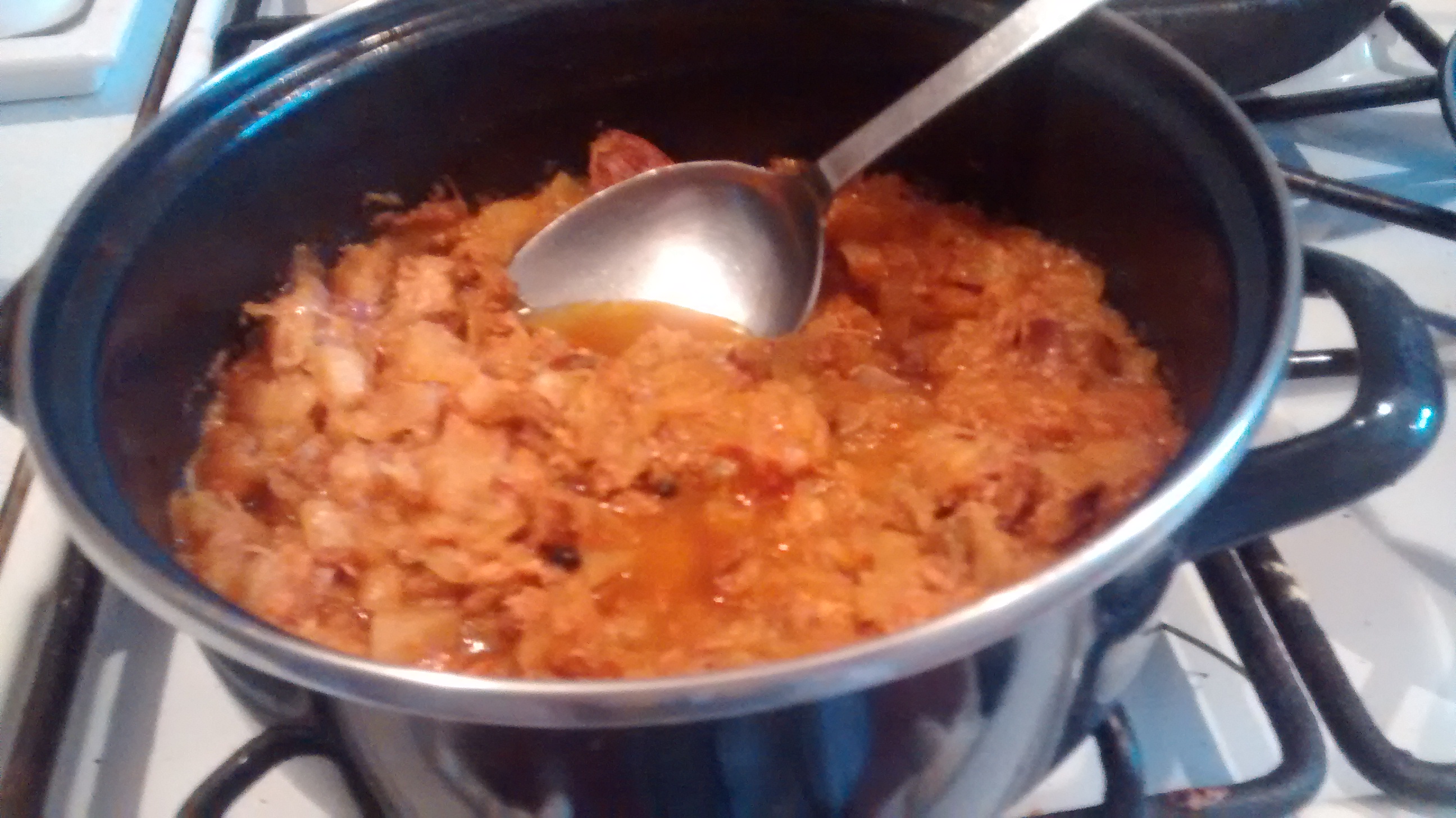
Now you can either heat it all together gently over a low heat with a lid on the pan, stirring the mixture occasionally or put the mixture into a large oven proof dish (I use an enamelled dish) with a lid and put it in the oven at GM 4 – 180oC for about 2 hours.
Bigos tastes better if made one day, left overnight, and then reheated in a saucepan or in a dish in the oven.
Note
Bigos freezes well – I portion it up into manageable portions which will serve 2 or 3 – wrapping it in plastic bags within a plastic box to prevent the tomato staining the plastic.
Serving
Bigos is usually served with rye bread but I often serve it with boiled or mashed potatoes.
Bigos is often called Poland’s national dish. It is served at every large gathering: christenings, weddings, funerals and every other excuse for getting together for food and drink. It is best made in advance by at least a day and then reheated. My father used to talk about using a horse and cart to take large wooden barrels of bigos to where there was going to be a celebration.
It is Poland’s sweet and sour dish using sweet (fresh) cabbage and sour (sauerkraut) cabbage. How sweet and sour you make it depends on taste, I always use roughly equal amounts of fresh and sour cabbage – a large white cabbage to a large tin or jar of sauerkraut. You can add sugar or some lemon juice to alter the sweet/sour balance.
This was a Hunter’s stew with all the meat and game that was available in the long hard winters going into the pot with the cabbage. A variety of mixed fresh and smoked meats and sausages are used, the amount can vary with how much meat you have.
Served with rye bread with or without butter and a glass of beer or vodka, it is delicious.
The mixture of cabbage and tomato in bigos is very Polish, as a little girl I thought that cooked cabbage was always orange to red rather that pale to dark green as my mother always used the two together in all her cabbage recipes.
Tomatoes were brought to Poland in the 16th century by the Italian chefs who came with the Italian Princess Bona Sforza who married the Polish King, Zygmunt the Old. The Polish word for tomato – pomidor, shows its Italian origin.
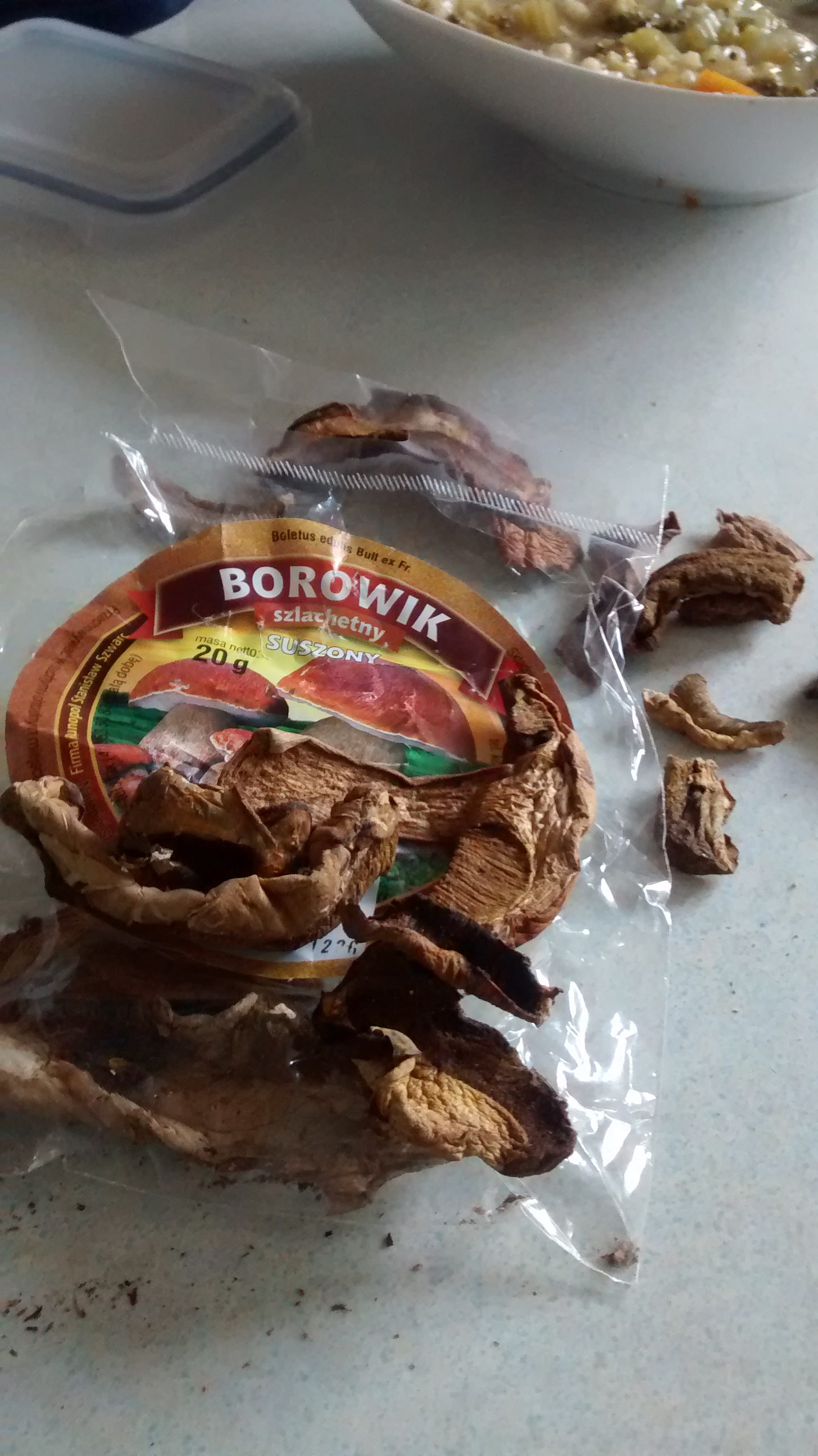
Getting Ready to Cook BigosDried Mushrooms
Enamel PansEnamel Pans
I have many of these enamel pans they are good for slow cooking in the oven.
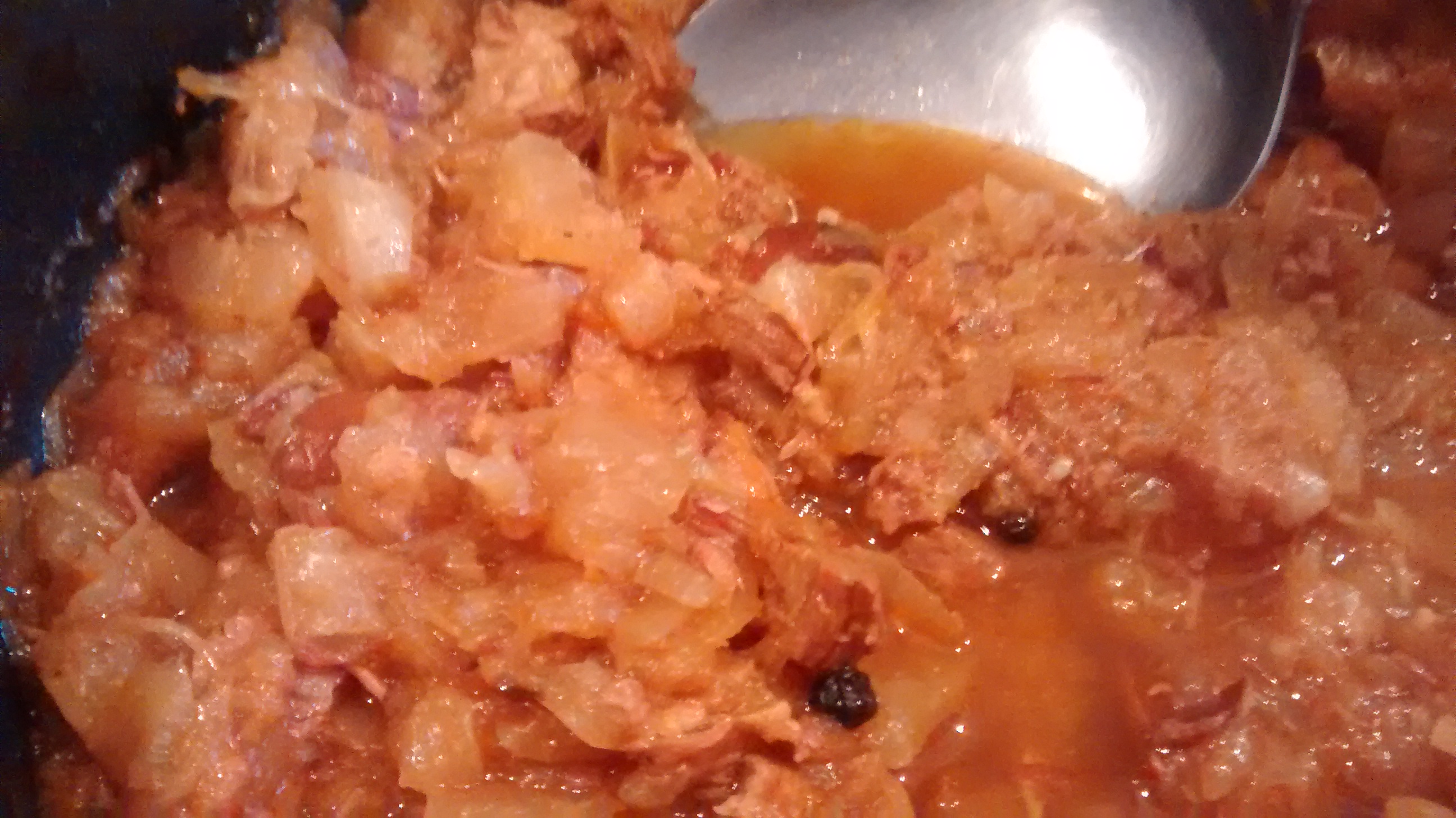
BigosBigosServing up Bigos
Traditional Bigos
There are lots of variations you can make to the following recipe and everyone seems to have their own version. I find the following proportions work out very well every time and the bigos is moist but not like a soup.
This makes a large amount which is good for a family gathering.
Often I make this in advance and then portion it up into 4 parts and then pack these into large plastic bags or tubs and freeze them – so I always have some on hand. Note – the tomato stains the plastic tubs so I often put a bag inside a tub. I also then wrap the tub in another bag as the aroma is strong even when frozen and this stops it affecting other food in the freezer.
Ingredients
900g sauerkraut (1large tin or jar)
500g fresh white cabbage (1 large head)
200g to 400g Pork (shoulder or spare rib)
150 to 300g mixed smoked sausage such as kabanos, Polish ring or Frankfurters
150g smoked bacon
1 large onion
10g dried mushrooms
100g tomato purée (1/2 tube)
20g plain flour
2 bay leaves
3 to 4 peppercorns
sugar or lemon juice to taste –optional
fat/oil to fry in.
note – salt should not be needed as the sausage and bacon contain salt.
Put the sauerkraut in a large pan and add boiling water until it is covered and boil gently for 1 hour till it is soft. Take care not to let it boil dry and push the sauerkraut down occasionally so it stays under the water.
Finely chop the fresh cabbage into long strands and place in another large pan with the dried mushrooms, add water to cover the cabbage and boil till soft and as with the sauerkraut take care it does not boil dry.
Pre heat the oven to GM3– 150o C
Chop the pork into small cubes and fry till brown on all sides.
Chop the bacon into small squares.
Add 100g of the bacon and all the pork to the sauerkraut and boil gently till everything is soft.
Make crisp skwarki* with the rest of the bacon and add to the sauerkraut.
Chop the onion into small pieces and fry till golden, add the flour and fry till the mixture is just about to burn.
Add the cooked fresh cabbage with all the liquid and the fried onion mixture to the sauerkraut.
Slice up the various smoked sausage and add to the bigos.
Add the tomato purée, bay leaves and peppercorns.
You can add some sugar or lemon juice at this stage; this depends on how sour you like the bigos and often depends on the sauerkraut used. I rarely do either of these.
Now you can heat it all together gently over a low heat with a lid on the pan or put the mixture into a large oven proof dish; I use a large oval enamelled dish, and put it in the oven for about 3 hours.
Bigos tastes better if made one day, left overnight, and then reheated in the pan or in the dish in the oven.
*skwarki – small squares of bacon fried till the fat comes out and you are left with little crisp bits.
Cabbage is a vegetable that plays a very large part in Polish cookery. It can be eaten raw in a variety of salads or cooked in many different ways.
Cabbages grow well in Poland and they can be stored for part of the winter so giving a supply for most of the year.
Cabbages For Sale in a Polish Market
Cabbages can also be preserved by allowing them to ferment using brine. This fermented cabbage is called sauerkraut in German which means sour cabbage.
My parents used to tell me about how their parents made barrels and barrels of fermented cabbage, shredding the cabbage finely, adding salt and packing it firmly into the barrels. This was standard work after harvesting cabbages and would provide a basic ingredient for many dishes throughout the coming year.
One of my aunties in Poland who lives in a block of flats makes her own sauerkraut in a bucket which stands on her balcony. She is not alone in this.
Street market in Krakow – Sauerkraut and SausageSauerkraut and Sausage
On a recent trip to Poland I bought a little book on cabbage cookery. The title, translates as “Falling in Love with Cabbage”; I think most Poles do this at a very early age as cabbage features, fresh or sour, in so many meals.
Falling In Love With Cabbage
In my next posts I am going to cover some classic Polish recipes for cabbage including bigos and gołąbki (cabbage rolls)-as seen on the book cover.
The following is a general description and of course times will vary with people and circumstances.
The Polish day seems to start a lot earlier than in England with many people starting work at 7.30am and finishing by 3pm.
Schools often start at 8am and are finished by 2pm.
There are four meals in a Polish day.
1 śniadanie – breakfast
This is a hearty meal from about 5.30amto 7am to set you up for the day.
This will consist of: cured meats, Polish sausage, cheese, hard boiled or scrambled eggs, gherkins, cucumber and tomatoes with bread and rolls, all served with lots of tea. (Tea is quite weak served with slices of lemon or fruit syrup such as raspberry). There may also be some cake.
2 drugie śniadanie – second breakfast
This will be eaten at about 11am. It is a lighter meal than the first breakfast, though often with the same types of food – sometimes it will be just a sandwich – especially if eaten at work or school.
3 obiad – dinner – the main meal of the day
This is eaten between 1pm and 5pm with around 3pm being a very popular time.
This will consist of 2 or 3 courses:
Soup
Main
Dessert of fruit or cake – optional course
Soup is very popular in Poland from hot or cold soups, light consommé types to thick and hearty featuring throughout the year.
I heard a saying on one of my visits to Poland –
Polak bez zupy robi się smutny
This translates as –
A Pole without soup becomes sad.
I think this is very true.
4 kolacja – supper
This is the lightest meal of the day eaten between 7pm to 9pm. It can often be just a slice of cake.
Getting Ready For Dinner
Oak SideboardOak SideboardSection of TableclothsSome of my Many TableclothsSetting the Table for DinnerReady for Soup!
Babka is the name of a cake in Polish – or rather it refers to its shape – the name means grandma or little old lady – the shape is round and dumpy.
It can be a yeast cake or a sponge type cake. I will go into detail about these later in the year.
A small bun or fairy cake can be called a babeczka (babeczki is the plural).
I have also seen the wordmufinkanow in Poland!
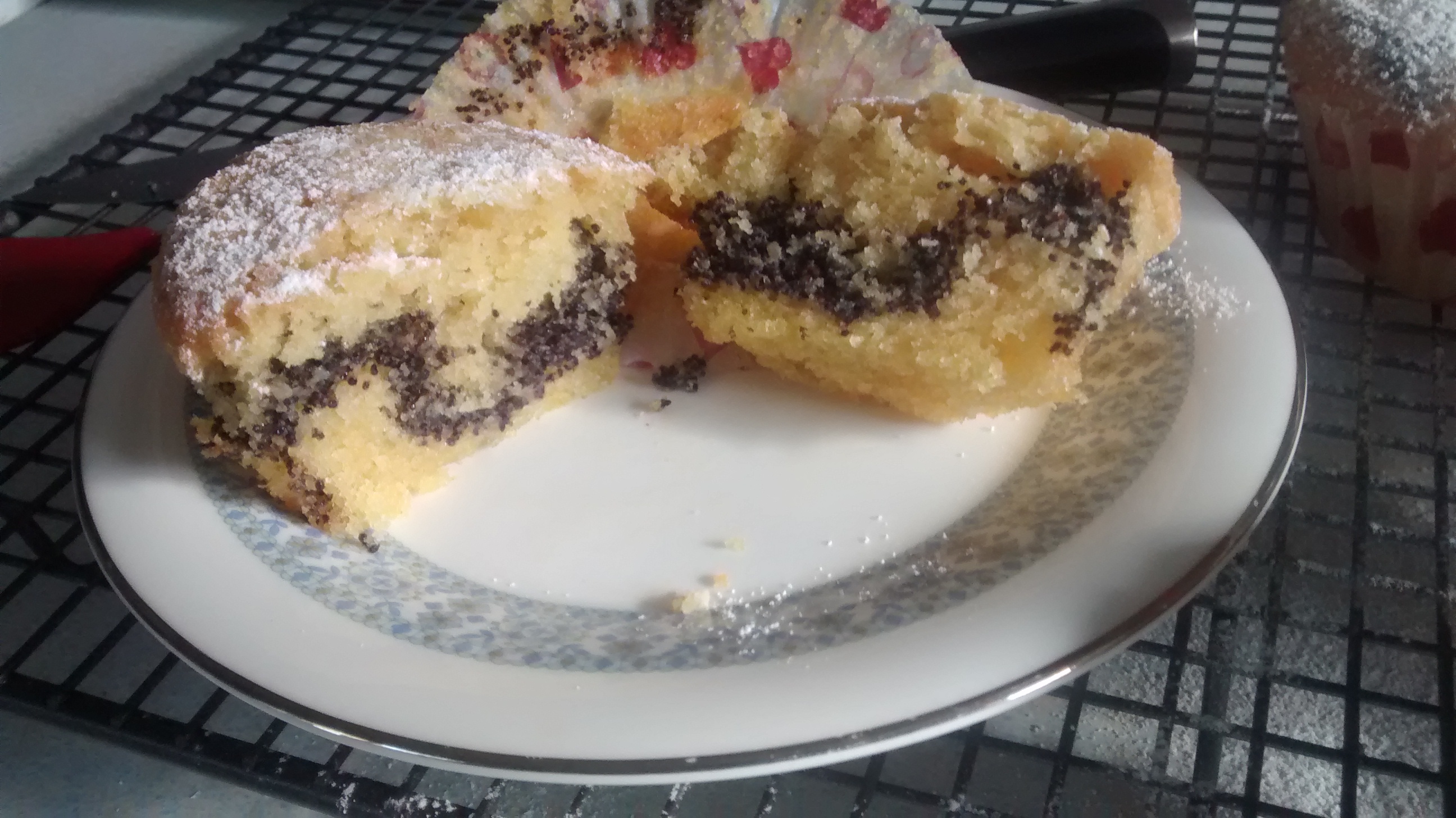
Using my various poppy seed recipes I have tried out some variations to make some babeczki.
These I made with a yeast pastry & poppy seed filling for Wigilia – Christmas Eve – a couple of years ago – using a different yeast pastry to the one in the traditional poppy seed roll.
Babeczki with Poppy Seed filling. The photo is dark as it was taken in the evening whilst getting ready for the special meal.
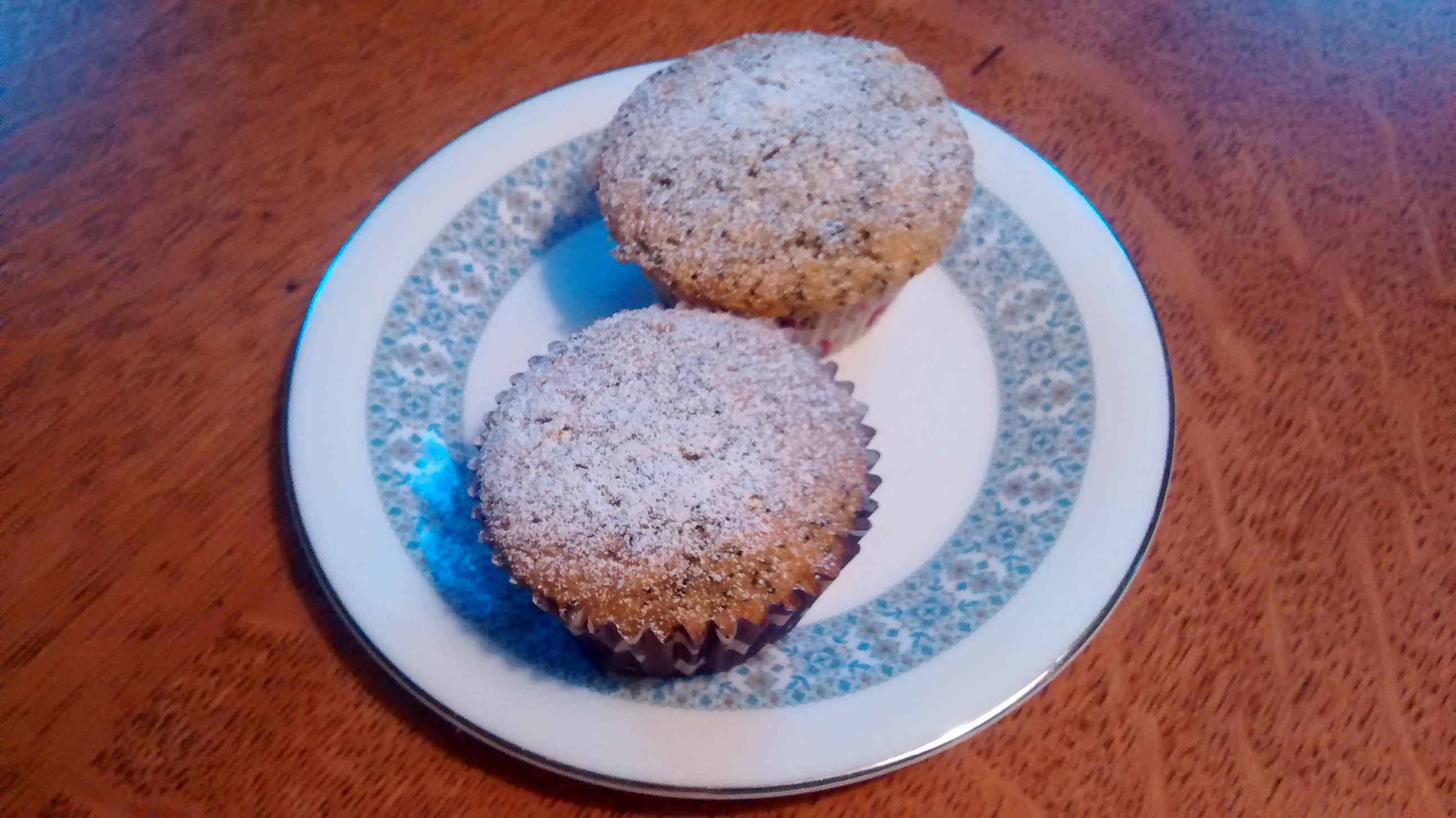
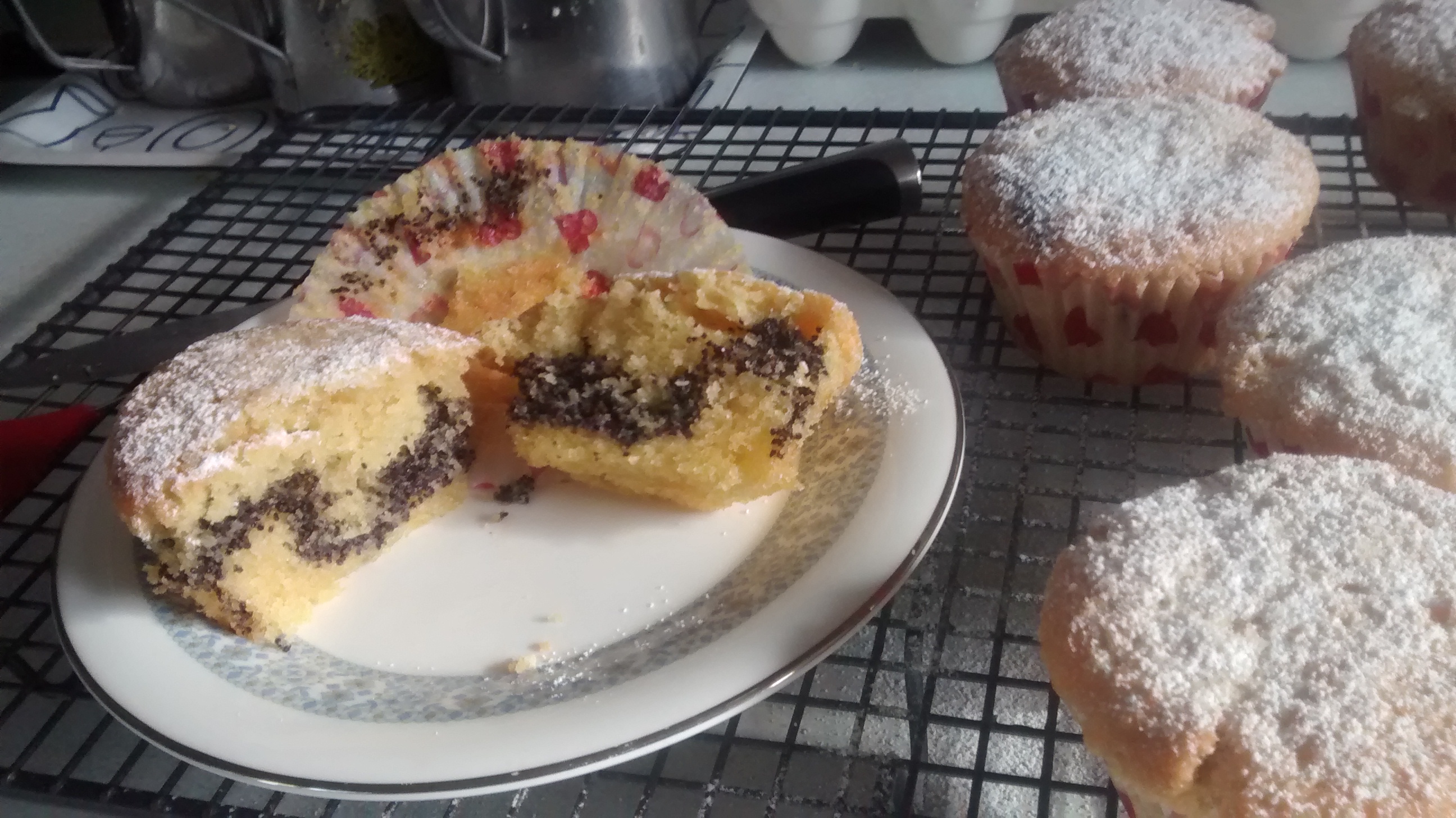
I used a simple sponge mixture to make 2 other types of poppy seed buns.
I have used paper cases – I am not sure if these are available or used in Poland but they are so useful and make the buns very portable and easy to eat.
You can use a basic Victoria sponge mixture made using 2 eggs, butter or margarine, caster sugar and self-raising – the recipe method and amounts such as in the Be-Ro recipe book will work well.
This mixture should make about 12 buns.
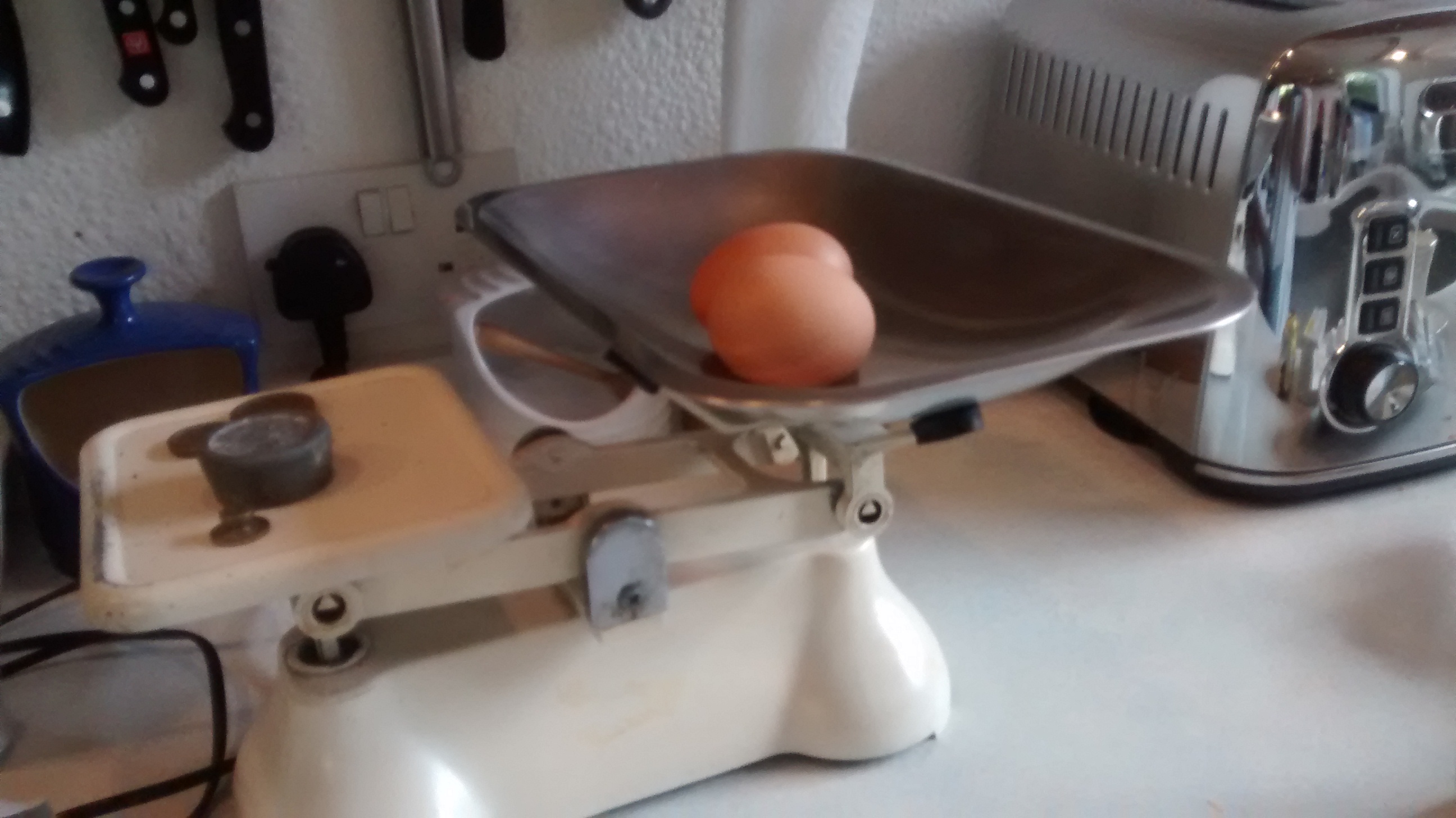
I use a method which I will write about in more detail later in the year, in this the eggs are weighed in their shells and each of the other ingredients is then that same weight.
Weighing eggs
Buns – 1 – Using dry roasted poppy seeds To the sponge mixture you add dry roasted poppy seeds. The dry roasting gives them a more nutty flavour. Note – Lemon zest is not used in this recipe.
Buns made with Dry Roasted Poppy Seeds
To dry roast poppy seeds It is best to make this first before mixing up the sponge cake. Weigh out the required amount of poppy seeds – in this case 40 – 50g for a 2 egg cake mixture.
In a small dry frying pan (ie without any oil or butter) fry the seeds for 5 minutes – stirring them with a wooden spoon or spatula – being careful not to burn them.
Tip the hot seeds into a bowl containing some cold milk. Once cool, pour the mixture into a fine sieve to separate the seeds from the milk.
Leave the sieve over an empty bowl, press down on the seed a few times to remove as much milk as possible.
Buns -2 – Using the traditional poppy seed filling
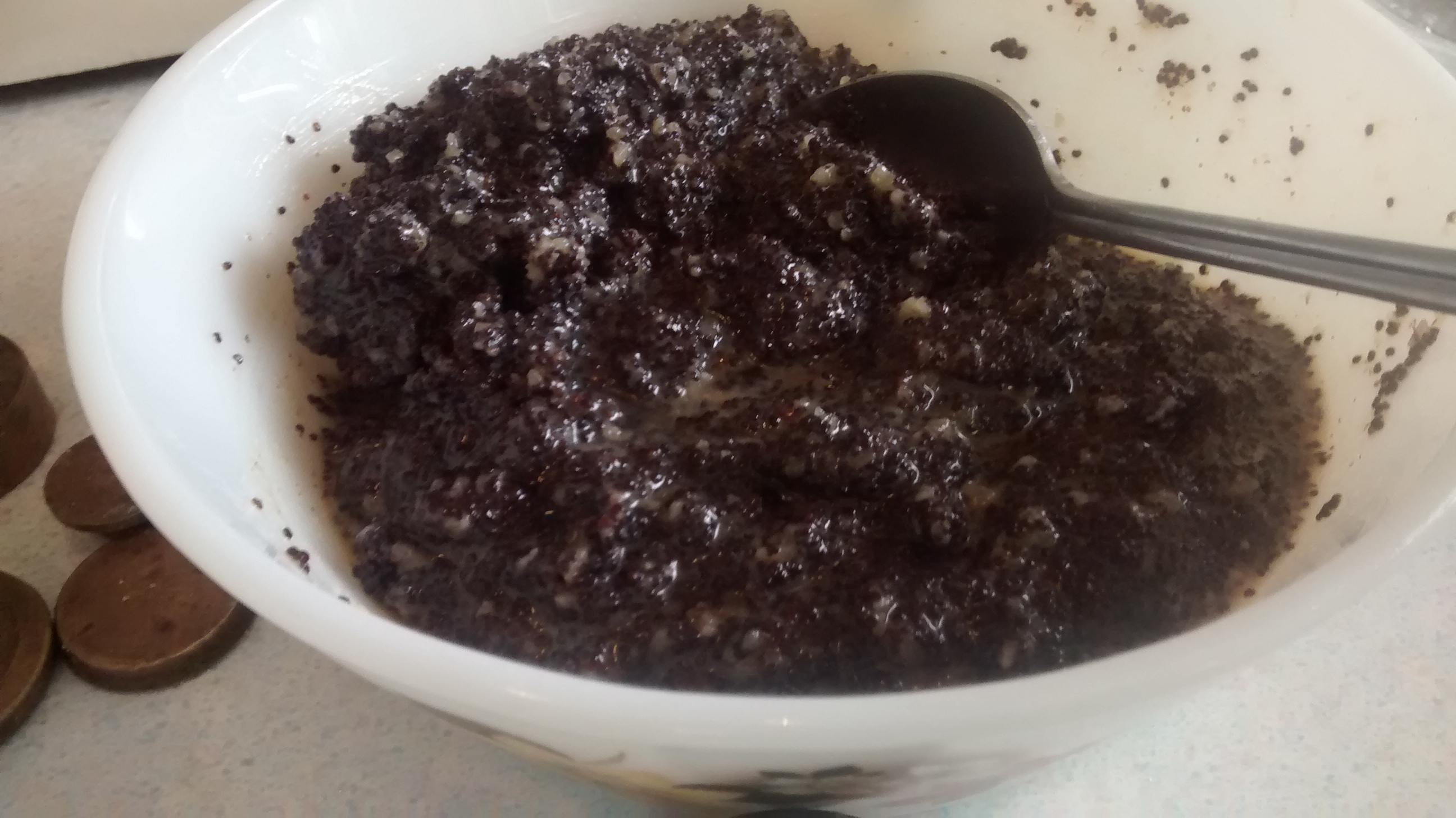
Making the filling is time consuming but only a small amount is needed to make 12 buns.So what I do is to make in the full amount with 200g of poppy seeds as in an earlier post Poppy Seed Cakes and Yeast Cakes in advance and then portion this up into 2 or 3 portions and freeze them.
Poppy Seed Mixture
Put the bun cases into the bun tray.
Now the next it is a bit fiddly and you have to judge the quantities by eye.
The idea is to:
put a spoonful of cake mixture into each bun case
followed by a spoonful of poppy seed mixture
followed by a covering amount of cake mixture.
I have found it easier to do each step for all 12 buns at a time – that is :
cake mixture into all the cases
then the poppy seed filling
then final cake mixture.
Bake the buns in the usual way – GM5 – 190°C – for around 15 to 20 minutes.
Dust with Icing Sugar once they have cooled and before serving
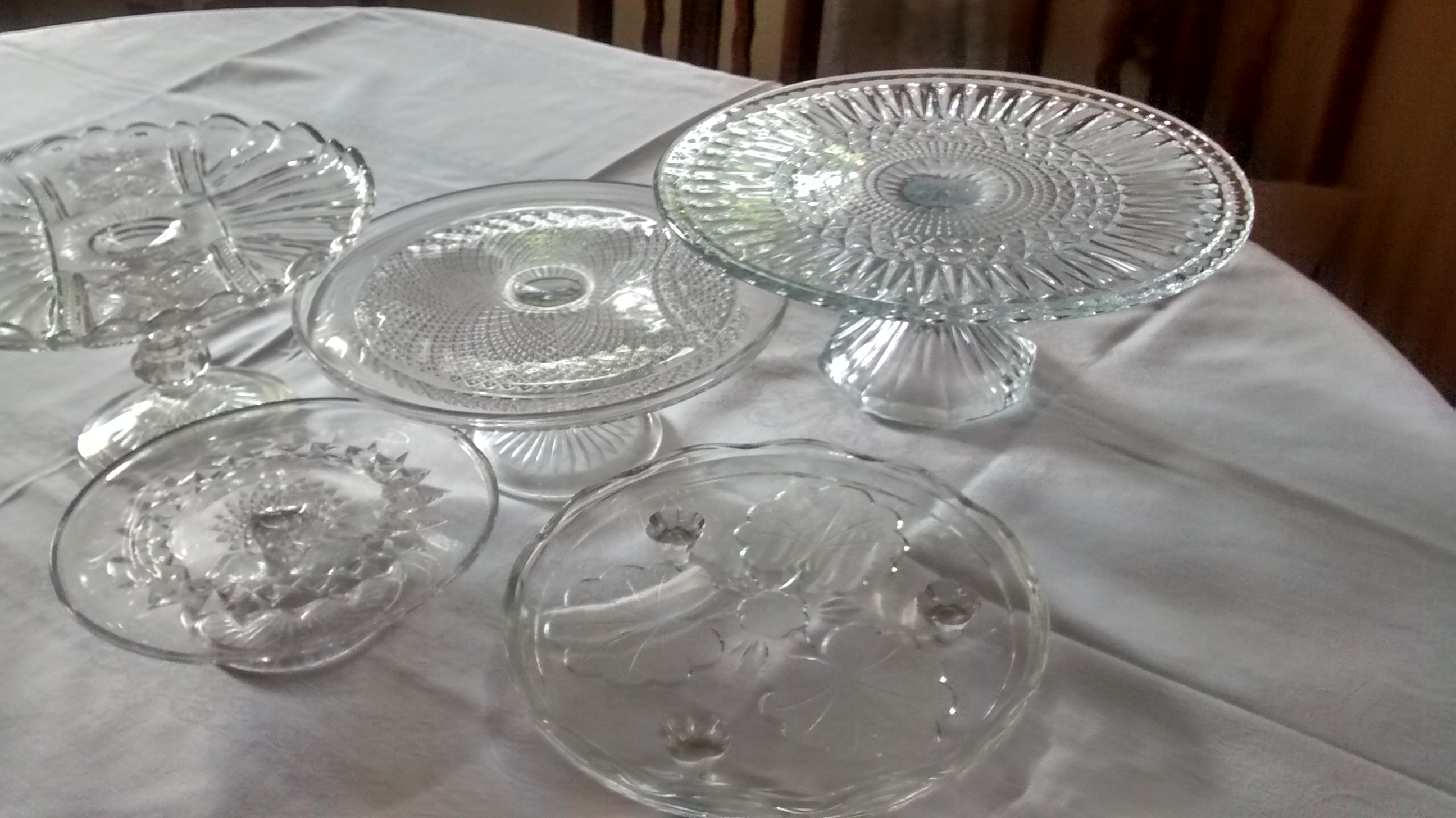
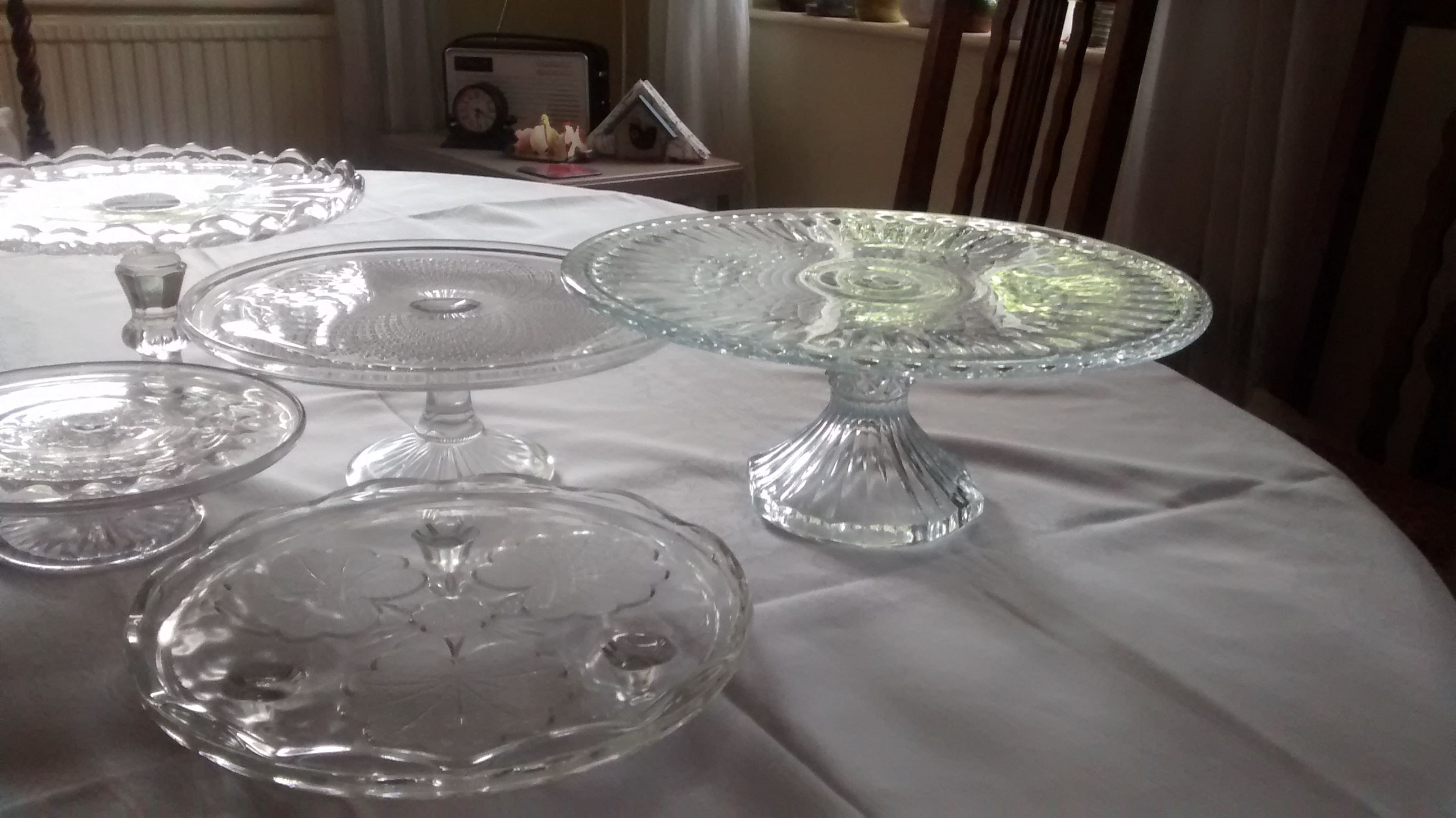
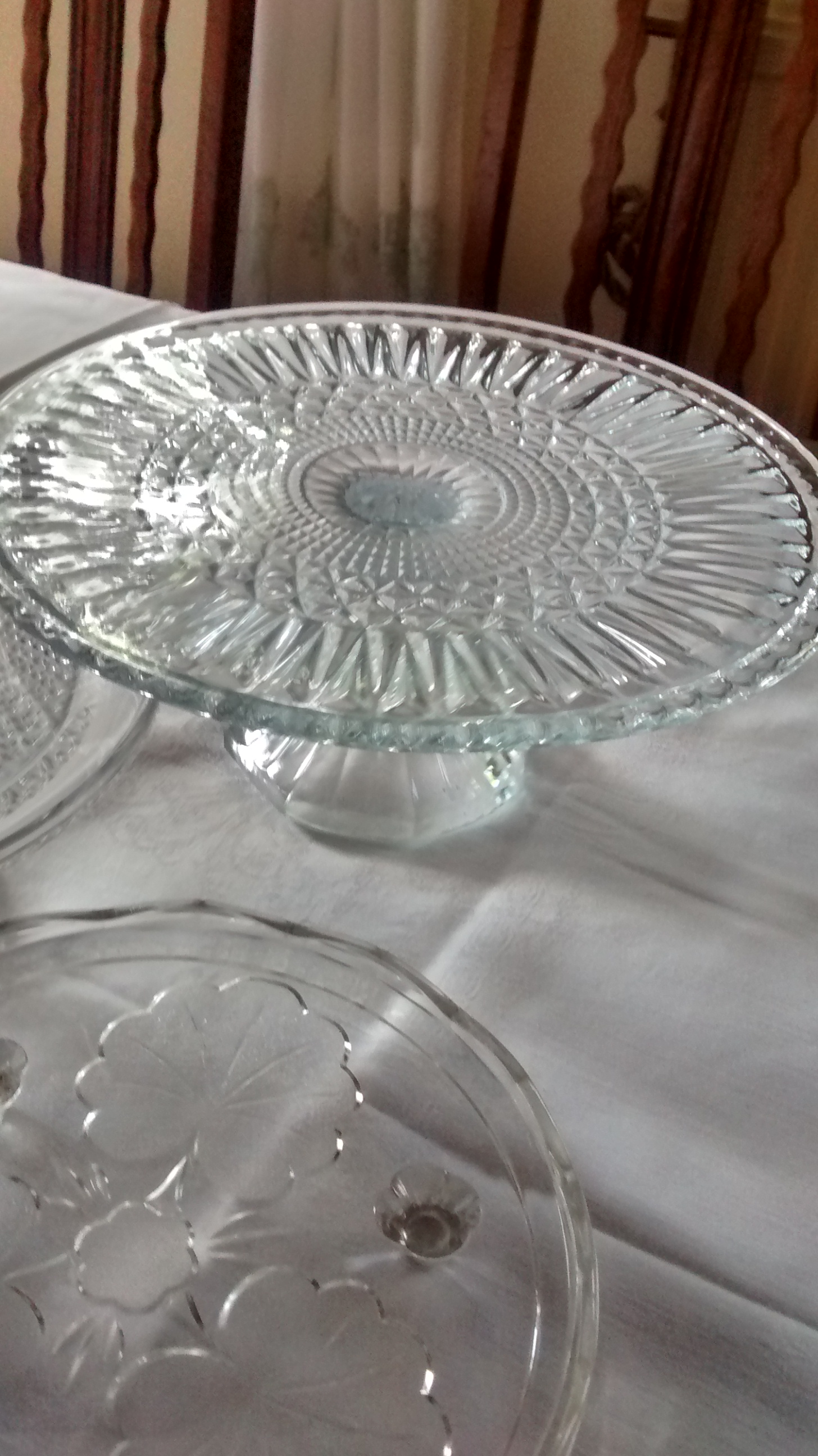
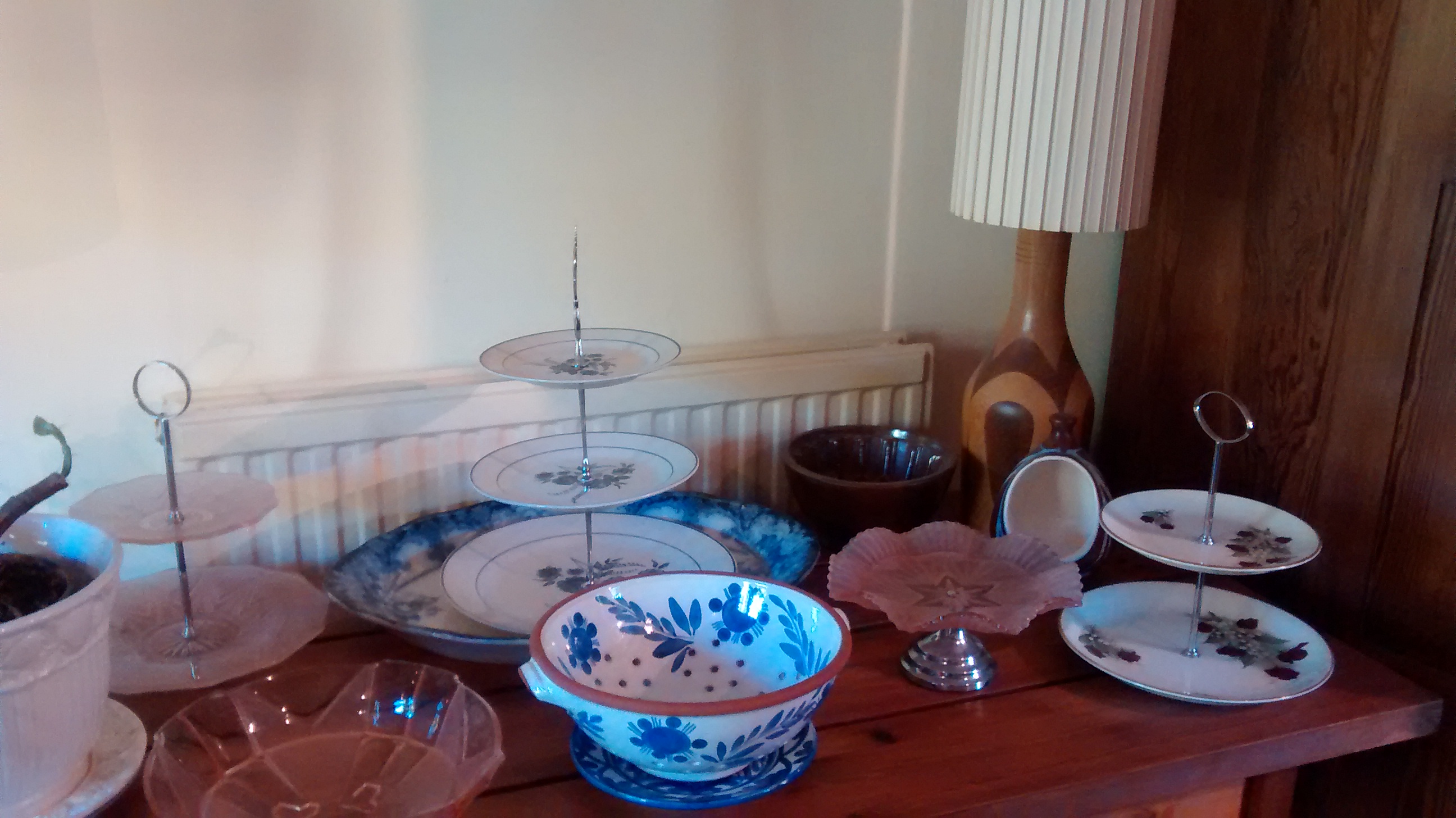
I just love cake stands. They make the cakes look really special.
I started of with a few glass ones I got from my mother and now have at least seventeen.
Most are old, bought from charity shops and car boot sales.
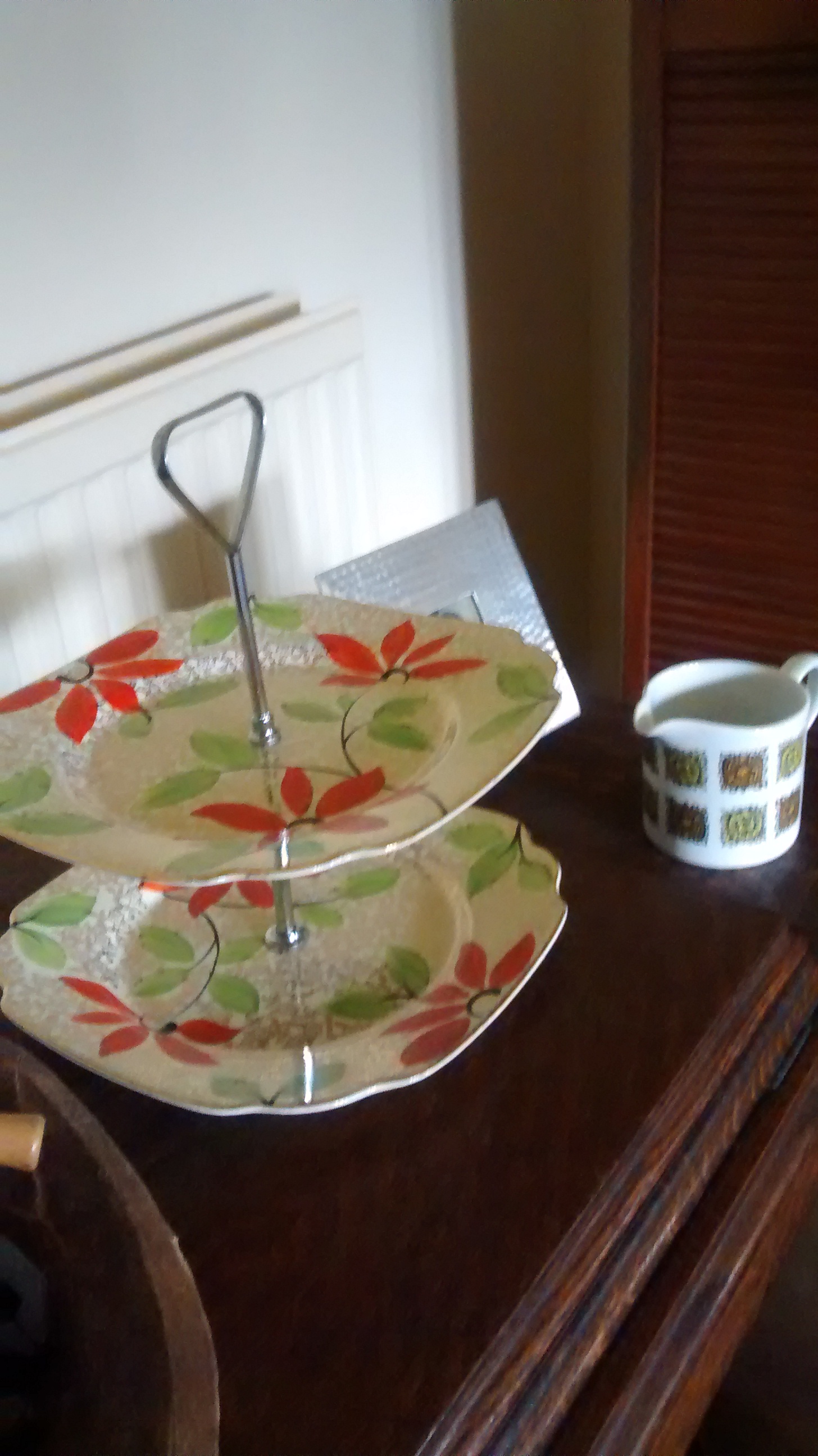
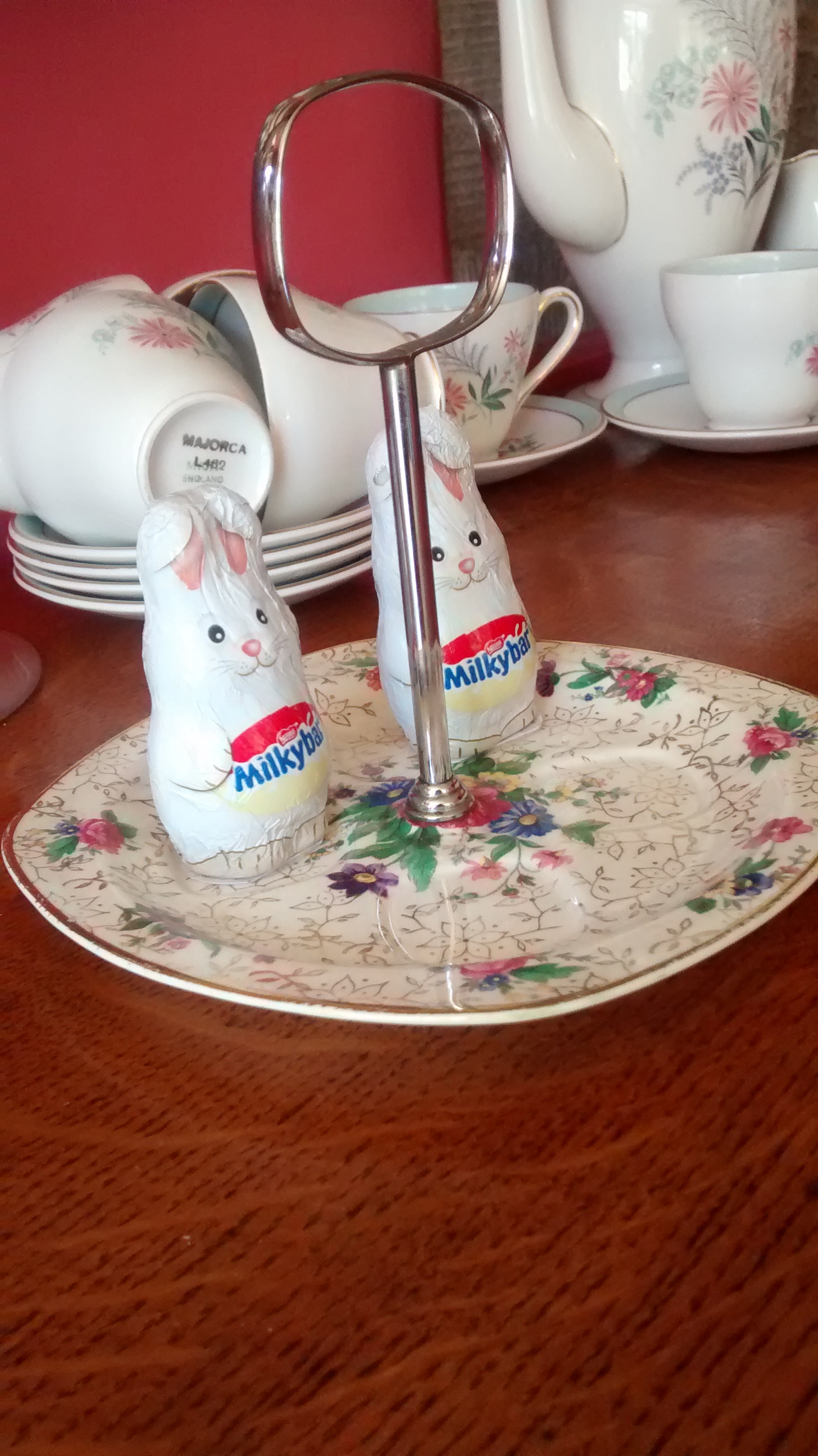
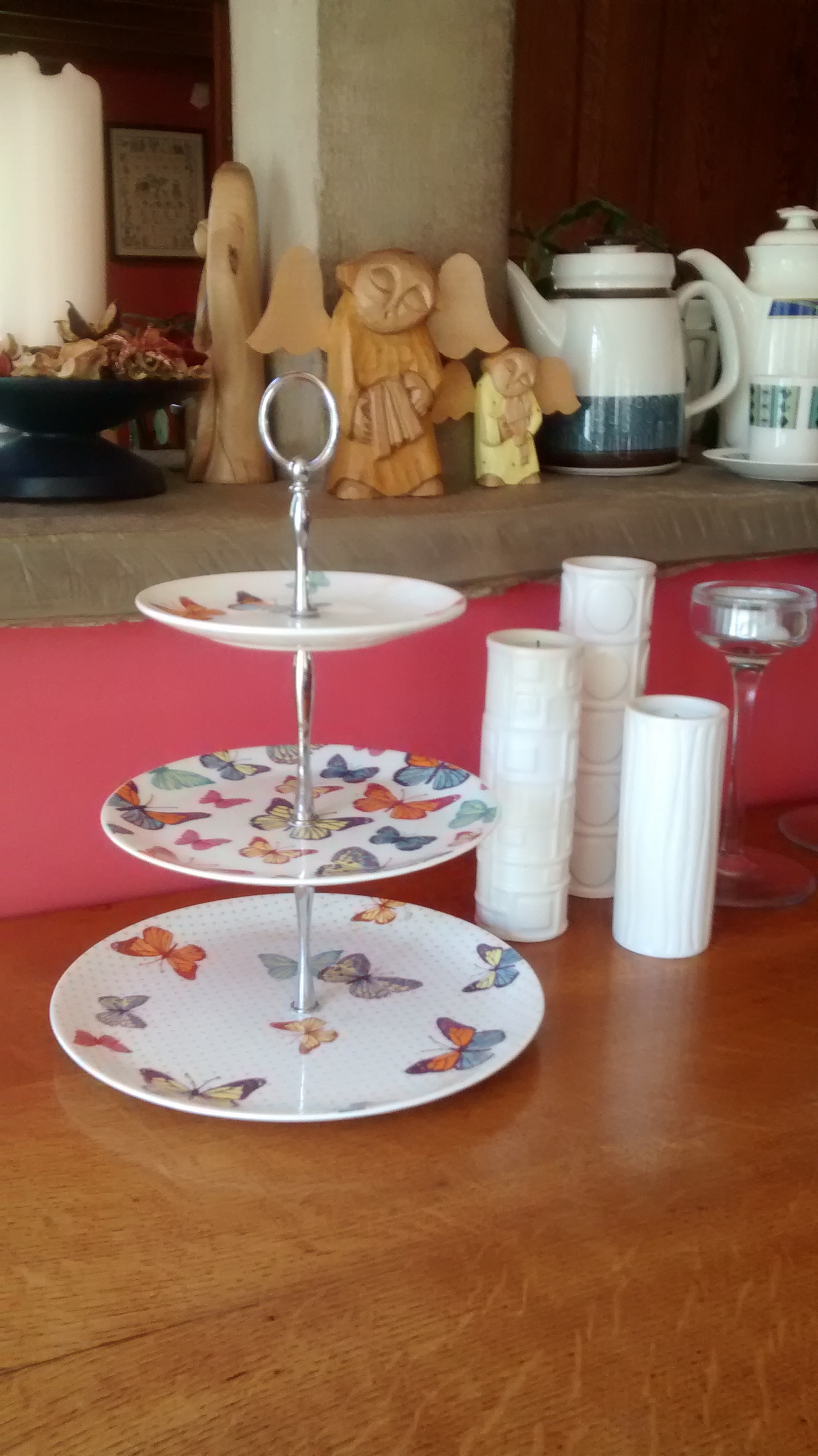
I have also started buying china tiered ones. These look better just placed around the dining room but I sometimes use them for small cakes, chocolates or fruit.
A Selection of my Cake Stands
This Cake Stand was one of my mother’s
This Large Stand I bought in an antique shop in Poland. I managed to get it back in my Hand Luggage. It is very HEAVY.My most recent china purchase. Maybe a bit bright for cakes but lovely coloursAnother Bright Cake Stand
An Egg Cup Holder. The egg cups were missing when I bought this.
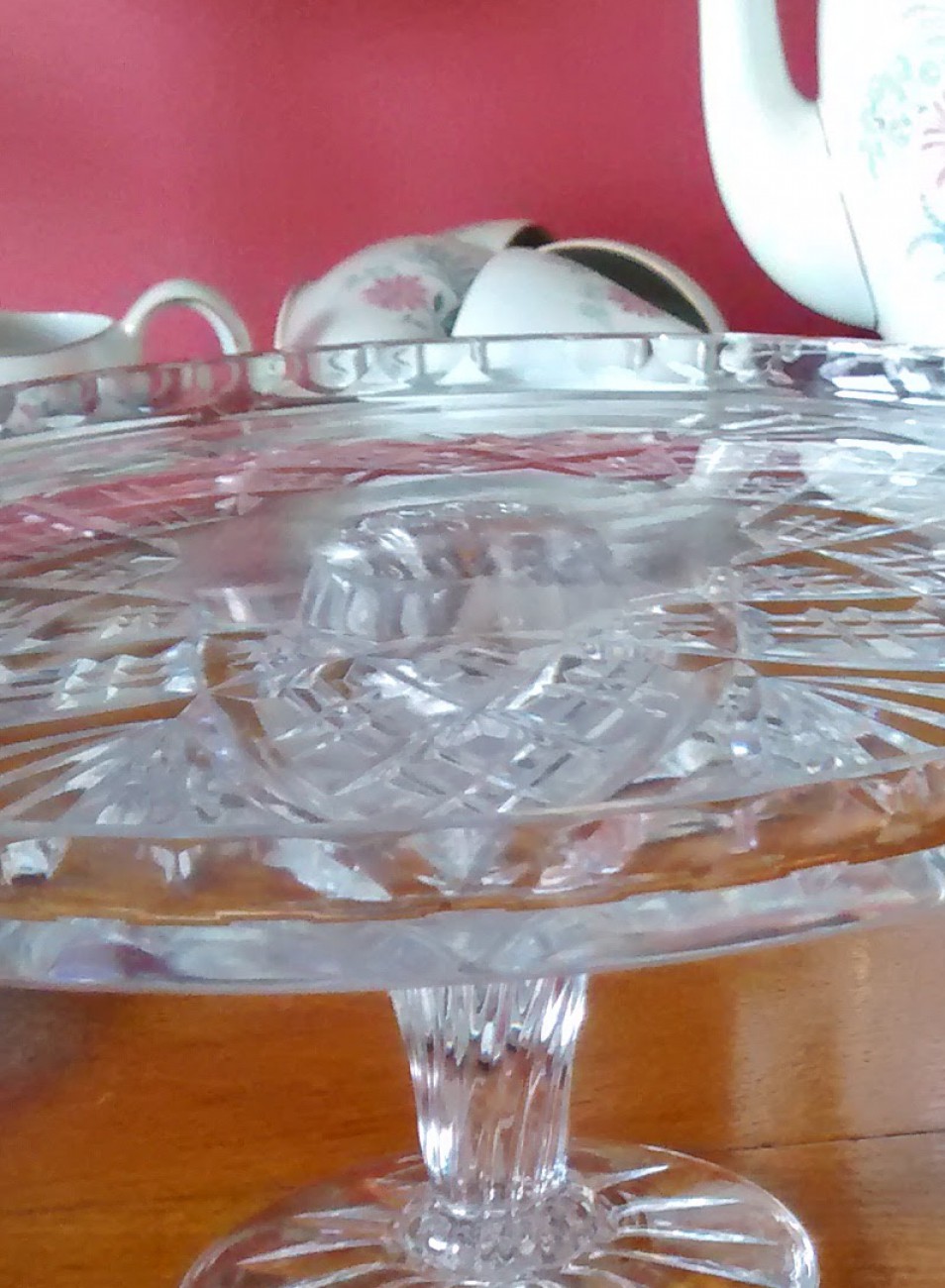
Lead Crystal Cake Stand
Etched Glass Cake StandA Laura Ashley Cake StandPink Glass & China Cake Stands
Cake Stands in my Cupboard
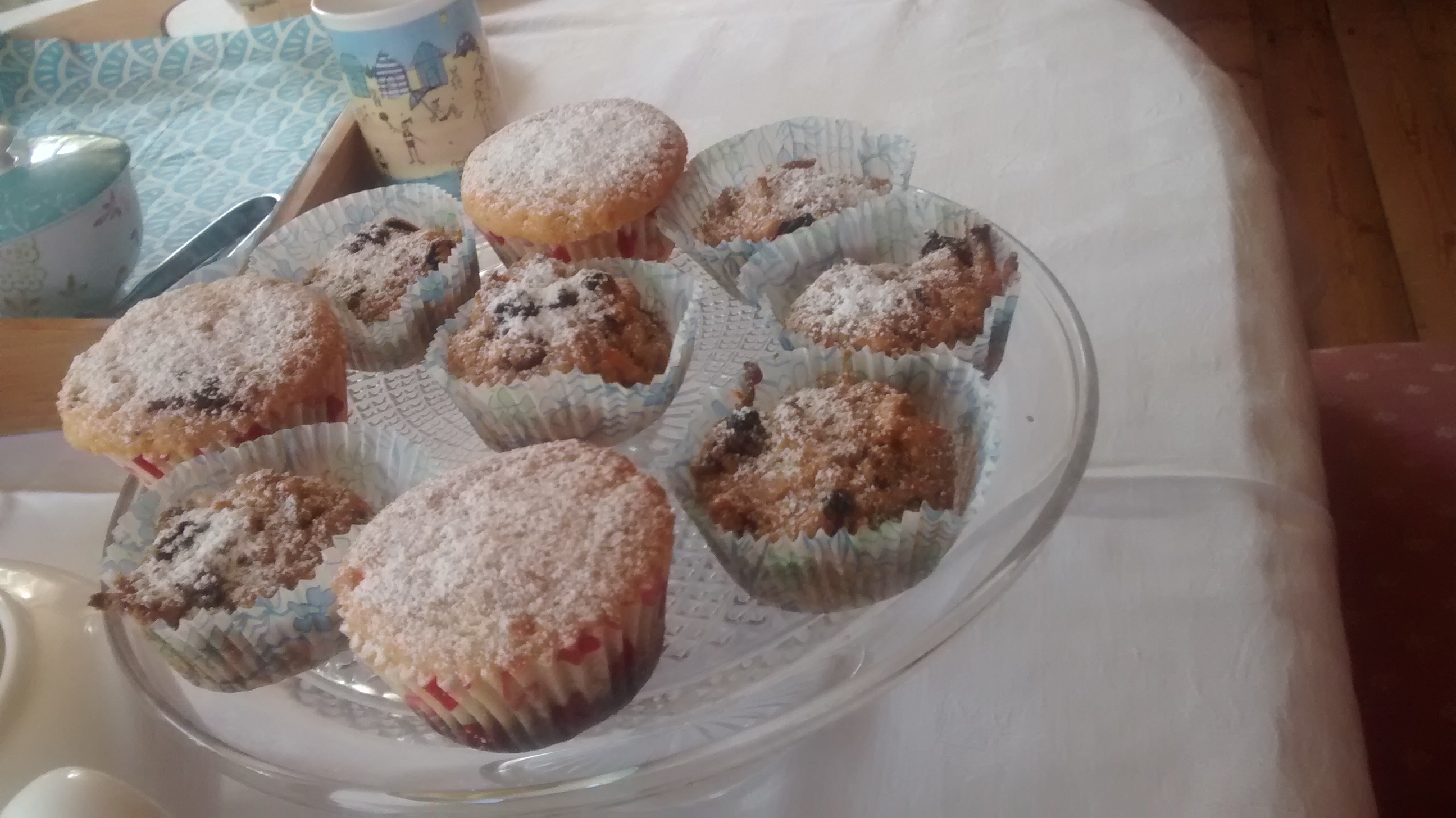
Babeczki for Wigilia – Christmas Eve – with Poppy Seed filling on a Christmas Stand
This photo is taken from a very old slide and the plant was growing in my garden and most years looks as good as this.
However this year it has not done so well. I think it must be a combination of the alternating very dry days and the cold wet days this summer.
It is a good job I am not relying on this as my source of seeds. My best source of seeds is an indoor stall in Leeds Market. The stall sells dried fruits and nuts which are weighed out on request from large jars as well as other aids for baking.
On my first visit to Poland I went to stay with my mother’s sister and her family who had a small farm in the Masurian Lakes in the North East of Poland. This was still in Communist times.
I saw there was a huge field of large headed purple flowered poppies. My auntie had a Government contract that year to grow these poppies for the production of morphine for hospital use.
Poppy seeds of superior quality for culinary purposes are harvested when they are ripe, after the seed pod has dried.
Seeds for the production of morphine are harvested while the seed pods are green and their latex is abundant and when the seeds have only just begun to grow.
Lemon and Poppy Seed Cake
This Poppy Seed cake is inspired by one I had when I was in America. It is like a lemon drizzle cake with fewer poppy seeds than in my other recipes.
This can be made with butter or block baking margarine. I find that with many flavoured cakes margarine is as good if not better than butter.
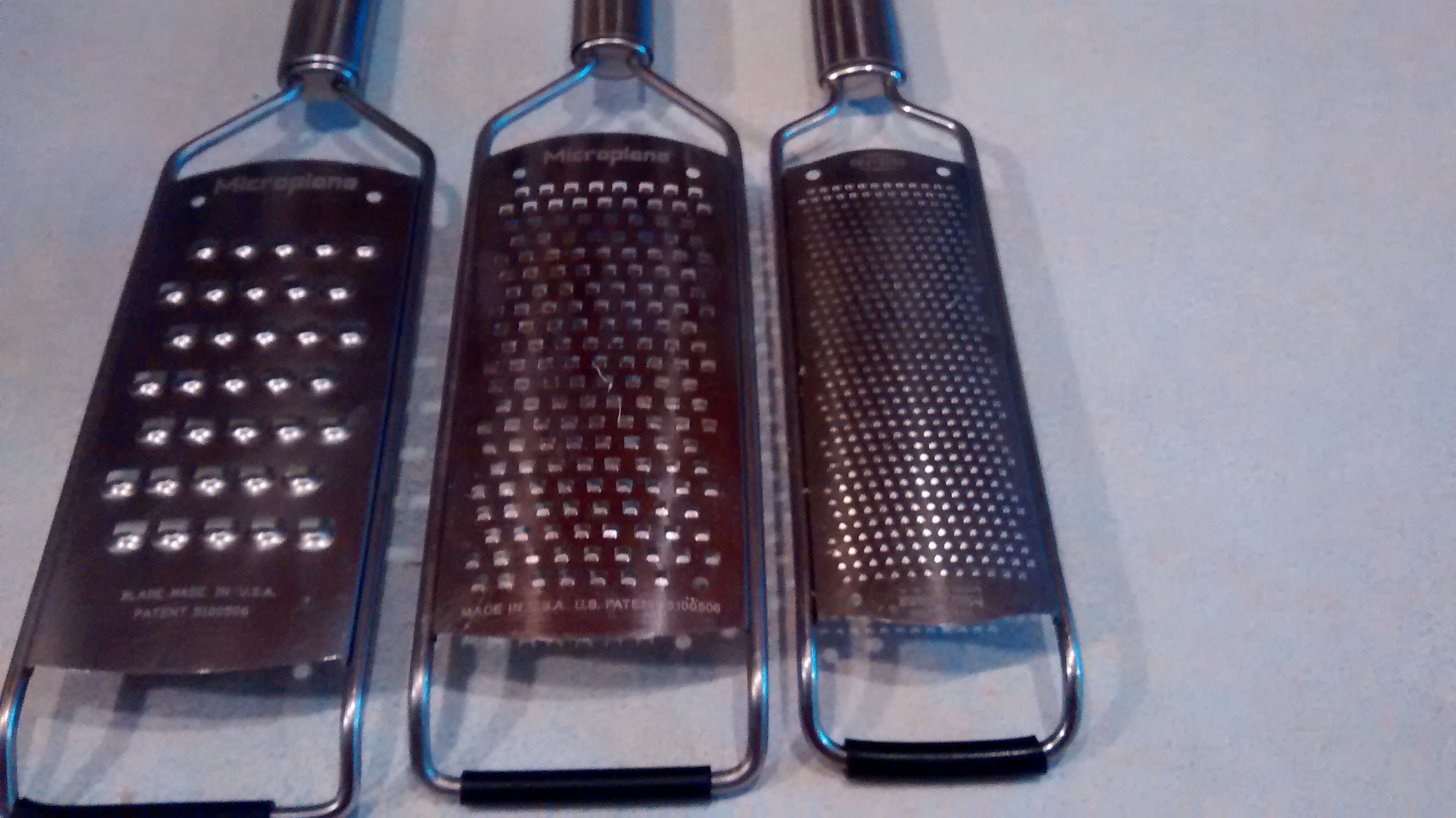
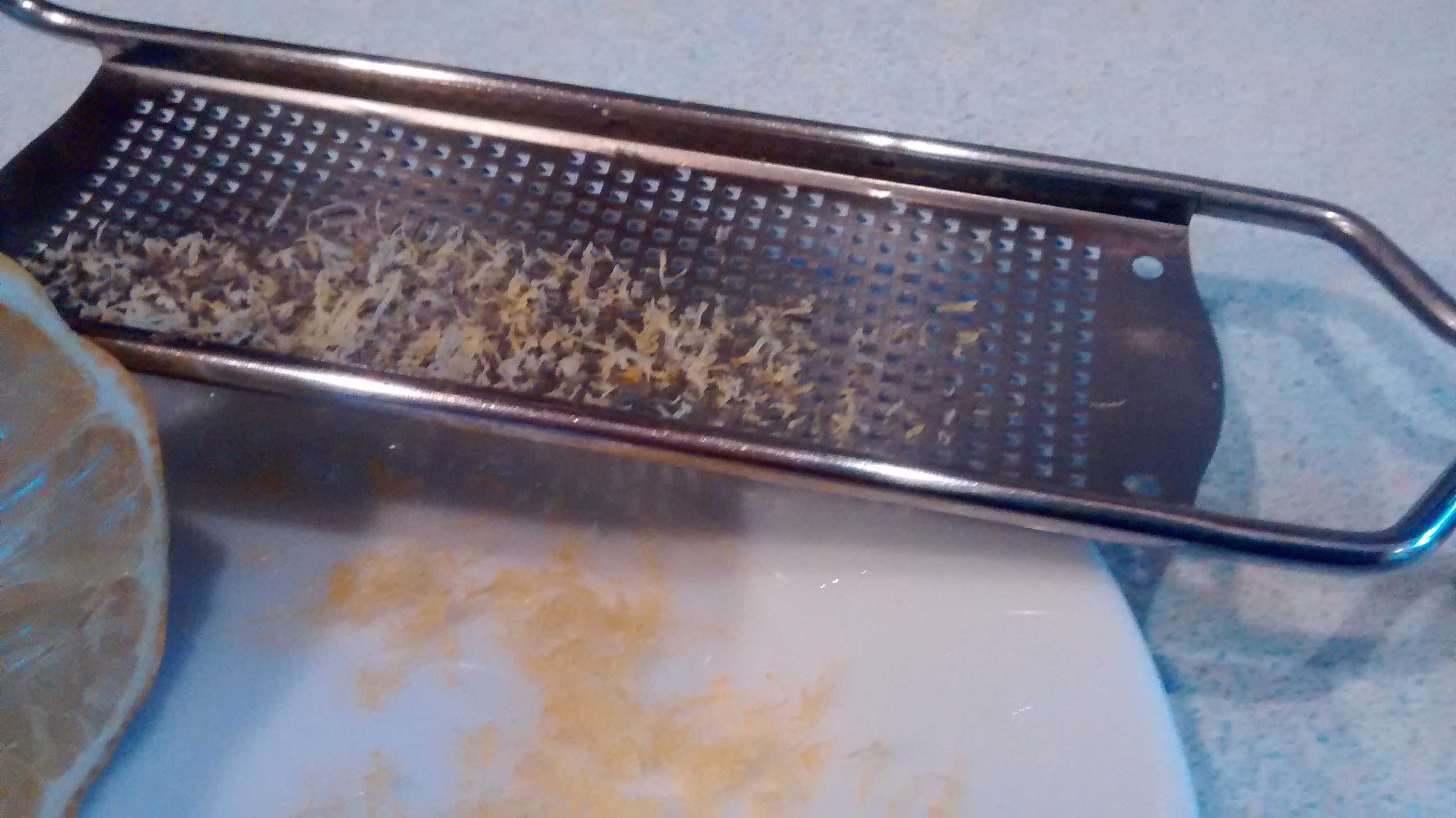
To get the most zest from the lemons I use a fine Microplane Zester – It is the best!
2 Graters & 1 Fine Zester
Fine Microplane ZesterLemon Zest
Cake Ingredients
60g poppy seeds
125g plain flour
1 teaspoon of baking powder
100g butter
100g caster sugar
2 eggs
Grated zest of 2 lemons
2 tablespoons of warm water
Glaze Ingredients
80g caster sugar
Juice of 2 lemons
Method
Pre-heat the oven to GM4 – 1800 C
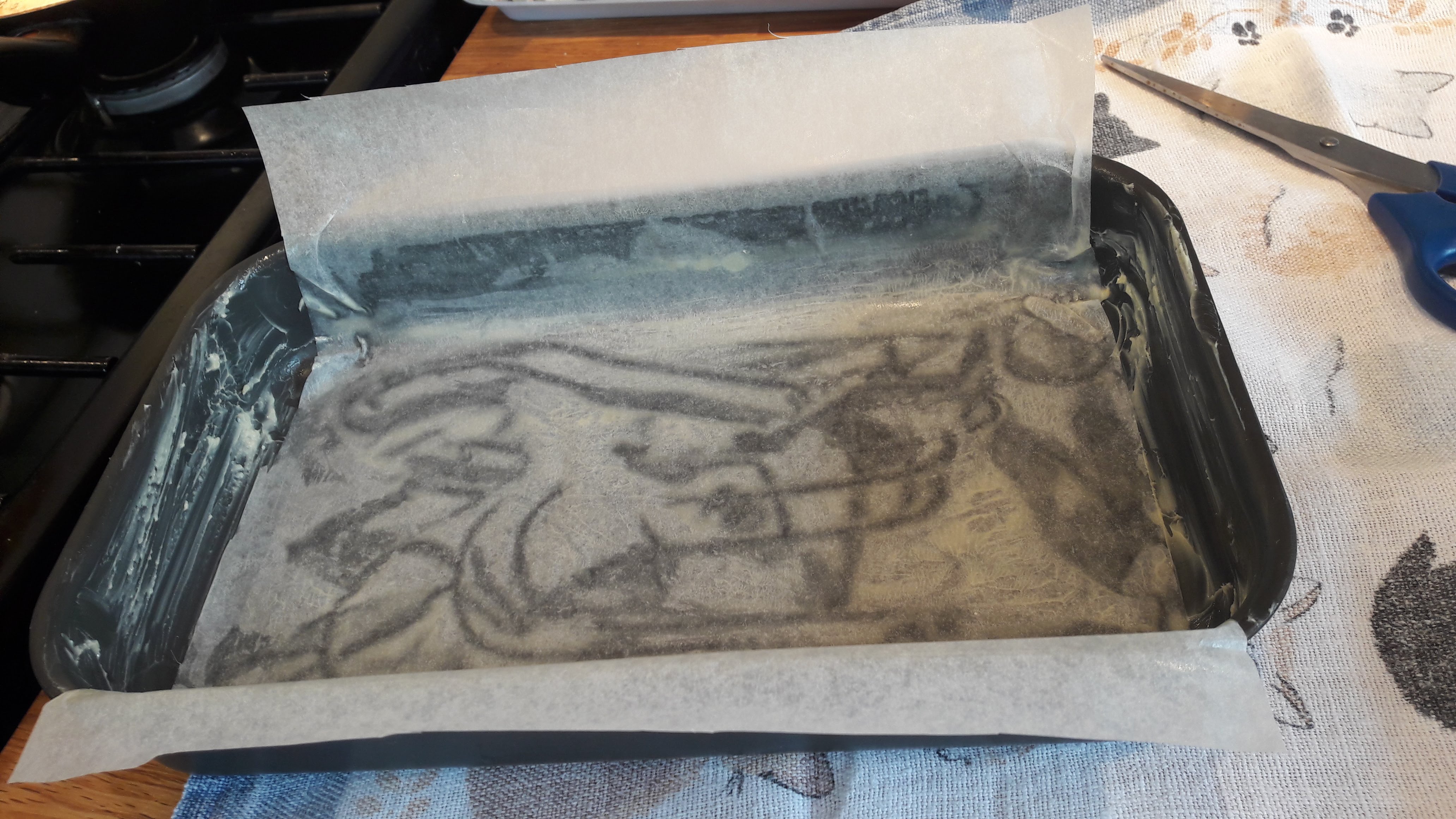
Grease and line a 20cm square tin or 25 x16cm rectangular tin.
Beat the butter and sugar together till they are light and creamy.
Stir in the lemon zest.
Mix the baking powder with the flour.
Sift the flour mixture.
Lightly beat the eggs together and then beat them into the mixture, a little at a time, adding a little of the flour with the last of the eggs.
Using a metal spoon, fold in the remaining flour and the water and then fold in the poppy seeds.
Turn the mixture into the prepared tin and bake the cake for about 35 minutes, or until it starts to shrink from the sides of the tin.
In a small pan dissolve the sugar in the lemon juice over a gentle heat.
When the cake is baked remove it from the oven and leave for a few minutes before turning it out onto a wire rack.
Put a plate underneath, prick the cake all over with a fine skewer whilst it is still warm and spoon the lemon glaze over it. If any runs through spoon it back on.
When the cake is cold dust it with icing sugar before serving.
The original recipe used twice this amount but I often found it would sink in the middle which did not look as nice so now I always make this smaller one.
This version has a lemon glaze followed by lemon icing – this is my favourite but you could just dust the cooled cake with icing sugar or use the glaze then dust with icing sugar before serving.
Ingredients
125g caster sugar
1 egg
5ml vanilla extract
100g poppy seeds
Grated rind of 1 lemon
65g self-raising flour
½ tsp baking powder
Pinch of salt
60ml milk
65g melted butter
15 ml sunflower oil
Lemon Glaze & Icing
Glaze – Juice of 1 lemon & 50g caster sugar
Icing – Juice of 1 lemon & 200g icing sugar
Method
Pre heat the oven to Gas mark 4 – 1800C
I find this easer to remove using either a loose bottom or spring form tin – Grease a 20cm diameter tin.
or
grease and line with one piece of greasproof for the 2 long sides and base -so you can remove the cake from the tin easily – a 16 x 27 cm tin.
Whisk the egg, sugar and vanilla extract until they are thick and creamy.
Stir in the poppy seeds and lemon rind.
Sift the flour and add the baking powder and salt.
Fold this into the egg and poppy seed mixture alternating with the milk – do this in about three batches.
Fold in the melted butter and the oil.
Pour the mixture into the tin and bake for around 30 to 35 minutes.
Leave to cool for about 5 minutes and release the cake from the tin and put on a cooling rack or remove using the 2 ends of the greaseproof.
Prick the top in several places with a thin cake testing skewer.
Lemon Glaze
Mix the lemon juice and caster sugar to dissolve the sugar, dribble this over the cake so the top in covered. Leave till nearly cool then put the cake on a plate or stand.
Lemon Icing
The amount of icing sugar you need will vary depending on the size of the lemon and the dampness of the sugar. (If you want less icing use a small lemon or half a large one and 100g of icing sugar)
Place the lemon juice in a bowl and slowly add the sugar mixing it with a wooden spoon is best, use more or less sugar to make a soft runny icing which will coat the back of the spoon.
Pour this over the cake.
You can aim for just the top covered or to have drips down the sides.
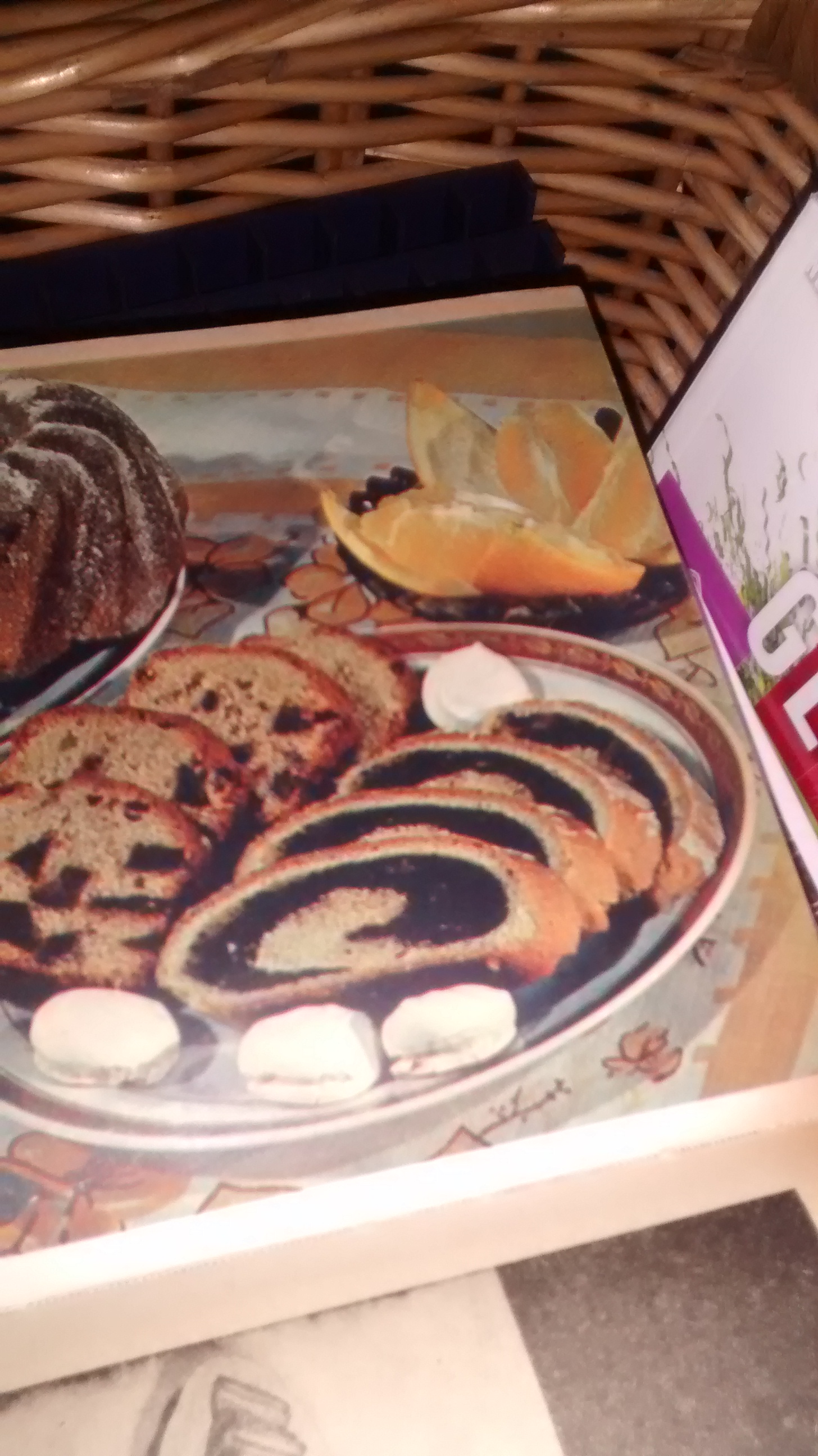
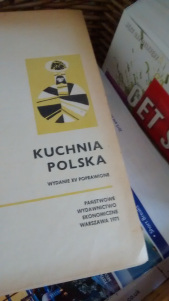
Photo from my Old Polish CookbookKuchnia Polska – Polish Kitchen or Polish Cookery
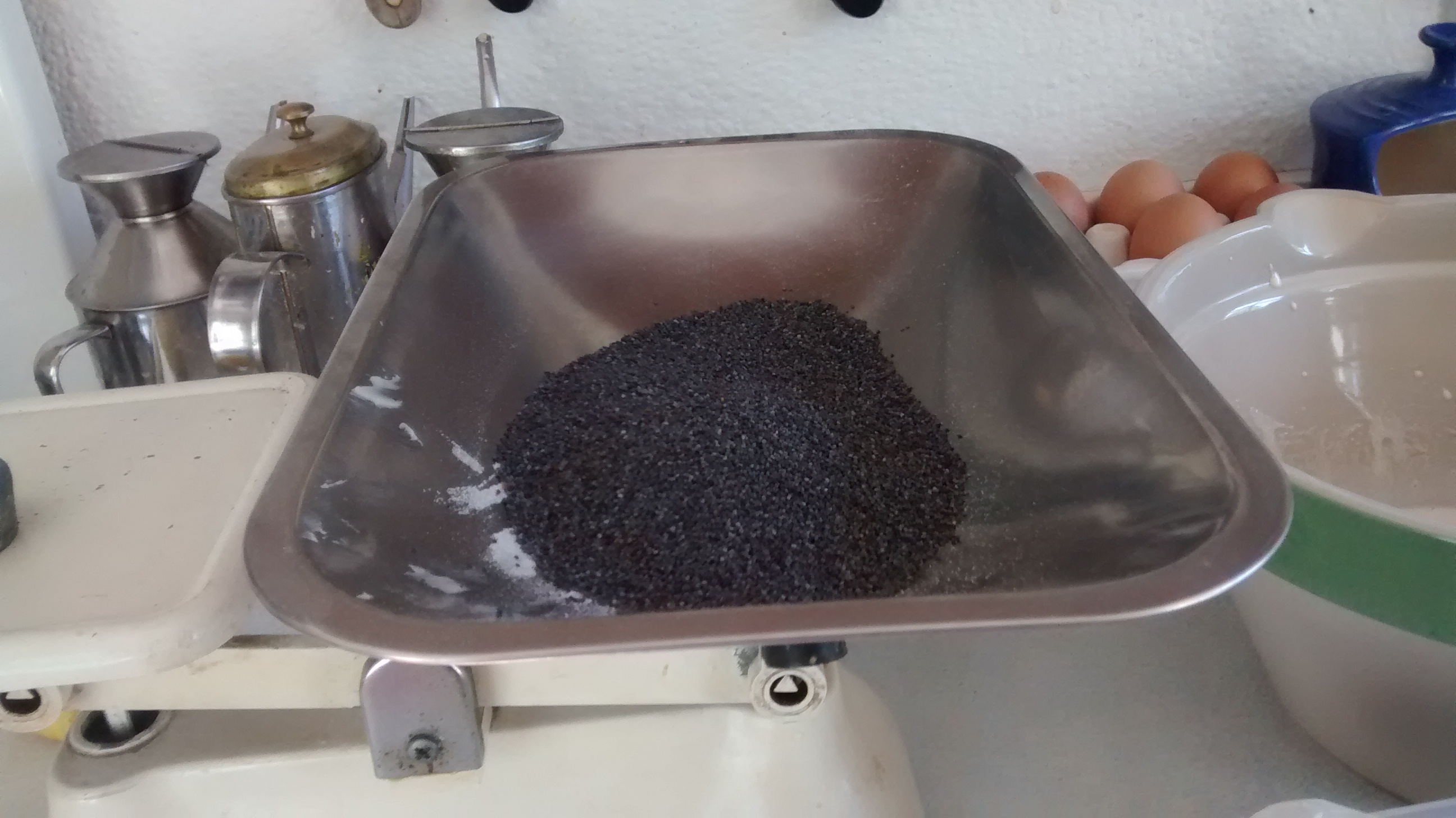
Weighing Poppy Seeds
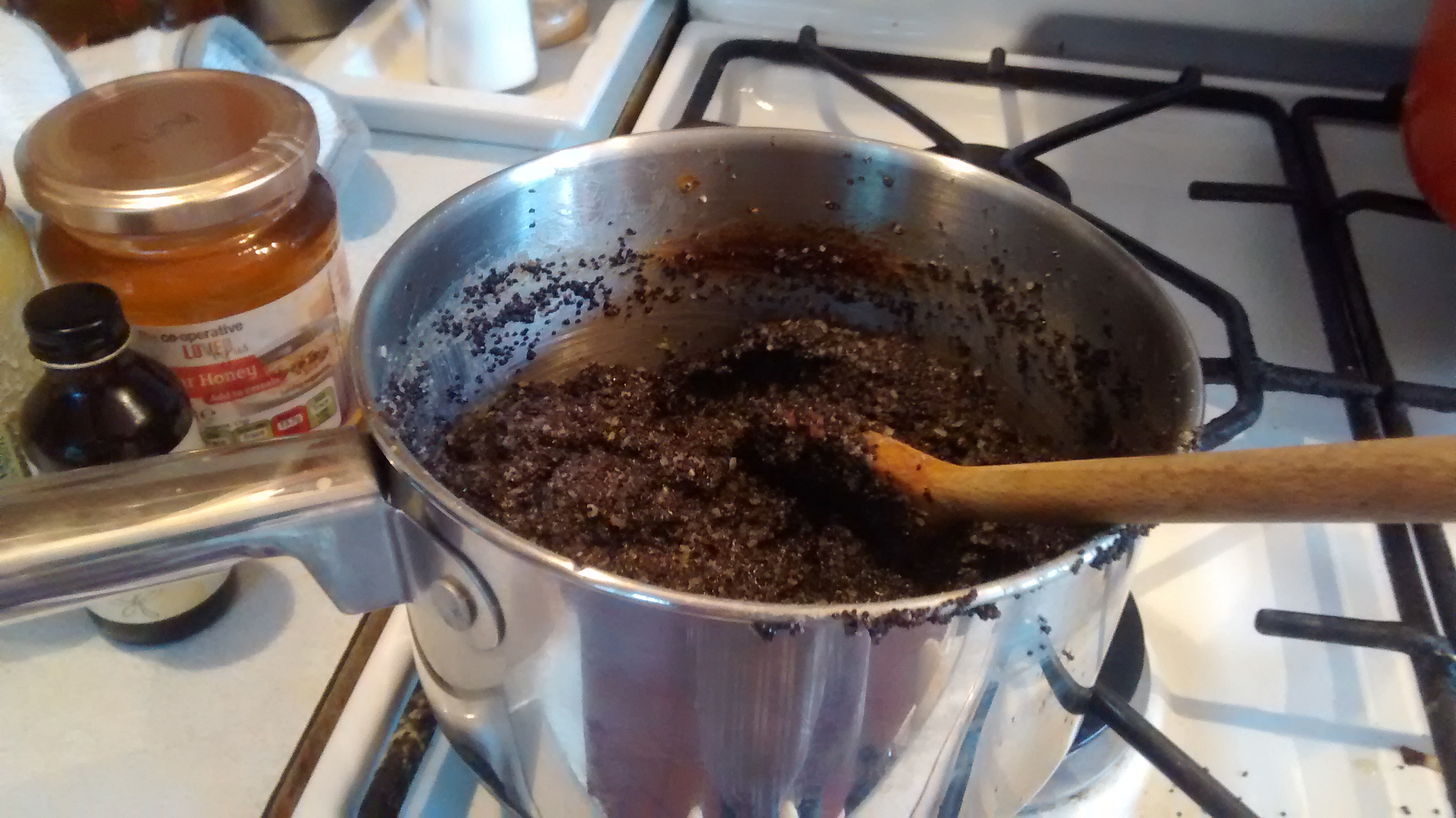
Poppy seed mix
I do not know why but the smell of baking yeast cakes just fills me with warm loving feeling, it is so wonderful.
Yeast cakes feature greatly in Polish festivals and there is Babka for Easter, Makowiec (Poppy seed roll) for Christmas Eve and doughnuts before the start of Lent and New Year’s Eve and Epiphany.
Surprisingly my mother did not seem to have a great success with yeast cookery, maybe her kitchen was a bit cool, I do not know. We got our yeast cakes from her friends. I have done lots of experimenting with yeast recipes and have had a lot of success (and some failures from which I also learnt much!). I now know that you can succeed in a cool kitchen; you just have to start a day beforehand.
Watching the yeast rise still seems like magic to me even though I am well aware of the science that makes it happen. It can be unpredictable and depends on the yeast and the temperature.
I prefer to use fresh yeast but cannot always get it, so now I use dried yeast and also get good results. I have used the type of yeast that you add straight to the flour but I like to see that the yeast is active before it goes into the flour so this is not my favourite type – but I have to admit is does work in many recipes.
Many recipes use a batter starter and I like this method as you can see the yeast making the mixture really rise.
The best time to make a yeast cake is on a day when you are in and doing other things as the times for rising and proving can vary, you have to be around and do the next stage when the time is right, you cannot rush it.
One of the drawbacks with yeast pastry is that the cakes go stale very quickly so you need lots of people on hand to help to eat it all.
Poppy Seeds
Poppy seeds are the blue-grey seeds of the poppy – Papaver somniferum. They have been used since antiquity and were known in Egyptian, Minoan and Sumerian cultures. They are used in European and Middle Eastern cooking and are especially popular in Jewish and in Polish cooking.
Mak is the Polish word for poppy seed and a cake made with poppy seeds is called makowiec.
This is one of the dishes served on Christmas Eve and I will be writing about the food for that evening later in the year.
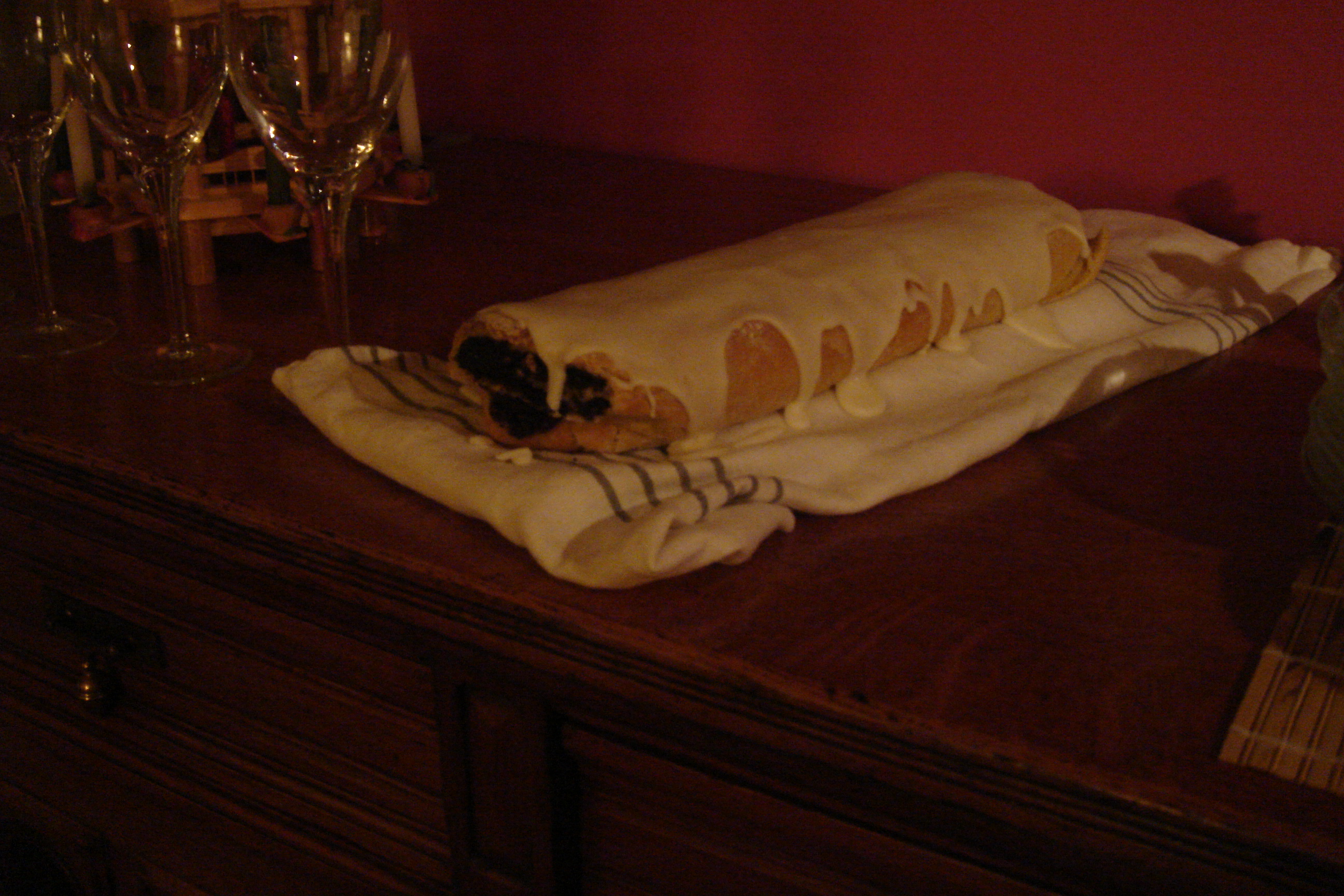
Makowiec – Poppy Seed Roll
Traditional Recipe
This classic yeast cake is served on Christmas Eve. Poppy seeds and honey are used to make a filling which I think is just so delicious. Some fillings also use dried fruits such as raisins but I prefer it without.
I have been searching for many years for the best recipe for this cake and I think I now have it. Many recipes that I have tried, have made a cake which is so large that it has tried to escape out of the baking tray and the oven and I have been experimenting to get an amount which is more suitable for the standard size oven in the United Kingdom.
Also the shape of a nice roll of cake has eluded me till now, mine seemed to rise too much and crack and spread across the baking tray with all the filling escaping!
On a visit to Poland I was given a suggested that you wrap the rising yeast roll in greaseproof paper to keep its shape and this worked. So at last I have the size and shape that works well.
Without a doubt this recipes is time consuming – so in my next posts I will give some easier simpler variations which are also delicious.
There are 3 parts to the making of this cake: the poppy seed filling, the yeast pastry and the icing.
Poppy Seed Filling
I make the poppy seed filling first, or during the time the yeast is rising, as it has to be cool when used. You can make the filling ahead of time – there are several stages where you can leave it to finish later. I often make till until the addition of the butter and add the rum and egg just before I need it. You can also freeze this filling at this stage.
Ingredients
200g poppy seeds
500ml milk (whole or semi-skimmed)
50g ground almonds
120 ml runny honey & 1 tablespoon
25g butter
1 large egg – separated
1 tablespoon of rum
¼ teaspoon of vanilla essence
Put the poppy seeds and milk into a saucepan and simmer then together for 30 minutes, stirring occasionally to stop any sticking or burning. The aim is to cook the seeds and adsorb as much of the milk as possible. You need to watch this carefully and keep adjusting the heat to stop the mixture burning.
Using a fine sieve, strain the poppy seeds from the liquid – leave this for a while to remove as much liquid as possible.
The poppy seeds need to be crushed, I use a hand held blender for about 5 minutes which I find is the easiest way but you can use a pestle and mortar or a mincer.
Once crushed, place the poppy seeds back into a saucepan and add the ground almonds, the vanilla essence and the 120ml of honey and mix thoroughly.
Add the butter to the mixture and simmer gently for about 5 minutes and then leave this mixture to cool completely and then add the rum.
Whisk the 15ml (1 tablespoon) of honey with the egg yolk until this is thick and creamy and then add this to the mixture.
Just before you need the filling, whisk the egg white until it is stiff and then fold this egg white into the poppy seed mixture.
Yeast Pastry
This is made in 2 stages
Yeast Starter
5g fresh yeast or a 1/2 teaspoon of dried yeast
40g plain flour
60ml of milk (whole or semi-skimmed)
Mix the ingredients together in a bowl then cover this with a tea towel or cling film and leave the bowl in a warm place for 3 hours.
After this place the bowl in the fridge – you can leave this overnight.
Rest of Dough
10g fresh yeast or 1 teaspoon of dried yeast
40g sugar
60ml milk (whole or semi-skimmed)
1 egg and 2 egg yolks
300g plain flour
pinch of salt
100g butter at room temperature
Warm the milk slightly and put it into a large bowl, add the yeast and sugar and leave in a warm place for 15 minutes or until you can see that the yeast is active and rising.
Add the starter, the egg and egg yolks, the pinch of salt and the flour. Mix and then knead the dough until it forms a soft ball.
Cover the bowl with a tea towel or cling film and leave for 15 minutes.
Add the butter in tablespoonful amounts to the dough, kneading slightly at each addition and then knead the dough for 10 minutes. The dough should be soft and elastic but not sticky, if it is too sticky add some more flour knead till it is the correct texture.
Place the dough into an oiled bowl and cover with a tea towel or cling film and leave to rise.
Putting together the poppy seed roll
Have ready a greased baking tray as the size of rectangle of dough you need is governed by the length of the baking tray.
When the dough is ready, roll it out into a rectangle of around 20cm by 25cm. It will be about 1cm in thickness.
Place the filling onto the dough leaving about 2cm clear at all the edges.
Roll up the poppy seed roll lengthwise and then enclose the roll reasonably tightly lengthwise in greaseproof paper, do not cover the ends of the roll which will rise and expand lengthwise.
Place the roll onto a baking sheet with at least 5cm at each end to allow for the expansion and leave this to rise for about 1 hour.
Pre heat the oven to GM4 – 180oC
Place the risen roll into the oven with the greaseproof paper still on.
Bake for about 40 minutes and then cool on a wire rack, remove the greaseproof paper as soon as the roll has cooled slightly.
Before serving dust the roll with icing sugar – or you can glaze it with a thin lemon icing.
I cut the short end of the roll off and do not serve these.
Lemon Icing
Juice of ½ lemon
100g icing sugar – sieved
The amount of icing sugar you need will vary, depending on the size of the lemon and the dampness of the sugar.
Place the lemon juice in a bowl and slowly add the sugar mixing it with a wooden spoon is best, use more or less sugar to make a soft runny icing which will coat the back of the spoon.
Easier Recipes
So that is the end of my first recipe, which does take quite a while to make but I felt I had to include this traditional version especially now I have mastered it.
There are many other poppy seed cakes and I will be continuing next with a few of these. They quicker and easier to make but are still very delicious and also a few recipes for poppy seed cakes which have evolved from these.

























 Journey From A Polish Kitchen