Mushroom Sauce

Mushroom sauce must be my favourite sauce.

  • I looked through my Polish cookbooks and many of the mushroom sauces are made with only dried mushrooms.  These are delicious and have a strong flavour however it works out very expensive and are not available everywhere.
  • I am going to  give instructions for a sauce using fresh mushroom and just a small amount of dried mushroom and
  • Another versions of this mushroom sauce using a mushroom stock cube.
  • The best dried mushrooms are Boletus edulis, in Poland they are called borowik or prawdzik, in Italy porcini.
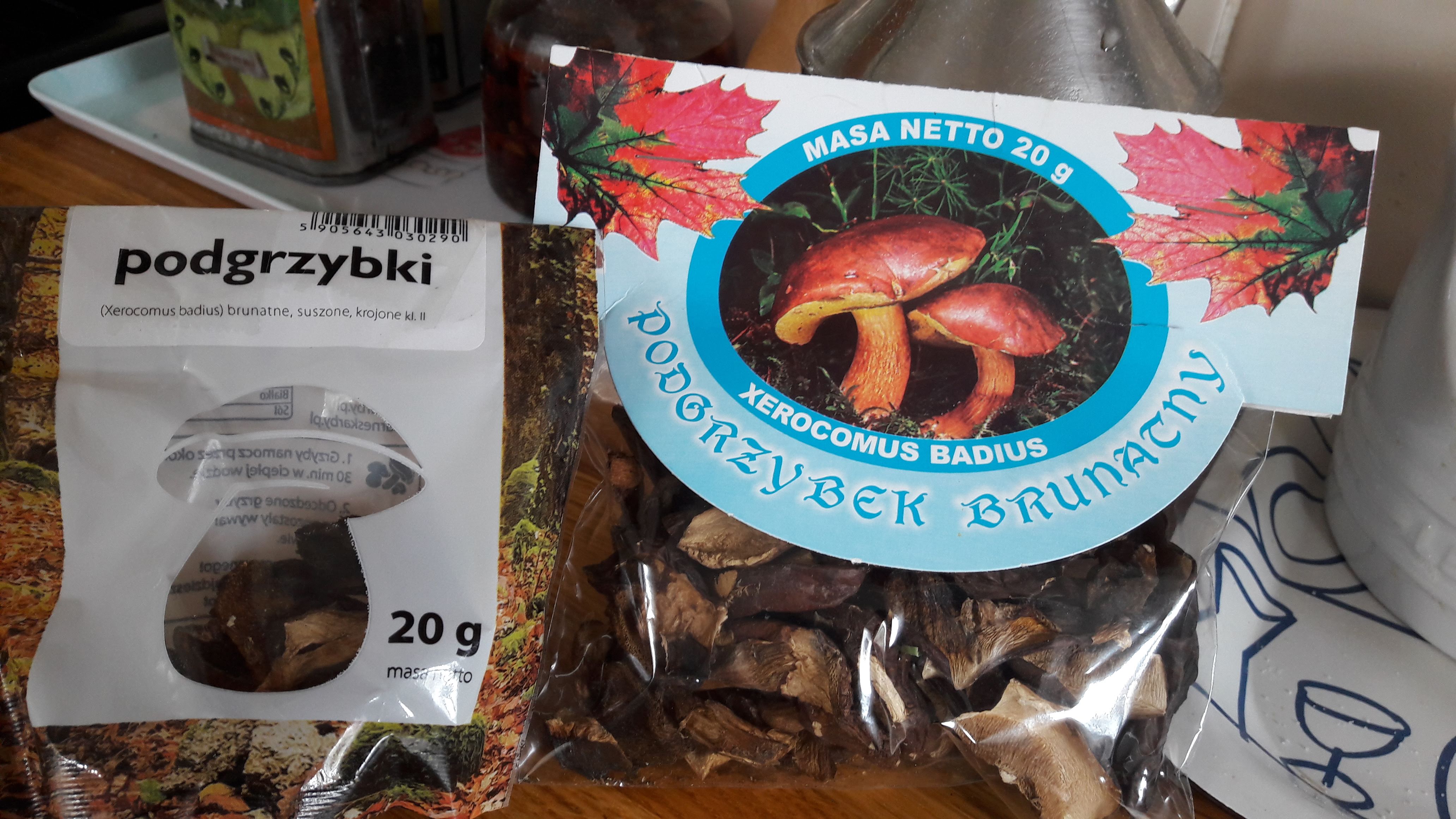
  • I recently got some other dried mushroom which are also good.

Podgrzybki Xerocomus badius

  • In Poland there are now mushroom stock cubes which are very useful especially for making sauces.
  • Years ago I brought loads back to England – now you can find these in the many Polish food shops.
  • The ones I use are made by Knorr and contain a small amount of dried mushroom extract.

Mushroom sauce 1 – using dried mushrooms

Ingredients

  • 150g fresh button mushroom caps – white and/or chestnut
  • 5g of  dried mushroom (around 3 slices)
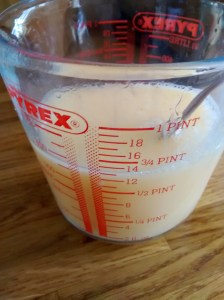
  • 500ml hot boiling water
  • 1 heaped tablespoon of cornflour
  • 3 tablespoons of milk
  • 2 large tablespoons of soured cream.
  • Butter to cook the mushrooms in
  • salt & pepper to taste

Method

  • You need to start this sauce the night before or in the morning for use in the evening.
  • Cover the dried mushrooms with 500ml of boiling water and leave to soak.
  • The following day take out the reconstituted mushrooms and using a knife you can chop then up into tiny pieces or if the are soft enough you can  spread out the pulp on a chopping board.
  • Slice the mushroom caps into fine slices and fry them gently in some butter till they are soft.
  • Add the dried mushroom pulp and the liquor in which they were seeped.
  • Simmer gently for about 5 to 10 minutes.
  • In a little dish mix the cornflour with the milk.
  • Add the cornflour mixture to the cooked mushrooms and stir gently over the heat until the sauce thickens.
  • Add salt & pepper to taste.
  • Remove from the heat and add the 2 large spoonfuls of soured cream and mix well in.

Note

None of these amounts are exact – they are a rough guide depending on what you have – you can use more water, milk or soured cream and so on.

Mushroom sauce 2 – using a mushroom stock cube

Ingredients

  • 150g fresh button mushroom caps – white and/or chestnut
  • 500ml hot boiling water
  • 1 heaped tablespoon of cornflour
  • 3 tablespoons of milk
  • 2 large tablespoons of soured cream.
  • Butter to cook the mushrooms in.

Note

I rarely have to add any more salt or pepper as the stock cube has enough seasoning in it.

Method 

  • Dissolve the stock cube in the hot water.
  • Slice the mushroom caps into fine slices and fry them gently in some butter till they are soft.
  • Simmer gently for about 5 to 10 minutes.
  • In a little dish mix the cornflour with the milk.
  • Add the cornflour mixture to the cooked mushrooms and stir gently over the heat until the sauce thickens.
  • Remove from the heat and add the 2 large spoonfuls of soured cream and mix.

Super served with boiled or creamy mashed potatoes – sprinkle chopped dill or parsley over them before serving.

Served on Carnation (1982 – 1998)  by Royal Doulton.

Placek with Rhubarb & Meringue

This cake was inspired by my placek(flat cake) with sour cherries and meringue

There are three parts to this cake:

  • Short pastry base – baked and cooled.
  • Rhubarb filling – cooked and left to go cold.
  • Meringue topping.

Three stages all take a bit of time but well worth the effort. It is delicious with a lovely balance of  sweetness against the tart rhubarb.

Short pastry base

The base of is made with a smaller amount of the recipe for  Ciasto kruche 1 – using raw egg yolks found in a previous post  – Pastry – ciasto kruche & półkruche. 

I could see out of my kitchen window that the rhubarb was beginning to grow.  As I still had one batch left frozen from last summer I to decided to use that up before the new crop and in time for you to try it.

Ingredients – base

  • 200g plain flour
  • 100g butter – chilled
  • 70g icing sugar
  • 2 egg yokes
  • pinch of salt

Method – base

  • Add a pinch of salt to the flour.
  • Use a knife to cut the chilled butter into small pieces into the flour and then use your fingers to make the mixture like breadcrumbs.
  • Add the icing sugar and mix this together.
  • Add the yolks and gently mix this in, then and bring it all together into a dough – try and handle the pastry as little as possible.
  • Form the dough into a rough rectangle.
  • Wrap the dough in greaseproof paper and chill it in the fridge for about 30 minutes.
  • Preheat the oven to GM 6 – 200°C.
  • Grease and line a 23 x 26 cm baking tin.
  • Use a rolling pin to flatten the dough a little
  • Press the dough into the tin – filling it up all the sides.
  • Prick the surface with a fork.
  • Bake for 20 – 25 minutes till golden.
  • Leave to cool.

Ingredients – Rhubarb filling

  • 400g (approx) of rhubarb
  • 150g of granulated sugar (more may be needed)
  • 25g of butter
  • 3 egg yolks
  • 2-3 tablespoons of potato or corn flour

Method – rhubarb filling

  • This needs to be made ahead of time as it must be cold.
  • Pre-heat the oven to GM2
  • Chop the rhubarb into small pieces and place in a baking dish
  • Add sugar.
  • Bake in the oven for around 1 hour – till soft.
  • Check for sweetness and add more sugar if necessary – but not too sweet.
  • Leave to cool a little.
  • *
  • I used cooked rhubarb that I had frozen from last year. 
  • *
  • Wizz the rhubarb up with a blender or chopper to get a purée.
  • Place this in a saucepan.
  • Heat slowly.
  • Mix the yolks with the potato or cornflour and add this to the rhubarb and heat till it thickens.
  • Add the butter and mix in.
  • Leave to go cold before use.

A few thoughts on the origin & history of meringues:

  • Meringue – a French word.
  • Swiss village of Meiringen.
  • Improved by Italian chef Gasparini.
  • From Polish word – marzynka – a day dream?
  • Made by the chef for the exiled king of Poland, Stanisław Leszczyński (1677 – 1766), Duke of Lorraine (1737 -1766).
  • His daughter, Maria, was married to Louis XV of France and she introduced them to the court.
  • In Polish – beza(sing)) bezy(pl) – link to – buzi kiss?
  • French meringue – whisk eggs till stiff – add sugar and whisk again.
  • Italian meringue – uses sugar syrup.
  • Swiss meringue – sugar and whites heated over a water bath.
  • Addition of cornflour – strengthens the egg white.

Meringue

  • I used 4 egg whites & 200g icing sugar.
  • Place the whites into a grease free bowl.
  • Whisk till stiff.
  • Add icing sugar and whisk again till stiff.
  • Preheat the oven to GM 1 -140°C.
  • Cover the base with the rhubarb filling and level it out.
  • Cover the rhubarb with the meringue and level it out
  • Put back into the oven for 45 to 60 minutes.
  • Cut the cake into squares when cool to serve.

Served here on  Royal Doulton – Counterpoint tea plates 1973 – 1987.

Knedle – Polish Potato Dumplings

The word knedle comes from a German word knödel which means dumpling.

Knedle are similar to kopytka, both can be called potato dumplings. They are different in shape but both are made with boiled potatoes, which have been left to go cold.

I  often boil potatoes the day before – the exact amounts are not critical but you must use starchy potatoes. When you have made these once you will have a good idea of the amounts involved.

Traditionally they are served with either melted butter or skwarki (crisp, fried, small squares of bacon) or charred fried onions.

Ingredients

  • 650 -750g boiled starchy potatoes – such as King Edward or Maris Piper
  • 1 egg & 1 yolk
  • 200g potato flour or plain flour or a mixture of the two.(I prefer a mixture or just plain flour)
  • salt

Method

  • Peel the potatoes, cut them up into pieces and boil them in salted water.
  • Drain the potatoes.
  • Leave the potatoes to cool.
  • Mash them so that there are no lumps – I have a ricer which is very good for this.
  • Use a large bowl and put the mashed potatoes into the bowl.
  • Lightly beat the egg and the yolk together and add this to the potatoes.
  • Add a little salt.
  • Weigh out the flour to give an idea of how much is needed – this will depend on the type of potato and the size of the eggs.
  • Add the flour and mix first with a wooden spoon and then by hand.
  • You might not need all the flour or you may need more.
  • Mix until you have a soft dough.
  • Have ready a large floured board to put the knedle on.
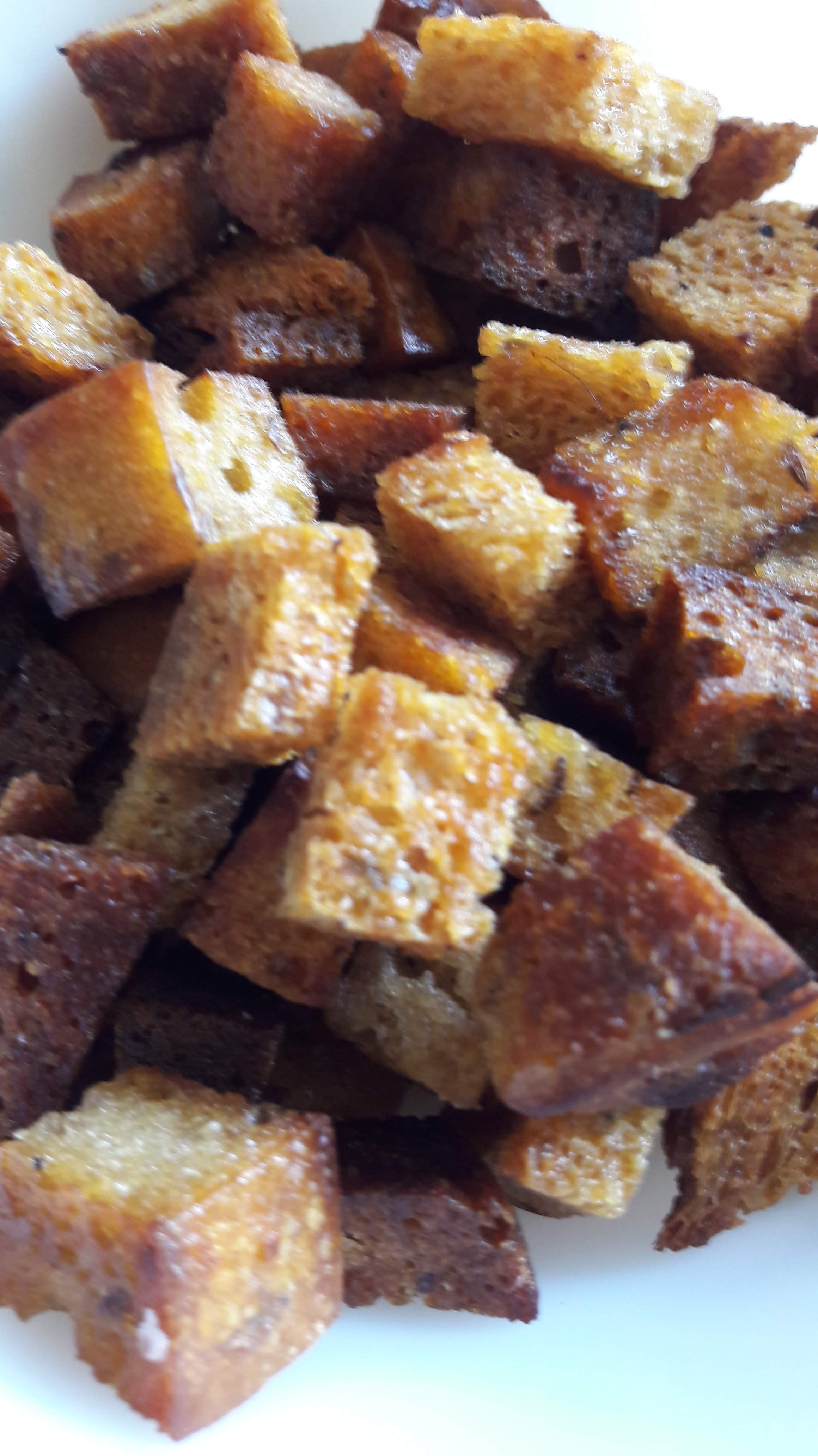
  • With your hands take small amount of the dough and roll into walnut sized balls.
  • On the board flatten the ball to a thick disc.
  • Made a thumb print in the centre of the disc (this allows them to hold more sauce when served).
  • Repeat this with the rest of the dough.
  • Fill a large pan with water, add some salt and bring this to the boil.
  • When the water is boiling, add the dumplings one by one, do not over fill the pan or they will stick together, around 5 at a time.
  • As they cook they will float to the surface then let them cook for another 2 minutes.
  • Then remove them with a slotted  or a perforated spoon and put them in a colander.
  • I have a colander sitting in an empty pan by the side of the large pan in which I am boiling the knedle.
  • Served here with melted butter, charred fried onions and mushroom sauce.

Served  in soup dishes by Royal Doulton – Tapestry – 1966 -1988.

Pierogi with Chicken & Raisins & Walnuts

This is my 250th post!

So I have decided on this Polish classic with a new twist – one I will certainly be making again.
Last Easter time I was in Gdańsk and I got to eat many old favourites and several new dishes.
I tried pierogi in several restaurants, choosing some unusual fillings and have written about some of these already such as pierogi with duck

I did find that some of the meaty ones were too big – I use a 7cm diameter cutter, which for me gives a better filling to pasta ratio.

On one menu I noticed a filling of chicken, raisins and walnuts.  I did not get the chance to eat these but decided that this was a must to try out.

Ingredients

  • 150 -200g of cooked chicken or thighs – roasted or poached  – amounts are not critical.
  • 50g of raisins
  • 30-50g of walnuts
  • Pepper to taste

Method

  • Place the raisins in a small bowl and cover them with boiling water.
  • Leave for an hour till they swell up.
  • Place them into a small saucepan heat them slowly and simmer stirring with a wooden spoon.
  • Once you have a pulp of the raisins leave them to go cold.
  • Chop the walnuts into small pieces.
  • Chop or mince the chicken.
  • Mix the ingredients together.
  • Season with pepper.
  • *
  • Use this filling for the pierogi – instructions for the dough are given below.
  • *
  • Serve with melted butter.

I have written much previously about pierogi  – but have included the instructions for the dough again below to save you looking it up.

Ingredients – Dough

  • 250g pasta flour or strong flour or plain flour & 2 tablespoons of fine semolina
  • 150ml water
  • 1 tablespoon oil – sunflower or light olive
  • ½ teaspoon salt
  • 1 egg yolk

Method

  • In a jug or bowl mix together the water, oil and the yolk.
  • Put the flour and salt into a large bowl and make a well in the centre.
  • Pour in the liquid from the jug and initially use a knife to mix this into the flour and then use your hands to mix the liquid and flour to get a ball of dough.


  • Turn this out onto a floured board and knead the dough for a few minutes until you have a smooth ball.
  • Cut the dough into quarters.
  • On a floured board roll out a quarter at a time until you have a sheet of thinly rolled dough.
  • Now prepare a large tray and cover it with a clean tea towel and sprinkle this with flour.
  • Have a large surface such as a tray covered with a cotton or linen cloth which has been lightly floured ready  and place the sealed pierogi on this until they are all made, do not let then touch each other.
  • I cut them out using a 7 cm diameter cutter.
  • The excess dough can be re-mixed and rolled out again.
  • Around a half tablespoon of filling is put on  each circle and then they are folded over and the edges pinched together to make a good seal.
  • You learn from experience how much filling to put in as too much will make it hard to seal them and if not properly sealed they will burst on boiling.  Do not worry if you have a few mishaps – it still happens to me even with experience – it is hard to salvage one that has gone wrong – just accept that there will be a few that you do not cook.
  • To cook the pierogi, use a large pan of boiling water to which you have added some salt and a drizzle of oil.
  • Drop the pierogi in one by one and allow them to boil.  I usually do about 6 to 8 at a time.
  • As they cook they will float to the surface, let them boil for 2 to 3 minutes and then remove them with a slotted or perforated spoon and put them into a colander above a pan for a few seconds to drain.
  • Continue boiling batches in the same water.
  • If you want to make all the pierogi to serve together then you need to get a large shallow dish and put melted butter into the dish.
  • Keep the dish warm in a low oven.
  • As you take out the cooked pierogi add them to the dish, mix them with the butter to prevent them sticking.
  • Keep on adding more as they cook and keep shaking the dish to coat and mix them.
  • Fried pierogi

  • All the butter coated pierogi that are not eaten can be fried up later – equally delicious!
  • Any that are not eaten should be spread out so that they cool with the melted butter around them.
  • Later, you can then fry them up gently so they are golden in parts.


Breaded Celeriac

Celeriac is used more often than celery stalks in Polish cooking.

I first  wrote about  celeriac in July 2016 Seler – Celeriac – Celery  and have written other posts after that.

Celeriac is become more and more popular in the shops in England  nowadays.

I came across this recipes recently and it reminded me of à la Polonaise.

Ingredients

  • 1 celeriac
  • 1 egg
  • Dried breadcrumbs – Bułka tarta
  • Salt & ground black pepper
  • Sunflower oil – for frying

Method

  • Peel the outer part of the celeriac away.
  • Steam the celeriac till it is soft throughout (20 – 30 minutes).
  • Allow to cool.
  • With a clean tea towel mop the celeriac till it is dry.
  • Cut  it into “sticks”.
  • Sprinkle them with salt & pepper.
  • Beat the egg and put it into a shallow dish.
  • Dip the sticks in the beaten egg mixture.
  • Put the dried breadcrumbs into a shallow dish.
  • Dip the sticks into the dried breadcrumbs making sure all the sides are covered.


  • Shallow fry the coated sticks in hot sunflower oil – turning them over.
  • Place onto kitchen roll to remove any excess oil.
  • Keep them warm in an oven whilst you fry other batches.

Here served with a beetroot salad.

Goes well with roast chicken or pork.


Half or Semi French? – Ciasto pȯłfrancuskie 3

There are two similarly named pastries in Polish cookery:

  • Ciasto francuskie  – translates as French pastry – this is puff pastry.
  • Ciasto pȯłfrancuskie  – translates as half or semi French pastry.

I have seen ciasto pȯłfrancuskie described as rough puff pastry  – but it  is not – rough puff is a slightly easier and quicker version of puff pastry.

I have seen many different recipes for this semi-French pastry and they fall into three broad categories:

  • ciasto pȯłfrancuskie  – śmietanowe – dough  made with some soured cream. 
  • ciasto pȯłfrancuskie – serowe  –  dough made with twaróg – curd cheese.
  • ciasto pȯłfrancuskie – drożdźowe – dough made with yeast.

Ciasto  pȯłfrancuskie 3 – with yeast

This is very much like the pastry used to make real French croissants, which are more yeast based than the crumbly puff pastry type you get here in England.

NoteThis recipe takes most of the day with frequent bits of activity and longer times of rest. 

  • There are two parts to this pastry:
  • The first is to make a yeast pastry and I have used the rogaliki (little horns) recipe which I posted recently for this.
  • The second is to use lots of butter and to layer up the pastry as you would do for puff pastry.
  • I have seen lots of different methods for adding the butter and doing the layering as well as how cold the butter should be and how long to rest between layering, whether to chill and how often. – I have described one of the shorter ways of doing this.

Ingredients – Yeast Dough

Leaven – Starter

  • 150g plain flour
  • 200ml warm milk
  • 4 tablespoons of granulated sugar
  • 1 pkt of dried yeast (= 1 tablespoon)

    Rest of Ingredients

  • 300g plain flour
  • 100g butter
  • 2 yolks
  • *
  • a little more milk might be needed 
  • Egg white to glaze
  • Icing sugar to dust
  • *
  • For layering
  • Around 180g of butter

Method

  • Mix the yeast and sugar into the hand hot milk.
  • Put 150g of flour into a bowl and mix in the milk mixture until it is like double cream.
  • Cover the bowl and leave it to rise.
  • *
  • Rub the butter into the 300g of flour until it is like breadcrumbs.
  • Add the egg yolks and the yeast starter.
  • Mix till you get a soft dough – you might need to add a tablespoon or so of milk – depends on the flour.
  • Knead the dough till you have a nice smooth ball.
  • Leave in a bowl, covered, to rise and double in size.
  • *
  • Place the butter into a dish and leave at room temperature to soften.
  • Knead the risen dough lightly for a few minutes.
  • **
  • Roll out the dough out thinly into a large rectangle.
  • Spread a around a sixth of the butter over 2/3rds of the surface.
  • Fold the dough without the butter over a third of the dough.
  • Fold the rest of the dough over this – making a rectangle.
  • Turn the dough by 90°.
  • Repeat the rolling, butter spreading and folding
  • Leave to rest for around 10 minutes.
  • ***
  • Repeat from ** to *** twice.
  • *
  • Cover the dough in greaseproof paper and place in the fridge for about 30 minutes or longer if you do not want to use just straight away.
  • When you want to use the dough take it out of the fridge for 20 minutes
  • *
  • Pre-heat the oven to GM 4 – 180°C
  • Grease two baking sheets.
  • Roll the dough out into a rectangle to use.


  • I made rogaliki but you can do other shapes & use fillings.
  • *
  • Cut into eight triangles.
  • Roll  each one up from the large end.
  • Place them on a baking sheet – as far apart as possible.
  • Brush the tops with egg white.
  • Cover loosely and leave for about 15 minutes.
  • Bake for around 15 minutes.
  • Leave to cool slightly
  • You can dust with icing sugar.

Phew! this was a marathon but I wanted to try this to see how it is done.


Keks -With Fruit Mincemeat – 2

Keks is the word for a light fruit cake which is baked in a loaf tin or more often in a long narrow rectangular tin.

I am not sure how or when the word keks came into the Polish language but I am certain it comes from the English word “cakes” –  however the word keks is singular in Polish and means cake, and the plural is  keksy which is cakes.

Keks are make with bakalie, which is usually translated as dried fruits – however it has more varied fruits than the English version of dried grapes (raisins, sultanas, currants) and  mixed peel and can include: apricots, dates, figs, prunes and nuts.

Keks – using fruit mincemeat

At Christmas time I make English fruit mincemeat using the recipe from Delia Smith but without the chopped nuts.

If I have any mincemeat left over after the Christmas period I make a fruit loaf which which is very much a keks.

This is my second version of a keks with mincemeat.


Ingredients

  • 150 butter
  • 150g dark brown sugar
  • Grated zest of an orange
  • Grated zest of a lemon
  • 3 eggs
  • 450g jar of mincemeat (exact amount is not critical)
  • 175g  mixture of sultanas, raisins, currants & mixed peel
  • 50g of chopped walnuts
  • 225g  spelt flour
  • 3 level teaspoons of baking powder

Method

  • Preheat the oven to GM3 – 160ºC
  • Prepare the long loaf tin by greasing it and lining the long sides using one piece of greaseproof paper.
  • Lightly cream the butter and sugar.
  • Add the grated zest of the lemon and the orange.
  • Beat in the eggs, one by one.
  • Stir in the mincemeat, the dried fruits and walnuts until it is an even consistency – a wooden spoon is good for this.
  • Mix the spelt flour with the baking powder.
  • Stir in the flour mixture.
  • Spoon the mixture into the tin and smooth the top.
  • Bake for around 60 minutes – check after 50 minutes and cover the top if necessary to prevent burning.
  • Leave to cool in the tin before turning it out.


Served here on hand painted Paragon octagonal tea plates.


Vegetable Soup – Creamed

This soup is described as przecierana  which mean rubbed through a sieve. Nowadays a stick blender is more likely to be used to puree the cooked vegetables.

This is more like an English soup with all the ingredients blended together.

The method at the beginning is the same as in an earlier post – Vegetable soup. 

The ingredients for this soup can change with the seasons but if using some frozen or tinned vegetable the ingredients can be very similar all the year round. Though I still find this soup will be slightly different whenever I make it.

Root vegetables are the most prominent and I never use tomatoes or cabbage in this soup.

You will need around 600g of mixed vegetables to 2 litres of water – though I do not weight them out!  It is best to have a variety.

Ingredients

  • Carrots
  • Celeriac or Celery
  • Garden peas
  • Green Beans
  • Kohlrabi or White Turnip
  • Leeks or Onions
  • Parsnips or Parsley root
  • Potatoes
  • 40g butter
  • Salt & pepper to taste
  • 125 – 200 ml of soured cream or Greek style yoghurt
  • To garnish
  • Dill and or flat-leaved parsley

Method

  • Peel, were needed, then slice, cube or grate the vegetables.
  • Gently fry the leeks or onions in the butter.
  • Add the rest of the vegetables and around 2 litres of hot water.
  • Bring to the boil.
  • Turn the heat to simmer and simmer with the lid on for 20 minutes or more (depends on the size of the vegetables).
  • Remove from the heat.
  • **
  • You can do up to this point, leave to cool for serving later.
  • **
  • Blend the soup, I use a stick blender to get a thick uniform liquid.
  • Season to taste.
  • Bring back to just before the boil.
  • Add the soured cream or the yoghurt* and mix well together.
  • Serve with chopped dill or flat-leaved parsley.


* Traditionally this would have been made with soured cream  – I have found that the yoghurt gives a tangy, sour, lemony zing to the soup – most  refreshing in summer.

Served in Royal Stafford – Blossom Time – 1950s

Alternative Topping


Version 2

  • As above but use chicken stock as well as some of the water or cook with chicken wings.
  • Remove the chicken wings before serving.


Served on Royal Doulton – Tapestry – 1966 – 1988.


Pyzy

Pyzy are potato dumplings, usually stuffed with meat and then boiled.

Traditionally they are served with some skwarki – crispy smoked bacon bits or slightly charred onions, a mixture of the two or just melted butter poured over them.

  • There are many recipes, some made with raw potato, others with boiled or steamed potatoes and some using a mixture of the two.
  • I have found that using a 50:50 mixture of  fine grated raw potatoes and boiled potatoes gives the best results.
  • You will need some flour, which can be wheat flour, potato flour or a mixture of the two (I prefer just wheat).
  • You also need eggs or egg yolks – around 1 egg to 1 kilo of potatoes.
  • For the filling you needs some cooked meat such as from a klops – meat loaf, cooked kotlety (meat balls/burgers) or meat filling for pierogi.

My mother never made pyzy and I must admit the first time I had them in Poland, I thought they were much too big & heavy! Since them I have tried out many different version and have liked them very much.

In Gvara, a restaurant in Gdańsk, I tried a soup with some pyzy in it.  It was utterly delicious.

Dried mushroom consommé with thin sliced mushroom carpaccio* and pyzy filled with pork & shrimp.

* Usually thinly sliced raw meat or fish -named by Giuseppe Cipriani (1900 – 1980) bar owner in Venice, because of the colours used by the Venetian Painter Vittore Carpaccio.

Ingredients

  • 750g of raw potatoes
  • 750g of cold boiled potatoes
  • 1 egg and 1 yolk
  • 1-2 tablespoons of plain flour  & extra for dusting
  • Salt

Method

  • Grate the raw potatoes using a fine grater.
  • Place the potatoes on a clean tea cloth.
  • Squeeze out as much liquid as possible.
  • Mash or use a ricer to get the boiled potatoes smooth and lump free.
  • Mix the two sorts of potato together in a large bowl.
  • Add the egg and the yolk and mix together.
  • Add enough flour to make a stiff dough.
  • Add some salt.


Ingredients – Filling

  • 250g of cooked and then minced or finely chopped meat(usually pork)
    such as from:

    • Klops – meat loaf
    • Cooked minced kotlety (meat balls/burgers)
    • Meat filling for pierogi.
  • Half a grated onion
  • 25g of melted butter
  • 1-2 tablespoons of dried breadcrumbs – bułka tarta
  • Salt & pepper

Method – Filling

  • Mix all the ingredients together to make a stiff filling.
  • Season to taste.

Making the pyzy

  • You are aiming for balls around the size of a large walnut.
  • Take a small handful of the mixture and shape it into a flat disc.
  • Place this onto a floured board.
  • Add a teaspoon amount of the meat filling.
  • Bring the potato mixture around the filling and with floured hands shape into a ball.
  • Repeat this with the rest of the potato mixture and meat filling mixture.
  • Have ready a large pan of boiling water to which you have added some salt.
  • Place around 5 pyzy at a time into the hot water.
  • Let them rise to the top then simmer for 4 – 6  minutes, depends on the size –  not too long as they will start to disintegrate.
  • Remove with a slotted spoon and place in a colander over a pan.


  • Place into a warm serving dish and top with skwarki – crispy smoked bacon bits, slightly charred onions, a mixture of the two or just melted butter.
  • Keep the dish warm and continue adding to the pyzy in the dish as they cook.
  • The fat in the topping stops them sticking together.

Serving tureen – Gaywood by Ridgeway – Made in England.


Vegetable Soup

Zupa jarzynowa is vegetable soup (jarzyny are vegetables).

In the past the ingredients for this soup would have changed with the seasons although bottled or tinned vegetable could have been used.  Nowadays with frozen vegetables the ingredients can be very similar all the year round however I still find this soup will be slightly different whenever I make it.

Root vegetable are most prominent and I never use tomatoes or cabbage in this soup. Unlike Minestrone, which is known as Italian Vegetable soup in Poland – this always should have tomatoes and Savoy cabbage in it!

You will need around 600g of mixed vegetables to 1.5 to 2 litres of water – though I do not weight them out!  It is best to have a variety.

As with most Polish soups the ingredients are chopped, sliced or grated in the liquid.


Ingredients

  • Carrots
  • Celeriac or Celery
  • Garden peas
  • Green Beans
  • Kohlrabi or White Turnip
  • Leeks or Onions
  • Parsnips or Parsley root
  • Potatoes
  • 40g butter
  • Salt & pepper to taste
  • To garnish
  • Dill and or flat-leaved parsley

Method

  • Peel, were needed then slice, cube or grate the vegetables.
  • Gently fry the leeks or onions in the butter.
  • Add the rest of the vegetables and around 2 litres of hot water.
  • Bring to the boil
  • Turn the heat to simmer and simmer with the lid on for 20 minutes or more (depends on the size of the vegetables).
  • Serve topped with dill and or flat-leaved parsley.

Served on Royal Doulton – Burgundy – 1959 – 1981.

Version 2

  • As above but use chicken stock as well as some of the water or cook with chicken wings.
  • Remove the chicken wings before serving.

Served on Royal Doulton – Carnation – 1982 – 1998.