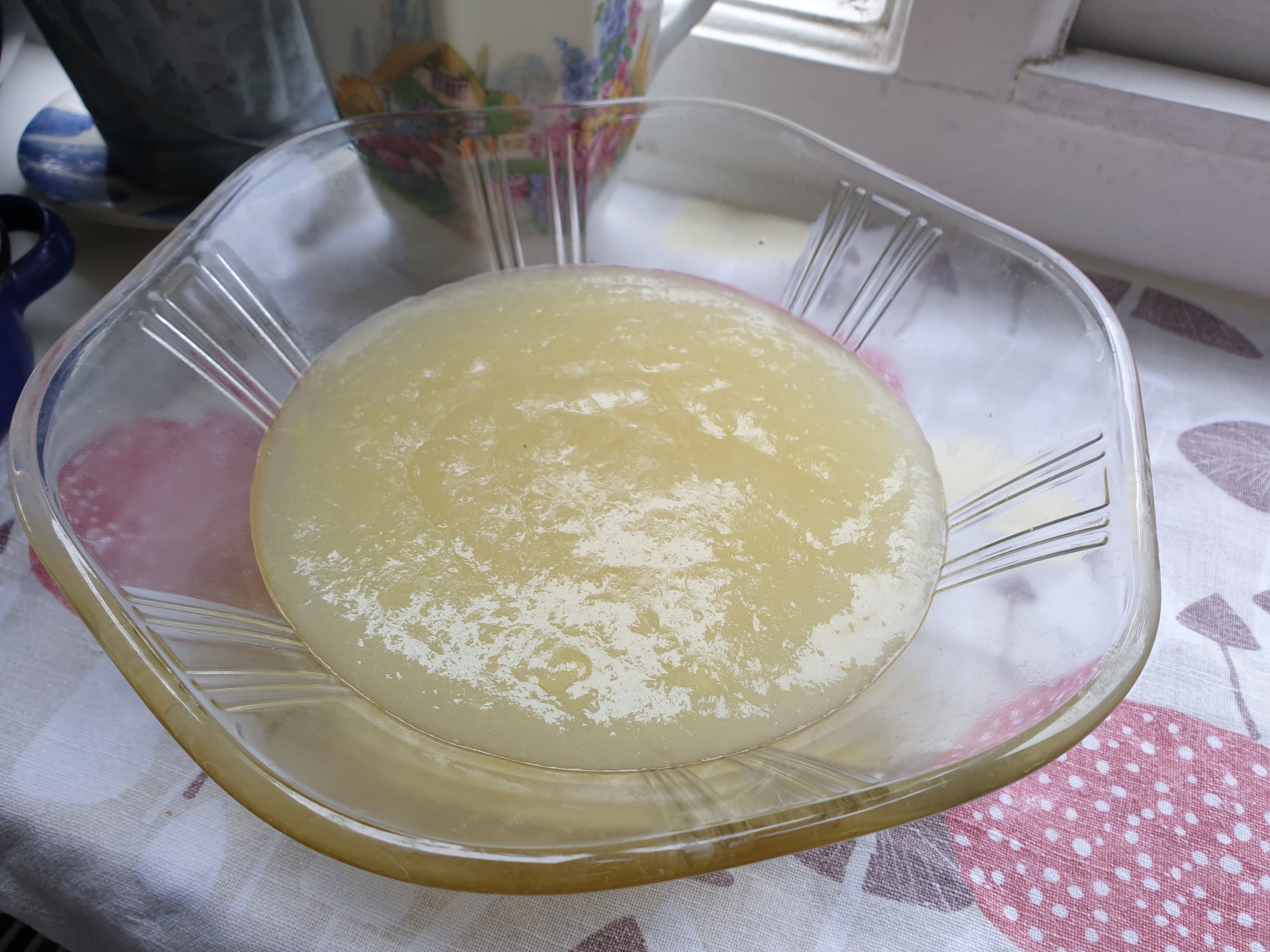
Tuna Spread

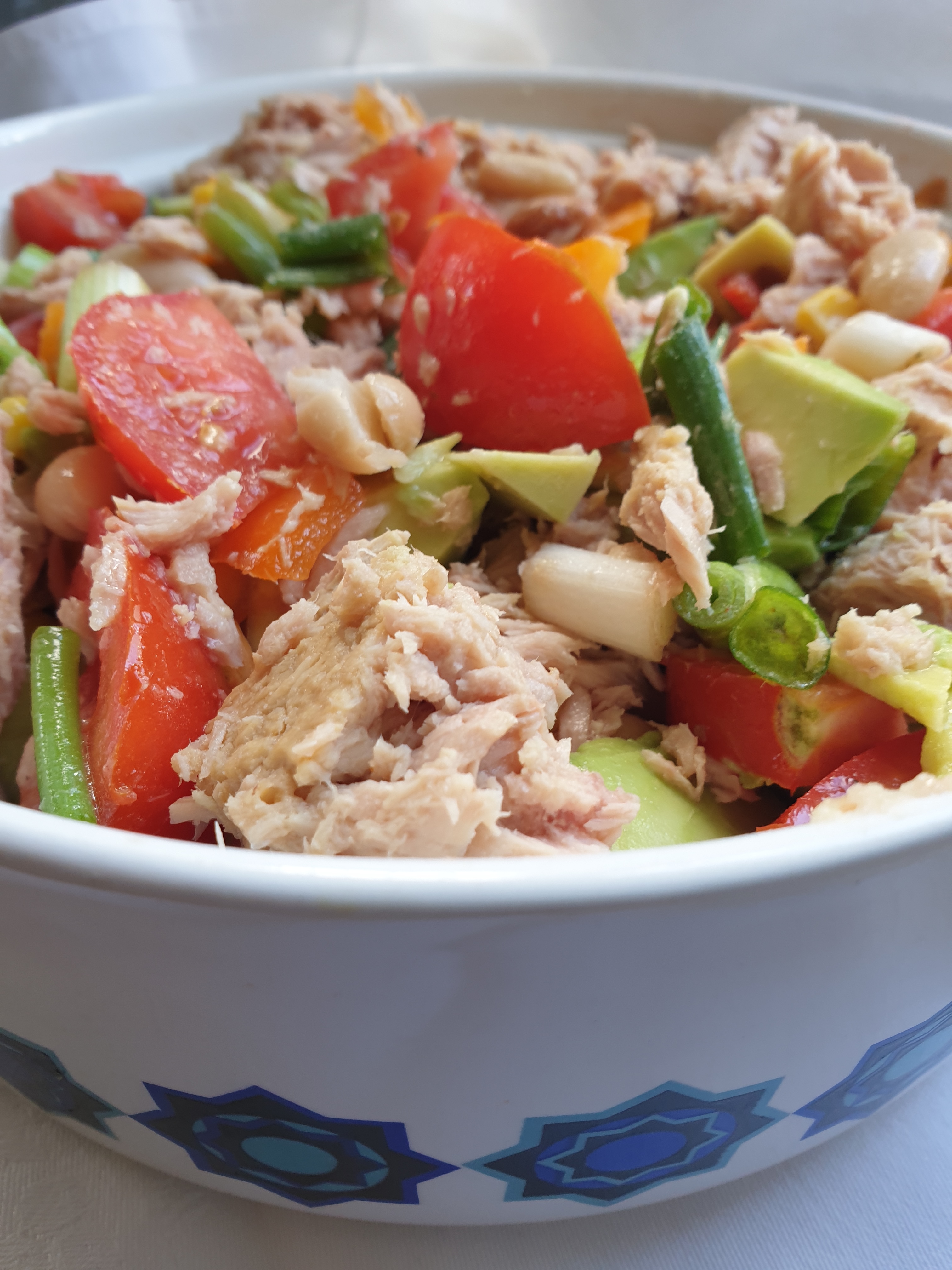
  • There are many recipes in my Polish cookery books for a variety of spreads using cooked meat or fish.
  • In Polish this would be called pasta – a paste or a spread.
  • This is based on my salmon spread recipe, which was given to me by my late cousin who lived near Durham.

Ingredients

  • Tin of tuna in brine, spring water or oil
  • 200g of cream cheese or yoghurt cheese
  • Juice of half a lemon
  • Grated rind of half a lemon
  • *
  • A little soured cream- optional
  • Salt and pepper
  • Pinch of sugar – optional

Method

  • Drain the tuna from the liquid in the tin.
  • Remove the skin and any bones.
  • Mash the tuna up with a fork.
  • Add the cheese and the lemon juice.
  • Mix it all together to a smooth paste.
  • Add some soured cream to make a softer spread.
  • Season to taste.
  • *
  • Put into a bowl to serve or into individual little pots.
  • *
  • Serve with bread, toast or crackers and green salad.
  • Or use as a dip with crudities.

Vanilla Sauce

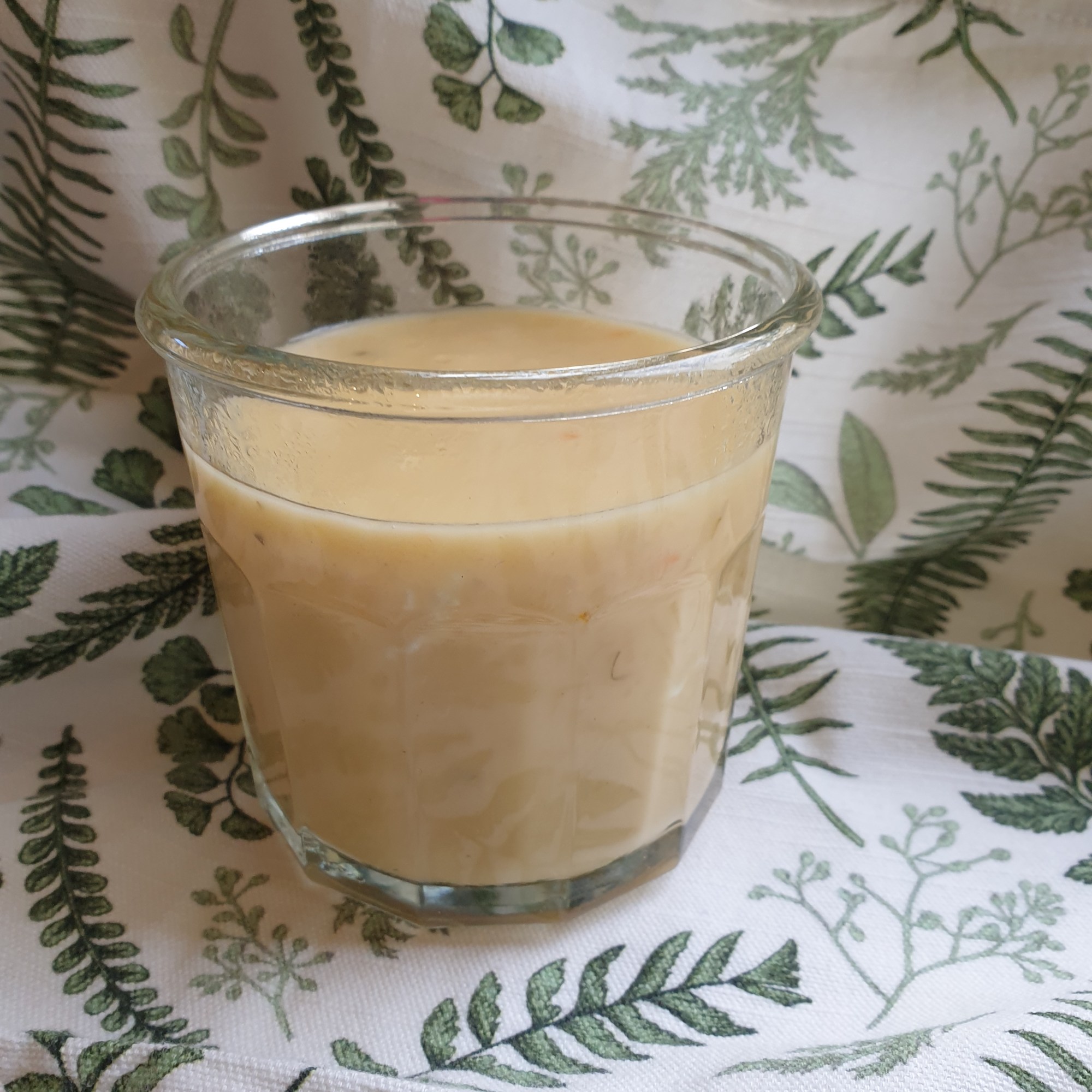
    • Sos waniliowy – vanilla sauce and budyń are very similar.
    • They are both also similar to English custards.
    • In Poland these are both served chilled.
    • Vanilla sauce is more a pouring sauce and budyń is thicker and set.

    Ingredients

    • 250ml of milk (full fat is best)
    • 50g of granulated sugar
    • 2-3 drops of vanilla  essence
    • 1-1½ tablespoonfuls of potato starch (you can use cornflour – if potato flour is not available)
    • 2 egg yolks

    Method

    • Put 150ml of the milk, sugar and the vanilla essence into a saucepan.
    • Heat gently till the sugar dissolved, stirring all the time.
    • Take it of the heat.
    • Blend together the rest of the milk (150ml) with the egg yolks and potato flour.
    • Add some of the boiled mixture to this and stir well.
    • Add this to the rest of  the mixture and stir well.
    • Put the pan back on the heat and stir gently till thickened .
    • Pour into a glass dish (or several small dishes) – leave to cool.
    • Chill in the fridge for at least 2 hours.

    This sauce is served with, bottled fruit, fruit salad, fruit sauces. or kisiel


Apple Pancakes 2

  • Looking through one of my Polish cookery books, I came across this recipe for a batter for racuszki with apples.
  • These are more like American style pancakes and I would call them apple fritters in England.
  • The original recipe used soured milk , so I used thick full fat Greek style yoghurt thinned down with water.
  • The original recipe used sweet eating apples but my Bramley apples are now ripe and I used one of these.
  • They were delicious and this will be my batter of choice from now on.

Ingredients

  • 1 Bramley apple or 2 eating apples
  • 1 egg
  • 100g plain flour
  • 125 ml thick full fat Greek style yoghurt
  • 60 ml of water (you might need a little more)
  • ½ teaspoon baking powder
  • *
  • Sunflower oil to fry in
  • *
  • Icing sugar to dust.

Method

  • Mix the egg, yoghurt, water, flour and baking powder together.
  • You are aiming for a smooth, thick batter.
  • You may need to add a little more water.
  • Cover and leave to rest for 1 hour.
  • *
  • Peel and core the apple.
  • Cut into thin slices.
  • Put the apple slices into the batter and coat all the sides.
  • *
  • Fry the fritters in hot oil.
  • Turn them over to do both sides.
  • Take them out and put onto kitchen roll.
  • *
  • Keep them warm in a low oven whilst cooking the rest.
  • *
  • Dust with icing sugar to serve.

Hungarian Sauce

  • This sauce has its origins in gulasza much loved Polish dish of Hungarian origin.
  • This is good served with pan fried meats or kotlety-mielone – Polish large meatballs.

Ingredients

  • 1 onion
  • 2 tablespoons of butter
  • 1 tablespoon of plain flour
  • 250-300ml of chicken stock (can be from a cube or concentrate)
  • 2 tablespoons of tomato purée 
  • ½ teaspoon of paprika
  • ½ teaspoon of sugar
  • Juice of half a lemon
  • 125ml of soured cream or thick yoghurt
  • Salt & pepper to taste 

Method

  • Chop the onion up into small pieces.
  • Cook gently in the butter – do not brown.
  • Cook until the onions are soft.
  • Mix together the stock, tomato purée, paprika and sugar.
  • Add the flour to the onions and cook gently whilst stirring.
  • Slowly add the stock mixture, stirring all the time.
  • Cook till the sauce is thick and uniform.
  • Add extra stock if it is too thick.
  • Stir in the lemon juice.
  • Season to taste.
  • Stir in the soured cream or yoghurt.
  • Mix well and serve.

Makaroniki

Makaroniki are Almond Macaroons

  • Did you know that wild almonds contain large amounts of hydrogen cyanide?
  • A mutation produced the sweet almond trees, which became domesticated.
  • These sweet almonds only contain a very small amount of hydrogen cyanide.
  • Macaroons have been made in Italy from the end of the 8th century.
  • By the 16th century they were being made in France.
  • The word macaroon comes from the Italian ammaccare – to crush and these biscuits are called amaretti in Italy.
  • In my Kuchnia Polska (classic recipe book from the 1950s) the recipe includes how to prepare and grind the almonds!

INGREDIENTS

  • 175g ground almonds
  • 175g caster sugar
  • 2 egg whites
  • 2 to 3 drops of almond essence
  • Handful of flaked almonds or almond halves

METHOD

  • Line 2 baking sheets with greaseproof paper.
  • Pre-heat the oven to GM2 – 150°C.
  • Mix the ground almonds with the sugar.
  • Add the drops of almond essence.
  • Whisk the egg whites till stiff.
  • Fold in the almond mixture with a metal spoon.
  • Place tablespoons of the mixture on the baking sheets.
  • Flatten them with the back of a spoon.
  • Add some flaked almonds on the centre.
  • Bake for 20 minutes.
  • Leave to cool on a wire rack.


White Onion Sauce

  • The onions are boiled not browned to make this super sauce.
  • The sauce is served hot.
  • This sauce goes well with roast pork or chicken as well as steamed vegetables.

Ingredients

  • 2 medium onions
  • 30g butter
  • 1 tablespoons of plain flour
  • 250 & 125ml vegetable stock
  • 125ml full fat Greek Yoghurt or soured cream
  • Salt & pepper

Method

  • Chop the onion into pieces.
  • Cover with 250ml of vegetable stock.
  • Bring to the boil and then simmer till soft.
  • Add the butter.
  • Use a blender to purée the onions.
  • Mix the rest of the 125ml of stock with the flour.
  • Add the stock mixture to the onions and bring to the boil.
  • Simmer and stir till the mixture thickens.
  • Add the yoghurt or soured cream.
  • Season to taste. 

Lentil Soup

  • This recipe is based on Lentils-Polish style.
  • As autumn is approaching I thought I would share this warming soup recipe.

Ingredients

  • 150g – 200g dried Puy lentils
  • 100g smoked bacon – chopped into small squares
  • 1 large onion or 2 leeks – chopped.
  • 1 courgette – chopped into small pieces
  • ½ tube of tomato purée
  • 1½ litres of chicken stock (can be from a cube or concentrate)
  • 5 grains of allspice
  • 2 bay leaves
  • 1 teaspoon of sweet paprika (not smoked)
  • 2 tablespoons of butter for frying
  • Ground black pepper
  • Salt might not be needed because of the bacon

Method

  • Cook the lentils in water until they are soft.
  • Fry up the bacon and the onions in the butter.
  • Add the courgettes and put them into a large saucepan.
  • Add the stock, tomato puree and lentils.
  • Add the bay leaves and allspice.
  • Bring to the boil and then let simmer for around 30 minutes.
  • Season with the black pepper to taste.
Here served in Royal Doulton – Carnation (1982 – 1998)

Herb Sauce

  • The English word sauce and the Polish word sos – both originate from the Latin – salsis meaning salted.
  • Over the next few weeks I will be looking at a variety of hot & cold, sweet & savoury Polish sauces.
  • This delicate, slightly “lemony” herb white sauce is super made with:
    • Chives
    • Dill
    • Parsley
    • Sorrel
  • It is delicious served with fish or chicken, boiled potatoes or steamed vegetables.
  • It has become one of my  regular staple sauces.

Ingredients

  • 250ml of vegetable stock
  • 1½ -2 tablespoons of plain flour
  • 125ml of full fat Greek yoghurt or soured cream
  • 3 tablespoons of the chosen chopped herbs
  • Pinch of salt
  • 1 yolk optional

Method

  • Mix the stock with the flour and beat out any lumps.
  • Add the pinch of salt.
  • Heat the mixture in a small saucepan.
  • Mixing all the time until it thickens.
  • Stir in the yoghurt until thoroughly mixed. 
  • **
  • Add the chopped herbs.
  • *
  • **If using the yolk add this before the herbs and mix well.

Classic Polish Recipe Book

  • Kuchnia Polska was my first Polish cookery book.
  • The title means Polish Kitchen – or Polish Cookery.
  • It was my first Polish cookery book and my only one till many years later.
  • I think of this as my “Cookery Bible” and turn to this first when doing any research for a recipe.
  • I have rarely had any “failures” from this book.
  • *
  • First published in 1956.
  • Published by Państwowe Wydawnictwo Ekonomiczne, Warszawa. 
  • My edition is the 15th published 1971.
  • There are 775 pages plus photographs.
  • The text is in Polish.
  • 10 authors are listed – the first is Prof. dr Stanisław Berger.
  • The graphics are by Czesław Wielhorski (1911-1980).
  • Czesław Wielhorski was a “visual artist” – a graphic artist
  • Czesław Wielhorski is well known for his posters for the 1939 winter Olympics in Zakopane.
  • *
  • As well as recipes there is advice including kitchen layout, food groups and menus
  • There are many instructions from an age when pre-prepared food ingredients were not available eg – how to grind almonds. 
  • *
  • I have always loved the drawings in this book.
  • The drawing are in black and white each with one colour.
  • Cross Hatching and dots in black add texture to the illustrations
  • Below are a selection of these wonderful illustrations 

Almond Cake

  • The almond tree originated in Asia and it is thought that almonds were one of the earliest domesticated fruit trees.
  • Because of traders moving on the Silk Road, almond trees, were established in the Middle East and Mediterranean areas.
  • By 1,000 BC they were grown in Greece and later in Rome, where almonds were referred to as nut Graeca  – Greek nut.
  • By 716AD almond trees were growing in France
  • *
  • Did you know that almonds are not a true nut but the seed part of a stone fruit, a drupe, similar to apricots, peaches and plums?
  • *
  • Almond  is  Prunus amygdalus
  • The English word almond comes from the old French almando.
  • The Italian word is mandorle.
  • The Polish is migdał(singular) migdały (plural).
  • *
  • Although this cake is simple, it is truly delicious.

Ingredients

  • 125g butter
  • 150g caster sugar
  • 3 eggs – separated
  • ½ teaspoon almond essence
  • 75g ground almonds
  • 40g plain flour
  • 1 teaspoon baking powder
  • Handful of flaked almonds

Method

  • Pre-heat the oven to GM4 -180°C.
  • Use a cake liner to line a 20 cm diameter cake tin.
  • Cream the butter and sugar until light and fluffy.
  • Add the egg yolks and almond essence and whisk till fluffy again.
  • Mix the ground almonds, flour and baking powder together.
  • Fold this mixture into the creamed mixture.
  • Whisk the egg whites till they are stiff.
  • Fold the egg whites into the cake mixture.
  • Spoon the cake mixture into the lined cake tin.
  • Smooth the top down.
  • Sprinkle the flaked almonds on the top.
  • Bake for 40 – 45 minutes.