More Hot Beets!

Beetroot must be one of Poland’s favourite vegetables and I have written recipes about them previously  – many of these are for salads.

Here is another recipes which I came across recently – raisins, apple, horseradish and a little soured cream is added to make a hot dish to serve with roast meats.

The original recipe used grated fresh horseradish – I have adapted it by using prepared horseradish sauce which I have in all the time.

Cooked beetroots are needed and these can be prepared in your favourite way – boiling, steaming or roasting.


Ingredients

700g of cooked beetroots

2 Bramley cooking apples

50g of raisins

1 tablespoon of butter

80mls of soured cream

2 – 3 tablespoons of horseradish sauce

Juice of 1 – 2 lemons

Salt & pepper

Method

Put the raisins in a small bowl and pour boiling water over them and leave them to stand for about 30 minutes.

Coarse grate the cooked beetroots or use a blender.

Peel and core the apples and coarse grate them and pour some lemon juice on them.

In a deep frying pan gently melt the butter.

Add the grated apples and heat gently until they start to soften.

Add the grated beetroot, the raisins and water and continue to heat them together, stirring occasionally.

Add the horseradish sauce and the soured cream and mix well in, continue to heat for a couple of minutes.

Add more lemon juice, salt & pepper to taste.

Serve hot.


Note

You can put them in an oven proof dish in a low oven whilst you wait for other items to cook.

20190208_185106

Served here with kotlety – breaded pork and boiled new potatoes.

Note

If you have any left – they taste good cold as well!


Butter Bean Mash

Butter beans are so soft and creamy – this is one of my favourite recipes for them – I often serve this instead of mashed potatoes.

This is one of my storecupboard recipes as I use tinned butter beans to make this.


Of course you can use dried beans, soaking and cooking them in your usual way.

Ingredients

2 tins of butter beans

1 large or 2 small onions

2-3 cloves of garlic

250ml of chicken or vegetable stock (can be from cubes or powder)

Butter for frying the onions.

Salt & pepper

Chopped chives or flat-leaved parsley to serve.

Method

A deep, large frying pan is good for making this.

Chop the onion into small squares and fry gently in butter until they are soft and golden brown.

Chop the garlic and add this to the onions, stirr and heat for a minute.

Drain the beans from the tins and add these to the onions.

Cover with stock and simmer gently until the beans are soft.

Use a potato masher to mash the beans and onions.

Cook for a few minutes longer – cooking away an excess liquid.


You can put this into an oven proof dish into a low oven at this stage whilst you finish off the rest of the meal.

Garnish with chives or flat-leaved parsley to serve.

Serve instead of potatoes with meats or other cooked vegetable dishes.


Served here with pan fried pork loin and cooked red cabbage on

Royal Doulton – Tapestry – 1966 – 1988

Polish Pea Soup

Grochówka – Pea Soup – just reminds me of when I was young – the smell and taste just bring back so many memories.

The yellow split pea type are the ones used in all the traditional recipes and the soup should not be very thick.


You can make this soup in a stockpot on the stove top or put it in the oven and leave it to simmer gently for many hours. I have found that making this in my slow cooker is much easier; you can leave it without worrying about it sticking or burning.

Any type of Polish smoked sausage can be used – here I used  Toruńska.

I have given recipes for two slightly different versions

Version 1

Ingredients

  • 350 – 400g yellow split peas
  • 2 large carrots
  • 2 onions
  • 2 litres of vegetable stock – can be from a cube or powder
  • 300g of Kielbasa Polish smoked sausage.
  • 1 bay leaf
  • 8 peppercorns
  • 2-3 grains of allspice
  • Chopped flat-leaf parsley or chives to garnish when serving.

Method – version 1

  • Peel the carrots and cut them into rounds – cut the larger ones into halves.
  • Dice the onions.
  • Chop the sausage into rounds and then cut these into halves or quarters – depending on the size of the sausage.
  • Place everything except the garnish into the slow cooker and switch it on to high.
  • Leave the soup mixture to cook for around 4 hours, giving it an occasional stir.
  • Cook until the peas “fall apart”.
  • This soup should not be a “thick mush!”  – add some boiling water to thin it down if necessary.
  • Sprinkle the chopped parsley or chives on the top of each serving.


Served in Royal  Doulton – Carnation – 1982 – 1998

Version 2

Ingredients

  • 300g yellow split peas
  • 2 large carrots
  • 2 onions
  • 2 litres of vegetable stock – can be from a cube or powder
  • 200g of Kielbasa – Polish smoked sausage.
  • 1 bay leaf
  • 8 peppercorns
  • 2-3 grains of allspice
  • *
  • Garnish
  • 4 slices of smoked bacon
  • 1 onion

Method – version 2

  • Peel the carrots and cut them into rounds – cut the larger ones into halves.
  • Dice the onions.
  • Chop the sausage into rounds and then cut these into halves or quarters – depending on the size of the sausage.
  • Place everything except the garnish into the slow cooker and switch it on to high.
  • Leave the soup mixture to cook for around 4 hours, giving it an occasional stir.
  • Cook until the peas “fall apart”.
  • This soup should not be a “thick mush!”  – add some boiling water to thin it down if necessary.

Garnish

  • Chop the bacon into small squares and fry gently till very crispy – these are called skwarki in Polish.
  • Dice the onion and fry in a little oil until the pieces are lightly charred.
  • Mix the bacon and onions together.
  • You either use these straight away or you make them in advance and leave them to go cold.
  • Use some kitchen roll to mop up any excess fat.


When you serve the soup, place a largish tablespoon of the garnish on top of each portion.


Served in Royal  Doulton – Carnation – 1982 – 1998


Beef Gulasz with Caraway

I came across this recipe recently which uses Gouda cheese with soured cream to thicken the sauce – it works really well and I will be trying this in other recipes.

Ingredients

400g – 500g braising steak – cubed

200g – 250g of mushrooms (chestnut type are good) – sliced

2 large onions – chopped

300ml of chicken stock (can be from a cube or concentrate)

3 tablespoons of caraway seeds

1 -2 tablespoons of plain flour

50g of Gouda cheese – chopped into small cubes.

3 tablespoons of soured cream

Sunflower oil for frying

Salt & pepper to taste.

Flat-leafed parsley to garnish – chopped

Method

Pre heat the oven to Gas Mark 3 – 1600C

On a large plate mix together the flour, salt and pepper.

Coat the meat cubes lightly in the flour mixture and brown these in the oil in a hot frying pan.

Place the beef into a casserole dish.

Lightly fry the onions and mushrooms in the frying pan and then add them to the beef.


Add the stock and caraway seeds to the pan.

Put on the lid and cook in the oven for around 3 hours until the beef is tender.

Before serving stir in the cubes of cheese and the soured cream and mix well into the sauce.

Garnish with flat-leafed parsley.

Served here with mashed potatoes on Royal Doulton – Carnation – 1982 – 1998.

Pea Salad

In earlier times this would have been made with bottled or tinned garden peas – nowadays I make this with cooked frozen peas.

The peas and Gouda cheese make this salad sweet and creamy.

Ingredients

Around 400ml of frozen peas -cooked and cooled

4 hardboiled eggs – chopped

3 large gherkins – chopped into little cubes

200g of Gouda(or similar) cheese – chopped into cubes

1 small onion – chopped fine

2 tablespoons of Mayonaise (full fat is best)

1 tablespoon of Greek style yoghurt

Salt & Pepper to taste.

Method

In a bowl mix all the vegetables and the cheese together.

Add the mayonnaise and yoghurt and mix well.

Add salt & pepper to taste.

Serve with hot or cold roast meats or smoked Polish sausage.


Variation

I think the addition of 2 or 3 strips of chopped herrings as in my herring salads would be good.

Will try this later and let you know!

Scalded Rye Bread

I came across this recipe recently which I was told originates in Sweden*.

  • The recipe makes two loaves and the bread is very soft and tasty.
  • Boiling water is poured over the rye flour and it is left overnight. This must start the breakdown of some of the starch in the flour to sugars.
  • I used dried yeast when I made this.
  • The bread is baked at a lower temperature than many other breads.

Ingredients

For scalding

  • 100g dark rye flour
  • 300ml of boiling water

For  the rest

  • 650g strong white flour
  • 1 tablespoon of dried yeast
  • 250ml of water
  • 1.5 tablespoons of salt

Method

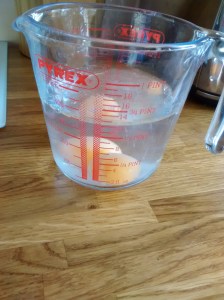
  • Put the rye flour into a bowl and pour the boiling water over it.
  • Mix this to a stiff paste.
  • Cover with a cloth and leave overnight.
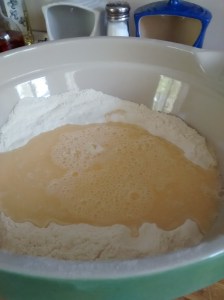
  • The following morning, place the plain flour into a bowl and make a well and add the dried yeast followed by 100ml of water.
  • Cover and leave for around 15 minutes until all the yeast has dissolved.
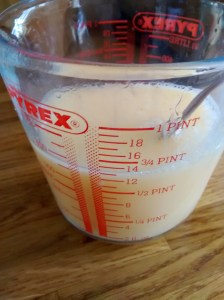
  • Add the rest of the water (150ml), the salt and the scalded rye mixture.
  • Mix everything together well.


  • Now you need to knead this for around 5 minutes – this can be hard as the dough is sticky  – I do this in the bowl for some of the time and then with wet hands I hold the dough up and sort of kneaded it in the air!
  • Put the dough back into the bowl and covered with clingfilm or a cloth and leave it for around 2 hours.
  • Divide the dough into two.
  • Flour your hands and stretch each piece into a rectangle around 2cm in thickness.
  • You now need to fold the dough into a long loaf.
  • With the short side facing you, fold this up a third gently onto the dough and then taking the top third pull this down to cover the two layers of dough.
  • Get a clean tea towel,  flour this and using a cake lifter place the loaf on this and cover it with the rest of the tea towel.
  • 20181208_092916


  • Repeat this for the other loaf.
  • Leave the loaves to rest for around 1 hour.
  • Pre-heat the oven to GM8 – 230°C.
  • Use rye flour to flour two small baking sheets.
  • Place each  loaf onto a prepared sheet and place them side by side in the oven.
  • Turn the temperature down immediately to GM4 -180°C.
  • Bake for 40 minutes.
  • Remove and leave to cool on a wire rack.


Variations

  • Add 1.5 tablespoons of caraway seeds to the dough mixture.
  • Divide the dough into 4 pieces and shape them into cobs.
  • Change the proportions to use more rye – I used 200g of dark rye & 550g of strong plain flour & an extra 100ml of boiling water for the overnight scalding & baked the loaves in long loaf tins after shaping the dough.


Tea plate is by Taylor and Kent of Longton

*Polish – Swedish Connections

The Polish King Zygmunt III Waza (1587 – 1632) was the son of King John III of Sweden and Katarzyna Jagiellonka (daughter of King Zygmunt I Stary (the old) of Poland).  He was also the King of Sweden from 1592 – 1599.

PotopThe Deluge – was a period of invasion and war with Sweden in the mid 17th Century.

Szwed – The Swede is a very common surname in Poland . One of my father’s best friends had this surname.

There are 72 ferry sailings a week from Polish Baltic ports to Sweden.

Note – this post was updated in March 2020.


Mushroom Soup

Grzyby is the Polish word for mushrooms.

Mushroom gathering in Poland is a National pastime and has been in the past, a source of food and income for many.

Mushrooms can be dried, pickled, salted and marinated.

On those damp misty days in autumn when in England people would think – what a dull day,  a Pole would wake up and think – Great, a good day for gathering mushrooms!

Most Poles think the best dried mushrooms are Boletus edulis, in Poland they are called borowik, prawdzik or prawdziwek(translates as the real thing!), in Italy porcini and I try and use these whenever I can.

Packets of dried mushroom in England tend to be 25g or 30g and can be of mixed types.

My father knew all about mushrooms but never really passed the knowledge on to me – mainly because of the limited availbility of transport to suitable woods around where we lived in Lancashire.

On my first visit to Poland I did go to Białowieża forest and went with a guide and collected lots of mushrooms including chanterelles which in Poland are called kurki.

Dried mushrooms feature in many Polish dishes including ones made for Wigilia – Christmas Eve.

Nowadays, the common field mushroom – Agaricus bisporus – is produced on a huge scale and makes up a large part of commercial mushroom production with Poland being the 3rd biggest producer in Europe, following Italy and The Netherlands.

Mushroom soup in olden days was nearly always made with just dried mushrooms.

I make my soup with both dried and fresh mushrooms.

As with all soups the quantities do not have to be exact.

You can make your own vegetable stock or use cubes or powder.


Ingredients

25-30g of dried mushrooms – Boletus edulis are good.

250g of fresh mushrooms  – chestnut type are good.

Around 125ml of soured cream

1 onion – diced

Butter to fry the onion

1 – 1.5 litres of vegetable stock – can be from power or a cube (I use Marigold bouillon)

2 tablespoon of cornflour – optional

Salt & Pepper to taste

Chopped Flat-leaf parsley or chives to garnish


Method

Start the night before by preparing the dried mushrooms.

Put the dried mushrooms in a jug or bowl and add around 250ml of boiling water.

Leave the mushrooms overnight.

Strain the mushrooms from most of the liquor – saving this for later.

Chop the mushrooms into smaller pieces.

Gently simmer the mushrooms in a little of the liquor for about 5 minutes.

Gently fry the diced onion in some butter till they are golden.

Seperate the caps from the stalks of the fresh mushrooms.

Thinly slice the fresh mushroom caps  – if the caps are large cut the slices into 2 or 3.

Optional

If the stalks are not too “woody”  – chop them into very small pieces  – otherwise discard them.

Add the mushrooms to the onions, mix and fry gently.

Into a large pan or stockpot, add the onions and mushroom, the re-constituted mushrooms and the liquor from the soaked mushrooms and mix well.

Add the  vegetable stock and bring the mixture to the boil, then cover with a lid and leave to simmer.

You could put the pot into a low oven around GM2 – 150°C.

Allow to simmer for a couple of hours.

Add the soured cream and stir gently – check for seasoning.

or

Mix the cornflour with some of the soured cream, add and stir to thicken, then add the rest of the soured cream.

Sprinkle with chopped parsley or chives to serve.


Served on Royal Doulton  – Carnation – 1982 – 1998  &  Queen Anne side plates – pattern name unkown.

Pea Soup with Dutch Connections

I have written about Polish pea soup which is usually made with yellow split peas.

My mother could not always get yellow split peas and sometimes used Marrow fat peas.

My Dutch friend in The Netherlands often talks about Dutch pea soup which is made using Marrow fat peas or green split peas.

The Dutch soup tends to be made as a much thicker soup and pork, such as a chop or pigs’ trotters, is often used and also as smoked bacon or ham; potatoes are often added as well.

I have made my soup more on the Polish thinner side and used a chunk of smoked  Polish bacon. – You can use smoked gammon or smoked bacon – use it in large pieces – cut it up after it has been cooked in the soup.

Version 1 – Using Marrow Fat Peas


Ingredients

250g Marrow fat peas

2 large onions chopped

400g piece of smoked Polish bacon (boczek in Polish, which means side)

8 peppercorns

2-3 allspice grains

1 Bay leaf

2 litres of vegetable stock (can be from a cube or powder – I often use Marigold powder).


Method

Put the marrow fat peas into a large bowl with around 800ml of boiling water poured over them  and leave overnight.

Some instructions say to add bicarbonate of soda to the peas – I prefer not to.

The following morning, drain and rinse the rehydrated peas.

I have started using my large slow cooker to make soups – you can also use a large stock pot and once brought to the boil, leave it to simmer on the stove or in a low oven.

Place all the ingredients into the pot and switch on and leave to cook for 4 – 5 hours until the peas have cooked to a soft pulp.

You might want to add some boiling water and stir the soup if it has become too thick.

Remove the piece of bacon and chop or shred the meat, then put it all back into the soup, stir and heat for a few minutes before serving.

You can use the cooked meat on for example in sandwiches and only put part of it back into the soup.


Served here with scalded rye bread on tea plates by Taylor and Kent of Longton.


Version 2 – Using Green Split Peas

As version 1, but use 300-350g of green split peas.

The split peas do not have to be soaked overnight, just use then as they are.

So this is much quicker to make as there is no overnight soaking.


You can add some chopped chives or the green part of spring onions before serving.


Variations

  • Add one or more  root vegetables such as:
  • 1 or 2 carrots – chopped,
  • around a quarter of a celeriac,
  • 1 or 2 parsnips – chopped
  • 1 large potato – peeled and chopped
  • Use smoked gammon, ham or smoked bacon
  • Add a pork chop
  • Use pigs’ trotters

Note

I have found that these soups freeze very well – portionned up into tubs for future use.


Chocolate Orange Babka

This is a new recipe for a babka – it is very moist and tastes delicious.

I serve it just dusted with icing sugar but you could add a thin chocolate glaze.

Ingredients

  • 225g Butter or Block Margarine
  • 225g Caster Sugar
  • Finely grated zest and the juice of 1 orange
  • 1 teaspoon of vanilla essence
  • 2 tablespoons of apricot jam
  • 4 eggs
  • 175g self raising flour
  • 1 teaspoon of baking powder
  • 50g of cocoa

Method

Pre-heat the oven to GM3 – 160°C

Grease & flour well a large babka tin, tapping away any excess.

  • Beat well together the butter and sugar till pale and fluffy.
  • Beat the eggs well and gradually add them, beating the mixture after each addition.
  • Mix  in the vanilla essence, apricot jam, orange zest and juice.
  • In a separate bowl mix the flour, baking powder and cocoa together.
  • Fold the flour mixture into the beaten mixture.
  • Spoon the cake mixture into the babka tin and level the top.
  • Bake for 50 – 55 minutes until the babka has risen and a cake tester comes out clean.
  • Cool for at least 5 minutes in the tin, then turn this out onto a wire cake rack to cool.
  • Dust with icing sugar before serving.

Served on Crown – fine bone china – England (no pattern name given).

Potatoes – po nelsońsku

  • Po nelsońsku  –  in Lord Nelson’s style –  is when mushrooms and soured cream are added to the sauce. (I have not been able to discover why this name is used.)
  • In the traditional version of this dish, dried mushrooms are used and are soaked overnight.
  • I have also made a version with dried and fresh mushrooms.
  • Floury potatoes such as King Edward or Maris Piper are the best for this dish.
  • Packets of dried mushroom in England tend to be 25g or 30g and I have used a full packet for the recipe (you can use more).
  • The best dried mushrooms are Boletus edulis, in Poland they are called borowik or prawdzik, in Italy porcini.

Ingredients

  • 1 kg of floury potatoes
  • 10 -15g of dried mushrooms
  • 2 onions
  • 60ml of soured cream
  • 250 ml of milk for soaking the mushrooms & 125ml (or more) for the sauce
  • 100g of butter for frying the onions & the sauce
  • 2 to 3 tablespoons of plain flour
  • Salt & pepper


Method

  • Start the night before by preparing the mushrooms. Put the mushrooms in a jug or bowl and add around 250ml of boiling water. When this has cooled add around 250ml of milk.
  • Leave the mushrooms overnight.
  • Alternately you could start this very early in the morning and make the dish in the evening.
  • Boil the potatoes till nearly cooked and leave them to cool.
  • Slice the potatoes into around 2cm thick slices.
  • Strain the mushrooms from most of the liquor – saving this for the sauce.
  • You can chop the mushrooms into smaller pieces if you want.
  • Gently simmer the mushrooms in a little of the liquor for about 5 minutes.
  • Make a sauce by first melting 2 tablespoons of butter in a saucepan, add the flour, stir together with a wooden spoon and gently cook until you have a thick roux.
  • Slowly add the liquor from the soaked mushrooms and mix and heat till you have a thick sauce.
  • Add more milk if needed – you want a very thin pouring sauce.
  • Then add the soured cream and mix together.
  • Pre-heat the oven to GM 4 – 180°C


  • Halve the onions and thinly slice and then fry them till golden in some butter.
  • Butter a deepish ovenproof glass or ceramic dish.
  • Place a layer of potatoes on the bottom followed by the onions, then the mushrooms, some of the sauce and finish with a top layer of potatoes.


  • Season with salt and pepper as you go along.
  • Pour the rest of the sauce over the top.
  • Depending on the size and depth of the dish you could have more layers but always start and finsh with potatoes.
  • Bake in the oven for at least an hour (You can lower the temperature and leave to cook for much longer).
  • This goes well served with roast chicken or pork.


Served on Royal Doulton – Tapestry  1966 – 1988

Ingredients – Version 2

This has fewer dried mushrooms & fresh mushrooms are added.

  • 1 kg of floury potatoes
  • 10g of dried mushrooms
  • 100 – 150g of  fresh mushrooms (chestnut type are good)
  • 250 ml of milk for soaking the mushrooms & 125ml (or more) for the sauce
  • 100g of butter for frying the onions, mushrooms & the sauce
  • 2 onions
  • 2 to 3 tablespoons of plain flour
  • 60ml of soured cream
  • Salt & pepper

Method – Version 2

  • Start the night before by preparing the mushrooms. Put the mushrooms in a jug or bowl and add around 250ml of boiling water. When this has cooled add around 250ml of milk.
  • Leave the mushrooms overnight.
  • Alternately you could start this very early in the morning and make the dish in the evening.
  • Boil the potatoes till nearly cooked and leave them to cool.
  • Slice the potatoes into around 2cm thick slices.
  • Strain the mushrooms from most of the liquor – saving this for the sauce.
  • You can chop the mushrooms into smaller pieces if you want.
  • Gently simmer the re-constituted mushrooms in a little of the liquor for about 5 minutes.
  • Thinly slice the fresh mushroom caps and fry them gently in butter.
  • Mix the two types of mushrooms together.
  • Make a sauce by first melting 2 tablespoons of butter in a saucepan, add the flour, stir together with a wooden spoon and gently cook until you have a thick roux.
  • Slowly add the liquor from the soaked mushrooms and mix and heat till you have a thick sauce.
  • Add more milk if needed – you want a very thin pouring sauce.
  • Then add the soured cream and mix together.
  • Pre-heat the oven to GM 4 – 180°C
  • Halve the onions and thinly slice and then fry them till golden in some butter.
  • Butter a deepish ovenproof glass or ceramic dish.
  • Place a layer of potatoes on the bottom followed by the onions, then the mushrooms, some of the sauce and finish with a top layer of potatoes.
  • Season with salt and pepper as you go along.
  • Pour the rest of the sauce over the top.
  • Depending on the size and depth of the dish you could have more layers but always start and finsh with potatoes.
  • Bake in the oven for at least an hour (You can lower the temperature and leave to cook for much longer).
  • This goes well served with roast chicken or pork.

Version 3 – Less Expensive & Quicker

  • In Poland there are mushroom stock cubes which are very useful especially for making sauces.
  • Years ago I brought loads back to England, now you can find these in the many Polish food shops.
  • The ones I use are made by Knorr.  These stock cubes contain a small amount of dried mushroom extract.


  • Dissolve the stock cube im 250ml of  hot water, when this has cooled add around 250ml of milk.
  • Increase the amount of fresh mushrooms to 150 – 200g.
  • Follow the instructions as  for Version 2.